Norton’s all-new Manx R is a unique concept that could change the future of road-focused sportsbikes
Ever since Norton unveiled four 2026 models at EICMA last year, including the flagship hypersports Manx R and Manx naked sportbikes, I and countless others have been itching to find out what the bike carrying one of the most historic names in British motorcycling is like to ride. The answer came in southern Spain with a morning spent on the 4.43km Monteblanco circuit outside Sevilla, followed by a 120km afternoon tearing up the tarmac on the roads leading up to and through the hills of the Sierra de Aracena north of the circuit. Does this 1200cc, V4 deliver? Was it worth waiting for?
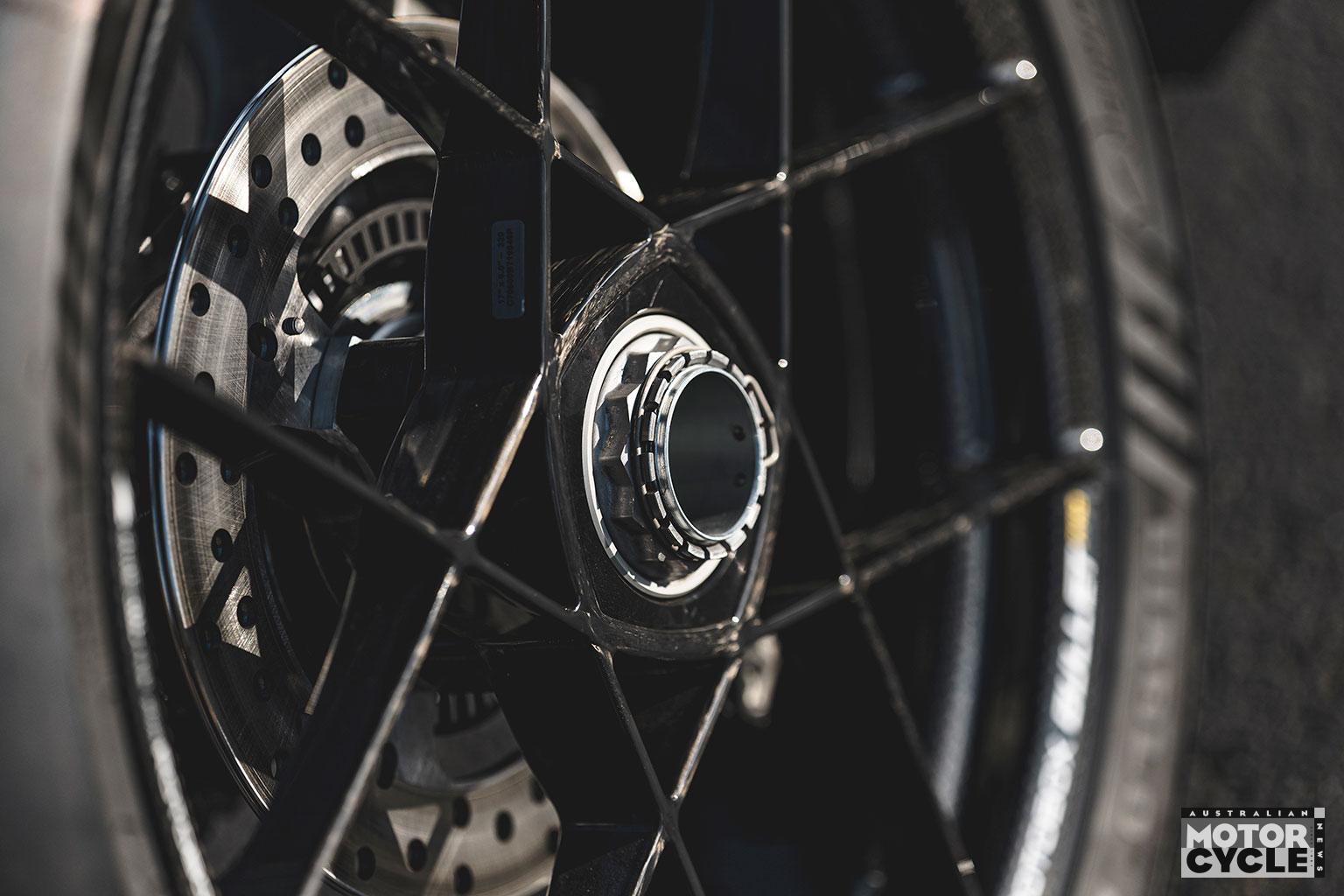
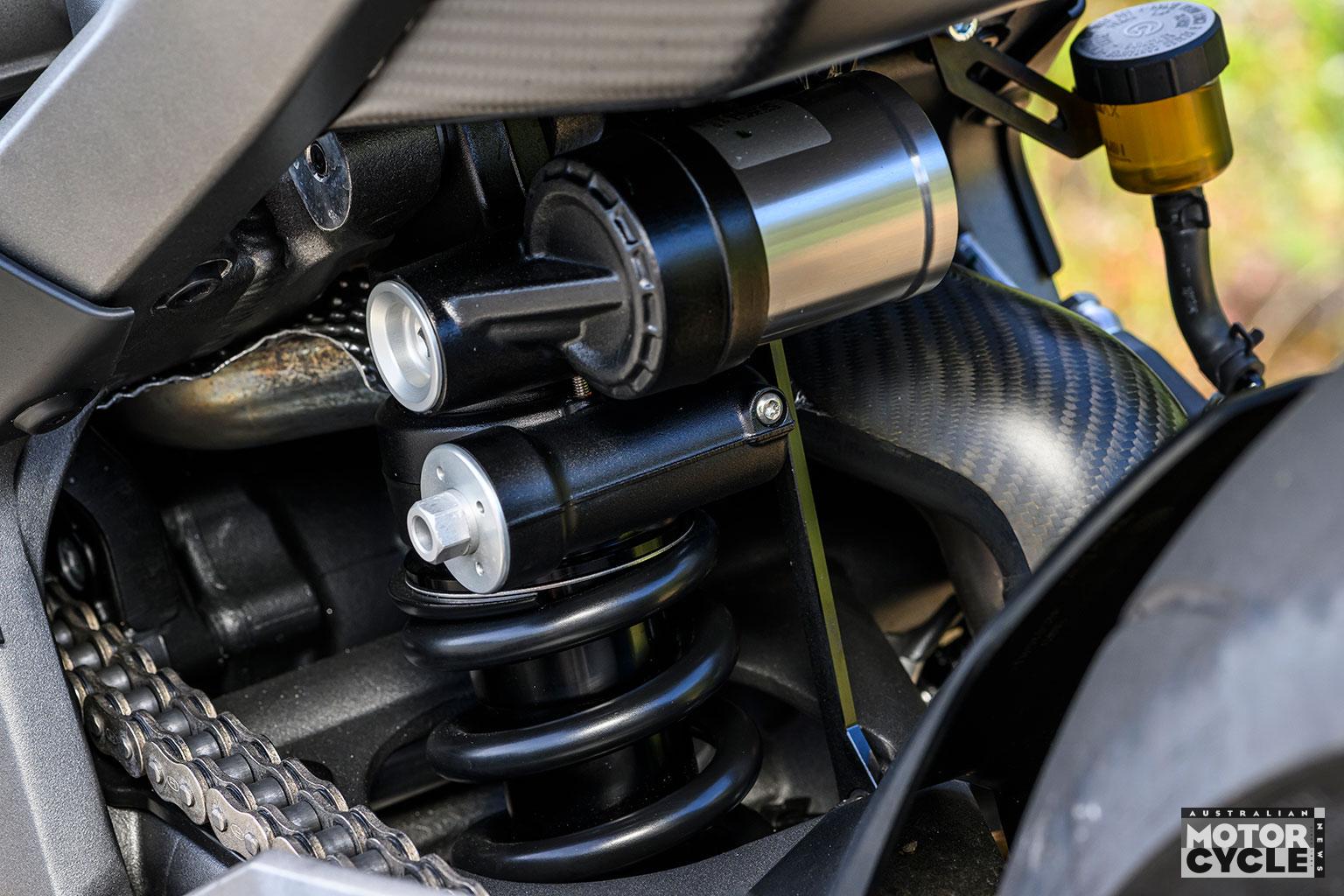
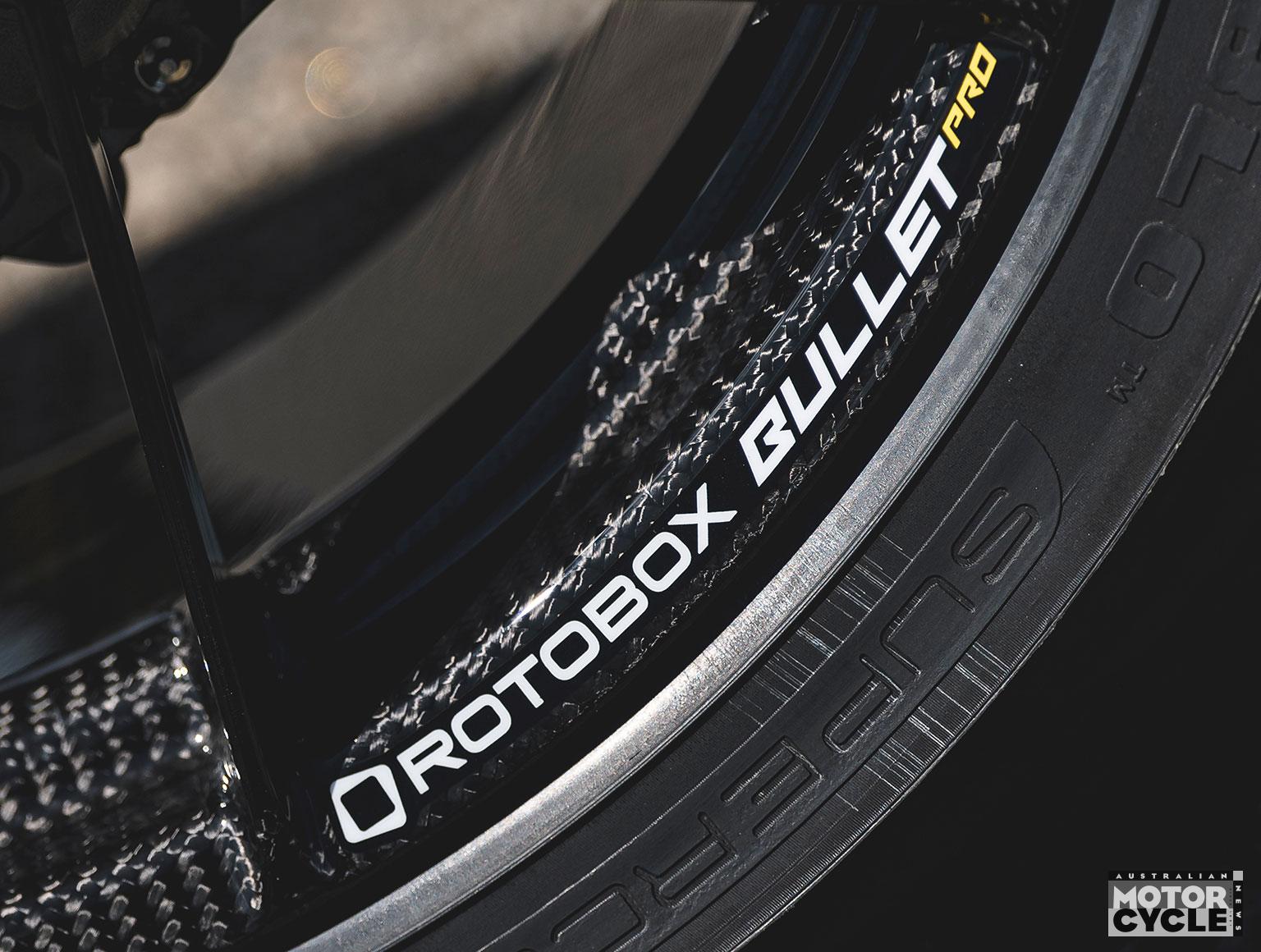
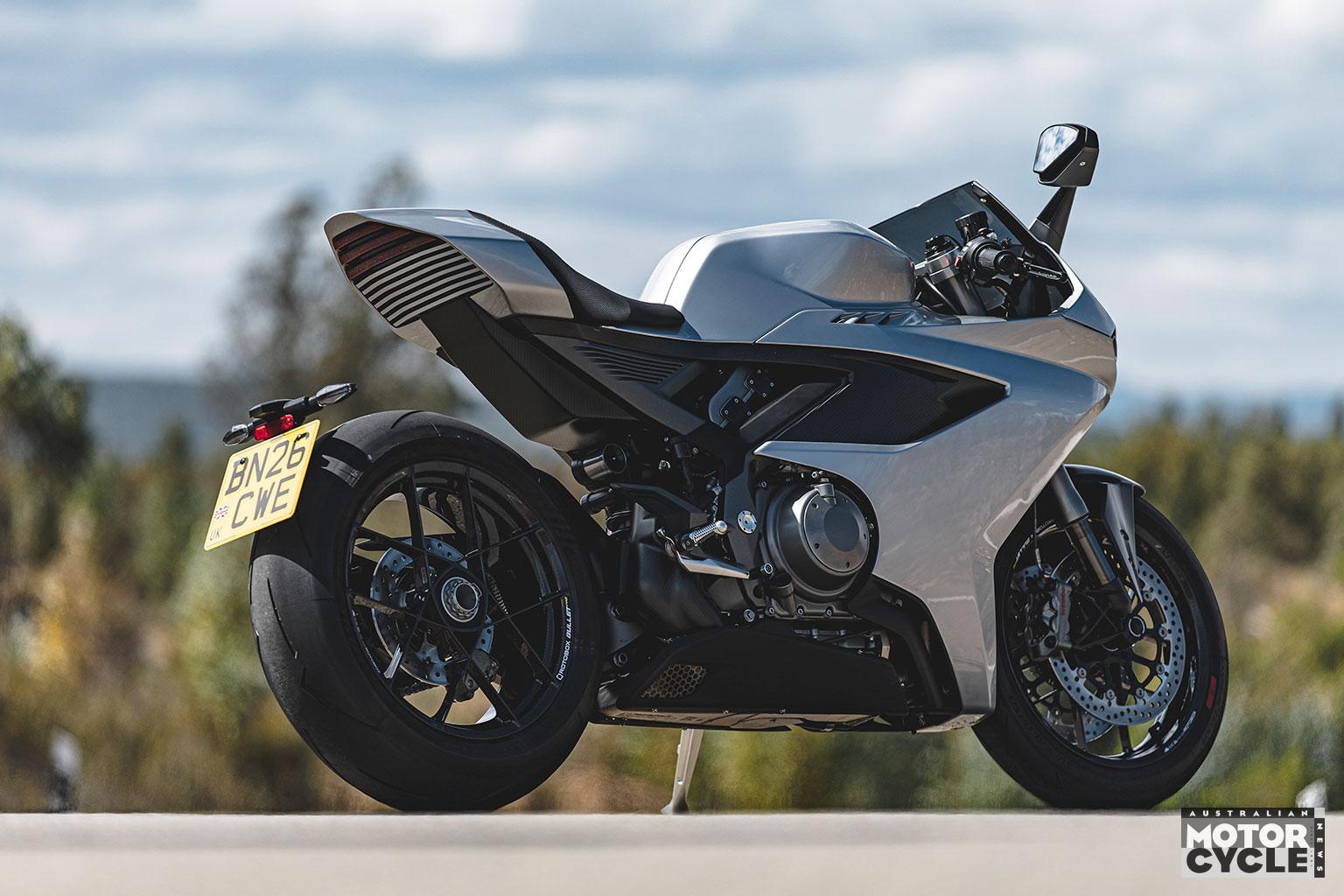
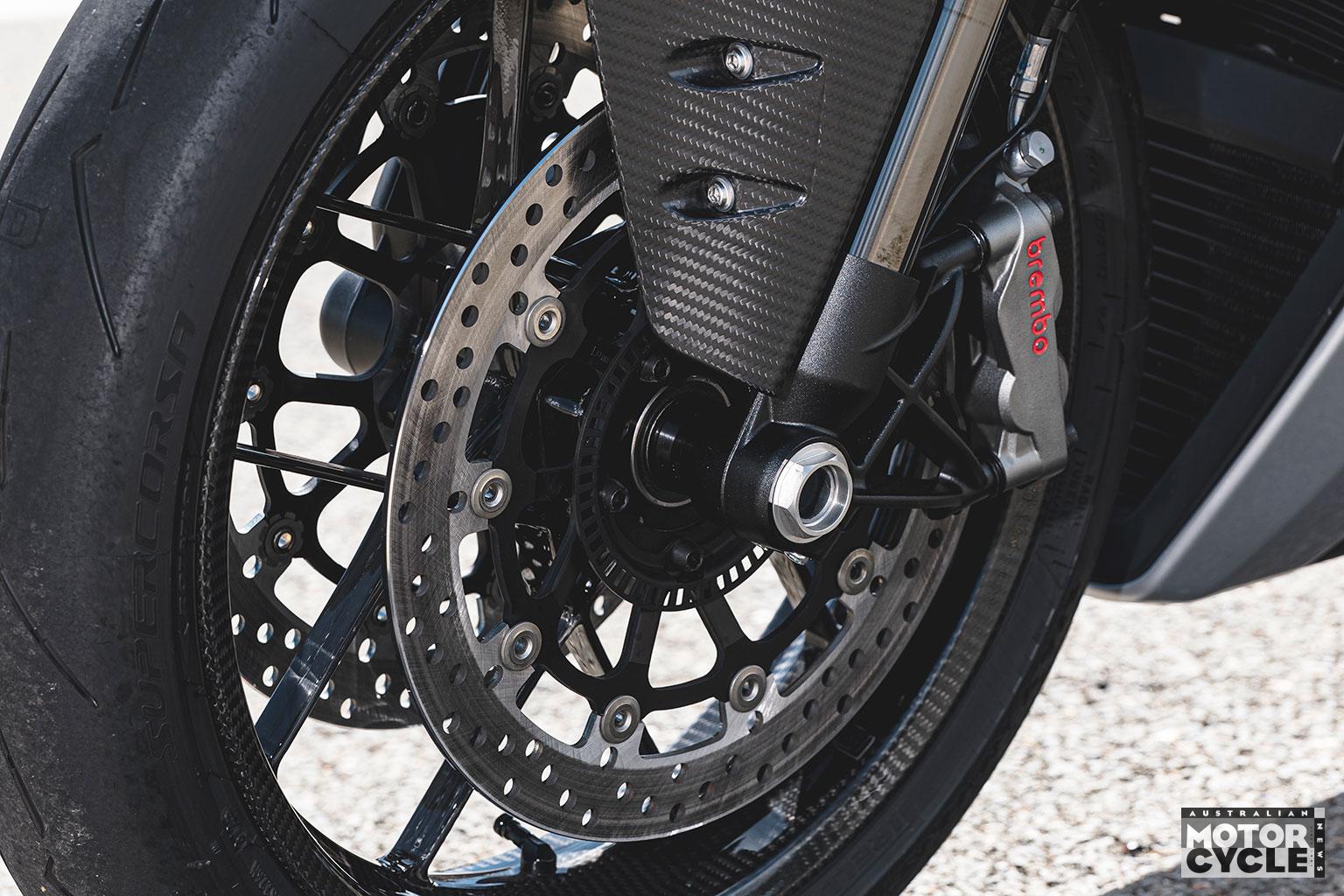
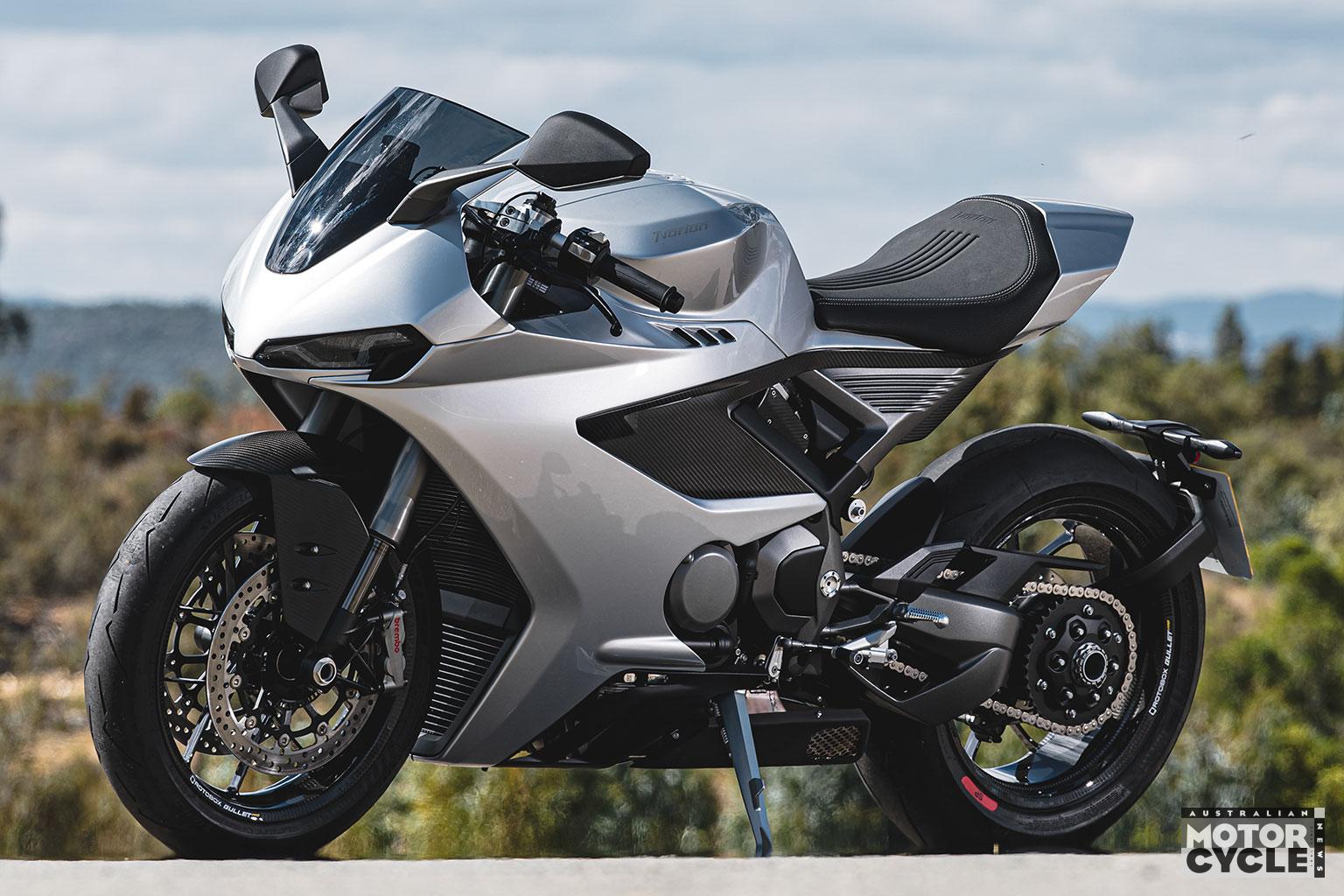
The Manx R is available in four variants, and Norton deserves credit for holding the price of the standard model Manx R with space for a passenger to €23,250 ($A37k), including local tax. Okay, that’s not exactly cheap, but cast an eye at equivalent Italian and German hardware and it undercuts them all while delivering exactly the same engine performance, with the same level of electronic riding assistance, as the single-seat Signature edition that Norton provided for my test. This costs a whopping €43,750 ($71k) tax paid, but does feature carbon wheels rather than cast aluminium, carbon fibre instead of lightweight composite bodywork, and Marzocchi semi-active electronic suspension rather than conventional passive damping and manual adjustment for related settings.
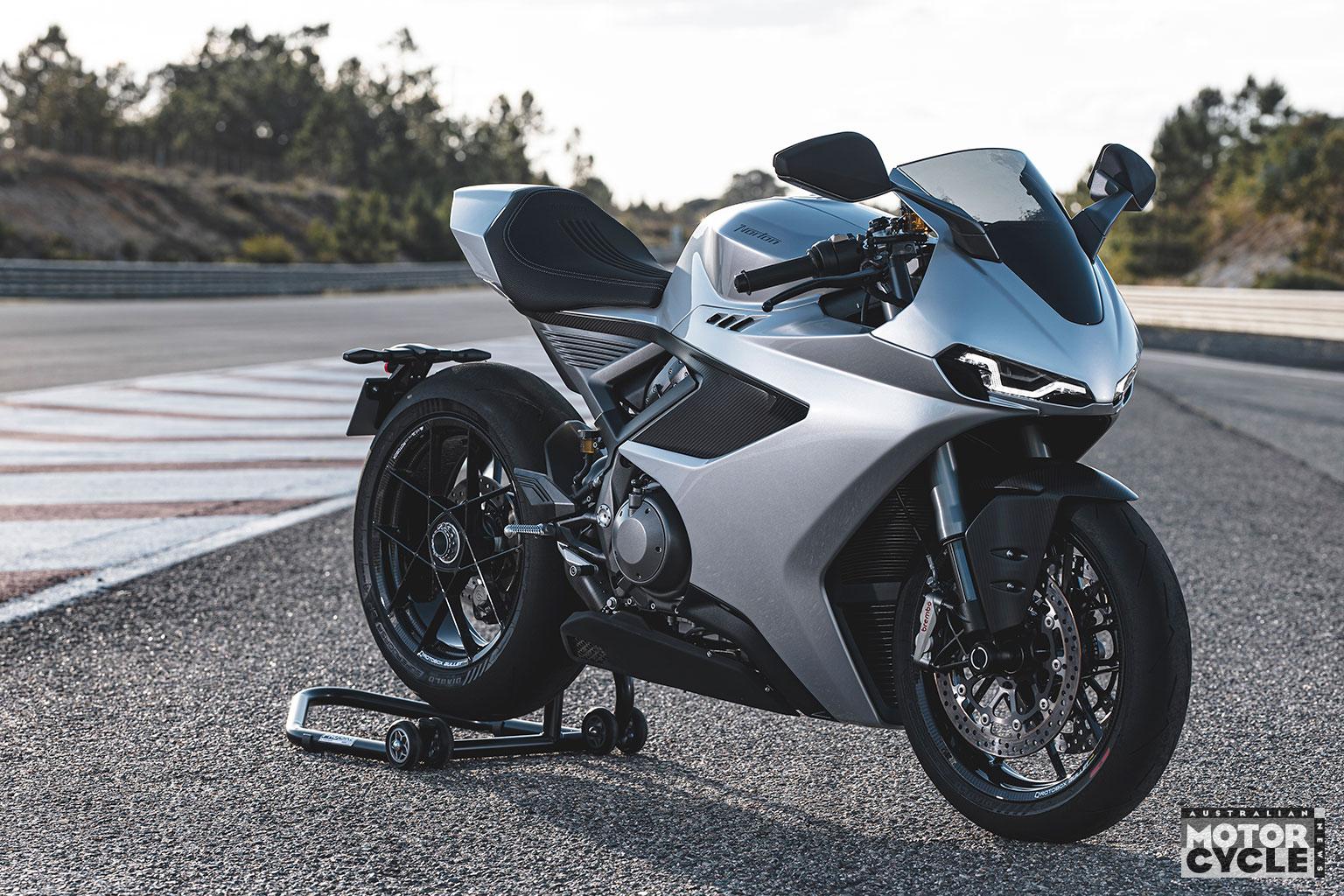
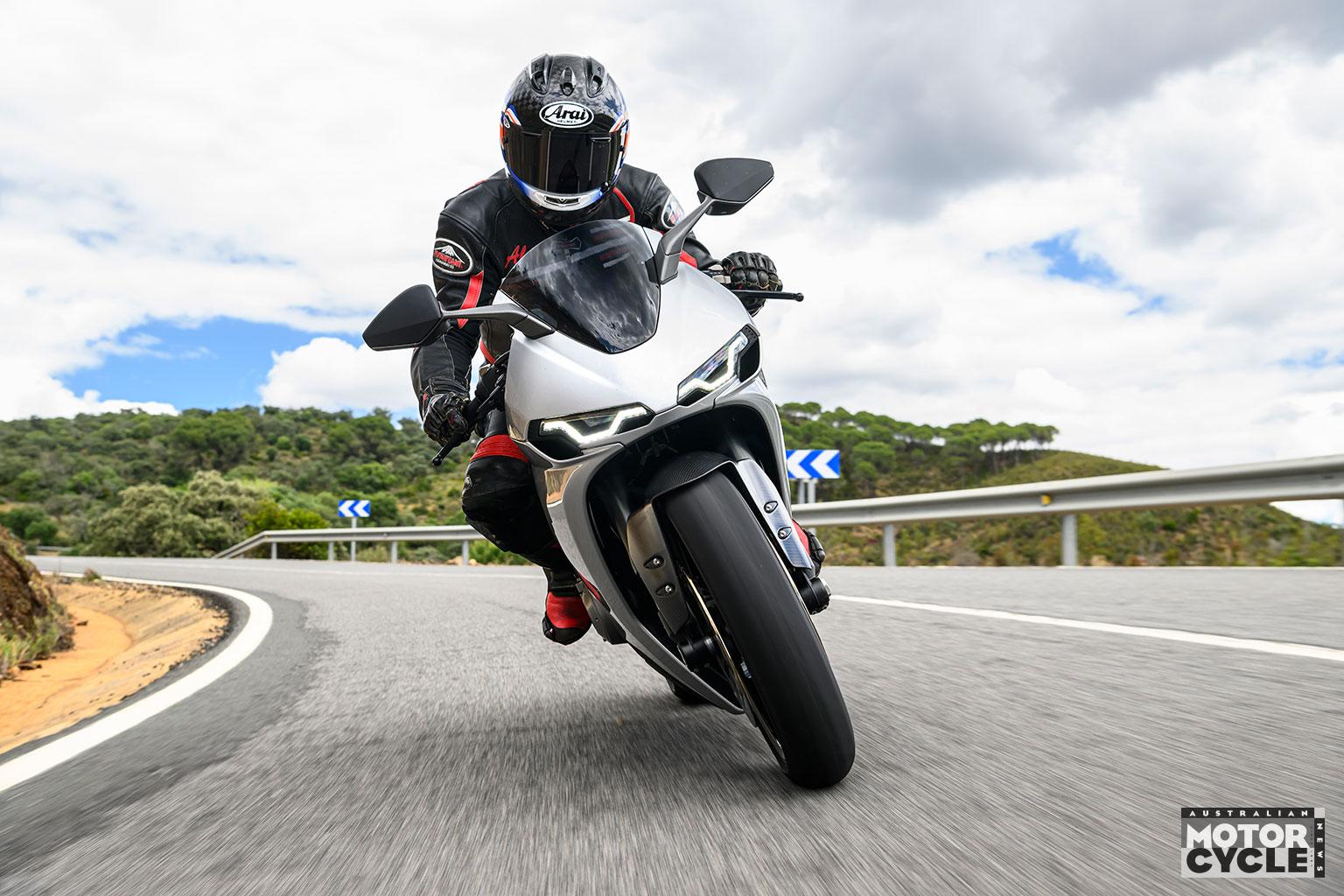
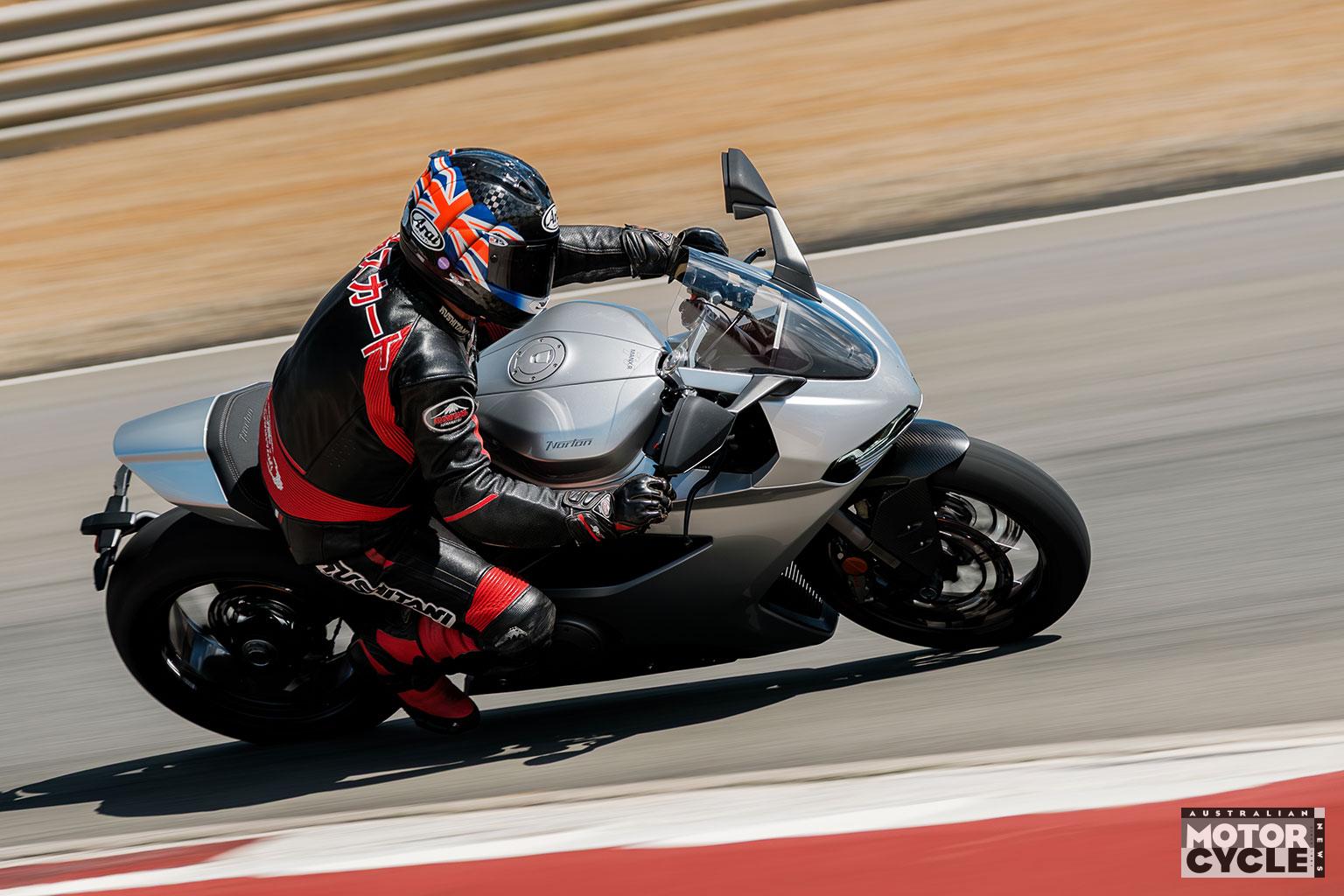
Track duty first, and with its 960m-long main straight the Monteblanco circuit had lots of room to let the Manx R stretch itself. But what most impressed me at first, after climbing aboard the 840mm-high seat of what seemed at first sight to be a small but sleek-looking motorcycle, was how spacious the riding stance was for 180cm me. The Manx R feels bigger than it looks, and while the clip-on ‘bars are fairly low, they’re quite wide spread, and you don’t end up with too much of your bodyweight on your wrists.
Everything felt very well balanced, and though set quite far back the footrests aren’t excessively high, and the whole riding stance is a nice blend of sportiness and comfort. But although I could tuck behind it okay, the screen was a little too low and narrow for me – and I don’t see a taller one in the list of accessories.
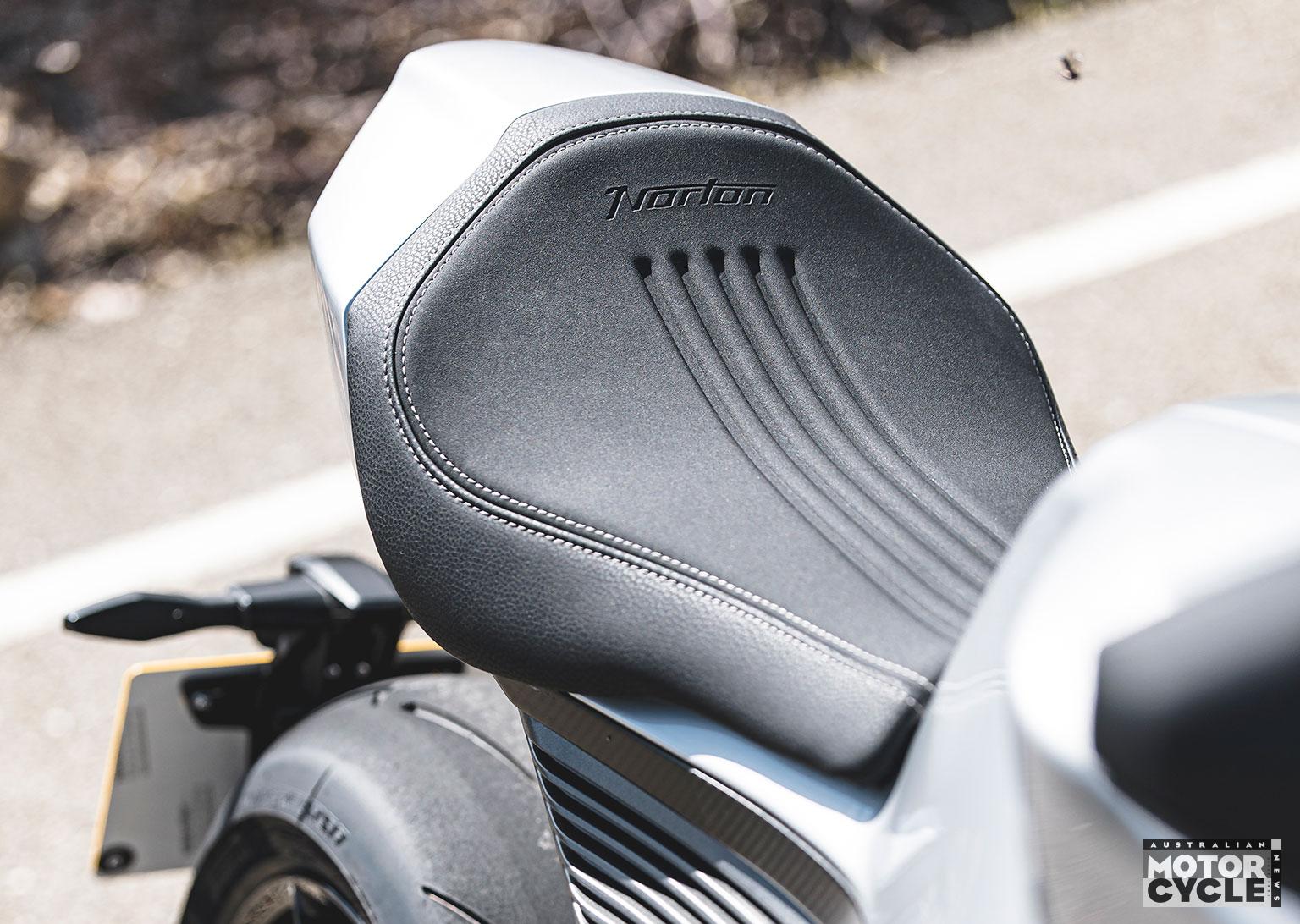
But there are two things that need attention: the sidestand is nearly impossible to find while seated on the bike – and the longitudinal grooves in the otherwise smooth seat cover will have you performing handstands on the ‘bars when you exploit the massive braking potential of the Manx R’s Stylema package; it’s all too easy to slide forward on the seat, and the flanks of the fuel tank are much too slippery for you to grip with your knees to prevent yourself doing that.
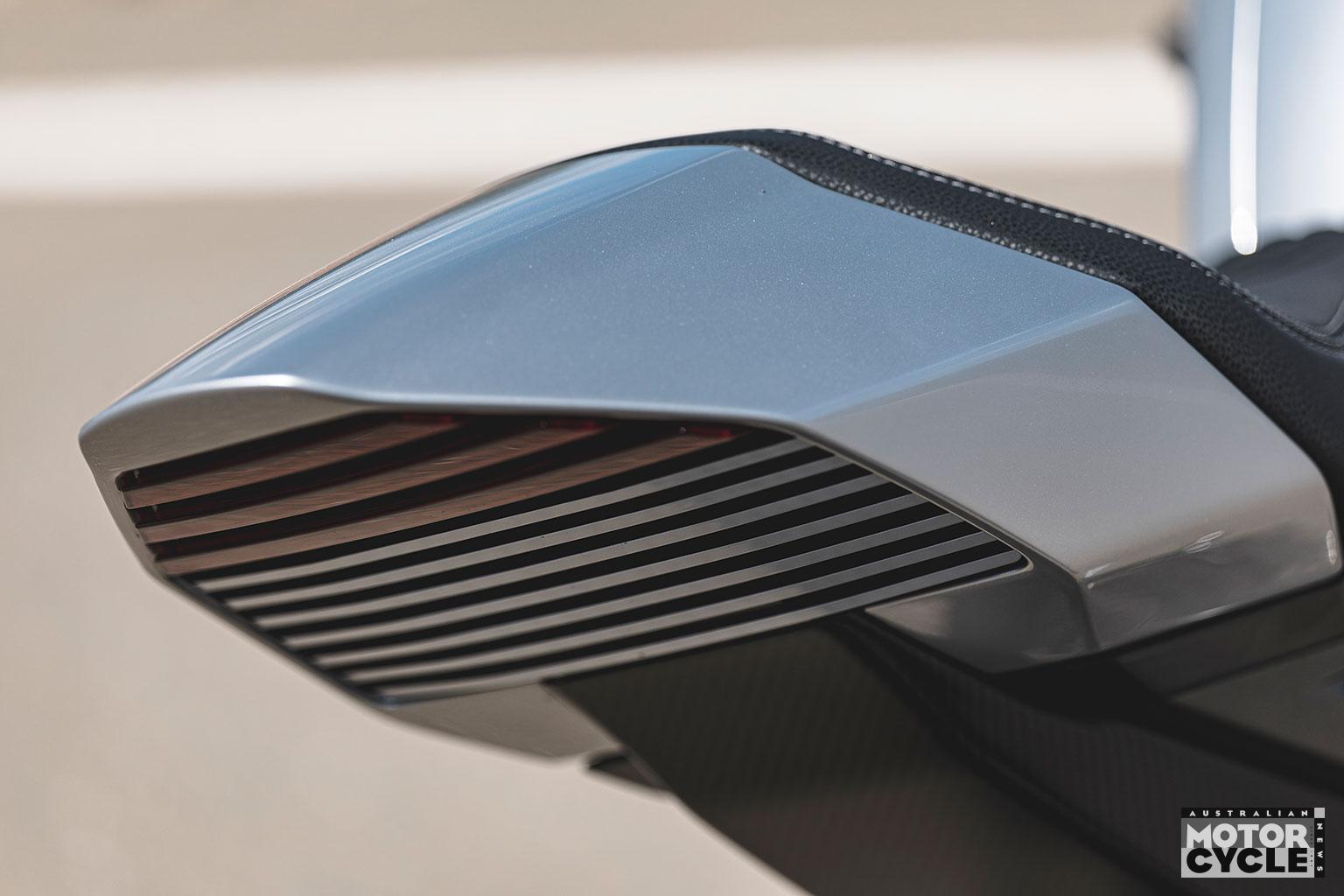
Next came the bit I was really waiting for: thumbing the starter button to hear the V4 Norton’s uber-distinctive, gruff-sounding soundtrack emanating from somewhere beneath your left foot for the first time – there are no external exhaust pipes on this motorcycle. There’s a unique offbeat lilt to it thanks to the V4’s ‘Phased Pulse’ irregular firing order. Like an old school 90° V-twin Ducati with Conti silencers or a BSA/Triumph triple pulling hard, this is a trademark exhaust note that’ll immediately identify the bike that just blasted past your garden gate as a Norton V4. It sounds very butch, and very, very muscular – and that’s exactly what the Manx R is.
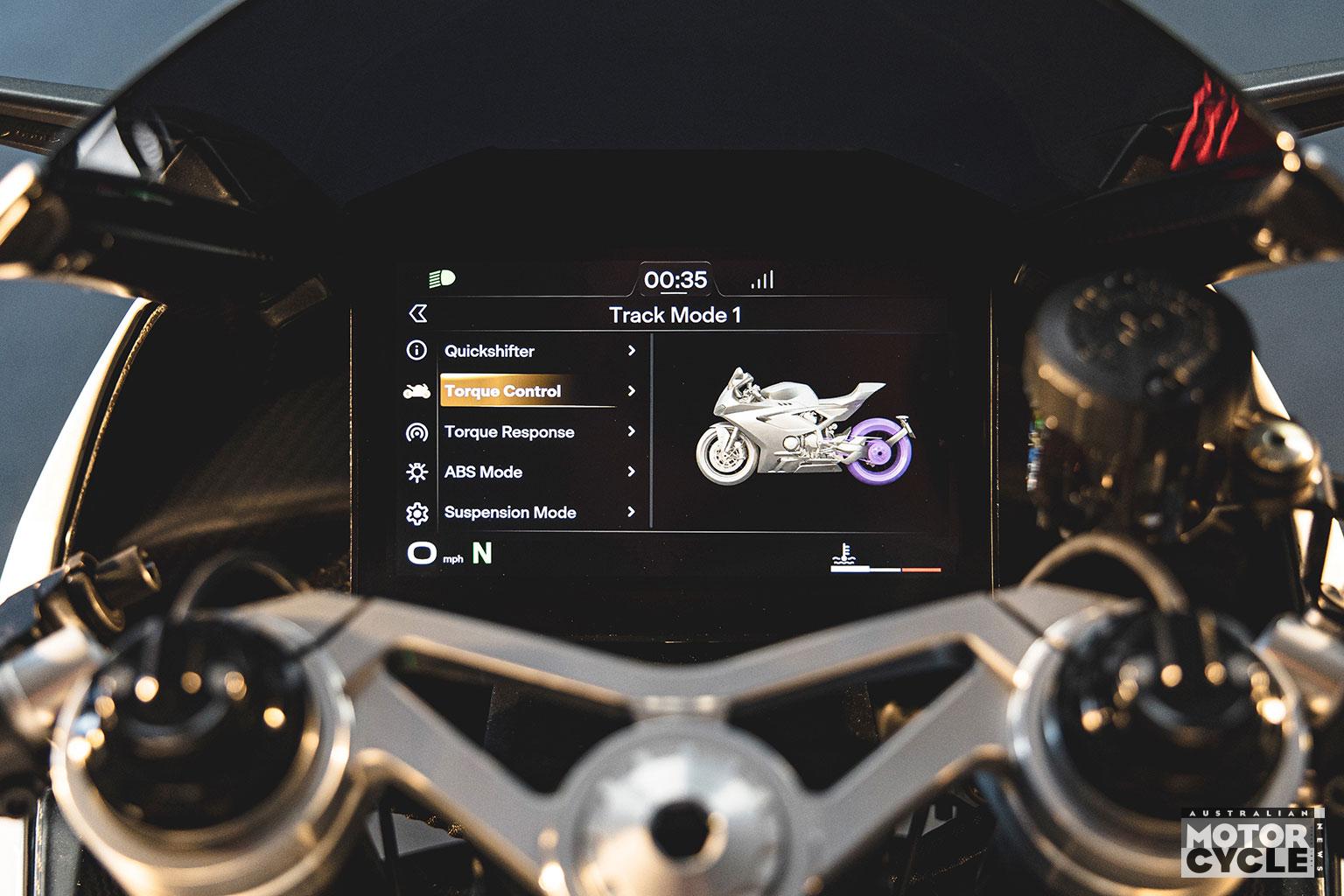
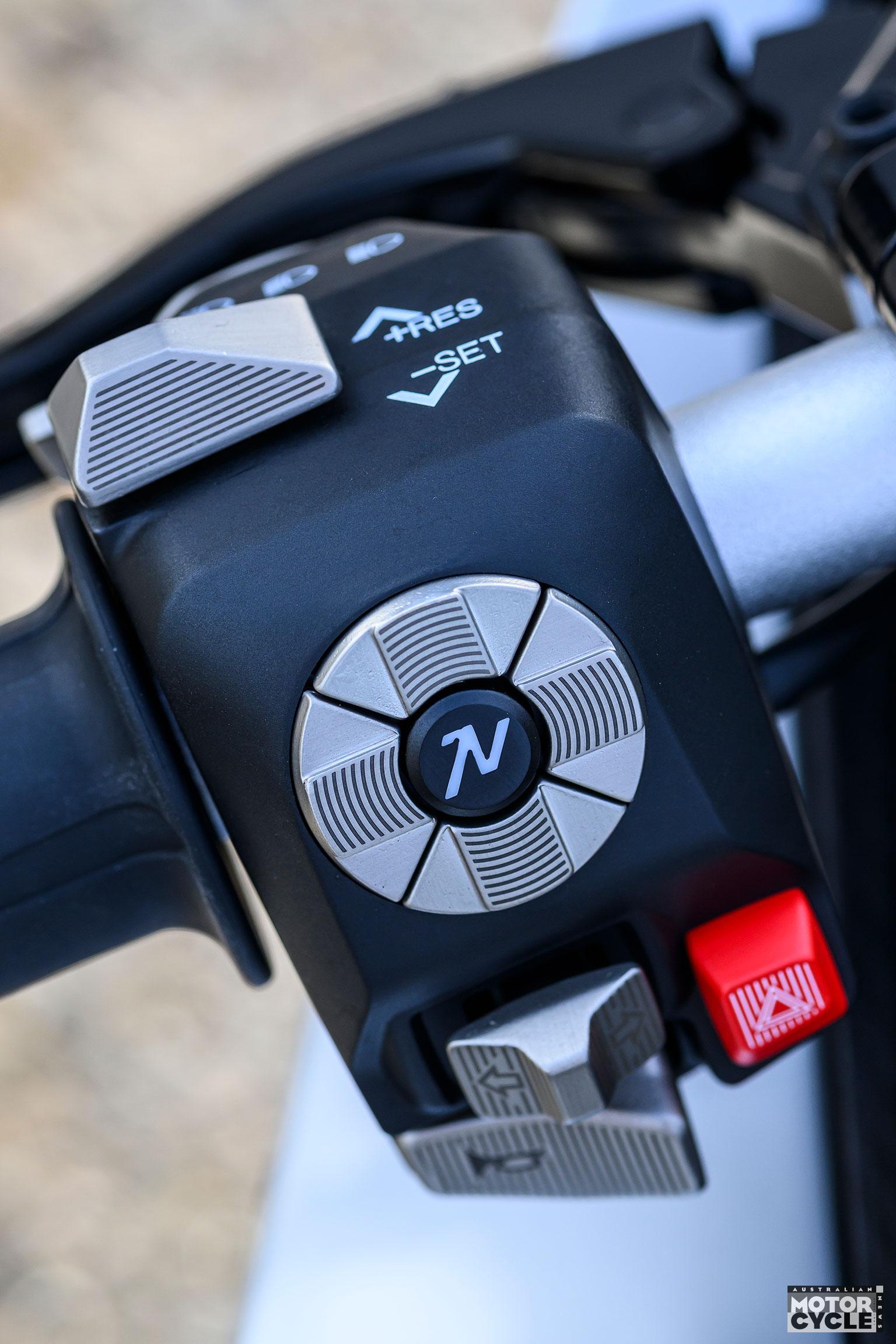
For my first 25 minute track session of two, I started by selecting Sport mode via the switch on the right ‘bar – the 8-inch TFT touchscreen dash is very accessible and easy to operate at rest; basically, it’s like a giant smartphone. Altering settings on the go via the well-placed switchgear is pretty intuitive, and whatever you end up with is retained for next time you restart the engine. I chose level 3 out of 7 for the TC and set off.
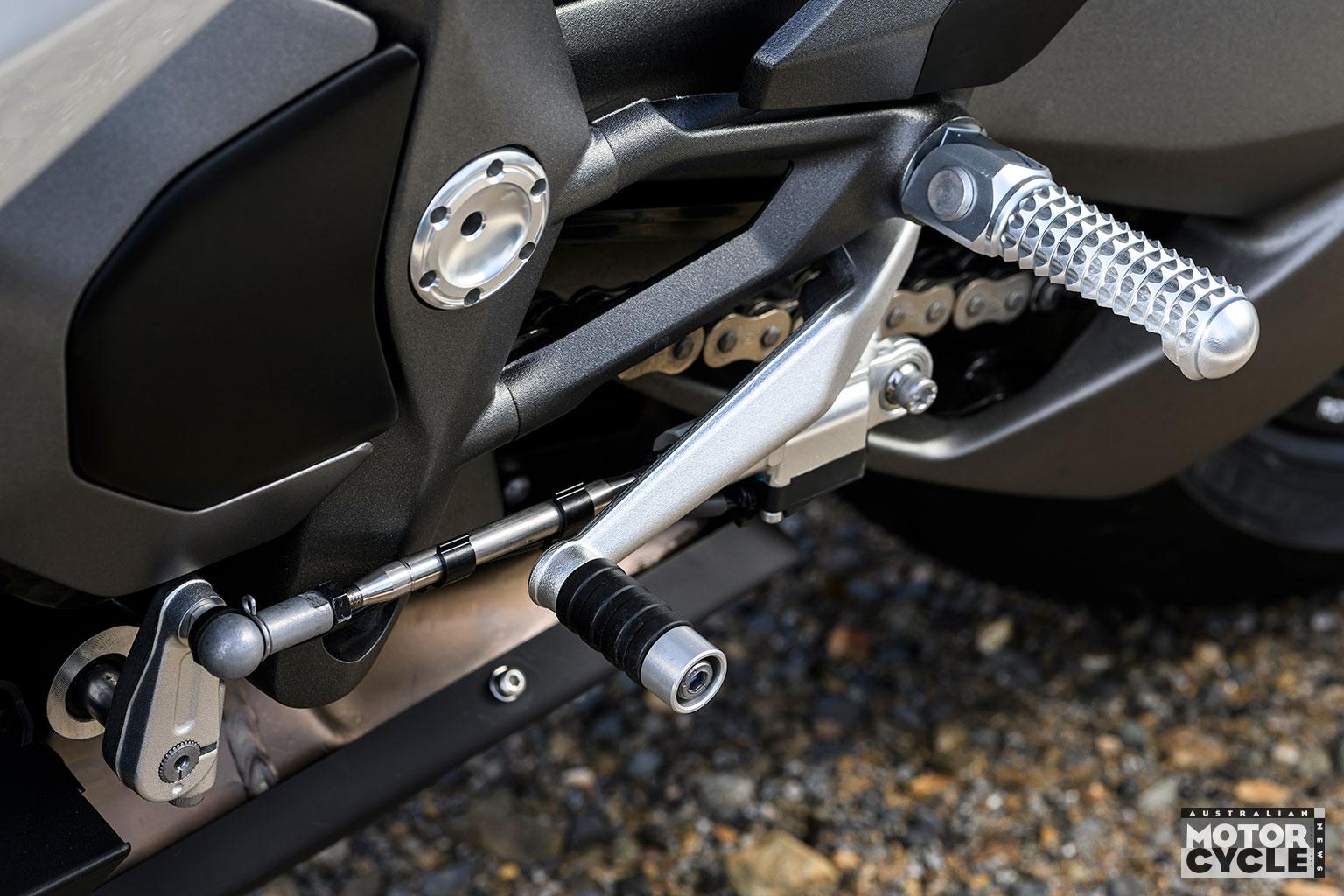
The engine pulls strongly off its 1300rpm idle with relatively little use of the clutch – as I was to find out that afternoon in city streets, the clutch action isn’t heavy enough for repeated use to tire your left hand. But riding down pit lane I realised at once that the two-way powershifter/autoblipper is perfectly set up; it’s just sensitive enough to make positive, crisp gearshifts in either direction, without being overly sensitive and a jerky action.
The 1200cc V4 drives hard from low down, but comes truly alive from 4000rpm. It’s not a snatchy, aggressive pick-up like on some MotoGP racers-with-lights, but with a claimed 75 per cent of Norton’s sector-leading 130Nm of torque already on tap at 5000rpm, the Manx R then builds inexorably to peak grunt at 9000rpm. Really, you have no excuse for ever troubling the soft-action 12,500rpm revlimiter on this bike.
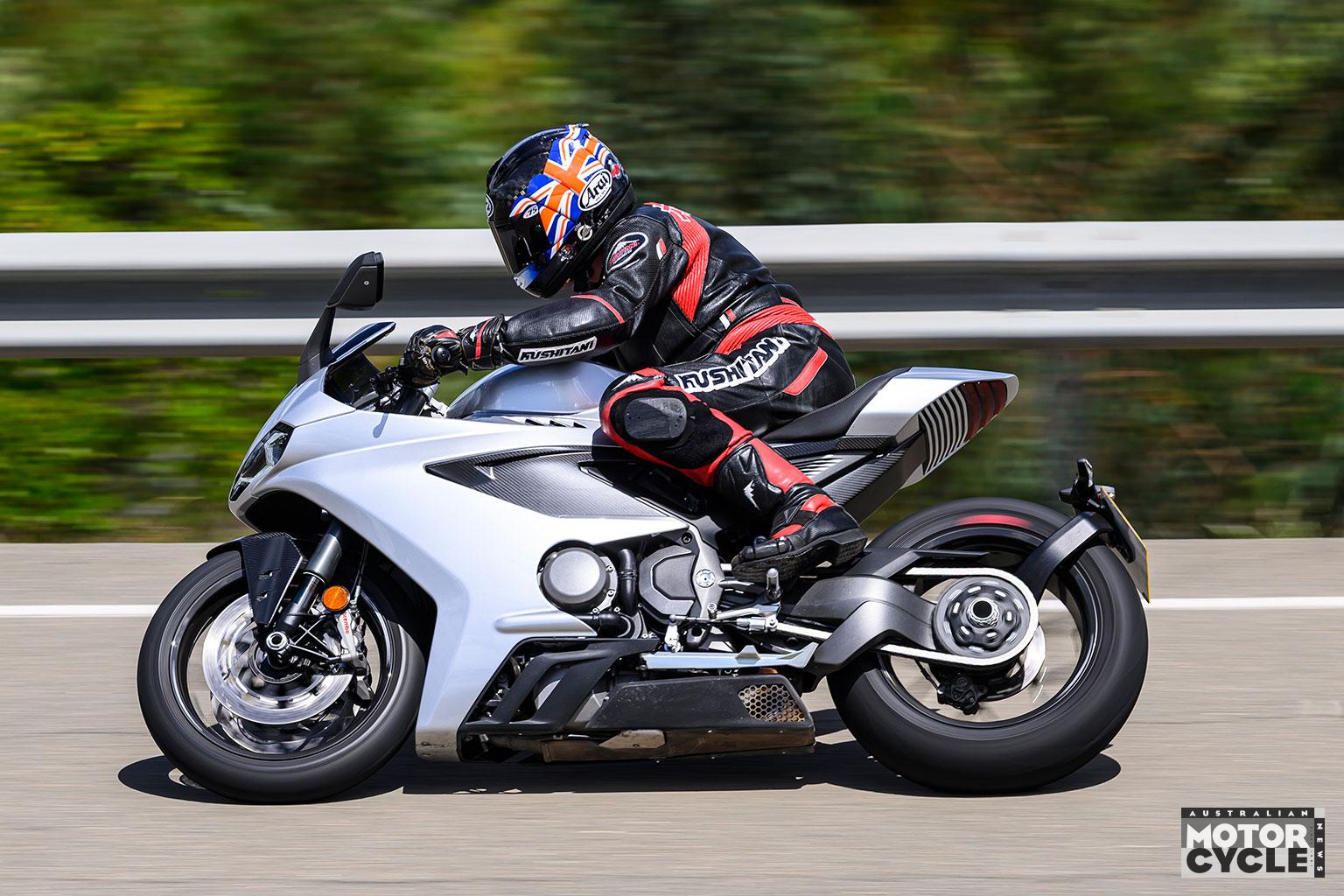
It took me only a couple of laps of the Monteblanco circuit to realise that I needed to cut down on gearchanging, because the V4 engine has such a wide spread of torque. Yet pick-up from a closed throttle exiting a second-gear turn was exemplary – no jerk or snatch, just a smooth but immediate response, with that glorious exhaust note acting as the messenger: “Stand aside – Norton incoming!” The engine is also super-forgiving; you can throw any gears at it between 4000rpm and 10,000rpm and it’ll drive hard towards wherever you’ve pointed it.
Norton’s Chief Technical Officer Brian Gillen and his team have produced a bike quite unlike anything else in the marketplace today, and if ever there was a model for which Norton dealers should have demo bikes available, the Manx R is it.
For my second track session I took Gillen’s advice and went out using Track 1 riding mode, which he’d concocted to use himself, with level 2 TC. This delivered a notably sharper throttle response that was immediate rather than snatchy, with better lowdown drive so that I ended up using third gear in several places I’d used second before.
Now I could appreciate what Norton’s R&D team has done with the Manx R’s engine: depending on a variety of parameters, including gear selected, engine revs, road speed and throttle opening. Thanks to Norton’s mapping of the throttle control system, this is a switch-hitting motorcycle, a schizophrenic superbike that one moment thinks it’s a twin, then the next instant a four – yet all done in such a controlled manner there are no surprises. Instead, it delivers the right kind of drive whenever you need it.
It’s a system first developed by Kawasaki on the ZX-10R that Tom Sykes took to the 2013 WorldSBK championship, and I remember riding that bike at Jerez and marvelling at how tractable a 242bhp Superbike had suddenly become. Well, Gillen & Co. have adapted that system to the Norton Manx R spectacularly successfully. That massive torque gets laid to the tarmac super-effectively, delivering muscular acceleration whenever you want it, without unhooking the rear Pirelli.
Now that I was accelerating more strongly out of the final turn before the pits, I could start exploiting the top-end performance of the V4, and after finally getting the line right for that last turn I saw 267km/h heading down to the right-hand, second-gear Turn 1. This has a bumpy surface leading into it, thanks to cars tearing up the tarmac in hot Andalusian summers, and was a great test of both the Norton’s brakes and front suspension.
Slamming on the stoppers at the 230m mark had me heading for Portugal thanks to the slithery seat, but I managed to stay aboard and, better still, stopped. In doing so, I realised that the electronic Marzocchi front suspension had eaten up the washboard ripples in the tarmac while I was leaning on the Brembos, delivering total stability under hard, hard braking. I’m a believer!
I did however find the Norton quite heavy-steering in changing direction in the chicanes, and on turn-in to the several right-angle turns on the Monteblanco track.
It needed more physical effort than I was expecting but when I picked up my bike for the afternoon road ride, I saw that this had what turned out to be 8mm of fork pull-through on the top triple clamp, whereas the Track setting had the forks flush with the top triple clamp and what turned out to be one more turn of spring preload (6.5 turns).
Sure enough, the road bike steered much better in city streets and switchback mountain hairpins, leading me to ask Gillen why the difference.
Turns out the track setting was to give additional support under hard braking into the turns at either end of the main straight, as well as raising the centre of gravity by 6mm – which helped faster turn-in when entering the chicanes. Hmm…
Okay, but now I wanted another couple of laps with the sweeter-steering road bike! Sorry, no can do. My 120km road ride had a great variety of terrain and a bit of everything, from city streets to long open 200km/h stretches (remember, this is Spain, not Australia) out in the middle of nowhere on smooth, pork-barrelled EU tarmac.
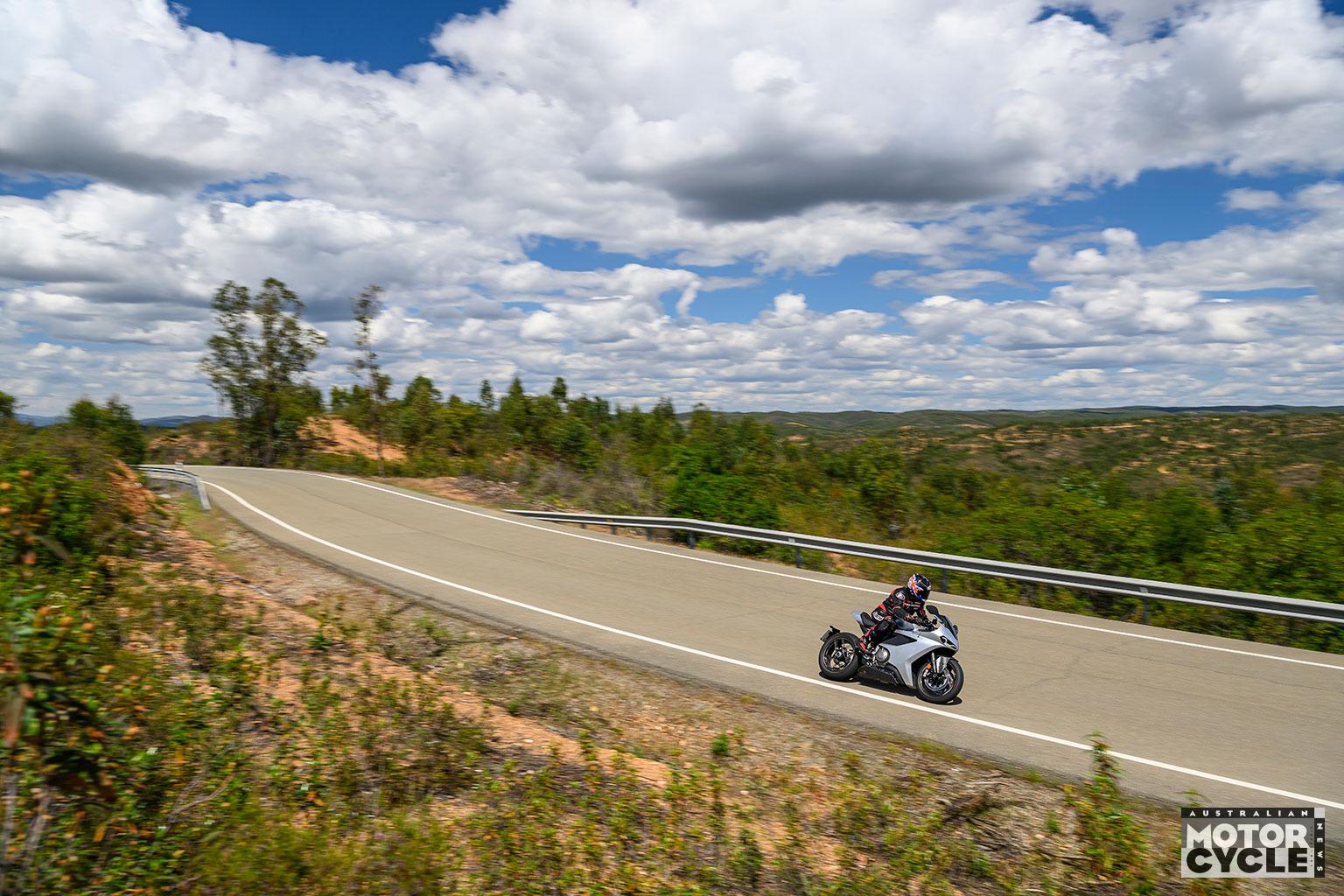
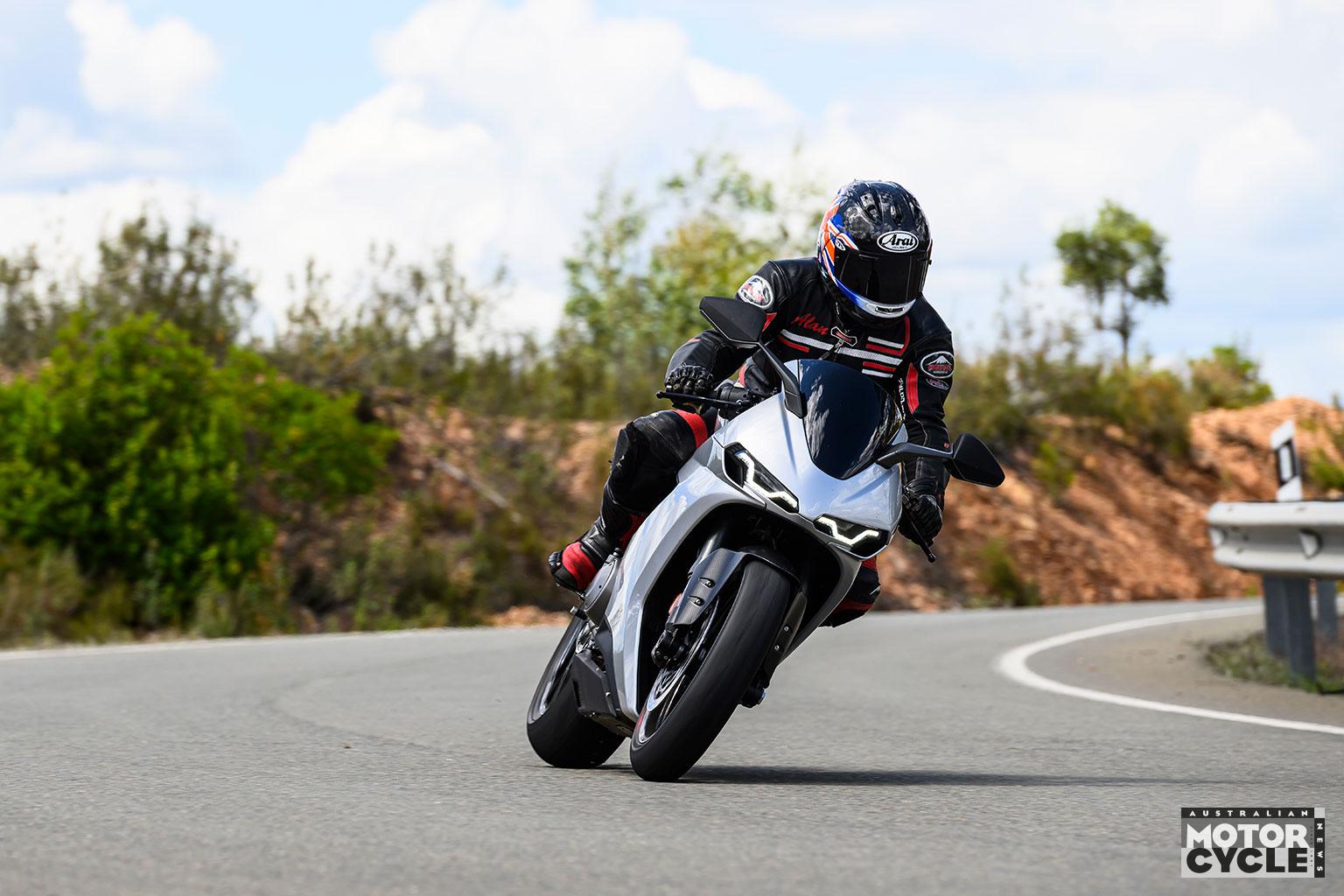
Here the Manx R again proved super-stable at high speed following Norton’s leadout rider Ian Cobby, a former adversary from our ProTwins racing days (he on the Raceco Guzzi, me on the Bimota Tesi) decades ago! But in slower, tighter stretches the Manx R was so easy to ride because of that flexible, forgiving engine, with excellent ride quality from the electronic suspension. I could hold third gear for mile after mile, and running over rough stuff cranked hard over didn’t faze the Norton – not just because of that compliant suspension, but also because of what must be a low cee of gee, with the heavy exhaust catalysts carried low down.
I started out with Road mode but found the engine mapping too soft for this punchy yet controllable engine, plus the TC setting was too restrictive for the dry conditions – you could feel it holding back from giving you full power until you were straightened up and flying right. Rain mode wasn’t a lot more restrictive – it gives the same full power and torque as the other modes, just more slowly. Sport is a great real-world mode I’d use all the time in the dry if it were my bike; the V4 becomes more zestful and responsive, and it transforms the Manx R into something very special. If not for the styling, you could make a case for the Manx R being more of a sports-tourer than a superbike. It’s a really great real-world ride, and there’s nothing else like it on the market today… from any manufacturer. So yes, it really was worth waiting for.
The Manx R has a lot riding on it in terms of Norton’s resurgence, but six years on from when he delved into his piggy bank to acquire the brand, Sudarshan Venu, Chairman/MD of India’s huge TVS Motor Company, should be very pleased with what has been achieved. By any standards the Manx R is an exquisitely beautiful motorcycle that looks even more distinctive when you see it outdoors instead of on a show stand. But its dynamic qualities are so unique and instantly appealing that it really doesn’t matter whether or not it has the Norton name on the tank (hands up anyone who thinks they should have kept the traditional Norton logo, subtly updated for today just as John Bloor did with the Triumph one?).
It’s just a very good motorcycle with quite a different personality than anything made in Italy, Germany or Japan – it dances to the beat of a different drum than all the other current hypersport models. Anyone remotely interested in buying a real-world performance bike should at least take the new Manx R for a demo ride – and if you do, remember, don’t shift gear as often as you may think you should!
But hmm – I can’t wait to try the Manx naked hotrod, with the same spec V4 engine!
✅ PROS – A real-world sportsbike, loaded with rider tech that is a unique package in today’s global market.
❌ CONS – Sidestand hard to access and windscreen is too low for roadwork. Also it’s not available Down Under (yet).
USER-FRIENDLY INTERFACE
The Manx R has layers of smart connectivity that include full GoPro integration and remote access via the Norton app. This is just one of an extensive suite of rider aids.
KEY FEATURES
- Cornering cruise control – unique to the Manx R in its market segment, this sophisticated system enables the rider to safely maintain steady speeds through bends.
- Ride modes – Rain, Road, Sport and two customisable Track modes that instantly adjust power, suspension and electronics to match the conditions when on the road or track.
- Fully-adjustable – Linear and Cornering Traction Control, using a six-axis IMU to tailor grip assistance to road conditions or riding style for precision, confidence and maximum acceleration at every turn.
- Wheelie control – allows maximum acceleration with confidence-inspiring stability by managing the rate of front wheel lift and maximum wheelie height.
- Rear wheel slide control – manages the amount of rear wheel lateral drift while hard braking, allowing you to hit the apex of every corner.
- Hill hold control – ensuring stopping and starting on inclines and declines can be tackled smoothly and with full confidence.
- Cornering-optimised ABS – outstanding braking and control on all road surfaces, through the most challenging of bends and curves.
- Quickshifter and auto rev-matching – smooth, clutch-less gearshifts for faster and more exhilarating rides.
- Optimal Gear Shift Suggestion – intelligent prompts that help the rider tap deep into the engine’s torque reserves.
- Launch control – ensuring lightning-fast starts by managing rpm, torque and front lift control.
- Switch Cubes – seamlessly integrated with a tactile metal finish, for access to key features.
- Dynamic brake lights – high-visibility pulsing under hard braking to alert following road-users to sudden deceleration.
CONNECTIVITY
- 8-inch TFT touchscreen – full-featured and packed with data including fuel economy, distance covered, speed, engine temperature, top speed and 0-100km/h times; intelligently restricted while on the move.
- Bluetooth integration – make, answer and reject calls.
- Multimedia control – play, pause, skip tracks and view song titles.
- GoPro control – full integration to intuitively capture every moment.
- Smart device synchronisation – access ride statistics, data and media notifications.
PREMIUM FEATURES
- Keyless entry – hassle-free start-up and access to the fuel tank.
- Signature daytime running lights – bold and unmistakable Norton style for enhanced visibility.
- Signature welcome lighting – distinctive approach illumination that the individual rider can customise.
- Service reminder – to ensure the Manx R remains in peak condition.
- Live tracking – provides real-time data on the location of the motorcycle.
- Remote immobilisation and theft alerts – top-level security for added peace of mind.
NORTON’S HISTORY
BASED ON ENGINEERING INNOVATION AND AMBITION
Often misused by others, the words ‘Unapproachable’ and ‘Famous’ used in the company’s ads apply 100 per cent to Norton. With around 250 grand prix and Isle of Man TT victories, starting with Rem Fowler’s 1907 TT win and extending to Steve Hislop’s 1992 Senior TT victory, plus countless successes in sand-racing, scrambling, trials, hill climbs, record breaking and sprinting, Norton is truly Britain’s most historic sporting marque.
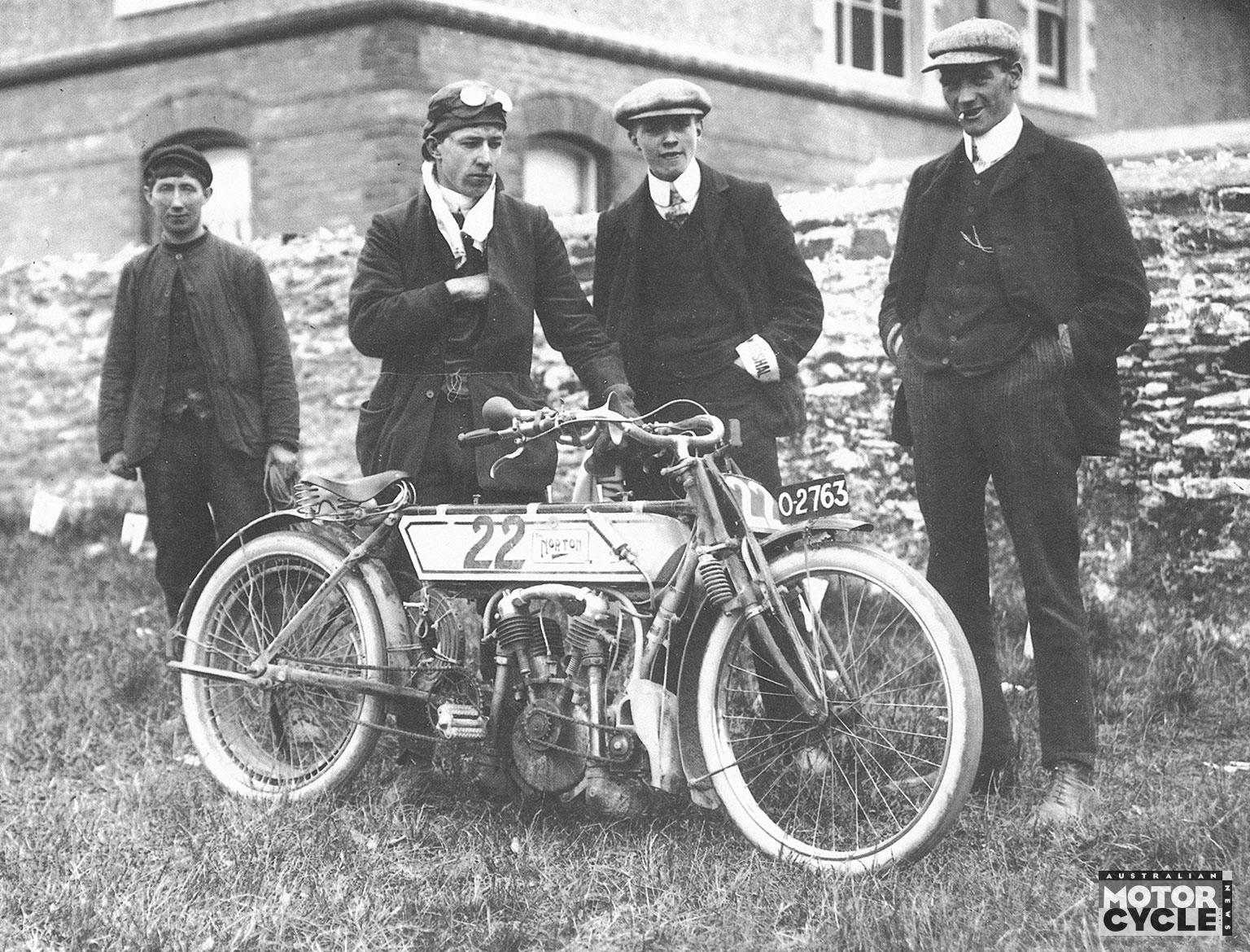
Founded in 1898 by James Lansdowne ‘Pa’ Norton, Norton began life as a Birmingham-based supplier of chains and fittings to the burgeoning two-wheeler industry. In 1902, Norton produced its first motorcycle – the Energette, powered by a French Clement engine – and by 1908 was manufacturing models with its own single-cylinder engines. Norton would evolve through successive ownerships, financial upheavals and design revolutions, but always tied to the twin pillars of engineering innovation and ambition.
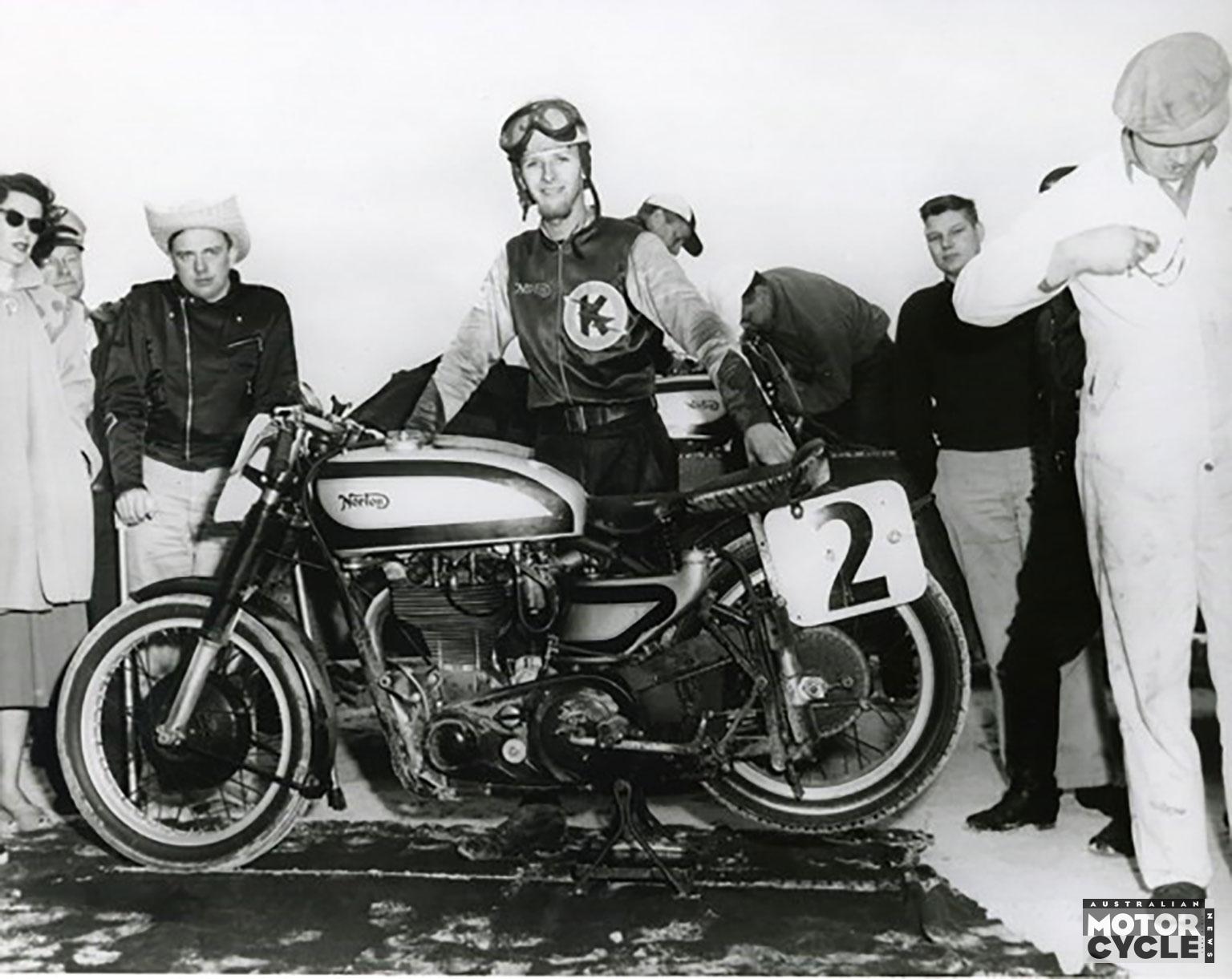
From its earliest days, Norton’s engineering identity was shaped by experimentation. Its pioneering 1921 Model 1, known as the Big Four thanks to being taxed in the 4hp fiscal bracket, and the 1927 Norton CS1 cammy racer, exemplified its engineering shift from side-valve singles to OHV and OHC designs. Racing success quickly followed. Between 1931 and 1939, Norton riders won seven out of nine Isle of Man 500cc Senior TTs, cementing a reputation for speed and reliability, and countless European GP wins.
World War II opened another chapter. Between 1937 and 1945, Norton supplied 89,061 motorcycles to the British Army and the Big Four with driven sidecar wheel. This unprecedented increase in production solidified Norton’s industrial scale and engineering strength. After the war, Norton’s appetite for innovation saw it develop the Featherbed chassis – a welded, twin-loop cradle frame, designed by the Ulster-based McCandless brothers, that turned the Manx model into an Isle of Man TT winner in the 1950s, and Geoff Duke to three world titles for Norton.
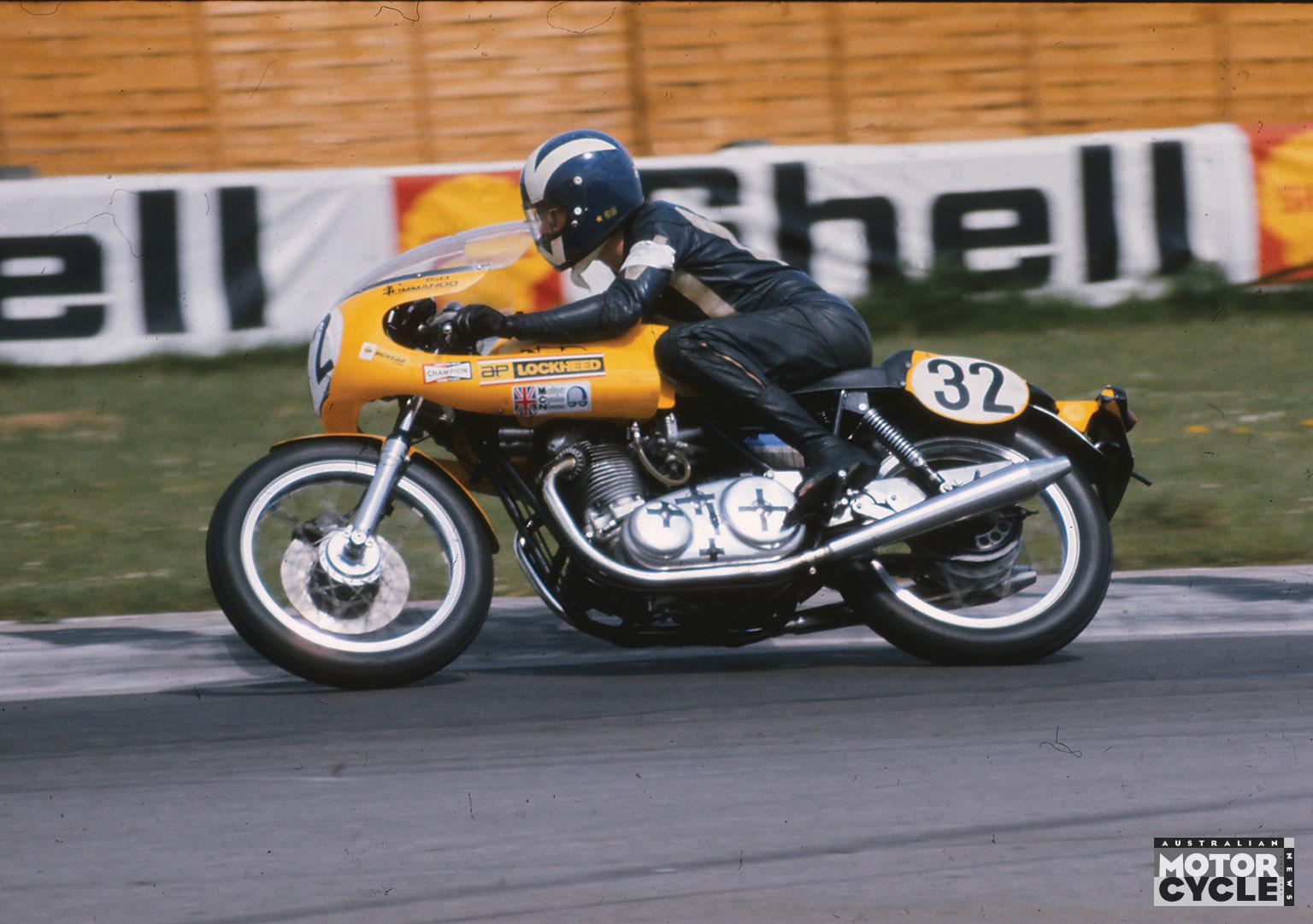
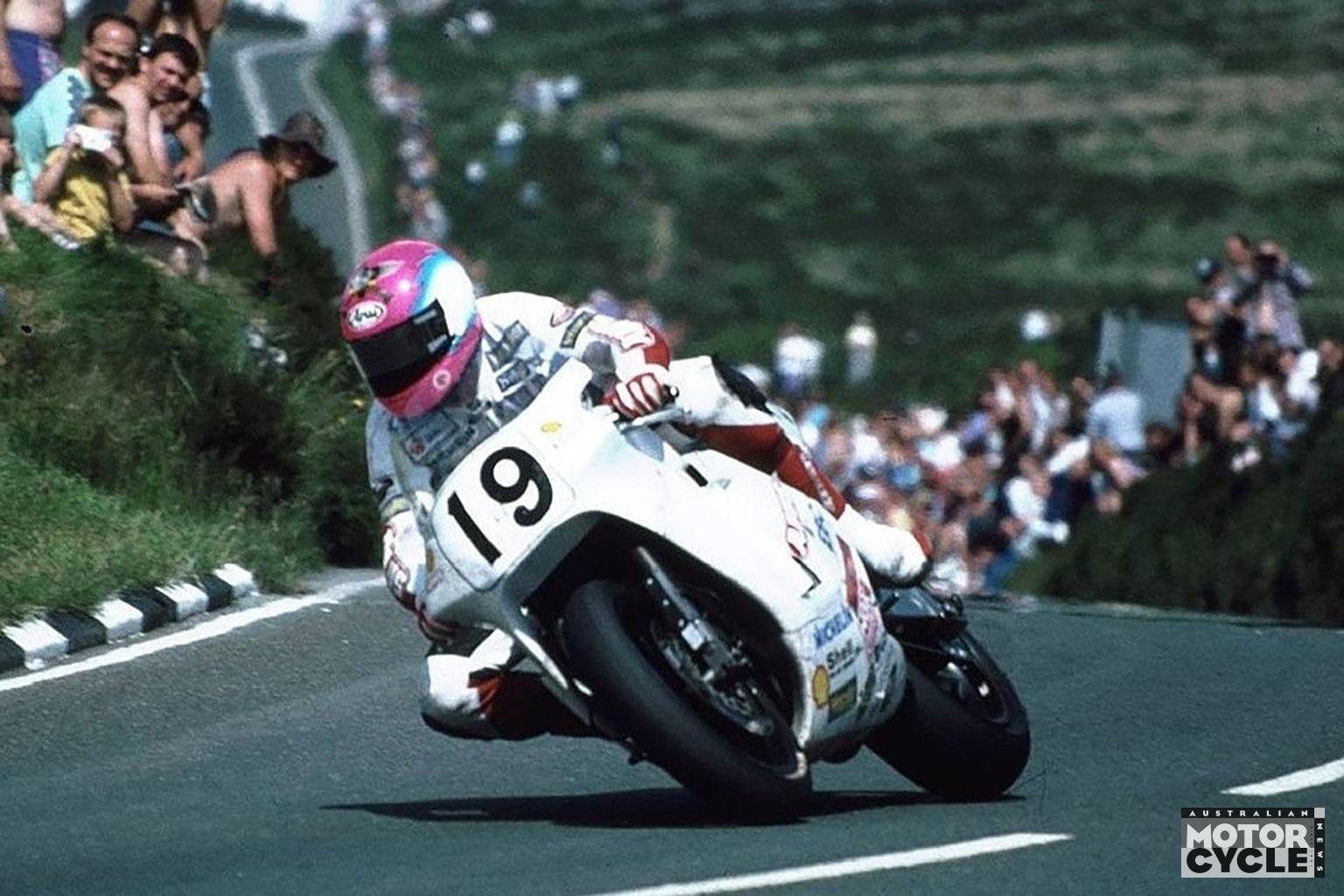
In the 1950s and 1960s, Norton models like the Dominator and Commando introduced larger OHV parallel-twin engines to the marketplace, and chassis innovations like the Isolastic frame, which deployed rubber mountings to significantly reduce powertrain vibration affecting the rider. This constant desire to innovate, and to stay relevant within a rapidly evolving motorcycle landscape, led to the launch of Norton’s successful rotary-engined models in the late 1980s. The RCW588 race version took Steve Spray to victory in the 1989 British Formula One championship, Steve Hislop won the Senior TT race in 1992 on the ABUS Norton to bridge the 31-year gap since the firm’s last win in 1961, and the RCW588 also earned Ian Simpson the 1994 British Superbike championship.
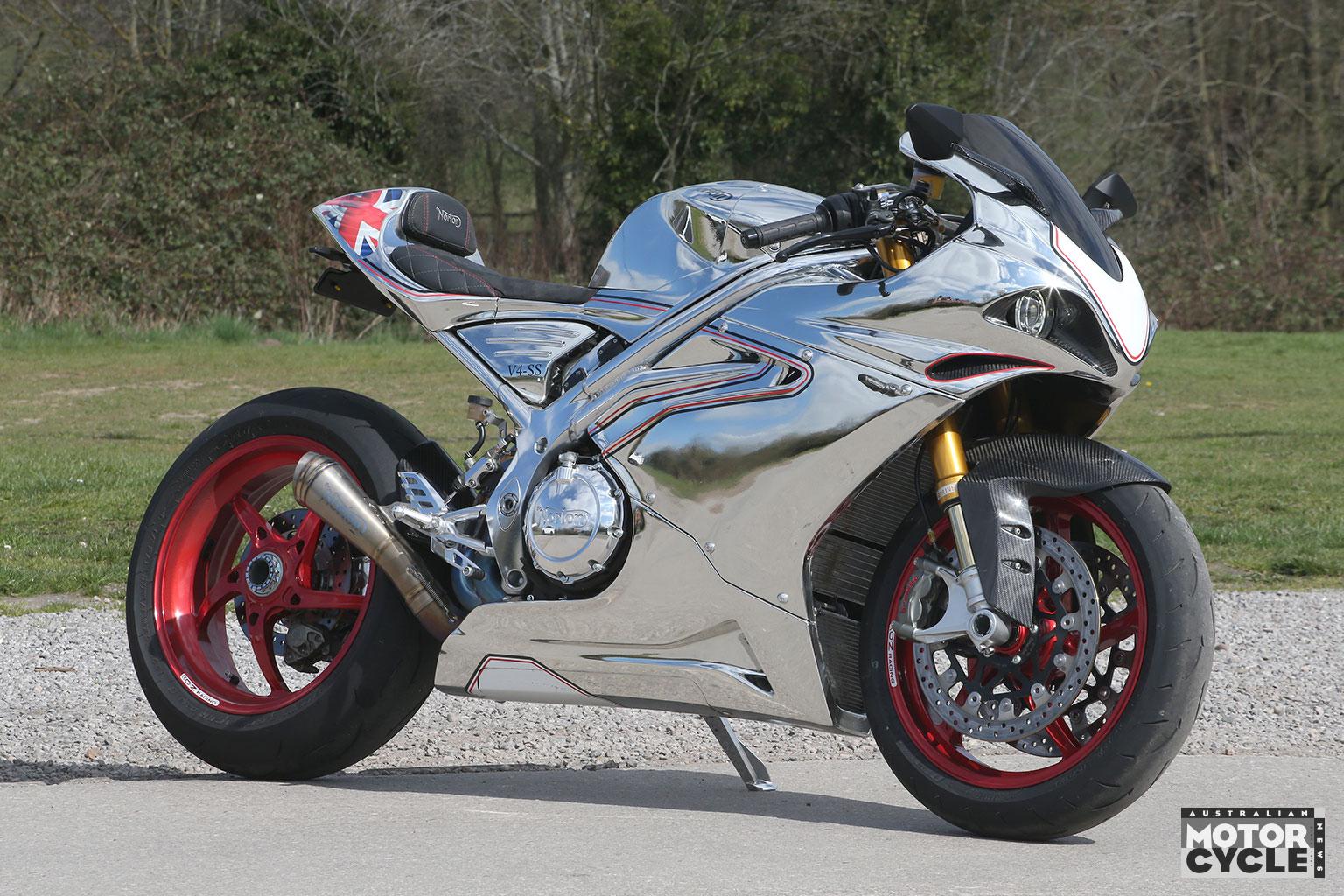
Motorsport, and road racing in particular, has been a central part of the Norton story, and the constant feedback loop from track to street have all fuelled Norton’s engineering philosophy of innovation. It’s a policy which is being re-established under TVS ownership.
SUSPENSION
ENGINE
Type 72° liquid-cooled V4, 1200cc. Chain-driven cams with idler gear for reduced engine height. Titanium inlet valves.
Bore & stroke 82mm x 56.8mm
Compression ratio 14:1
Fuelling Multi-point sequential fuel injection system with 8 injectors, ride-by-wire throttle with independent input on front and rear cylinder banks
Transmission Six-speed with up/down quickshifter
Clutch Cable-operated Assist & Slip multiplate wet clutch
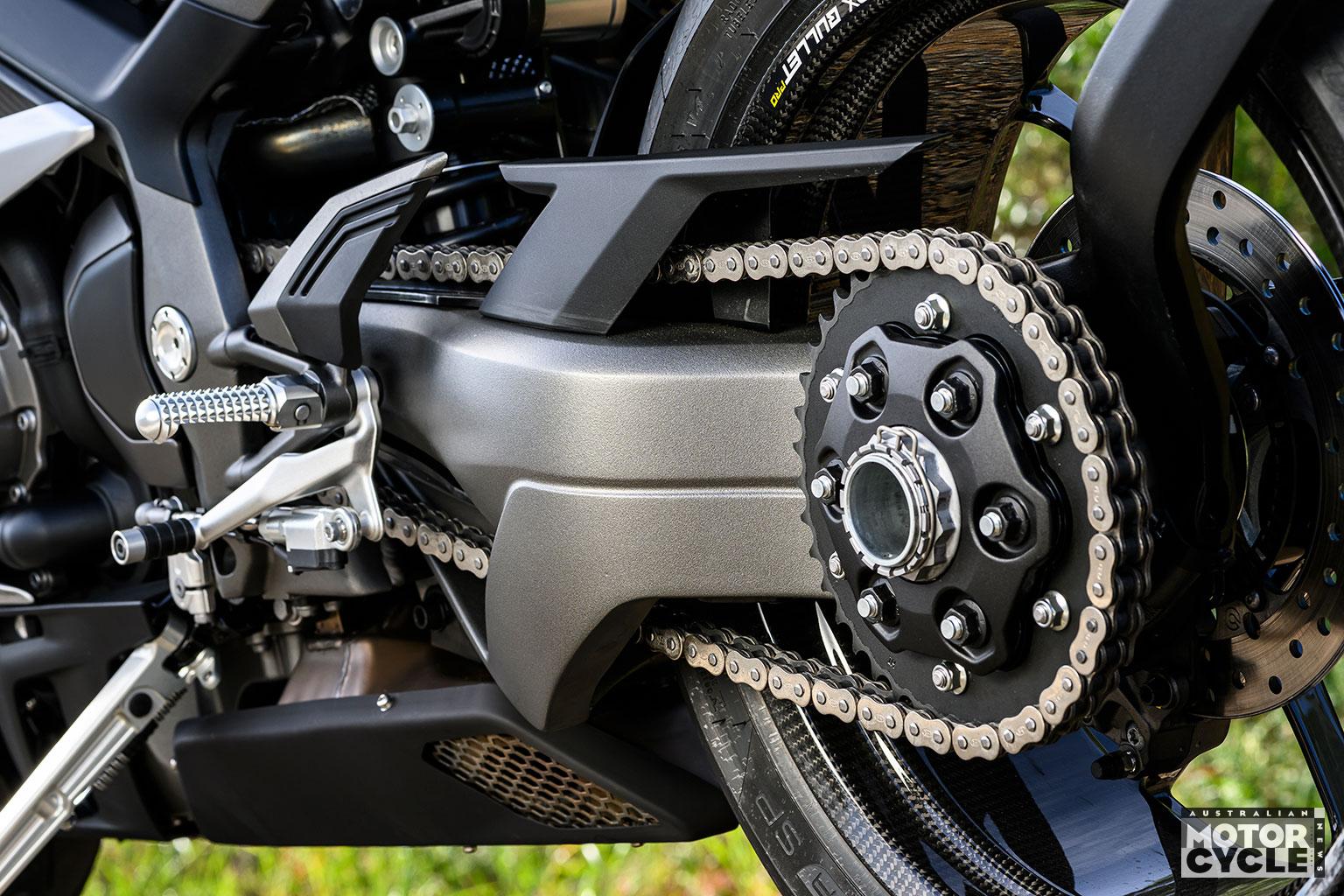
Final drive Chain
PERFORMANCE
Power 153.6kW (206hp) @ 11,500rpm
Torque 130Nm @ 9000rpm
Fuel consumption 15.3L/100km (claimed)
ELECTRONICS
Type Bosch 10.3ME 6-axis IMU
Rider aids Drag Torque Control, ABS, traction control, cruise control, Tractive Effort Control, Torque Controlled Launch, Total Wheelie Control, Rear Lift Control, Rear Slide Control, Vehicle Hold Control, Electronic Combined Braking
Modes Rain, Road, Sport, Track 1 and Track 2
CHASSIS
Frame type Die-cast aluminium with single-sided aluminium swingarm
SUSPENSION
Type Marzocchi
Front: 45mm USD, 120mm travel, full manual adjustment, passive damping
Rear: Monoshock 126mm travel, full manual adjustment, passive damping
WHEELS & BRAKES
Wheels Cast aluminium
Front: 7in x 3.50in Rear: 17in x 6.00in
Tyres Pirelli Diablo Supercorsa SP-V4
Front: 120/70 ZR17 Rear: 200/55 ZR17
Brakes Brembo Hypure
Front: Twin 320mm discs, 4-piston calipers with Bosch cornering ABS EVO
Rear: Single 245mm disc, 2-piston caliper with Bosch cornering ABS EVO
DIMENSIONS
Weight 210kg (wet, no fuel)
Seat height 840 mm
Wheelbase 1435 mm
Rake 24.1º
Trail 94.5mm
Fuel capacity 14.5L
SERVICE & WARRANTY
Service interval 12 months /16,000km
Warranty 36 months / 50,000km
BUSINESS END
Australian availability and price not available
Colour options Matrix Black, Trophy Silver, Celestial Grey (extra cost), Aqua Green (extra cost)
Contact www.nortonmotorcycles.com