Honda’s latest patent gives electric motocross bikes a simulated clutch feel, torque-boost launches and haptic feedback
One of the selling points of electric bikes is their simplicity: twist the throttle and you’re on your way with no need to worry about gears and clutches. But Honda has filed a patent that adds some of that complexity back in the name of increased rider control and better performance for competition-focused electric motorcycles.
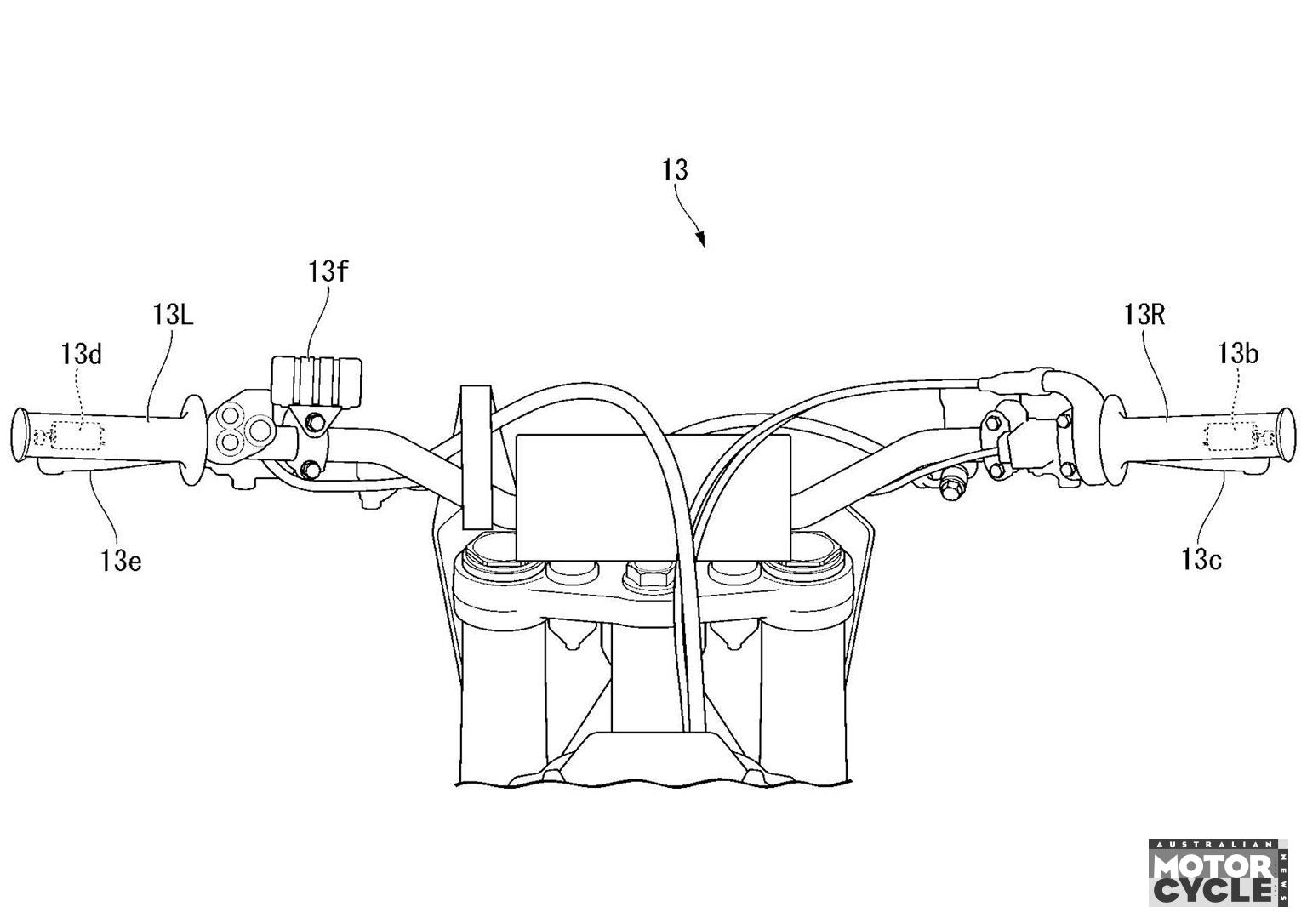
Illustrated on Honda’s CR Electric Proto motocross bike, the new design puts a clutch lever back onto the lefthand bar. It’s a route the brand has taken before with its RTL Electric trials bike, which features a conventional clutch and flywheel, but here the clutch is an electronic simulation rather than the real thing.
In the RTL trials bike, the clutch and flywheel allow riders to store energy in the fast-spinning flywheel, using its gyroscopic effect to assist balance and the clutch to release that energy in a rapid burst when it’s needed. The new patent, however, shows how the company aims to replicate the effect of a clutch purely electronically.
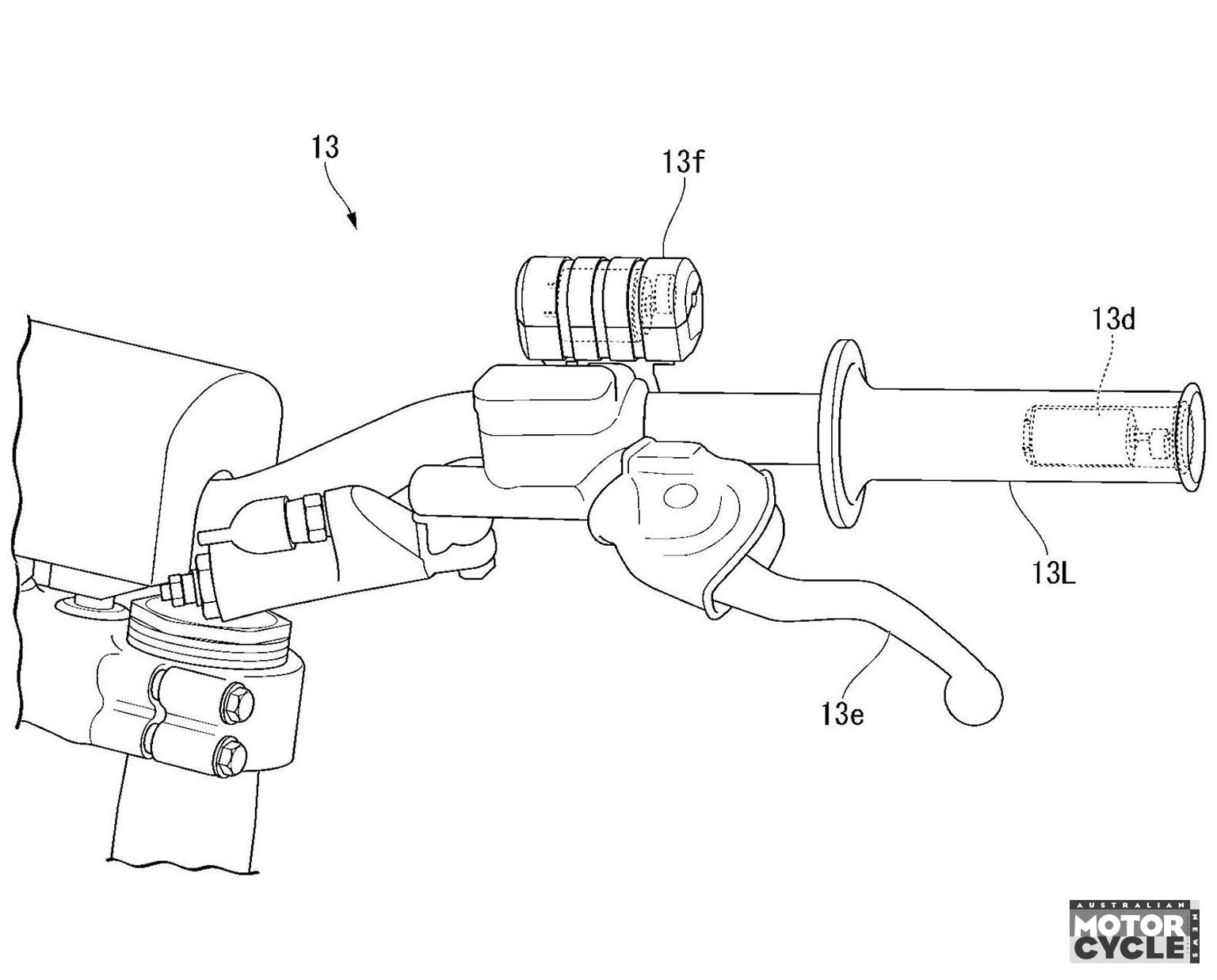
The patent explains how the power delivery of the electric motor will be tailored by the movement of the clutch lever. Pull the lever in halfway, for example, and the motor’s power will be halved. Pull it in completely and the power is cut altogether, regardless how much you twist the throttle.
That’s only half the effect, though. The patent explains that the system will be mapped to give a torque boost if, for example, you open the throttle with the clutch lever pulled in, then release the clutch lever rapidly: replicating the effect you’d get on a combustion-engined bike. That means the clutch can be used to tailor the power delivery for fast starts, rather than relying purely on the preprogrammed power ramp-up associated with opening the throttle.
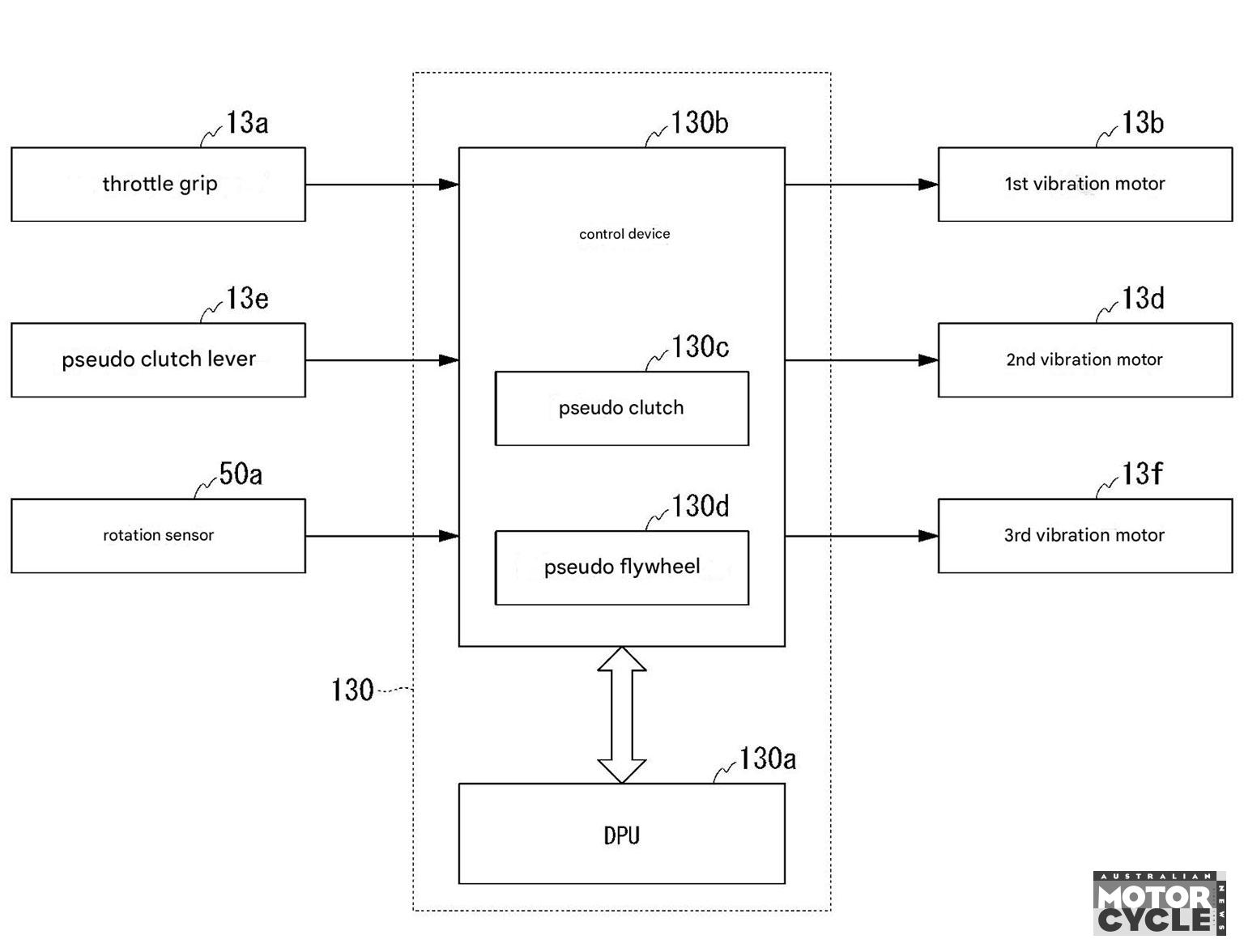
The patent also addresses the problem of feedback from the clutch and throttle. It suggests a trio of haptic vibration motors could be fitted – one in each bar end, and a third near the clutch lever on the lefthand bar – each responding to the throttle and clutch movements to simulate the vibrations you’d get as an engine is revved and the feeling of finding the biting point of a conventional clutch.
As well as offering some potential benefits for competition use on a motorcross bike like the CR Electric Proto, the setup has the potential to be used as a training device for riders brought up on electric bikes but making the switch to combustion engines: a real possibility in the future as a growing number of kids make their start in competition on electric motocross machines, but ICE still holds the upper hand in higher-performance categories.
For street bikes, too, there’s potential in the system. We’ve previously seen patents from Zero and Kymco related to pseudo clutches on electric motorcycles, and even simulated multi-speed transmissions, with the aim of making the machines more engaging to ride, and Honda’s version, with its haptic feedback system, could be even more realistic.