New entry-level machines planned for revised 2027/28 model year
Harley-Davidson revealed the first details of its ‘Back to Bricks’ strategic plan alongside its first-quarter financial figures on 5th May and in doing so gave the first glimpse of two key new models intended to make the brand more attainable: the upcoming Sprint and a revived air-cooled Sportster.
Both bikes were shown only in simple, line-drawing form along with the most basic details, but even so we can read quite a lot into what’s been shown.
Let’s start with the Sprint. Long promised for the 2026 model year, that now appears to have been pushed back to 2027, but the details and image seem to confirm that the new bike, originally said to be targeting a $6000 US price tag, will be based on the Indian-made Harley X440.
The X440 was designed and manufactured by Hero in India, and is currently offered in two forms – the X440 and the X440T – using the same engine and chassis. Both the engine and the frame can be seen in Harley’s new drawing of the Sprint, closely matching the X440’s parts. H-D says the Sprint uses an oil-cooled engine, which rules out the Chinese-made X350 and X550 models and means the X440’s single-cylinder unit is virtually certain to power it.
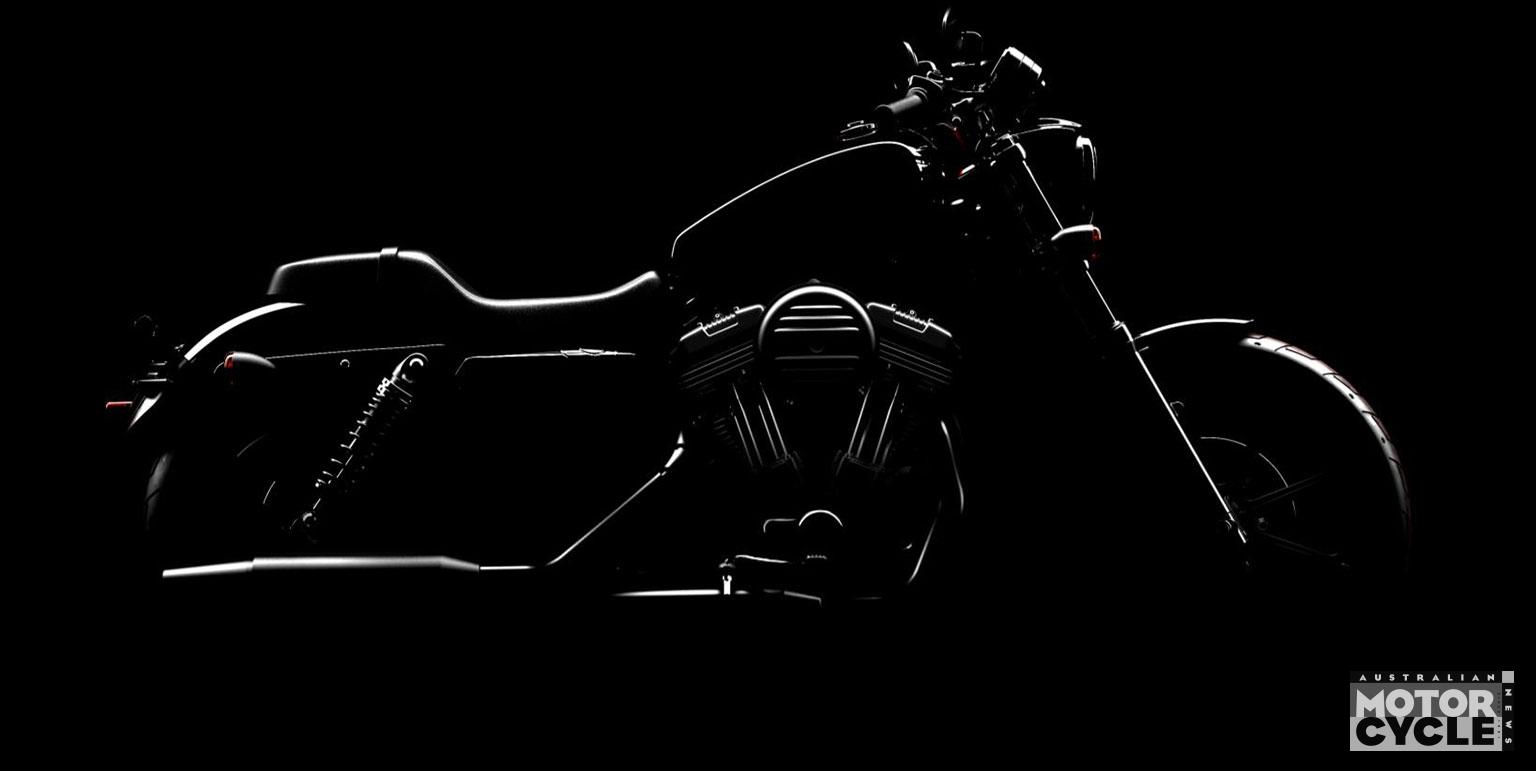
The styling is new, though, adopting a more traditional Harley look than the X440’s, with a longer, lower stance and right-way-up forks instead of the X440’s upside-downers. The tank is sleeker and the seat slung much lower above a traditional-style rear fender, while there’s a small cowl over the single, round headlight. The bars and pegs are set in a moderate, cruiser-style position, and the front wheel is clearly larger than the rear to suit that segment of the market.
In terms of price, Harley now simply says it will be below $10,000 US, while claiming it will be ‘lightweight and small scale’ as well as highly customisable.
More of a surprise is the plan to reintroduce the air-cooled Sportster, which disappeared from Harley’s range in 2022 in the face of increasingly tough emissions rules and the introduction of the liquid-cooled Revolution Max engine that powers the Nightster and Sportster S models.
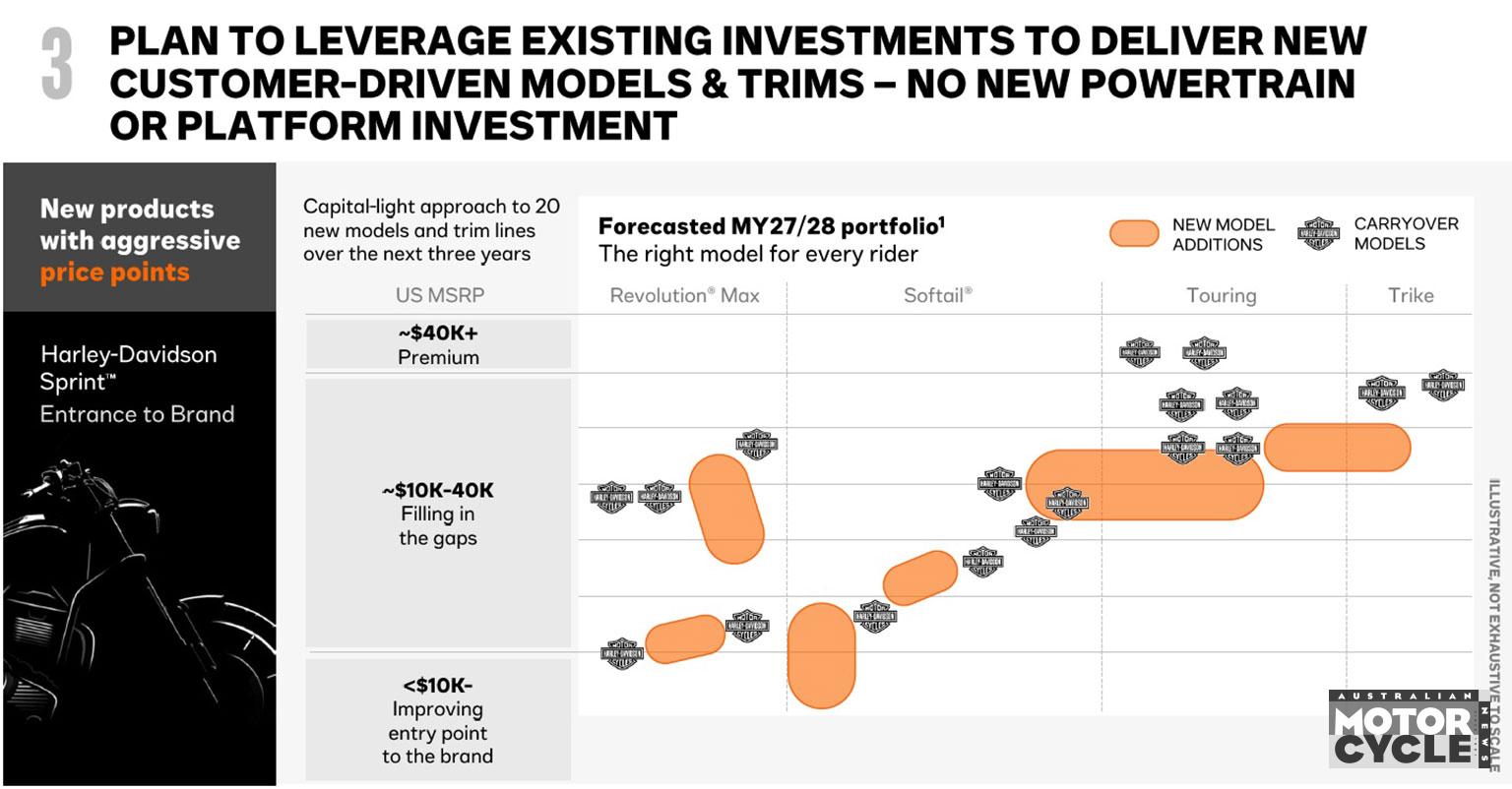
Harley says the new Sportster will be air cooled and shows an image that looks very similar to the last generation, with elements of bikes like the Sportster 1200 Forty Eight and the Sportster 883. Harley’s planned price is $10,000 US, which hints that the revived machine could be based on the old 883 rather than the 1200, as even back in 2022 the Sportster 1200 cost more than that. The use of an air-cooled engine – in the sole drawing it looks very much like the XL Evolution that powered the last generation of 883 and 1200 Sportsters – is confirmed, and like the Sprint the bike will be easy to customise with a focus on parts and accessories.
Elsewhere, Harley wants to expand its range without investing in new powertrains or platforms and showed a slide highlighting the perceived gaps in its lineup that it intends to fill. These included a space just above the Nightster in the Revolution Max-powered range, plus a space for a more expensive model bridging the space between the Sportster S and the Pan America. Spaces in the Softail range include a big area for bikes cheaper than the Street Bob, as well as a space between the Street Bob and the Low Rider S and another at the upper end of the range, spanning the gap to the ‘Touring’ models that cost more. Harley’s plan also appears to suggest a more affordable Trike model is planned, at around the same price as the cheapest bikes in the Touring range like the Street Glide and Road Glide.
Overall, the Back to Bricks plan appears to focus on boosting profits from parts and accessories and adding more affordable models to the range without a big spend on developing new engines and platforms. There are certainly times in Harley’s past when a similar approach has proved successful, but only time will tell whether it’s a route that will leave the brand exposed in the future as rivals continue to pour money into R&D.