30-plus years on, Ducati’s game-changing naked icon is back and still turning heads
When the invitation to ride the 2026 Ducati Monster arrived, there was a mix of both positive and negative emotions. We know the heavily updated naked will be light, agile and loads of fun to ride, so there’s excitement. But also, perhaps, it will be further removed from the essence of the 1993 original air-cooled V-twin that much of the planet fell in love with and which arguably saved Ducati from financial ruin. For those of us who owned an early Monster – I once thrashed mine from England to Italy and back again – that blend of rugged simplicity, desmo power and trellis frame can never be surpassed.
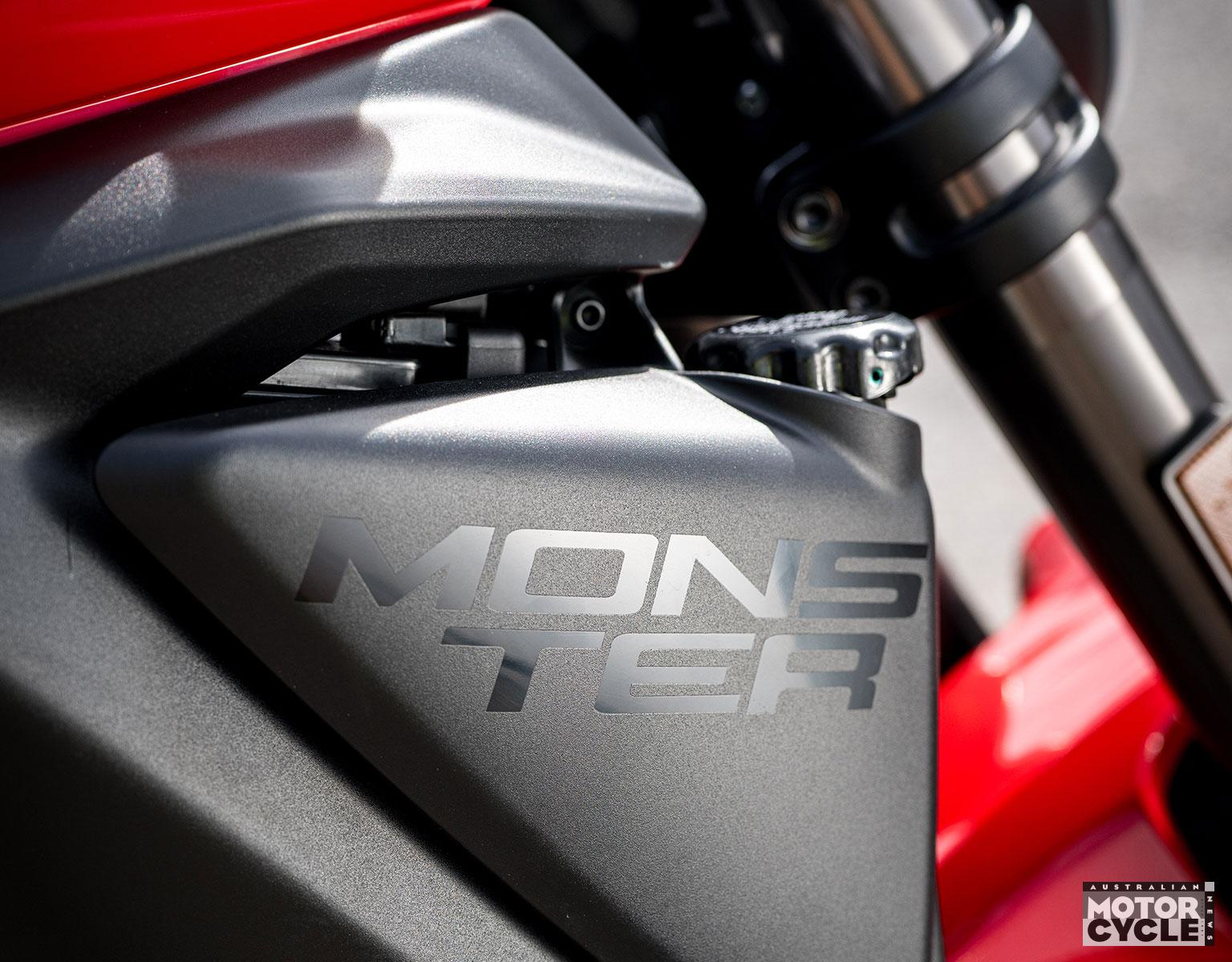
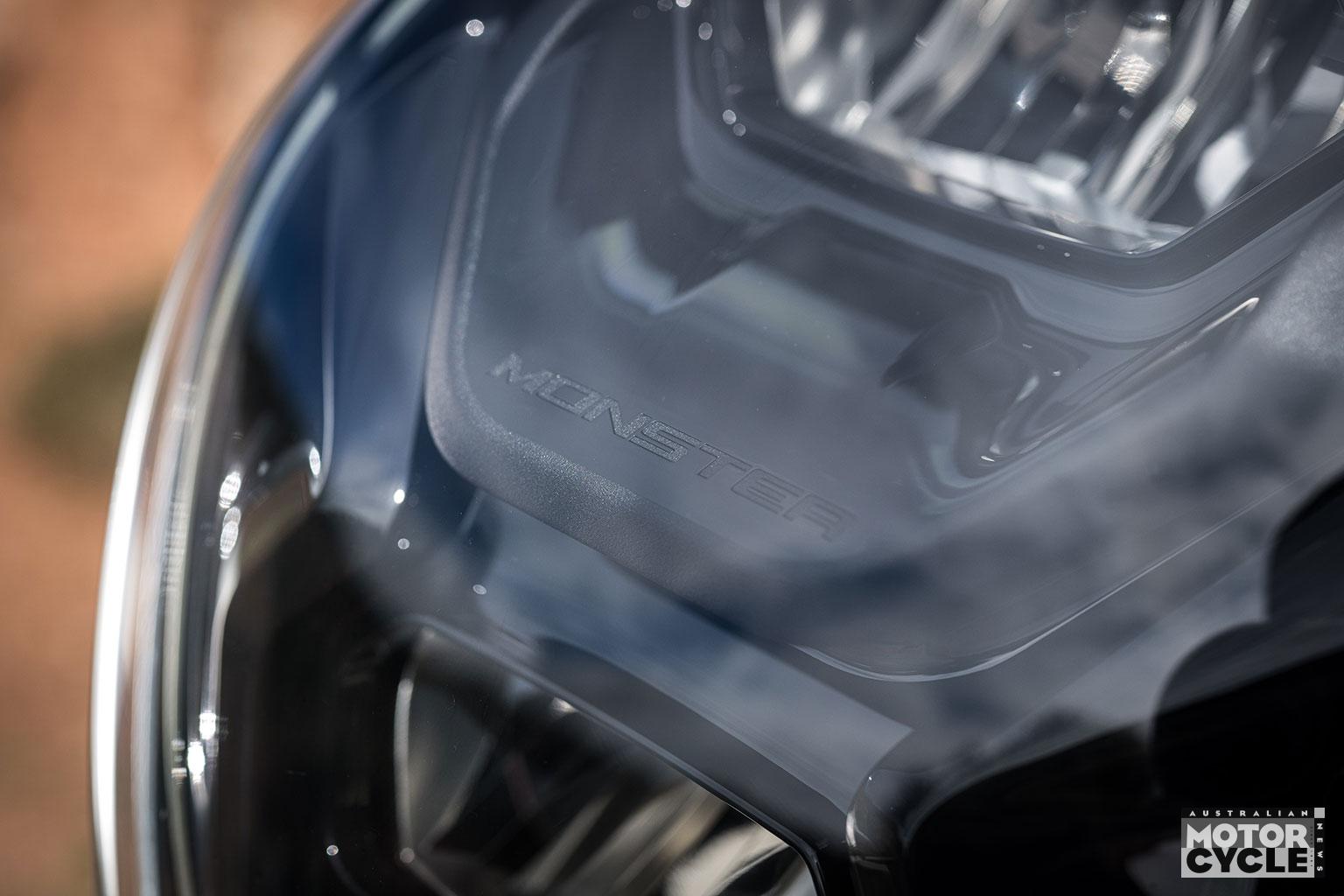
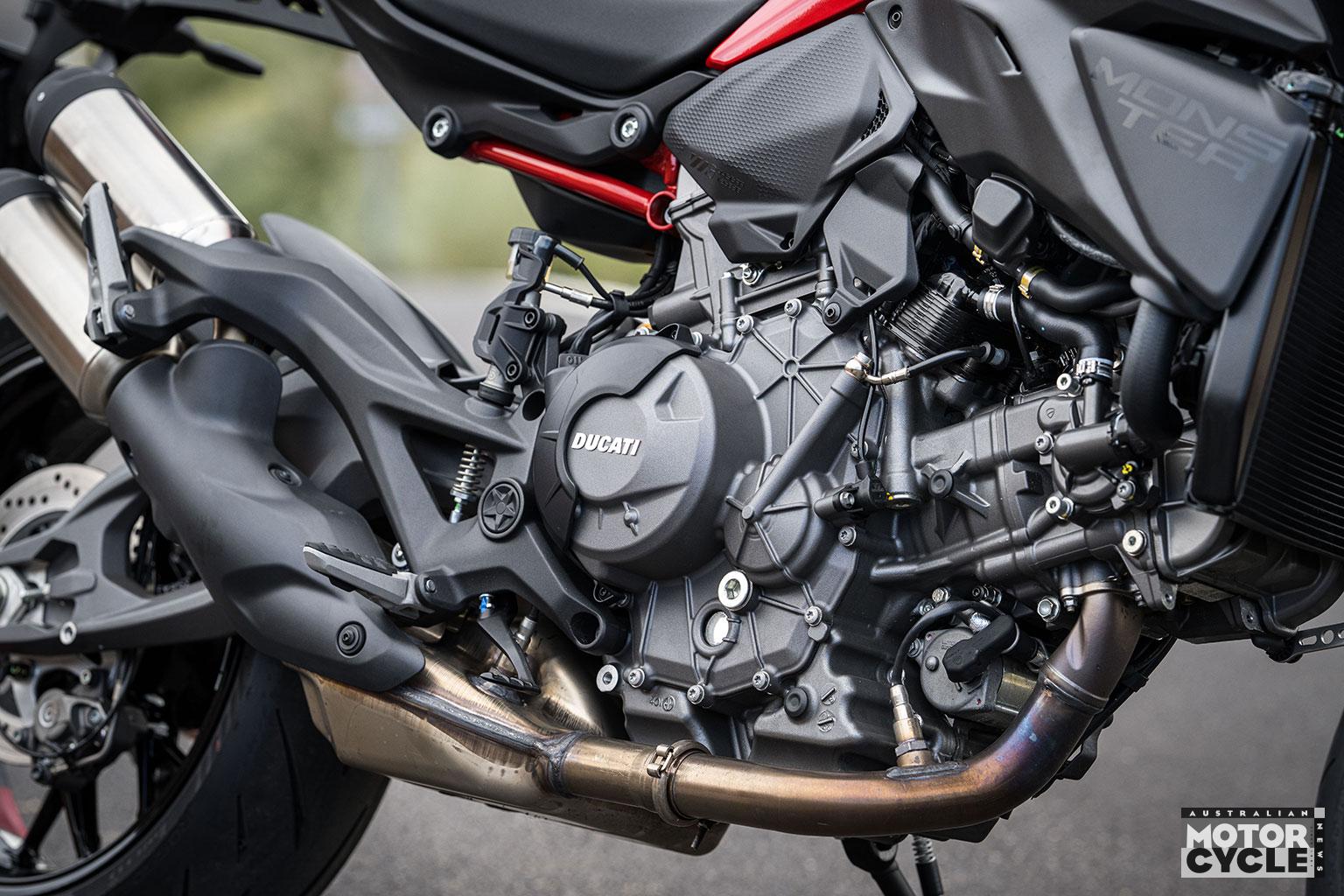
Today’s new Monster carries much of the same DNA style and certainly rekindles memories of the original. But sadly, air-cooled engines have all but been banished, that classic Taglioni-inspired trellis frame has disappeared, and now there’s no desmo either. For the first time in the Monster’s history, its valves are spring operated as Ducati’s all-purpose V2 finds its way into perhaps the most-loved naked in history.
We flew to southern Spain to get a flavour of Ducati’s latest Monster, but sadly the weather didn’t play ball. Spain was hit by torrential rain that flooded roads and threatened to shut down all testing. But we still managed to venture out to at least get a flavour of the 2026 Monster.
Riding the poster bike
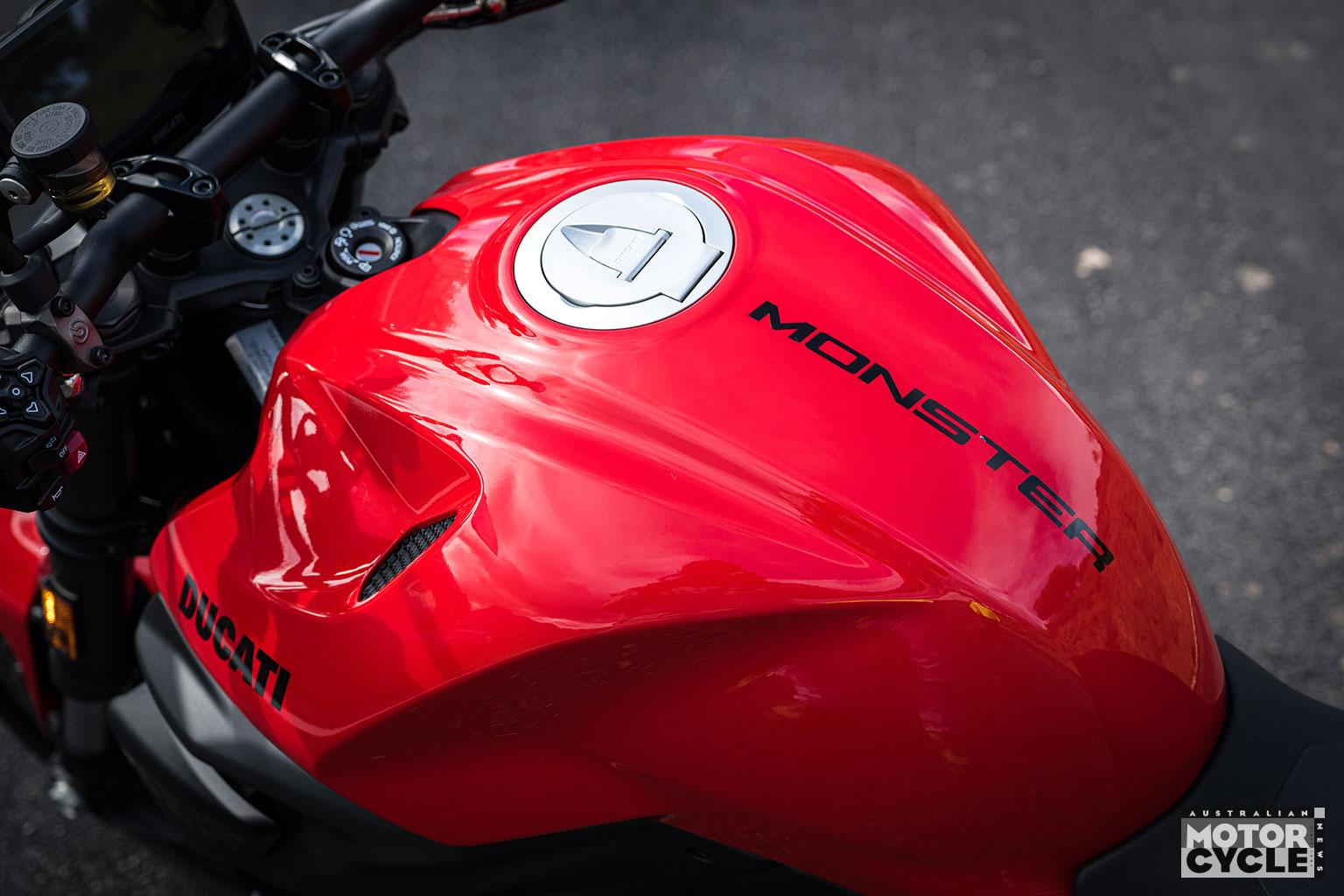
Ducati has always produced beautiful and desirable bikes – and the Monster has been a design statement since day one. Alongside the Ducati 916, it was the poster bike for a generation in the 1990s and has a global following way beyond any other naked bike in this segment. How the new machine looks remains as important to Monster fans as ever.
Priced at just under $21,000 in Australia, it’s between 10 and 20 percent more expensive than some other nakeds, such as Yamaha’s MT-10 and Triumph’s new Trident 800. But we have come to expect that. Even if you ignore its high-level finish, quality components and advanced rider aids, the new Monster scores highly on appeal alone. If you were to remove the badges, it would still be instantly recognisable as a Ducati Monster. It might have lost some of the simplicity of the original but the continuity and lineage remain strong.
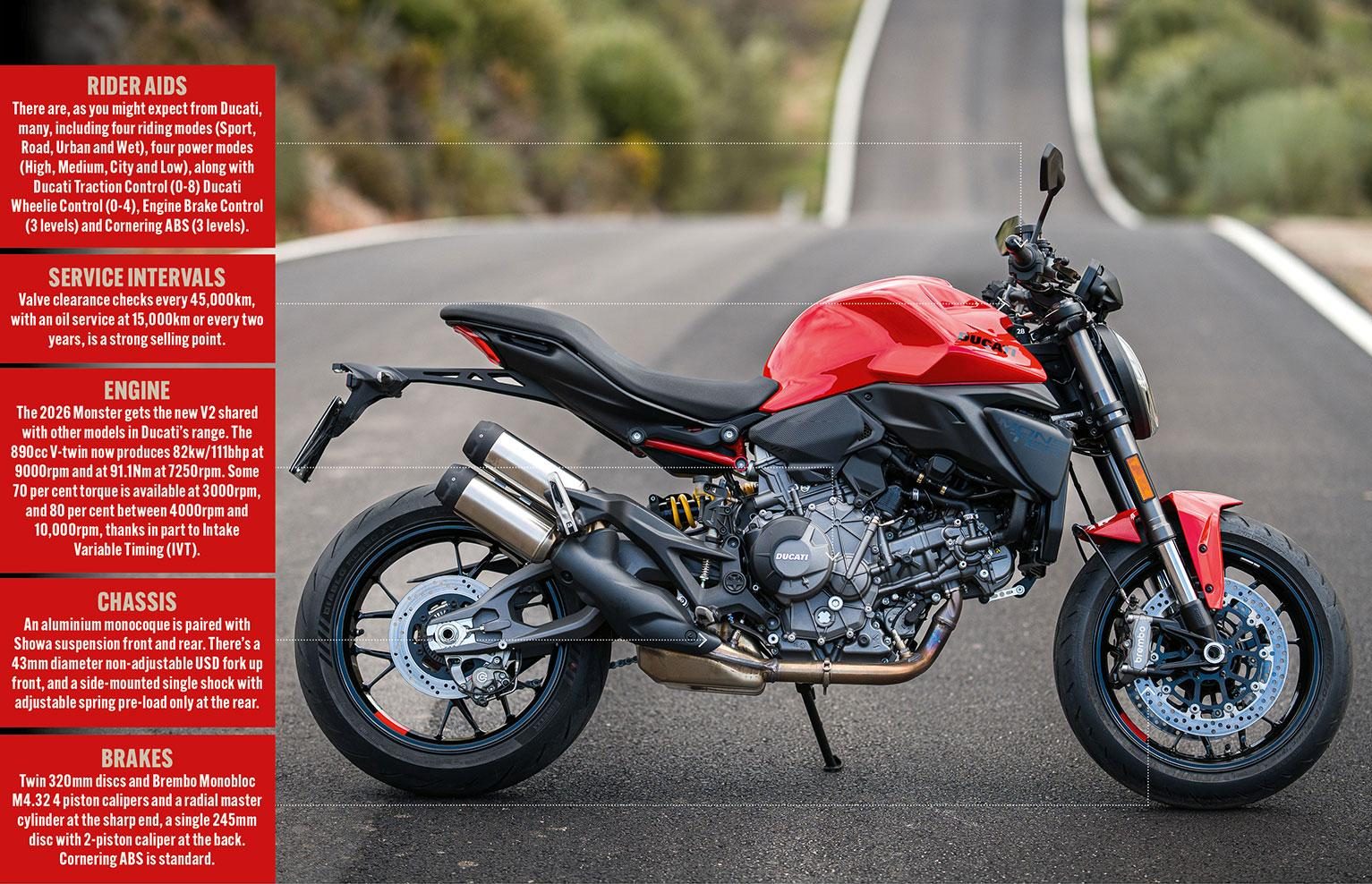
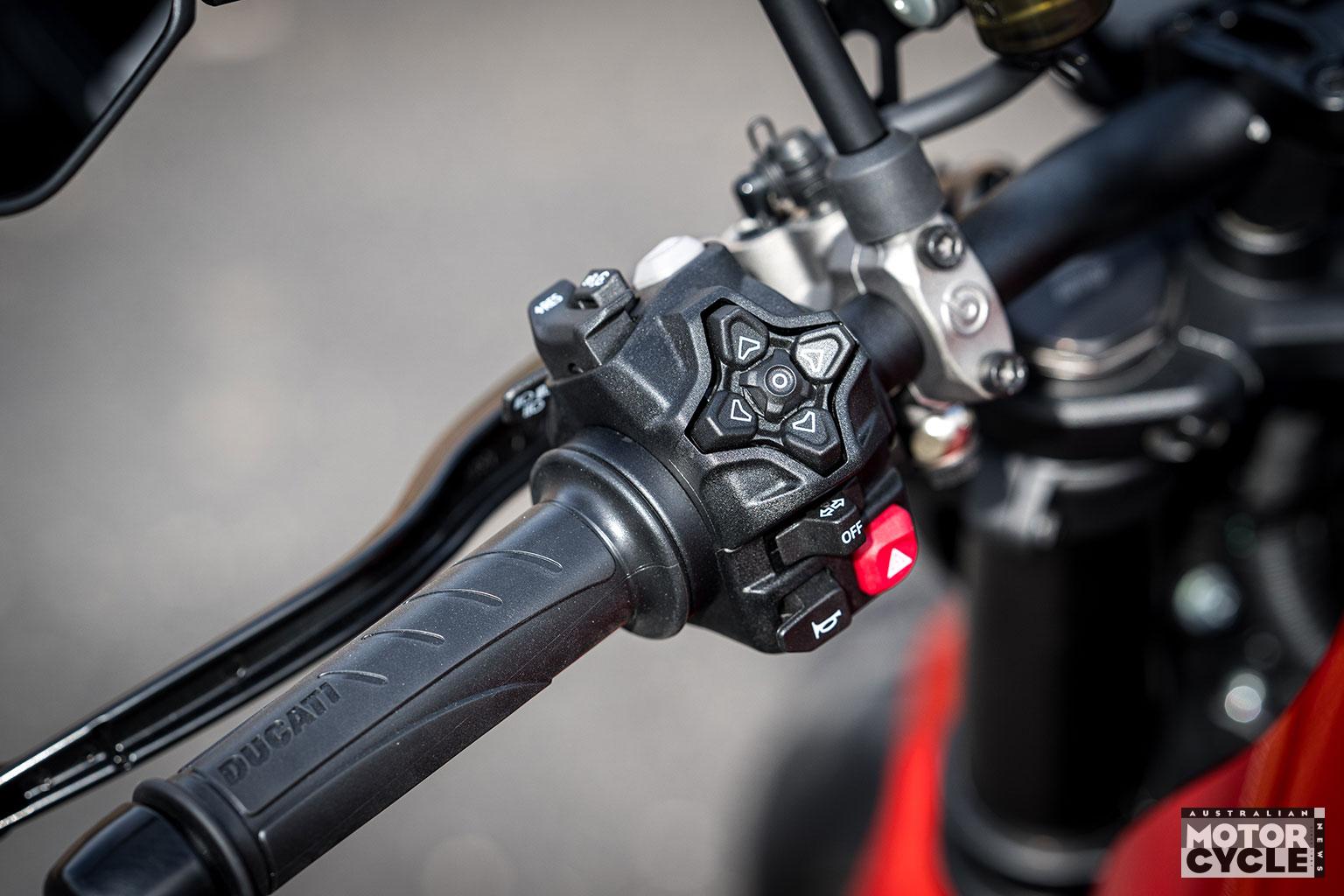
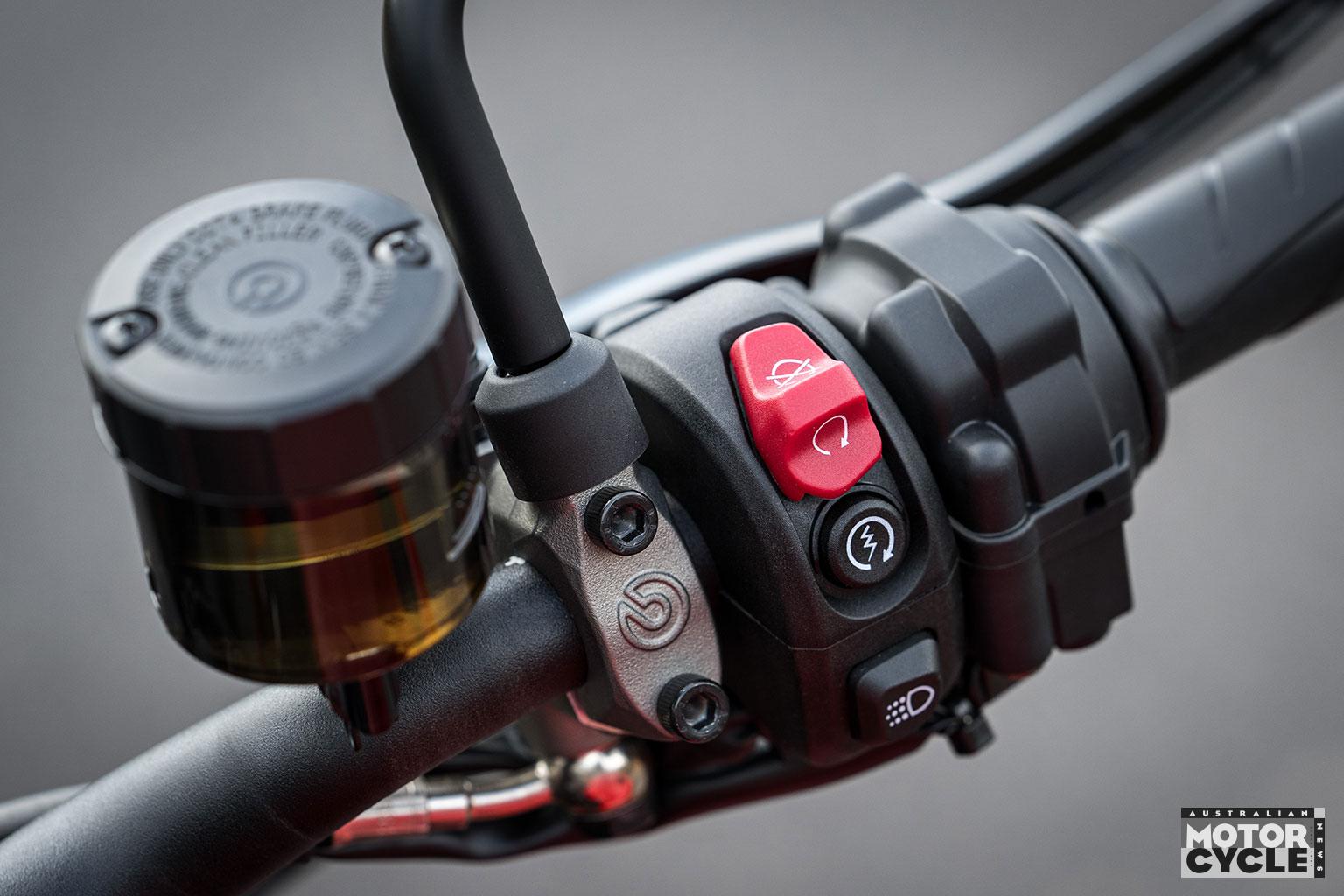
On board you’re greeted by a cleanly laid out cockpit featuring a new 5.5-inch colour dash and the same neat and navigable switchgear shared with Ducati’s other V2 users. (That’s the Multistrada V2, Panigale V2, Streetfighter V2 and upcoming Hypermotard V2.) There are now four power modes and four riding modes to choose from: Sport, Road, Urban and Wet, with the latter two limiting peak power to 71kW. As-standard rider aids feature cornering ABS, Ducati Traction Control, Ducati Wheelie Control, Engine Brake Control and a Ducati Quick-shifter that can be deactivated.
The riding modes are easy to change on the move via a momentarily closed throttle, and each can be customised to suit your riding preferences. You could, for example, have the full stable of 111 horses in Wet mode rather than the prescribed 95, or remove the traction control and wheelie control in Sport mode. Furthermore, settings remain saved.
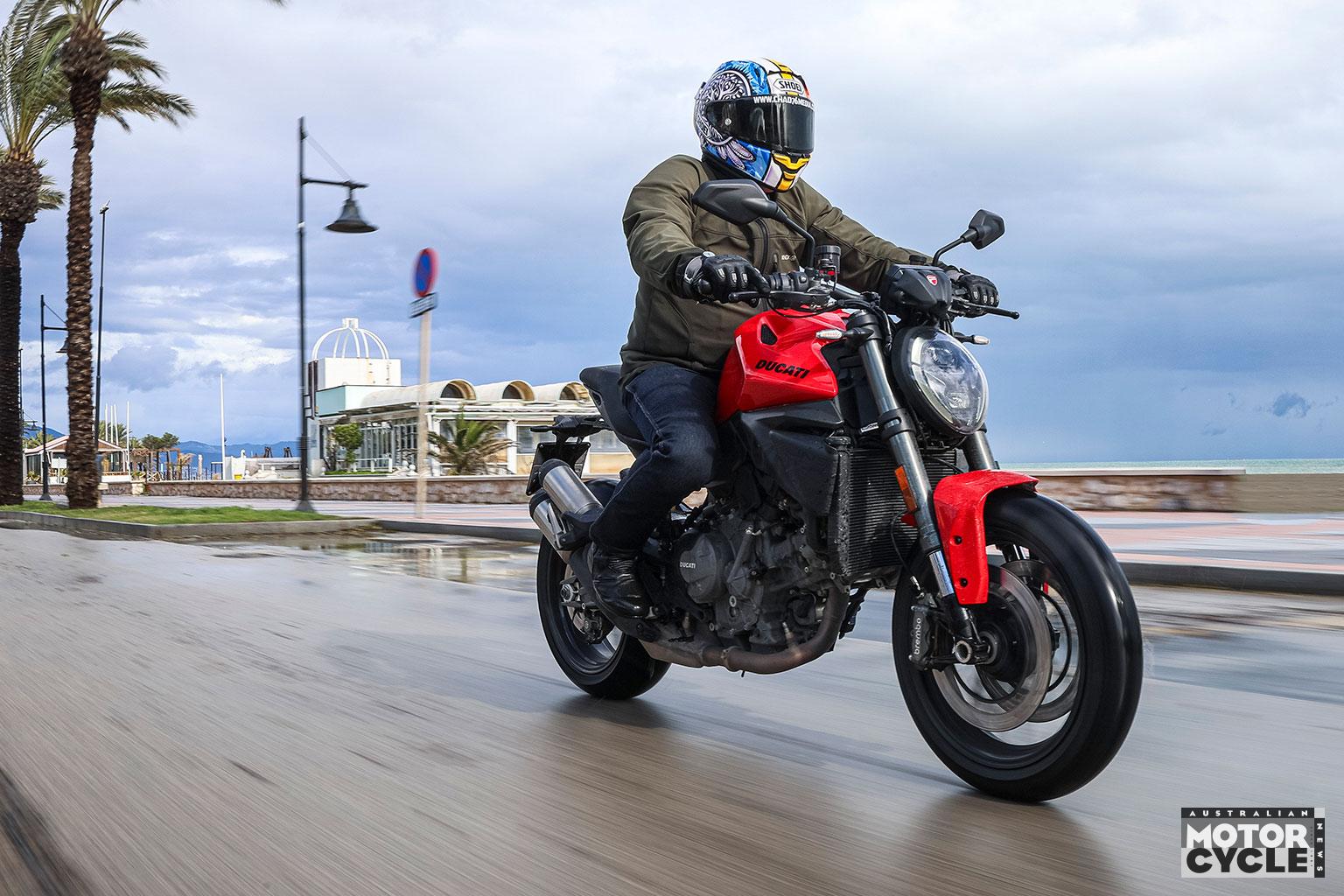
The roads used for our Malaga ride were, briefly, almost dry as we negotiated the early morning traffic. This gave us the ideal opportunity to assess the Monster’s all-important low speed handling and urban presence. Many a Monster will spend the majority of its life in the city, and this is an environment in which it truly excels. It’s keen, clean and so easy-going you understand why there’s no need for an entry-level Monster these days. In the dedicated Urban mode, the fuelling is all but perfect – impressive for an 890cc V-twin we would have considered an unruly superbike 30 years ago.
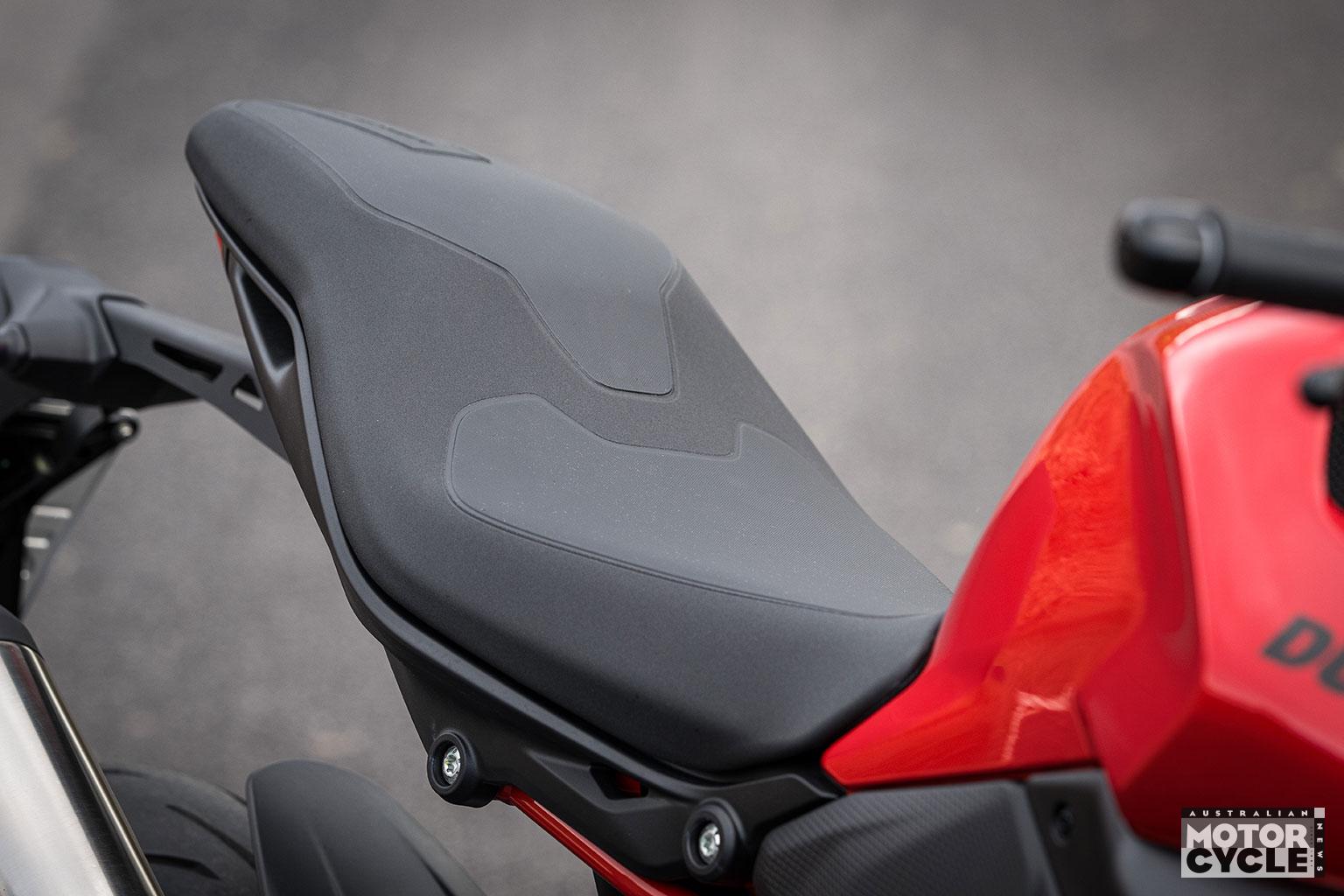
Ducati has also striven to make the Monster as light and easy to ride as possible. At just 175kg without fuel, the 2026 Monster weighs 4kg less than the current model and feels especially light, while there’s ample steering lock for intricate manoeuvres. Seat height now stands at 815mm, which is 5mm lower than the previous Monster. According to Ducati, the inner leg curve has been reduced by 18mm, and the official accessories catalogue even offers a 20mm lower seat and a suspension lowering kit that removes another 20mm, giving a theoretical seat height of just 775mm. For reference, I’m 170cm and, at the lights, was almost flat-footed both sides on the standard seat. Smaller and less experienced riders will relish the combination of a low seat, a smooth engine (in Urban and Wet modes) and easy agility.
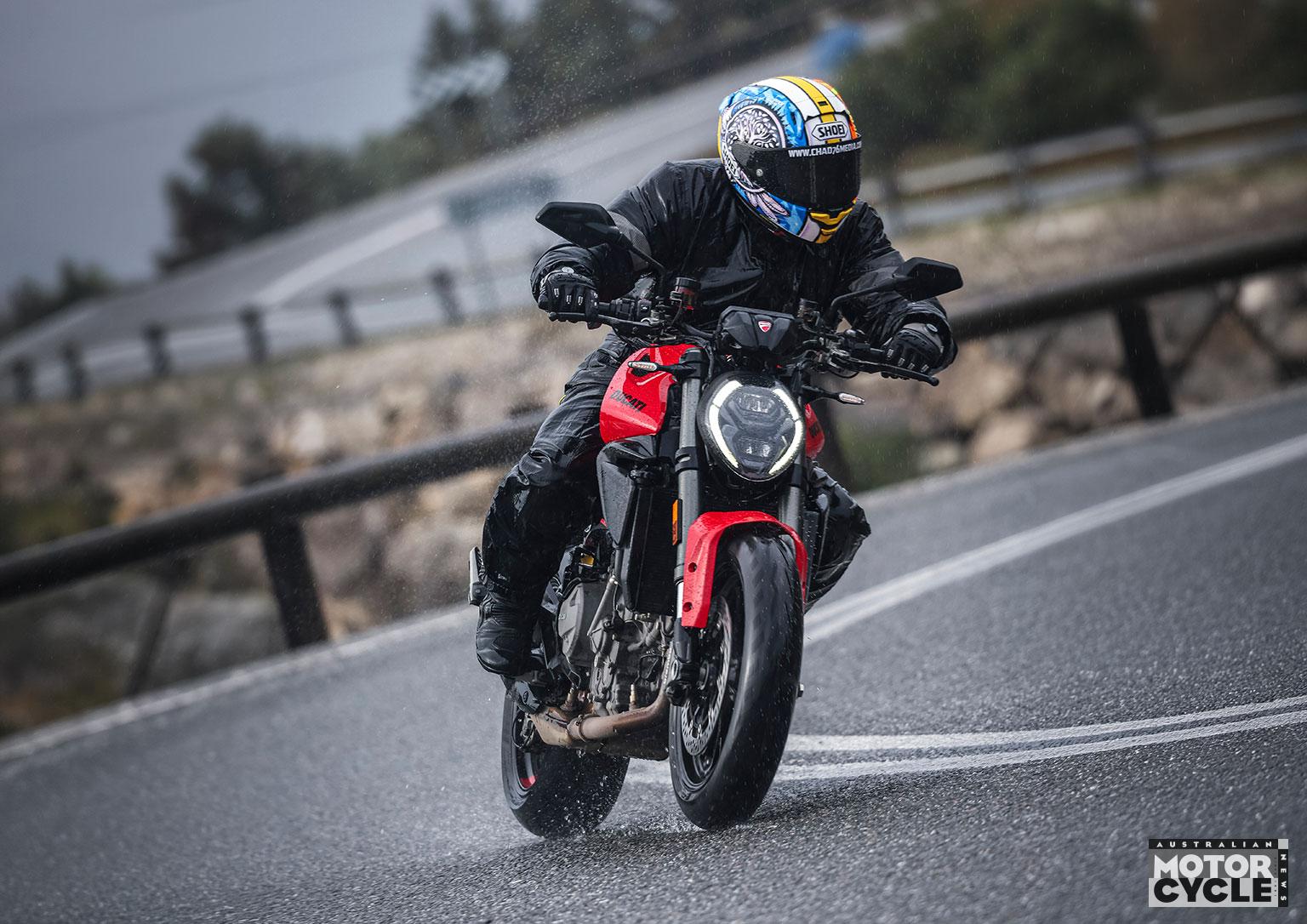
HERE COMES THE RAIN
As we headed to the mountains, their peaks covered in stormy skies, I opted for Road mode, with the TC and wheelie control removed by me before leaving (at a standstill). But as we hit the first of the heavy rain and flooded roads it was straight back to the Wet mode. One of the beauties of the new Monster is you can easily change and experiment with the modes on the move. Unlike some of the competition, you don’t have to stop to remove or add key rider aids like TC.
The difference between Urban and Wet isn’t huge as both have similar power curves restricted to 71kW (95hp). In Wet mode the rider aids are at the maximum level of intervention, whereas in Urban they are reduced a fraction. In Wet, for example, the TC is 8/8 but in Urban is 6/8. The jump, however, from either of these two modes to Road and Sport is far more dramatic. The Monster becomes much more lively, with far more drive from the V2.
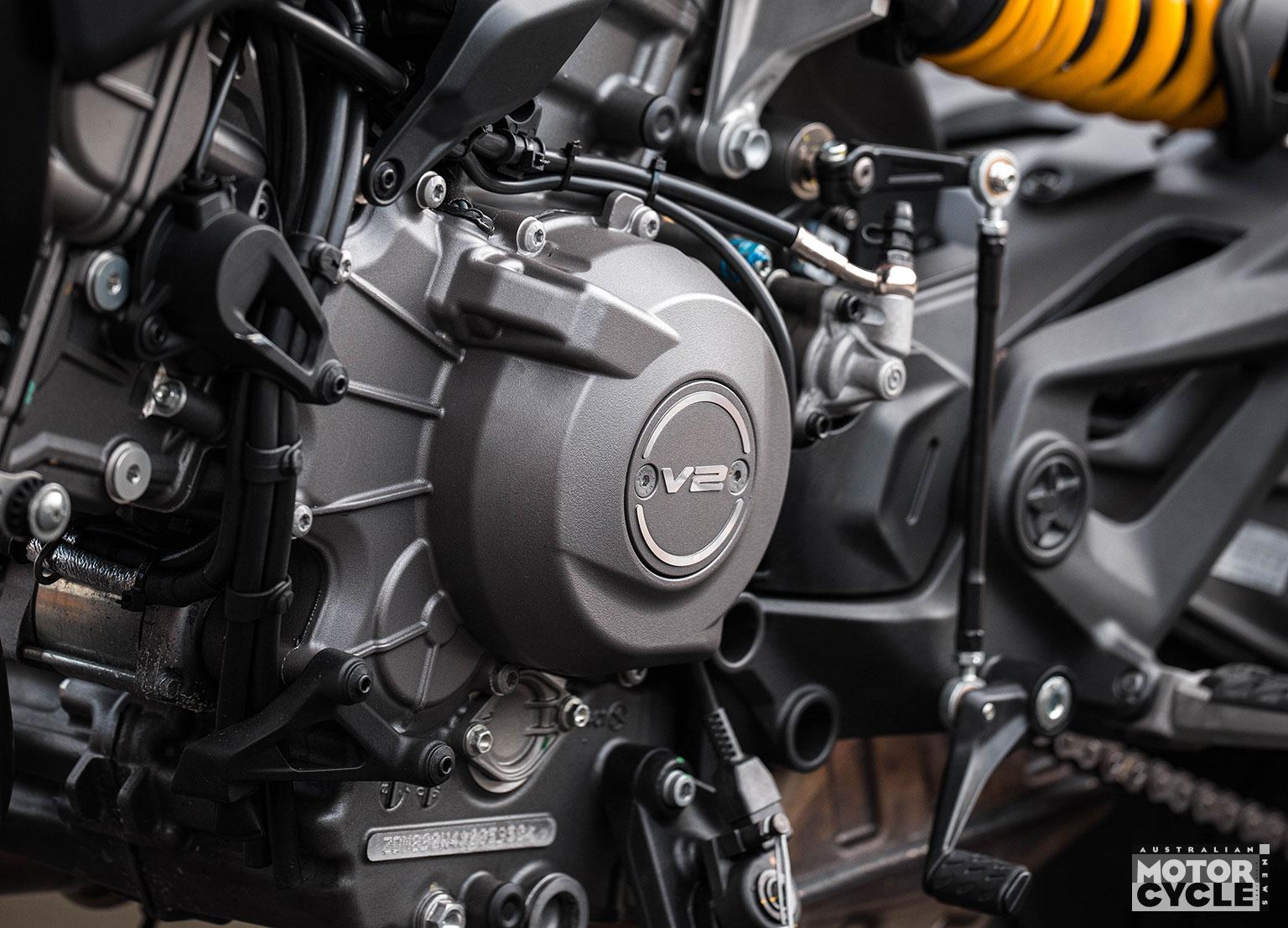
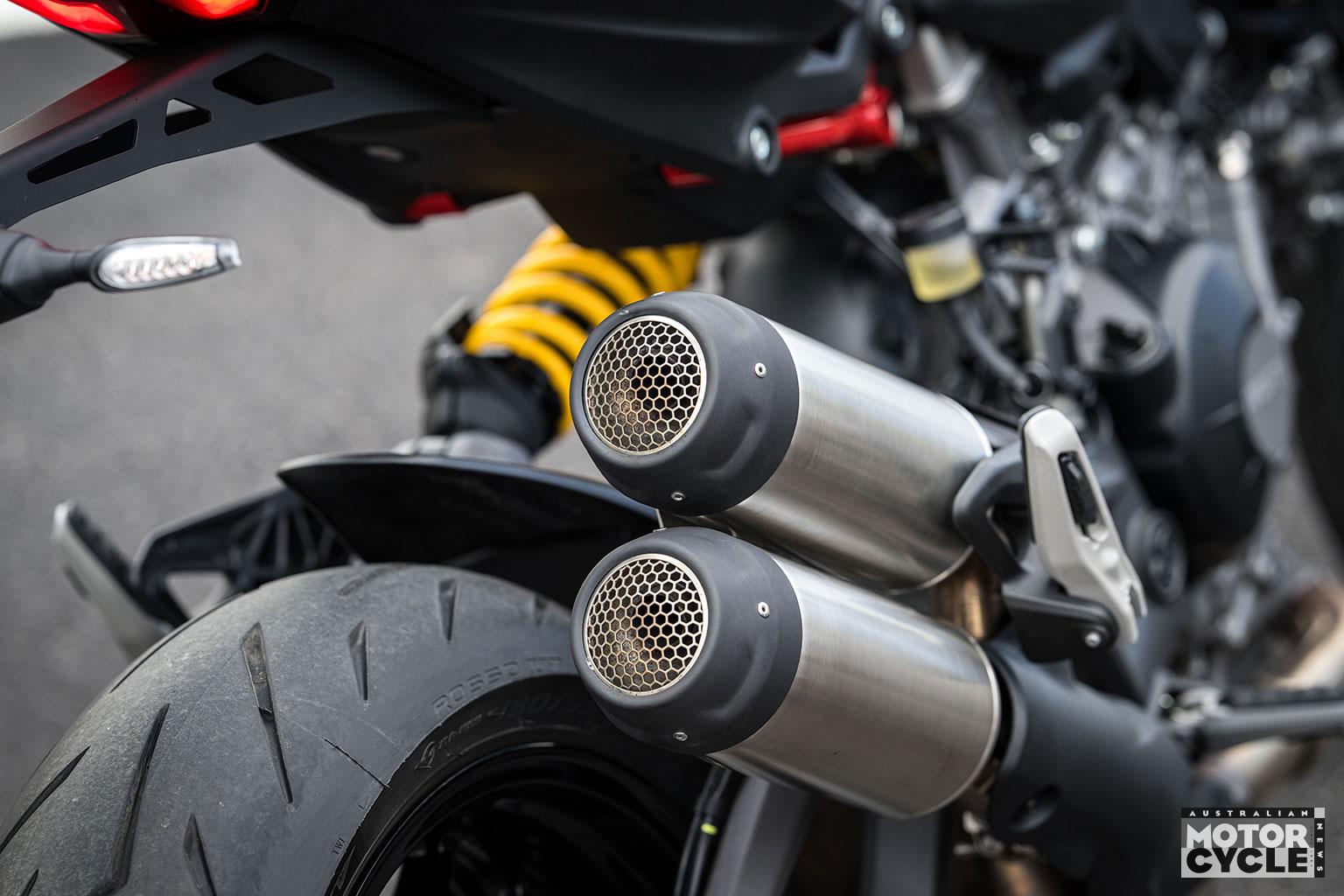
Sadly, we never really got an opportunity to push either engine or chassis in the mountains. The standard quickshifter is as slick as a race bike’s, and I know from riding the Monster’s V2-sharing sister bikes that the 90-degree twin delivers. It’s 5.9kg lighter than the Testastretta V-twin it replaces, while its Intake Variable Timing (IVT) adds flexibility. Its low- and mid-range grunt is especially impressive; the Monster will pull smoothly without need to dance on the quickshifter, making it easy to ride at brisk pace. Meanwhile, those two distinctive silencers sound as good as they look, and there’s a charismatic induction roar (albeit not as distinctive as the old, air-cooled bikes) to help get the heart pounding. But we will have to wait for better weather to see how the Monster’s 82kW (111hp) V2 compares to the 120bhp version of the same engine housed in Ducati’s Streetfighter.
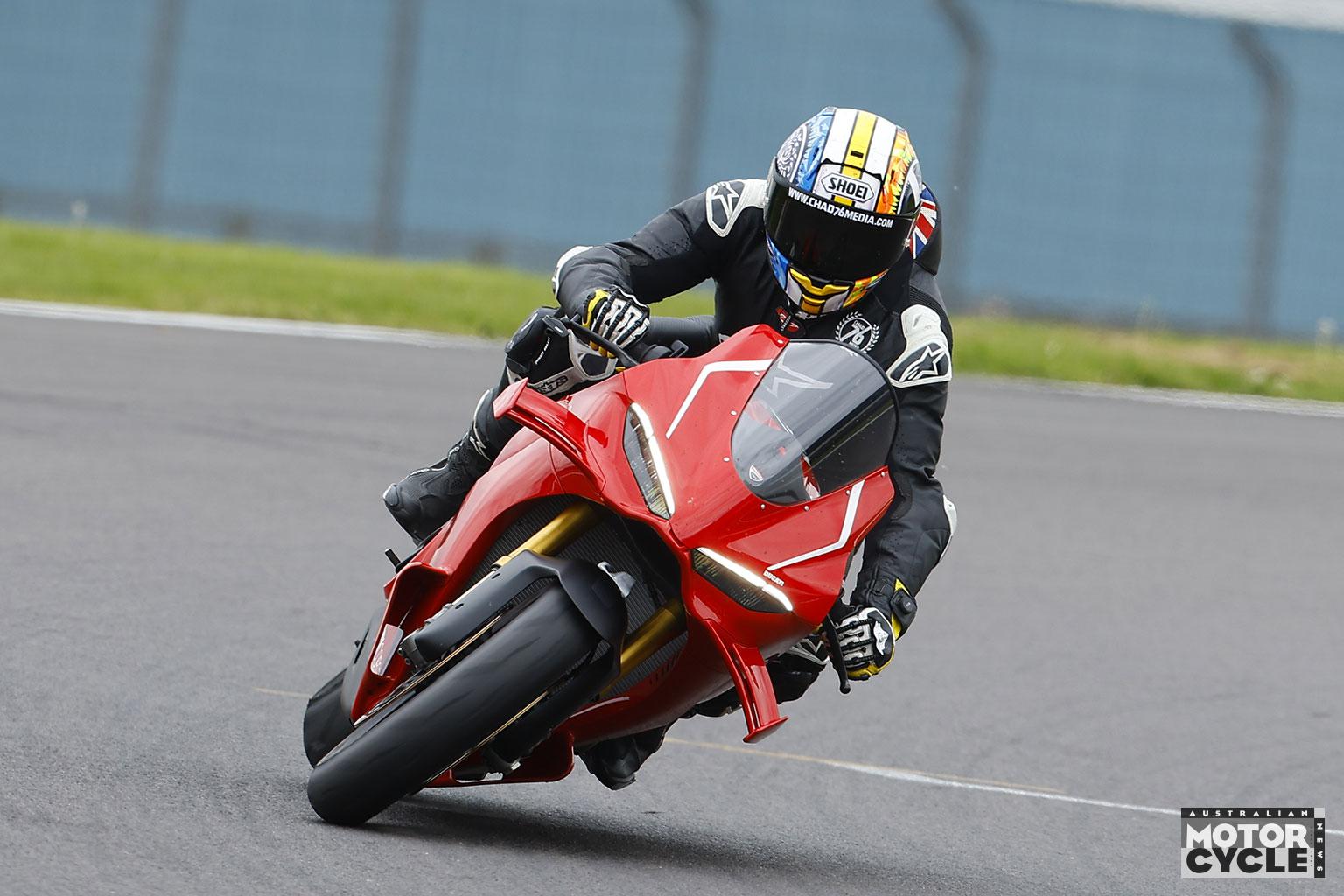
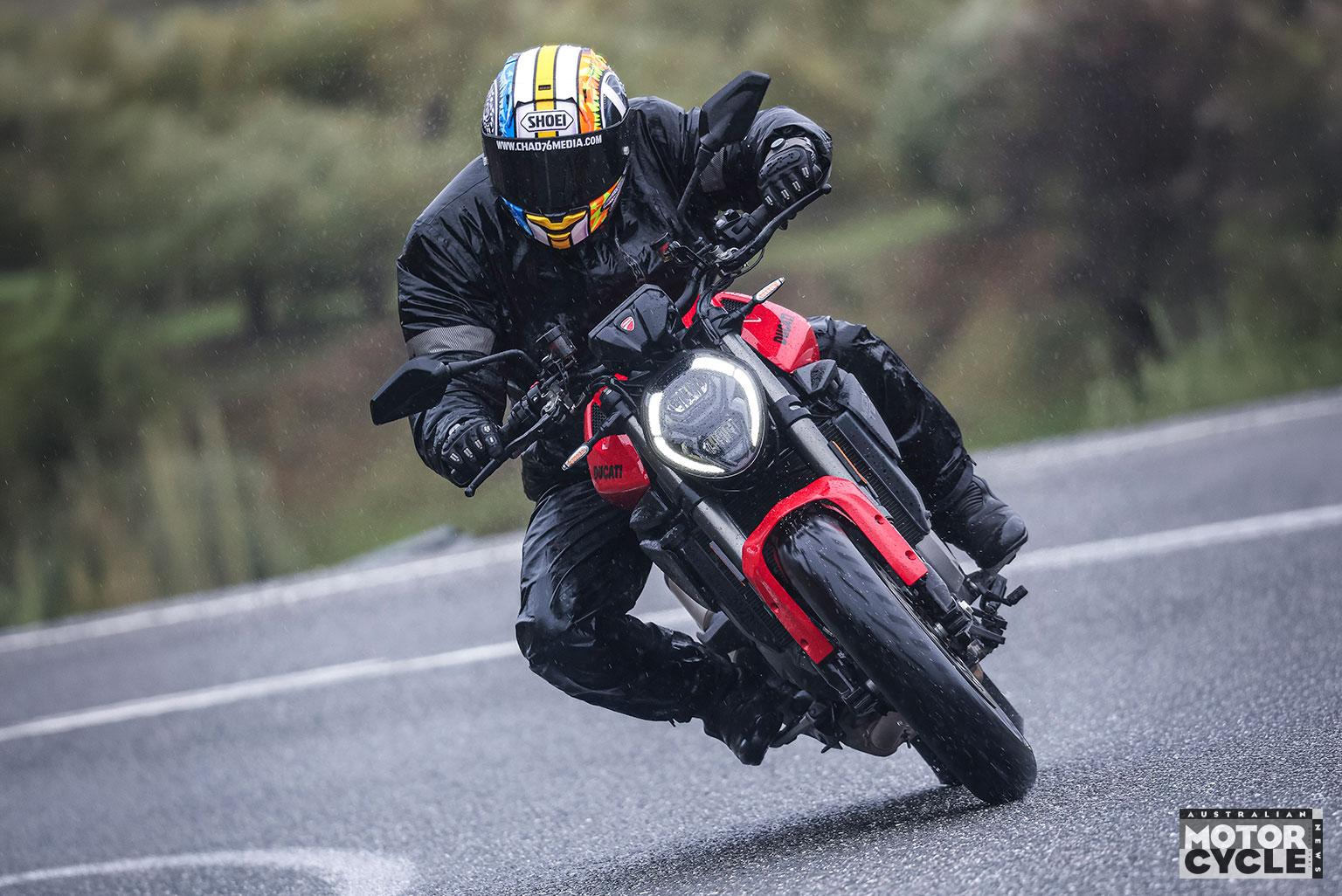
At times the weather eased enough to dare us to push a little harder, and the Monster’s lightweight and easy urban manners translated to nimble handling in the mountains. The Monster steers very naturally; you’re never forcing or fighting things. When we arrived at some typical Spanish roads riddled with hairpins, it lapped them up.
In fact, the Monster gave great feedback in the wet, allowing me to push on despite the rain. The Pirelli Diablo Rosso IV tyres deserve praise for working well in both the wet and dry and warming up quickly. In the hills above Malaga, both bike and tyres found the grip and gave me enough confidence to ride a little harder. The Monster felt very forgiving, plush and possibly softer and not as racy as some previous models.
I suspect Ducati has softened the Monster slightly so that it doesn’t step on the showroom toes of the sporty Streetfighter V2.
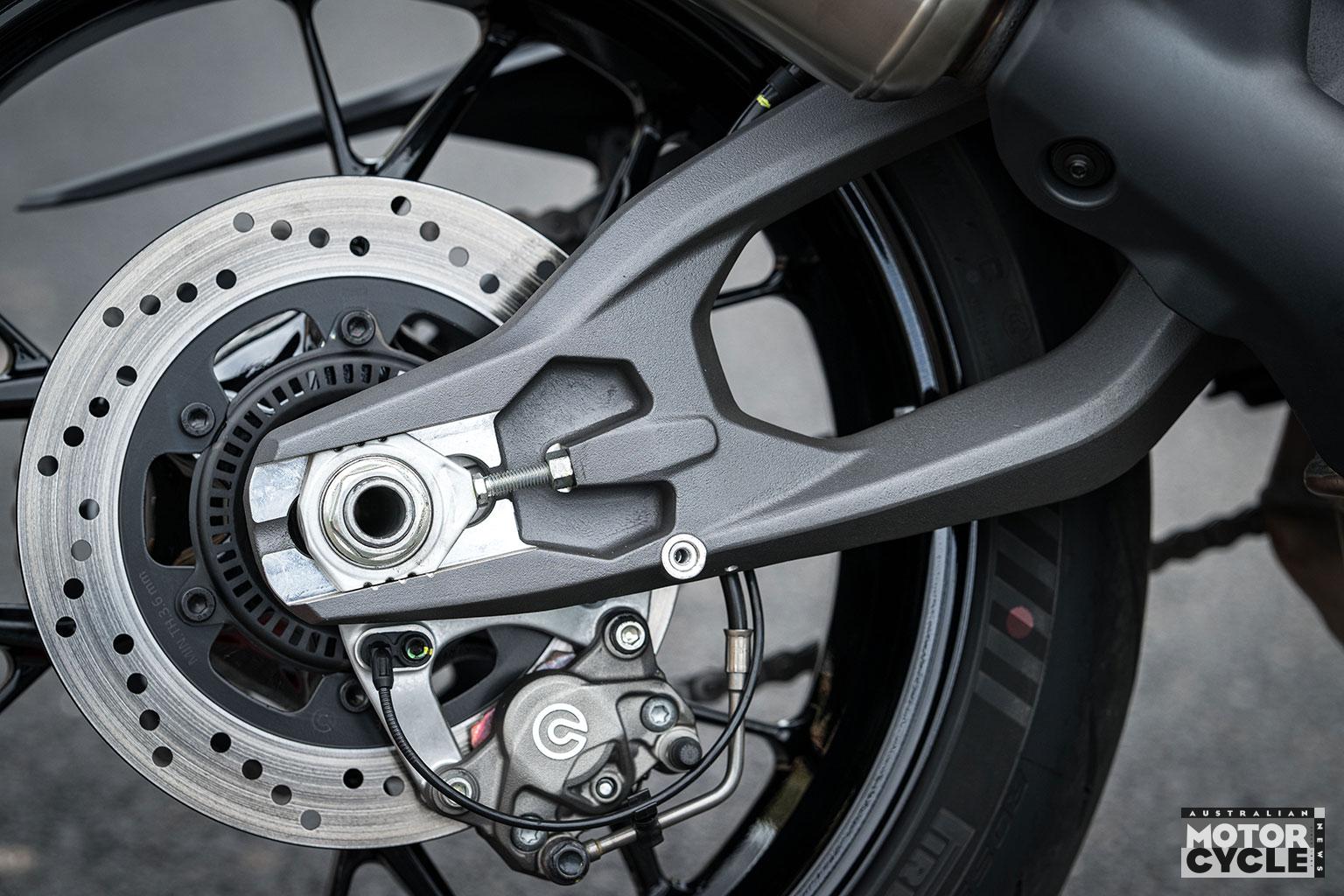
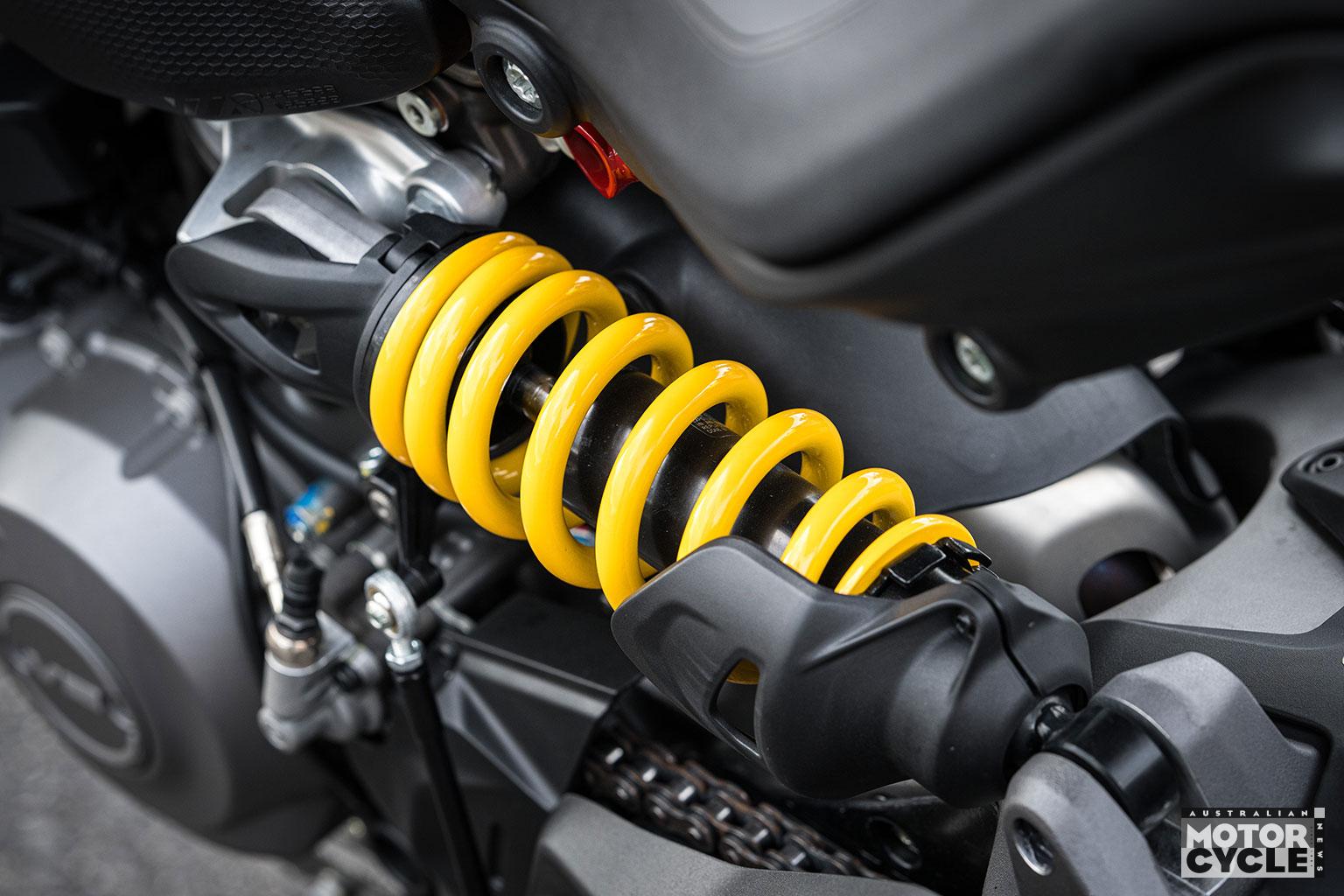
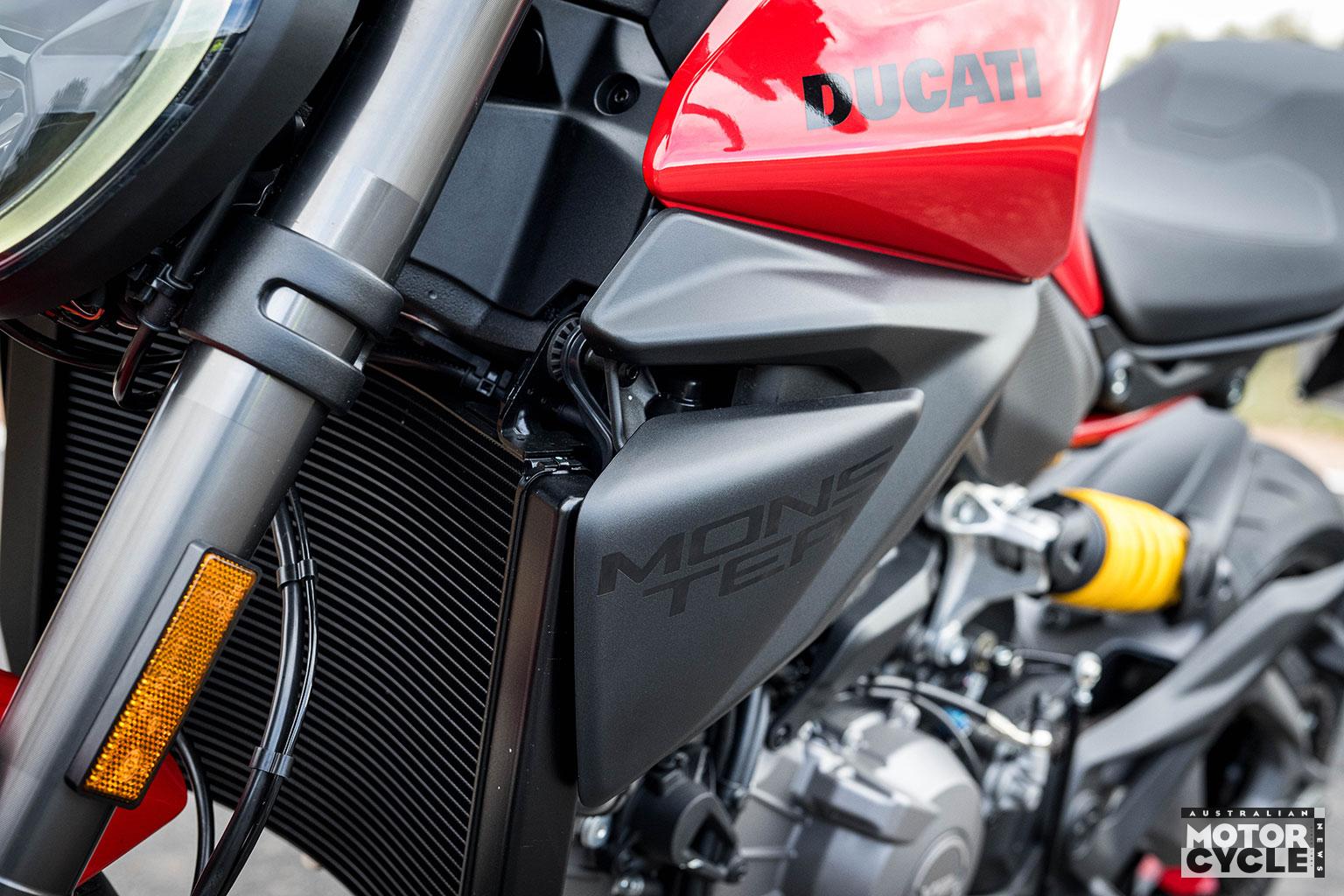
Taking the brakes, for example, the Monster gets Brembo calipers up front but with lower-spec M4.32 calipers and pads that give a more progressive feel, instead of the sharper M50 items on the Streetfighter. The brakes work well, but it will be interesting to see how both the stoppers and Showa suspension, which has limited suspension adjustment at the rear and none at the front, perform when the pace heats up.
Despite all the rain on this test, the Monster managed to be fun.
The rider aids are excellent and, when the TC did kick in, the intervention was smooth and the re-introduction equally on point. Most bikes in this class have TC but the cut and re-introduction are relatively slow and unsophisticated, but this is not the case with the Monster. There’s a noticeable difference when you trim both the TC and the changeable engine braking.
In the wet I prefer lots of engine braking, giving the front brakes less to do, and the opposite in the dry, so having the ability to change this characteristic is another plus point.
VERDICT
In the same way that many traditionalists disapproved when the Monster lost its trellis frame and air-cooled simplicity, some will dislike the Monster’s migration away from its traditional desmo power to the new V2. But it makes business sense and brings welcome lightness and flexibility to the package, as well as wider service intervals that will make it cheaper to run.
For me, the Monster is still a Monster, but it has had its claws clipped a little. It’s incredibly easy to ride, especially for new riders at everyday speeds, and is fun for more experienced riders, too. Its rider aids are class-leading and eminently useable, which is a big plus. It’s not just tech for show.
The V2 is torquey, sounds great and offers just enough power, and combines sweetly with that lightweight chassis. It’s a shame we didn’t get the full 120hp V2 from the Streetfighter, but again it’s clear to see why Ducati has done it.
The new Monster is still stylish, desirable and, if we ignore the entry-level Monster of old, superbly easy to ride in all sorts of environments.
Our rain-lashed test leaves many questions unanswered, not least how it will perform in the dry and how it will shape up against cheaper competition from Japan and Europe. But the fact that it made me smile in the wet and cold bodes very well for when the sun comes out.
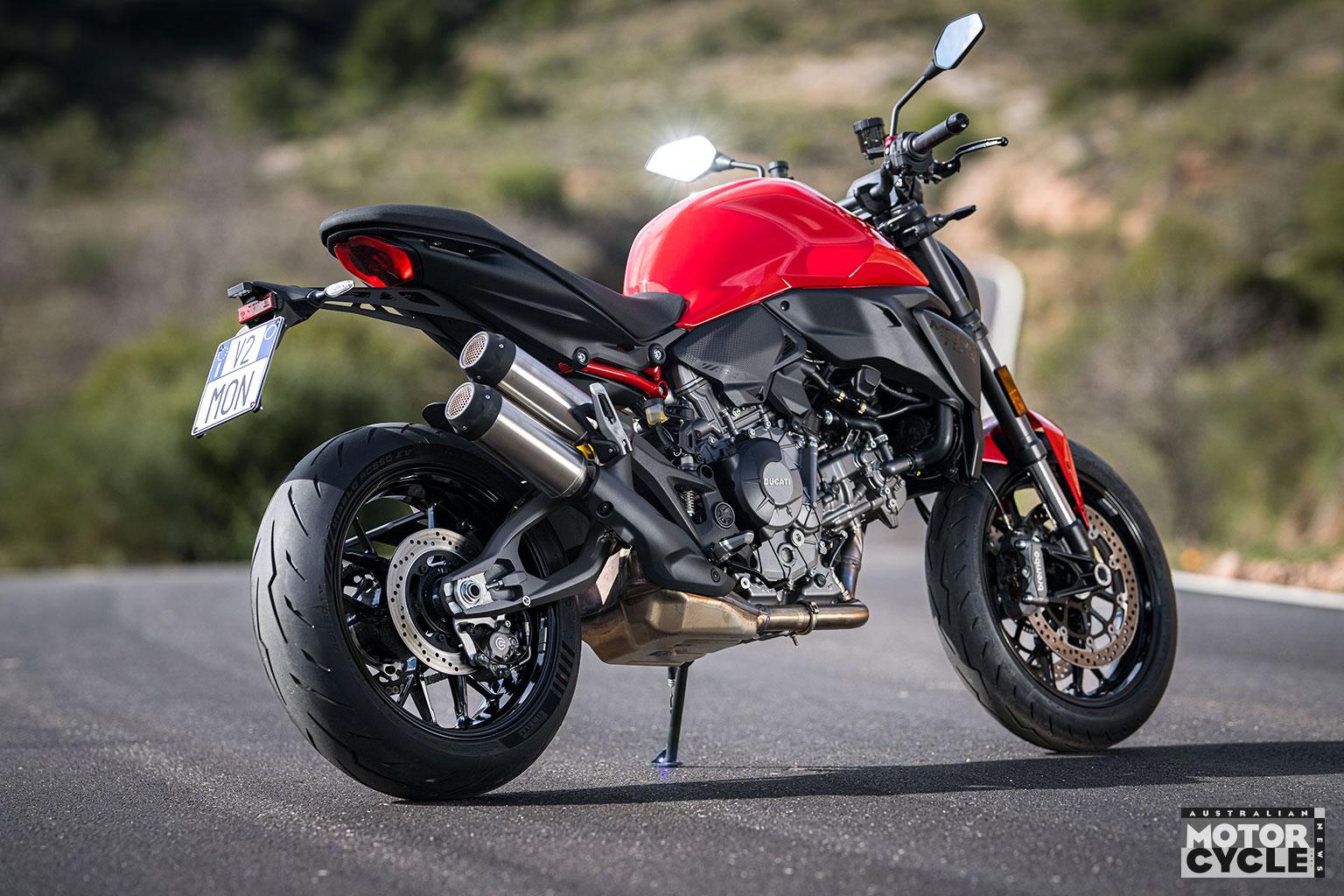
✅ PROS – Lightweight agility, torquey, flexible V2 power, rider aids intuitive and genuinely useful, still unmistakably Ducati, fun and easy to ride, even in the rain.
❌ CONS – Gone are the trellis frame, air-cooled desmo and old-school V-twin roar. Some purists will mourn the ‘clipped claws’ of this modern Monster.
MONSTER HISTORY
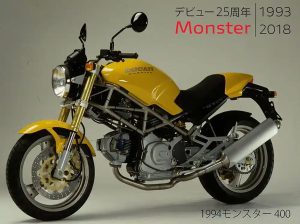
I’ve been lucky enough to have been professionally testing motorcycles for close to 30 years and have fond memories of Monsters over that time, as well as some we would rather forget. It’s generally accepted that the original Monster (shown as a prototype in 1992, going on sale in 1993) pulled Ducati back from the brink, bringing an injection of sales when cash was desperately needed. It was an instant hit with the stars. Barry Sheene had one of the very first ones in Australia while Mick Doohan was filmed riding one around Monaco. Other air-cooled models followed and have become classics today. In 2008 we got the second generation with high-exit twin exhausts, in 2014 came the third generation and in 2021 the fourth, without the trellis frame. We’ve enjoyed racy Monsters powered by 916 and 996 V-twins, and there were some lovely limited-edition runs, like the Foggy rep, which still look good today.
Fast foes!
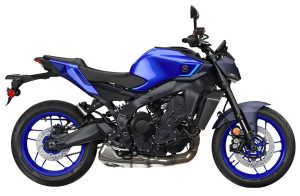
Yamaha MT-09 – $18,099 (ride away)
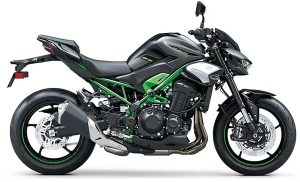
Kawasaki Z900 – $16,554 (ride away)
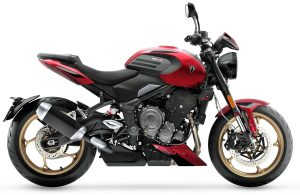
Triumph Trident 800 – $16,695 (ride away)
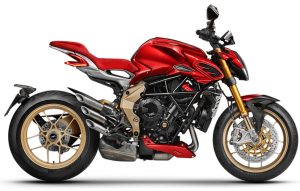
MV Brutale 800 – $26,995 (ride away)
SPECIFICATIONS
ENGINE
Capacity 890cc
Type Liquid-cooled, 8-valve V-twin
Bore & stroke 96mm x 61.5mm
Compression ratio 13.2:1
Transmission Six-speed, chain drive
Clutch Wet, multi-plate slip and assist
PERFORMANCE
Power 82kW (111hp) @ 9000rpm
Torque 91.1Nm @ 7200rpm
Top speed 225km/h (est)
Fuel consumption 5.2L/100km
ELECTRONICS
Type Bosch
Rider aids Riding modes x 4. Four power modes, High, Medium, City and Low, along with Ducati Traction Control (0-8), Ducati Wheelie Control (0-4), Engine Brake Control (3 levels), Cornering ABS (3 levels)
Rider modes Sport, Road, Urban, Wet
FRAME
Type Aluminium monocoque
Rake 23.3°
Trail 92mm
SUSPENSION
Type Showa
Front 43mm, USD, no adjustment, 130mm travel
Rear Single rear shock, preload adjustment,145mm travel
WHEELS & BRAKES
Wheels Cast aluminium
Front: 3.5X17in
Rear: 5.5X17in
Tyres Pirelli Diablo Rosso IV
Front: 120/70/x17in
Rear: 180/55/17in
Brakes Cornering ABS (3 levels)
Front: 2x320mm discs, four piston radial Brembo M4.32 calipers
Rear: 245mm disc, two-piston caliper
DIMENSIONS
Weight 175kg (wet no fuel)
Seat height 815mm (can go low as 775mm option)
Wheelbase 1492mm
Fuel capacity 14L
SERVICING & WARRANTY
Servicing 45,000km, oil service 15,000km or every two years
Warranty 24 months
BUSINESS END
Price $20,700 base model
Colour options Ducati Red, Iceberg white
Contact www.ducati.com/au