Three decades after racing Bimota’s radical Tesi, Alan Cathcart returns to hub-centre steering aboard a 200hp supercharged crossover. Has Bimota finally perfected its most audacious idea?
Ever since Bimota was founded over half a century ago in 1973 by future design guru Massimo Tamburini and his mates, the Italian trophy brand has been a byword for sporting prowess via avantgarde design. The thought of an ADV tourer ever displaying the Bimota name on its flanks would have been as likely as Ferrari building a station wagon. Except the sportscar maker did just that in 2011 with the FF, and now Bimota’s launched the Tera H2 ADV model as the fourth model to join its line-up since Kawasaki rescued the marque in 2019 from the Last Chance Saloon, in which it had taken up almost permanent residence.
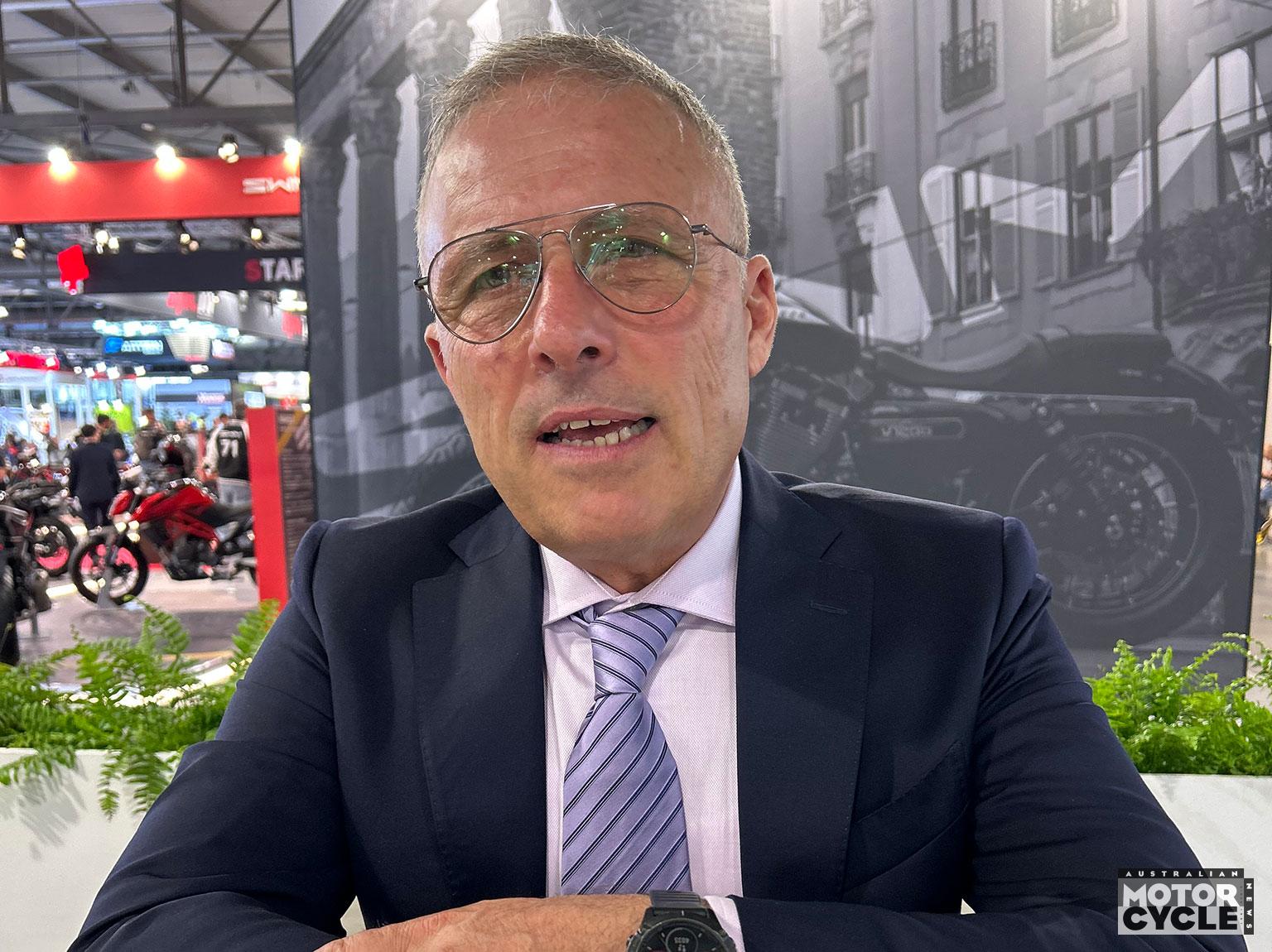
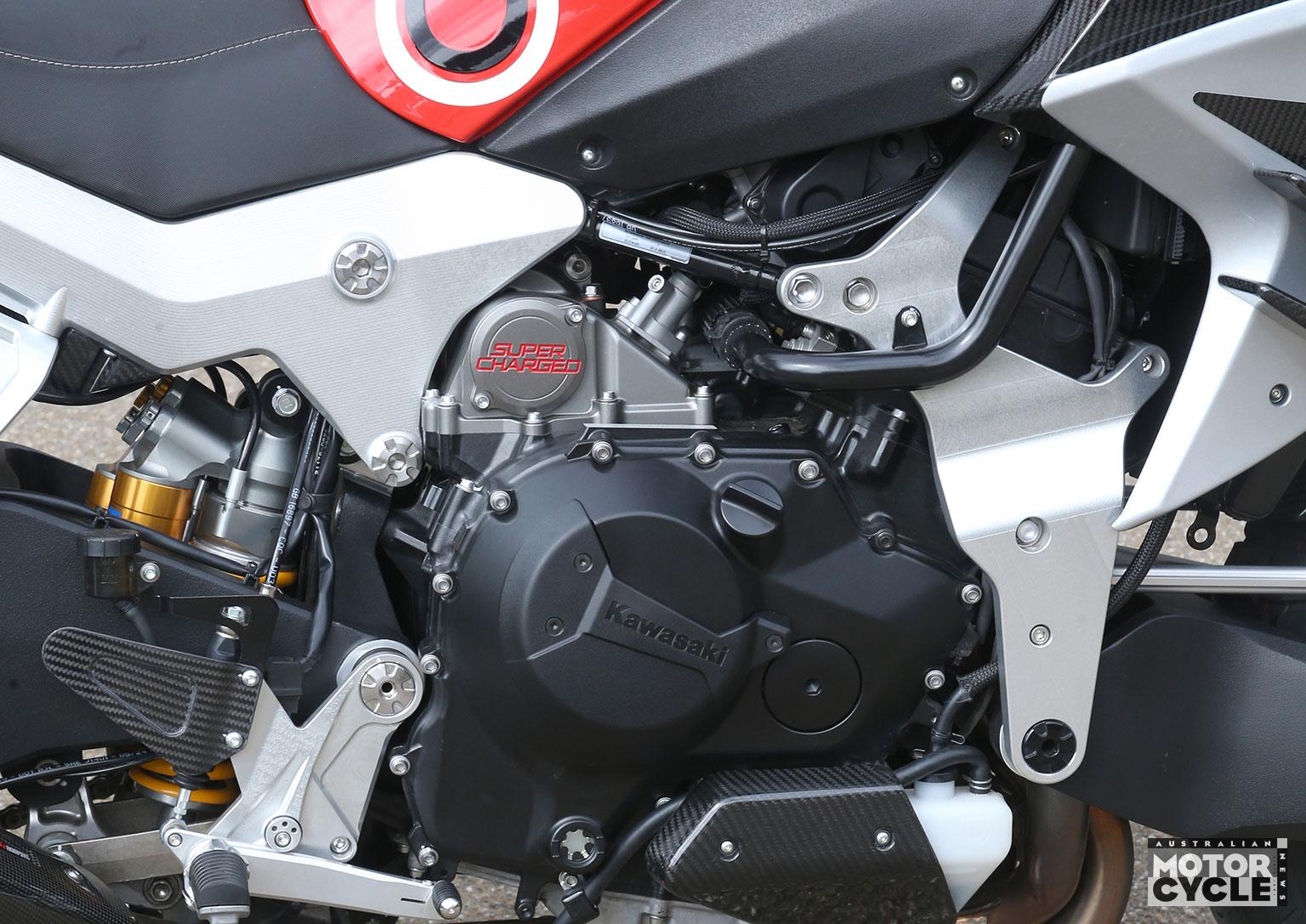
Moreover, the Tera does ADV even more differently by utilising Bimota’s iconic Tesi hub-centre format, which the firm’s current CEO Pierluigi Marconi first conceived back in the early 1980s. More recently, this concept was revived in 2020 with the Tesi H2 powered by Kawasaki’s supercharged 998cc Ninja H2 inline-four engine.
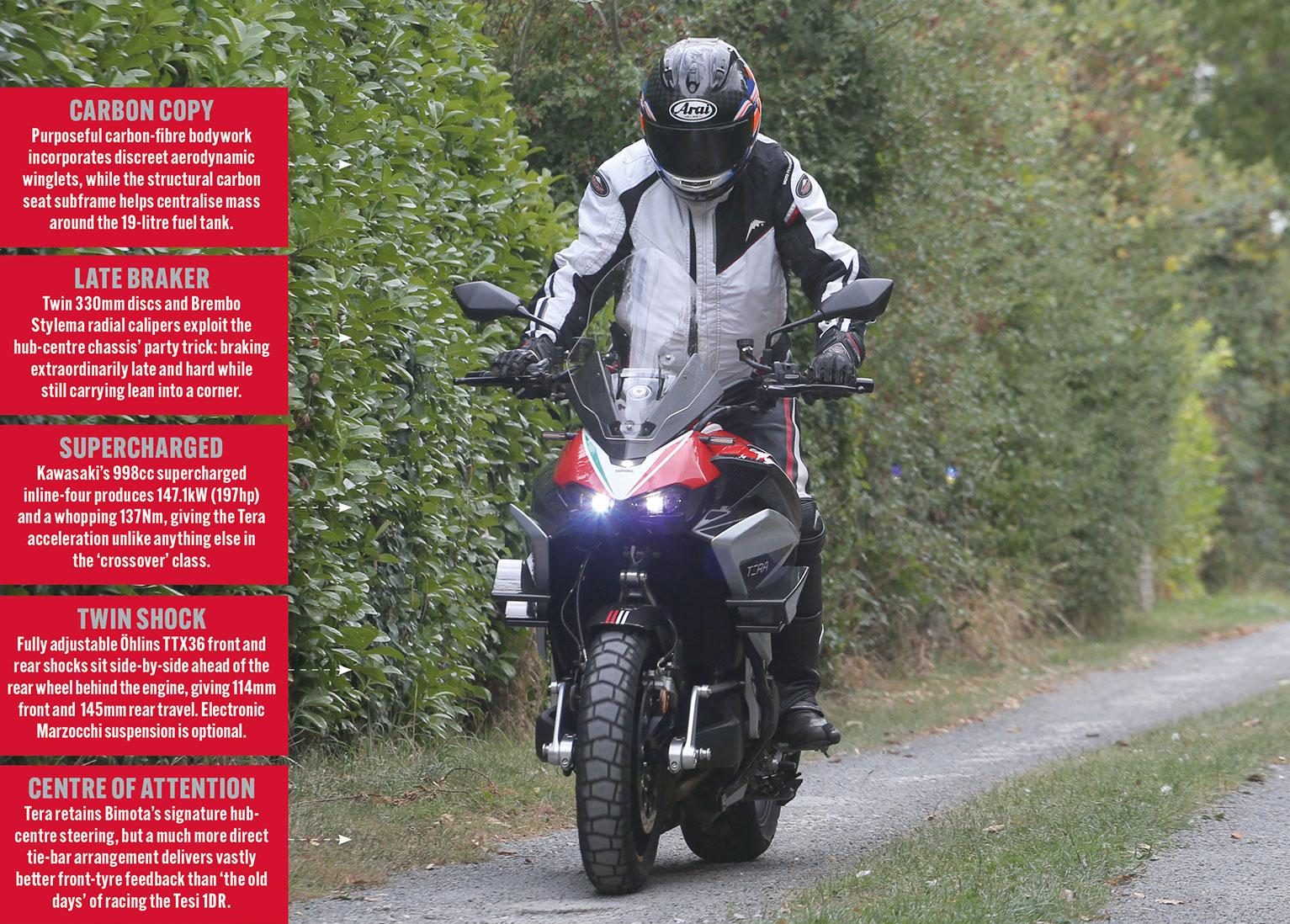
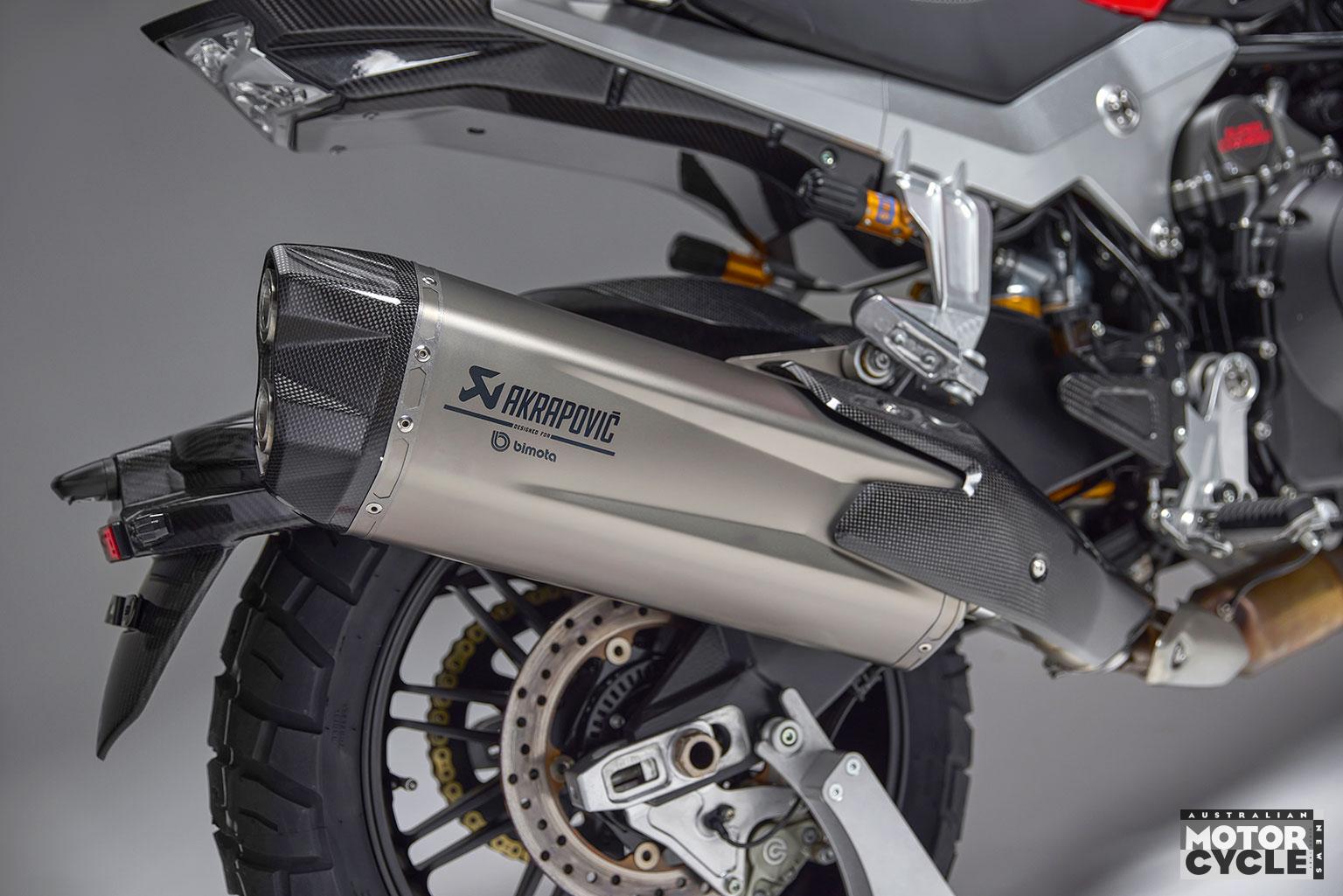
The Tera H2 uses the slightly softer version of that engine found in the H2 SX sports tourer and Z H2 naked models, producing 147.1kW (197hp) at 11,000rpm, with a good-sounding, good-looking Akrapovic carbon-wrap slip-on silencer. But, as with any forced induction engine, its key product is torque, with a humungous 137Nm at 8500rpm. That’s good enough to propel this 215kg machine from 0-100km/h in just 3.5 seconds, making it by some way the fastest and most muscular ADV model yet created by any manufacturer – including Kawasaki itself!
CROSSING OVER
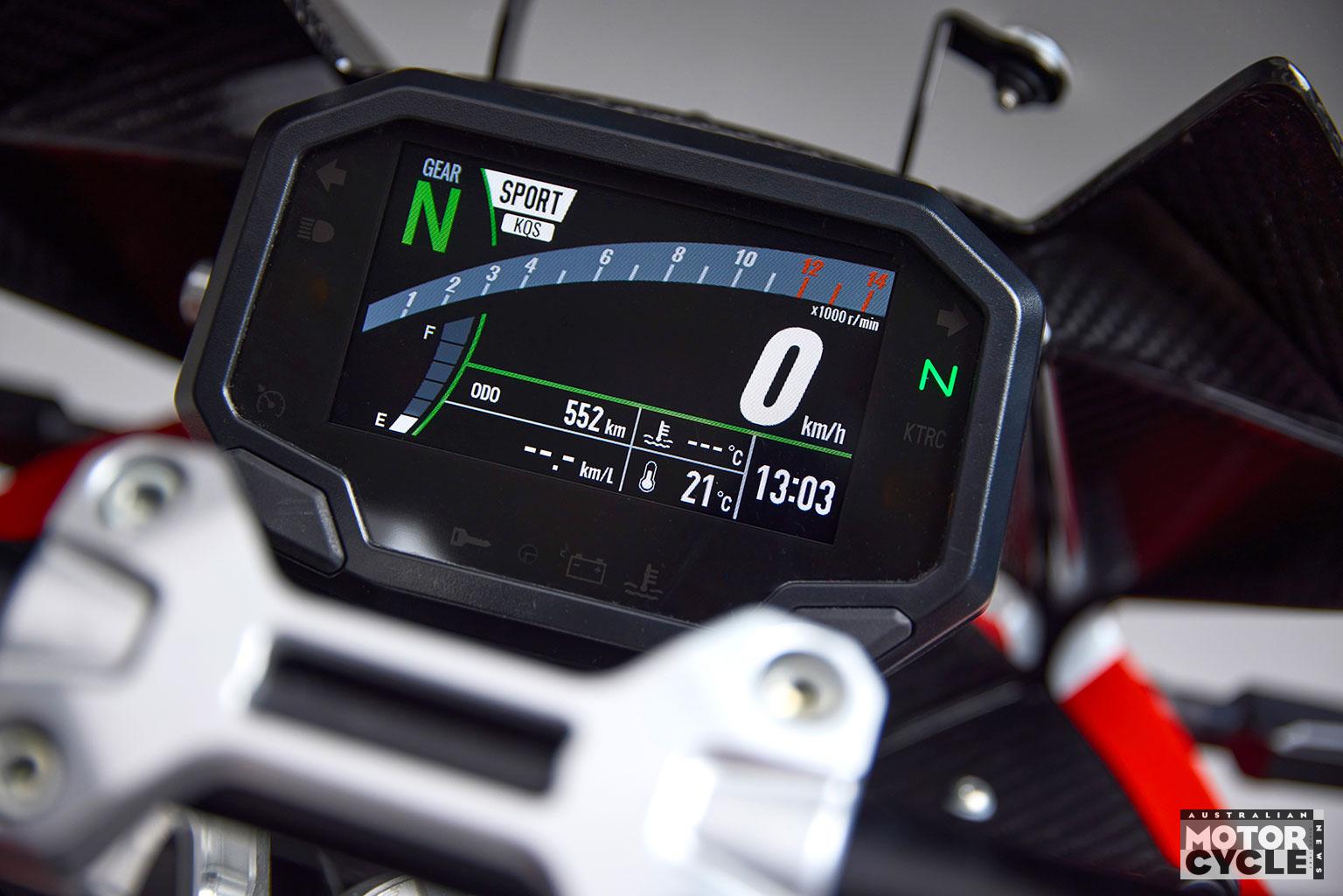
The full suite of Kawasaki electronics making that massive performance user-friendly has been transferred to the Tera H2, including an RBW throttle offering Sport, Road and Rain riding modes, two-way quickshifter, nine-stage TC, Öhlins electronic steering damper, Bosch six-axis IMU, launch control and KIBS intelligent ABS.
The H2 Tera is the first model with any kind of offroad pretensions to bear the Bimota badge apart from the short-lived 16-off DBx introduced in 2013. Its failure to attract customers seemingly cemented Bimota’s aversion to doing it in the dirt – until the prototype Tera appeared at the 2023 EICMA Milan show. Since entering hand-built production last year in Bimota’s Rimini factory, over 100 examples have been built, retailing for €41,000 in Italy ($A66,800) and available globally exclusively through Kawasaki dealers.
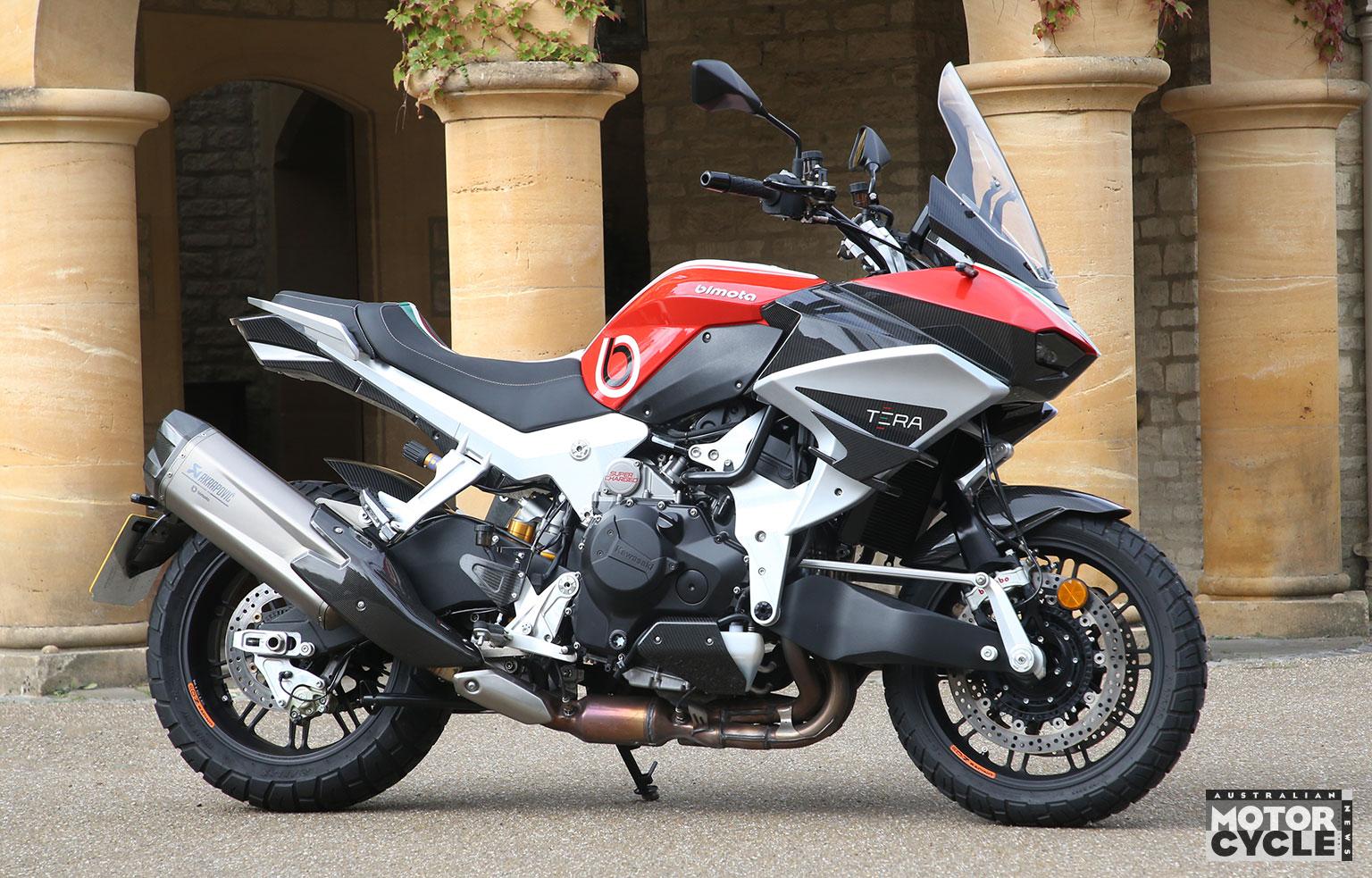
“It’s the first biposto Tesi-type model we’ve ever made,” states a proud Pierluigi Marconi, “so the first with room for a passenger and also the first supercharged Crossover model from any company, with ultra-high speed performance potential. For us, it is a Crossover, not an Adventure bike, which implies serious offroad capability. This is why we chose 17-inch wheels. Our intention is for the Tera to be used to travel mainly on the highway and sometimes a little bit of soft off-road. It’s a bike to enjoy anywhere, what we call una moto polivalente, a true all-rounder.”
OLD ACQUAINTANCE
I had a particular interest in marking the Tera’s card by riding it to see for myself how well Marconi’s drastic front-end redesign works. From 1991-93 I raced the factory Bimota Tesi 1DR for three seasons in Europe, Japan and the USA, experiencing the whole gamut of changes that essentially pushed the boundaries of hub-centre two-wheeled design in a hands-on fashion. These ranged from near-terminal tank-slappers on the bumpy Daytona bankings to cruising completely at ease round the outside of other V-twin superbikes performing a similar tango through the-then uneven Curva Grande at Monza. Or coping with bump steer essentially due to overstressed suspension, yet stuffing it up the inside of other bikes into tight turns on short circuits like Tsukuba in Japan, once I’d reprogrammed my mind to accept that I could indeed brake miles later than them, because the Tesi system separates suspension travel from steering.
Except, I then had to pay attention in longer races to wearing out the front tyre, because braking hard on the angle wasn’t what it was designed for you to do – we ended up using 125GP rear tyres on the Tesi’s front wheel to counter that. And so on… So having ridden more miles on road and track on Tesi-framed motorcycles than anyone else beyond Bimota’s then test rider Gianluca Galasso, I had some questions to ask the Tera test bike I borrowed from Kawasaki UK during the long 330km day I spent riding it in every kind of situation, from high-speed motorways to low-speed country roads, from hard-packed green lanes offroad, to city streets with and without traffic jams.
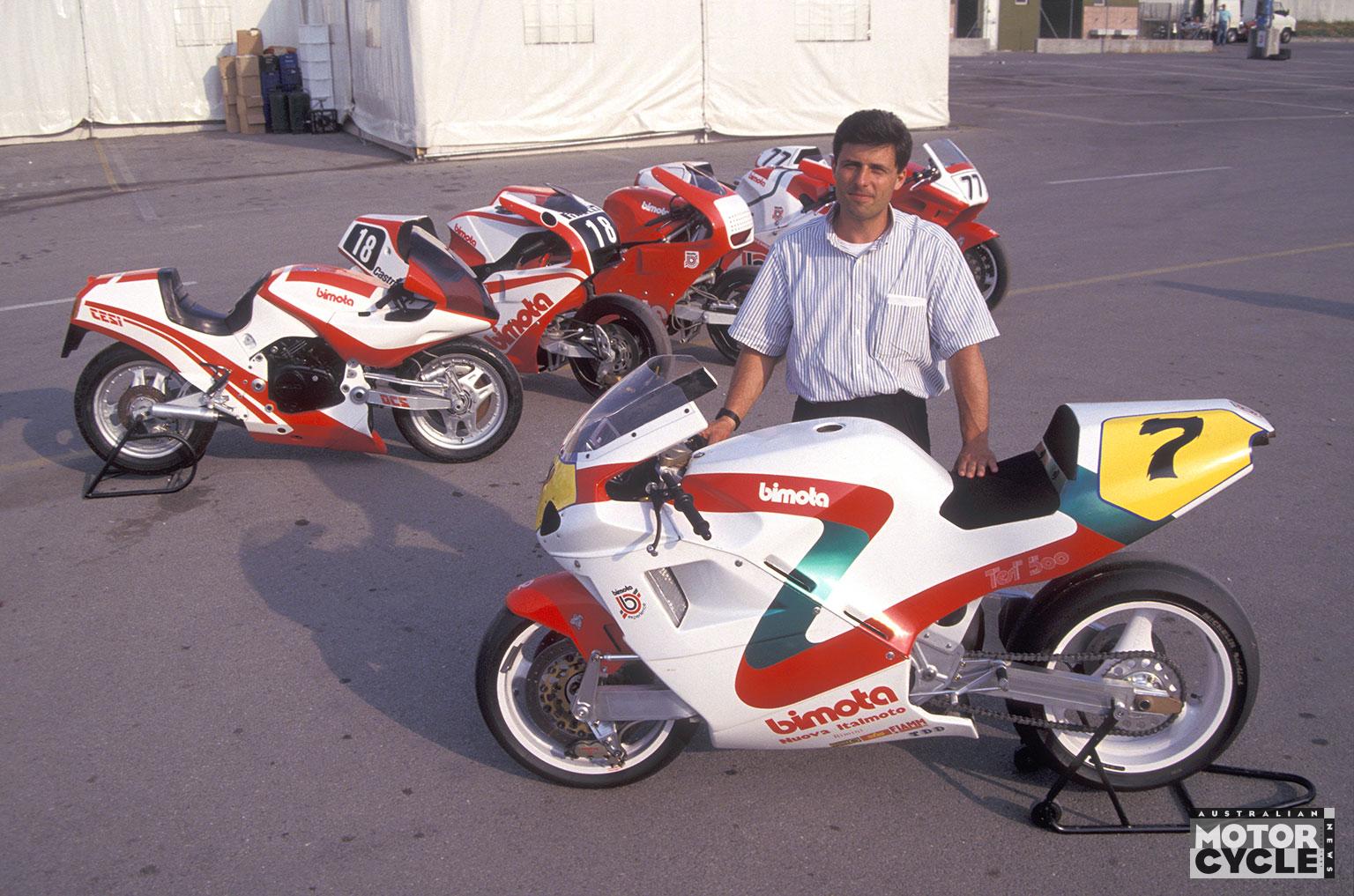
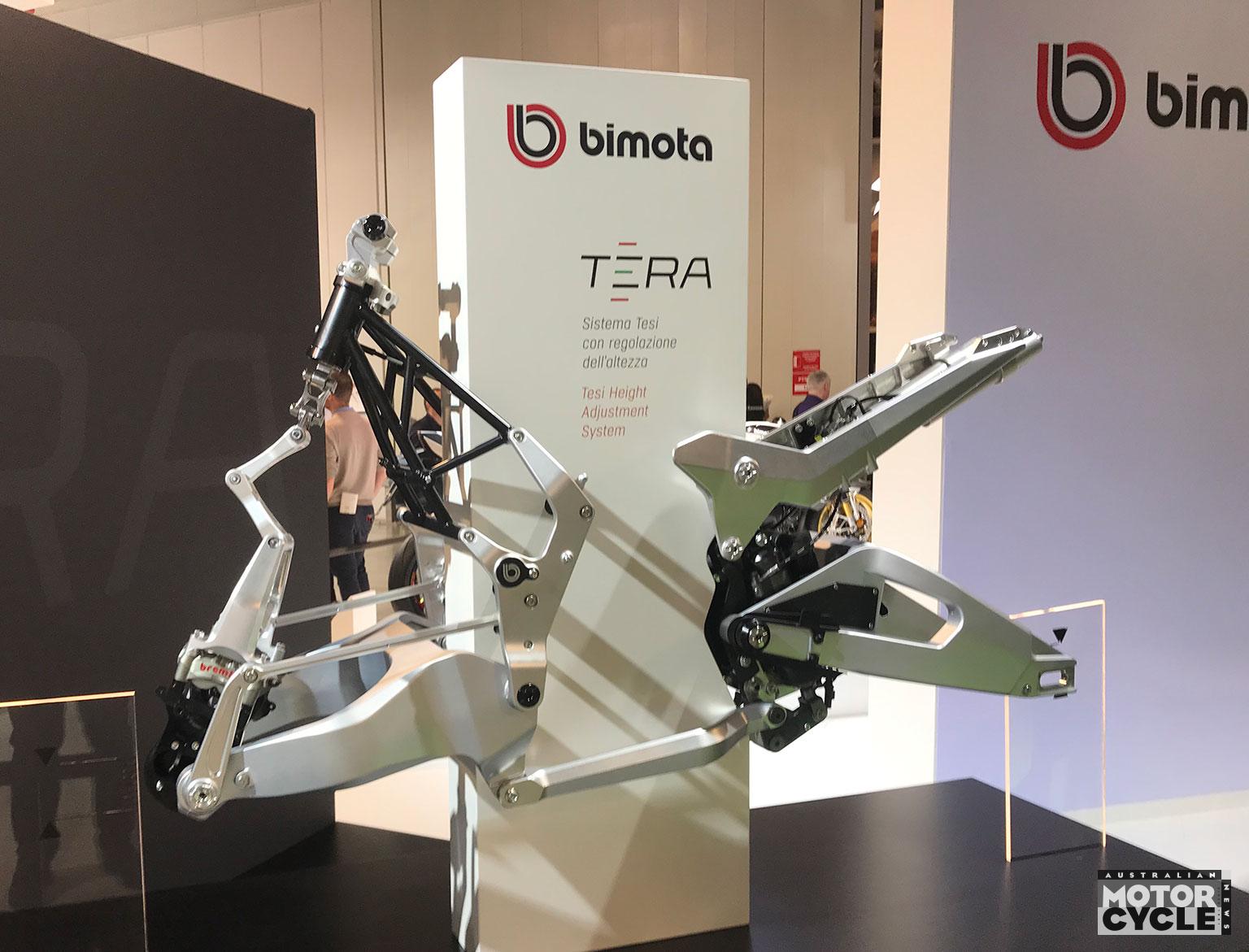
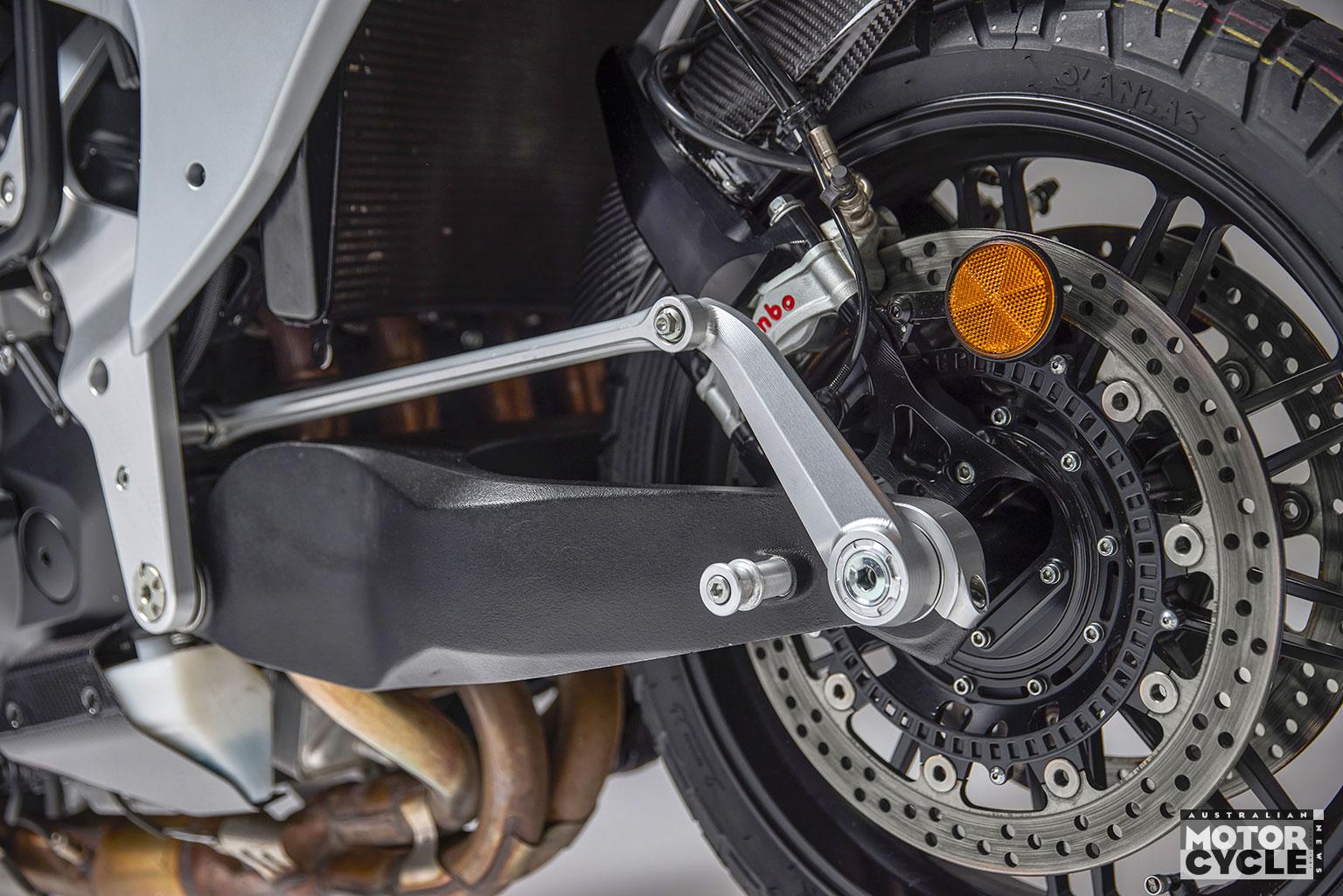
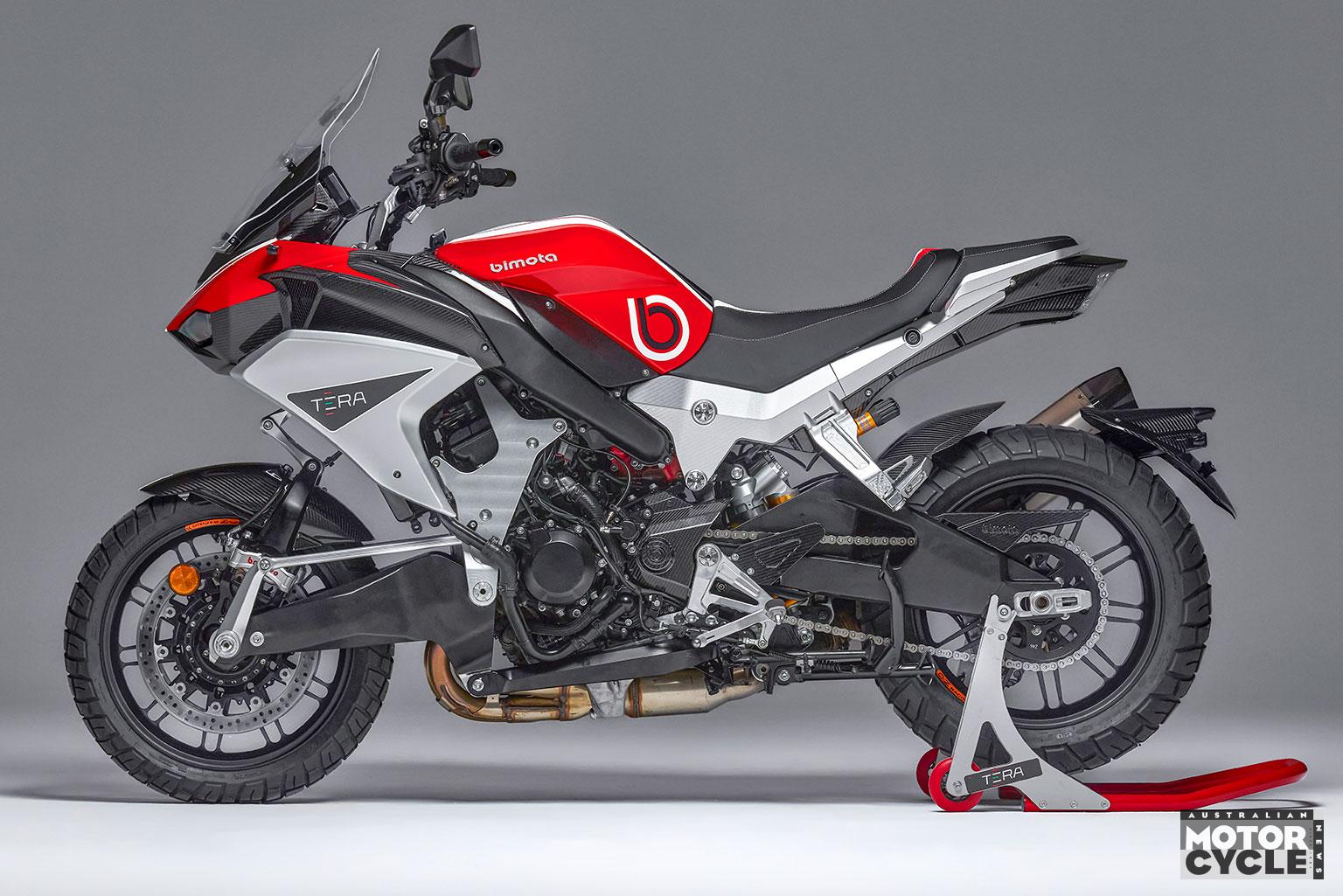
In designing the Tera, Marconi has completely rationalised his original hub-centre Tesi design, which saw ‘my’ 1DR employing two separate U-shaped Omega aluminium chassis spars milled from solid billet, sandwiching its Ducati V-twin engine to provide pivots for the near-mirror image swingarms at either end. On the Tera H2 he’s done away with those large frame spars and used the Kawasaki engine as a fully-stressed chassis component to which both front and rear suspension are attached via smaller alloy plates, with a structural carbon fibre seat subframe. As before, there are twin swingarms front and rear but there’s no welding anywhere. Each swingarm leg comprises three laser-cut aluminium sections bonded together, with the front unit’s two halves joined via a carbon fibre bridge.
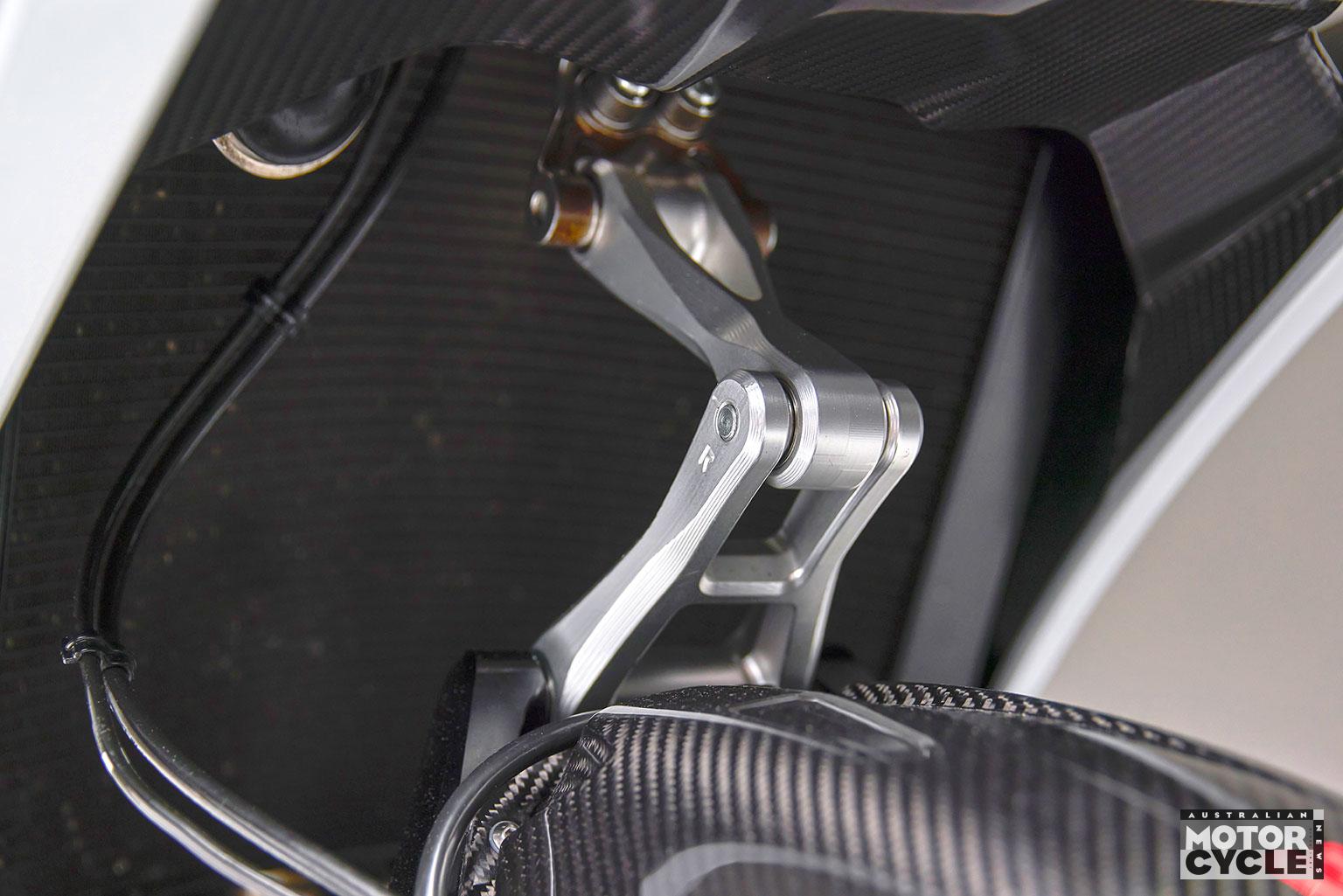
Damping is supplied by a pair of manually fully-adjustable Öhlins TTX36 shocks mounted side-by-side in front of the rear wheel. Marzocchi electronic suspension is available as an extra-cost option. The front shock is actuated via a rod running off the front swingarm, delivering 114mm of wheel travel, while the rear gets 145mm. Ride height is quickly adjustable over a 30mm range, says Marconi, with no resulting trail changes. Crucially, the front wheel is no longer steered as on ‘my’ Tesi via a series of often right-angle links that dialled out feel from the front tyre by the time it reached the steering head. There is now a more direct set of tie-bars.
This juggling with component layout delivers a more compacted centralised mass than on previous Tesi-type streetbikes. The Tera H2’s claimed 215kg half-dry weight is split 52.5/47.5 frontwards at rest, but with an 80kg rider aboard it’s an optimum 50/50, says Marconi. The wheelbase is 1455mm – you can’t afford to shorten the stride too much on a bike with this much torque, if you ever want to have the front wheel in contact with planet Earth under the kind of acceleration this engine delivers!
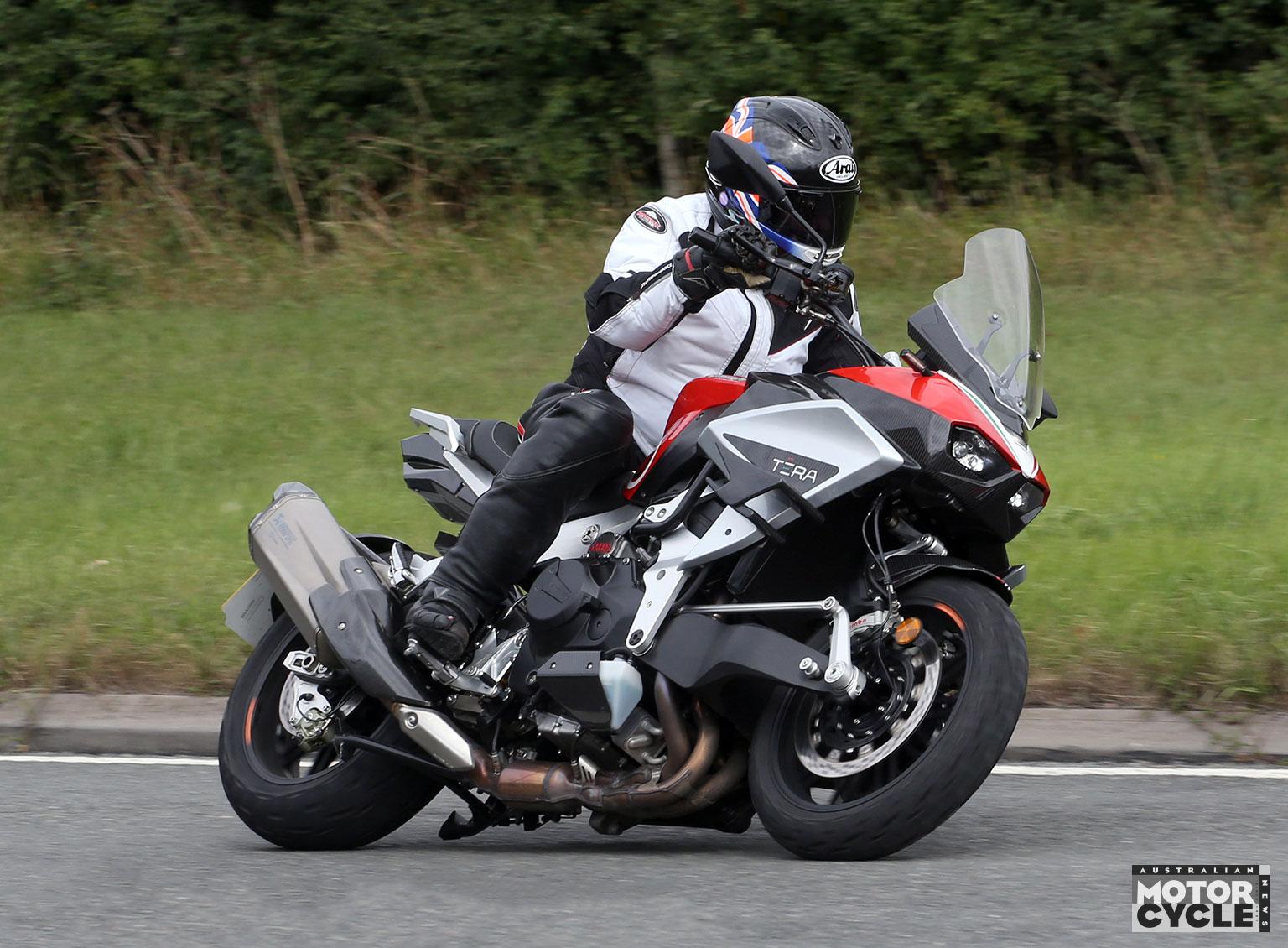
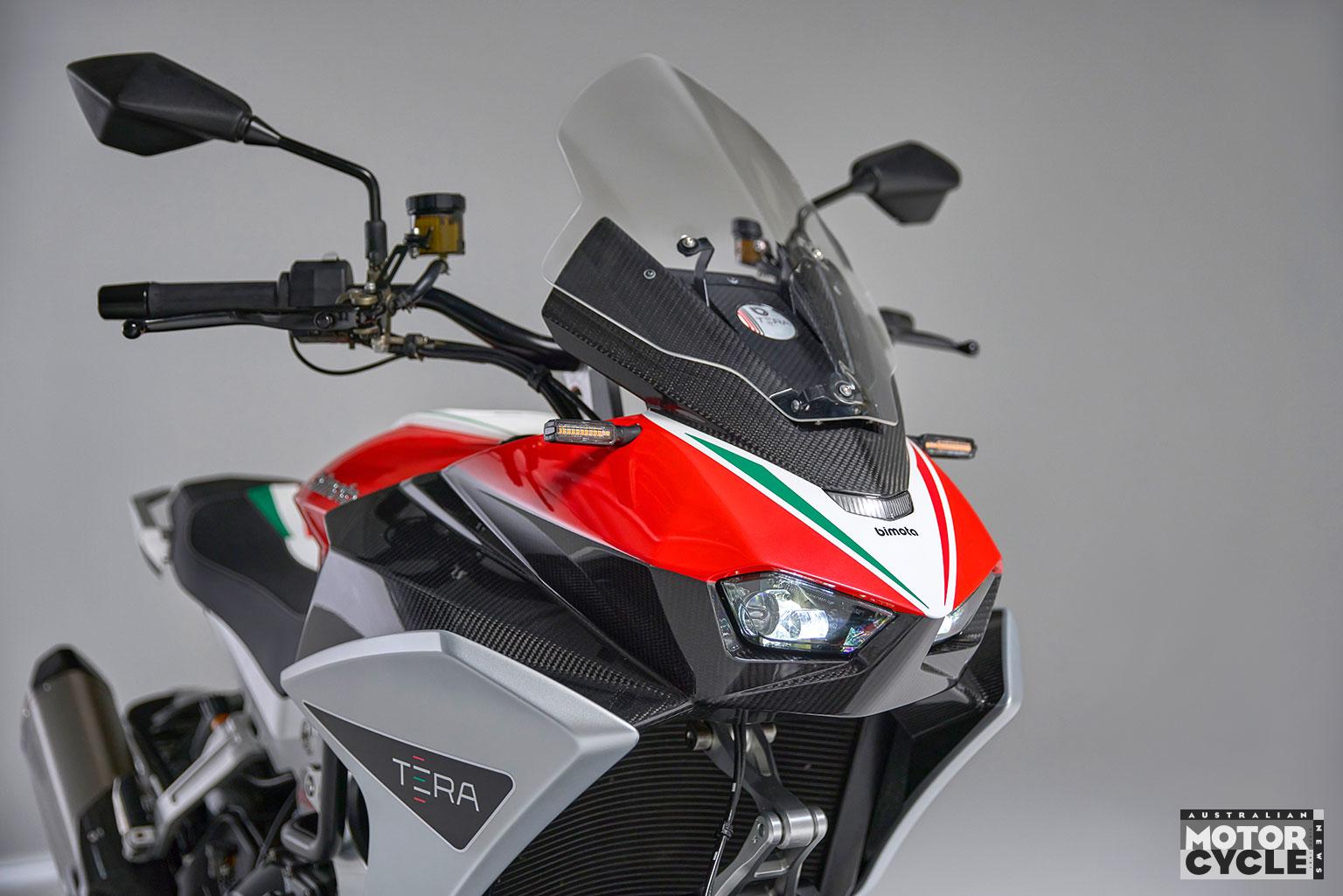
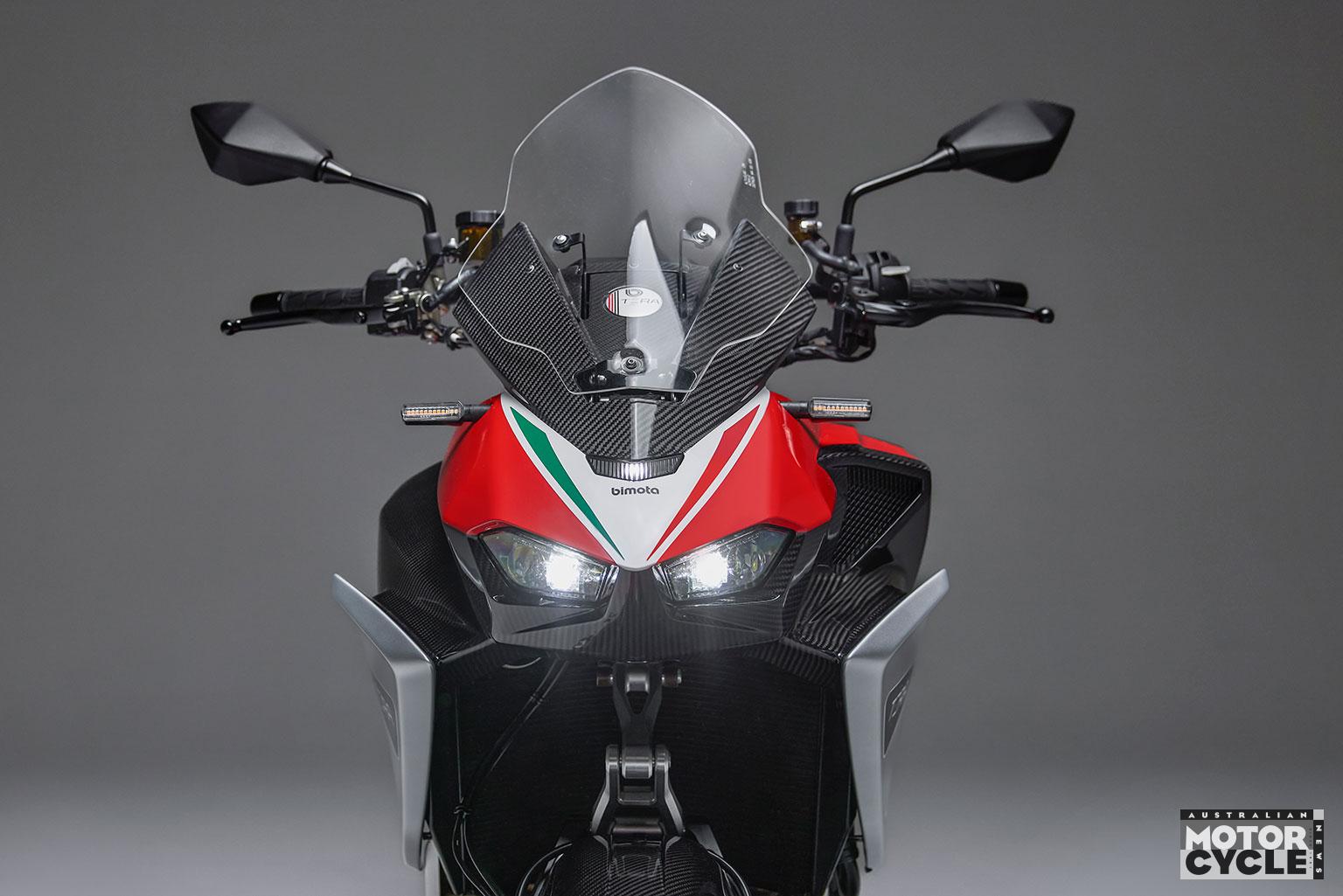
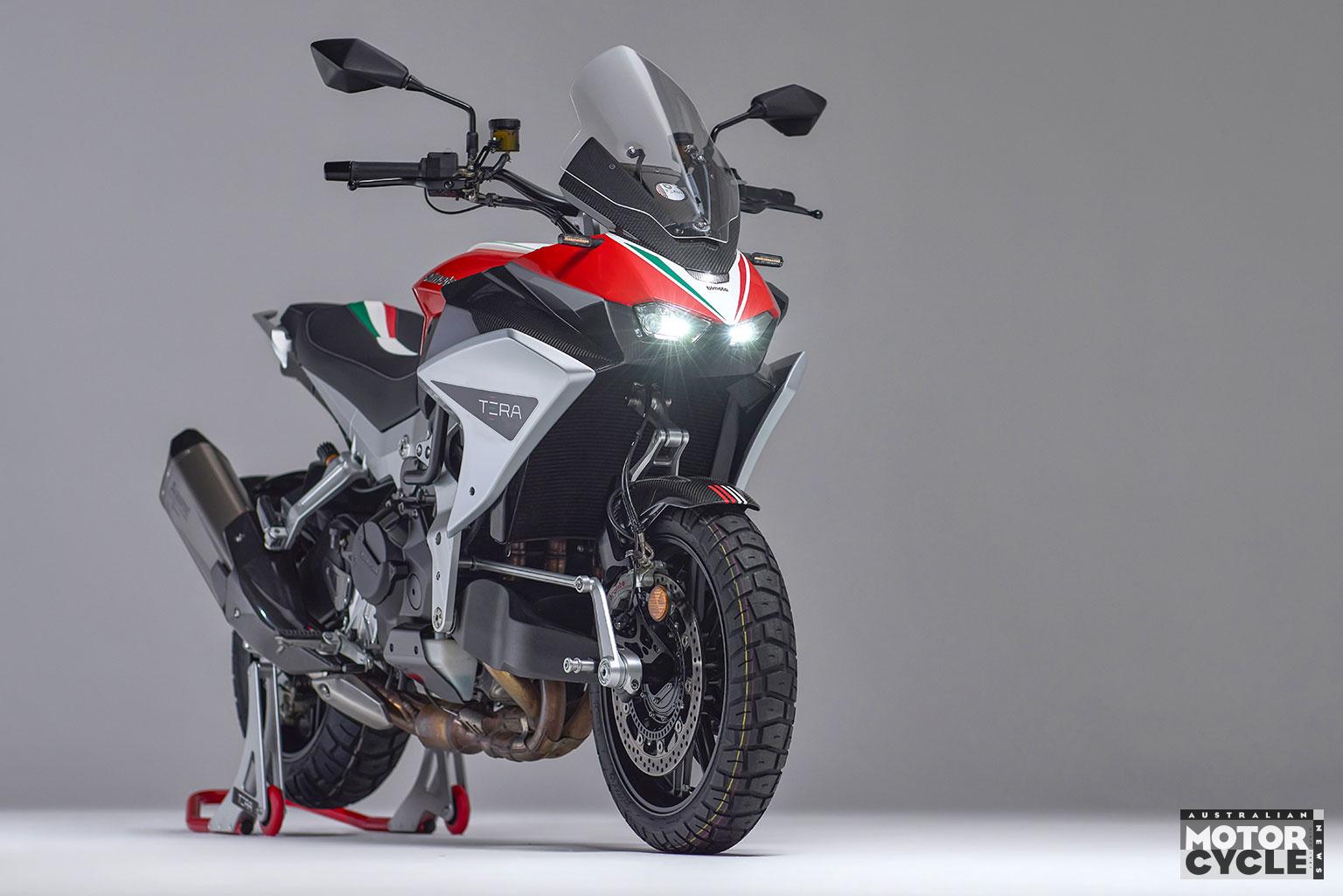
Steering is affected with much higher quality bearings than were available 30 years ago in pursuit of a smoother, more responsive action and greater feel. The specially made OZ forged aluminium wheels carry Brembo’s latest braking hardware, with twin 330mm semi-floating front discs gripped by four-pot Stylema radial calipers. The Tera is clothed in purposeful-looking carbon bodywork, with the 19-litre fuel tank centrally positioned above the crank and the massive wings of the Tesi H2 replaced by much more discreet fixed aerodynamic front winglets. The 174mm ground clearance is greater than on the Tesi H2, but not exactly spacious by offroad standards.
WORTH THE WAIT
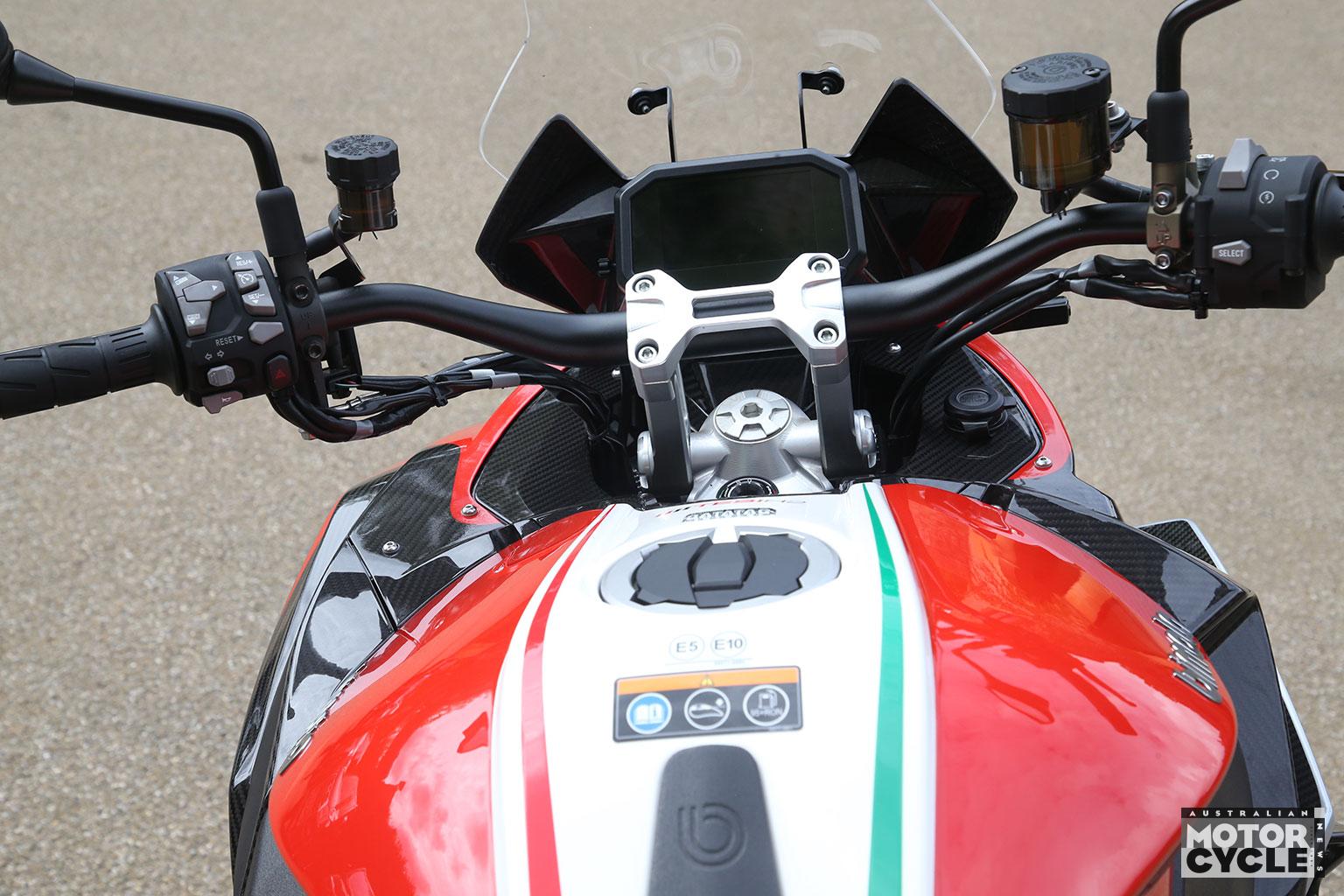
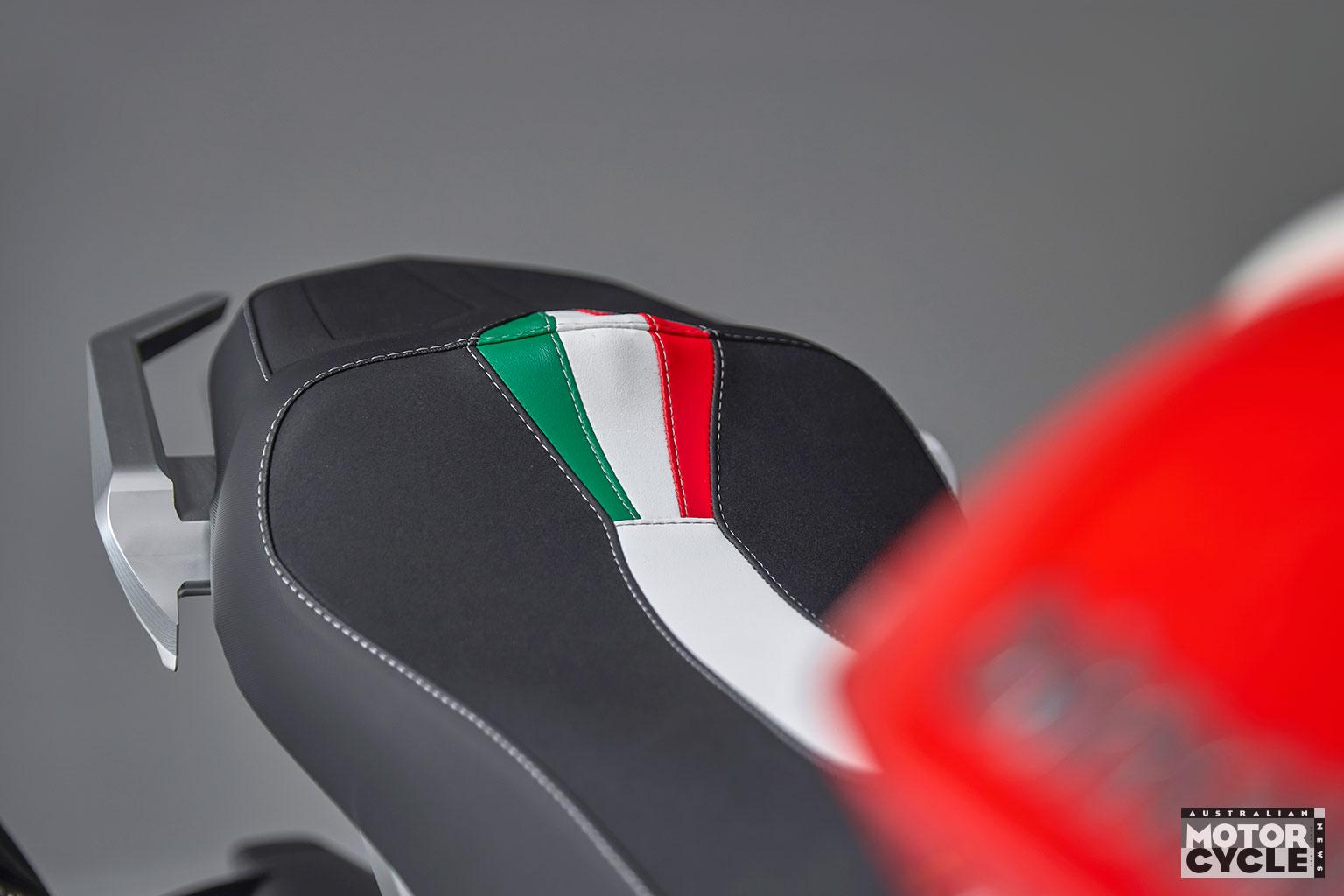
However, the first thing you notice after climbing aboard the Tera H2 and nestling snugly in the well-designed 830mm high seat, which allowed me at 180cm in stature to put both feet flat on the ground at a stoplight, is the more rational and far more relaxed riding stance compared to its Tesi sister. It’s really comfortable and relatively spacious thanks to the adjustable footrests and handlebar. This one-piece taper-section aluminium ‘bar just ‘falls to hand’ in best road tester cliche – but it really did.
You sit fairly upright but are well protected by the three-position adjustable screen. This looks slightly vestigial in terms of width, but a 100km stint riding on the M40 to Warwickshire proved it gave excellent protection even on my shoulders, cruising at 130km/h on the easy-to-use cruise control with an eye open for blue lights and white vans. However, you soon learn that the Tera is eye candy for heaps of car drivers, who’ll watch you cruise past them, then speed up to overtake you again, then slow down to keep pace while they and any passengers all gawp at the Bimota. Same thing parking up anywhere – every time I came back to the bike there’d be people staring at it. By the end of my day with the Tera I had my spiel down properly explaining what it was. Hope Bimota pay commission on the introductions. No? Oh, well – I had a nice ride.
No, it was more than nice. It was truly memorable. This magnificent engine and the Tesi design concept were made for each other, but only because of the significant changes Pilu Marconi has made to the design format. Back when I raced the Tesi, the biggest challenge we had in getting it to handle was high speed stability – often for no apparent reason the Tesi tango would kick in, sometimes even on fast straights if I hit a bump or ripple in the road surface while slightly leaned over. But get lucky – and I’ll admit that back then it was often a case of exactly that – and the huge advantage the Tesi concept delivered under braking was like two-wheeled nirvana, allowing you to stop later than anyone else and trail-brake hard on the angle into the apex of a turn without the suspension freezing or the front wheel folding.
Those assets are all present and correct on the Tera H2, as I discovered riding on one of my favourite bits of racer road outside Warwick. First, though, I’d experienced the massive thrill of exploiting the H2 SX supercharged engine’s performance to the max down a quiet, straight piece of road, which reminded me what a fantastic performance aid supercharging is in motorcycle terms – no throttle lag, no significant weight penalty, relatively few heat issues, just humungous acceleration that’s deeply, deeply thrilling. Transposing this performance to the Tesi concept not only let me lay that power down so satisfyingly directly exiting a bend, but stop late, hard and well at the other end of the straight, with total stability. In doing so, I immediately noticed that the trademark flat braking of the Tesi 1D I used to race has been replaced with just an itsy bit of front-end dive – just enough to give the impression you’re actually stopping, which wasn’t always evident on the old bike!
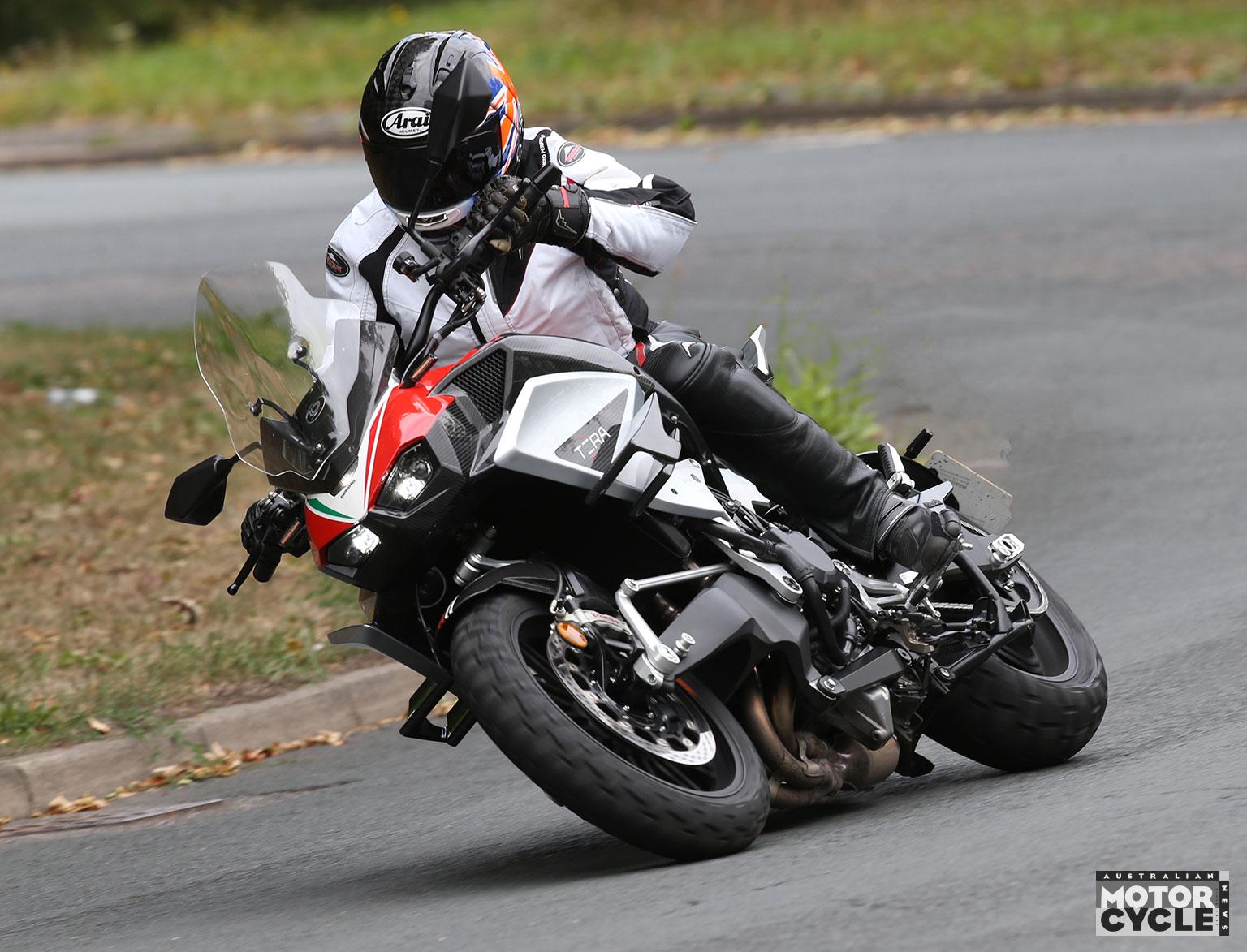
This was one of the hardest things to get used to on the 1DR, and while riding the Tera does still require you to reprogram your senses, it’s not as big a step as it was before – partly because of that sense of actually stopping that has been dialled in, and also because of the much better feedback from the front tyre. Back then I fell off more than once without any warning or without ever knowing why; feedback was very poor, thanks to the convoluted steering linkage and minimal front suspension travel.
That’s all history on the Tera, which has much softer and more compliant front suspension with 114mm of wheel travel versus 80mm in the old days. This not only delivered good ride quality over country road surfaces but eliminated another of the biggest problems I used to contend with: bump steer. The Tera not only goes where you point it, but isn’t deflected from the trajectory you’ve chosen, meaning you can use those magnificent Brembos to brake later and harder than anything else in the marketplace, always with heaps of feel. And, honestly and truly, I found nothing to complain about with the semi-knobbly tyres from Turkish brand Anlas – bearing a speed rating of 270km/h but with a tread design suitable for dual purpose use – especially the front, which I did my best to subject to cruel and unusual punishment. I did not feel the tread moving about under heavy braking, nor suffer any loss of front-end grip. And the insistent nature of the Kawasaki engine’s acceleration out of a turn didn’t lead to any strife with rear end grip, either.
But this is supposed to be an adventure tourer, so does it have any pretensions at offroad capability? I’ll admit to riding it only a short way along a loose-surfaced lane outside Stratford-on-Avon, after switching the riding mode to Rain. Let’s just say that, with my concerns about returning their sole demo bike in the country to Kawasaki UK in more or less the same condition as when I picked it up, the Tera seemed quite capable of fending for itself away from tarmac.
As a bike at home on Aussie red dirt roads? Pass – I’ll wait for someone more expert than me to evaluate that.
Instead, the Bimota Tera is a bike on which you’ll soon discover the mindset you must adopt to get the best out of a hub-centre motorcycle. Which is, hold the ‘bar lightly and don’t be afraid to stay off the brakes until what seems suicidally late. Then, when you do eventually decide to stop, don’t be concerned about grabbing a big handful of front brake and squeezing the lever hard as you lean into the apex of the turn, while still scrubbing off speed. The separation of steering from suspension functions on a bike like this is the biggest asset of hub-centre front ends – only that you must first convince yourself that you can trail-brake so deep into turns, then do it! It delivers a thrilling level of performance that only the bike which donated its engine to it can match – but it does so in a way that’s completely unique in today’s marketplace.
Worth waiting 30 years for? You bet.
✅ PROS – vastly improved front-end feel, high-speed stability.
❌ CONS – Modest ground clearance, limited genuine off-road ability, hub-centre technique takes some getting used to.
Competition
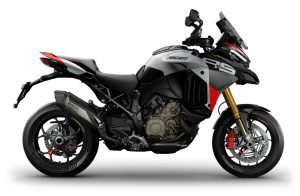
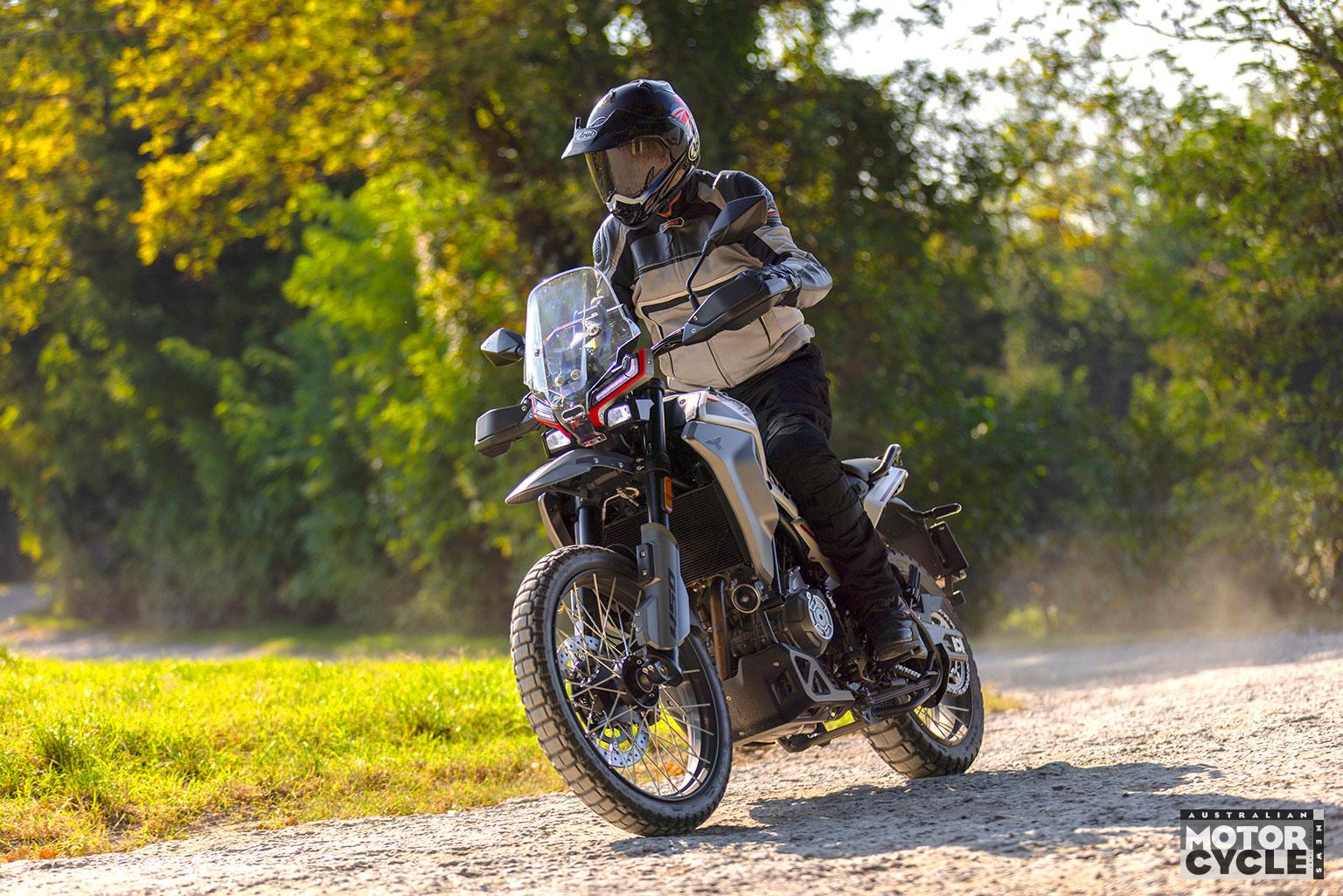
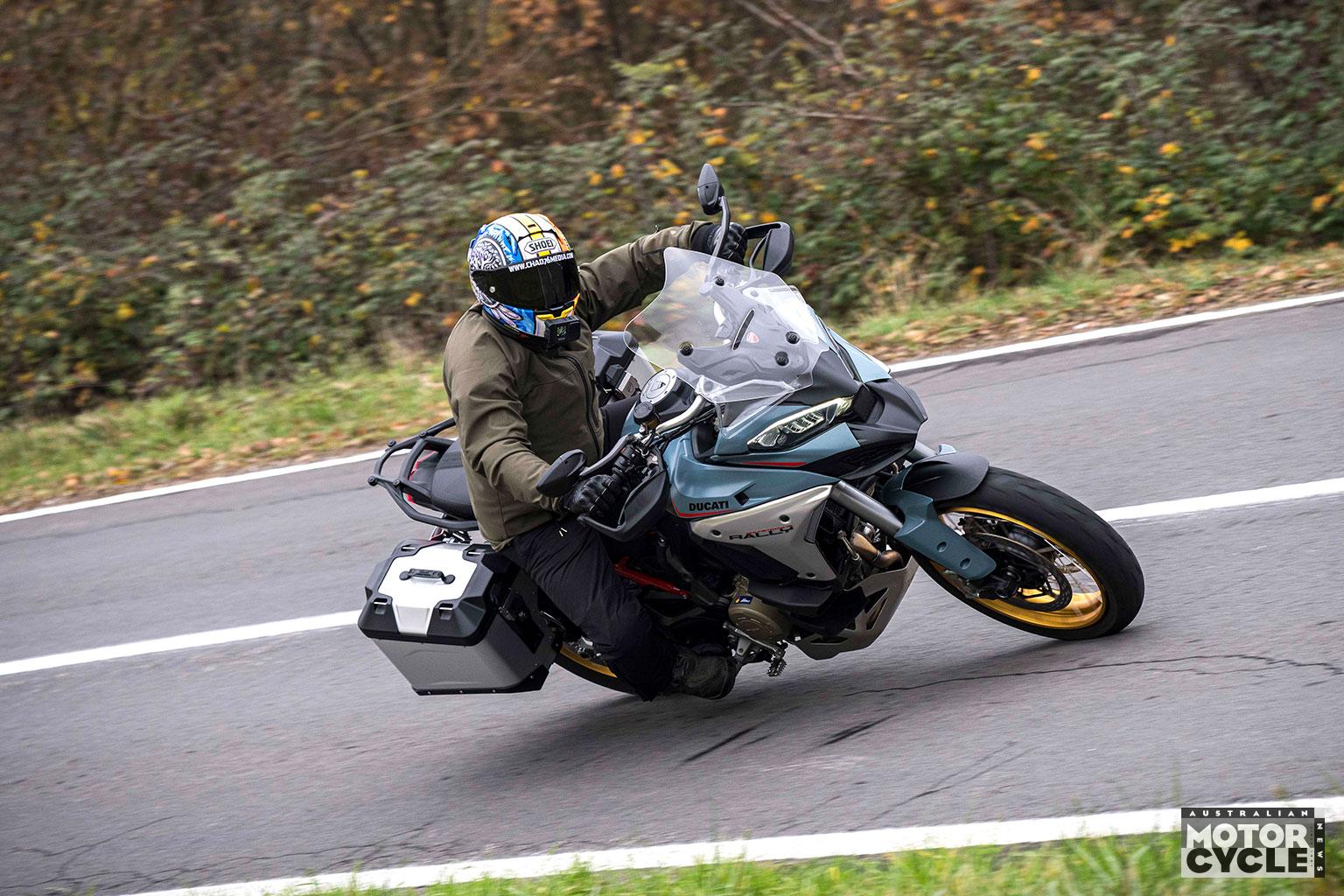
DUCATI MULTISTRADA V4 RS – $58,225 ride-away
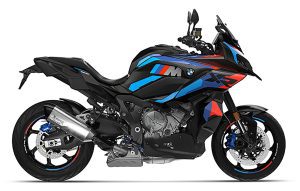
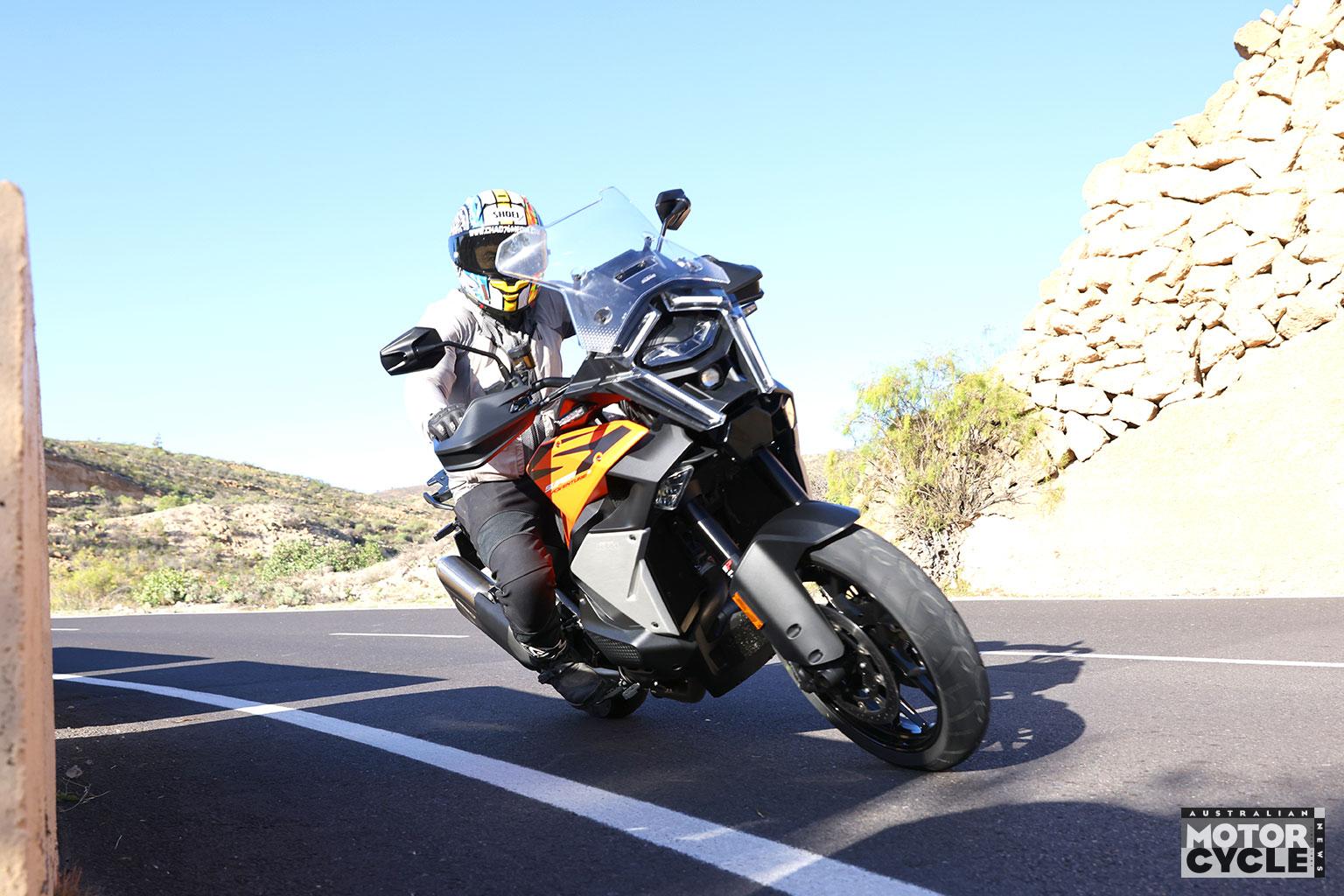
BMW M 1000 XR – $40,055 ride-away
SPECIFICATIONS
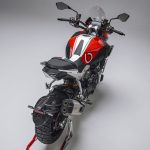
ENGINE
Type 998cc supercharged inline four, DOHC, 16-valve, liquid-cooled
Compression ratio 11.2:1
Transmission Six-speed, wet
multi-plate clutch, chain final drive
ELECTRONICS
Cornering management, three-mode traction control, launch control, cornering ABS, quickshifter, cruise control, TFT, smartphone connectivity
PERFORMANCE
Power 147.1kW (200hp) @ 11,000rpm
Torque 137Nm @ 8500rpm
CHASSIS
Frame Billet-machined aluminium
alloy plates
SUSPENSION
Front Öhlins TTX36, fully adjustable, 114mm travel
Rear Öhlins TTX36, fully adjustable, 145mm travel
BRAKES
Front Brembo Stylema four-piston radial calipers with twin 330mm discs, ABS
Rear Two-piston caliper, 220mm disc, ABS
TYRES
120/70 ZR17 (f), 190/55 ZR17 (r)
DIMENSIONS
Wheelbase 1455mm
Seat height 830mm
Ground clearance 174mm
Weight 215kg (dry)
Fuel capacity 19L
PRICE
€41,000 before taxes ($A66,800)