As big bikes lose momentum and smaller models gain appeal, manufacturers worldwide are racing to claim a slice of motorcycling’s booming middleweight class
For decades the 400cc category has been a desolate hinterland in many brand’s ranges – either sparsely populated with ageing holdovers from a previous generation or ignored altogether – but over the last couple of years it’s become a hotbed of activity.Why? Because a combination of factors is pushing riders around the world towards bikes around the 400cc mark, making it a fast-growing segment while other capacity classes are often stagnant or dropping. The result, from a customer’s perspective, is a remarkable array of offerings, with many more in development, ranging from retro singles to screaming 400cc four-cylinders that hark back to the Japanese bubble era of the late 1980s and early 90s.
What are the driving forces behind the shift towards 400s?
While countries all over the globe are seeing customers migrate towards mid-sized machines, the reasons for the shift – and the types of bikes being bought as a result – can be clearly split into two main categories, with a dividing line drawn between the traditionally-affluent nations that make up areas like Europe and the rising manufacturing powerhouses of Asia and India.
In short, increasing economic pressures and ageing rider demographics in countries where motorcycling has been a leisure pursuit above all else for the last few decades are encouraging motorcyclists to downsize from bigger bikes towards lighter, cheaper and easier to ride but slower 400-class models.
Meanwhile, the opposite applies in countries like China, where motorcycling is making the shift from simply ‘transport’ to something more passionate, with increasing levels of disposable income allowing riders who are interested in more than simply getting from A to B to step up from the small singles that previously dominated and onto more exotic, bigger bikes. It just so happens those machines are also in the region of 400cc.
Delving a little deeper, let’s take a look at some specifics. It’s not possible to get detailed, model-by-model sales breakdowns for every country, but we can pick out nations that are more open with their information as a guide. The UK, for example, is one of the few that openly publishes full details of new vehicle registrations, right down to the exact model, as well as helpfully splitting sales figures into capacity classes. It’s also a country where motorcycling is dominated by enthusiast leisure users, without the high level of scooter ownership that’s seen in some sunnier European climes.
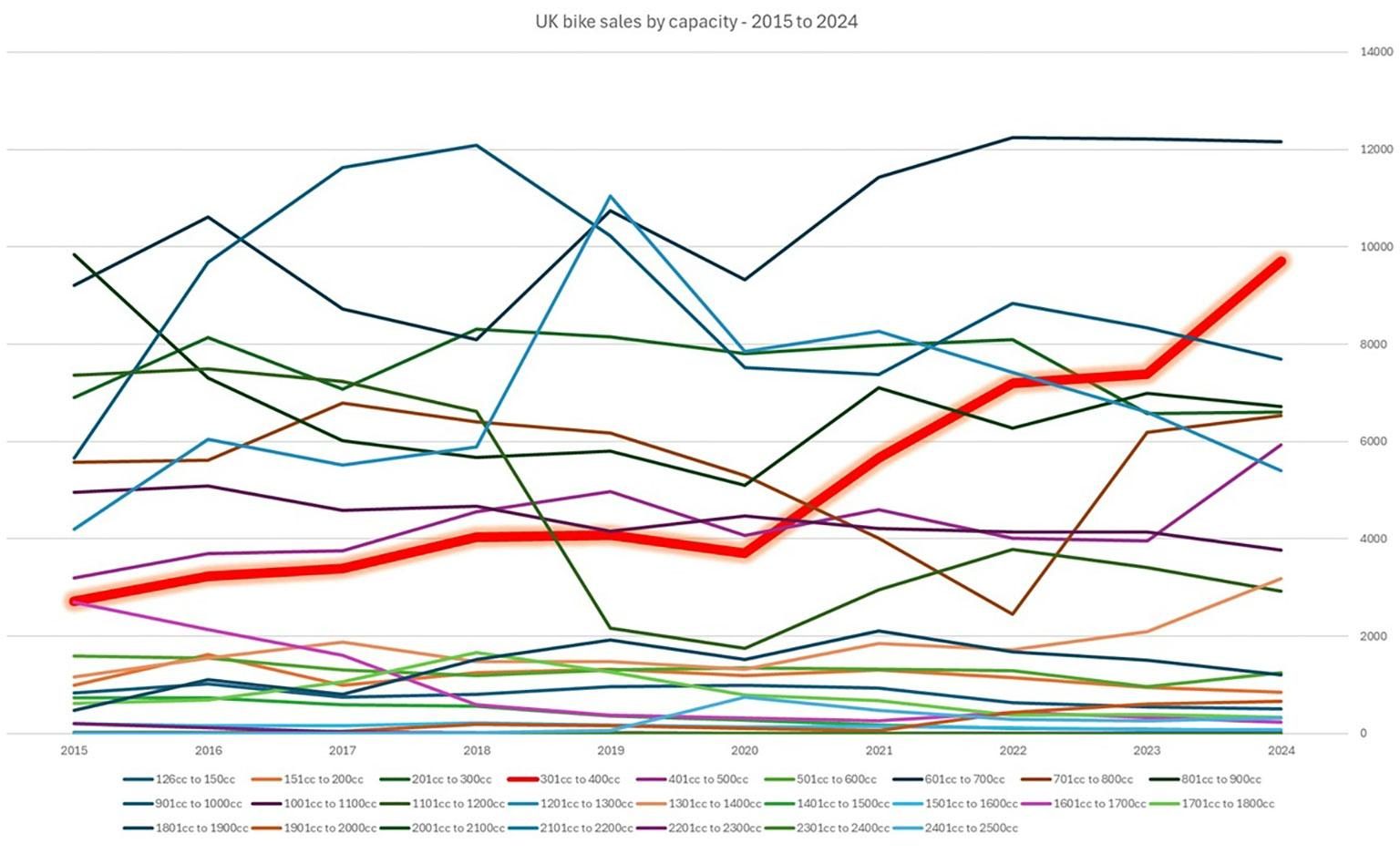
Looking at the decade from 2015 to 2024, the most recent full year’s figures that are available, most UK capacity classes have been relatively constant over those years. However, the category for bikes between 301cc and 400cc has nearly quadrupled in sales. Back in 2015, just 2720 bikes in that class found buyers, but by 2024 that figure had reached 9704, with 2025 figures expected to continue the trend.
The real liftoff started in 2021, with another kick in 2024 when Triumph’s Speed 400 and Scrambler 400 X hit the market. The result is that the 301cc to 400cc class has jumped from 10th most popular back in 2015 to second biggest in 2024, behind only the 601cc-700cc category. Meanwhile, larger capacity models have dropped back: both the 901cc-1000cc and 1201cc-1300cc brackets have held the top spot in the last decade, only to decline to third and eighth places respectively in the most recent figures.
There are several reasons for that shift, but the ones most commonly cited by dealers and manufacturers include the ageing nature of the motorcycling population, the realisation that big, fast bikes aren’t as useable in modern traffic conditions as they once were, and a squeeze on disposable income that leaves customers with less spare cash to splurge on bikes.
Taking those one-by-one, the age issue has long been recognised and is replicated in other so-called ‘developed’ countries. Costs and other distractions increasingly discourage younger people from getting into motorcycling. As a result the overall demographic is ageing out. The riders that drove a boom in superbikes at the turn of the millennium when they were in their affluent 40s, and then a shift towards big adventure bikes over the last couple of decades as they entered their 50s and 60s, are now well into retirement and finding those big machines are just too much. Rather than quitting riding altogether, a 400-class bike has become the answer for many.
On top of that, the proliferation of speed cameras, paired with increasingly congested roads and deteriorating road surfaces, means it is difficult to make full use of the performance that bigger bikes offer, while stagnation in disposable income – a theme across many developed countries – means riders have less to spend on bikes than before. Getting a new 400 scratches that itch without denting the bank balance as much as a bigger bike would, and it’s easier to use the smaller bike to its full potential on modern roads.
Turning to ‘developing’ countries like China and India, the situation is precisely the opposite. They’re experiencing a rise in disposable incomes that’s allowing a growing number of riders to turn from motorcycling-as-transport to motorcycling-as-a-hobby, and with it comes a shift towards higher-performance, more exotic bikes. Coming from a baseline that’s largely sub-200cc single-cylinder machines, that uplift means a shift towards the 400cc class.
In China, for example, 2025 saw a 25 per cent year-on-year increase for ‘large-displacement recreational motorcycle’ sales that far outstrips the general market growth. The China Chamber of Commerce for Motorcycle (CCCM) defines that market as being bikes over 250cc and reported over 950,000 sales in that category. That’s in the context of total domestic sales for gasoline-powered motorcycles of 5.1 million, a six per cent drop on the previous year. The context here is a rapid increase in average disposable income. In China, it’s nearly doubled in the last decade, from the equivalent of around $A4500 per capita in 2015 to $A8400 in 2025 using current exchange rates – with many people enjoying substantially more than that average. That increased affluence, along with legislation to reduce the number of motorcycles on city streets, has seen a rapid growth in car ownership (figures for privately-owned cars in the country have more than doubled in the last decade) with a corresponding shift away from bikes as pure transport and towards motorcycles as leisure vehicles.
What does that mean for bike manufacturers?
The sharply contrasting reasons behind the convergence towards 400cc machines mean manufacturers – like their customers – are coming at that part of the market from two distinct directions, depending on where their previous focus was aimed.
For big European brands, as well as the likes of Harley-Davidson where the focus has previously been on larger-capacity models, bikes around the 400cc region might be essential to keep sales volumes up but they present the problem of having smaller RRPs and the inevitably shrunken profit margins that come with them. Triumph, for example, broke its all-time record for production and sales in 2024 when the Speed 400 and Scrambler 400 X joined the range, but simultaneously saw a slight decline in profits thanks to the smaller margins on those bikes.
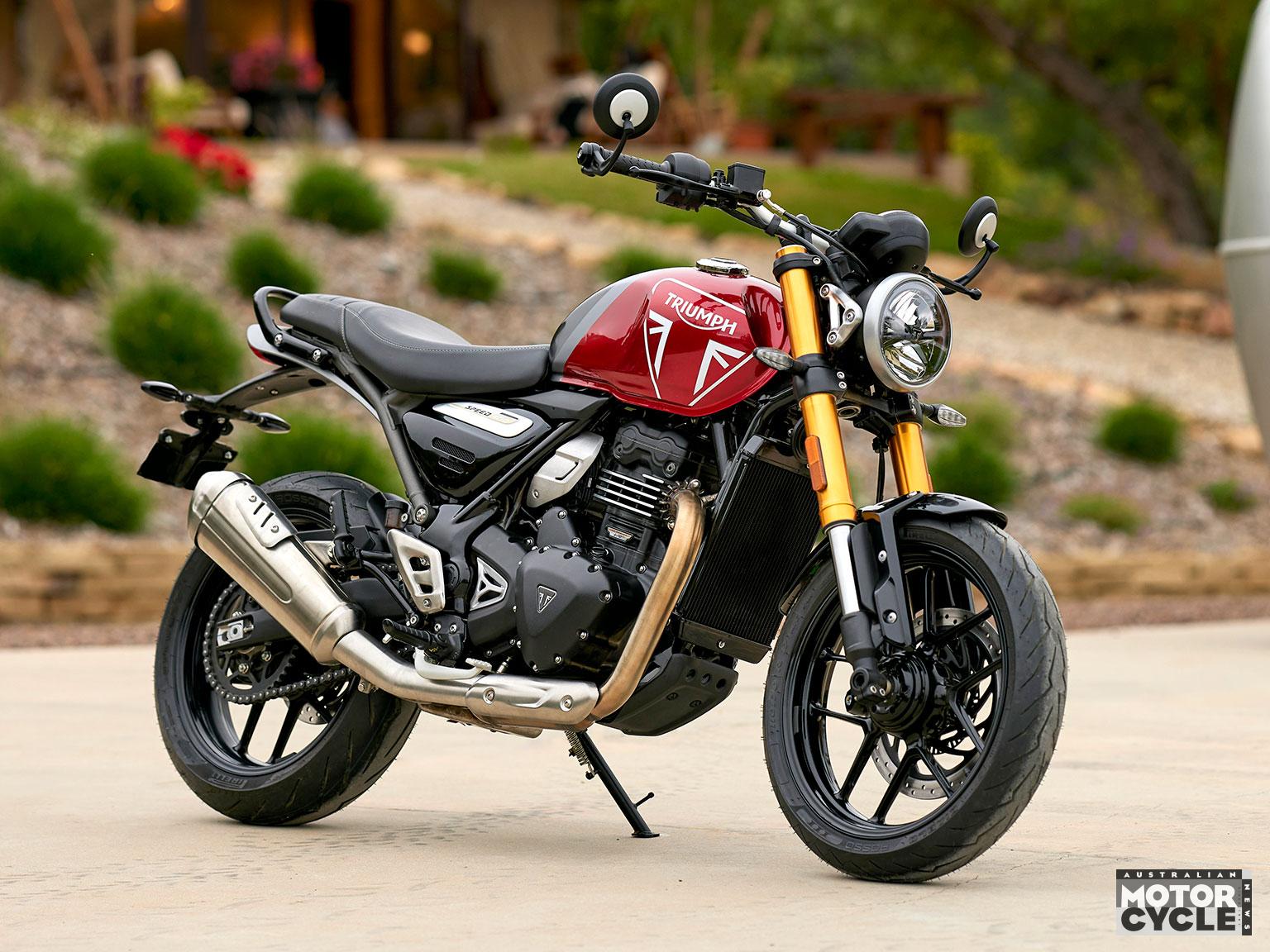
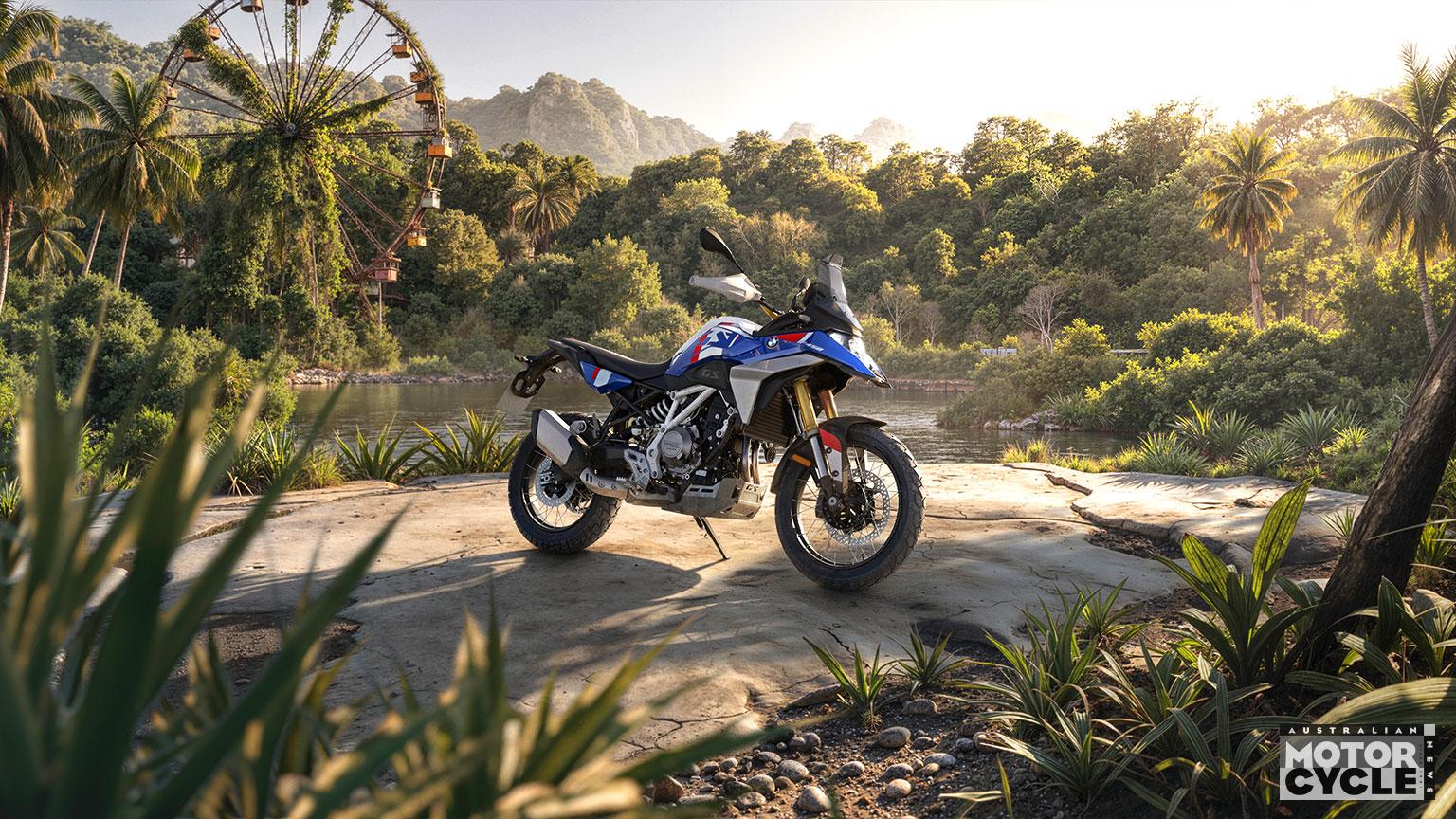
Pretty much universally, these companies have opted to join forces with partners in India or China to cut down on the R&D and production costs of these smaller models, making sure they can be built in enough volume and at a low enough cost to be profitable. Triumph’s 400s are made by Bajaj in India, for example, and Harley-Davidson has tie-ins with both Qianjiang in China and Hero MotoCorp in India for its X350, X440 and X500 models. India’s TVS builds BMW’s new F 450 GS, which will be joined by more models in the near future, and KTM, now owned by Bajaj, makes its smaller bikes including the ‘390’ models in India and also has a tie-in with CFMoto in China, where the forthcoming RC450 parallel twin recently broke cover. Ducati has, so far, opted not to enter the 400cc arena other than with its new motocross and enduro offerings, which are aimed at a different growth market for competition bikes.
Brands based in China and India, with a footing in smaller, cheaper, mass-made bikes, are approaching the 400cc market from the other direction. For many of them, these are larger bikes than they’ve built in the past, offering a bigger potential profit margin. In China particularly, that’s illustrated by the sudden emergence of a whole array of complex, advanced, four-cylinder models in the 400cc-500cc category, a far cry from the relatively simple singles and twins being pursued by the European companies pushing into that market.
That’s in part down to local market pressures. In China, there’s a push towards triples and fours because customers increasingly regard singles or even parallel twins as being unsophisticated. The way the country’s industry is geared towards rapid product development helps minimise the R&D costs involved, and its low production costs mean that even though a four-cylinder 400cc, 16-valve, DOHC bike has just as many components as a 1000cc four with the same layout despite commanding a much lower selling price, these bikes can still be a profitable prospect.
Big Japanese brands like Honda are split between both camps. With manufacturing facilities and partnerships around the world, they’re able to get similar benefits to the Chinese and Indian companies. But, like European bike makers, they’re also geared to the relatively large profit margins on bigger-capacity bikes aimed at developed markets, which are under threat as the smaller models gain a growing foothold.
If the convergence of developed and developing markets continues, the indications are that we can expect a growing number of 400-class bikes, split between singles, twins and four-cylinder models across a broad array of classes, but most of them made in India or China – even if the resulting models wear familiar brand names.
Class of 2026:
Latest and upcoming 400-class bikes
Any fast-growing market is sure to attract fierce competition and inevitably the same is true of the circa-400cc category that’s exploding across the globe. So, let’s run through how some key players are responding.
HONDA
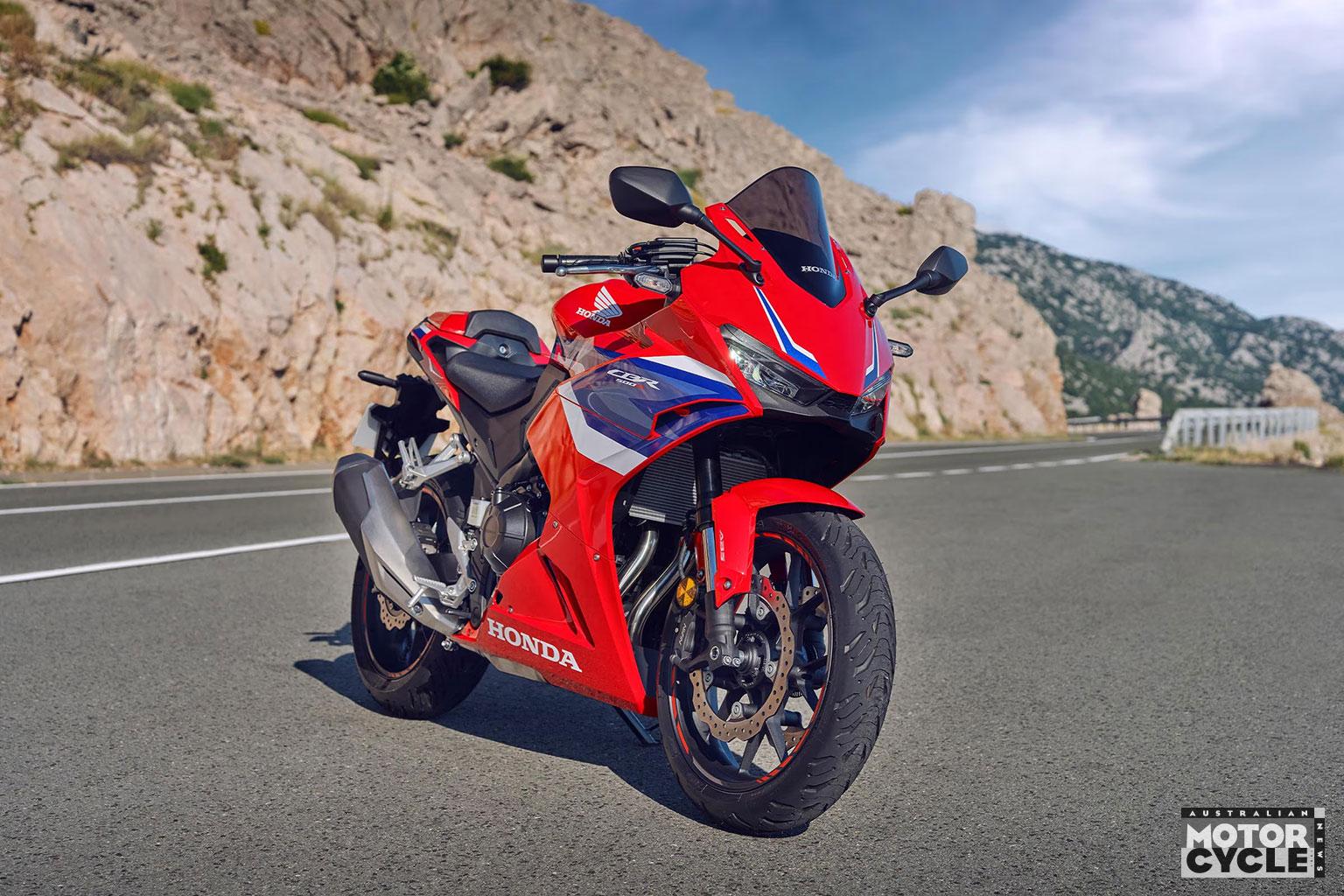
Starting with Japan’s big hitters, none come larger than Honda and while the Big H was already well placed with its long-running 471cc parallel twin line-up, it’s rejigged that part of the range to create the NX500 and CB500 Hornet in place of the old CB500X and CB500F, alongside the CL500 and CMX500 and, of course, the CBR500R, all old warhorses at heart but several now offered with the option of Honda’s E-Clutch to bring a new appeal.
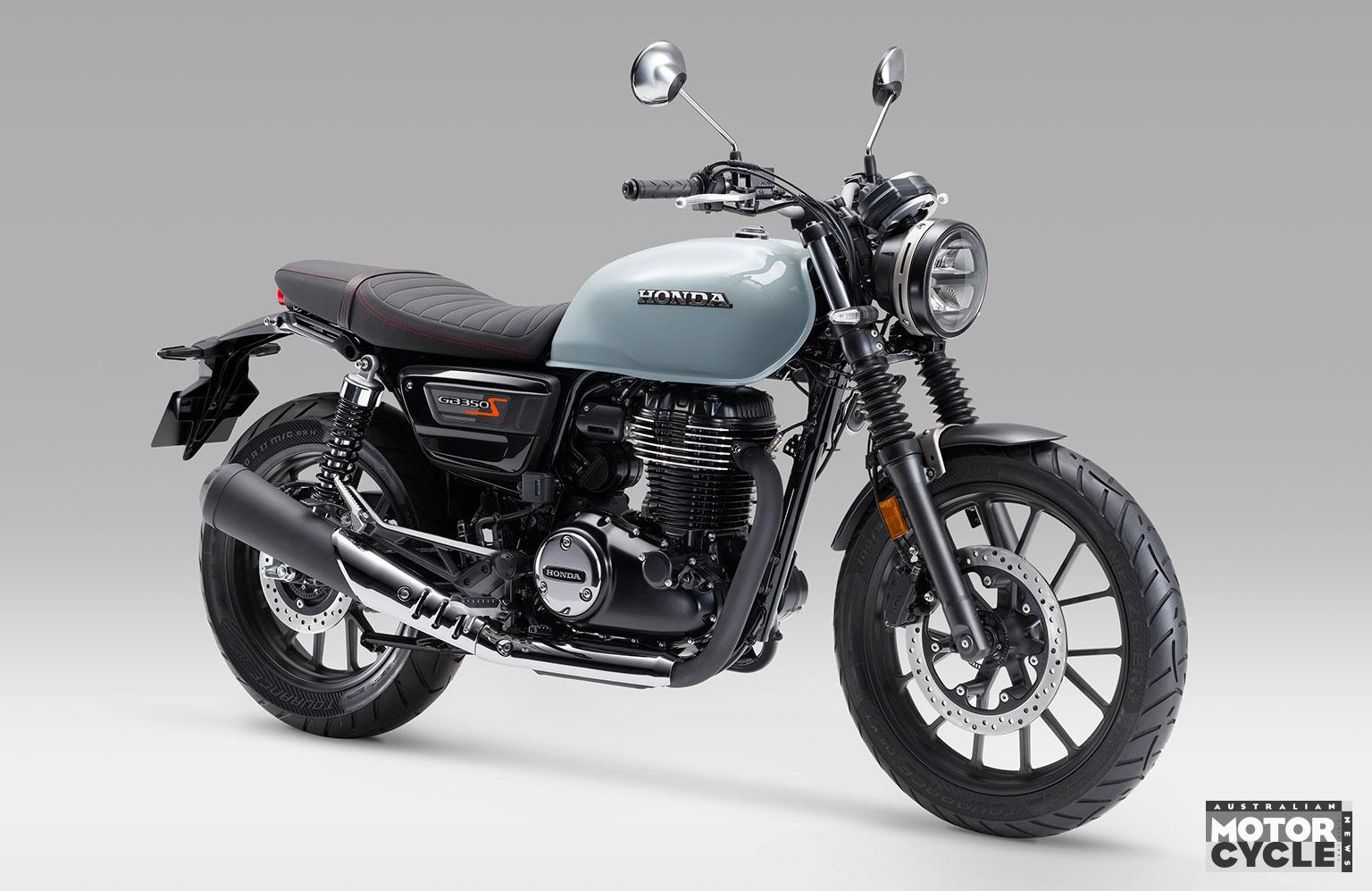
Above and beyond those models, Honda’s GB350 is a recent addition, built in India and aimed squarely at rival machines like Royal Enfields that hail from the same country.
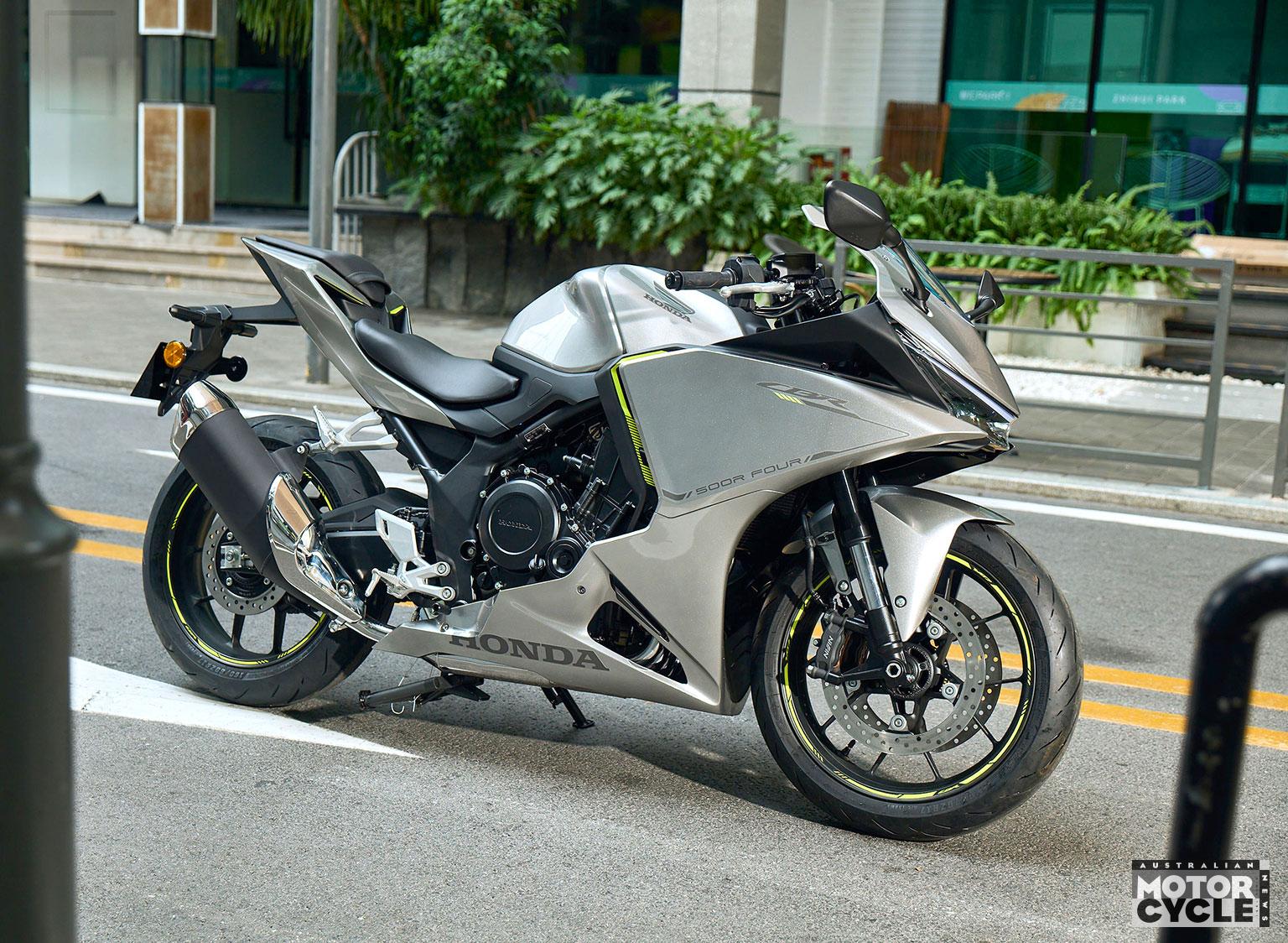
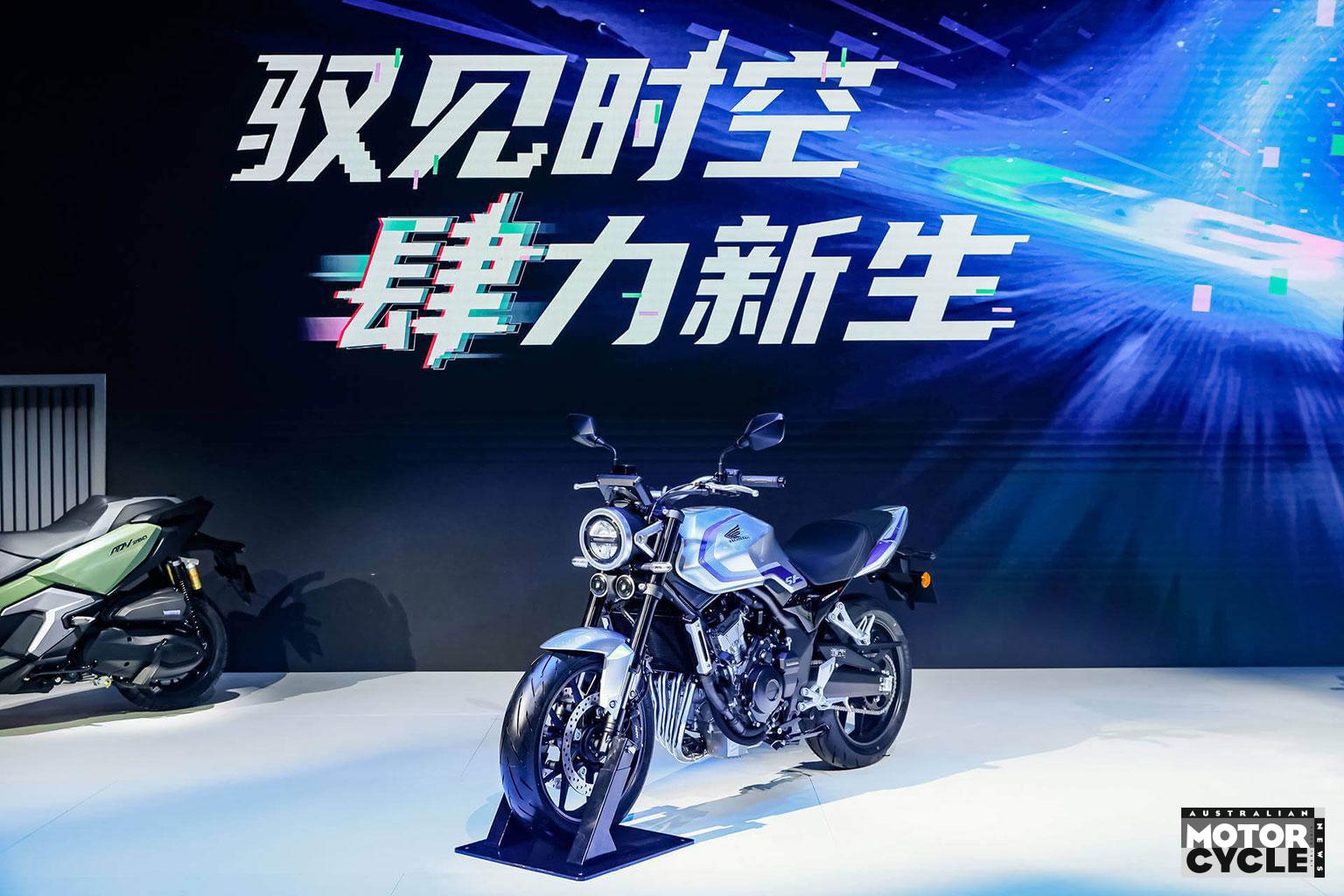
At the other end of the spectrum, there’s the newly-launched CB500 Super Four and CBR500R Four – both being made by the Wuyang-Honda joint venture in China and so far launched only in that market. The machines are slightly bigger at 502cc, but 400cc versions are expected since Honda has trademarked the appropriate names for them. Similarly Honda’s trademark activities indicate it intends to offer the new four-cylinder machines globally once production hits full swing. Packing an entirely new inline-four engine putting out 52kW (70hp) and harnessed to a ride-by-wire throttle allowing a second-gen version of Honda’s E-Clutch to be used for both up- and down-shifts, the models mark a surprise return to the field of small four-cylinder bikes for Honda after the old CB400 Super Four was discontinued in Japan in 2022.
KAWASAKI
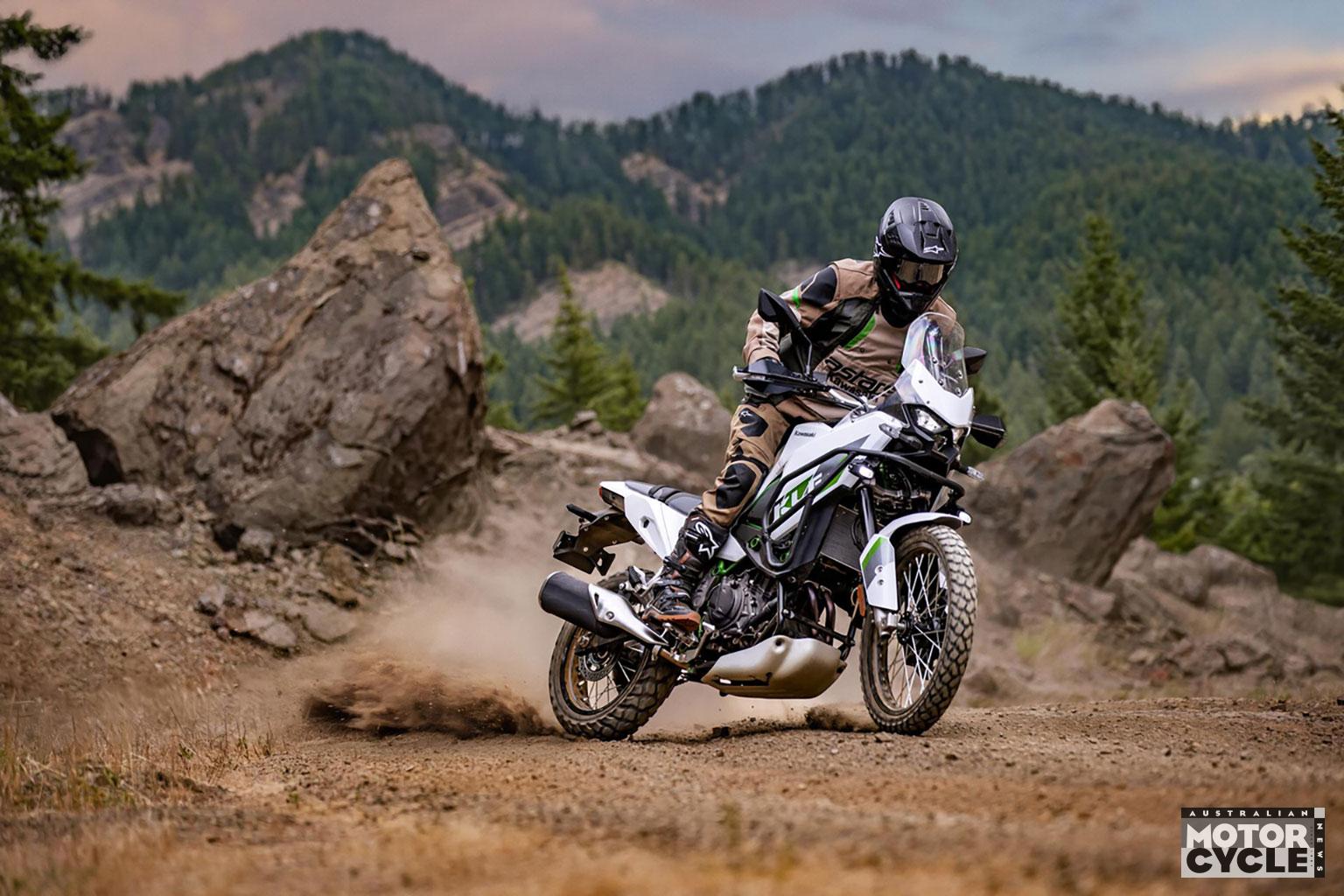
Fellow Japanese brand Kawasaki is also well in the game. Like Honda it already has several parallel twin players in this part of the market, including the 451cc Eliminator, Ninja 500 and Z500, bolstered for 2026 by the new KLE500 adventure bike using the same engine. It also got a headstart on the 400cc four-cylinder game, confounding expectations when it launched the Ninja ZX-4R and ZX-4RR in 2023 and pre-empting a host of similarly-spec’d machines from Chinese rivals.
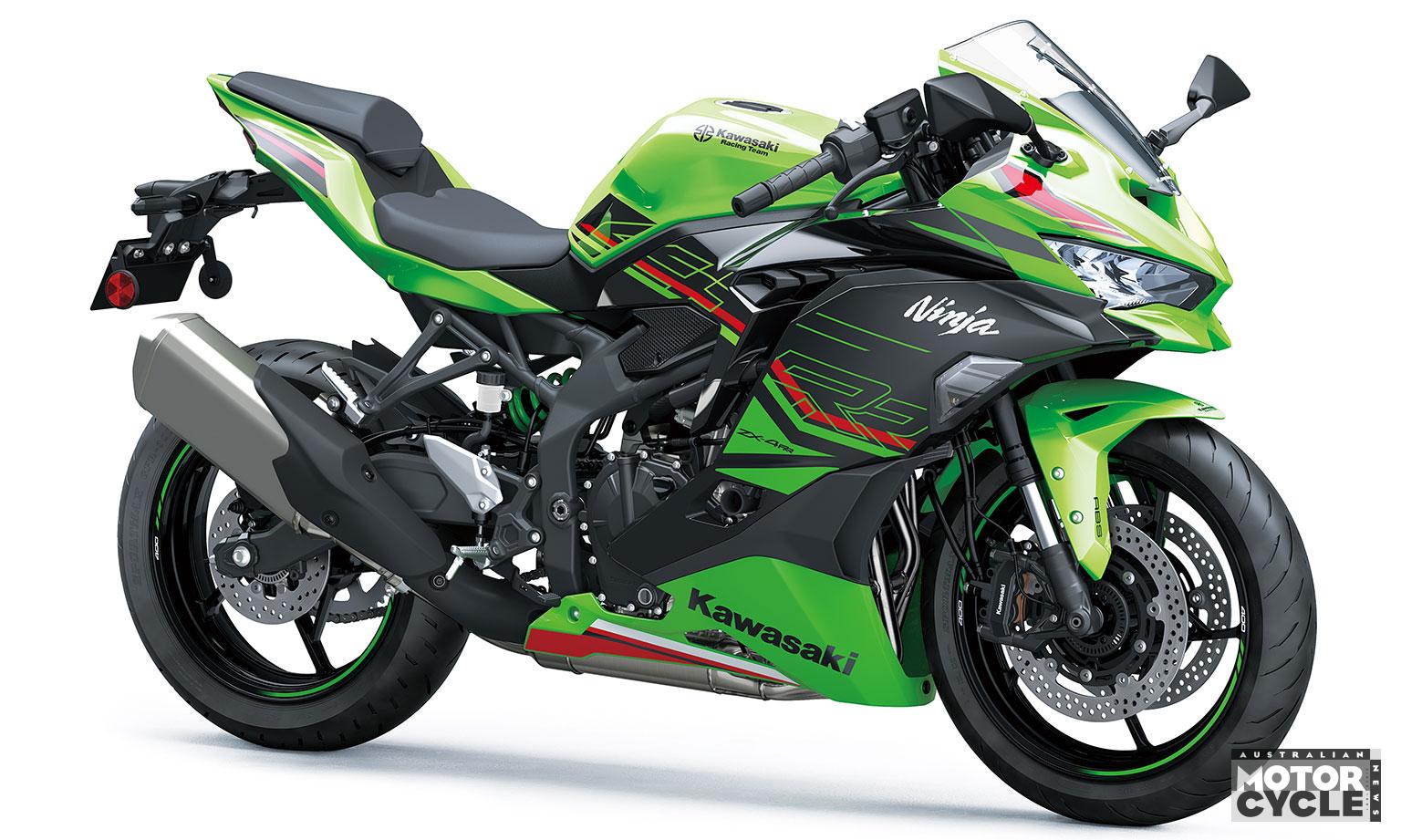
Before the ZX-4’s launch, many experts believed that small-capacity, four-cylinder bikes were set for extinction due to the 2020-on Euro5 emissions rules, which added a limit on non-methane hydrocarbon output that’s particularly hard to achieve with a very high-revving engine due to the large amount of valve overlap they traditionally need. That’s one reason why the latest generation of small fours still don’t rev as high as the most exotic of the old 1980s and 90s 400cc machines from Japan, but it turns out that modern engine tech like ride-by-wire means they can still make more power than their precursors.
TRIUMPH
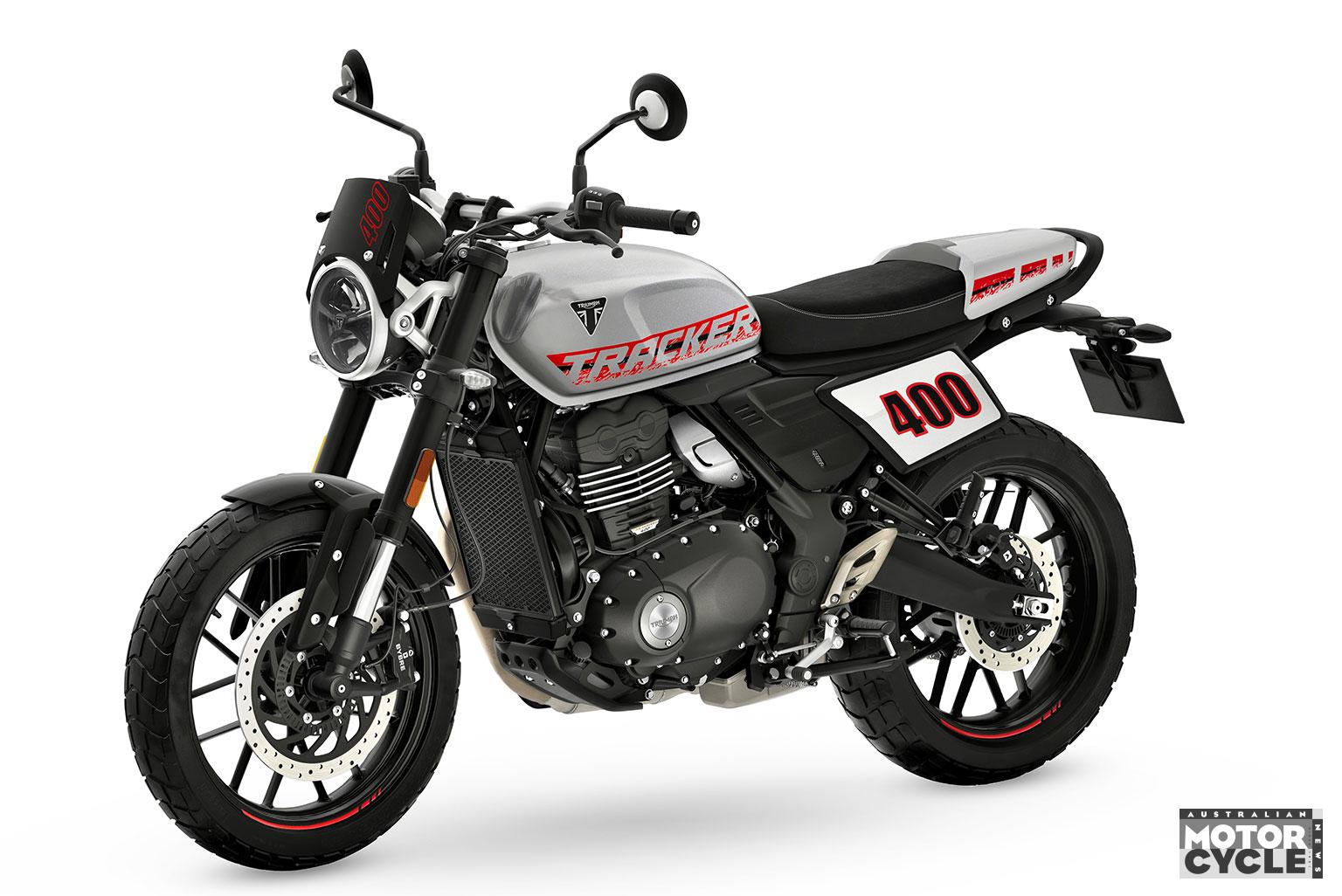
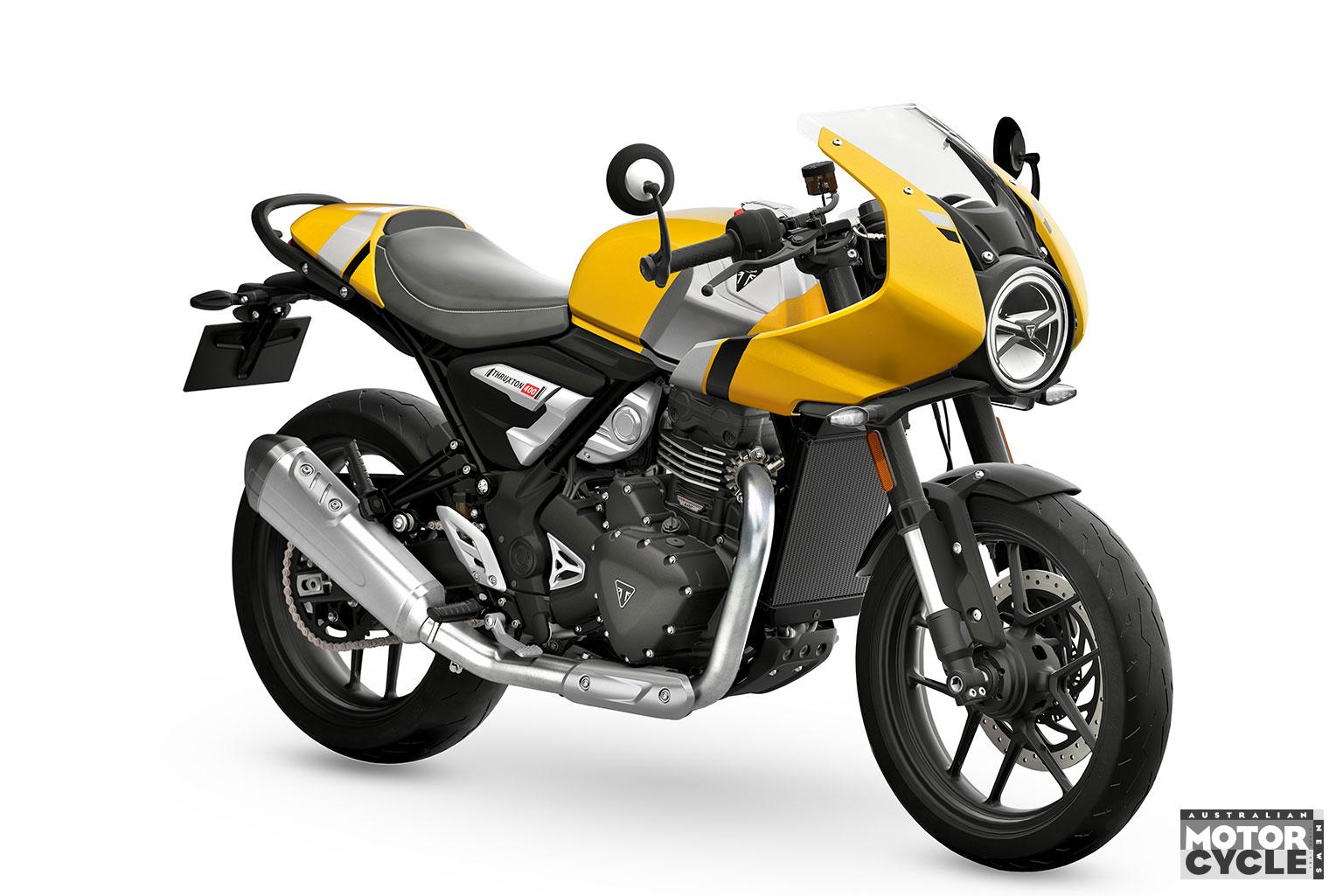
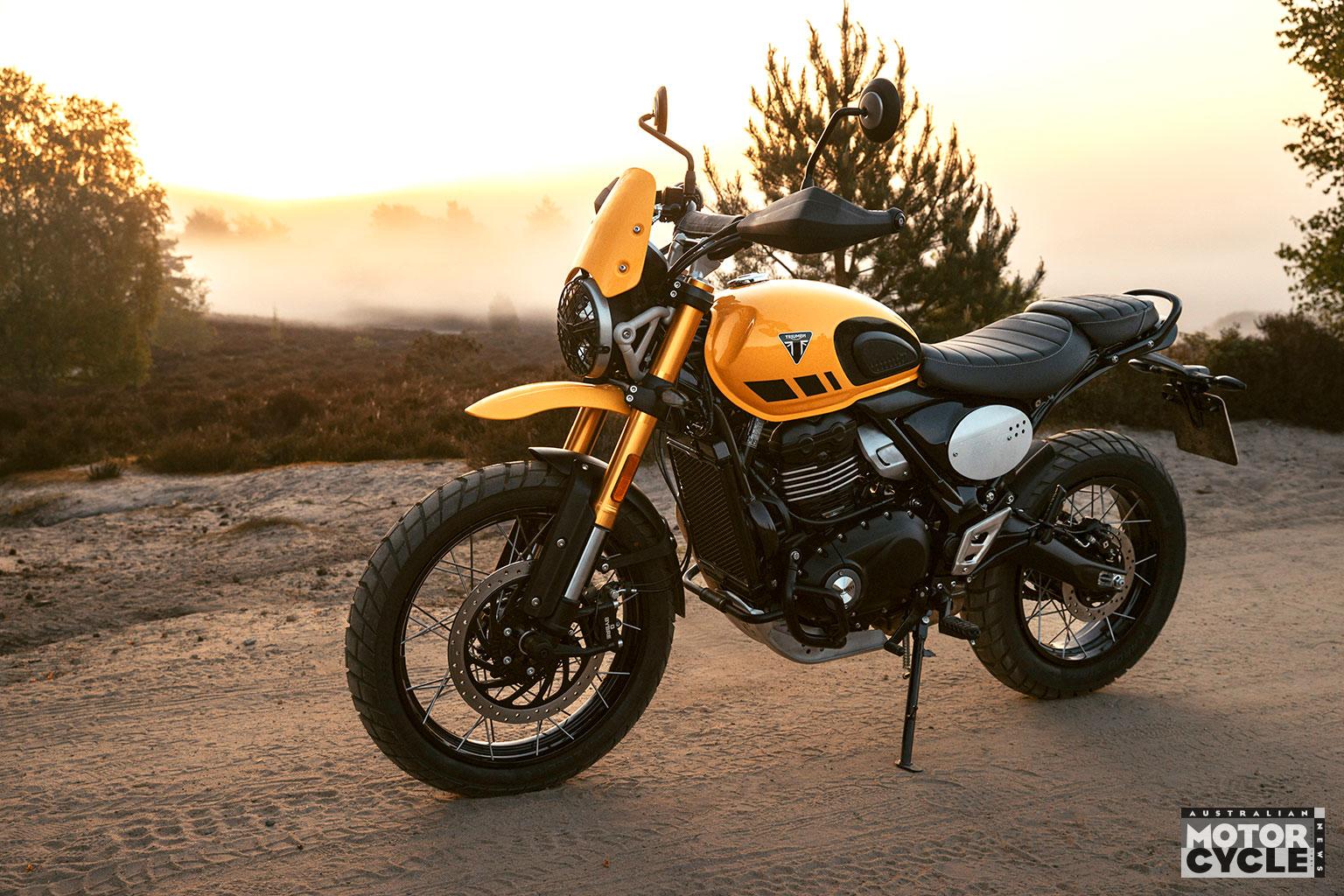
Turning to Europe, Triumph’s Speed 400 and Scrambler 400 X, both launched for 2024, proved instant hits and have since been joined by the Scrambler 400 XC, the Tracker 400 and the Thruxton 400, while in India there’s also a cheaper Speed T4 model with lower-spec suspension. Could more variations be set to follow? It’s not hard to imagine a Tiger Cub 400 joining the range. Indian-made, the Triumph 400s follow the single-cylinder pattern set in that country, lining up against rival singles from Royal Enfield, BSA’s new Bantam 350 and the Indian-built Honda GB350, while appealing to European buyers as low-cost, low-performance and low-stress machines well suited to the ageing demographic of riders.
BMW
BMW’s F 450 GS might also hail from India, where it’s built by TVS (Norton’s parent brand, hence the decided similarities between the BMW and the Norton Atlas machines launched at EICMA last year), but it follows the twin-cylinder route instead of a single-cylinder path. Essentially replacing the old G 310 range, the F 450 is expected to spawn spin-offs including an F 450 RR sportsbike and F 450 R naked built around the same parallel twin, with its oddball 135-degree crank angle. TVS itself has indicated it’s likely to build its own bikes around the same platform, just as it already does with the BMW G 310 models that spawned the TVS Apache 310 machines. A concept sportsbike, the TVS Tangent RR, was shown at EICMA last year, and appeared to pack the BMW F 450 engine under its radical-looking fairing.
KTM
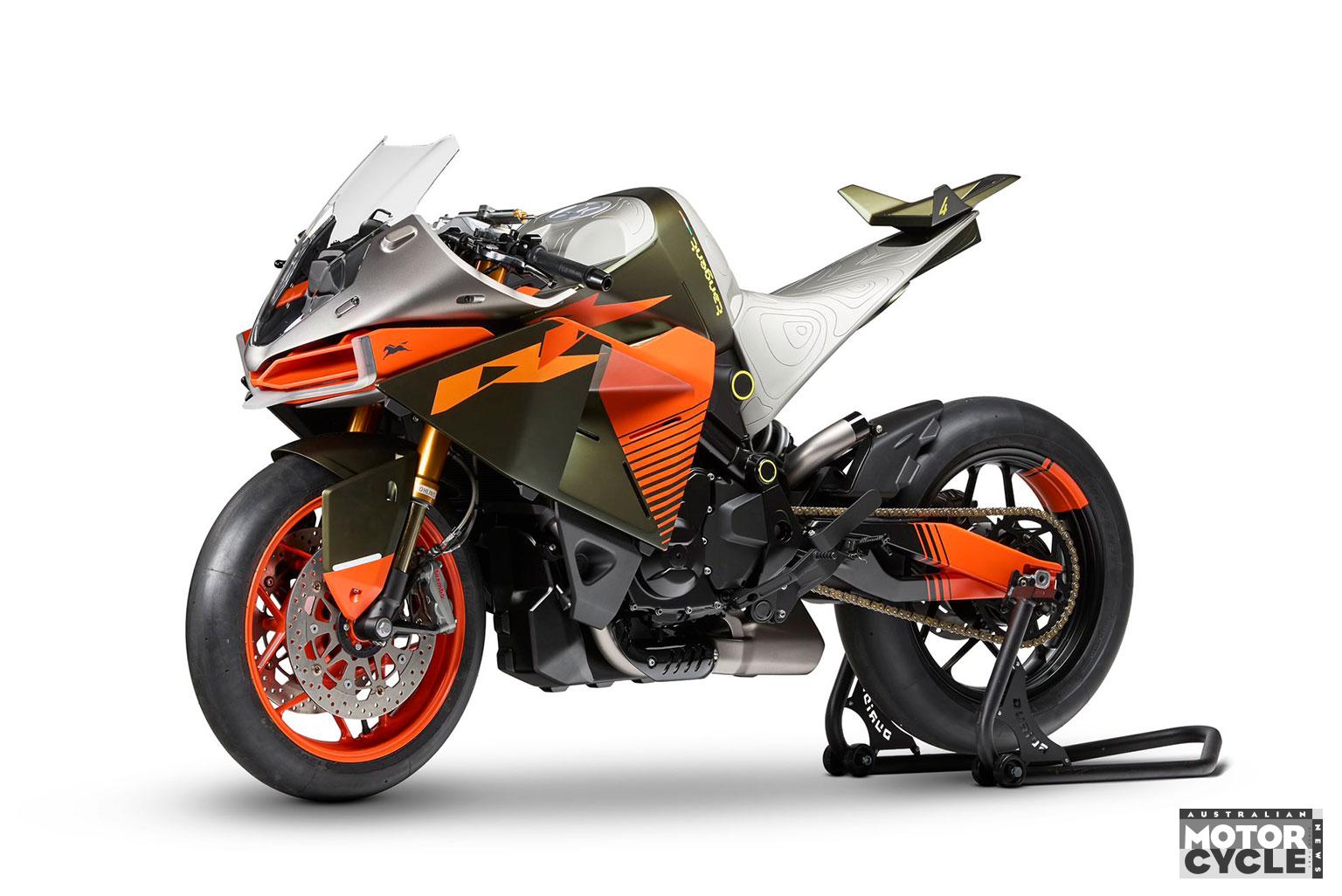
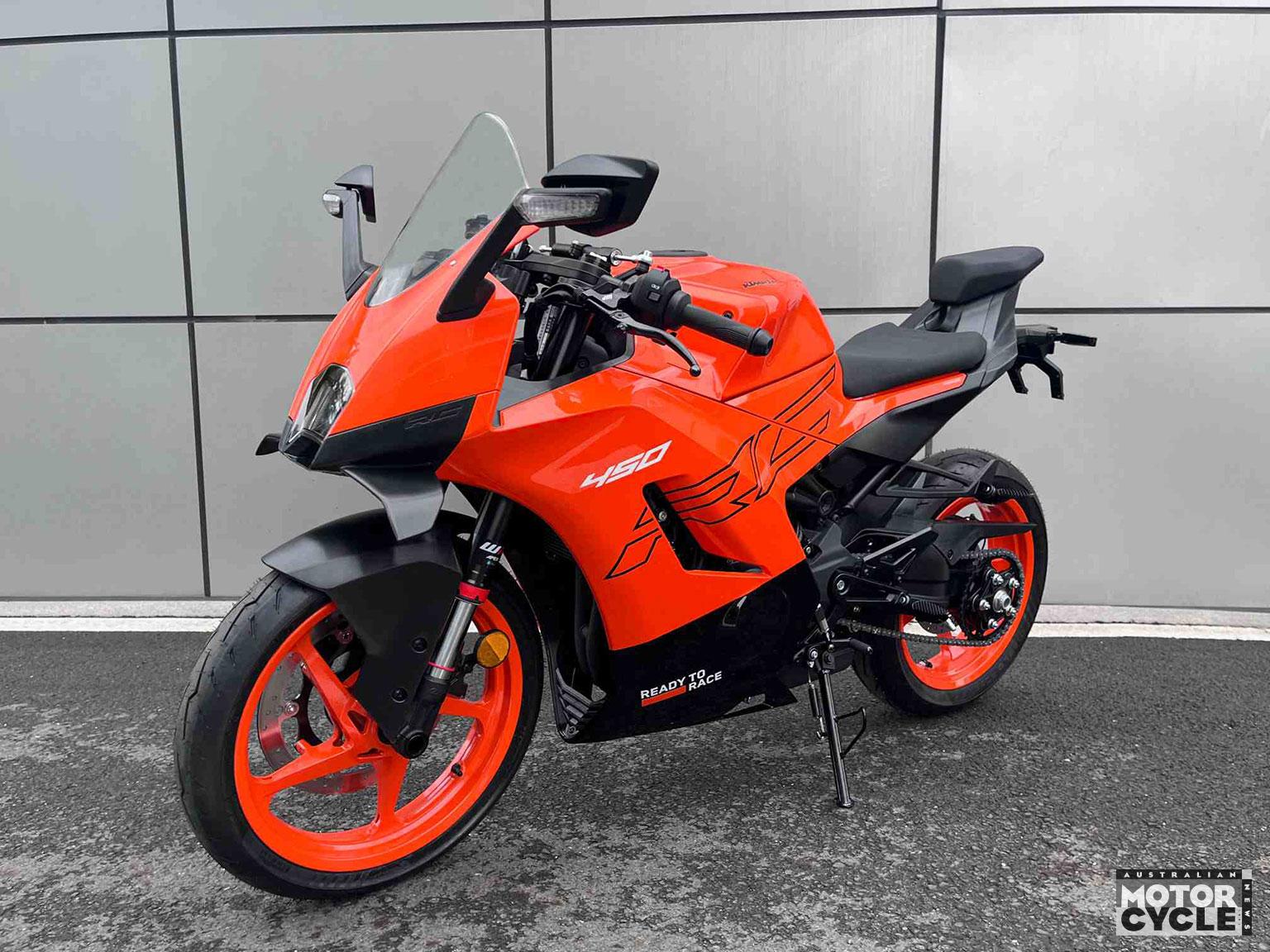
Also taking the 450cc parallel twin route is KTM, which has yet to officially launch its upcoming RC450 sportsbike, but the machine has been seen in Chinese type-approval documents and on test in Austria. Built as part of the brand’s joint venture with CFMoto, it’s essentially a reskinned version of the CFMoto 450SR, with WP suspension instead of the CFMoto’s Kayaba components and a sharper-edged look.
CFMOTO, QJMOTOR & KOVE
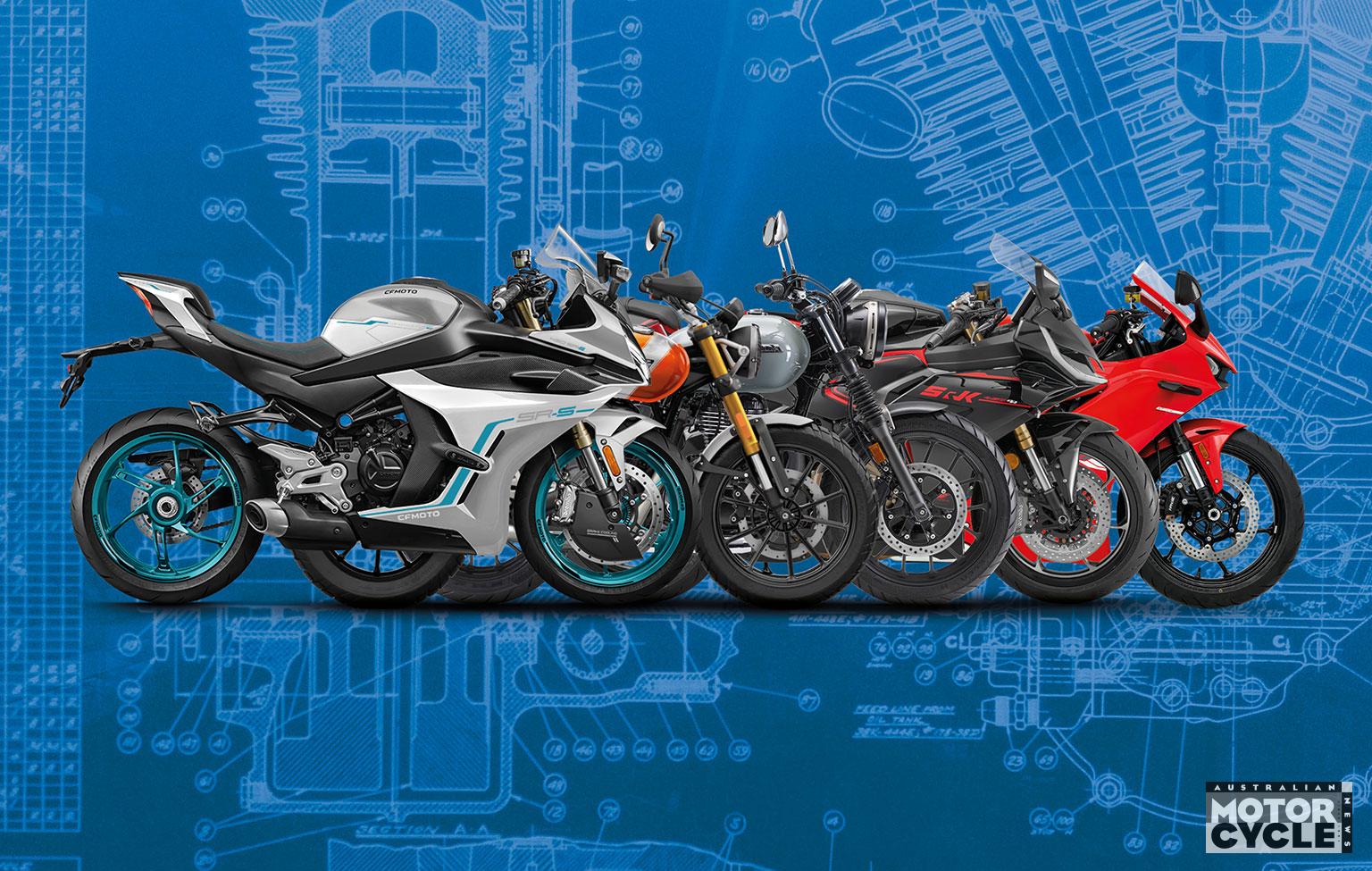
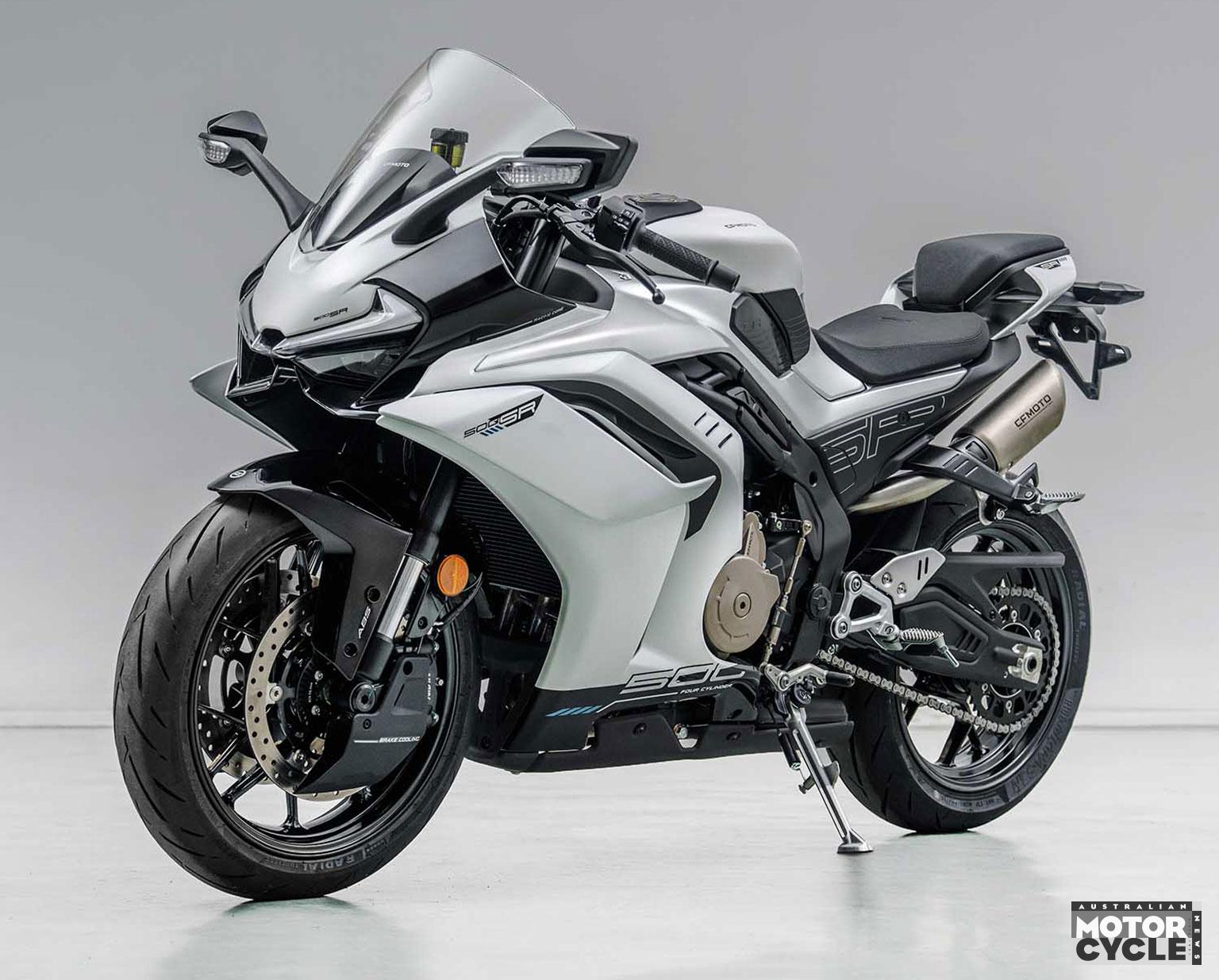
That brings us to China, the hotbed of the 400cc revolution and CFMoto’s home. As well as the aforementioned 450SR and the mechanically-similar 450NK roadster and 450MT adventure bike, CFMoto has gone down the screaming four-cylinder route with the 500SR. Already offered in Australia – one of the few export markets to get it – the 500SR debuted in retro-style ‘Voom’ form, packing 58kW (78hp) from its 499cc four, but will imminently appear in modern-looking skin as the 500SR-R.
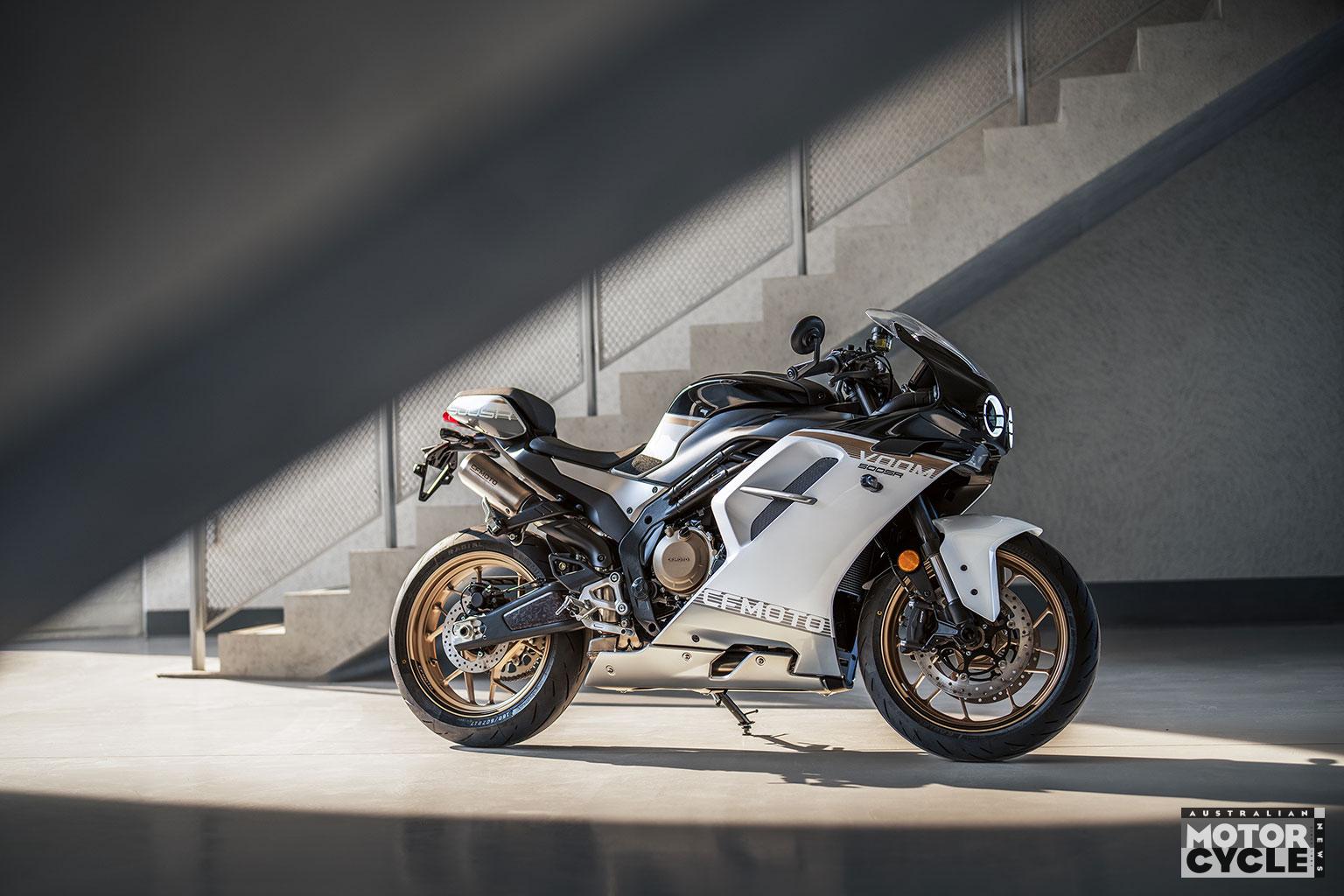
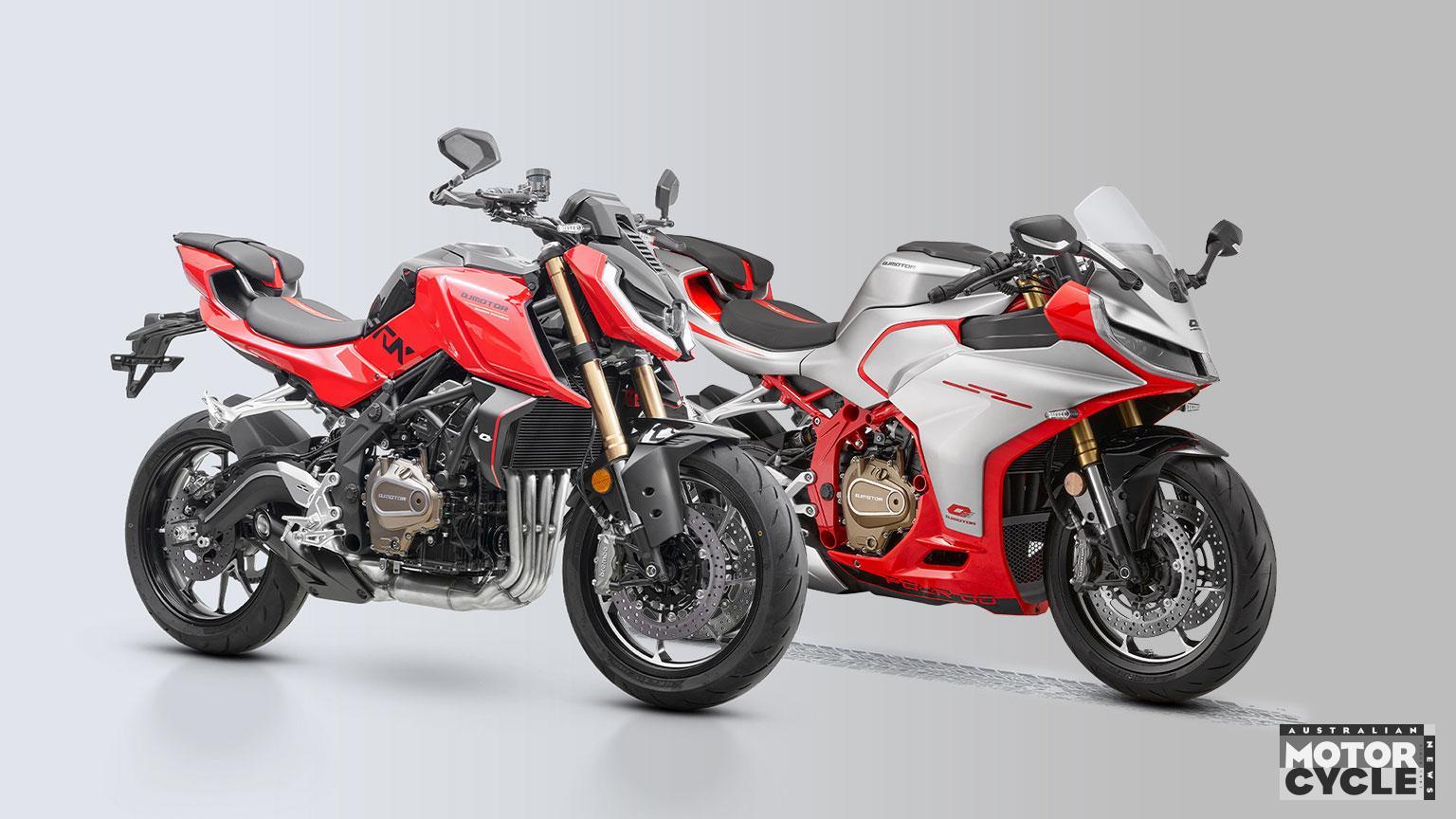
Those models face a fast-growing field of rivals, many of which are expected to be exported in the near future to reach international customers. The leading competitor is arguably QJMotor, which has a vast array of models in the 400cc-ish market, most notably the four-cylinder, full-faired SRK450RR, packing a 421cc four, and the identically engined SRK421 roadster. The brand also lists a 399cc version of the race-rep, dubbed SRK400RS, as well as single-cylinder and parallel twin roadsters and adventure bikes, and a whole range of SRV400 V-twin cruisers.
Rival Chinese manufacturer Kove, another to be working hard on its international presence, is also swimming in the 400-class four-cylinder waters with its 450RR, a 52kW (70hp), 443cc four. Although not widely offered in export markets like some of Kove’s other models, the 450RR is a key bike in its Chinese range, and soon expected to be superseded by an enlarged, restyled machine, the 475RR, which has already been shown to dealers. A naked 450R also joined the four-cylinder line-up last year.
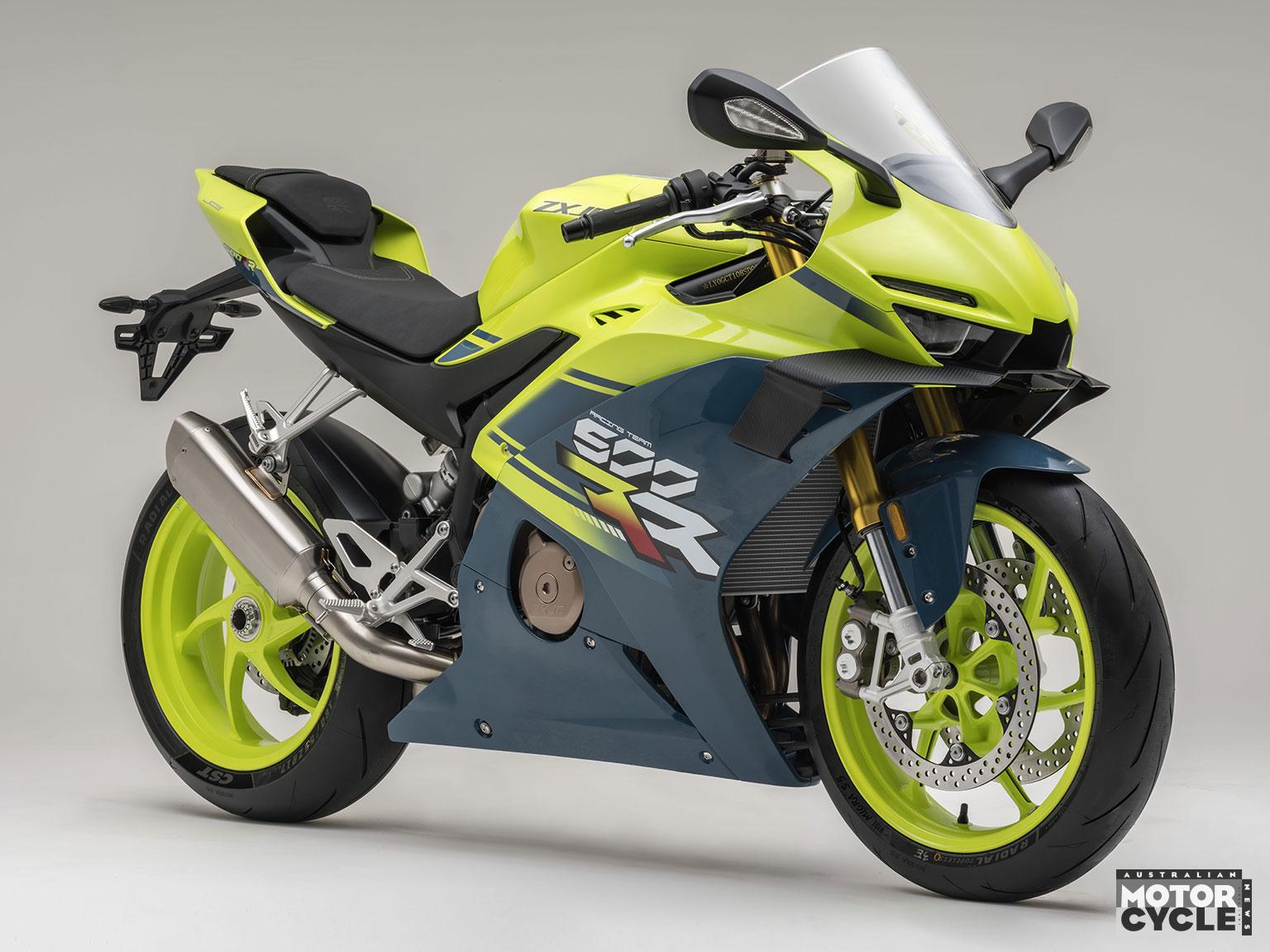
Kove’s founder, Zhang Xue, split with the brand in 2024 to launch another company, ZXMoto, with its own player in this segment, the slightly larger 500RR. Measuring 470cc, it makes a claimed 62kW (83hp) and has already been developed into a naked roadster spin-off, the Honda-esque 500F with a detuned, 54kW (72.5hp) version of the same motor.
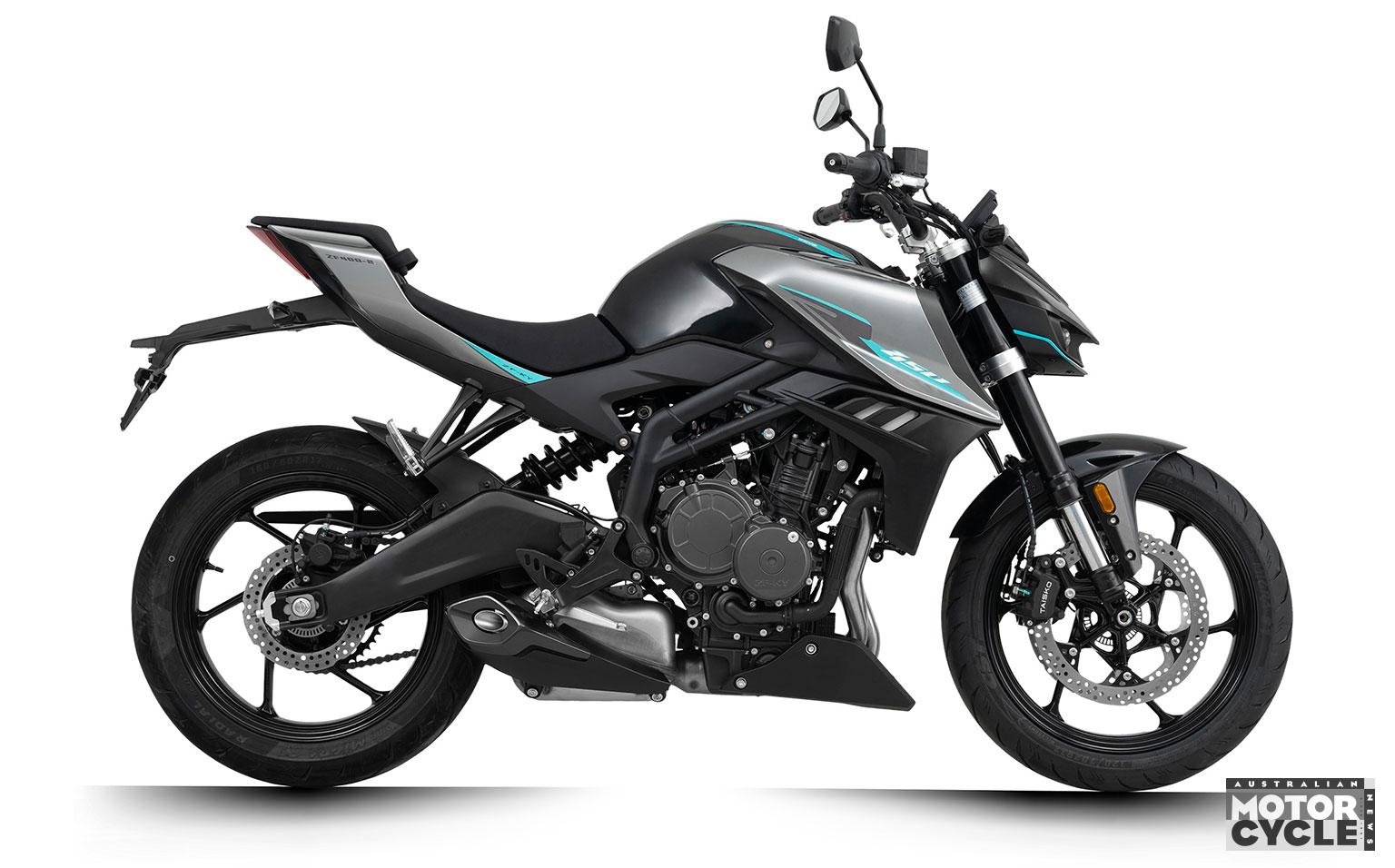
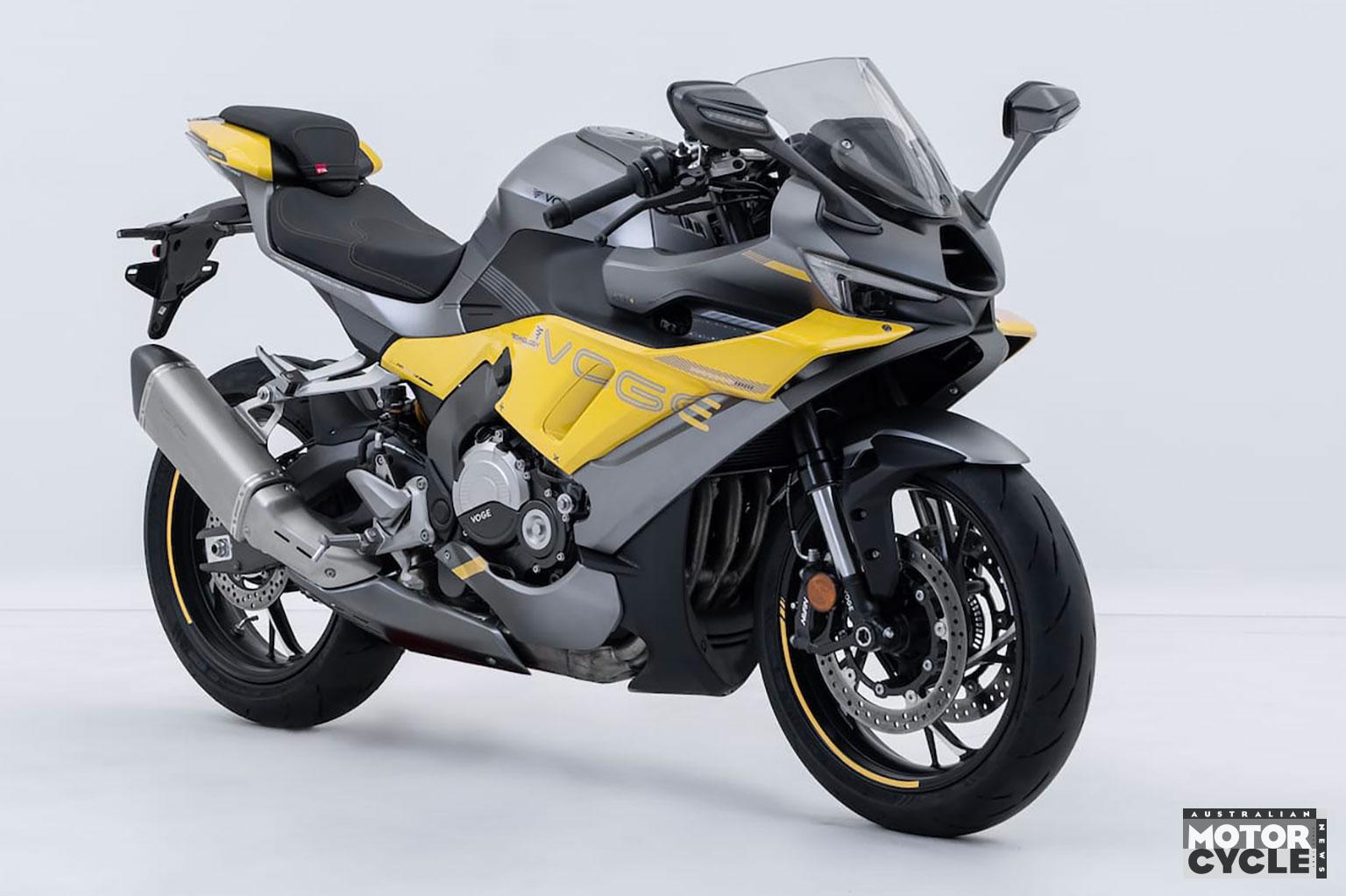
Not to be left out, another Chinese powerhouse, Loncin, is also in on the four-cylinder action under its own Voge brand, launching the RR500S. Measuring 475cc, it manages 56kW (75hp) and 47Nm of torque from its homegrown four.
The new sweet spot
The motivations might be completely different depending on which side of the world you’re standing on, but both trends point to the same destination. Whether riders are chasing affordability, practicality or simply more usable performance for modern traffi conditions, the humble 400 is becoming the new sweet spot.
If the current wave of launches is any indication, the class that once sat quietly in the middle of the market could soon become motorcycling’s most fiercely contested battleground.