Kawasaki’s Ninja ZX-4RR taken to the next level
The new Bimota KB399 isn’t the Italian brand’s first venture into the realm of 400cc four-cylinder bikes – the Yamaha FZR400-powered YB7 trod the same path back in the late 1980s – but it marks a new level of attainability for the Bimota name since its Kawasaki takeover in 2019.
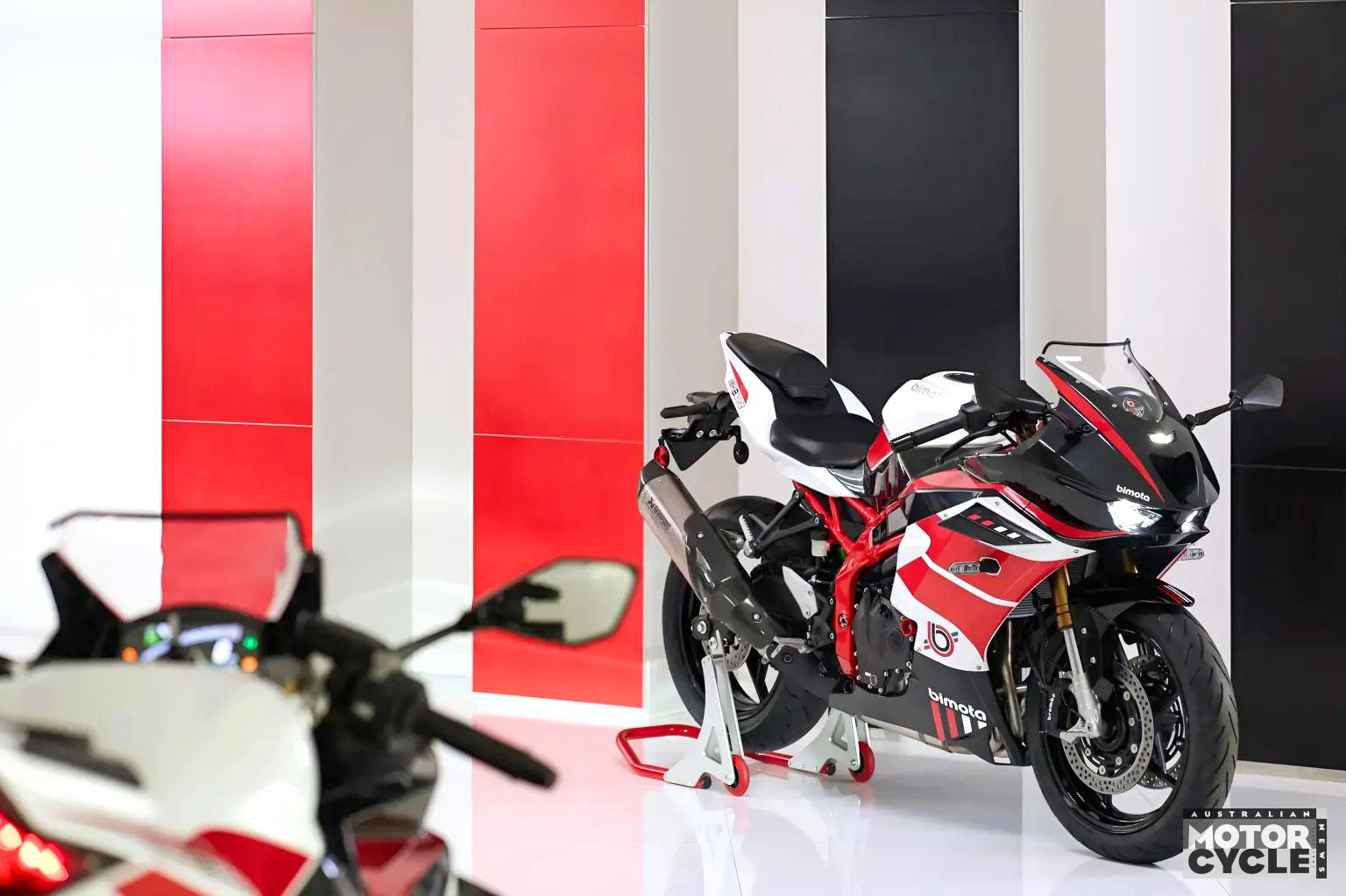
While previous Bimotas have followed a tried-and-tested route of bolting a proven engine to a custom-made chassis and wrapping the whole lot in exotic bodywork, the KB399 puts the emphasis on styling, using both the frame and engine from the Kawasaki Ninja ZX-4RR but giving it a unique Bimota look.
Bimota purists might see the change of tack as a betrayal of the brand’s heritage, but the truth is that back in the 1970s and 80s, Bimota’s unique frames offered a big advantage over the designs used by the bikes that donated their engines. Today that’s not really the case: Japanese bike makers became leaders in chassis design as well as engine manufacturing back in the 90s, largely eliminating Bimota’s main selling point, so the KB399 should live up to Bimota’s handling standards without ditching its Kawasaki-made steel frame.
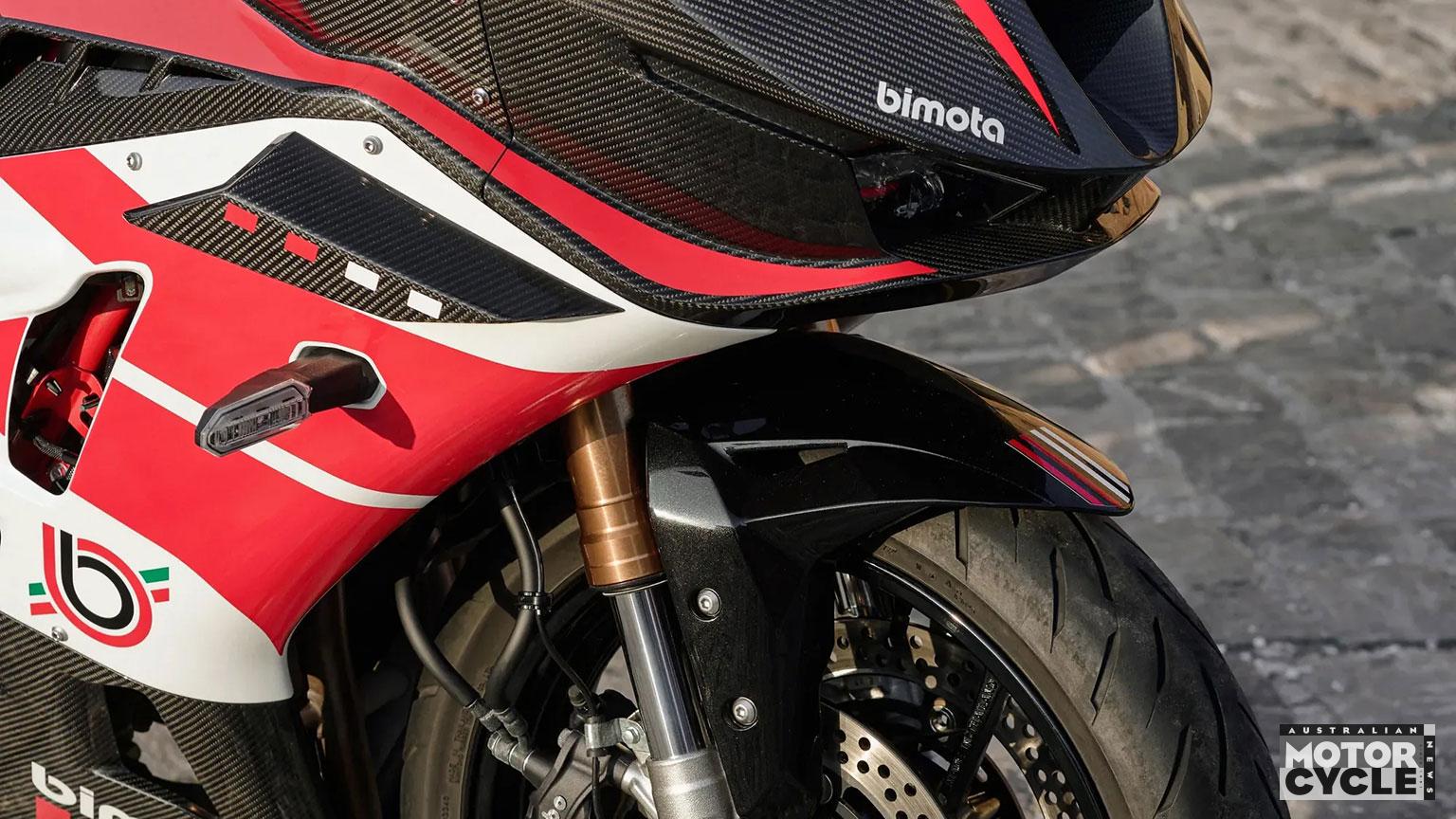
That’s not to say it’s simply a ZX-4RR in new clothes, though. Bimota’s tweaks include uprated suspension, with adjustable damping on the Showa SFF-BP upside-down fork where the Kawasaki only offers preload adjustment. On the standard version of the KB399 the Showa shock is straight from the ZX-4RR, which already offers fully adjustable damping at the rear, but there’s also a much more expensive ‘Edizione Speciale’ or ES version of the KB399 that adds an Öhlins STX46 shock to the mix. Similarly, the KB399 throws out the normal Kawasaki’s radial brake calipers and replaces them with Brembo Stylema units at the front.
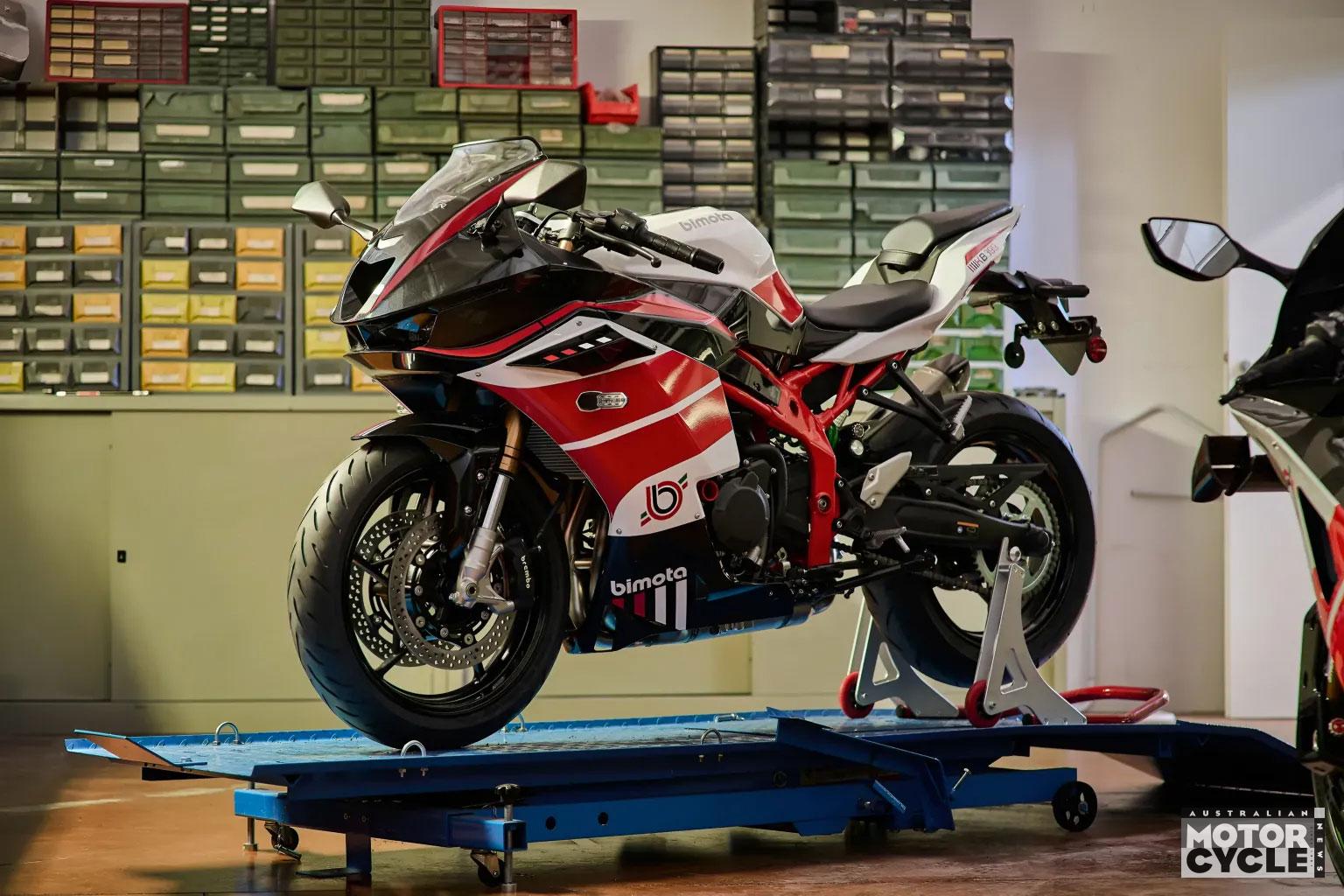
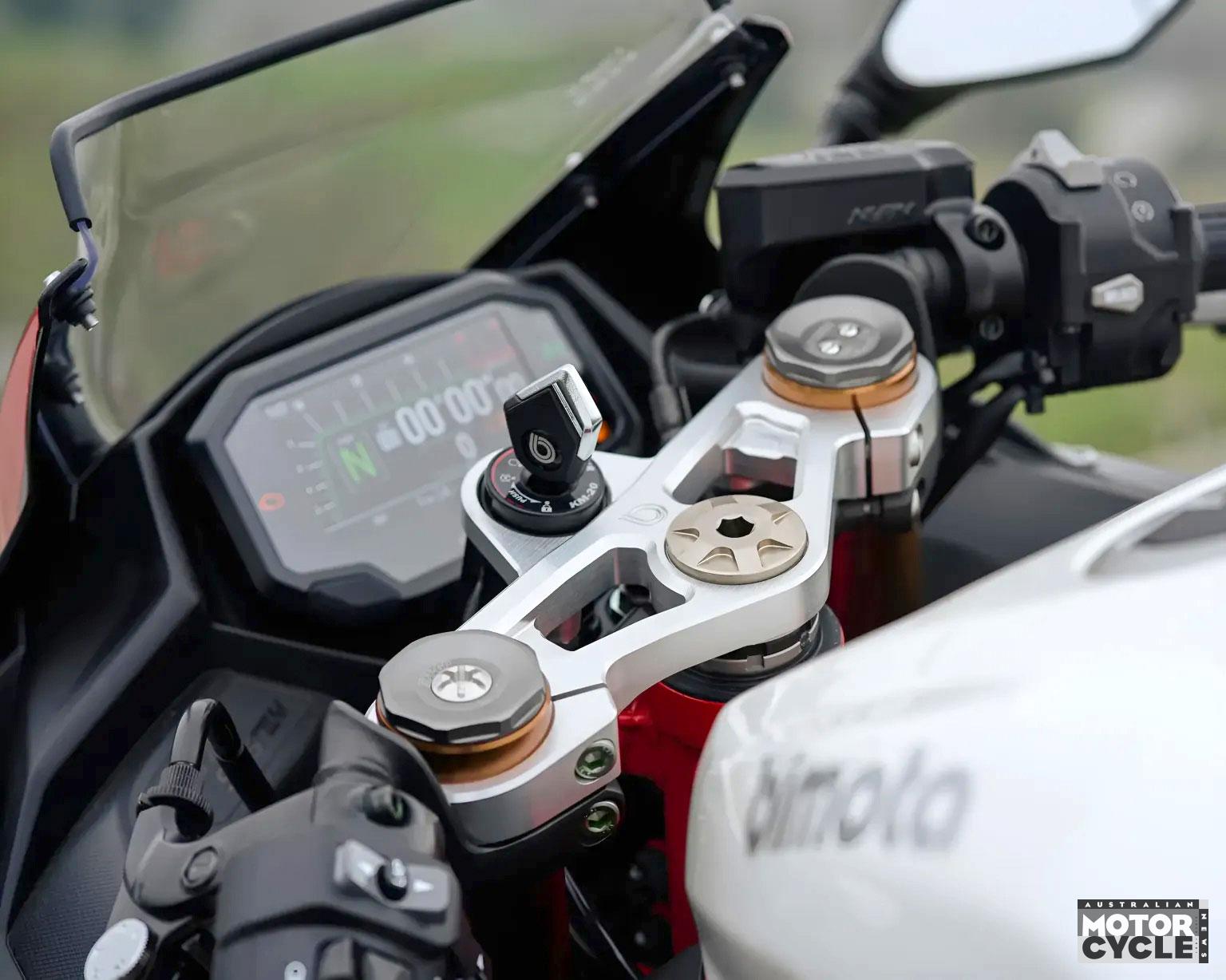
Visually, the KB399 manages to look much more exotic than the ZX-4RR despite retaining the Kawasaki’s tank and tail bodywork as well as its engine and frame. The standard version uses plastic bodywork, while the ES model replaces it with carbon fibre, leaving bare weave in areas where the base model has black paint. The ES also ditches the stock Kawasaki footrest and controls in favour of billet aluminium alternatives, while both the stock and ES versions get a billet top yoke.
The engine is the Euro-spec version of the Kawasaki ZX-4RR’s 399cc four, offering 58.7kW (79hp) at 14,500rpm. An Akrapovic end can adds to the aural experience, but the rest of the system is unchanged. As with the rest of Bimota’s range, keeping the engine stock means there’s no need to expensively recertify its emissions performance. The engine electronics are also the same as the Kawasaki, including switchable riding modes and power settings as well as three-position traction control, all displayed via the same 5-inch TFT dash that’s used on the Ninja.
There’s no word on Australian availability or pricing yet, but in markets where those details have been revealed the KB399 is officially a 2027 model. While order books open soon, deliveries aren’t expected to commence until near the end of this year.
How much for Bimota’s smallest bike? In the UK the base version will cost £10,099 ($A19,000), which is only $A2600 more than a Ninja ZX-4RR in the same market. The ES version, however, is much pricier at £14,699 ($A27,700) over in Britain.
More small fours incoming
ON THE same day the KB399 was revealed, CFMoto released the first official images of its upcoming 500SR – a modern-styled version of the neo-retro 500SR VOOM.
Styling akin to the 675SR-R and the 750SR-S wraps the existing 500SR VOOM chassis and the same four-cylinder engine, making 61kW (82hp) including ram air or 58kW without it, at 12,500rpm. There’s adjustable traction control, a steering damper and a large, 6.2-inch TFT dash.
Rival Chinese brand Voge is also on the verge of releasing the production version of the RR500S it showed last year, another four-cylinder sportsbike in this class, and Honda’s CBR500R Four, also shown last year, is due to reach dealers in China imminently.