First non-Desmo machine to wear the Monster name
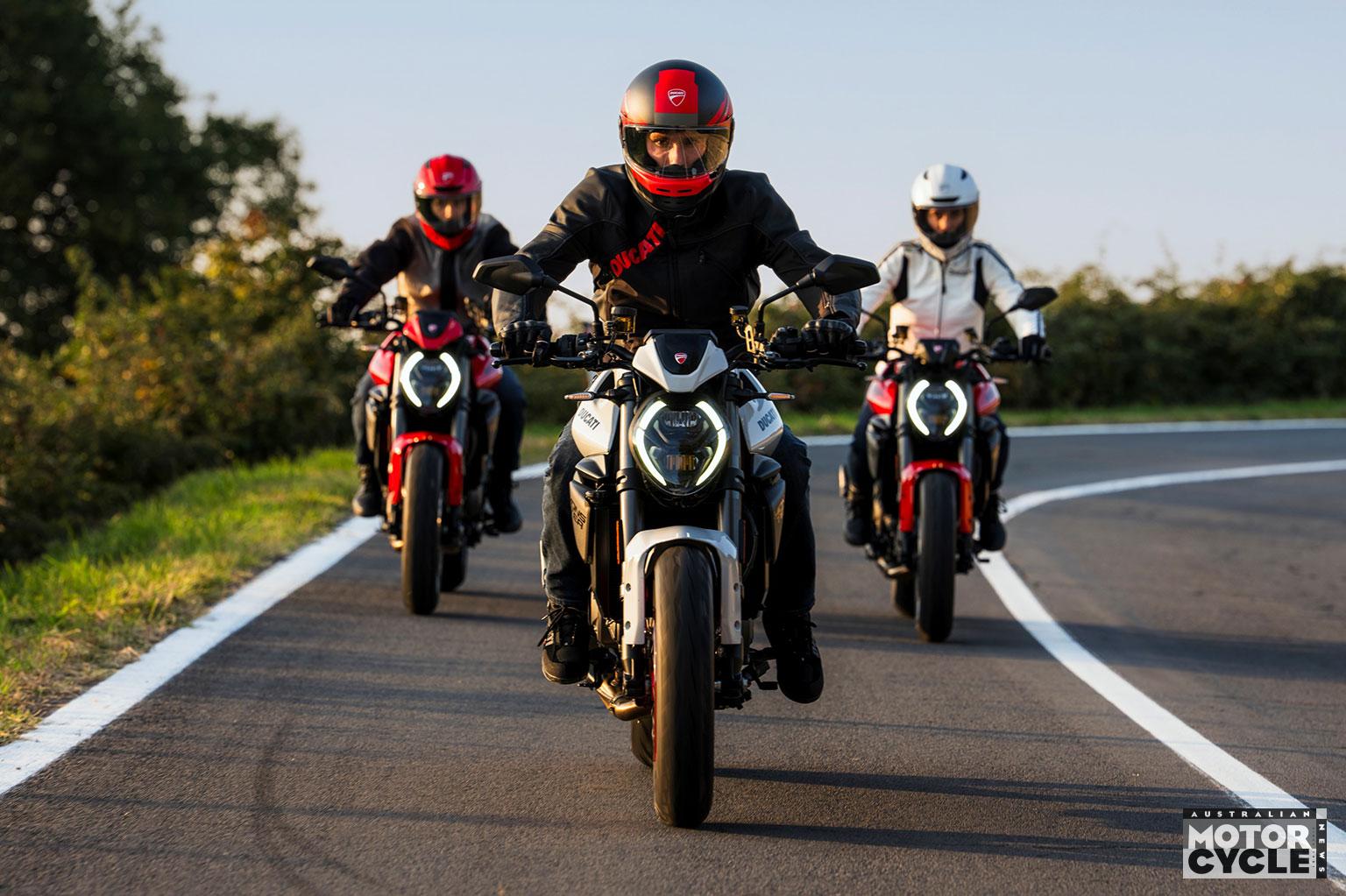
Ducati is on a mission to replace all its ageing Desmo V-twin-powered machines with new models using the company’s latest twin – simply called ‘V2’ – and the Monster is the latest to get the treatment as the old 937cc model is swapped for a new 890cc machine for 2026.
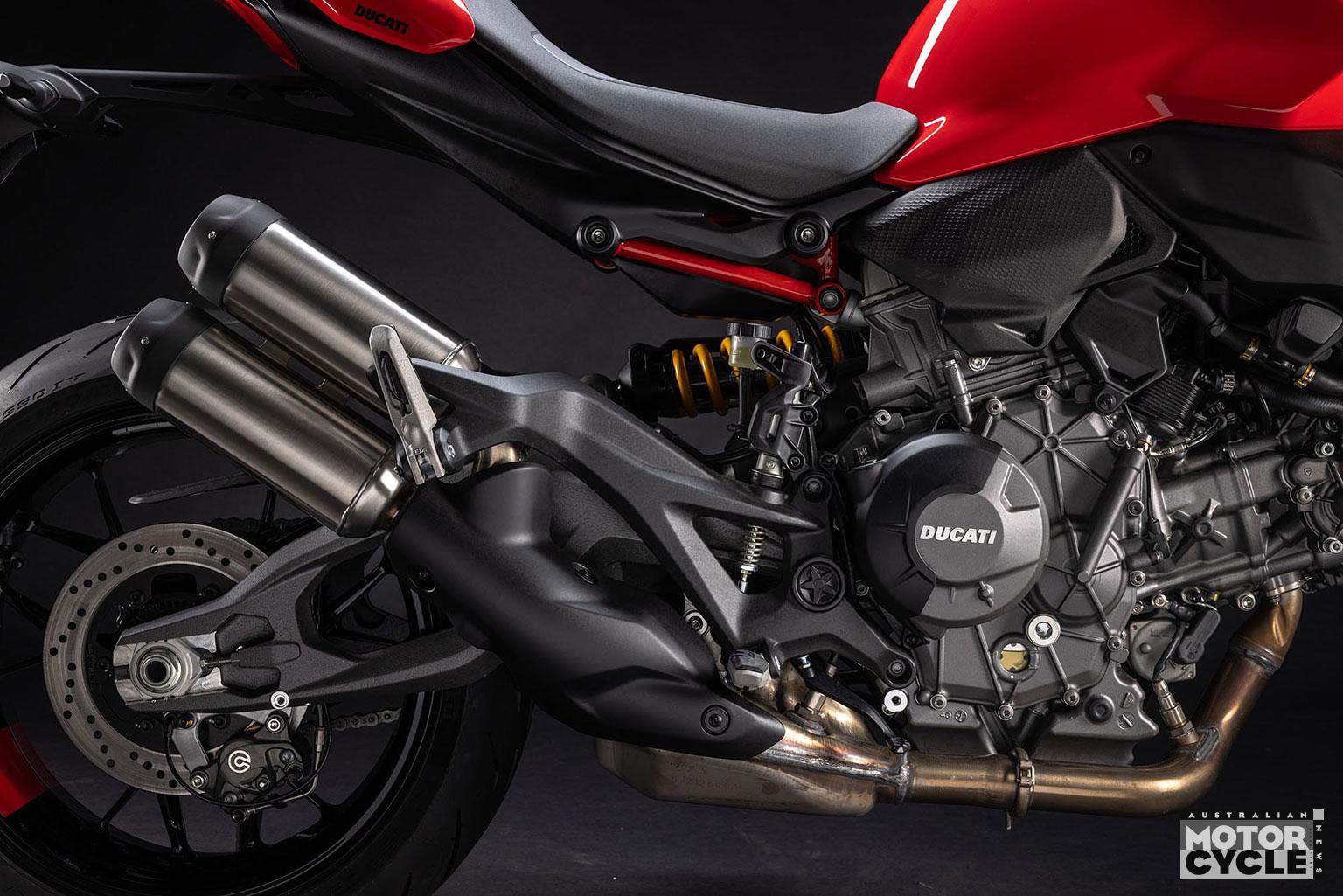
The V2 engine was only launched a year ago, and it’s already found its way into the Panigale and Streetfighter V2 models, superseding the old 955cc Superquadro engine in those machines, despite being substantially less powerful. It’s also been adopted by the Multistrada V2, where it replaced the 937cc Testastretta engine, and for 2026 the Monster, also previously home to the Testastretta, goes down the same route.
In all these cases, the engine being replaced is one of Ducati’s classic ‘L-twin’ units with desmodromic valvetrains, where the valves are closed, as well as opened by cam lobes acting on rockers, with no need for the valve springs that virtually every other four-stroke combustion engine relies on. The new V2 engine, which is 5.9kg lighter than the 937cc Testastretta, does away with the desmodromic complexity, adopting conventional valve springs. It’s a route also taken by the V4 Granturismo engine in the Diavel, XDiavel and Multistrada V4, leaving only the Panigale V4, Streetfighter V4 and the ‘RS’ versions of the Diavel and Multistrada with desmodromic valvetrains in the four-cylinder range.
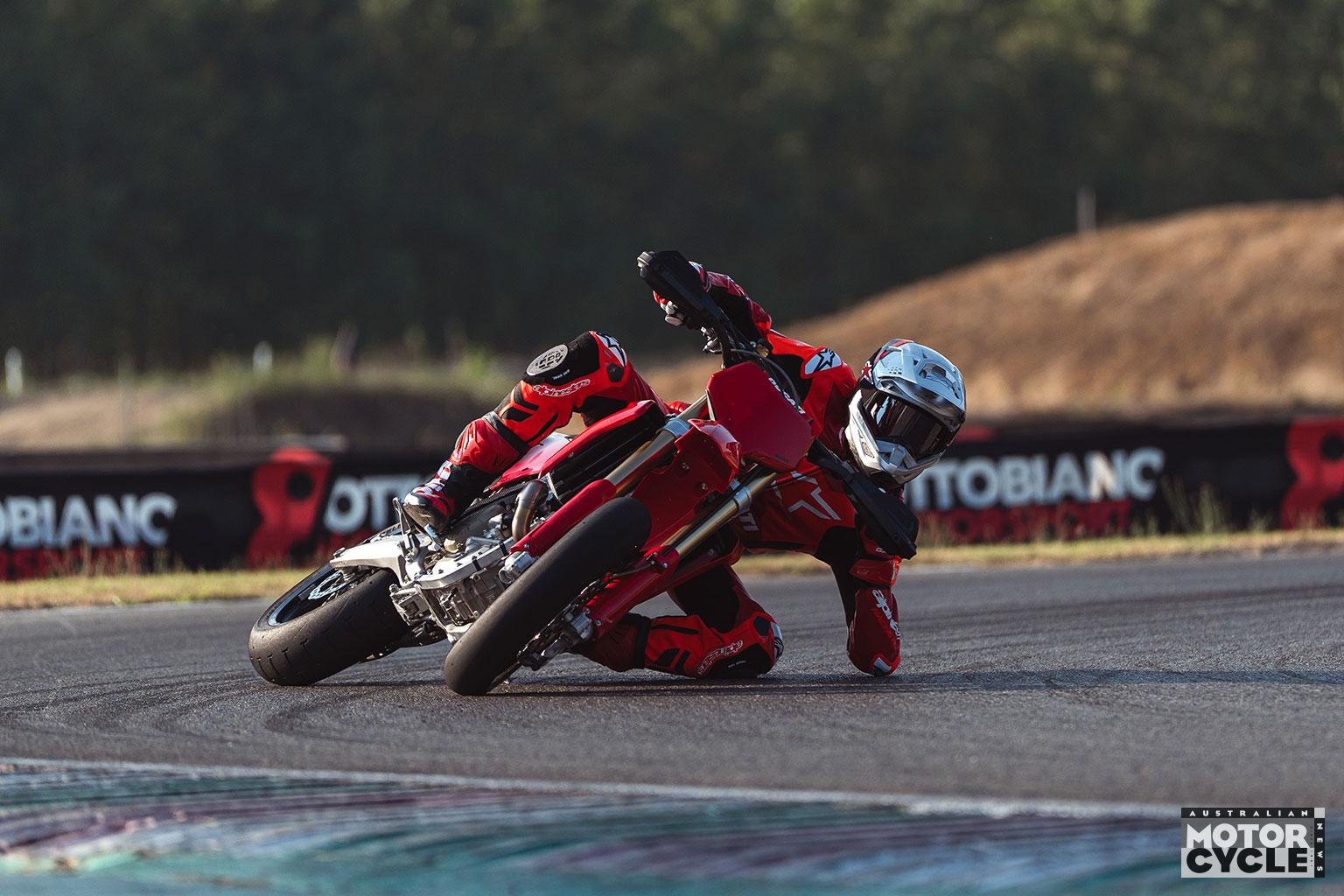
The Monster’s move to conventional valves means that the DesertX and Hypermotard 950 are – for now – the last bikes in Ducati’s lineup to use the Testastretta engine, and new versions of that machine powered by the conventionally-valved ‘V2’ motor are also believed to be waiting in the wings. When it appears, the air-cooled, two-valve-per-cylinder, 803cc Scrambler models will be the only V-twin Ducatis left with the ‘Desmo’ valvetrain that’s been a signature of the brand since the early 70s.
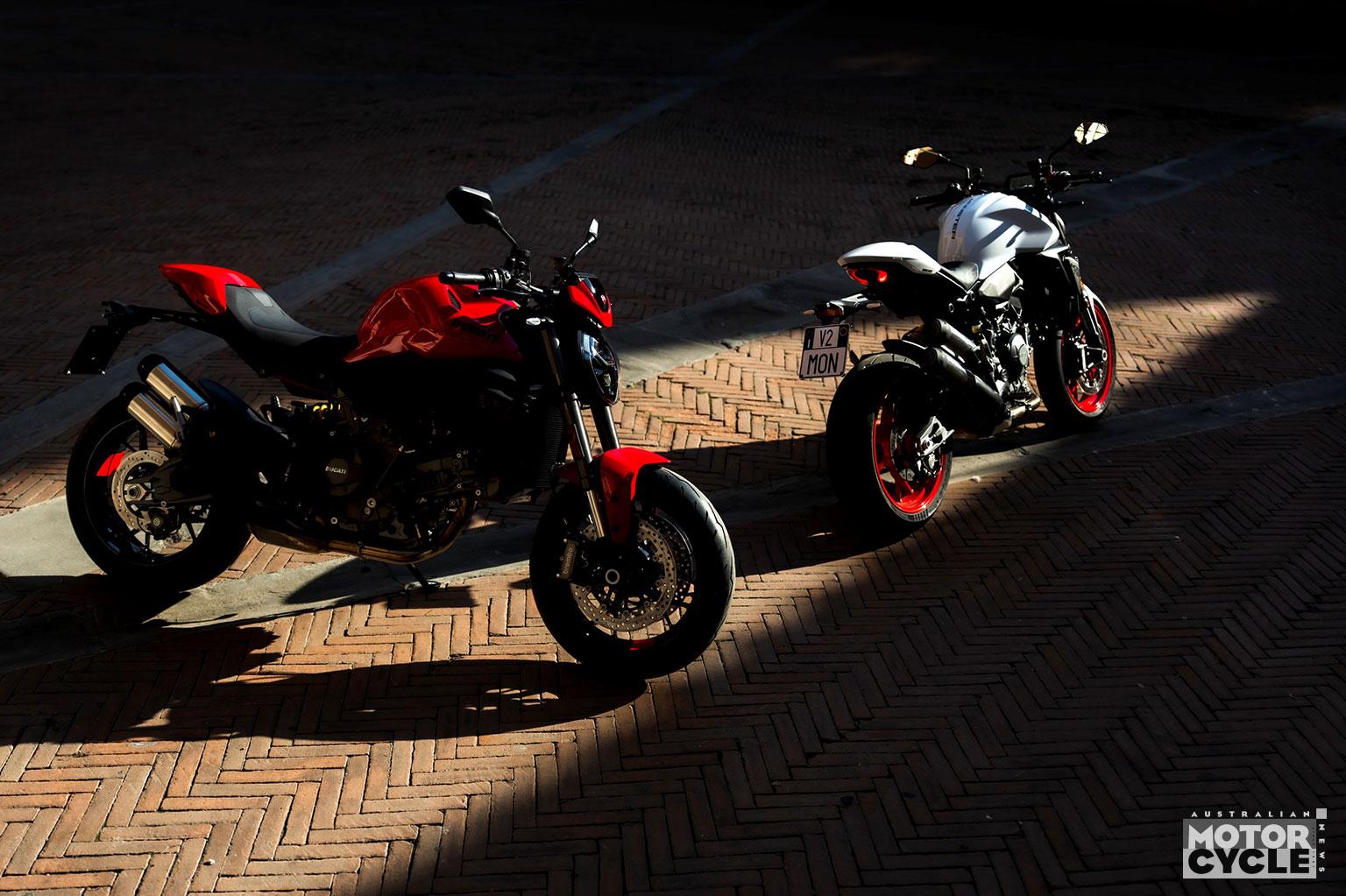
But just as Ducati customers higher in the range have embraced four-cylinder machines despite the company’s V-twin heritage, few are concerned about the demise of Desmo in the remaining V-twin models. Heritage is, after all, something for the past. Riders could never really see or feel the effect of desmodromic valves, but the long service intervals – 45,000km between valve checks – of the new V2 engine, as well as the adoption of chain driven camshafts instead of those regularly-replaced belts of the older Ducati V-twins, are tangible improvements that they’ll feel in their wallets.
In terms of performance, the new V2-powered Monster is on a par with its Testastretta-driven predecessor: its 82kW output is identical, despite its smaller capacity, and torque is only fractionally down at 91.1Nm instead of 93Nm. The reduced weight is carried over to the entire bike, which is 4kg lighter than its predecessor at 175kg, sans fuel.
Like other models using the V2 engine, the new Monster virtually does away with a ‘frame’ in the conventional sense. There’s a small, aluminium monocoque front structure that holds the steering head to the tops of the cylinders, and at the other end a couple of aluminium castings clamp the swingarm’s pivot point. That swingarm is dual-sided and follows the same design ethos as the latest Panigale V4.
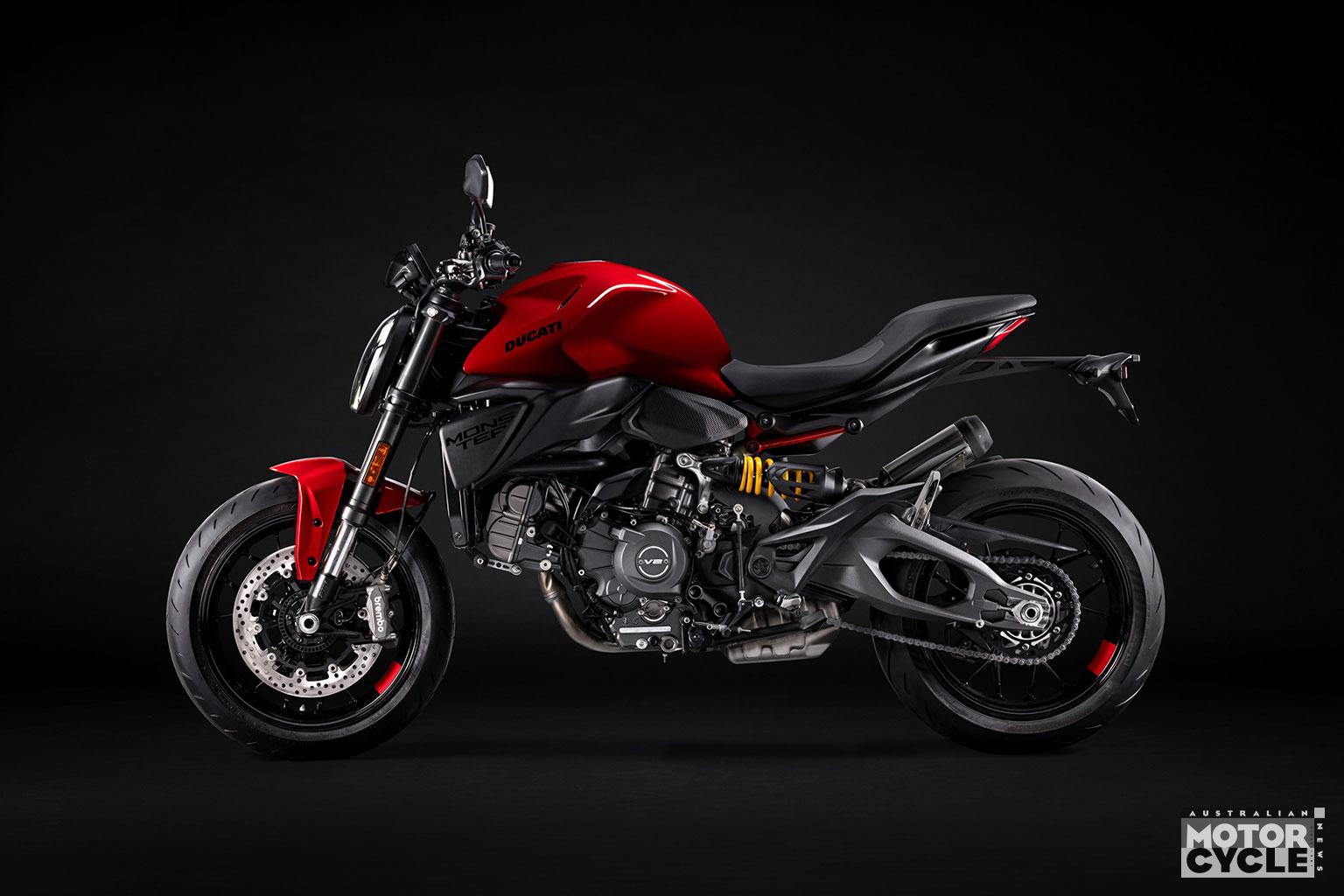
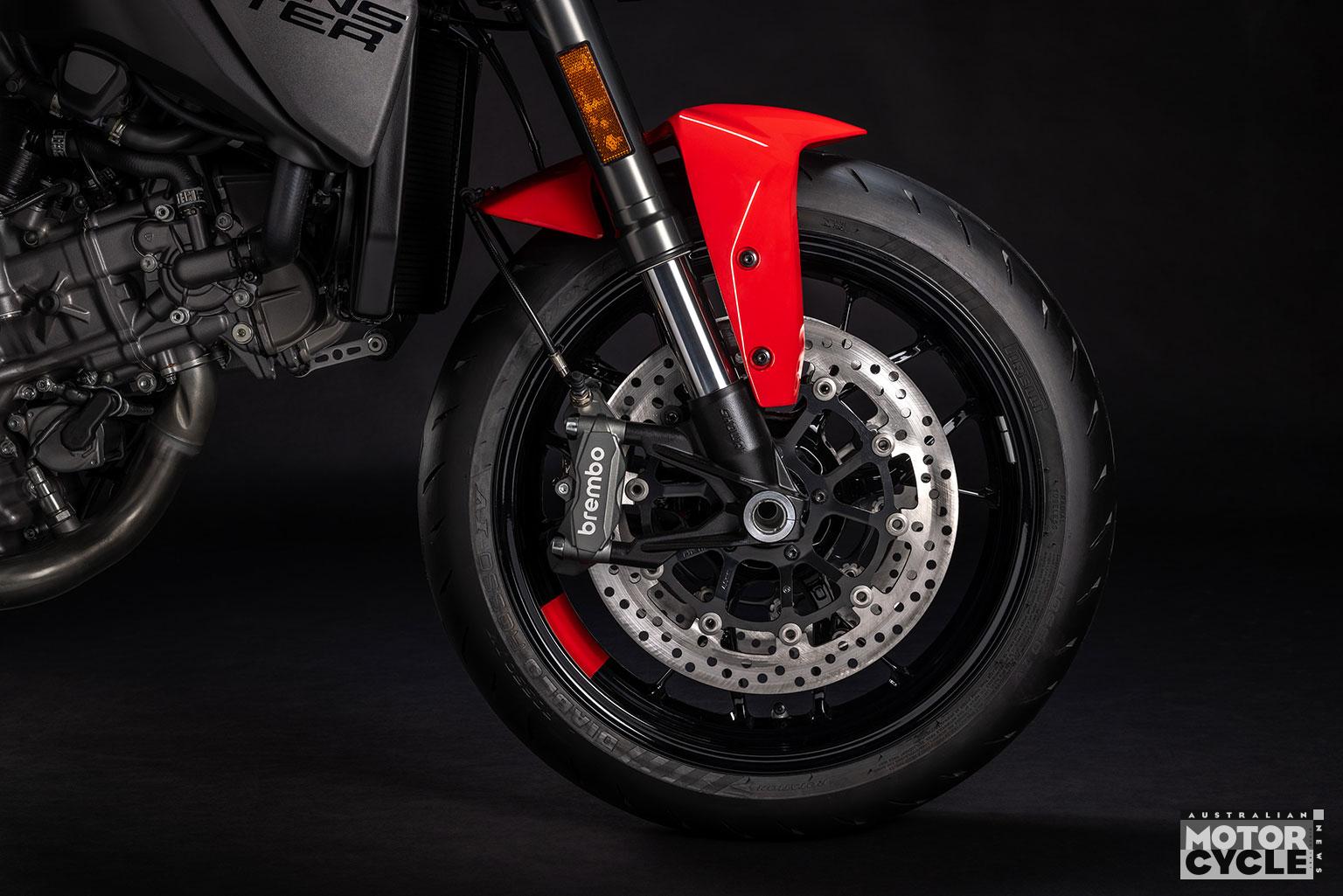
The Monster’s suspension comes from Showa, with 43mm USD forks and a preload-adjustable rear monoshock, while the brakes are the expected Brembo radial M4.32 calipers on 320mm discs, paired to Monster-specific pads that have a gentler initial bite than in some sportier applications.
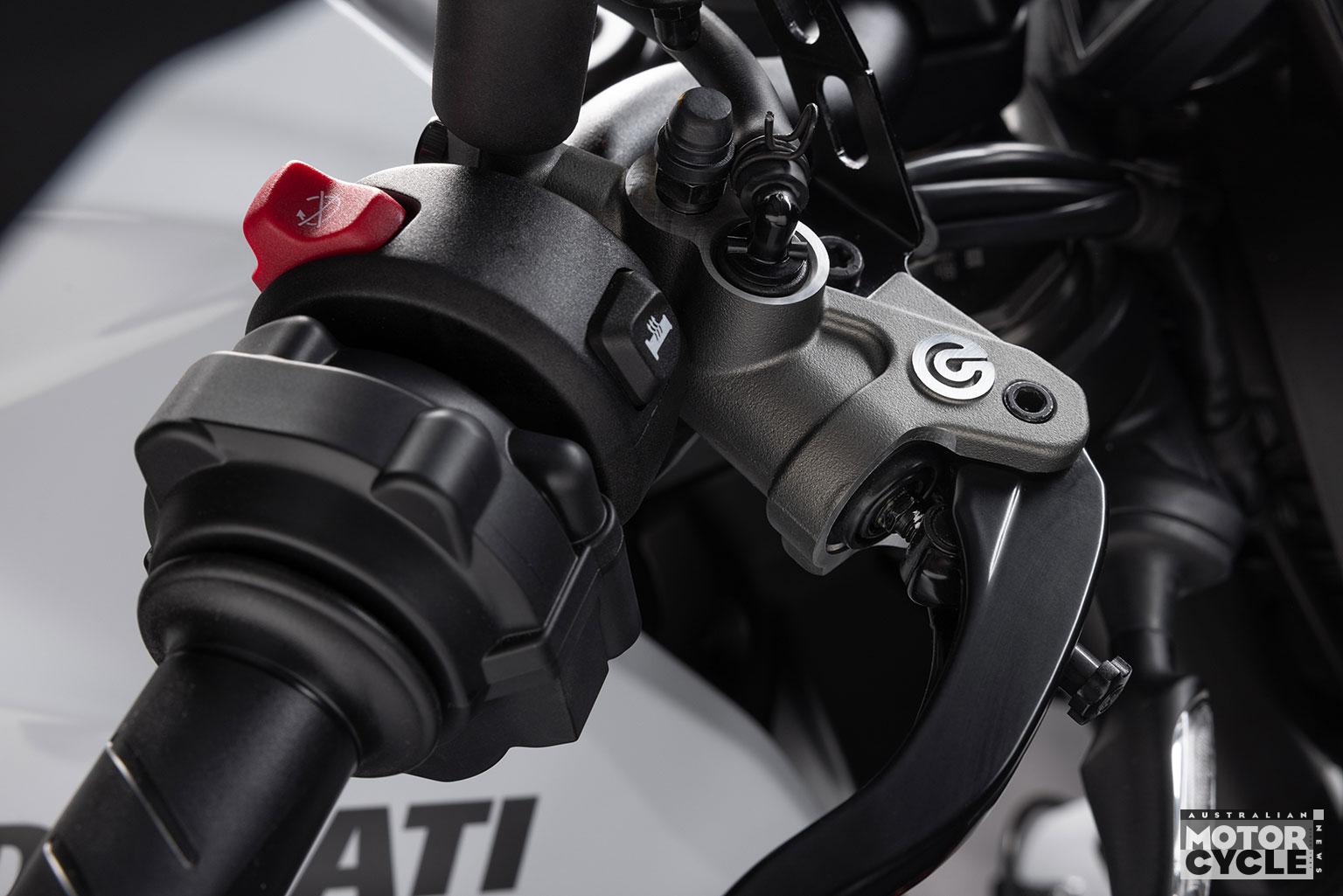
In typical Ducati style, the bike is brimming with electronic trickery, including an IMU to allow cornering ABS and traction control, wheelie control, engine brake control and a standard quickshifter, not to mention the usual array of riding modes and a TFT dash.
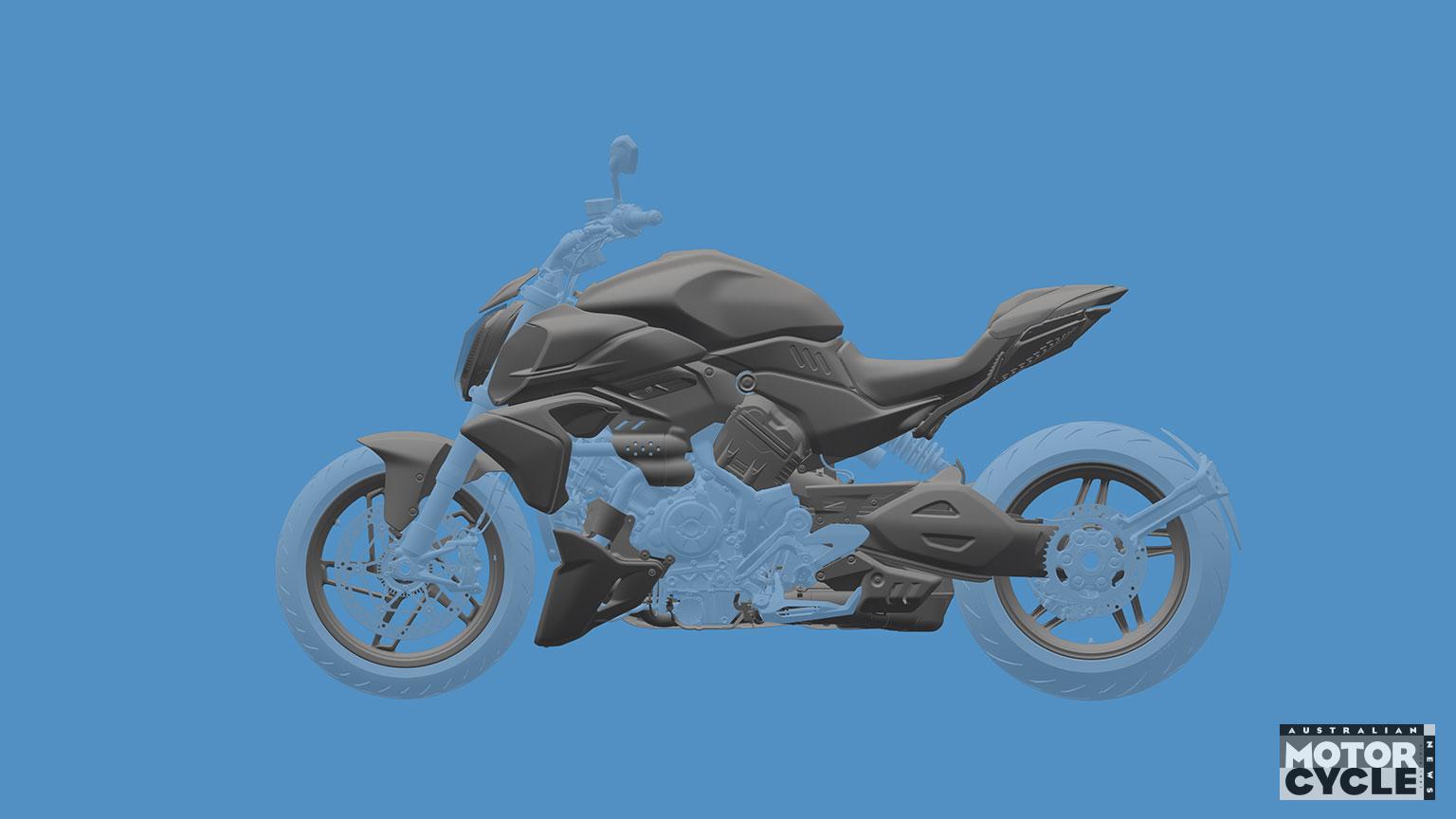
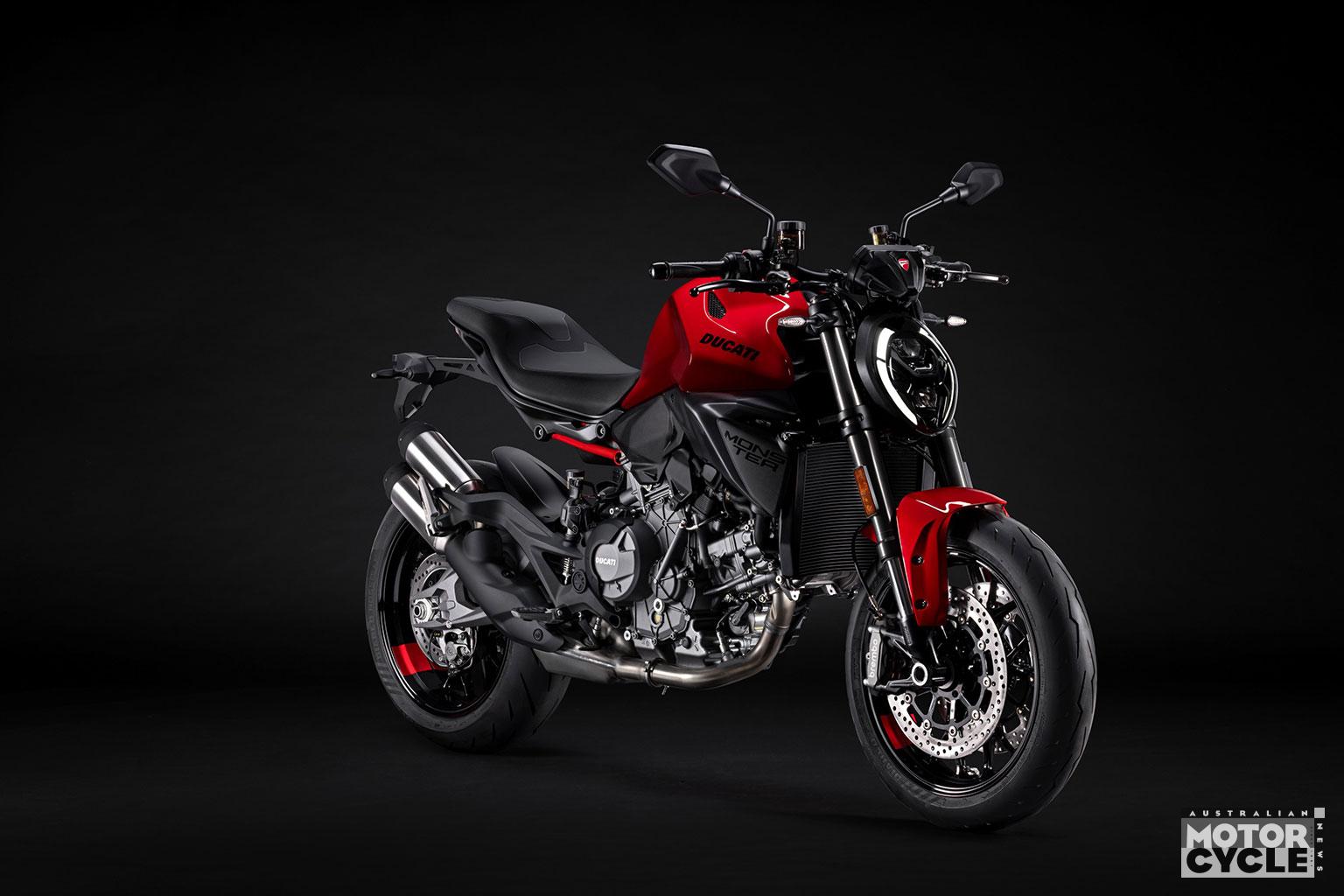
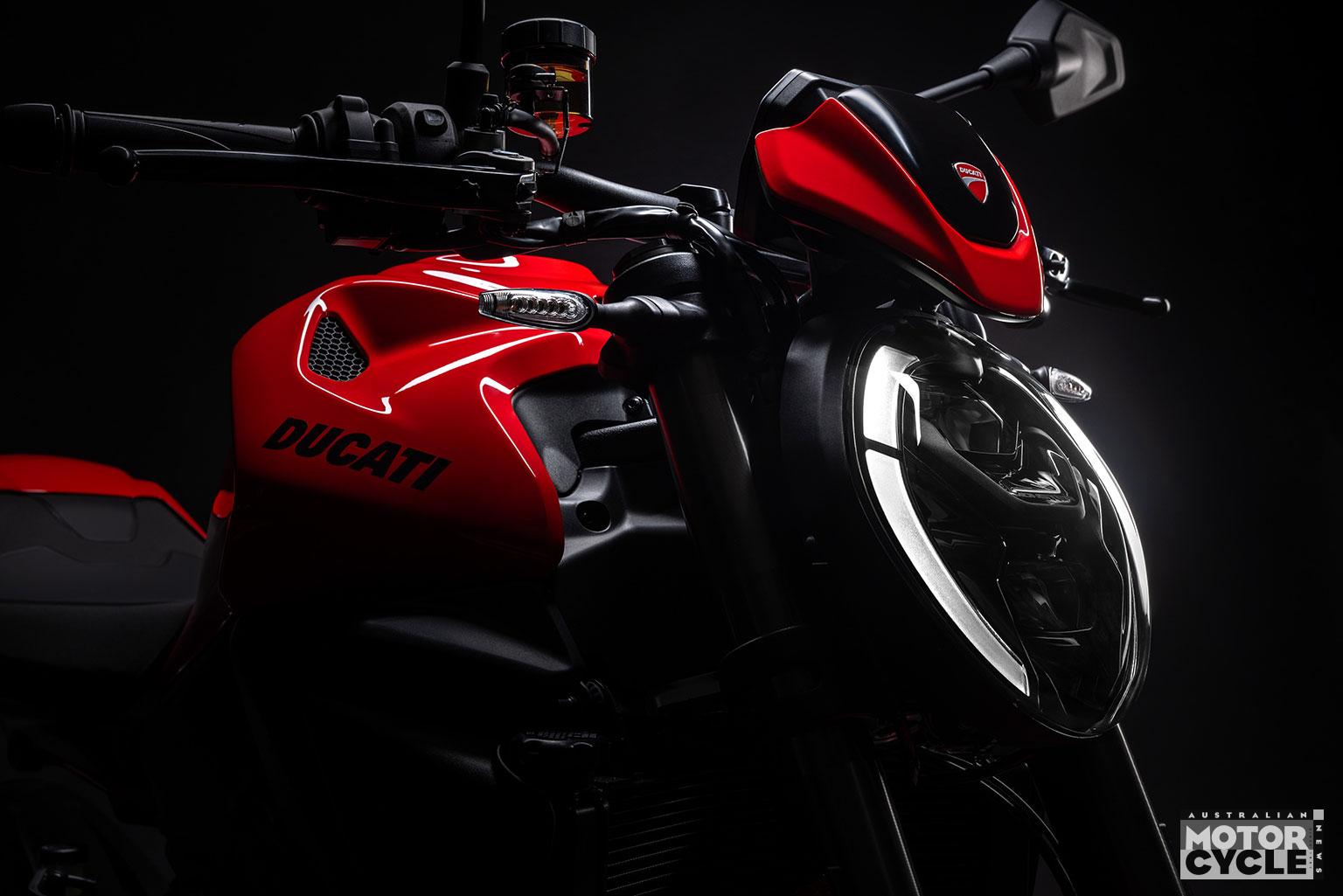
The styling is very much ‘Monster’ – instantly recognisable, but perhaps not immediately obvious that it’s different to the previous model. If anything, the changes bring the design closer to the original Monster 900 that debuted in 1992 (and, arguably, saved Ducati from bankruptcy), with an all-black, one-piece seat instead of the stepped design of the Testastretta-powered model, putting the visual focus onto the hunched fuel tank.
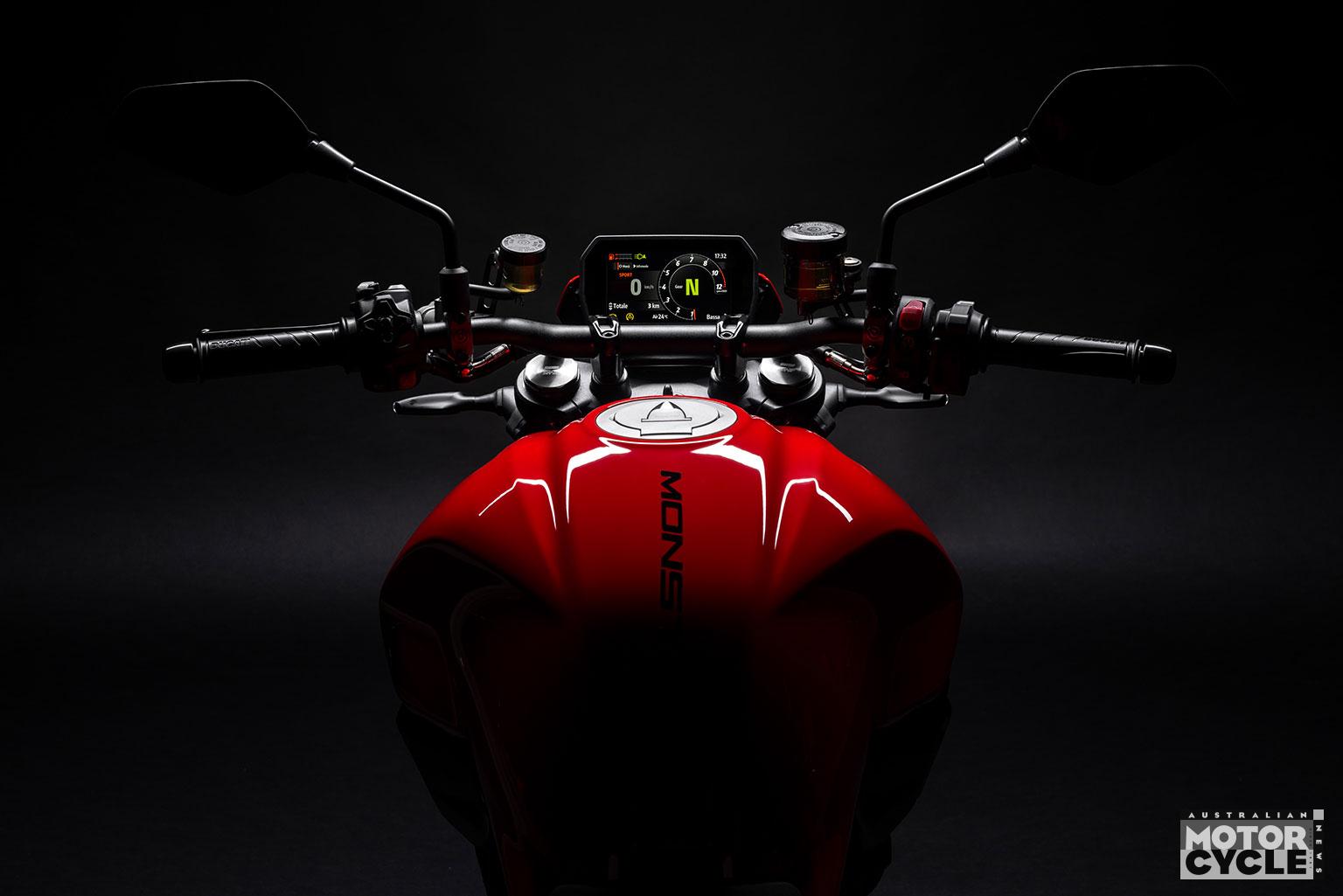
As before, there are two variants, with the standard Monster ($20,700 AUD) joined by a Monster+ that adds a small cowl above the headlight and a body-coloured cover over the pillion seat, with a list price of $21,400 AUD.