British retro-electric roadster gets dual-seat variant
While other electric bikes try to look like a vision of the future, Britain’s Maeving brand opts for a retro approach and following the success of the original RM1 and the more powerful RM1S it’s added a new two-seat version – the RM2 – to its lineup.
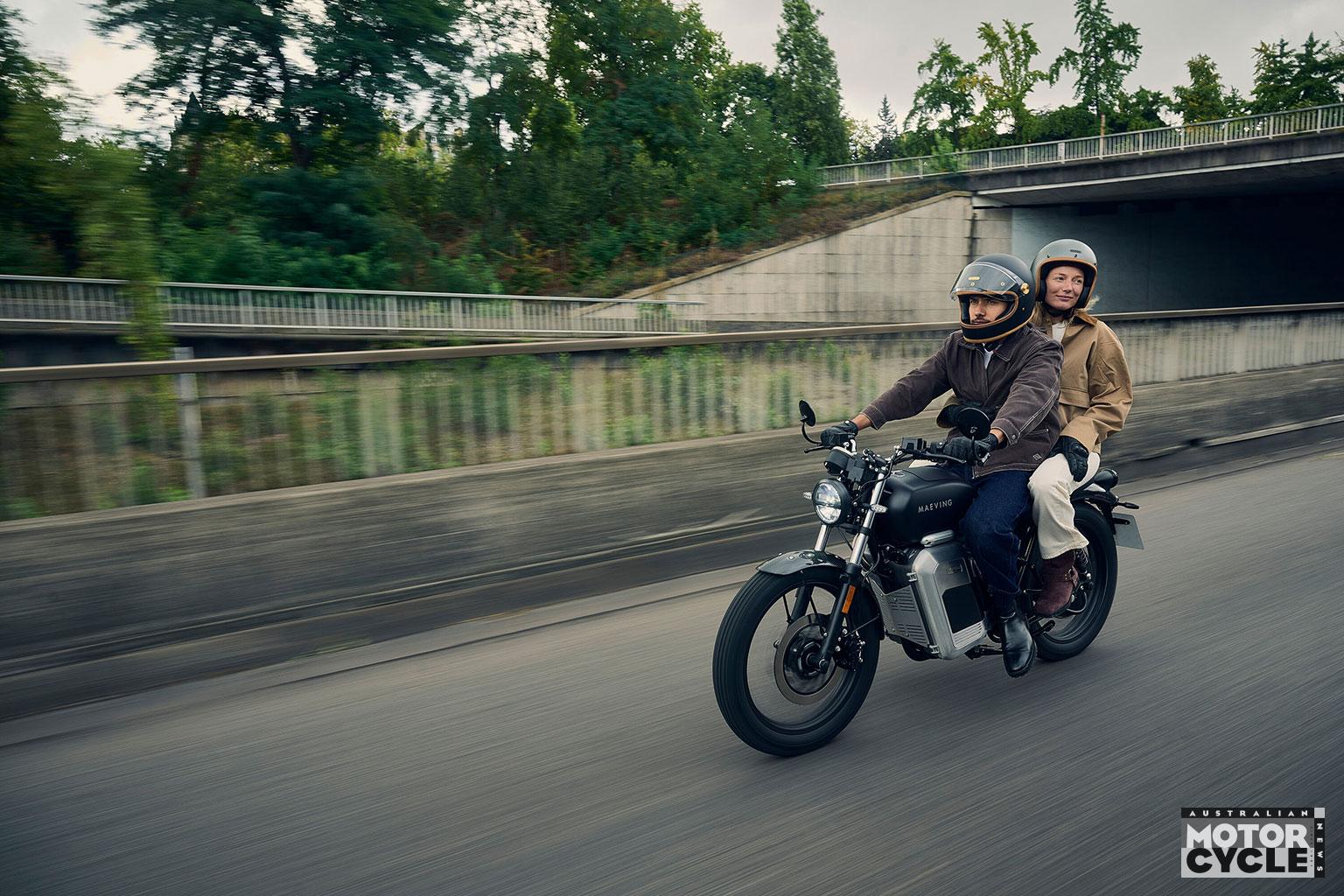
Based on the 11.1kW motor and dual 2.73kWh battery packs of the RM1S, offering 110km/h potential, the RM2 adds a new chassis including a substantial, welded-on rear subframe to replace the tractor-style seat of the RM1 and RM1S with a bench-style dual-seat setup.
It’s a change that also means modifying the rear suspension mounts, both at the chassis end and on the swingarm, and substantially increases the bike’s potential payload. Where the RM1S is rated to carry up to 129kg of rider and luggage, the RM2 can manage 215kg.
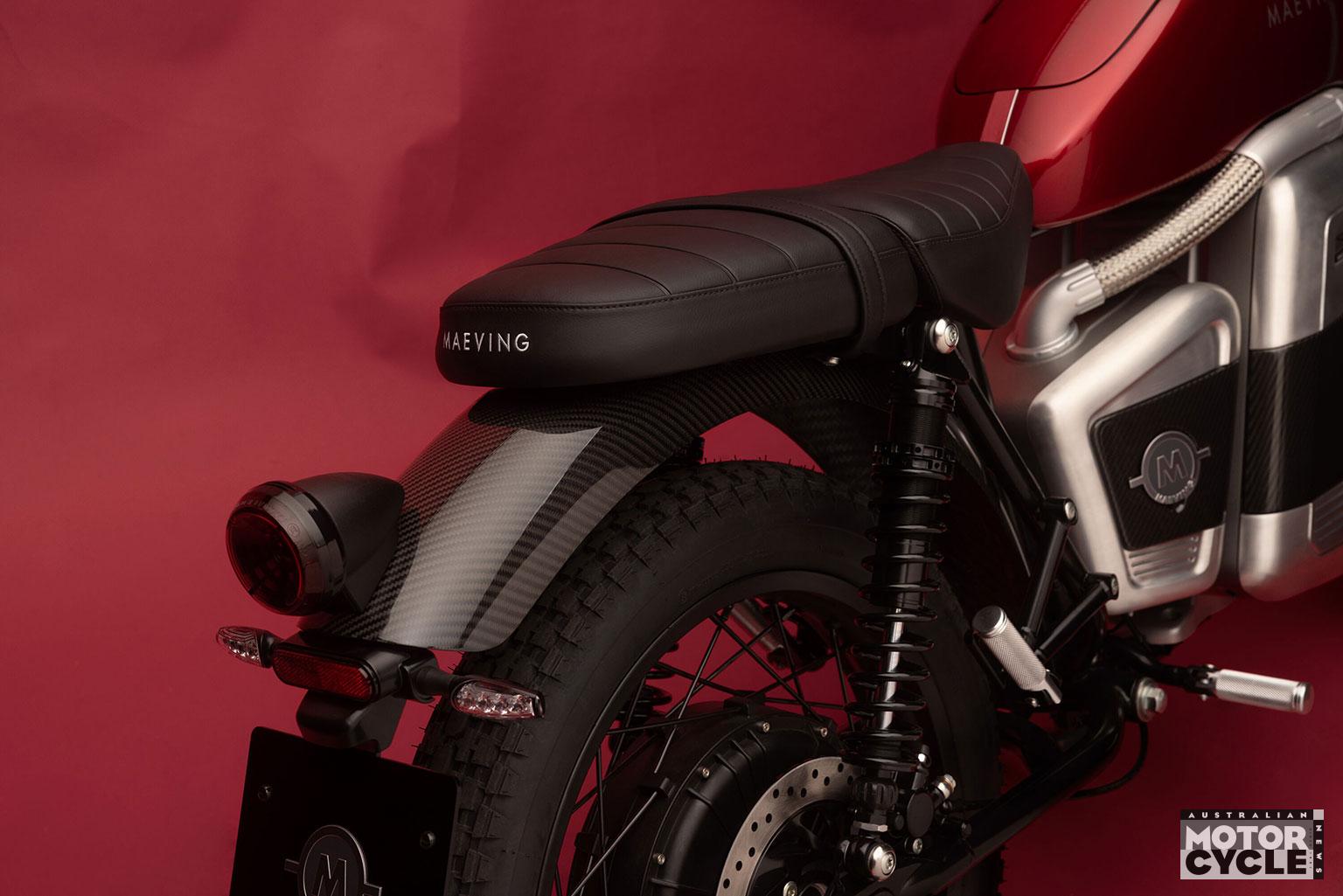
Surprisingly, the additional metalwork and larger seat adds just 4kg to the bike’s weight, which remains a relatively svelte 145kg, so performance is largely unaltered compared to the RM1S. As on that model, there are three riding modes – Ride, Sport and Eco – each altering the range and performance. In the ‘Ride’ mode, top speed is restricted to around 70km/h but the bike will take you about 145km per charge, while the maximum Sport mode gives full performance but means you’re only expected to get about 90km on a charge.
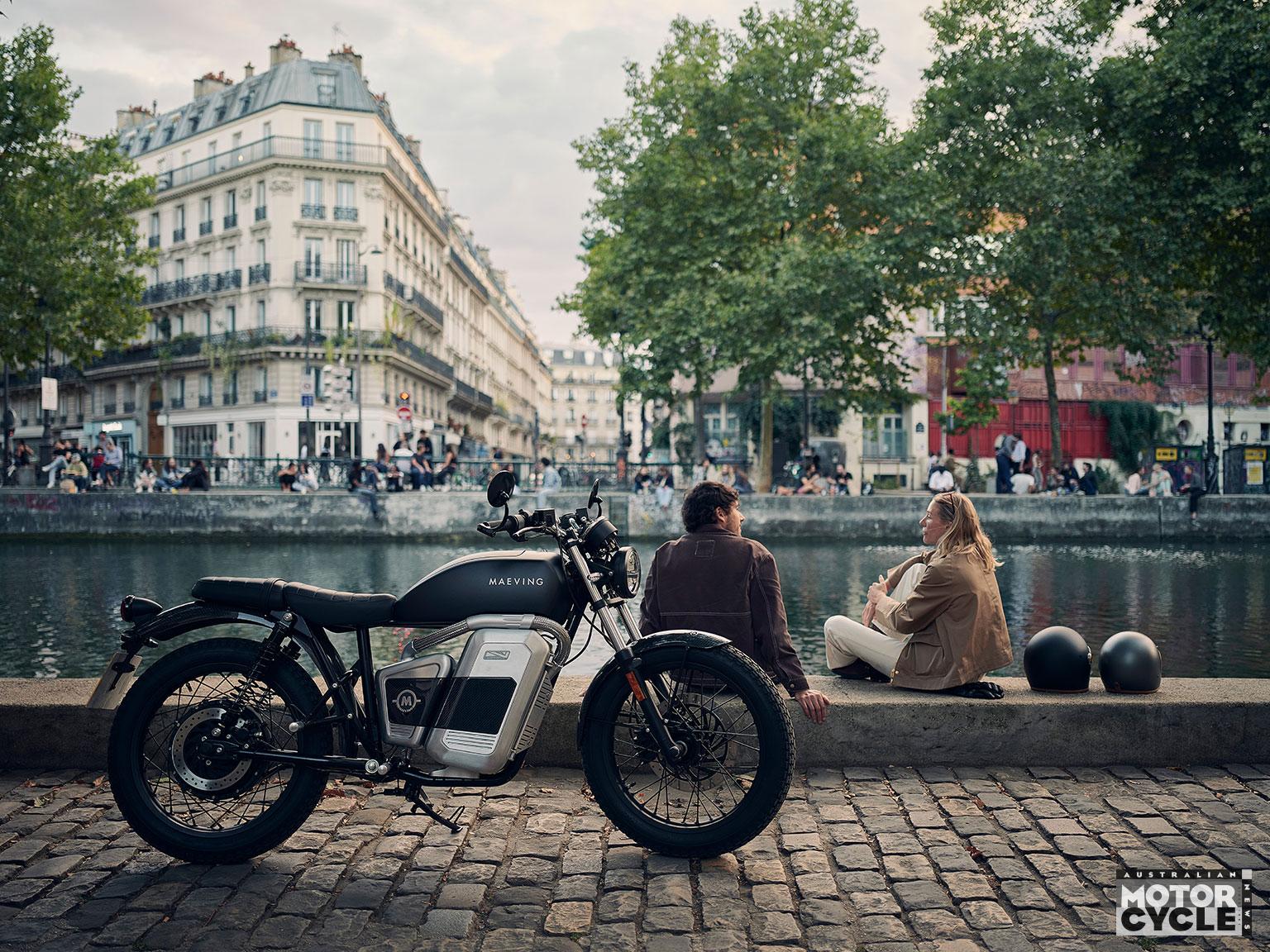
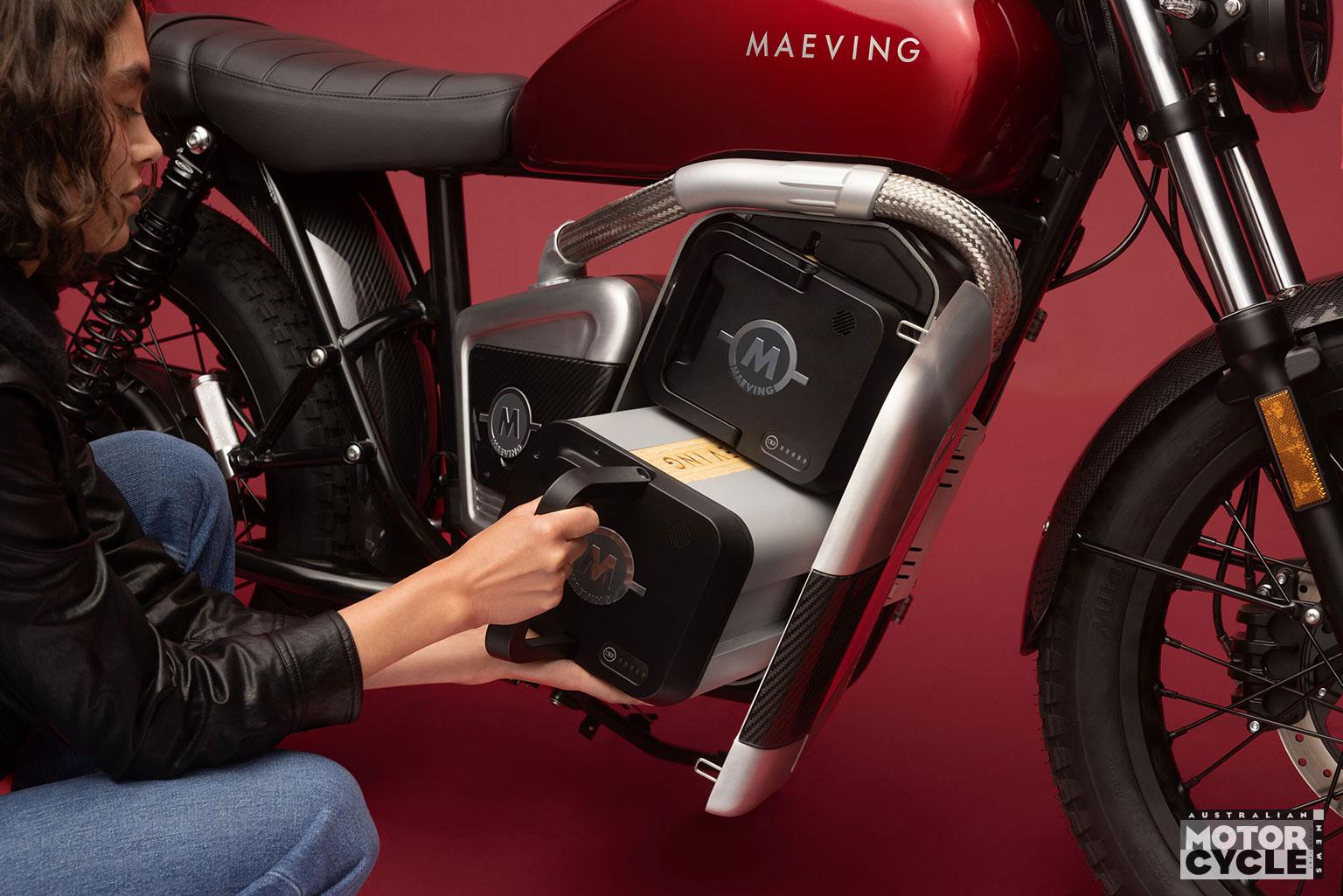
It’s clear that, like other Maeving models, the RM2 will be most at home in city use, offering a stylish alternative to a scooter or a 125cc bike, as well as the simple ease-of-use that comes with electric power. It sticks to Maeving’s principles of using two swappable batteries, which can either be charged in situ by plugging the bike into a normal mains socket, or by removing them to charge separately. That has two benefits: first, it means riders who can’t park near a power supply can still charge their batteries by taking them indoors to do it. Second, it means there’s the option of buying additional batteries to make sure you can always access a fully-charged set. It means commuters can charge their batteries at the office, or delivery riders can keep a spare set on charge at their base to swap out when they need to refresh the range.
In Europe and the UK, the RM2’s power means it can be ridden by learner riders on L-plates, but they’ll need a full licence to carry a passenger. For many, then, it will be the extra load capacity that’s more useful, and Maeving has options of luggage racks and a top case to make the most of that. You can even replace the pillion pad with a load space to increase that potential. As on the RM1S, there’s also space inside the ‘tank’ area for more luggage.
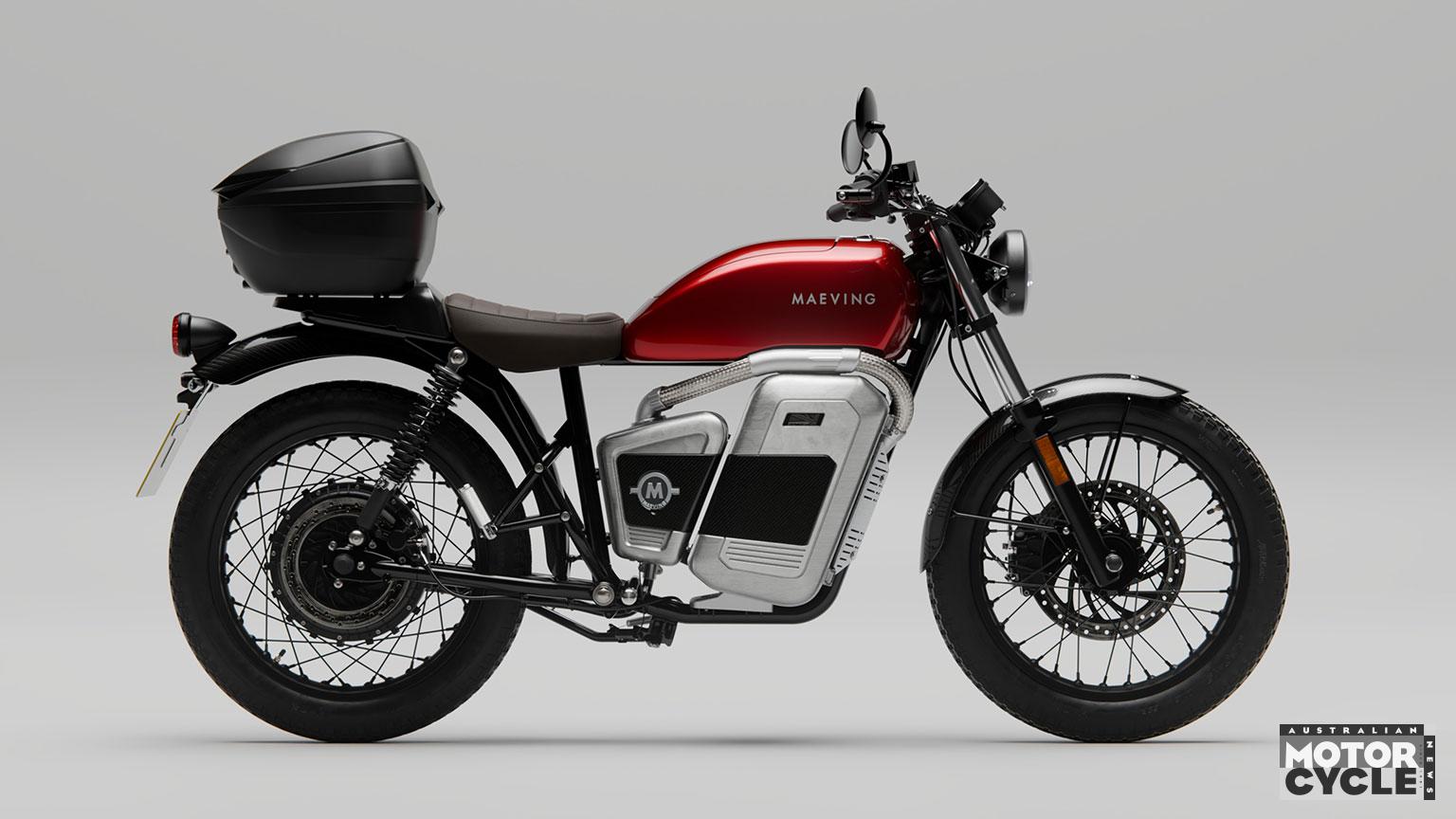
On the technical side, the motor is a hub-mounted design, keeping the main chassis area clear for those batteries, stored inside the silver box that sits where an engine would normally be found. The side of that box opens to reveal the two batteries, one stacked above the other, and a braided steel hose contains the electrical cables taking power to the control electronics behind the battery case, giving a pleasingly mechanical look that echoes the exhaust of a combustion engine. The suspension is fairly basic, with non-adjustable forks and preload adjustment only on the dual rear shocks, while 19-inch wire wheels give the bike the right retro proportions.
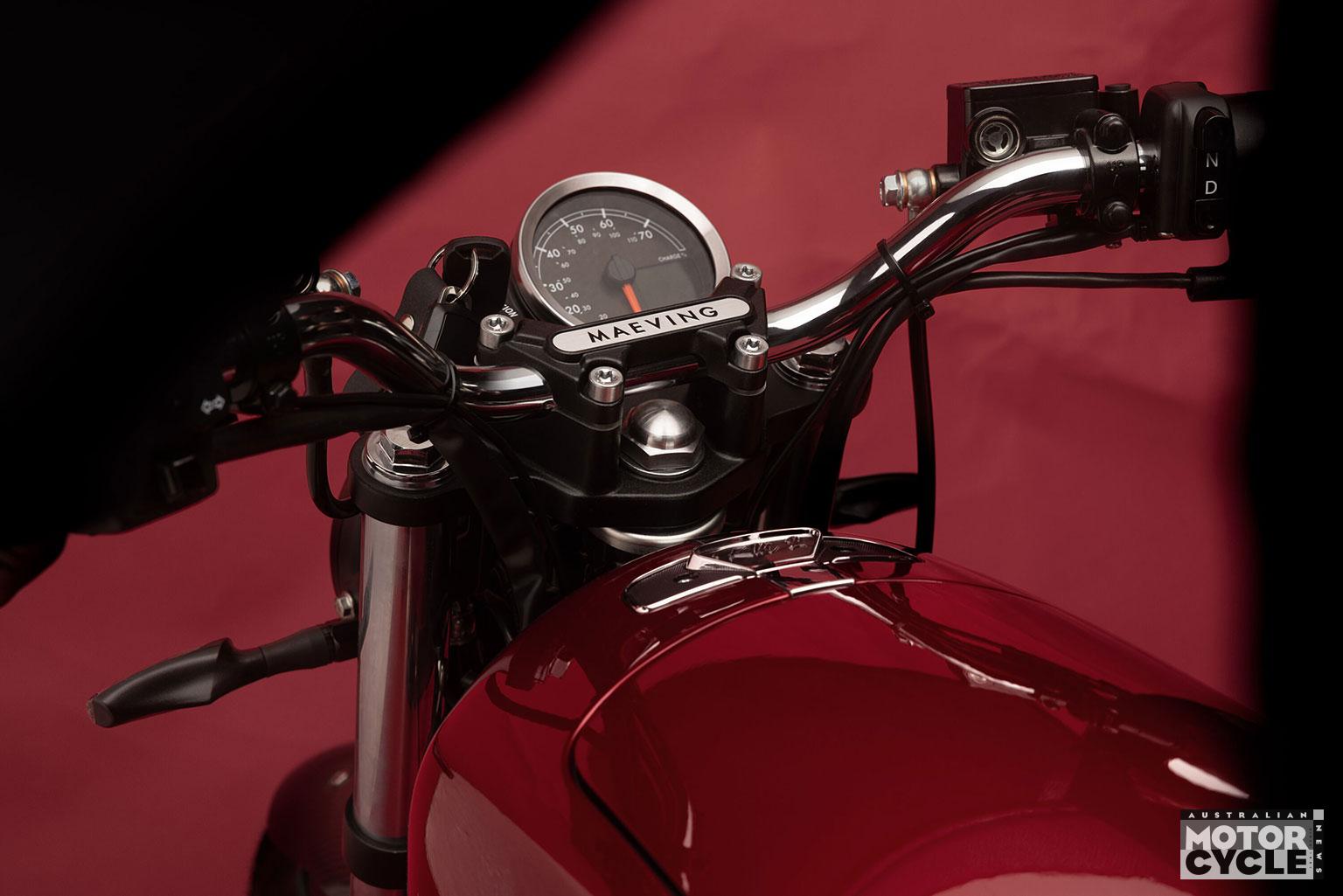
Given Maeving’s UK origins – the bikes are made in Coventry, at the heart of the country’s traditional bike-building region – it’s no surprise that many of the engineers and designers have come from Triumph, and the result is a machine that’s a notch above the average when it comes to construction and quality. Even the battery packs look good, with metallic silver cases inlaid with a strip of wood seared with the Maeving name: if they’re going to be on charge in your house when you’re at home, the firm reasons, they shouldn’t be ugly plastic boxes.
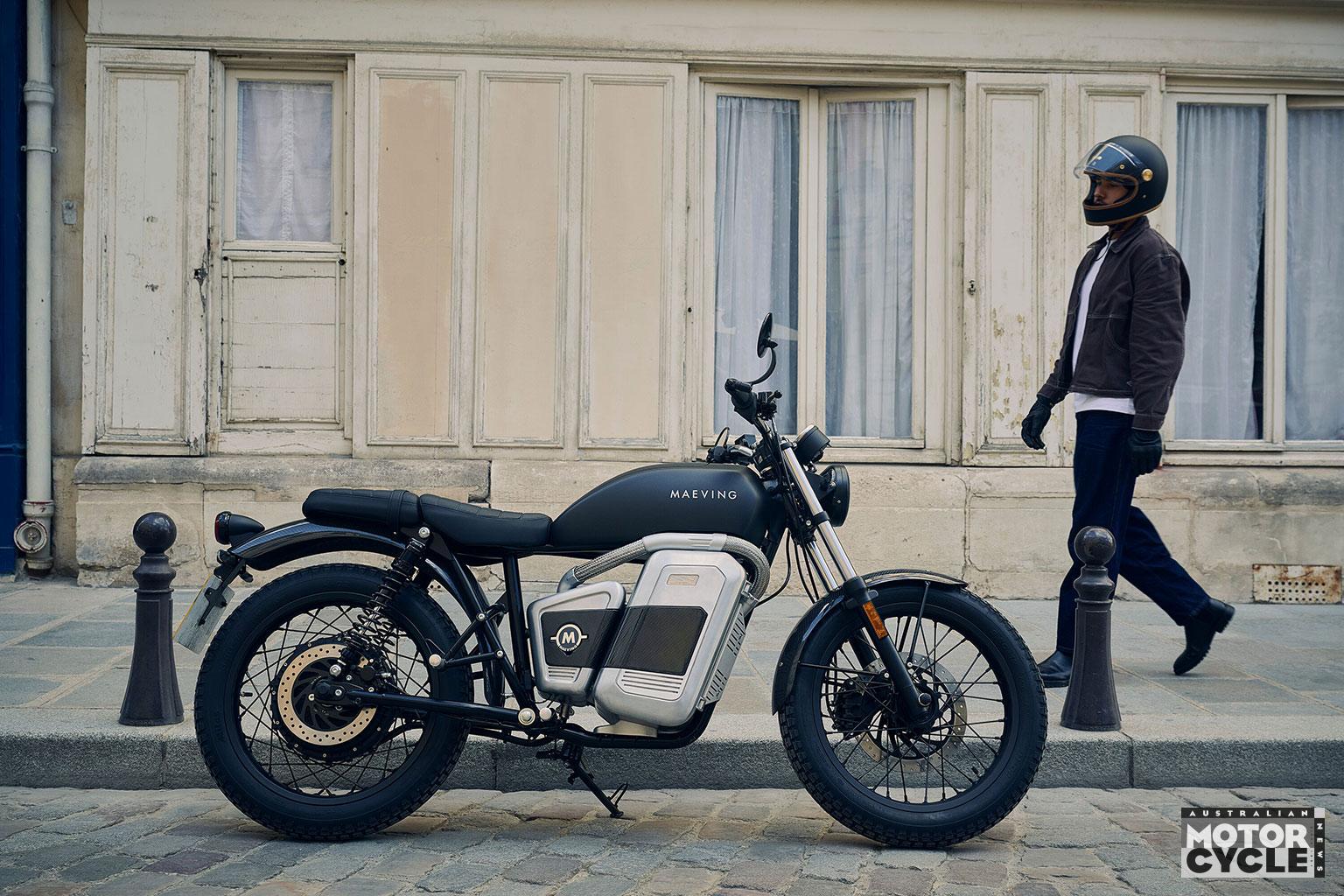
In the UK, the RM2 starts at £7995, equivalent to around $16,200 AUD and only £500 (about $1000 AUD) more than the RM1S.