Tech-lift for Chinese-market inline four boosts chances of exports
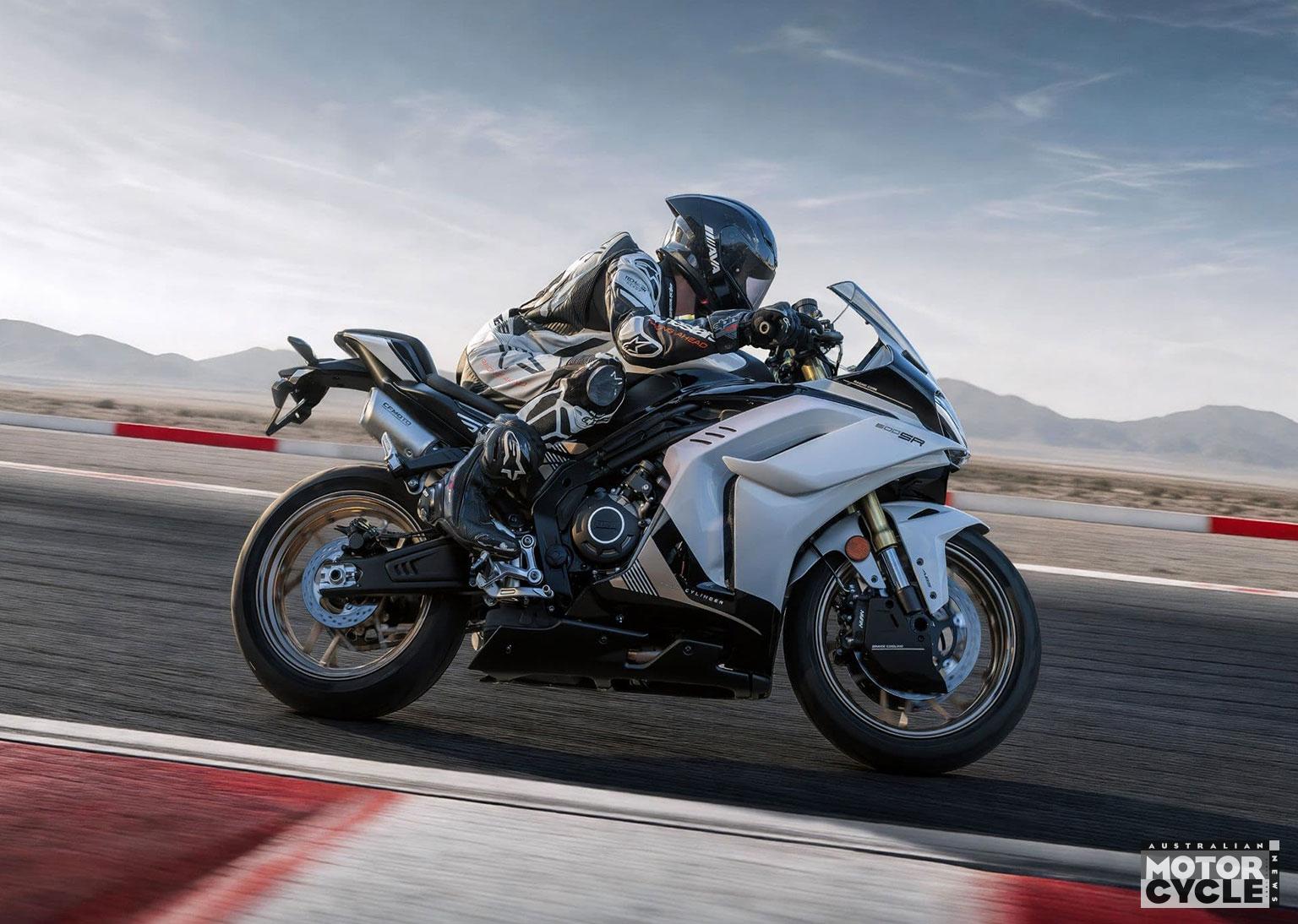
Australia is already one of the few export markets to be offered CFMoto’s retro-style 500SR Voom four-cylinder sports bike but so far we don’t get its modern-styled sister model, simply called 500SR. That might be set to change as the Chinese brand has unveiled two new variants of the 500SR with a substantial tech improvement in the form of ride-by-wire throttles and an optional electronic clutch system.
Ride-by-wire is becoming increasingly ubiquitous on modern bikes, thanks largely to its assistance in meeting tough emissions rules, but it’s also at the heart of the latest traction control and quick-shifter systems. Without it, the 500SR in its basic form has been limited to an upshift-only quick-shifter, for example, relying on an ignition cut to help change ratios but unable to auto-blip for downshifts.

The new ride-by-wire version promises roughly the same performance as the original, with 58kW at 12,500rpm, identical to the basic version, and 49Nm at 10,000rpm, which is 1Nm more than the cable-throttle variant. It’s also 2kg heavier, but at 189kg remains a lightweight machine.
An up-and-down quick-shifter becomes standard, replacing the up-only version of the original bike, but more importantly the ride-by-wire enables CFMoto to introduce the option of an electronic clutch system, similar to the E-Clutch design pioneered by Honda.
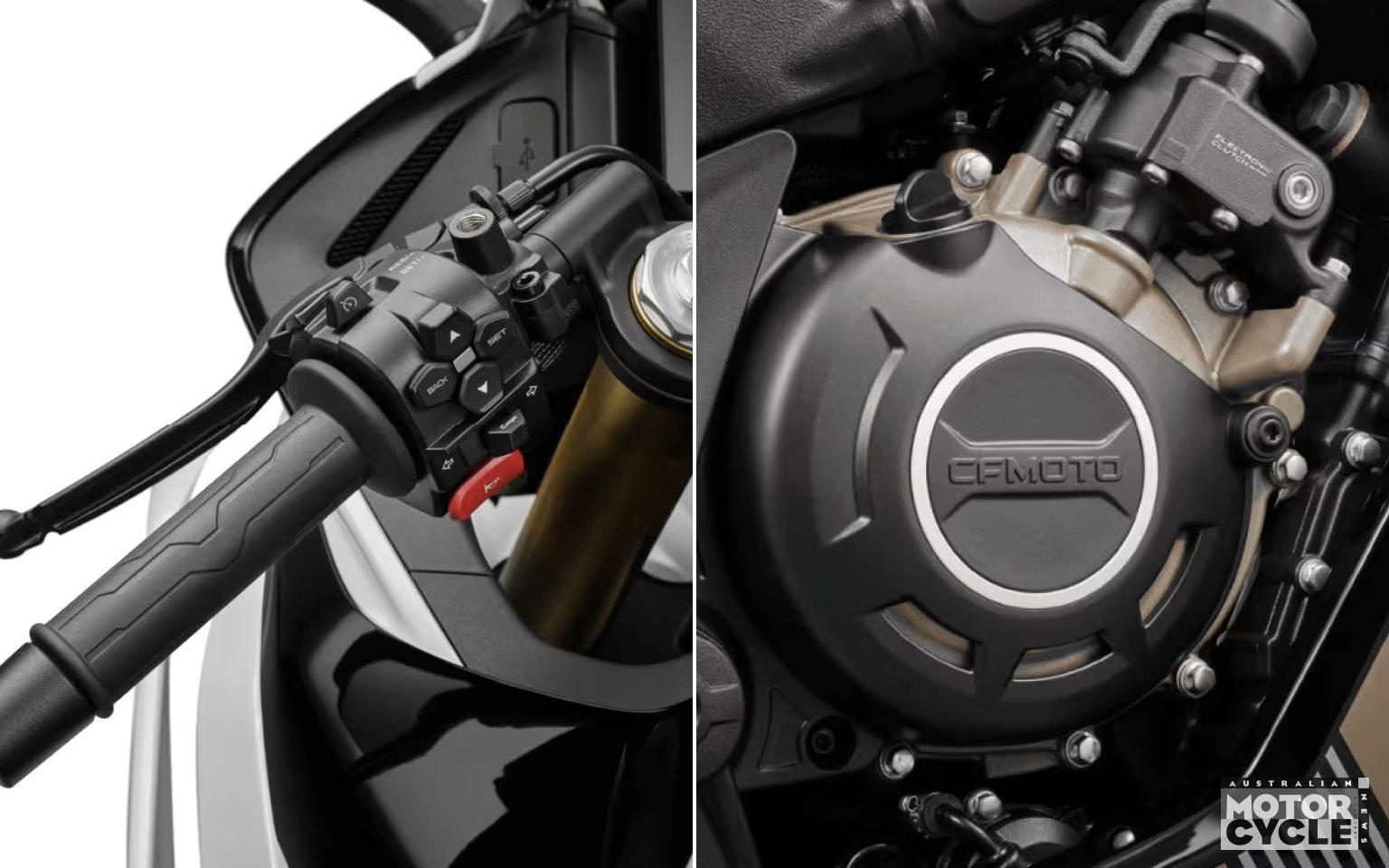
The electronic clutch retains the normal lever on the lefthand bar, giving the rider an instant override whenever required, but adds a servo mounted on the clutch cover to automate the clutch operation when you don’t want to do it yourself. That means pulling away and stopping is done simply on the throttle and the brakes, and stalls are a thing of the past. On the move, the quick shifter combined with the electronic clutch means gearshifts don’t need you to touch the bar-mounted lever either.
Systems like this a spreading like wildfire through Chinese-made bikes, with many manufacturers adopting the same idea. Since the servo system adds relatively little cost and the manual override means conventional clutch control is always possible even when it’s fitted, it’s easy to see why customers are keen on the idea, and its adoption so far has been so rapid it’s not hard to imagine this tech becoming as normal as ABS or traction control within a handful of years.