Cyclone RA1000-based design shows hydraulic power steering
Hub-centre steering has been on the motorcycling radar for decades but despite an array of oddball projects like the Elf GP bikes of the 1980s, Yamaha’s GTS1000, the uber-expensive Bimota Tesi and the more prosaic Italjet Dragster scooter that have pushed the idea to the fore, it’s always failed to make an impression on more mainstream motorcycle design. Now another company is having a go at hub-centre steering – China’s Zongshen – which has filed patent applications illustrating such a system fitted to a version of its new RA1000 V-twin.
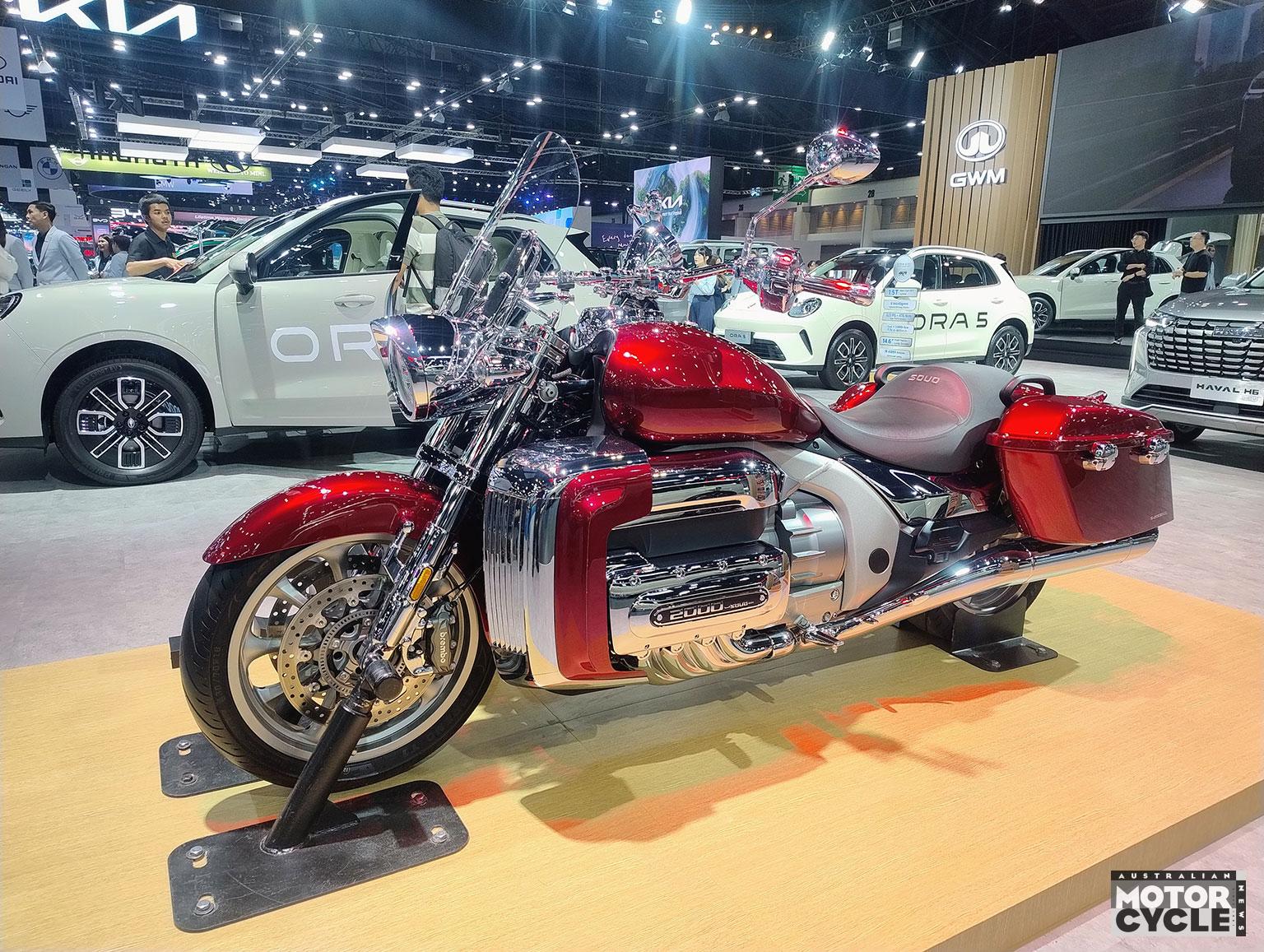
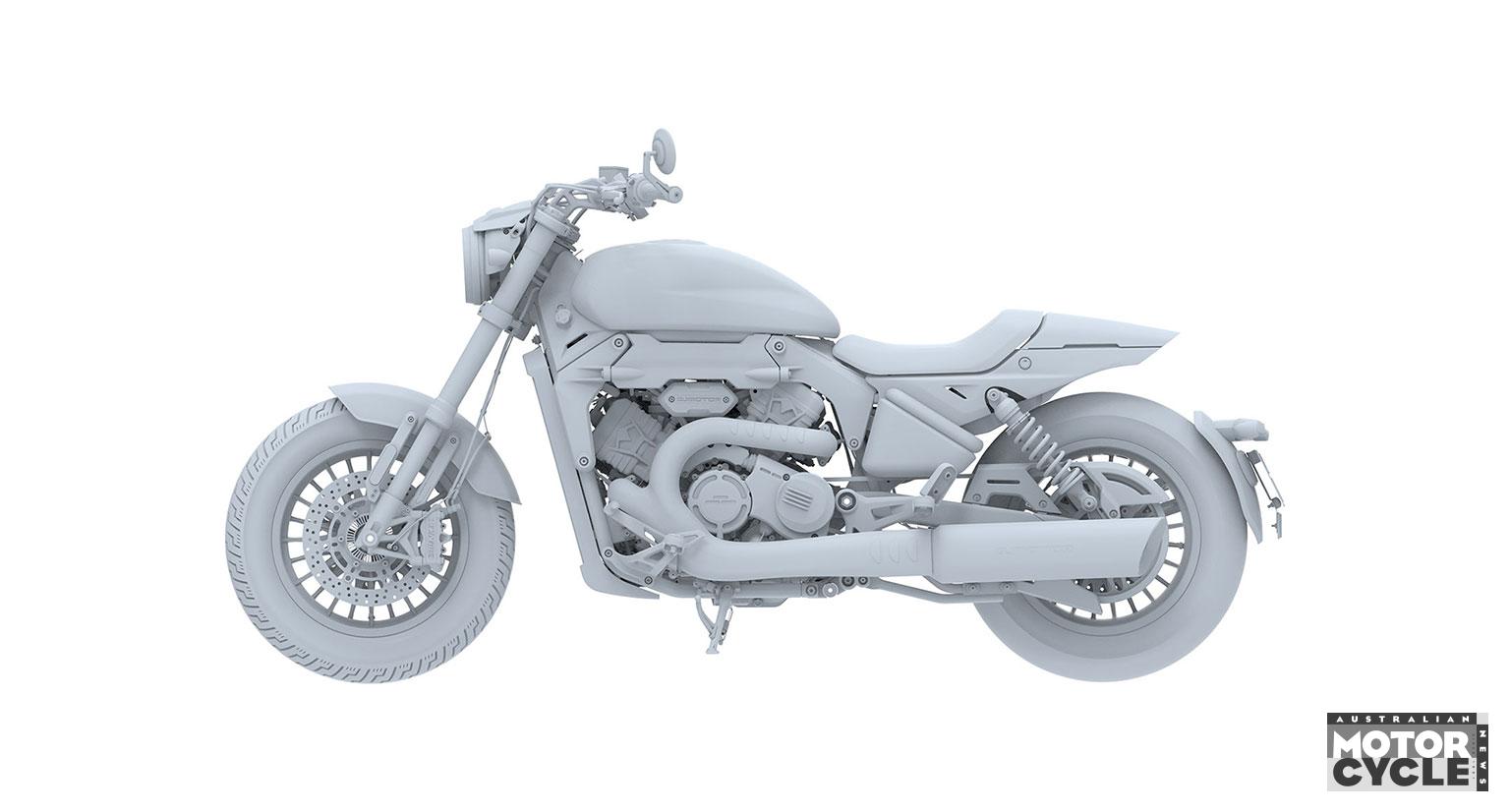
The RA1000 has just hit the market, nearly five years after it first appeared as the RA9 concept back in 2021. It packs a 996cc, DOHC V-twin derived from the old Aprilia motor from the Shiver and Dorsoduro, putting out 105hp and 95Nm, in a frame that’s also recognisably from the old Aprilia Shiver, which itself has recently been revived in the Chinese market, where it’s manufactured by a joint venture between Aprilia’s parent Piaggio and Zongshen. Where the resuscitated Shiver looks nearly identical to the old version that debuted back in 2007 and was discontinued nearly a decade ago, the Zongshen RA1000 wraps it in muscular proportions akin to the Ducati Diavel, with a single-sided swingarm and a massive 240-section rear tyre.
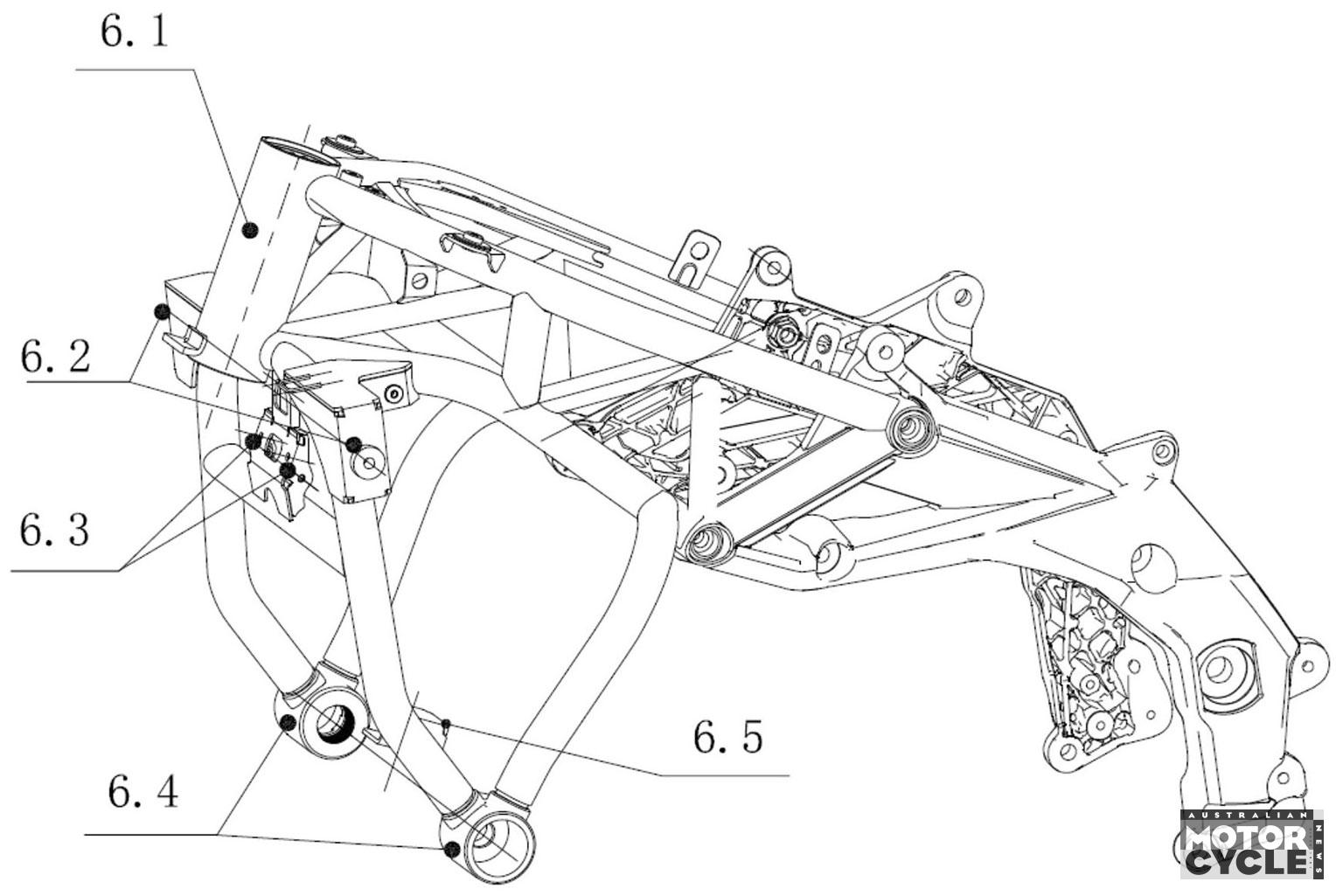
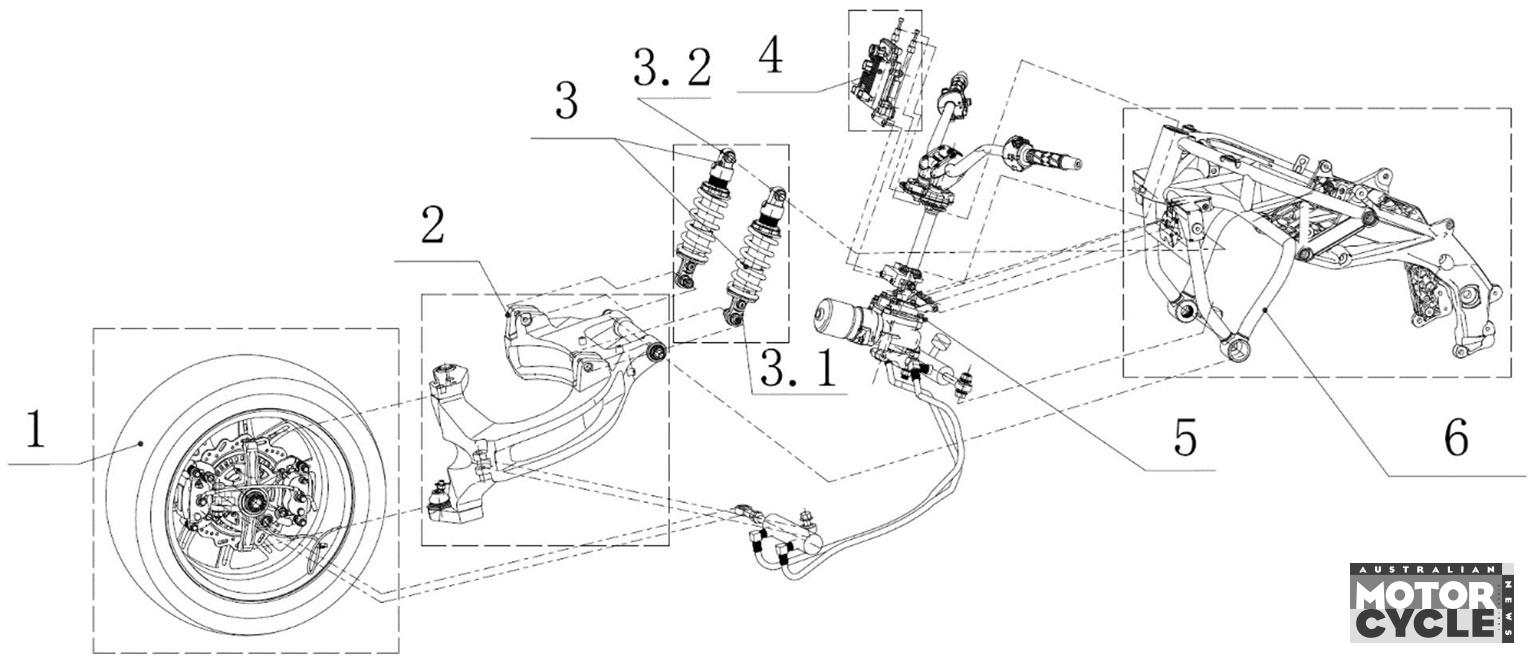
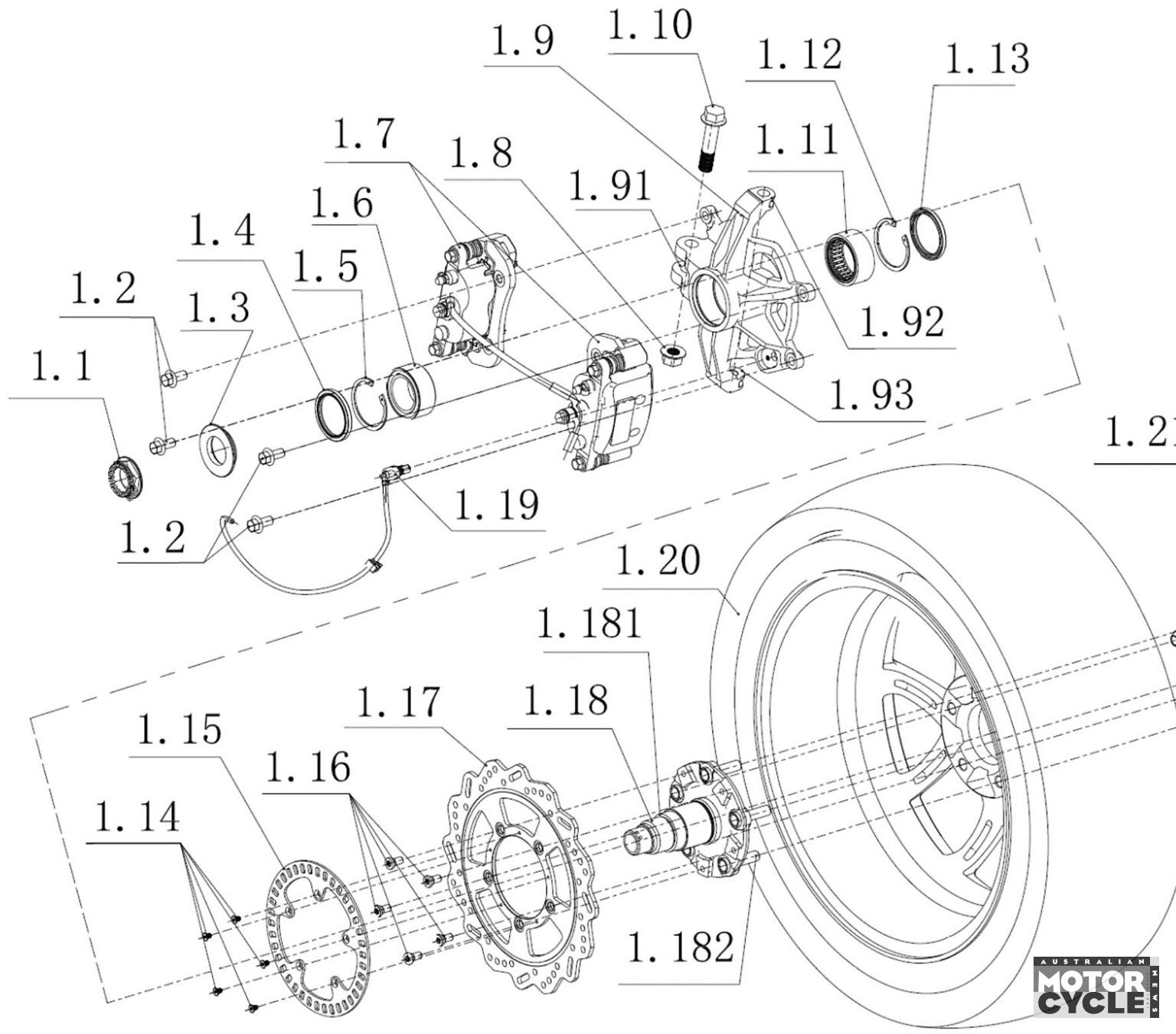
But Zongshen’s new patent suggests bigger changes are waiting in the wings, showing how the RA1000’s chassis could be adapted to fit a second single-sided swingarm to the front, fitted with another unusually wide wheel and tyre, with power-assisted hydraulic control to stop the exaggerated rubber from making the steering too heavy.
The advantages of hub-centre steering and the use of a front swingarm instead of forks are well established, helping separate braking and suspension forces, channelling the former directly into the chassis and eliminating the stiction that plagues telescopic forks (a portmanteau of ‘static’ and ‘friction’, referring to the initial force needed to get the forks moving). Hub-steering systems also give more freedom when it comes to steering and suspension geometry, allowing anti-dive without making the suspension too stiff, as well as eliminating the stresses that normally have to travel through a conventional bike’s steering head.
The downsides of hub-centre steering are equally well publicised, with previous systems coming in for particular criticism when it comes to steering feedback thanks to complex mechanical linkages between the bars and the wheel, adding bearings and pivots that can all lead to friction and slack in the system.
That’s where Zongshen’s design is unusual, as it eliminates any such mechanical linkage, instead using hydraulics to transfer movement of the bars into steering at the wheel. What’s more, the hydraulic system is power-assisted, helping to make the steering lighter and opening the door to more advanced rider-assist systems that could intervene in the steering – something that’s already commonplace in cars. A hydraulic cylinder steers the front wheel and provides feedback into the system.
The single-sided swingarm design also means the front brakes need to be rethought. There’s only one disc, mounted inside the front wheel, and it’s gripped by two twin-piston floating calipers, each radially mounted.
Zongshen’s design is the sort of radical rethink that we’d often be tempted to write off as nothing more than the doodling of an imaginative engineer, but China’s motorcycle industry has already shown it’s not afraid to mess with engineering conventions that have been set in stone for decades by more established brands. As a result, the chances that this system could reach a production model are substantially higher than if a Japanese or Western bike company had filed the same patent.