From Aprilia’s aero-heavy program to Yamaha’s urgent push to unlock its new V4, Peter Bom analyses each factory’s development focus for next season
Aprilia – Aero Ambition and Heavy Workload
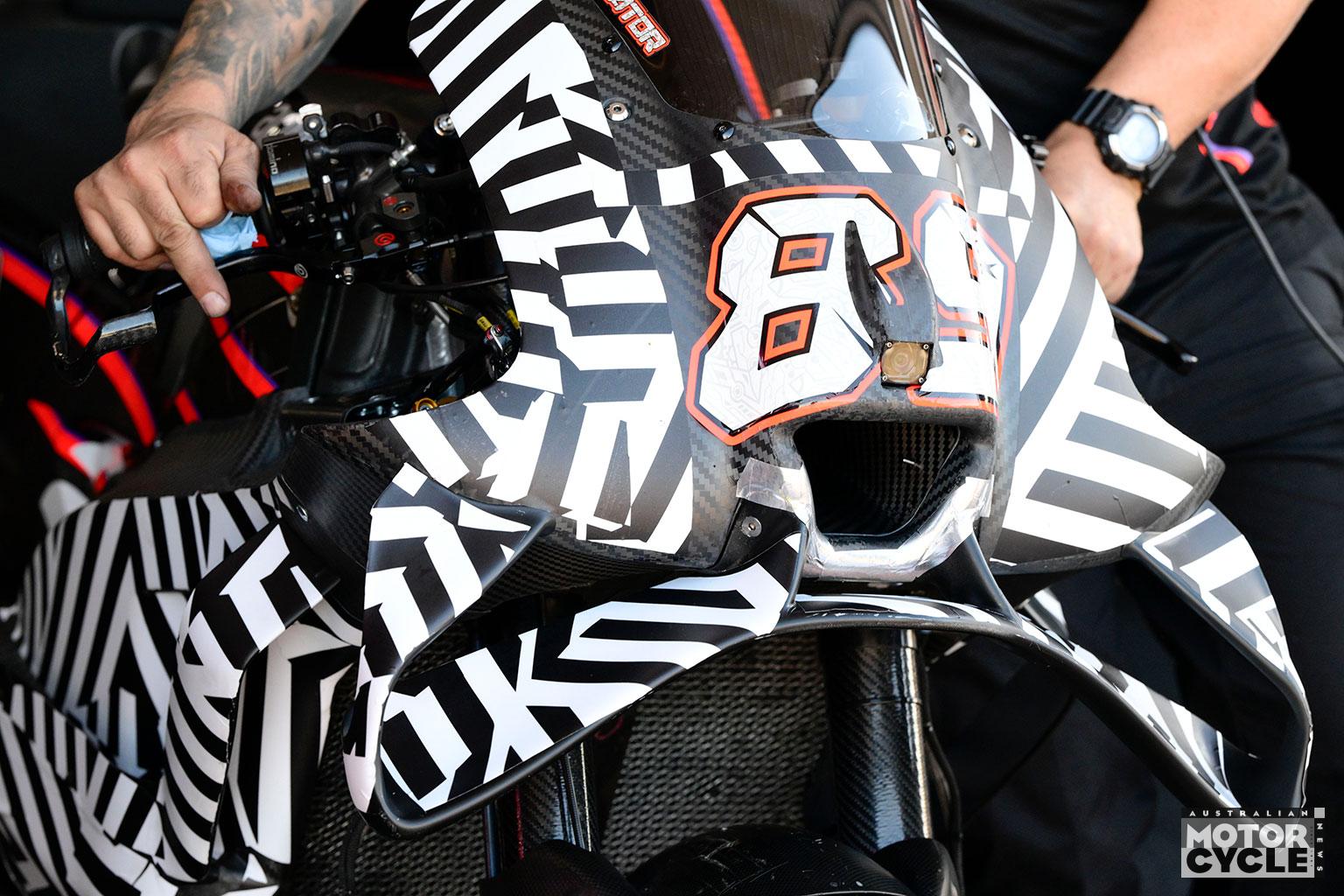
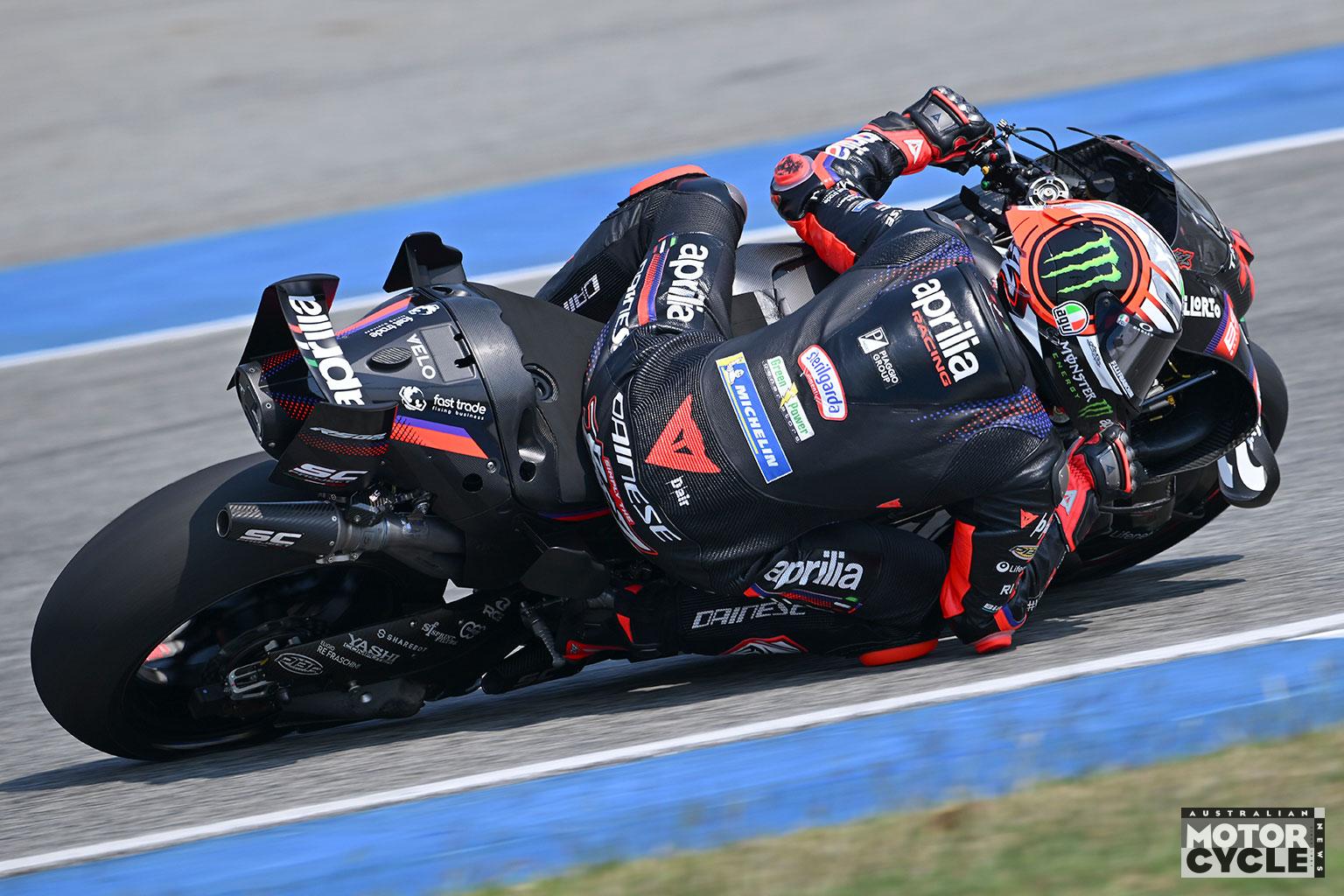
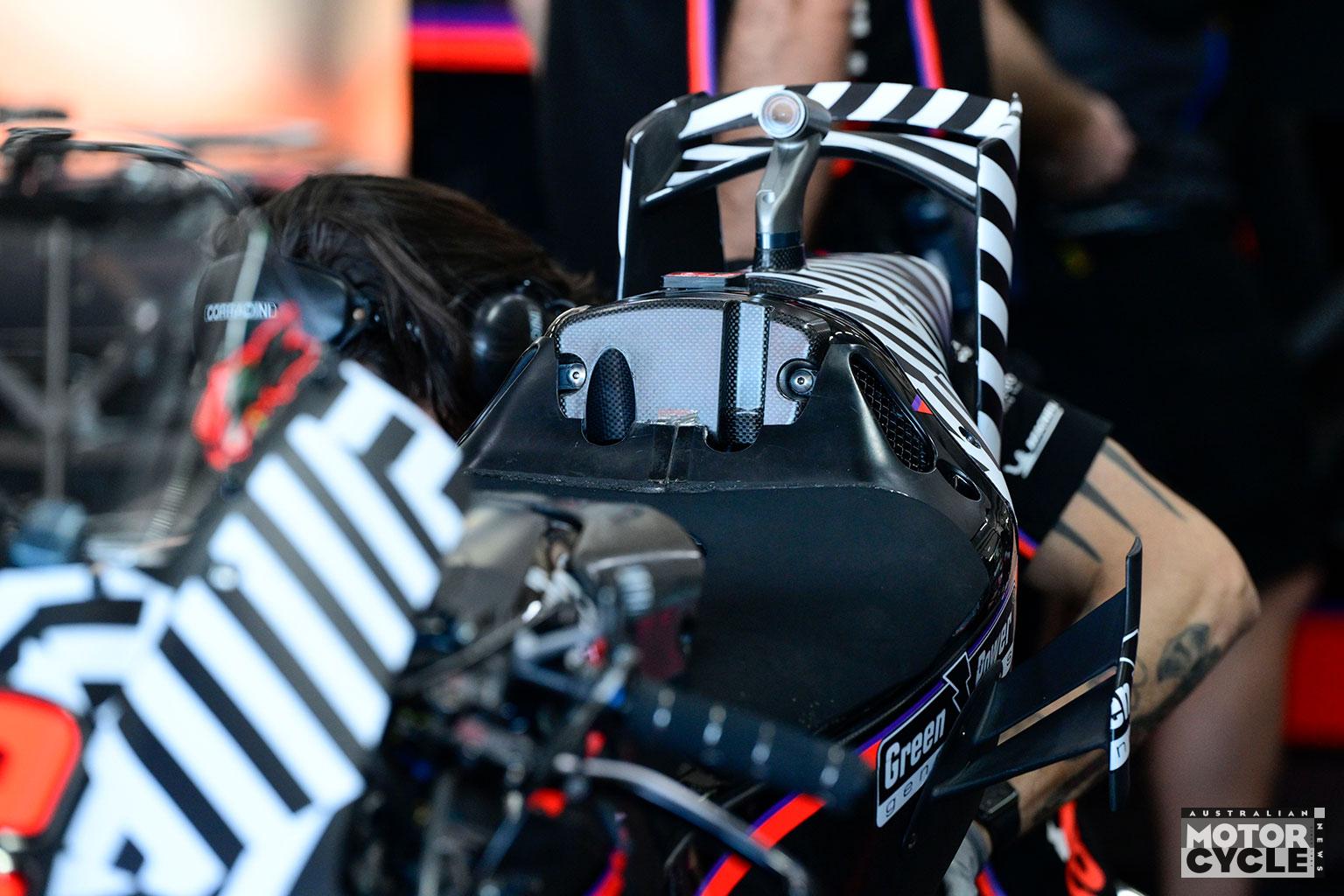
Aprilia has what is considered by many as the best bike on the grid, yet they still brought lots of parts to Valencia. The majority of the testing came down on the shoulders of Marco Bezzecchi. Martin is still in the process of learning how to ride the RS-GP fast without falling off. His physical condition is still not good enough yet; he misses strength and with that, the confidence to push and feel the limit. He started the test on the latest chassis, the one that Bezzecchi was already using at the last rounds, and he immediately liked it. “More natural, better fitting to my riding style.” Being quite small, he still hasn’t found the position on the bike that he needs and so he tested footrest positions and different tank supports. Riders have to be able to withstand the higher forces during braking, because of the aero and devices. But at the same time they need to dangle a leg, modulate the front braking (that keeps locking up) and make quick steering corrections while the bike slides.
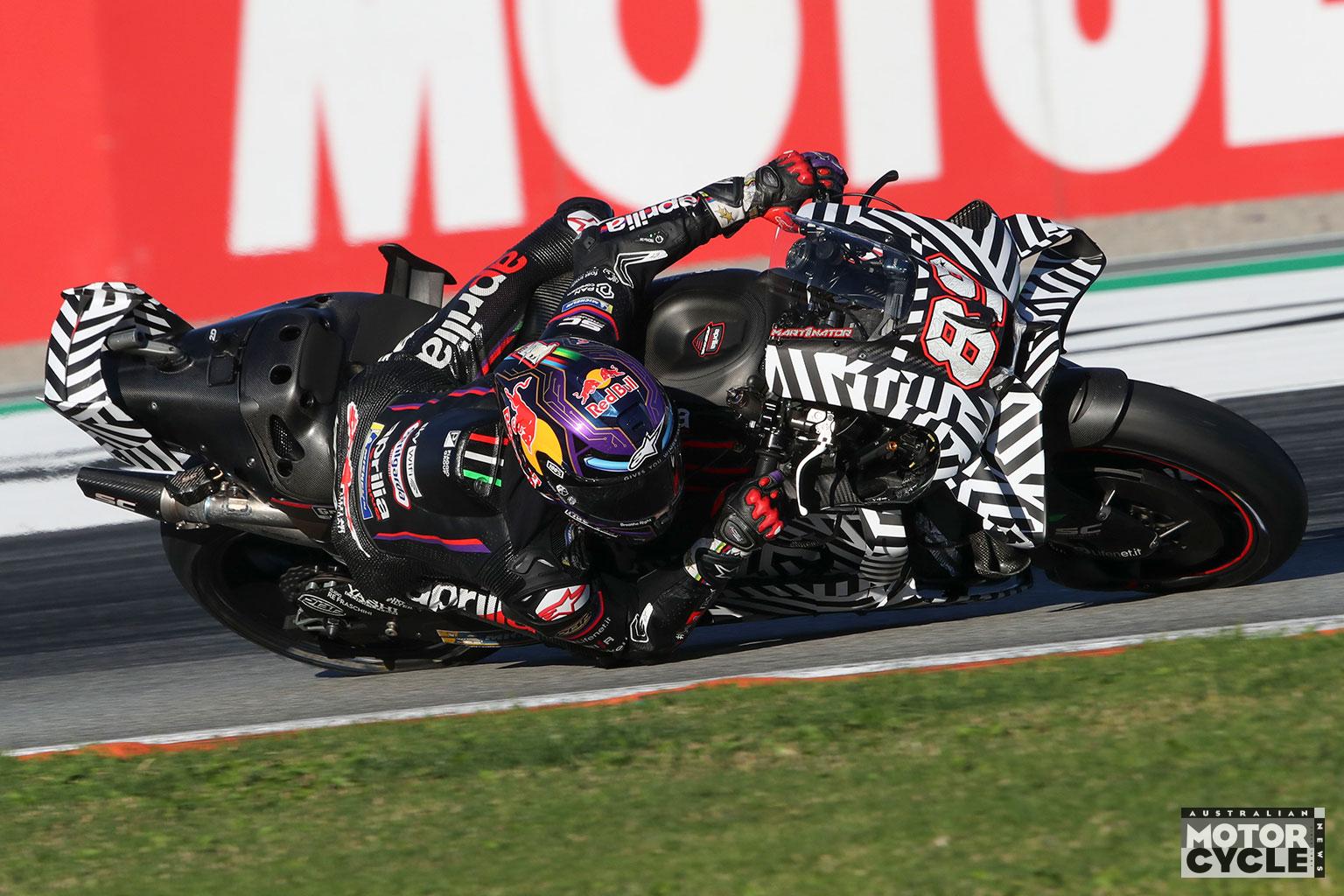
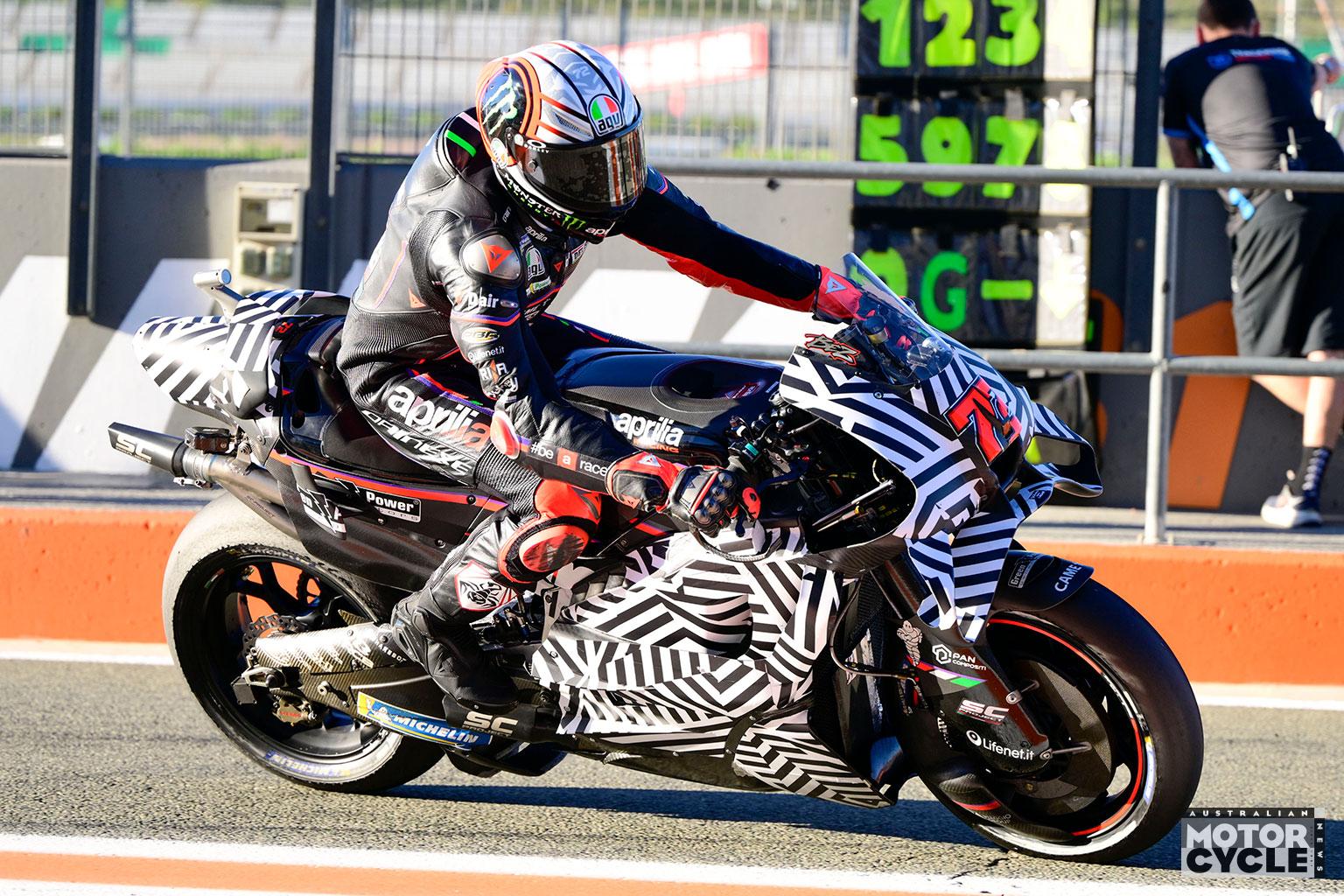
Bezzecchi has none of these problems; he went through the whole test plan and in the process clocked the most laps of the day (60). Aprilia brought a lot of aero parts and tested them in various combinations. The front wing was very different, more like Honda, while the three types of seat aero all looked like nothing we have seen before. But Marco warned us that, because of the limited track time, they had skipped the usual back-to-back test and therefore results still have a bit of a question mark over them. He didn’t want to speak about the aero but Martin did, telling us the front wing didn’t feel very different but one of the three rear options had improved the drive, the stability during banked-over acceleration. That’s interesting because so far, riders used to tell us that the aero behind their back was mostly to calm down the rear while upright braking, preventing it from coming up.
Although engine development is frozen for next year, Aprilia was also trying to extract more power from it. This could have been things like airboxes and the flow into it, or different exhausts or throttle bodies, probably in combination with power maps. The sort of stuff they try first on their dynos, then bring over to the riders and start fine-tuning the maps with the bikes in real-life conditions.
Ducati – Taming a Title-Winning Enigma
Ducati’s 2025 bike has brought them the world title but also headache and confusion. How could both Pecco Bagnaia and Fabio Di Giannantonio struggle so much while Alex Marquez, on last year’s bike, cruised to 2nd in the championship?

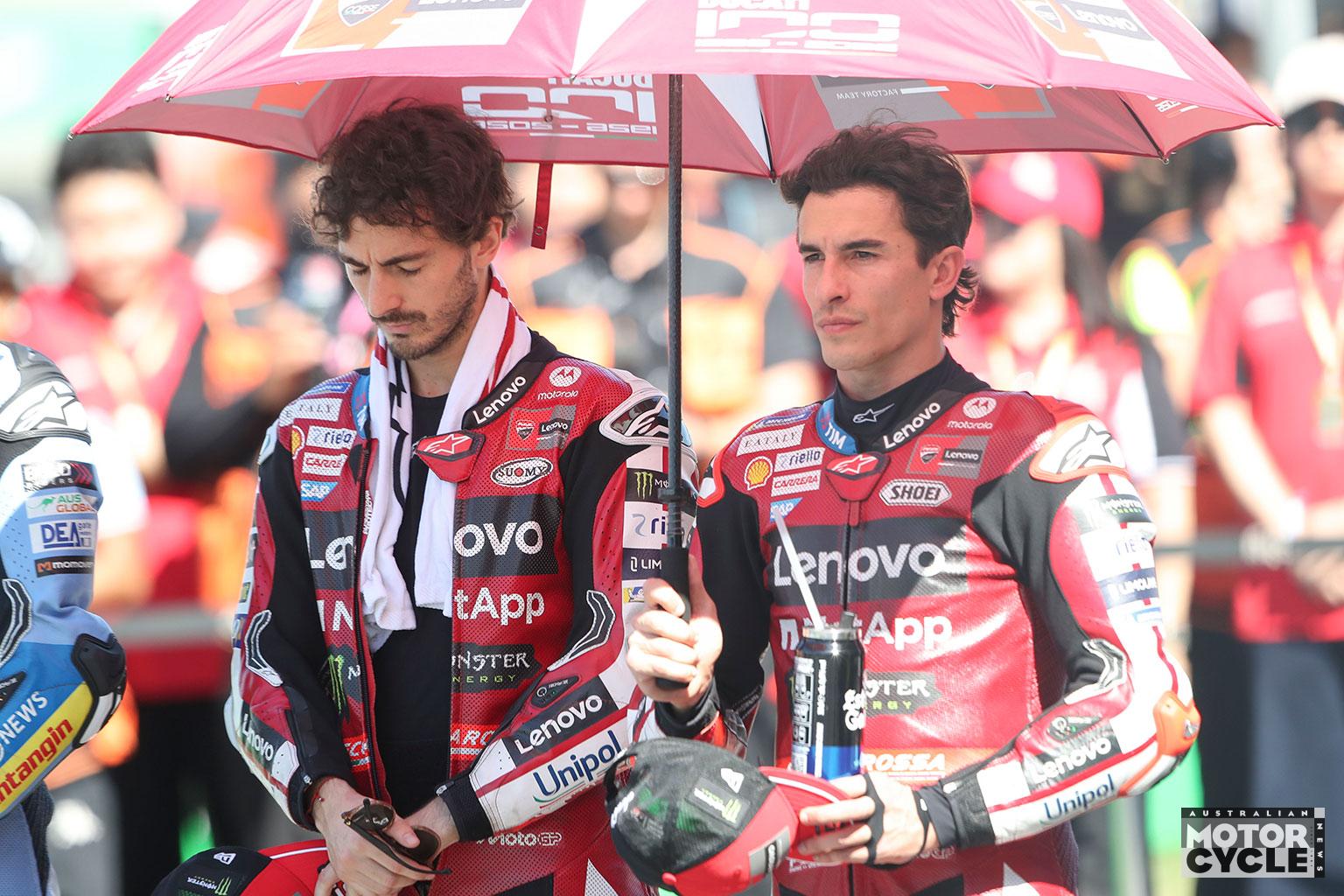
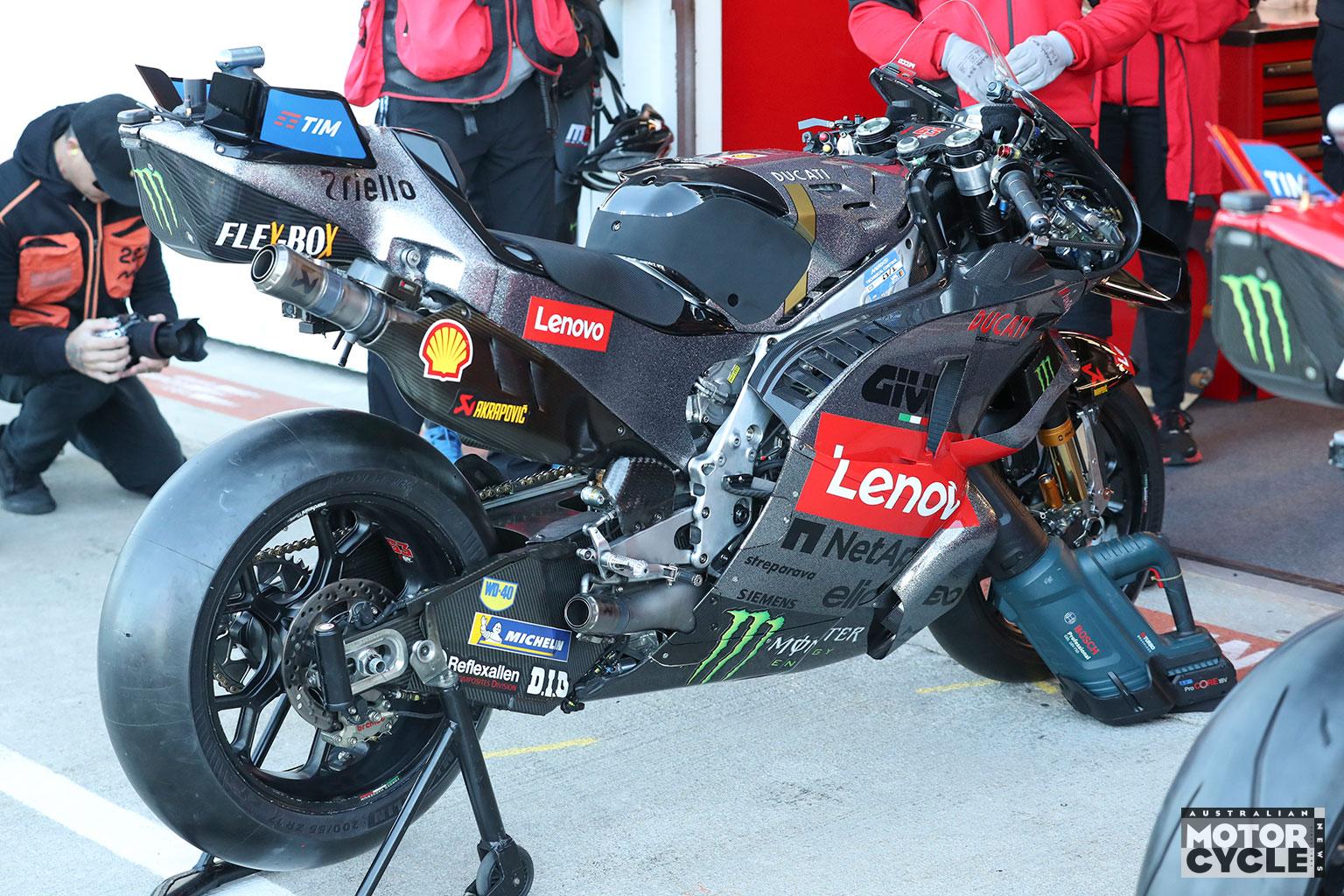
Without Marc Marquez, who is still recovering from injuries at home, the target for this test must therefore have been to try and tame the bike a bit, making it a more user-friendly package. They didn’t tell us what they were testing but a lot of time was spent with aero that was a combination of the 2025 fairing (that only Marc sometimes used) but with a deeper, wider ‘gutter’ on the side panels. It’s hard to imagine this being the cure for Pecco’s biggest problem this year, the lack of confidence during trail braking. With no new engine homologation for next year’s bike allowed, they must have been testing parts that relate to feedback during turning in on the brakes. Think about stiffness in triple clamps and chassis, and probably in the fork legs too. Pecco was upbeat when he talked to us after the test: “Compared to the race weekend, I immediately felt comfortable with the 2026 prototype.”

Fabio explained that his test work was related to validating calculations from the engineers. Racing motorcycles are difficult to put into numbers, to calculate and after that simulate the behaviour of the bike and the ‘feel’ from the riders. The better engineers are at putting feelings and motions into numbers they understand, the higher the chance of fixing a problem is going to be. Part of these validations could be coming from the small pressure sensor fitted to the front fork cap on one of their bikes, validating calculated pressure differences in the fork during hard braking. Another abnormality was some sort of air scoop to the bottom of the fairing. Could have been to guide cooling air to hot areas; the Ducs are known for roasting their fairings at times.
Honda – Positive Steps Toward Stability and Grip
Honda’s main priority was to get the feedback from the factory riders on the new bike. The RCV213V doesn’t look very different but at least the chassis and swingarm are. According to Aleix Espargaro, who joined the race as a wildcard, the new bike has more mechanical grip and improved stability on corner exit. Joan Zarco claimed it to be a noticeable step but he needs more laps to understand and use the advantages. Thanks to the concession system, Honda already brought at least two significant engine updates during the season and results are there: two Hondas topped the list of highest average top speeds in the race.
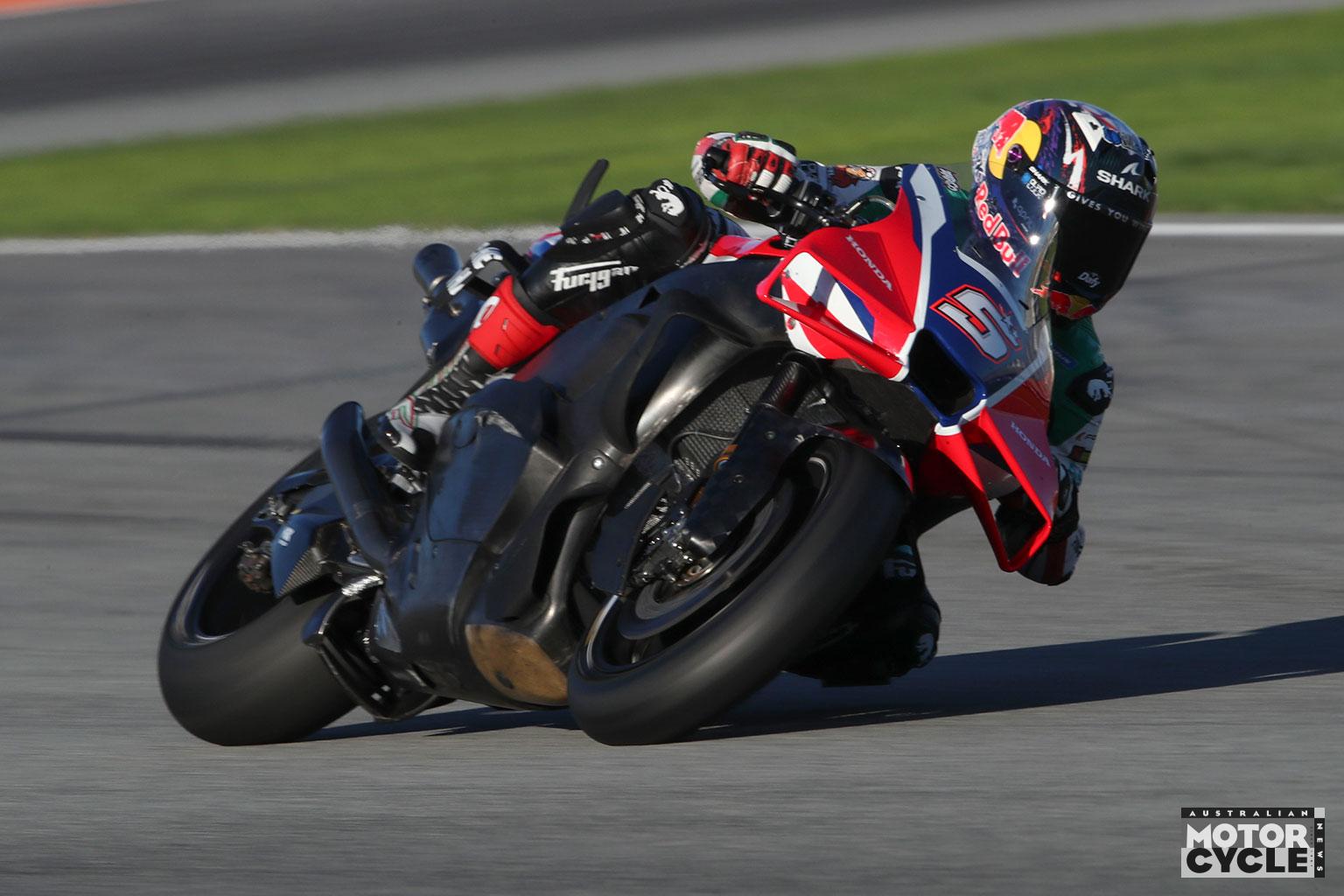
Luca Marini mentioned he also worked on the electronic settings, which would mean fine-tuning the power maps and traction control to match the newfound mechanical grip. By the way: The spectacular turn 13 in Valencia is probably the best corner to adjust the new Slide Control option that the teams from Misano on are now allowed to use. It helps to control the amount of ‘oversteer’ the rear wheel can make while accelerating with lean angle. Next step will be to improve the aero package, Joan Mir told us. To get that right, Honda has two more tests this year to find the direction, followed by the all-important Sepang test.
KTM – Chasing Edge Grip and Big Gains for Sepang
The weakness of the RC16 has been edge grip, understeer through longer corners and tire life. The bike also needs careful initial braking, where the brake pressure has to be built up gently. Hard, aggressive braking makes the bike pitch forwards which means the rear tire can’t be used for stopping effectively.
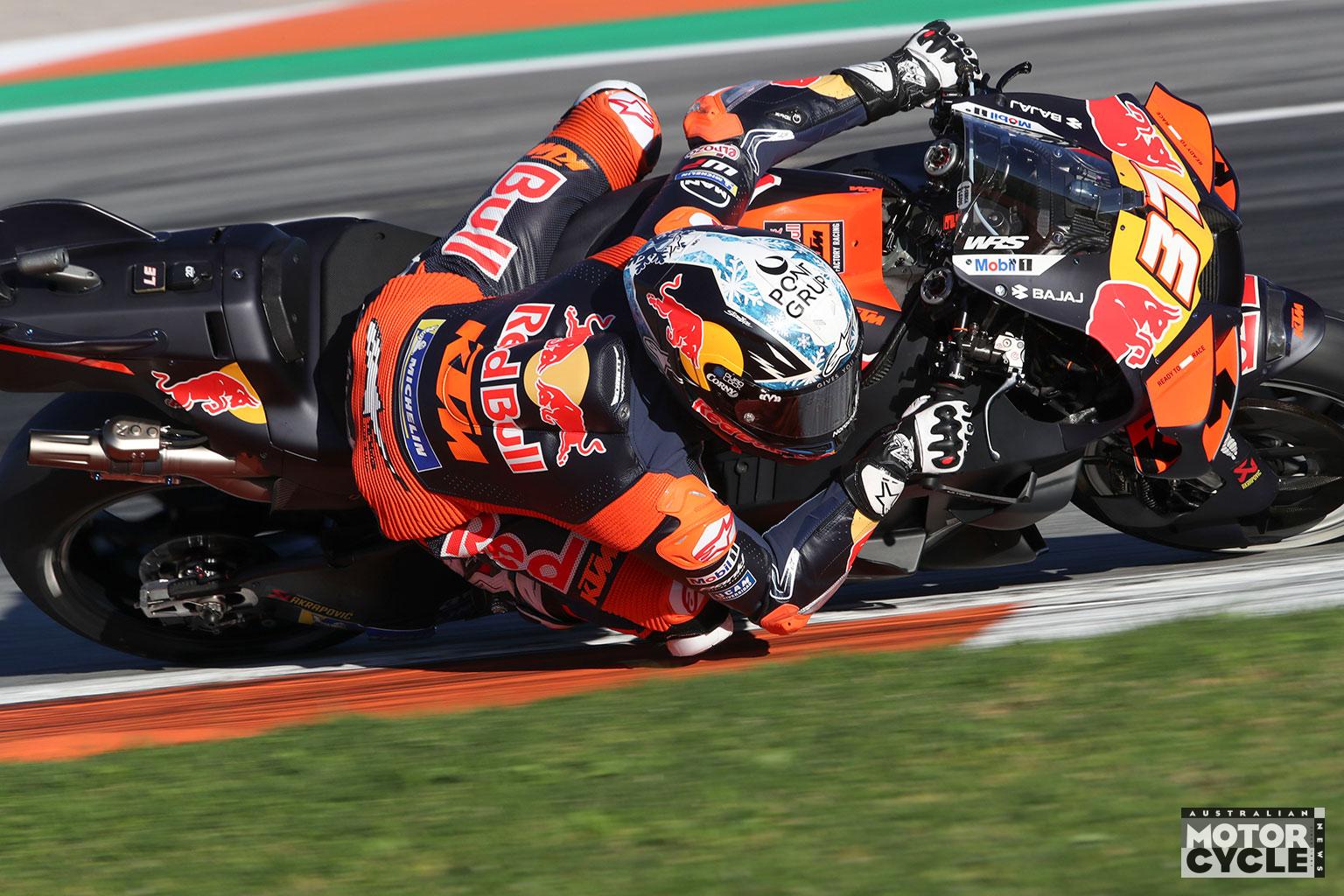
Pedro Acosta spent his time on track testing various aero options. He wasn’t keen to get into much detail with the press, but said that some of the aero parts he tested “made our bike more complete. It has some strong points but also some less strong. But aero is not black and white; the engineers have to study well the results and find from there the next step for Sepang.”
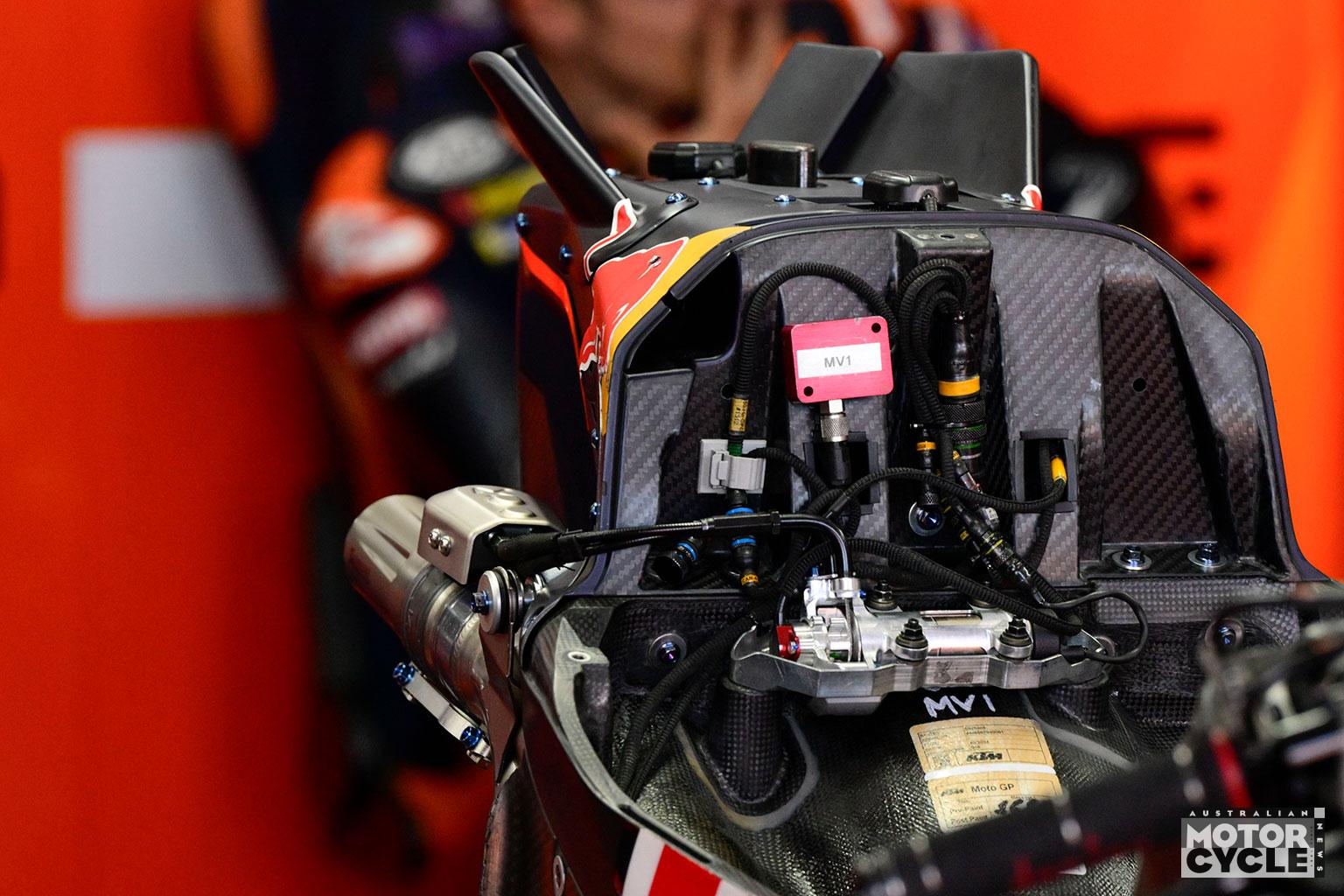
Brad Binder tried aero too and went a bit further, claiming that “some of the aero we tested made me feel more in between the wheels, where some other option helped me in the braking.” But he didn’t try a combo of these but looked forward to doing so in Sepang. Brad also tried a new seat unit. It was smaller between the legs and probably a bit lower too: “It allows me to move a bit more freely over the bike.” The seat unit had a different shape of the tail unit, suggesting that something else is changed too. That could be a new version of a tuned mass damper, or maybe they have moved parts to elsewhere on the bike because they wanted to change the weight balance.
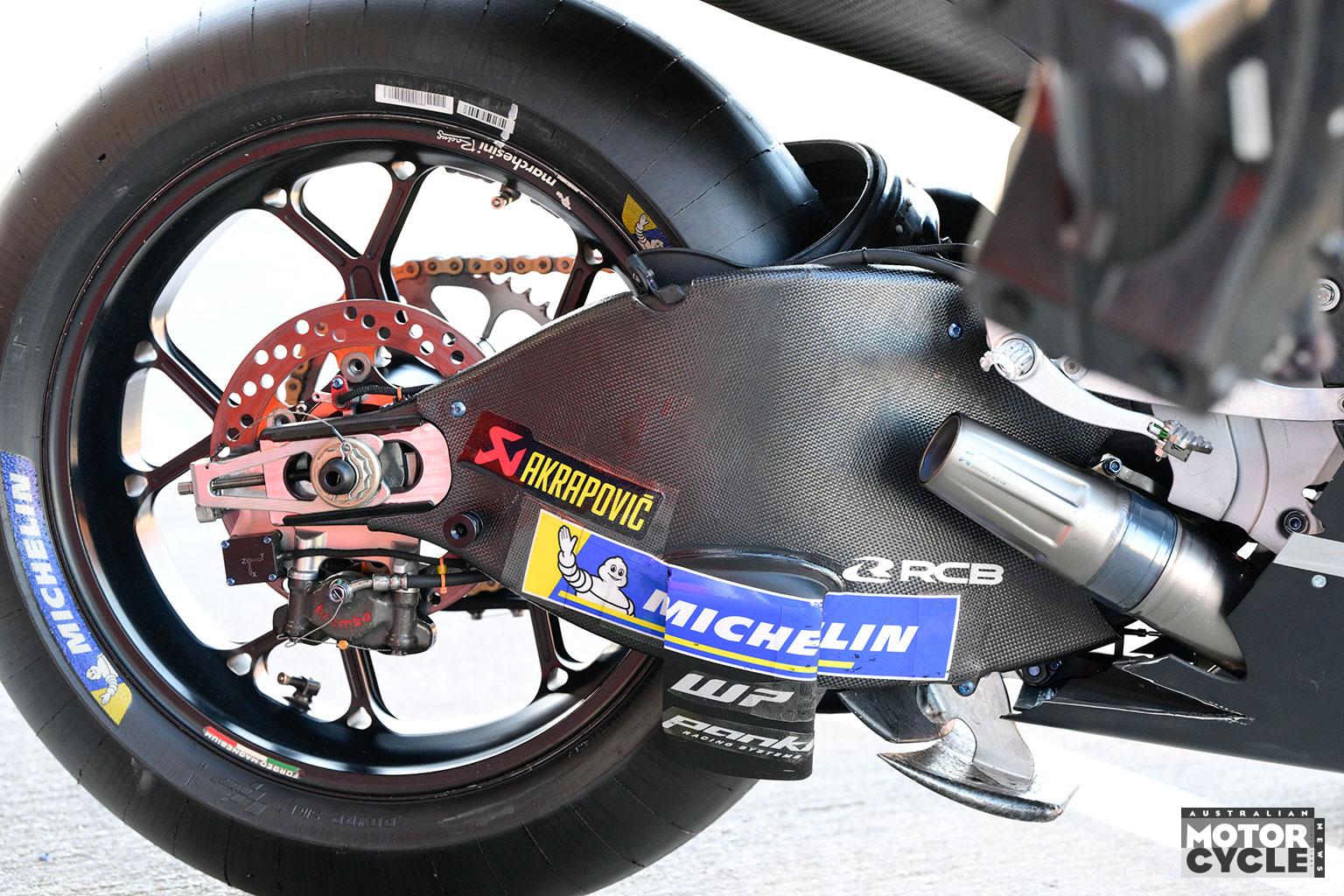
Maverick Vinales and his crew chief found out earlier this year that by moving the rider’s seating position 60 mm rearwards, the bike could be ridden smoother and faster; all KTM riders followed suit. He is now coming back from injuries and here he tried the latest version of the (carbon) chassis and swingarm, the same as Pedro and Brad are already using. These were better he said, but not a huge step. He praised the way KTM had organised this test, claiming it was better organised than last year, when he first jumped on the bike (Barcelona).
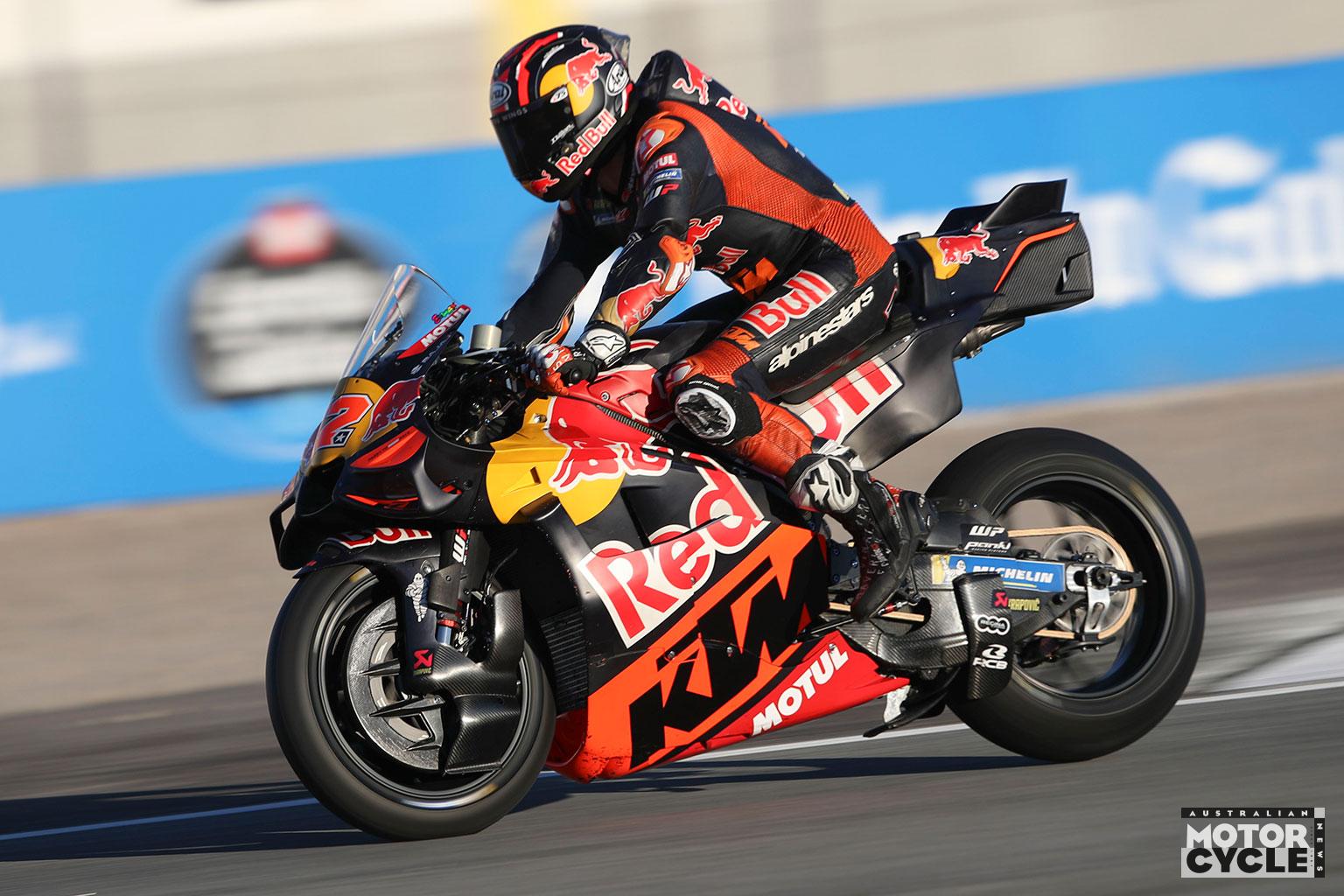
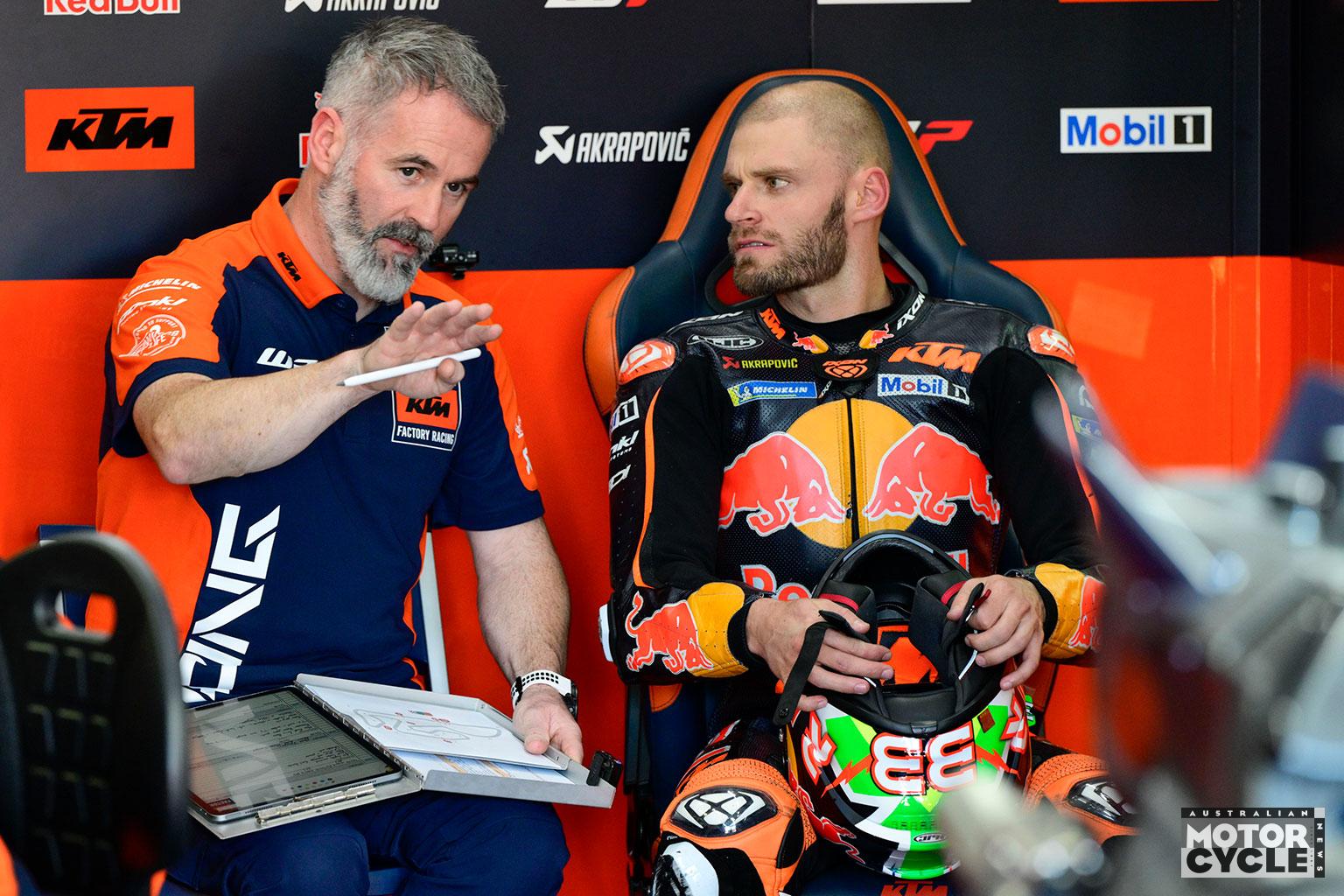
Apart from the new parts and pieces, there was also a new face in the KTM pit box and it belongs to Phil Marron. Phil has come over from BMW in WSB, where he clinched the world title with Toprak Razgatlioglu. He is Brad’s crew chief for 2026. Brad’s now-former crew chief Andres Madrid moved over to the other side of the pit box where he now takes care of Enea Bastianini, who in turn lost his crew chief Alberto Giribuola to Yamaha to work with Toprak. Yes, musical chairs are not only for the riders.
Yamaha – A V4 With Promise but Much to Prove
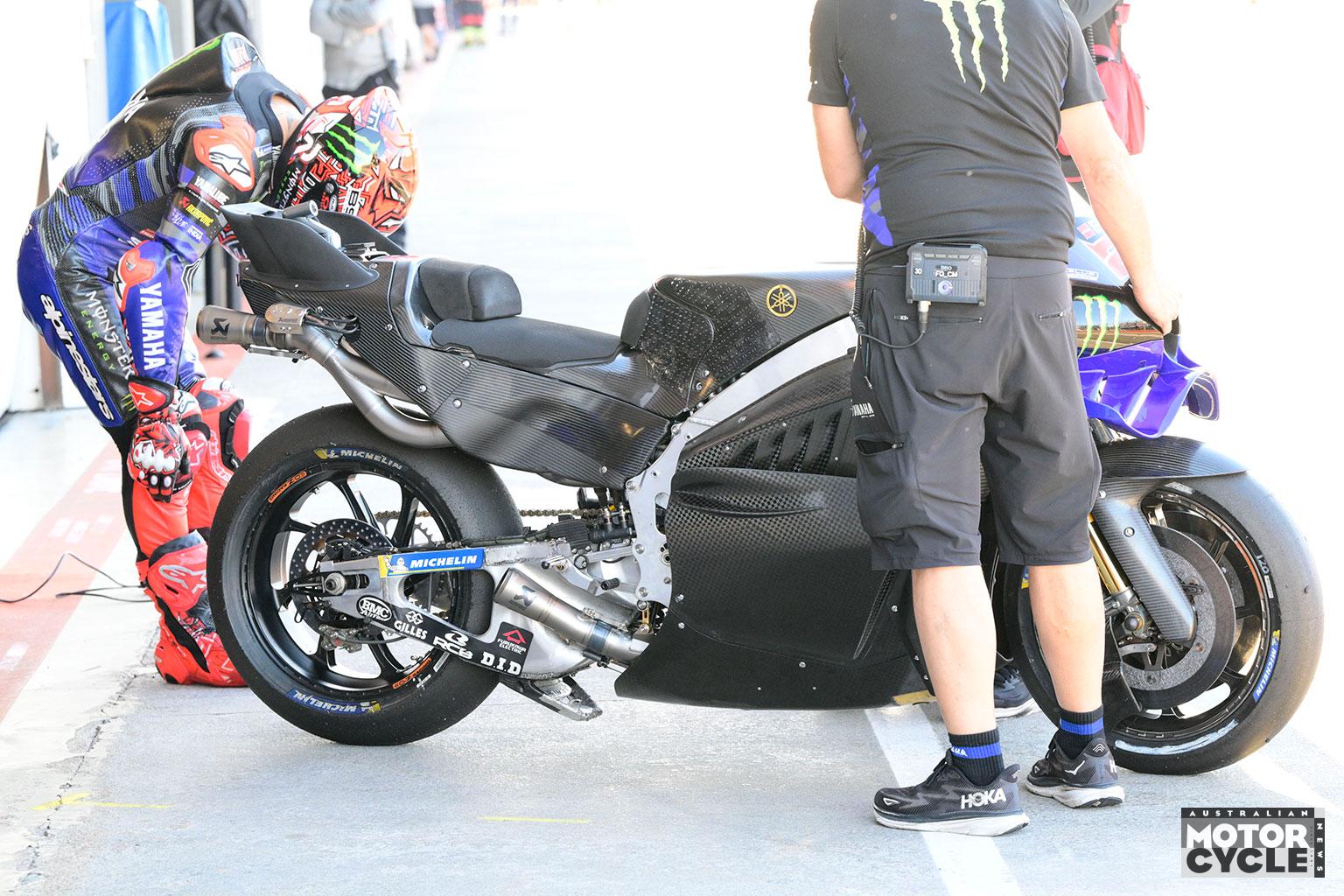
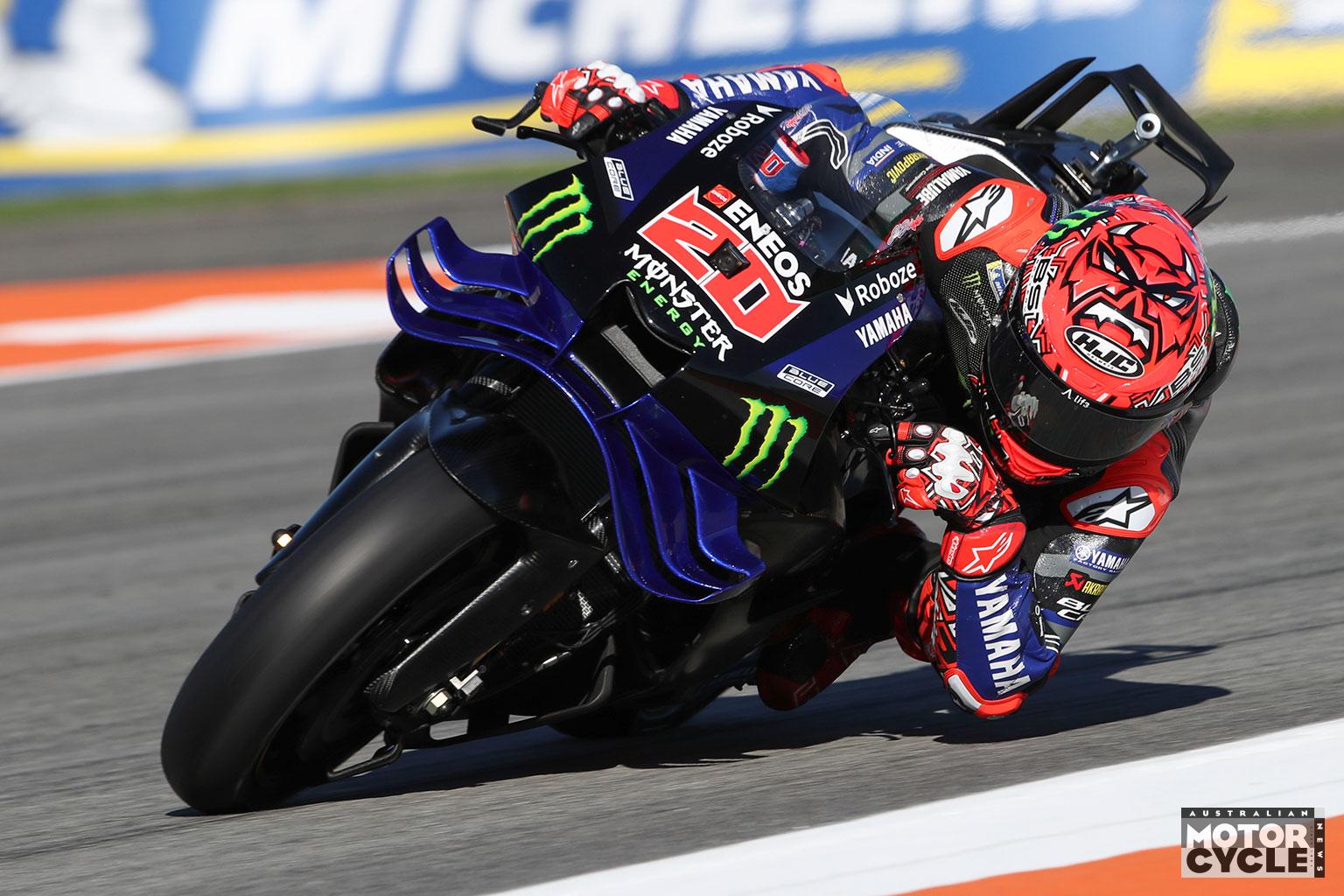
Yamaha’s new V4 bike needs a lot of development and it needs it quick. Unfortunately, they didn’t turn up with a lot of new parts in Valencia. All four Yamaha riders had one bike to test. There was a new chassis based on what they learned in Misano. But there were no updates on the engine so the bike still misses out on acceleration and especially on top speed.

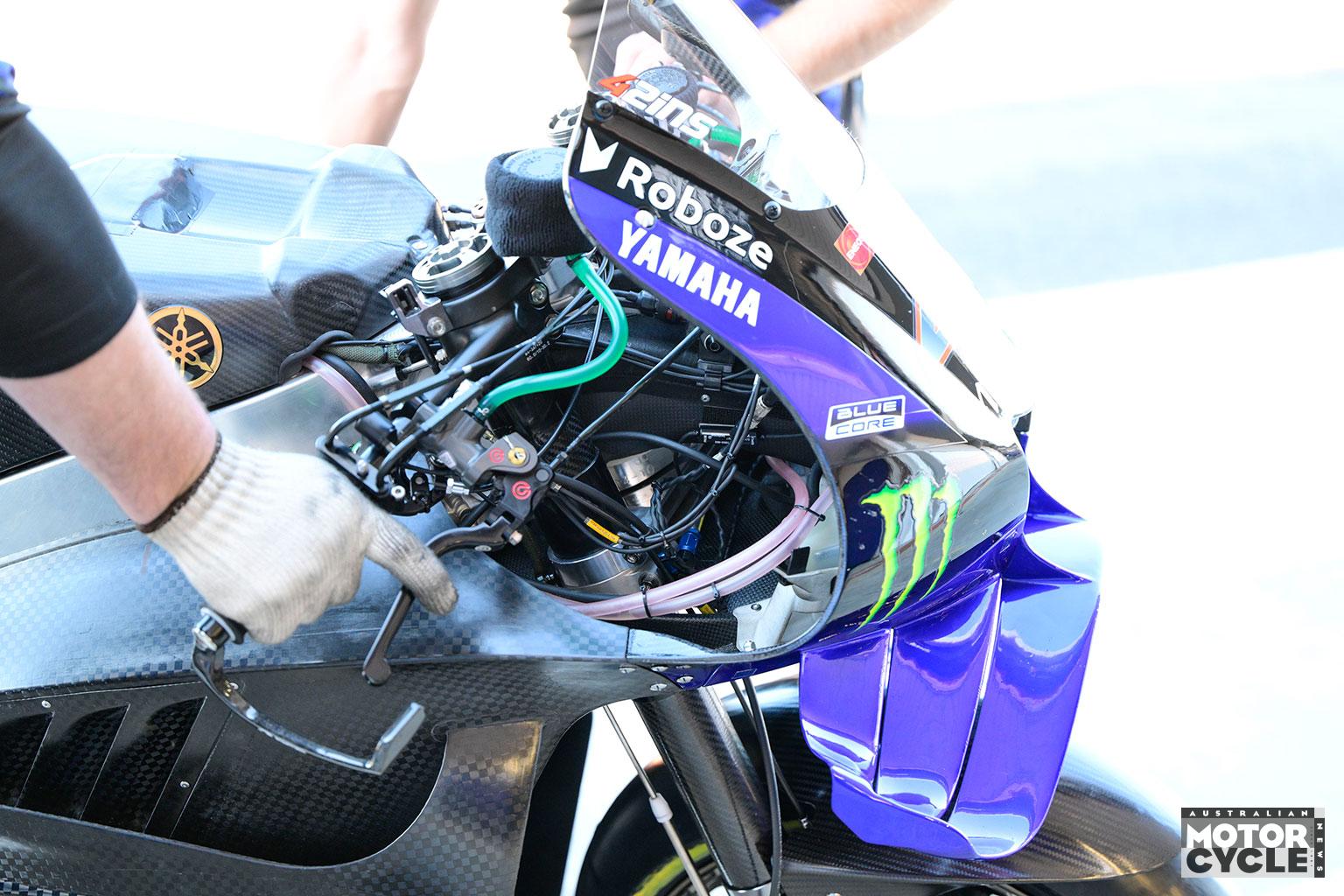
What was new was that the ‘hydraulic computer’, the module with hoses and cables that activates the rear ride height device, was now moved from the back of the bike towards the front. This could have been done in order to change the weight balance, or maybe they too work on a tuned mass damper?
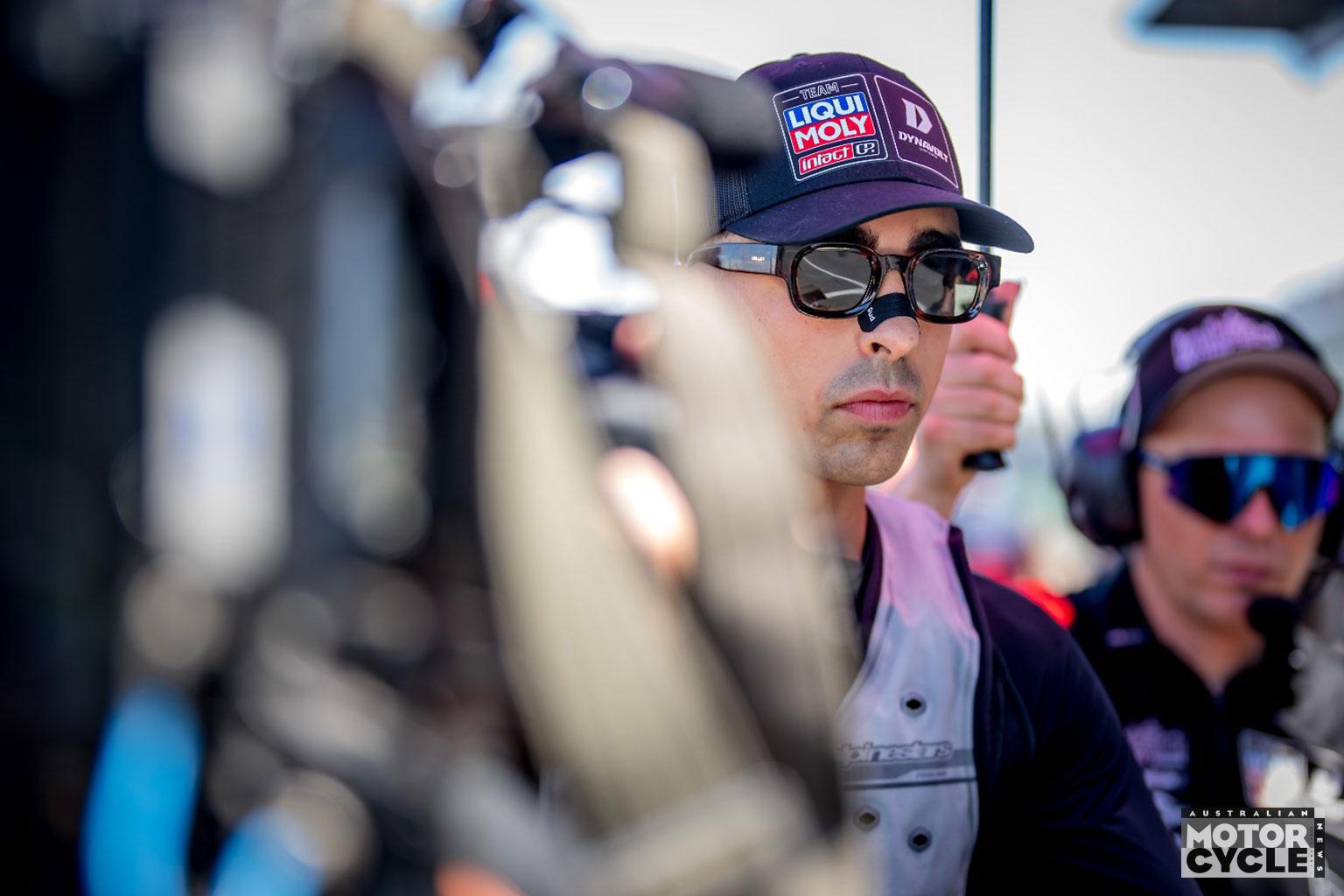
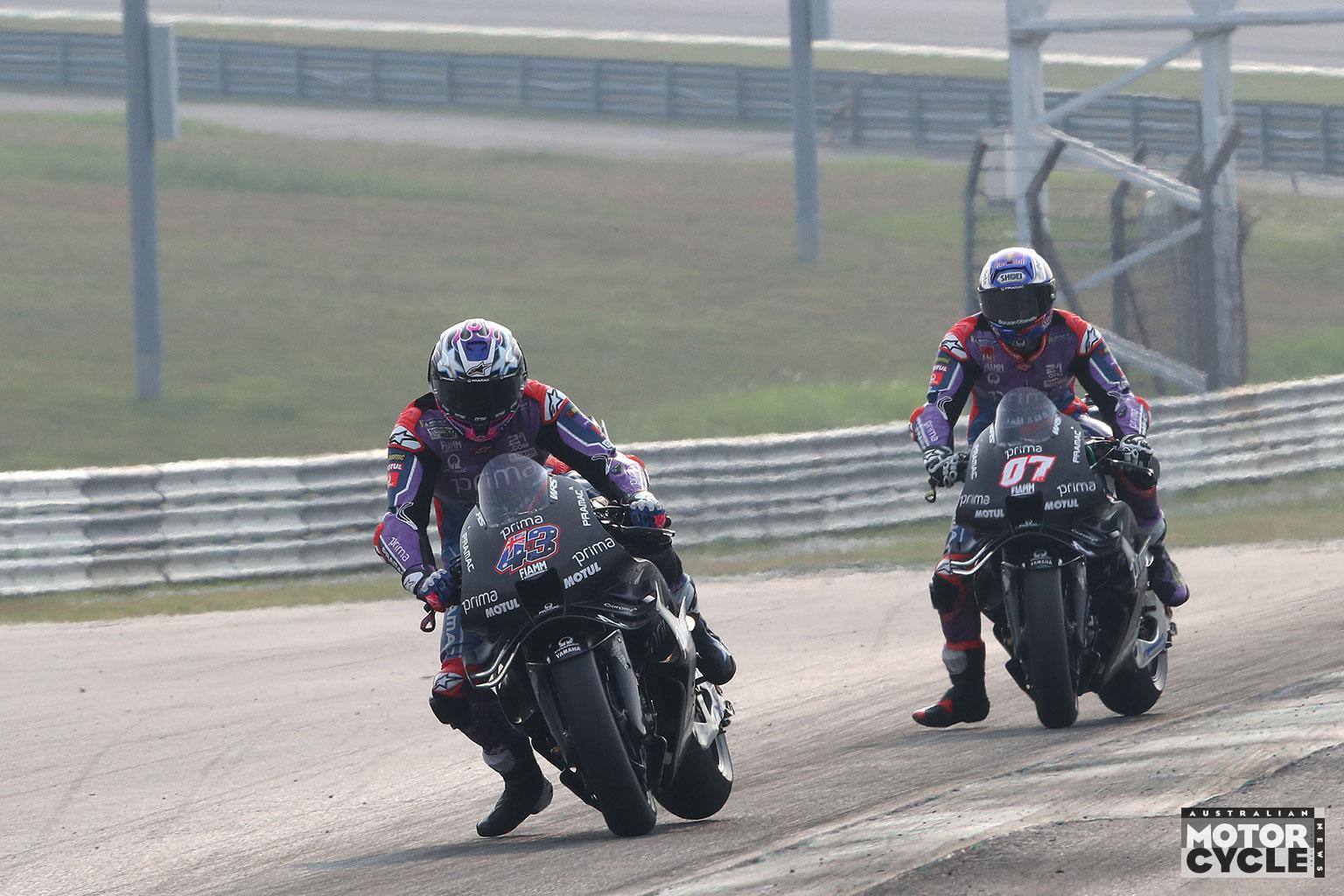
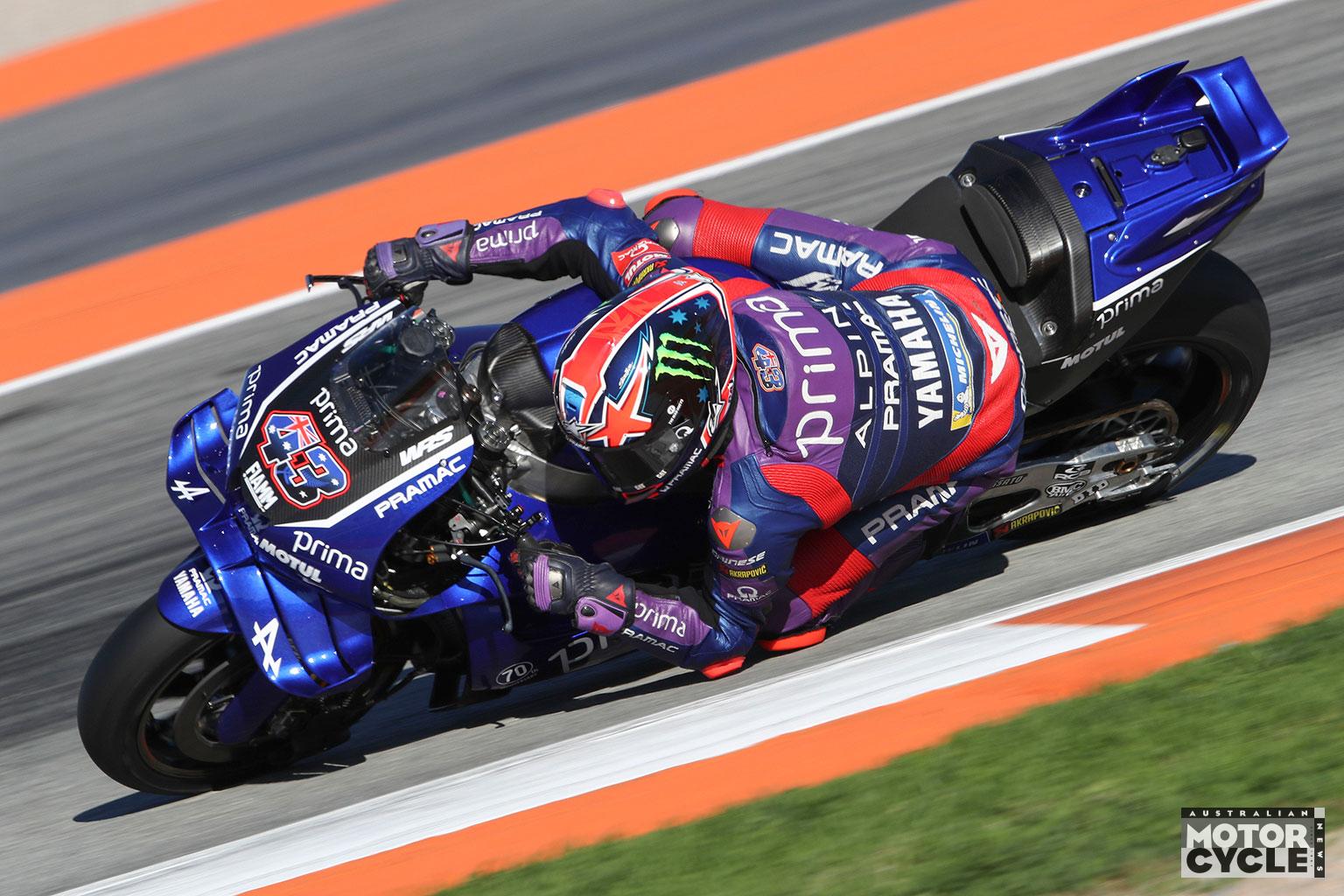
Alex Rins liked the braking, how the bike now stops. He was never keen on the old M1’s ‘all over the front’ braking. The V4 M1 now is fastest if it keeps its rear wheel on the ground, using the grip from the rear tire to stop the bike, much like the Ducati and Aprilia do it. The bike “still has Yamaha DNA in it” as Miller pointed out, but it’s also clearly still far off being competitive. The bike vibrated around mid-corner; that hinders traction, so much actually that Jack couldn’t improve his lap time when a new soft rear tire was put in.
Fabio Quartararo was carefully choosing his words when speaking with the journalists: “It’s too early to say something but I like the way of riding with the V4.” The shorter crankshaft of a V4 engine costs some stability, some natural tendency to carry corner speed, compared to the inline-4. But it somehow picks up drive when the throttle is opened a bit easier. Plus the weight distribution is so different, much more to the rear, so that the rear tire then can be used well during the braking phase.