But only in India so far…
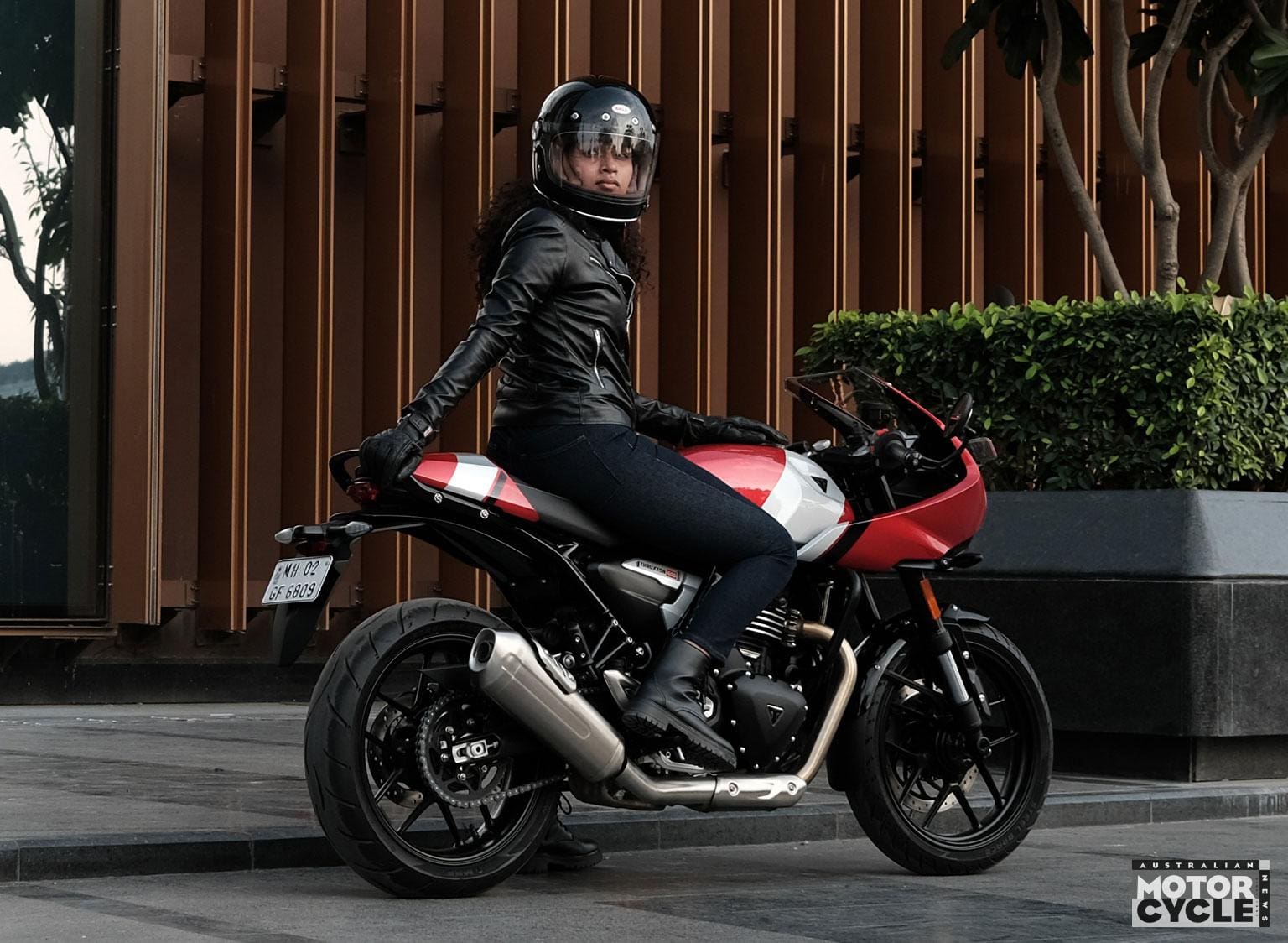
We’ve known for a while that Triumph has been planning a part-faired café-racer version of its hugely successful Speed 400 single – spy photos have been circulating for months depicting a prototype on test alongside the recently-launched Scrambler 400XC – and now it’s been confirmed in the Indian market.
Why India before the rest of the world? Because that’s where Triumph’s 400cc singles are build and, at least in part, developed with the help of the company’s manufacturing partner Bajaj. The same pattern occurred with the Scrambler 400XC that was revealed earlier this year: it was launched in India six weeks before it was confirmed as a global model. Be in no doubt, the Thruxton 400 will be getting a wider release very soon.
Although it would have been simple to screw a Speed Triple 1200RR-style nose cowl to the front of the Speed 400 along with some low, clip-on bars, and then head to the pub for an early lunch, Triumph has taken a more in-depth approach to the changes to make sure the Thruxton 400 is a distinct model and not just an accessorised Speed 400. Sure, the basics of the engine, frame and parts like the fuel tank are carry-overs, but there’s a host of subtle changes.
Notably, the engine itself, despite no change to its 398cc capacity, the bore, stroke or compression ratio, gets more power, with a rating of 41.4hp (30.89kW) instead of the Speed 400’s 39.5hp (29.4kW), arriving 1000rpm higher at 9,000rpm instead of 8,000rpm. Max torque, while still peaking at 37.5Nm, is also higher in the rev range at 7,500rpm rather than 6,500rpm as on the Speed 400.
Similarly, while the chassis still uses 43mm Big Piston forks and a rear monoshock, the nose is dropped by 5mm, with a matching reduction in fork travel from 140mm to 135mm compared to the Speed 400 that we get here. That changes the rake from 24.6º to 24.5º and reduces the wheelbase from 1377mm to 1376mm. It’s worth noting, though, that the Indian market Speed 400 has a different setup to the global version, with a lower rear suspension setting that stretches its rake to 25.1º and its wheelbase to 1386mm, so there’s a chance that the global Thruxton 400 will be more aggressively set up than the version seen so far.
The changes continue with new footpegs – higher and further back than the Speed 400’s to match the low-set bars – and a new seat and tail bodywork, including different side panels and trim around the fuel injection system. At the back, the taillight is set further forward and sits above a fender-shaped section that’s not found on the Speed 400, while the pillion seat is hidden under a humped cowl.
The Indian bike’s weight is rated at 181kg wet, which seems a lot compared to the 170kg of the Speed 400 we’re sold here, but it’s worth noting that in India the Speed 400 is measured at 179kg – presumably the result of different rules around how bikes are weighed – so the real difference between the two models is just 2kg.