With the final piece of the puzzle now in place, the R family feels complete
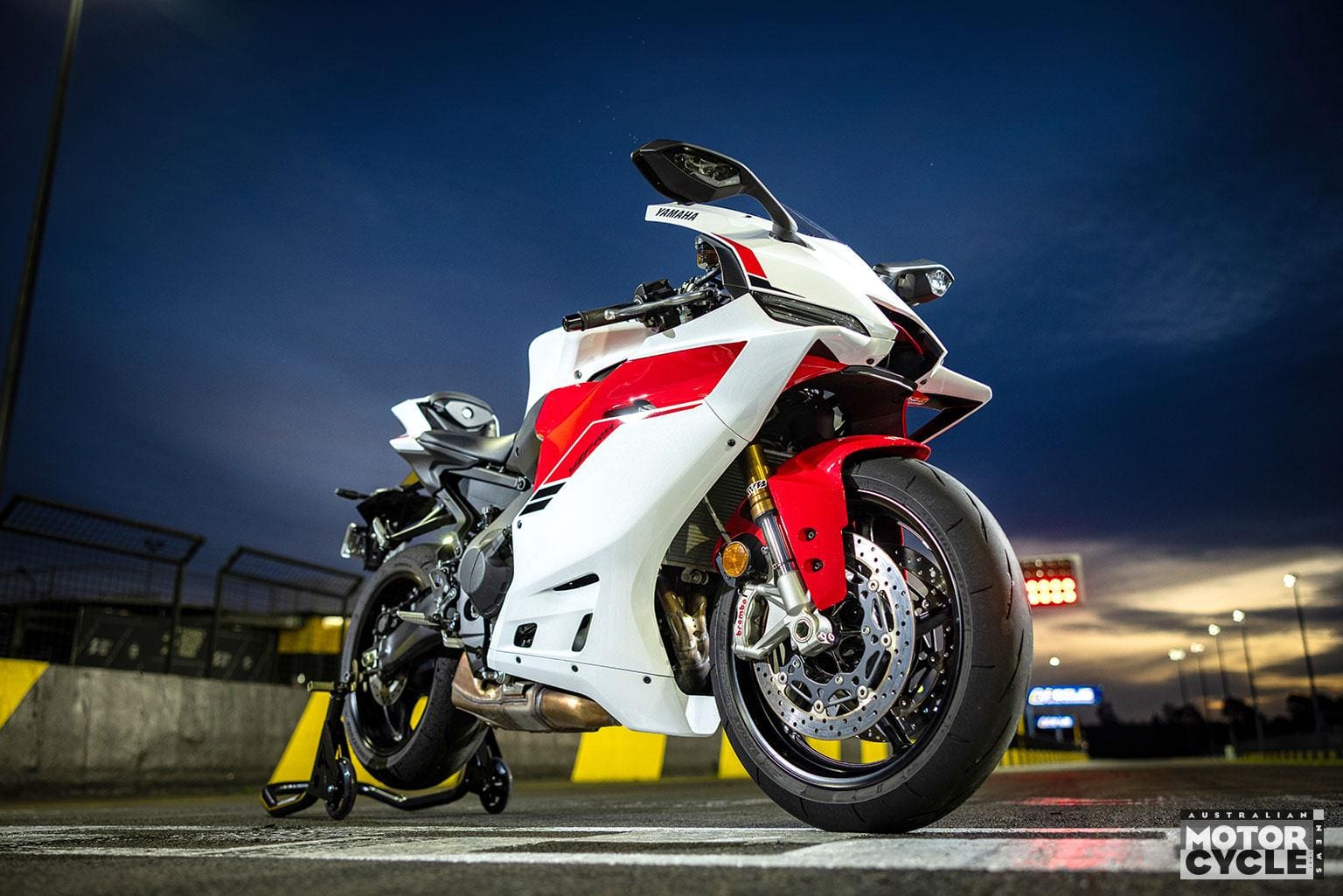
The YZF-R9 has finally arrived on our shores and slots itself perfectly in between Yamaha’s 689cc YZF-R7 and the booming 998cc YZR-R1. For us Australians even more so, as in 2024 the YZF-R7 was the top-selling road motorcycle in Australia. To top that off, the YZF-R3 was the second-highest selling bike in the sports category. With the high revving and super focused YZF-R6 quietly and sadly slipping away to ‘track only’ status, there was a gaping hole between the R7 and the R1. It would almost be socially irresponsible to suggest blue-blooded budding racers move from the R3 to the R7 and then step right up to the R1. Well, rest easy Yamaha fans, the R9 nestles perfectly into that void.
The R9 heralds the new era of supersport. World Supersport (WSSP) regulations have been updated to move with the market’s desire for more user-friendly platforms that can be ridden on the road as well as the track. The R9, in its first year of racing, has already won over 60 per cent of the WSSP races so far – so it’s safe to say that it has hit the ground running. While track performance is a key area of the R9’s development, the design brief clearly states a 50 per cent road and 50 per cent track target. It’s only fair that we give it the once over at both disciplines.
FANTASTICALLY FAMILIAR
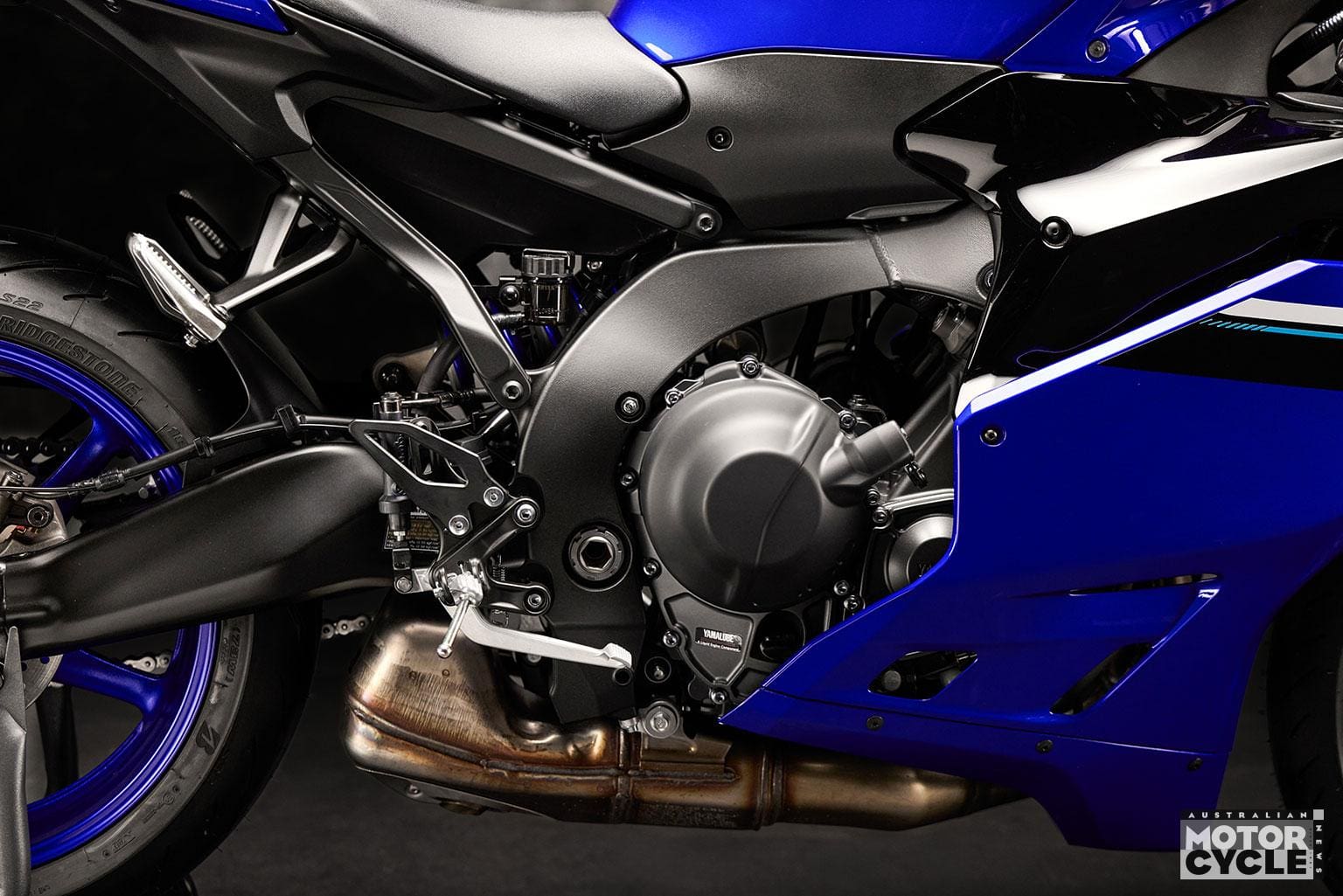
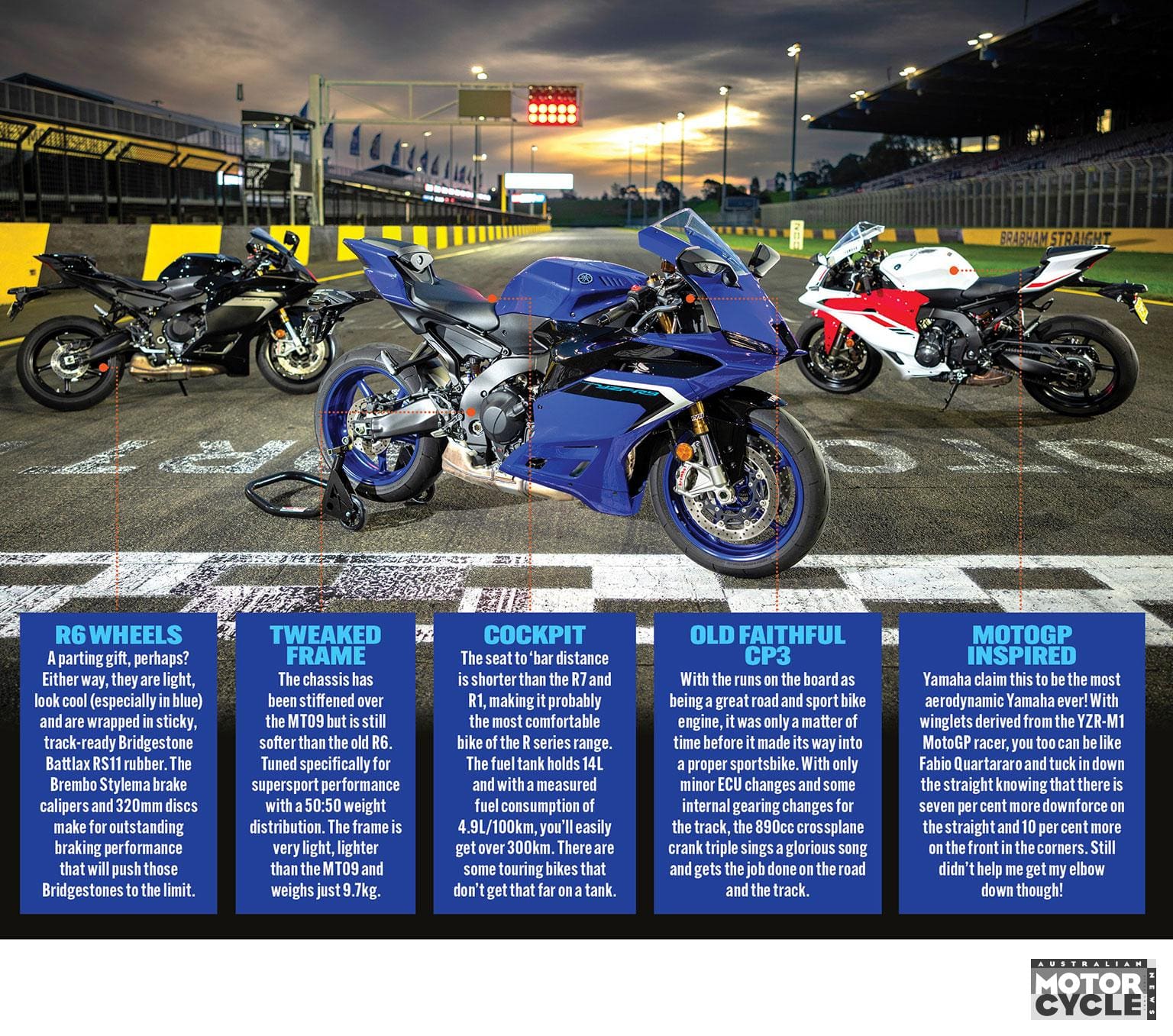
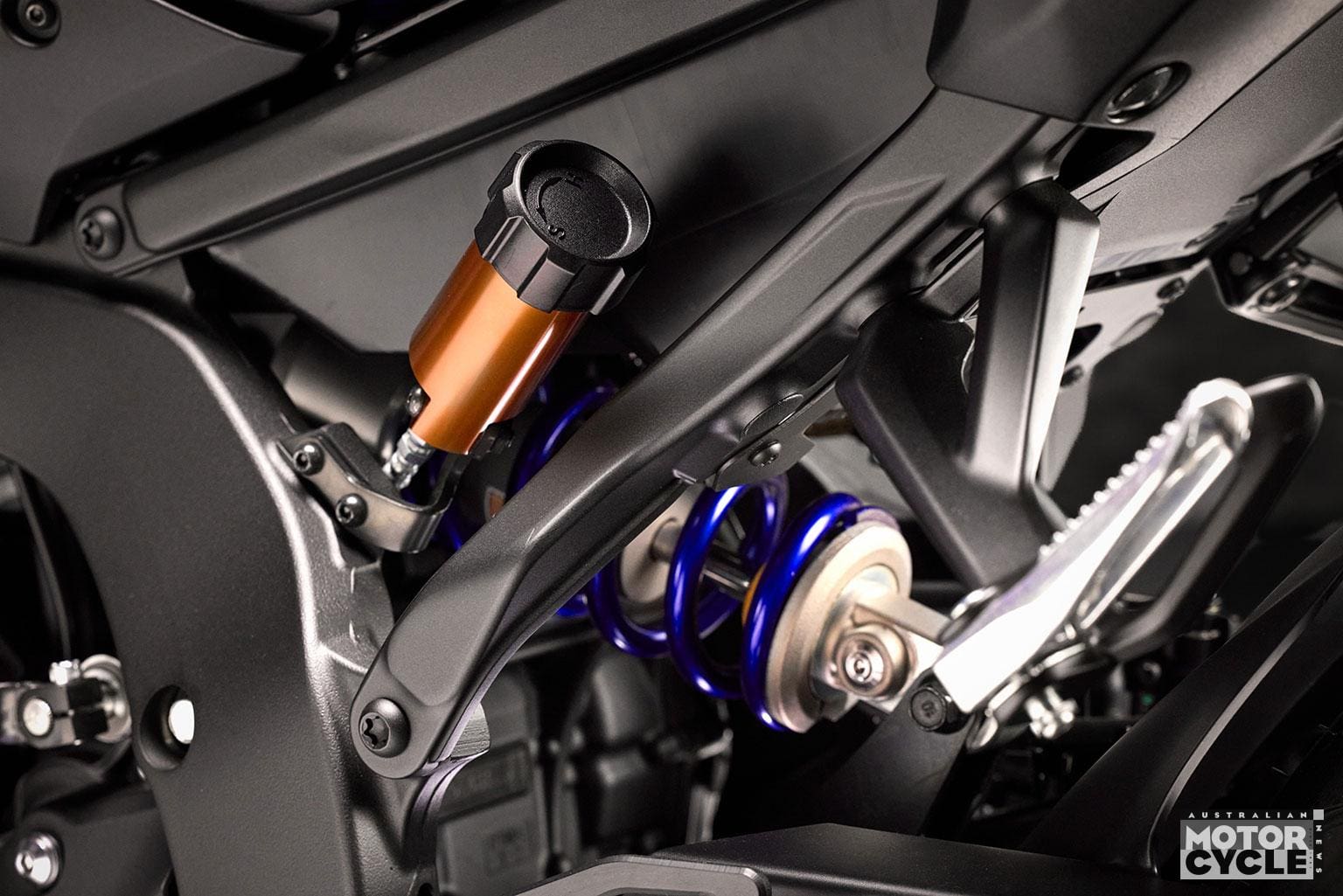
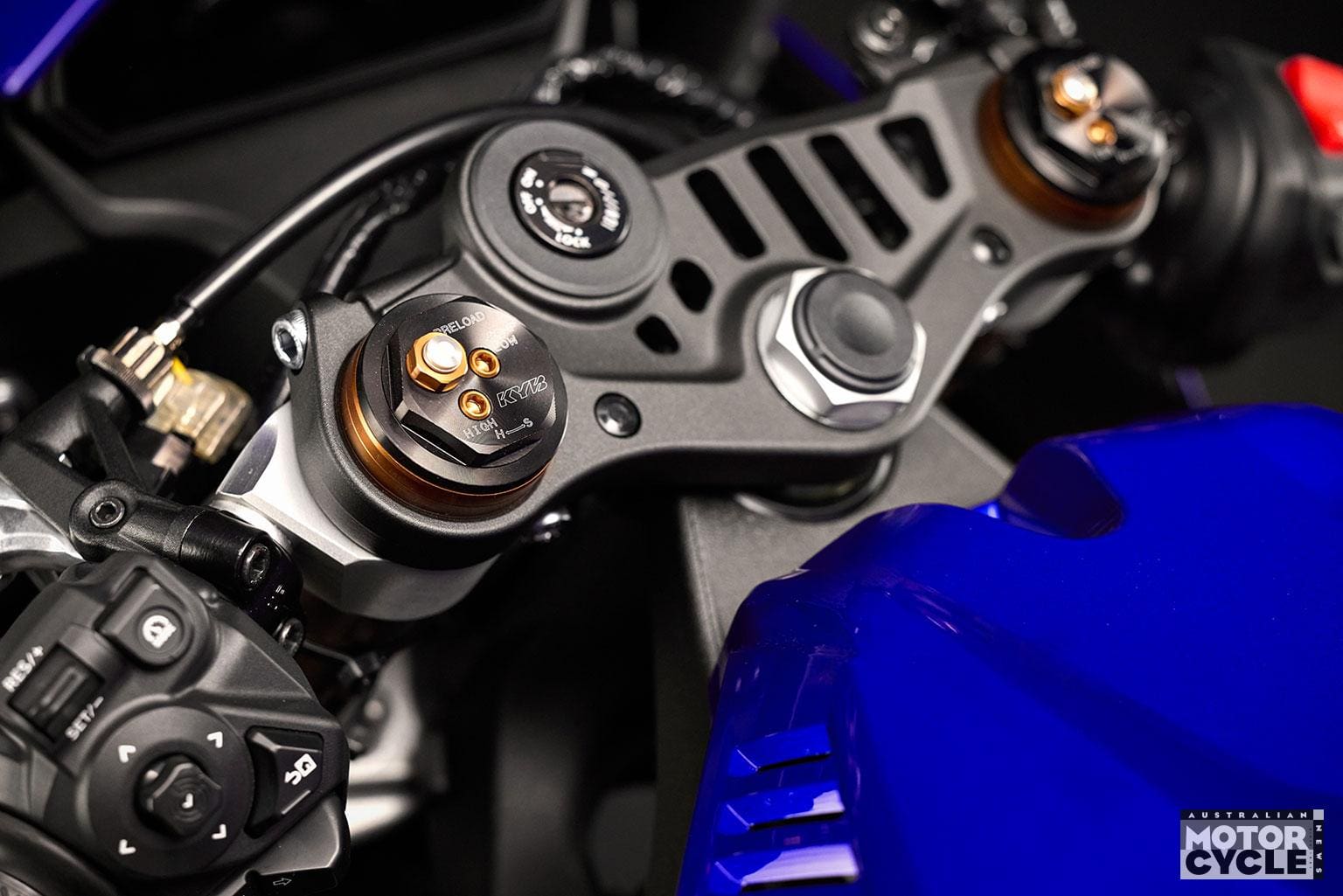
Keen eyes will see similarities between the MT-09 and XSR900 Deltabox chassis and the new R9. It does look familiar but there have been a few tweaks to make it more supersport capable and deliver a desired 50/50 weight distribution with the right amount of stiffness and flex. The frame is stiffer and lighter than the MT-09 at 9.7kg, but has more flex and is lighter than the outgoing R6. The suspension is high-spec KYB gear. The fork looks as if it’s straight off the base model R1, but I can’t confirm. It has high and low-speed compression, rebound and preload adjustment at the top of the fork. The rear shock also has high and low-speed compression and rebound adjustment. It also features a hydraulic preload adjuster for quick adjustments by hand. The fork is shorter overall than the XSR900, making its steering angle steeper for faster changes of direction while increasing tyre load at the front.
Yamaha’s delightful and reliable 890cc crossplane crank triple (or the CP3) feels like a gift that keeps on giving. It seems that it shines bright in anything Yamaha throw it at. Don’t get too excited; it remains mostly unchanged from the MT-09 engine but has had an ECU re-map that’s been tuned for supersport riding, and had the gearing improved for track use. It still produces oodles of usable torque and mid-range power, 87.5kW (117hp) and 93Nm to be exact.
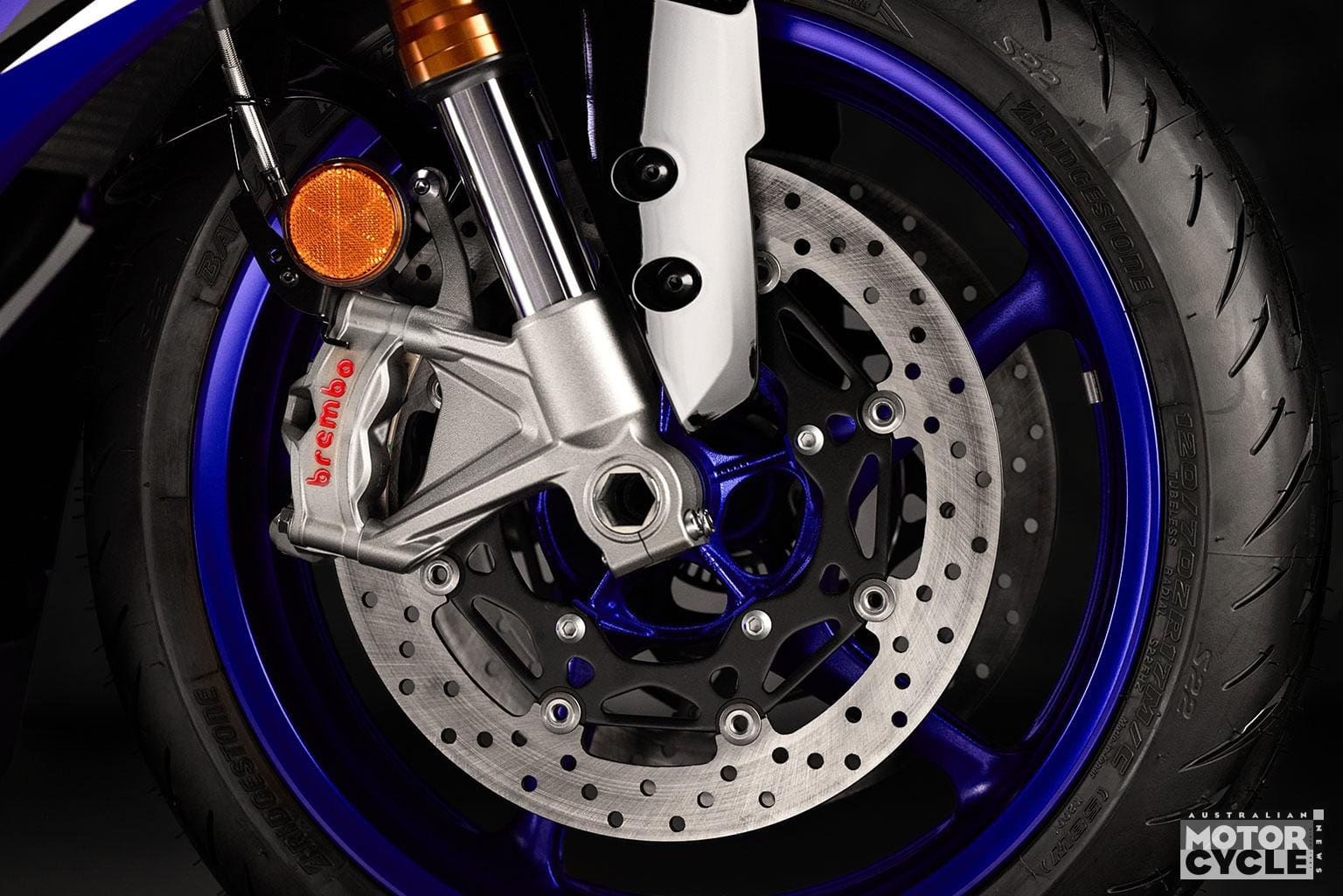
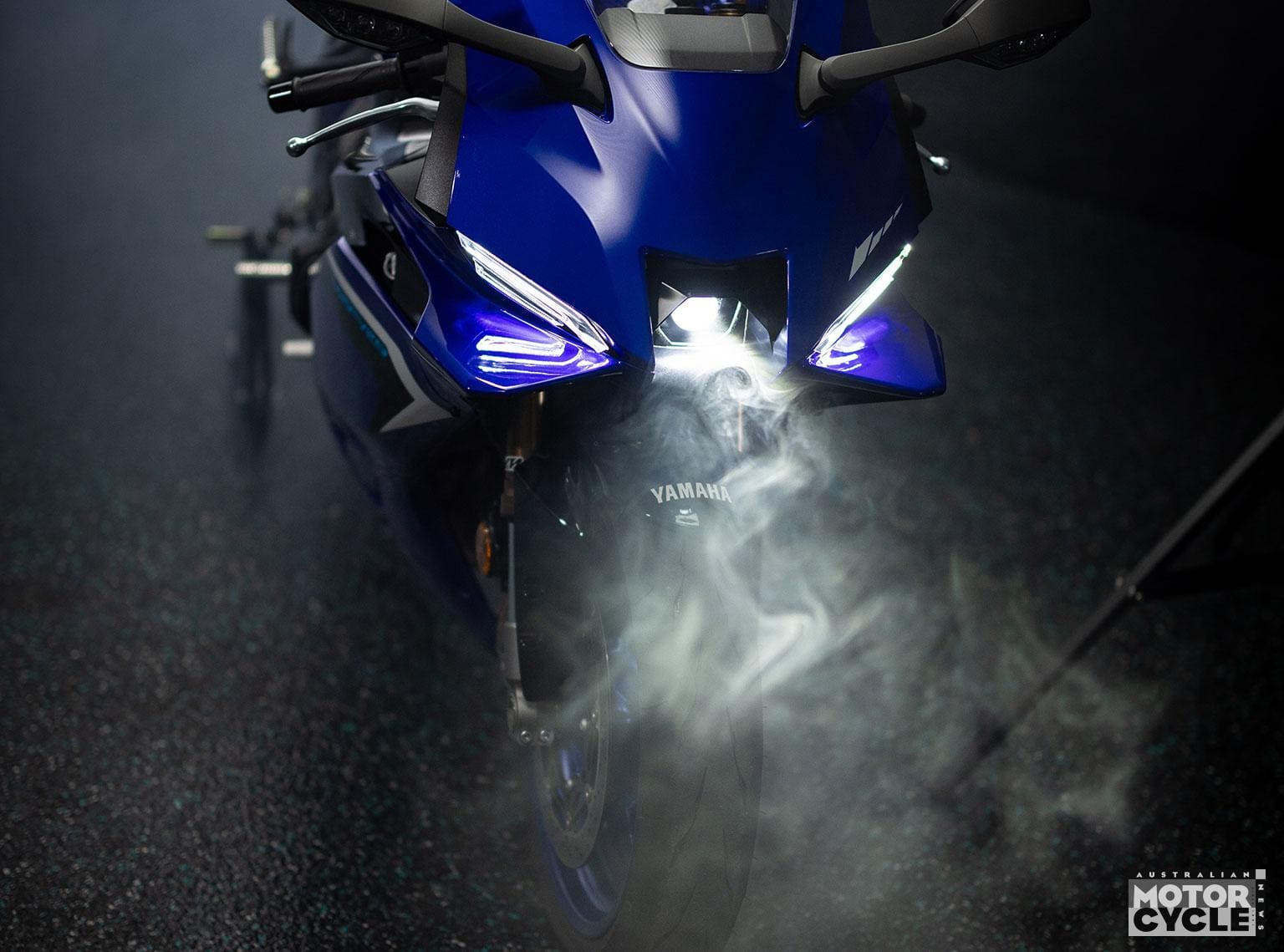
The R9 is fitted with the latest Yamaha electronic tech derived from the R1. A Bosch 6-axis IMU is the eyes and ears of the operation, making sure crashing is kept to a minimum. The brakes feature Brembo Stylema calipers with performance-focused brake pads and are squeezed by a Brembo radial master cylinder at the other end of braided lines. These same brakes are found on high-performance superbikes, giving the R9 all the braking performance you could ever need on the track. The fairing is the most aerodynamic of any Yamaha to date and even gets MotoGP-inspired winglets that add seven per cent extra downforce in a straight line and 10 per cent in corners. If you ask me, I reckon it looks fantastic too.
AT THE TRACK
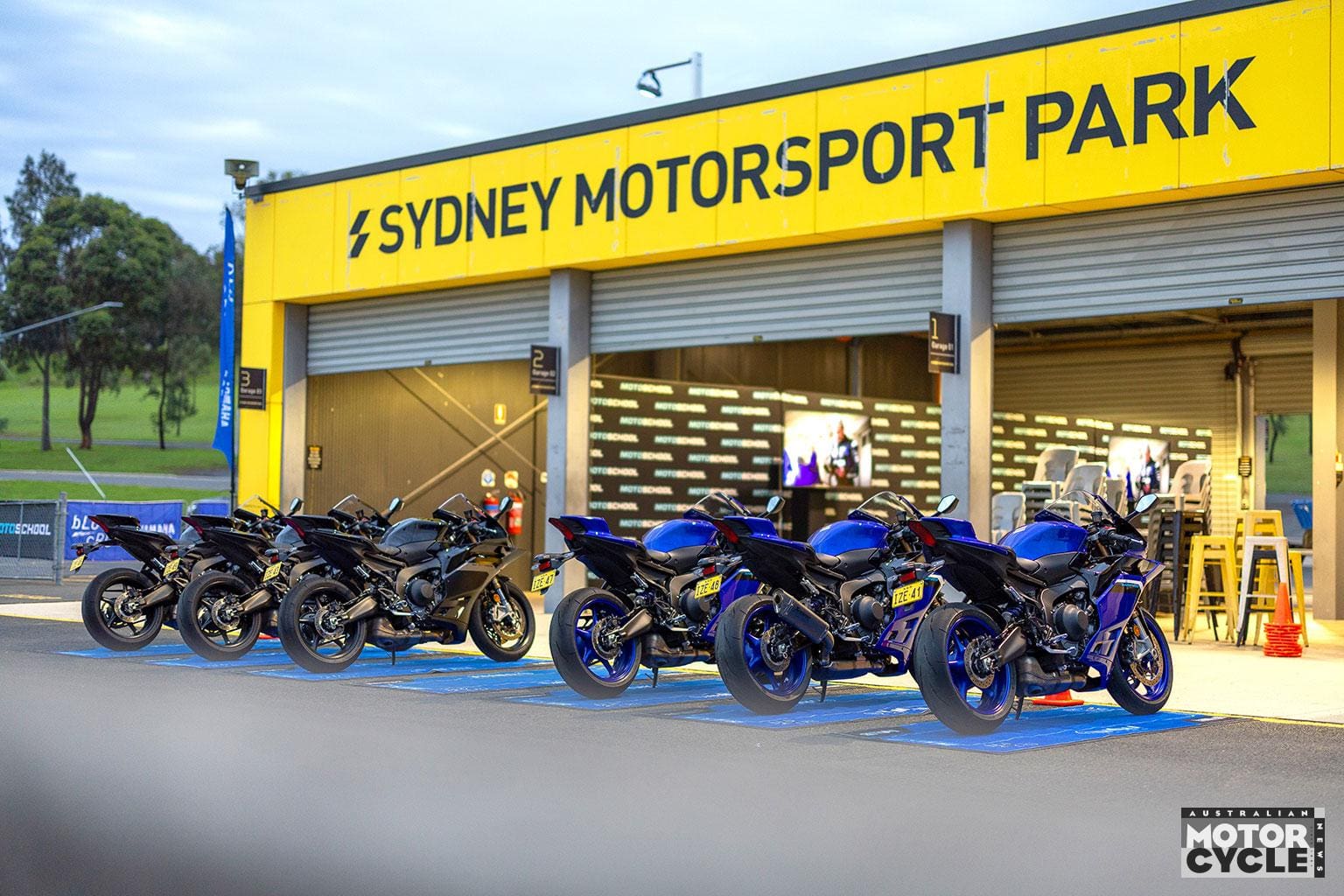
The sun is peeking through the clouds, birds are tweeting and the coffee is hot on a cool morning at Sydney Motorsport Park. The 13-corner, 1.8km layout known as the South Circuit will be our playground. The toys are on race stands and I watch on frothing as they’re given the final once-over by the Yamaha technicians. There are no tyre warmers, just brand-new Bridgestone RS11 rubber to warm up and scrub in. After a quick briefing it’s time to get the helmets on and head out on track.
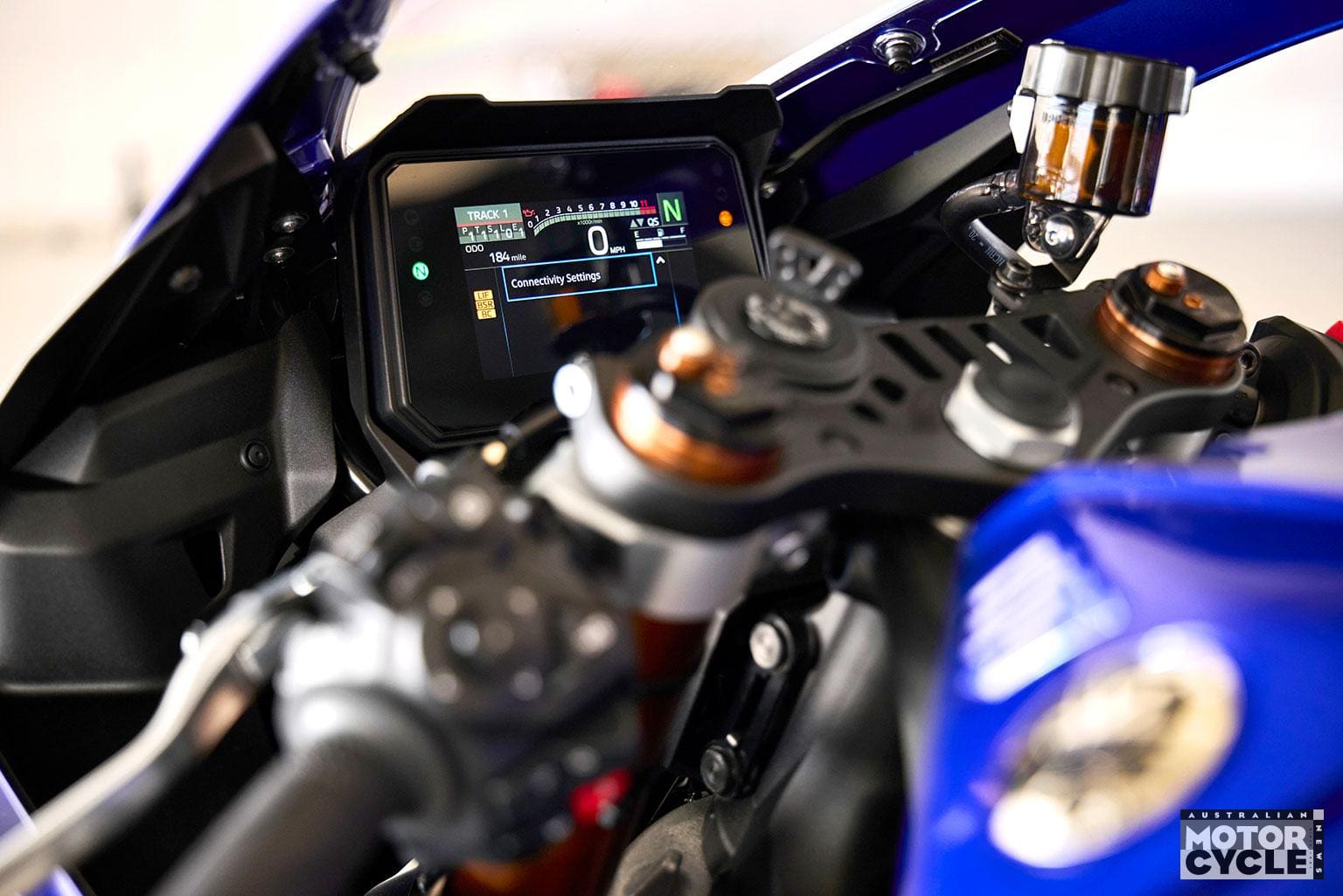
I jump on, adjust the levers and set about engaging track mode on the dash. The interface is the same at the MT-09 and XSR so familiar to many and very easy to use. It only takes a few clicks and flicks of the joystick to get through the settings. In track mode, the current settings are laid out across the bottom of the screen, so adjusting each one is piss easy.
I start off with the power on mode 2, which gives full power but a softer throttle feeling. Traction control on 3, slide control on 1, wheelie control off (who needs that?) and engine brake on 1. That’ll do me for now.
The bike feels pretty natural as soon as I jump on; there’s a bit of weight on your hands but the reach to the ‘bars isn’t far. In fact, the reach from seat to ‘bars is actually less than the R7 and the R1, but the ‘bars are slightly lower than the R7. I quite like the riding position. On the MT09 that huge clutch cover interfered with my boot when I roade sometimes, but on this bike it doesn’t seem to be an issue. The suspension feels a bit soft in the rear while bouncing on the seat, but I’ll sample it before making changes.
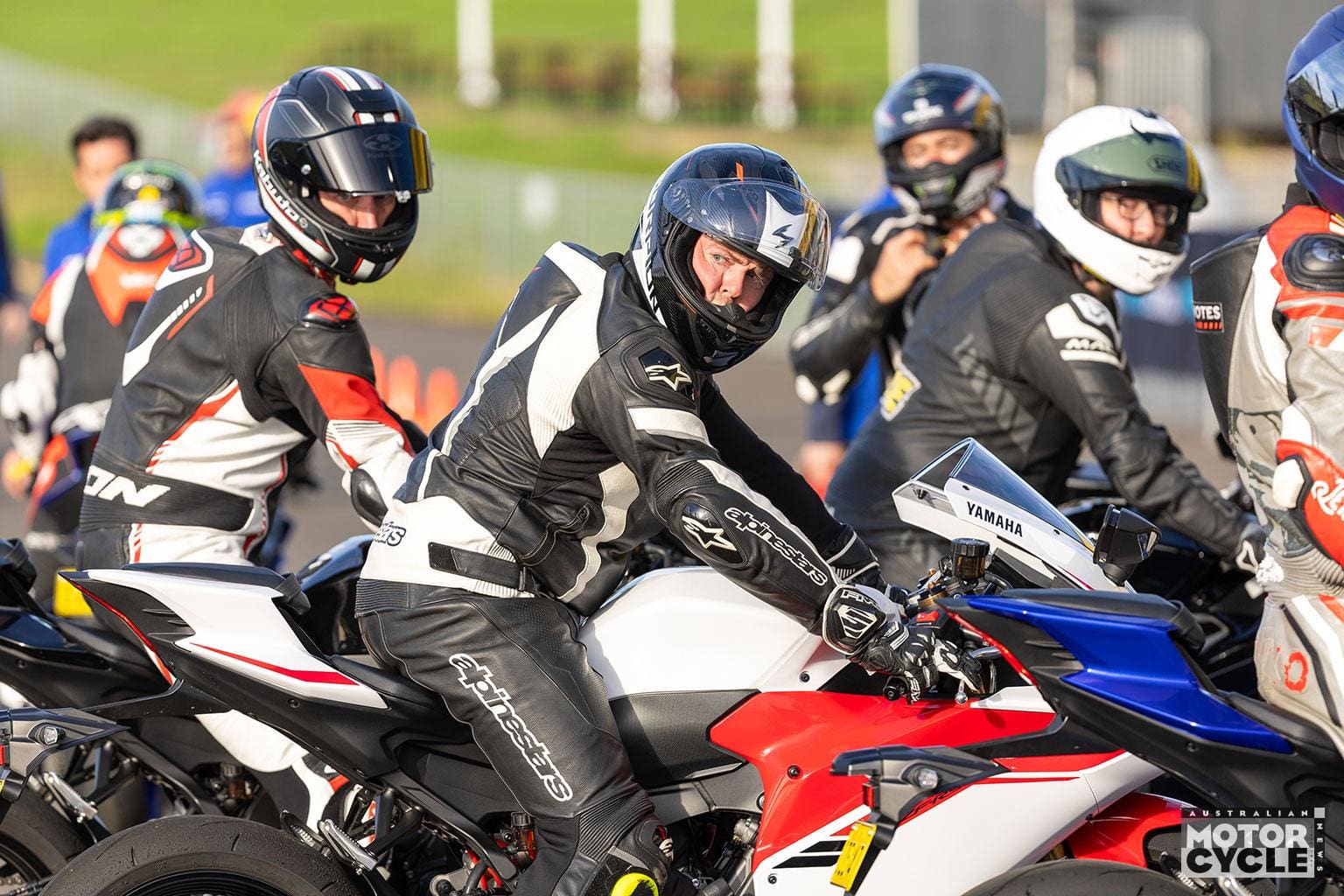
Each session starts with a couple of guided laps by the Motoschool coaches to warm up the tyres and show us the lines at a steady pace. It’s my first time on the South circuit, so I’m thankful for the guided tour and gentle increase in speed to start the day.
If you haven’t been on this SMSP layout, it’s an eye-opener. The flow is much different to the big track and perfectly suited to smaller and more nimble bikes. You take a right out of the old turn 6/7 and then begin a series of flip-flops over the hill before running downhill and into a tight hairpin. Then begins the climb back up the hill around anther hairpin before negotiating a flat-out, third-gear change of direction back onto the old track at turn 8 before braking on what feels like the wrong side of the track for another tight left, right left and back onto the old track after turn 4. It sounds busy, and it is. There’s absolutely no rest on this layout.
After the tour by the Motoschool coach, I set about getting a feel for the R9’s handling and gear selection for the circuit. It’s immediately noticeable how forgiving the R9 can be on the track. The more aggressive (than the XSR900GP) steering head angle makes the bike react very well to line changes when correcting mistakes or making overtakes. It feels very planted and surefooted while braking deep into the apex. Through the flip-flops, the R9 flings from knee-down on one side to knee-down on the other with precision and haste – which is handy when the ripple strips look like they’d rip your knees right off if you introduced yourself to them. The bike is even popping small wheelies in the process as the suspension unloads while changing direction.
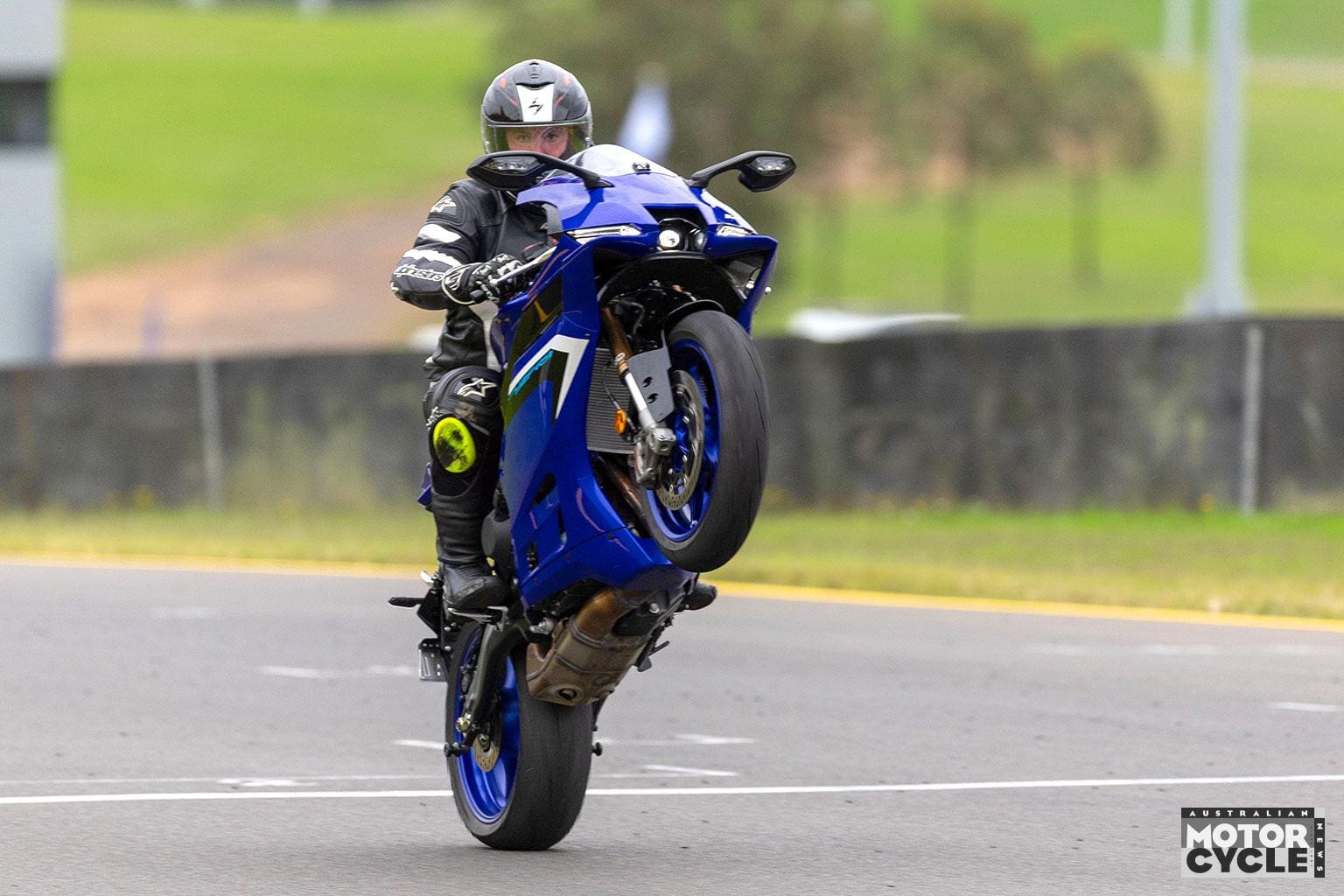
The engine is an aural masterpiece even, with the stock muffler down underneath. I love the way the revs rise and fall as you go from one edge of the tyre to the other with the throttle open; it’s a real buzz. Kind of like the chicane at Mugello on a Moto2 bike with less speed and talent, but with a touch of scraping coming from the sidestand or muffler, I’m not sure. The intake roar from the R9 is divine and I’m almost ready to forgive Yamaha for putting the 600cc screaming R6 out to pasture as I work the torque curve out of the corners and up the short straight kissing the rev limiter. I do wish it revved just a little bit more however.
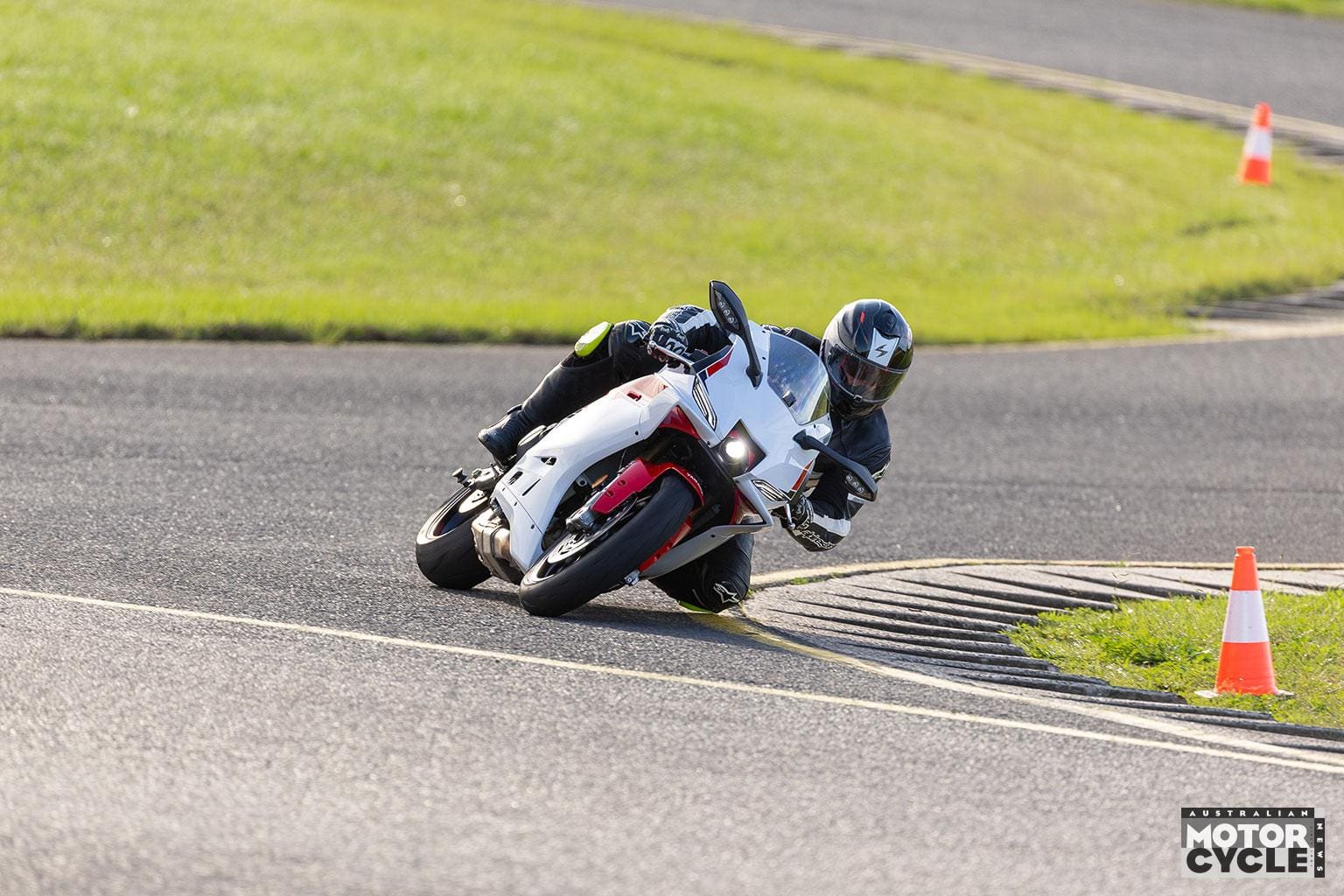
As I’m getting up to speed, I find myself changing back to second gear while entering the 90-degree turns and loving the feel and sound of the engine braking – but then I’m hitting the rev limiter very early on corner exit. Making all these gear changes is fine for the bike as the quickshifter is flawless in its execution, but my leg is getting sore from all the up and down.
During the break, we debrief with the Motoschool coaches and I start thinking that I was overriding the bike, using the gearbox too much and losing time. Time to address.
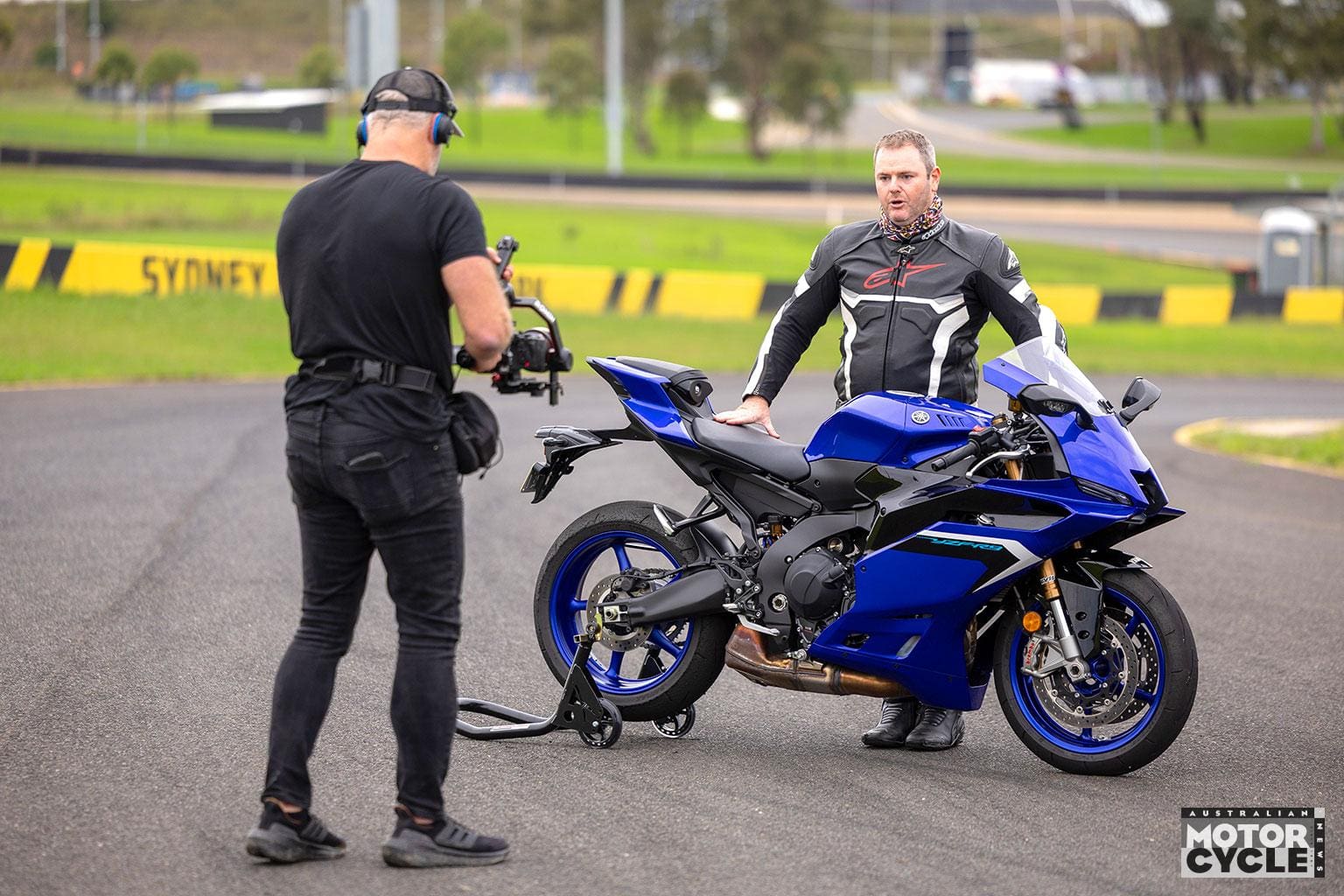
For the next session, I add two full turns of preload to the rear to help hold the rear end up and give me a little more ground clearance on the fast change of direction. I move the throttle map to mode 1, which is the most aggressive, reduce traction control down to level 1 and decide to try and use third gear on the 90-degree corners. This will mean I only need to change down to second for the hairpin at the bottom of the hill, then up to fourth briefly, once per lap…
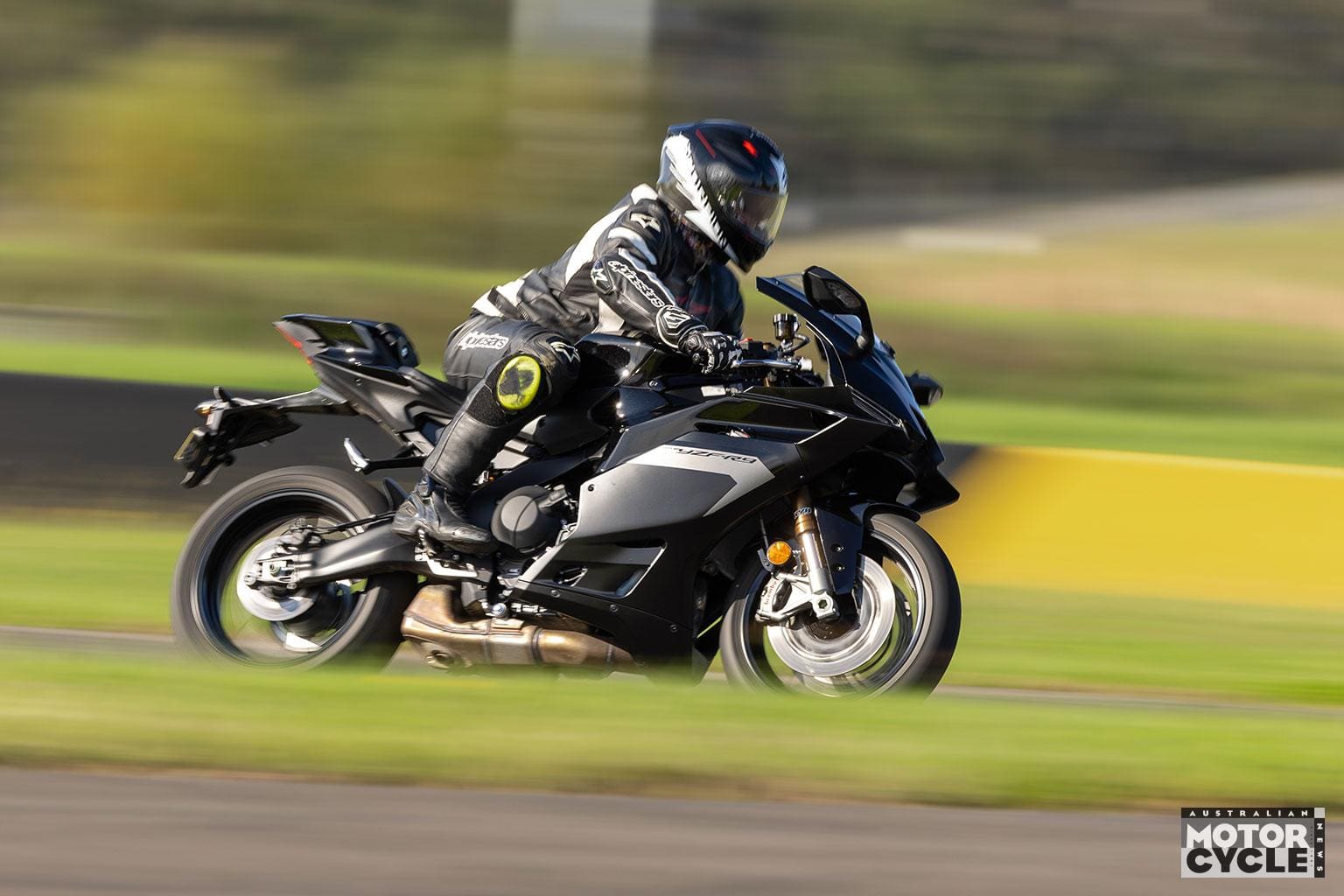
Small changes equals big success; I’m immediately two seconds faster per lap! The R9 loves to play in the midrange, so running it hot into corners a gear higher, using more rear brake and driving out with the torque makes it exit corners with more oomph than outright horsepower. This is what sets it apart from the old R6 – the power curve is more useable and easier to exploit on the R9.
For the remaining sessions before the rain comes into play, I concentrate on pushing deeper on the brakes and getting on the power earlier, and the R9 just keeps gobbling it up. I manage to get the times down to a 1:02.5 lap, which I am really impressed with. Yes, I would love more power, but I’m definitely not missing out on fun without it.
ON THE ROAD
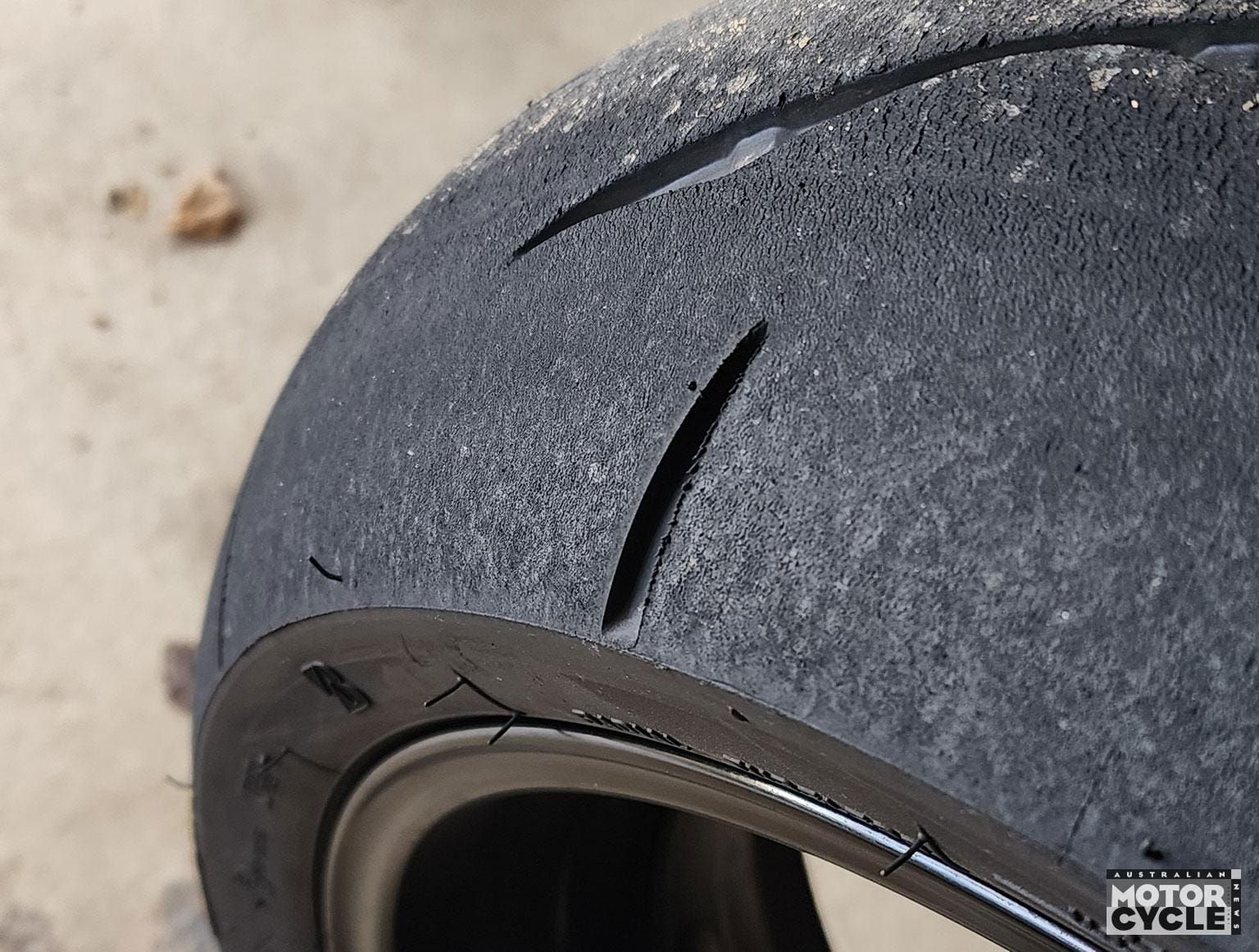
Without even needing to adjust a clicker, the R9 is ready for road duty straight after a track day, so long as you don’t overindulge and fry a tyre on the track. During the commute, the R9 feels like I’m riding an MT09 but with lower ‘bars. It’s light and manoeuvrable in the traffic and comfort is reasonable. The clutch is light and the brakes only need a light caress to pull up for a red light. It even has cruise control for those boring stretches.
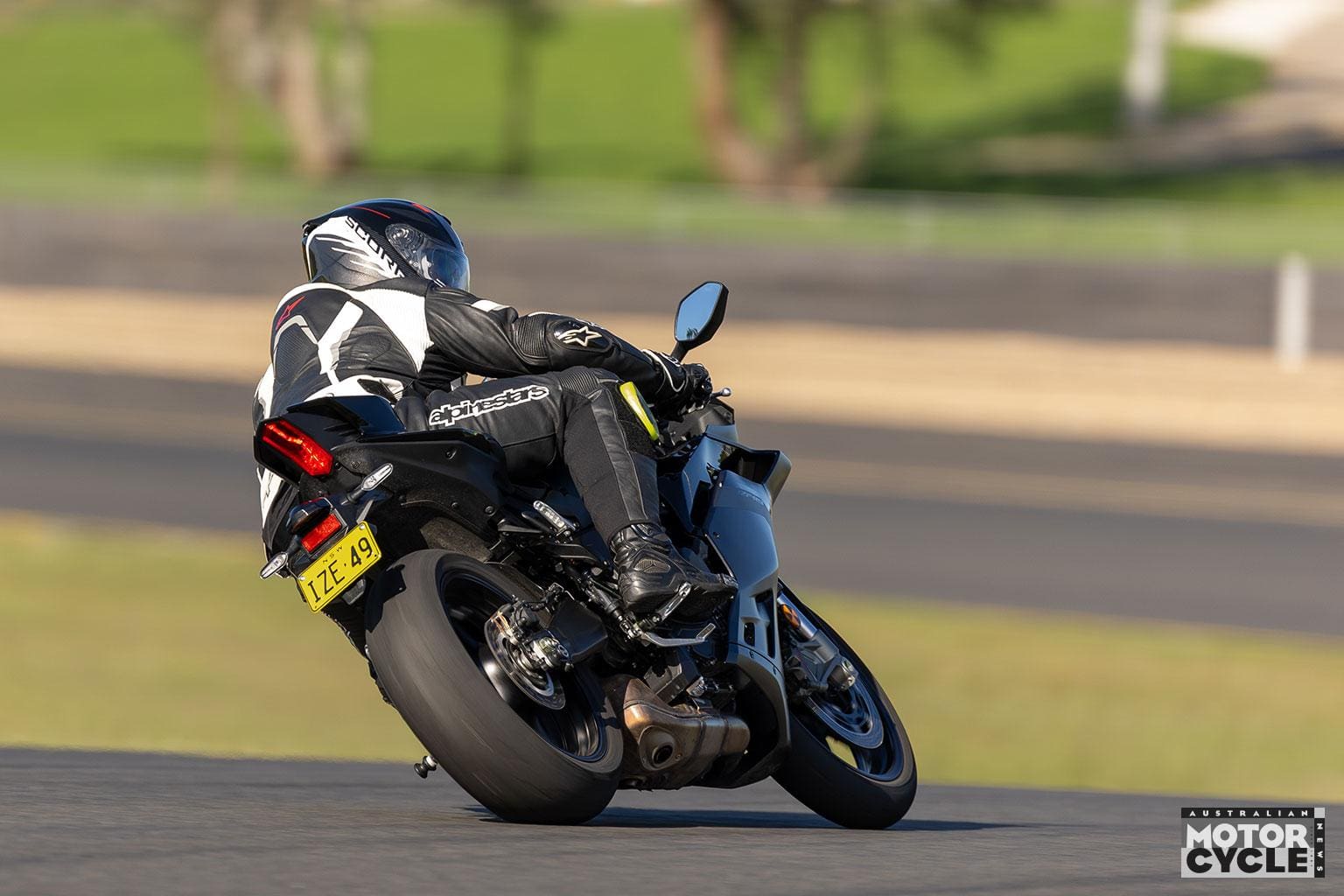
There’s room on the seat to move around and you can see out of the mirrors. What else do you need? Well, I’d skip the idea of taking your spouse for a ride (if you like them); the pillion seat is tiny. But pillions only slow ya down anyway, right?
Out in the twisty backroads, the R9 comes into its own and you remember that this bike was built with performance in mind. The suspension that felt a little soft at the track? Well, all of a sudden, it is perfectly suited. It’s as sharp and direct on the road as it was on the track but it can soak up bumps too, thanks to the high-speed adjustable fork and rear shock. I take a couple of clicks off the high-speed damping and loosen the preload for better recovery from the bumps. Other than that, I don’t feel like it needs anything… well, maybe a sweet exhaust system for a bit more sound.
The 50/50 design brief is clear when you can ride with confidence in the twisties; even if the surface isn’t perfect, the chassis feels direct and controlled but also forgiving at the same time. The engine is happy to ride the torque curve without having to rev the hell out of it. It just feels so well balanced and does not get overpowered by the engine.
The R9 is simply sweet. It isn’t by accident that it slips right into that sweet spot between the YZF-R7 and the YZF-R1.
✅ PROS – Sweet engine, sure-footed suspension on road and track, looks the business
❌ CONS – A few more revs would be nice
GIZMOS GALORE
The 5inch TFT dash feels more like a built-in computer than just a bike dash. While it controls and displays all the vital information, it also has a few tricks up its sleeve. With full Bluetooth integration as standard, you don’t need to part company with your hard-earned for the extra goodies. With the help of a few apps, you can really get stuck into it.
With the Yamaha Y-connect app, you can keep track of the bike’s maintenance requirements, see where you parked it, review ride logs that show things like speed, fuel consumption and route taken etc. Then, while away from the bike, you can set up your own custom riding modes with your preferred power map, TC, launch control, slide control, engine brake control etc. Then, when you get the bike to go for a ride, you can upload those settings and select it from the bike’s menu.
This app also allows you to set up lap timing via GPS so you can have live timing on your dashboard while on the track. Another cool feature is the virtual pit board. If you have a mate set up their phone as your ‘supporter’, they can then send you a choice of pre-determined messages from the pits straight to your bike, just like in MotoGP. Imagine giving it the beans on the track and then a message pops up telling you to ‘Go Faster’. Be careful who you give the access to, I guess.
The Yamaha Y-trac Rev app is for those wanting to get a bit more serious about racing. With it, you can delve into data acquisition, virtual pit boards, lap and split times. Your team can also display whether you are up or down on your lap times live as you’re going around the track. Then afterwards you can review your data and look for ways to make improvements.
With a bike that’s designed for 50 percent road use, it’s only fair that the road guys get some gizmos too. The Garmin Streetcross app works on many other Yamaha motorcycles also and, as a free download, you can activate turn-by-turn navigation using Garmin’s maps. The system works really well and besides Android Auto and Apple Carplay, it’s the best system I’ve used on a bike. This all displays on the dashboard and is controlled by your phone or via the left switchblock. This is on top of the built-in phone connectivity that allows calls, messages and music to be controlled on the fly if you’re using a Bluetooth headset.
but wait, there’s more
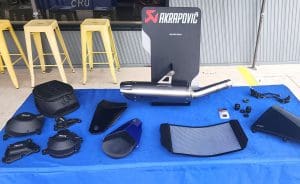
Thanks to the racing pedigree, Yamaha has a bunch of track-focused gear like GB Racing engine protection, billet footrests, swingarm bobbins, billet levers and exhaust systems. If you like the old-school look of the side-exit exhaust, there’s an Akrapovic muffler to slip straight on there. On the more road focused list are things like a sweet tail bag to go on the rear seat, radiator guard for pesky rocks, tinted windscreen, tail tidy and rear seat cover if your spouse refuses to ever go on the back. Check out the Yamaha Y-Shop at shop.yamaha-motor.com.au
the competition
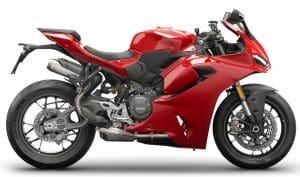
Ducati Panigale V2
$24,500 ride away
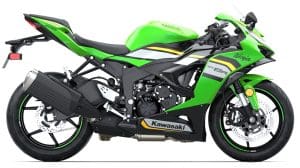
Kawasaki ZX-6R KRT Edition
$18,824 ride away
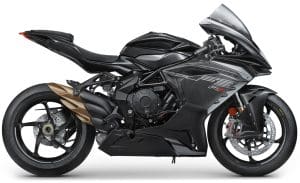
MV Agusta F3 RR
$37,695 ride away
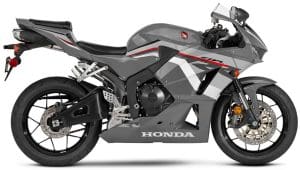
Honda CBR600RR
$29,533 ride away
SPECIFICATIONS
ENGINE
Type Inline, liquid-cooled, 890cc, three-cylinder, 12-valve, DOHC
Bore & stroke 78mm x 62.1mm
Compression ratio 11.5:1
Fueling EFI, electronic throttle control
Transmission Six-speed
Clutch Wet, multi-plate, slipper
Final drive Chain
PERFORMANCE
Power 87.5kW (117hp) at 10,000rpm (claimed)
Torque 93Nm at 7000rpm (claimed)
Top speed 240km/h (estimated)
Fuel consumption 4.9L/100km (measured)
ELECTRONICS
Type Yamaha
Rider aids ABS, traction control, cruise control, quickshift, slide control, brake control, back skip control, launch control, wheelie control
Modes Track, Sport, Street, Rain, Custom 1 and Custom 2
CHASSIS
Frame material Aluminium
Frame type Diamond Deltabox
Rake 22.6°
Trail 94mm
Wheelbase 1420mm
SUSPENSION
Type KYB
Front 43mm USD fork, adjustable preload, high/low compression and rebound, 120mm travel
Rear Monoshock, adjustable preload, high/low compression and rebound, 117mm travel
WHEELS & BRAKES
Wheels Aluminium spinforged
Front: 17in x 3.5in Rear: 17in x 5.5in
Tyres Bridgestone RS11
Front: 120/70 ZR17 (58W)
Rear: 180/55 ZR17 (73W)
Brakes Brembo
Front: Twin 320mm floating discs, Brembo Stylema monoblocs, Brembo radial master cylinder
Rear: Single 220mm disc, single-piston caliper
DIMENSIONS
Weight 195kg (wet, claimed)
Seat height 831mm
Width 706mm
Height 1181mm
Length 2079mm
Ground clearance 140mm
Fuel capacity 14L
SERVICING & WARRANTY
Servicing First 1000km
Minor 10,000km
Major 20,000km
Warranty Two years, unlimited km
BUSINESS END
Price $23,199 (Ride away)
Colour options Team Yamaha Blue, Matt Black, Intensity White/Redline
Contact yamaha-motor.com.au