Radical design meets real-world performance in Italjet’s most ambitious model yet
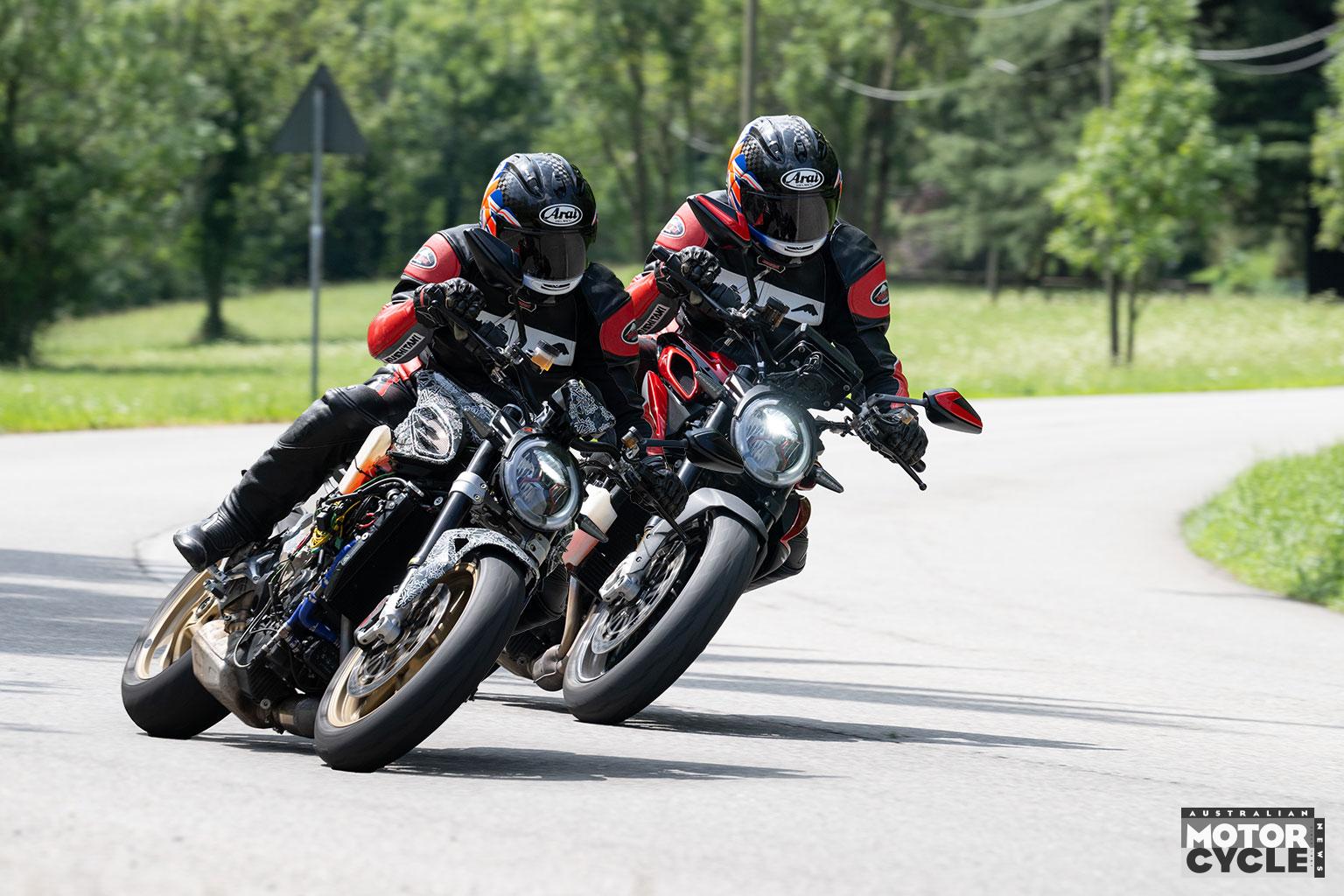
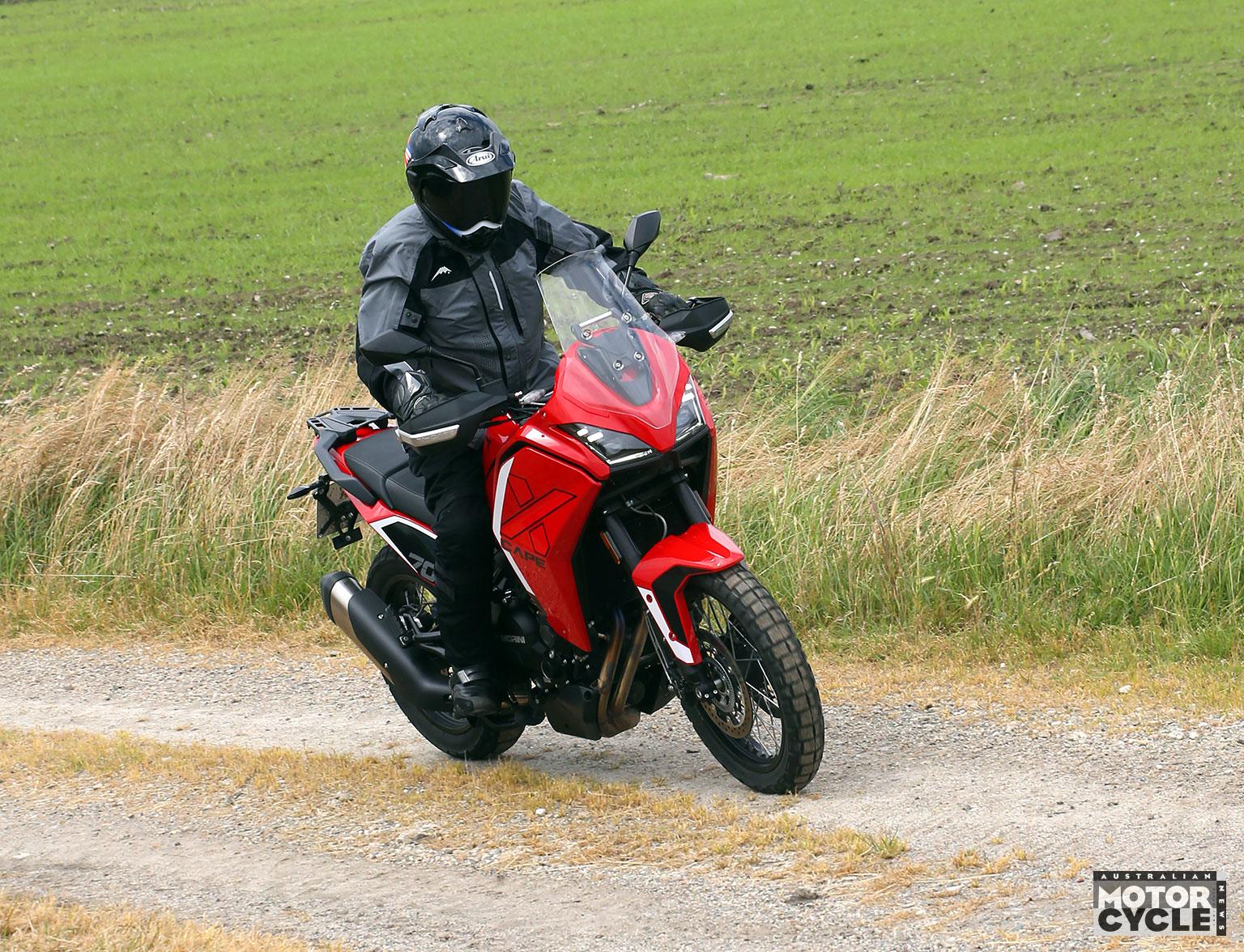
Every so often someone comes up with a completely different concept for a powered two-wheeler, often with a Yamaha badge on the side. Think of the original Tenere XT600Z back in 1983 or indeed the later Super Tenere twin, or the TDM850, or the TMAX maxi-scooter, or the stack-shaft Yamaha R1, which reinvented the UJM four.
Yes, but how about another brand? Sure – how about the Ducati Monster, the first-ever naked sportsbike, or the Honda CB750, first of the in-line fours, or the Ducati Supermono with its horizontal cylinder and articulated counterbalancer? Or the small, Bologna-based Italjet company, with its huge array of ingenious novelties produced during its 44 years of existence first time around before it went under in 2003? During this time Italjet marketed more than 150 different imaginatively designed motorcycles and scooters. Most of them were created by company founder Leopoldo Tartarini, the genial, pipe-smoking, Jaguar-driving design genius who passed away in 2015 after a lifetime of innovation that included conceiving the Dragster scooter.

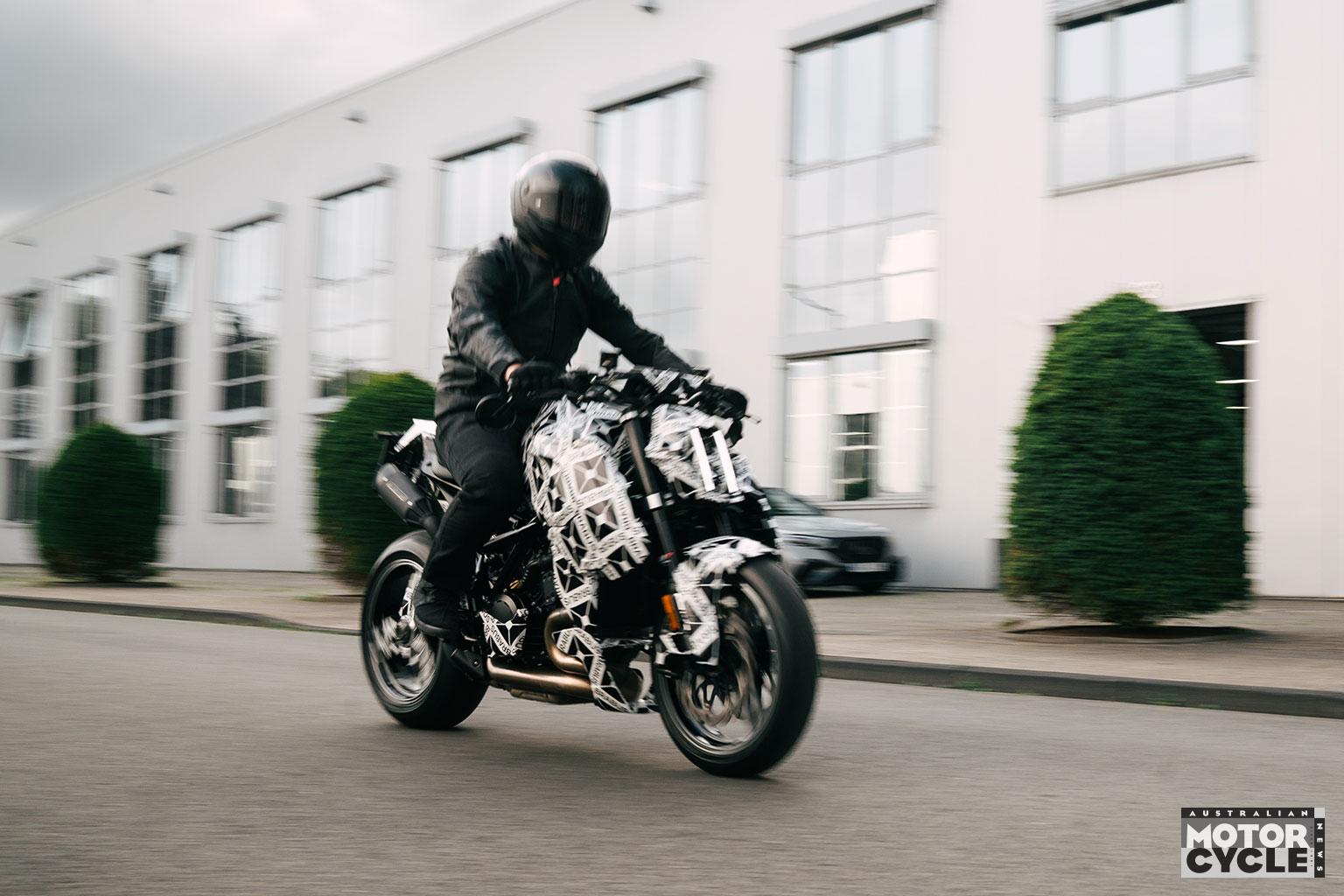
Tartarini’s son Massimo, 59, owner of Italjet today, has now come up with a dramatically innovative concept his dad would have been proud of, and he’s just put it into production as a 2026 model. It’s the Italjet Dragster 700 Twin, a motorcycle that looks like a scooter – or is it a scooter that thinks it’s a motorcycle? Only one way to find out, and that was to borrow one of the first examples off the production line for a day to become the first person outside Italjet to take it for a real-world road ride in everyday street conditions.

Born to Disrupt
The Dragster 700 Twin is the latest iteration of the least conventional, most dramatically individual series-production scooter yet made, the Italjet Dragster – which made its debut at the 1994 Milan Show. Around 70,000 examples of this trellis-framed two-wheeled testament to innovation, carrying hub-centre steering and radical styling, were built and sold between 1995 and 2003, when the Italian firm went into liquidation, another Euro-victim of low-cost imports from Taiwan and China. But in 2019 Massimo Tartarini revived it by creating the born-again Dragster in his Design HQ at Castel San Pietro, a spa town 30km southeast of Bologna.
But whereas the original Dragsters were ring-ding two-strokes varying from 50-180cc in capacity, today’s versions – which, thanks to Covid-19 were a year late in entering production in March 2021 – are powered by 125, 200 and 300cc four-stroke engines. Each uses a DOHC four-valve liquid-cooled Piaggio-designed single-cylinder engine with CVT transmission and belt final drive, previously found powering various Aprilia and Vespa models. These engines used to be built in China for Piaggio by Jincheng, but after the Italian scooter giant forged exclusive links there with Zongshen, Jincheng revamped them for its own models, and for clients like Italjet. As a mark of the close relationship between the companies – Tartarini has been a frequent visitor to China since 2003 – Jincheng currently manufactures all single-cylinder Dragsters in China. These are then transported in CKD form to Italjet’s assembly plants in Malaysia, Indonesia and Thailand for local sale with reduced taxes, and for export to Europe, Australasia and, very shortly, the US. “We’ve put a ceiling of making 8000 Dragsters a year, despite having orders for more,” says Tartarini. “Italjet is a premium product, so we must be sure of keeping quality levels high to meet our customers’ expectations. Also, we like to keep numbers low so that the Dragster retains its high-end mystique without putting too many examples in the market.”
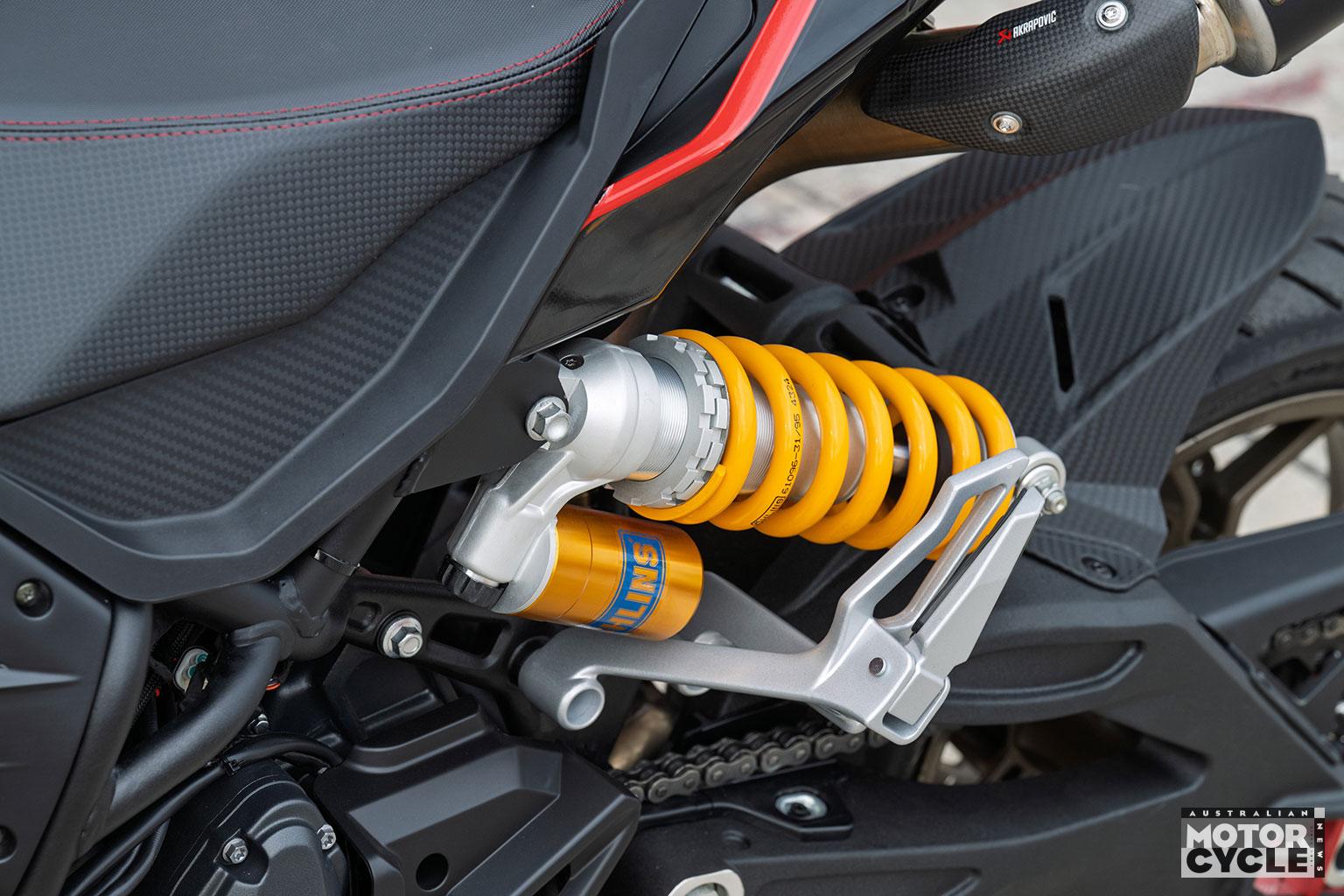
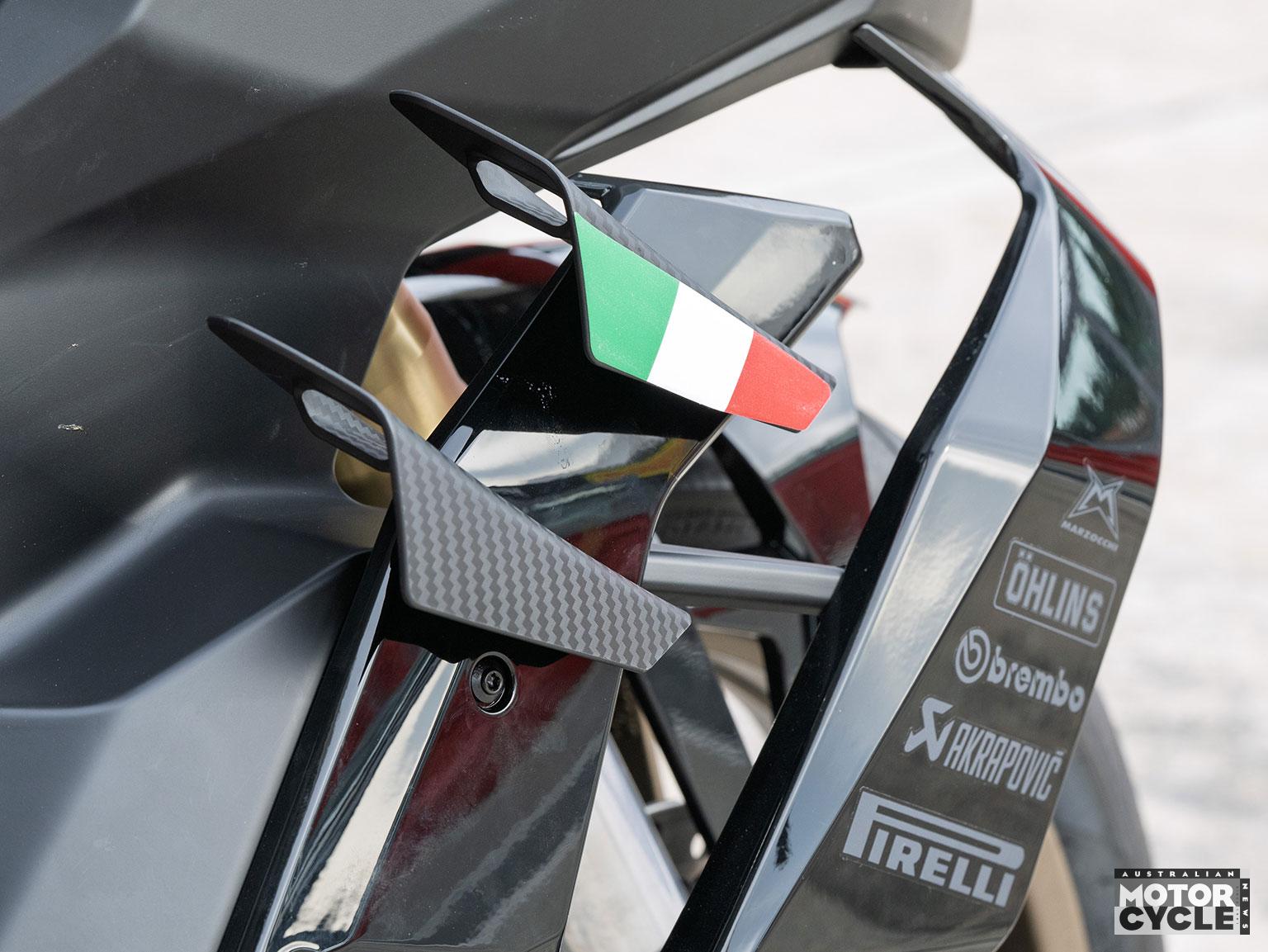
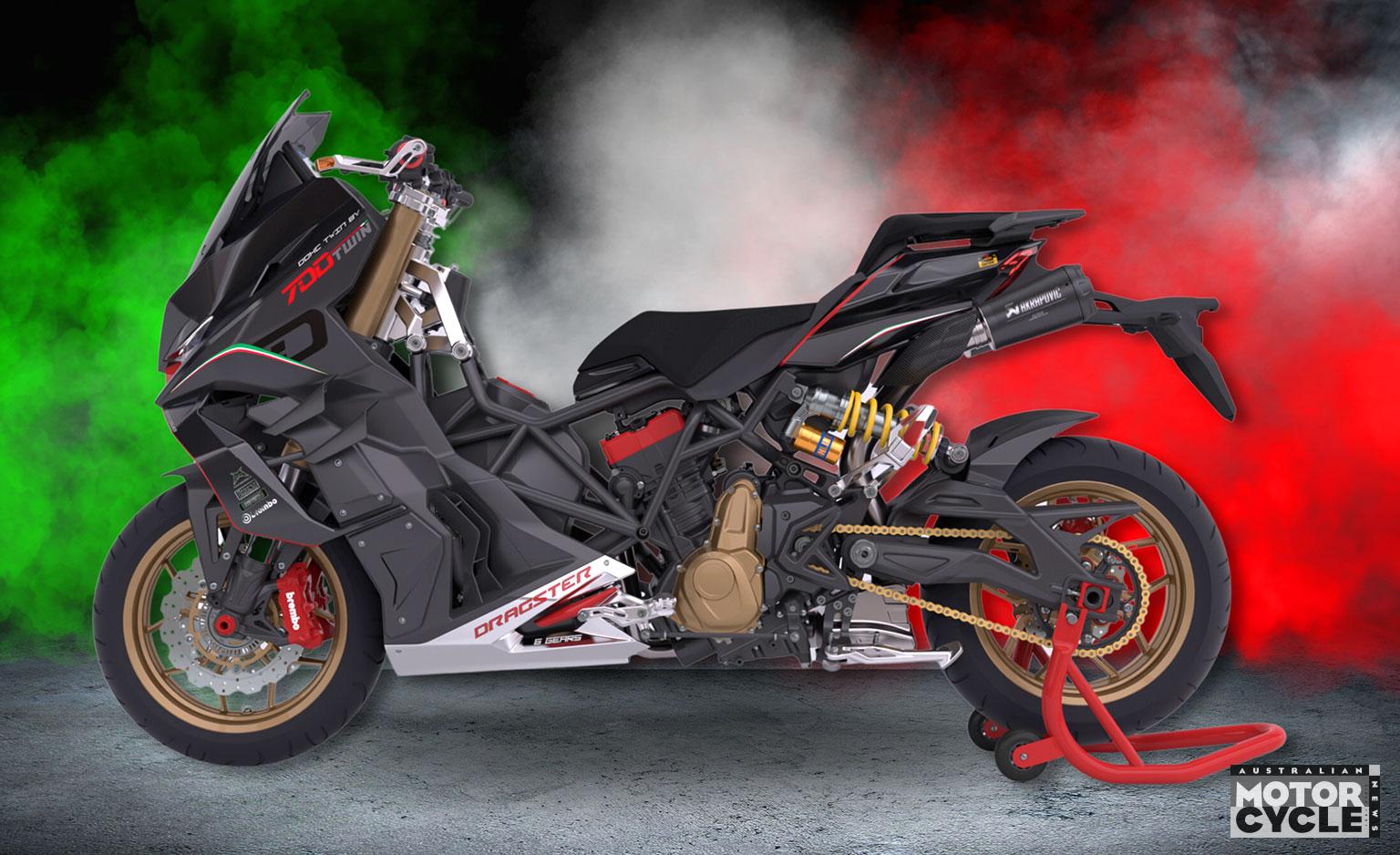
But to go from there to a brain-out, no-prisoners-taken, 700cc twin-cylinder uber-scooter equipped with hardware from Öhlins, Brembo, Bosch and Akrapovic, plus 15-inch wheels shod with Pirelli Diablo Rosso supersport tyres, is a giant leap for mankind, or at least the many millions who navigate the world’s highways aboard more conventional twist-and-go devices.
“I wanted to explore the outer reaches of the scooter envelope by making an Urban Superbike!” says Tartarini with a glint in his eyes. This is a man who likes sparking up the conversation in contemporary design, and takes pleasure from challenging convention, especially if it can be done profitably.
“I wanted to give customers who like performance a product that has the comfort and convenience of a scooter but with the power of a motorcycle. So, in 2022 we displayed the Dragster GT450 at EICMA with a single-cylinder engine, but I was not so happy because a two-cylinder engine is much better. So the year after we created the Dragster Twin 550 – but we were still not happy, and so we finally decided to use a 700cc engine in the Dragster 700 we launched at the EICMA Show last year. I honestly wasn’t sure if this time I maybe hadn’t gone too far – but all 700 examples of the limited-edition version we took orders for from the first day of the show sold out in just two weeks at €14,900 ($A30k), including 22 per cent tax. It was a big surprise – but a nice one, and now we have firm orders for the first 8000 Dragster 700 Twin Premium standard models, costing €13,900.”

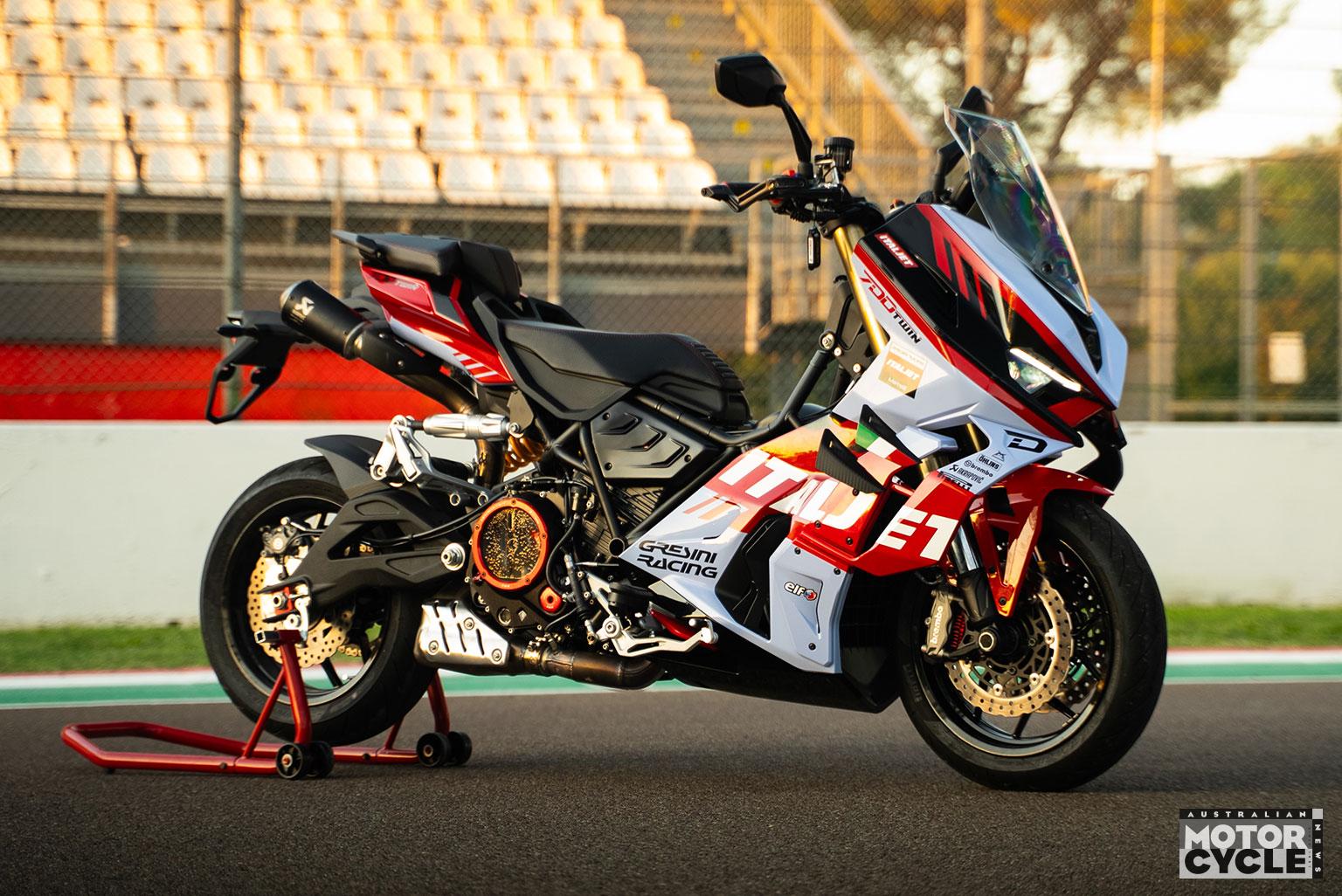
This is available in two colours – a discreet-looking Black and Yellow combo, and a more assertive Red/White/Anthracite colour scheme. Italjet is the main sponsor of the Gresini Moto2 team based in nearby Faenza, and there was also a now sold-out version of the bike in their distinctive pale blue GP race livery.
From Bologna to Benelli Power
The doubling of Italjet’s annual production to 16,000 units is only feasible because Tartarini has inked a deal with QJMotor in China not only to install the same 698cc parallel-twin engine in the Dragster 700 that QJ uses in its subsidiary brand Benelli’s TRK 702, but also to manufacture the complete machine at its ultra-modern plant in Wenling.
“I’ve been trying to work with QJ for a very long time, after they built an amazing new factory with very high production values,” says Tartarini.
“This means we have no annual production limit for quality control reasons on the 700cc Italjet models – and indeed we’re already working on other versions that’ll be the same, only different! So this is a fusion model that’s a combination between a motorcycle and a scooter – it’s the most powerful scooter in the world, if we can call it that. But we will have future versions in the Dragster 700 Twin family that will lean more to one side in design terms than the other. Wait and see!”
All these will be powered by the same compact eight-valve parallel-twin 698cc engine with a 270° crankshaft measuring 83mm x 64.5mm as found in the Benelli TRK 702, producing 51.5 kW (69hp) at 8500rpm, with peak torque of 70Nm at 6000rpm. The Dragster is also available in a 35kW version for A2 licence holders.

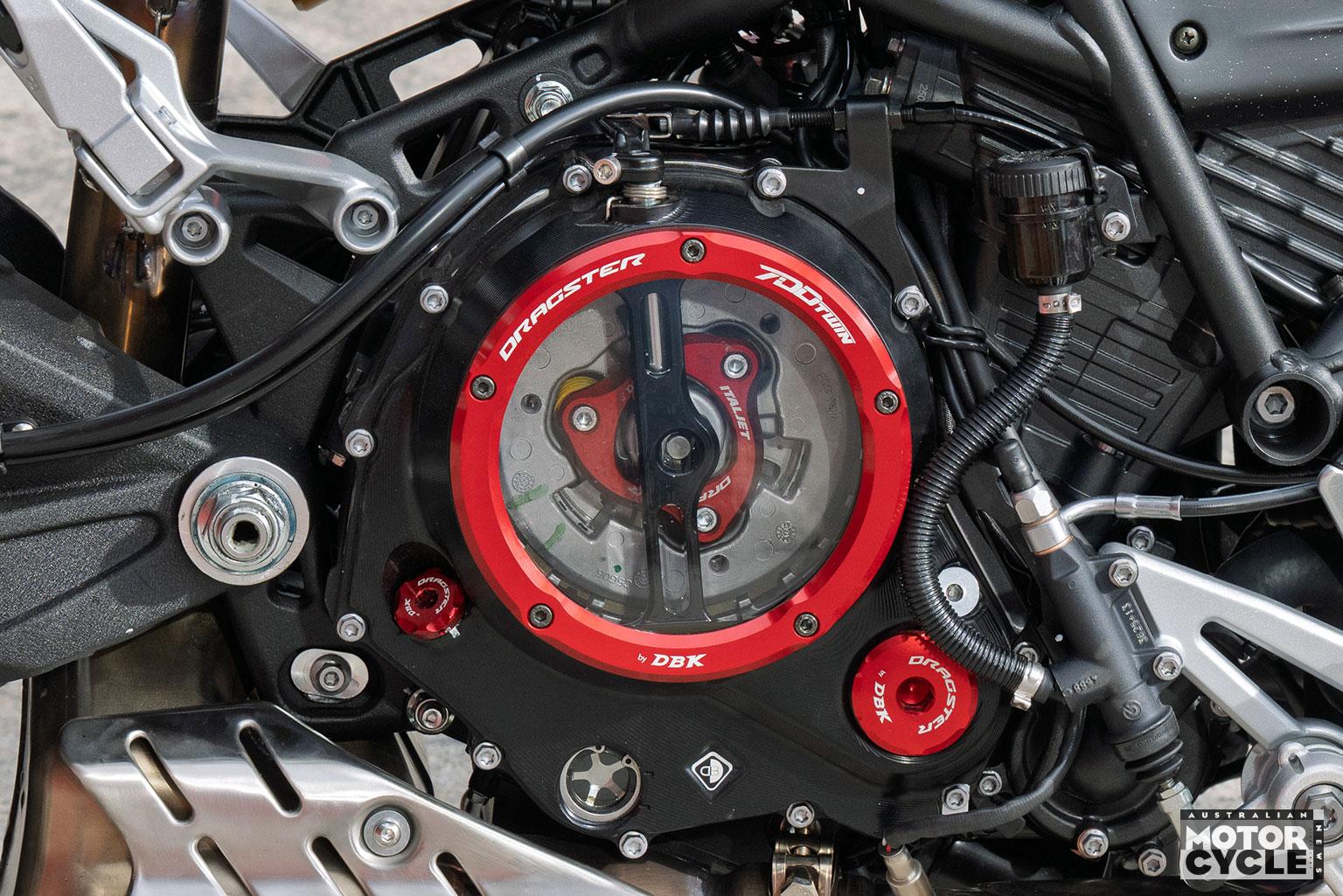
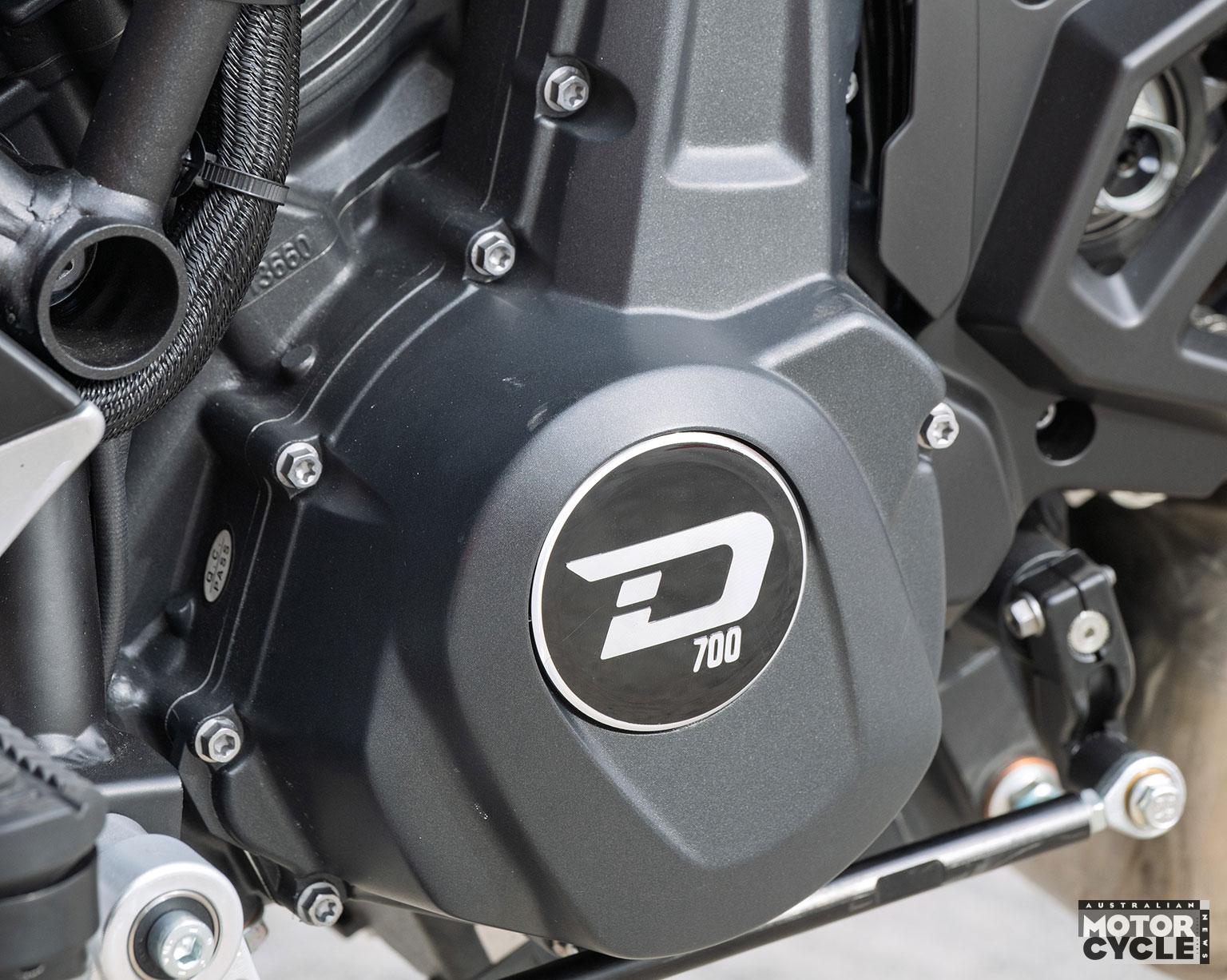
Its liquid-cooled cylinders are inclined forward by 20°, with its twin overhead camshafts chain-driven up the left side of the engine, and an 11.6:1 compression ratio. This retains the conventional-shifting six-speed gearbox, ramp-style oil-bath slipper clutch (here fitted with a distinctive DucaBike clutch cover with transparent window) and chain final drive of the Benelli model.
But Tartarini says Italjet are working with QJ on a scooter-type CVT twist-and-go transmission for this motorcycle engine, but won’t give a date for when he expects to introduce it.
“We need it urgently for the Asian market,” he says, “so it won’t be long.” Also available shortly will be a set of luggage designed expressly for the Dragster 700.
Twist, Shift and Go
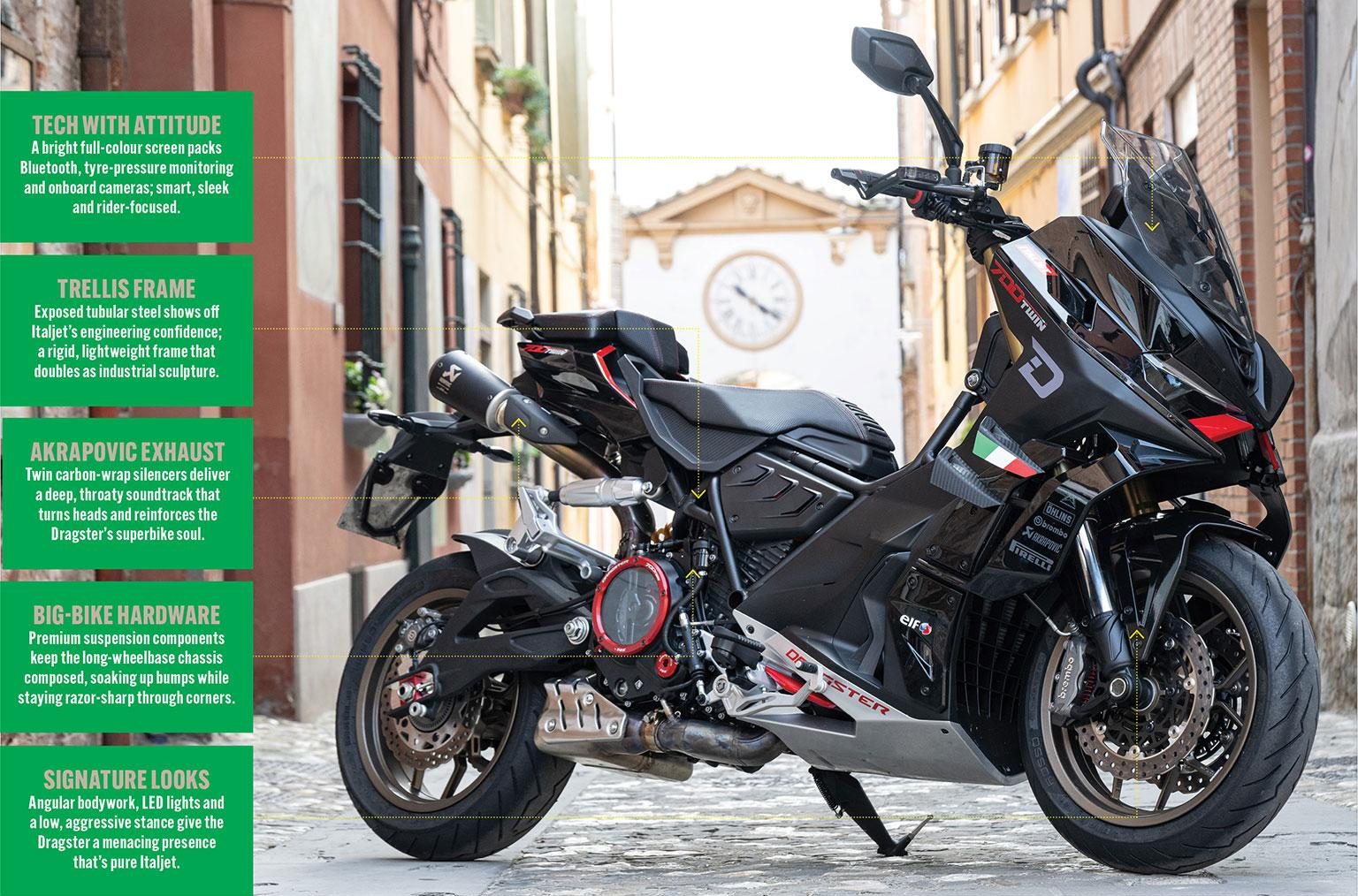
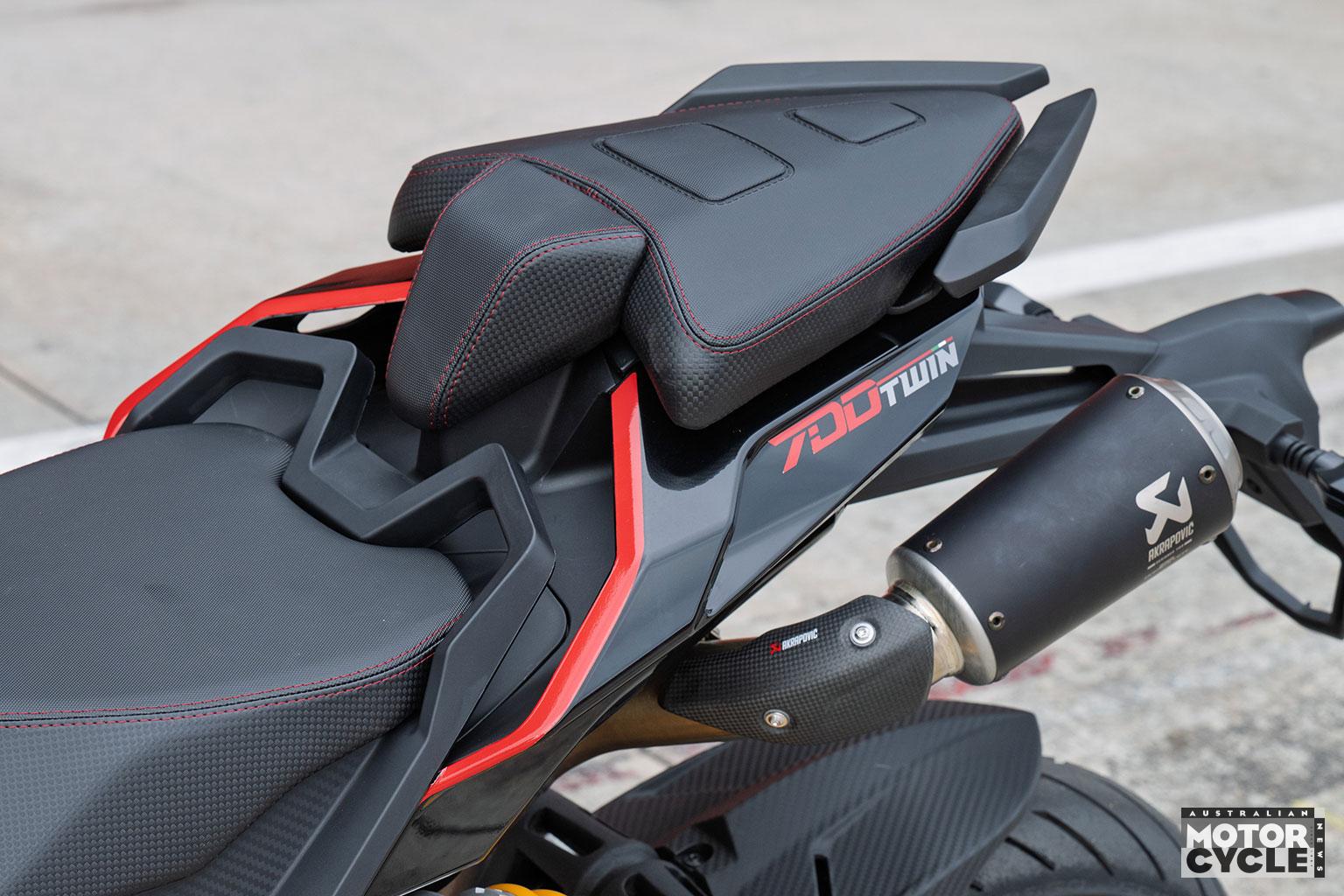
As in the TRK 702, the Italjet Dragster 700 has a cable throttle rather than ride-by-wire, so there’s no choice of riding modes, and the traction control that’s included isn’t switchable for when you want to perform burnouts to impress Vespa riders, unlike the dual-channel ABS required for Euro 5+ compliance, which can be turned off – although I’m not sure why, given this is a strictly tarmac device. Fitted with twin lambda probe oxygen sensors attached to the dual underseat Euro 5+-legal Akrapovic exhaust system with twin welded-in dB-killers, to optimise the fuelling controlled by the Bosch ECU, and with a single injector for each of the twin 41mm throttle bodies made in-house by QJ, the Dragster 700 Twin engine, weighing 68kg without these, carries a single counterbalancer gear-driven off of the crankshaft, to dial out any undue vibes.
The engine acts as a fully stressed chassis member housed in a vestigial tubular steel trellis frame, with a 16-litre fuel tank positioned forward of it, which Italjet claims will deliver a massive range of 370km.
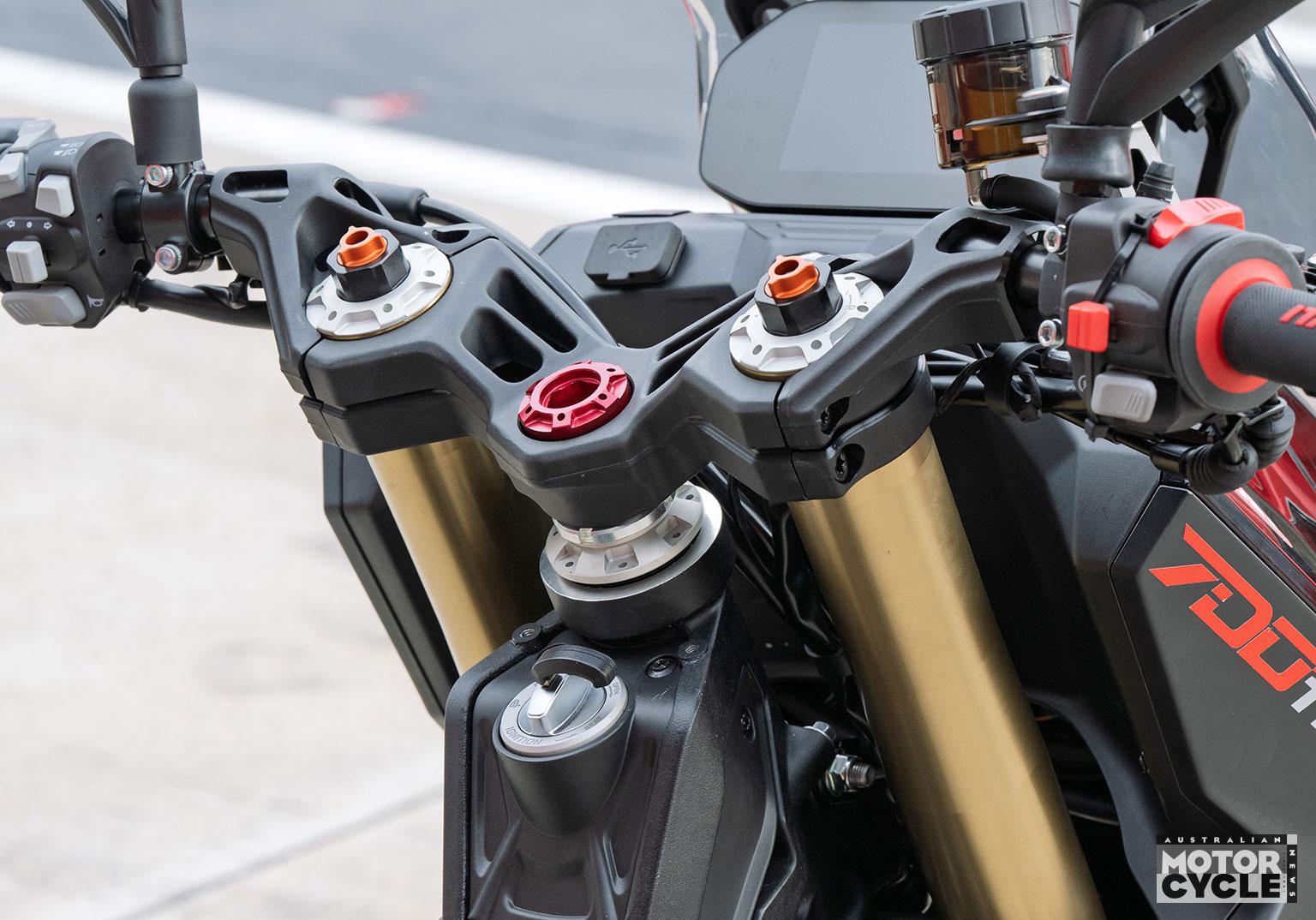
So will the next Dragster 700 be an ADV variant, then, with the dedicated luggage design? This unique-looking chassis package clothed in pseudo-scooter bodywork has a rangy 1553mm wheelbase, and carries a non-adjustable 50mm Marzocchi upside-down fork that’s a bit of a visual shock – where’s the hub-centre front suspension that’s the DNA of the Dragster family, then, Massimo? “Because we want to attack the superbike and sportsbike market, we decided that having a front swingarm was too far away from what someone who rides a Ducati expects,” Tartarini replied rather ruefully. “So we needed to have the feeling and feedback of a conventional telescopic fork. But we are working on a future model with quite a different front end, which will satisfy Italjet’s reputation for doing things differently. Again – wait and see!”

Denoting Tartarini’s intent that even the base-level Premium Edition 700 Dragster must be a class act, besides the TC and ABS it has Bluetooth connection, adjustable brake and clutch levers, LED lights front and rear, TPS/tyre pressure sensors, keyless ignition, five different languages on the ECU control package accessed via the 5-inch TFT screen, an Öhlins steering damper and an integrated camera system with front and rear views for onboard recording in the ECU. All those stock goodies go a long way to justifying the steep €13,900 (about $A25,000) price tag. Oh, and the mirrors fitted are a lesson to others – good visuals and no vibes.

Okay, but what’s it like to ride?
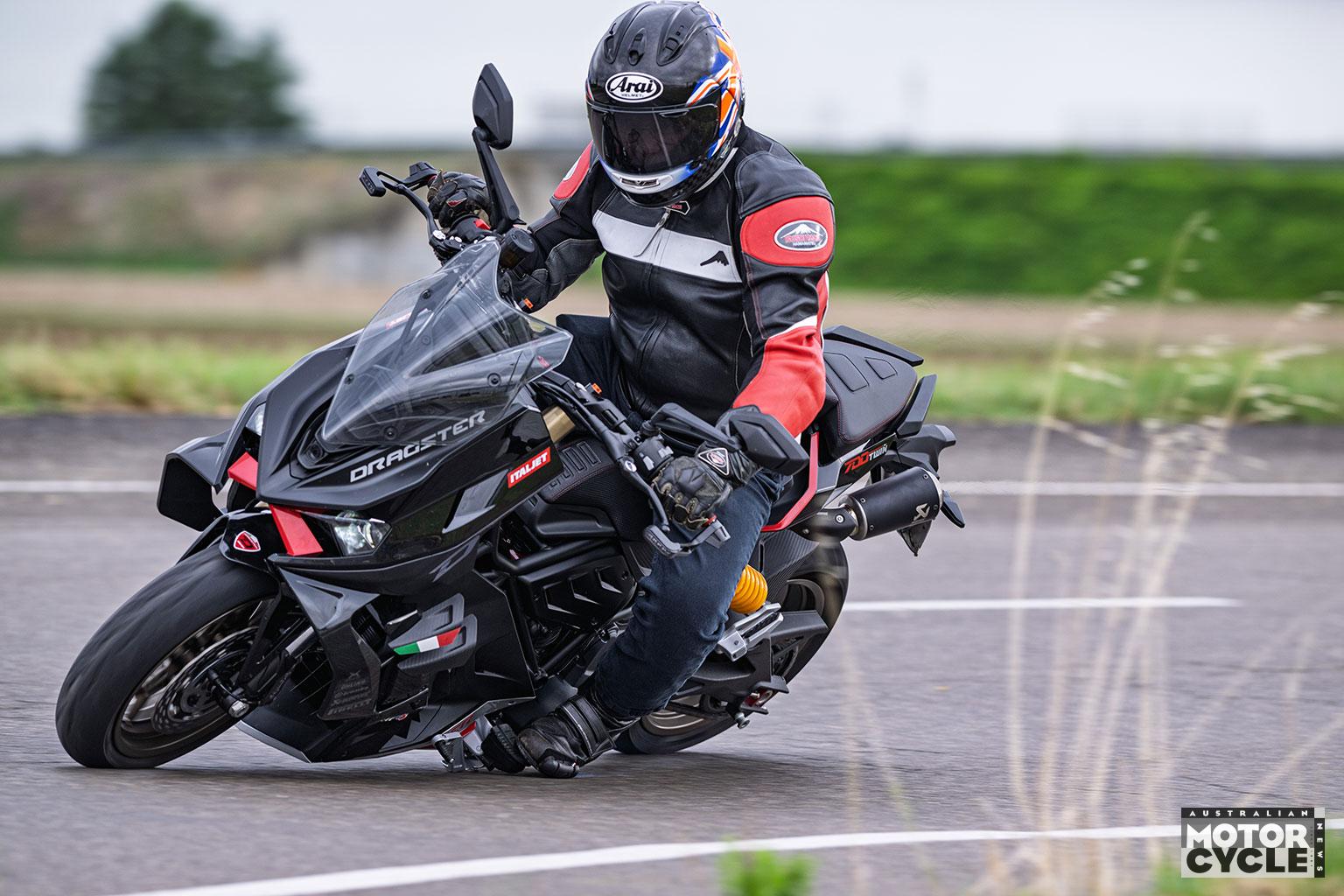
Is it a motorcycle, a scooter or a scootamoto? Well, before firing up the twin-cylinder engine to the great musical fanfare of the twin Akrapovic carbon-wrap silencers, hopping aboard the Dragster 700 can be done as on any scooter by just lifting your leg up and over the fuel tank in front, to discover a broad and comfy seat. At 815mm high and with an arrow-shaped front it will allow most riders to put both feet on the ground at rest. The cee of gee being so low means that it’s really well balanced both at rest and at slow speeds in city streets, where the scooteresque upright riding stance lets you see ahead over cars so you can plot a course through traffic. The fairly wide, flat handlebar gives you good leverage to work the Dragster in and out of tight spaces. Even without a CVT transmission you soon get used to using the light-action clutch and very precise throttle to wend your way through choked-up city centres. Despite the long wheelbase it’s quite manoeuvrable, plus the riding position is pretty relaxing, despite being upright. It all feels very controllable and accessible.
But then as soon as you leave town and the road opens up, that’s when the Dragster changes character, and you can start exploiting the midsize motor’s potential to please. This has a split personality that is almost certainly deliberate, so that below 5000rpm it’s an easy rider, with a gentle pickup from a closed throttle that befits its use in city streets, but then above that is a notable extra boost of power and especially torque. There’s a relatively high 1600rpm idle, and though pickup from a closed throttle is crisp but smooth, you need to have the engine revving over 3500rpm for clean, wide-open acceleration without transmission snatch.
QJ’s choice of gear ratios is as correct here as they are for the Benelli TRK 702, but for some reason my test bike had a racing gearshift pattern with one-up for first, and five down. Revving out to the 9500rpm hard-action rev limiter (as shown on the tacho) gives serious speed with minimal vibration at any revs; I saw 160km/h at Imola’s GP race circuit during the model’s global press launch with another thousand revs still to come, so this is a pretty quick set of wheels, and undoubtedly the fastest production scooter ever built – or is it a neat midsize motorcycle?

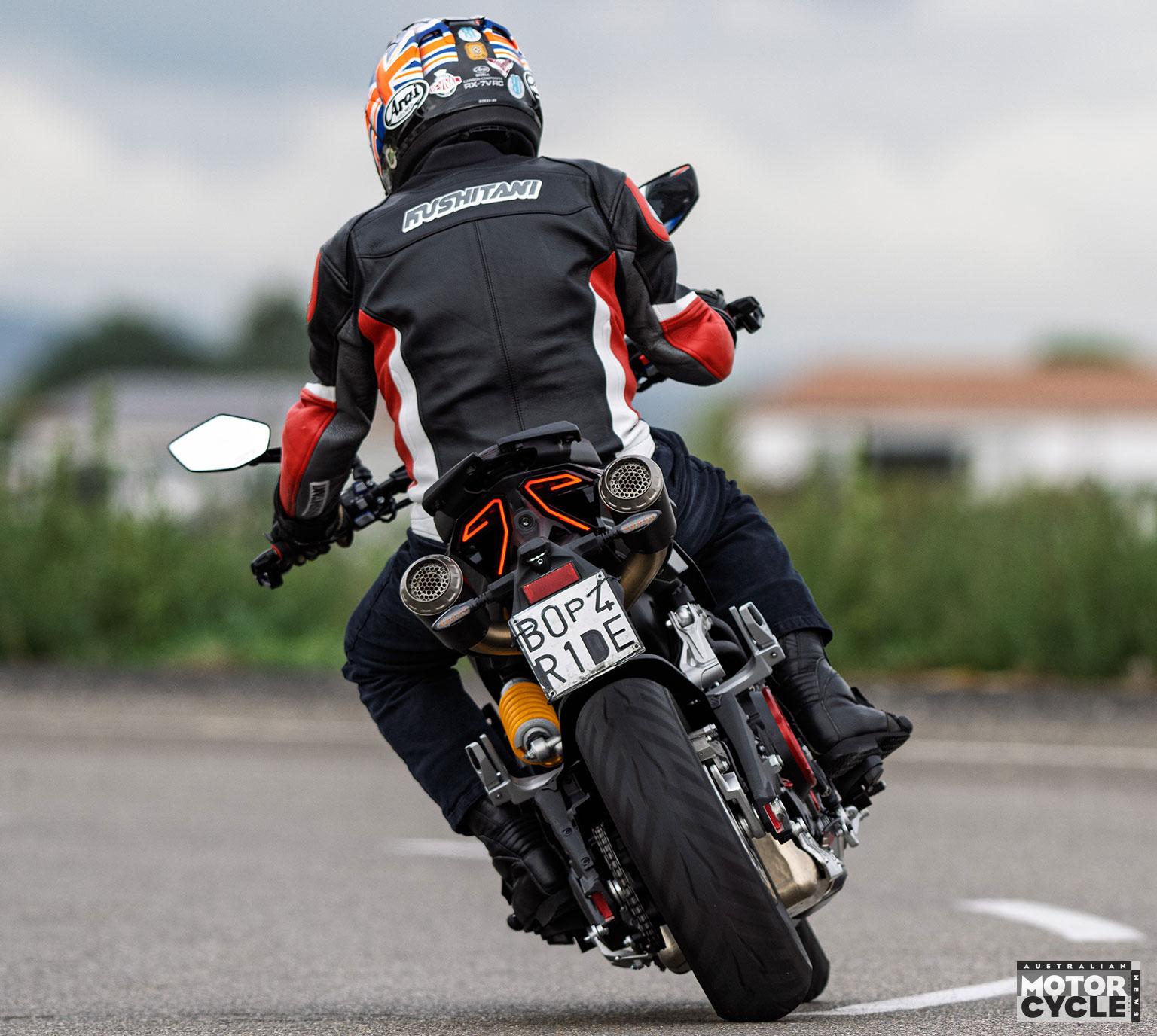
Well, the upright stance means you’re best confined to riding at any great speed on urban freeways and the like, because while the screen does act as a wind deflector, it’s non-adjustable, so you risk getting buffeted. The handling around town is definitely scooteresque, with light but positive steering. But this isn’t compromised at speed by any instability and especially not by the smaller diameter 15-inch wheels. The only time I had the handlebar occasionally waving in my hands was accelerating hard on the Imola circuit to climb the hill up out of the Tosa Hairpin, and there the problem was surely twofold: the motor’s meaty punch was lightening the front wheel going uphill, and my body weight did the rest. Probably I could have dialled this out by adjusting the rear shock and variable-rate spring, but we only had three laps on the bike.

Riding the hype
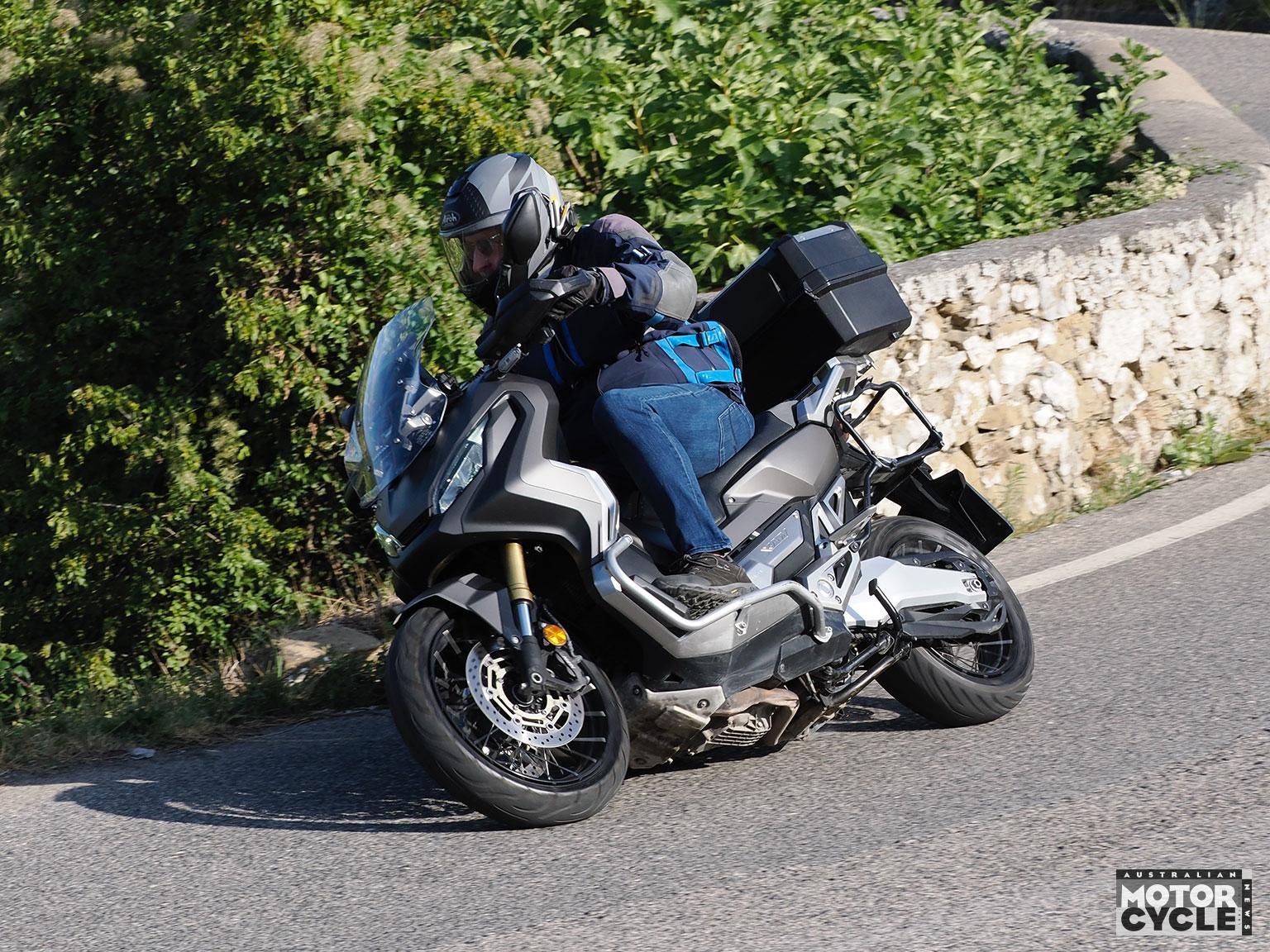
‘Bike’, he just said – and that’s really what the Dragster 700 Twin is most of the time; just a different kind of motorcycle than anyone else ever built before. Honda’s similar 748cc X-ADV twin has been around for a while without making much of a mark (as much because of being under-marketed and lacking the looks of a scooter as the strange mixture of wheel sizes it employs), but it does have Honda’s clutchless DCT transmission for the added convenience that the Dragster 700 presently lacks – although that could have been remedied with the wide-open powershifter that Italjet should have insisted QJ provided.

Otherwise, dynamically speaking the Dragster 700 is right on the money, with good ride quality from the suspension cocktail on the test bike, although the Marzocchi fork was quite softly damped on compression. This gave rise to the only fraught moment during my full day plus three track laps on the bike – that word again! – in braking hard for the downhill entry to the Curva Rivazza at Imola. This caused the gearshift lever casting to ground out on two out of my three laps and, being very substantial, this lifted the rear wheel off the ground the second time around; I was fortunate to survive intact – my fault, I should have paid more attention the first time of asking. But there’s not much point fitting state-of-the-art tyres giving such excellent grip if ground clearance (on one side at least) is such a key issue. Tut, tut – more front compression damping needed on stock settings if you please, Massimo!
Future Shock
That apart, this new version of what a PTW could be like but mostly isn’t is evidently the hit that it deserves to be. It’s the Urban Superbike that Massimo Tartarini conceived it as. There are lots of motorcycle manufacturers who offer innovative vehicles as design concepts but which never reach production. Under Tartarini father and now son, Italjet has been the opposite, always with the courage to anticipate trends, to think outside the box, and above all to believe in genuine innovation, rather than simply being different for different’s sake. Italjet’s slogan ‘Always Dare’ is well chosen.

My favourite description of the original two-stroke Dragster scooter comes from another journalist, who termed it as “the caterpillar stage of a WorldSBK Superbike”. Brilliant – wish I’d thought of that! Because that’s what the Dragster family of models is indeed – except this time around the 700 Twin has metamorphosed into a full power-up butterfly of an Urban Superbike, with the performance to live up to that tag.
Or is it a Hyperscooter after all?! Let’s leave it to those 8000 customers to decide.
✅ PROS – Jaw-dropping design, superbike-grade componentry and genuine performance credibility.
❌ CONS – High price, limited ground clearance for aggressive riding, no CVT option yet for riders wanting full scooter convenience.
ITALJET – The Marque of Innovation
FOUNDED IN 1959 by former Ducati racer Leopoldo Tartarini, Italjet quickly became a symbol of Italian creativity and technical innovation. Over its first 44 years, the Bologna-based company produced more than 150 distinctive motorcycles and scooters, most designed by Tartarini himself. He also collaborated with Ducati, styling iconic models such as the 750SS ‘green frame’ and the 750 Sport. Italjet’s bold designs earned international acclaim: in 1980, New York’s Museum of Modern Art added the foldable Pack 2 scooter to its permanent collection, and the radical Dragster was later featured in the Guggenheim’s Art of the Motorcycle exhibition. Despite producing up to 60,000 bikes a year, Italjet succumbed to market pressures in 2003. Two years later, Tartarini’s son Massimo revived the marque, first with premium e-bikes before reimagining the legendary Dragster. After a $A6 million investment, new 125, 200 and 300cc Dragsters were launched in 2021, their production deliberately limited to maintain quality. Today, Italjet exports to 48 countries and continues to define the cutting edge of urban mobility, serving as a benchmark for Italian design and engineering excellence.
SPECIFICATIONS
ENGINE
Type Watercooled DOHC eight-valve parallel-twin four-stroke with 270° crank, offset chain camshaft drive and single gear-driven counterbalancer
Bore & stroke 83mm x 64.5mm
Capacity 698cc
Compression ratio 11.6:1
Transmission Six-speed with chain final drive
Clutch Multiplate oil-bath
PERFORMANCE
Power 51.5kW (69hp) @ 8,500rpm
Torque 70Nm @ 6000rpm
Top speed 190km/h
ELECTRONICS
Type Electronic fuel injection and engine management system via Bosch ECU, with cable throttle and 2 x 41mm QJ throttle bodies
CHASSIS
Tubular steel spaceframe with engine as a fully stressed member
SUSPENSION
Front 50mm Marzocchi inverted telescopic fork
Rear Cast aluminium swingarm, with fully adjustable Öhlins monoshock (on test bike) and Italjet patented variable spring progressivity rate adjuster
WHEELS & BRAKES
Wheels Cast aluminium
Front tyre: 120/70-15 Pirelli Diablo Rosso Scooter
Rear tyre: 160/60-15 Pirelli Diablo Rosso Scooter
Brakes
Front: Twin 270mm steel discs with four-piston Brembo calipers and switchable dual-channel ABS
Rear: Single 260mm steel disc with two-piston Brembo caliper and switchable dual-channel ABS
DIMENSIONS
Wheelbase 1553mm
Weight:190kg dry
Seat height 815 mm
Fuel capacity 16L
BUSINESS END
Manufacturer Italjet Moto, Castel San Pietro Terme, Bologna, Italy
Price: €13,900 (about $A25,000)
CONTACT