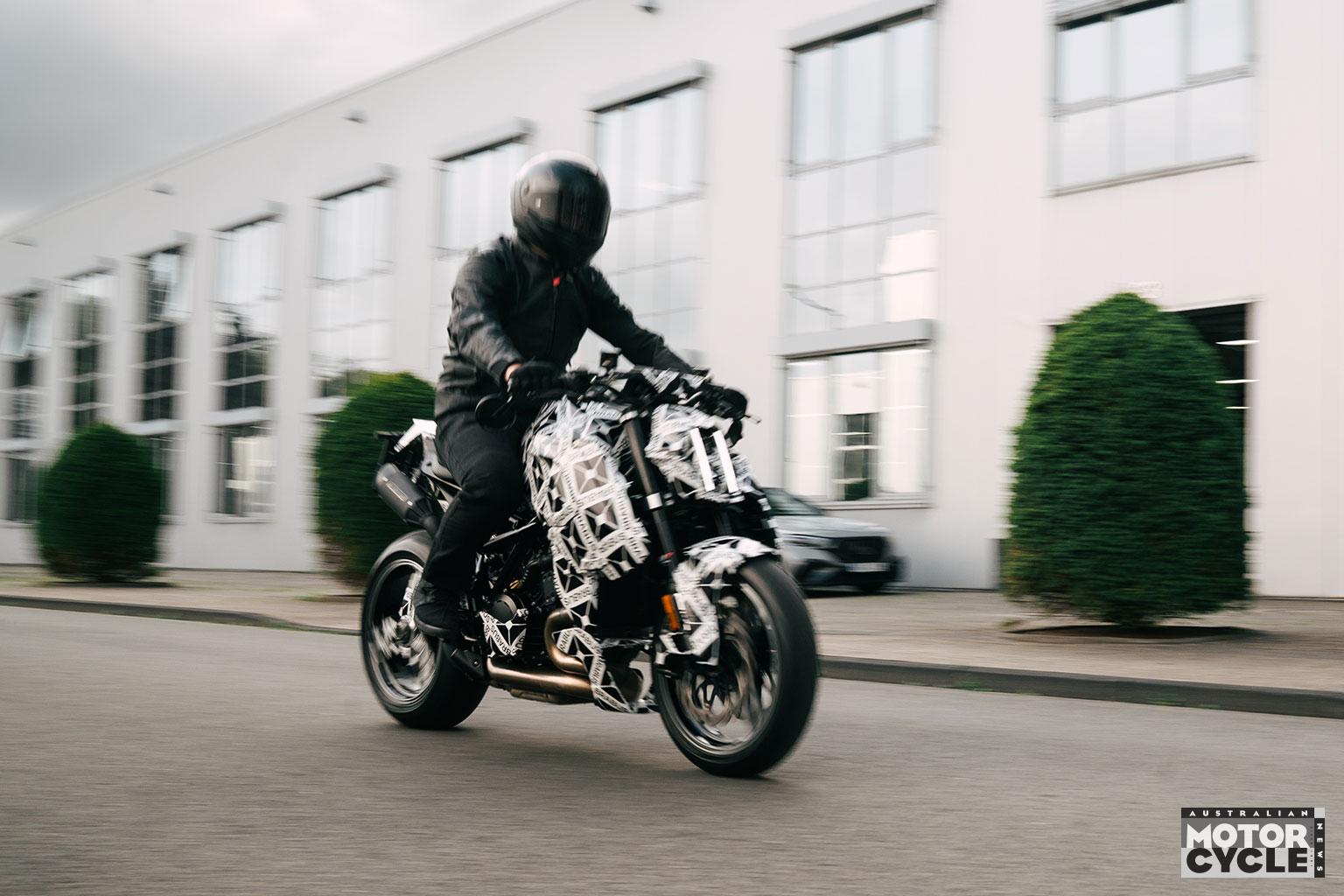
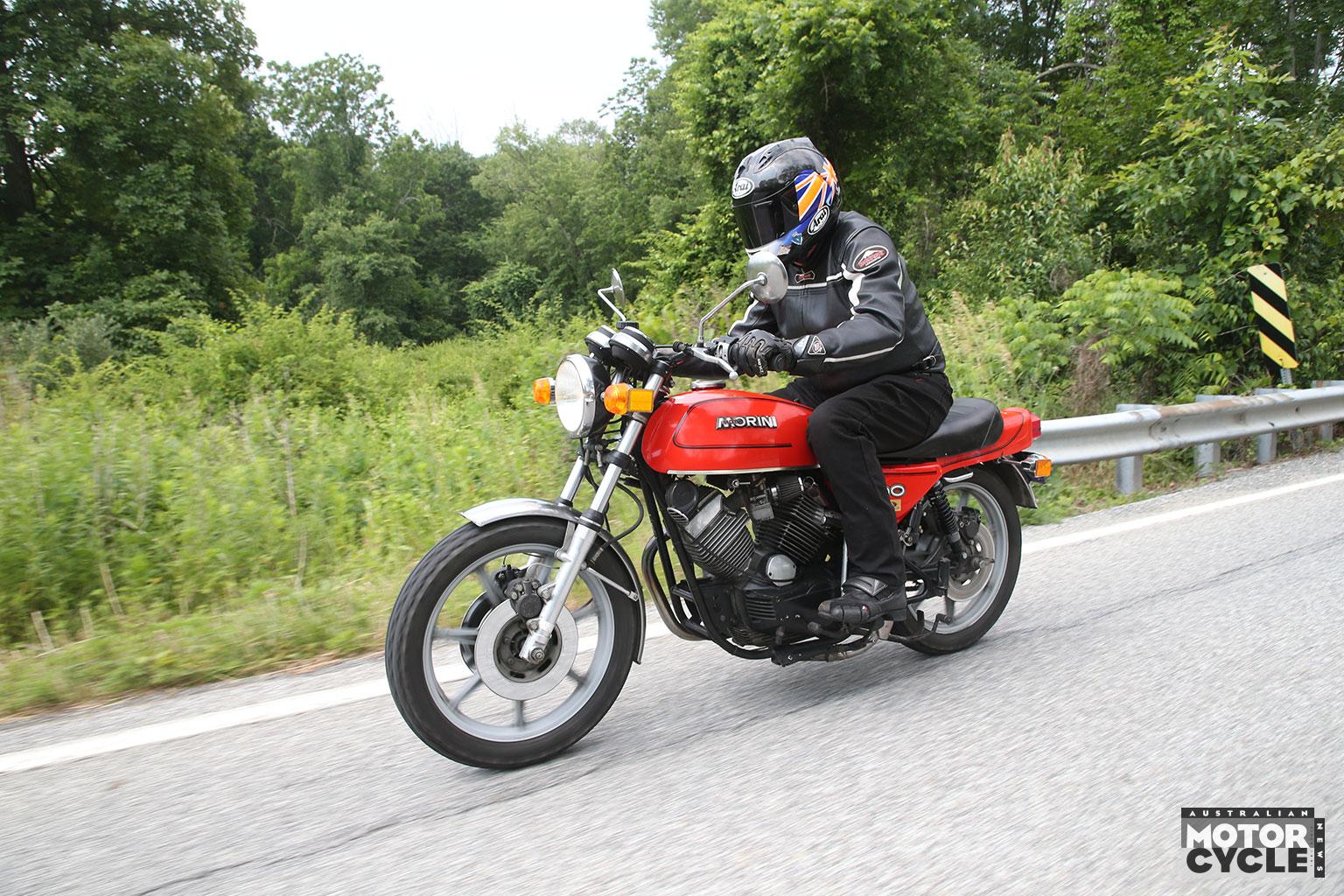
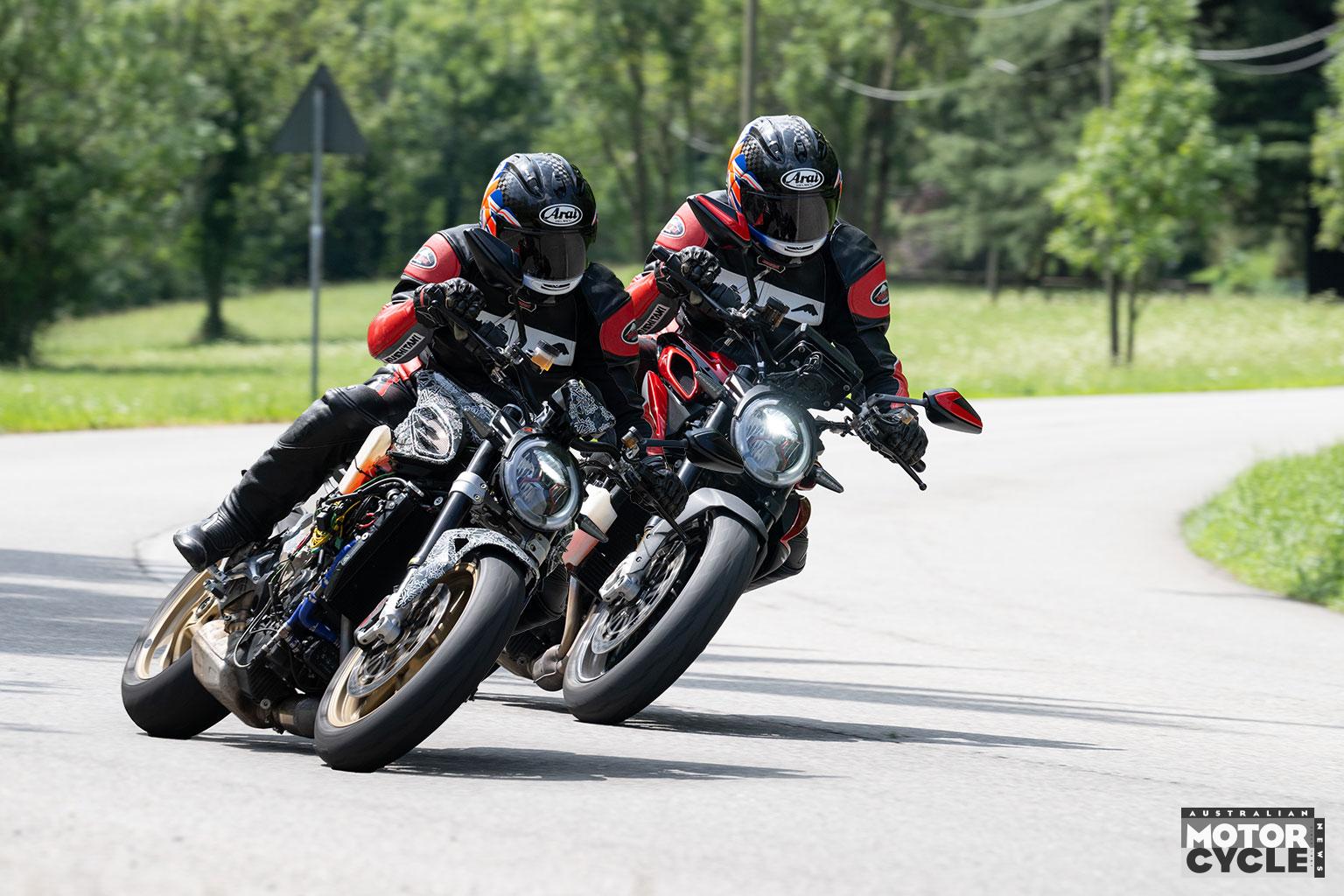
They’re not called ‘the Rolls-Royce of motorcycles’ for nothing. But even RR never built anything quite like this
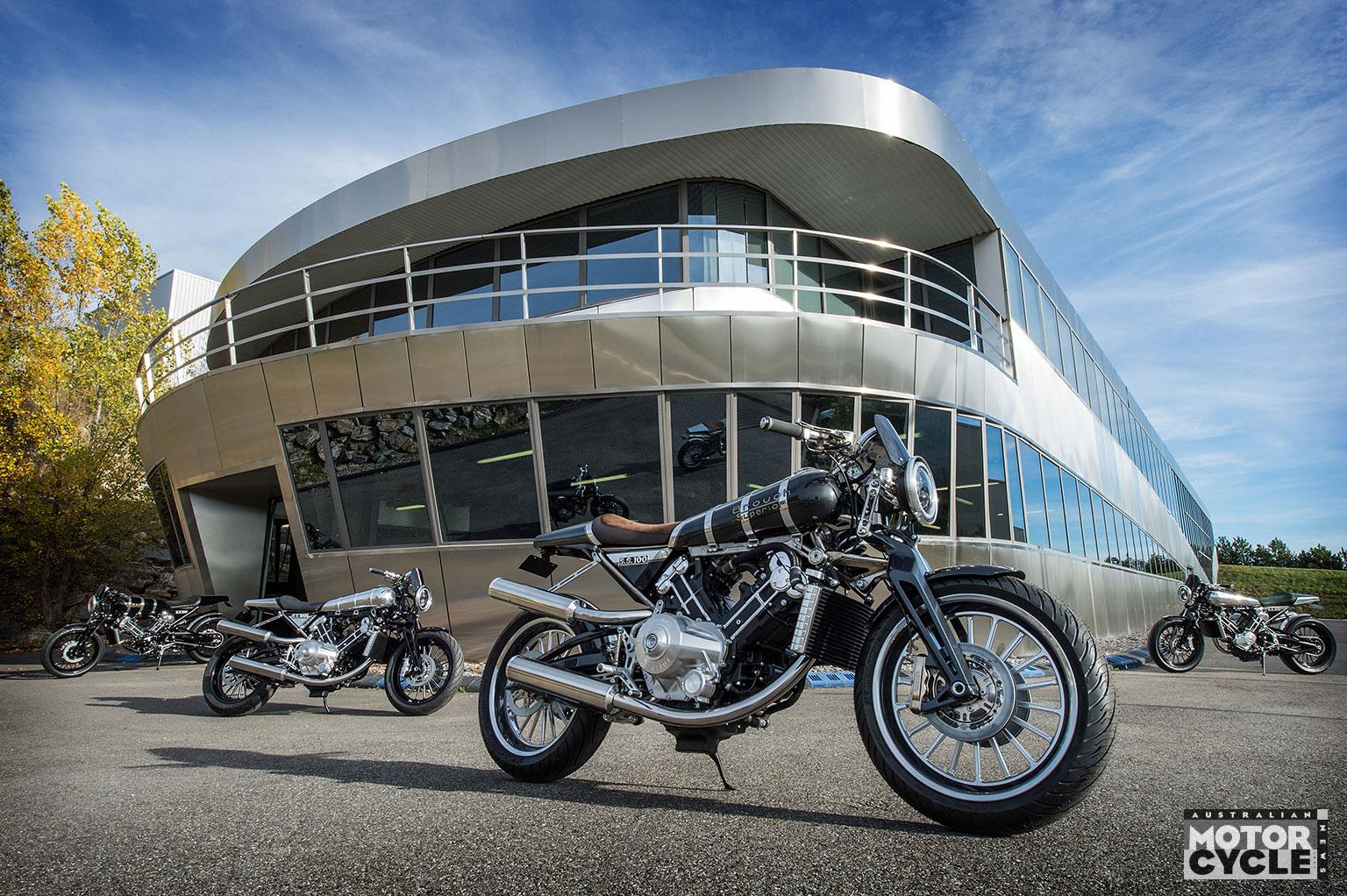
It’s 10 years since the first products of the born again Brough Superior brand began rolling out to customers around the world. This followed its revival under the ownership of Austrian-based Brit Mark Upham, who licensed noted French designer Thierry Henriette, owner of Boxer Design in Toulouse, to create the all-new SS100. This made its public debut at the 2013 EICMA show in Milan, Italy, marking the 90th anniversary of this most significant model in Brough history’s introduction. To establish a two-wheeled Entente Cordiale, Henriette subsequently acquired a long-term lease on the Brough trademark from Upham, giving him indefinite ownership of the manufacturing rights to the historic British brand.
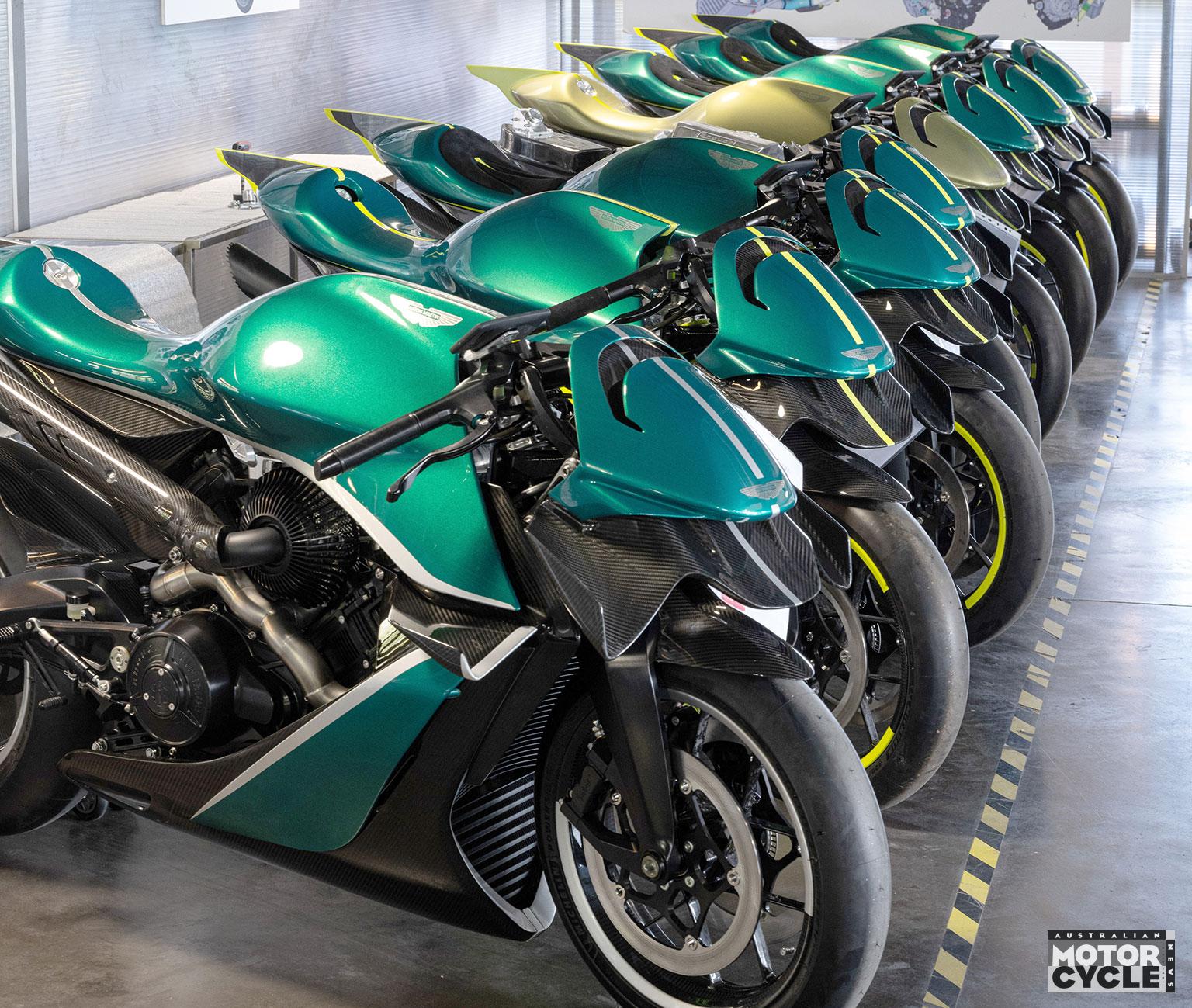
Since then, while celebrating its centenary in 2019, the nowadays French-based company has established an enviable reputation for excellence of design and leading-edge engineering. Coupled with quality of manufacture, this has latterly resulted in its successful ongoing joint venture with the equally historic four-wheeled British marque, Aston Martin. The result saw all 100 examples of the turbocharged AMB 001 – styled by Aston Martin, and both engineered and built by Brough Superior – sell out in a matter of weeks, despite a $190,000 price tag. (We fully tested it late last year in AMCN Vol.74 No.09.) Meanwhile, Brough Superior’s own products have acquired a healthy clientele of discerning owners across the globe, as well as a waiting list.
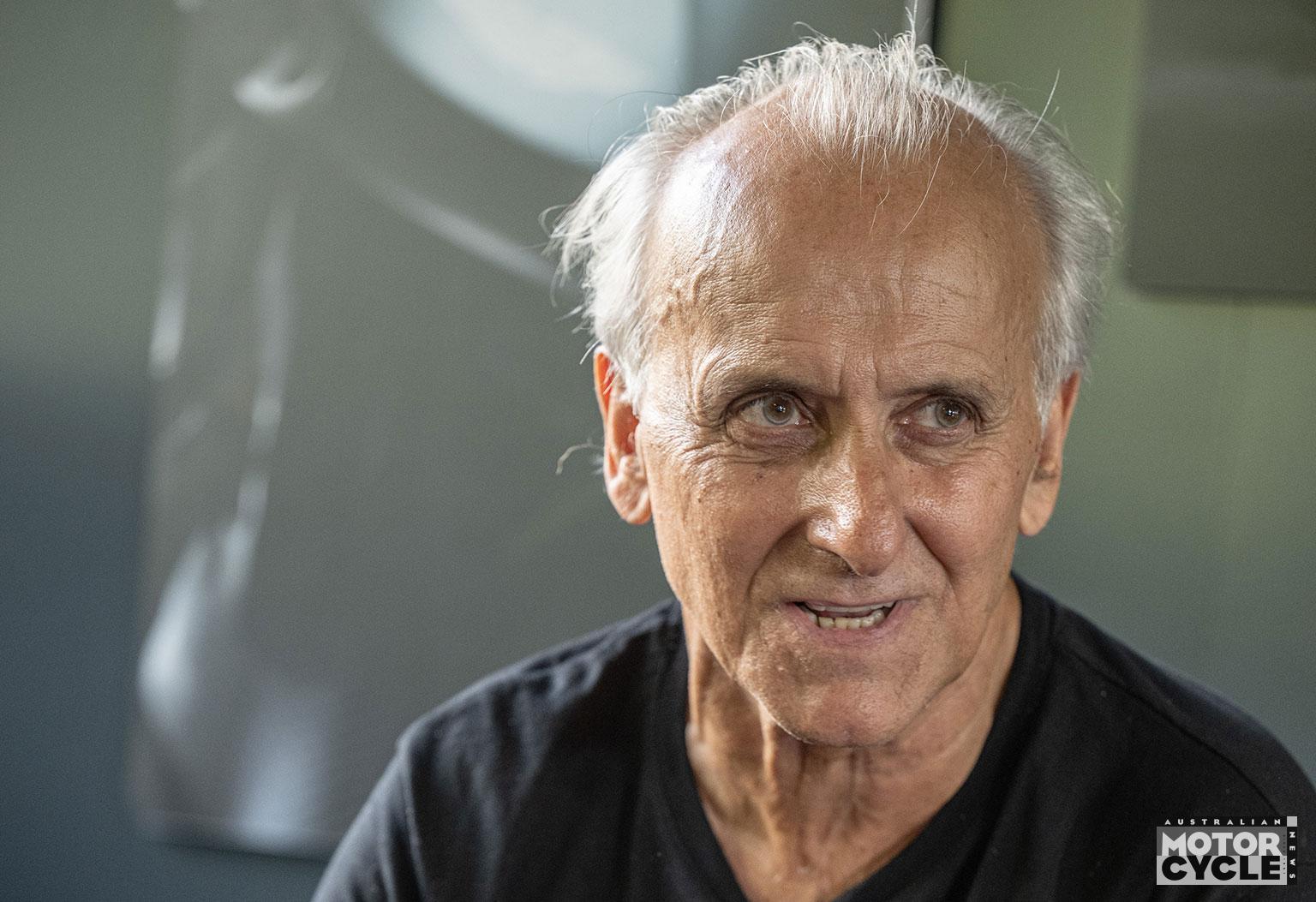
So Brough Superior Motorcycles CEO Thierry Henriette and his colleague Albert Castaigne, who’s responsible for day-to-day operation of the company that now employs 25 full-time craftsmen in its ultra-modern 2000m² factory in Toulouse, have successfully relaunched Brough Superior as a manufacturer of high-performance, high-quality (but inevitably also high-priced) motorcycles.
Despite their hitherto neo-retro styling, these employ thoroughly modern advanced technology, high-class materials and radical design. But now, the ever-growing range of Brough Superior V-twin models conceived and built in France since the 2013 relaunch has expanded to include for the first time a completely modern model owing nothing beyond the name to Brough’s glorious history, with zero retro design cues.

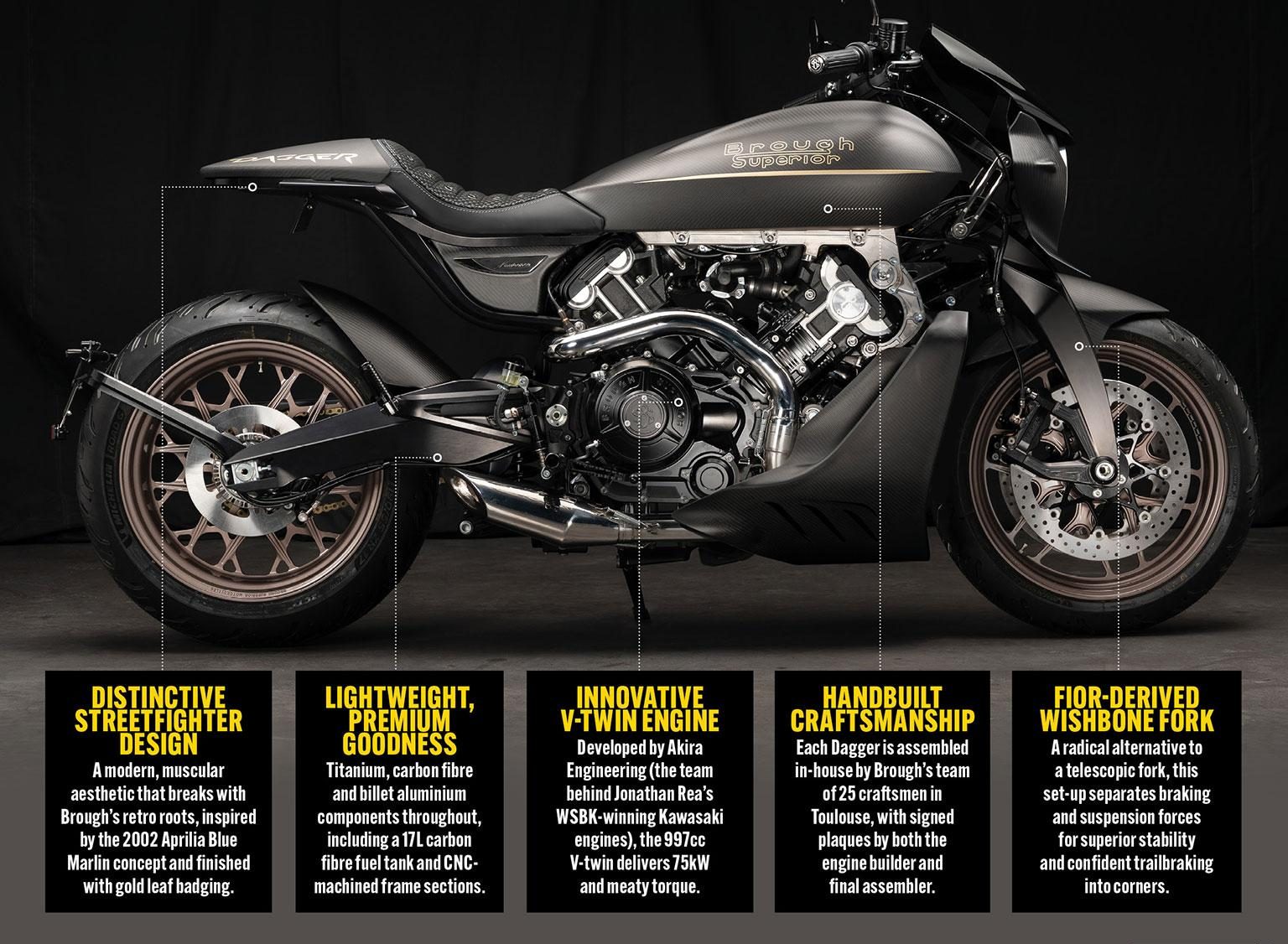
That’s the Brough Superior Dagger, a beautifully styled, hand-made, Anglo-French replacement for the late, great (departed in 2021) Ducati Monster 1200. Fitted with 17-inch wheels front and rear for the first time on any Brough model, and as usual replete with costly materials like titanium and carbon fibre, as well as innovative design features like the Fior wishbone front suspension to be found on all BS and Aston Martin models, the Dagger costs $131,000. This contrasts with the $127,000 price tag of the Lawrence roadster, Brough Superior’s currently best-selling but also least expensive model, with which the Dagger shares the same essential platform (rather confusingly, complete with Lawrence badges!), and likewise the company’s dual-purpose model with potential offroad capability, the Nefud street scrambler.

For Henriette has divided the Brough Superior-built family of models into two: Classic and Modern. “We wanted to create a series of motorcycles positioned between the Aston Martin, which is an ultra-modern design, and the retro-style bikes that we’ve made until now,” he says. “So while the SS100 is a modern interpretation of a Classic model, in between that and the Aston I decided to create a new generation of Brough models which have a more modern appearance that’s not as extreme as the AMB 001 – but still use the same platform as all other Brough models, with the normally aspirated engine and the same composite chassis design.”
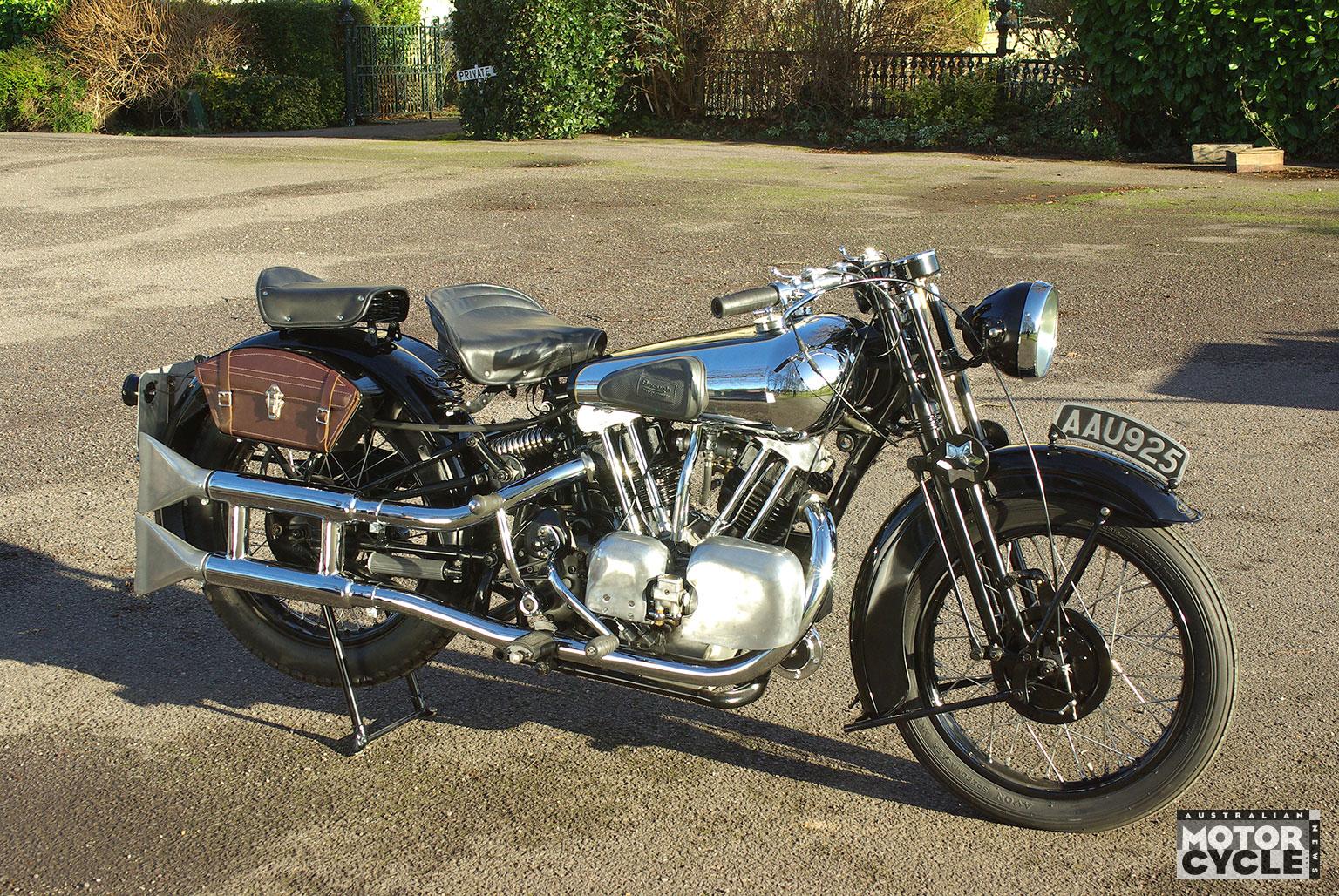
That so-called ‘new generation’ of Brough Superior models kicked off in 2022 with the Lawrence – named after founder George Brough’s No.1 customer in the pre-World War 2 era, TE Lawrence (as in, ‘of Arabia’). Slightly surprisingly for a bike named after a man who invariably travelled fast and alone, and is not believed to have ever carried a passenger in his life since all seven of his Brough Superiors were JAP V-twin-engined SS100 single-seaters, this was the first model in the Toulouse-built BS line-up to offer space for a passenger aboard the smart-looking seat, which until you remove the cleverly designed cover still looks like a solo affair but with a second set of footpegs. This was joined 18 months ago by the Nefud, Brough’s answer to BMW’s R 1300 GS, a high speed adventure model with offroad pretensions – a kind of two-wheeled Range Rover. The last of the three different real-world Brough Superior roadbikes has finally entered production: the Dagger streetfighter.
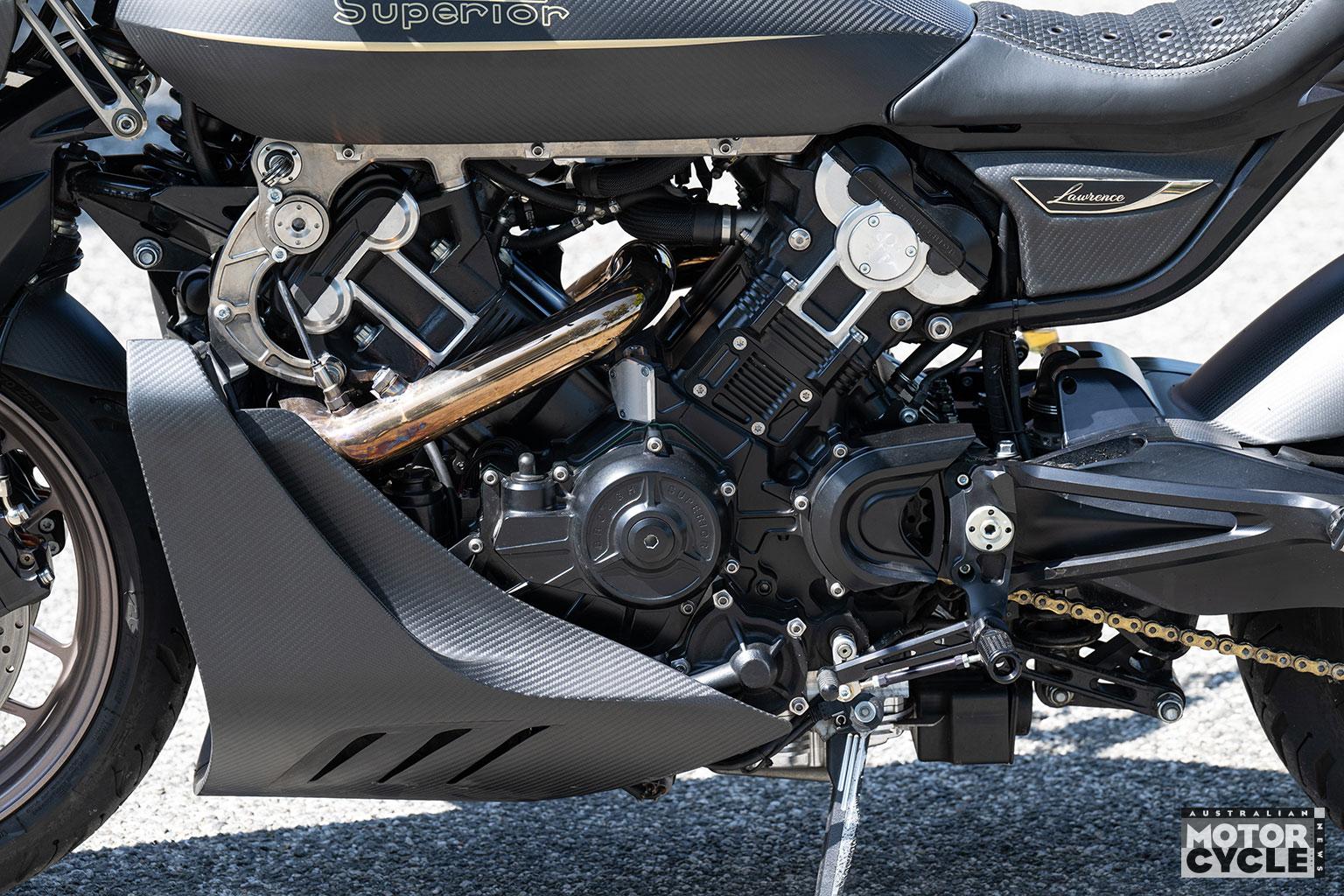
Powered by the same liquid-cooled 88º V-twin eight-valve 997cc engine as its SS100, Lawrence, Nefud and Pendine Sand Racer sisters, the Dagger was developed for Brough by Akira Engineering in Bayonne, France. But complete assembly of each engine is now carried out at the Brough Superior factory in Toulouse, validating Henriette’s claim that all Brough motorcycles are built entirely in-house. While the styling still displays the same Gallic flair of all Henriette’s designs, it’s more modern in character, with a fuel tank that no longer denotes Brough Superior’s usual shapely chromed trademark design statement.
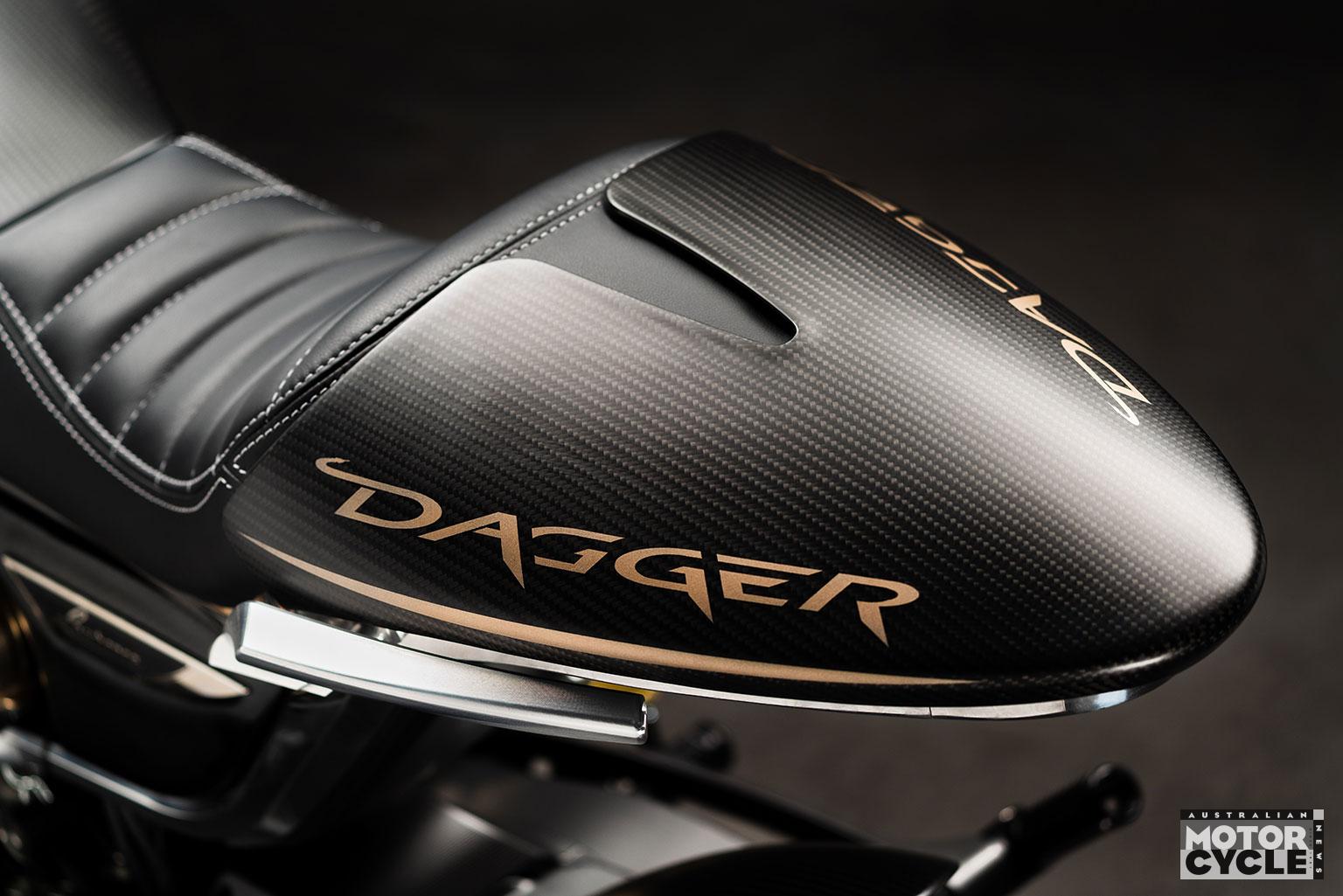
Instead, the Dagger’s 17-litre carbon fibre fuel cell pays tribute to an earlier model in Henriette’s design portfolio: the RSV1000-powered 2002 Aprilia Blue Marlin café racer he was commissioned to produce for the Italian firm, complete with the same ridged upper contours to the fuel tank and a similar super-clean, straight-line sweep for the tank and seat combo. Italian bike fans saving up to buy the production version of the Blue Marlin Aprilia had intended to build were cruelly disappointed when Piaggio dumped it after buying the bankrupt bike brand in 2004 – but now they can start saving again, albeit a little harder, to buy its stylistic descendant.
ON THE ROAD
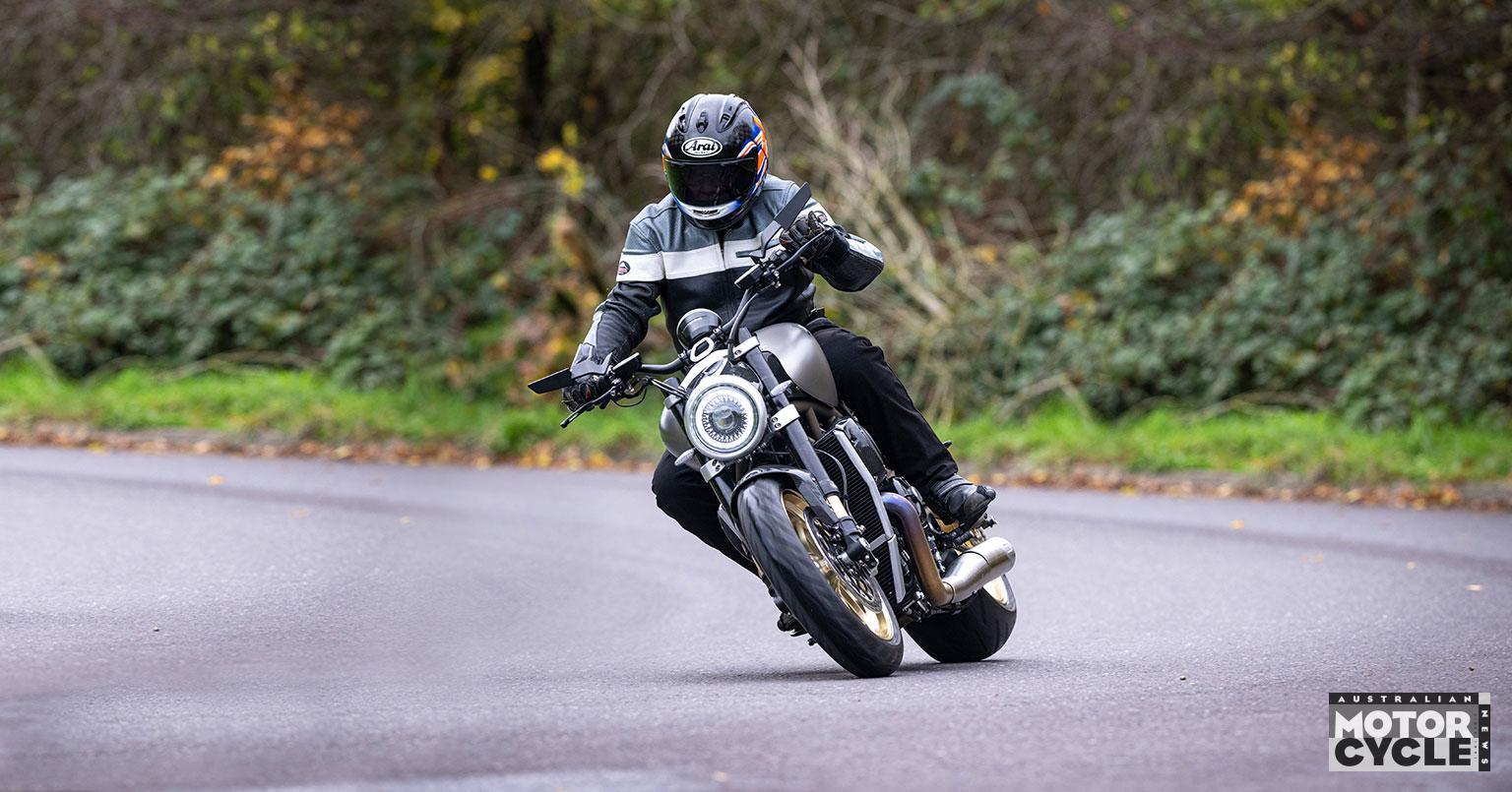
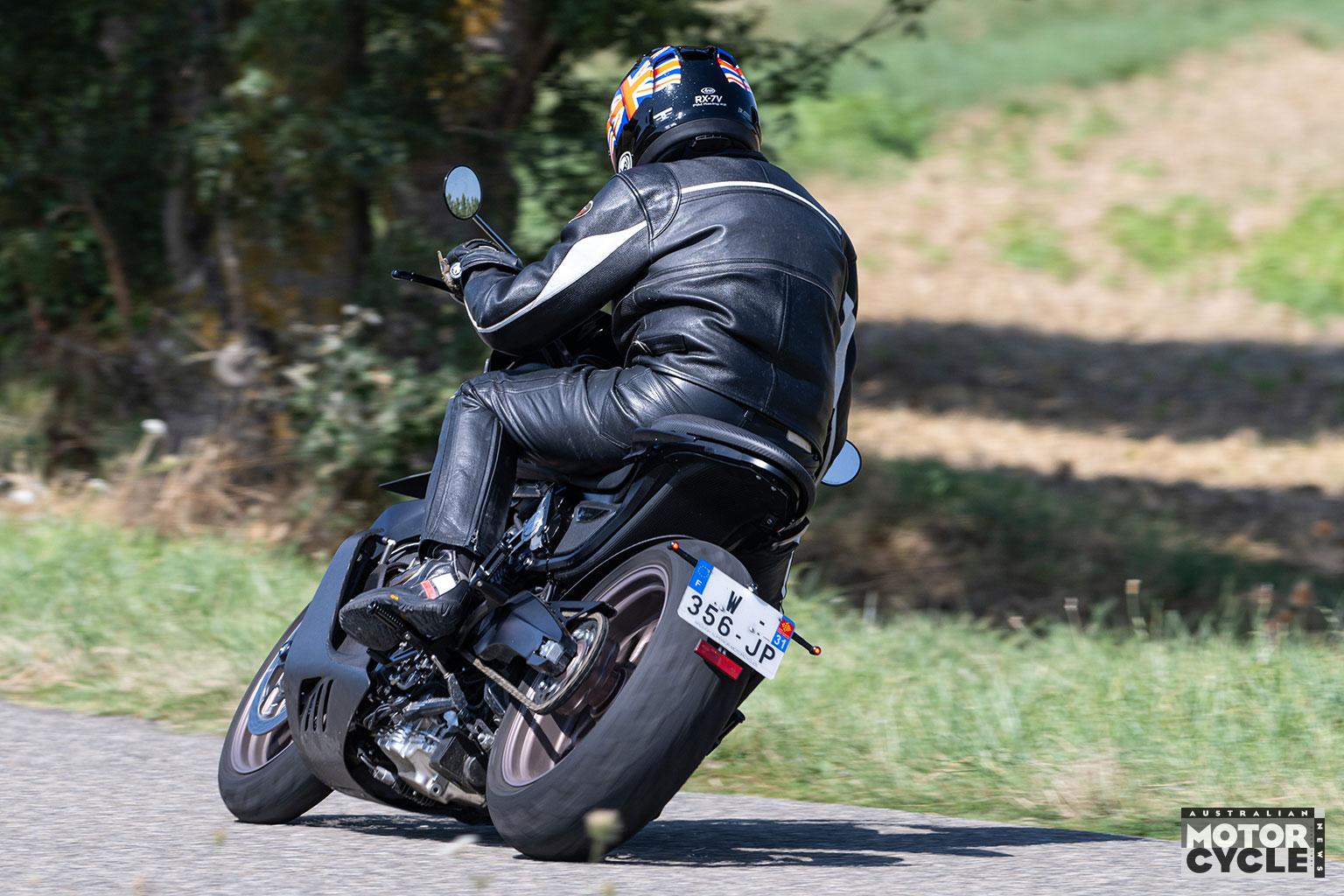
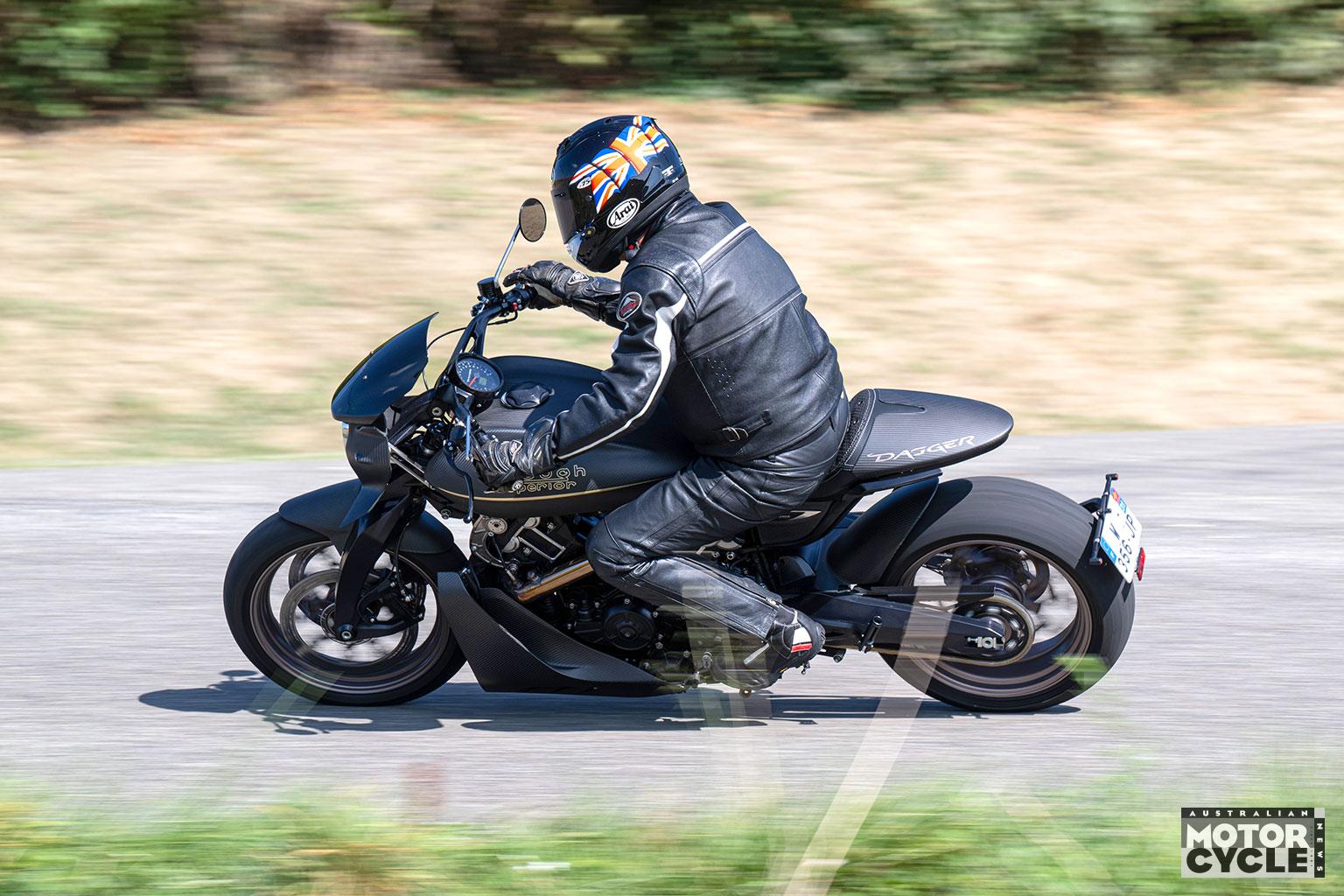
Given the keys to a Dagger fresh off the production line (but nicely run in with 800km on the clock) for a 140km ride through the glorious French countryside around Toulouse, with a bit of town work to demonstrate its real-world riding talents, I couldn’t help admiring the deep, lustrous weave of the carbon fibre fuel tank with the BS name emblazoned on it in what looked like gold leaf. But if the Ducati name had been on there, it wouldn’t have been a surprise; the Dagger is very much Brough’s modern-style streetfighter tribute to Monster creator Miguel Galluzzi’s original design; it has the same fairly upright riding stance, quite a wide handlebar and footrests farther forward than you’d expect if the bike was the neo-cafe racer it looks to be at rest.
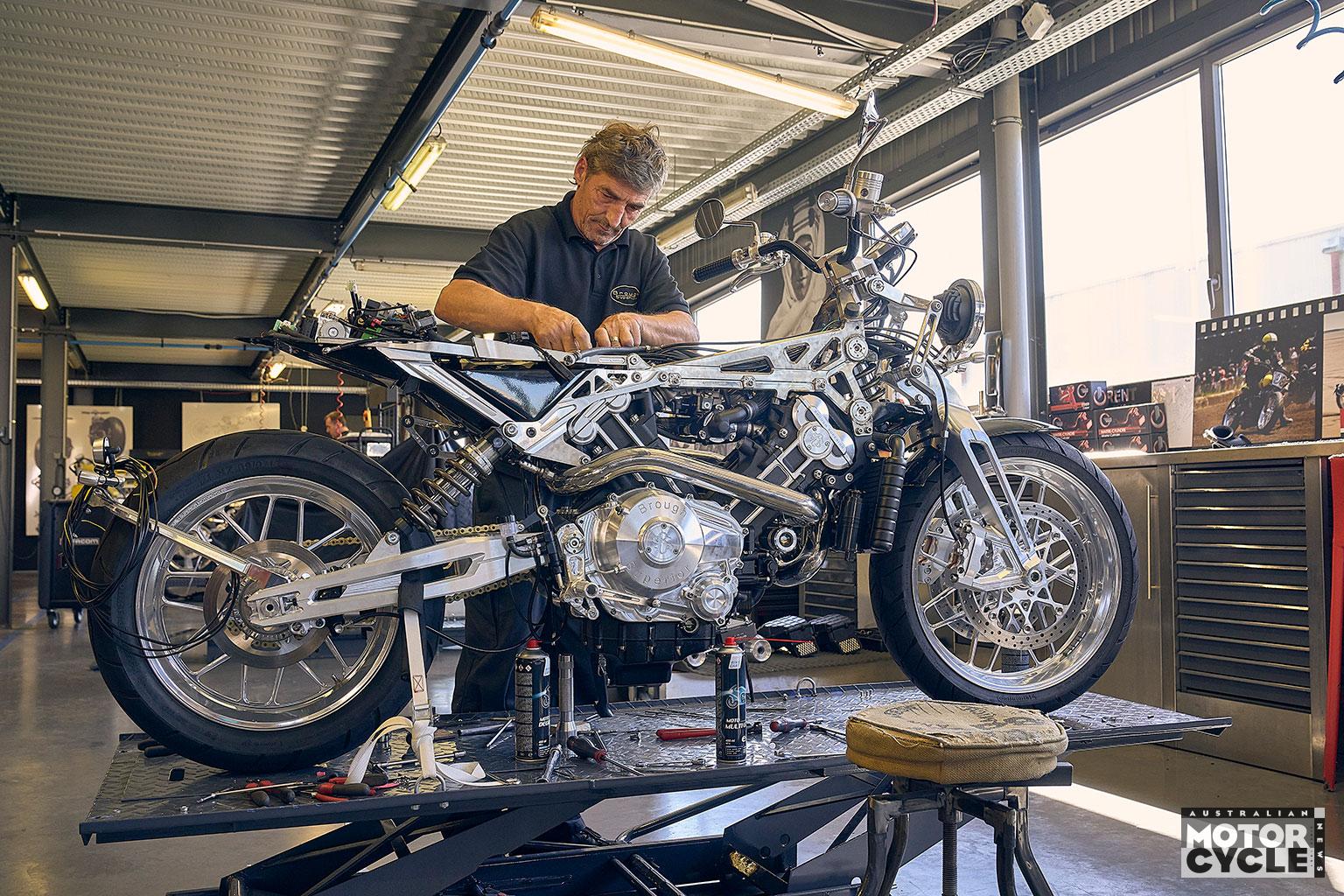
It also has quite different chassis geometry than anything else in the current Brough range, as Albert Castaigne explains. “The Lawrence has the same basic platform as the Dagger, but it’s a sport cruiser with a bigger 19-inch front wheel, so it’s rather more stable; an easy-rider that many of our customers use mainly in town or for relaxed country rides. It has a 17-inch rear wheel, but with a 200-section tyre – like I said, a cruiser. But the Dagger is much sportier, with 17-inch wheels and the rear a narrower 190/55R17 Michelin Road 6, which makes it easier to change direction quickly. That’s also the purpose of the altered chassis geometry; the Dagger has a 50mm shorter wheelbase at 1485mm, and the head angle is reduced to 23° from the Lawrence’s 24.2°, with much less trail at 86.9mm versus a longer 105.5mm on the Lawrence. So the bike is shorter, with a more aggressive front end. We went to the limit, because the front wheel is nearly touching the camshafts, so it has much more sporty handling.”
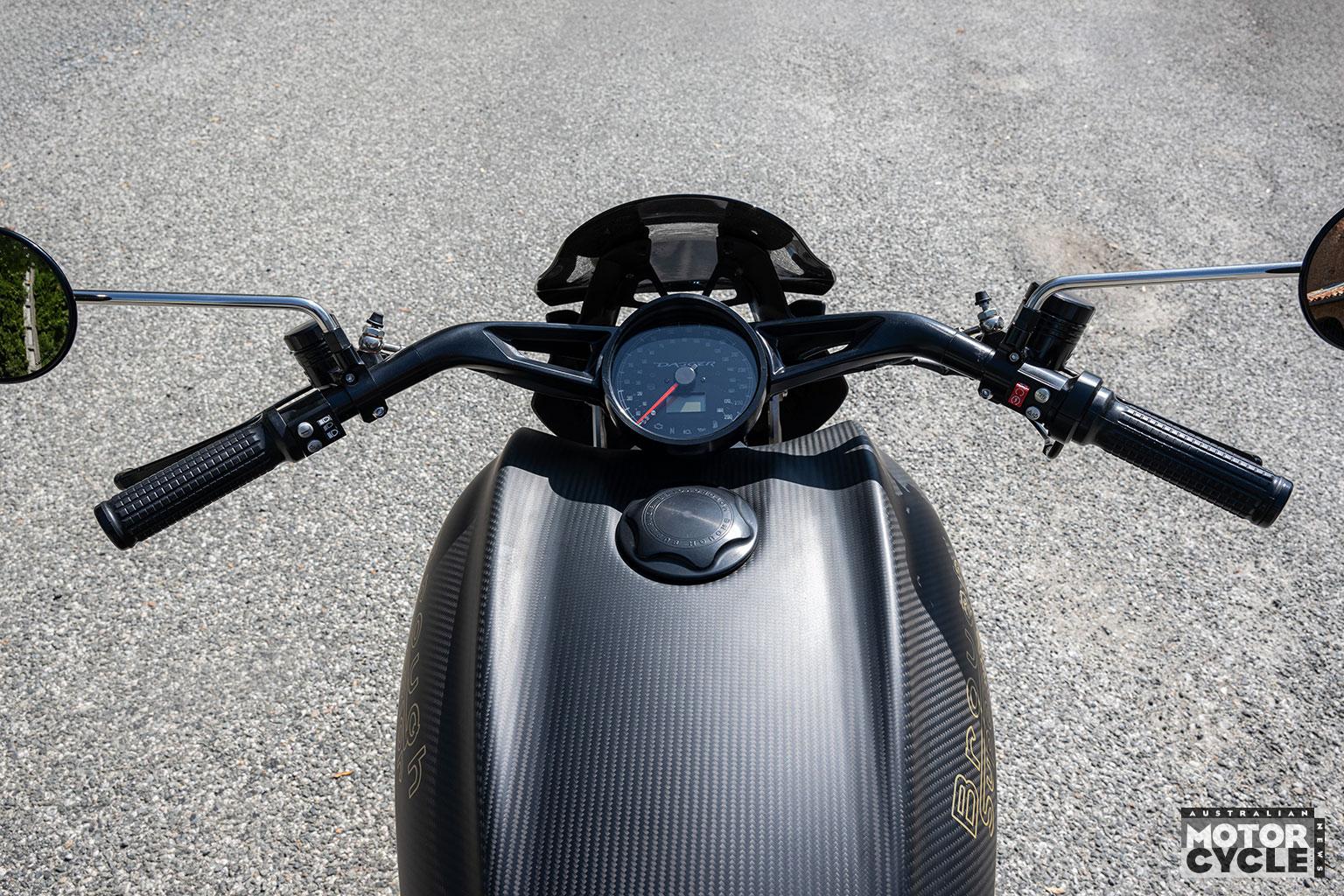
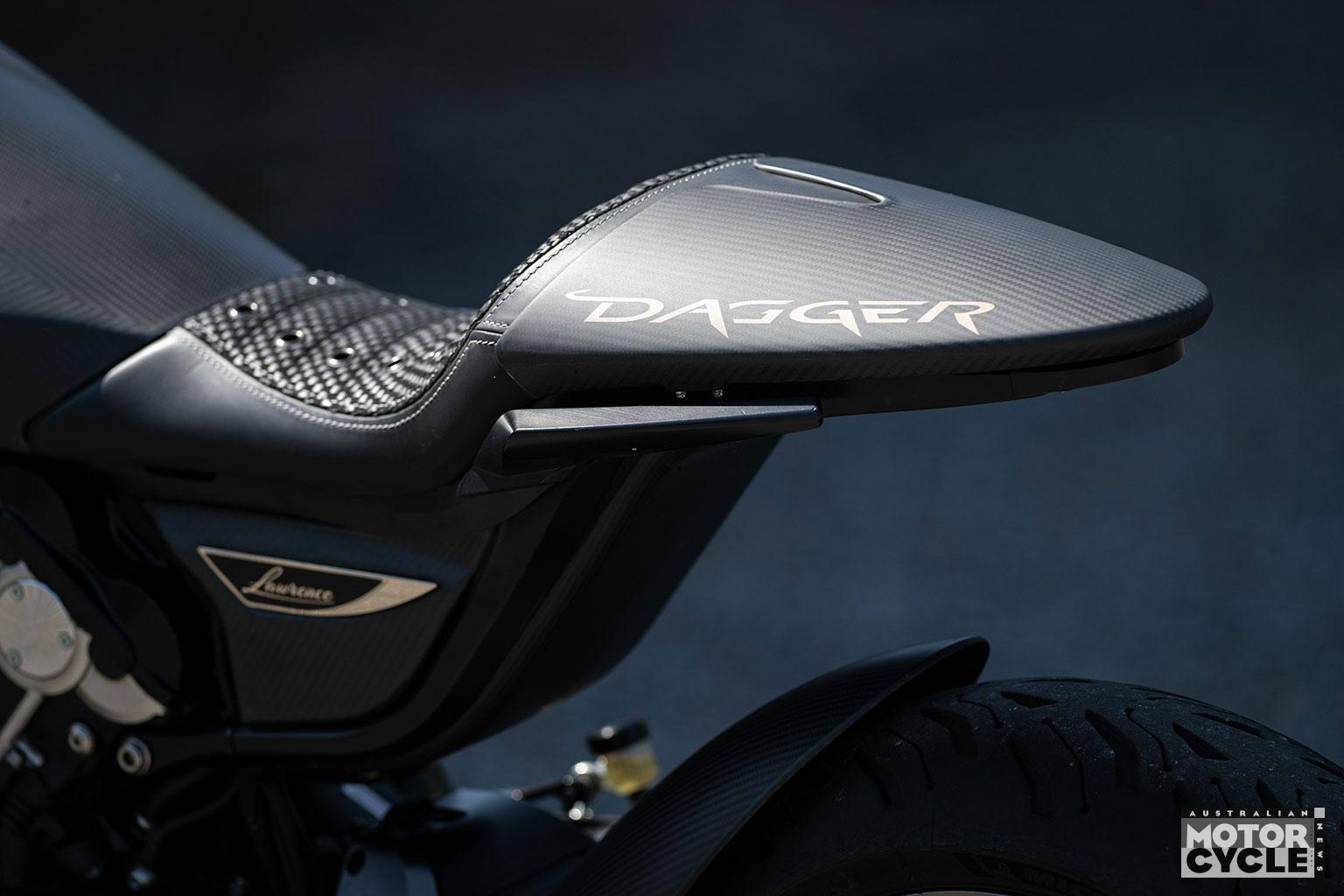
Throwing a leg over the Dagger’s two-up seat in order to verify all this number-crunching immediately showed how different it is from the Lawrence – for that seat is mounted 25mm higher at 810mm, without any problem for a 1.8m tall rider to put both feet on the ground at stoplights. There’s a quite different shape to the one-piece cast aluminium handlebar that’s actually made by Beringer the brake company, which is taller but with the fat grips pulled back to deliver a more upright, comfortable and even quite a spacious stance. This helps makes riding the Dagger in traffic easy, especially with the light-action clutch – a BIG improvement over the Ducati Monster! This has just the right amount of engine braking left dialled in to the APTC slipper mechanism – not so much that it causes chatter on the overrun from high revs, but enough to be a help in slowing for a tighter turn.
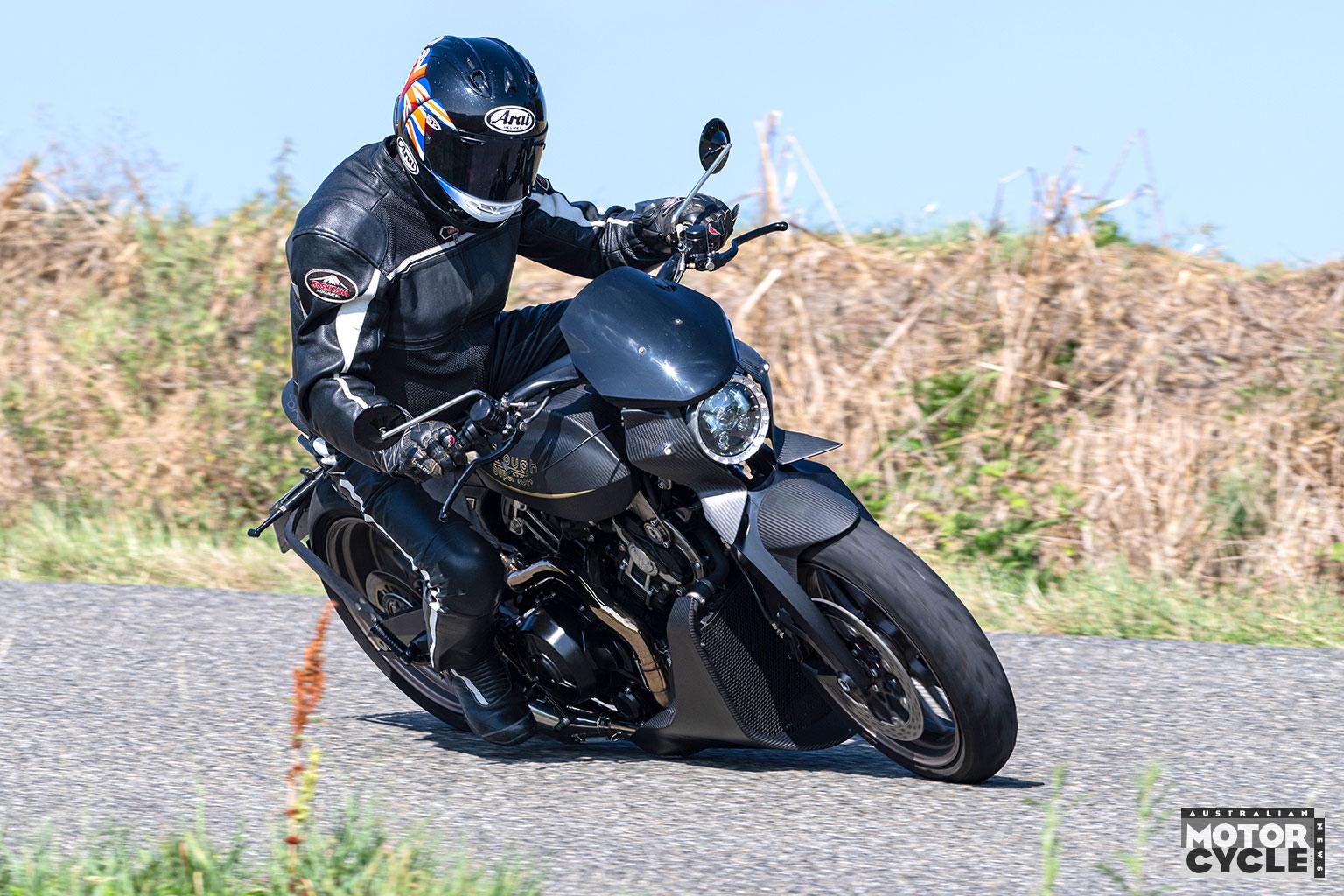
Thanks to its sharper steering geometry, it’s definitely easier to flick from side to side through successive switchback curves in the foothills of the Pyrenees than on any other of the several born-again Brough models I’ve ridden. That’s thanks also to the narrower rear tyre which, however, gives more than adequate grip for exploiting the meaty engine’s accessible torque exiting a third gear turn, and to the leverage provided by the wide handlebar. The wide spread of torque from the meaty motor means you can hold third gear for mile after mile of twisting roads, with an occasional dip into fourth for a straighter stretch of highway. Sweet as the CIMA gearbox is to shift gear on, the engine’s wide spread of torque means you can cut back on doing so, even without remotely approaching the 9800rpm revlimiter. It will pull seamlessly from under 3000rpm all the way to eight grand, with zero undue vibration.
Form Meets Function
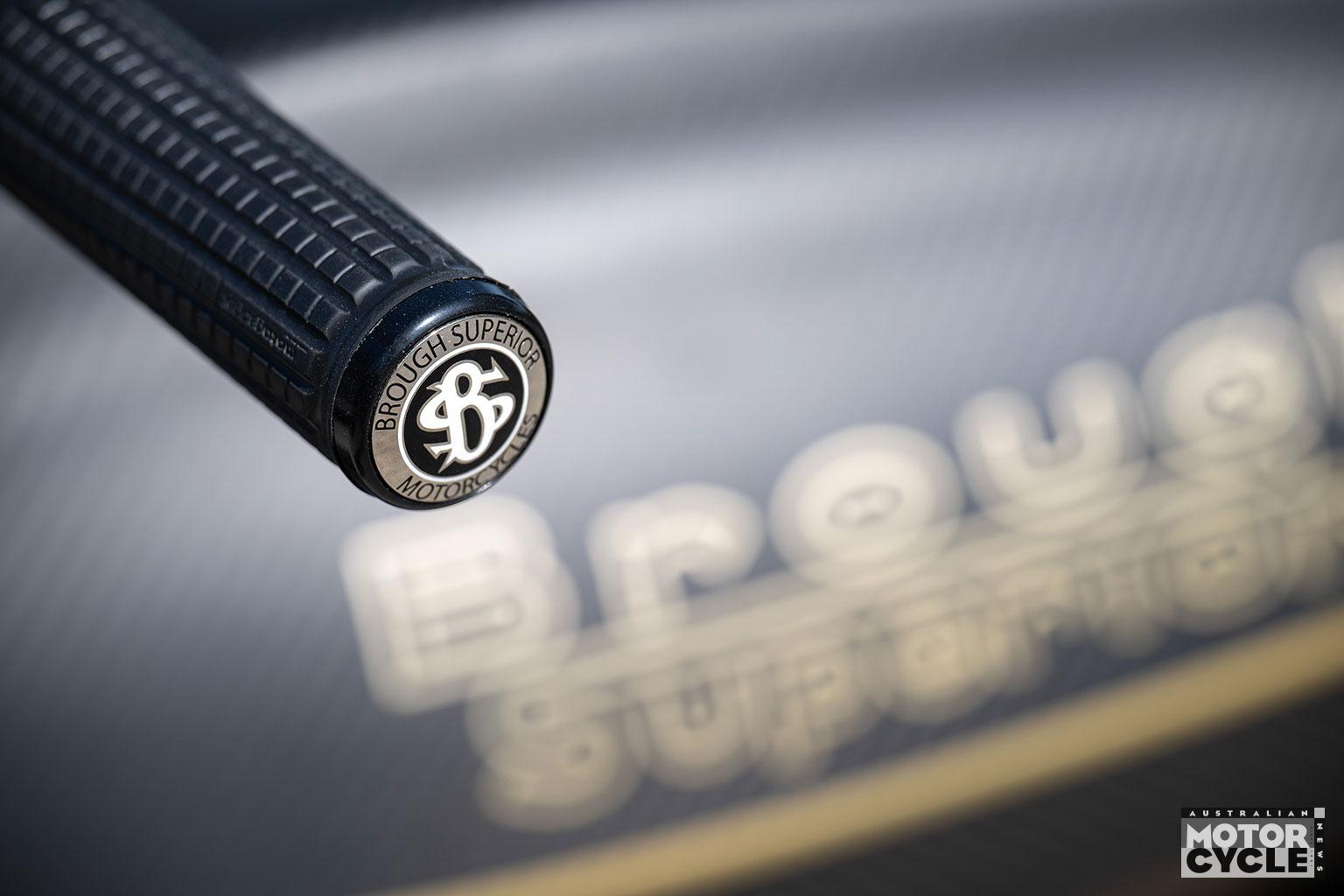
There are the usual innumerable neat detail touches on the Dagger as on all today’s Broughs, like the classy-looking brake and clutch master cylinders, the badging at the ends of the handlebar, the elegant 3D curves on the wishbone fork strut… just gaze at the bike and every five seconds you’ll find something else to admire. Even the key is a visual work of art.
Thumb the red kill switch-cum-starter and the 88º V-twin motor catches fire instantly with a delicious, muted roar from those twin pipes. In creating the Dagger, Henriette & Co have subtly revamped the engine tune, which still has plenty of poke and enough power to thrill. Yet despite all the torque it has to harness, the Adler slipper clutch has an unbelievably light action. I could work it with the little finger of my left hand, so this is an ideal bike to ride in city traffic, thanks also to the slick-shifting CIMA six-speed transmission. That made up for not having even a one-way powershifter on it, let alone a clutchless two-way system; surprising for a bike with this level of performance and price tag – but Henriette says this is a deliberate move. “Of course, we could incorporate that in our engine management ECU, but I don’t want to deprive the owner of any personal involvement in riding the bike,” he says. “This is a bike which offers a purity in the riding experience, which I think excessive electronic intervention would destroy.”
Alhough it still has an old-style cable throttle – and will for the foreseeable future, so at present there’s still no choice of riding modes as would come with RBW – the low-down mapping of the Synerject ECU on the Dagger was really excellent, with spot-on fuelling delivering a smooth pickup from a closed throttle, and a linear power delivery as revs mount. So when you trailbrake into a turn, as the Fior fork will allow you to do safely, the transition point at which you open the throttle to start accelerating out of the bend doesn’t betray any jerky or over-aggressive response that might cause the rear tyre some grief; just a smooth, almost syrupy pickup.
Who says torque is cheap?
There’s heaps of torque as low as 2000 rpm on the hard-to-see tacho reading in the small digital panel set in the large, round speedo parked in the centre of the handlebar casting. This also shows engine temp and mileage/trip if you thumb your way through it, but there’s still no gear selected reading, which would really be useful on such a torquey bike, where it’s all too easy to lose track of which gear you’re in. If an entry-level KTM 125 Duke can have this, a Brough Superior should, too. Also, there’s still no fuel gauge on the speedo – just a warning light. And while I’m complaining, the starter button and direction signals are still way too small and awkward to use with gloves on. But, as against that, the sidestand is easier to find at rest on the Dagger than on other Broughs I’ve ridden before, so that’s a welcome improvement.

Comfort-wise, the higher-set seat provides good visibility and stance but may feel firm on longer rides, although Brough offers thicker seat padding on request. Exhaust heat is still noticeable, especially in warmer weather.
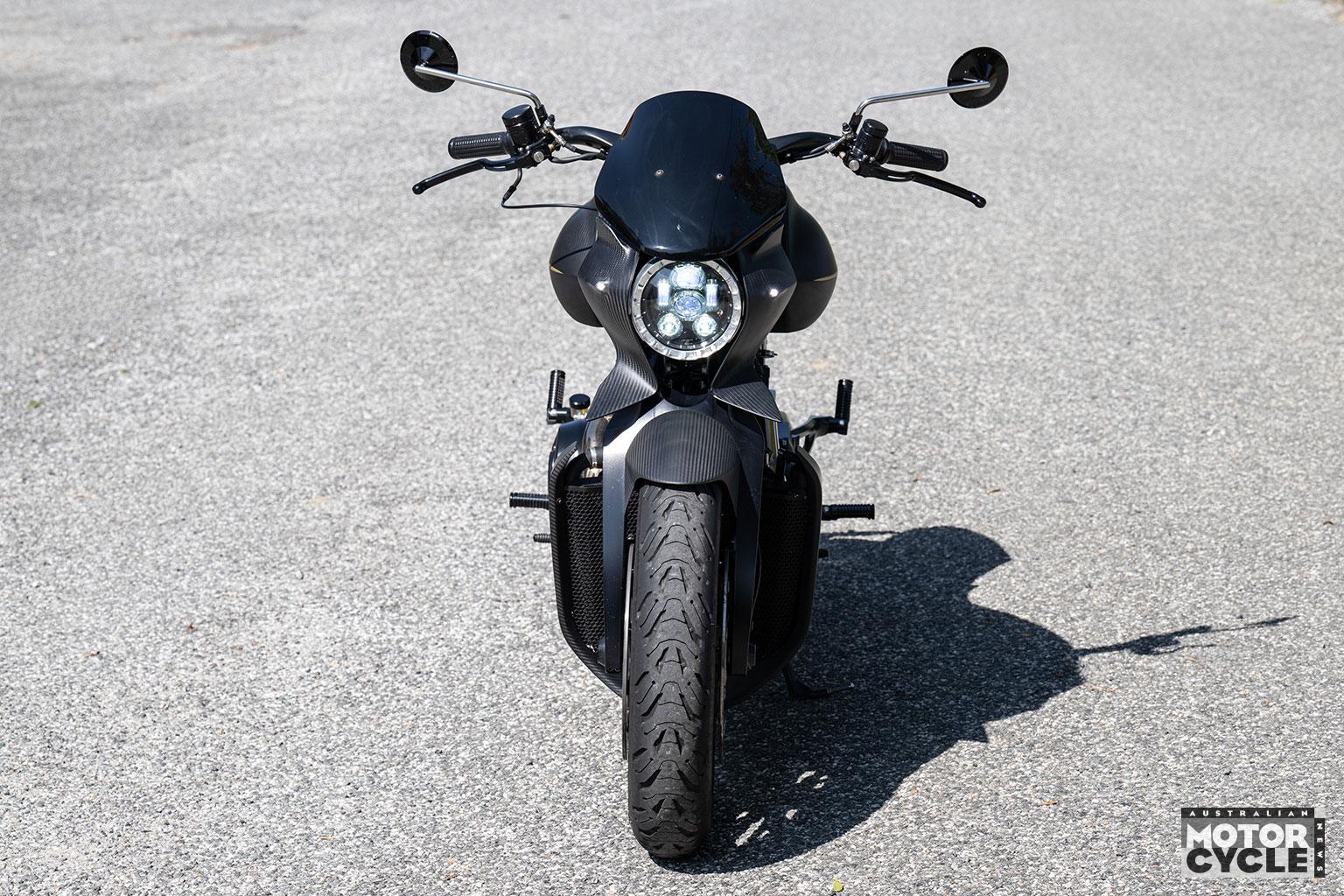
As ever, the Dagger’s front suspension is the most immediately eye-catching avantgarde feature. It’s based on the wishbone fork created by the late Claude Fior, who used it on his Marlboro-sponsored four-cylinder Fior 500GP racers in the late 1980s. The design was copied by BMW in creating the Duolever fork carried by its K-series models, since the race-minded Claude Fior had neglected to patent it! Fior, in fact, built several streetbikes for Henriette’s Boxer Design company employing the same front suspension, an evolved version of which appears on all new Broughs.

There are several effective benefits of the wishbone fork design, including the separation of steering and suspension functions, so that the front suspension doesn’t freeze when you trailbrake into a turn, on the angle. It also delivers the Dagger’s excellent steering lock, plus zero fork deflection under braking, so no risk of the front wheel touching the engine, despite the steeper rake and reduced trail. And there’s reduced unsprung weight, too, leading to improved suspension compliance and clean, uncluttered aesthetics. The wishbone fork also potentially offers immediate and subtle adjustment of all chassis geometry – trail, head angle, wheelbase, ride height and weight distribution, as well as easier fine-tuning of suspension settings than is possible on even the most sophisticated telescopic fork. Add in the enhanced stiffness-to-weight ratio of a wishbone front end compared to a tele fork, and you can appreciate the reasons for the fanatical belief Fior possessed in the worth of his design.
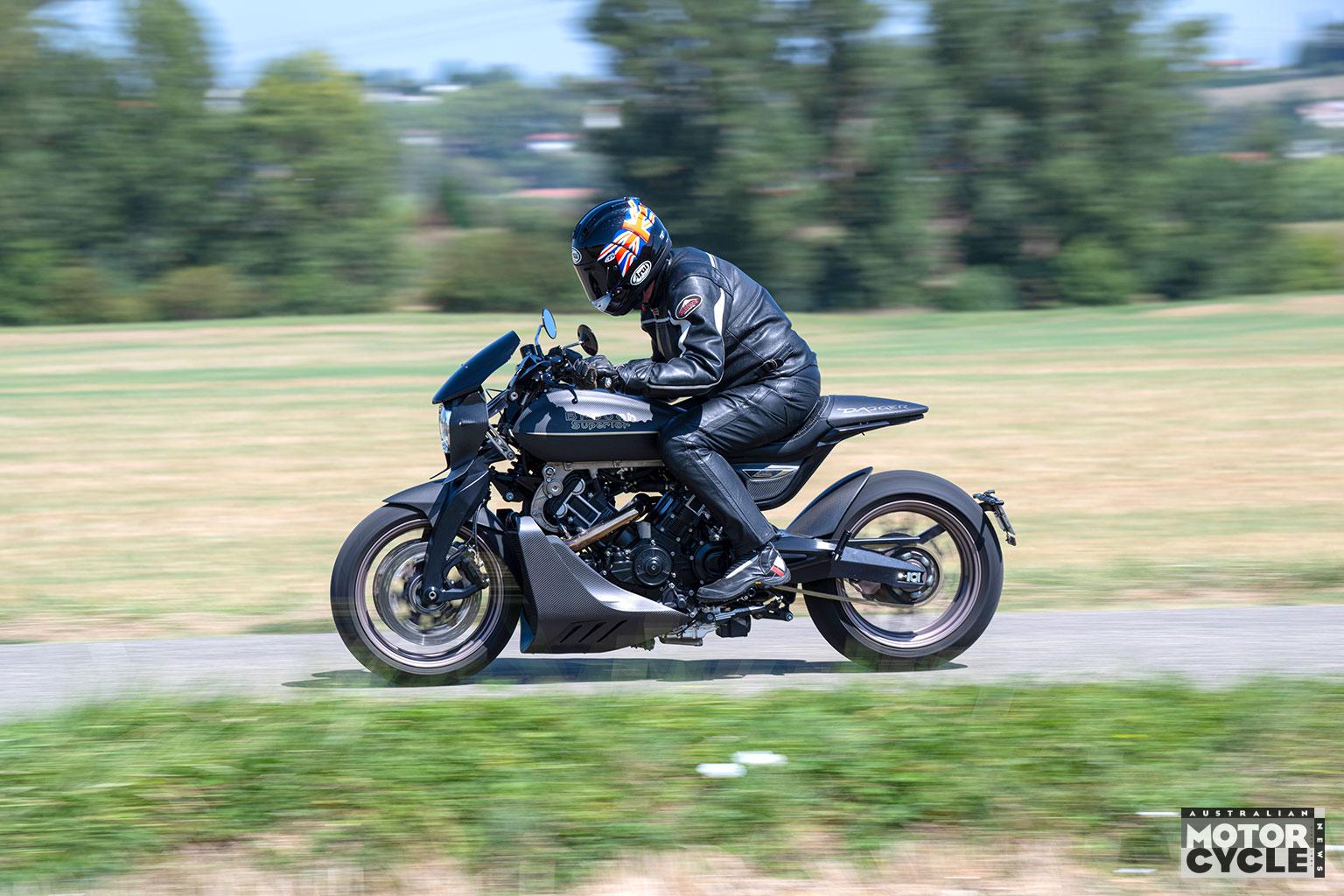
With the 17-inch front wheel now fitted and the heavily revised front-end geometry the Dagger’s steering seemed more precise than it did on the Lawrence, with notably easier turn-in to a corner. The wishbone front suspension’s Donerre shock, adjustable for preload and rebound damping, performed well over the sometimes-rugged road surfaces of southwest France. The fully-adjustable Donerre rear monoshock has the same progressive rate link as the Lawrence in delivering a similar 130mm of wheel travel. Although the Dagger’s suspension damping settings are notably tauter than on the Lawrence, you don’t unduly feel irregularities in the road surface because the shocks are dialled in so well.
Henriette and his men have a winner in the new Dagger. Still, it’s a pity ownership will be restricted to the well-heeled few. In relaunching the Brough Superior marque after 75 years of hibernation, they can be proud of ensuring the legend lives again, thanks to producing yet another appealing and even more practical variant of one of the most individual modern-day motorcycles that money can buy.
✅ PROS – Distinctive styling, agile handling, smooth and torquey engine, innovative front suspension.
❌ CONS – No gear indicator, prominent exhaust heat, tacho a bit hard to read, oh and the price!
SPECIFICATIONS
ENGINE
Liquid-cooled DOHC 997cc 88° V-twin Performance 75kW @ 9600rpm, 87Nm @ 7300rpm
Fuel system EFI with Synerject ECU and 50mm throttle bodies
Transmission 6-speed with Adler slipper clutch
Frame CNC titanium, tubular steel subframe, aluminium swingarm
SUSPENSION
Front Fior-type wishbone, Donerre monoshock, 120mm travel
Rear Donerre monoshock, 130mm travel
Geometry 23º rake, 86.9mm trail, 1485mm wheelbase
Brakes Beringer calipers with Continental ABS
WHEELS & BRAKES
120/70R17 front, 190/55R17 rear Michelin Road 6
Seat height 810mm
Weight 200kg (dry)
Fuel capacity 17L
BUSINESS END
Price $131,000
CONTACT