With Indian pulling the pin on its FTR line, what better excuse to swing a leg over the Rally for one last hurrah? It’s a bike that never tried to fit the mould, and that’s exactly why we’ll miss it
For those unfamiliar with flat track racing, the idea of fitting dirt tyres to a highly modified street bike and then whizzing around a dirt oval at high speed with the wheels rarely in line might seem like a mad and obscure pastime. But several riders of some renown cut their teeth riding such beasts, from American GP luminaries like Kenny Roberts Senior and Wayne Rainey to more recent superstars like Casey Stoner and Marc Marquez. Flat track racing imbues (talented) riders with an innate sense of how to steer a motorcycle with the rear wheel – but actual flat track motorcycles tend to be a motley crew of custom-framed mongrels, certainly nothing you’d dare to venture forth on in civilised society. Until Indian unleashed the FTR1200 upon the unsuspecting public in 2019.
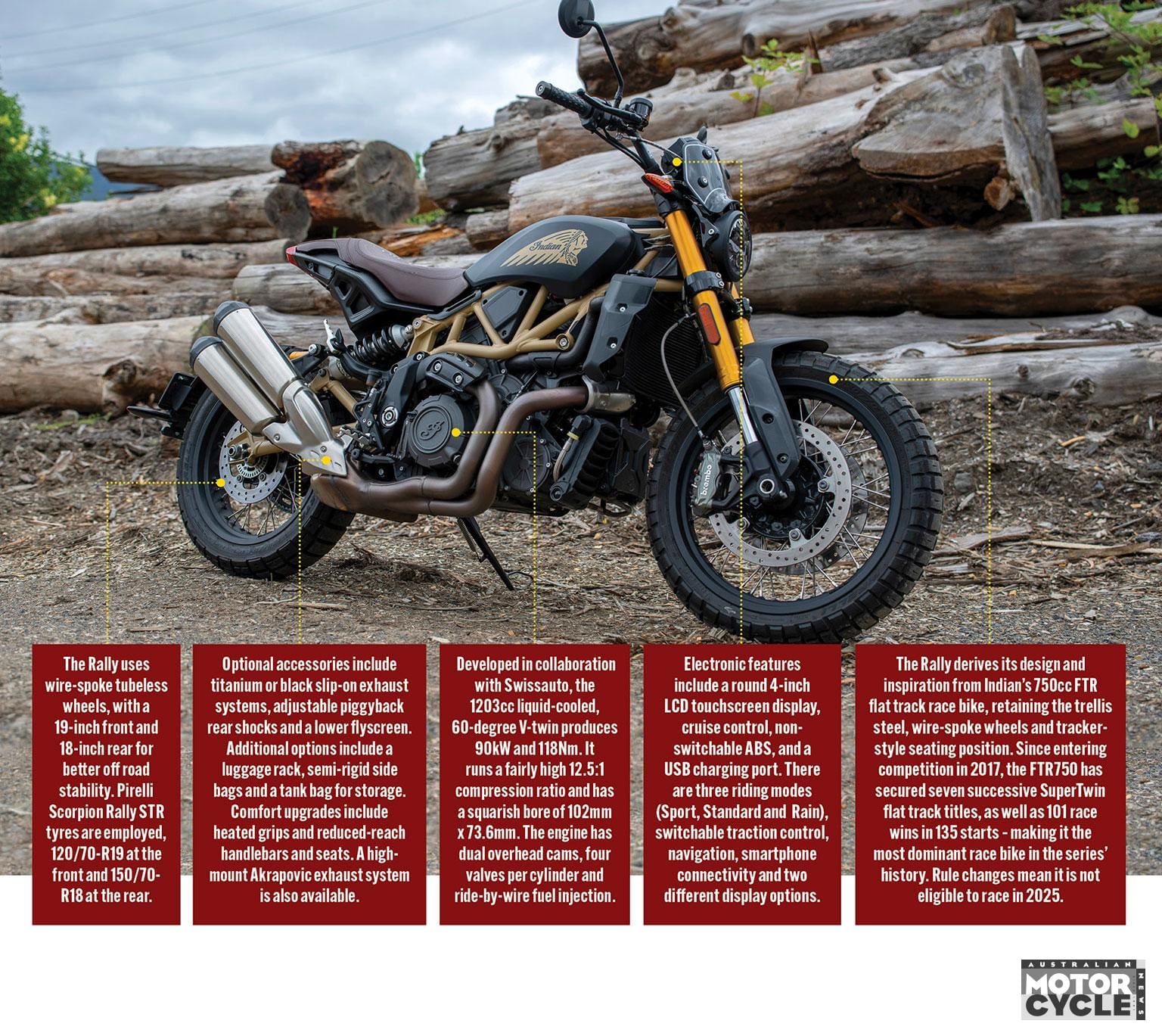
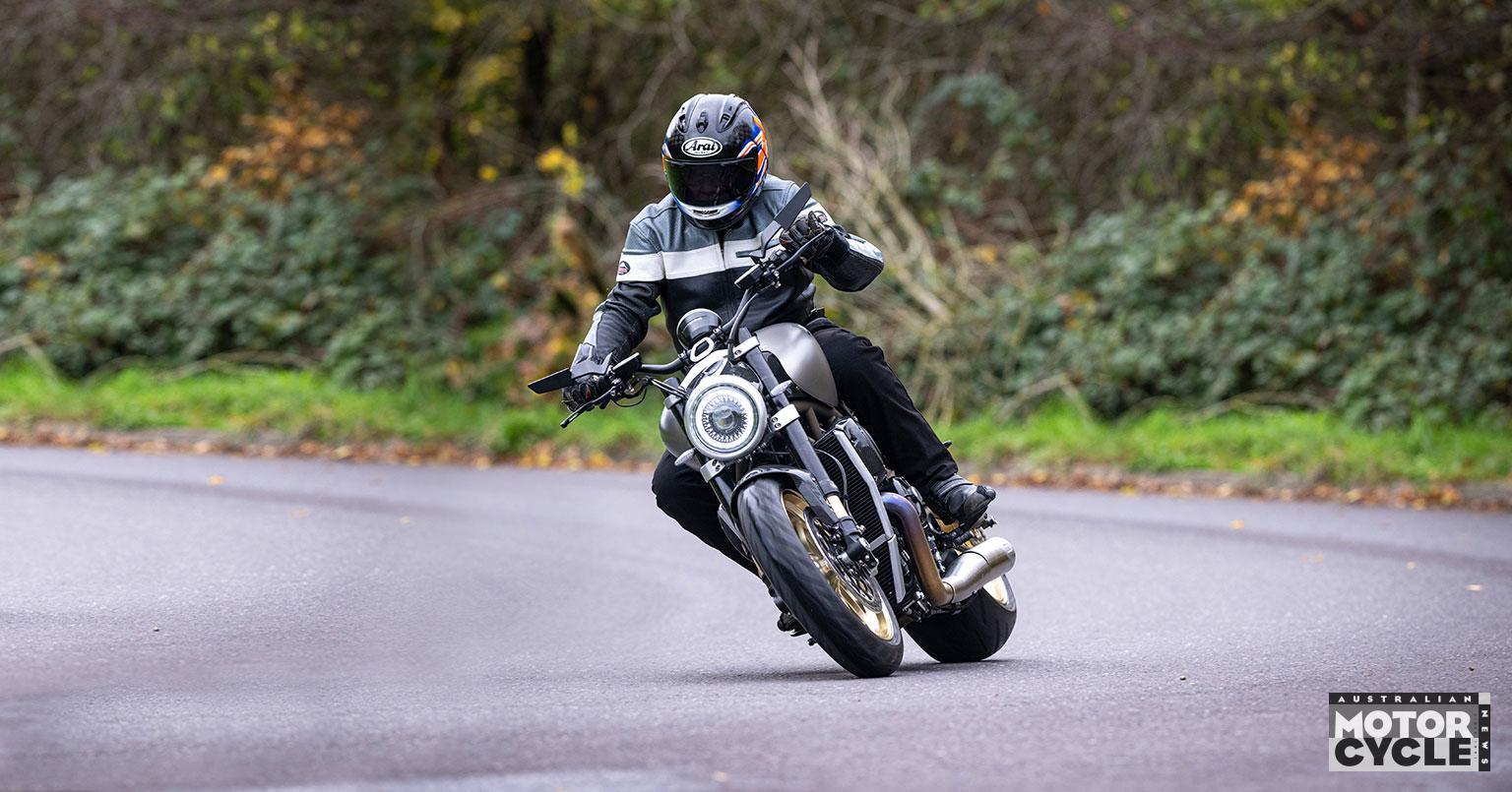
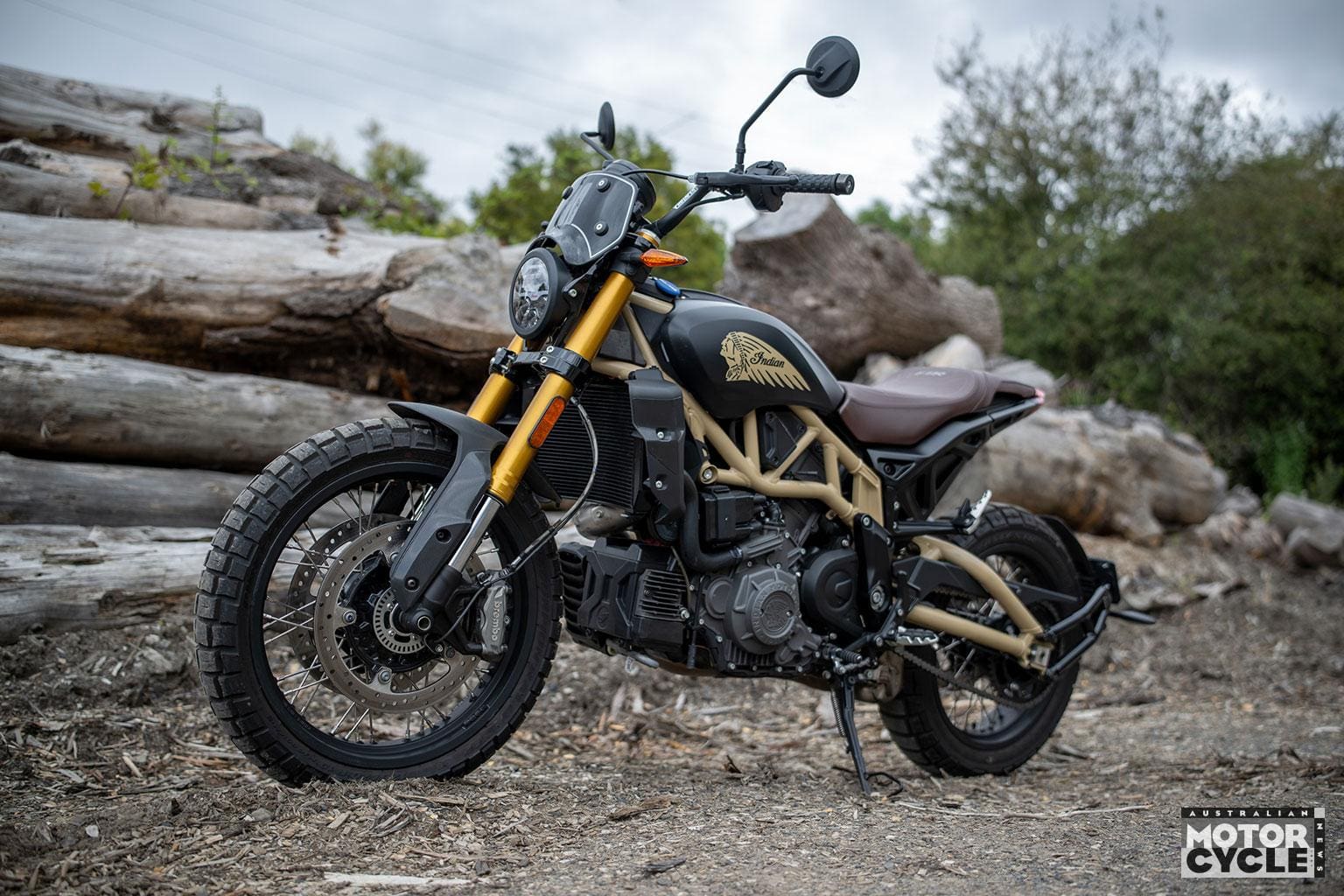
The newly updated 2025 FTR Rally packs more electronic tricks and added refinement, but its 1203cc, 90kW (120.7hp), V-twin heart is still inspired by the tracker that’s been dominating dirt ovals in the US for the better part of a decade. Indian’s FTR Rally defies easy pigeonholing. Its spoked wheels sport knobby tyres, but it’s not an adventure bike. Its brawny V-twin mill isn’t obscured behind plastic fairings, but it’s not a naked bike in the traditional sense. The chrome accents, high ‘bars and leather seat probably come closest to a retro/scrambler niche, but it’s got much heftier gonads than other bikes in that category.
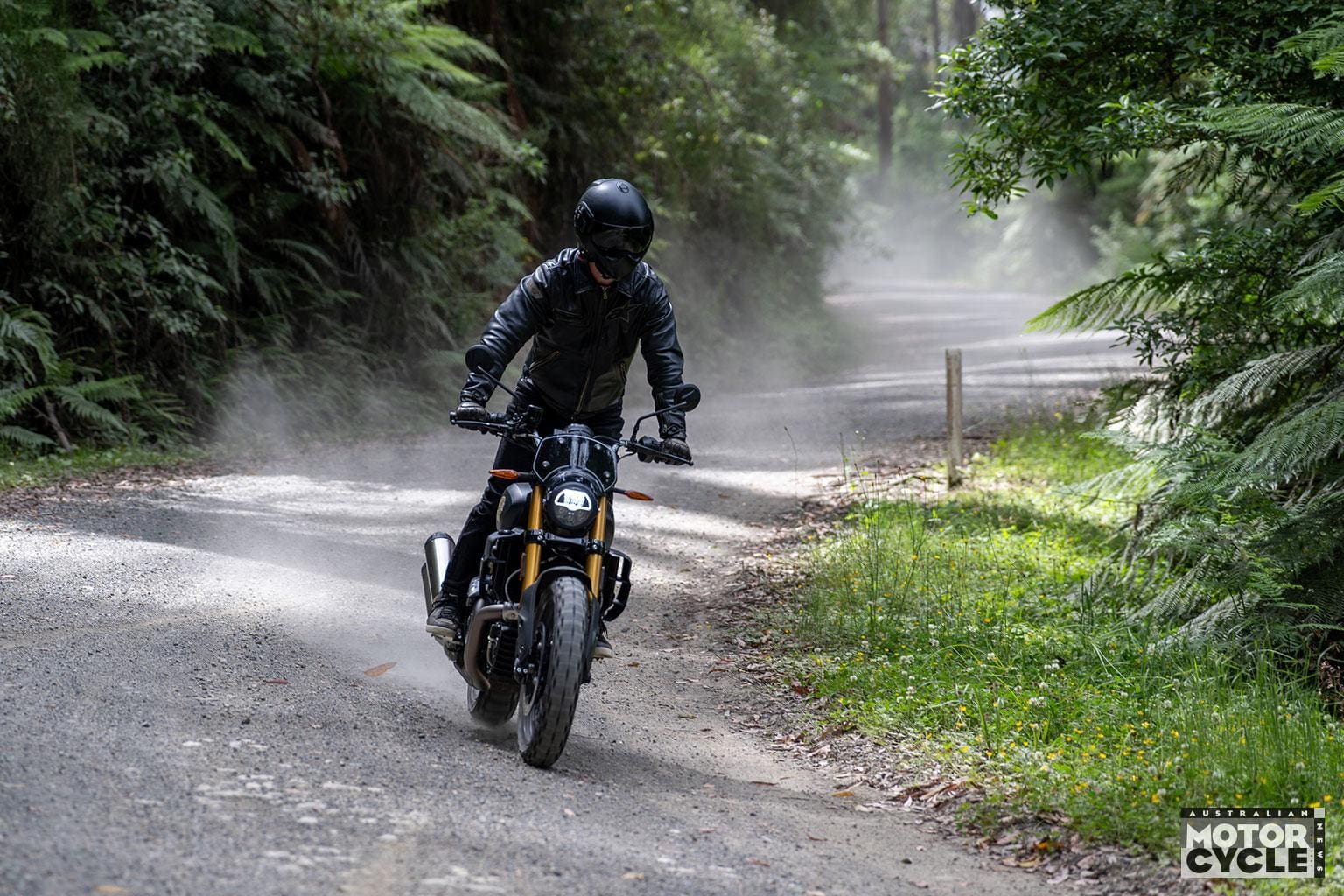
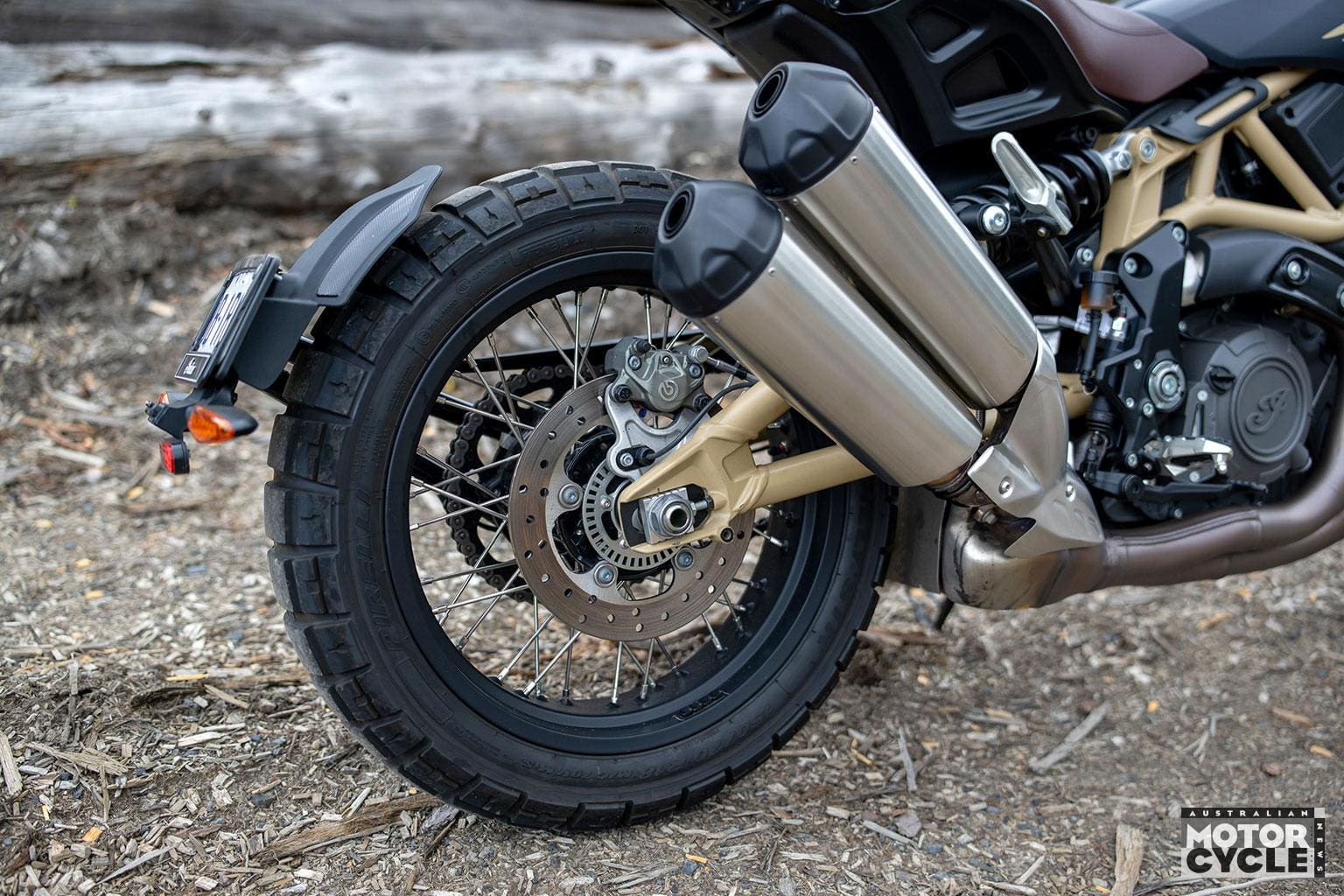
Of the five FTR1200 variants on offer, the Rally stays truest to the original ‘street tracker’ concept, with larger 19-inch front and 18-inch rear spoked rims shod with Pirelli Scorpion adventure tyres and a more stable, dirt-friendly 26.3° rake/130mm trail. The Rally also happens to be the second cheapest of the FTR variants, coming in at $25,995 ride away, which is well within shouting distance of Ducati’s $26,000 1100 Sport Pro Scrambler and Triumph’s $24,900 1200 Scrambler XE, although both these machines pack significantly less clout at 63kW (85hp) and 66kW respectively. Oddly enough, Harley Davidson doesn’t have a dog in this fight, despite being the traditional hometown rival to Indian in actual dirt track racing, with the XG750R being a competition-only machine.
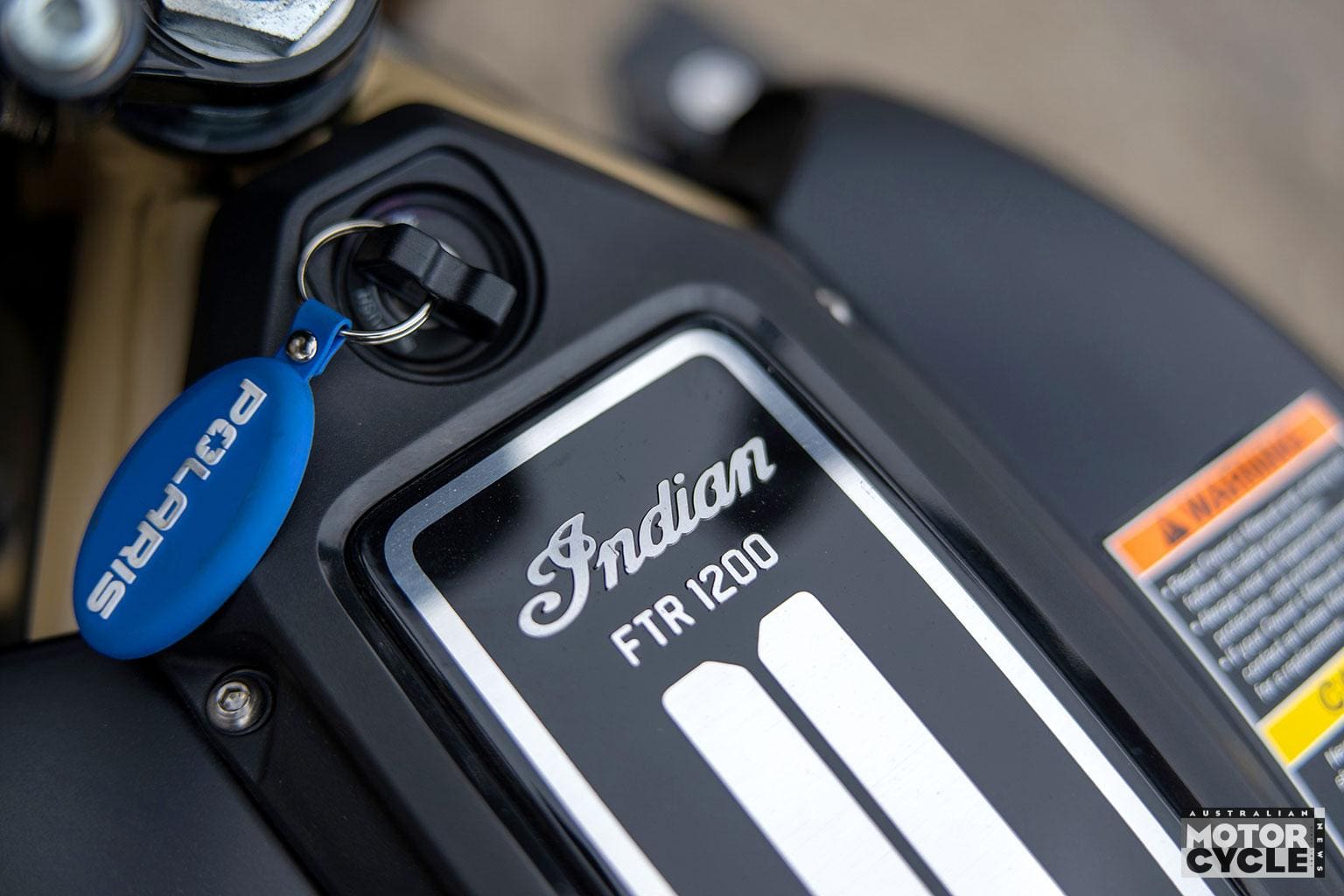
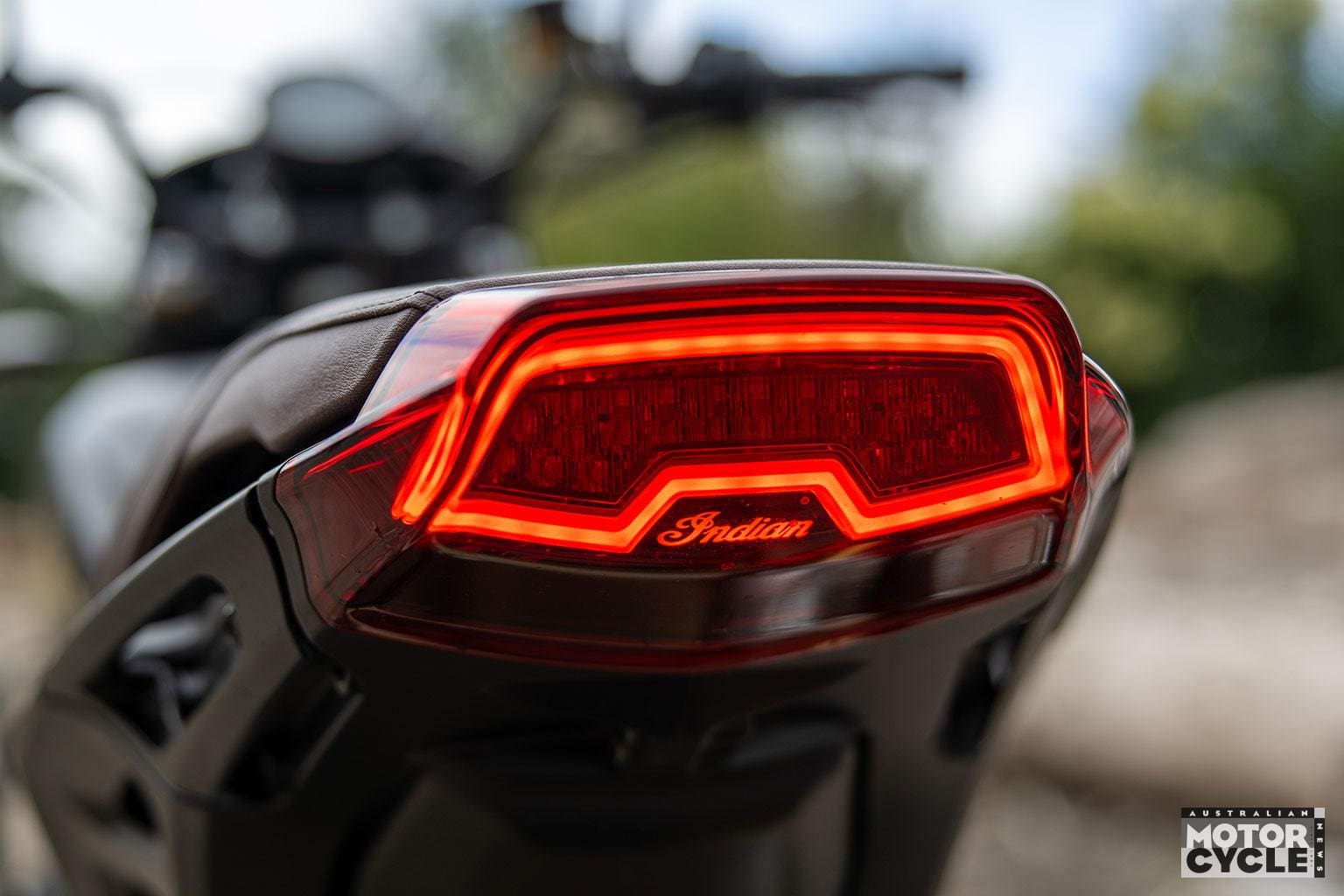
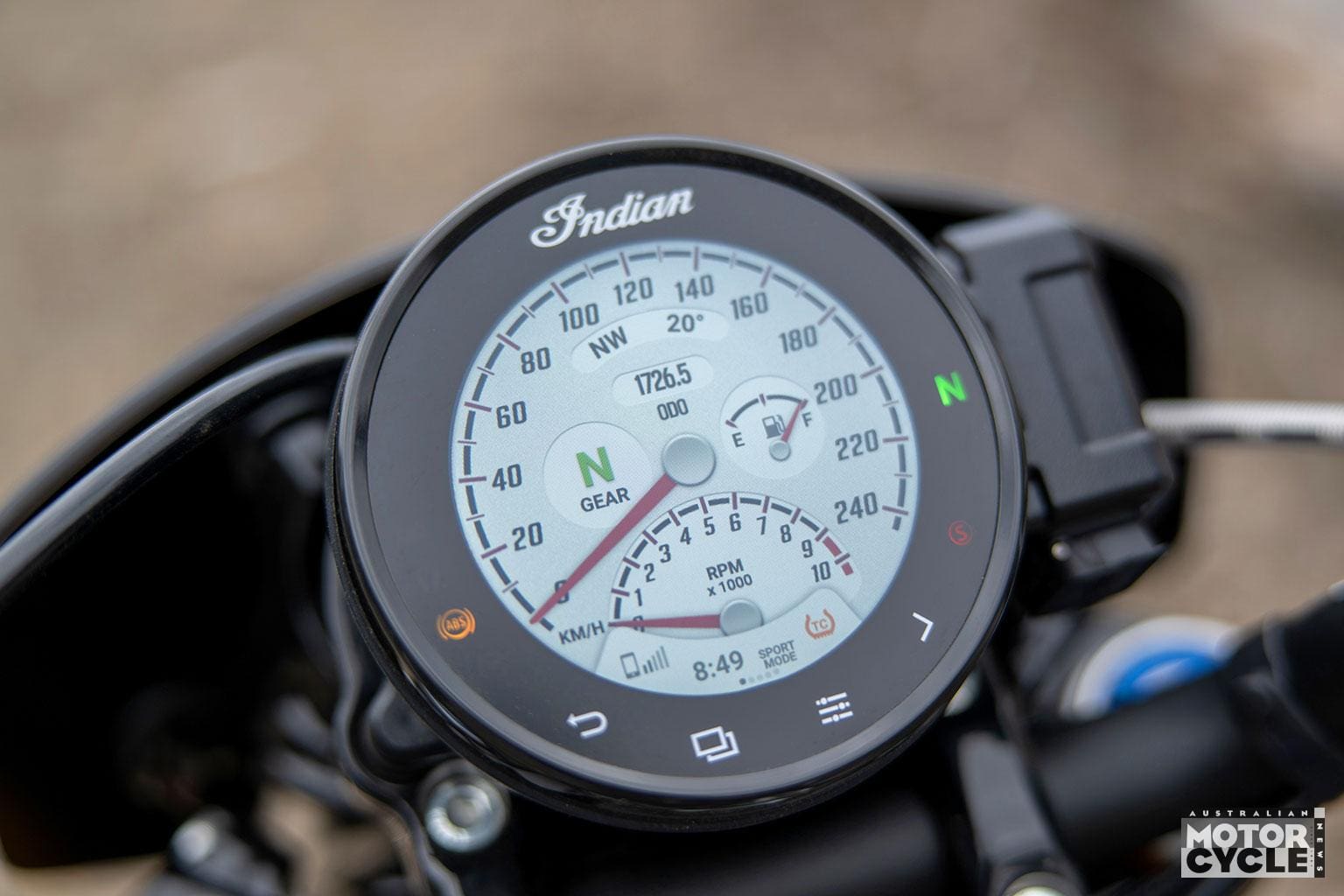
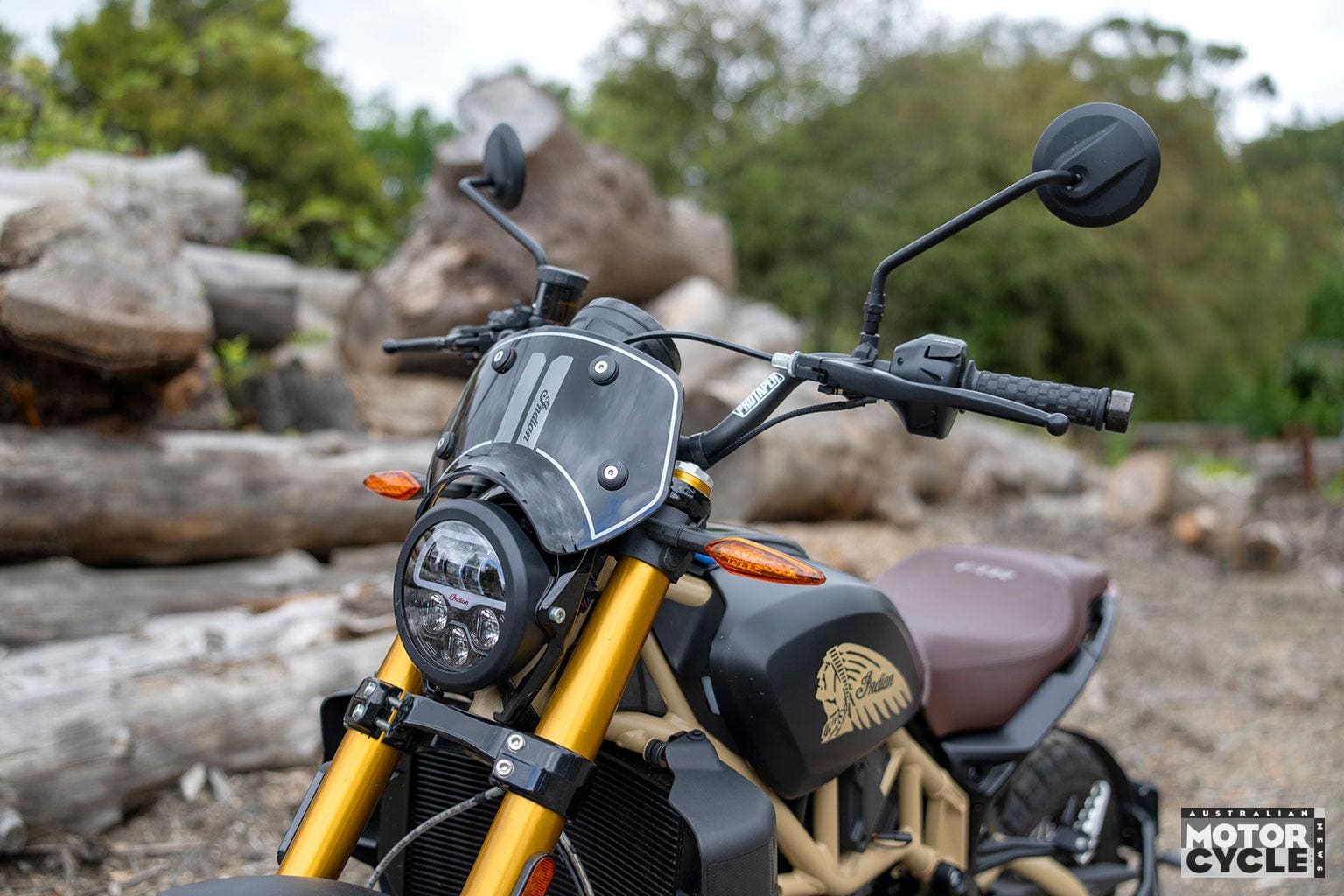
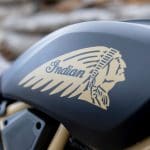
Painting the FTR’s sturdy looking tubular-steel frame tan brown might seem like an odd choice, and the monstrous number plate bracket looks like something you might hitch a caravan to, but the mix of chrome, leather and matte textures actually work well together. The FTR has a stripped-back lumberjack vibe, but those rugged looks belie a high level of sophistication and finish, with touchpoints like levers, buttons and footpegs all conveying a reassuringly solid feel. There’s also LED lights all round, electronic cruise control, an IMU-linked traction control system, three riding modes (Rain, Standard and Sport), cornering ABS, satellite navigation, bluetooth smartphone connectivity and a lovely round, matte finish digital display.
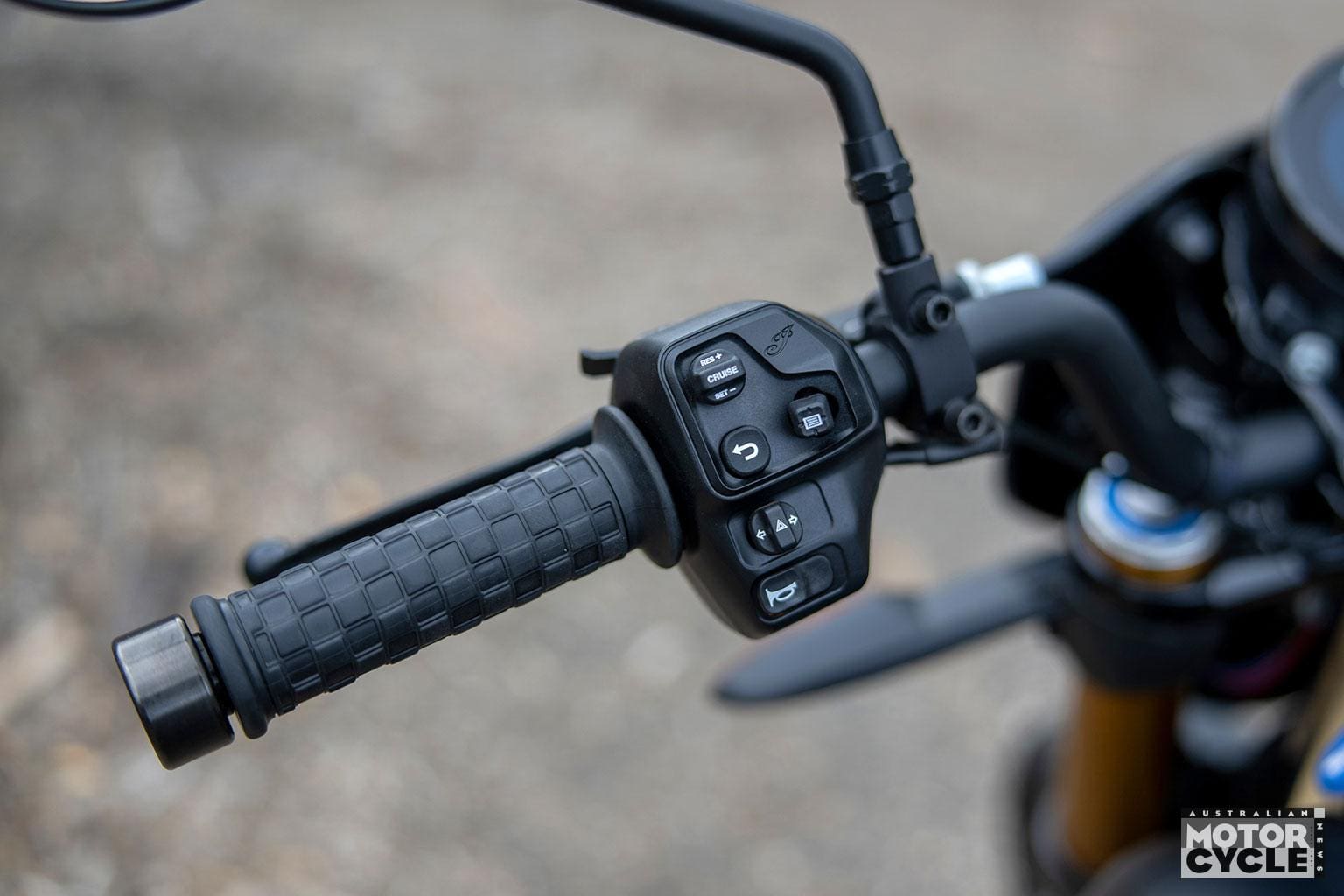
The display itself is also a touchscreen, meaning you can navigate through the menus and settings by simply pawing at it even with gloves on, although it’s better to acquaint yourself with the buttons to keep both hands on the bars. The TC and riding modes can be altered on the move, but deactivating the TC is a three-step process to first navigate to the correct menu, toggle the TC to ‘off’ and then confirm your choice – which is only enabled once you’ve closed the throttle. This is presumably to make it impossible for the monkey behind the ‘bars to switch off the electronic guardian angel by accident, but to me it feels like catering to the lowest common denominator a bit. A simple button that you can feel and hold down would divert far less of the rider’s attention away from the road while on the move.
On asphalt surfaces, the three riding modes cater well enough for most situations without needing to do the TC three-step though. Rain mode has very conservative TC levels and curtails the power significantly, while Standard gives the rider access to the full paddock of V-twin horses. The TC is more liberal in Standard mode, but still kills the fun a little too much when gassing the FTR out of corners sometimes, perhaps due to the fact the adventure rubber has less shoulder grip than a normal road-oriented tyre. In Sport mode, the TC is less discernible and although the same amount of power is available at full gas, the mapping delivers much more oomph at part throttle.
The twistgrip response in Sport mode is sharpened to such bite-your-face levels of aggro that even the cruise control struggles to maintain a constant throttle without surging a bit occasionally, but if you’re cruising you’re better off in Standard mode anyway. The cruise control itself is one of the easiest-to-use motorcycle systems I’ve sampled, with a dedicated toggle that’s supremely simple to set, adjust and disengage without looking away from the road.
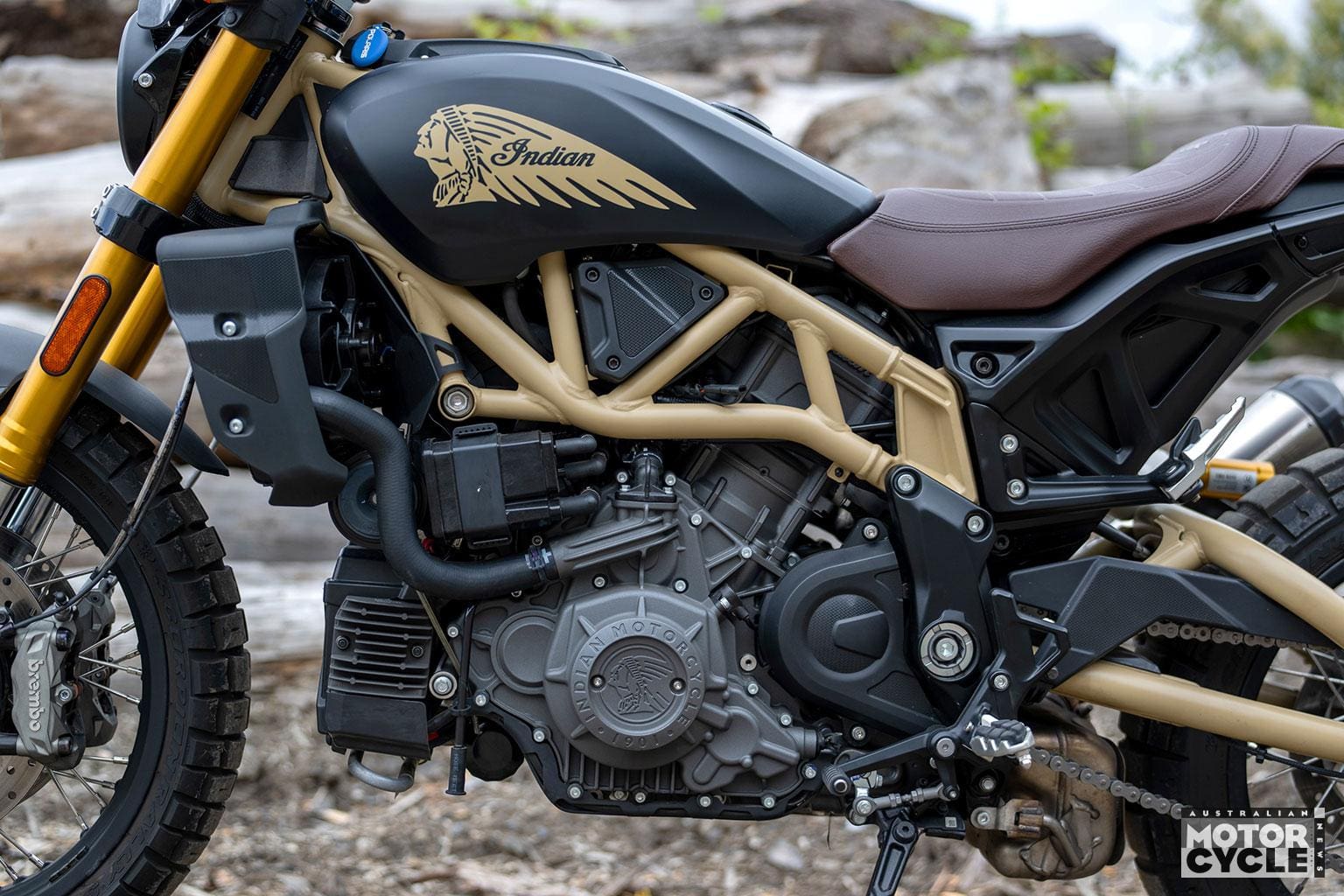
Thumb the starter with a single push and the 60-degree 1203cc V-twin sitting beneath the faux petrol tank (the real fuel cell sits half underneath the rider’s seat) grumbles to life with a muted growl. The standard exhaust looks great, but the dictates of kill-joy decibel regulations make this Indian’s war cry a bit apologetic – watch any Super Hooligan race if you want to hear what they sound like properly unleashed. Nonetheless, the numbers are more than healthy enough, with the liquid-cooled lump producing 118Nm and 90kW. It’s a bruiser of an engine that really dominates the riding experience, delivering a solid gut punch of torque from way down low in the rev range, and maintaining that barrage of grunt all the way to the 9000rpm red line. It’s no agricultural brute either; those pint-glass sized cylinders love to rev, and accessing the upper reaches of the tacho is rewarded with potent top-end shove.
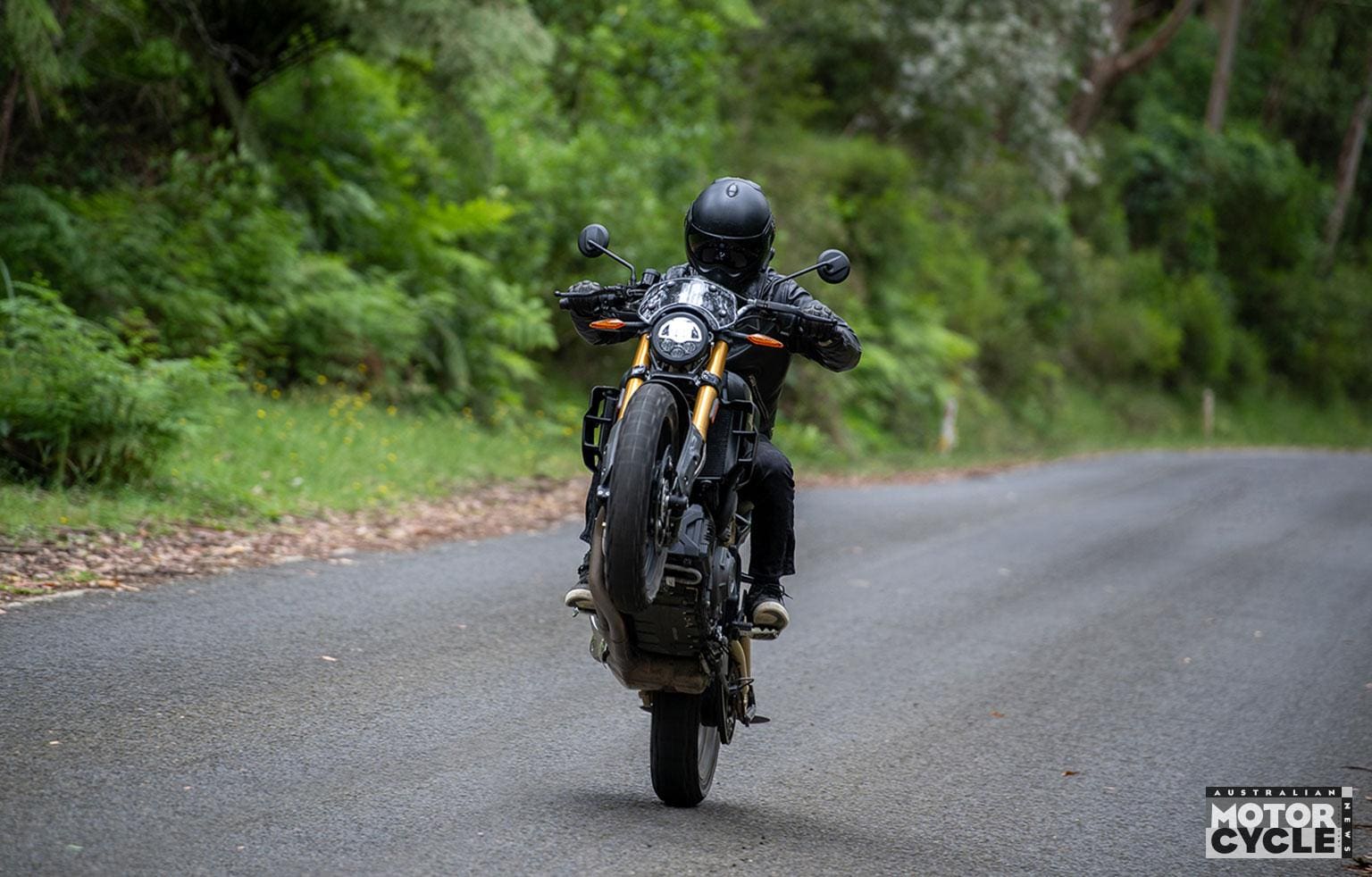
The Rally snarls forward whatever gear you happen to be in when you wind on the go-grip, with the slight gruffness at low revs a more than acceptable trade-off for that stomping, big-bore, V-twin attitude. Chopping the throttle in first gear will have the front tyre pawing at the sky with the TC off, whereas in second gear the FTR has to be prodded pretty hard to get the front Pirelli off the deck, which is a bit surprising given the burly engine response.
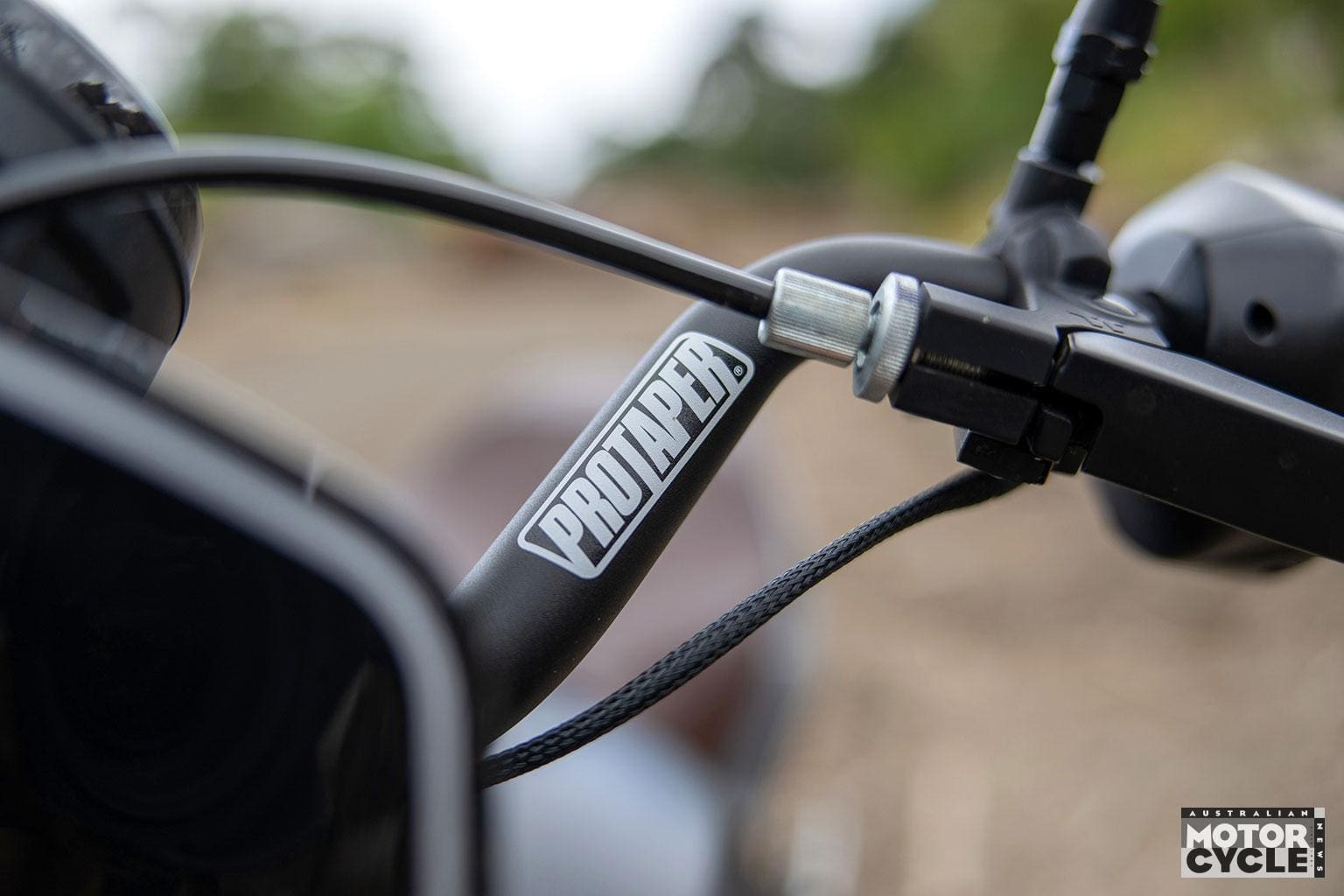
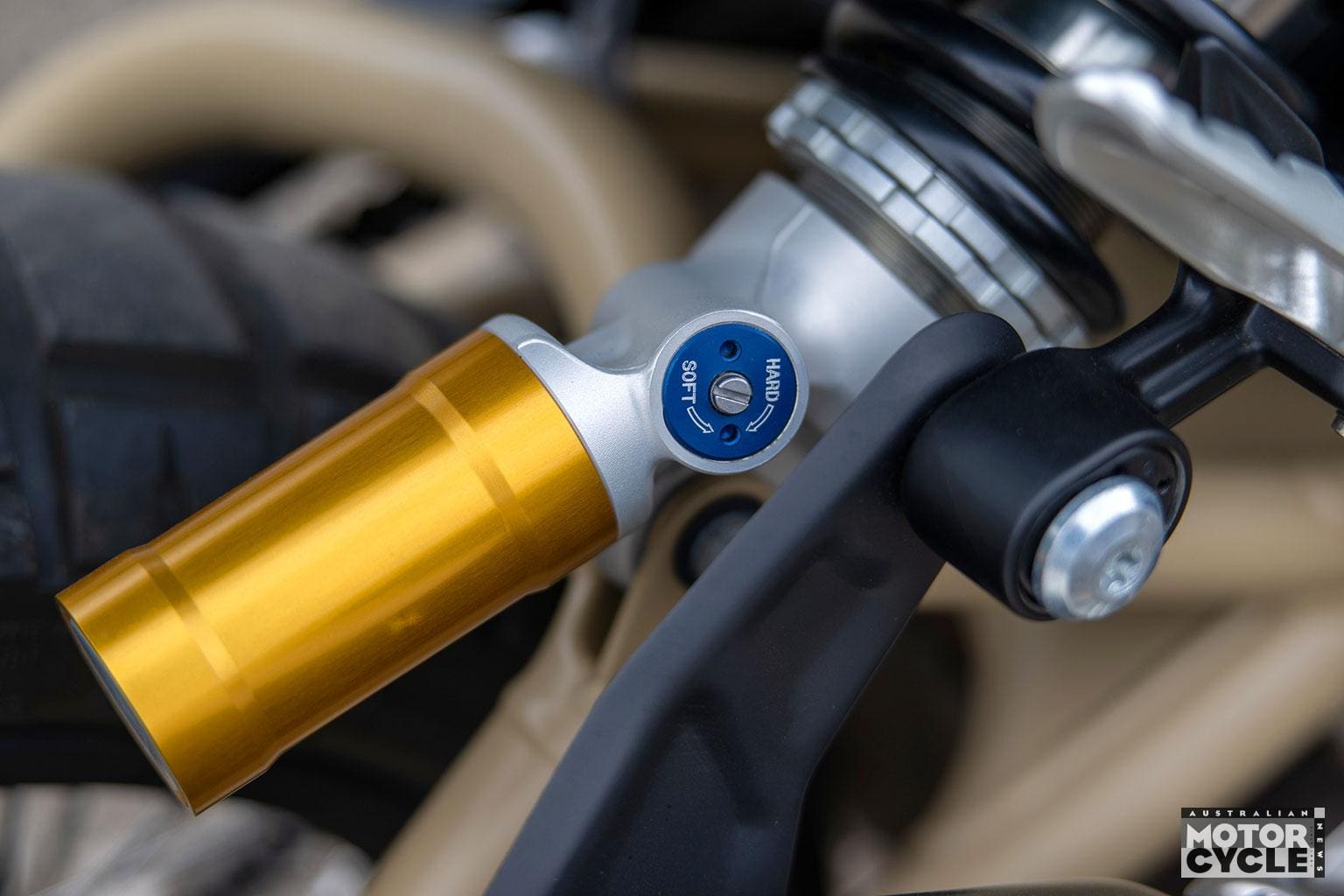
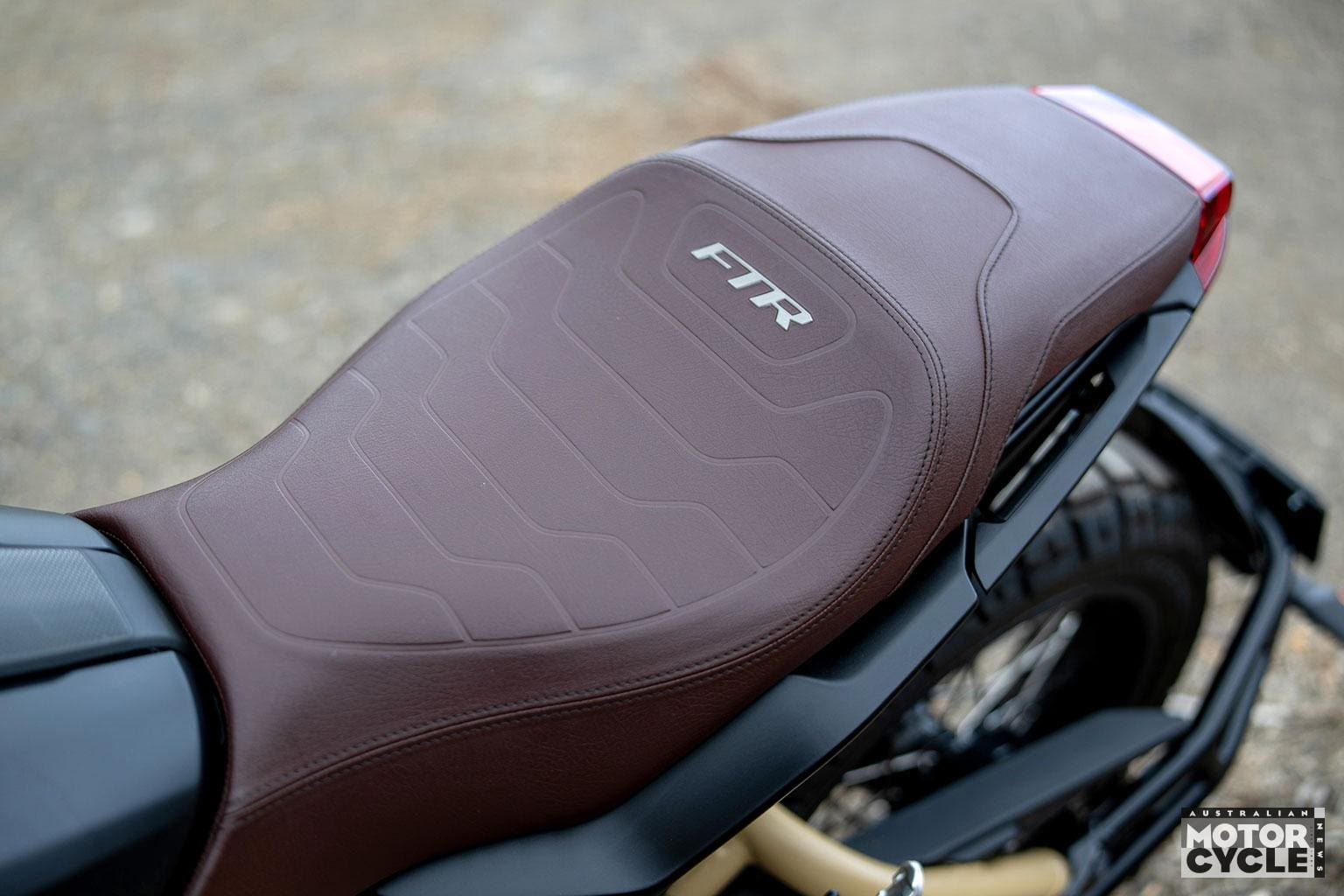
The FTR isn’t a hooligan machine in the same vein as a Superduke, Tuono or S 1000 R though, instead mixing the tough attitude and grunt of a cruiser with the riding position of a naked. I’ve never really ridden anything quite like it before, but the more time I spent in the saddle the more it started to make sense. Speaking of which, the flat, broad seat was comfortable enough for shorter rides but, according to my behind-ometer, a little more padding wouldn’t go astray for all-day trips. In general, though, the high ‘ProTaper’ bars and mid-mounted footpegs struck a good compromise between comfort and control on different surfaces. The preload/compression adjustable suspension soaked up bumps reasonably well, but the Rally misses out on the high-spec Sachs and Öhlins units found on the pricier FTR variants, meaning its laid-down shock was sometimes a bit abrupt over dodgy stretches of blacktop.
The FTR has a feature that ensures you’ll need to stop for rests every so often though – a teeny 12.9 litre fuel tank. Cylinder deactivation tech means 200km stretches between refills are achievable in normal riding, but injudicious use of the right-hand grip results in the fuel gauge falling alarmingly quickly. And let’s be honest, you don’t buy a bike like this to tootle around like you’re driving Miss Daisy.
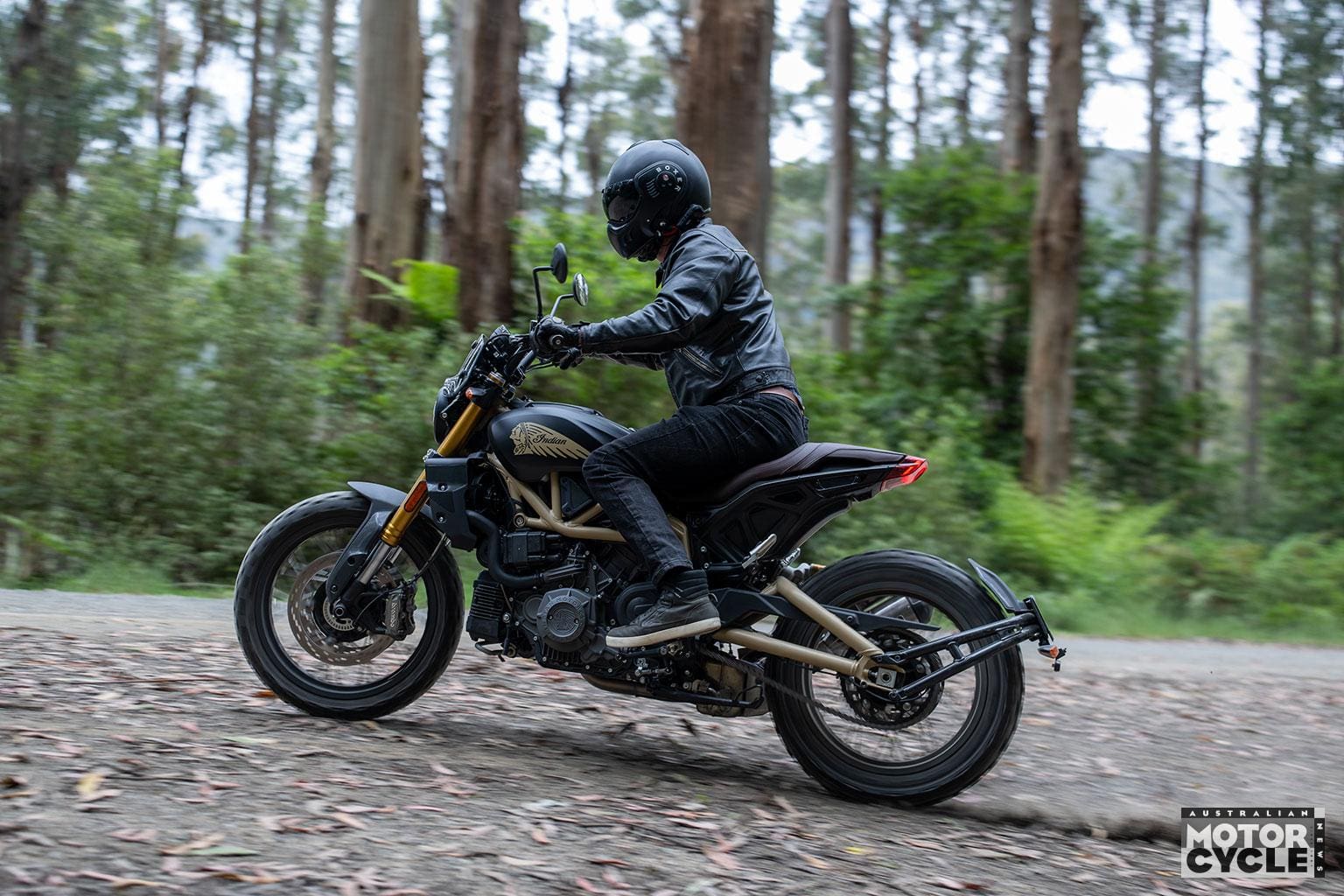
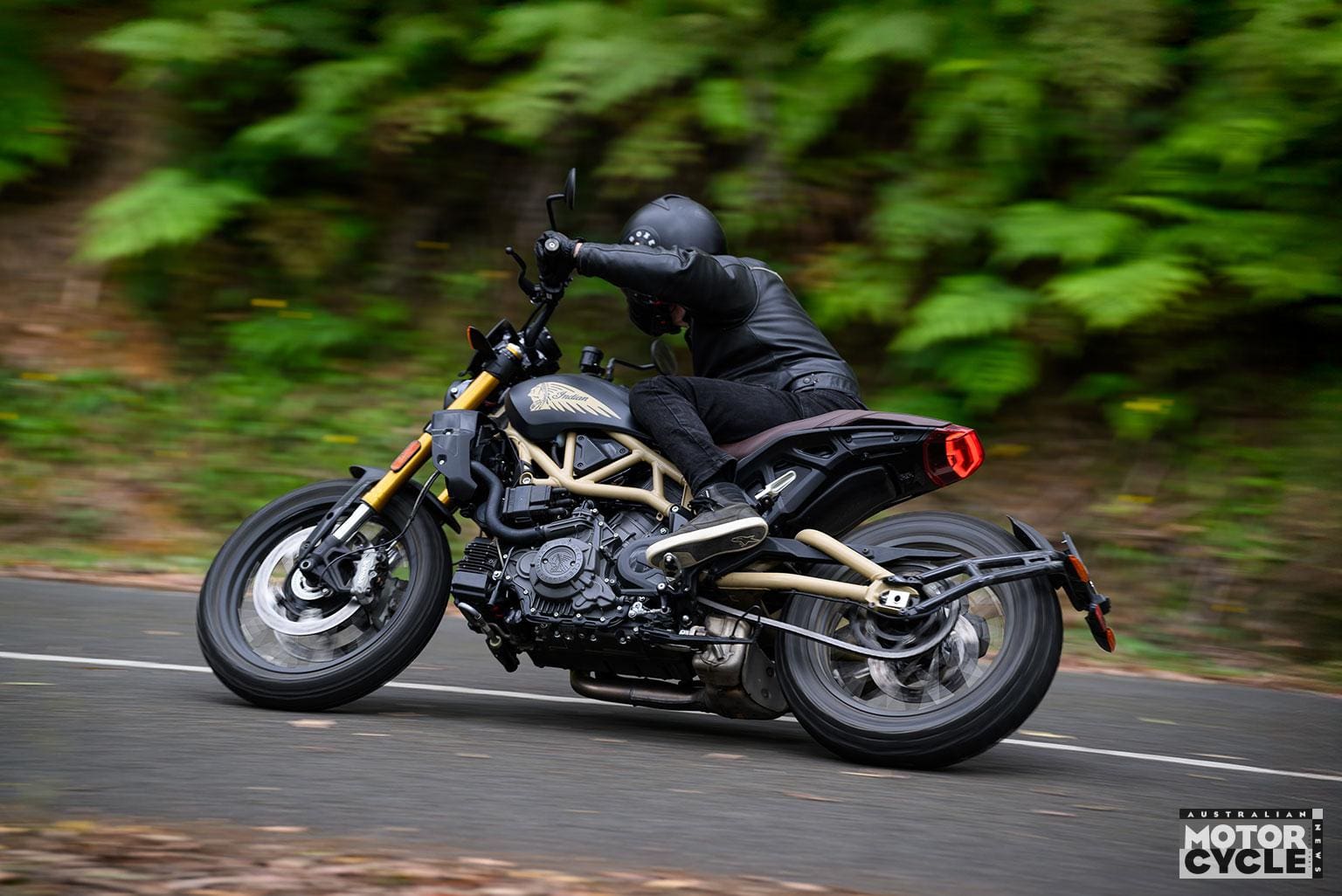
It’s pretty much impossible not to give that Iowa-bred V-twin its head pretty often with the addictive way it slings you up the road like a house-sized rubber band. The rear Pirelli copes well with the gobs of turning force it’s shovel-fed, although the power comes in strongly enough to get it scrabbling for purchase like a bulldog on tiles if you get really ham-fisted. A proper flat tracker wouldn’t even call it a slide, but it made me feel like I was the Second Coming of Bubba Shobert.
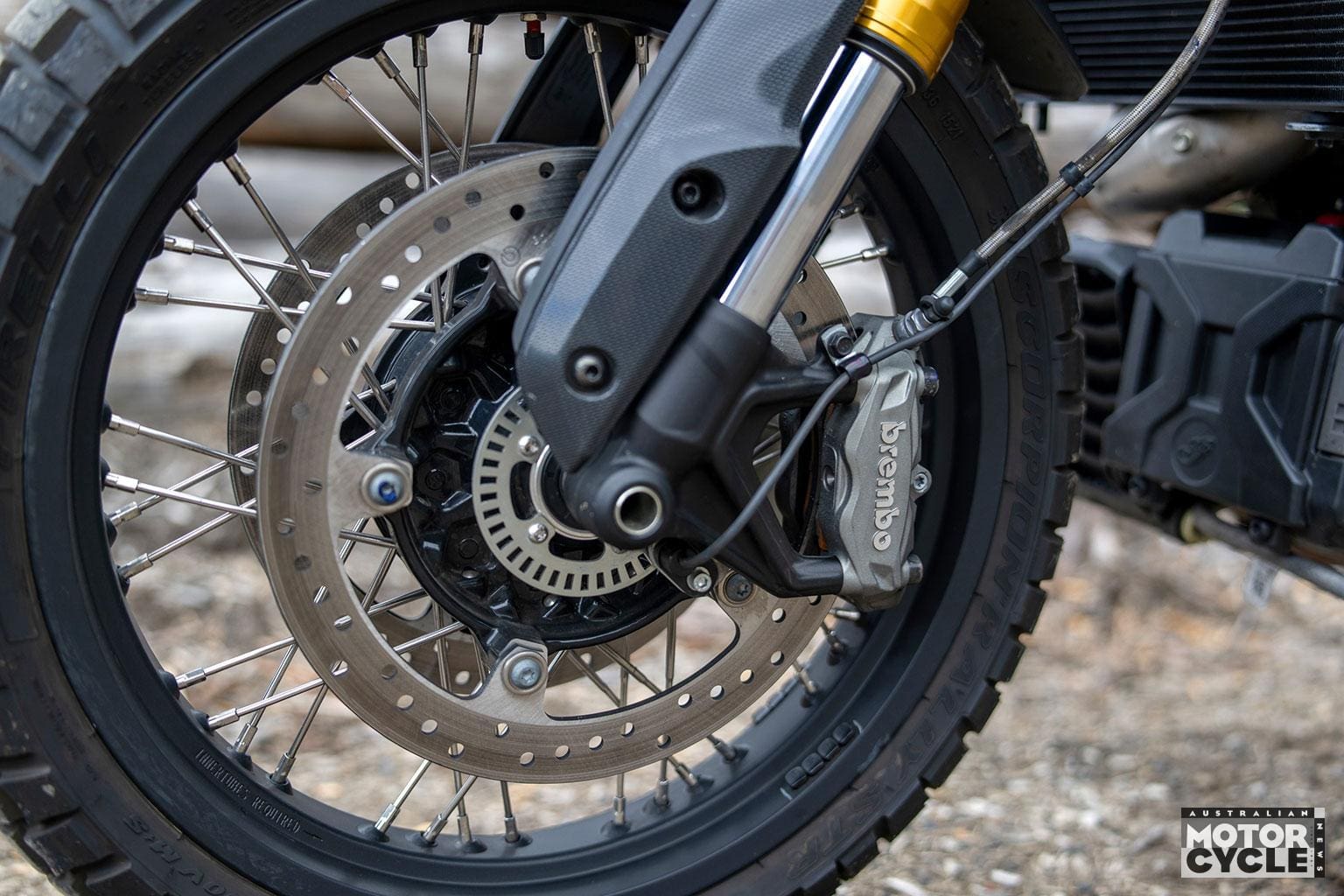
The adventure rubber limits the maximum lean to 43°, a couple of degrees less than other FTR models, but in the real world you’d be doing pretty well to access that amount of angle on a public road with knobby tyres. Edge grip becomes a limiting factor well before ground clearance, which deters you from wanting to push the front end with too much vigour lest you suddenly find your right hand is writing cheques the tyres can’t cash. That said, your mates would have to be riding their crotch-rockets pretty damn hard to leave the FTR behind, and the Brembo stoppers front and rear have tremendous modulation and bite.
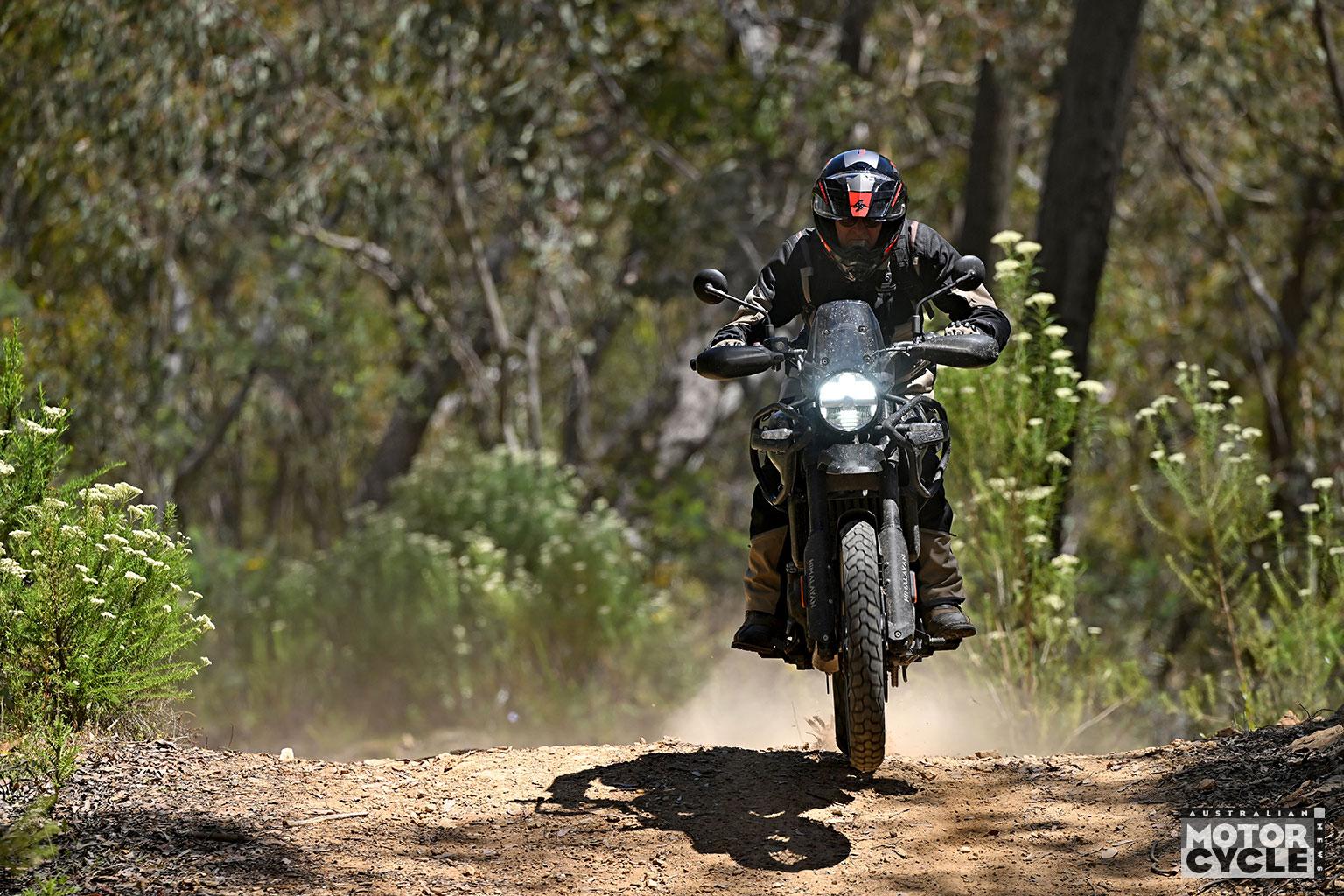
Of course, with the knobby tyres fitted you also have the option to take a dirt road shortcut if you’re so inclined. Any machine calling itself a ‘Rally’ has to be able to venture beyond the bitumen and, while I have my doubts that many owners would take it off-road much, I felt duty-bound to see how the Indian would handle some loose stuff. Fifty metres after turning onto my favourite stretch of gravel, an embarrassing attempt at a skid made it clear that the rear ABS was still active when the TC is off. There’s no other way to deactivate it either, which might seem like a churlish complaint but locking the rear is a genuinely useful ability on unsealed surfaces.

Once over that disappointment though, I found the FTR surprisingly capable, with its lowish seat height and easy power delivery in Standard mode inspiring enough confidence to spin the rear up coming out of bends. Gravel riding is as much about feel through the ‘bars, pegs and seat as anything else and the Rally wasn’t out of place at all mucking about in the dirt. Pirelli’s STR Scorpion hoops always astound me with how much grip they manage to extract from just about any surface you throw at them, and the small, low-positioned fuel tank makes the FTR feel more playful than its 236kg (wet) heft might suggest.
While the Rally doesn’t have the ground clearance to tackle properly rough trails and the lack of switchable ABS is a head-scratcher, you need not fear the occasional off-road jaunt if your house happens to be at the end of a long gravel driveway. In fact, if you ever get the chance to ride on or snap up a used FTR Rally, don’t hesitate – especially as they’re about to become collector’s items. On the one hand, if you’re mainly road-riding, the adventure rubber limits its tarmac carving ability a bit, and refilling might become tiresome if you’re commuting regularly. While I’m griping, the digital display seems to take forever to boot up sometimes, the sidestand is awkward to deploy, and it’s missing a quickshifter.
On the other hand, motorcycles are about how they make you feel as well as what they offer on paper, and the FTR Rally’s street cred and kerb-stomping V-twin engine make it as entertaining as anything I’ve ridden. Throw aftermarket pipes at it to let it really sing and you’d have a bike that would make you feel like a flat-track hero whether you’re going to pick up some milk or flinging stones into the scenery on your local dusty C-road.
And so, sadly, the FTR Rally is now riding off into the sunset, leaving behind a fat slice of V-twin attitude and backroad cred. If you’re hunting for a scrambler with real grunt – and a bit of history baked in – this is one to track down and ride while you still can. Here’s hoping Indian’s next big idea packs the same character.
Turning the FTR1200 Into a Super Hooligan weapon
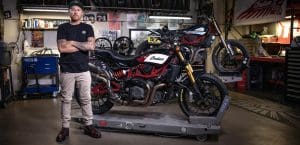
IF YOU WANT to see what the Indian FTR1200 is capable of in the hands of a pro racer, check out the Super Hooligan series in the US on YouTube. It’s a unique category featuring 750cc and larger twins, 900cc triples and electric bikes. The rules encourage accessibility and diversity, with entries from manufacturers like Indian Motorcycle, KTM, BMW, Ducati and Yamaha regularly competing. Our own Troy Herfoss was a frontrunner in the Super Hooligan series before deciding to concentrate solely on King of the Baggers, which runs concurrently.
Transforming the Indian FTR1200 into a race-winning Super Hooligan competitor requires significant modifications. Roland Sands Design (RSD) offers performance upgrades including:
- Exhaust system: RSD Tracker 2-into-1 Exhaust improves airflow, boosts power and reduces weight.
- Wheels and tyres: Lightweight RSD Traction Flat Track 19-inch wheels paired with race-specific tyres enhance grip and stability.
- Suspension: Upgraded fork internals and adjustable RSD rear shocks improve handling under track conditions.
- Bodywork: RSD Tracker front number plate and lightweight tail sections reduce weight and improve aerodynamics.
- Controls: Tracker handlebars, adjustable rearsets and quick throttle adjusters offer enhanced control and ergonomics.
- Braking: Oversized rotors and RSD master cylinders deliver precise braking performance.
- Weight reduction: Removal of non-essential components like passenger footpegs and rear fenders.
- Air intake: High-performance RSD air filters increase engine efficiency.
- Clutch: A slipper clutch prevents wheel hop during high-speed downshifts.
THE COMPETITION
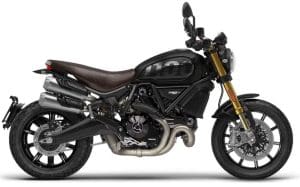
Ducati 1100 Sport Pro Scrambler – $26,000
Engine 1079cc air-cooled L-twin
Power 63kW (85hp) @ 7500rpm
Torque 88Nm @ 4750rpm
Wet weight 206kg
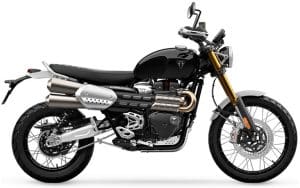
Triumph SCRAMBLER 1200 – $24,900
Engine 1200cc parallel twin
Power 66.2kW (88.5hp) @ 7000rpm
Torque 110Nm @ 4250rpm
Wet weight 228kg
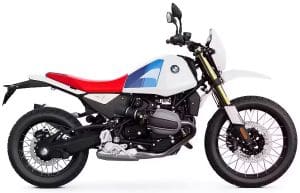
BMW R12 – $22,575
Engine 1170cc air-cooled boxer twin
Power 70kW (94hp) @ 6500rpm
Torque 110Nm @ 6000rpm
Wet weight 227kg
SPECIFICATIONS
ENGINE
Type DOHC, 60° V-twin
Displacement 1203cc
Bore & stroke 102mm x 73.6mm
Compression ratio 12.5:1
Cooling Liquid
Fuelling Closed loop fuel injection with 60mm bores
Transmission Six-speed
Clutch Wet, multi-plate, slipper
Final drive Chain
PERFORMANCE
Power 90kW (120.7hp)
Torque 118Nm @ 6000rpm (claimed)
Top speed N/A
Fuel consumption 6L/100km (measured)
ELECTRONICS
Type Ride by wire
Rider aids Lean-angle-sensitive ABS, stability control,
traction control, wheelie control with rear lift mitigation
Modes Rain, Standard, Sport
CHASSIS
Frame material Steel
Frame type Tubular steel trellis
Rake 26.3°
Trail 130mm
Wheelbase 1524 mm
SUSPENSION
Type Sachs
Front 43mm inverted telescopic cartridge fork
Rear Monotube IFP
WHEELS & BRAKES
Wheels Wire spoked
Front: 19in x 3.0in
Rear: 18in x 4.25in
Tyres Pirelli Scorpion Rally STR
Front: 120/70R19
Rear: 150/70R18
Brakes
Front: Brembo dual 320mm discs with four-piston calipers
Rear: Brembo single 260mm discsith twin-piston caliper
DIMENSIONS
Weight 222kg (dry, claimed)
Seat height 815mm
Width 867mm
Height 1369mm
Wheelbase 1524mm
Ground clearance 183mm
Fuel capacity 12.9L
SERVICING & WARRANTY
Servicing First 800km
Minor 8000km
Major 32,000km
Warranty 24 months/Unlimited kilometres plus 2 years roadside assistance
BUSINESS END
Price $25,995 ride away
Colour option Black Smoke
CONTACT