Once the bike that mobilised postwar Britain, the BSA Bantam is back with class-leading performance and a price point that could shake up the 350cc market
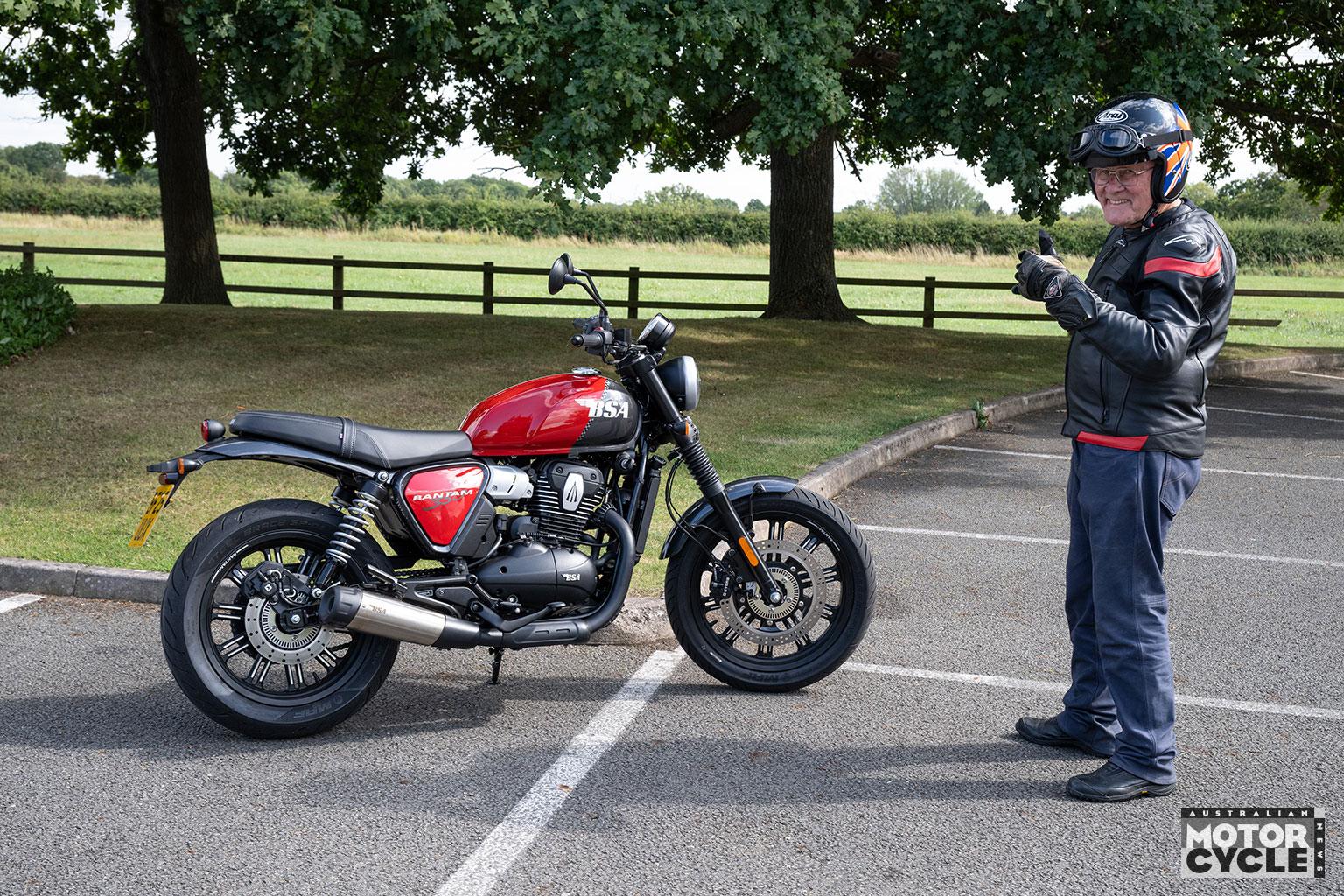
In a largely unheralded move, BSA – now owned by Indian giant Mahindra Group’s Classic Legends subsidiary – has relaunched one of the most famous models in the two-wheeled history books, of which half-a-million examples were built in the historic British brand’s golden years. However, the new BSA Bantam isn’t a smoky 125cc two-stroke single like before, but a DOHC 350cc four-stroke with class-topping specs. I spent a day riding the 2025 Bantam 350 around the Warwickshire country roads that were once the proving ground for factory testers from the huge BSA Small Heath factory in southern Birmingham. But first, a history lesson, and the topic for today is: BSA 101.
BEGINNING WITH A BANG
When Britain’s largest gun manufacturer Birmingham Small Arms, founded in 1861, decided to start building bicycles in 1903, it was inevitable that its first motorcycles would eventually be delivered to customers in 1911. Successive World Wars led both its core businesses to boom, with 126,334 BSA M20 sidevalve singles delivered to the British Army in WW2, alongside the half-a-million Browning .303 machine guns equipping the RAF’s Spitfires and Hurricanes that won the Battle of Britain. But peacetime was good for profits, too, as the global appetite for personal transport in the postwar era saw BSA grow to become the world’s largest motorcycle manufacturer. By 1956, one in every four motorcycles sold worldwide carried the BSA badge, and its subsidiaries Triumph and Ariel also reaped plentiful global sales, too.
Underwriting that growth was the best-selling British motorcycle of all time, a humble yet functional two-stroke single whose very appeal derived from its unashamed simplicity. The BSA Bantam that launched in 1948 in stripped-out 123cc form was progressively enlarged, first to 148cc in 1954, then to 173cc in 1958, before production ended in 1971 when BSA went bust. By then it’s believed over 500,000 examples had been built in the 23-year run of the bike that got Britain mobile again in the dark days of postwar recovery – although nobody’s really sure, as most records were lost. But in providing basic transportation to a grateful nation, or as the first step up the motorcycle ladder as the passport to freedom for a generation of bikers, or in giving practical service as a dependable workhorse for anyone from factory workers to GPO telegram messengers, the Bantam foresaw the low-cost functional appeal of the bike that replaced it: Honda’s C50 Super Cub.
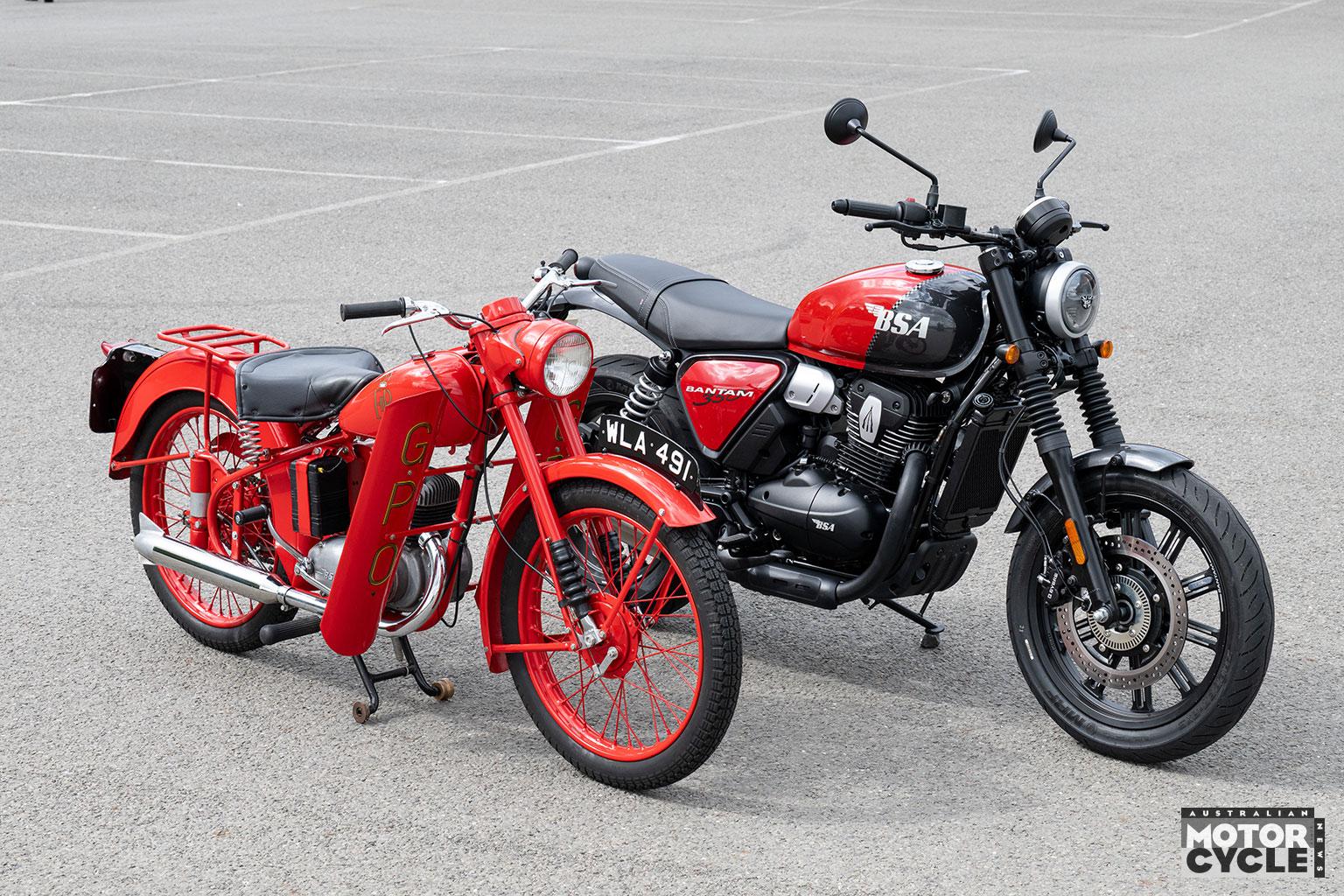
How ironic then that this most British of motorcycles was in fact designed in Germany by DKW in 1938, and only came to Britain and thence to BSA almost by accident, as part of German post-WW2 reparations to help repay some of Britain’s gigantic war debt incurred in defeating Hitler. Motorcycles based on the RT125 also went into production in other countries as a postwar peace dividend. The DKW factory in Zschopau, later aka MZ, ended up in the Russian zone of occupied Germany, so in 1946 the Soviet Union launched the Minsk M1A directly derived from the RT125. In the US, from 1948 to 1966, Harley-Davidson built its own copy of the bike, the S-125, later known as the Hummer after Dean Hummer, the Harley dealer in Omaha, Nebraska, who led national Harley two-stroke sales, while in 1955 Yamaha launched the YA-1, its first production motorcycle and a direct copy of the DKW model. But the BSA Bantam was the bestseller by far.
REVIVAL AND RIVALS
Bedevilled by incompetent management and the arrival of low-priced small cars like the Fiat 500 and Austin Mini, BSA finally went under in 1973. For the next 40 years it was the most illustrious of Britain’s gone-but-not-forgotten bike brands, until 2016 when its trademark was acquired for $A7 million by India’s Mahindra Group, a huge multinational conglomerate covering everything from the arms industry to tractors.
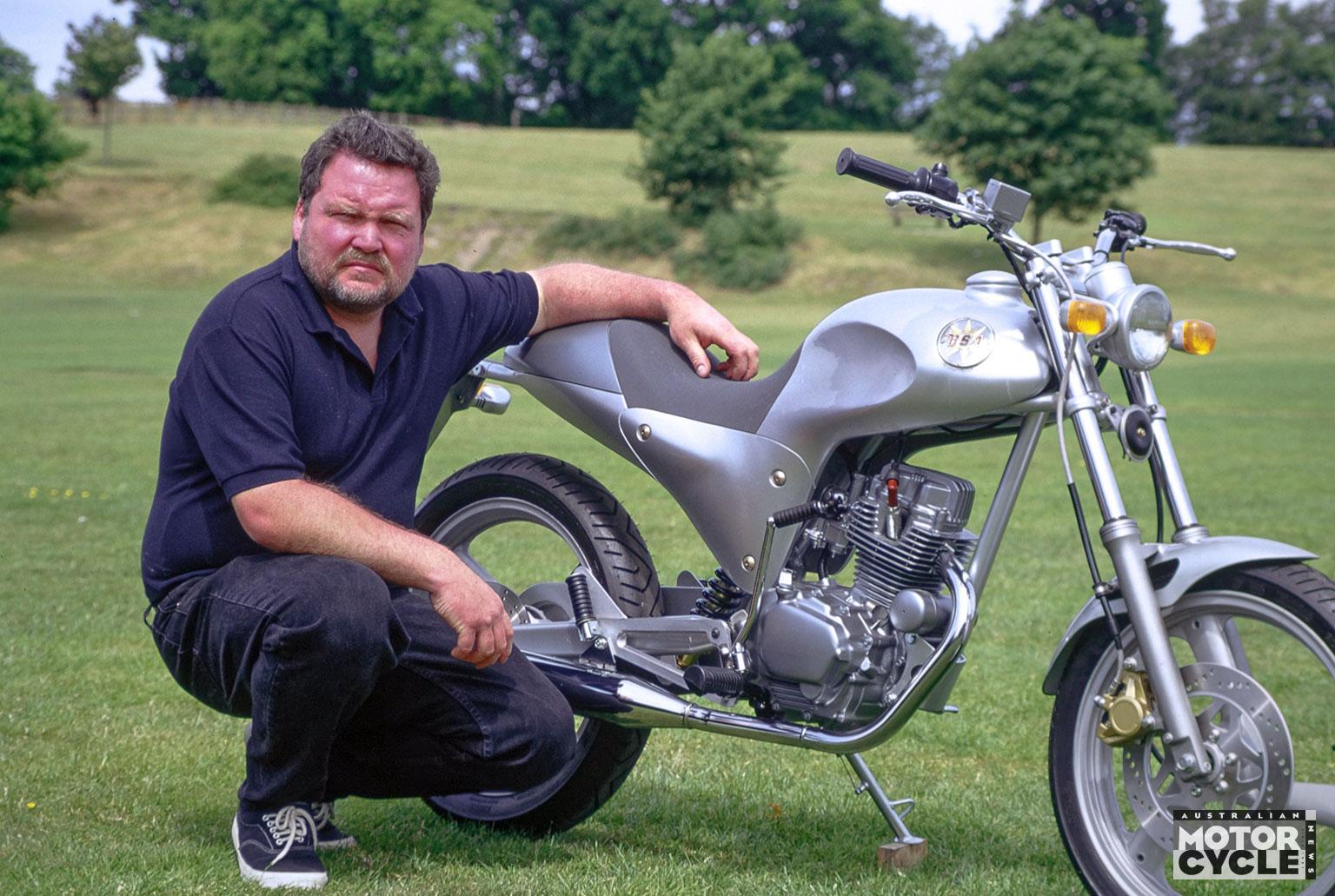
In 2022 it launched the born-again BSA Gold Star built in India, but with retro styling conceived in Britain, powered by a 650cc Rotax engine completely re-engineered by the 200-plus engineers in Mahindra’s R&D Centre in Pune.
Now, as BSA readies itself for relaunch next year in the US, South America and Australia (it’s already in NZ), alongside the handful of European countries the Gold Star is already available in besides the UK, the debut of the BSA Bantam 350 dramatically expands its range in a dealer-pleasing way – and at a killer price, too, with a choice of five different colour options: grey, red, yellow, blue or black.
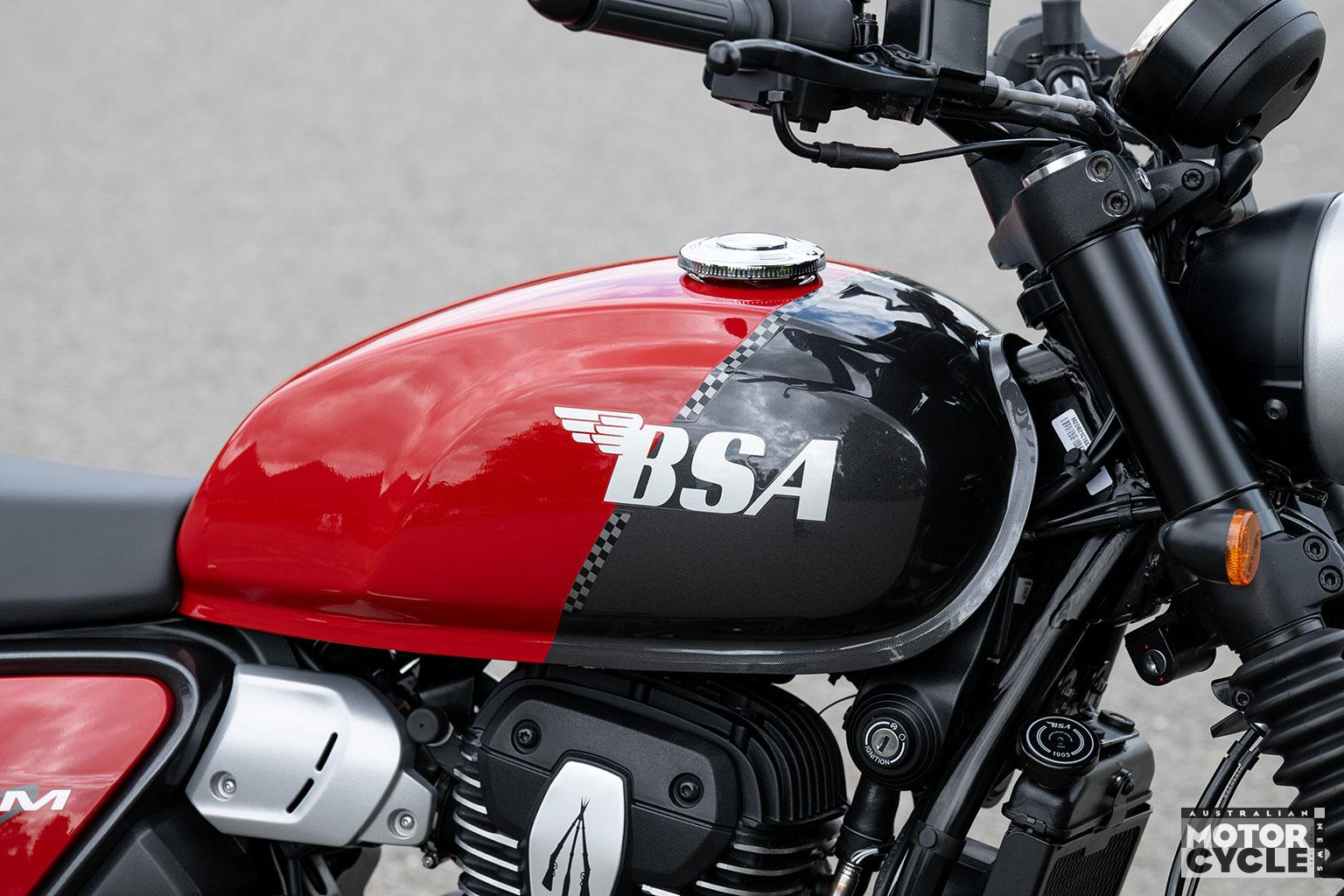
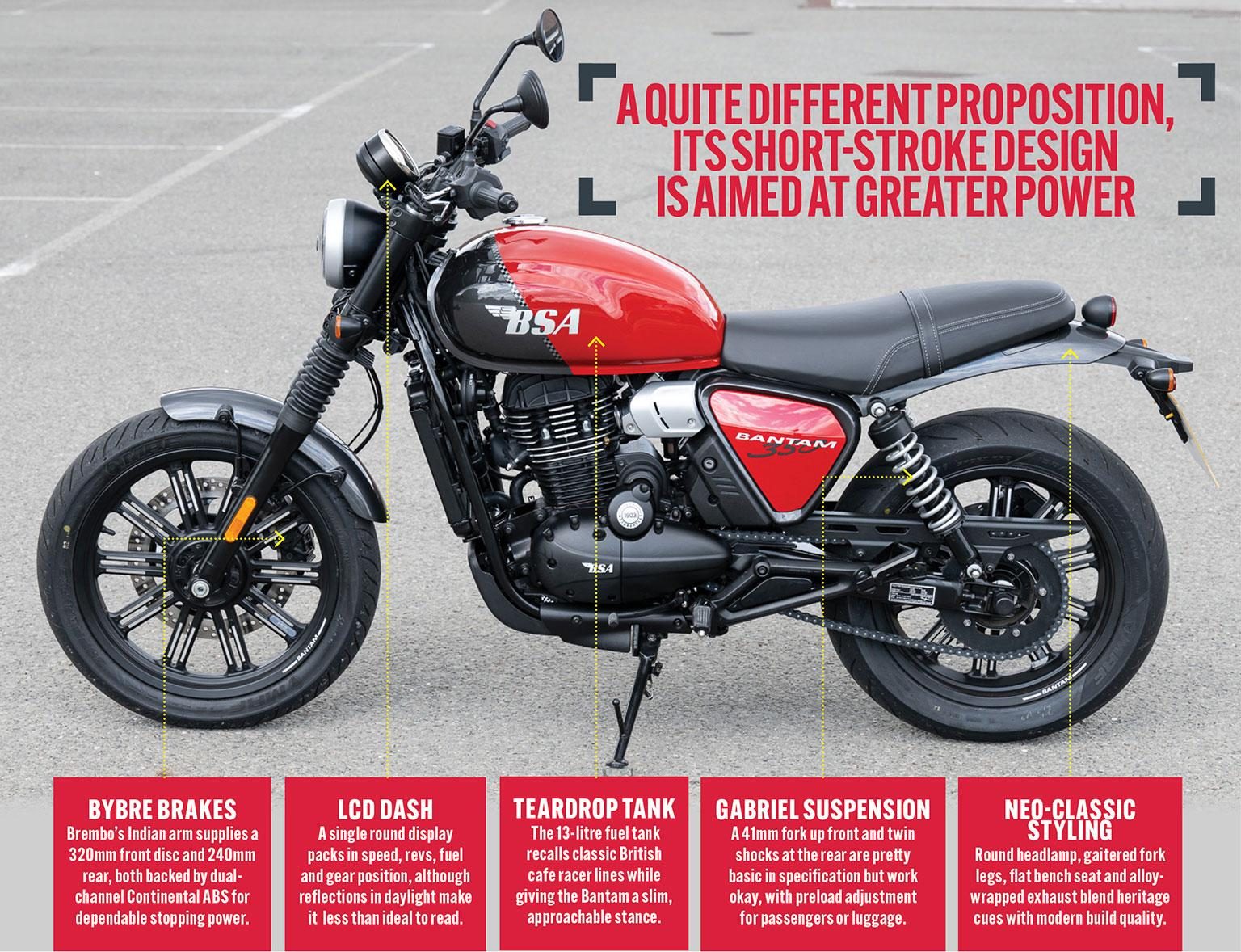
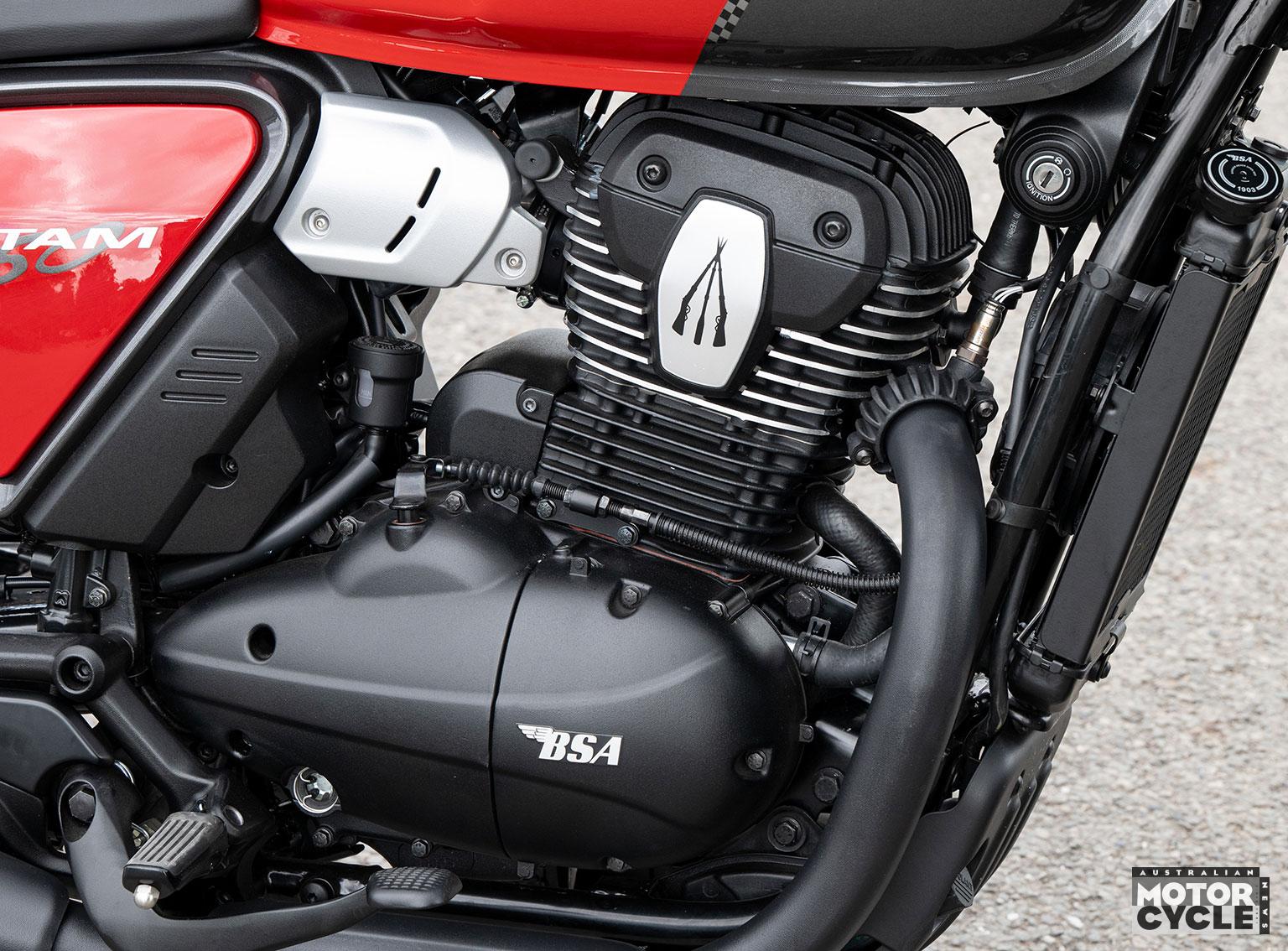
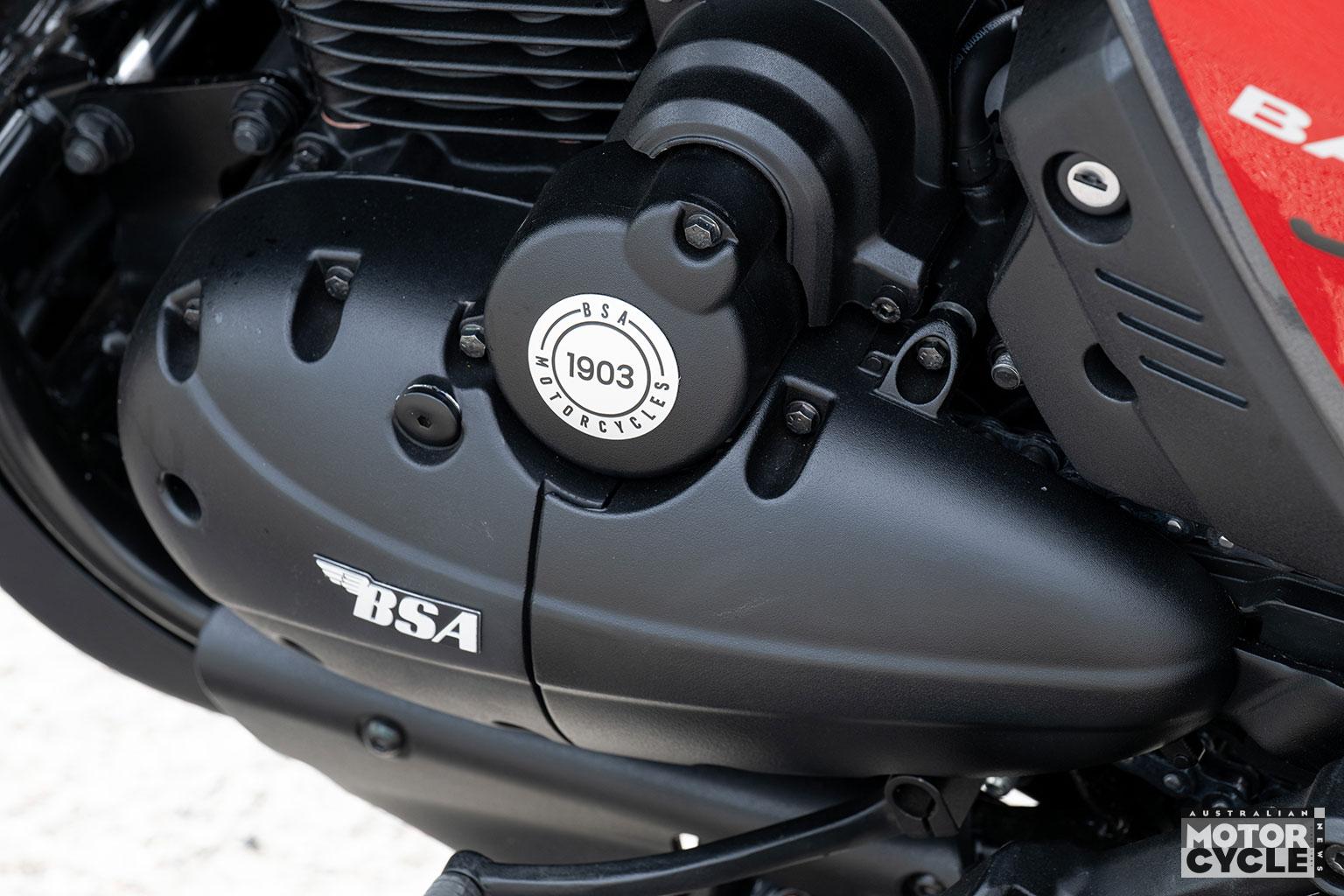
As what’s certain to be only the first of several different variants on the same platform, in retailing at £3499 ($A7302) in the UK plus £215 OTR (on the road) charges and including a three-year unlimited mileage warranty, the new model undercuts its direct Royal Enfield Bullet competitor by a massive £1130. Yet there’s no hint of it being built down to a price when you see the new BSA Bantam in the metal. Its four-valve Alpha 2 engine is taken from Classic Legends’ existing Jawa and Yezdi models sold at present only in India (plus the Czech Rep. for Jawa models via the lease of that name), and is a considerable step up in terms of design and performance versus the opposition. So the BSA’s Euro 5+ compliant oversquare 334cc single-cylinder engine, measuring 81mm x 65mm and with the company’s crossed rifles emblem flanking the camdrive, is a quite different proposition to its direct rivals. It’s a short-stroke design aimed at greater power.
The Bantam produces a claimed 21.6kW (29hp) at 7750rpm at the crank (versus 15kW/20.2hp) at 6100rpm for the Royal Enfield models), with peak torque of 29.62Nm at 6000rpm (versus 27Nm at 4000rpm for the supposedly gruntier longstroke Enfields). This is transmitted via a six-speed gearbox with slip-assist clutch on the BSA, whereas its RE rivals have just five ratios.
This number-crunching matters, because the 250-450cc marketplace is presently the world’s largest and most competitive model segment, and in smashing the million-bike barrier for the first time with 1,009,900 motorcycles in the 2024/25 model year, Royal Enfield produced 818,059 examples of its five 350cc single-cylinder models. Okay, around 88 per cent of its production is sold in the Indian home market, but for BSA to develop the rival Bantam 350 and offer such a significant improvement in performance and spec at significantly less money than RE’s market-leading model is really significant. Moreover, Classic Legends has revealed that it will not be selling the Bantam in India, on the grounds that it wants to keep the BSA name as an exclusive, premium brand there, and launching a smaller-displacement model under that badge might dilute its status for Indian customers.
BORN-AGAIN BANTAM
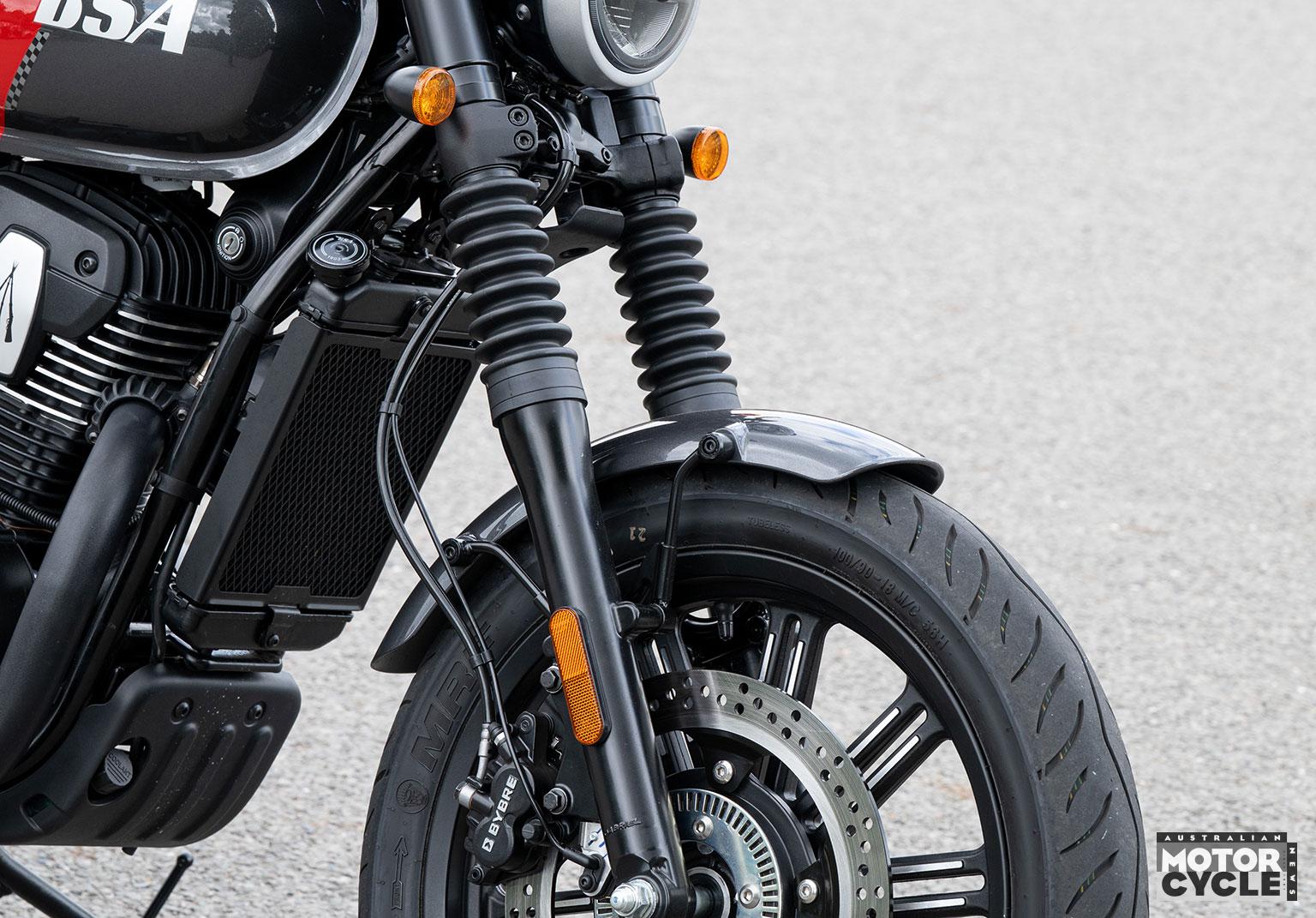
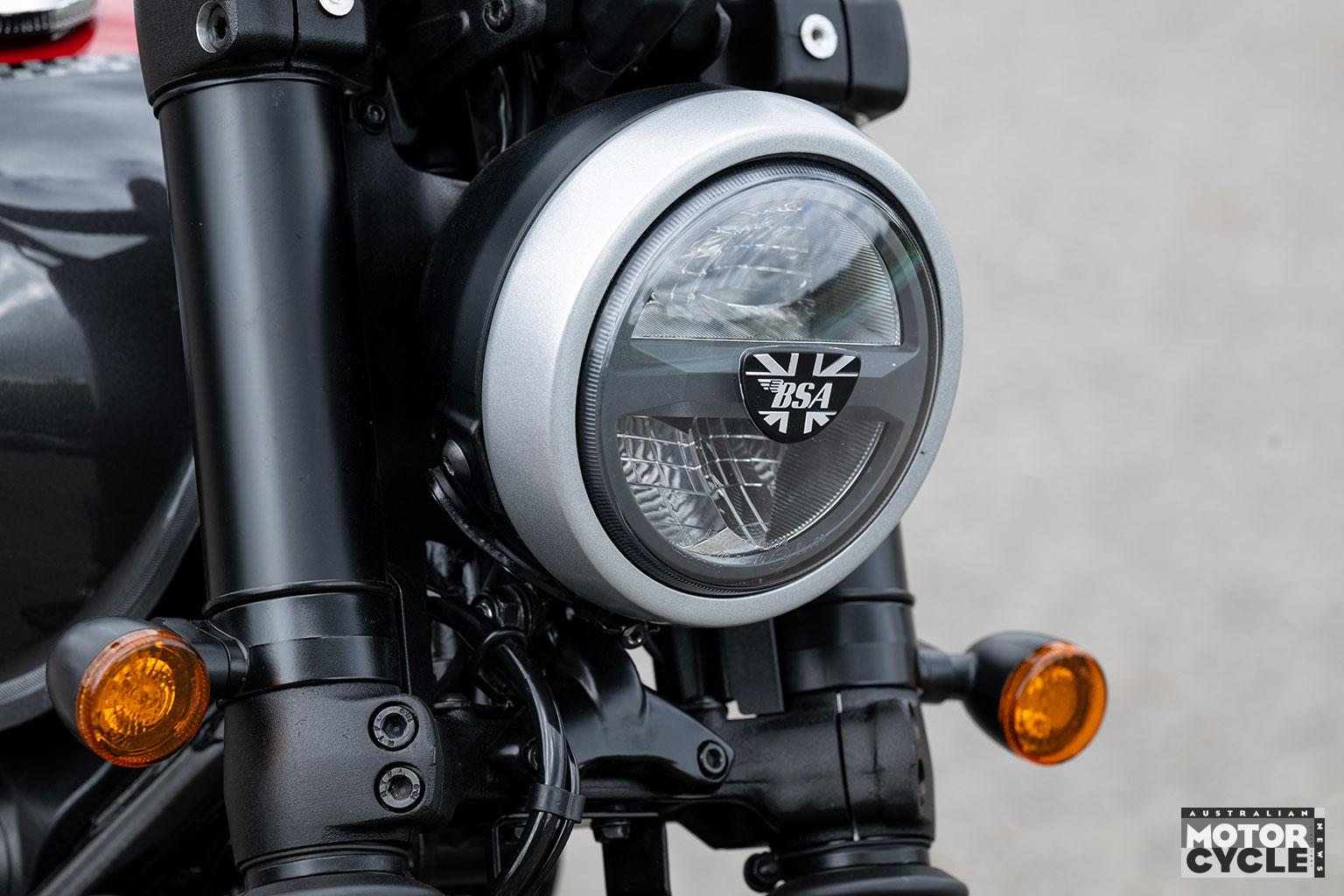
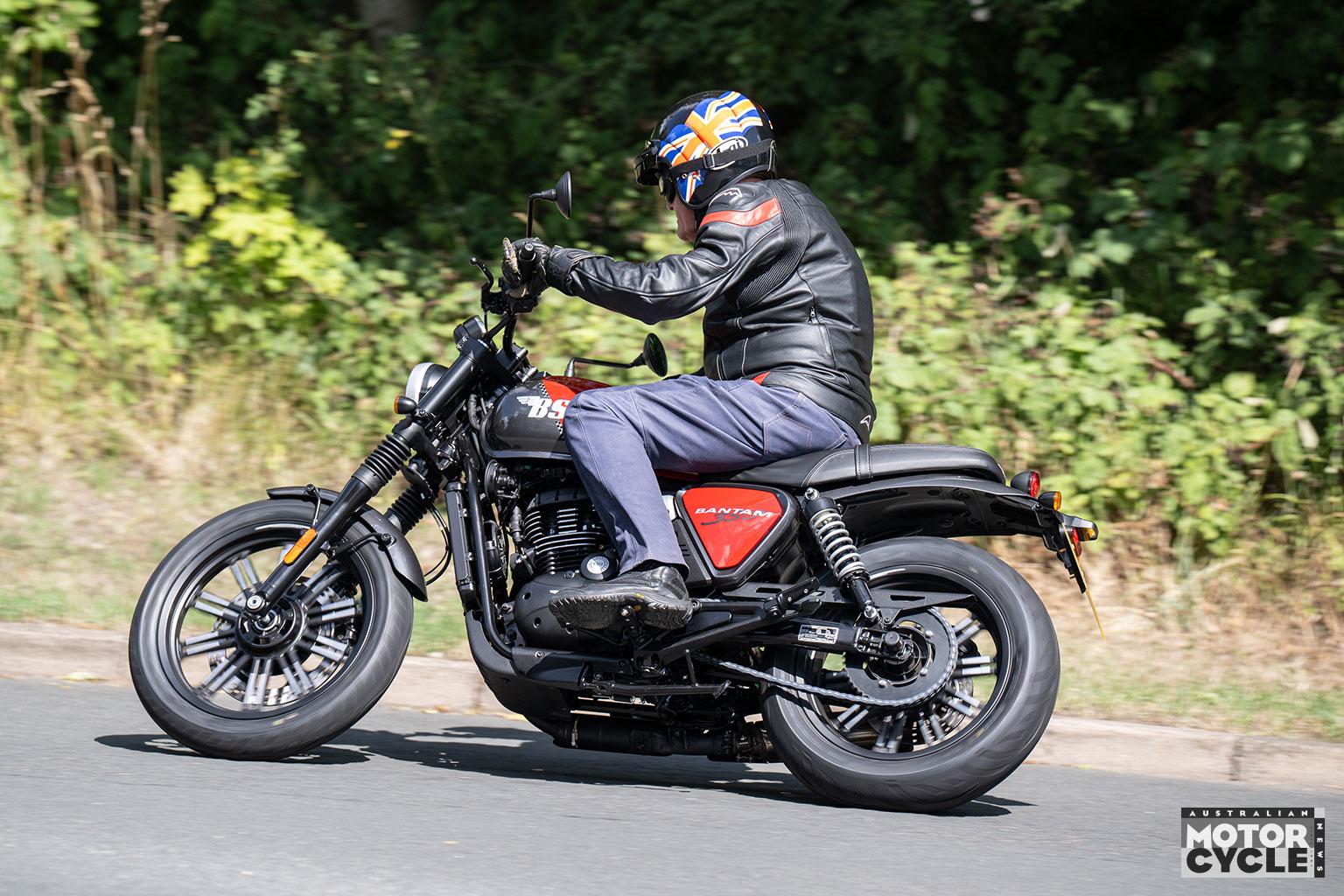
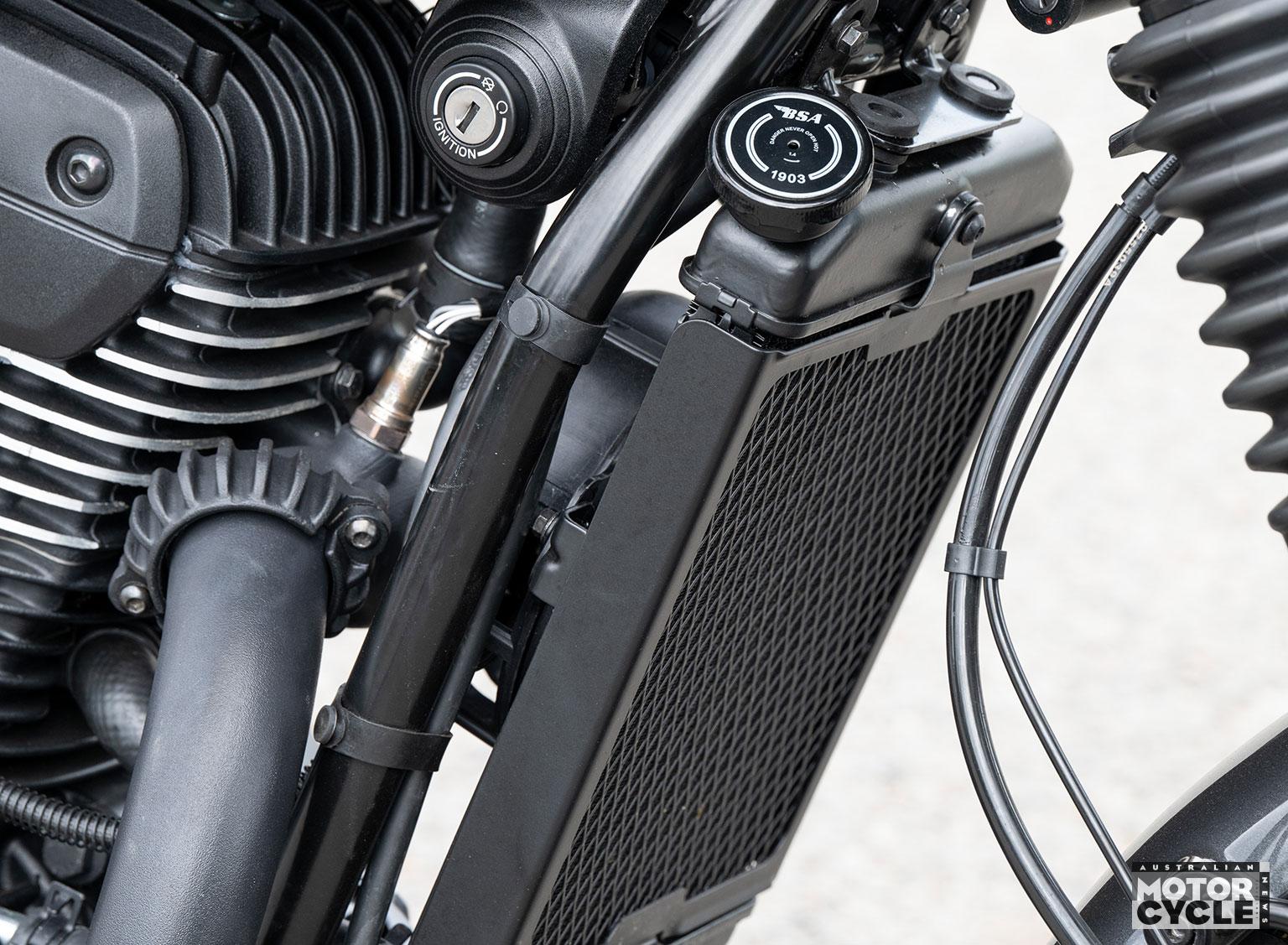
The Bantam has been restyled in a slightly more neo-classic way, while retaining the same by now well-proven duplex cradle tubular steel chassis. While not in any way resembling the Bantam of old – although offering a green and cream colour option might have been smart, to satisfy older customers – BSA has given the Bantam 350 clean but rather understated looks, with a handful of British cafe racer design cues. These include the teardrop-shaped 13-litre fuel tank, flat bench seat, round headlamp, gaitered fork, less obtrusive radiator than on the Gold Star, and finning on the liquid-cooled cylinder, all recalling the 1950s Bantam. The right-way-up 41mm Gabriel fork delivers 135mm of wheel travel and is set at a rangy 29° rake, contributing to a 1440mm wheelbase that’s a fair bit longer than the RE Bullet’s 1390mm, with twin Gabriel rear shocks giving 100mm of travel that are five-way adjustable for spring preload.
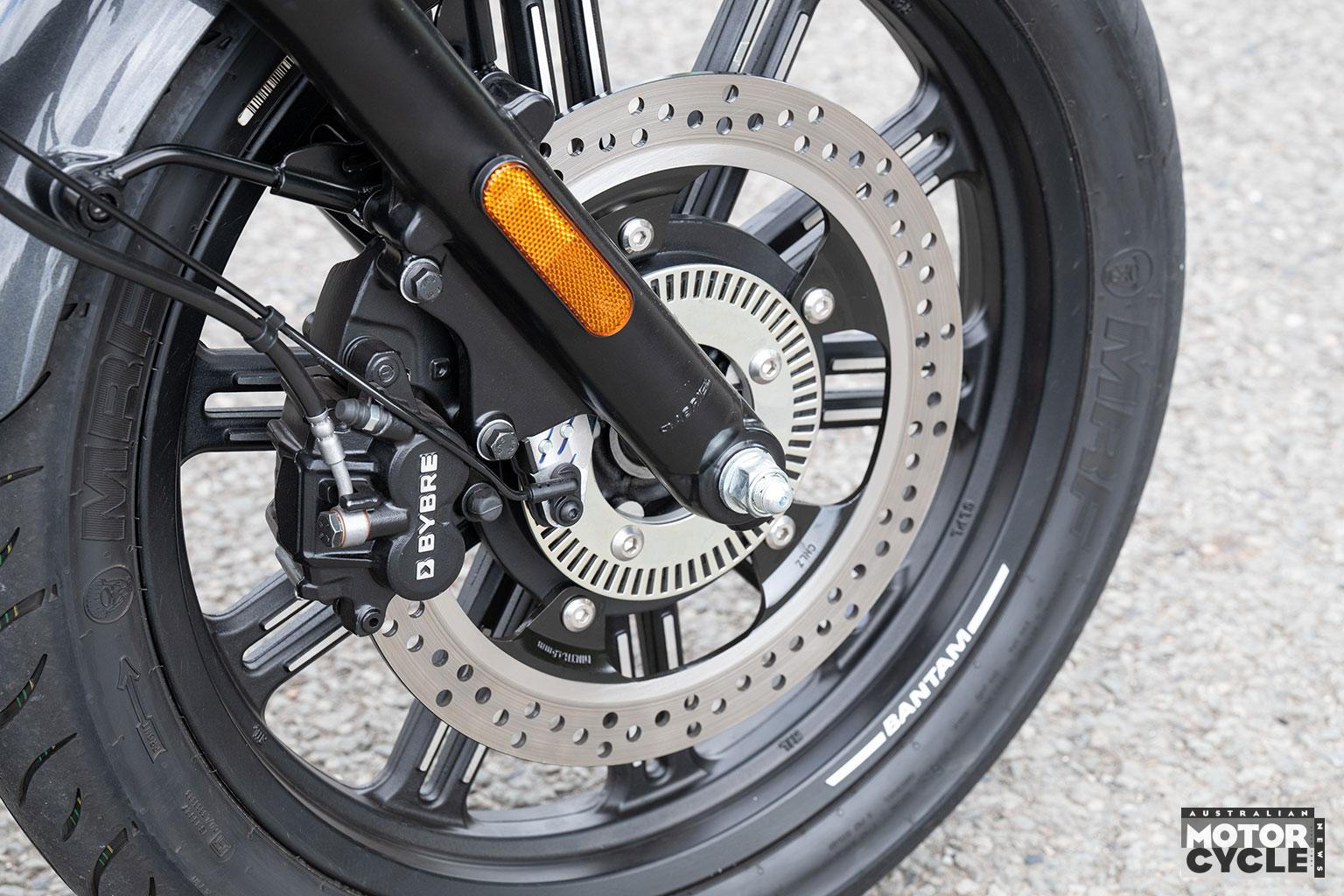
There’s a single Bybre disc brake at each end from Brembo’s Indian subsidiary, with a 320mm front rotor and 240mm rear, each with a floating twin-piston caliper and fitted with dual-channel Continental ABS.
With a claimed 185kg kerb weight including a 90 per cent full 13-litre fuel tank, the Bantam scales exactly 10kg less than the RE Bullet with same size tank, so there’s surprisingly no penalty for carrying an extra camshaft, another gear ratio, a radiator and a cooling system full of water versus its main air-cooled, five-speed, SOHC rival.
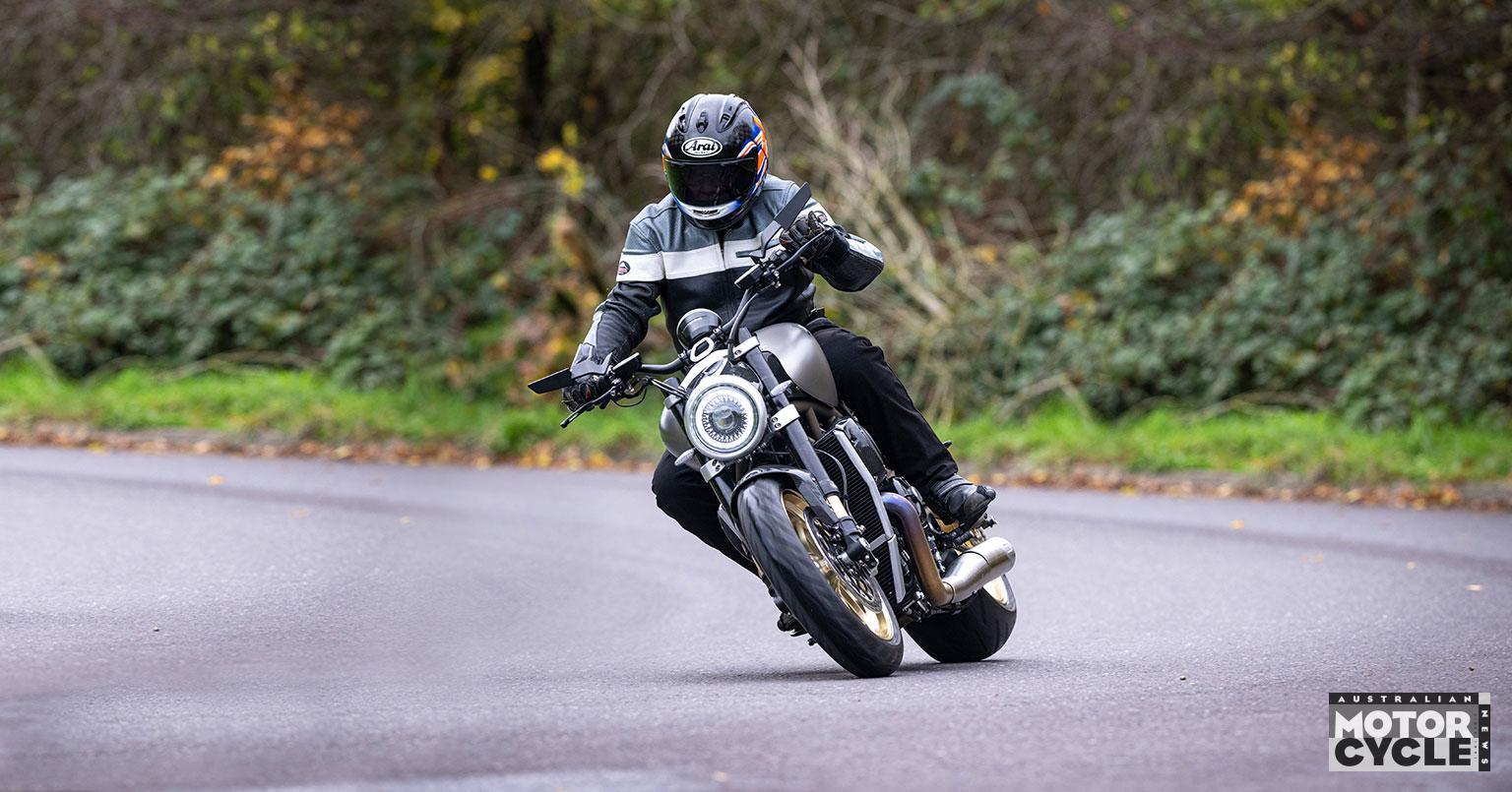
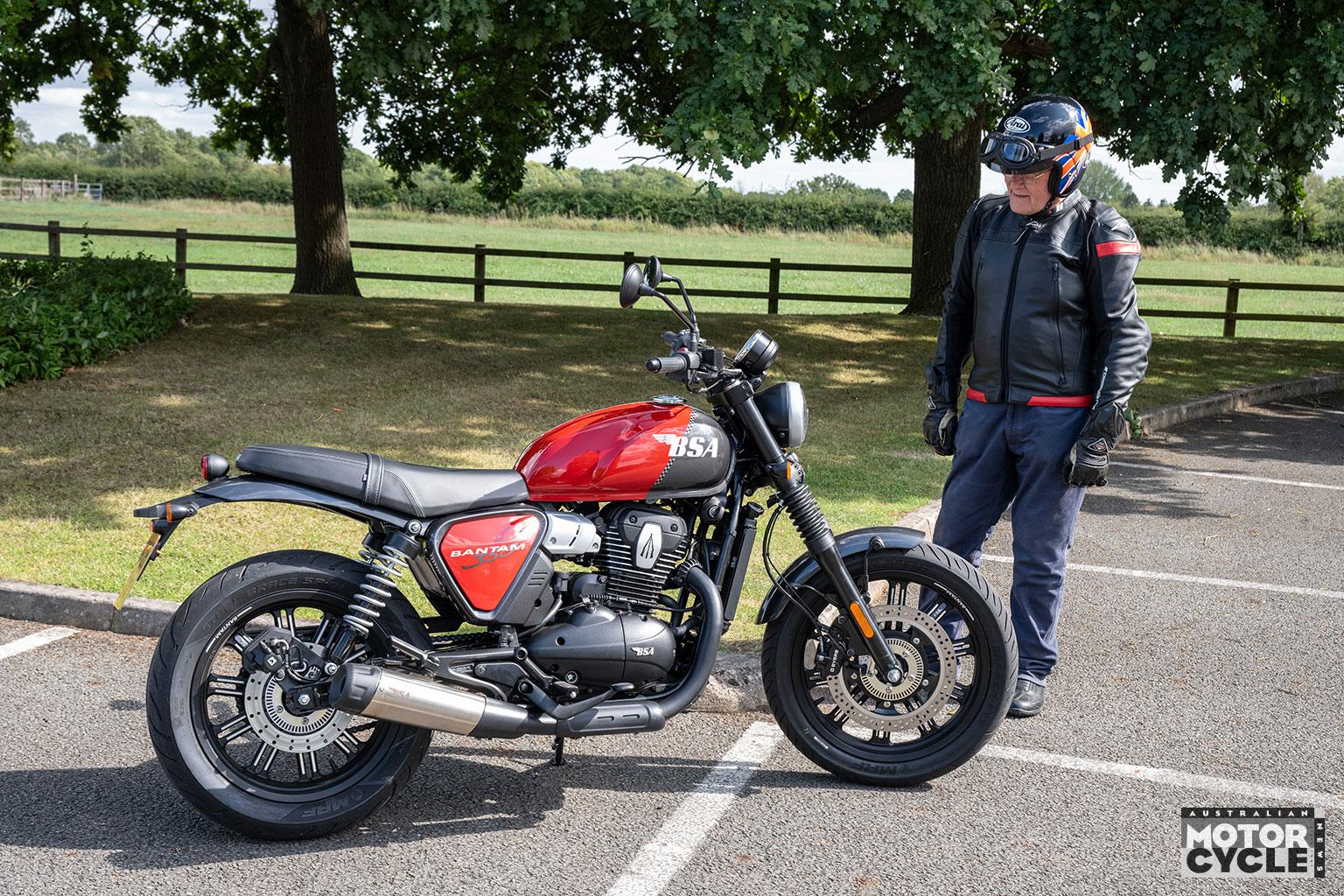
Climbing easily aboard the born-again Bantam reveals this is a slim single but with a sense of substance, which – thanks to the narrow stepover where seat meets tank – will allow most riders to put feet to the floor at rest. It’s a compact motorcycle which doesn’t look or feel small, though. Thanks to the 1440mm wheelbase, the reasonably well-padded 800mm-high seat is quite spacious with good room for a passenger, and the fairly wide handlebar is set pretty flat, so its stance has you leaning forward very slightly to grasp the grips.

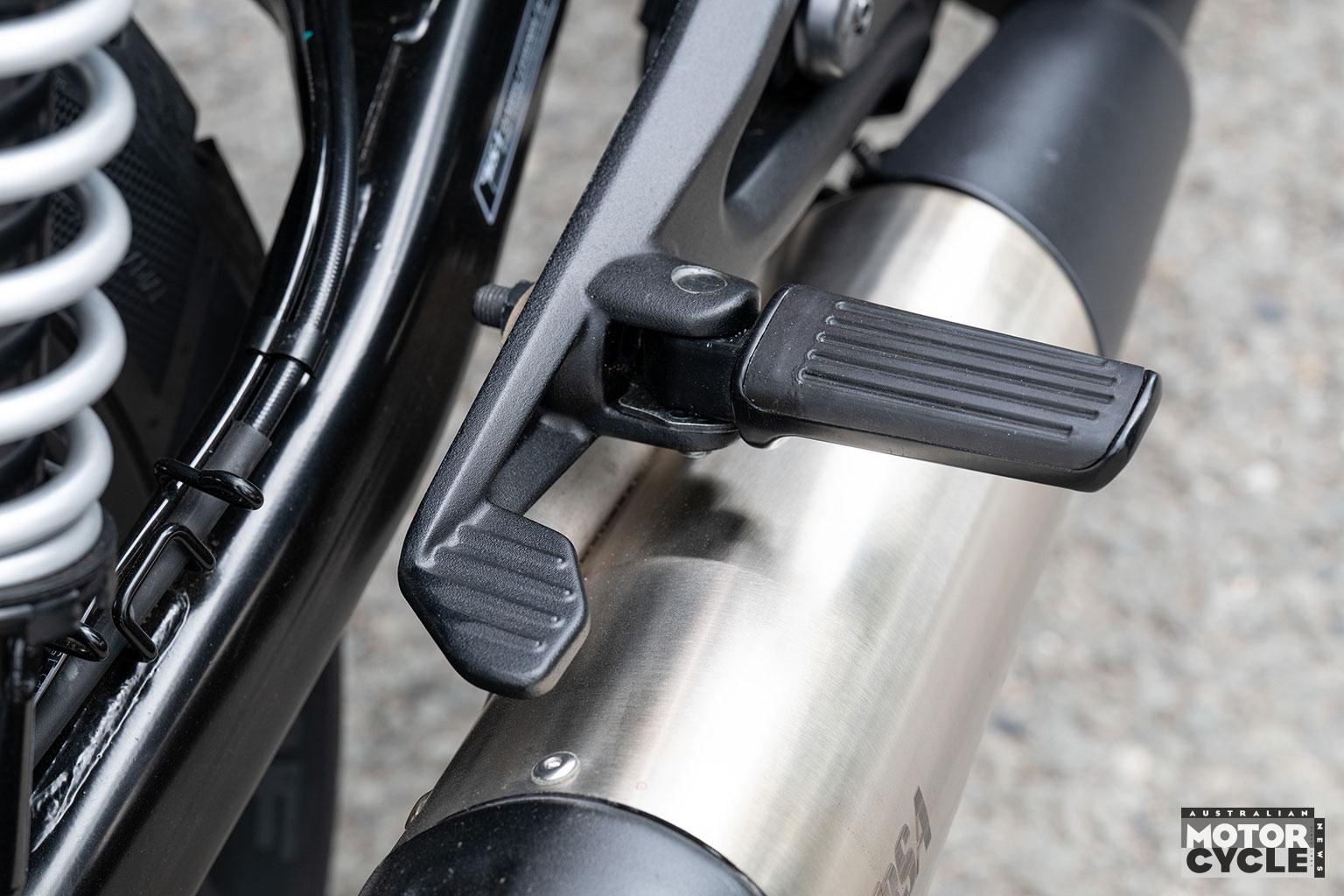
Fit and finish appear to be good; the pale silver external springs on both shocks, sports-type exhaust with the alloy-wrap silencer, short fenders and blacked-out engine give it neo-custom roadster appeal. It looks sharp, although the bland, round mirrors let it down a bit. I did like the metal pad mounted behind the right footrest to stop you treading on the exhaust silencer wrap with your heel. Very thoughtful!
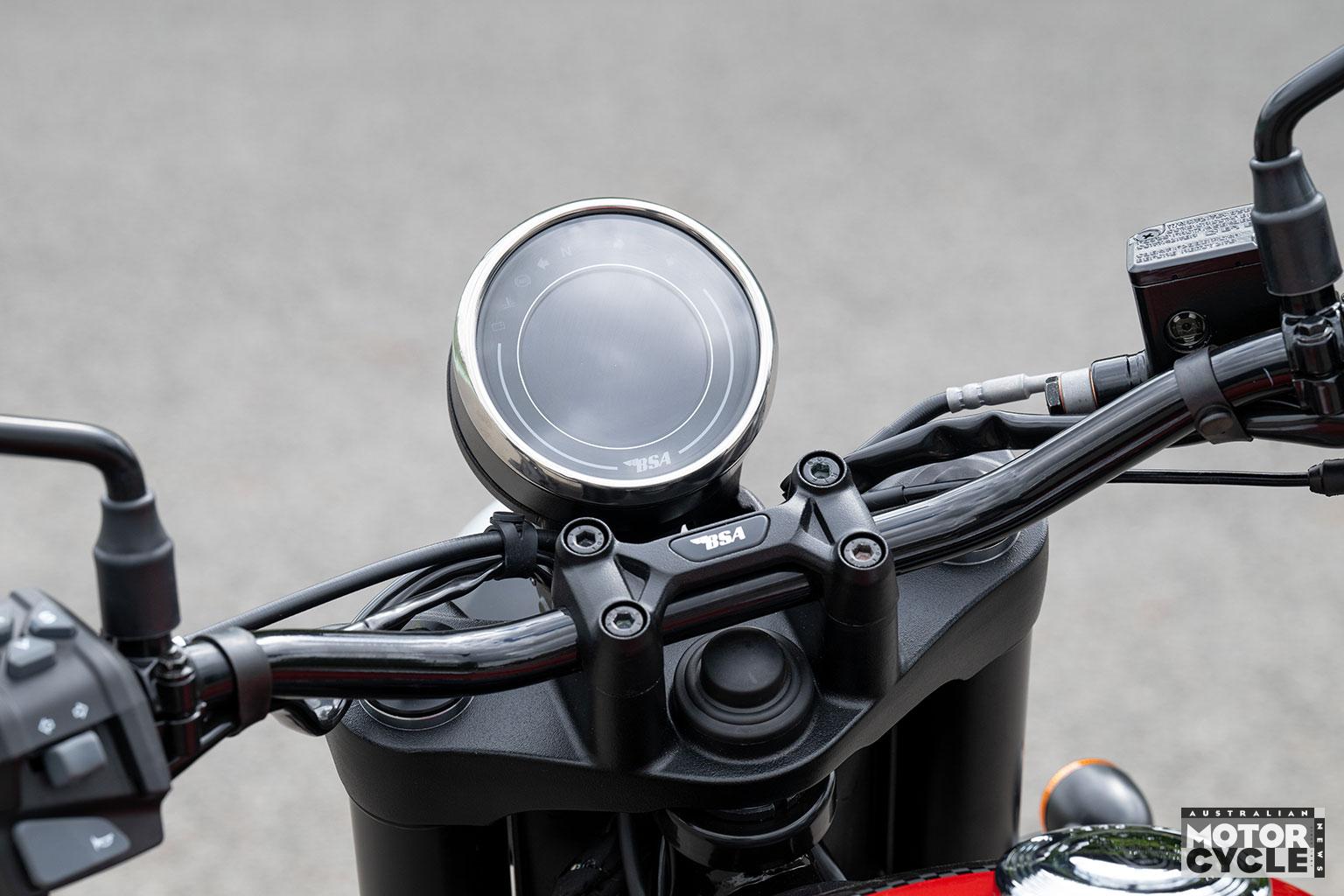
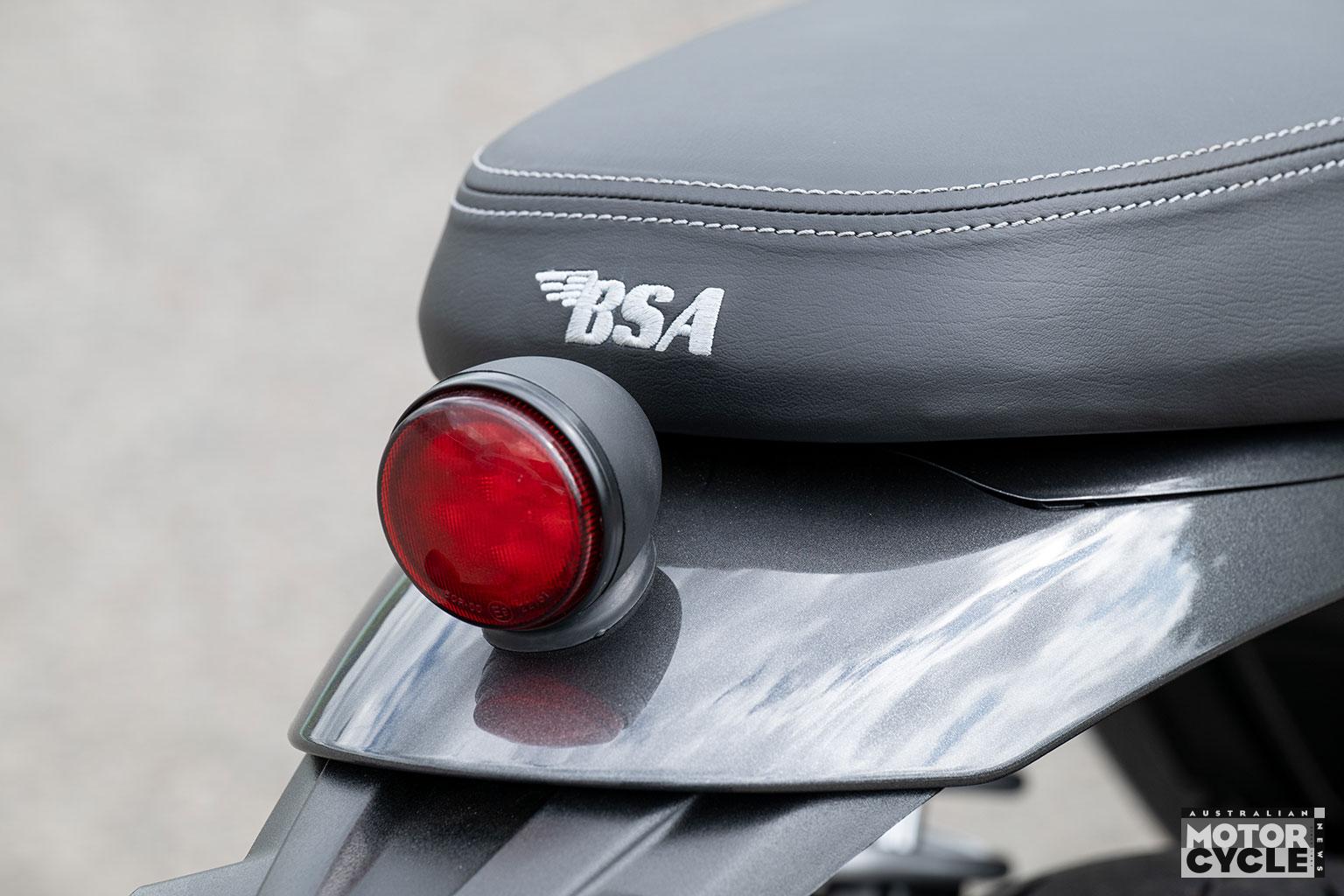
The single round LCD instrument offset slightly to the right shows speed, revs, mileage/twin trips, time, fuel and gear selected, but is mounted at such an angle that it’s hard to read in daylight thanks to reflections on its opaque glass cover. However the neutral light is satisfyingly bright and can be seen at any time. The switchgear is decent quality, and there’s LED lighting front and rear, the latter via a neat custom-style taillight.
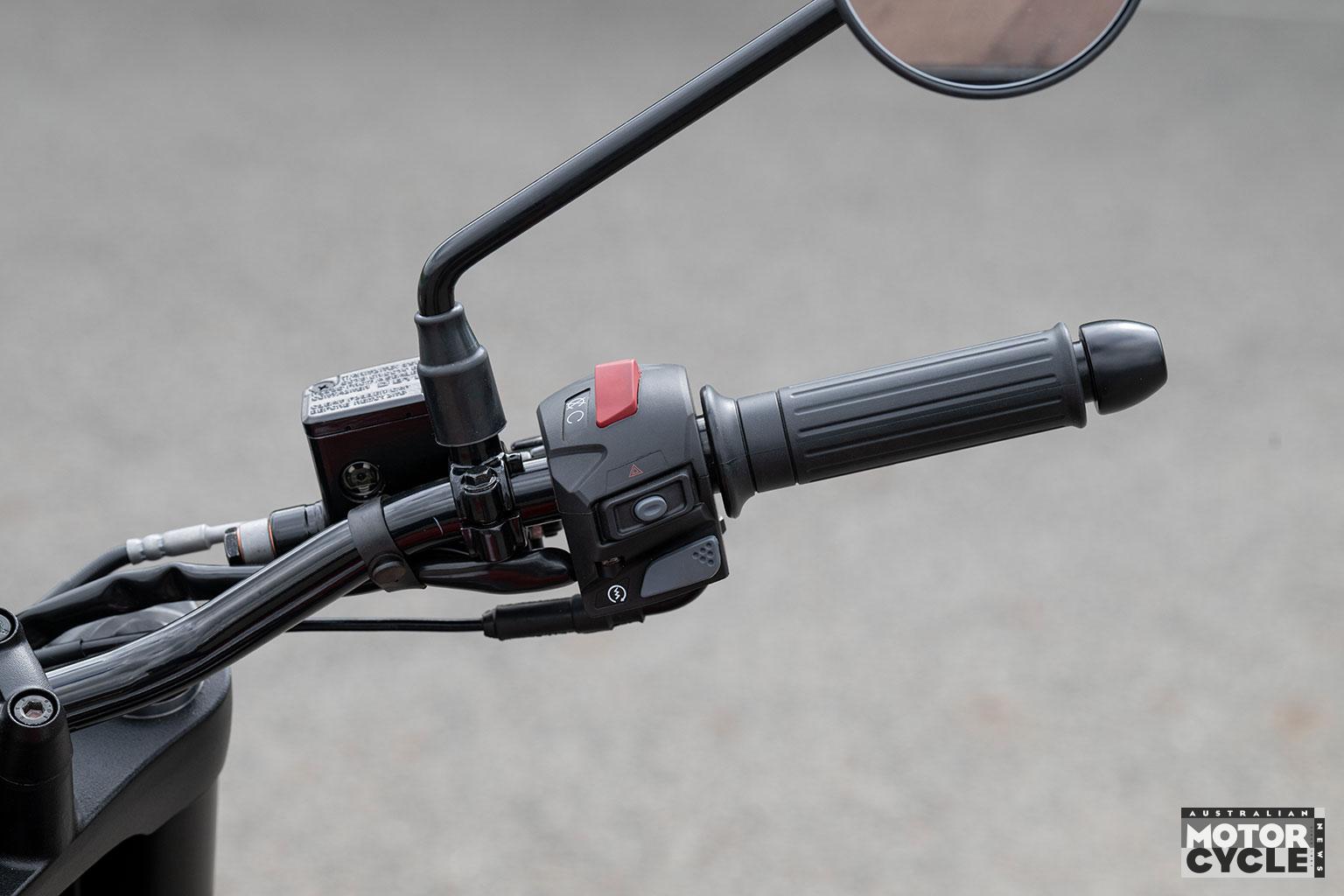
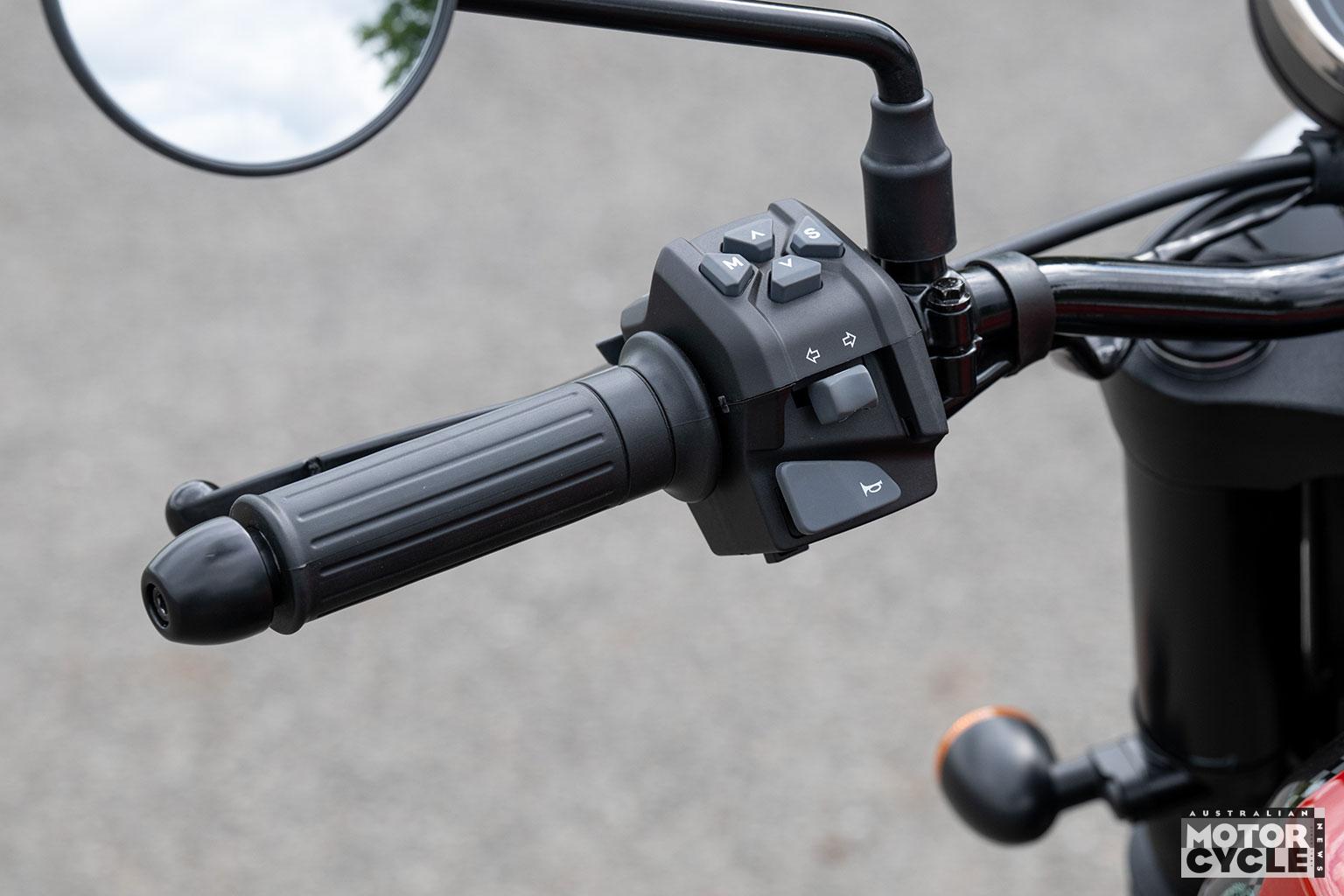
There are no electronic riding aids other than Continental ABS, which kicks in readily but not over-enthusiastically when needed. But there’s also no USB connectivity, which seems rather strange – BSA’s new Scrambler 650 has a USB-C socket, and that being a more costly bike, this is the most obvious example of the Bantam being built down to that low, low price. Conversely, there’s a four-button switchblock on the left handlebar which you might imagine was there to navigate a digital menu, but instead on the Bantam merely switches between the odometer and the two trip readings, and to change the clock display between 12-hour and 24-hour settings. So I think they could have found the budget for a USB socket, don’t you? Same thing for the missing bungee points on the bike if you want to strap something to the passenger seat behind you.
A CLEAR CUT ABOVE
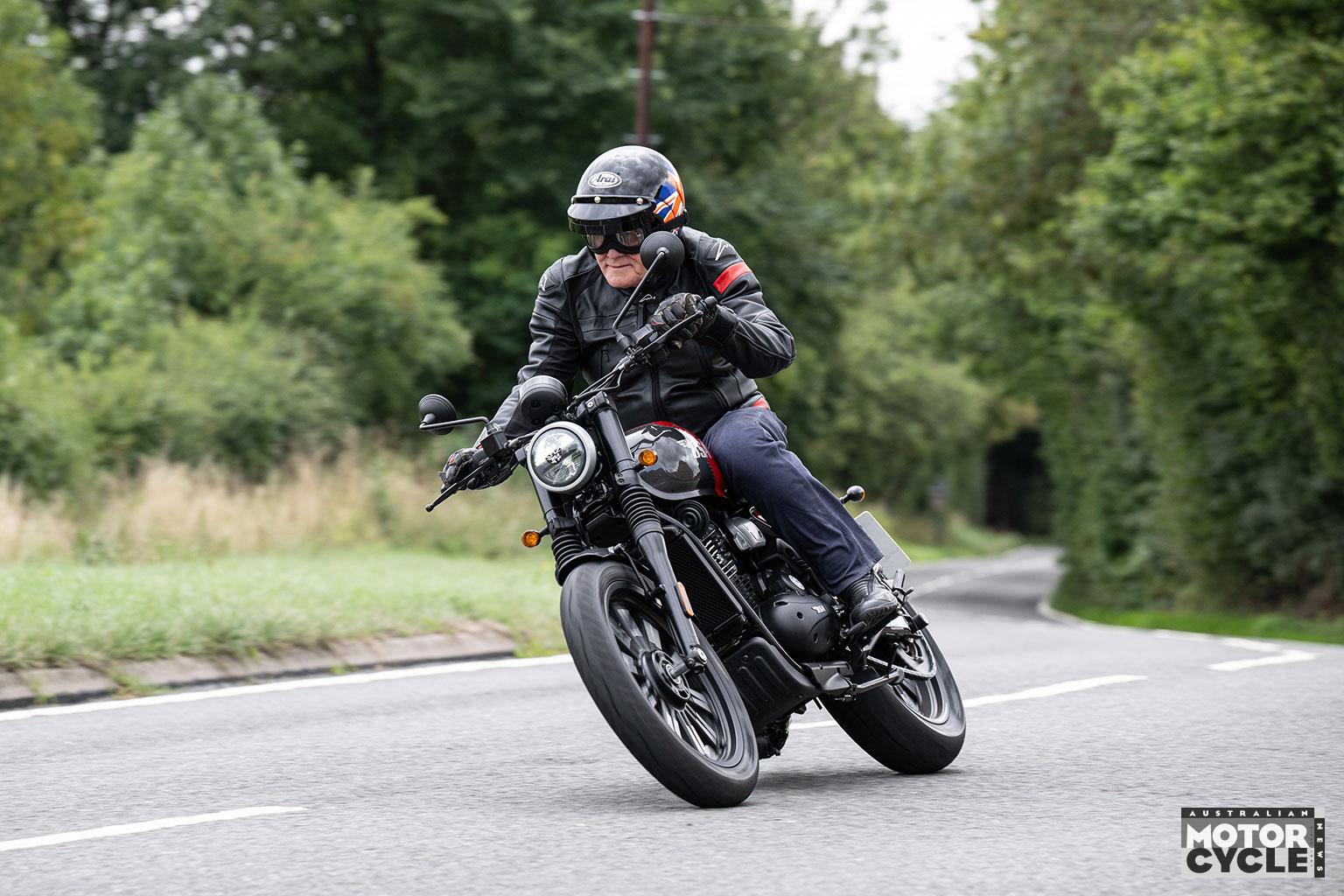
Thumb the button and the Bantam chimes eagerly into life, settling at a 1200rpm idle with minimal vibration – the gear-driven counterbalancer does its stuff, and the oversquare engine only starts tingling as you near 7750rpm power peak. It also sounds great. The exhaust has a mellow, deep note at idle that translates into a distinctly rorty sound at speed, without being obnoxiously loud. The engine delivers plenty of punch – you can’t help but enjoy riding this bike.
The gearchange is faultless, with a precise shift action coupled to a light but positive clutch take-up that makes easy work of getting away promptly at traffic lights, although you don’t need to use it for upwards changes from second gear on. It’s a very intuitive bike to ride, which will be super accessible for the UK learners it’s built to serve.

The engine is peppy as well as smooth, with zestful acceleration for a 350 single. I’ve covered hundreds of kilometres on all Royal Enfield’s 350 models, and the new BSA is a clear cut above any of them in terms of performance. It takes off really briskly when you accelerate hard, and top (sixth) gear roll-on at 80km/h was better than I expected. A brief spurt up the motorway showed it completely at home cruising at an indicated 115km/h. Still sitting normally, I saw 122km/h on the clock without any undue vibration, so it’ll go fast enough to easily keep up with traffic.
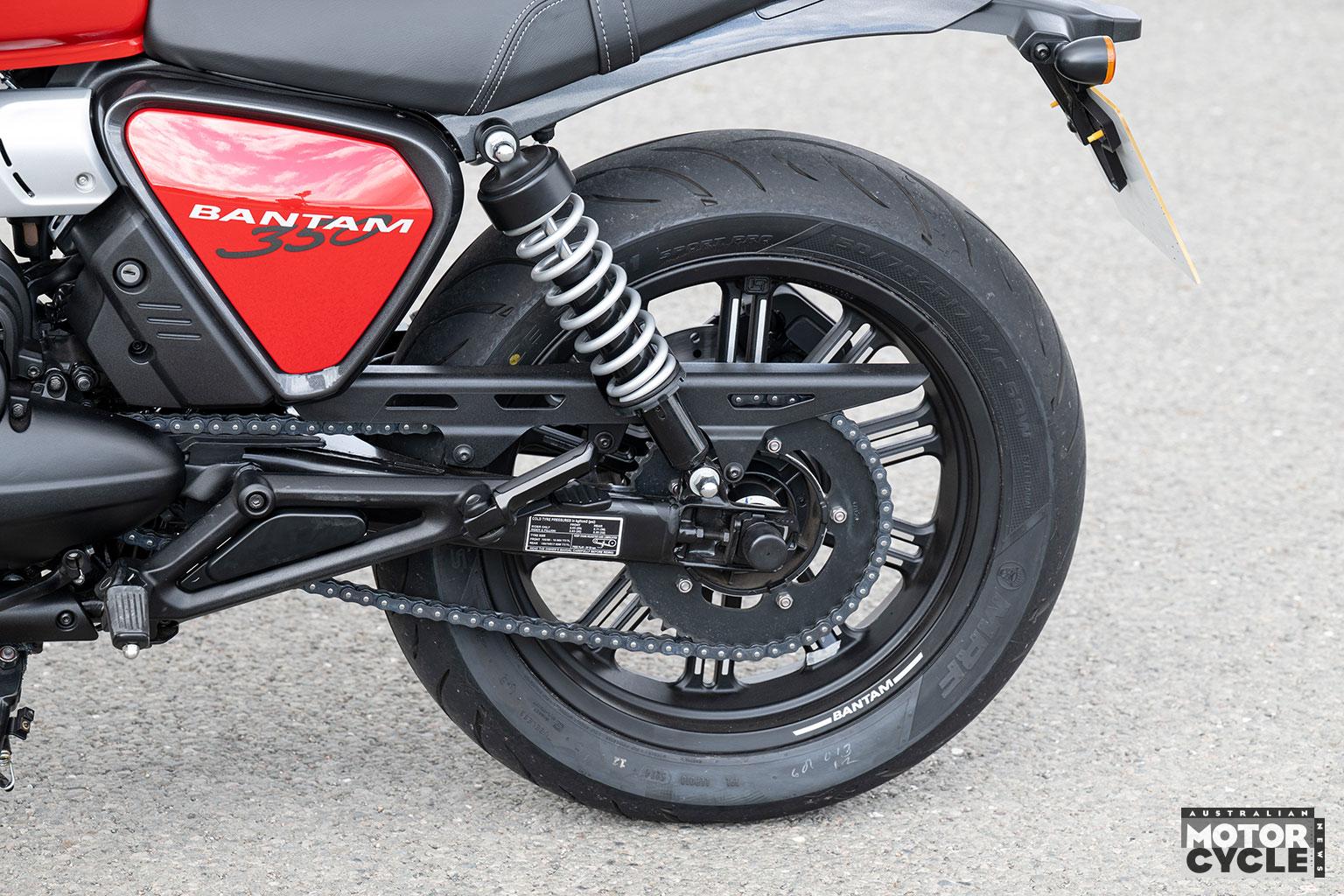
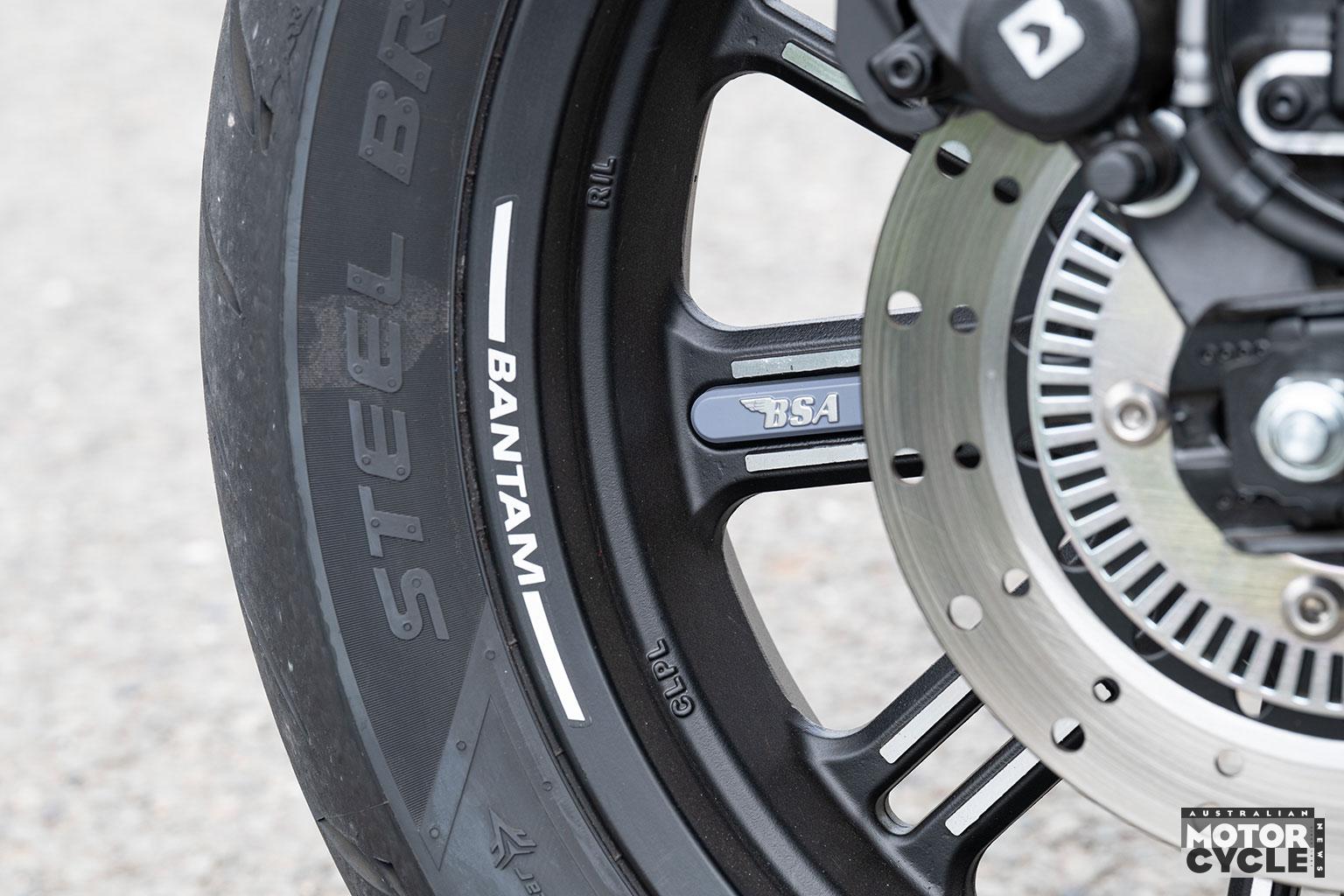
However, the new Bantam is most at home flicking from side to side on sweeping country lanes, where its agile handling coupled with inbuilt stability via the 18-inch front wheel, conservative steering geometry and long wheelbase make it a fun and dependable ride that stays planted in turns. I know from testing them on other Indian-made products from Bajaj and TVS that the MST tyres now give excellent grip coupled with durability, and the BSA was no exception – they were grippy on the angle and drove well out of turns, though the 29Nm engine performance wasn’t likely to overstress them too much.
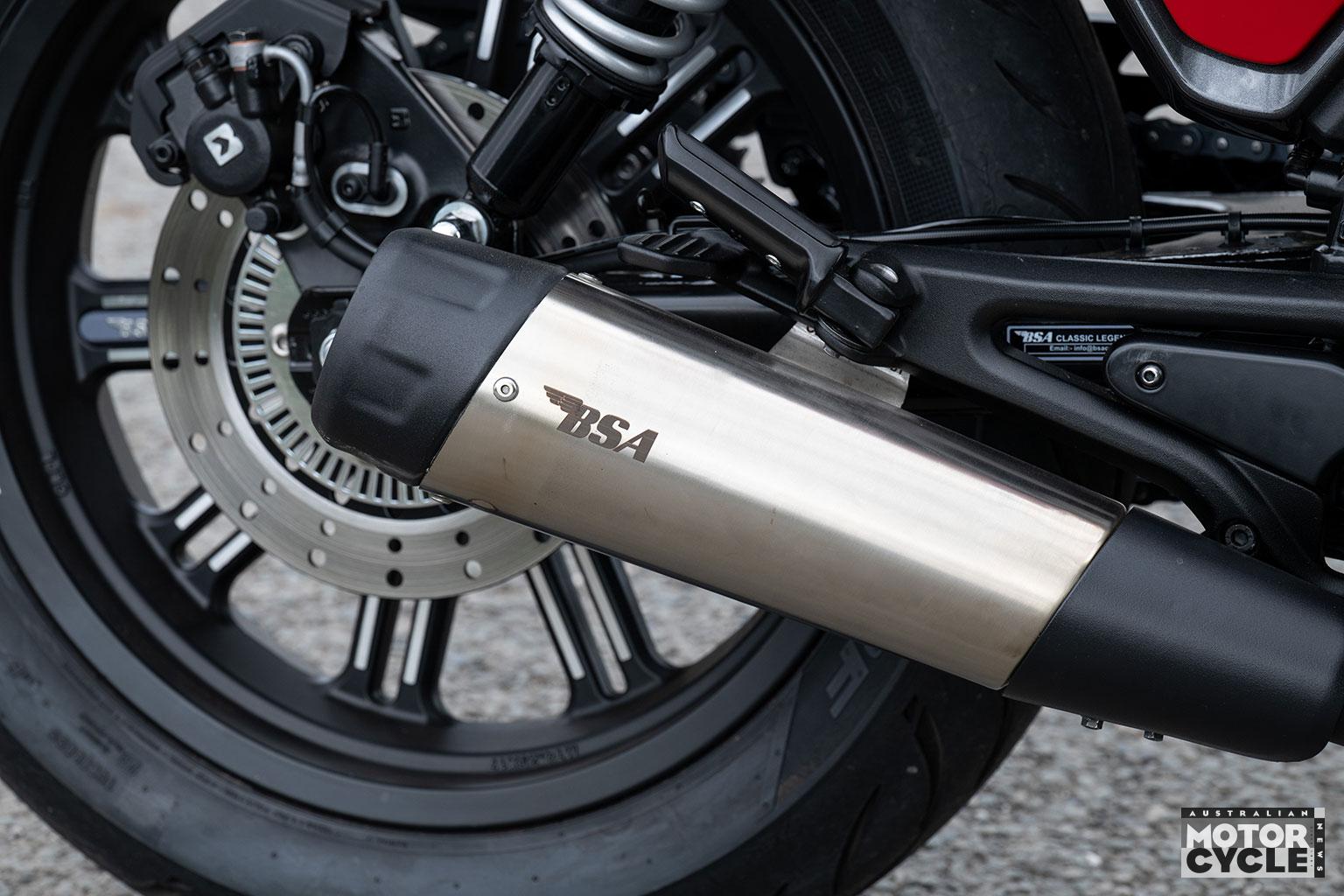
Moreover, pickup response from a closed throttle is truly excellent, with well-mapped fueling that will make this very controllable bike accessible for less experienced riders. The engine has been tuned to be both crisp and well controlled in throttle response, especially at low revs. There’s a seamless response to your throttle input, meaning there isn’t a sudden spurt forward thanks to a snatchy take-off from a standstill in bottom gear, or a brusque pickup from a closed throttle exiting a turn in second or third. Instead, the Bantam is completely predictable in the way it responds to your right hand, thanks to that excellent fuelling.
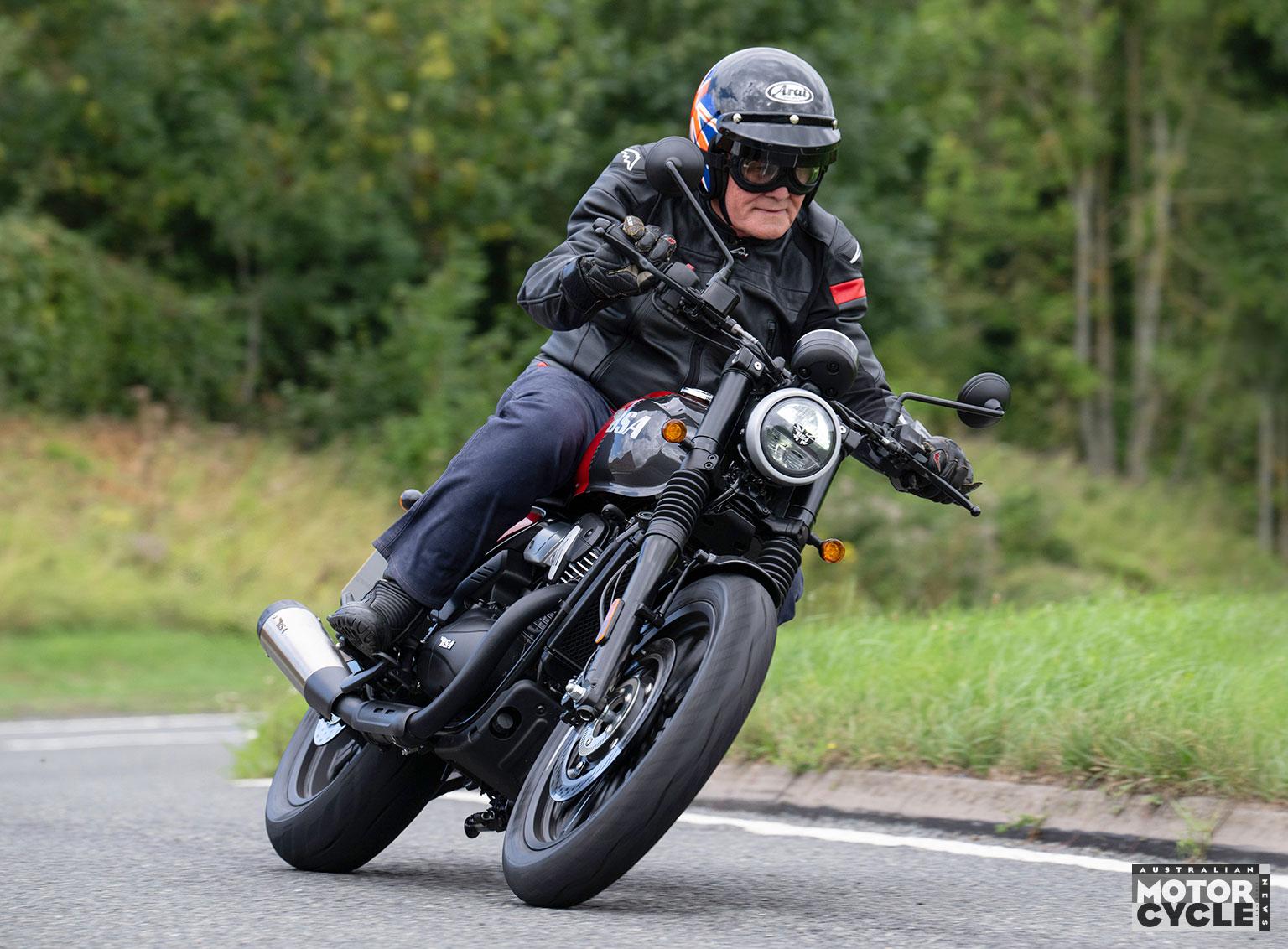
The power delivery is smoothly responsive in any of the bottom three gears, allowing you to exploit the Bantam’s willing nature. The engine’s EFI has been expertly mapped; it’s not easy to achieve this best of both worlds, with that crisp response allied to a smooth, clean initial pickup while also delivering Euro 5+ compliance, but BSA’s engineers have done so where some other entry-level bike manufacturers (perhaps more used to delivering high-performance engine tuning) continue to fail.
The Bybre brakes are now pretty ubiquitous on Indian motorcycles destined for export markets, and the ones on the Bantam lived up to expectations in stopping it well from high speed, via a nicely gauged lever response. However, there was some fork dive when I used the front stopper hard on its own, which is probably the payoff from it having to be a jack of all trades in terms of suspension settings on a non-adjustable front end. Otherwise, the Gabriel suspension did its job okay, although the twin rear shocks were pretty stiffly sprung with limited wheel travel (100mm) and seemed to bounce back from compression faster than I’d have liked; more rebound damping would have been better. You’ll want to weight the footrests to lift yourself up a little when hitting bumps. But the non-adjustable 41mm fork worked pretty well in ironing out road rash. Again, it gave you confidence in terms of feedback from the front tyre, and the 135mm of wheel travel was adequately damped.
But where the BSA Bantam comes into its own is as an urban warrior ready to fight its corner in city streets and urban parkways. Its torque is sufficient to ensure you can jump ahead of cars at traffic lights and stop signs. The light clutch and smooth but responsive pickup allows you to make easy work of picking your way through traffic, where the 800mm high seat lets you see ahead to plan your campaign against the stationary tintops, and the wide handlebar gives good leverage in negotiating tight changes of direction, with the Bantam’s slim build facilitating your progress. The long first gear also helps.
“The original BSA Bantam helped create a new age of motorcycling, increasing the popularity of motorbikes by making them accessible for all,” says Classic Legends co-founder Anupam Thareja. “The new BSA Bantam promises the same thing, along with beautiful craftsmanship and comfort, at an affordable price.
“We want to get people back into motorcycles, and the fundamental thing which you want to welcome people with is the price point. So, to launch a beautiful engine which heads the competition in terms of performance, but which is very welcoming to everybody because of its accessibility and affordability, is how we intend to go about doing that. That’s how we want to get the world back into bikes, with a model which combines classic styling with modern design touches which makes it appeal to all generations. We hope we’ve succeeded!”
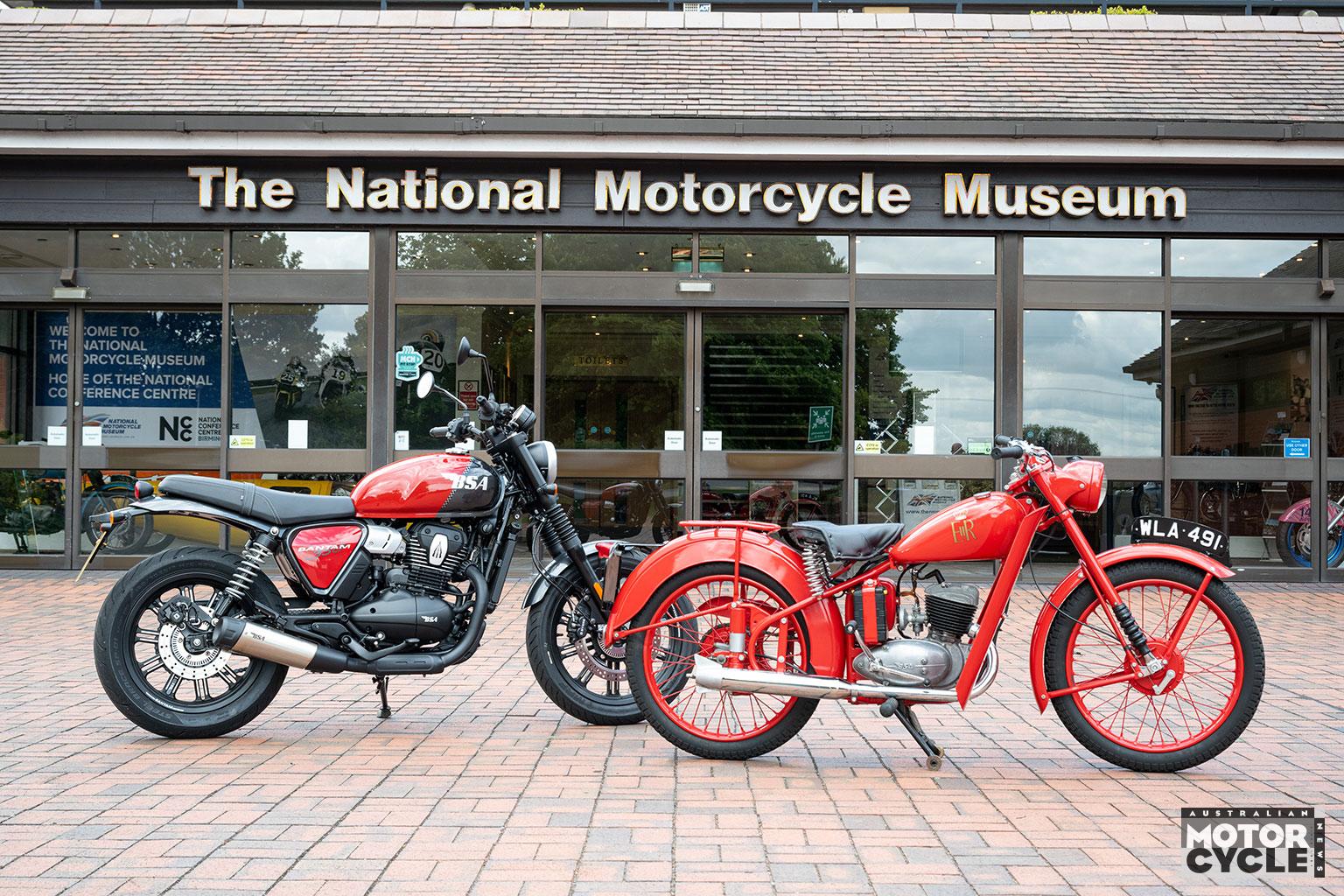
Bonneville. Monster. Commando. Vespa. Bantam. There’s a select list of motorcycle and scooter models that have become such iconic products in their own right that adding the name of the manufacturer responsible for them is simply redundant. But while those first four examples are still very much a part of today’s global marketplace, the BSA Bantam has been ‘resting’ since 1971, when the last-ever 174cc version was manufactured. Now ‘Bantam is Back’, as the BSA T-shirts declare. Light, manageable, and for sale at a killer price, this bike is aimed at the descendants of people who rode Bantams back in the day, who won’t be too interested in the historical allusions, more so in the fact that it offers huge value for money that goes beyond the illustrious name on the tank.
Bantam is indeed back – and BSA may very well have a surprise hit on their hands with it.
✅ PROS – Light, manageable and for sale at a killer price, its performance knocks the socks off its long-stroke rivals.
❌ CONS – Price point means cost cutting and losing such items as a USB charge point and luggage tie-down points.
SPECIFICATIONS
ENGINE
Capacity 334cc
Type Liquid cooled four-stroke four-valve single with chain-driven DOHC camshafts
Bore & stroke 81mm x 65mm
Compression ratio 11:1
Carburation Multipoint EFI with single injector
Gearbox 6-speed
Clutch Multiplate oil-bath with slip-assist clutch
PERFORMANCE
Power 21.6kW (29hp) @ 7750rpm (measured at crankshaft)
Torque: 29.62Nm @ 6000rpm
CHASSIS
Frame Tubular steel duplex cradle frame
Suspension
Front: Non-adjustable 41mm Gabriel telescopic fork with 135mm of wheel travel
Rear: Oval-section tubular steel swingarm with twin Gabriel shocks offering 100mm wheel travel with five-step spring preload adjustability
DIMENSIONS
Head angle 29°
Wheelbase 1440mm
Seat height 800mm
Weight 185kg with oil/water/90% fuel
Fuel capacity 13 litres
WHEELS & BRAKES
Brakes
Front: Single 320mm steel disc with floating two-piston caliper and Continental ABS
Rear: Single 240mm steel disc with floating two-piston caliper and Continental ABS
Wheels/tyres
Front: 100/90-18 MRF Zapper MF-3 tubeless on cast aluminium wheel
Rear: 150/70-17 MRF Steel Brace FP-01 tubeless on cast aluminium wheel
CONTACT
Manufacturer Classic Legends Mumbai, Maharashtra, India