Melbourne’s Olympic Park was once the venue for Australia’s most lethal motorcycle racing
In 1897, the League of Victorian Wheelmen constructed a banked cycling track on what was known as Government Paddock. Located on the banks of Melbourne’s Yarra River near Richmond, the tight, narrow asphalt track was flanked by a bar, a pissoir and a rudimentary grandstand – all enclosed by a picket fence.
Pioneer motorcyclists soon discovered the venue. And while their rudimentary belt-driven machines proved far too unwieldy for the track, they found the bar amenities most accommodating; an ideal location in which to discuss rumours of a proposed concrete speedway. But the Great War put an end to all speculation.
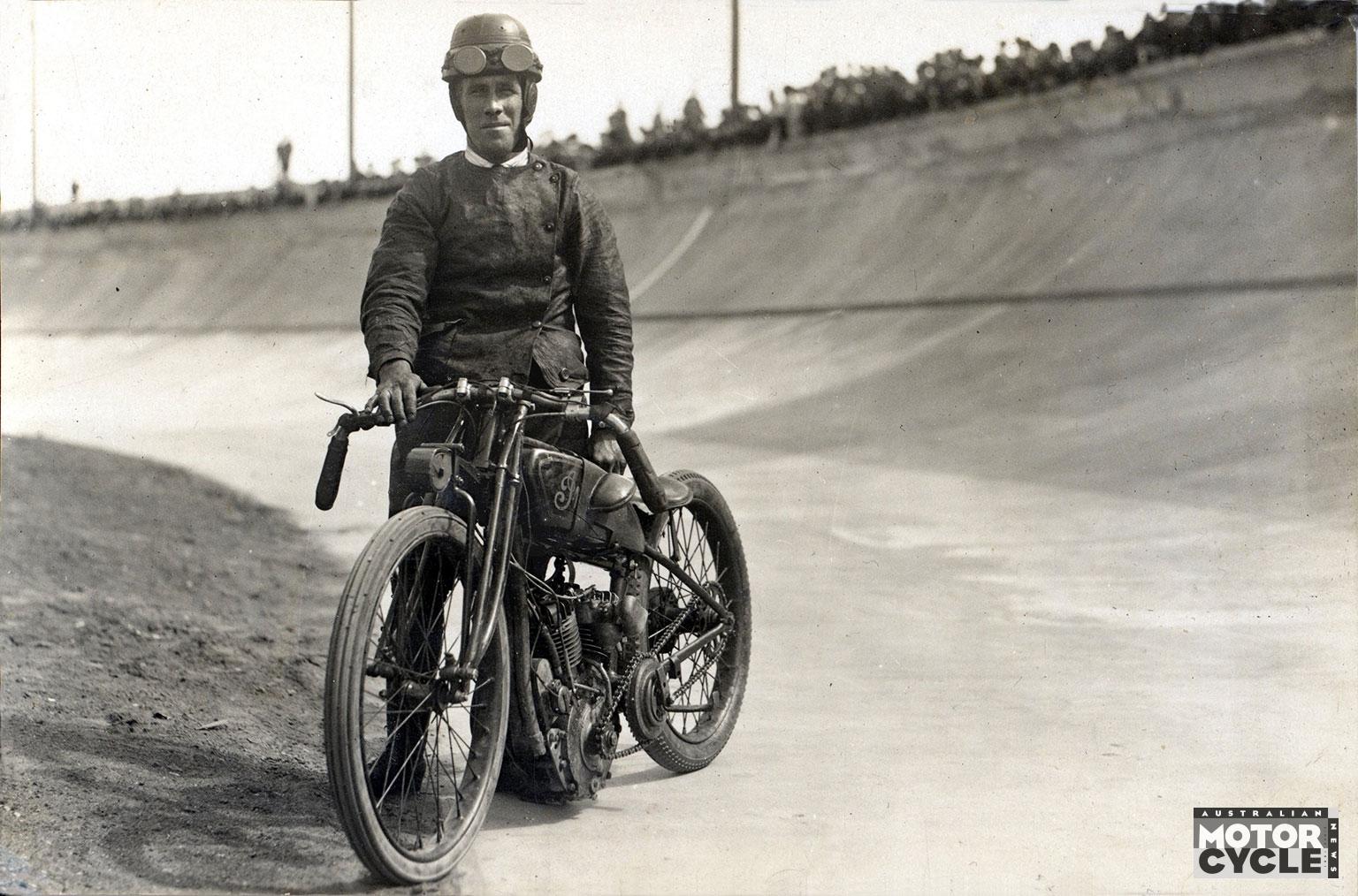
Crime lord, benefactor to the downtrodden, or simply a successful SP bookie (depending upon whom you asked), John Wren was a bloke who, post-war, had a finger in every Four’n’Twenty. Undeterred by the fact that the cycling track was a public facility, Wren overcame the controversy to obtain a 10-year lease on the valuable riverfront property.
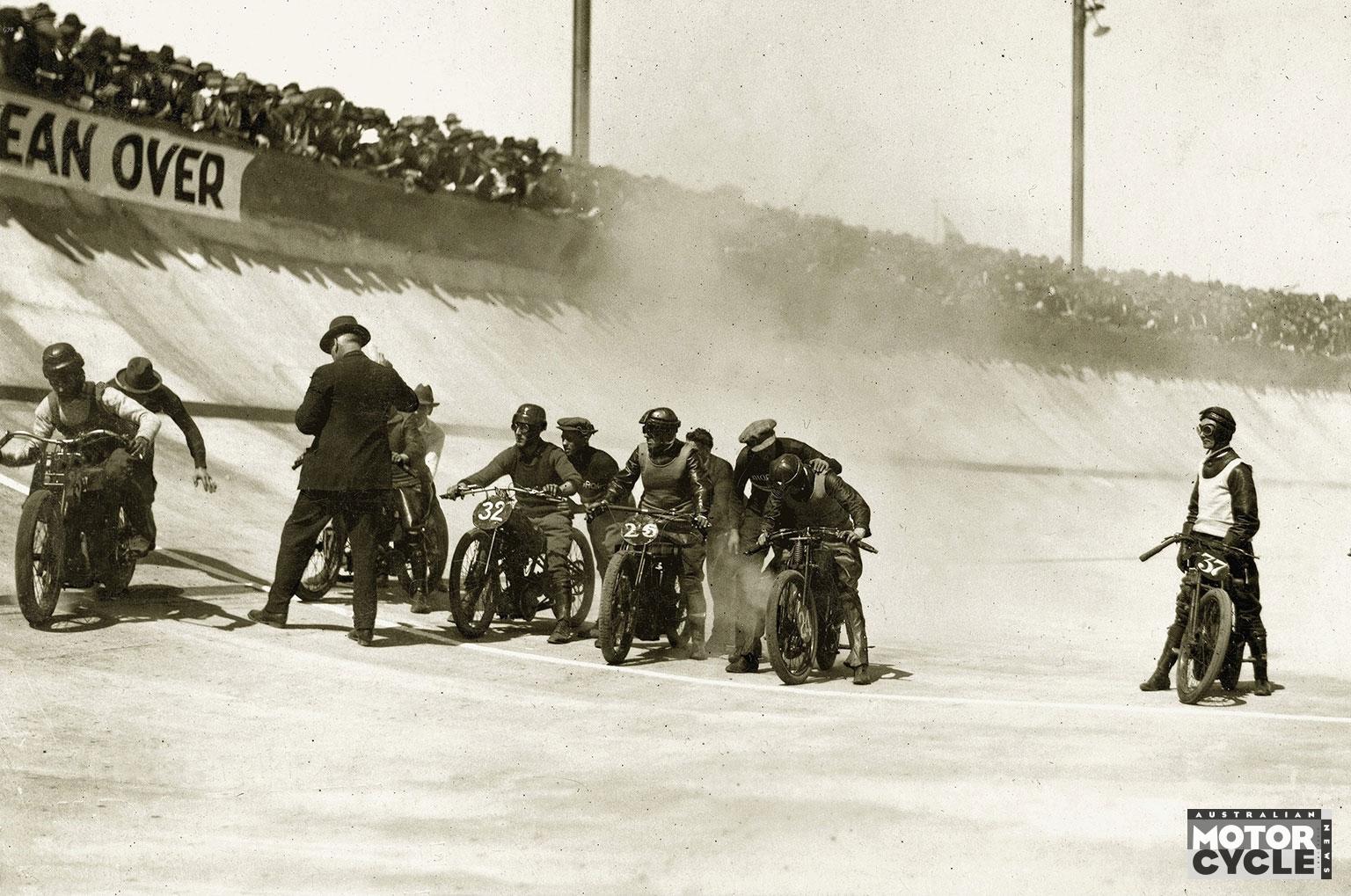
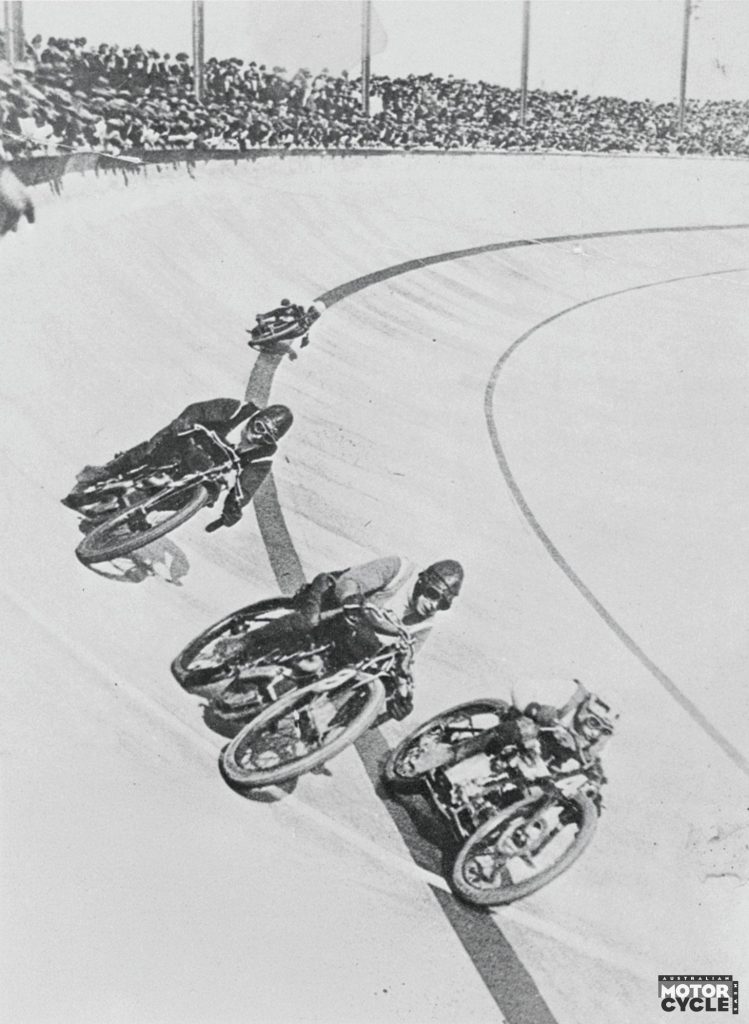
Only 18 months later, at a cost of more than £30,000 – not including the expense of entertaining Melbourne City councillors – Wren’s Motordrome became a reality. Barely 10 metres wide, the speedway’s slightly dished concrete surface rose at an angle of 48 degrees to a one-metre-high vertical wall, topped by a 30mm lip, intended to deflect flying debris. Prominent signs warning spectators not to lean over the lip were displayed around the circumference of the track, however contemporary photos indicate the advice went unheeded.
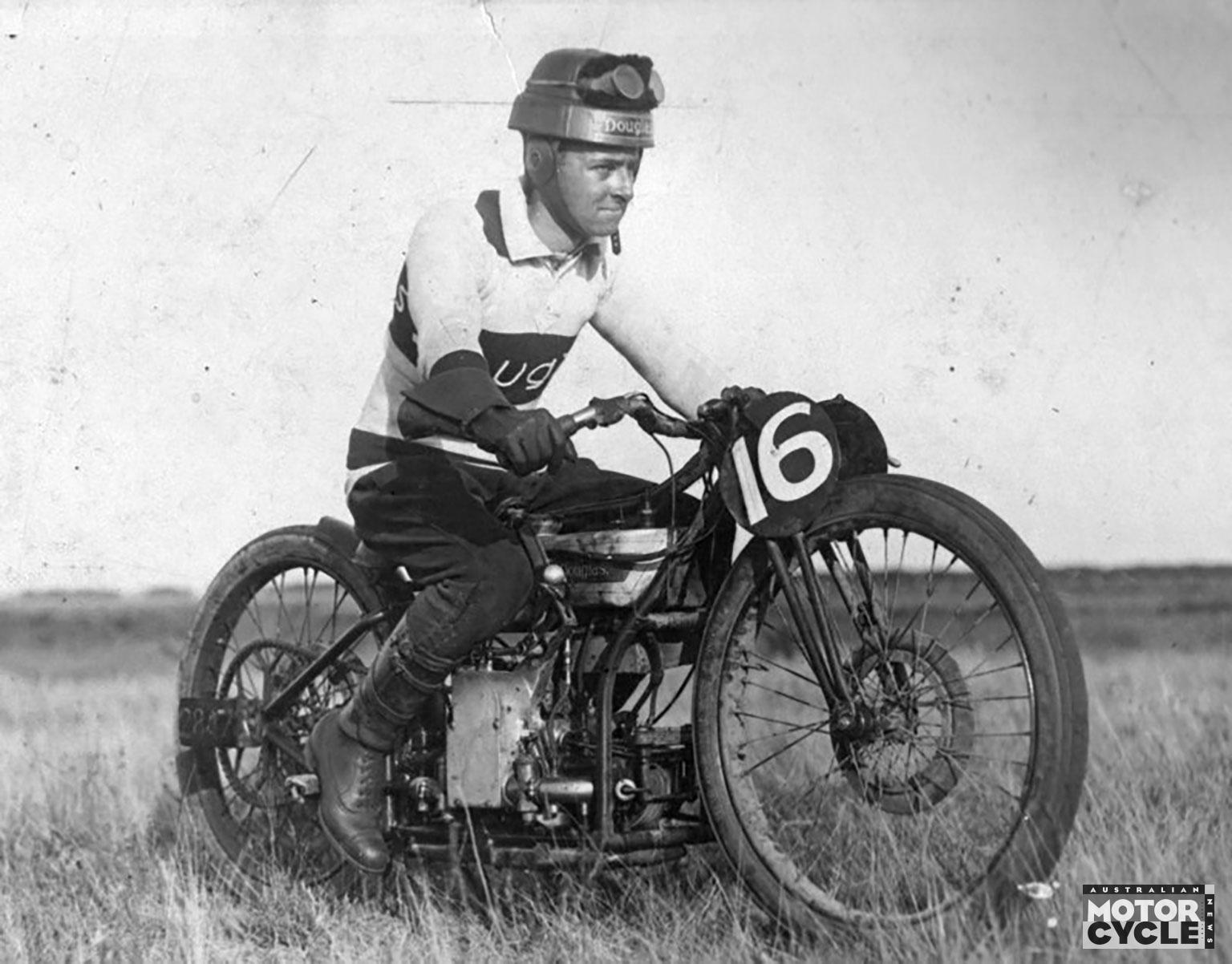
With the opening of the Motordrome scheduled for Saturday 29 November 1924, American boardtrack champions Ralph Hepburn, Jim Davis, Paul Henderson and Johnny Seymour arrived in Australia well in advance. Unfortunately for Hepburn and Davis, not so their Harley-Davidsons, forcing them to compete on Douglas twins readily organised by Wren’s track promoter Jack Campbell. More disconcerting for the Australians was that the American contingent insisted that all competitors should disconnect their brakes – strangely, the local officials agreed.
Although some reports differ, Melbourne’s Sun-News Pictorial – which featured the inaugural meeting with a full front page – stated that the Americans failed to win a race; Charlie Disney on Indian and Ron Hipwell on Douglas taking a 1-2 for the Aussies in the final, with Hipwell besting Davis in the seven-lap scratch race.
Motordrome designer Jack Prince had predicted speeds of up to 70mph (112km/h) but Charlie Disney’s Indian was timed – on a very sophisticated stopwatch – at 83⅓mph for the 629 yard circuit. Clearly the pace could only increase, and – at speeds of more than 135km/h – it became obvious that, due to tyre compression, the heavy V-twins were unsuited to the steep banking. From the second meeting the solos were restricted to 500cc.
The track lighting was operational by Christmas and, come the New Year, Saturday night at the ’Drome was attracting capacity crowds of 27,000 thrill-seekers – and that’s exactly what they got, according to one lyrical sports journalist’s report: “Shuddersome disaster made last Saturday night an occasion of grim importance in the history of motor cycling. Whilst travelling at 82mph in the last lap of the Invitation Handicap at the Motordrome, Ron Hipwell, Ralph Hepburn and Paul Anderson thundered to earth, Hipwell and Hepburn having been smashed into unconsciousness, whilst Anderson had a miraculous escape. Hipwell’s back wheel was seen to lurch round towards Hepburn, who was near the lip of the track, and the pair, amidst deafening reports, crashed to the concrete. Anderson, unable to avoid the amass, also crashed, flying into the air, and landing about twenty yards farther along the track. A great shower of sparks from skidding and reporting machines made the scene even more awesome.”
A report like that was bound to increase patronage.
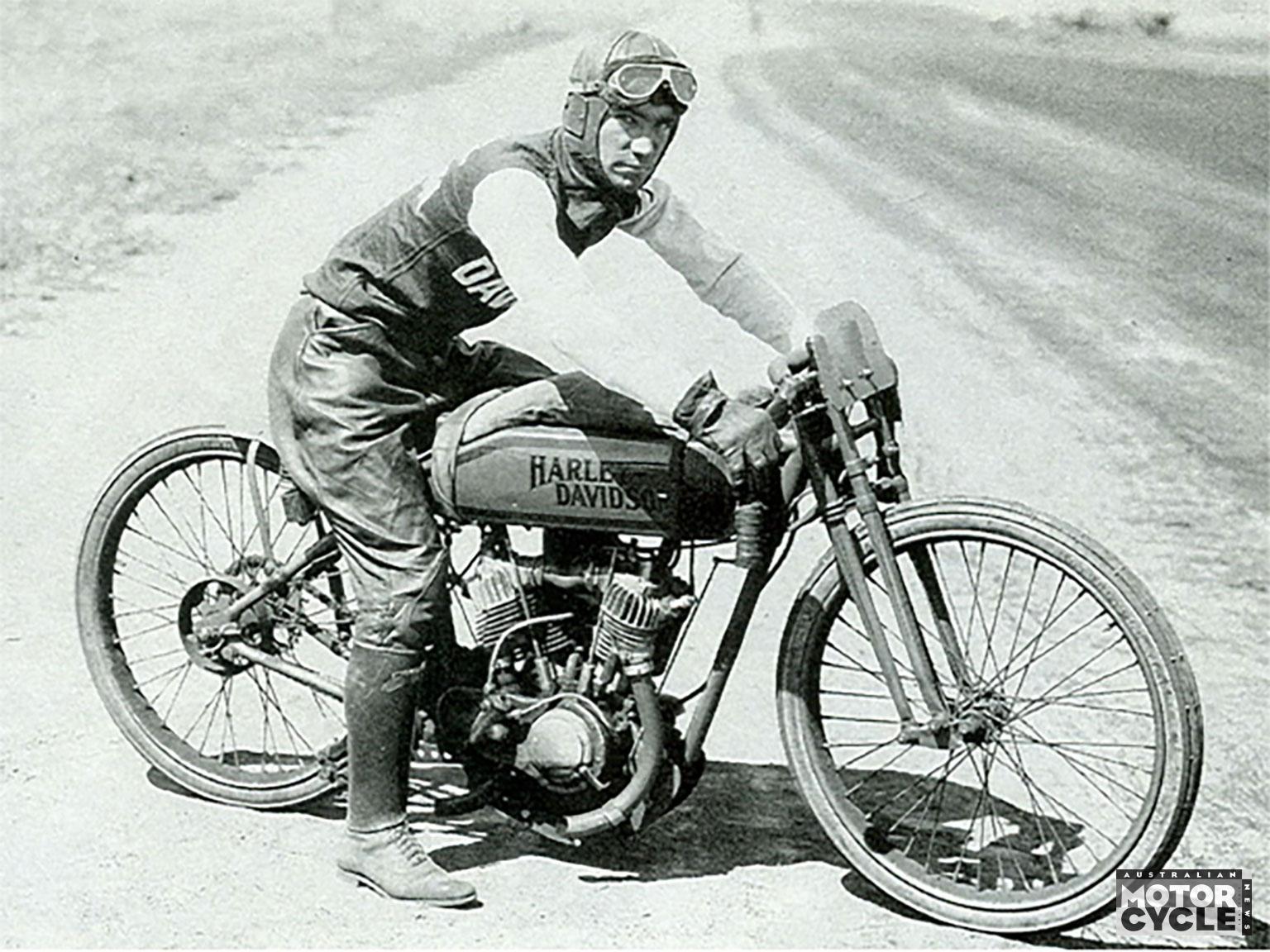
As the riders chased faster lap times by riding higher along the banking, the greater the effect of the centrifugal force, allowing even higher speeds. Hipwell later reported the cause of his misfortune was that the front fork of his Douglas had spread under the excessive compression and the front wheel had simply parted company with the bike, or “just shot out” as Ron put it.
In a futile attempt to avoid the problem, a wide red line was painted along the centre of the track and designated as the ‘Safety Line’; above which, according to one newspaper, “extra care is needed by the rider”. Riders were instructed to remain below the ‘Safety Line’ unless overtaking. Or, possibly, just contemplating a pass.
While the concrete surface of the track had largely coped with soaking up the oil flung from the bikes each meeting, the thick red paint of the ‘Safety Line’ was another matter. Once a rider had successfully negotiated the slippery painted surface to get to the highest racing line, there was absolutely no incentive to face the same hazard only to go slower.
Only weeks later, the front tyre of Alec Staig’s bike gyrated off the rim causing a fiery crash in which Staig died and Allan Bunning later succumbed to head injuries. Then, in May the following season, Charlie Grigg suffered a fatal accident while riding above the line, his factory AJS looping over the lip, critically injuring a spectator.
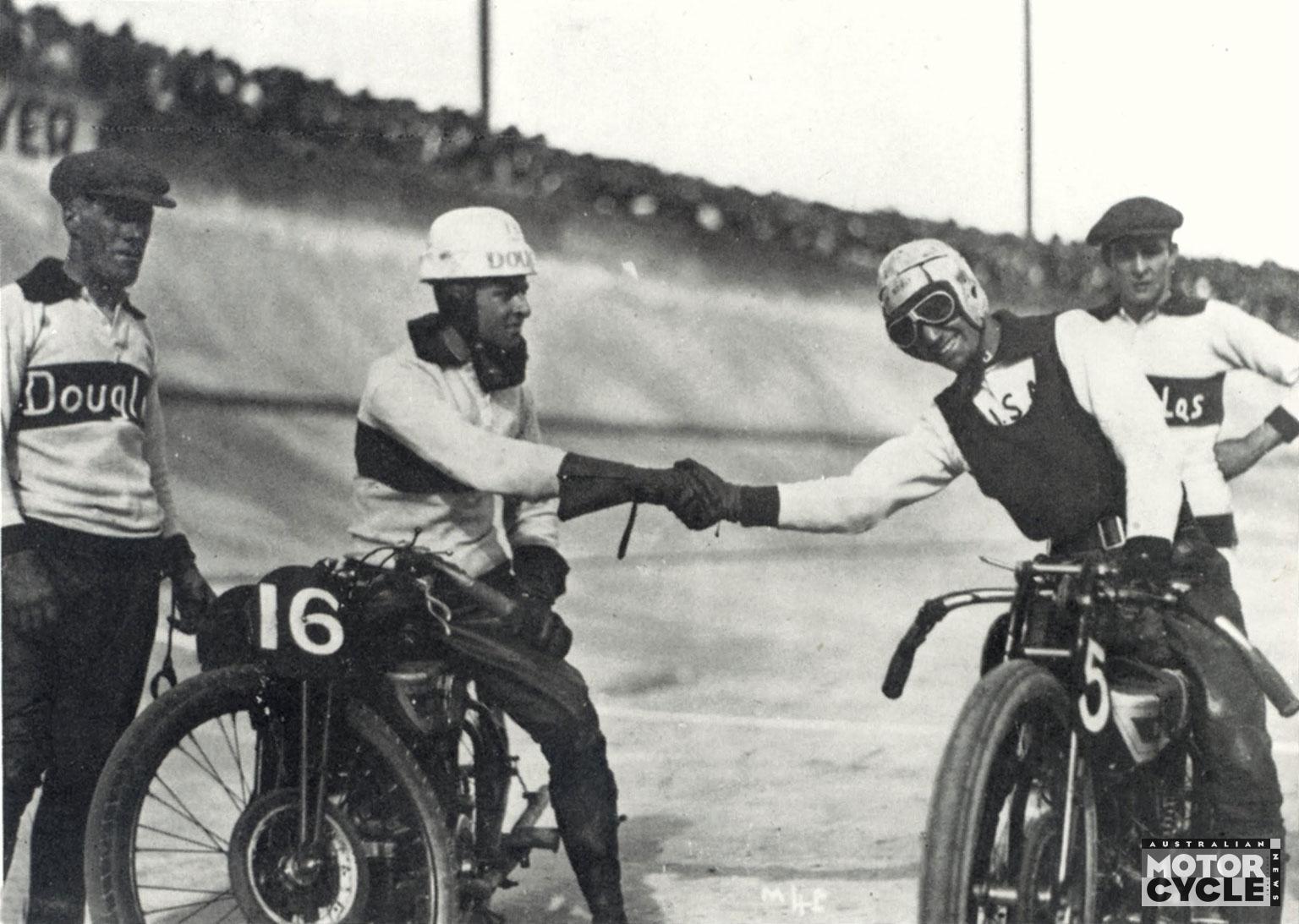
As the term ‘Suicide Saucer’ hit the tabloids, future events were limited to four competitors and the solo capacity was reduced even further to 350cc. Yet speeds increased as riders tempted fate by riding higher along the vertical wall of death. However, this was no carnie sideshow. At speeds approaching 150km/h, riders were all but horizontal only centimetres from the spectators leaning over the lip at the top of the wall.
When Nathaniel Brown’s tyre exploded on a sweltering summer night in February 1929, his bike careened up the banking, flipping over the lip into a couple of 16-year-old mates, one of whom was decapitated, the other later dying in hospital. The ‘Suicide Saucer’ became known as the ‘Murderdrome’.
The venue shut down – at least until the furore abated – only to re-open the following season. When aspiring junior Reg Maloney became the next fatality, the Murderdrome moniker stuck. After well respected road-racing star Jimmy Wassall was killed in January 1932, nothing could be done to revive the venue’s fortunes. After five rider fatalities, the death of two spectators and scores of injuries, authorities finally deemed the Motordrome was no longer fit for purpose.
With a year to run on the lease, a sidecars-only season was held over the summer of 1922/23. Then in May, 20 massive charges of dynamite reduced the Murderdrome to rubble and a deadly chapter was closed. Wren squeezed the last quid from his venture by charging thrillseekers sixpence a head to get close to the explosion.