Triumph sharpens its streetfighter with the track-focused 1200 RX that’s leaner, meaner and limited to just 1200 units
Just months after the stellar launch of the Speed Triple 1200RS, Triumph was back at Portimao circuit in Portugal with a surprise: the limited-edition, track-focused RX. Only 1200 of these bright yellow beasts will be available globally.
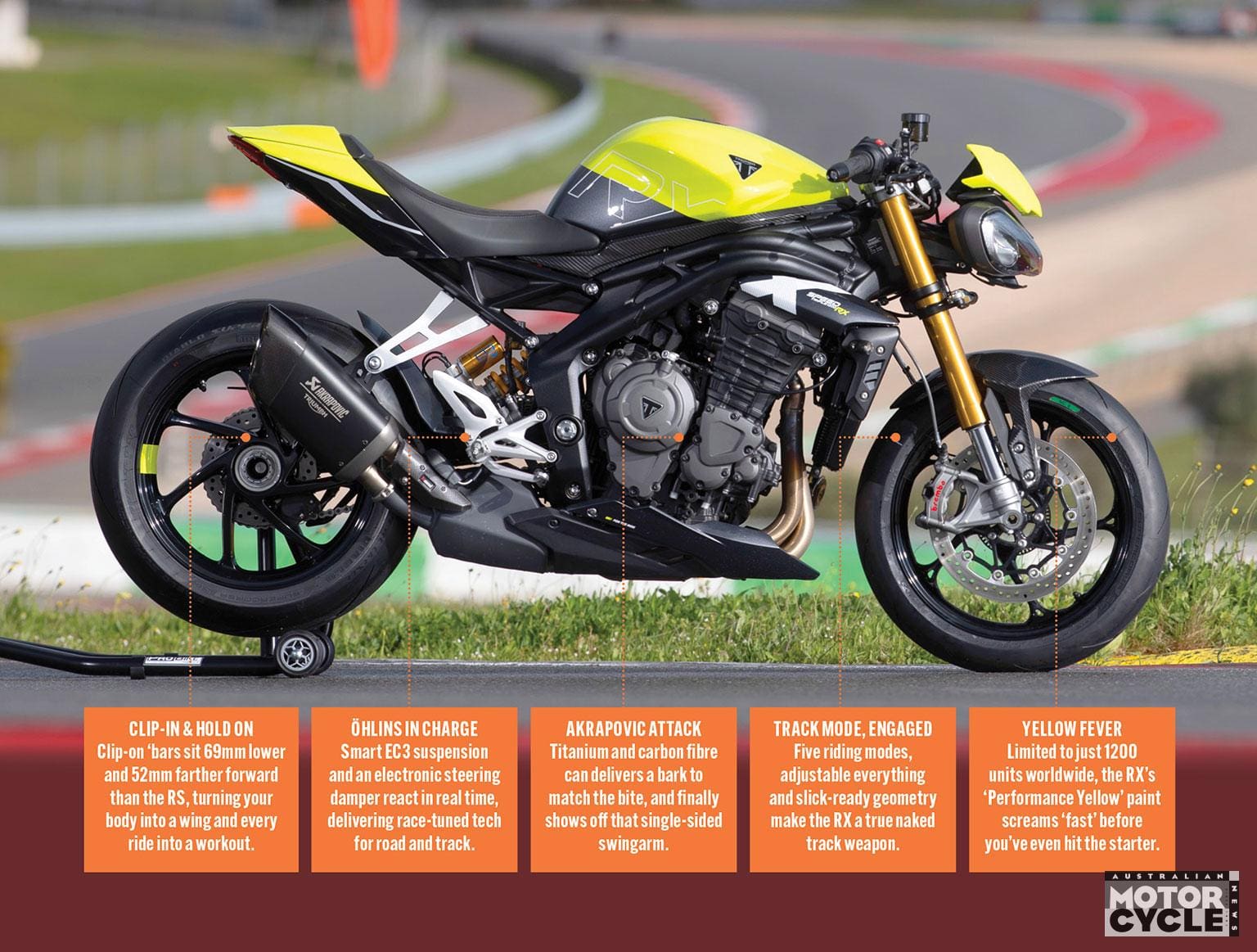
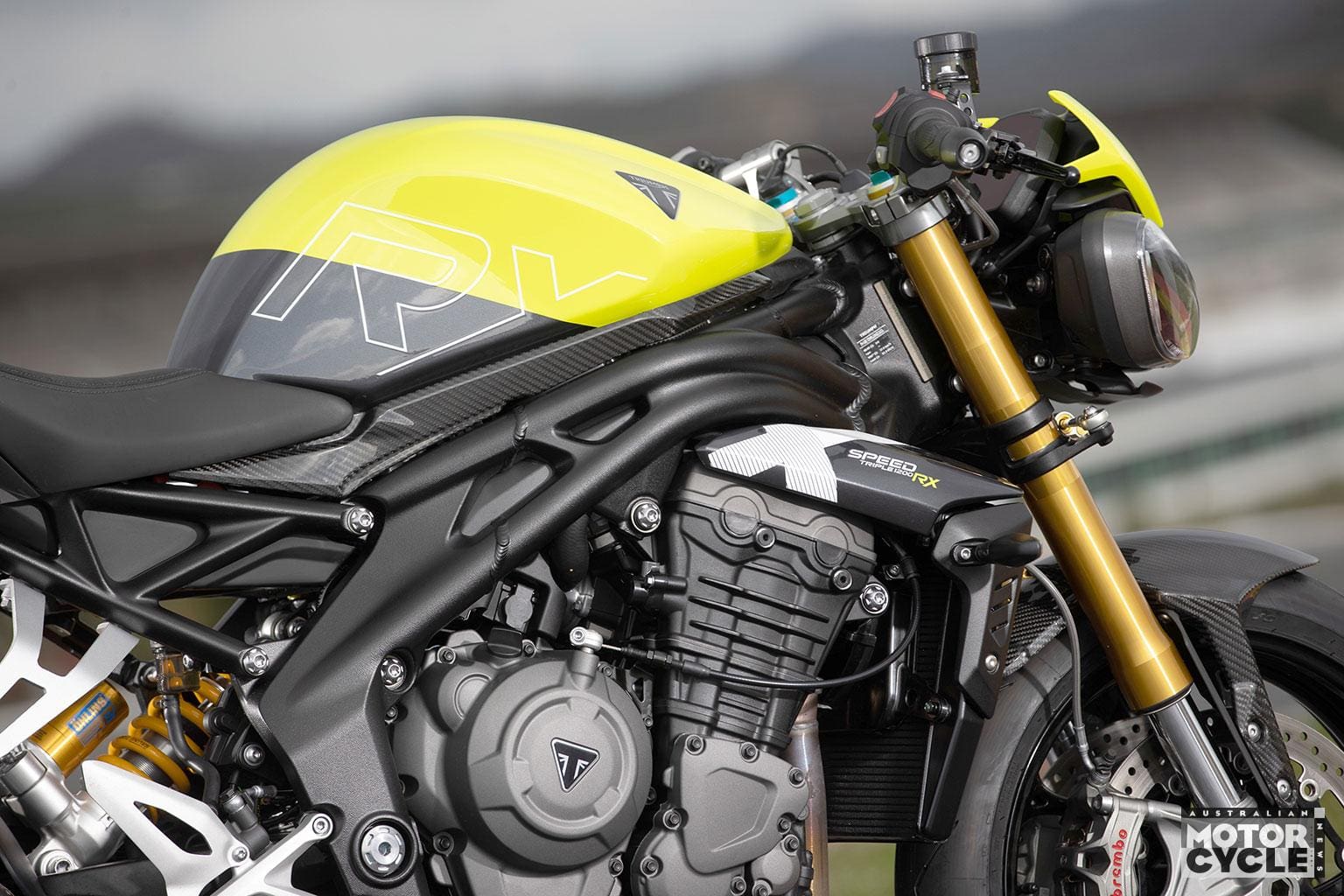
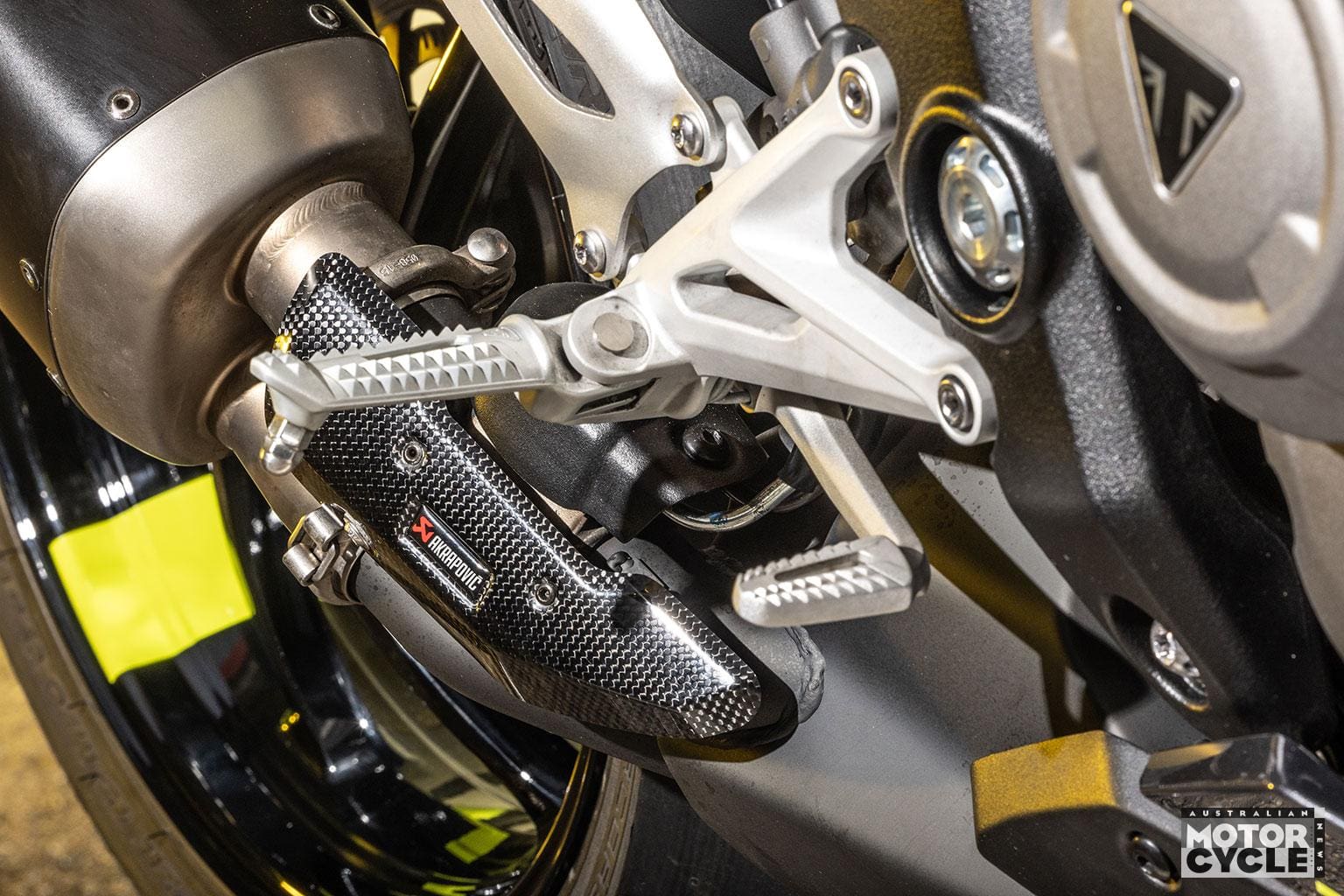
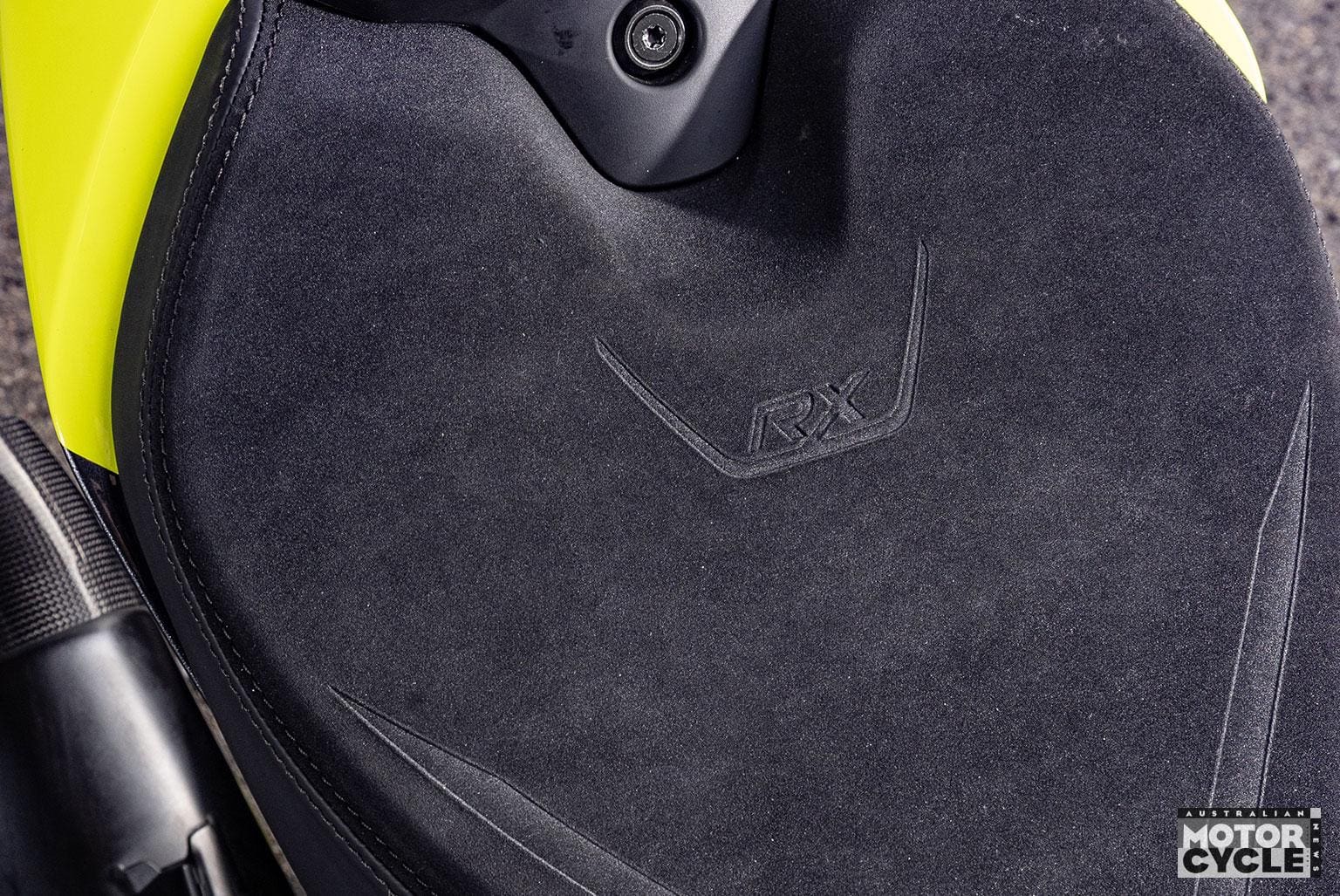
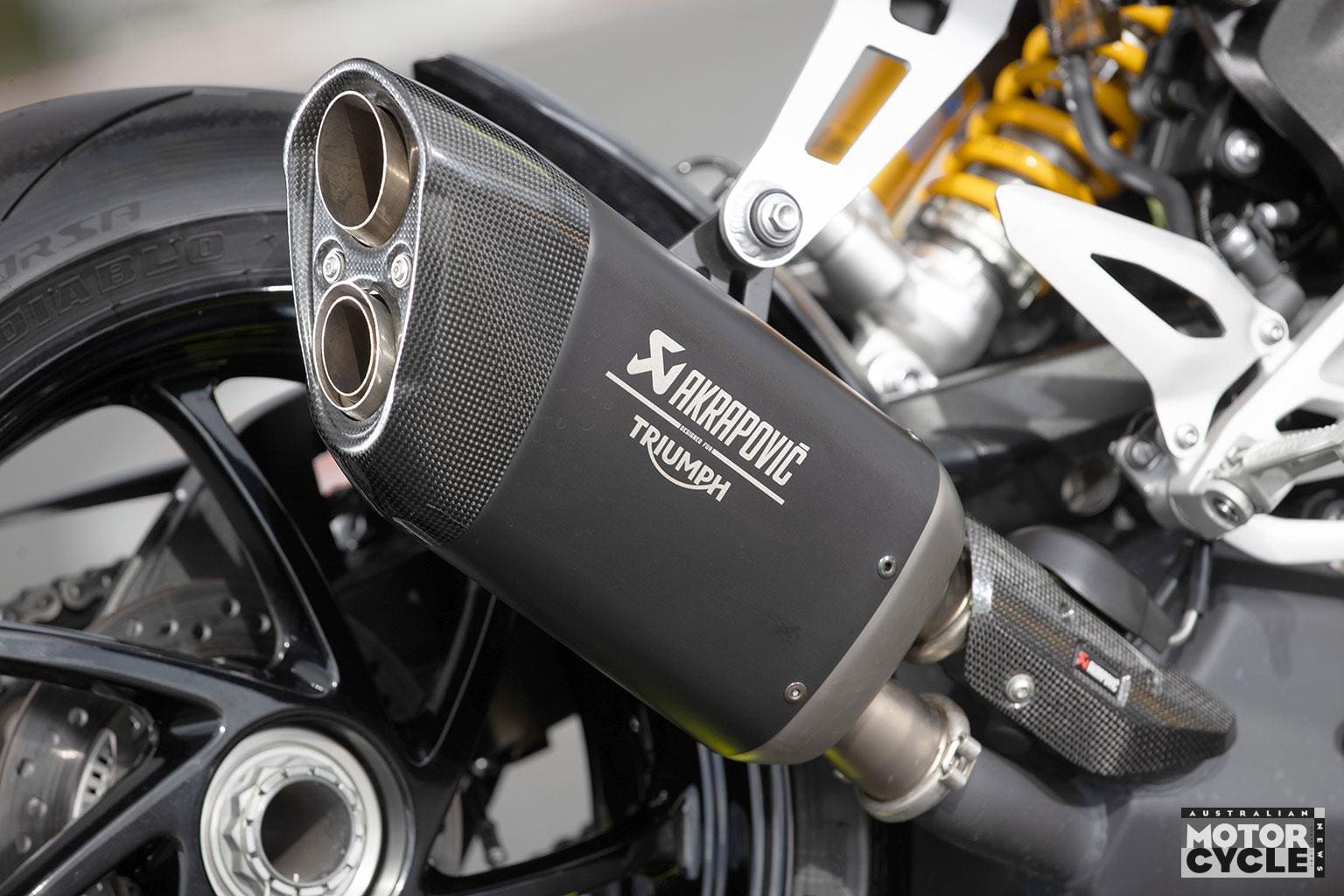
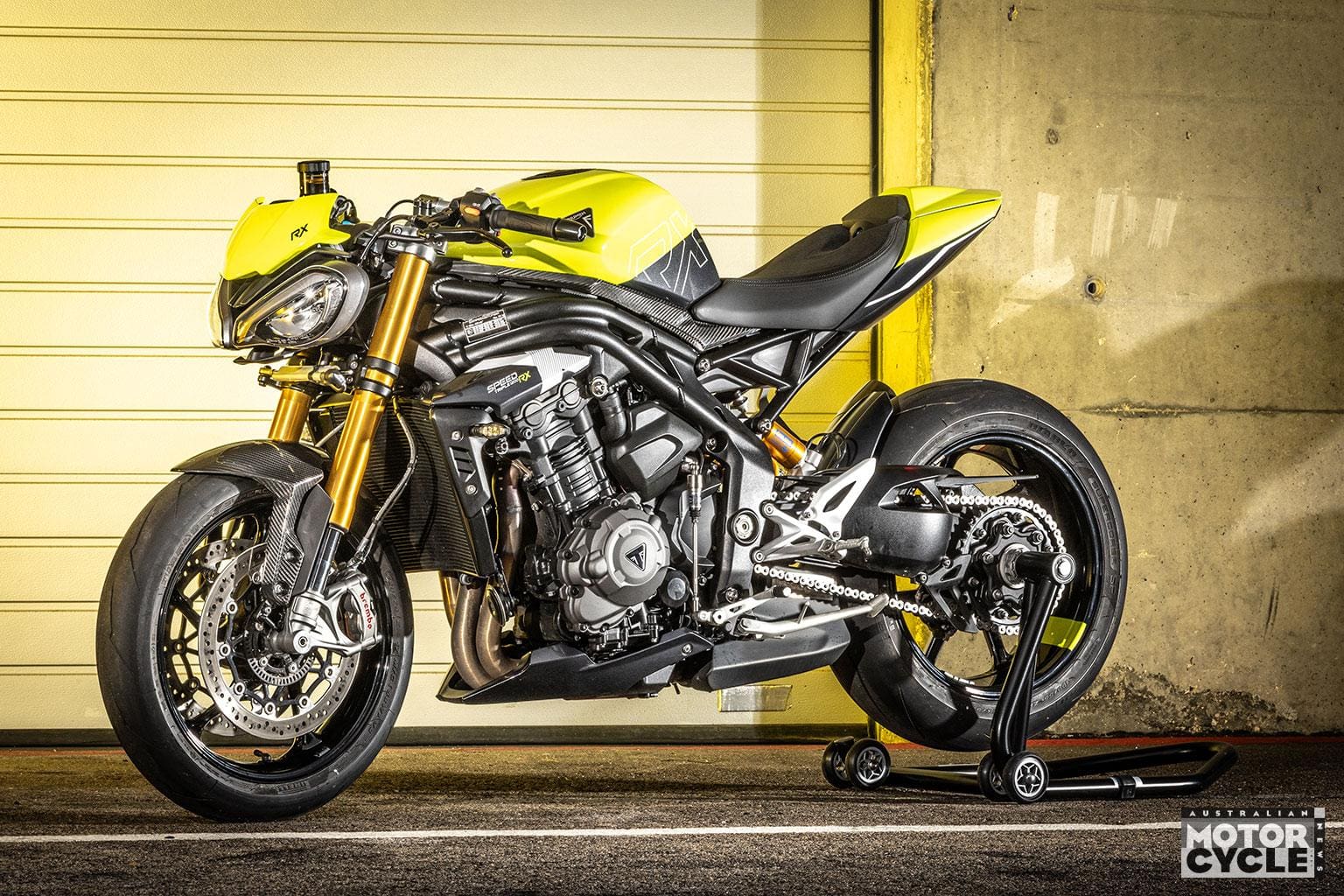
The RX builds on the 133kW (180hp) RS but arrives racier, with lower clip-on ‘bars, higher rearsets, a striking Akrapovic silencer and an Öhlins electronic steering damper to match the EC3 semi-active suspension from the RS. Add in some carbon fibre and a new seat, and it’s yours for $34,490 – $3000 more than the RS.
TRACK TIME
Back in March, we tested the RS in less-than-ideal conditions (Vol 74 No.19), but the Smart EC-3 Öhlins suspension stood out for its versatility. This time, with sun overhead and fewer media on site, we had time to push the RX on both Pirelli SuperCorsas and race slicks.
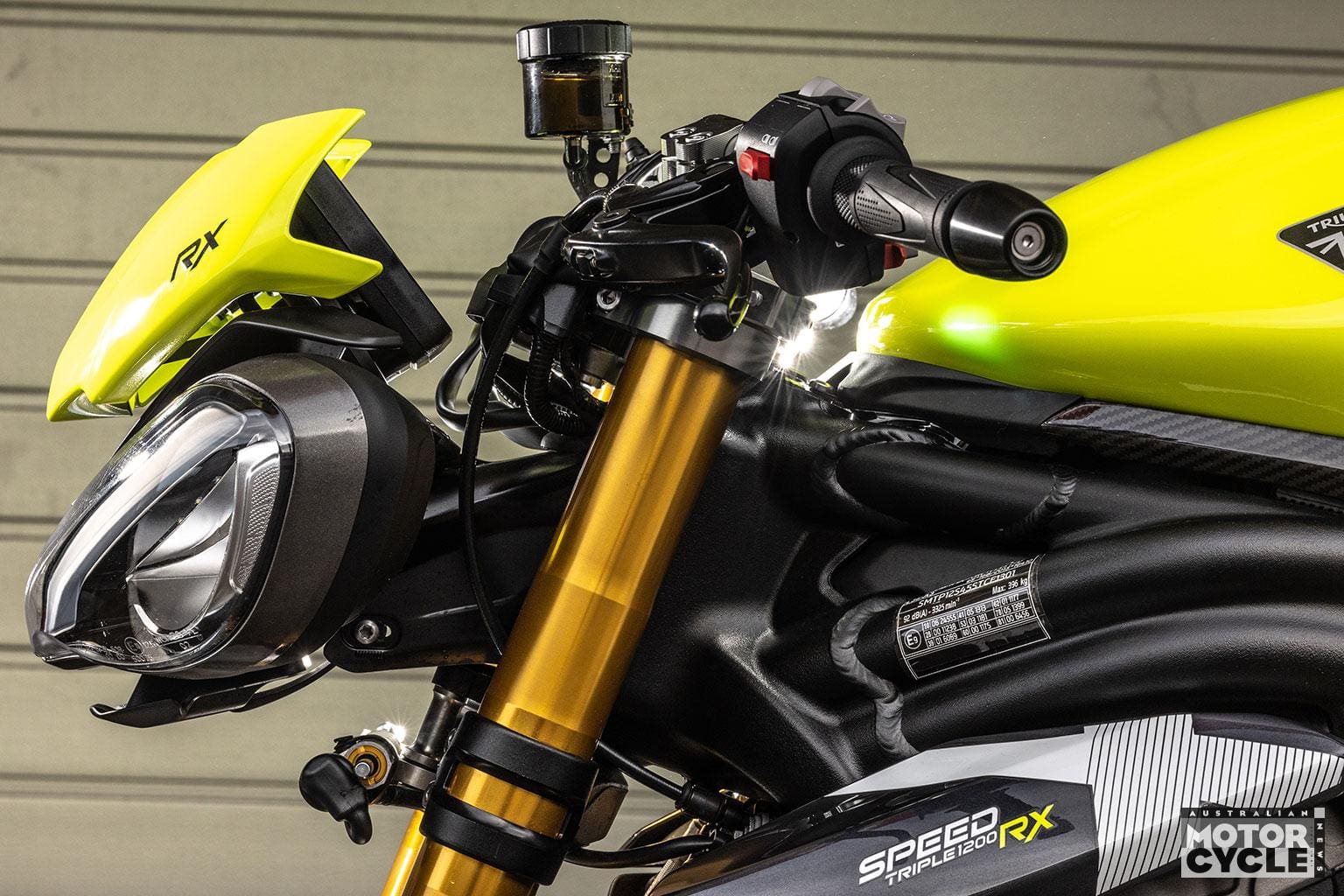
The RX was revealed just 12 hours before we hit the track, its ‘Performance Yellow’ livery a clear signal of intent. This is a Speed Triple built to lap.
Swinging a leg over, the differences are immediate. The new riding position is more aggressive: ‘bars 69mm lower and 52mm farther forward, pegs 14.4mm higher and 25.5mm back. Even at a standstill, it looks and feels ready to race.
Our first session was damp, but that allowed time to settle in. The new Akrapovic can doesn’t scream like a race pipe – it’s Euro5+ compliant – but its note is deeper and throatier, and it looks far better than the stock RS exhaust.
Even at a moderate pace, the RX feels more connected. The riding position shifts weight forward, enhancing front-end feel. The fuelling is flawless, the quickshifter slick, and that 1160cc triple is torquey, urgent and surprisingly user-friendly for such an angry-looking machine. Rider aids (cornering ABS, traction control, wheelie control) operate seamlessly in the background.
In perfect conditions, it was time to flick into Track mode. The suspension stiffens, electronics loosen their grip and the RX sharpens. Power remains unchanged at 180hp, which may seem modest next to 200bhp-plus rivals like BMW’s M 1000 R or Ducati’s Streetfighter V4 S, but on track it’s more than enough. The engine pulls hard, especially through the midrange, and will happily rev to 10,750rpm.
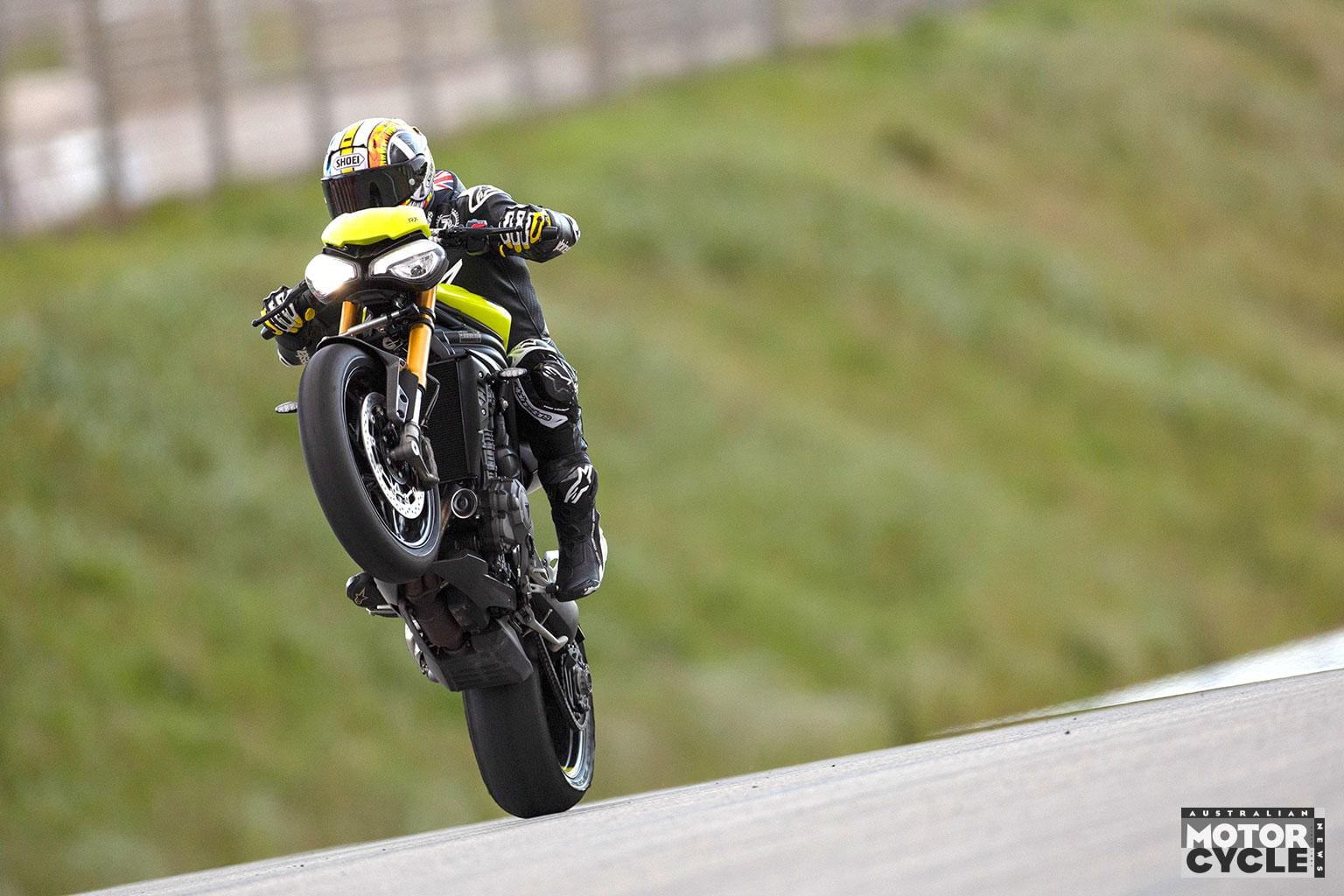
Flat out down Portimao’s main straight, the RX is a handful – not for lack of control, but because it’s physically demanding. Holding on at full tilt is a proper workout. But through corners it’s sublime. Fast bends invite you to push harder every lap. I experimented with gears and corner speed, eventually favouring a smoother, short-shifted exit over revving it out. The RX stays planted over the crest, wheelie control gently intervening if you keep the throttle pinned.
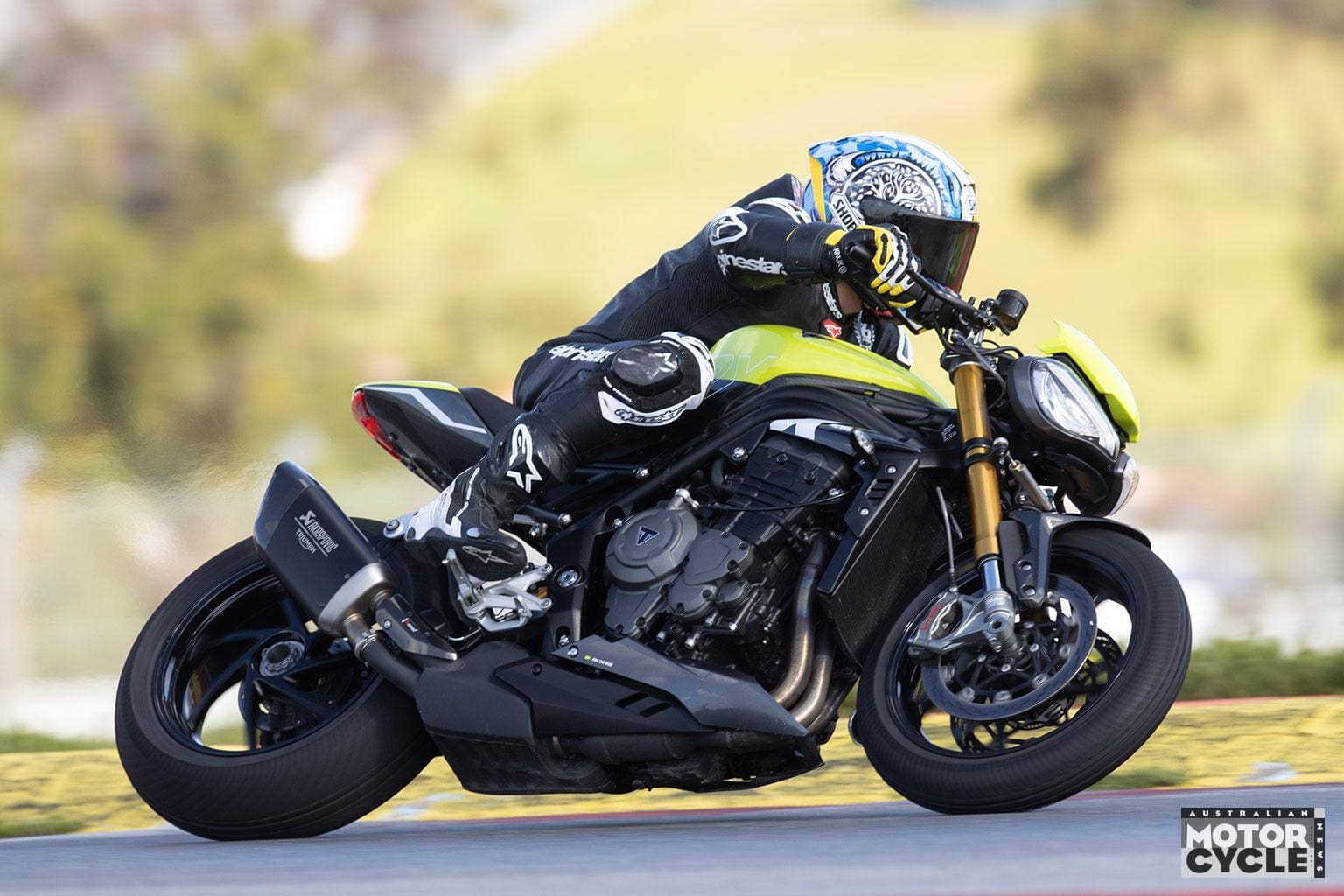
At high speed, the RX is impressively stable. Sixth gear tapped, windblast roaring, I didn’t crave more power – just stronger arms.
CONTROLLED AGGRESSION
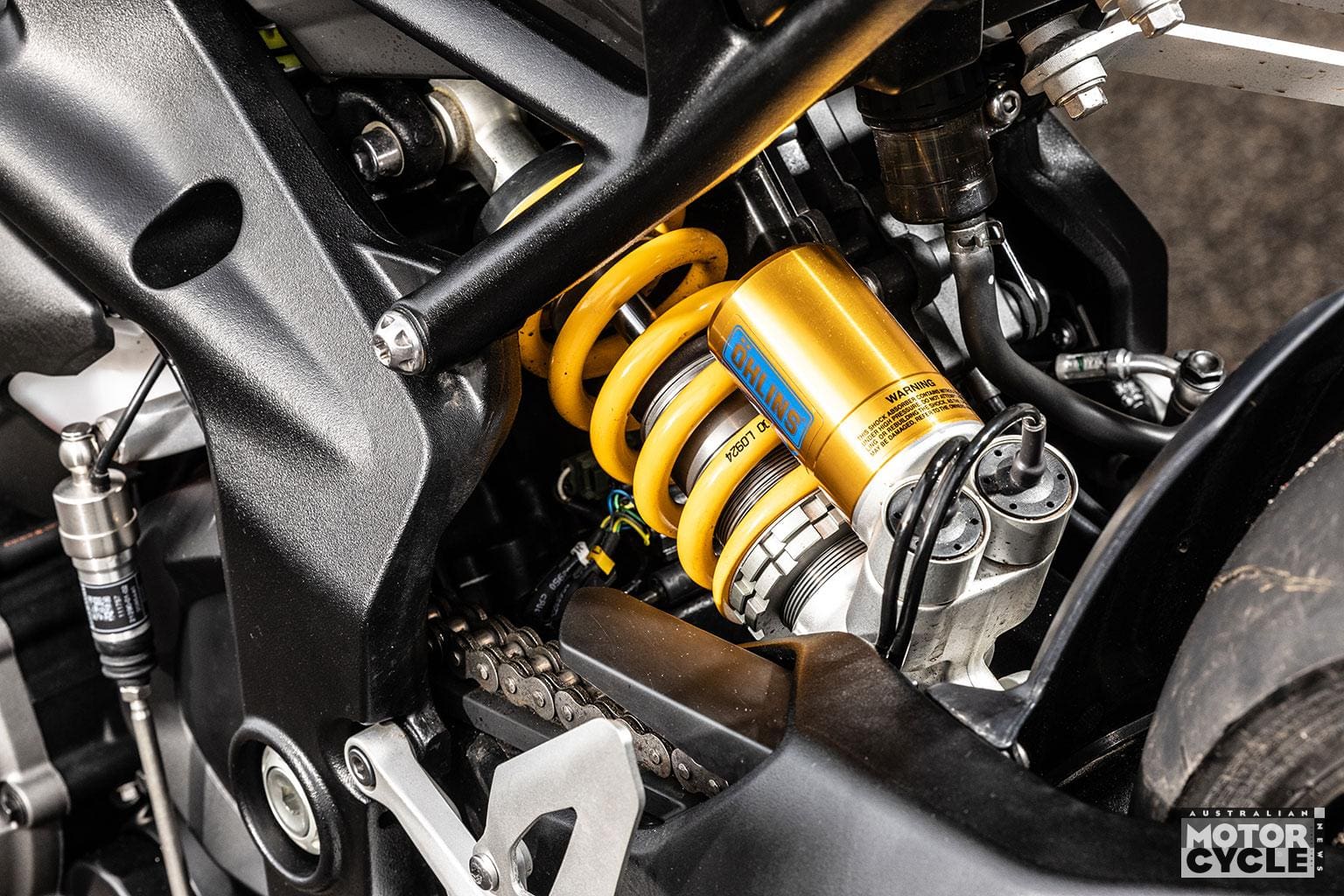
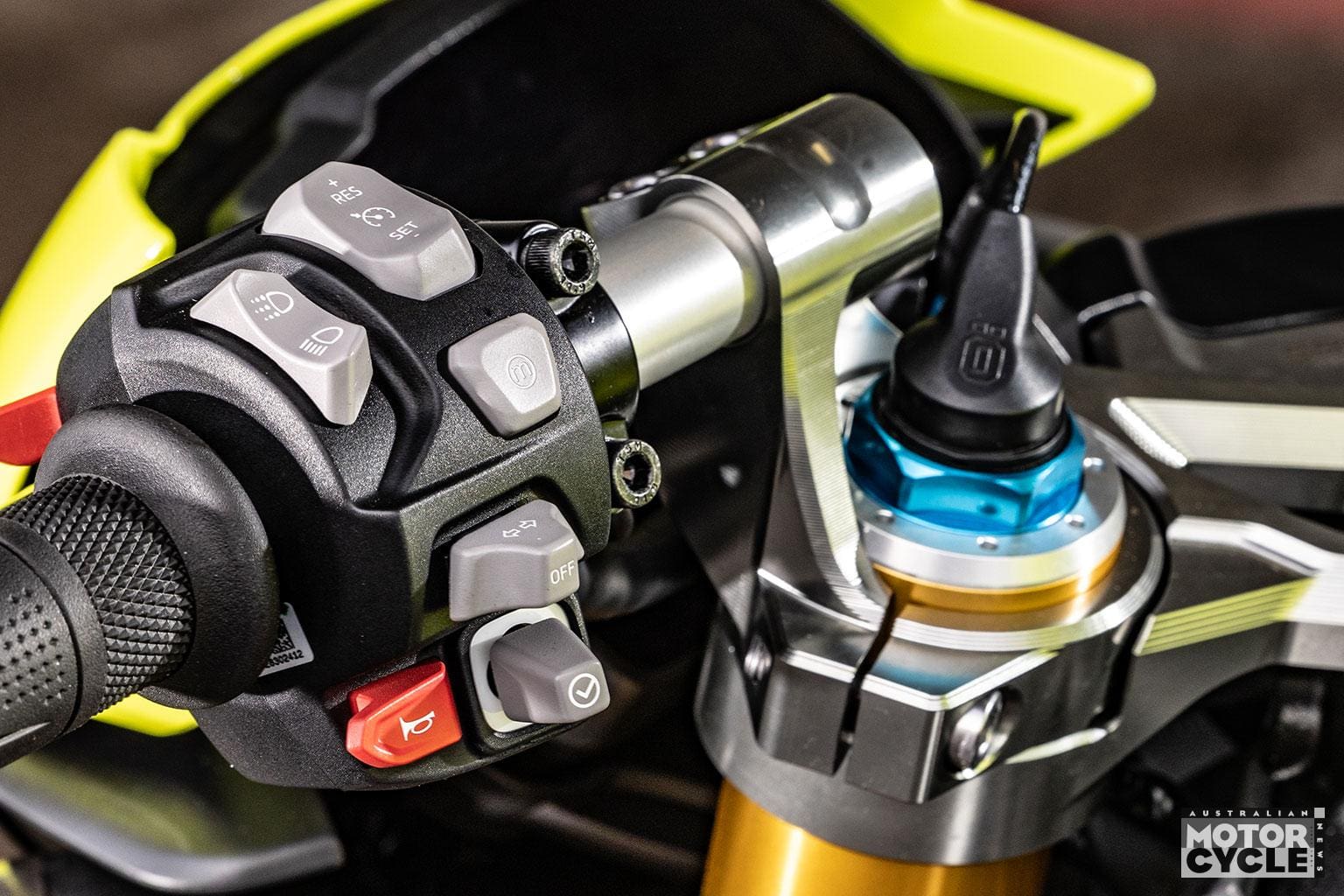
Portimao’s rollercoaster layout tests everything, including the RX’s new Öhlins SD16 steering damper. Unlike the RS’s passive Marzocchi unit, this electronically adjustable damper reacts in real time via Triumph’s OBTi system. At low speed it lightens up, then firms as pace builds or handlebar inputs get erratic. I tried to provoke head shakes – dropping off crests, shifting the ‘bars mid-air – but the RX remained unbothered.
The RX also avoids the giant aero wings favoured by some rivals yet still holds its line without fuss. It’s calm, composed and confidence-inspiring.
That said, while the new damper adds sophistication, I don’t recall the RS suffering stability issues. Perhaps it’s a nice-to-have rather than a must-have. A back-to-back test would settle that question.
SLICK SHOD
In the afternoon, Triumph bolted on Pirelli slicks and let us go wild. Before diving in, I adjusted the suspension via the intuitive TFT dash. No spanners required – unless you want to tweak spring preload, which is factory set for an 85kg rider. The electronic interface is refreshingly simple, using terms like Brake Support and Mid Corner rather than traditional compression/rebound jargon.
And then? The RX felt like a naked race bike. It flicked to apexes with surgical precision, held a tight line on power, and never understeered. Even on slicks, there was more ground clearance than I needed. After one session, I found myself thinking: why not add a fairing and give us a new superbike?
BRAKES, AIDS AND NIGGLES
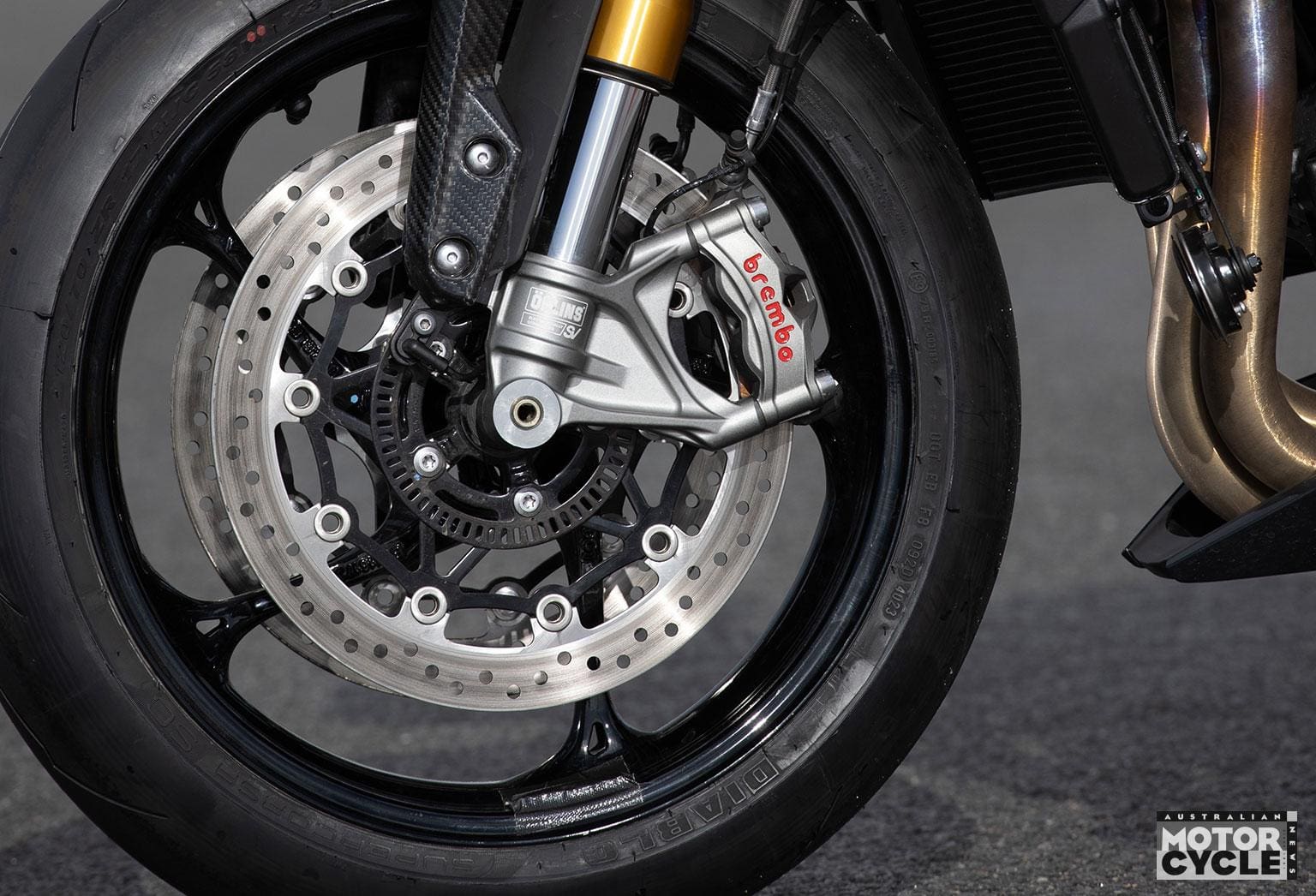
The Brembo Stylema brakes finally got a proper workout here. On the RS launch, wet conditions held us back but not this time. Power was ample, feel was great and there was no fade. ABS can’t be fully disabled but can be limited to the front only. I barely noticed it intervening.
I dialled in more engine braking for that rear-end slide into corners. It’s all adjustable and you can soften it up to near two-stroke smoothness.
As for electronics, the wheelie control deserves credit for how smoothly it modulates lift. But it still cuts power a tad too cautiously on re-engagement and, crucially, it’s bundled with TC – turn off traction control and you lose wheelie control too. That’s a limitation, especially for more advanced riders.
VERDICT
Triumph didn’t need to build the RX. The RS is already one of the finest naked bikes around. But I’m glad they did. The RX sharpens the Speed Triple into a legitimate track weapon. The RS may be better for road use – its ‘bars more forgiving, its stance more relaxed – but the RX is leaner, meaner and noticeably faster on circuit. The Öhlins EC3 suspension is once again the hero, offering true on-the-fly transformation from fast road bike to full-blown trackday star.
Sure, the dash is a bit dated and the electronics aren’t quite as trick as Ducati’s or Aprilia’s. And no, there’s no 200-horsepower headline. But for $34,490, the RX is the most affordable bike in its class – more than $8k cheaper than a Streetfighter V4 S (see full review on p64). That’s astonishing, considering the spec.
The 1200-unit run will sell fast. And some RS owners may wish they’d waited. I’d love to see Triumph go a little farther next time – more power, maybe some fairings. But even as it stands, the RX is a special machine. Just be quick if you want one.
✅ PROS – Sharp Öhlins suspension, aggressive riding position and that Akrapovic can combine to create a precise, thrilling, track-ready streetfighter
❌ CONS – Outdated dash and limited rider aid flexibility – especially wheelie control – slightly dull the RX’s edge against more tech-savvy rivals
SPECIFICATIONS
ENGINE
1160cc inline triple
133kW (180.5hp) at 10,750rpm
128Nm at 8750rpm
CHASSIS
Aluminium twin-spar frame
Öhlins Smart EC3 semi-active suspension
Öhlins SD16 electronic steering damper
BRAKES & WHEELS
Brembo Stylema calipers, 320mm discs
17in cast aluminium wheels
Pirelli Diablo Supercorsa SP V3 tyres
ELECTRONICS
5 riding modes: Rain, Road, Sport, Track, Rider Configurable
Cornering ABS, TC, Wheelie Control
Adjustable engine braking & throttle maps
DIMENSIONS
Wet weight 199kg
Seat height 830mm
Fuel capacity 15.5L
Extras on RX vs RS
– Lower clip-on ‘bars & higher rearsets
– Akrapovic titanium exhaust
– Carbon fibre trim & special seat
– Unique ‘Performance Yellow’ paint
BUSINESS END
Price: $34,490 ride away (1200 units)
Contact: triumphmotorcycles.com.au