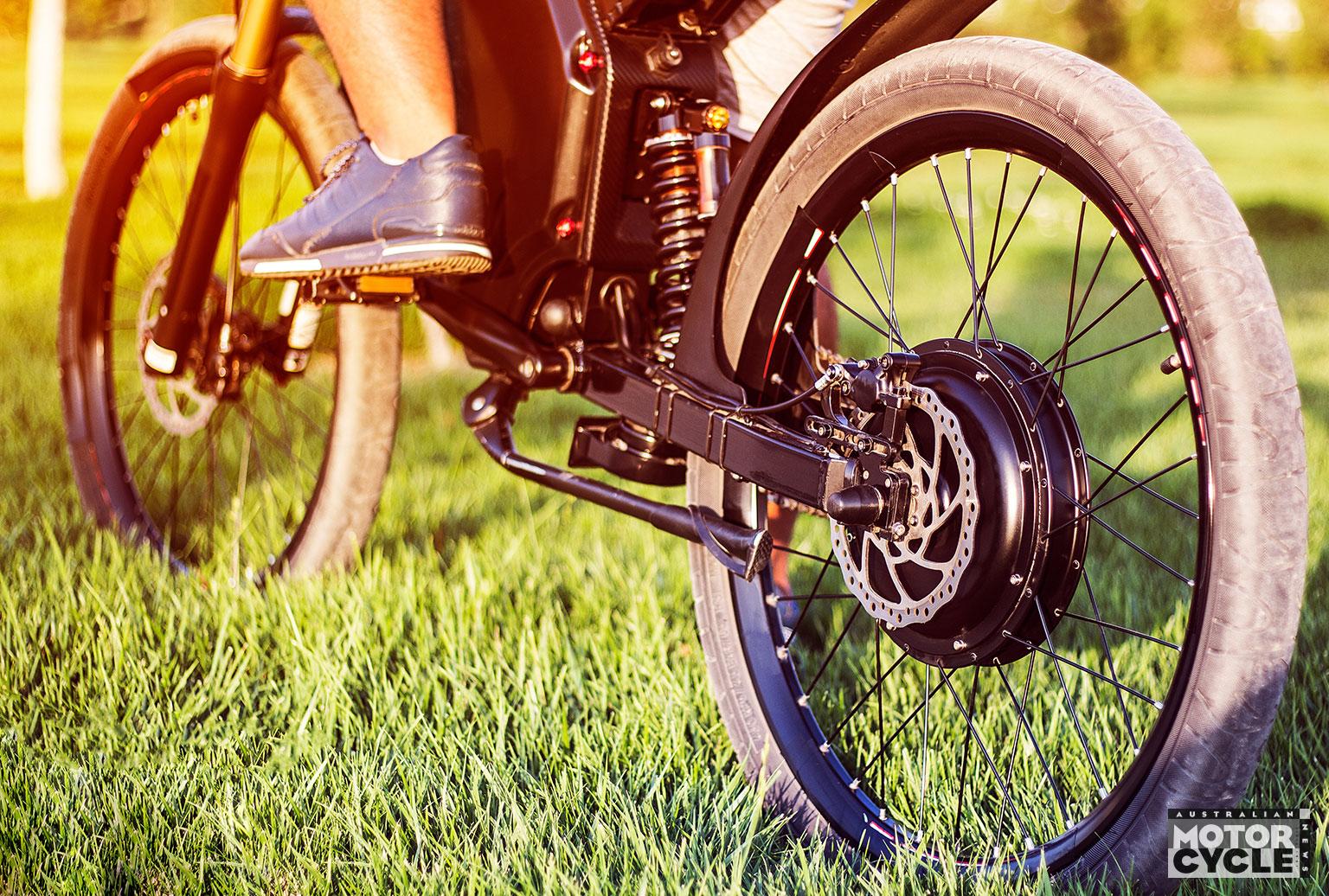
Ninja 7 Hybrid forms the basis of big scooter designs
Hybrid powertrains are rapidly becoming the norm on four wheels – offering the efficiency and cleanliness of electric motors but adding the convenience of being able to refuel at conventional filling stations – and while the idea is still struggling to convince two-wheeled customers of its benefits there’s a growing swell of development in that direction.
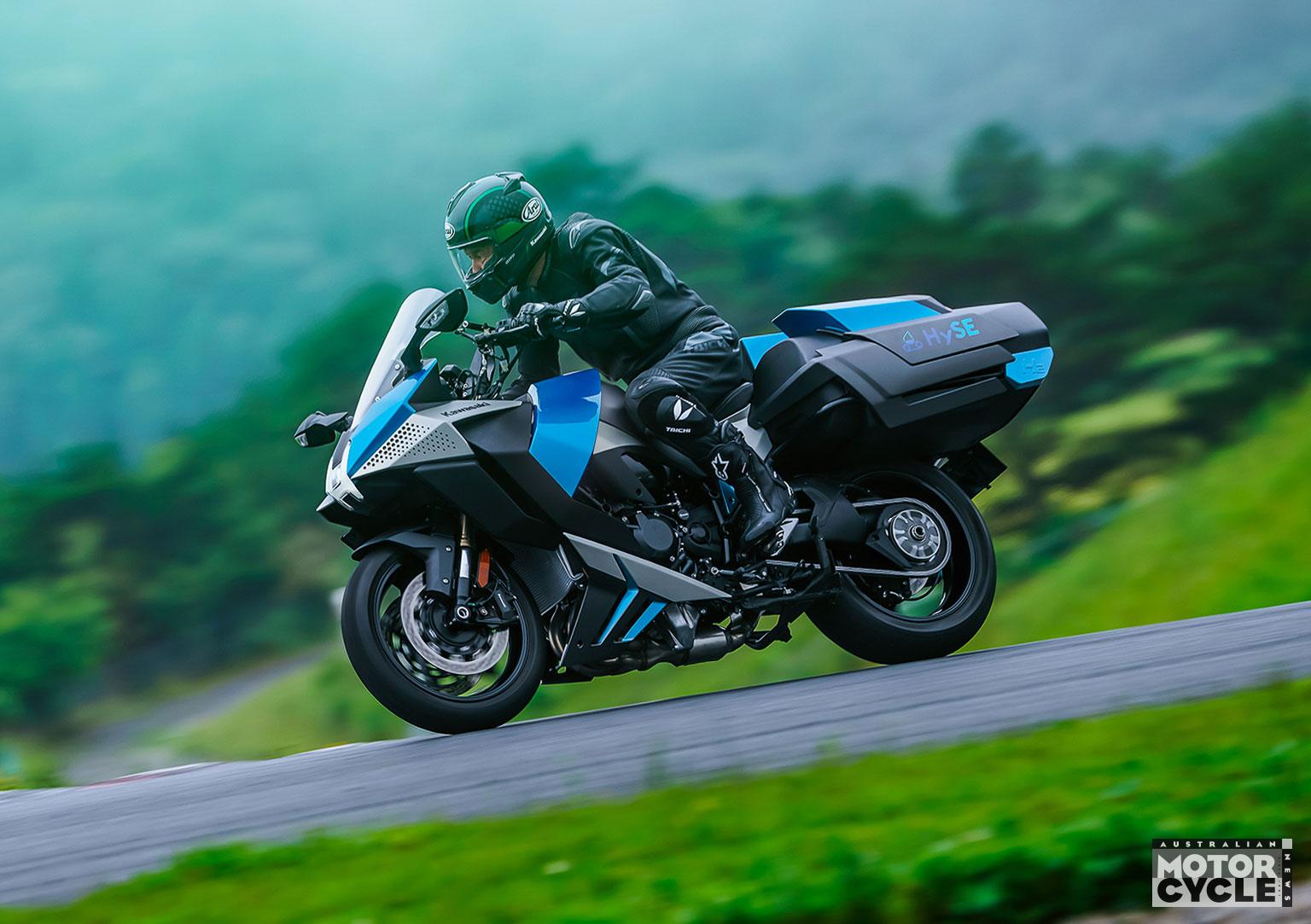
Kawasaki is at the forefront, offering the most advanced production hybrid motorcycles in the form of the Ninja 7 Hybrid and Z7 Hybrid, but rivals including Yamaha are working on similar machines, and there are growing suggestions that Kawasaki’s own hybrid range is set to expand.
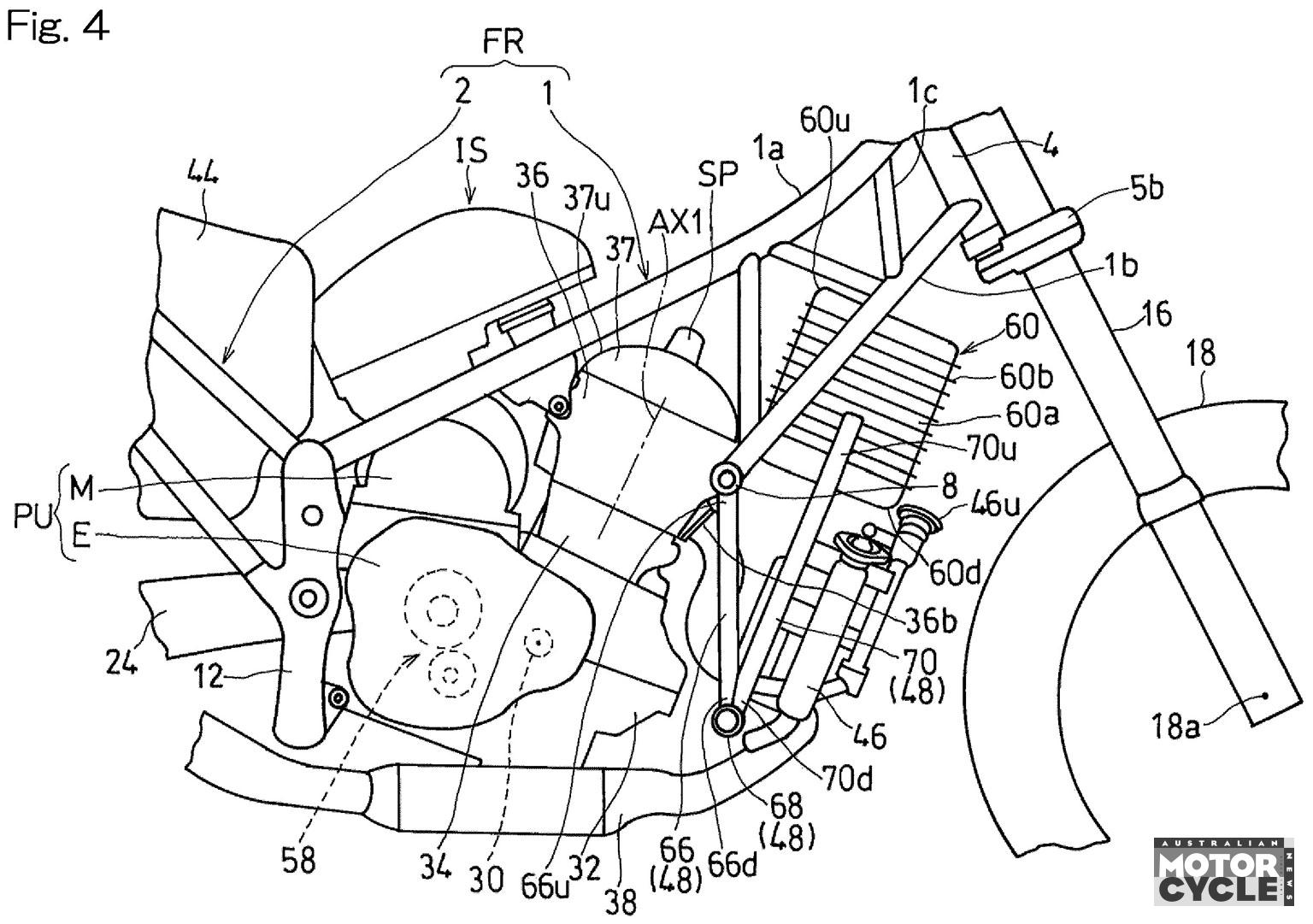
We’ve previously seen the company file patents showing how it hopes to reorganise the elements of the existing hybrid powertrain – a 451cc parallel twin engine, semi-auto transmission, electric motor and medium-sized battery pack – into different types of bikes. Both an adventure-style ‘Versys 7 Hybrid’ and a cruiser-style ‘Eliminator 7 Hybrid’ appear to be on the cards, going by the development work at Kawasaki’s R&D department, and now we can add a maxi-scooter to that list after this new patent was published.
The basic elements of the parallel twin engine, transmission, motor and battery are still there, but they’re moved around again to suit a big scooter-style bike. The engine isn’t shifted, so there’s no step-through cutaway in the centre of the bike, but the fuel tank is moved from above the engine to a new spot under the seat, giving proportions akin to a Honda X-ADV. The battery, which is under the seat on the Ninja 7 and Z7 Hybrid models, is moved to sit transversely in front of the engine’s cylinder head, where you’d normally find the radiator, and the radiator itself is moved downwards to make space for it. That means the frame needs to be extended forwards, moving the front wheel further ahead to make space for the battery and repositioned rad.
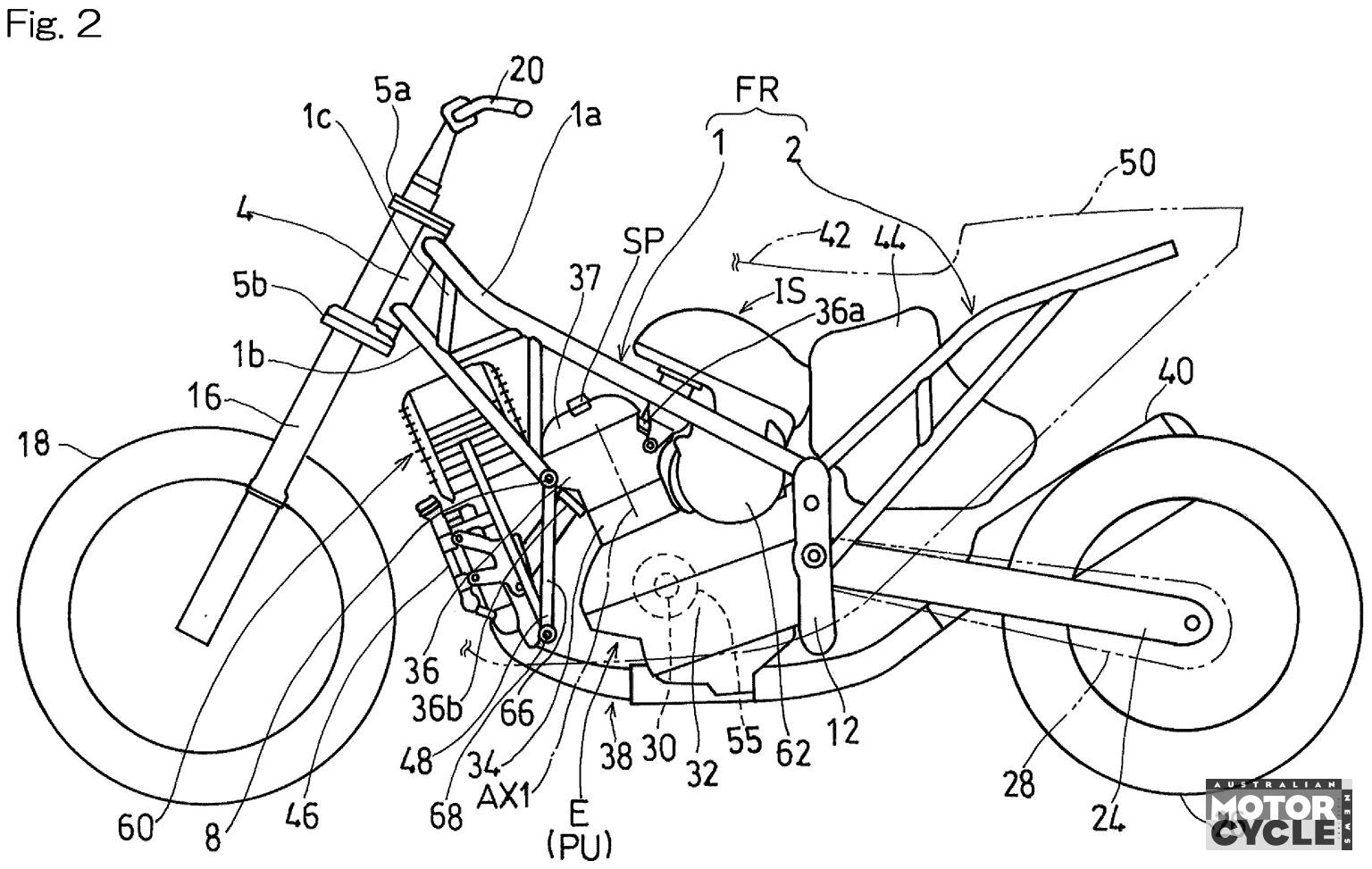
The patents show how the under-seat fuel tank has an arc-shaped bite taken from its upper rear corner, clearly intended to make space for a helmet in the under-seat storage area behind it, and the patent images show footboards running all the way from below the swingarm pivot to the front edge of the radiator, allowing a scooter-style, feet-forward riding position.
While Kawasaki’s existing hybrids haven’t raced up the sales charts, applying the tech to a maxi scooter aimed at commuters could be a clever way to maximise its potential. Maxi scooters are already expensive – often costing more than much bigger ‘real’ bikes – so absorbing the cost of the hybrid system into the price should be easier. And with a growing number of cities around the world implementing clean air zones the potential for a commuter machine that can switch to zero-emissions mode when required while still having the range of a combustion engine and the traffic-busting abilities of a scooter means a hybrid two-wheeler could be the perfect solution for some riders.