Patent shows vast, four-tank version in pursuit of usable range
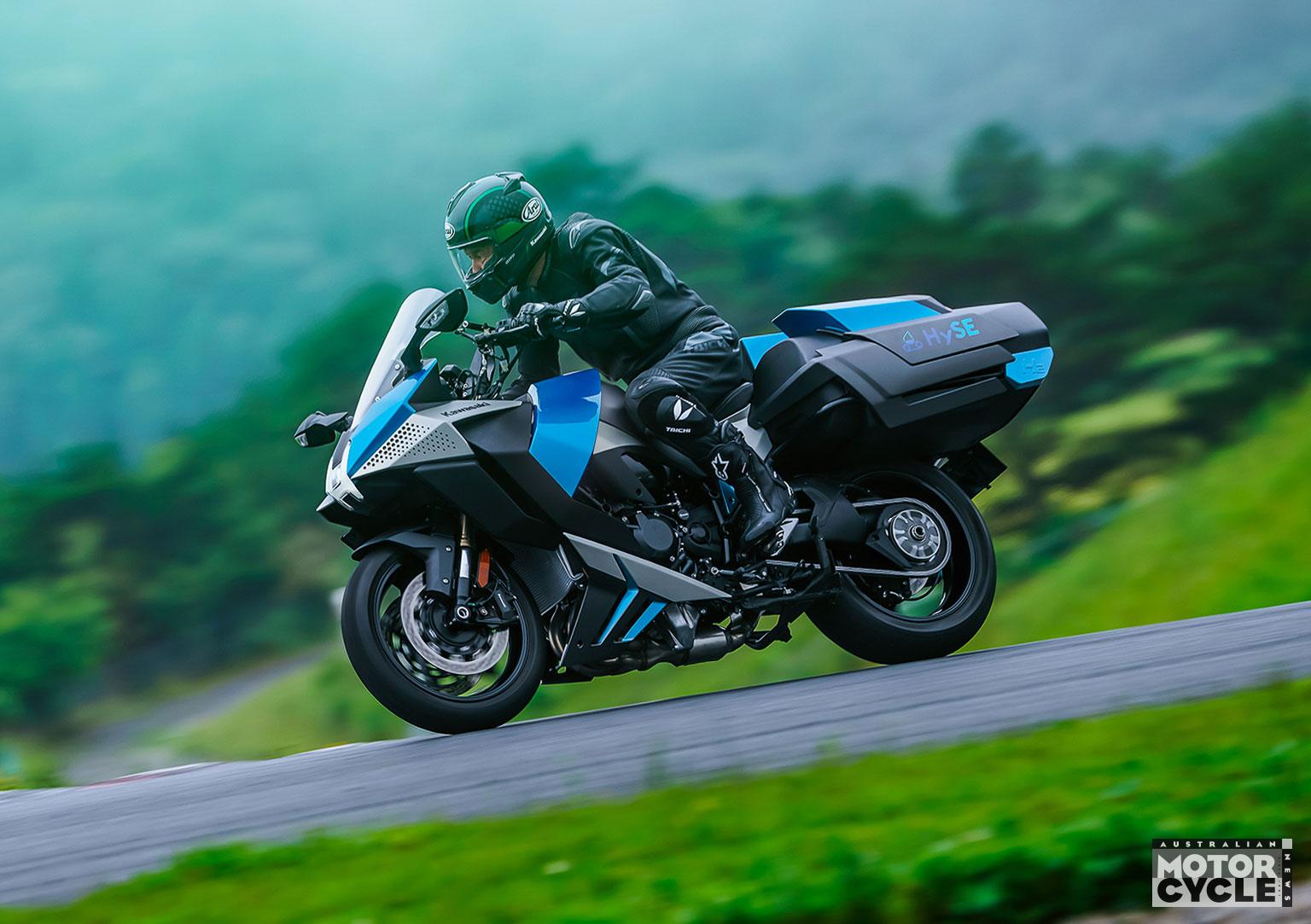
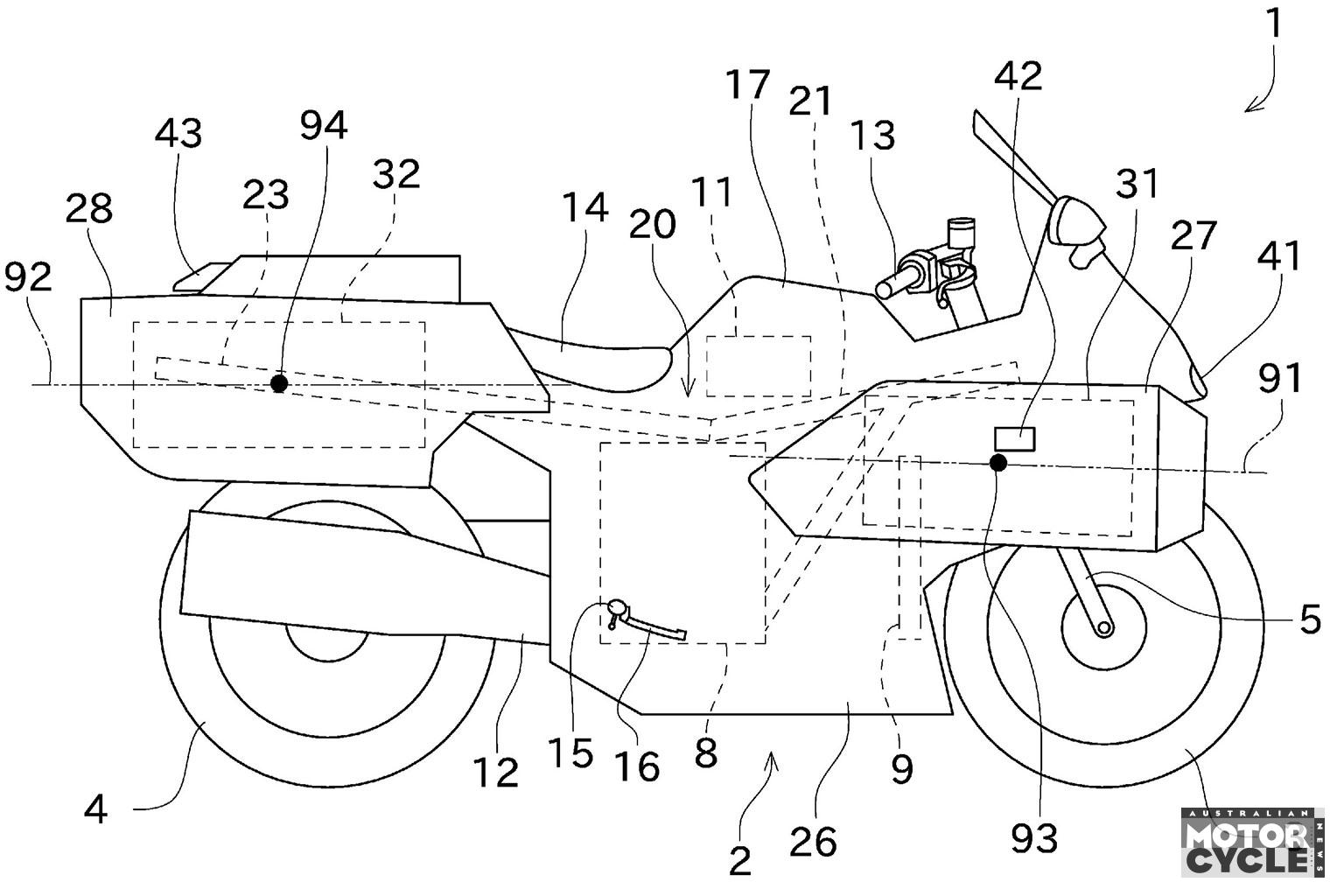
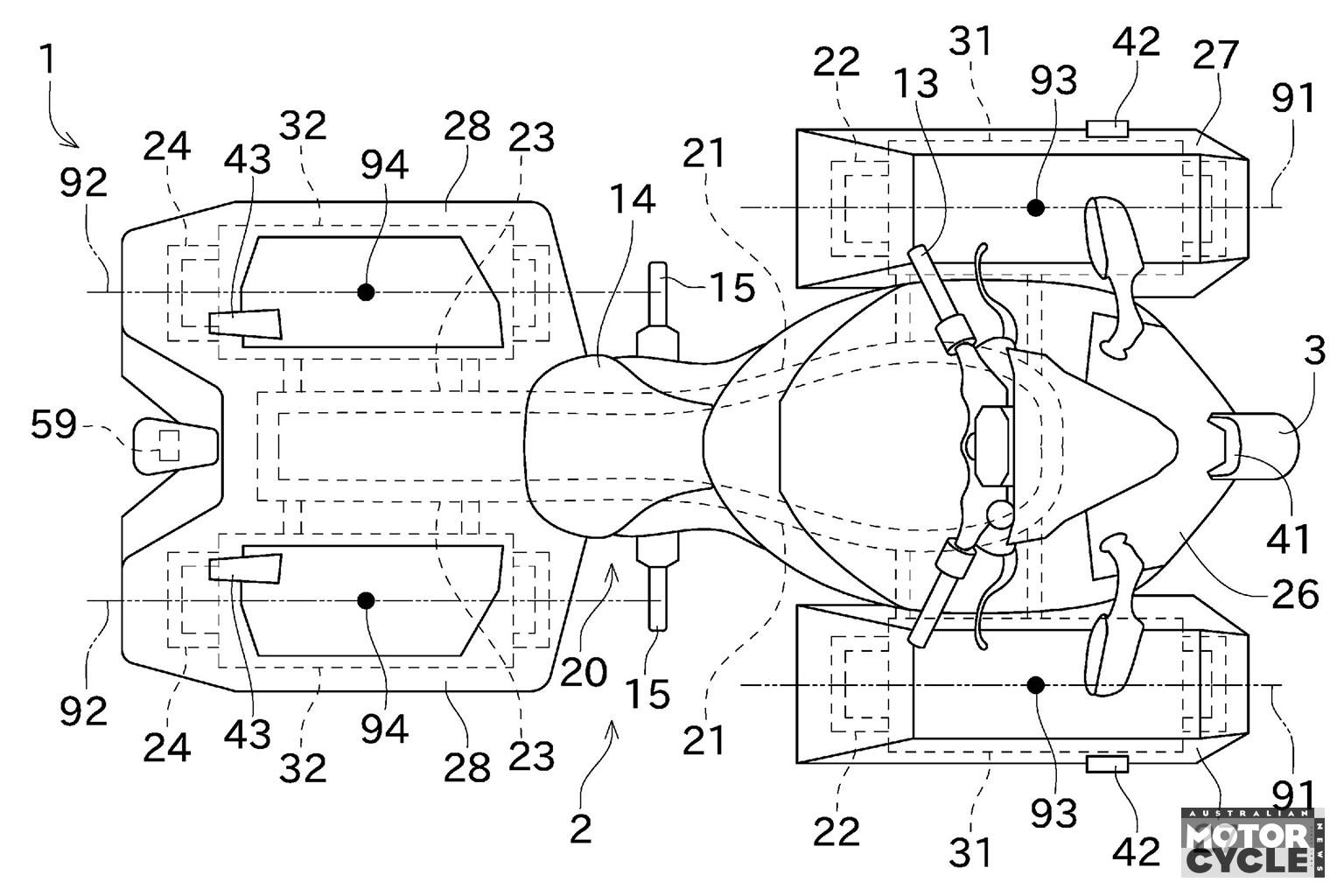
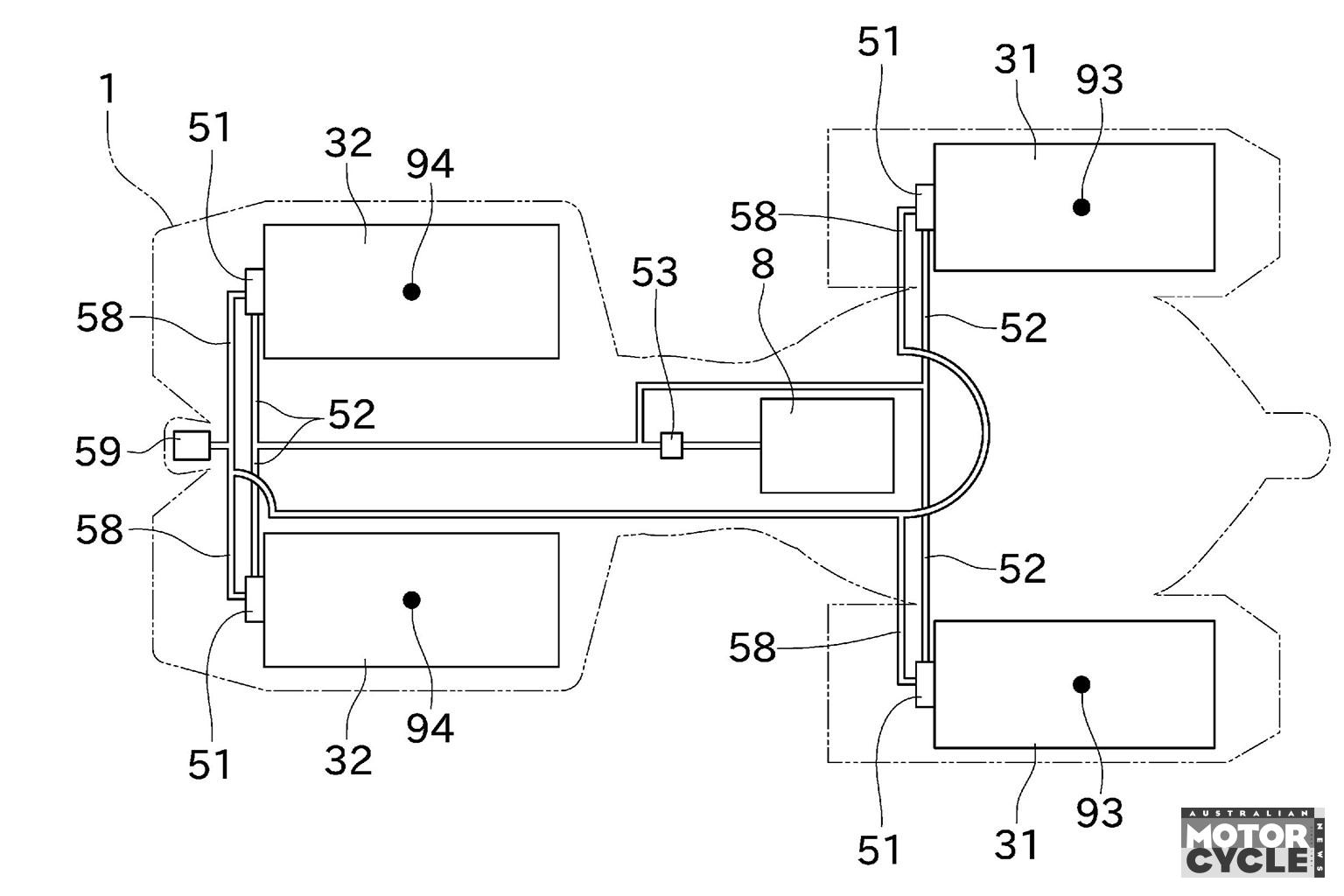
KAWASAKI’S PROTOTYPE for a supercharged, hydrogen-fuelled motorcycle based around the engine from the H2 has already been publicly demonstrated more than once and grabs attention with the vast, rear-mounted tanks needed to store its fuel. But with range remaining a stumbling block for hydrogen combustion engines Kawasaki has filed a patent that aims to solve the problem by adding two more enormous tanks on the front of the prototype.
Hydrogen, in theory, has some significant advantages over petrol as a fuel for internal combustion engines. As well as the fact that its main exhaust emission is simply water vapour rather than CO2, hydrogen is the most abundant element in the universe and has close to three times the energy density of gasoline by weight – so 1kg of hydrogen has potential to go three times as far as 1kg of petrol.
But that’s where the fly gets stuck in the ointment. Hydrogen is the least dense element, so 1kg of it at normal atmospheric pressure would require a fuel tank of around 11,000 litres capacity. To replicate a typical motorcycle’s 14 litres of petrol, which weighs around 10kg, you’d need 110,000 litres of hydrogen…
So it needs to be compressed to around 700-bar into scuba-style tanks. But even then hydrogen still takes up a lot of space, with 10 litres of compressed hydrogen at that pressure equating to around 1.4 litres of petrol, so you’d still need 100 litres to get the same amount of range as a typical bike’s tank.
That’s why, despite two huge hydrogen cylinders taking up the space that would normally be used by a passenger and luggage, Kawasaki’s hydrogen prototype still has a very short range. And it’s why the company’s new patent shows a bike with twice as much fuel capacity thanks to another two tanks strapped to the fairing sides ahead of the rider.
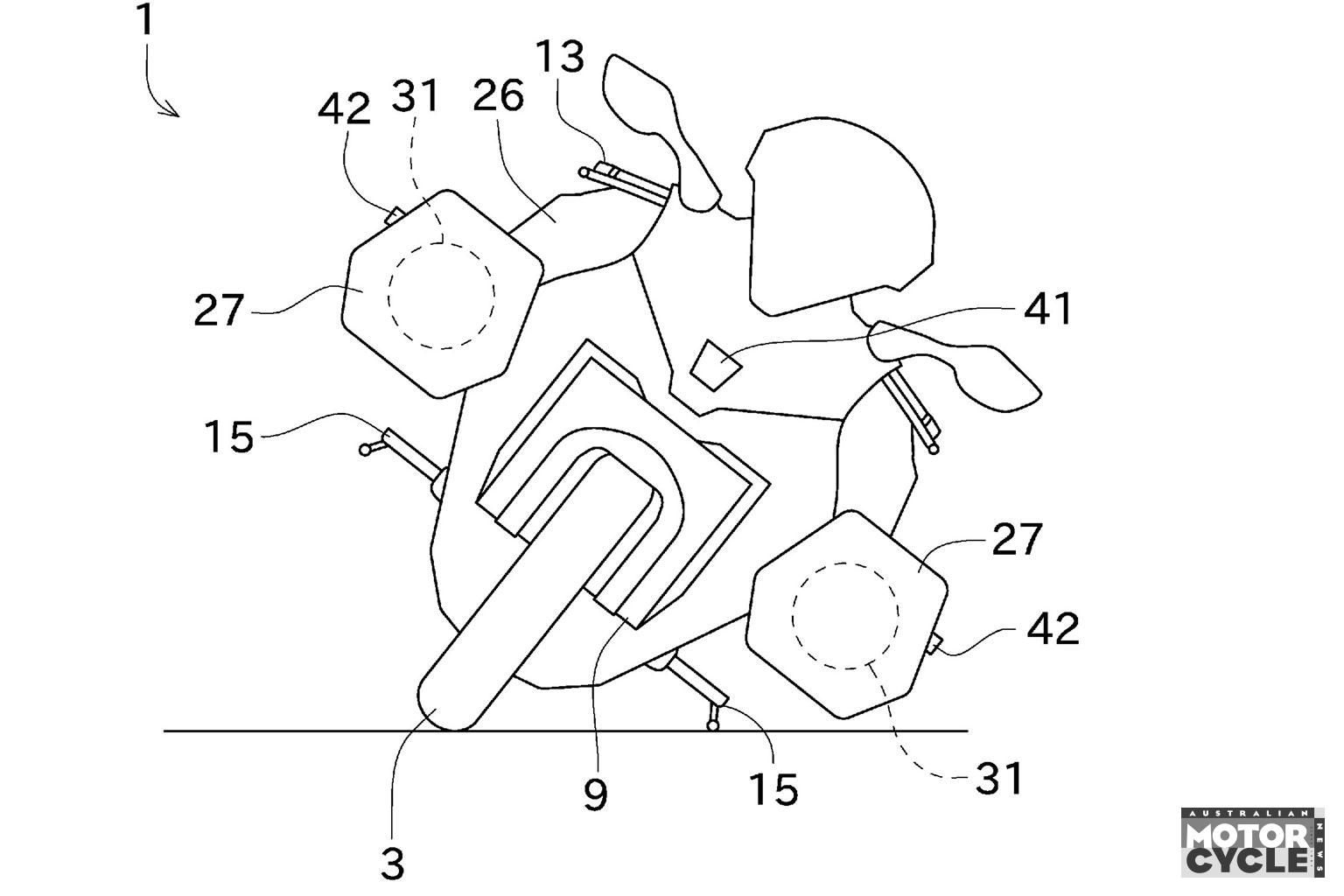
Here, the tanks make the bike even wider than the existing prototype, as they have to go outside the four-cylinder, 999cc engine and front fork, and they extend beyond the front of the fairing to allow enough space for the rider’s knees.
Since the tanks have to be cylindrical to withstand the pressure within, there’s no scope to sculpt them around the existing bike’s components and make it more compact. What’s more, they need to be protected by strong frames, adding more size and weight, because a split hydrogen tank in an accident is a recipe for a fireball.
With all this in mind, the question arises as to what Kawasaki’s endgame is for the hydrogen bike project. It’s unimaginable that a machine like this could reach production, and even if it did the lack of hydrogen filling station infrastructure would make it monumentally impractical. However, Kawasaki Heavy Industries is a strong proponent of the idea of the ‘hydrogen society’ – a concept that envisions hydrogen as the dominant fuel type, and one that’s also supported by the likes of Toyota. KHI is involved in creating a hydrogen supply chain, including production (largely from Australia), storage and transport, building vast ships to carry liquified hydrogen around the world.
In that light, the bike project makes sense as a demonstrator rather than a production possibility. ben purvis