To see which trip to include for AMCN’s recent adventure issue, I spent the night shuffling the adventure deck to see which one would come up trumps. Err, that’s in the old sense of trumps, as in a great hand of cards. Not the new sense of all mouth and motor.
The winner? A crazy Cape trip with a mob of US Marines on TTR250 Yamahas in the early 1990s. Why? Because our customers only had two weeks in March available before shipping back Stateside. The Cape in March was an unknown.
They’d all done time on the Marshall Islands, so they knew the tropics and knew they were asking a lot. Fortunately, they were prepared to pay a lot too, so an agreement was drawn up on an ‘all go but no guarantee’ basis.
See, the rule is basically no Cape travel in the Wet season. Usually it starts raining around November and stops sometime in April. And we’re not talking little cloudypoos and dancing in the rain; the Wet is a deluge dumped daily. You can hunker down and live through it – but you can’t go anywhere, because after the first month the tracks are wiped out. Miles of water a foot or two deep hiding dropped trees on the flatter parts with insane erosion on anything looking like a slope. Rivers and creeks that are flowing fat and hard means even the crocs don’t cross.
So Cape York, a thousand kilometres of ridge sloping down to the sea on both sides, is like a motoring mud map, drawn in the Dry and wiped out by the Wet. During the early Dry, when the creeks are dropping, braver types try following the remnants of tracks forged the year before. There’s a real kudos to being ‘first to Bamaga’ after every Wet, and no surprise. Before they bridged the Wenlock, the track north to the Jardine ferry, about 340km, was considered closed during the Wet. You had to float your vehicle across the Wennie and a dozen or more creeks before getting to the Jardine, and you’d have organised a special run on the barge because, logically, it never operated in the Wet.
Nothing does. The cockies head off on holiday, the roadhouses close and everybody else starts drinking.
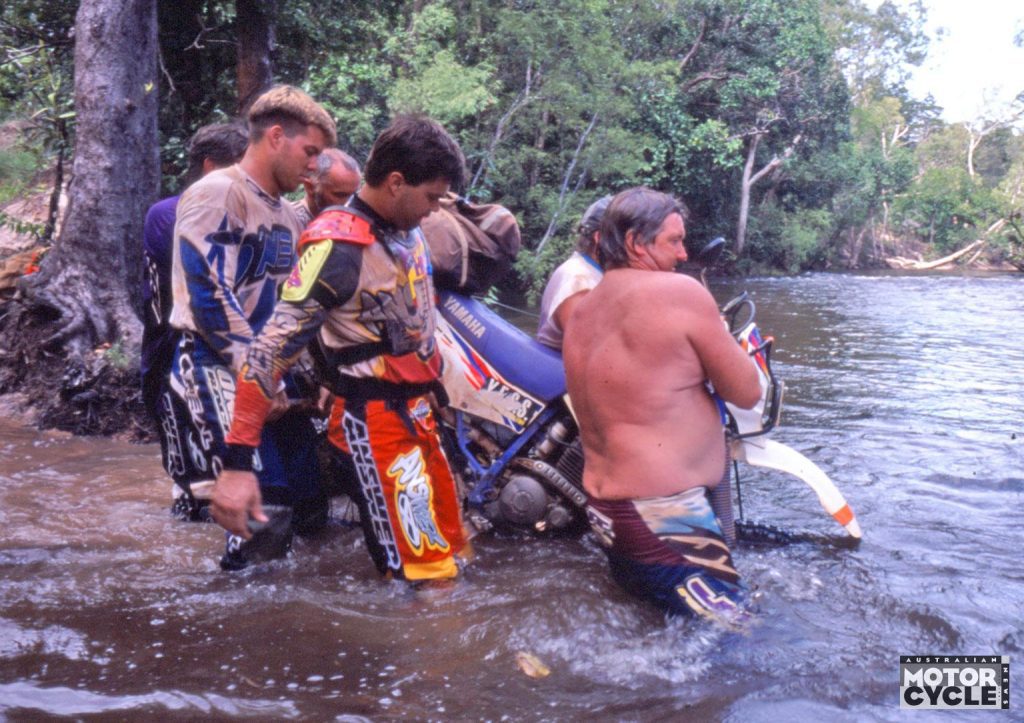
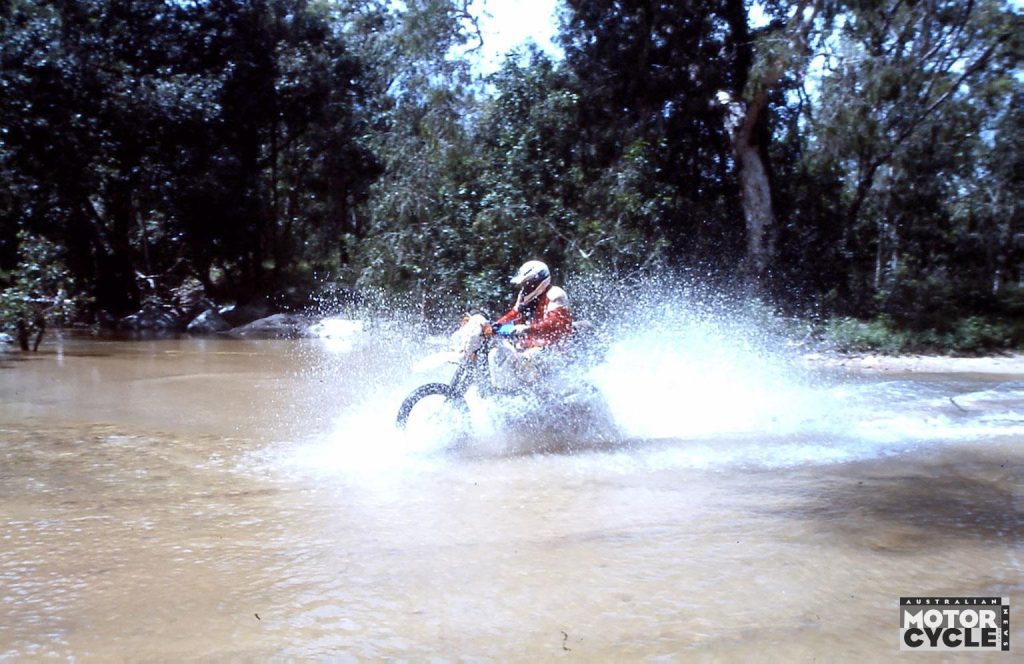
We kicked off from Cairns with a ute to carry the camping gear and tents. Apart from wet socks, getting lost and having to winch the Toyota a few times, the ride through to the Wenlock was just a series of slides and splashes. The Wennie was roaring, so one of the lads swam across with a rope while I borrowed a tinny from the nearest station, Batavia Downs. Early next morning we floated the TTRs across, and with army day ration packs on each bike we slogged away to Bramwell Station. A couple of hours ride max in the Dry; it took us seven.
In the 90s, Bramwell was starting to cater to tourists but nobody was home except an old drunk who’d stayed during the Wet to dry out. He was ready to kill for a crack at the warm tins of VB the lads had smuggled in their daypacks, which got us a go at the freezer. Buried deep down was a haunch of old beef, dinner and breakfast next day. We slept around a fire and fuelled up from a 44-gallon drum before an insane ride’n’swim to the Jardine.
Memories of huge erosion gullies splitting the tracks, clambering around the steep bank at Gunshot with bikes slung on ropes, wiping out wide on a corner and whacking the top off a termite mound with my boot. No point taking it off, so with a foot throbbing more than a Coogee hotel I followed the lads. Most of us fell off a few times that day and these lads were good on bikes. It was tough.
The barge we’d organised was there and we made it to Patsy’s Place at Loyalty Beach. A long-time friend, she helped me cut my boot off with a fishing knife, the only way with a foot like a blue balloon. I spent a couple of days limping around sorting bikes before we tried the trip home.
At the time it was all hardship, humour and pain… but two weeks of riding that welded a lifetime of friendships and a reunion 30 years later Stateside. Yeah, the Cape in the Wet, that’s an adventure!
And if you’re keen to have a go these days, talk to the King of Cape motorcycling, Roy Kunda. He knows stuff.