From the Breganze factory to Bathurst, the RGS TT1 proved that the final chapter can often be the most thrilling
Laverda’s family of triples really caught on in the 1970s, especially in performance-focused markets in the northern European countries, Australasia and the US, up to and especially including the high-performance 90bhp Jota model conceived by the Italian firm’s UK importers Slater Bros in 1975, and adopted by the Italian factory.
But Massimo Laverda, whose dad Francesco had appointed him to take over running the motorcycle division of his family’s agri-machinery company in 1964, was already planning their replacements, and began to pursue future technology through bold experimentation. The most dramatic was the 996cc V6 endurance racer, which made a single appearance at the 1978 Bol d’Or. Though its race ended prematurely due to drivetrain failure, the V6 delivered invaluable publicity and underlined Laverda’s technical ambition.
Alongside this, two development paths emerged: a planned family of four-cylinder models and a comprehensive redesign of the existing three-cylinder range. The latter gained urgency when chief engineer Luciano Zen retired, prompting Massimo to recruit Giuseppe Bocchi in 1978. Bocchi brought formidable credentials from Lamborghini, Ferrari, Ducati and MV Agusta, but with declining sales and limited funds, the proposed four-cylinder engine was shelved. Instead, Bocchi re-engineered the triple to broaden its appeal without sacrificing performance.
DEGREES OF MAGIC
The original 180-degree crankshaft triple was charismatic but vibratory. Bocchi’s solution was a 120-degree crank with perfect primary balance, paired with a revised engine mounting to tame secondary vibration. Laverda had experimented unsuccessfully with this layout before, but careful attention to balance factors and rubber mounting transformed the engine’s character. Power initially matched the outgoing unit, before rising to over 62kW (83hp) with a broader torque spread and smoother delivery.
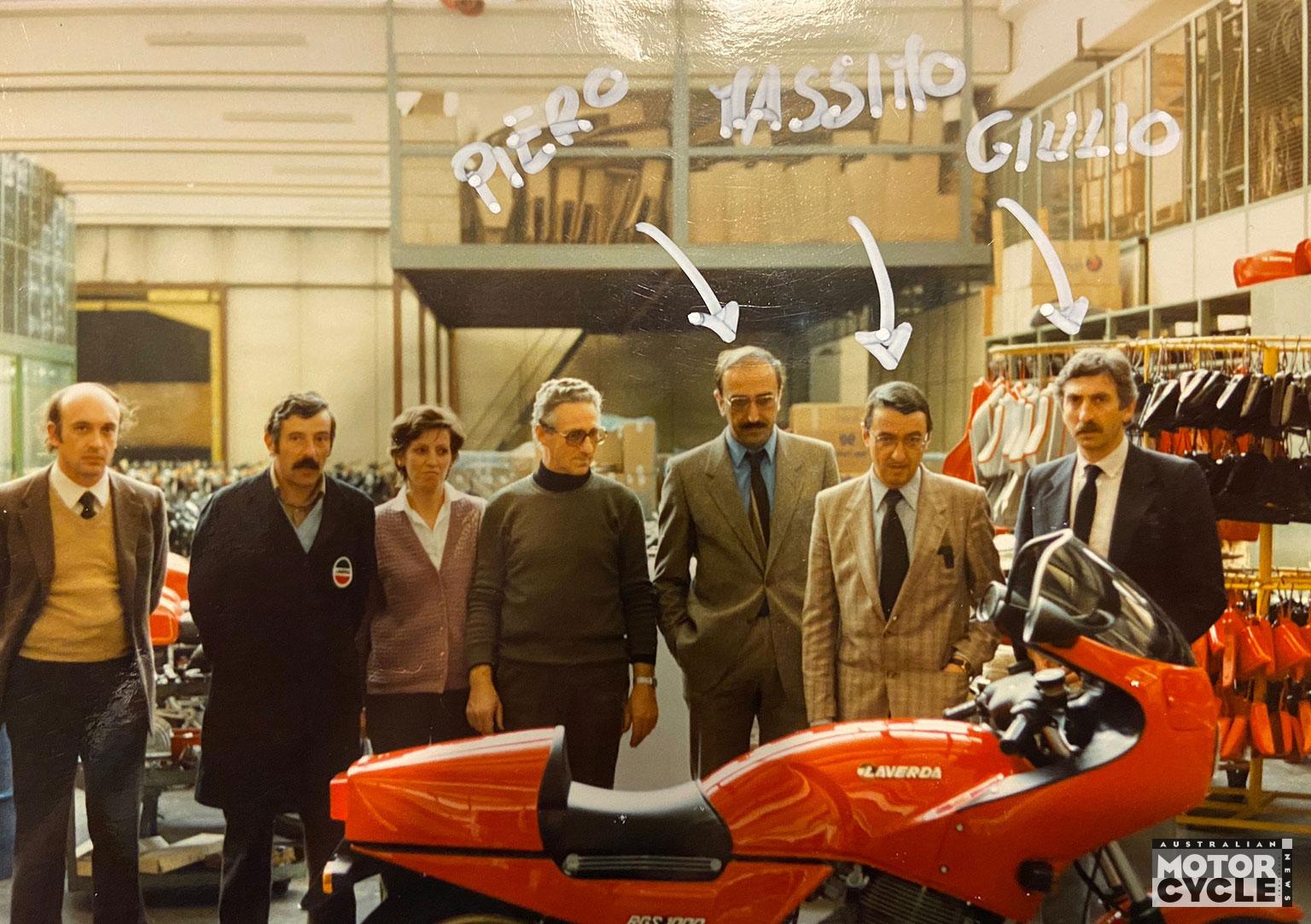
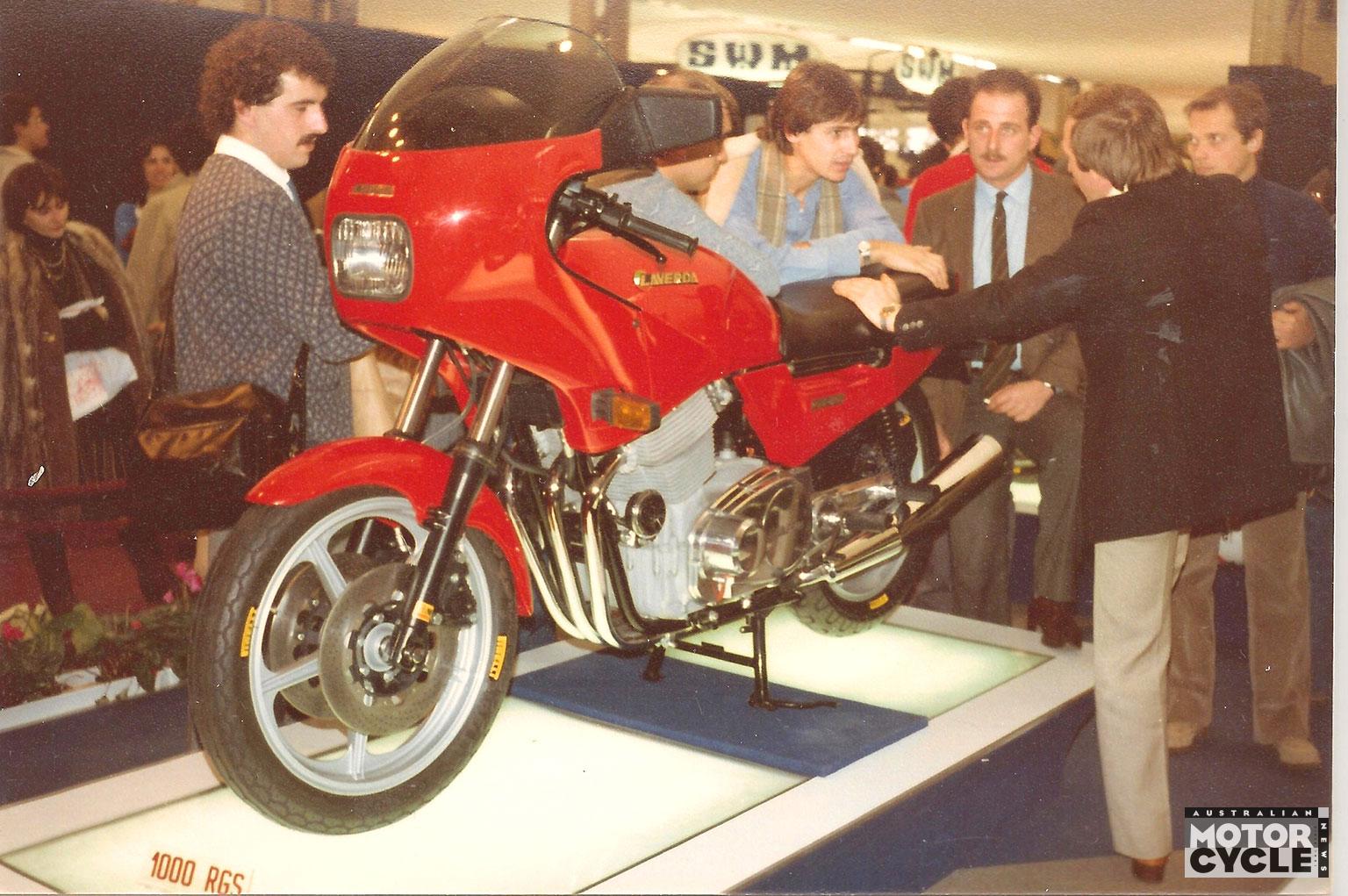
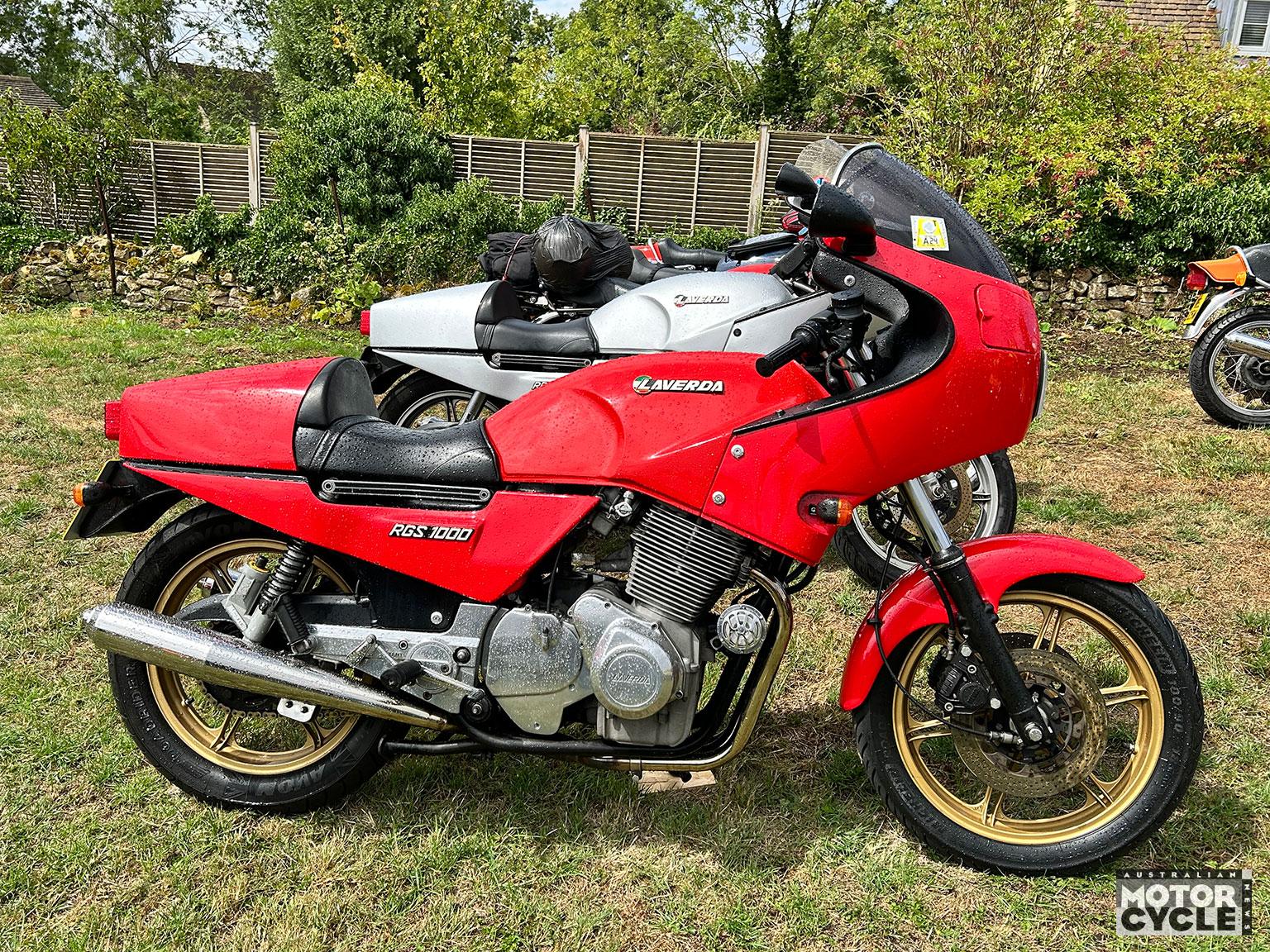
This second-generation triple first appeared in the Jota 120 in late 1980, but it was the RGS 1000, unveiled at the 1981 Milan Show, that marked a true turning point. With a new frame and rubber-mounted engine, the RGS traded some of the raw aggression of earlier Laverdas for a more refined, grand-touring personality.
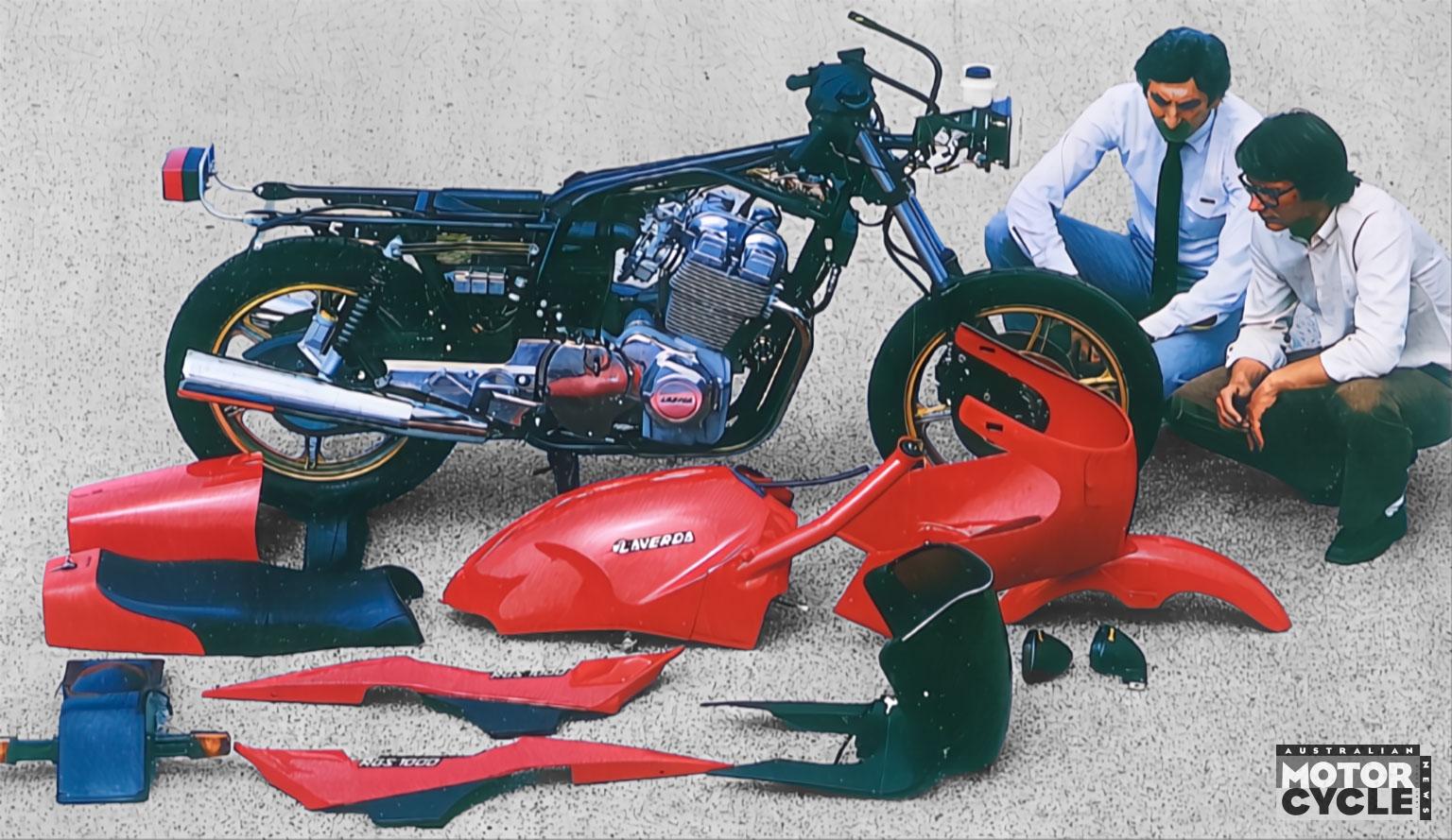
Styling by Rome-based RG Studio delivered a cohesive half-faired design in innovative Bayerflex plastic, complete with integrated dashboard and distinctive nose flap for the remote fuel filler.
The RGS name, initially a nod to the design studio, was hastily reinterpreted as ‘Real Gran Sport’ once its touring credentials became clear.
GT IN RACING ARMOUR
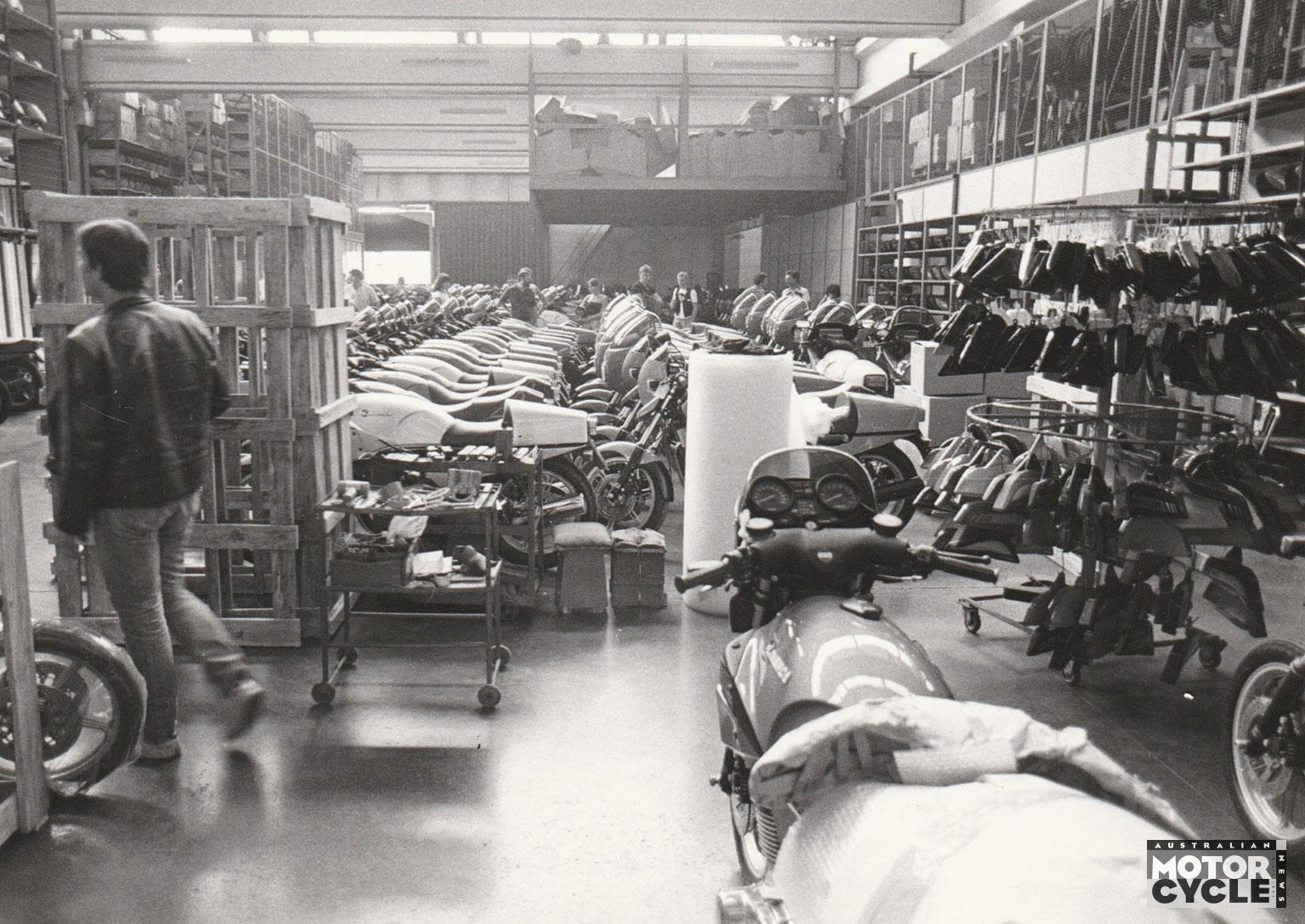
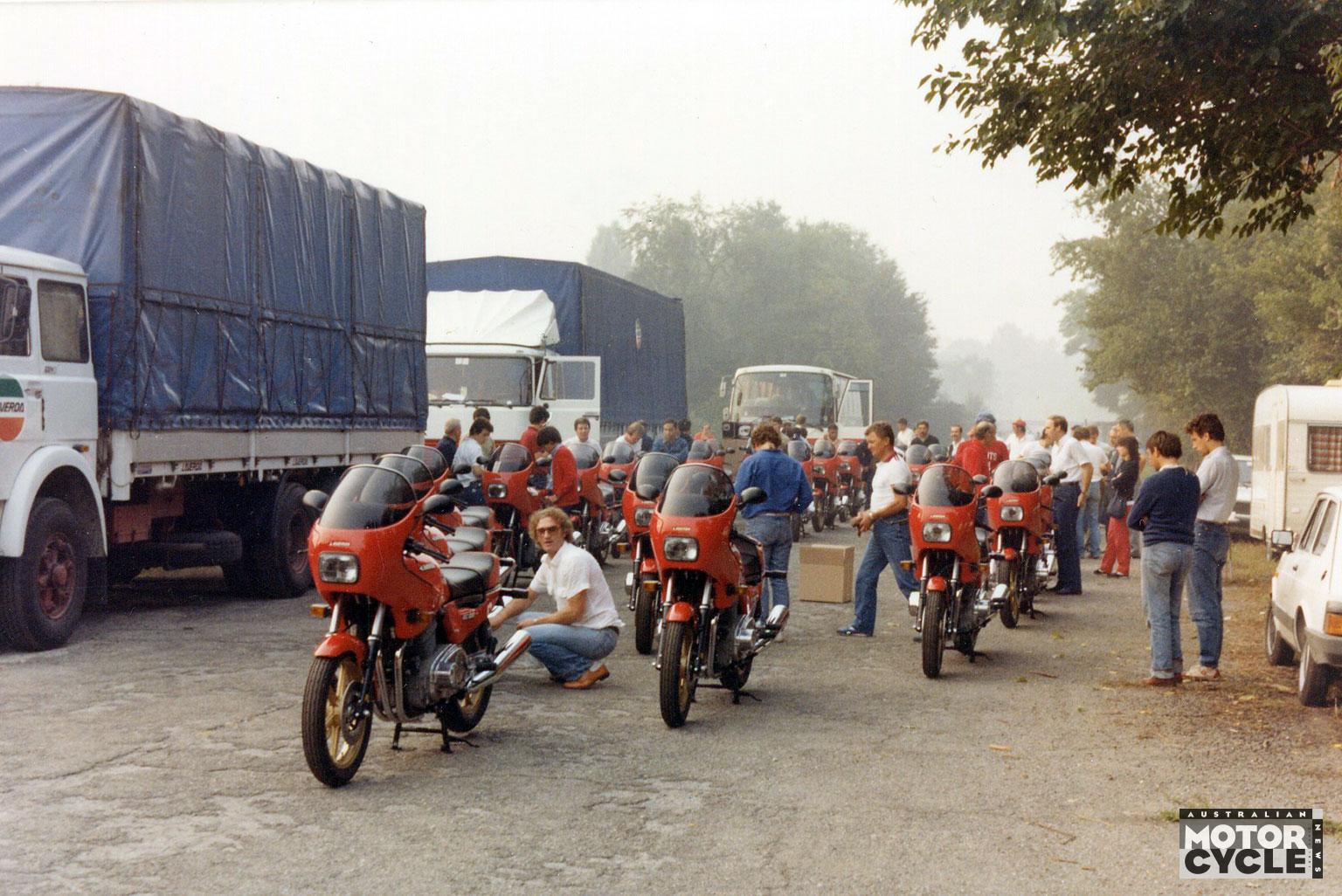
Underneath the bodywork sat an all-new twin-loop tubular steel chassis with more relaxed steering geometry, adjustable rider ergonomics and Silentbloc engine mounts. Steering was heavier at low speeds but impressively stable at pace. Braking came via triple Brembo discs, while the dry weight climbed to a substantial 244kg. Between 1981 and 1988, 2451 RGS-based triples were built before Laverda ceased production, ending a lineage that had totalled 12,550 triples built since 1972.
Inevitably, given Laverda’s proud history of going racing with the models it sold to its customers, both to publicise their performance and as a development exercise, it was intended from the start to head for the track with the RGS.
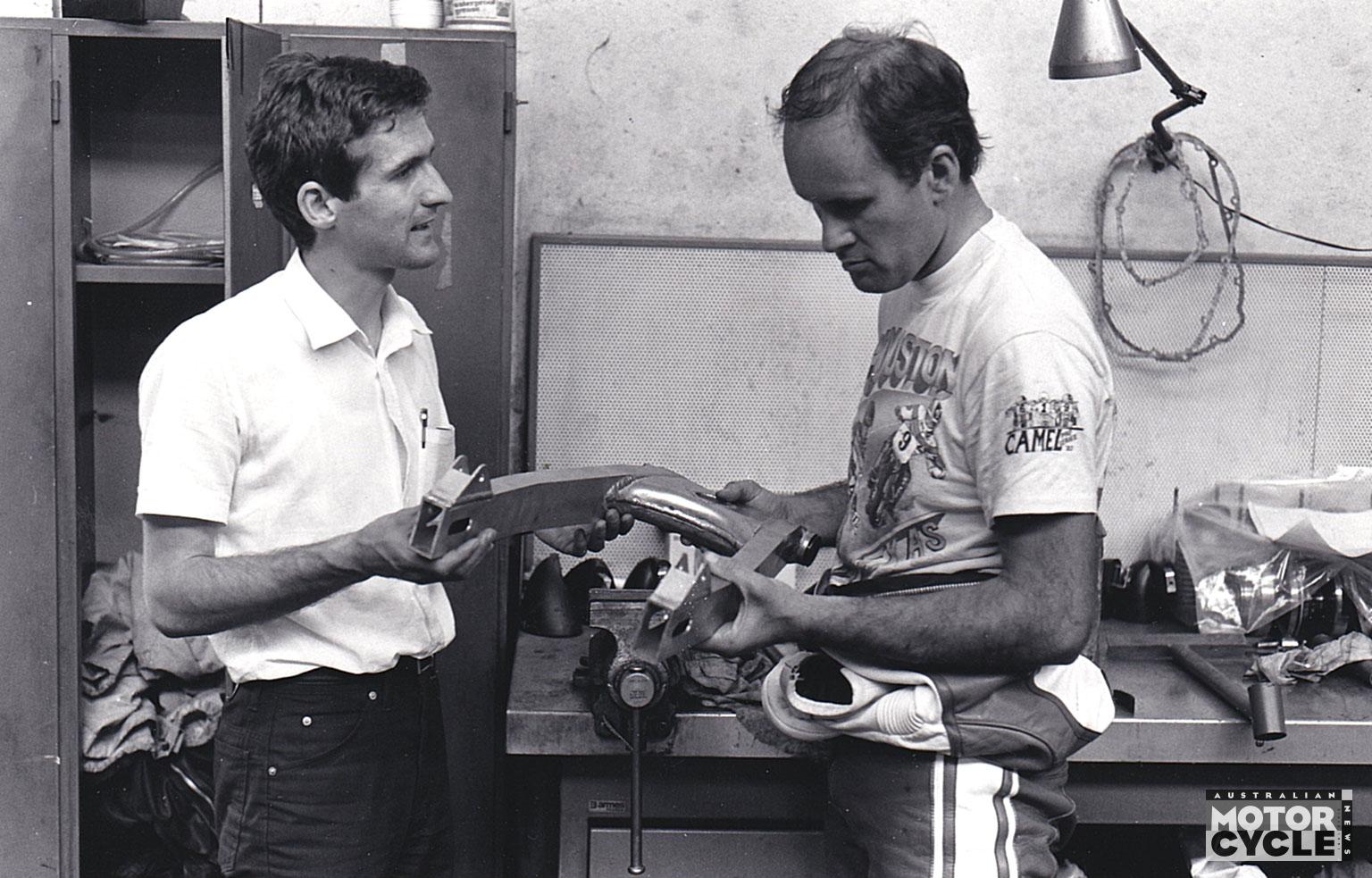
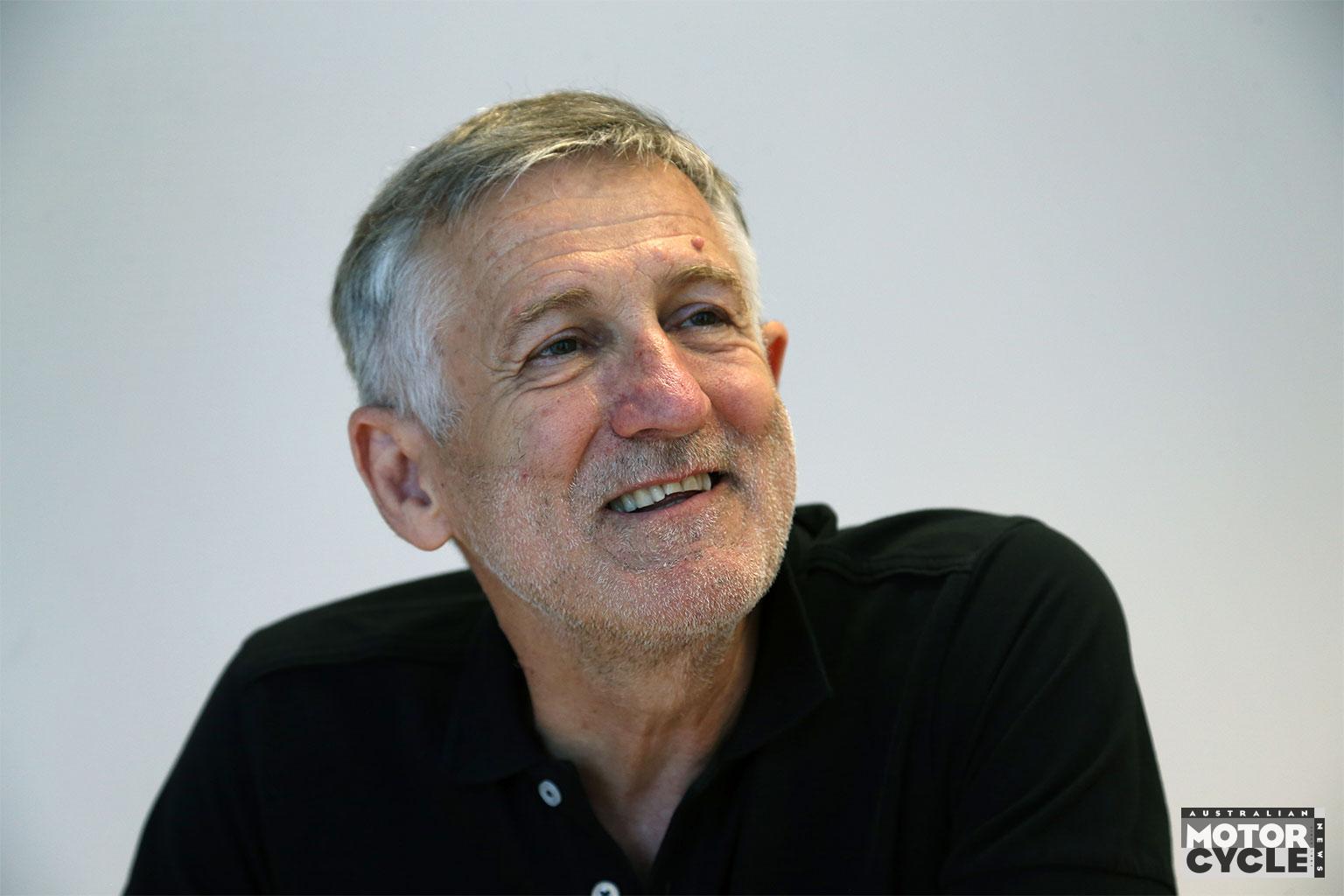
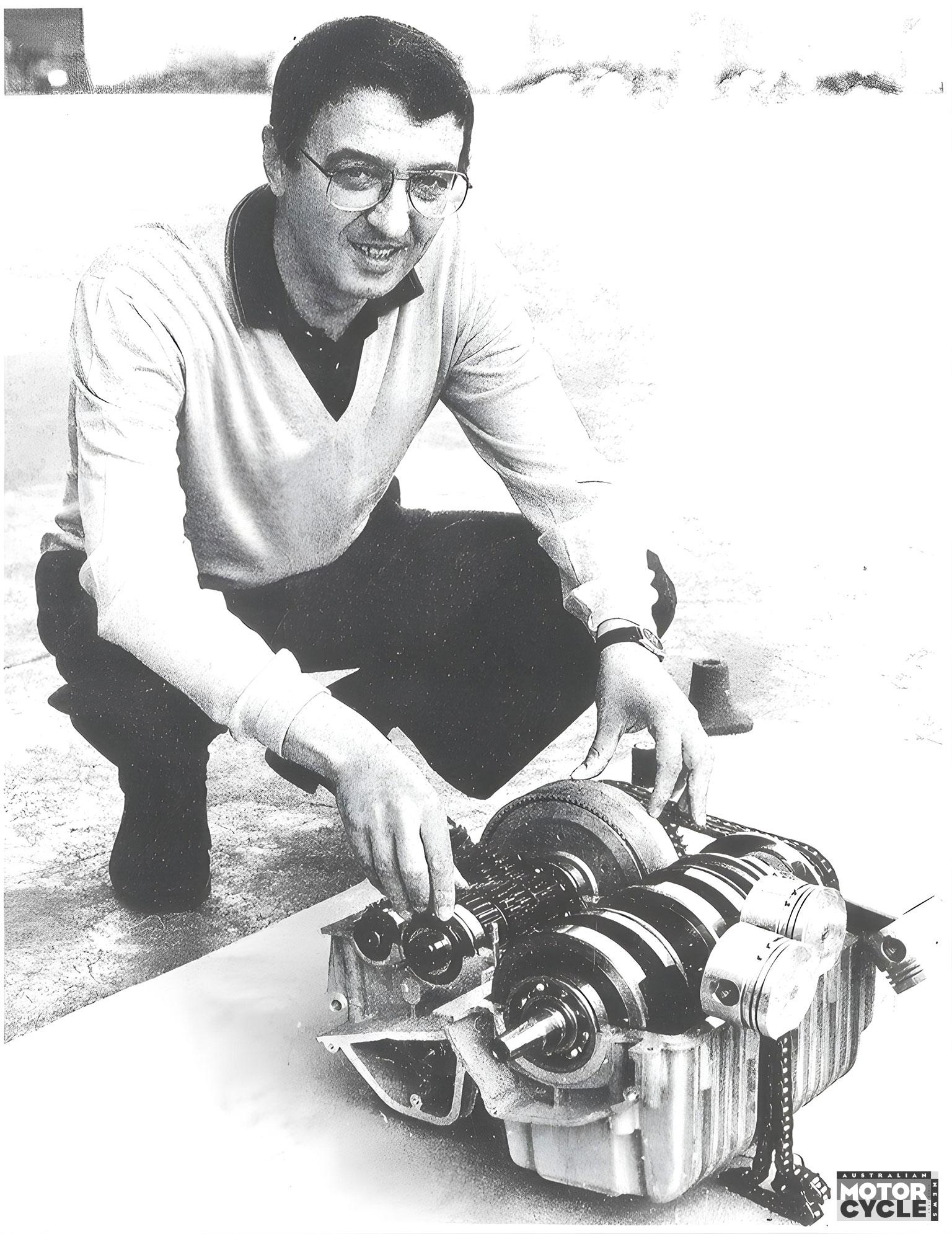
The man charged with leading this move was Bocchi’s youthful No.2 in Laverda’s Reparto Tecnico, Mariano Roman. Today the head of Fantic, after 20+ years as Aprilia’s Product Manager in which role he oversaw the development of all the company’s best-selling products from the Scarabeo scooter to the 1000cc V-twins, the RS250 repli-racer to the RSV4 Superbike, he’d joined Laverda in 1979 on graduating from university with a Mech.E degree. He became the company’s last Direttore Tecnico before leaving to join Aprilia in 1985, when Massimo Laverda stepped down from running Moto Laverda owing to a disagreement with other family members about the future direction the company should be taking.
FROM STREET TO TRACK
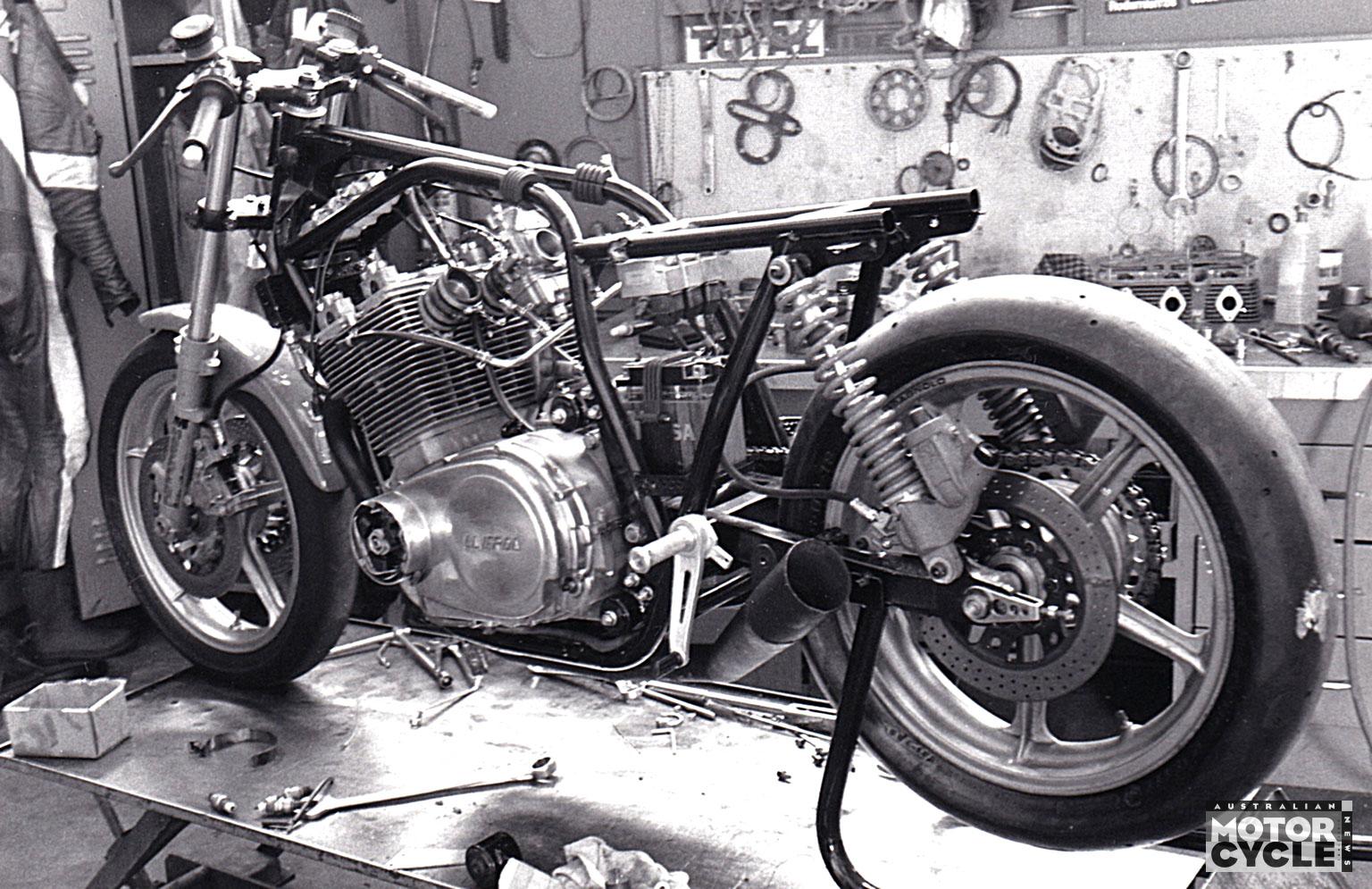
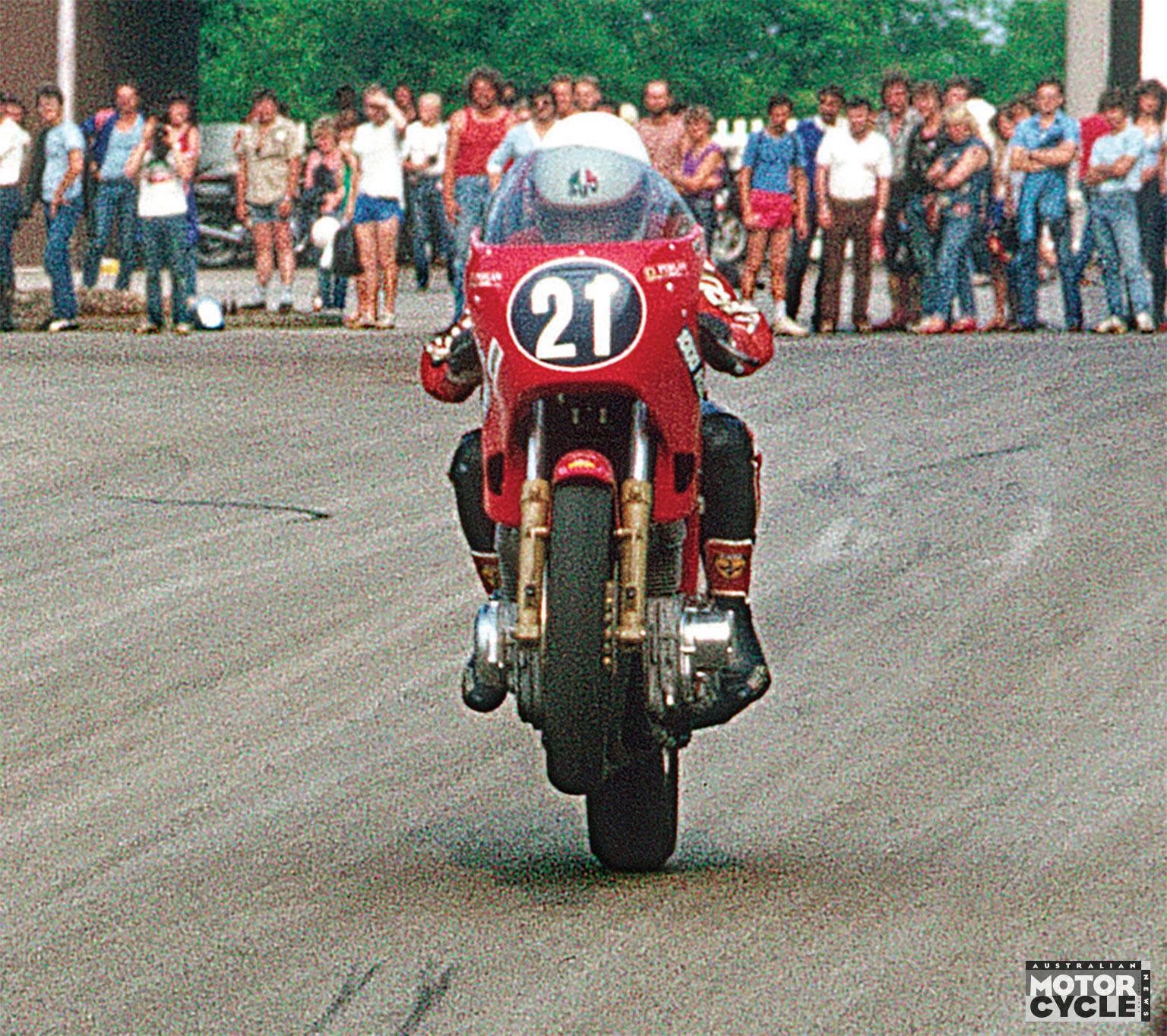
“In 1982 the RGS 1000 came on stream after four years of intense development, so we wanted to demonstrate its performance qualities by going racing with it,” says Roman. “In those days before Superbike racing, the main Production-led race series in Italy was TT Formula 1, which catered for tuned production engines in racing chassis. But we wanted to demonstrate that our RGS frame design was already at the highest level, if rather heavy. So my colleague Mariano Fioravanzo conceived a visual replica of it, which Verlicchi manufactured for us in lighter chrome-moly thinwall tubing with tighter steering geometry – if I remember correctly, it had a 26° fork rake and for sure less trail than the stock frame, in order to make it turn properly on a racetrack. And the wheelbase was reduced slightly, too, to make it more agile.”
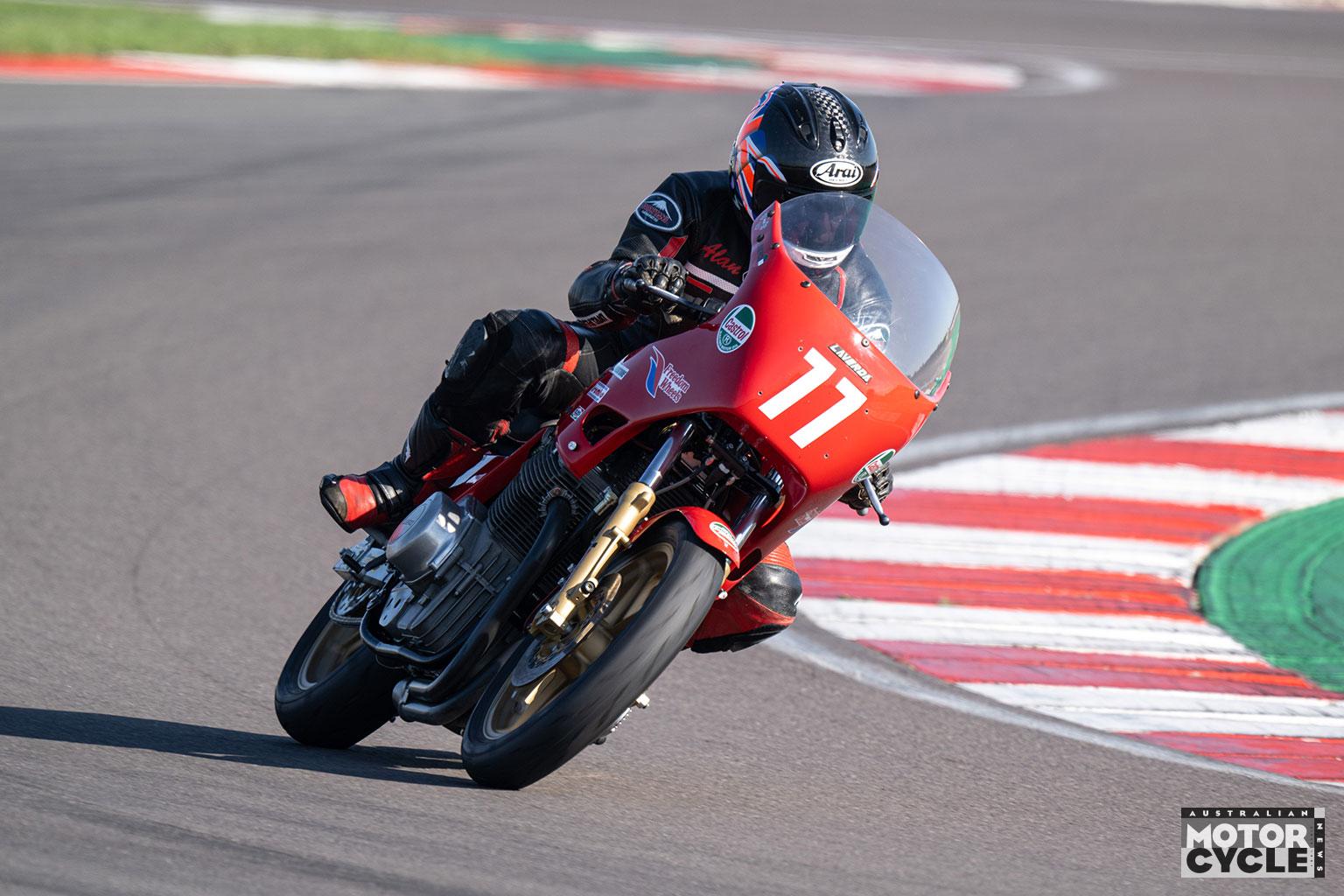
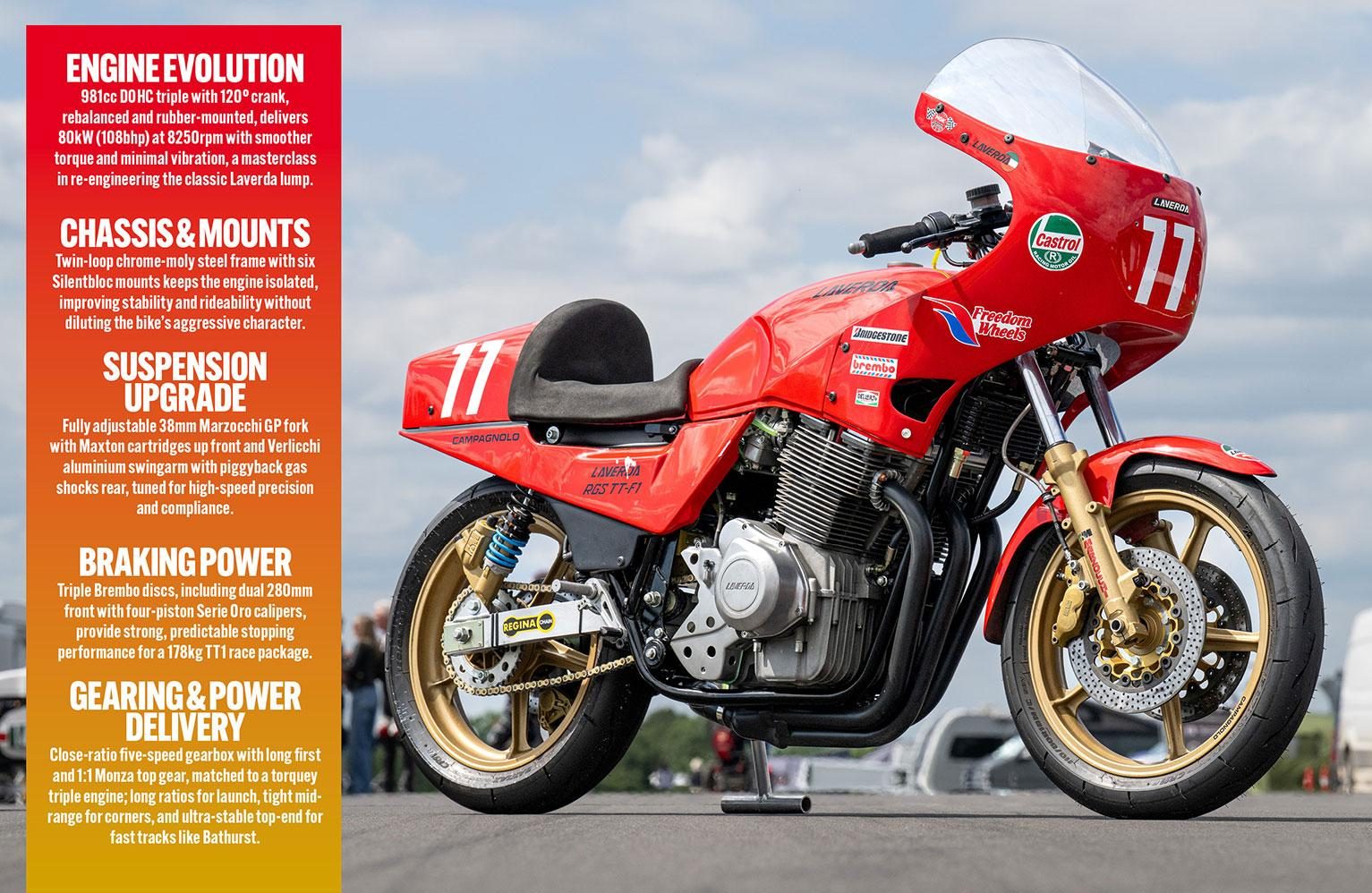
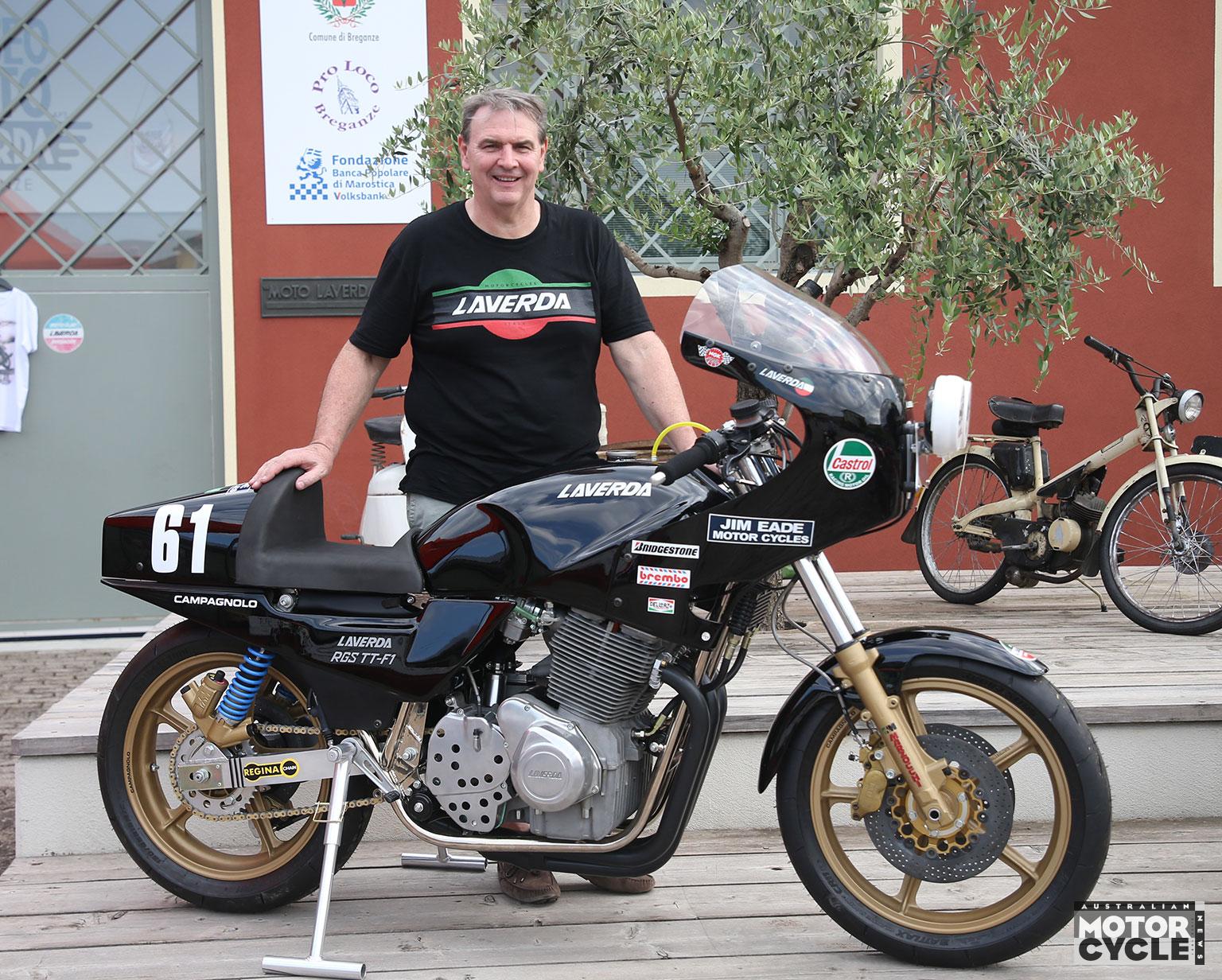
A Verlicchi-made cast aluminium swingarm weighing 2.3kg vs the standard steel item’s 5.8kg was commissioned for future races, but even without this the RGS TT1 racer was much lighter than the 244kg street version, at 178kg with oil/no fuel. The 38mm Marzocchi M1R fork with magnesium sliders was now fully adjustable, with the same firm’s gas shocks at the rear. Twin 280mm fully floating Brembo discs were fitted to the cast magnesium 18-inch Campagnolo front wheel’s 2.50in rim, gripped by the company’s new four-piston Serie Oro calipers, with a fixed 260mm disc on the rear 4.00in wheel. A slightly modified replica RGS 1000 fairing and seat made in fiberglass gave the bike a very box-stock look, and ditto the engine.
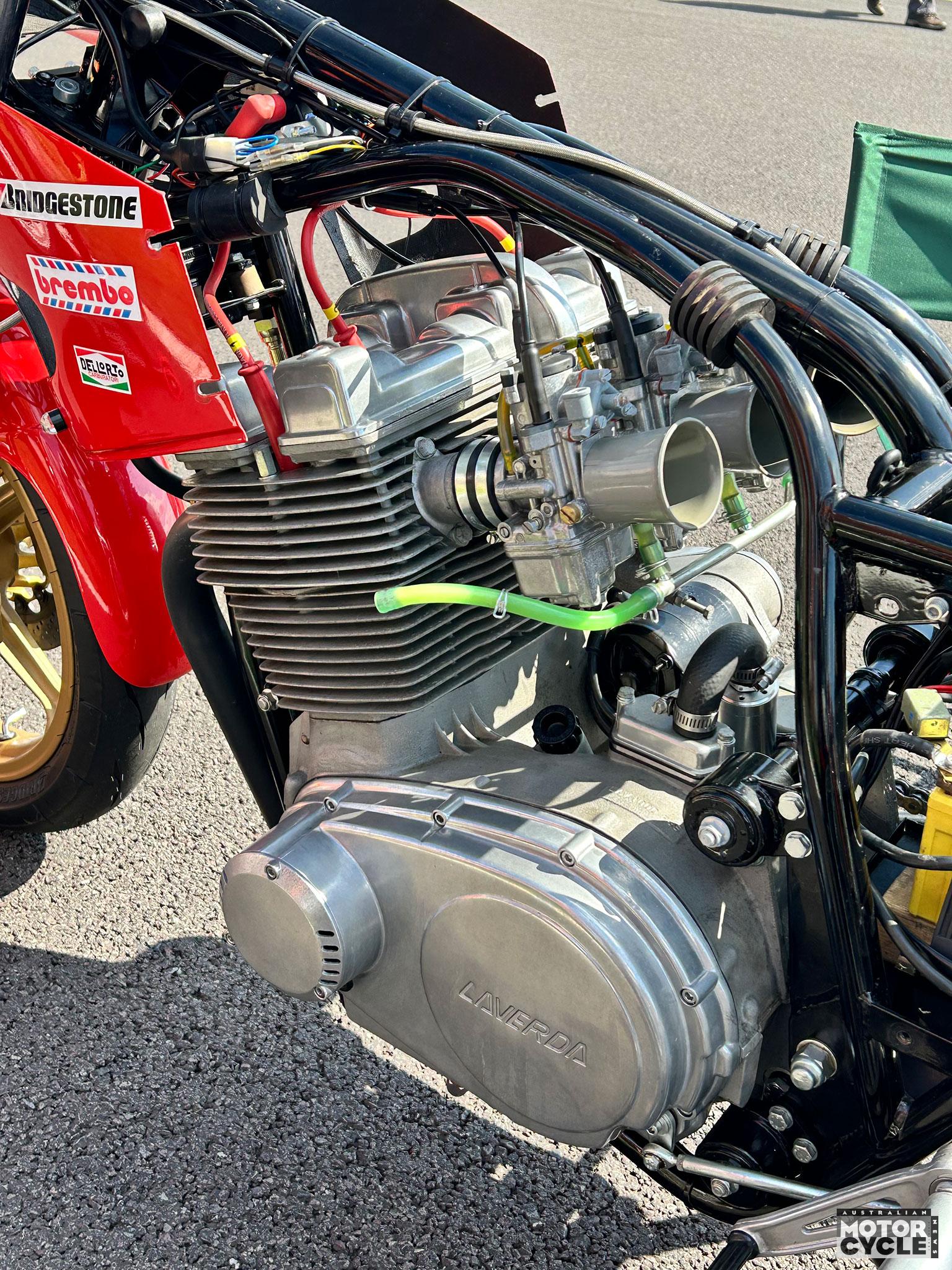
Under the skin, though, the DOHC 981cc triple engine weighed 88kg – which at 660mm wide was much slimmer than its Japanese opposition – and incorporated significant go-faster engine mods. Speed trapped at 260km/h in testing at Mugello, it was instantly competitive with the Japanese fours in engine performance. But despite the crash diet it had undertaken, its excess weight versus them told against it exiting turns on a relatively twisty track like Misano, where it made its race debut in July 1982 in the final round of that year’s Italian TT F1 series. It had been run for the first time just six days earlier! Despite the lack of time for fine tuning, the RGS TT1 was ridden by big-bike debutant Romolo Balbi to an exceptional fifth place first time out against a full grid of Japanese fours and two-stroke twins.
After this the RGS TT1 project took a back seat, as Roman explains: “The trend in the marketplace was towards smaller, lighter engines, so this is why we started to think of something different. We began with Bocchi working on a 750cc four-cylinder Laverda, but then the money stopped and we closed that project. Also, we worked with Mariano Fioravanzo to modify the six-cylinder engine for the street, by rotating the cylinders 90-degrees so they were across the frame, not lengthways as before. This allowed you to use a new gearbox with chain final drive, and a much shorter chassis. It could have been a wonderful bike, better than all the Japanese, with almost 150bhp – the most powerful engine in the market in the 1980s. It would surely have been the right engine to relaunch Laverda, and we made a wooden mock-up which was fantastic – but Massimo could not get the support for this inside the family, so it’s the main reason he left the company. Instead, they asked me to develop a three-cylinder 350cc two-stroke engine, even if that was not in the DNA of Laverda – it was a four-stroke company! But this is why we stopped the RGS TT1 project.”
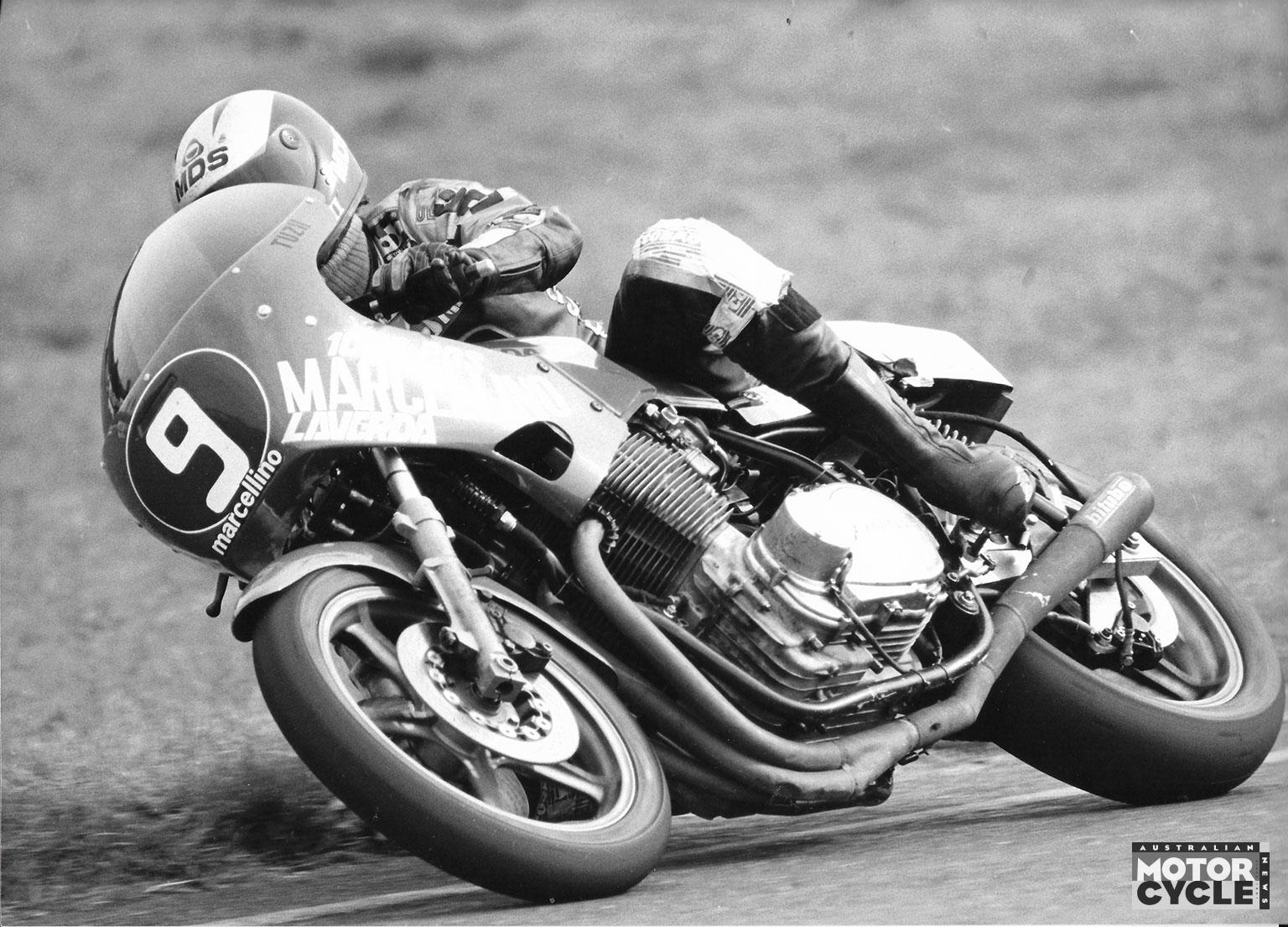
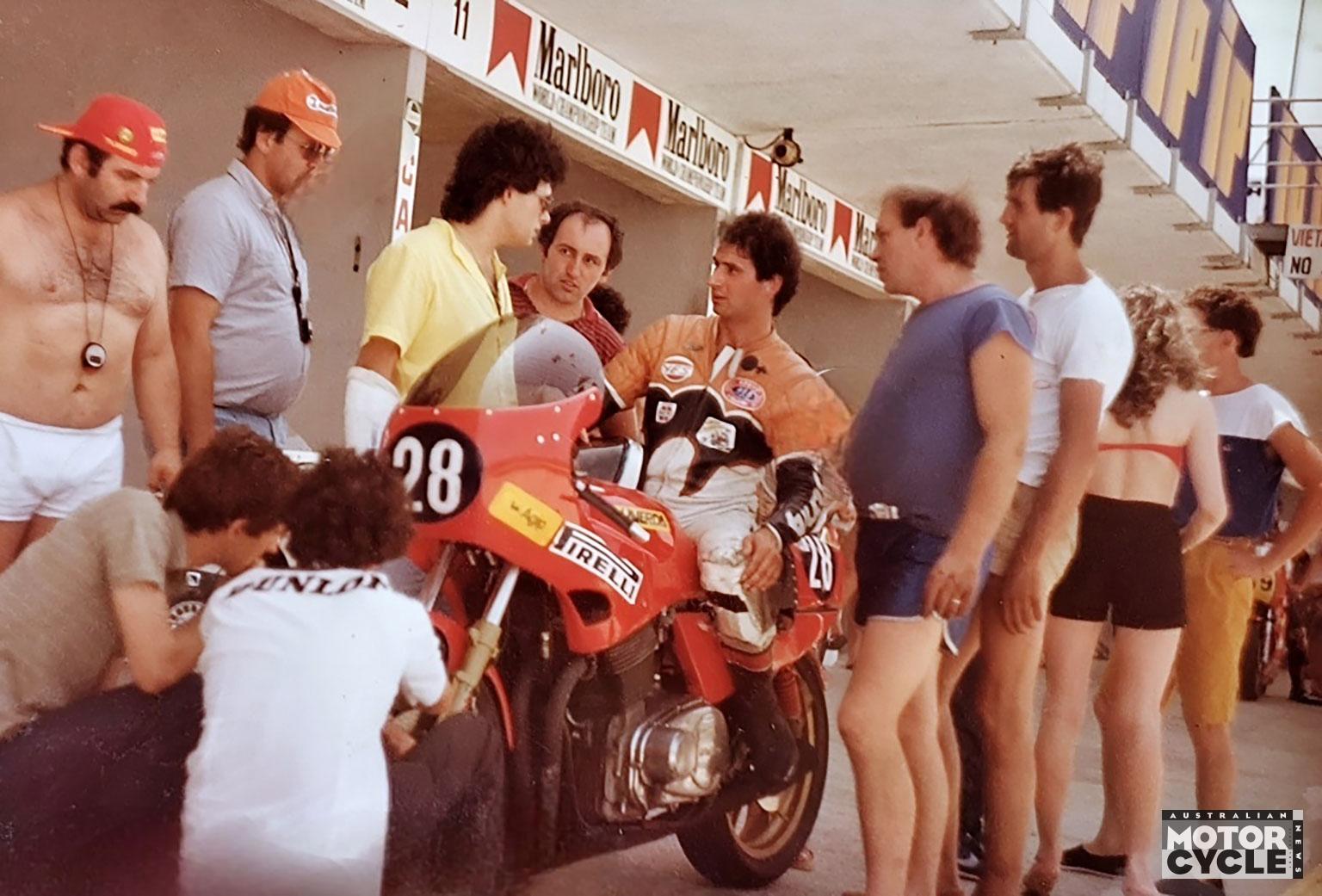
Still, the factory TT1 racer had one more race in its logbook in November 1983 in the 1000km of Vallelunga, 40km north of Rome. After a year spent mostly sitting in a storeroom, it was confided to 500GP racer Corrado Tuzii for the final race of his career. Part-time racer Paolo Valdo, Laverda’s production line head of quality control, was his teammate.
After testing it at Magione, Tuzii completely altered the chassis set-up with a more forward weight bias, modified the sump for extra ground clearance, and fitted the Dunlop tyres he’d been using in 500GP.
The result was spectacular, with Corrado duelling for the lead with Walter Cussigh on the works Ducati for the first hour of the race, both repeatedly breaking the lap record as they left
the factory-supported Honda and Kawasaki fours far behind.
REVIVAL DOWN UNDER
After that, the last ever Laverda factory racer got lost in the confusion of the company’s shutdown, and appears to have been dismantled. Its fairing appeared at a Padua autojumble some years later, and the bike the Laverda family has today is a modern replica. But in response to the evident potential of the singleton works racer, in 1983 the factory prepared a further four such bikes and six engines for sale to selected customers – including Australian importer Frank Hodder of Eurotred. Two of the spare engines were fitted into Bakker Endurance racing frames by a Dutch team, and one more went to Hodder in Australia, later followed by a spare RGS TT1 frame to create a fifth original complete bike.
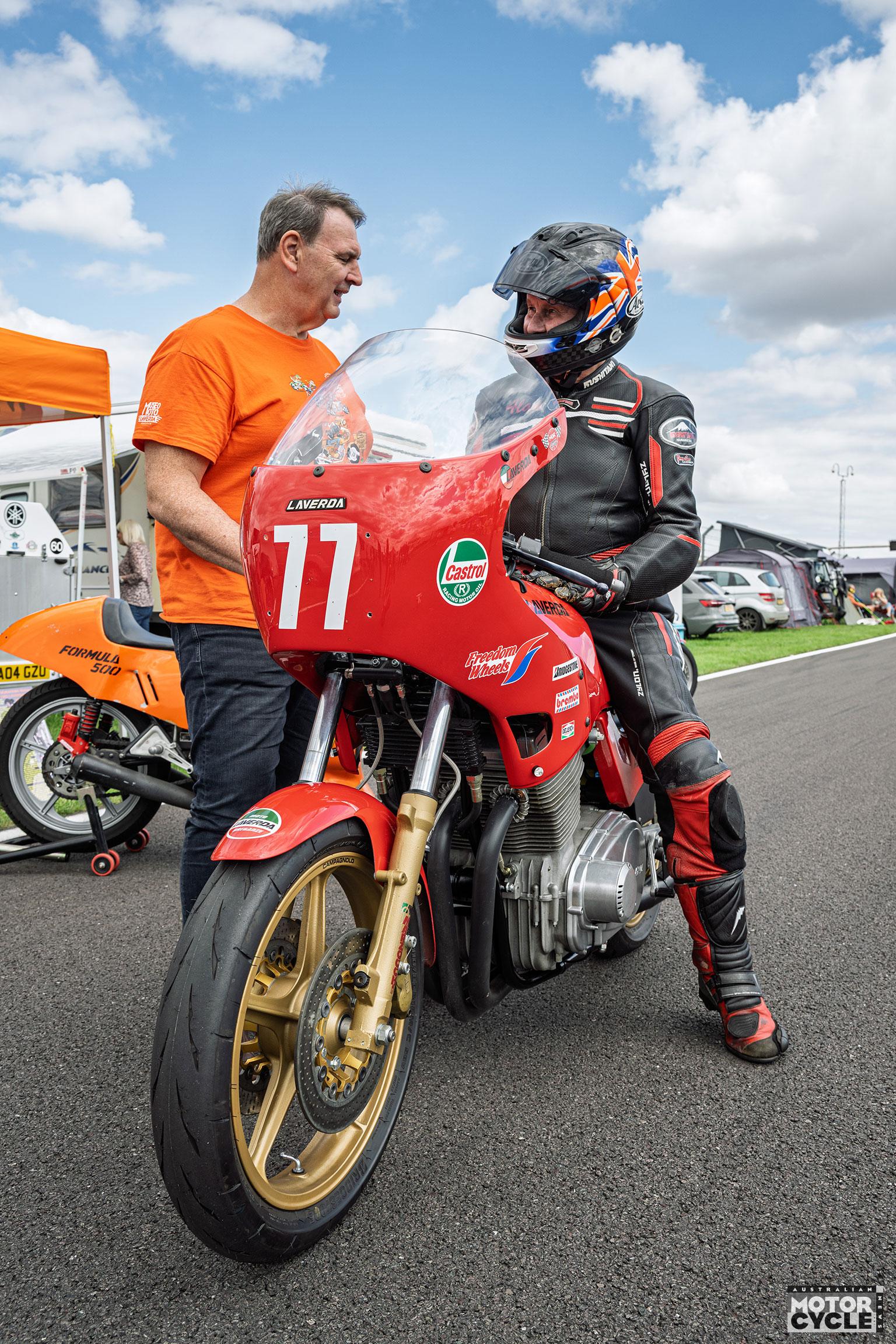
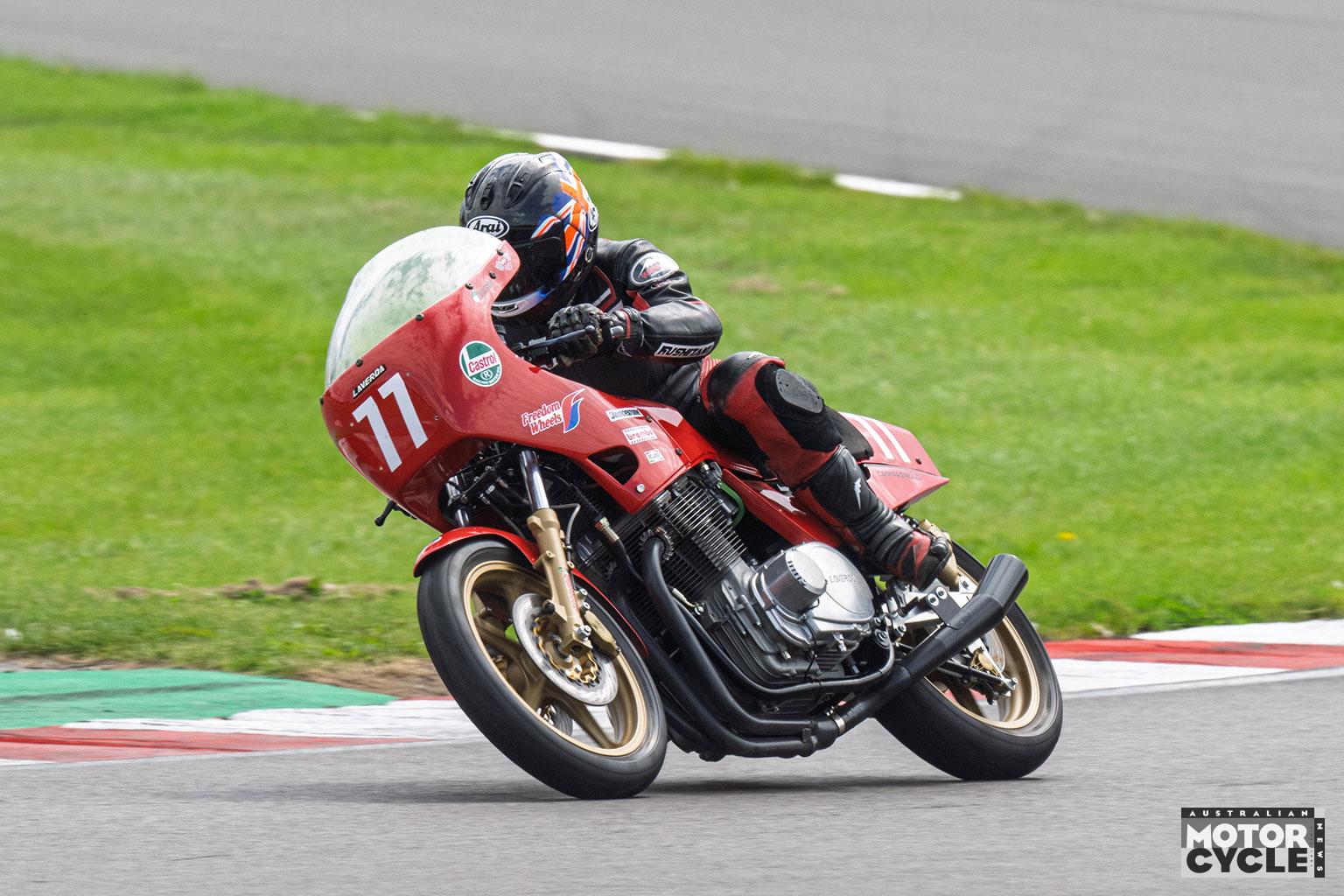
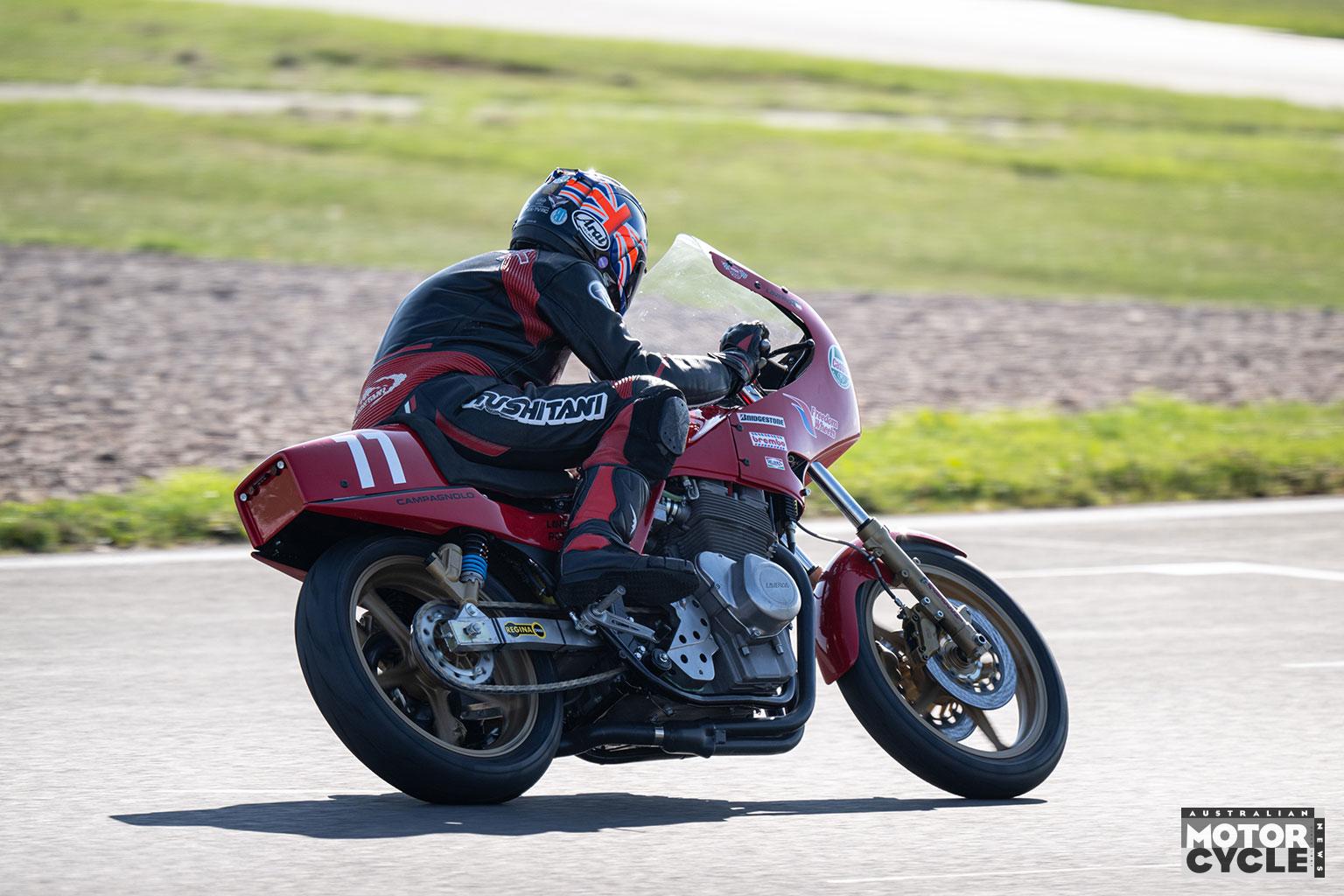
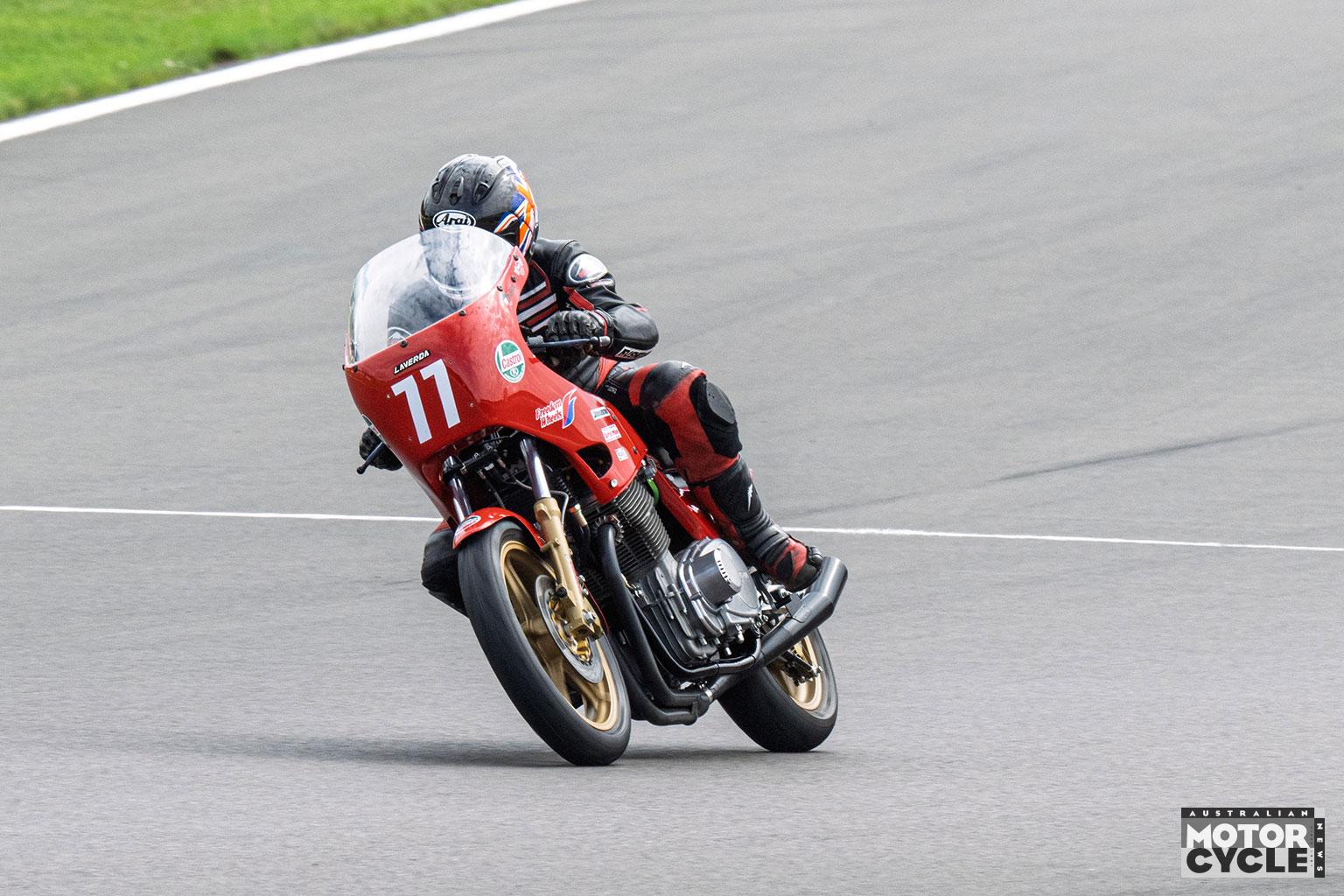
Three of those machines are now owned by Australian enthusiast Scott Greenaway, who won both the Best Racebike and Peoples’ Choice awards for all three of them at the 2024 Laverda 75th Anniversary celebrations in Breganze – the first time that three such bikes had ever been seen together in public. And a year later, in August 2025, at Britain’s hugely popular CRMC Classic Donington race meeting, I was honoured by Scott with the chance to renew my hands-on acquaintance with the last of the illustrious Laverda racing line.
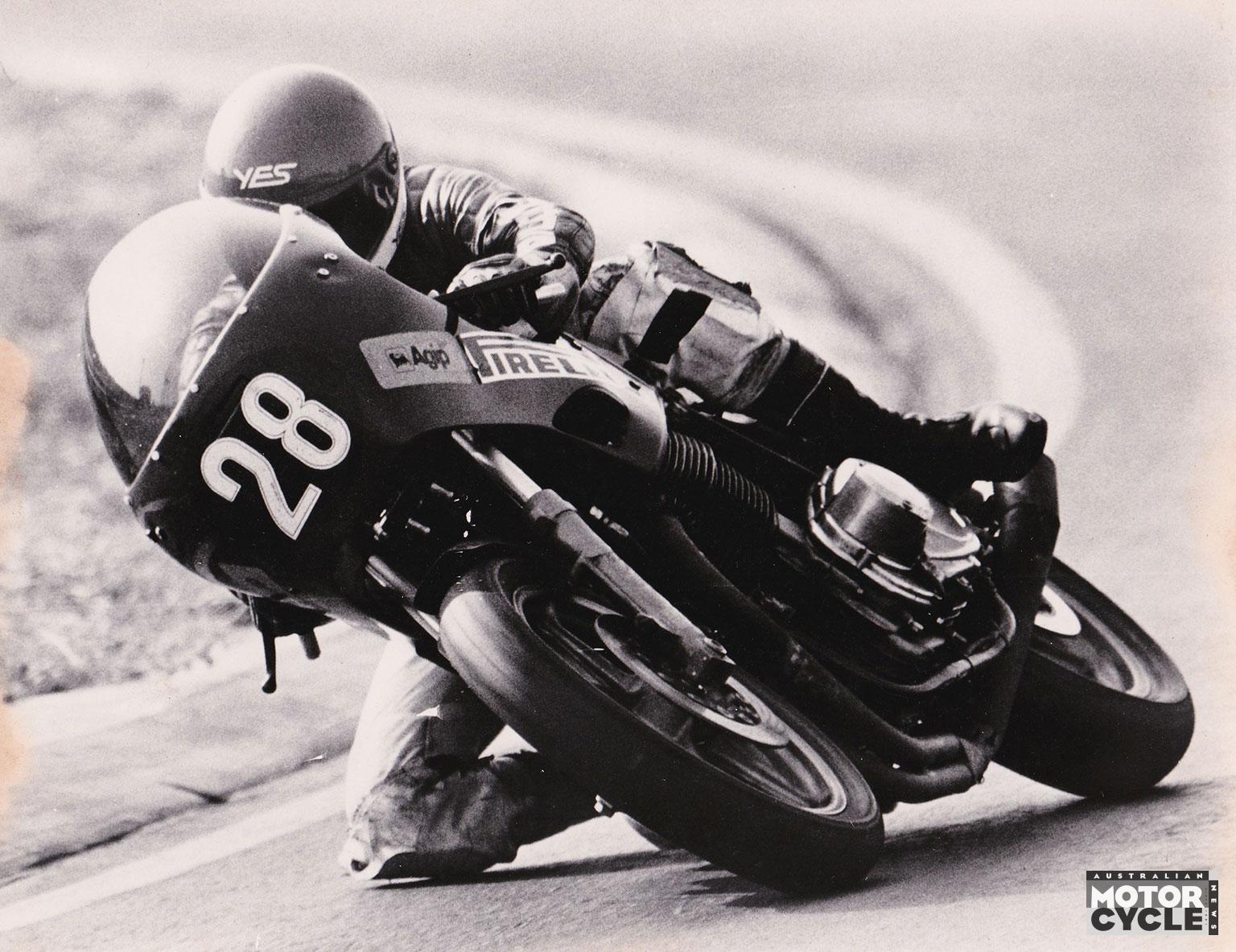
For in May 1983, I’d gone to Breganze to collect spare parts for the Ogier Laverda 600TT2 I was racing then, and had the keys of the factory RGS TT1 thrust in my hands by Massimo Laverda for 20 laps of the factory test track!
It had felt very similar in performance to the P&M Kawasaki Z1R I’d raced in the Isle of Man and British TT F1 events, with a comparable power-to-weight ratio, and the same kind of super stable handling, albeit with rather heavy steering. So the chance to ride the most illustrious of Scott’s trio of triples was for me yesterday once more.
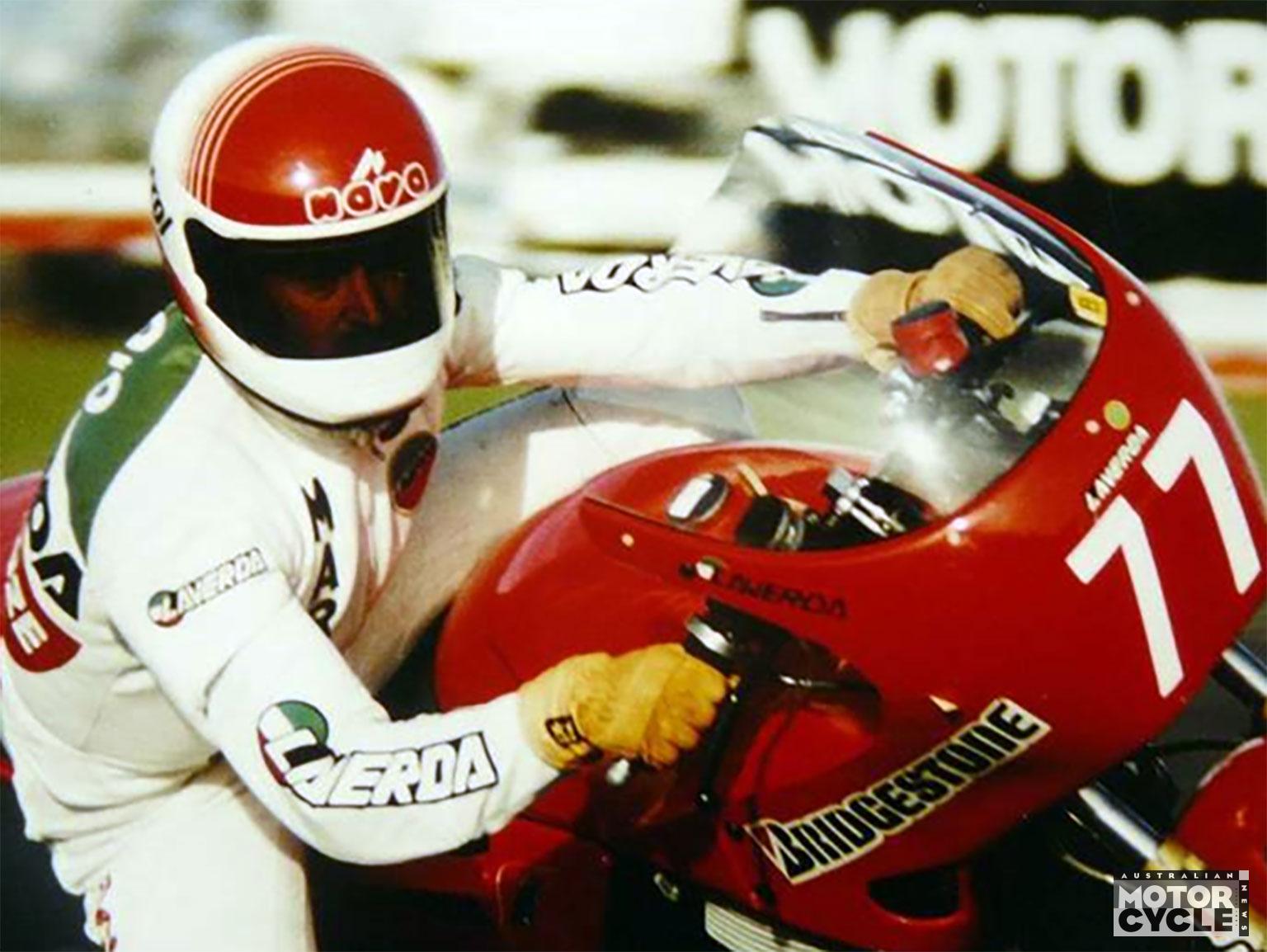
For this bike was the complete RGS TT1 sent to Frank Hodder late in 1983, to replace the modified RGS 1000 road bike which Martin Hone had been racing for him in that year’s Victorian Thunderbike series. Hone rode the new full race bike in the final round at Calder, finishing second in that race and runner-up in the championship to the much lighter Bob Brown Ducati F1 ridden by future 500GP star Kevin Magee. This was a good shakedown run for the following Easter’s major Bathurst Australian TT meeting, in which Martin rode the Laverda alone to 10th place overall out of 62 starters in the three-and-a-half hour Arai 500, and fourth in the Superbike class against all the Japanese fours – a very creditable performance which also speaks well to Eurotred mechanic Ennio Bardella’s preparation. If not for the bike’s fuel consumption – a horrendous 5.35km/l, which meant stopping every 45 minutes on the 6.21km Mount Panorama circuit to refill the 20-litre tank – Hone and the Laverda would surely have finished on the Superbike rostrum.
After that, RGS chassis no TTF1 2535 was retired to Hodder’s private collection and not raced again, until sold to another collector who simply stored it away and didn’t use it, before Greenaway acquired it in 2020 and recommissioned it.
“It had been dry stored quite well, and was absolutely complete, just a bit shabby,” he says. “My son Charles and I have cosmetically restored it, but the motor hasn’t been pulled apart, so it’s still original just as the bike left the factory in 1983. The heavy standard Surflex clutch has been replaced by a carbon/kevlar one which is more durable and kinder to the rider, and while the suspension is original, we’ve put Maxton cartridges in the fork to make it fully adjustable. Otherwise, it’s as Martin Hone raced it in 1984, and hasn’t been ridden since!”
BACK ON TRACK
The luxurious suede seat pad on the stock RGS seat is a non-standard item that Hone presumably fitted for the rigours of the Arai 500, but otherwise the Aussie RGS is bone stock externally. It’s a B-I-G bike, substantial in stature, with a rather upright riding stance thanks to the fairly wide-set clip-ons with foam grips mounted above the upper triple clamps. But despite that you’re well protected from windblast by the same tall screen Hone used at Bathurst, as contemporary photos show. The footrests are however set some way back, well behind the swingarm pivot, so working the left-side, one-down, five-speed gearshift, which has quite a droop to the pedal, dictates some agility with your ankle. Shifting up is not a natural-feeling action.
But thumb the starter button and that glorious-sounding big triple engine booms eagerly into life with what sounds like minimal silencing from the 3-1 open mega exhaust. Make no mistake – this is a muscular motor with hair on its chest. It won’t idle, so you must keep blipping the throttle at rest, which, judging by the faces of the Laverdisti who flocked to see it in the collecting area at Donington, was just what they wanted. The clutch lever is much lighter than I’d expected, so it was both much less tiring to use than on other Laverdas I’ve sampled – twins and triples alike – but also let me feed it out both cleanly and progressively in getting off the mark. After a couple of laps to get everything warmed up, I tried shifting up without the clutch, but while I only missed a gear once – right in front of Greenaway and everyone else down Pit Straight, dammit! – it all seemed rather imprecise, so given the light clutch lever action I ended up using it all the time.
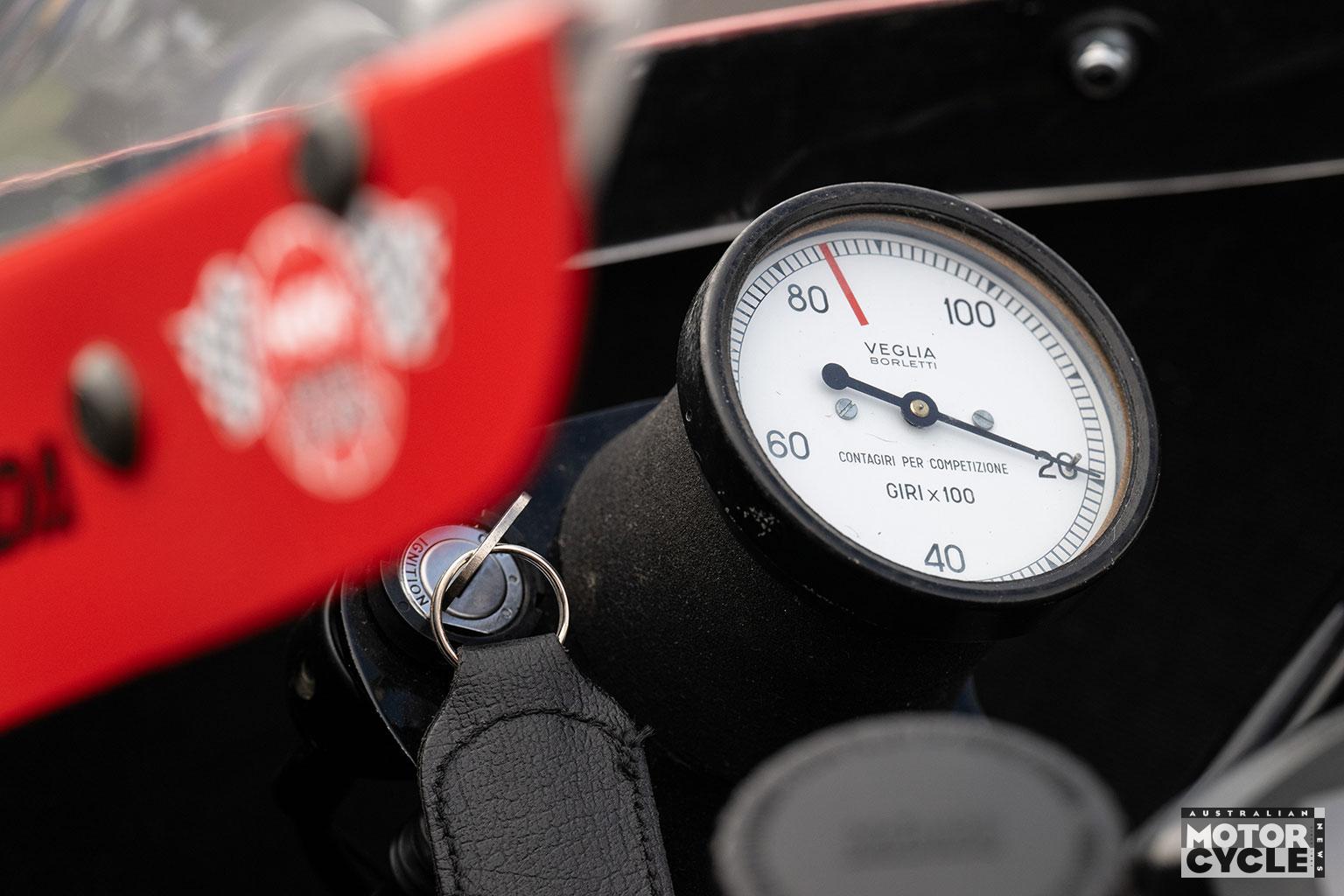
First gear is very long, but you must rev it out to the 8000rpm mark on the white-faced Veglia tacho which I’d agreed with Greenaway would be my shifter point – eight-five normally, and the engine is reputedly safe to 10,500 revs – in order to be back in the fat part of the powerband above six grand. There’s quite a big gap to second gear, but then this ratio, third and fourth are all close together, then there’s another big gap to top gear on this supposedly close-ratio gearbox, which is a true 1:1 Monza top gear – except, it never raced at the Autodromo. Call it ideal for the Conrod Straight at Bathurst, then! The Silentbloc rubber engine mountings worked well – what little vibration reached me via the footrests was minimal, the foam grips and thick seat pad eliminating any tingles through those two usual suspects.
It’s not hard to see why these ratios were chosen: the long first gear gets what at 178kg half-dry minus fuel is quite a heavy piece of kit (even by the standards of 40 years ago) off the mark, albeit with lots of clutch slip which the modern carbon clutch will take in its stride. The close next three ratios keep the show on the road, especially in a relatively tight series of bends like Schwantz, McLeans and Coppice at Donington, such as abounded at Misano. Then the tall top gear lets the Laverda play to its strengths, with ultra-stable handling on big circuits like Bathurst. I didn’t get a true fifth gear at Donington, but I found the slightly tall-seeming RGS totally planted powering down Craner Curves, almost too much so. It needed a good tug on the ‘bars to flick it from side to side at speed during the descent, and again under braking for the turn-in to the Old Hairpin immediately after. This is not a particularly agile motorcycle; big tracks with fast turns are its home turf, so it would have been an ideal bike for Bathurst with a brave, experienced rider like Hone.
Renewing my acquaintance with the RGS TT1 Laverda was like meeting a onetime girlfriend 40 years on. She’s still shapely, has a lovely singing voice, but tempus passit – she can’t help not moving about the way that younger rivals do today. No matter: let’s just remember the Way It Was, once upon a time long ago.
But the Laverda RGS 1000 was just one of the several Euro-bikes impacted by the FIM’s disgraceful decision (primarily at the behest of Honda) to drop the capacity for the World Championship TT Formula 1 class to a 750cc limit for 1984.
“We at Laverda have always been keen on racing,” Massimo Laverda told me when I rode his TT1 racer first time around back in 1982. “So when the RGS came out, our dealers knew they only had to put a little pressure on us to go racing with it, and here we are! But I must say that I feel the FIM has acted most unfairly in dropping the capacity limit for TT F1 and much more important for us, World Endurance racing, which is now run under TT F1 regulations.
“It may suit the Japanese companies who control the FIM, and especially Honda, but for smaller companies like ourselves, Ducati, BMW Motorrad, Moto Guzzi and all the other European factories, it’s a disaster. What’s worse, there’s no longer any provision for a prototype class that we could run in. This means that, just supposing we were to decide now to resurrect the Laverda V6 – or maybe to build a V8! – we couldn’t race it anywhere. Even if we dropped the capacity to 750cc we wouldn’t be allowed to run it, because it’s not a production-based bike. That’s ridiculous – and you’re not going to tell me that’s what the racing public wants!”
No indeed, and that short-sighted provision still pertains today. But the way the European companies now dominate World Superbike and MotoGP over the Japanese may be considered due payback for past slights!
SPECIFICATIONS
ENGINE
Air-cooled DOHC inline three, 120° crank, 2 valves per cylinder (41mm in/34mm ex)
Bore & stroke 75mm x 74mm
Capacity 981cc
Compression 11:1
Gearbox 5-speed close-ratio
Clutch/drive 14-plate hydraulic wet clutch, twin-row chain primary
Carburetion 3 x 36mm Dell’Orto PHF
Ignition Ingnitech CDI, Hall sensor, Dyna coils, 12V battery/alternator
PERFORMANCE
Power 80kW (108bhp) @ 8250rpm (measured at rear wheel)
Top speed 260km/h (Mugello, 1982)
CHASSIS
Type Chrome-moly duplex spaceframe, with rubber engine mounts
Rake/trail 26°/105mm
Wheelbase 1495mm
Weight: 180kg (oil/no fuel), 52/48%
SUSPENSION
Front: 38mm Marzocchi GP fork, fully adjustable (Maxton cartridges)
Rear: Verlicchi aluminium swingarm, twin Marzocchi piggyback gas shocks
WHEELS & BRAKES
Front 110/80-18 Bridgestone CR11R, 2.50in Campagnolo magnesium
Rear 150/65-18 Bridgestone CR11R, 4.00in Campagnolo magnesium
Front Twin 280mm Brembo discs, four-piston calipers
Rear 260mm disc, single-piston caliper
Built 1983 (chassis TTF1 2535)
OWNER
Scott Greenaway, Sydney