Ducati’s 2025 Panigale V2 S is 17kg lighter than the previous 955, but the old bike has 35hp more – which will come out on top?
A new sportsbike is always lighter and faster than the previous model, especially a red one made by Ducati, the MotoGP world champions. More power, more torque, more speed… the thought of ‘progressing’ without ticking those boxes is almost unthinkable. But that is precisely what Ducati has done with the 2025 Panigale V2 S.
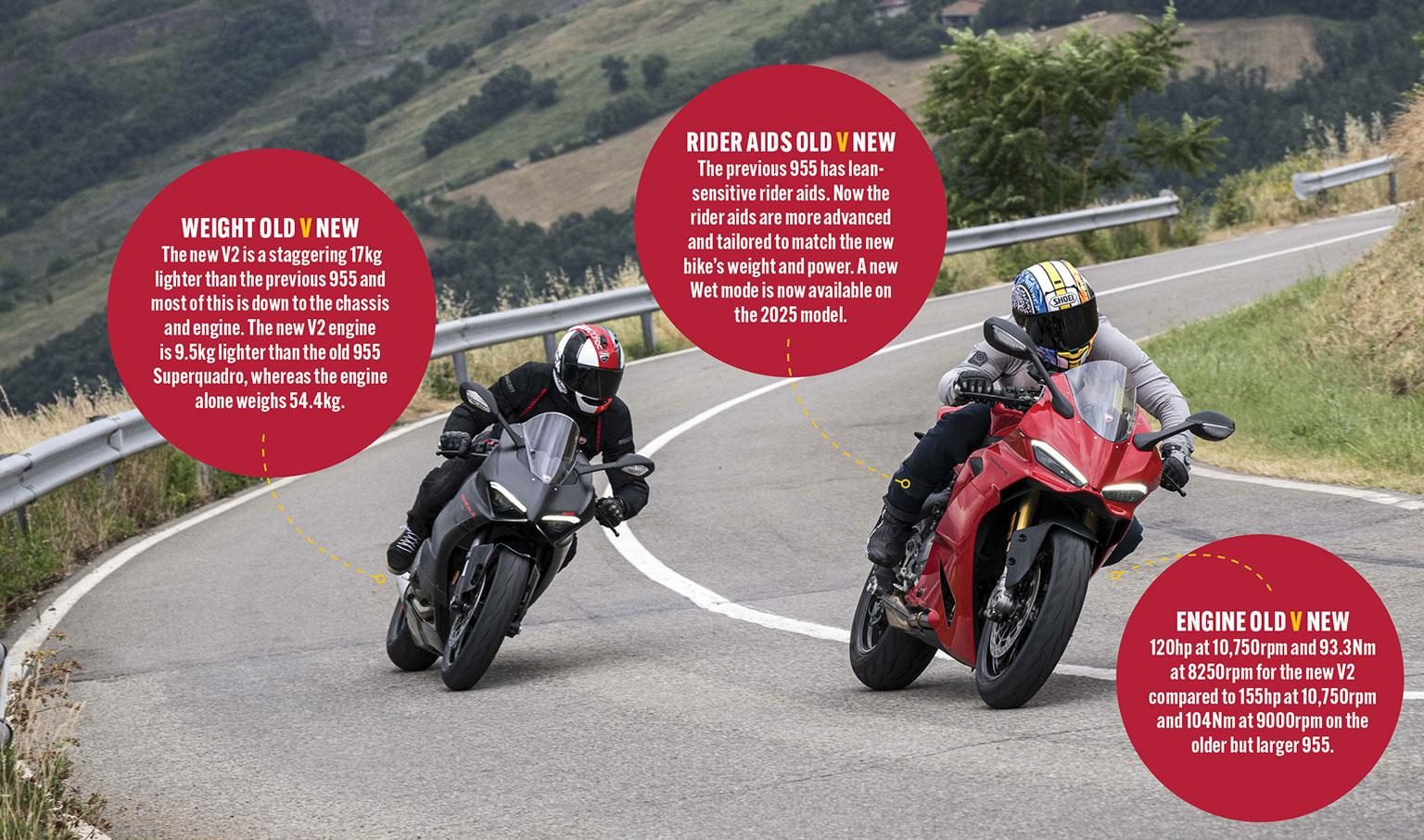
Some numbers: the new, 2025 V2 is 35hp (26kW) down on the 955, making 120hp (90kW) compared to the 155hp (115.5kW) of the Superquadro-powered bike. But, of course, power doesn’t tell the full story. Ducati engineers have been hard at work. To compensate for the power reduction, they’ve worked some magic and vastly reduced the weight of the new V2 S by 17kg, or approximately two large bags of groceries. The new 90-degree V2 engine, which is also adopted by the 2025 Multistrada V2 and Streetfighter V2, is, at just 54kg, 9kg lighter than the old Superquadro. The new middleweight also receives improved rider aids and electronics, a new dash, a completely new chassis featuring a double-sided swingarm, and more relaxed rider ergonomics.
Ducati is happy to admit that in back-to-back testing at Vallelunga, Italy, the older Panigale lapped a fraction quicker than the new, but that’s only half the story. The newer V2 is, they say, easier, more comfortable and far more satisfying and enjoyable to ride. I’ve ridden the new V2 S on the track several times but never where it counts: on the road, and not against the more powerful but older 955. Time to hit the highway and answer some interesting questions.
‘TRULY ONE OF THE GREATS’
The Panigale V2 S is hugely impressive on track; light steering and superb agility blend with a wonderful spread of torque across the rev range to make it an absolute breeze to ride at pace. Even on quicker circuits like Misano, the V2 shines – its accuracy, stability and stunning brakes coming to the fore while its highly refined suite of rider aids are among the very best you’ll find on any sportsbike. But, and it’s a big but, there’s no escaping the fact that the older bike’s Superquadro desmo makes significantly more power and torque – good old-fashioned commodities that never go out of fashion. Like many, I also have fond memories of the older 955. It’s truly one of the greats.
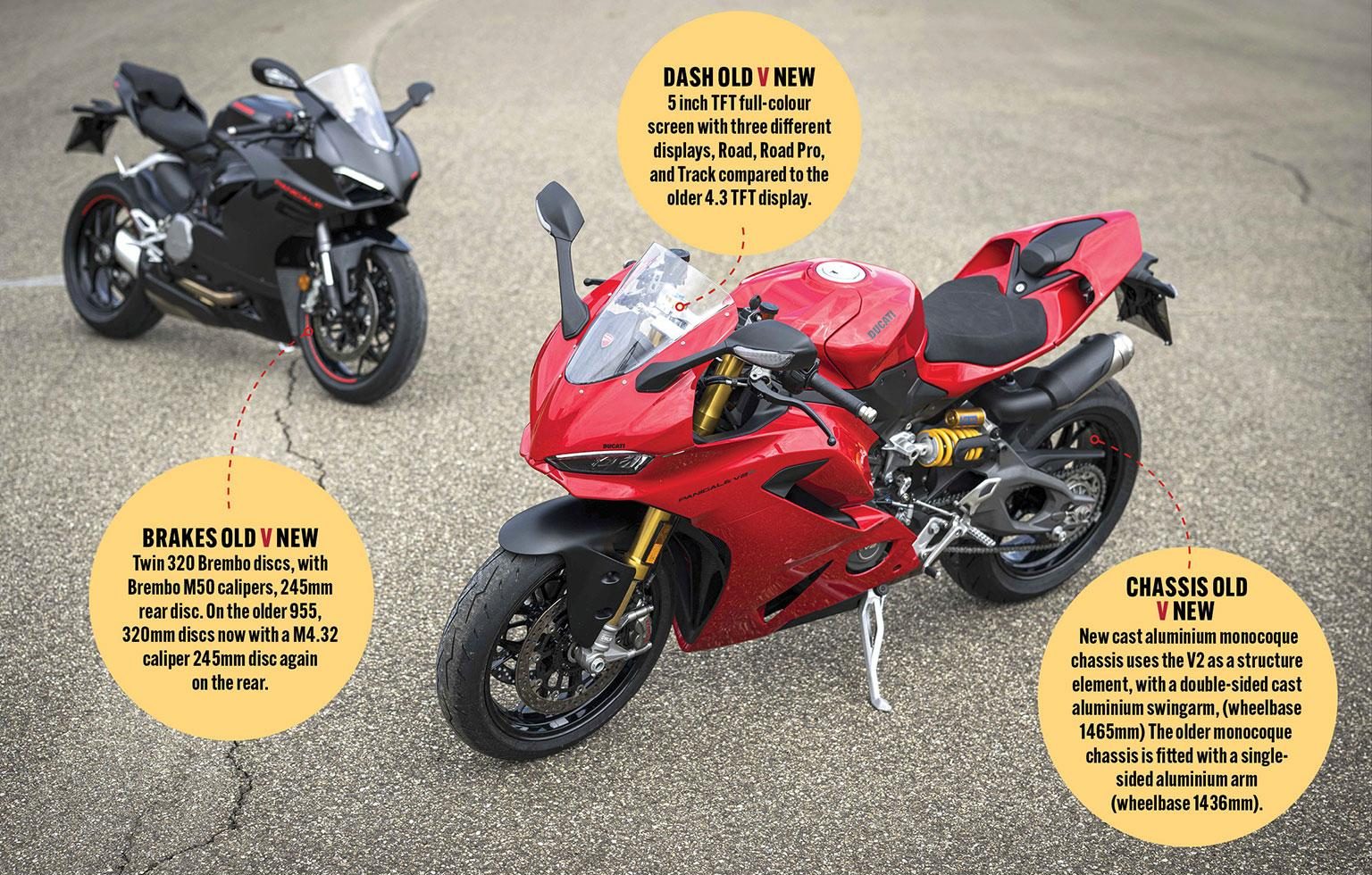
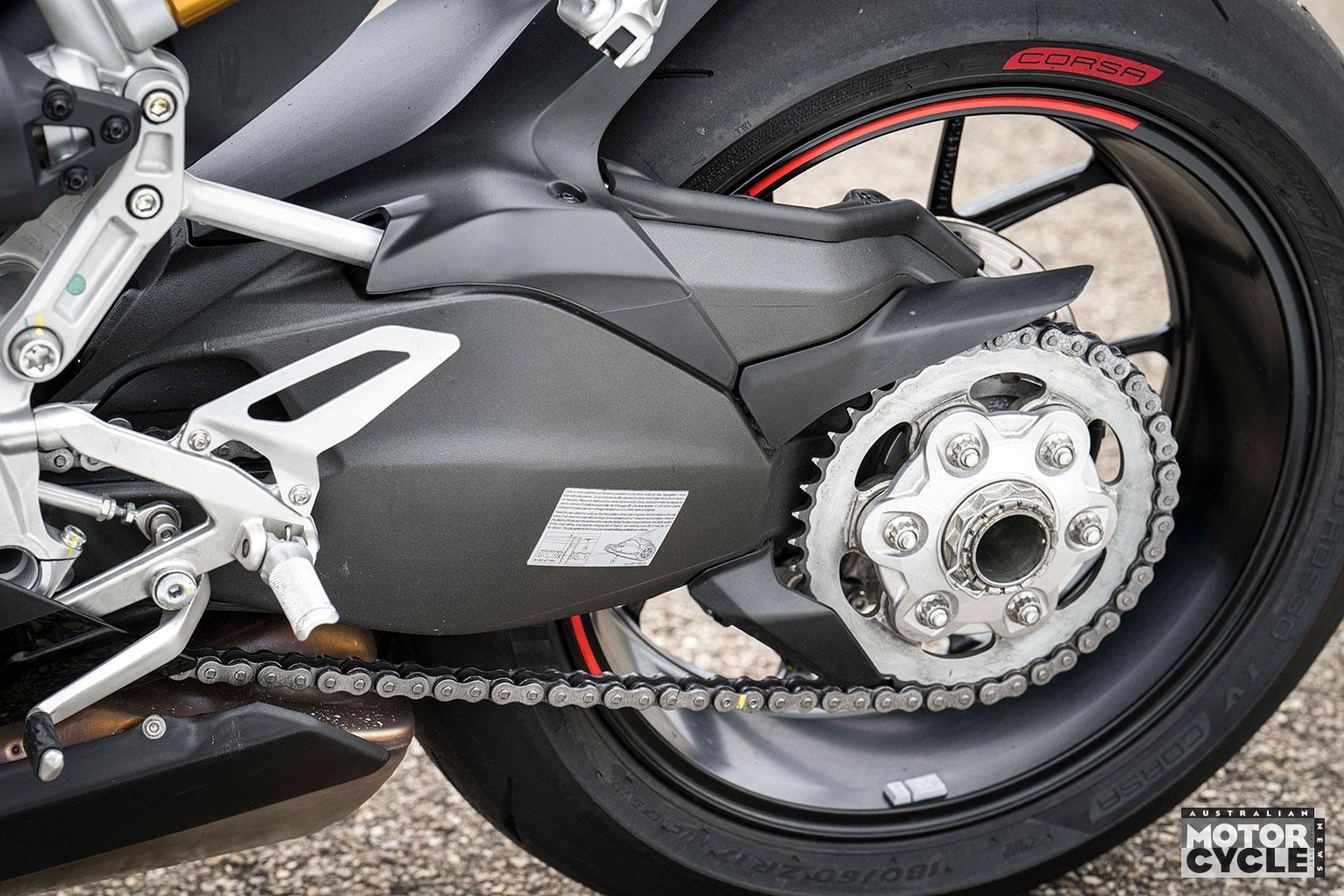
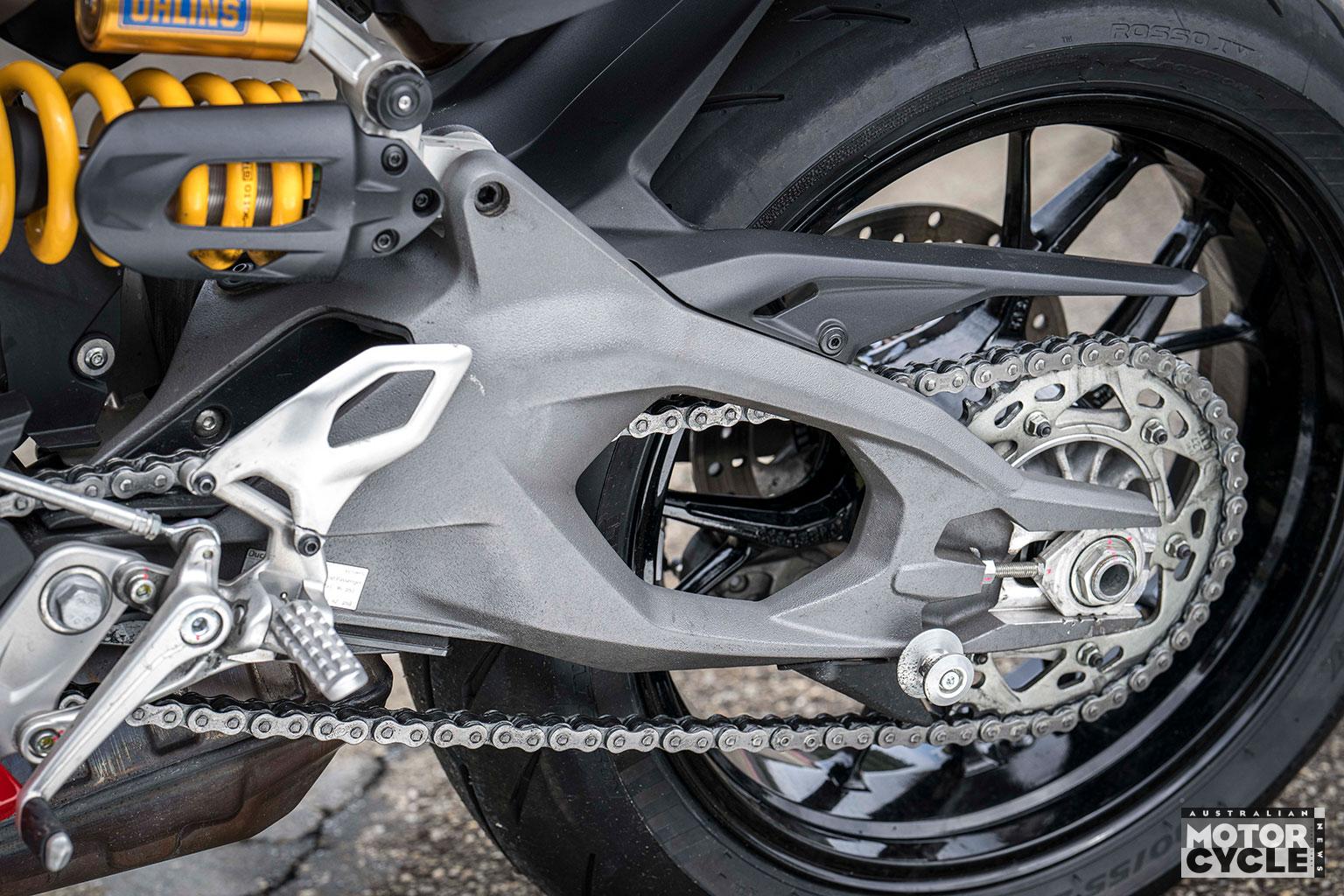
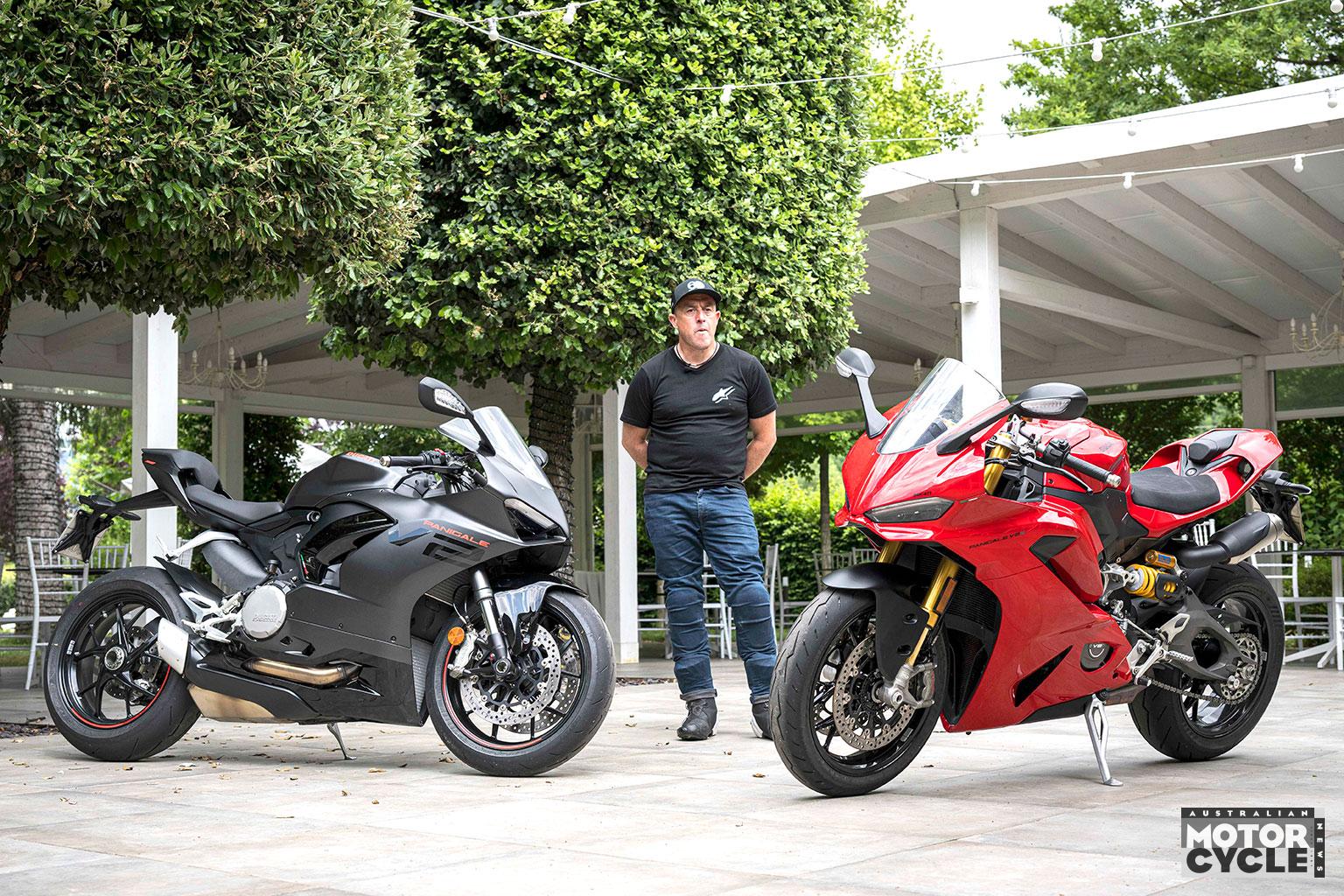
Now, with the two bikes side by side, the visual differences are as obvious as dodgy plastic surgery on a fading Hollywood celeb. The 955 has aged well. It sits on its wheels just so. Oozes class and wow factor like all Ducati sportsbikes should. The 955 also has that distinctive single-sided swingarm, as opposed to the lighter double arm of the new V2 S, which we know was a point of controversy among the Ducatisti.
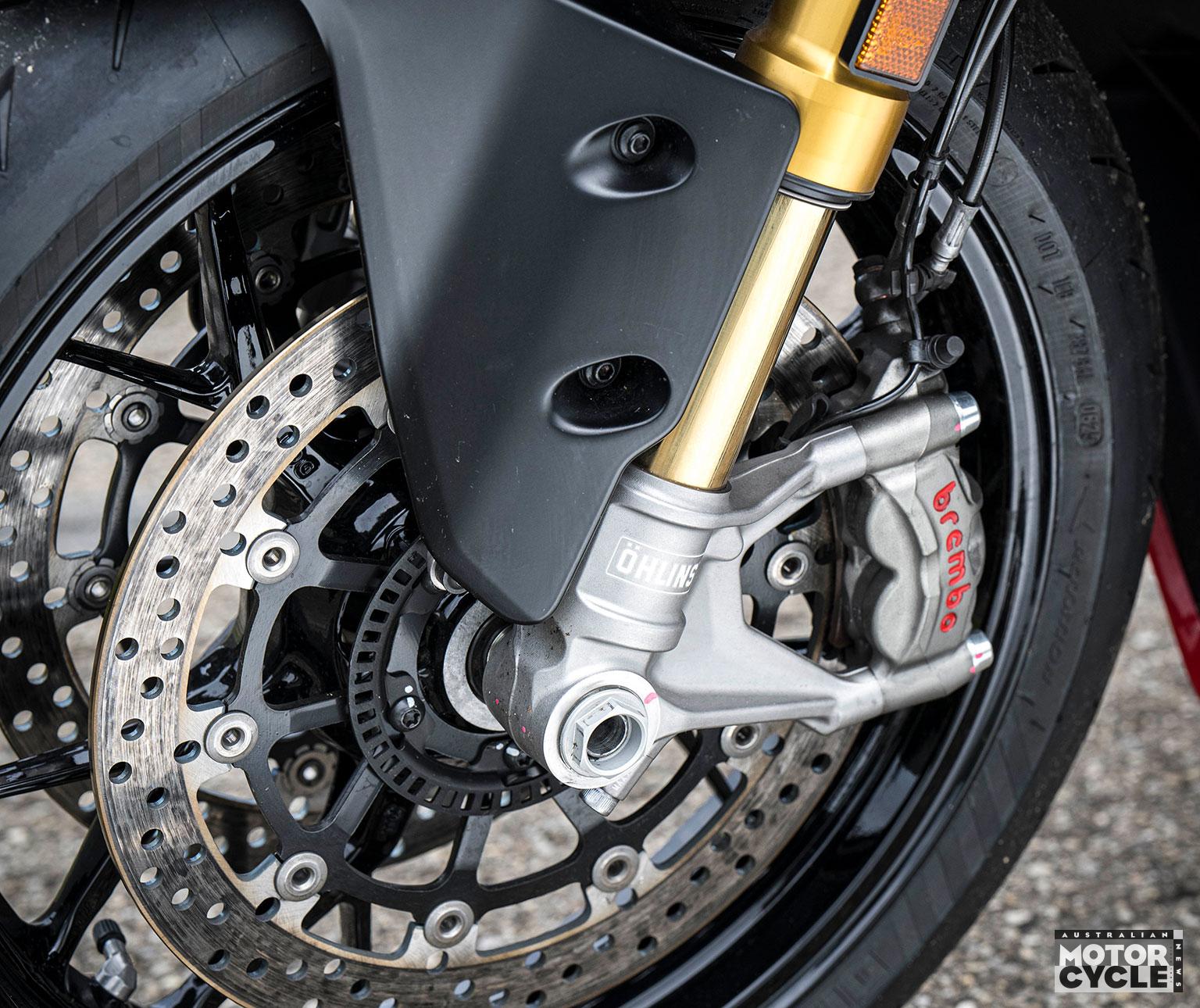
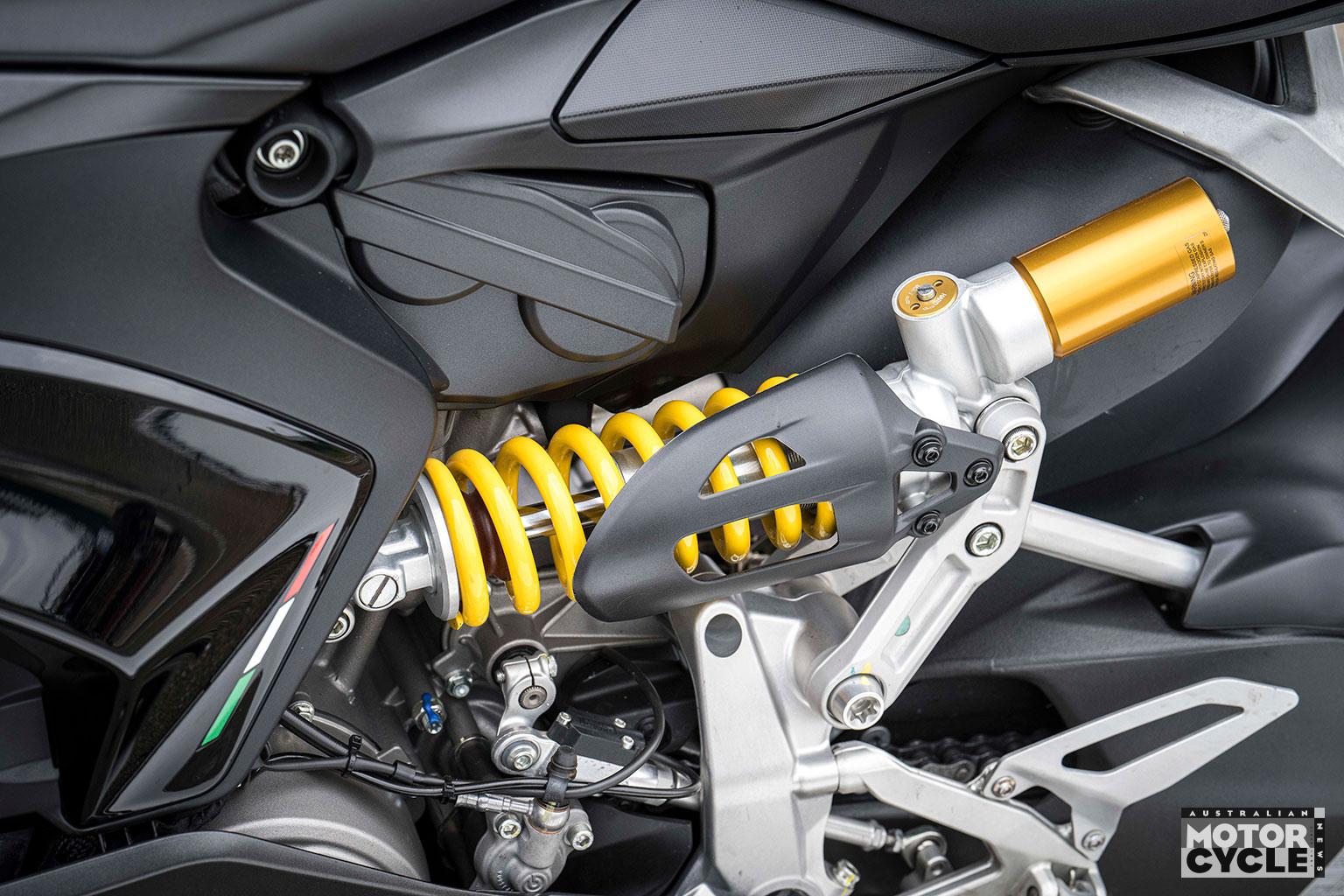
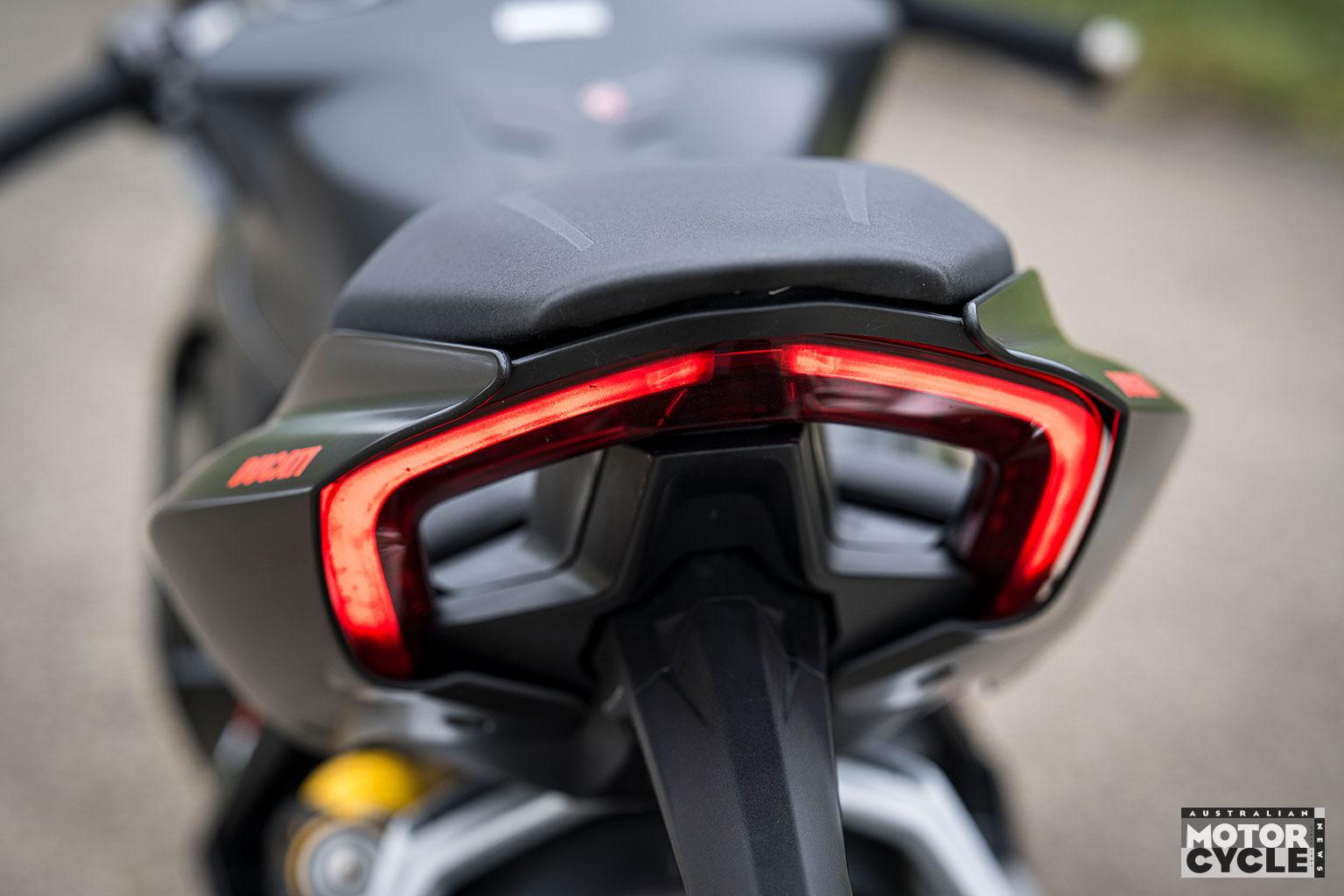
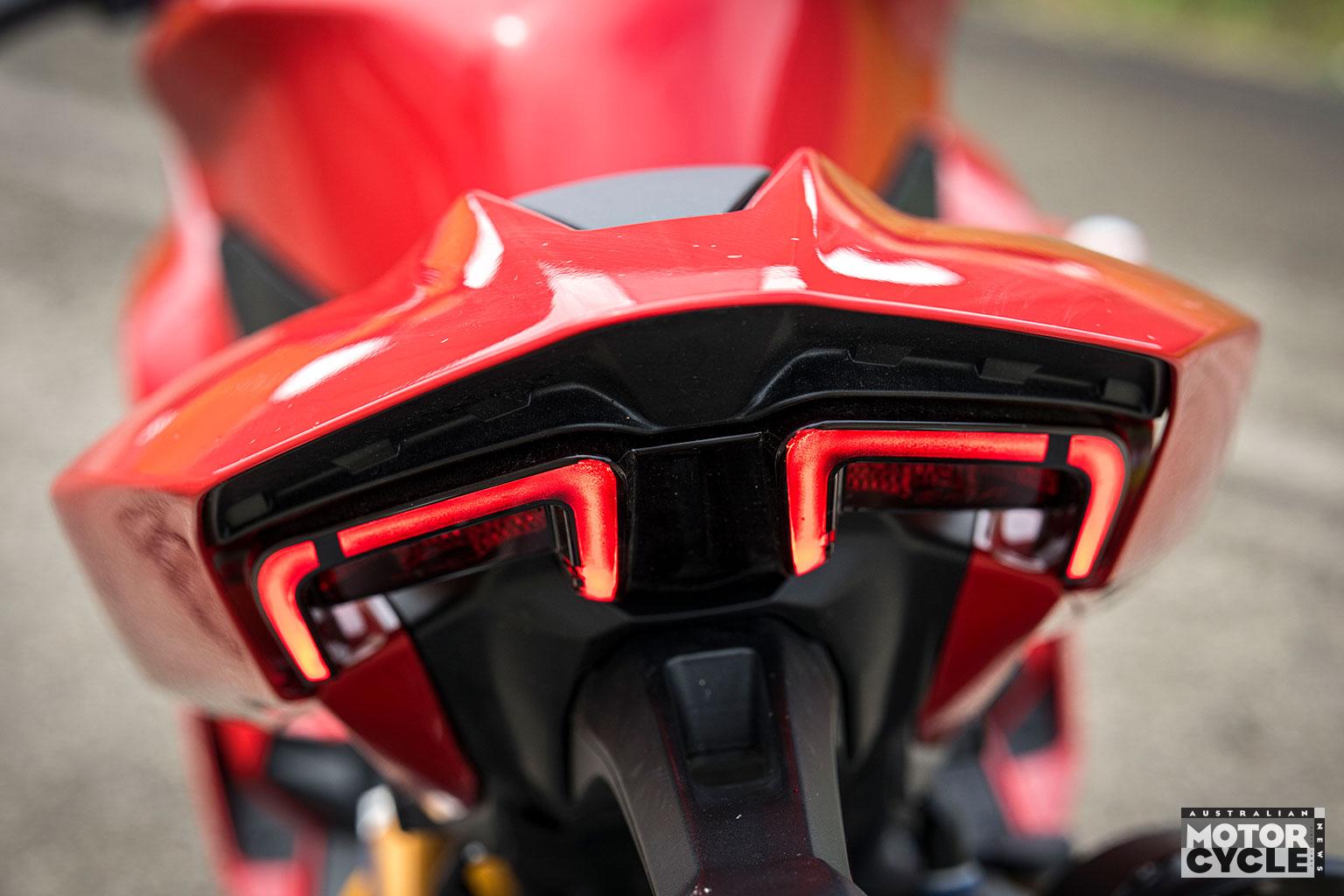
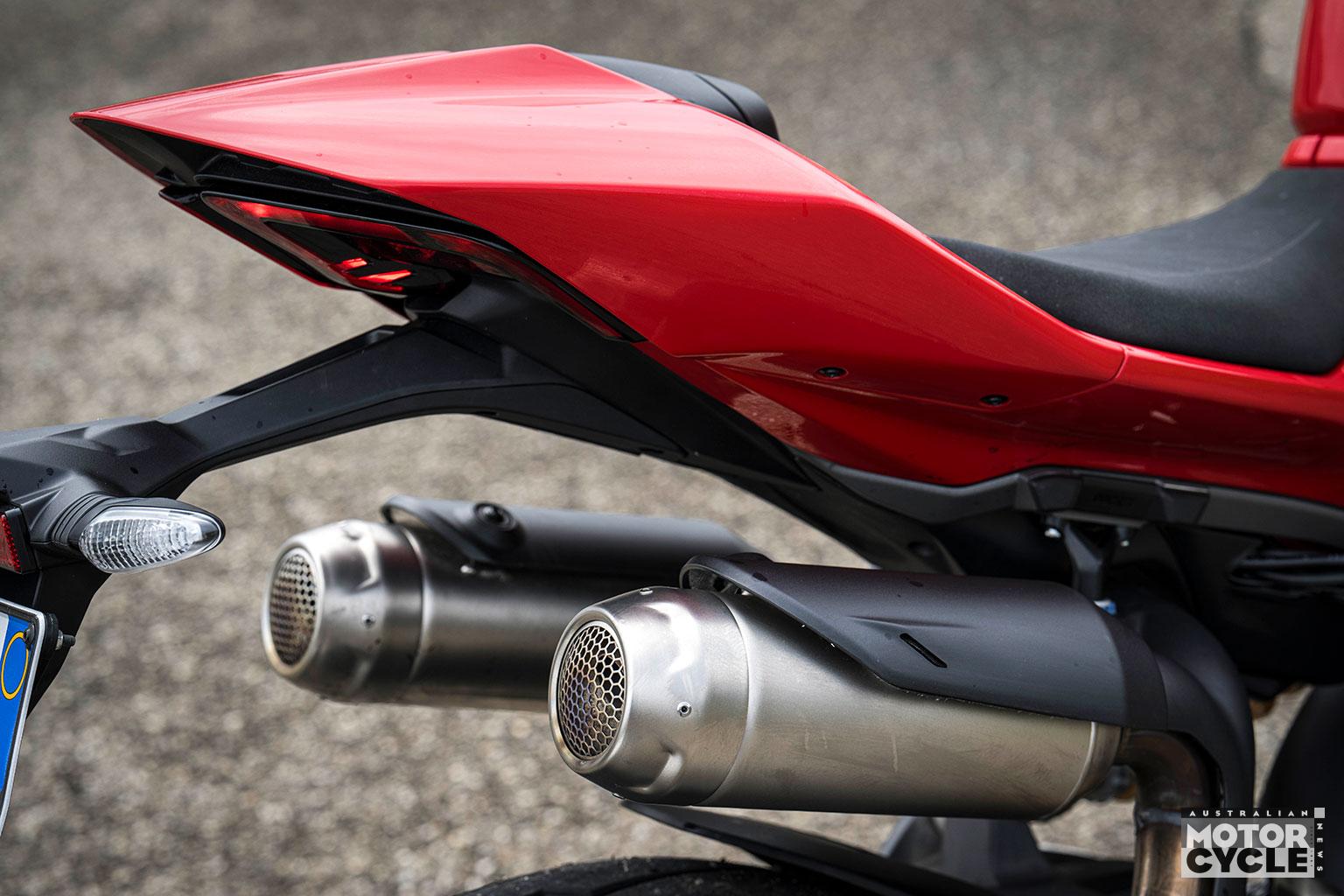
The new V2 looks thoroughly modern and sleeker. Those twin exhausts under the seat hit the sweet spot. We’ve opted for the more expensive V2 S variant, which means manually adjustable Öhlins suspension – a 43mm NIX30 front fork and fully adjustable rear shock – while it’s fully-adjustable Showa units for the 955. (Ducati didn’t sell an S version of the 955, just the rare Bayliss Replica and the Final Edition model.)
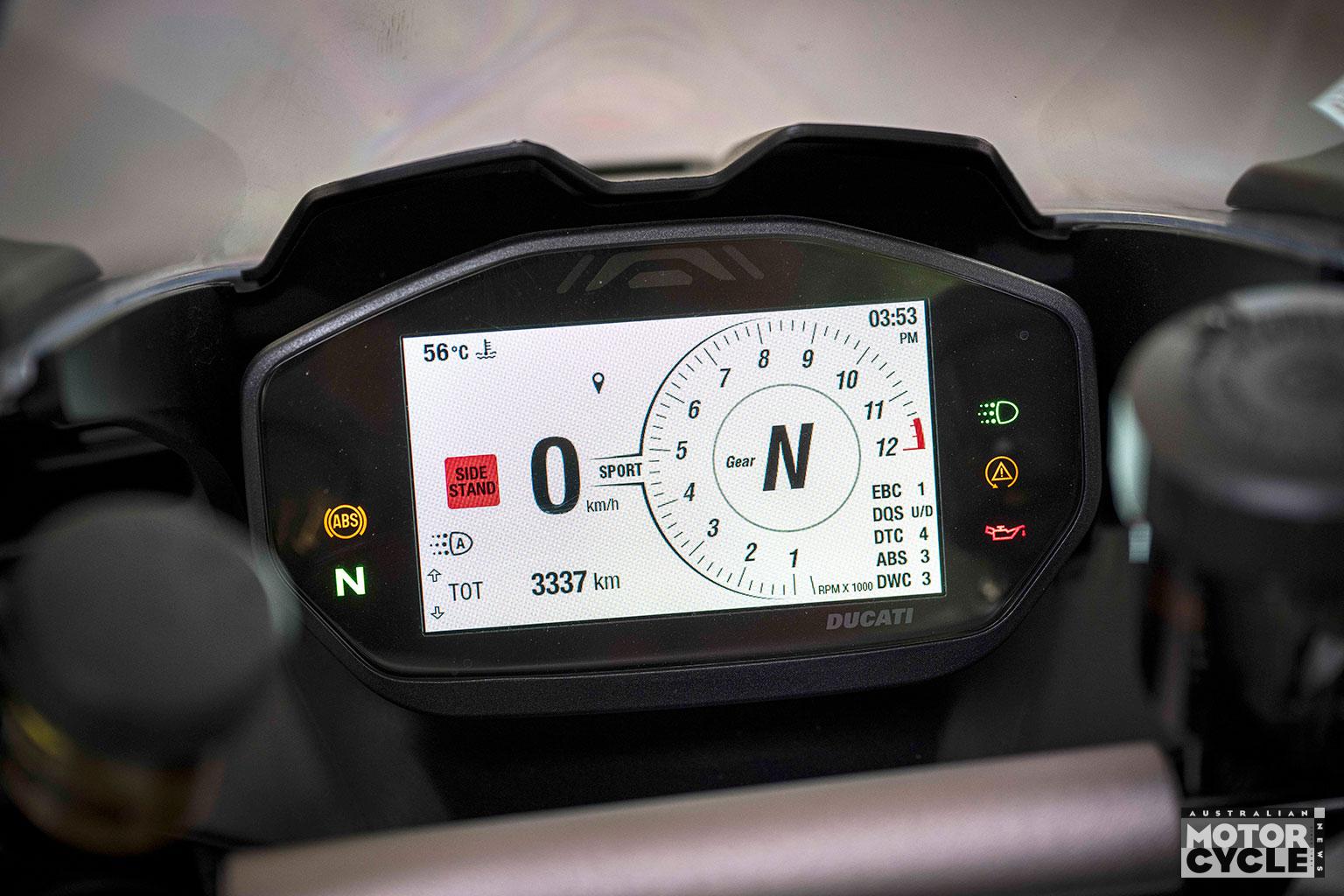
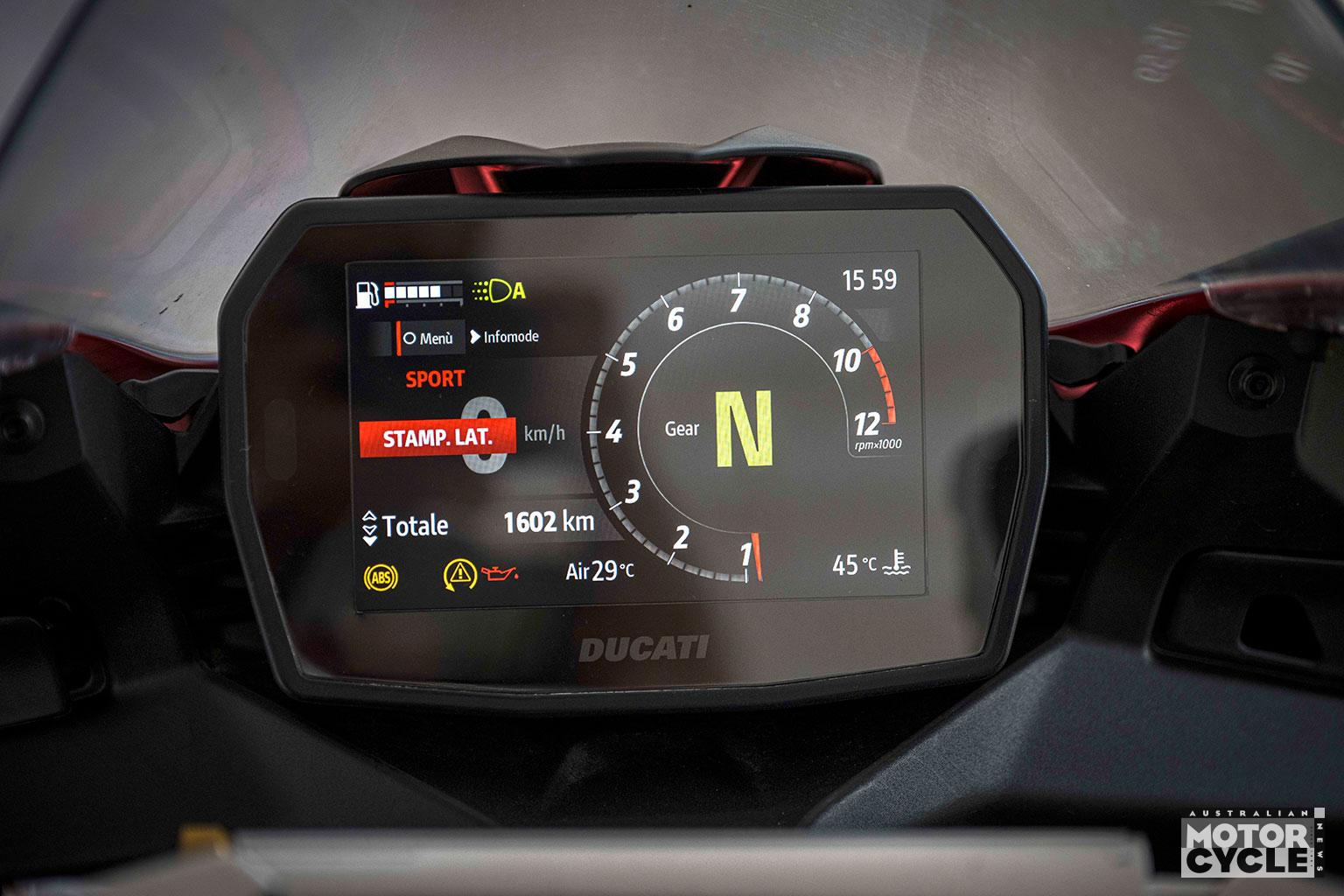
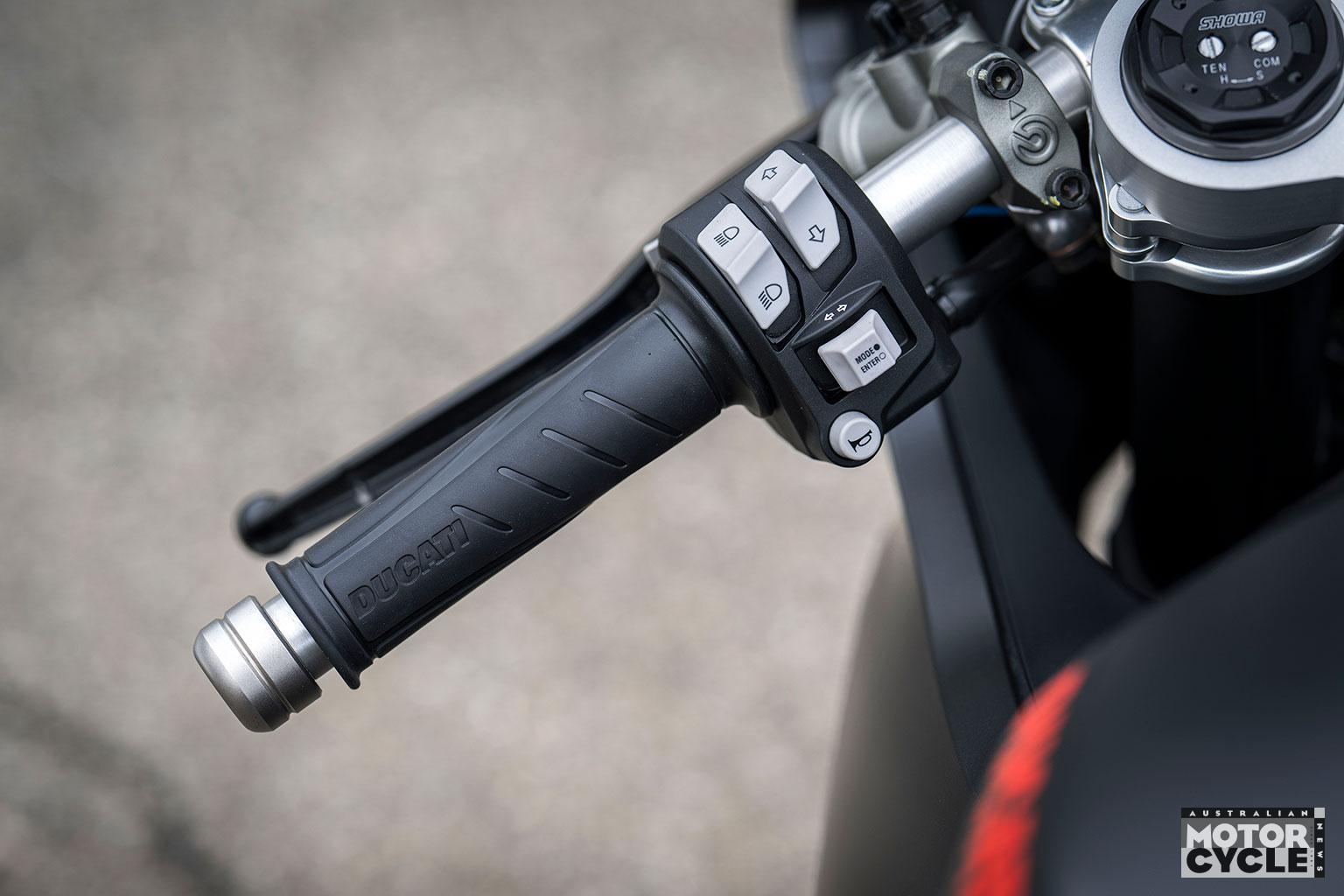
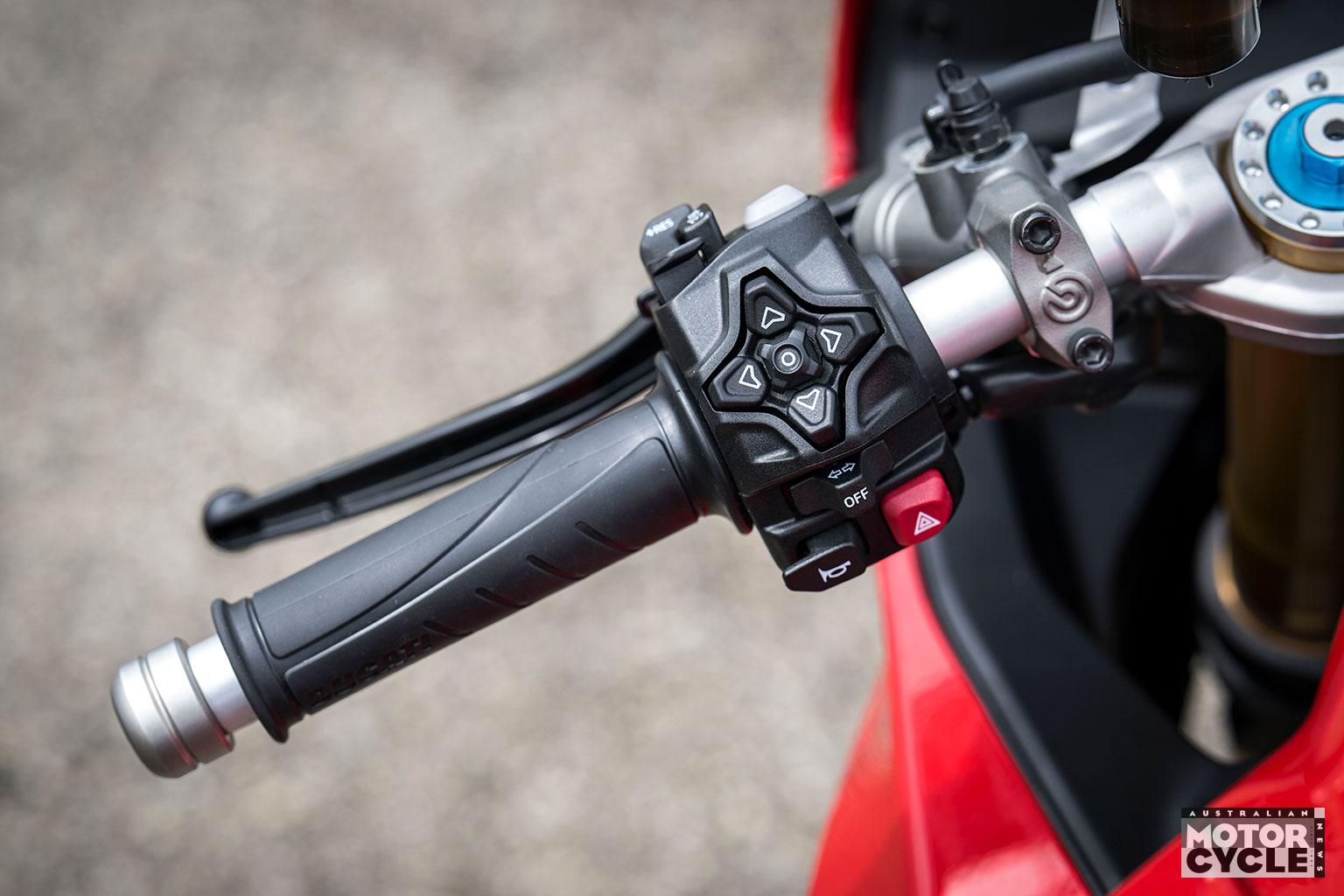
Up close the differences are more apparent. The switchgear and dash on the 955 will be familiar with so many readers as this set-up is shared across many models. But compared to the new V2, both suddenly appear dated. It’s like borrowing a mate’s latest-model mobile to call a taxi and realising your phone has become old and in need of an upgrade.
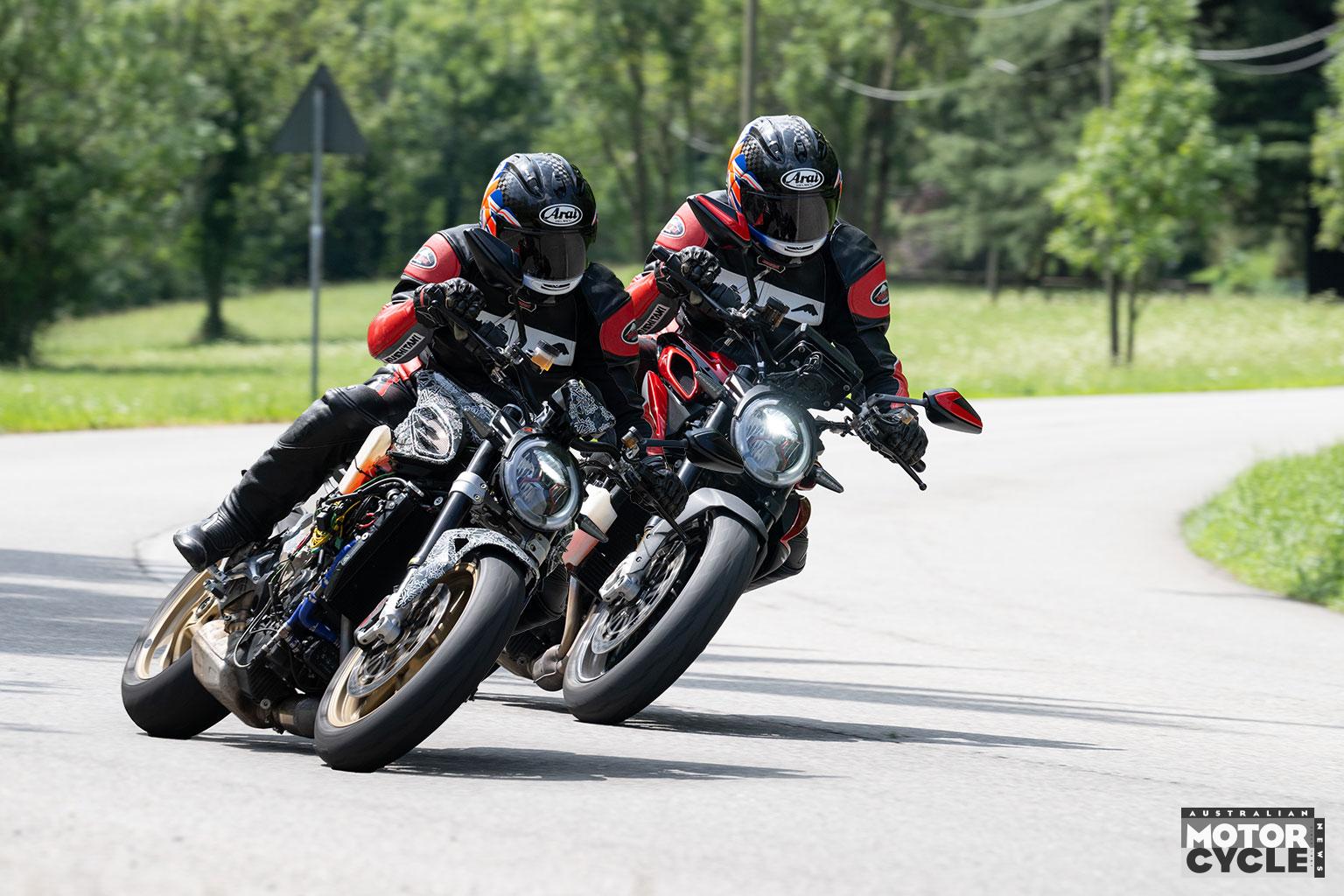
I’ve ridden the new V2 Panigale on several occasions recently, including one fitted with the full-race Termignoni exhaust that added 4.5kW (6hp) more than the stock system while slashing 4.5kg, so I opted to jump on the 955 first. The plan was simple: to start in Ducati’s home in Bologna, negotiate the city streets, then head north to Modena and into the twisty hills nearby where Ferrari develop their supercars. We’d switch bikes throughout the day and hopefully feel the difference.
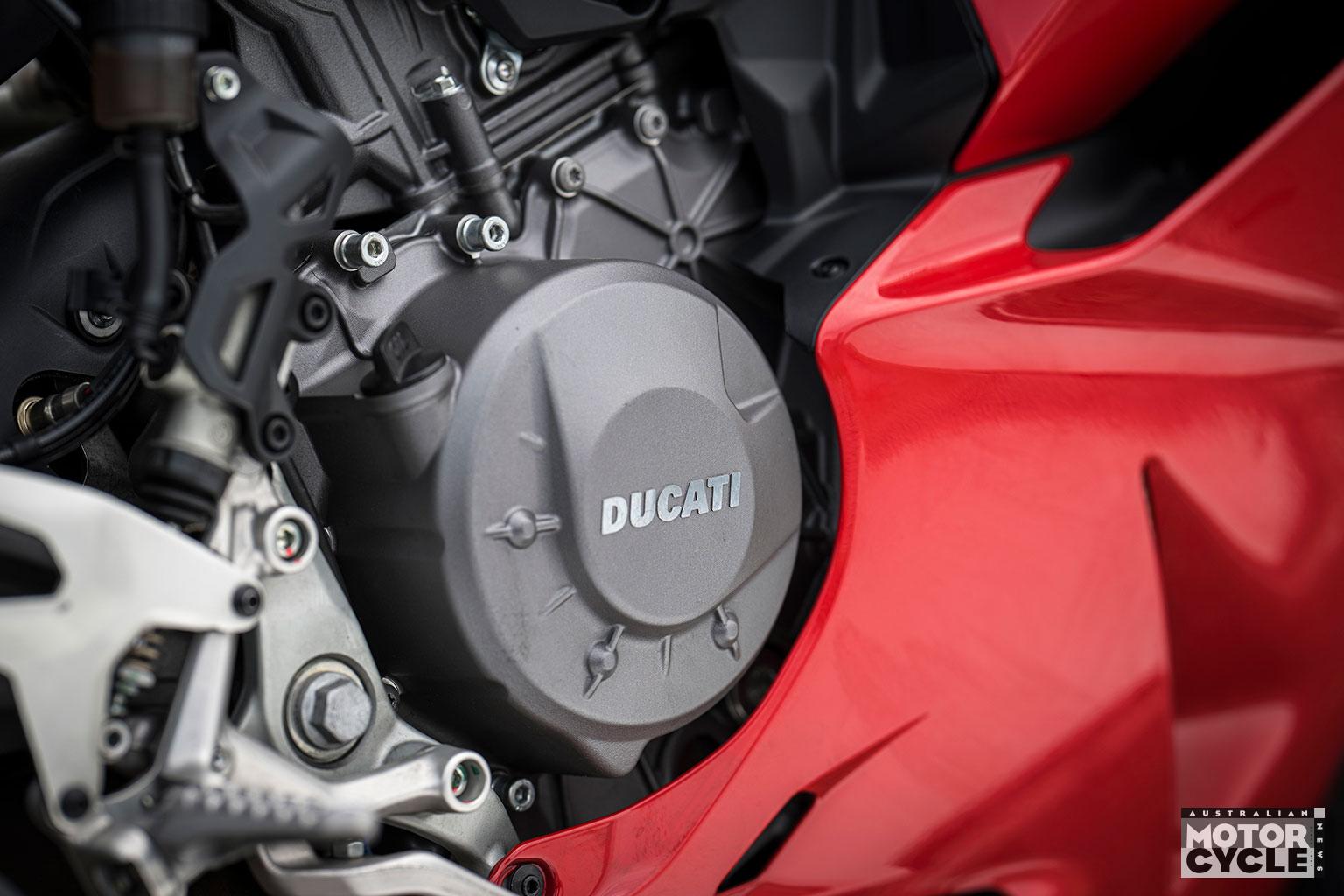
Okay, the older 955 has that dated switchgear, while the dark dash feels old and bland by comparison, but it still has multiple rider modes, lean-sensitive rider aids including ABS and TC at your disposal. But to try and keep a level playing field, my riding partner and I left both bikes in the standard Sport mode – and even made sure both bikes were shod with similar Pirelli Diablo Rosso IV tyres, Corsa spec on the 955.
‘THE WORLD RUSHES AT YOU’
The 955 is a pure sportsbike – and feels it. It’s like someone has fitted road bodywork and lights to a track-day special. The ‘bars are low, my upper body is positioned over the fuel tank, the seat is minimalist and quite unforgiving… But the sporty riding position isn’t uncomfortable per se, just focused, and matches my small frame. The standard suspension set-up is a little harsh and makes a fuss about the imperfections on the poorly surfaced rural roads, but it’s exactly what I was expecting from such an aggressive Italian sportsbike.
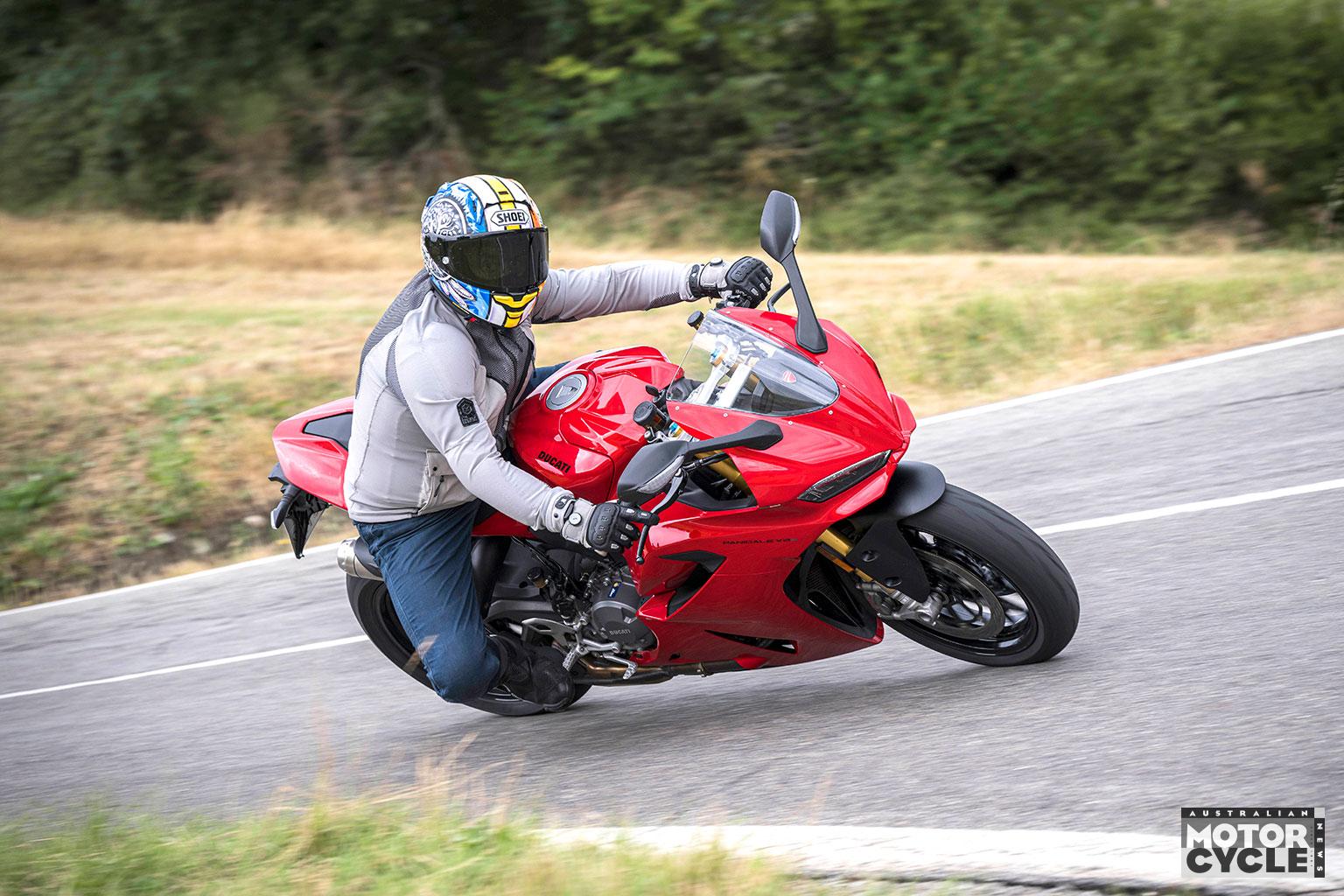
On faster, more open roads heading towards Modena, we make more use of the power and torque. Traffic is relatively heavy, so we can’t ride as briskly as we’d like to, but the 955 picks up and drives like only a Superquadro can. Rev on towards its 10,750rpm peak and the world rushes at you. Between villages I tuck in and enjoy the visceral beauty of this great engine. It may be dated but it still goes like the clappers; still quick, if thirstier.
On the run into Modena, I’m thinking the new V2 might be outgunned, maybe outclassed. The 955 is old-school; it needs good surfaces and plenty of pace to bring things together but absolutely nails it when conditions are right. My only real complaint is that the heat pouring off the exhaust and engine is slowly cooking my inner legs in the heavy traffic.
Switching to the new V2 makes life feel very different: it’s newer, with much clearer TFT clocks and swish switchgear, which was always going to be the case. The ‘bars are higher, the bodywork is larger, the pegs are lower and the seat is a fraction higher and softer. There are more concessions to the everyday. The V2 still feels like a sportsbike but a sportsbike for the road, whereas the older Panigale comes at you like a race machine adapted for road use.
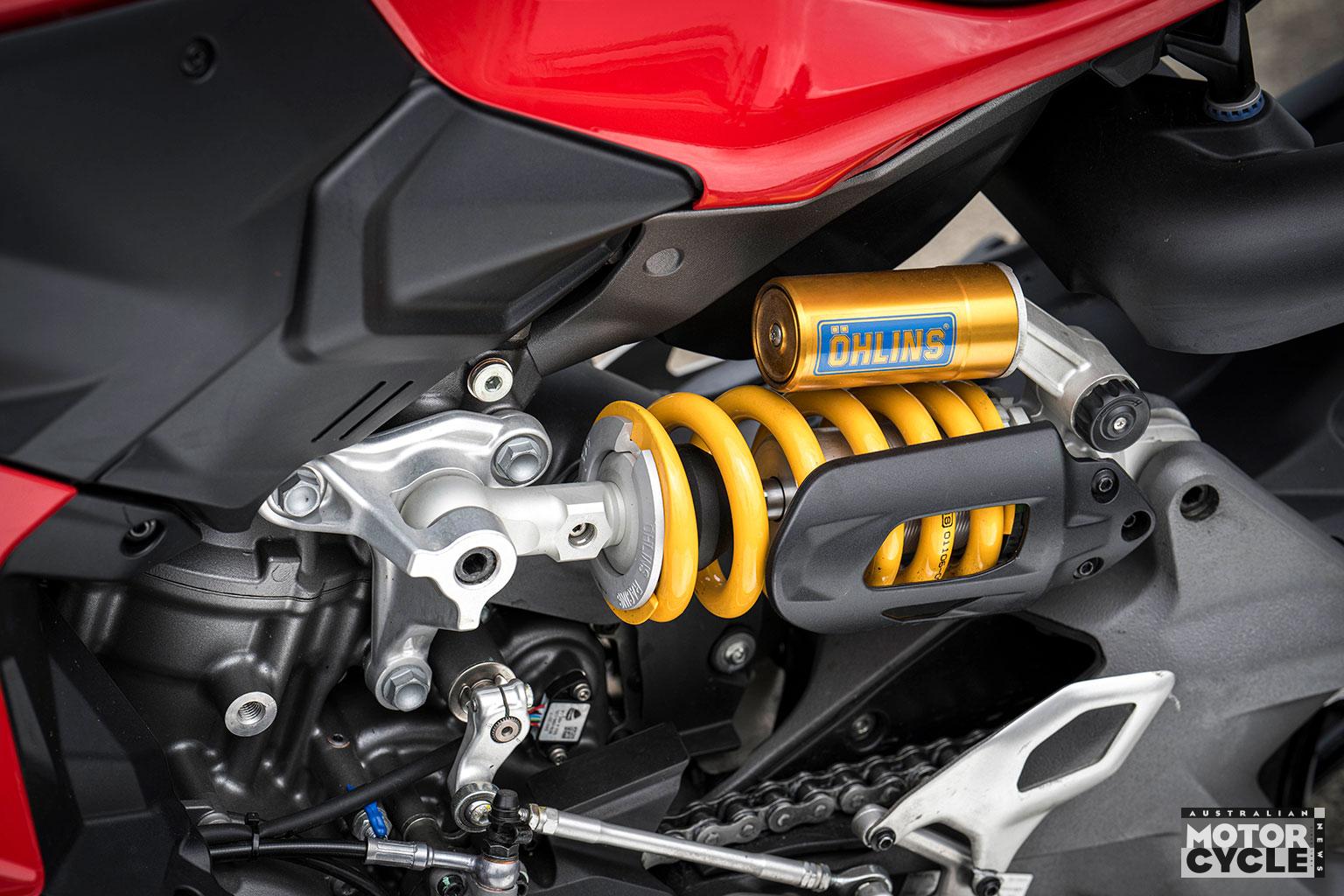
On the move, the heat from the motor and exhaust is much reduced. It’s still warm but not uncomfortable in hot weather like the older 955, and far more pleasant at slow speeds. We’re in the standard Sports mode but the fueling is more refined and smoother than the 955. The V2’s development team controversially ditched the desmodromic valve timing of the Superquadro and introduced electronic Intake Variable Timing (IVT), which progressively varies the valve timing to optimise torque output across the whole rev range – and it’s noticeably smoother too. Everything is softer, easier to manage, less painful and awkward, like the new bike has been designed to work at normal, road legal speeds, whereas the older bike was just designed for the high-speed stuff. Interestingly, the newer V2 has 20mm more suspension travel on the rear.
So the new Panigale wins the commute and everyday-riding test. It’s an easy win because it’s much easier and softer. But who buys a Ducati Panigale to ride slowly? Time to head for hills and see which comes out on top.
‘KNIFE TO A GUNFIGHT’
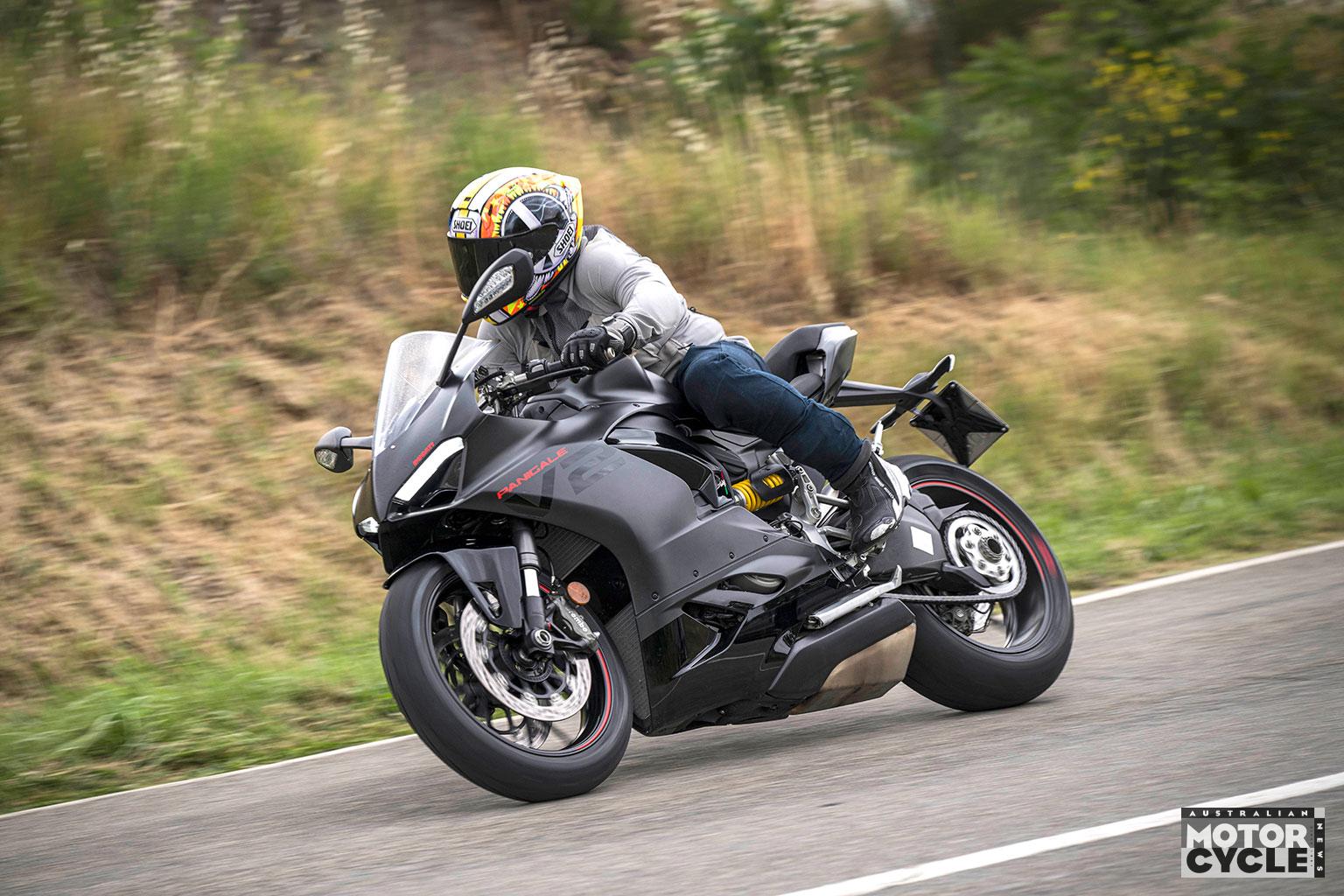
The 955 makes 155bhp and weighs 193kg wet without fuel. The V2 S makes 120bhp and weighs 176kg wet without fuel. Based on these (Ducati) figures, the 955’s power-to-weight ratio is 0.80hp/kg, the V2 S’s 0.68hp/kg. So where’s your money going, mate?
Up in the cooler hills and with the switchbacks coming thick and fast, the older Panigale is in its element with its 29mm shorter wheelbase. It wants to be ridden hard, to drive hard and dart towards the apex. The racy riding position encourages you to hang off the inside, using your body position to steer the bike. Despite the heat, I’m starting to wish I’d worn race leathers. The harder you ride, the easier it becomes, to the point where have to ride it at illegal speeds to get the best out of it. When you do, it’s rewarding and enormously quick – but be prepared to ride it hard enough to reach its operating window.
Again, I was somewhat concerned that the V2 S might be outclassed and outgunned. Instead, all that new-found useability made it more effective than the older bike. It’s more forgiving, the ride is more compliant, and the more relaxed ergonomics are more suited for road riding. The Öhlin’s suspension is set up to be plush, bordering on soft, and manages road imperfections with ease. On the older bike, you feel the odd jolt or skip on the poorly surfaced road, but never on the newer V2.
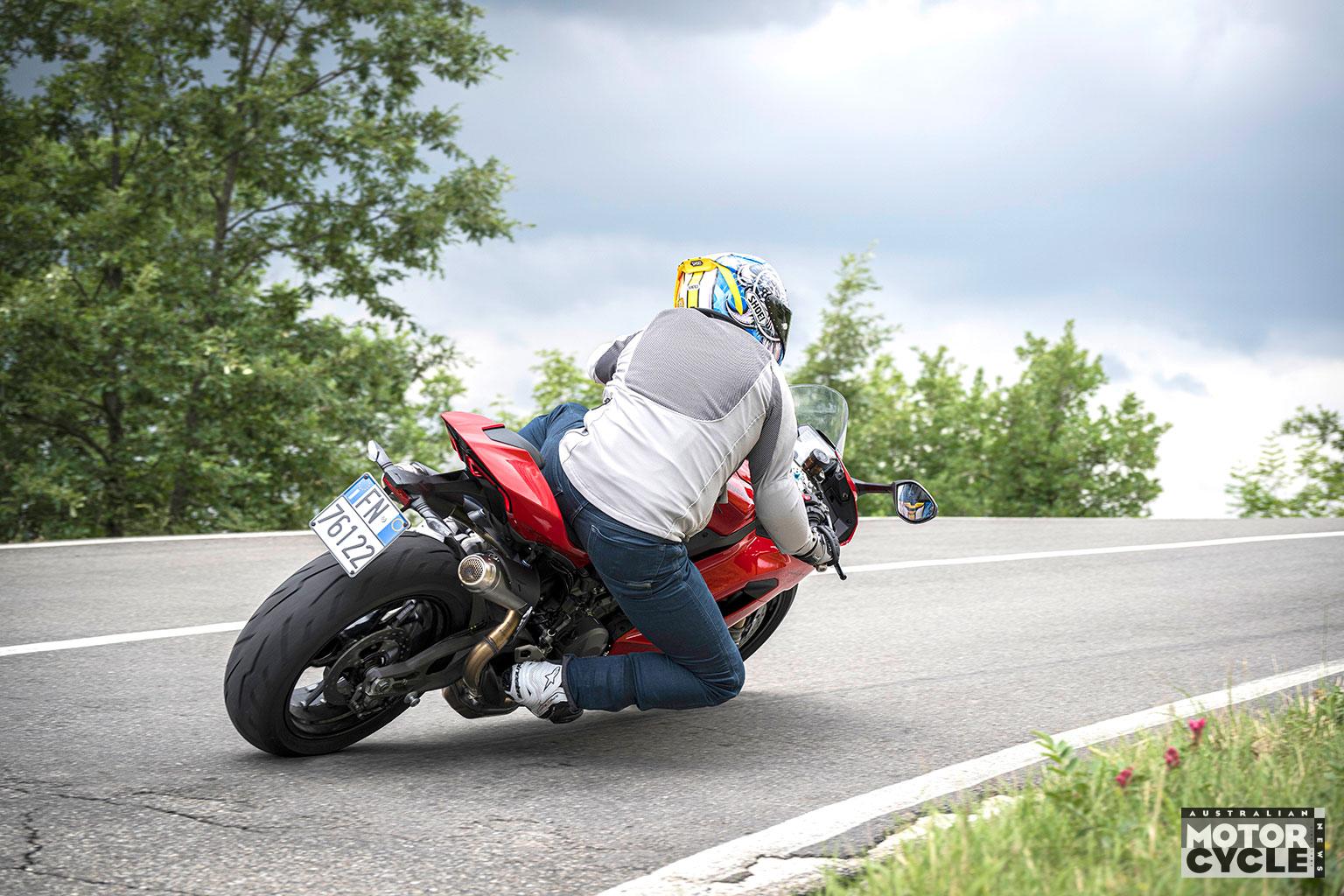
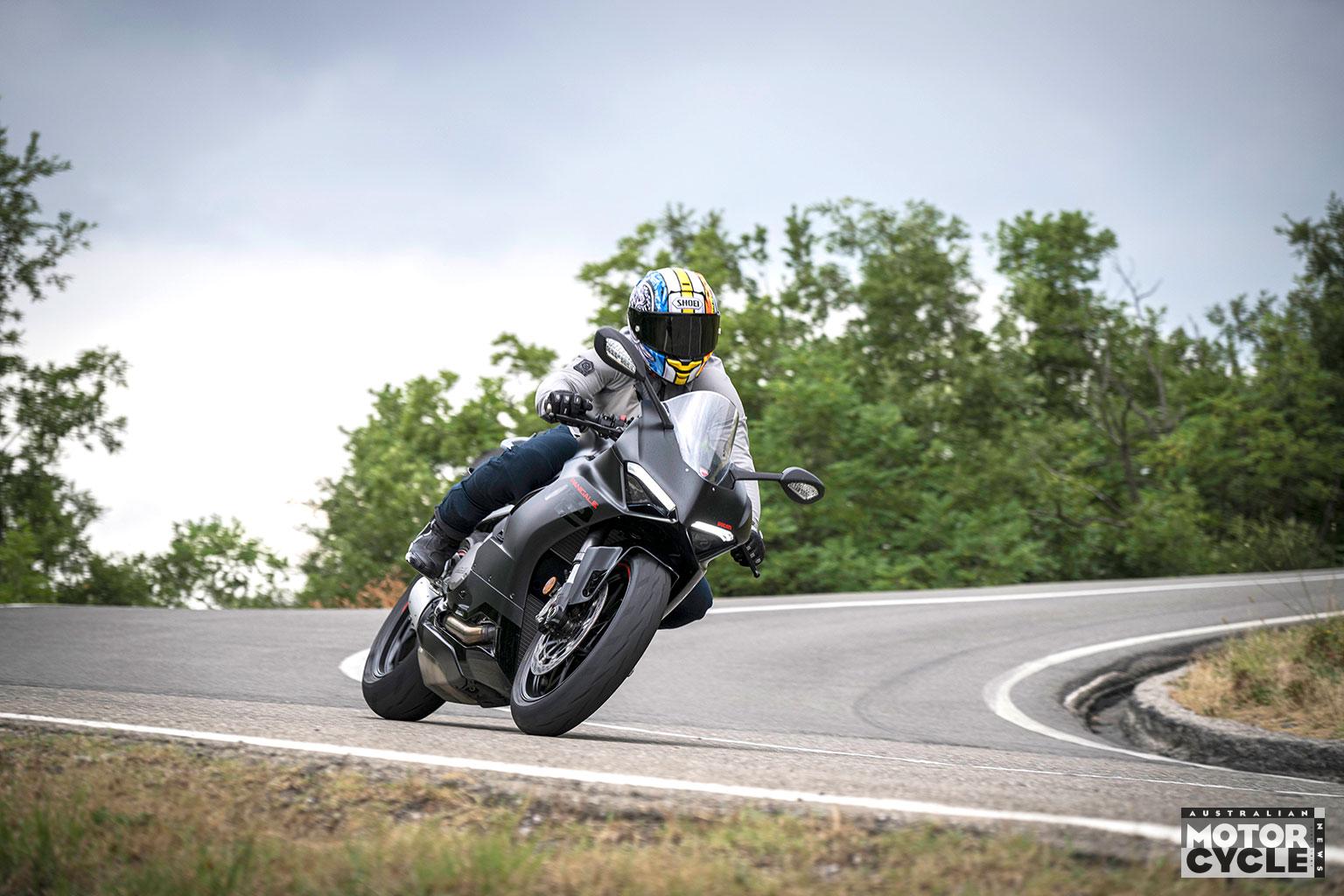
I rode the same section of road back and forth several times on both bikes to get a true back-to-back test, and the new V2 was also lighter, smoother, and gave more confidence and rider feedback. The overall pace was about the same as this was a road test not a race against the stopwatch, but each time I felt more in control on the new bike. Yes, the older Ducati still worked superbly, more so the harder and faster I rode, and maybe an experienced rider or a sportsbike purist may prefer its racy handling, but the majority of riders are going to prefer the new V2.
When comparing engines, the new V2 has seemingly brought a knife to a gunfight. The older Panigale makes 35 horsepower more, peaking at 155bhp at 10,750rpm compared to 120bhp at 10,250rpm. The older bike cranks out 104Nm of torque at 9000rpm compared to V2 S’s 93Nm at 8250rpm. If this were a drag race, the 955 would win. And on a really fast track, where the older bike could make full use of its power, it has an edge over the new V2. But in the real world, we can’t make full use of 155 horsepower and don’t live at 11,000rpm. And the new V2 is more frugal with longer service intervals.
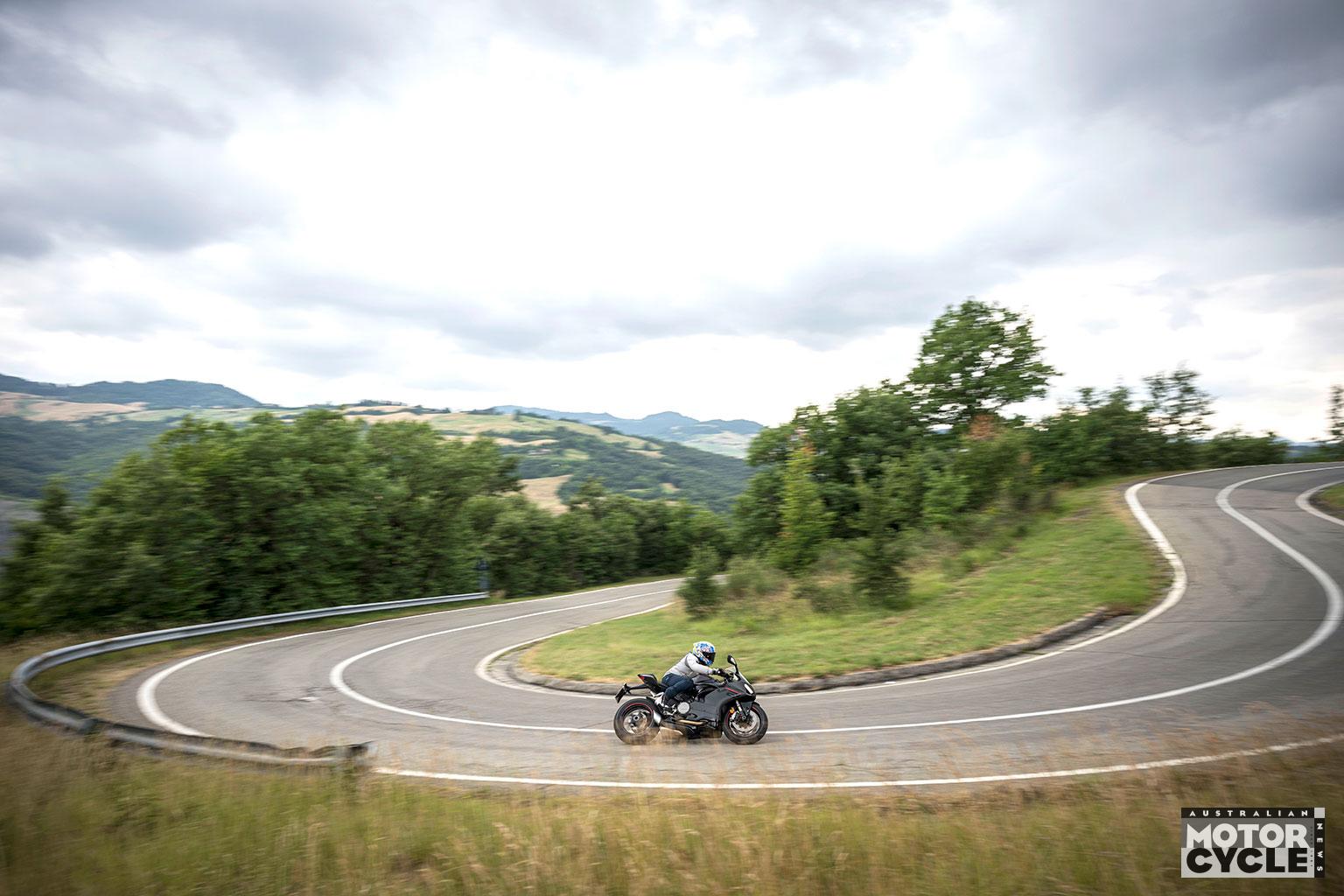
The majority of this test was conducted on roads featuring first-gear hairpins and relatively short third- and fourth-gear straights, where a wide spread of torque and an agile, lightweight chassis are the most sought-after attributes. The 2025 V2 makes its peak power and peak torque lower in the rev range than the previous bike, with 80 per cent of that torque available between 4000rpm and 11,000rpm. You certainly feel that on the road. The newer V2 has more drive from lower down and it has smoother fueling, which allows you to get on the power just that fraction earlier. Make no mistake, when the road opens up and you’re away from the watching eyes of local police, then, yes, the older Panigale has the legs. But we were working the mid-range, between 4000rpm and 9000rpm – and this is where the V2 S excelled.
As mentioned, the chassis and ergonomics are much friendlier, too, which allows you to carry more corner speed with confidence. You are less reliant on brute horsepower. On a different road – the wide-open Mountain road on the Isle of Man comes to mind – you may favour the older bike. That said, the V2 S would be far easier and smoother on the bumpy lower sections of the TT course.
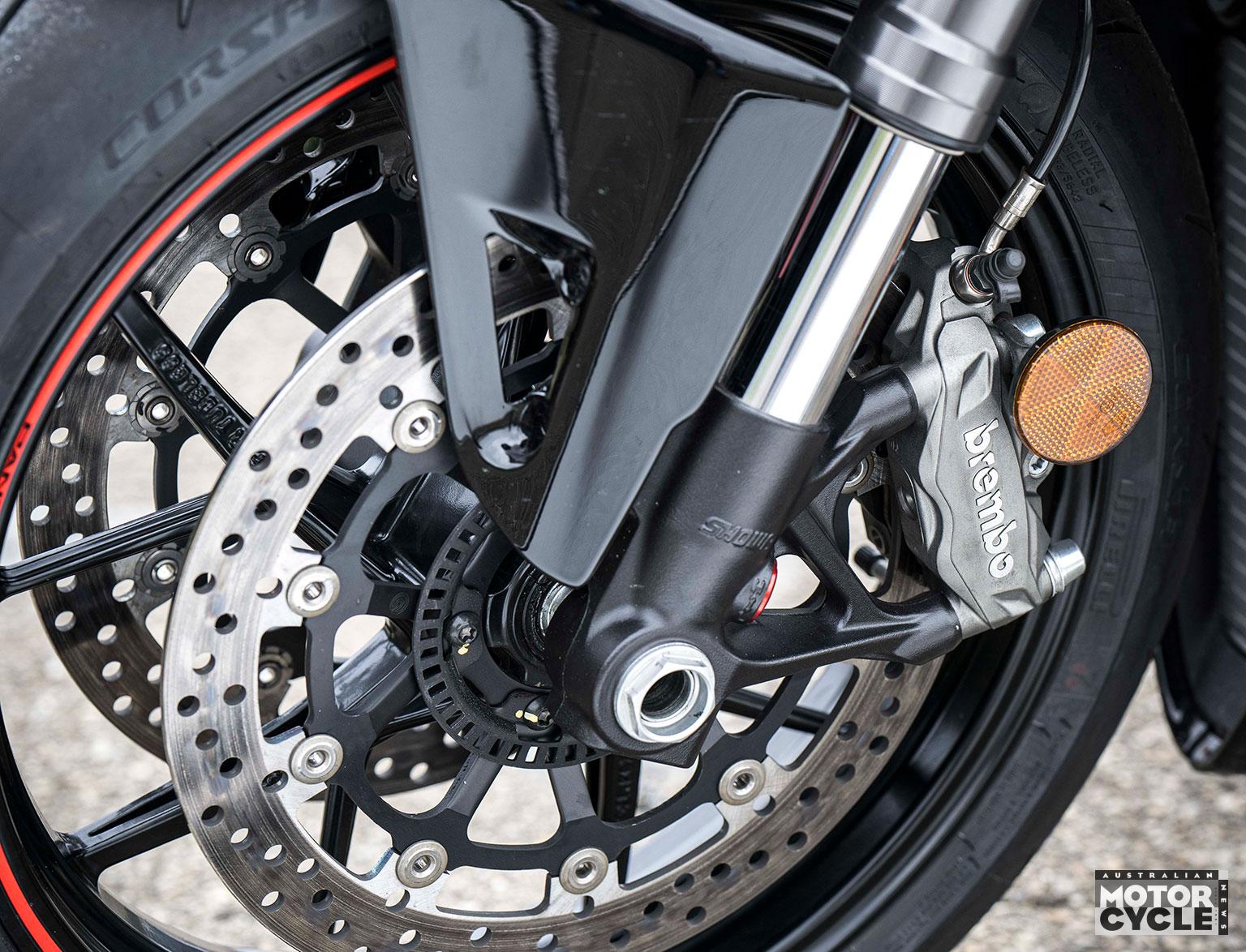
The specification of both bikes’ Brembo brakes is similar – it’s 320mm discs and Monobloc M4.32 calipers on the 955, 320mm discs and M50 calipers on the V2 S doing the work – but obviously the new bike is stopping less weight. The older Brembo stoppers are pin sharp and progressive but again, the softer set-up and plush feeling of the new Panigale’s fork transmits more feedback to the rider, meaning that for everyday riding, I prefer the V2 S, which also has more sophisticated ABS-assisted braking.
I wanted to love the old Panigale, and I still think it looks good today. And every time I rode it hard, it rewarded my efforts. But for 90 per cent of the time, I always wanted to be on the more sophisticated V2. So as soon as we started the ride back to Bologna, I opted for the new bike. I felt guilty as we commuted back through the busy Bologna traffic, watching my good friend Ed try his utmost to get comfortable on the older Panigale while trying to prevent his testicles from cooking.
VERDICT
I don’t want to say that the old 955 Panigale is a spent force; far from it. It still looks good aside from the slightly dated dash. It’s still an iconic Ducati with 155hp that works on road and track. But there’s no denying the new V2 is a better road bike. The ‘bars/seat/footpegs triangle is so much roomier. It feels more spacious, and it feels more friendly – especially for more experienced riders.
We could revisit this test over-and-over because there are still unanswered questions. I would assume the older bike is faster in a straight-line race and would possibly lap a fast track a fraction quicker. But the new bike is easier to manage.
If I had the option to choose one for a Sunday blast in the hills above Modena, Italy, then it would be – without doubt – the new V2.
VOLUME UP!
WHILE WE were in Italy, Ducati invited us to the Misano circuit to test the new V2 S fitted with the full race exhaust by Termignoni. This race-only exhaust pushes peak power to 126hp, six more than standard, and drops weight by another 4.5kg, which is a huge saving. More power and less weight is obviously advantageous but, just between you and me, the biggest advantage of all is its looks and sound. Fitted with the Termi, it looks full factory and sounds amazing – if not exactly road legal.
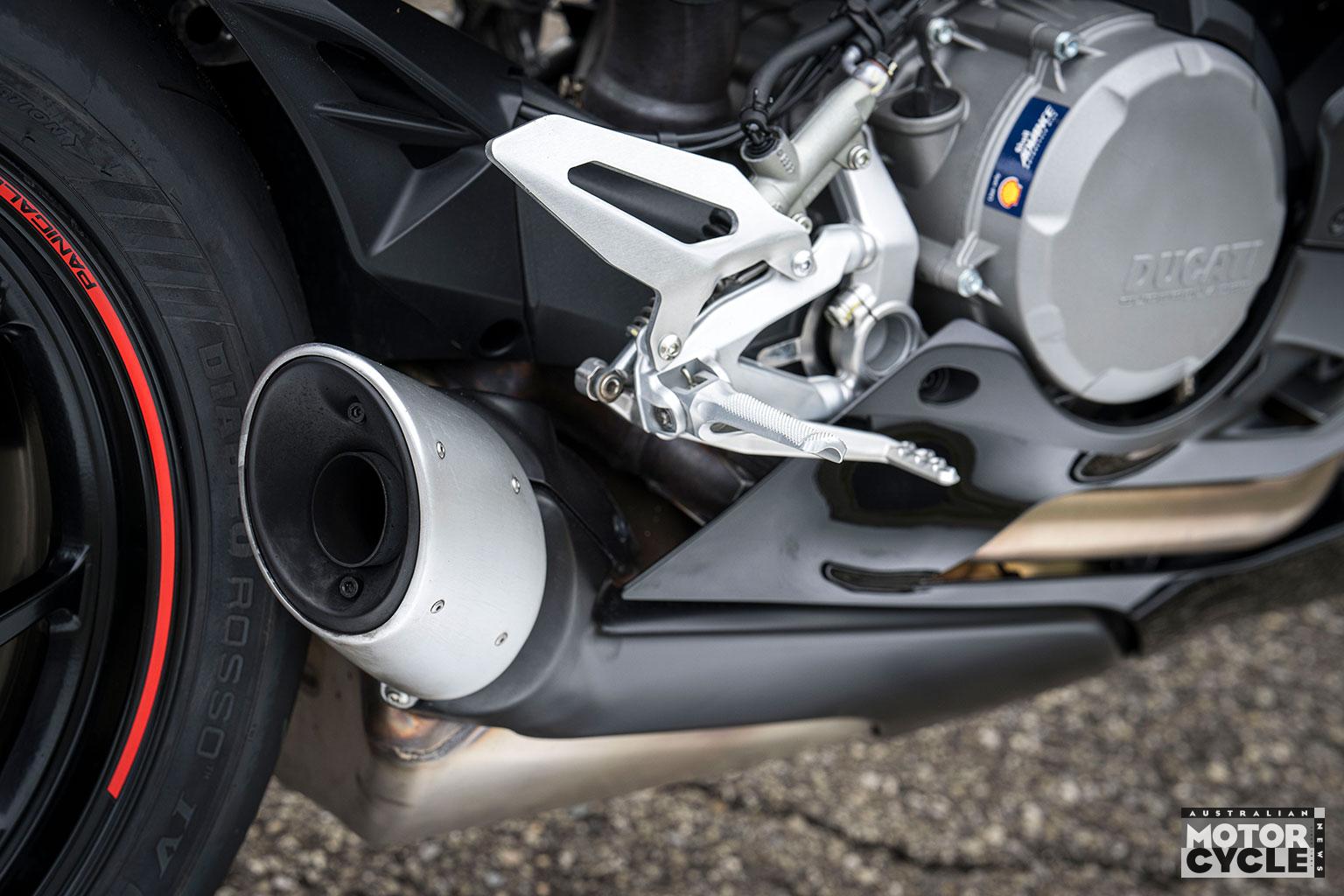
The power increase may not sound much, but the free-flowing exhaust allows the V2 to breathe; it’s not just peak power but an increase in power and torque throughout the rev range. You could feel this after both bikes went back-to-back around the very fast and demanding Misano track. In some sections I could now grab one more gear on the straight, or rev that few thousand rpm higher as I was carrying more drive on to the straight out of the slower corners. The very fast right towards the end of the track now took more concentration as I was approaching faster on the Termi V2.
The full race exhaust isn’t road legal, in fact some tracks won’t be happy, but it does sound epic, especially as it cuts between fast gear changes. Yes, more power, more torque, but I’d want it because of the sound and looks.
SPECIFICATIONS
PANIGALE 955
ENGINE
Capacity 955cc
Type Water-cooled, 4v per cylinder four-stroke, L-Twin
Bore & stroke 100mm x 60.8mm
Compression ratio 12.5:1
PERFORMANCE
Power 115.5kW (155hp) @ 10,750rpm (claimed)
Torque 104Nm @ 9000rpm (claimed)
Fuel consumption 6L/100km (claimed)
Rider aids: Riding modes (Race, Sport, Road), Power modes, Bosch cornering, ABS, Ducati Traction Control, Ducati Wheelie Control, Engine Brake Control.
Frame Monocoque aluminium
SUSPENSION
Front 43mm, USD, fully adjustable,120mm travel
Rear Single shock, fully adjustable 130mm travel
BRAKES
Front Twin 320mm discs, radially mounted Brembo M4.32 calipers
Rear 245mm disc, two-piston caliper
DIMENSIONS
Weight 193kg (wet no fuel)
Seat height 840mm
Fuel capacity 17L
Contact www.ducati.com/au
PANIGALE V2 S

ENGINE
Capacity 890cc
Type Water-cooled, 4v per cylinder four-stroke, inline 90-Dregree V2
Bore & stroke 96mm x 61.5mm
Compression ratio 13.1:1
PERFORMANCE
Power 90kW (120hp) @ 10,750rpm (claimed)
Torque 93Nm @ 8250rpm (claimed)
Fuel consumption 5.3L/100km (claimed)
Rider aids: Riding modes (Race, Sport, Road, Wet), Power modes, Bosch cornering, ABS, Ducati Traction Control, Ducati Wheelie Control, Engine Brake Control.
Frame Monocoque aluminium
SUSPENSION
Front 43mm, USD, fully adjustable,120mm travel
Rear Single shock, fully adjustable 150mm travel
BRAKES
Front Twin 320mm discs, radially mounted Brembo M50 calipers
Rear 245mm disc, two-piston caliper
DIMENSIONS
Weight 176kg (wet no fuel)
Seat height 837mm
Fuel capacity 15L
PRICE: $26,800 ride away
Contact www.ducati.com/au