Diavel V4 RS joins updated Multistrada V4 RS to add more desmo options to Ducati’s 2026 range
Ducati has traditionally offered most of its models in either a base form or an Ohlins-suspended ‘S’ variant but it added an extra tier with the launch of the Multistrada V4 RS in 2023 – boosting performance as well as handling prowess. Now there’s a new RS in town in the form of the Diavel V4 RS and Ducati says it’s the fastest-accelerating production bike it’s ever made.
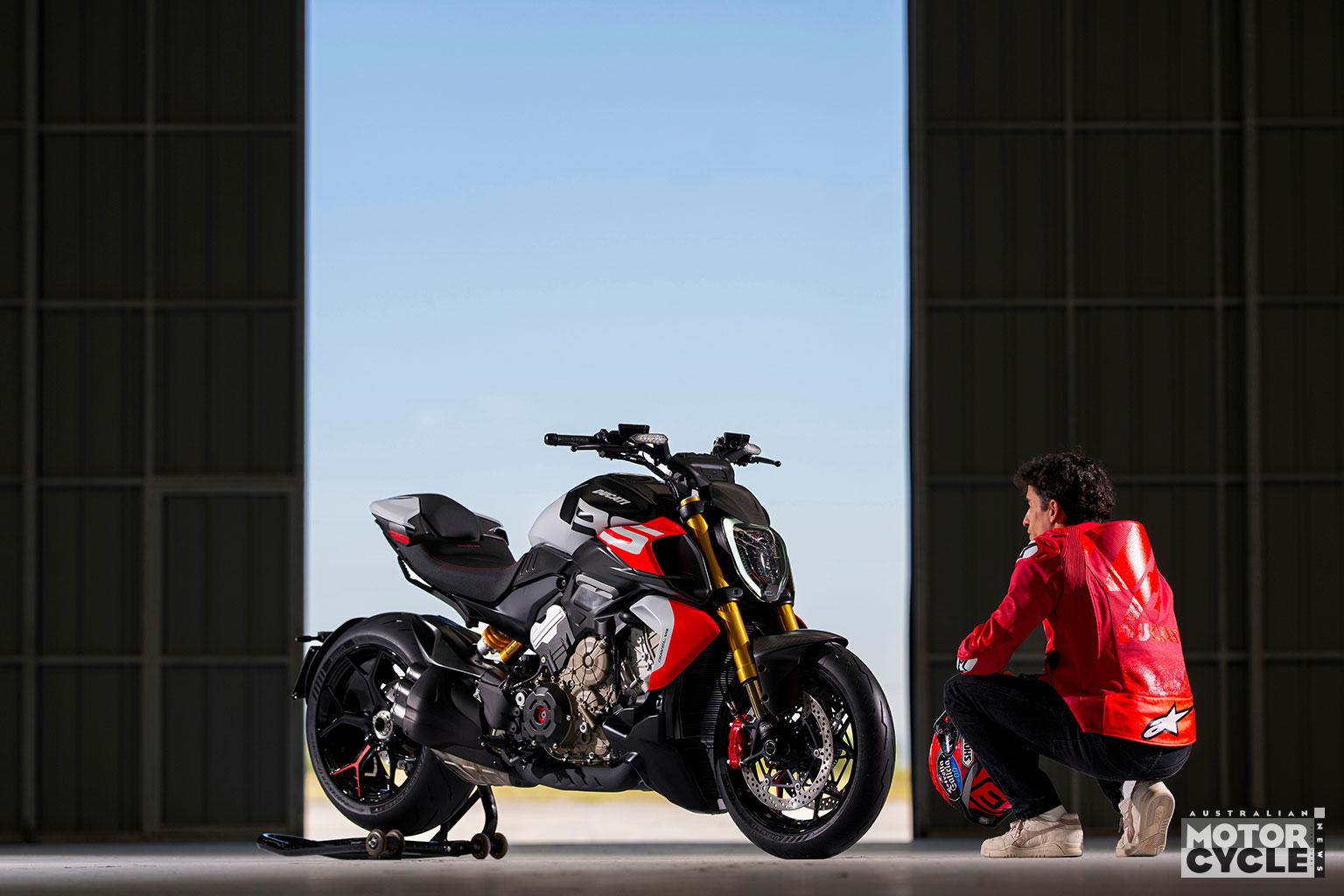
The formula is the same one that was used to create the Multistrada V4 RS. Like the normal Multistrada, the standard Diavel uses Ducati’s Granturismo V4 engine, with an 1158cc capacity and conventional, sprung valves instead of the signature desmodromic system used by high-performance Ducatis for years. For the Multistrada V4 RS the Granturismo V4 was swapped for a version of the Desmsedici Stradale engine used in the Panigale V4, complete with desmodromic valvetrain and a smaller, 1103cc capacity. That makes for a more powerful, more rev-hungry character, and new Diavel V4 RS is created using the same recipe.
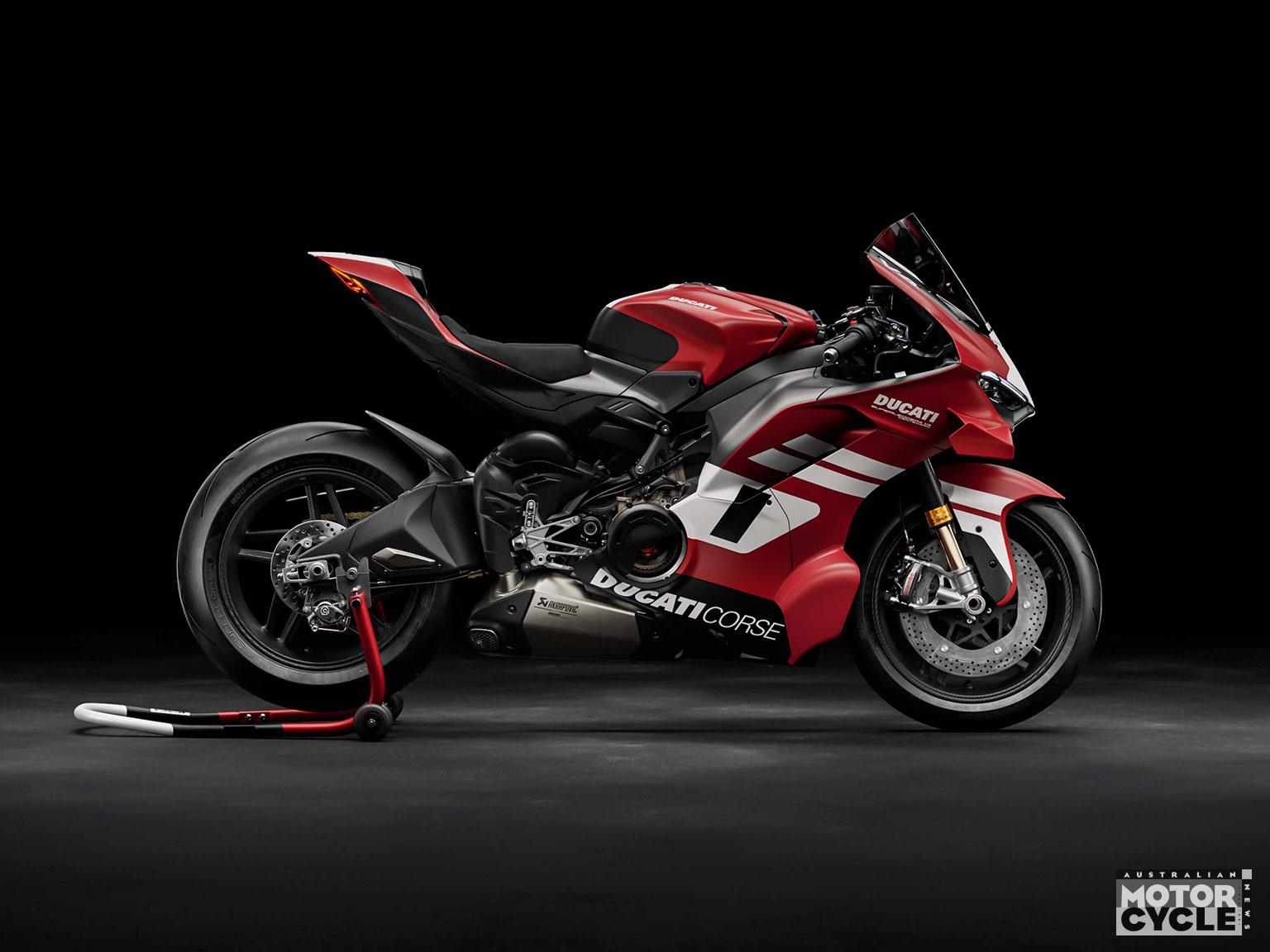
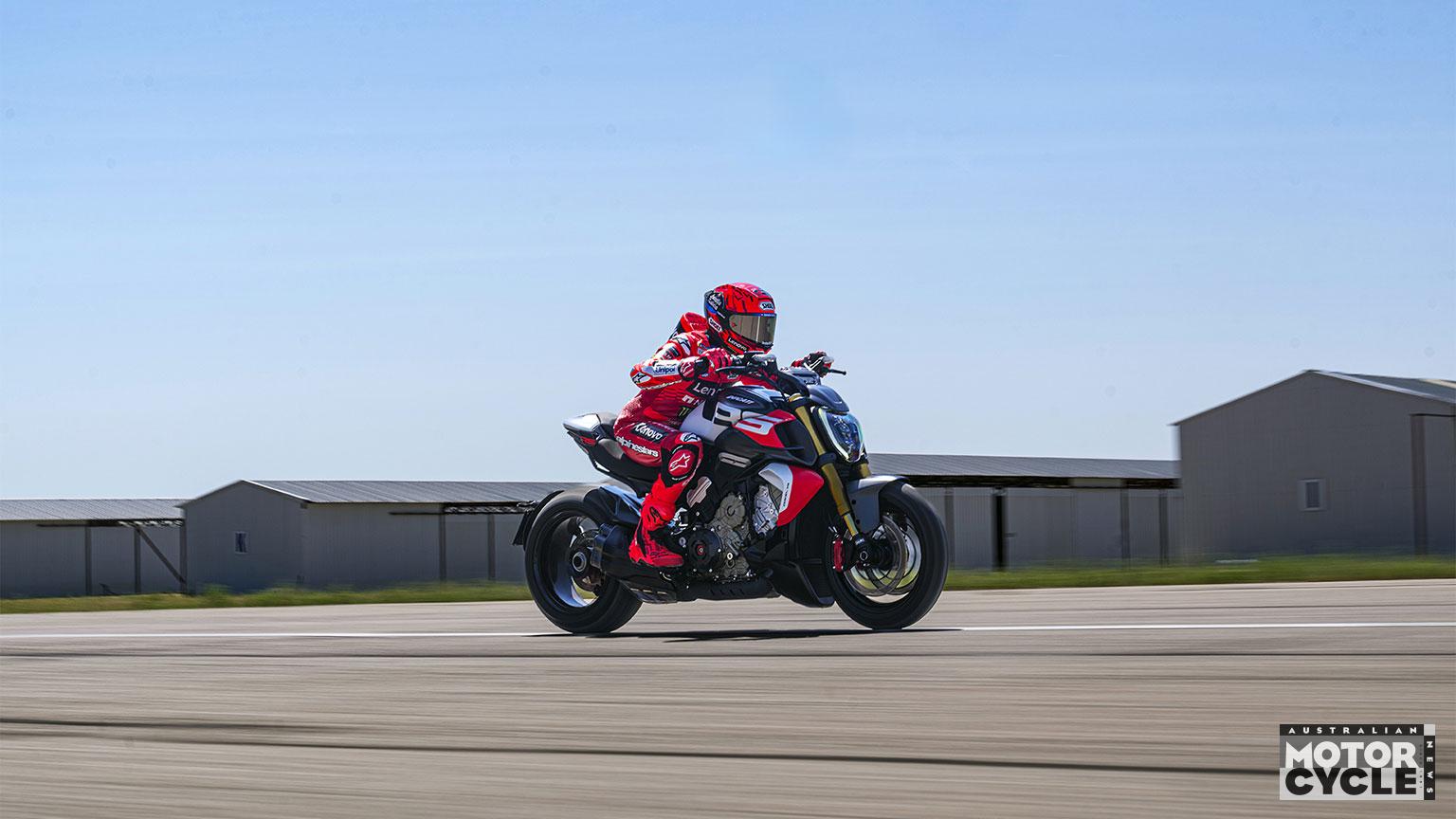
Once again, the normal Diavel V4’s 168h, 1158cc Granturismo V4 engine is ditched for the RS model, replaced with a 182hp version of the 1103cc Desmosedici Stradale V4. That peak needs you to rev it to 11,750rpm, and the redline doesn’t arrive until 13,500rpm and is stretched even further to 14,000rpm in first gear. That higher rev limit might well be a key to the Diavel V4 RS’s ability to out-accelerate any other production Ducati up to 100km/h, a target it hits in just 2.5 seconds (admittedly with Marc Marquez at the controls – your mileage may vary if you’re not a multiple world champion.) Ducati says the only machine it makes that can beat that mark is Marquez’s normal ride, the Desmosedici GP25 MotoGP bike.
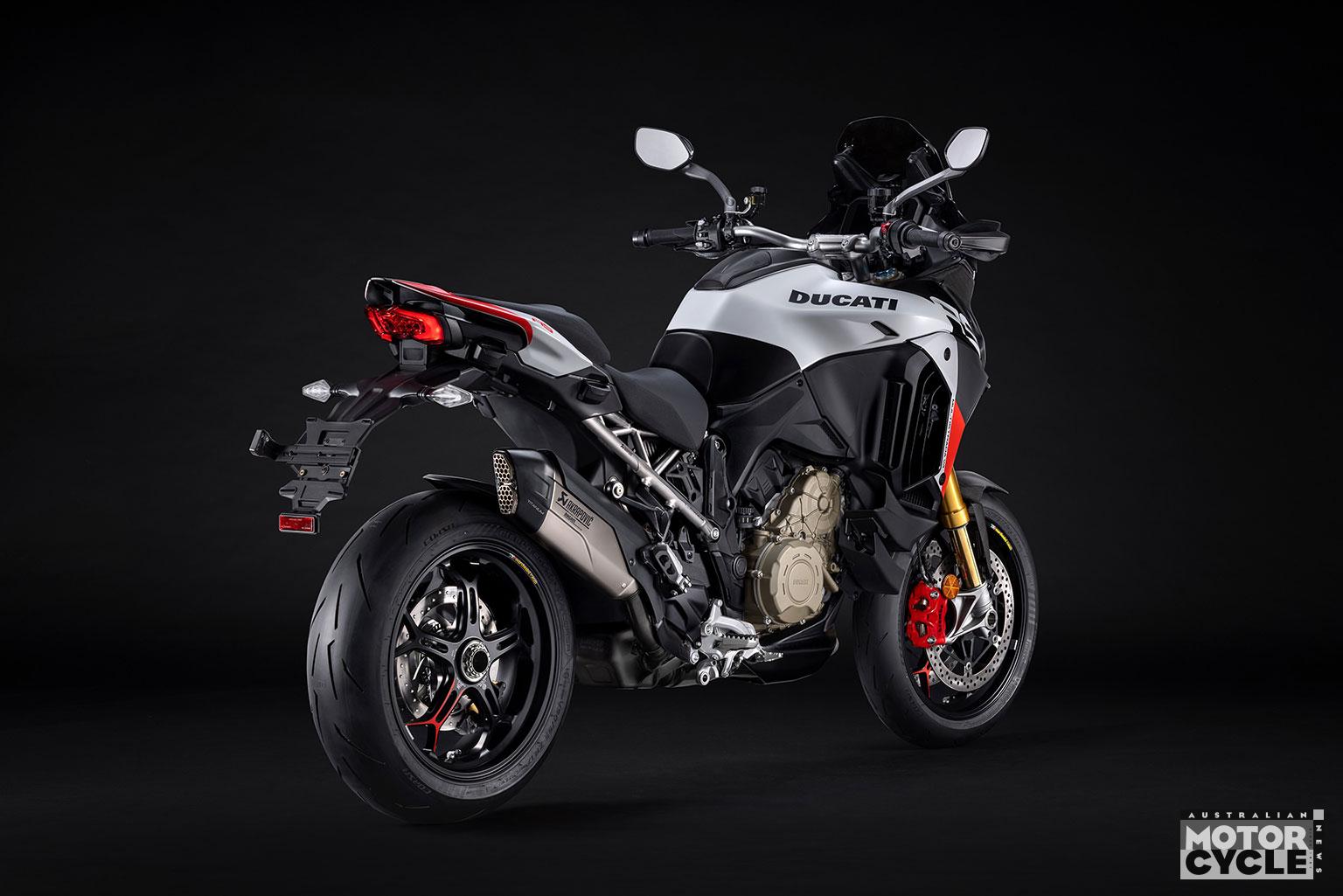
The motor is paired to a revised look, with RS graphics and updated bodywork including new air intakes and a single-seater tail unit, all made of carbon. The standard, two-seat tail can be specified if you want to ride with a passenger.
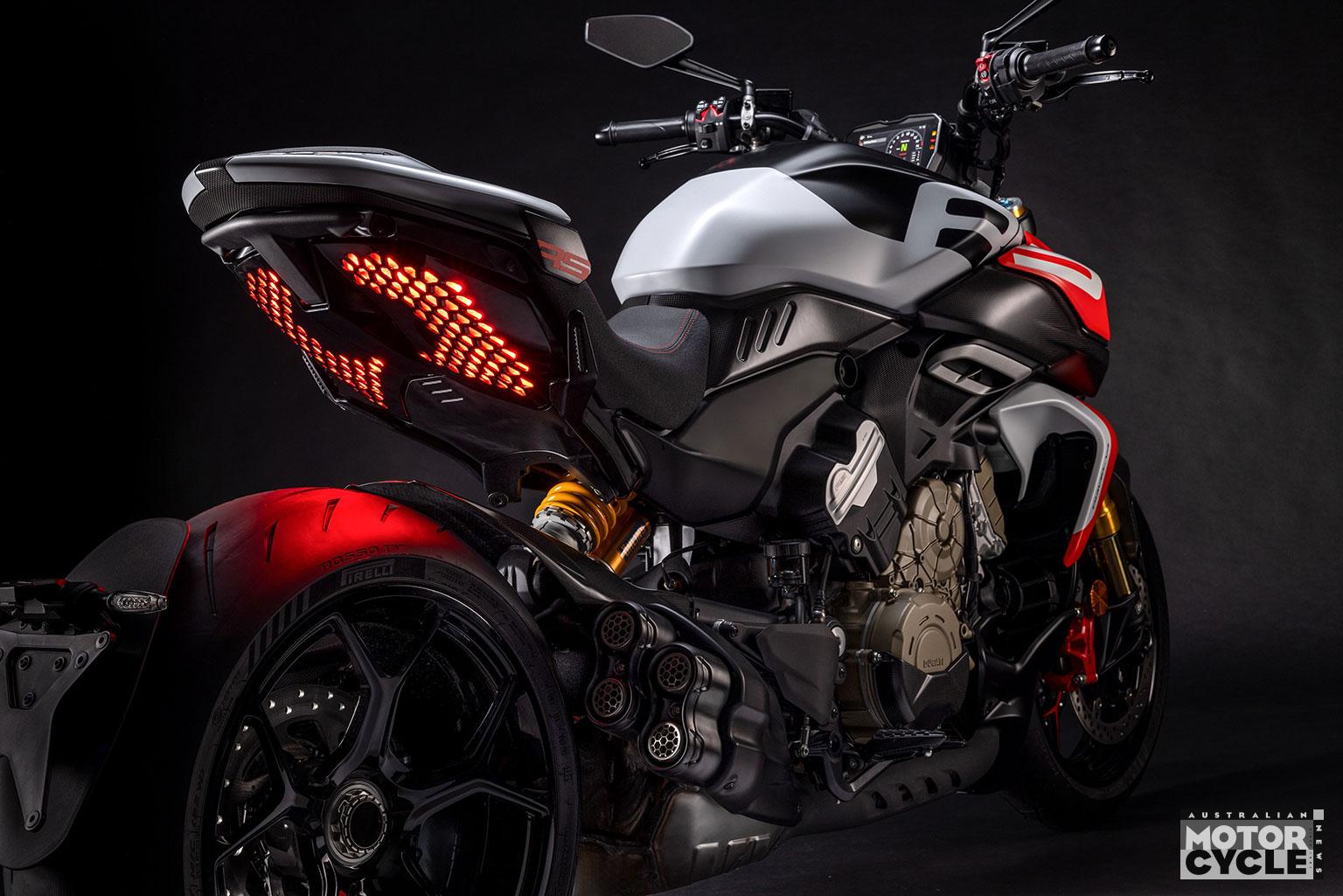
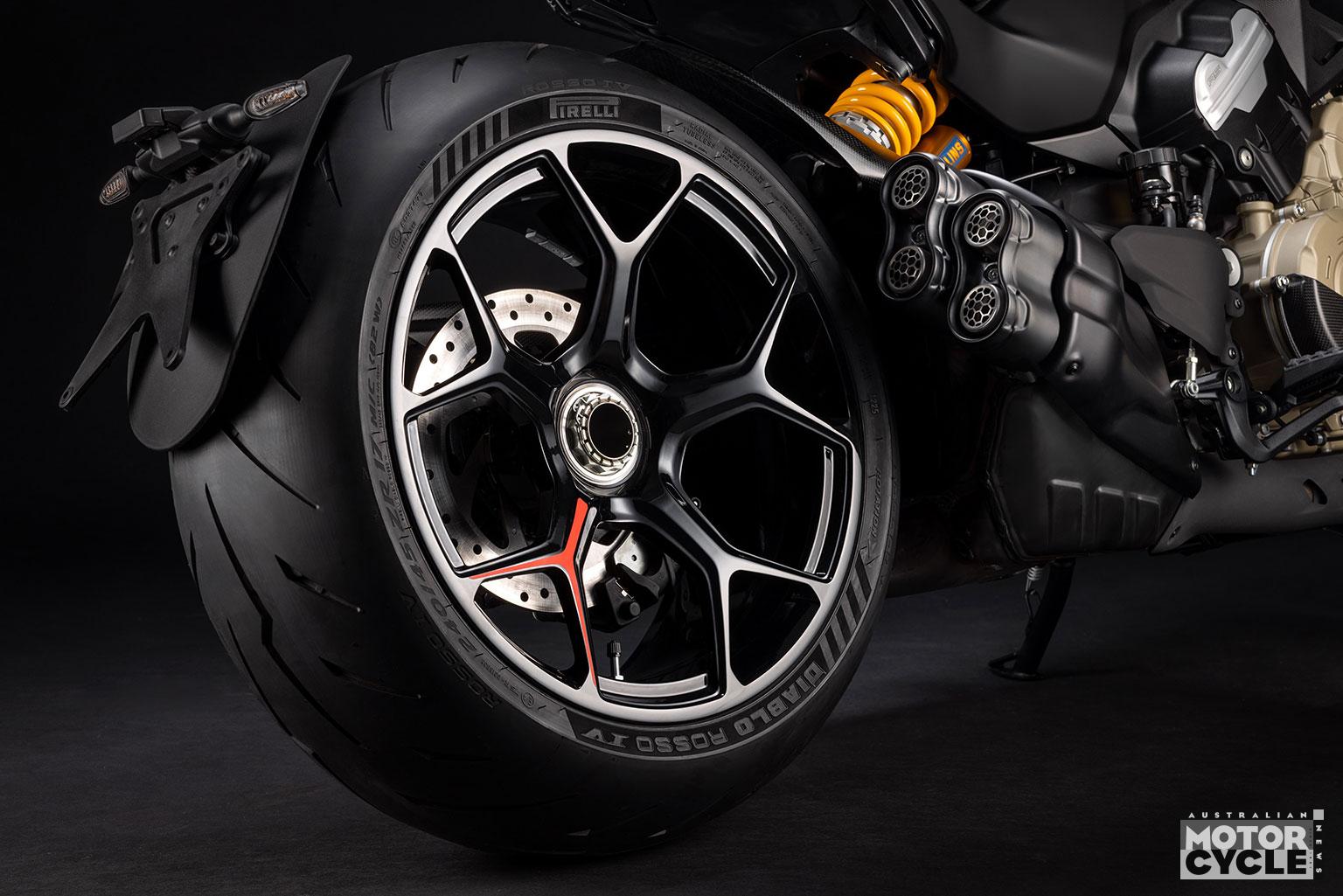
Forged Marchesini wheels and new red-painted Brembo Stylema calipers add to the look, as does a redesigned titanium finisher for the distinctive, quad-exit exhaust. Weight, without fuel, is 3kg lighter than the standard bike at 220kg, and while Australian market prices haven’t been revealed, elsewhere the RS costs around 40% more than the standard offering, which would equate to around $61,000 AUD if the same is applied over here.
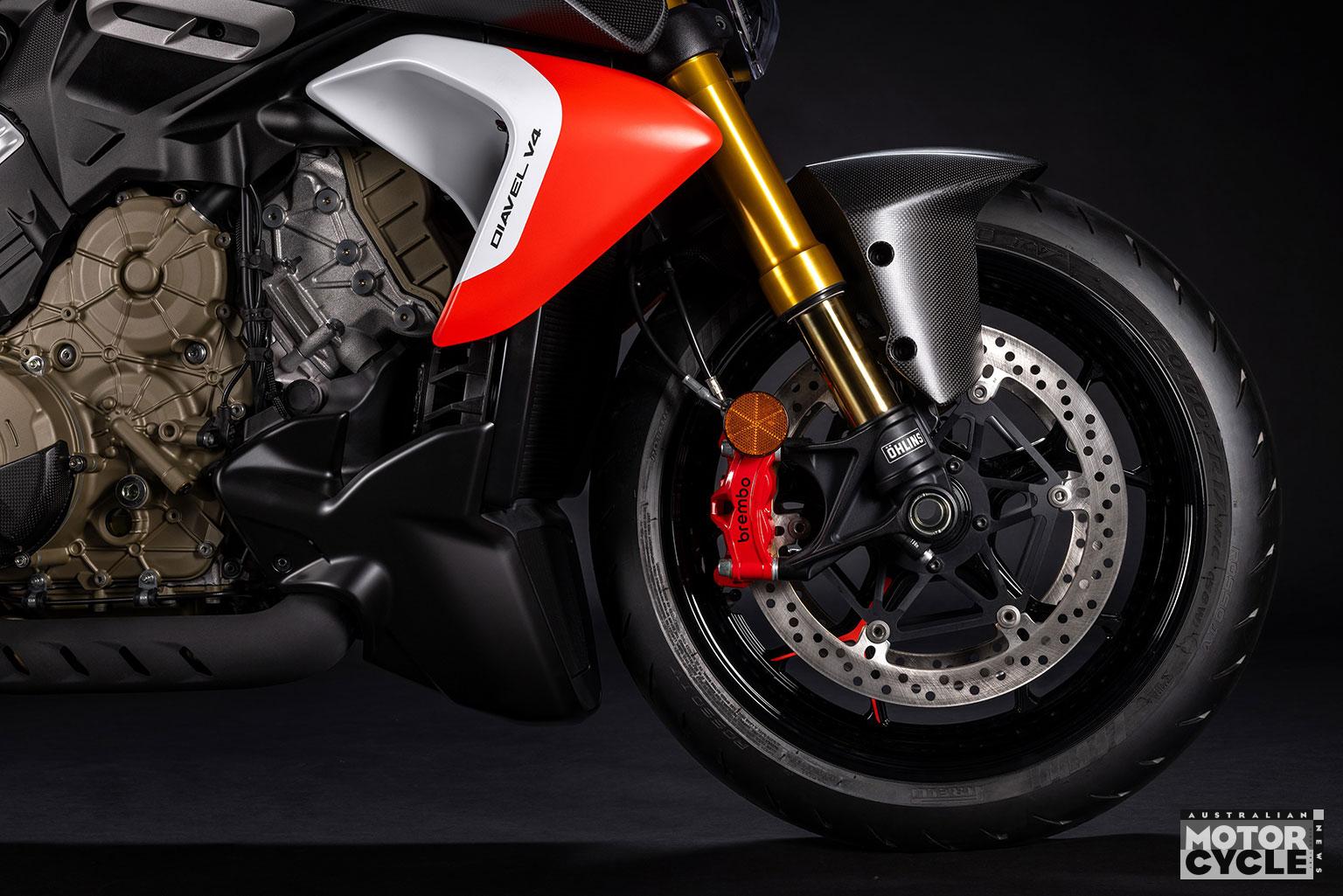
While the engine is the centrepiece of the changes, and includes a dry clutch and high-end electronics including launch control, wheelie mitigation, three power modes and four riding modes as well as cornering traction control, the chassis parts are also substantially upgraded. New, 48mm Ohlins NIX30 forks replace the normal, 50mm USDs, and there’s an Ohlins SRX46 rear shock to match. The updated wheels are shod in Pirelli Diablo Rosso IV tyres, which previously weren’t offered in the wide, 240/45-17 size that the Diavel uses at the rear.
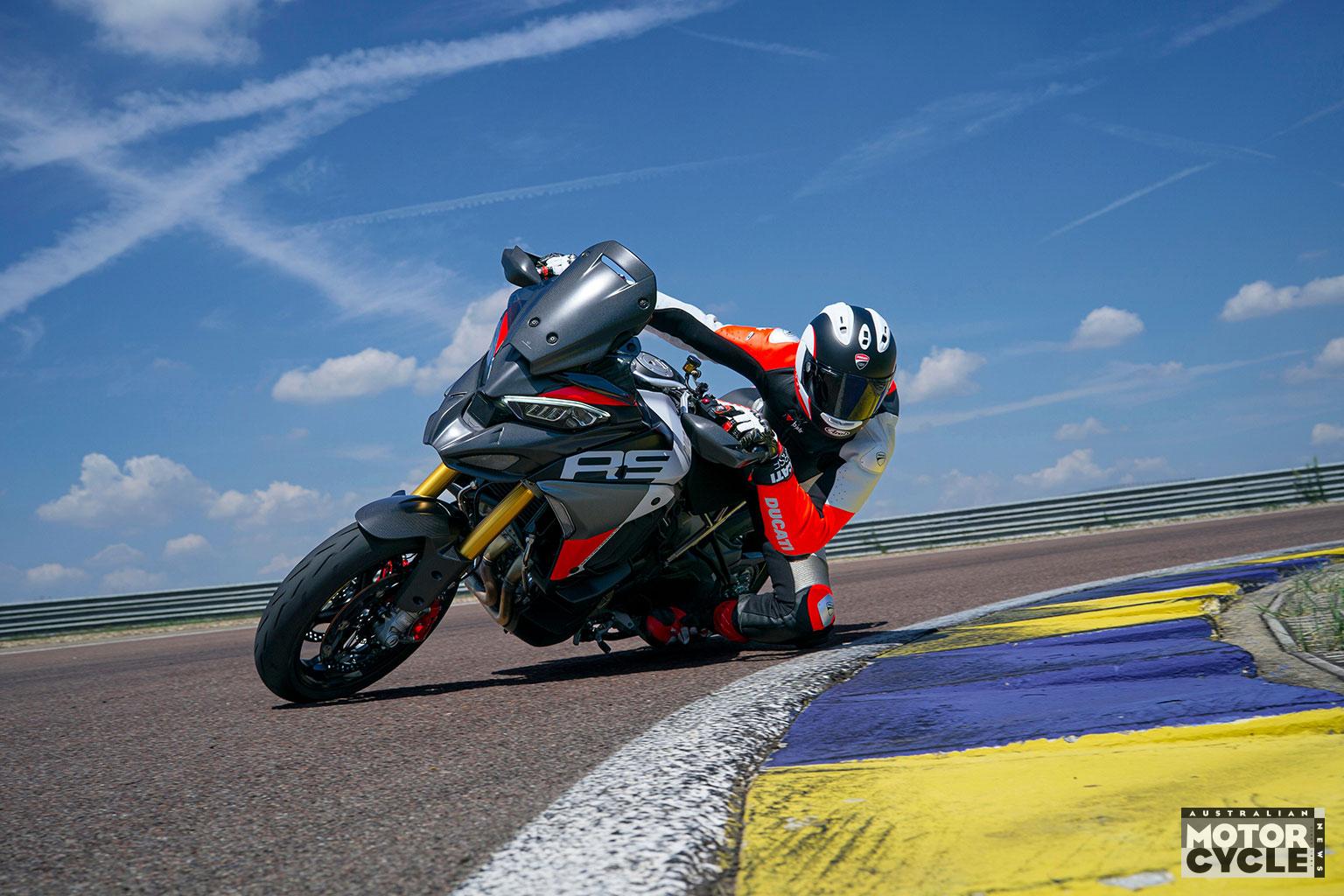
The other ‘RS’ model in Ducati’s range, the Multistrada V4 RS, is also updated for 2026, with improved strategies for its semi-active Ohlins Smart EC2.0 electronics suspension, as well as new Marchesini forged wheels and improved electronics for the Bosch combined, cornering ABS braking system.
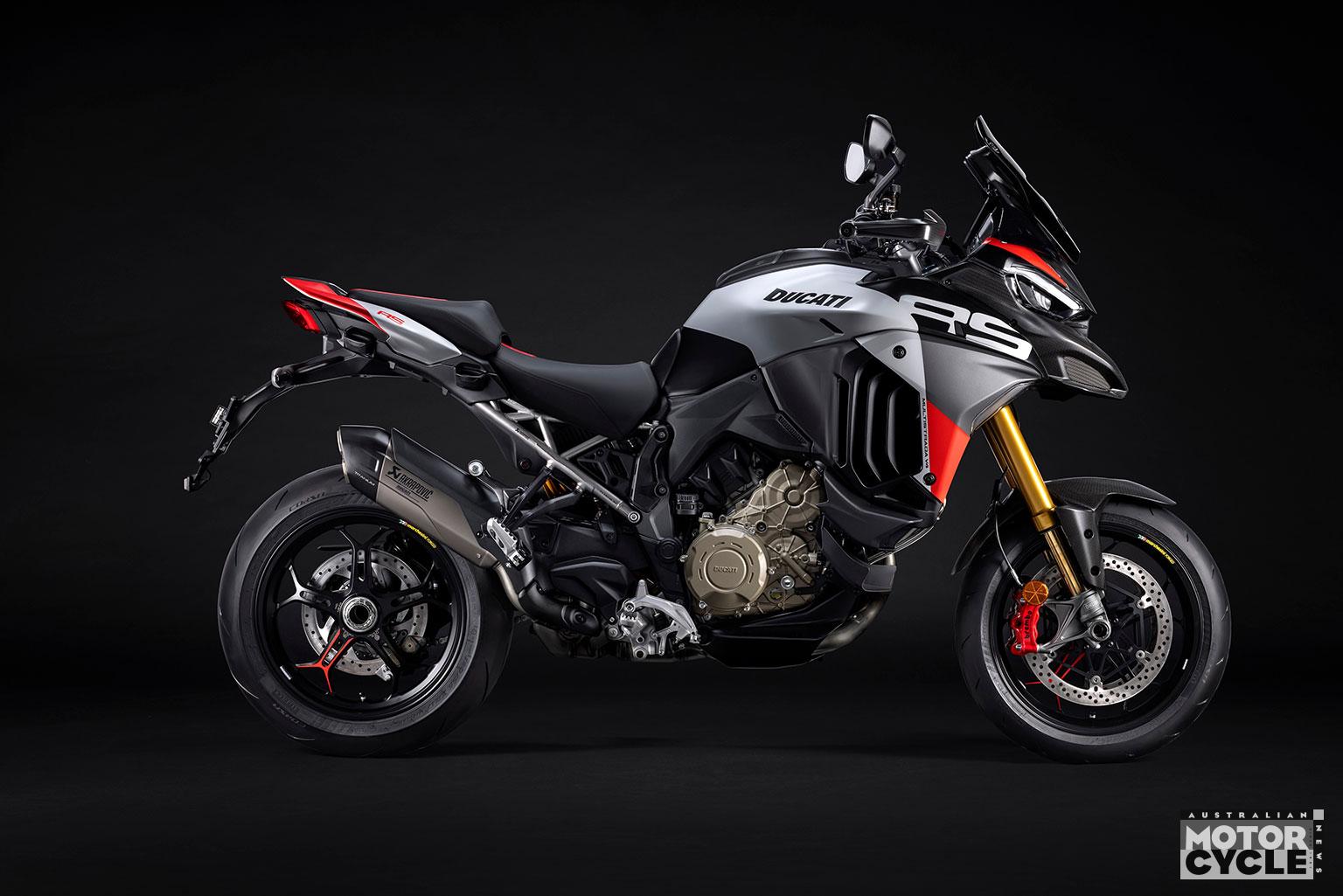
Like the latest Panigale V4, the 2026 Multistrada V4 RS also gets the Ducati Vehicle Observer (DVO) system that simulates 70 sensors in addition to the normal data from the inertial measurement unit, feeding that info to the cornering ABS and wheelie control systems. Ducati’s uprated DQS 2.0 quick shifter is also added for 2026, along with new graphics for the TFT dash. Again, there’s no Australian price yet for the 2026 Multistrada V4 RS, but the 2025 version’s $57,400 AUD gives a good idea of what to expect.