Self-balancing electric scooter-with-a-roof concept revisits the C1
Quarter of a century ago BMW launched a bike that’s become something of a legend in the ‘ambitious failures’ category – the C1 scooter. Not only did it enter a market segment that was entirely new for the company but it added a car-style roll cage and seatbelt so you could theoretically ride without a helmet or other protective kit but still be safe in the event of an accident. Buyers stayed away in droves but the idea has lingered on at BMW and now the company has revealed a modern take on the idea in the form of the Vision CE.
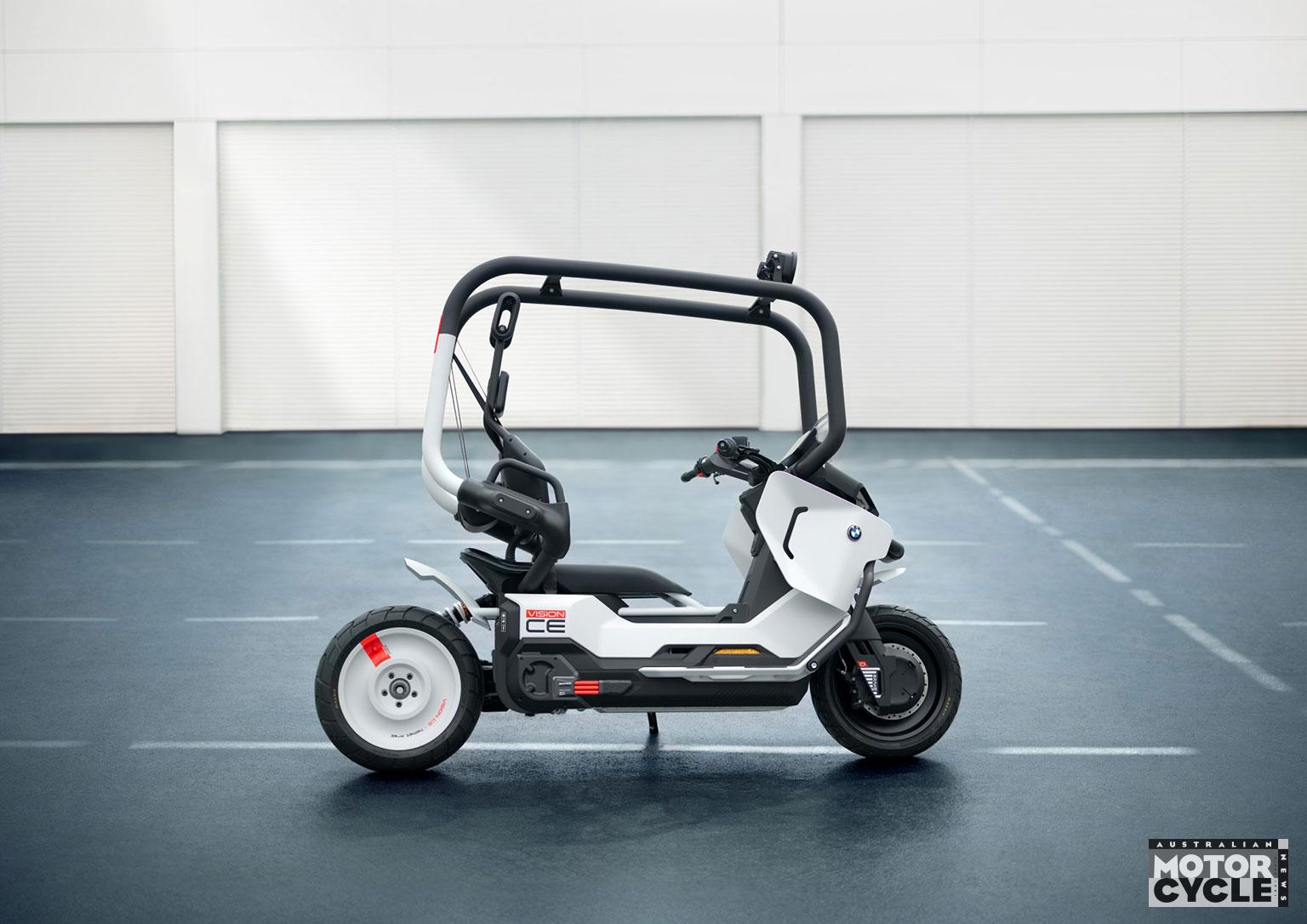
The ‘Vision’ element of the name is important. In BMW-speak, ‘Vision’ is applied to more speculative concept vehicles, unlikely to see production in the form they’re shown but giving a more general hint at upcoming projects. Show vehicles carrying the name ‘Concept’, meanwhile, are usually previews of upcoming production models, the most recent example being BMW’s Concept F450GS. In other words, don’t expect a showroom version of the Vision CE in the near future, and realistically if any of its ideas do reach production, they’re likely to appear in a very different package.
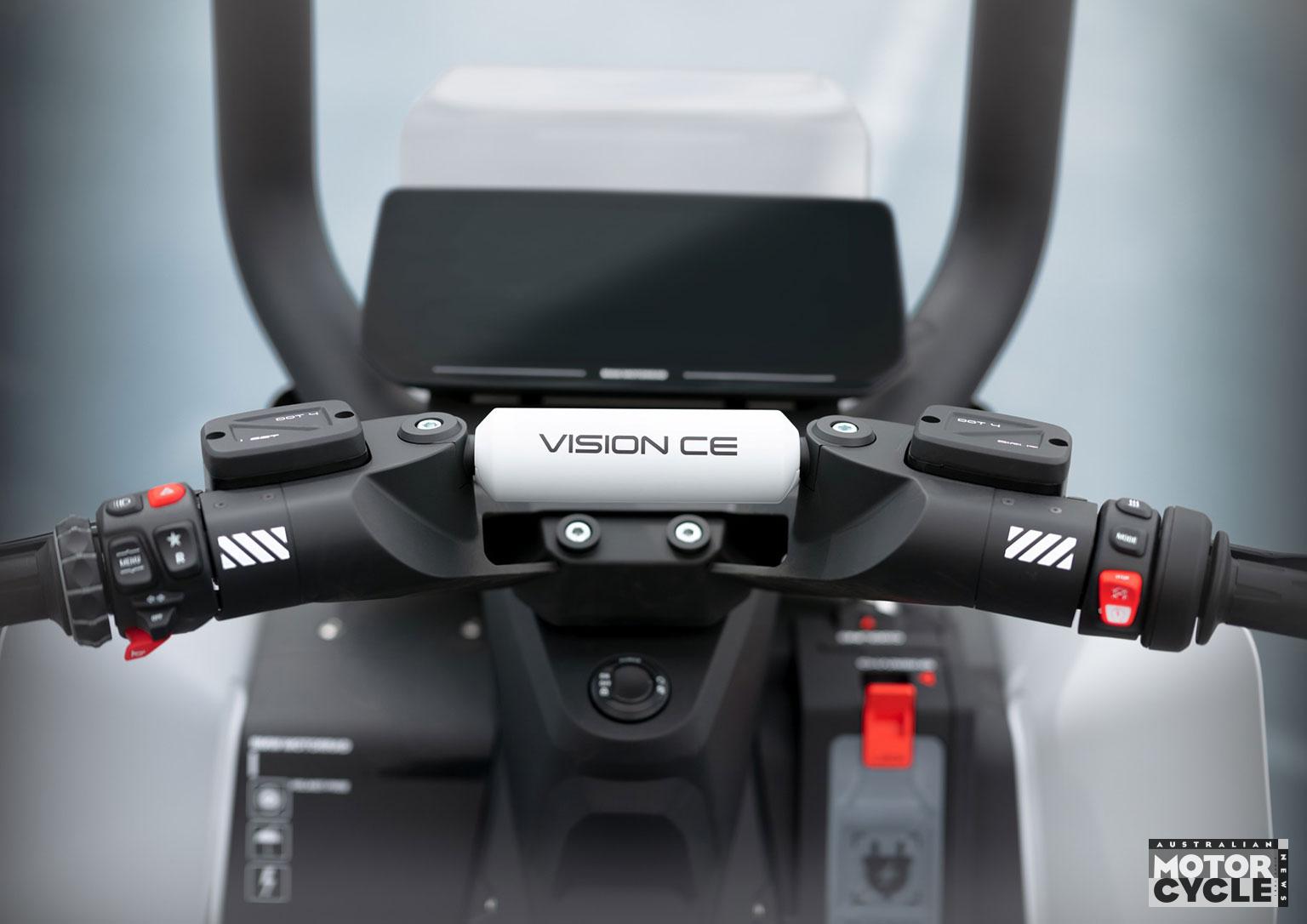
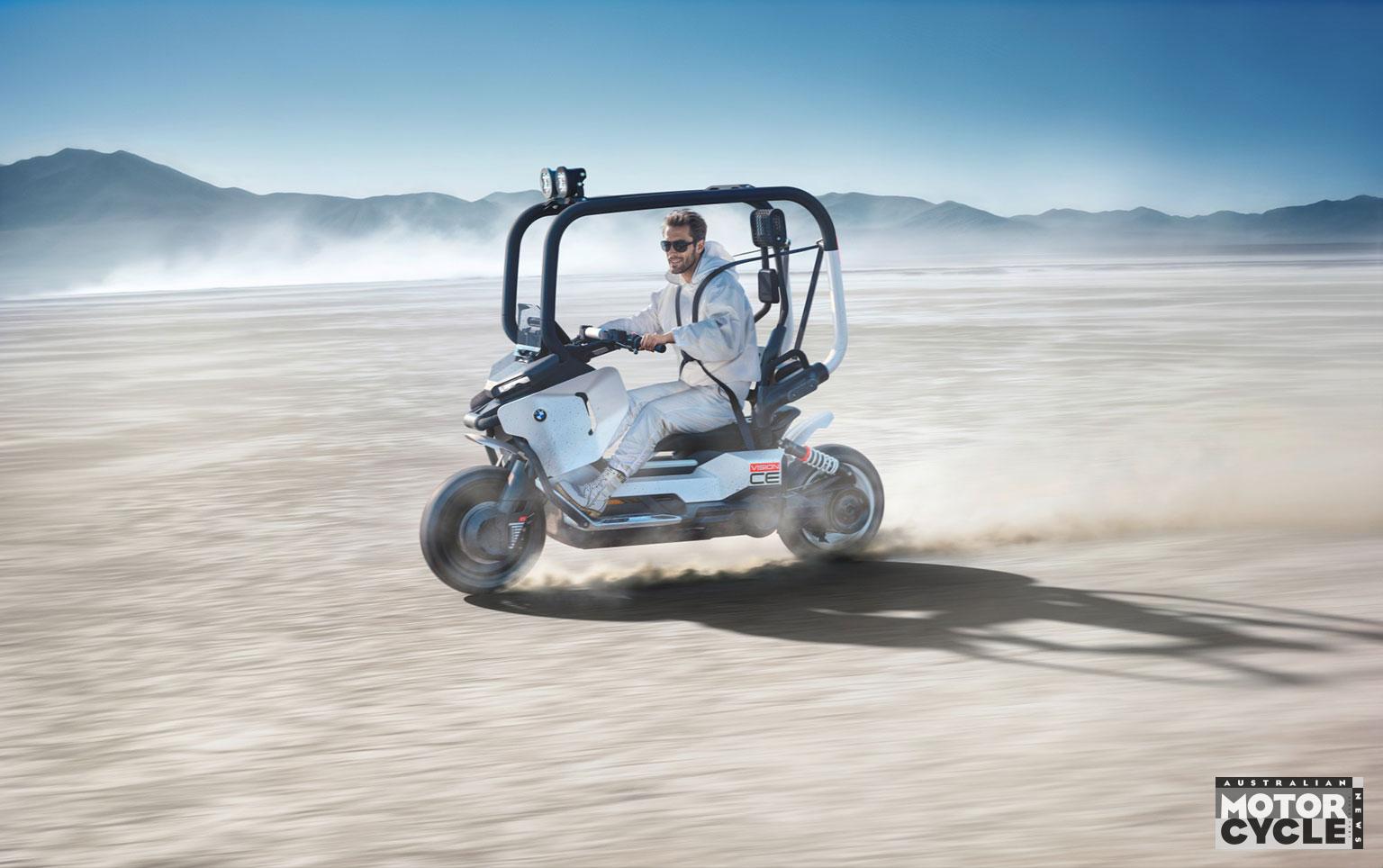
So, what is the Vision CE? Under the skin, it’s largely similar to the existing CE-04 electric scooter, with the same long, low chassis setup and similar styling cues with flat surfaces and crisp edges – a far cry from the egglike outline of the original C1. Its most distinctive feature is that box-like safety cage that surrounds the rider, along with a high-backed seat with four-point, harness-style seatbelts to keep them pinned in place. BMW says that, like the original C1, the Vision CE’s design means you don’t need riding kit or a helmet: if there’s a crash, you stay inside the safety cell and let it absorb the impacts.
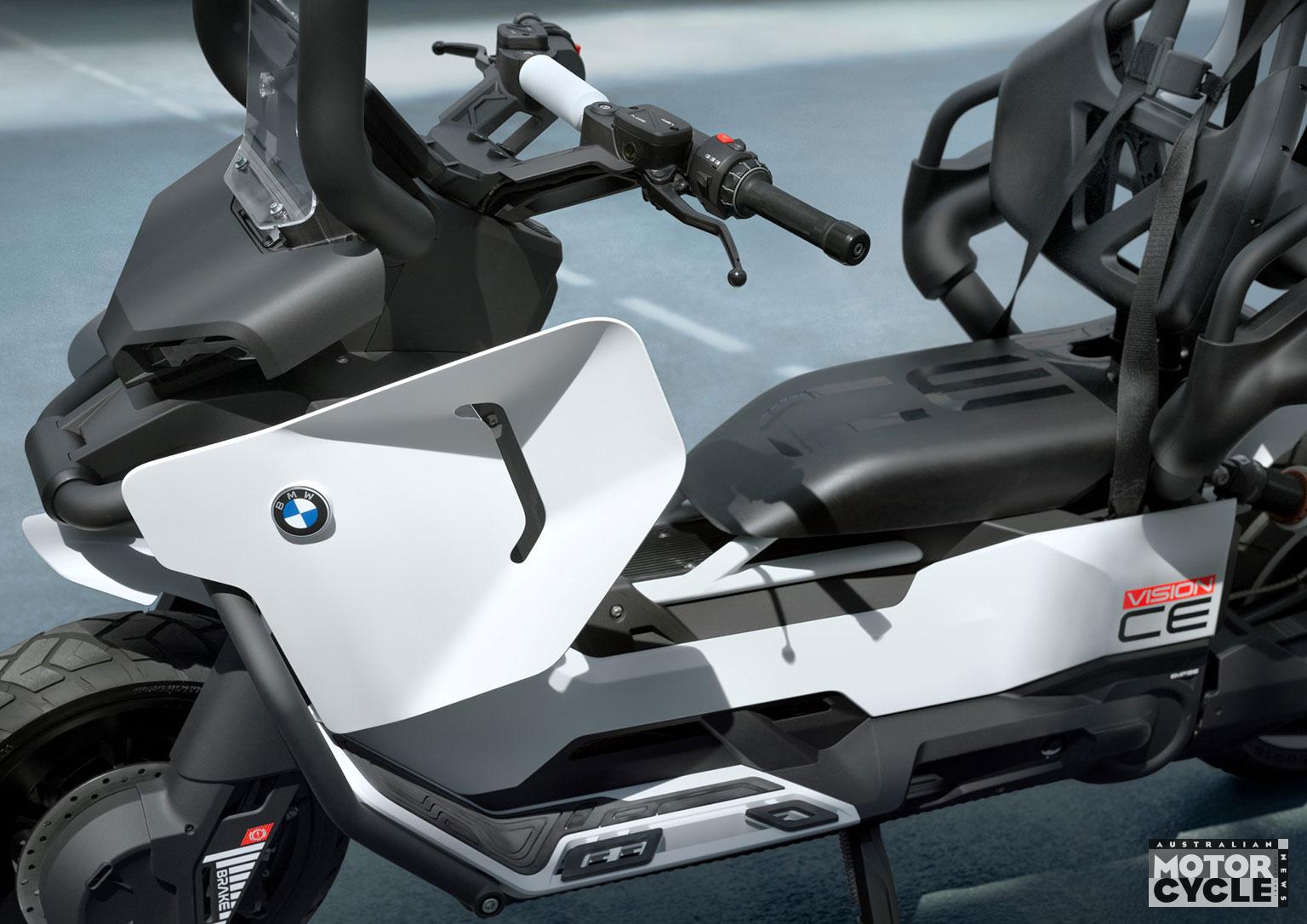
Although initially shown as an open cage, BMW’s sketches also illustrate how the Vision CE could be fitted with a full-height screen and a transparent roof section, adding at least a bit of weather protection and further eliminating the need to wear motorcycle-specific clothing.
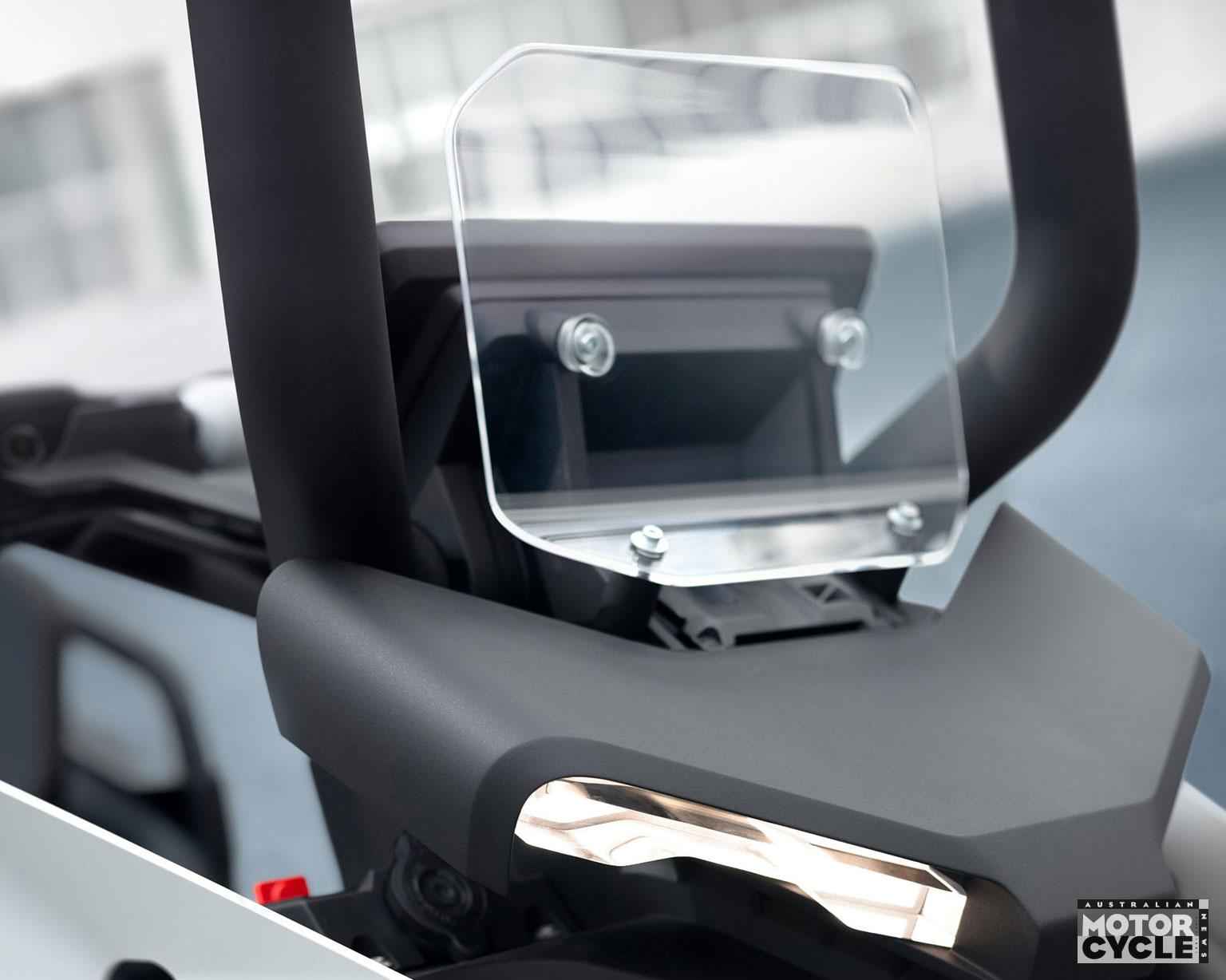
The idea, just like the C1 25 years ago, is to create a machine with the small footprint and traffic-busting abilities of a motorcycle but the safety and convenience of a car, letting owners get from A to B without having to worry about getting changed or what they’ll do with their riding kit on arrival.
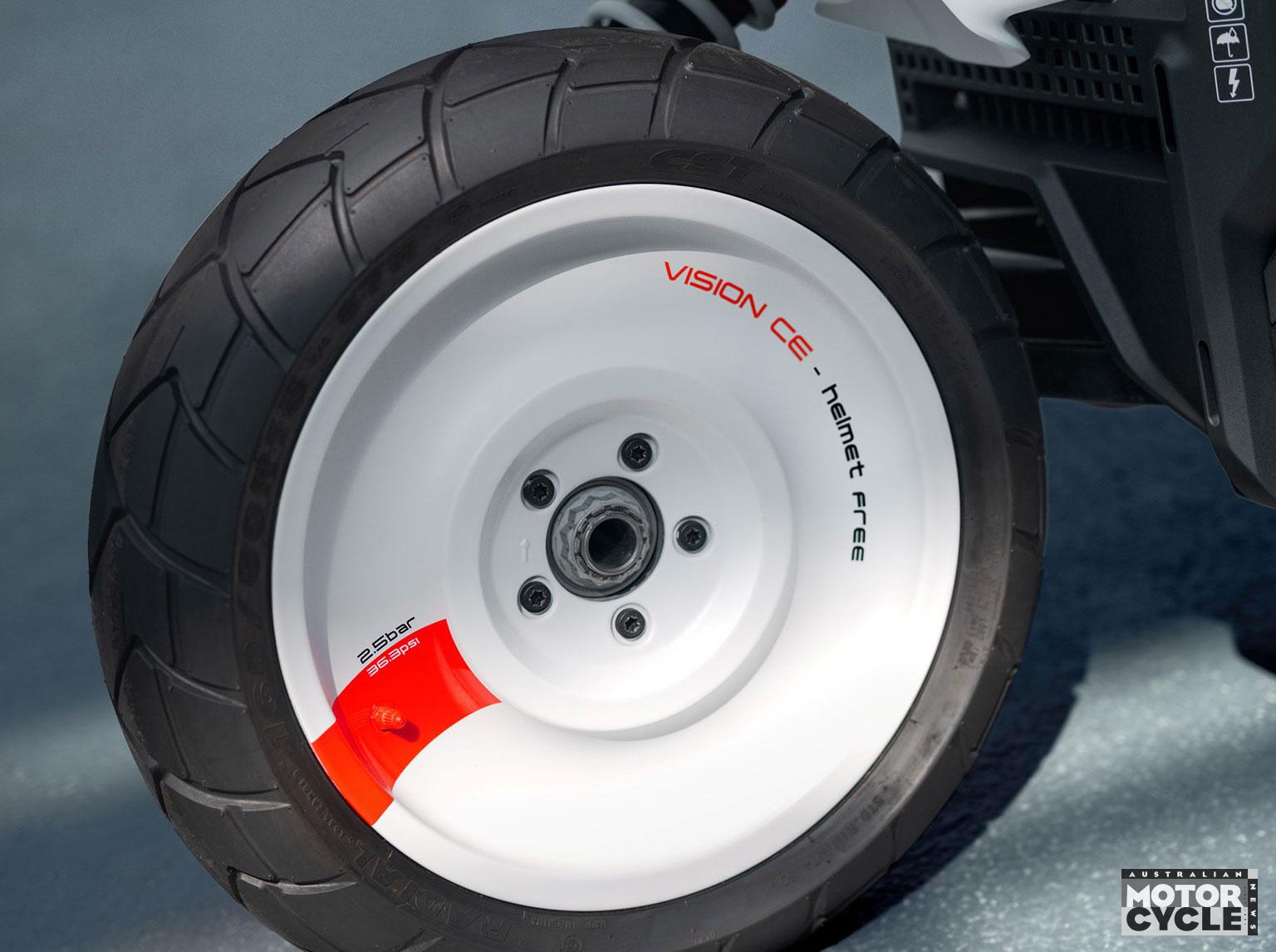
The cage also acts as a mounting bracket for accessories, and BMW’s illustrations show the Vision CE in multiple forms, from a mobile barista with a coffee machine lashed to the back to a plumber’s transport with pipes on the roof and toolboxes behind the seat. The glaringly AI-generated ‘photos’ of the concept are more leisure focused, including an adventure version with knobbly rubber and camping kit attached, and a variant that’s bizarrely kitted out as a mobile DJ.

The publicity images might have the uncanny valley look of AI, but BMW has built a real mock-up of the Vision CE. There’s little explanation of its technical elements, but it’s clearly electric, probably with the CE-04’s powertrain, and claims to be able to self-balance, even when stationary. BMW has previously demonstrated an autonomous R1250GS, so the tech isn’t out of the company’s reach. A box behind the seat is labelled ‘Radar’ – so we know there’s a rear-facing sensor for blind spot monitoring at the very least.
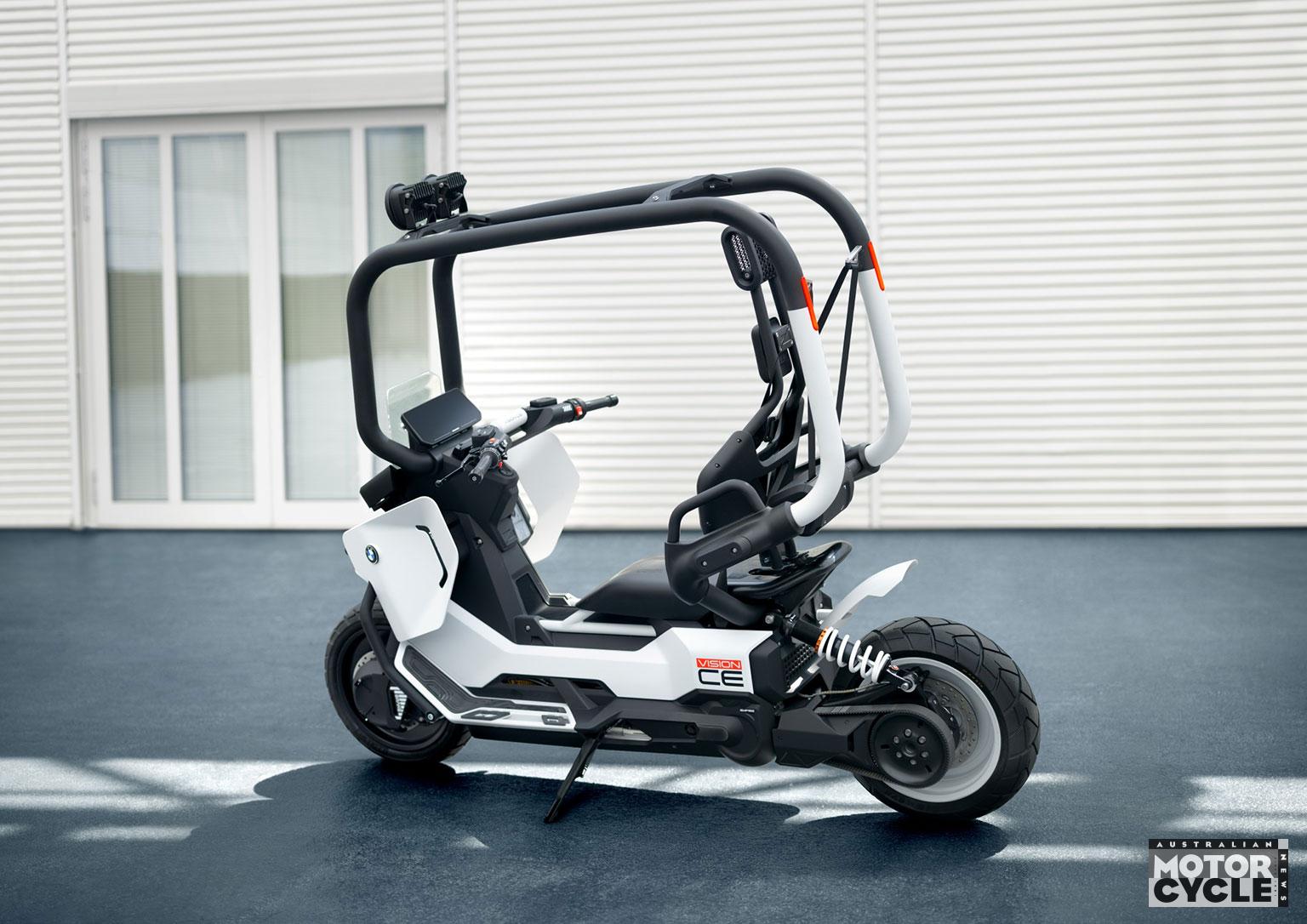
While the Vision CE is unlikely to reach production as seen here, BMW has spent several years filing patents around roofed motorcycles, long after production of the C1 ended, and clearly still believes that the convenience of a helmet-free machine could be a winning idea in the market. At one stage the company considered offering a removable, bolt-on safety cage for its now-discontinued C Evolution electric scooter, so extending that idea to the current CE-04 that replaced it is well within the bounds of possibility.