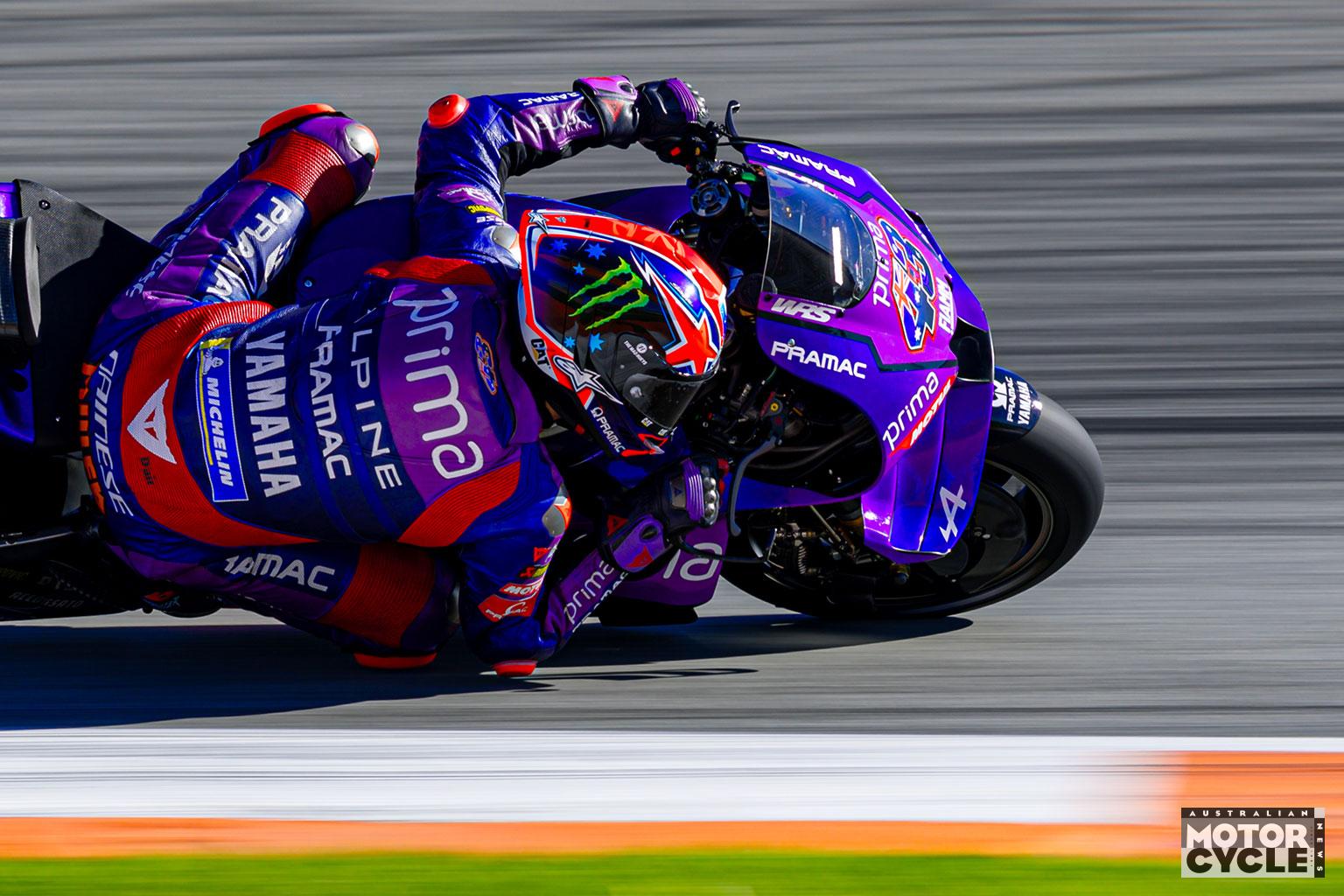
With a fresh contract inked, Jack Miller’s priceless feedback is helping fuel Yamaha’s V4 revolution as the team eyes 2026 gains
It was confirmed a good bit later than expected. But Jack Miller could not hide his excitement at being confirmed at Pramac Yamaha for another season, where he will once again bring his wealth of experience to the project.
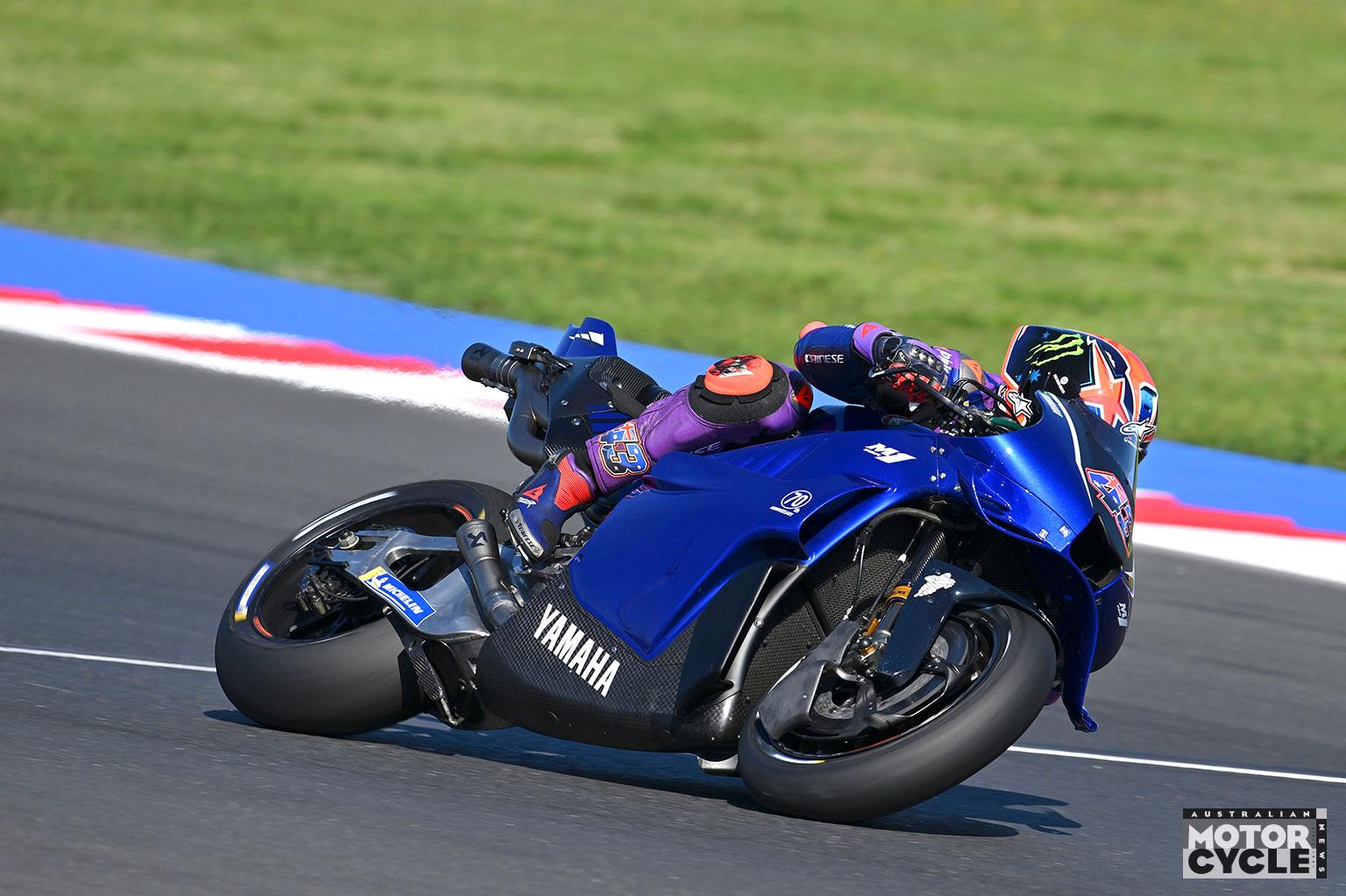
The Australian faced a nervy wait to hear he would be continuing in MotoGP for a 12th straight season. Once Toprak Razgatlioglu’s arrival from WorldSBK was announced, it appeared to be a straight shootout between Miller and teammate Miguel Olveira for the second seat. Then suddenly Moto2 challengers Diogo Moreira and Manuel Gonzalez were in the mix.
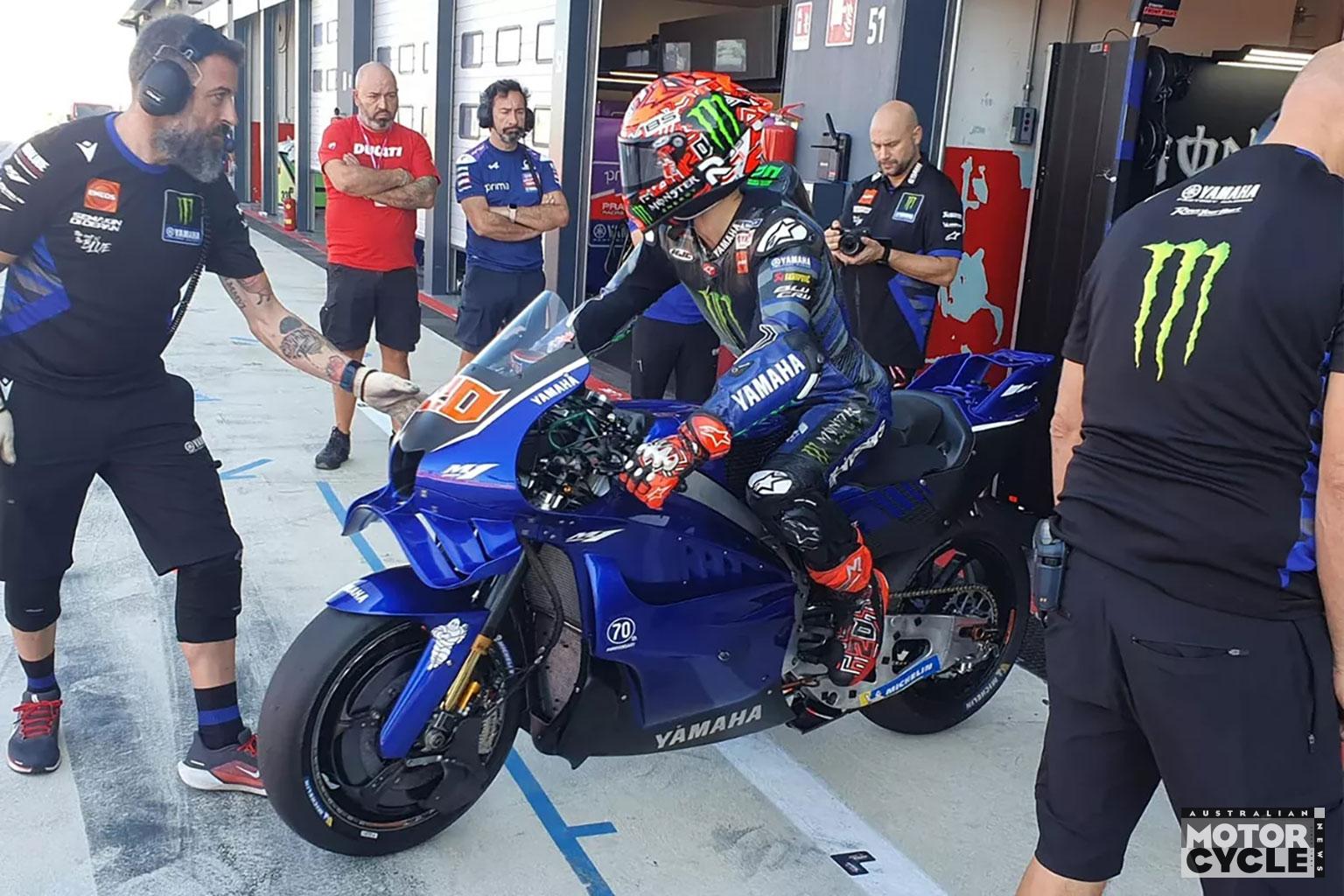
Ultimately, the 29-year-old’s experience with Honda, Ducati and KTM’s V4 engines in the past contributed to Yamaha entrusting him with developing their all-new machine.
While its debut was somewhat shaky, Miller believes he’ll be able to apply his almost 200 Grands Prix worth of experience to the project.
“Honestly, I can’t even explain how happy I am to stay a part of this project,” he said. “I believe in it 100 per cent and I believe what they’re bringing forward with the new bike and just the magnitude that that’s going to create and the effect that’s going to have – to be able to be a part of that, to be able to have input on that and try to give my best with that… it’s going to be awesome to be a part of and something that I was really pushing to try and be a part of.”
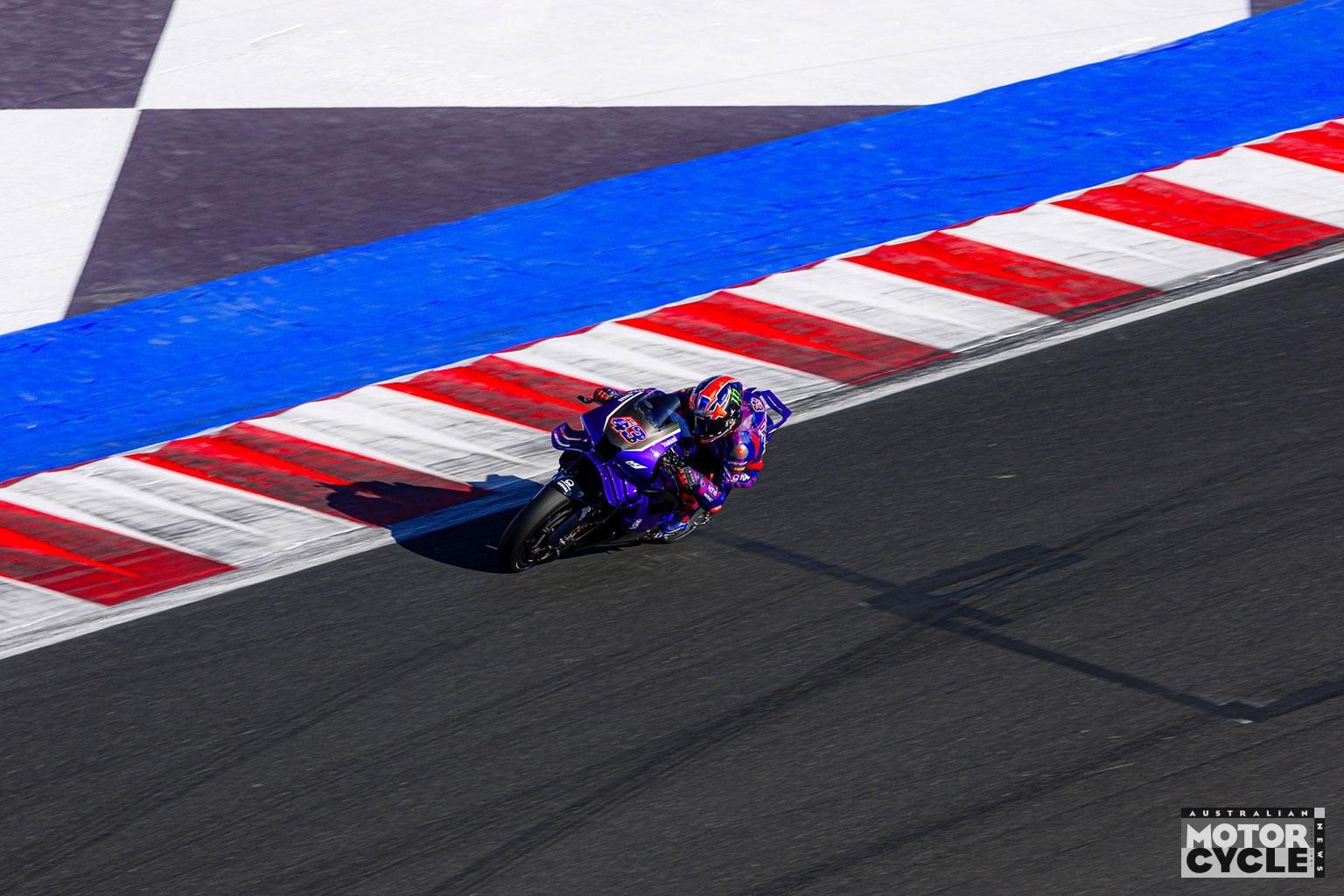
After a preseason that offered few clues as to what lay ahead, Miller surprised in his early appearances aboard Yamaha’s current inline-four-cylinder M1. He had the beating of the factory star Fabio Quartararo first time out in Thailand. And he outperformed the Frenchman with a brilliant fifth.
Yet the midseason was tricky. Along with the current bike’s inability to run with Ducati, Aprilia, KTM and even Honda, Miller faced a near-constant barrage of questions surrounding his future. With a Honda WorldSBK offer worth a reported €1 million per season on the table, the four-time MotoGP race winner had plenty going on off the track.
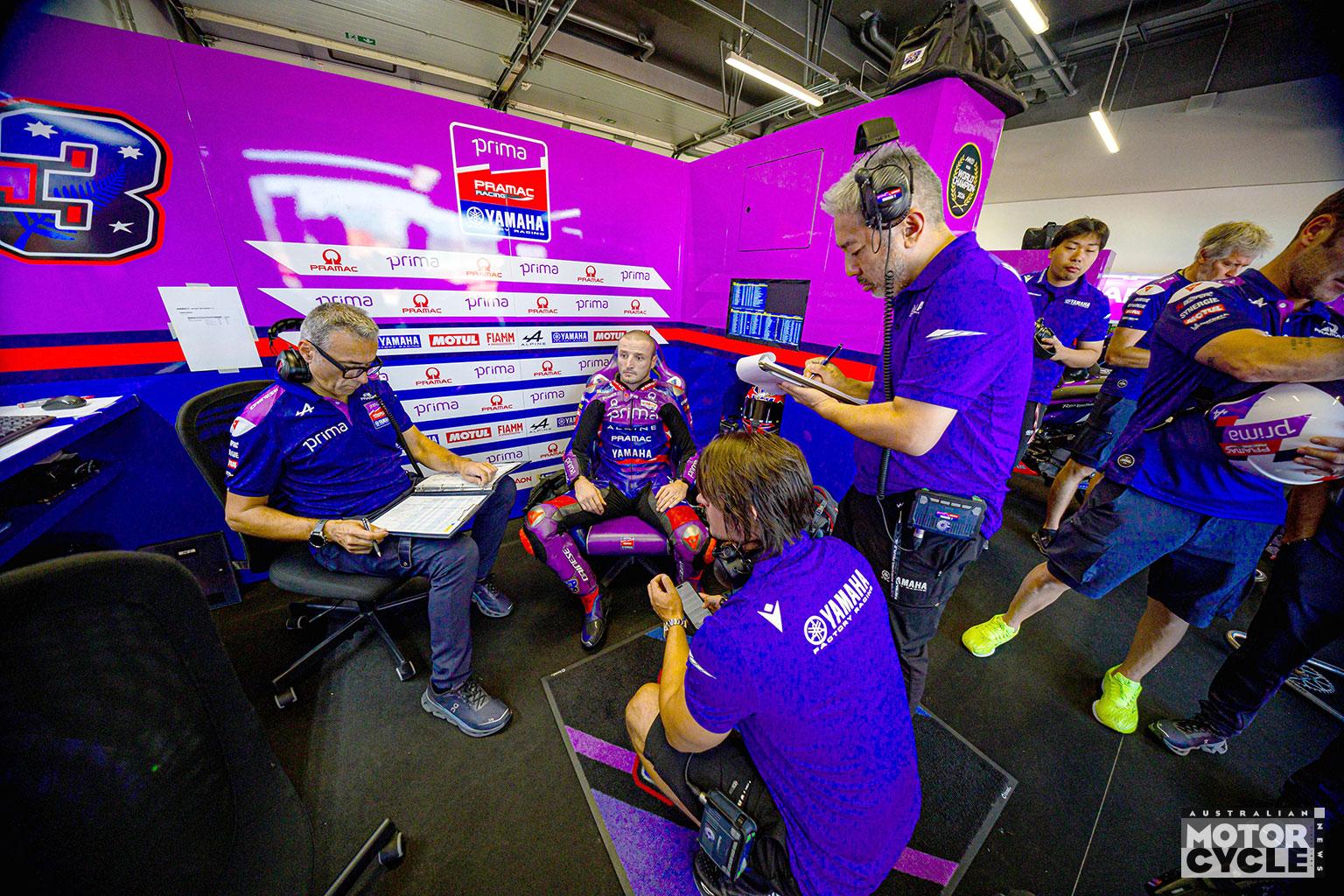
As Yamaha took more time to make its decision, and with the deadline to confirm his WorldSBK offer fast approaching, Miller’s patience frayed ever so slightly on the Thursday of the Hungarian GP. Yet he soon apologised to Yamaha Managing Director Paolo Pavesio. His 2026 contract was signed soon after.
With next year now taken care of, Miller is confident he will be able to perform at his best at the close of the season. “It’s just about getting your foot in the door and then I believe I can do some good things with that,” he said. “So, a lot of head down, bum up now, try to extract the best we can out for the rest of this season, and in the meantime try to test what minimal items we can on the current spec bike before obviously then getting the new bike.
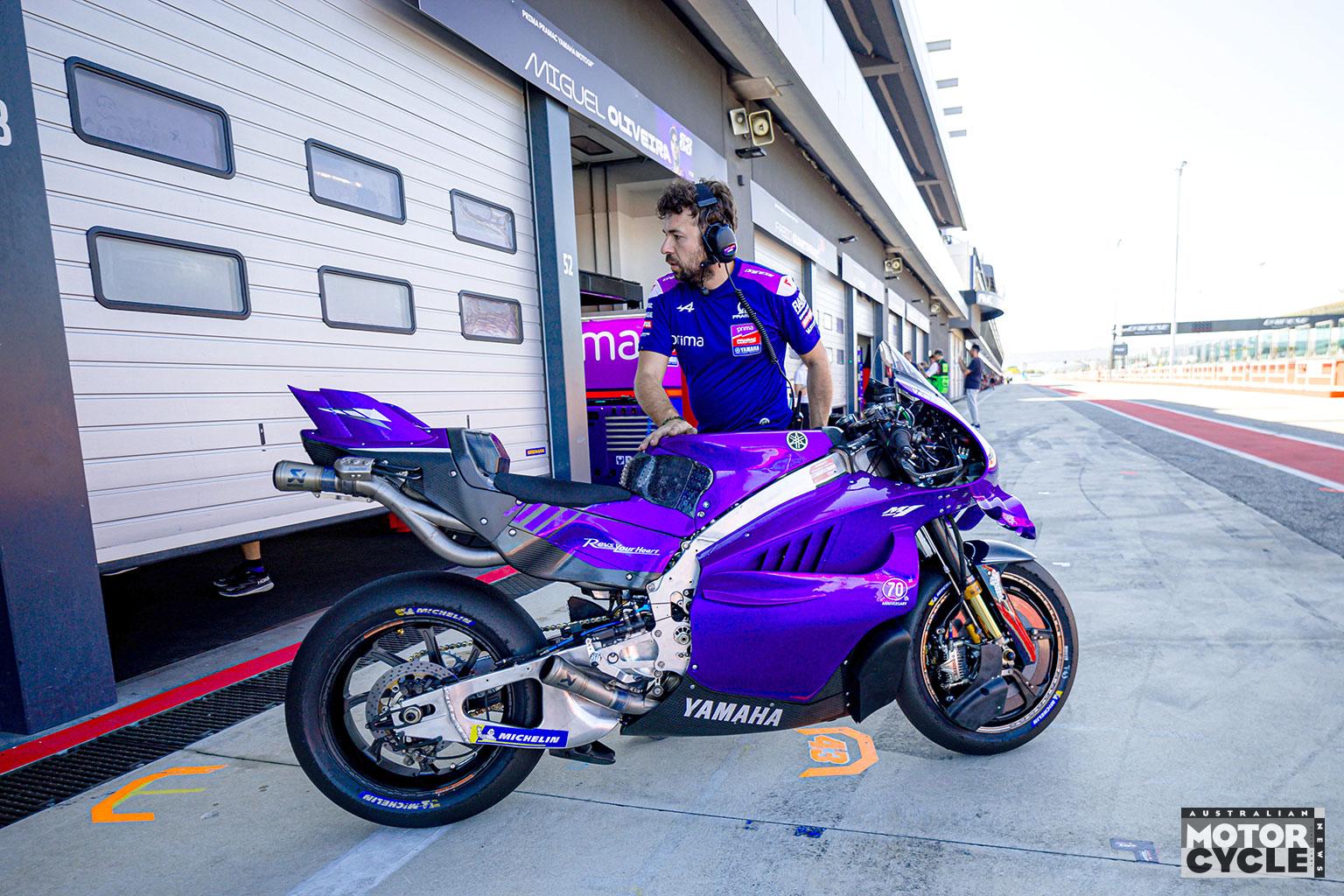
“It’s a weight off my shoulders because I wanted to remain here and to be competitive. I haven’t been able to be as competitive as I would like this year on a consistent basis. We’ve shown that we have speed on random occasions, whether it be certain tracks or whatever.
“But we knew all along with the current package we have, we’re going to have racetracks where we’re closer to the front than others. And to try to be back there consistently, fighting with the guys at the front, being able to at least fight, I’m looking forward to hopefully being able to do that coming forward.”
Miller confirmed he had given up a considerable sum to remain in MotoGP as opposed to racing in WorldSBK, with his love of racing premier-class prototypes the deciding factor in his decision to stay.
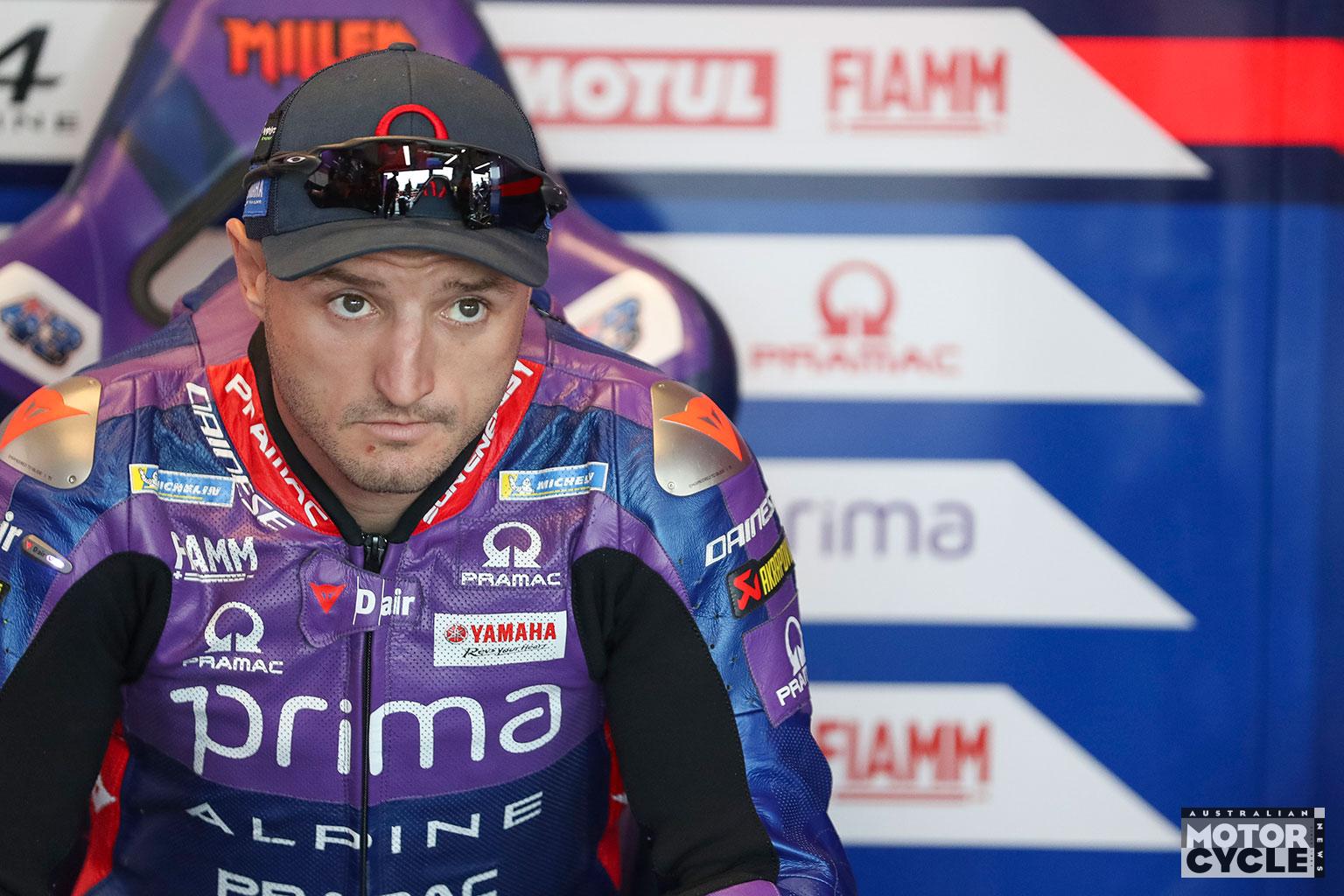
“I believe 100 per cent in this project,” he said. “I believe what these (engineers) can do. (They put out) very competitive machinery in other championships… But I enjoy riding a MotoGP bike, I enjoy riding the best bikes against the best guys. I love Superbike, I thoroughly enjoy watching it, but it’s not a MotoGP bike. It doesn’t go as fast, it doesn’t stop as good… You can’t even begin to list the things that a MotoGP bike does, because you’ll be here all day. But there’s just something about riding these monsters against these lunatics that I enjoy.”
How does he view the prospect of sharing a box with current World Superbike champ Razgatlioglu? “It will be good,” said Miller. “He’s an extremely talented rider. It’ll be the first time in my career that I’ve had a guy in the box next to me that can do a better stoppie than me. So that’s disappointing!
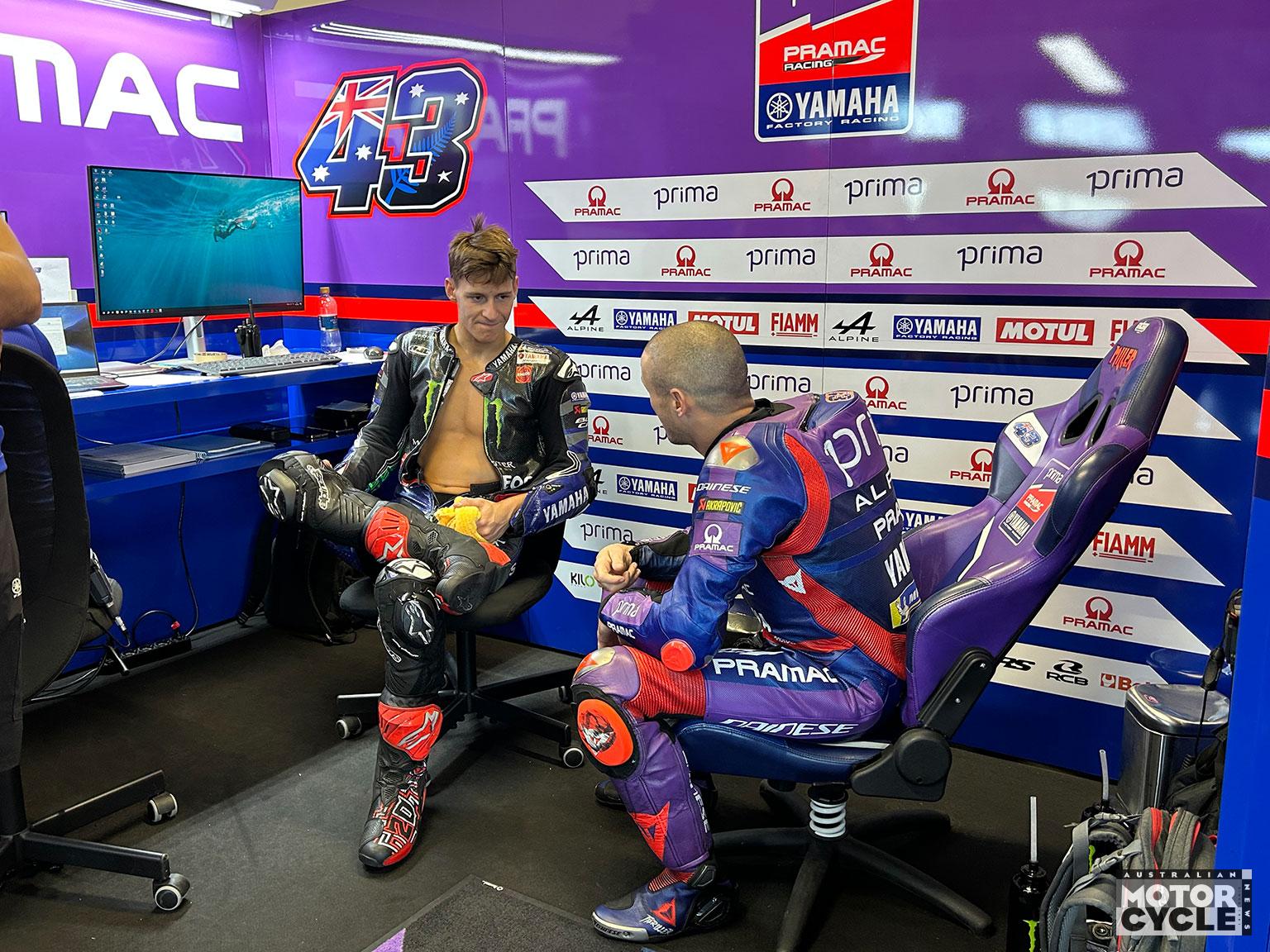
“But, apart from that, I’m looking forward to it. He’s a great guy. Every interaction that I’ve had with him has always been great. He’s a guy that whenever he’s come to the paddock, he’s always gone out of his way to come and say hello. And that for me speaks volumes on the character.”
Miller first tested the V4 the day after the Catalan GP. He then had a further morning on it at the following week’s test at Misano. And while Quartararo was less than enamoured with the machine, saying “I’d rather not say anything about its potential”, Miller could see the machine’s latent possibilities as the V4 package is still in early development.
“There are positives there. And there are similarities there (to the other V4s he’s ridden),” he said. “You know, the character is nice. The (engine) inertia is nice. Having that inertia and being able to work with that inertia is so important.
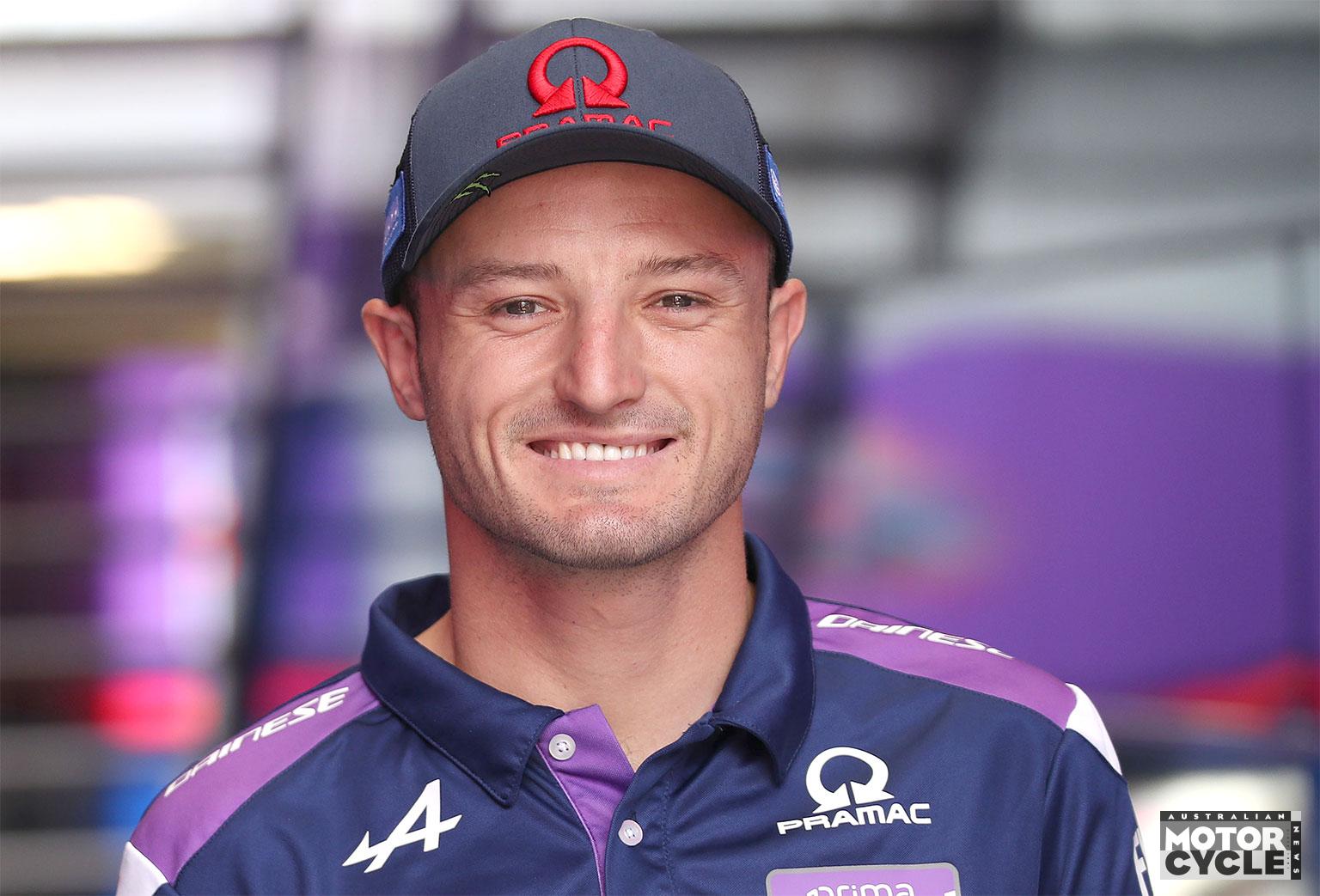
“Obviously, the electronics need a lot of work. It’s been 20-something years of working with an inline. None of the mapping or throttle control or any of the electronic side really is compatible. So it’s a whole new process of building and improving every single time we exit the garage. Every single time we exited the garage (in testing), it got better. It got more usable, more rideable. The throttle connection was clearing up in small micro increments.”
Unlike Quartararo, Miller is aware this new project won’t become a winning formula overnight. While the Frenchman wants to fight for victory as soon as possible, his Australian counterpart seems to be more aware of how long it takes to develop a new racebike.
“You can’t reinvent the wheel in a day; you need at least a week for that,” he said. “So we’re on the good way. The traction area is there. I think the nice thing about this V4 that I can feel is, even though we changed basically everything on the motorcycle, that Yamaha DNA of having a solid chassis underneath you still seems to be there.
“It’s just about putting the points on the bike, the general base set-up, in the right positions to be able to exploit the strengths and weaknesses of the chassis, which I believe there are more strengths than weaknesses. I mean, as a first version, this will not be the bike that we have in Valencia in terms of chassis and so on and so forth. So in terms of, let’s say, a rough cut, we’re (in the) ballpark.
“The Aprilias and the Ducatis and so on were racing and winning on the weekend. KTM as well. And for, let’s say, a complete prototype, I think there’s probably only two of them at the moment in existence. To be two seconds off the pace in the morning, or at least me, 1.9sec or whatever I was, and Fabio even closer. So it’s not bad. It’s not bad. It’s a good base.”
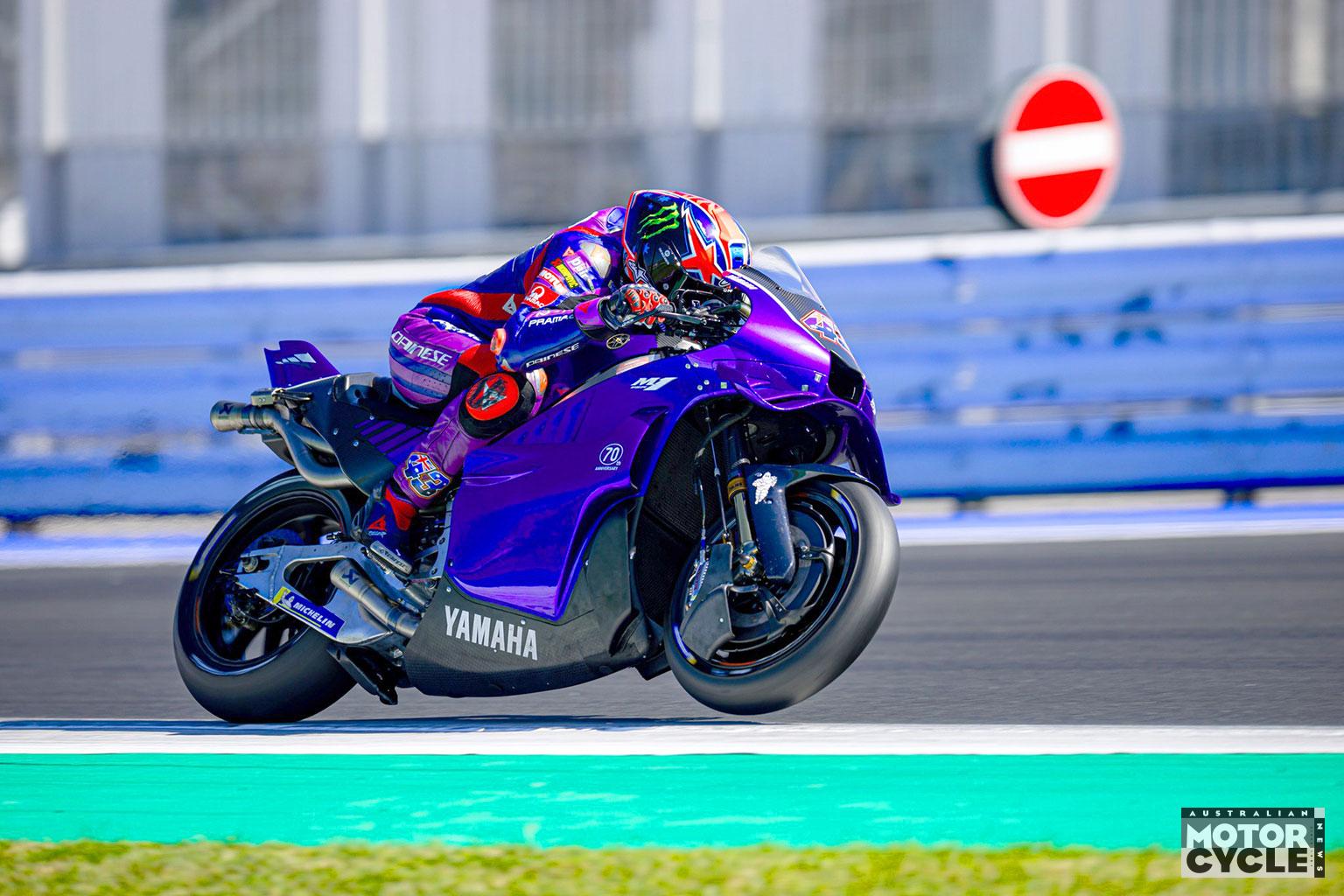
One of Yamaha’s big issues over recent years is the fact its riders rely on stopping entirely through the front tyre, with the rear often seen in the air when it should be planted and helping to scrub off speed.
“It was nice to have some support from the rear, that’s for certain,” said Miller. This bike brakes like a… I don’t want to say like a real bike should, because it’s not the case. This bike does what it should do with the tyres and the package that we have nowadays that’s necessary for these Michelin tyres at this point in time. You need to use the rear tyre to stop the bike.
“As I’ve said with the current M1, we’re missing inertia; we’re missing being able to keep it in that drive window with this tyre. Essentially that’s what this is all about, the tyres, the way that the development has gone on the tyres.
“In 2015, 2016, Ducati were looking at building an inline four to chase Yamaha. The regulations have pushed the motorcycles to be like this, to be able to exploit the strengths and weaknesses of this rear tyre.
“And yes, the bike does that very well. In terms of engine brake, in terms of the way you could slow down the engine, obviously exhaust valve helping as well, like a jake brake (as used in trucks), it’s all working together.”