From Mugello to Phillip Island, veteran journalist Adam Wheeler offers an insider’s portrait of Valentino Rossi, whose charisma and contradictions made this champion bigger than the sport itself
Twice awarded FIM’s Best Journalist of the Year, Adam Wheeler has been trackside for every aspect of the emotion and exhilaration of MotoGP racing for decades. In his latest book – Motorcycle Grand Prix: Insider Stories from World Championship Racing – readers are offered unprecedented access to MotoGP’s deepest inner circle. Along with interviews with the biggest names in racing, Wheeler deftly explores the paddock, the politics and the personalities that define the sport.
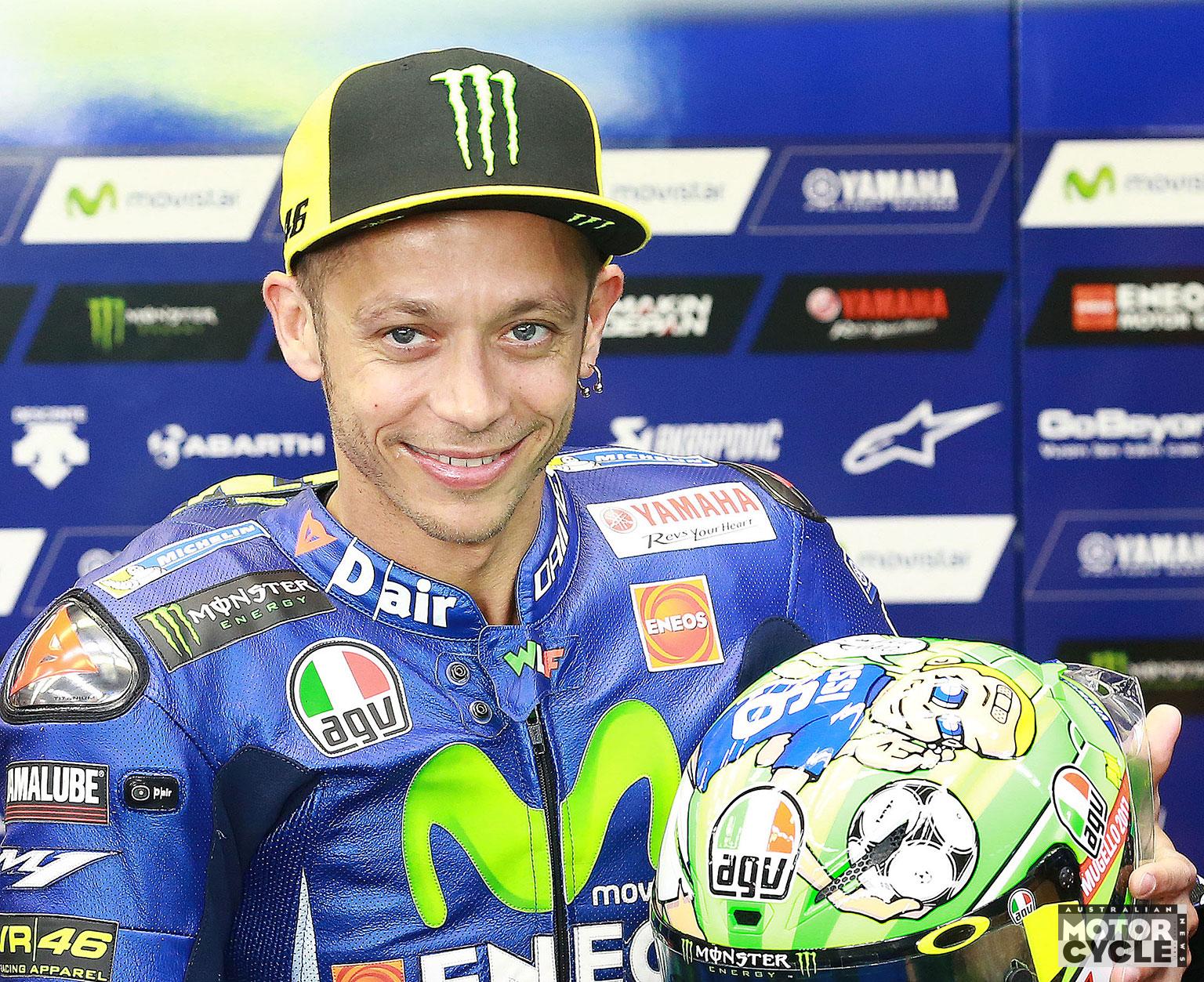
In this edited extract from Wheeler’s astonishing and intimate account, he turns his expert eye on the phenomenon that is Valentino Rossi – not just the wins and the yellow sea of fans, but the magnetism, contradictions and cultural force that made ‘The Doctor’ more than a mere champion.
Wheeler also poses the deceptively simple question: What, exactly, makes a motorcycle racer truly great? And why, even as his victories fade, Rossi’s hold on the sport refuses to loosen…
THE GIFT
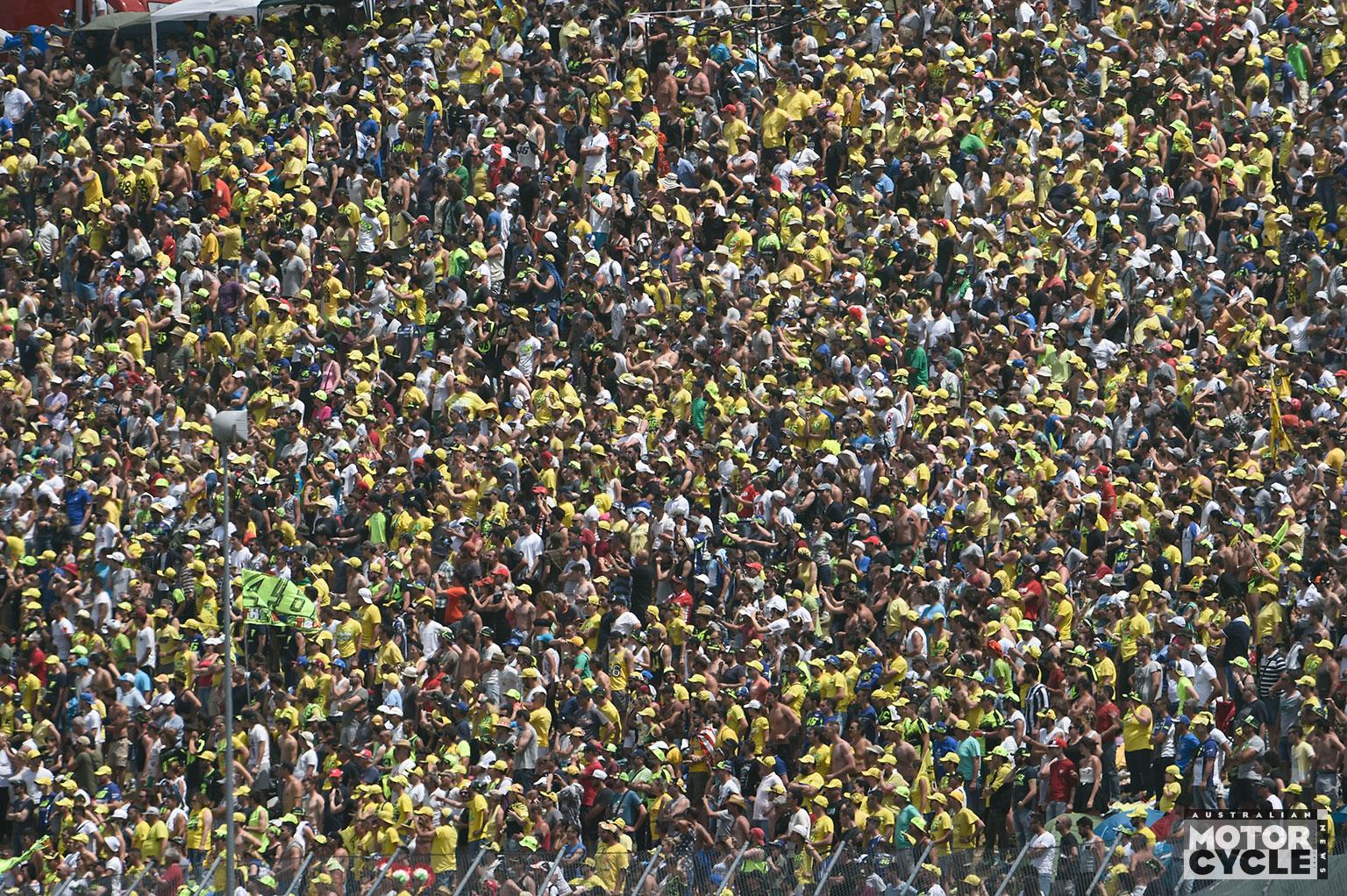
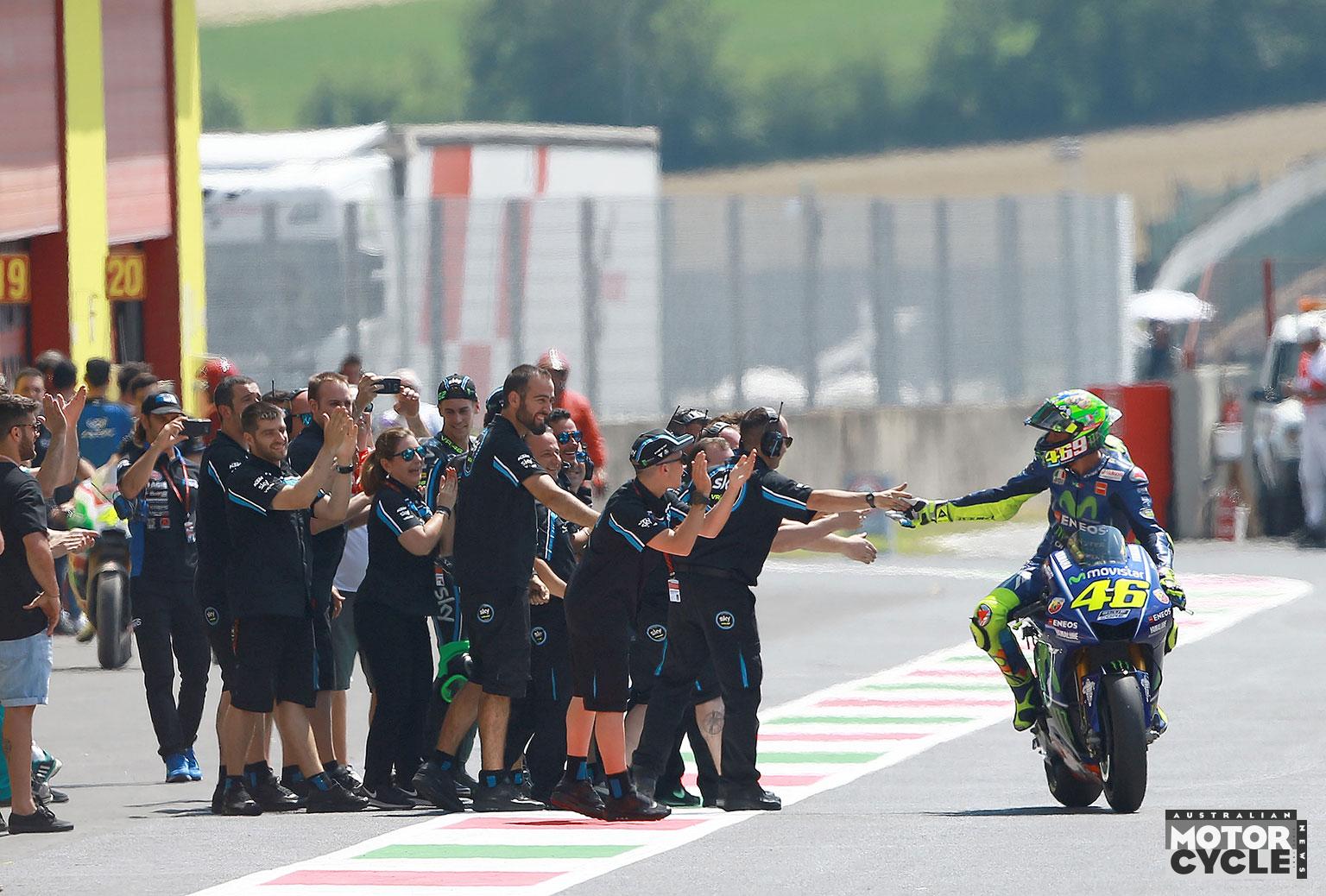
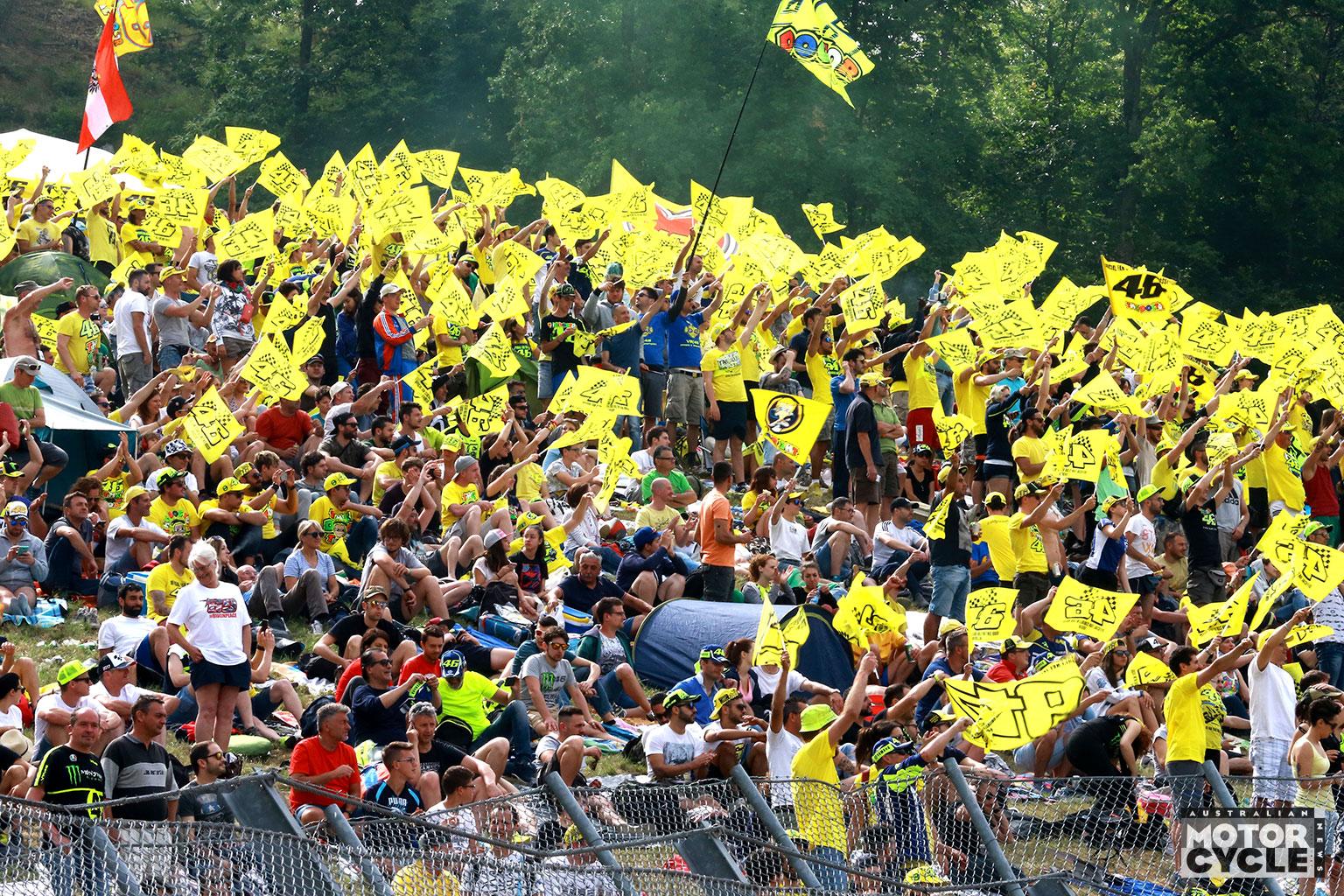
I’m loitering outside the main gate close to the large, red-helmeted ornament at the Mugello International Circuit, north of Florence, deep in Valentino Rossi country. I’m looking for people I think might have a decent grasp of English. It’s 2017, round six, and Rossi, the Peter Pan-ish, flamboyantly brilliant racer, has taken three podiums from the first five grands prix of the season. In a matter of weeks, he will claim the top step of the rostrum at Assen for the Dutch TT for his 115th (and final) grand prix victory. I’m surrounded by Rossi’s yellow 46s as well as copious Yamaha apparel.
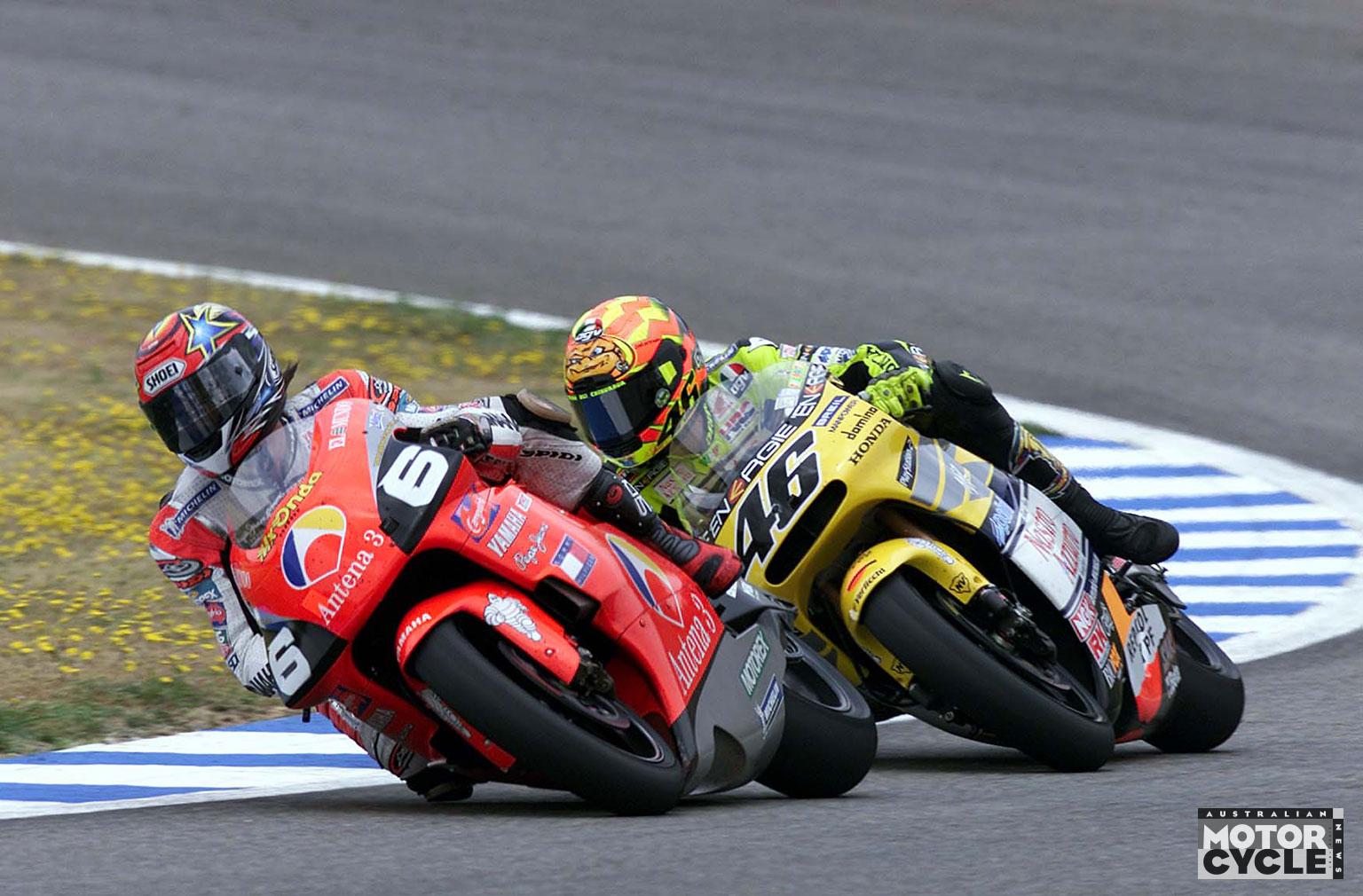
Rossi has battered grand prix statistics sheets, captured hearts from Argentina to Australia, and entertained, competed and defined a sport for the better part of two decades. ‘Transcended’ is probably an overused term but it sums up Rossi’s profile and synonymity with MotoGP nicely.
At 38 years old, Rossi is working hard to shift his style and attitude to the changing technical face of grand prix, as well as match the energy and expression of the latest generation of adversaries, thanks to his boots-deep involvement with the VR46 Riders Academy. Rossi guides and advises his proteges through his presence at training and riding sessions, but he also feeds off their vibrancy. He gleans fresh interpretations of style in the search for more speed to cope with changes to spec electronics and the Michelin tyre era.
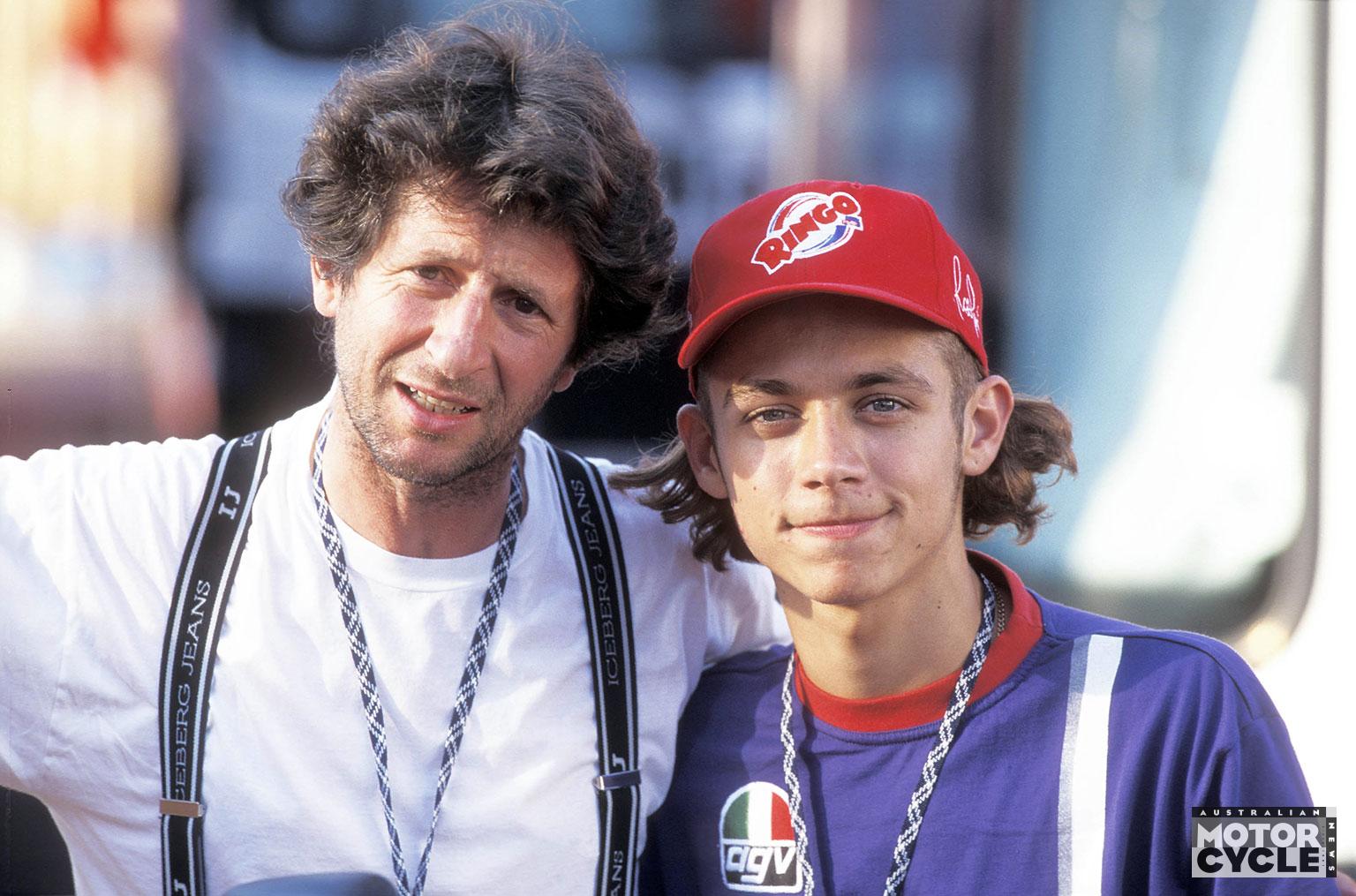
Rossi, son of charismatic 250cc GP winner Graziano, seldom has an issue in conveying how much he relishes his sport. The seemingly permanent happy-go-lucky disposition under the semi-rigid uniform of the cap, Oakley sunglasses, team shirt and shorts and Nike Air Max 95s is a well-practised veneer of presentation, an image projected to fans, media and television.
Early in his career, he sharply deduced how he could make the waves of attention work in his favour commercially, psychologically and for the sheer power of influence. The jovial side of his character is genuine, but it’s also a tool in his large box of promotional tricks – from the increasingly inventive post-race celebrations (the Mugello speeding ticket is still ‘all-time’) to the well-crafted personal imagery (sun, moon, animals), and the custom-painted helmets to the A-list sport and entertainment contacts.
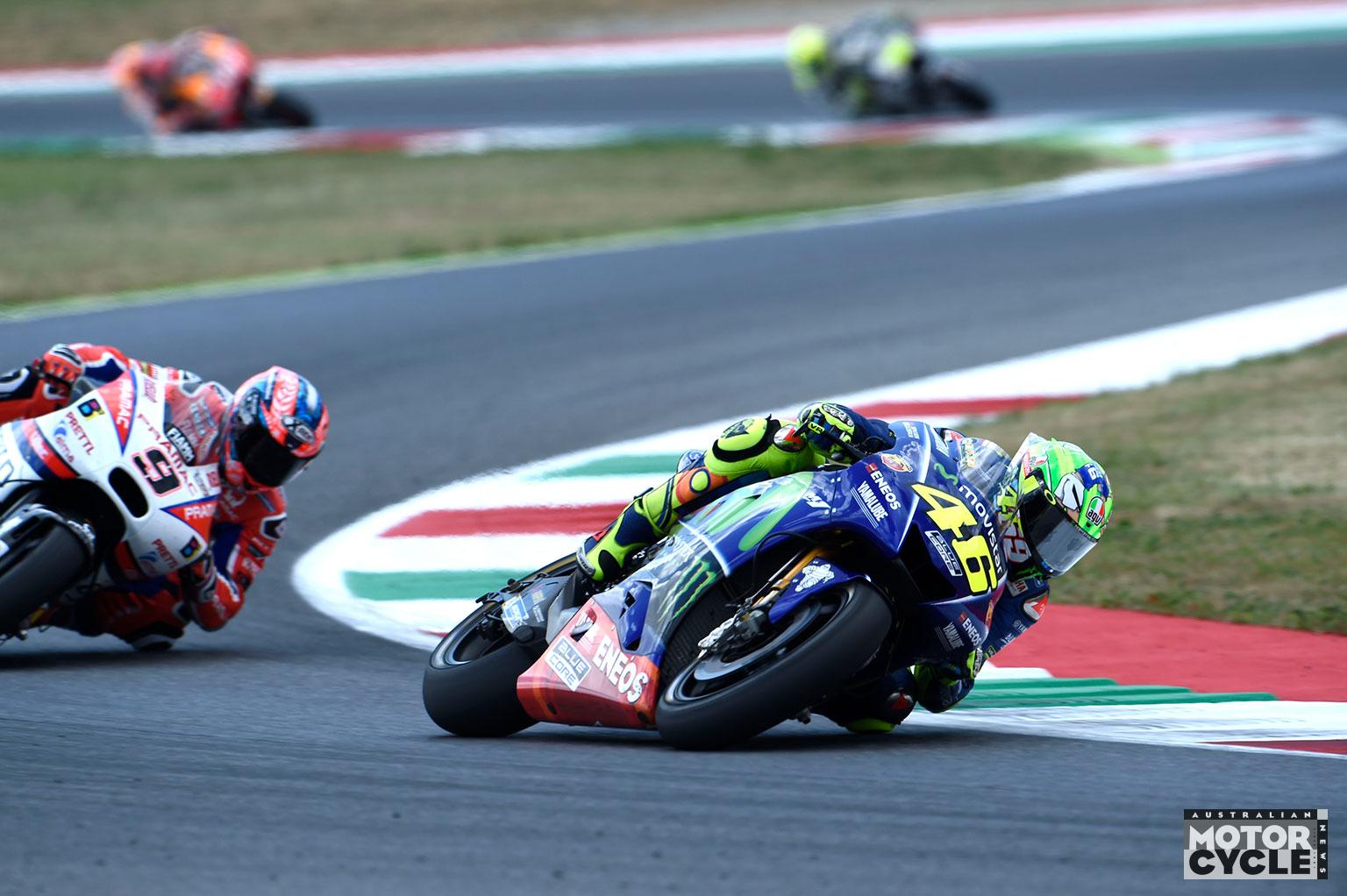
Rossi takes his on-track panache from riders like the late Norick Abe and Barry Sheene as well as Kevin Schwantz. But away from the asphalt there is hardly any precedent for what he does and how he works his audience. At Italian rounds of MotoGP – at most rounds – the dominant colour of the championship is that blinding yellow. No wonder he needs the sunglasses.
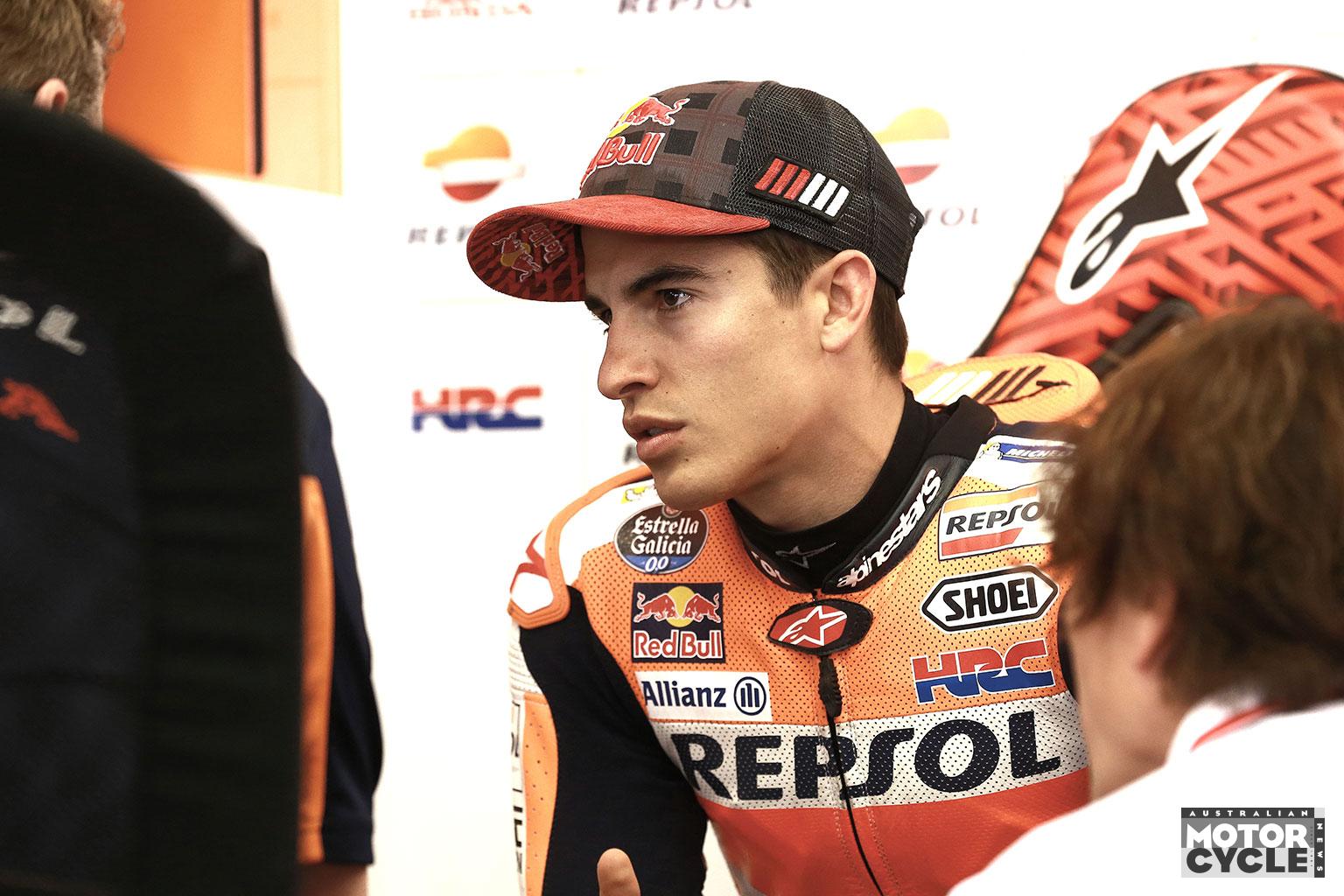
However, I am hovering by the gate at Mugello because Rossi’s sporting prowess has begun to be eclipsed. His reputation in the eyes of some (still the minority) was tarnished by the ill-tempered but utterly gripping spats with Marc Marquez in 2015 that introduced an ugliness to MotoGP. It is unusual to hear riders booed on the podium at grands prix unless there has been a radical race-altering incident, but the clashes between the pair (in Argentina, Netherlands and Malaysia) meant that Marquez bore the brunt of the Rossitisti and even needed a security detail at Italian fixtures in 2016.
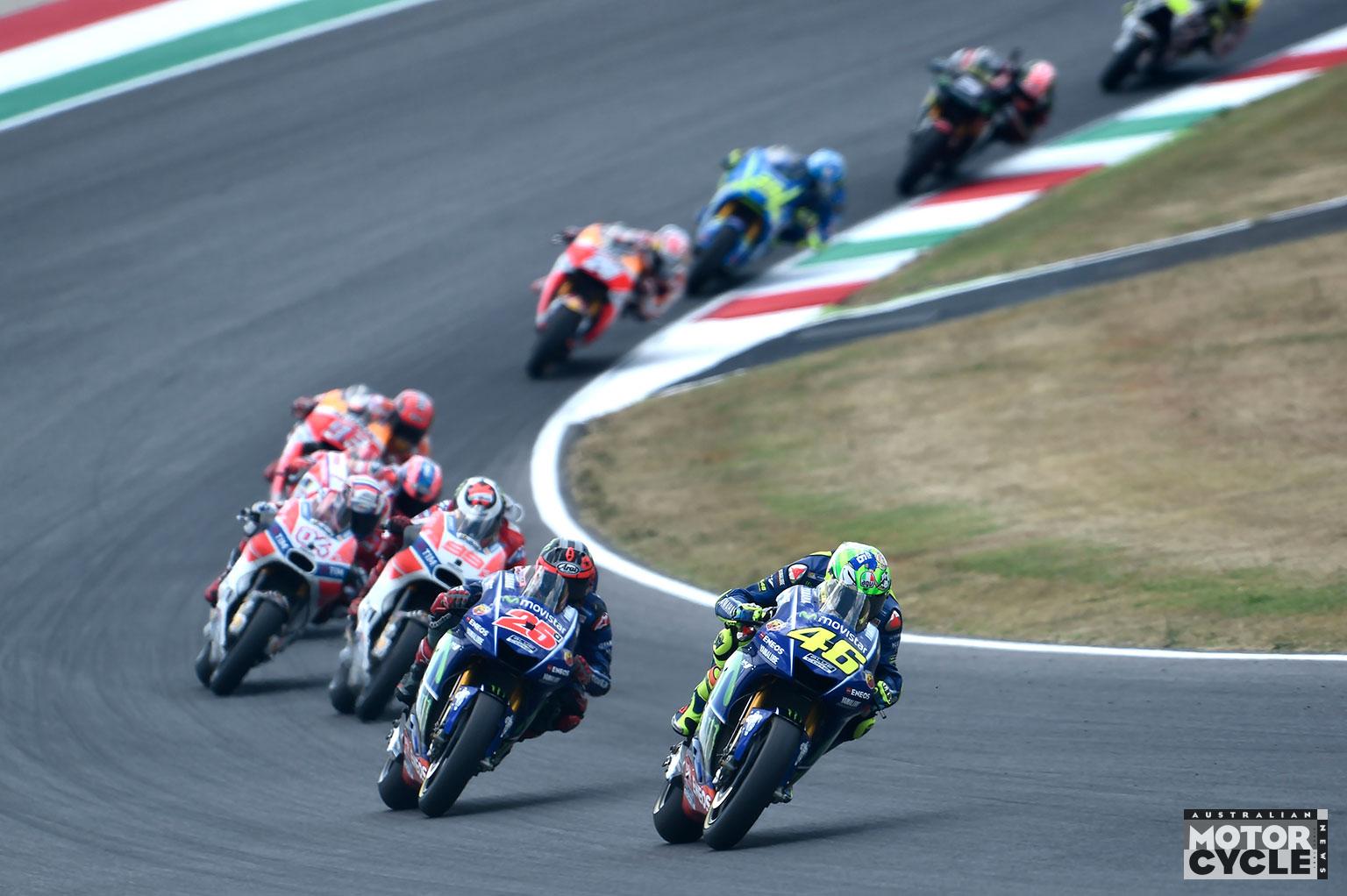
If Rossi is in the final laps of his career, then why is he still so damn popular? I want to try to find out. My first targets are two younger fans, two girls. A mistake, as they keep giggling at me and my attempts to talk to them. “He’s a wonderful person, with lots of emotion … and he’s funny,” is all I manage to glean.
A number 46-bedecked guy in his early twenties stops to talk and I get a more impassioned reaction. “He’s been my idol since I was four,” he says. “From my brother and my father; I just love motorcycles. We have grown up with him and he races for all of us.”
A gentleman with a yellow T-shirt, a fold-up chair and an icebox: “I’m from Tavullia. So I’m in the fan club,” he smiles. Not much insight there then.
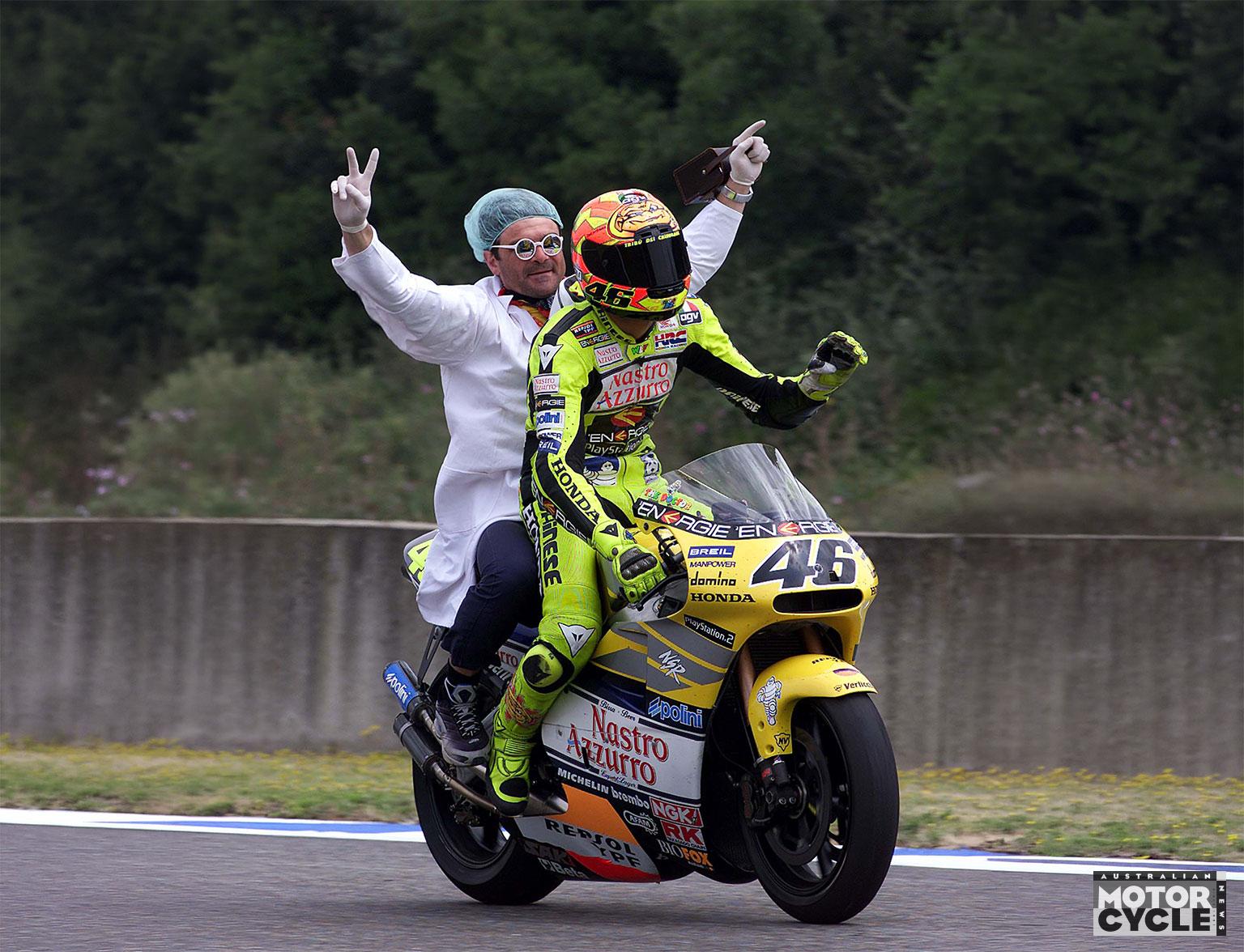
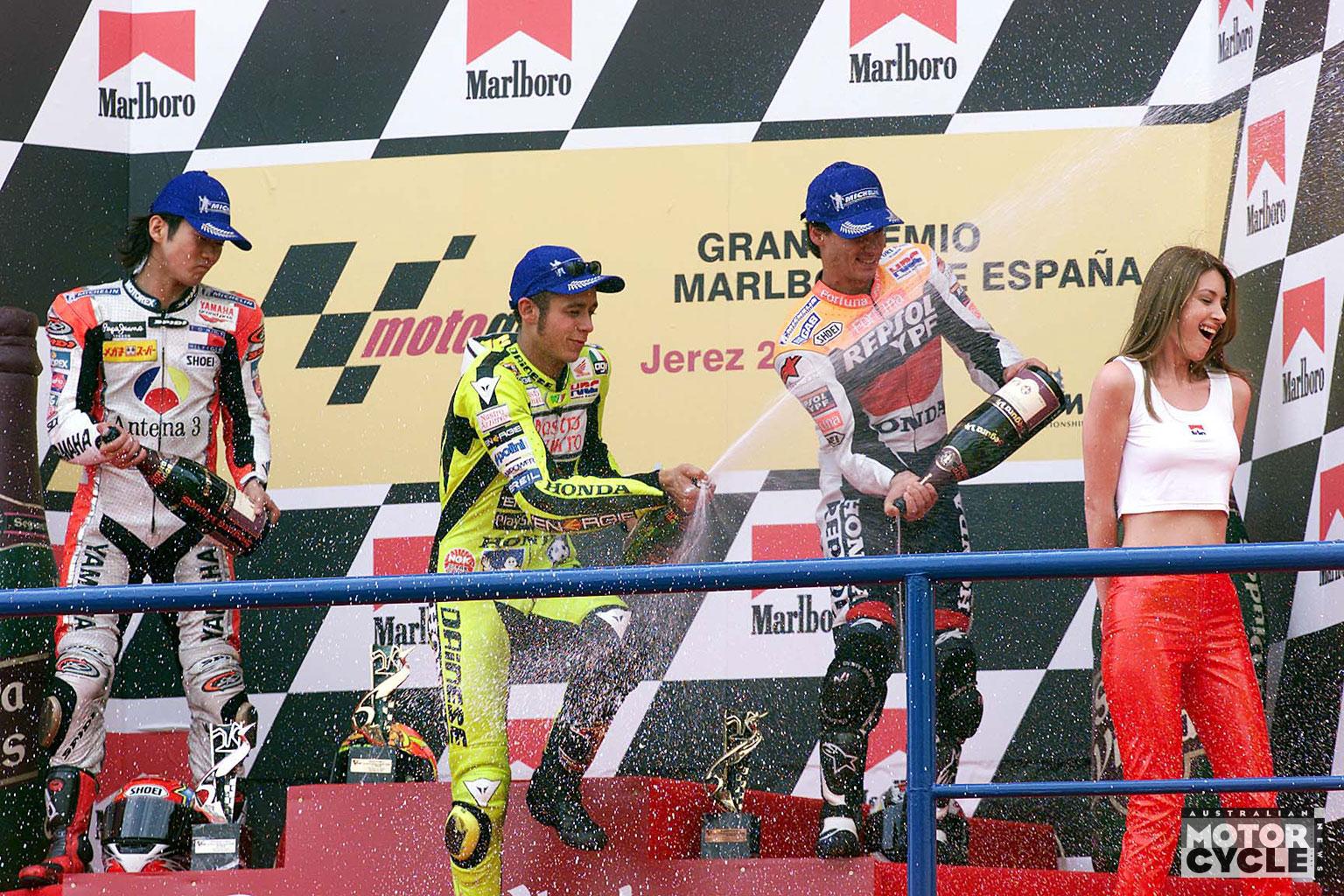
My next approach is to two guys standing together. They turn out to be South Africans. “He’s just a character,” one tells me. “When I was 13 or 14, my dad said, ‘Watch this one; he’s special.’ And from the moment he jumped off an RS250 and went to the toilet, he was the one,” he adds, in reference to Rossi’s 1999 250cc Spanish Grand Prix victory at Jerez, where he stopped on the cool-down lap and briefly disappeared into a Portaloo.
My final interviewee is a father accompanying three kids, each decked out in VR46 garb. They are from France. I walk with them through the gate and towards the Arrabbiata 1. “He is very good at marketing,” the guy opines. “For the kids, he is fun, and with ‘The Doctor’ and the colours, he is like a cartoon and has become such a part of MotoGP it is hard to imagine it without him. The other riders are more neutral. We know Marquez is a god but the kids like Rossi for the fun.”
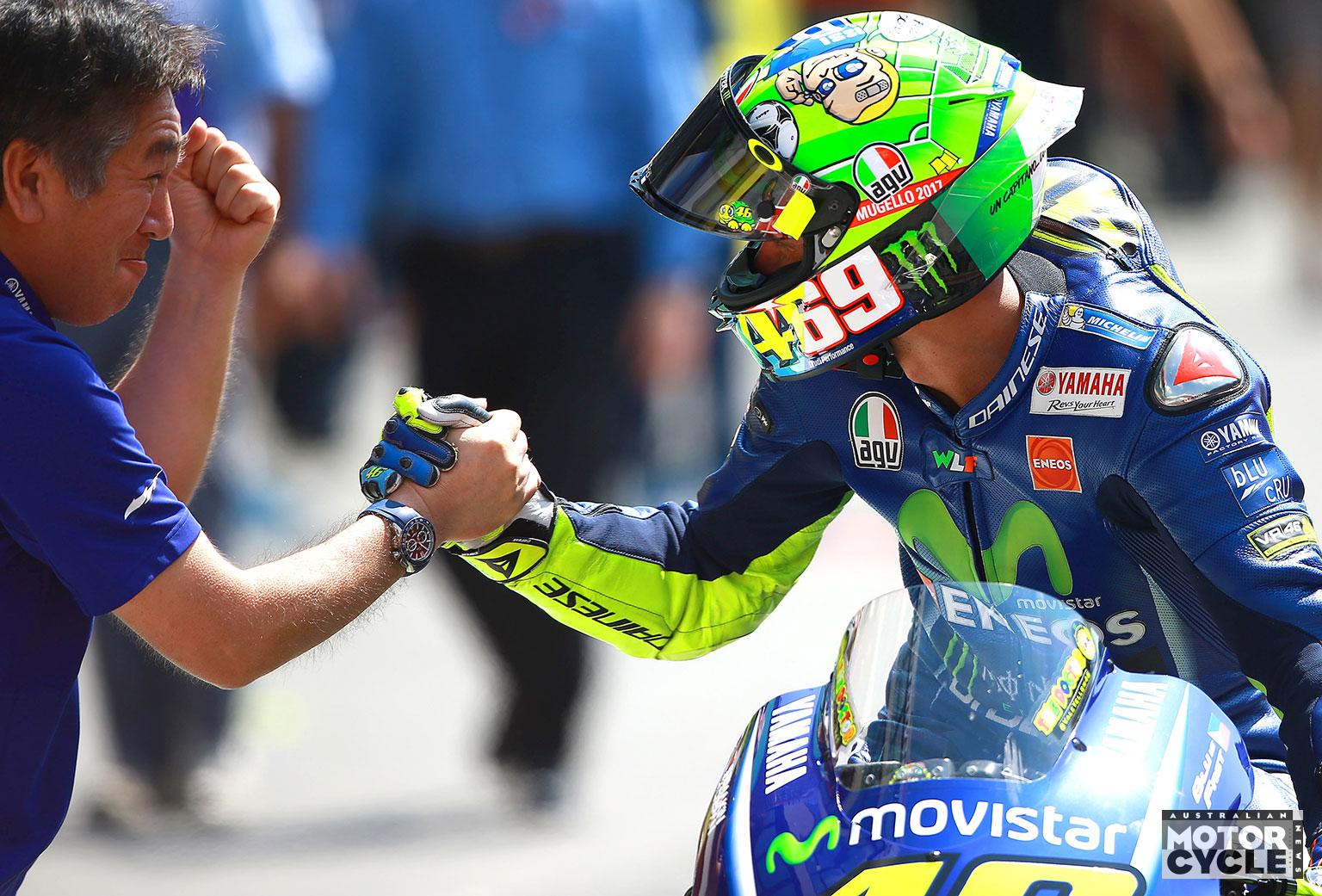
Rossi expresses an era. He symbolises a sport. At this time, he is still both a commercial boom and a crutch for Dorna. The wins, the podiums, the championships, the impact is immense. But is he the greatest motorcycle racer? Or, what makes a great motorcycle racer?
GREATNESS IN THE MAKING
It is easy to forget just how much excitement Rossi’s emergence generated. Magnetism apart, he took a season to learn a class and then won it in his second term, every time.
Before the greatness were the germs of a phenomenal motorcycle racer.
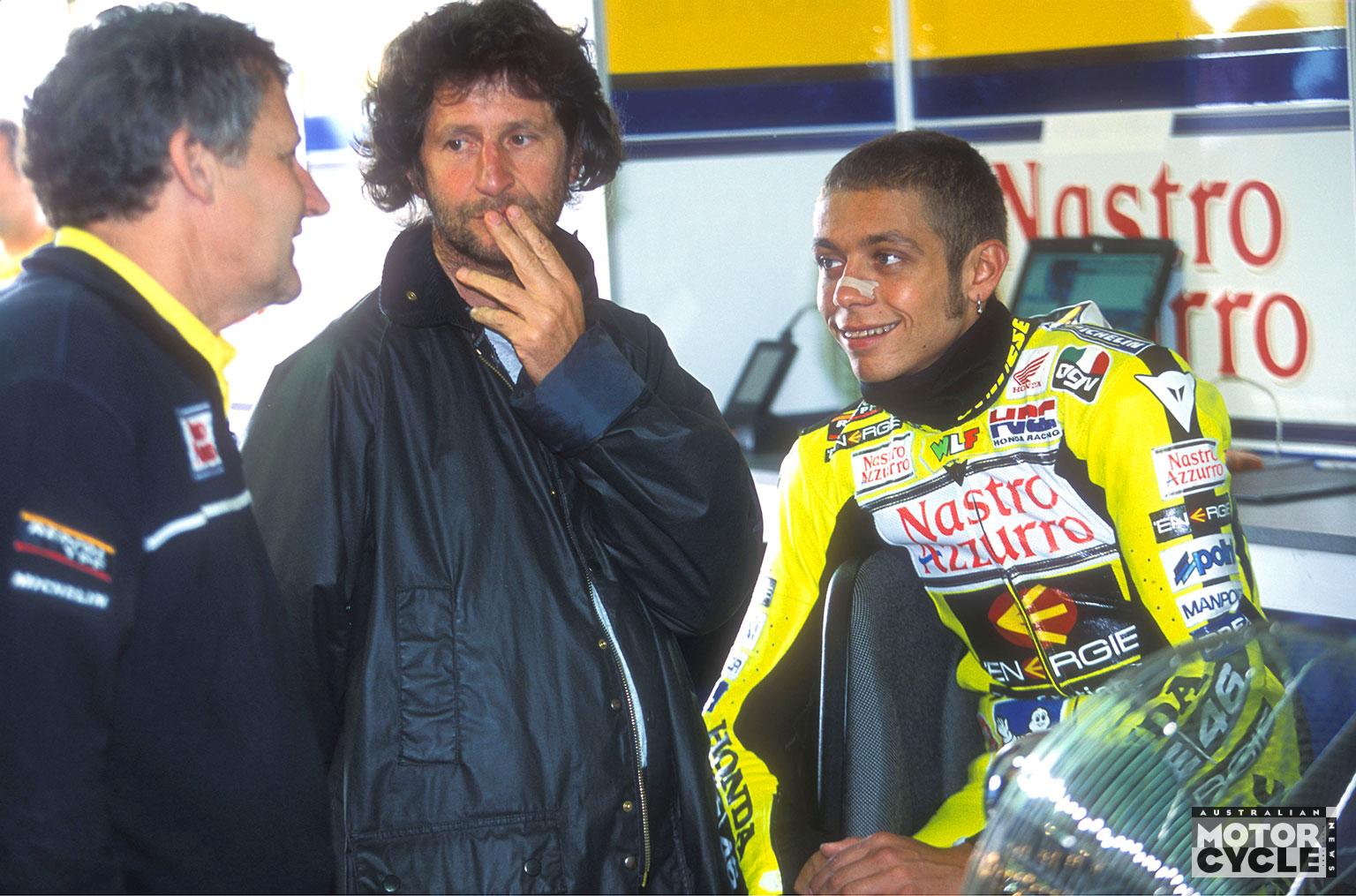
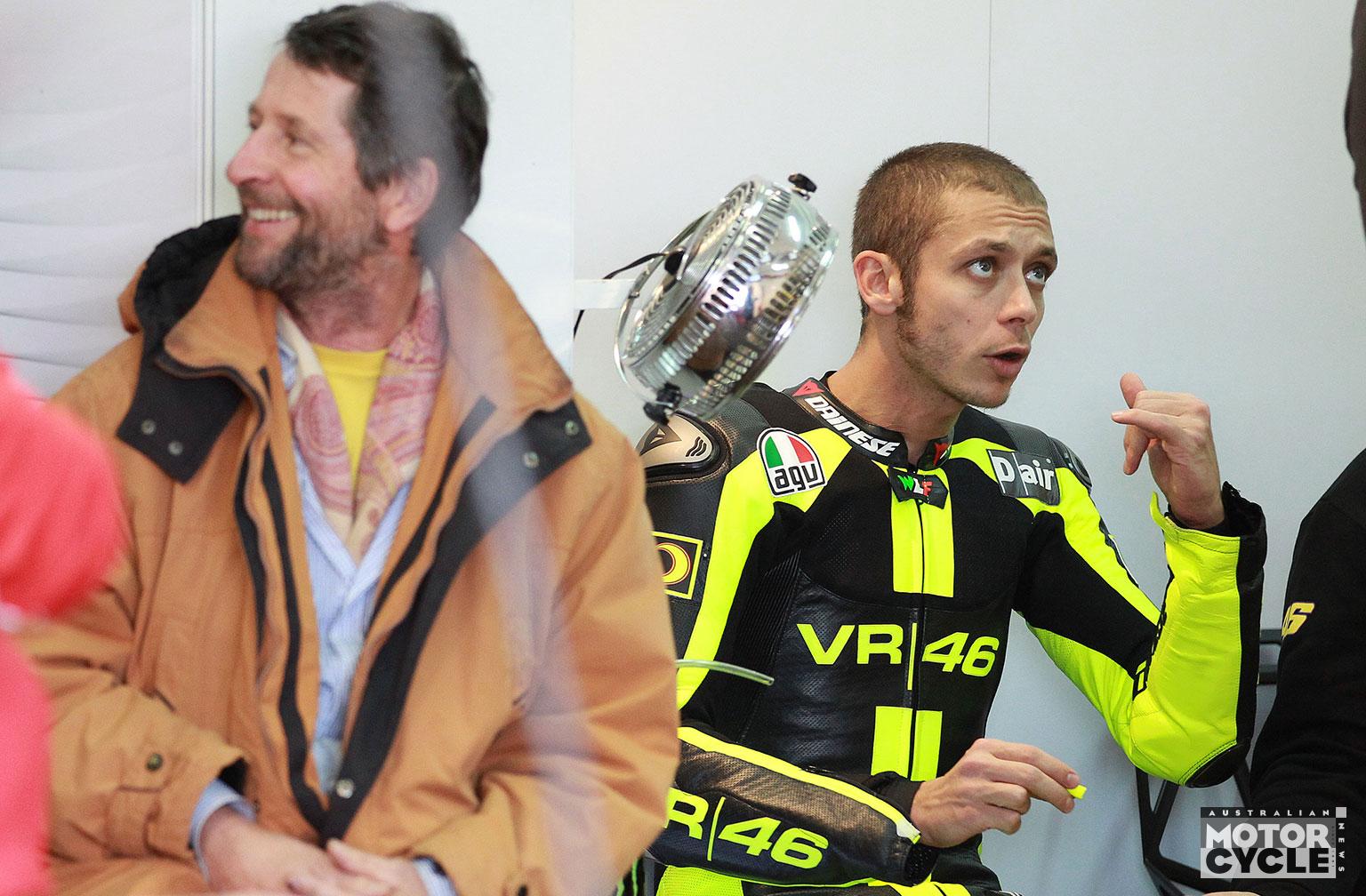
“Vale is the son of Graziano,” Uccio Salucci says to me in Germany 2024, when I quiz him on the skill factor of his lifetime friend and employer. “When I was younger, I didn’t really get it. Now I am older, I understand that Graziano gave Vale all of his experience.
“Vale drove a kart before the bike but every time he was driving or riding he did it with a smile, he was not pushing him, and this young guy when he was 16 years old was driving a 100cc kart so very fast, too fast, for a child. It was like he was 20. He already had the ‘system’ to drive. A big talent. He was very impressive. But Graziano did not have the money to pass to the bigger kart and the minimoto was the next choice. In a very short time, he was riding as fast as the other riders who had a lot more experience.”
Graziano was a charismatic and naturally talented Grand Prix racer. His career was curtailed by injury but he evidently funnelled his stronger attributes into his son. He was a slightly eccentric figure. I’d sometimes see him at grands prix. One of the oddest episodes involved pulling into the car park at Donington Park one morning for the British round and seeing Rossi senior rolling around in sheets in the back of a BMW stationwagon.
He didn’t like sleeping in hotels apparently.
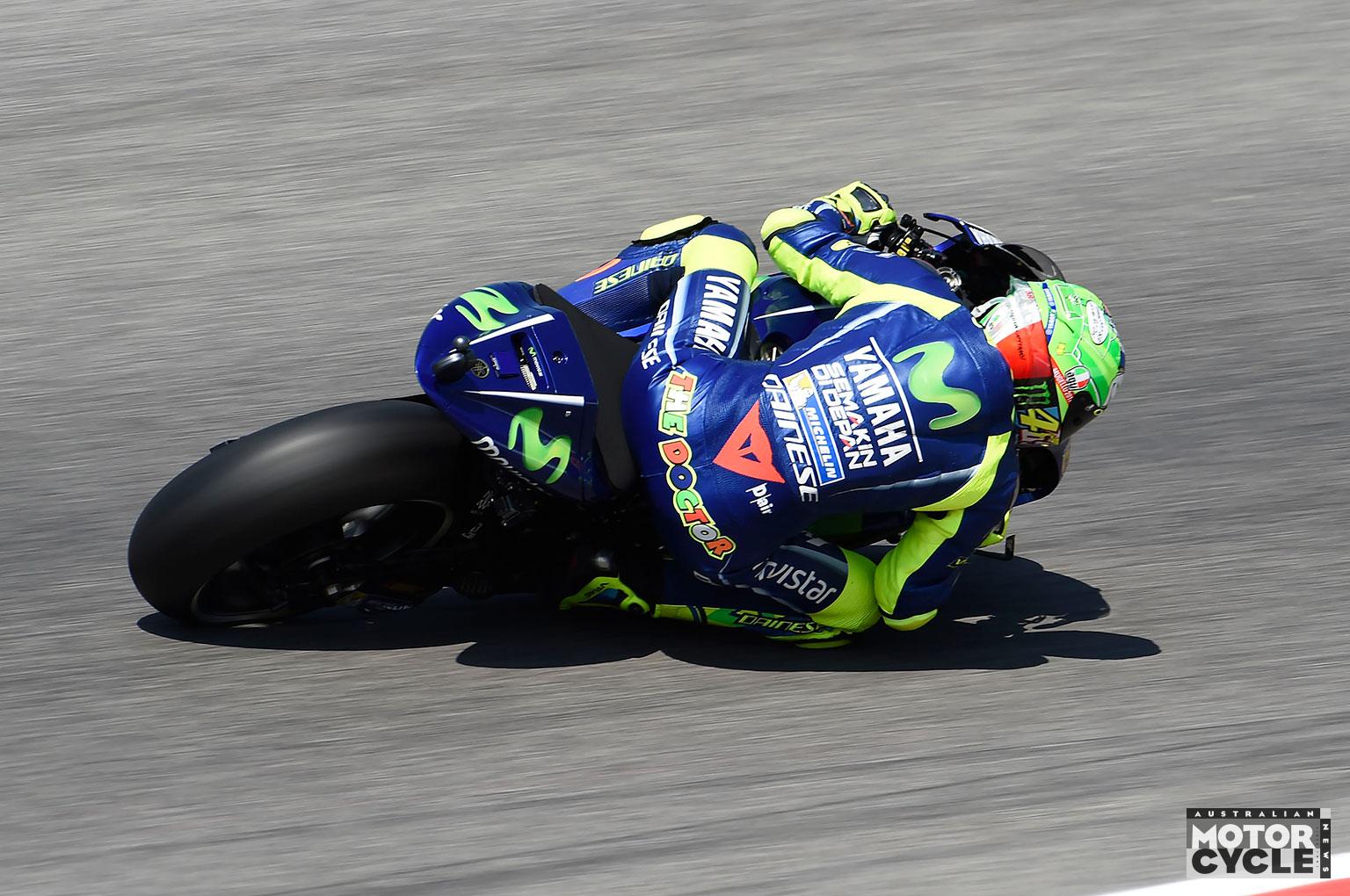
“Vale never got ‘bigger’,” Uccio continues on Rossi junior’s trajectory. “He has always been like this (holds up his finger). He doesn’t need to take the bike all the time and be ‘Grrrr!’ (mimes aggression). If you see his data, then he was braking and accelerating very smoothly. A lot of people say to me, ‘I stay behind Vale and I am like huf-huf, pushing hard, and, f**k, he is ahead doing nothing! I see him for two laps and then no more.’ This is talent.”
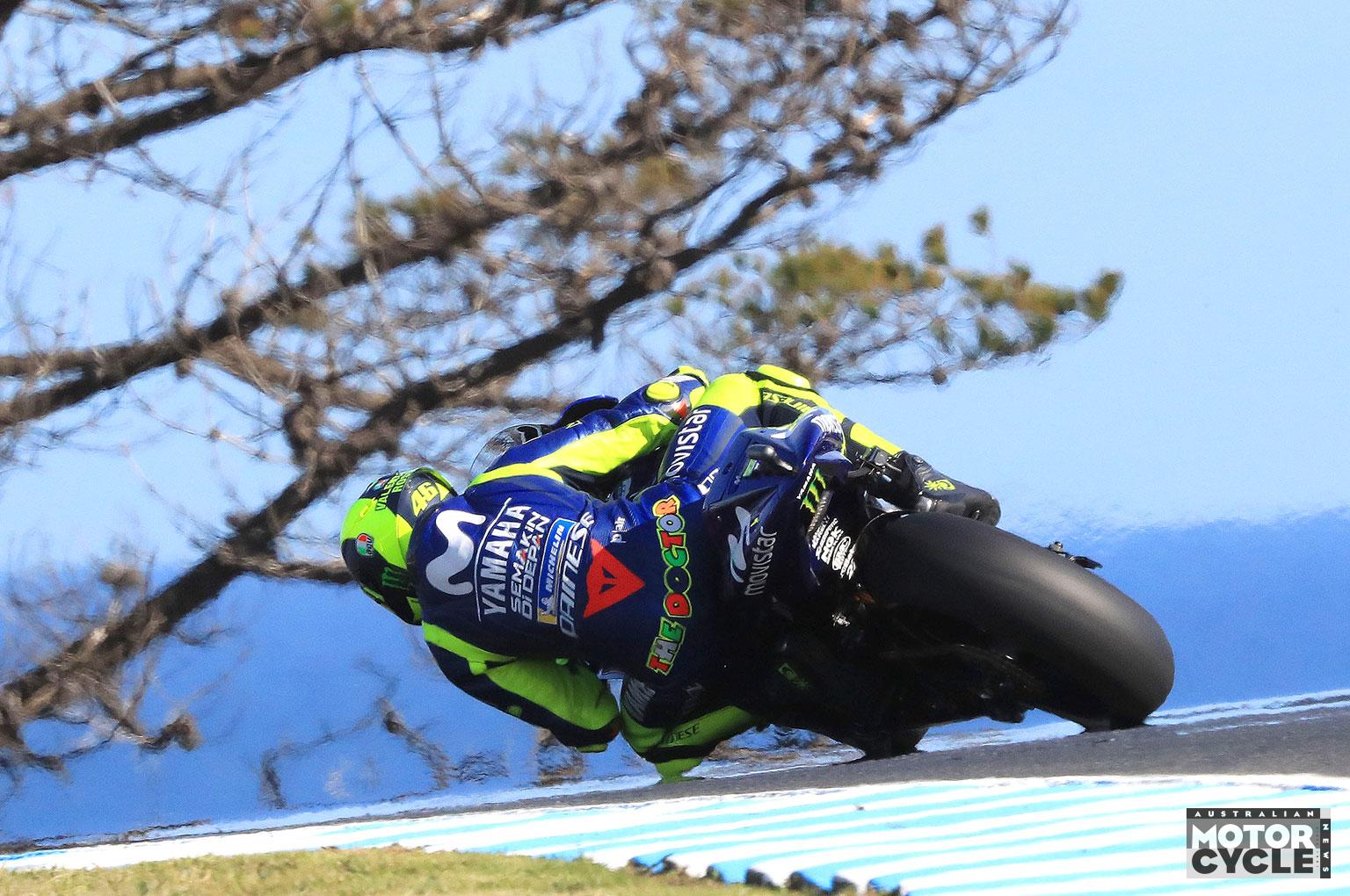
The fact that Rossi claimed the 2003 world championship at the ‘rider’s circuit’ of Phillip Island in Australia by accelerating above and beyond a 10sec mid-race penalty for passing under yellow flags shows just how much he could stretch the limits, even taking into consideration that the Honda RC211V was the dominant motorcycle at
the time.
CHANGING THE GAME
The first time I interviewed Rossi was at the 2001 Spanish Grand Prix at Jerez. The-then 22-year-old had a mini-train of media commitments; evidently, media work promoting Honda was still a requisite. Rossi, clearly fed up at another dose of questioning but looking fit, trim and tanned with very close-cropped hair and sideburns, offered up his stock reaction to my small talk about his recent London address. “It’s cold,” he uttered, perhaps for the thousandth time.
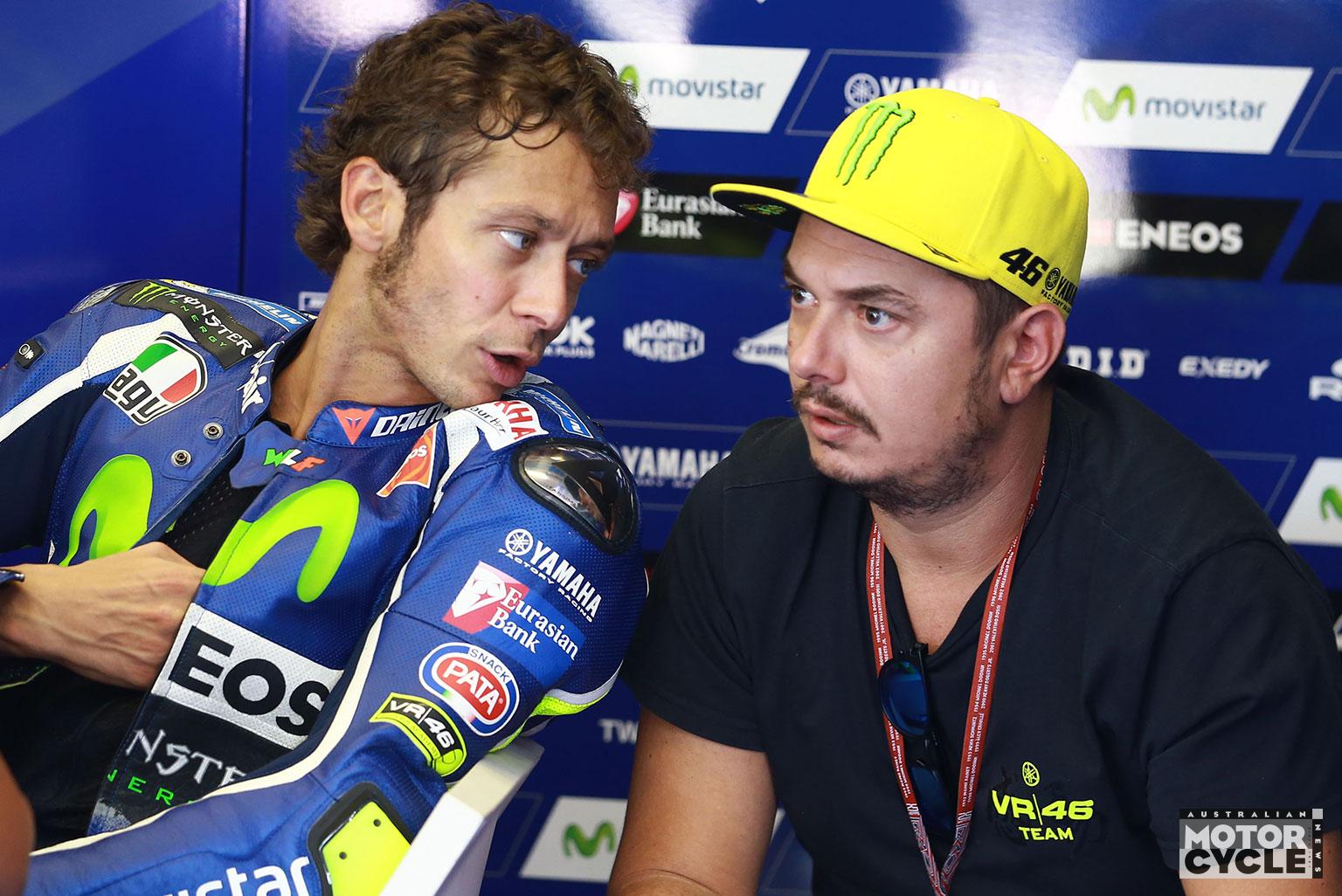
He already had a way of transmitting his personality. “I think it’s very important to have a lively character; for me this is a normal thing,” he said, leaning across the table. “I’m just a boy who is 22, so I have fun just like a 22-year-old! I think the riders who are very reserved are just older and maybe have a more mature view of the whole thing. I think it’s good for the people and fans to see someone who is having fun in what they do. The sport is hard and serious but riding for me is always enjoyable. To go fast, for me, is the most fun.”
In an instant, he then switched to show some of the dedication that Salucci would eulogise 23 three years later. “My preparation for this season has been different. I have been more quiet, and have had serious ideas about my racing,” he said, after having won the opening three rounds and on the way to his first championship and the final 500cc crown before the rebranding to ‘MotoGP’ in 2002. ‘I think I understand the 500 better.”
Rossi quickly became MotoGP’s supreme Claudius – a man who could so easily smile and smile and yet also be a villain to his rivals that he would systematically dismantle with superiority and mind games.
Marquez was his most robust opponent. A man who bettered his speed and was (publicly at least) immune to the comments and the yellow army. Rossi had other classy challengers, like Dani Pedrosa, Jorge Lorenzo and Casey Stoner, but Marquez had this sheen of invincibility, abandon, and he changed the game, like Rossi’s effortless style and fluidity had done more than a decade before the Spaniard entered the premier class.
“BEST TRACK OF THEM ALL”
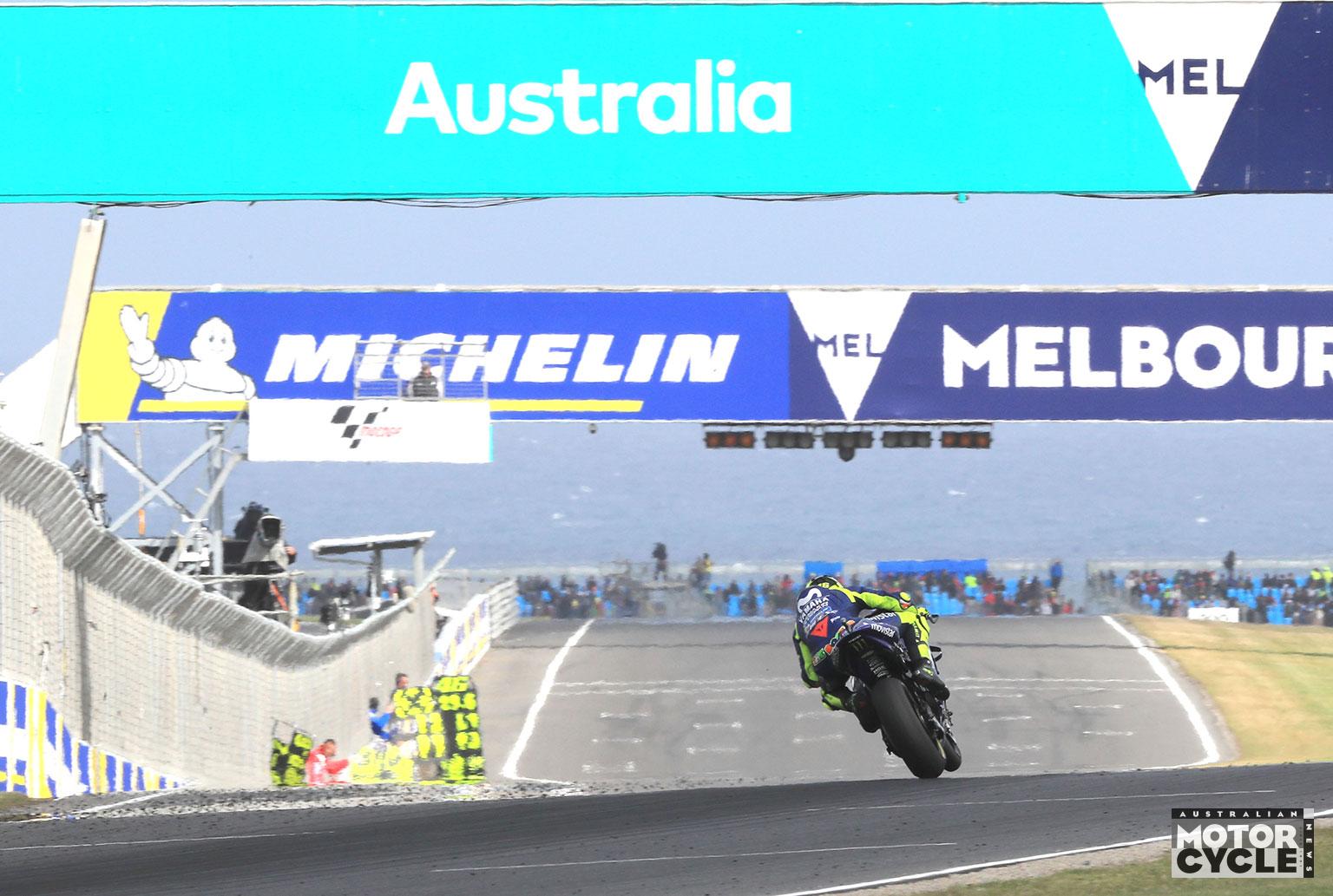
For the MotoGP ‘show’, it doesn’t get any better than at the best track of them all. I first went to Phillip Island in Australia in 2018, but it felt like I already knew every dip and curve. If there is one race to watch on TV each year, then it’s around the 4.45km trajectory that bends and flows with the contours of the land metres from Bass Strait and almost Australia’s deepest southern tip. For a European, it’s a long way: usually two long-haul flights to reach Melbourne and then an hour-and-a-half’s drive from the city across the bridge and onto the island.
‘PI’ feels like a track in a nature reserve. Driving up to the entrance gives the impression of entering a park: green lawns, white fences, trees and a lack of the concrete and big grandstands that typify most circuits. The paddock and pitlane are small and antiquated but, somehow, it adds to the flavour.
In 2018, it was eye-opening to see how narrow and tight the Phillip Island asphalt is compared to the wide sweep of pace on TV. It was also staggering to consider that the track has one of the highest average speeds of the whole season, so much so that dialogue had already started in 2018 about MotoGP being too fast for the venue.
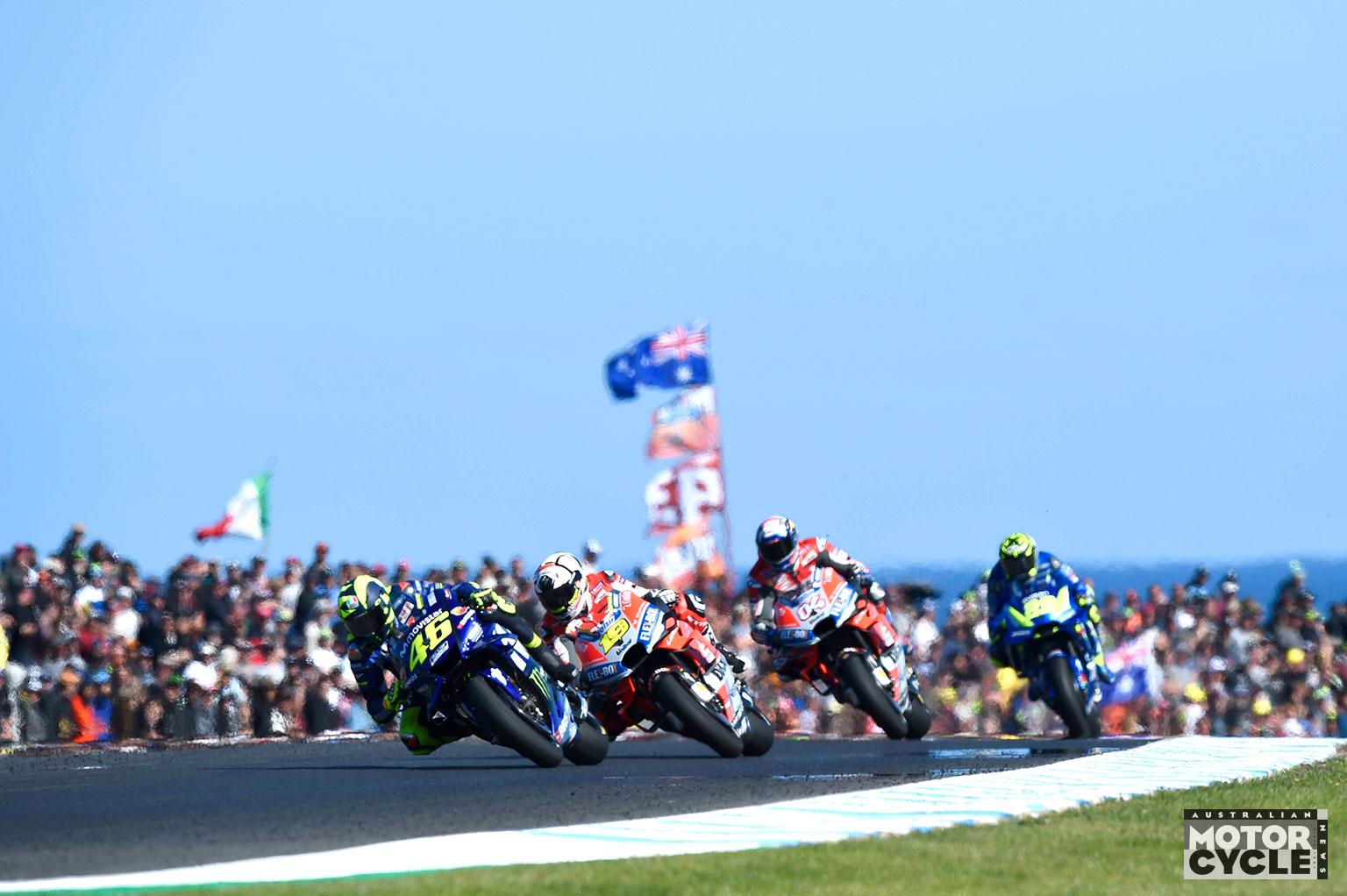
The timing of Phillip Island – one of the anticipated races of the year for the whole paddock – is an annual gripe.
The alleged insistence by the Australian Grand Prix Corporation, which organises and promotes both the Australian F1 and MotoGP fixtures, that the bikes have to run in October and a spring climate (the F1 takes place in the drift from summer to autumn in March) means the weather is viciously changeable from one day to the next.
As it’s a rider’s course, it’s little surprise to learn that Valentino Rossi, Casey Stoner and Marc Marquez have the highest number of wins there. Rossi explained to us in 2018 and ahead of his 400th career start: ‘When you arrive in Phillip Island, it is something big for sure. First of all, because you have to always keep great attention; the track is very fast and the conditions are always cold, sometimes it is wet. You have to be very careful. It is not easy to use the track.”
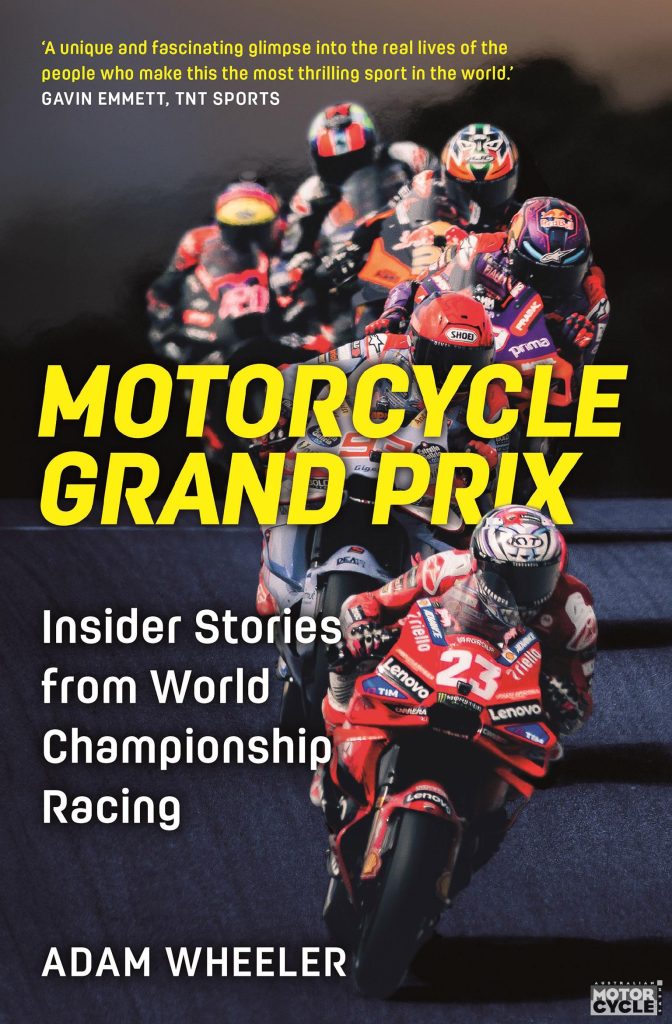
This is an edited extract from Motorcycle Grand Prix: Insider Stories from World Championship Racing, by Adam Wheeler. Published by Michael O’Mara Books, $37.99.