Listen to the cynics and the final year of MotoGP’s 1000cc era was supposed to fizzle out with a predictable conclusion. Going off chunks of preseason, the Ducati hegemony was still very much in play, they said. And Marc Marquez’s (Lenovo Ducati) advantage would very much be intact once fully fit. Plus, with tyres unchanged and factories rolling out
ever-more sophisticated aero, the spectacle would continue to underwhelm.
The opening round of 2026 was a glorious repudiation of that thought. While the reigning champion showed he is as hungry to assert himself as ever, the early glimpses are that both he and his factory have their work cut out in the year ahead. It was Aprilia – not Ducati – that dominated the 2026 curtain raiser. And Marquez doesn’t just have one competitor from a rival factory to fend off.
Marco Bezzecchi (Aprilia Racing) eventually finished the job that he started, and failed, to do on Saturday. The pacesetter from Friday morning was untouchable in the main race, showing he could still win even with the reigning champion present. Plus, Pedro Acosta’s (Red Bull KTM) astonishing Sprint win was an indicator that the young Spaniard is more than willing to battle his elder, more decorated compatriot. But more on that in a bit.
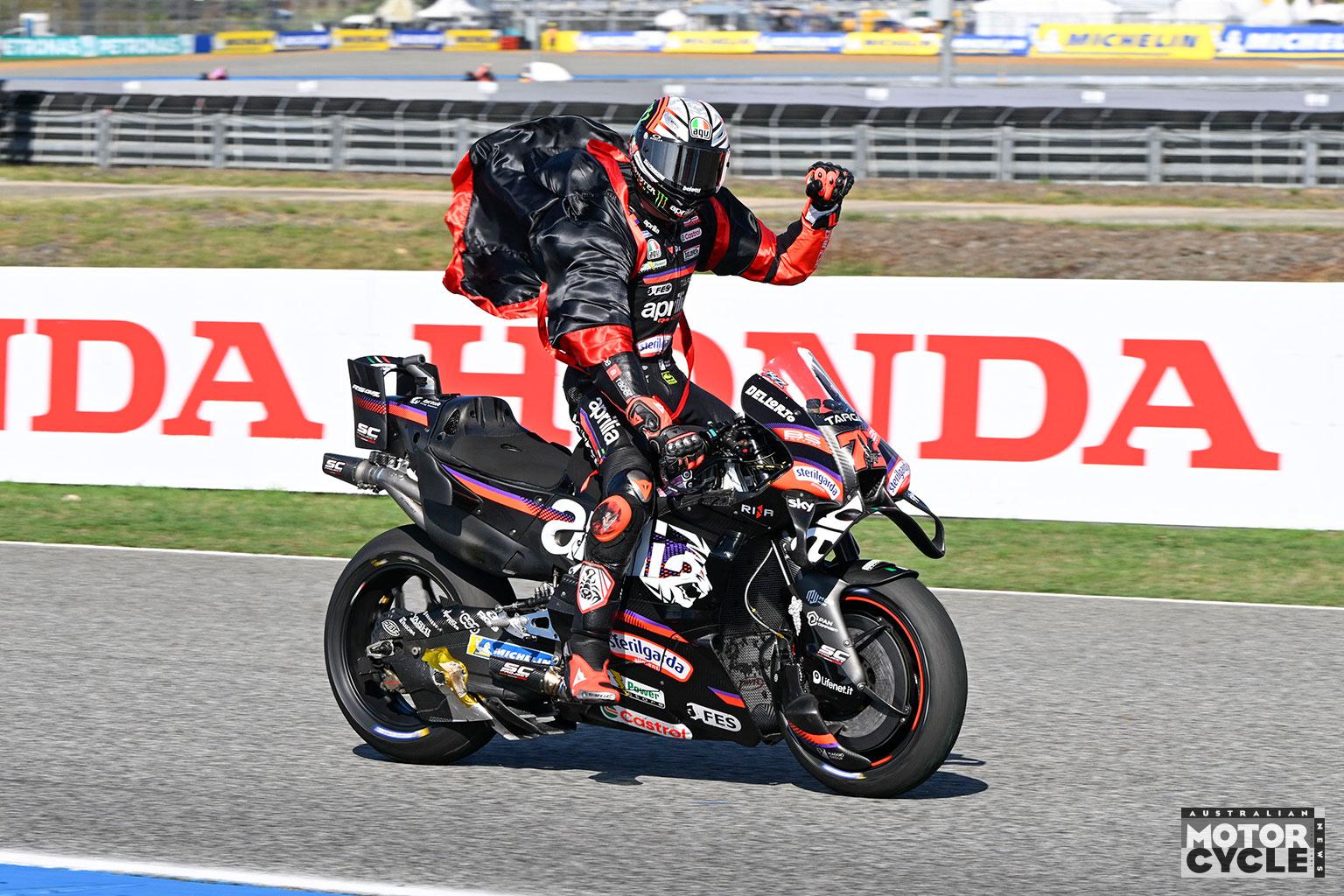
In reality, Bezzecchi should have walked away from Thailand with the full 37 points. His Sprint crash while trying to escape an aggressive Marquez was a sign of just how hard he was riding to show that edge.
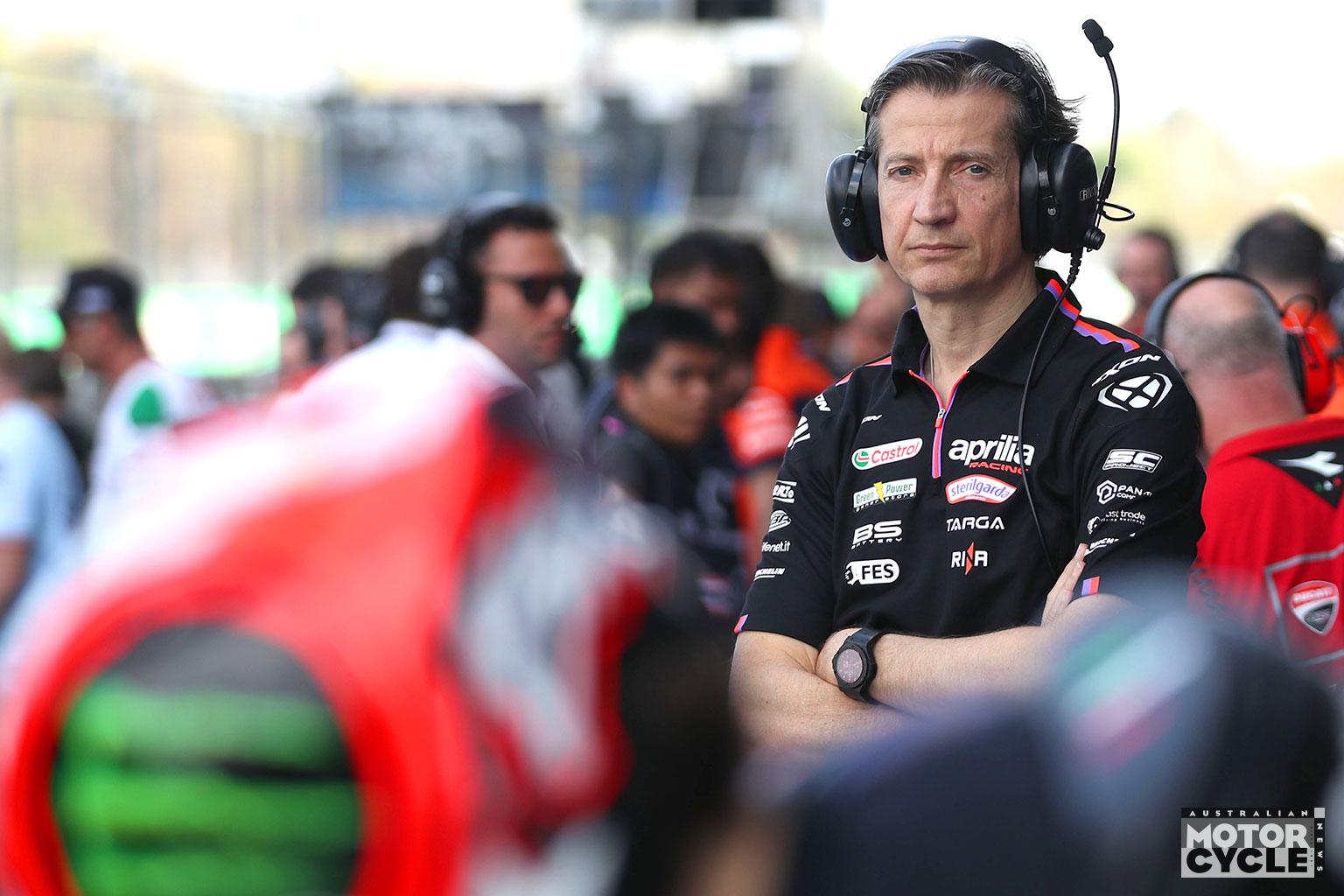
But a comforting gesture from his boss cleared the air. “Yesterday was time to support him, (even if) I wanted to kill him,” quipped Aprilia Racing CEO Massimo Rivola.
Sunday’s contest was over as early as lap five, with neither Raul Fernandez (Trackhouse Aprilia) nor Acosta getting within 5sec of his Bezzecchi’s RS-GP late on.
Bezzecchi’s speed was one thing; the strength of Aprilia’s three other runners was another. For the first time in its history, all four RS-GPs had genuine podium ambitions going into Sunday, with Fernandez coming away with a pair of third places and Jorge Martin (Aprilia Racing) the most comfortable since his switch from Ducati. Four Aprilias in the top five places was another first for MotoGP.
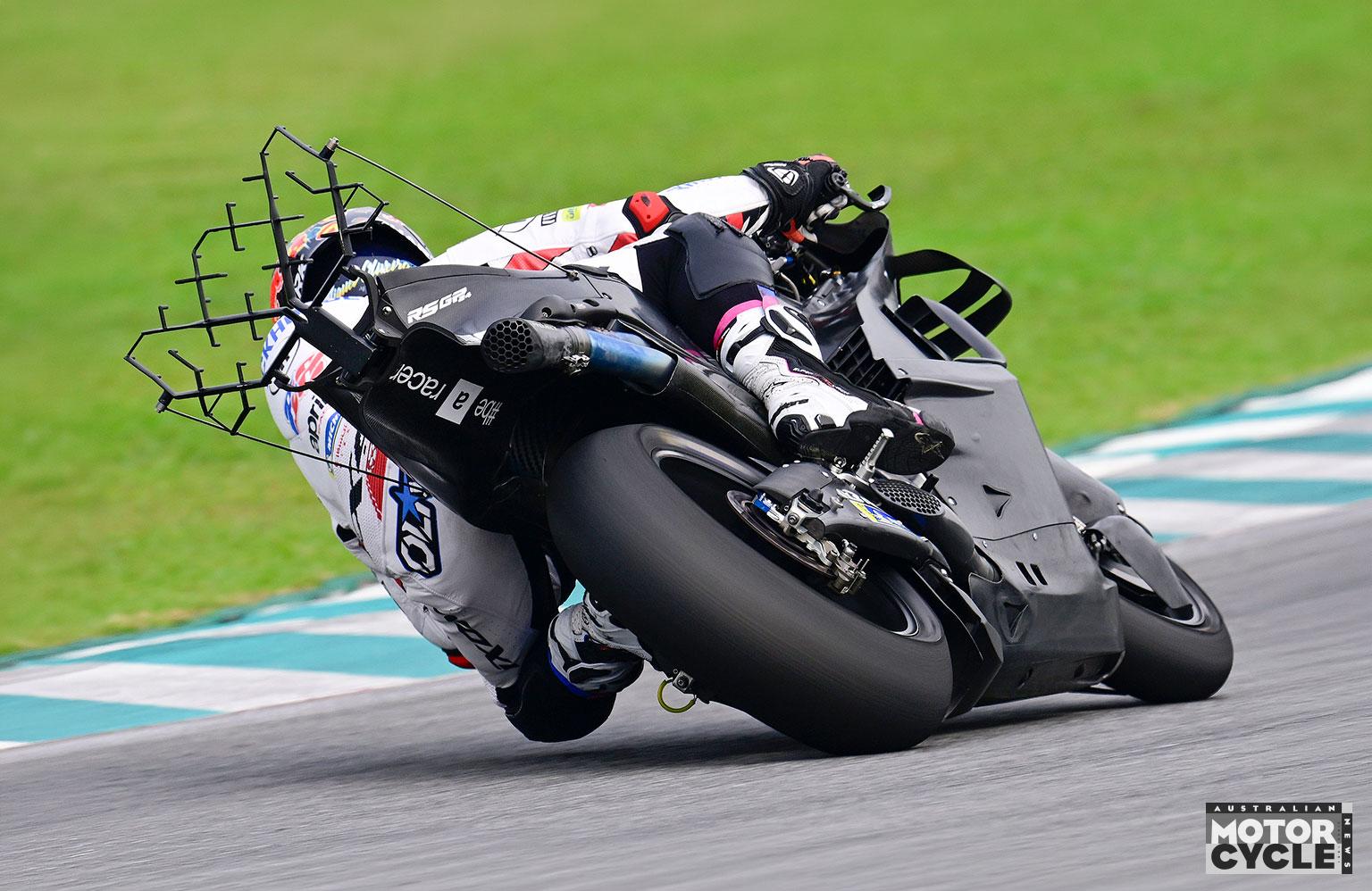
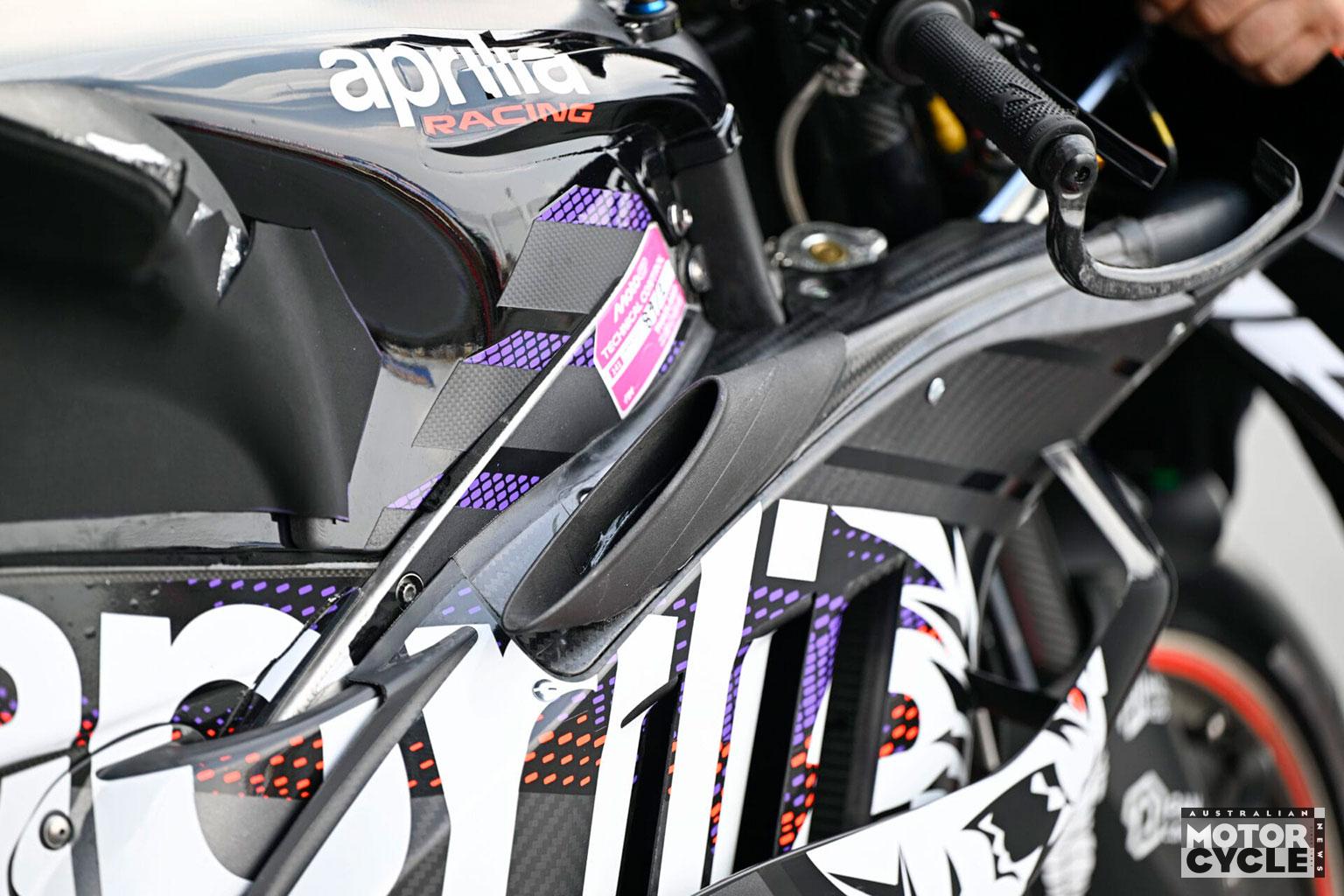
The Noale factory is now MotoGP’s reference in terms of aerodynamics. Having introduced winglets under the rider’s legs midway through last year – an innovation since adopted by Honda and KTM – its ‘F-Duct’ fairing was the talk of the paddock in Thailand. Its riders can now change the airflow through its fairing by placing their forearms over a duct just below the resting position when fully tucked in.
“We pushed quite hard on the aero side,” said Rivola. “You can see the shape of the bike is quite different to last year. What I like the most is even if the new aero package is difficult to digest for the riders, every time we introduce something on that side, it works. It means our models are working well.”
The question leaving the 2026 season opener was whether this was the new reality of MotoGP. Yes, conditions were unique, with tracks hitting a sizzling 58°C on Sunday. And the RS-GP dealt with the lack of grip from Michelin’s heat-resistant rear tyre – brought only to here, Austria and Indonesia – better than anyone.
Yet that’s only a recent development. Chang International Circuit used to be a Ducati fairground. Eight Bologna bikes locked out the top eight Sprint places as recently as 2024; and it was an all-Ducati podium here in both races a year ago. By contrast, Aprilia’s annual collapse in the high heat of the first Asian tour of the season was as predictable as the sunrise.
Marc aside, it was a concerning weekend for Bologna. “We’re no longer the fastest ones,” came Pecco Bagnaia’s (Lenovo Ducati) blunt assessment after a limp ninth. “We can’t control the tyres like before.” The trio of him, Alex Marquez (Gresini Ducati) and Fabio Di Giannantonio (VR46 Ducati) were desperately disappointing compared to testing form.
And that all happened after the weekend’s big controversy. Thailand’s most dramatic moment came on Saturday in one of the finest Sprints to date as we were treated to an Acosta-Marquez scrap for victory, a fight that was two years in the making.
There was much to admire in both performances: Some close to Acosta believe he was sandbagging in testing, when his race runs were some 0.5sec down on the Ducatis. Here, he was fearless of Marquez’s reputation as he went for him four times over the 13 laps.
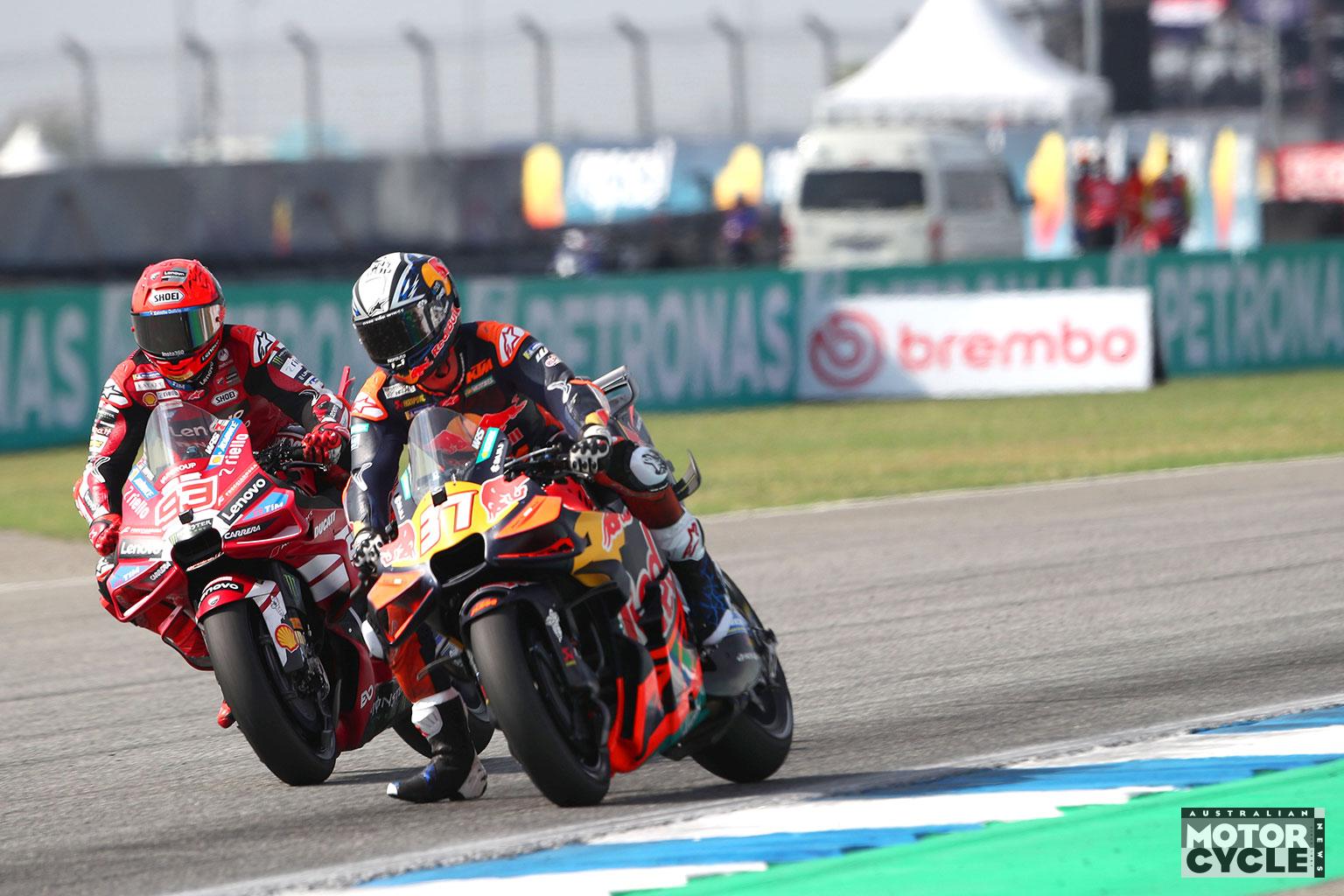
For his part, Marquez showed that the ruthlessness that’s defined his career was very much intact – despite his right shoulder still being some way off peak condition. His brutal Turn 12 move with just over one lap to play very much said, “Do you really think you can beat me, kid?” to a rider who’s poised to join him in Ducati’s factory team from 2027 on.
But was it over the line? The FIM Stewards felt so, and swiftly told Marquez to drop a position. From Stewards Chairman Simon Crafar’s point of view, the move wasn’t unsafe. Yet nor was it fair. After all, Acosta had made the same move three times without making contact and pushing his rival off the track. And the No.93 has been in enough scrapes in years gone by to suggest he’s lost the benefit of the doubt.
Not that it went down well. “It’s the new MotoGP,” shrugged Marquez. “If you want to have a lot of penalties, do it. But do it well. Why do you take one minute and a half to give me the message?” Even Acosta accepted he’d have done the same were roles reversed.
It’s early days. But first indications are extremely promising for the year ahead.