Where red dust rises and old engines sing, history rides again on the Kalgoorlie claypan
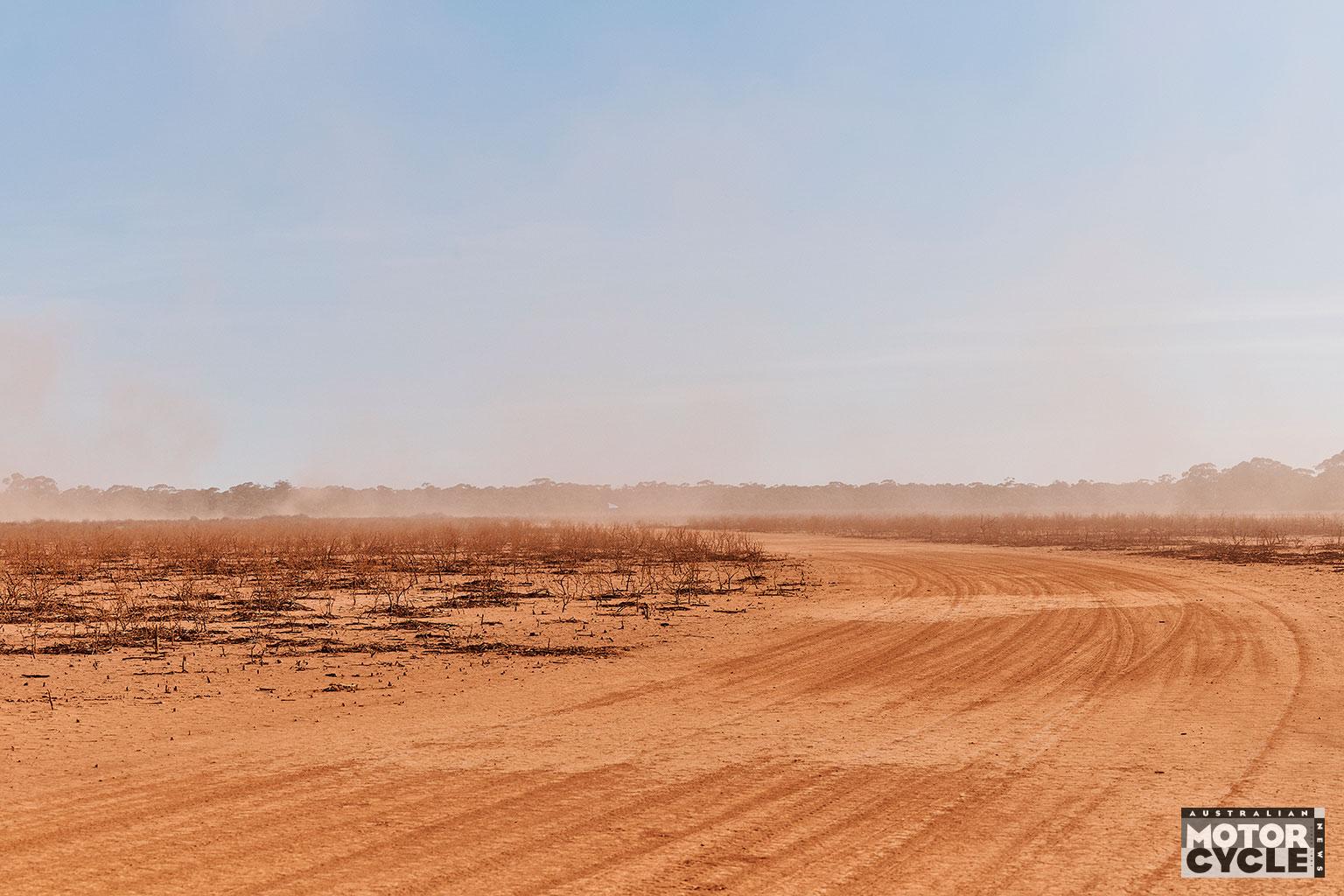
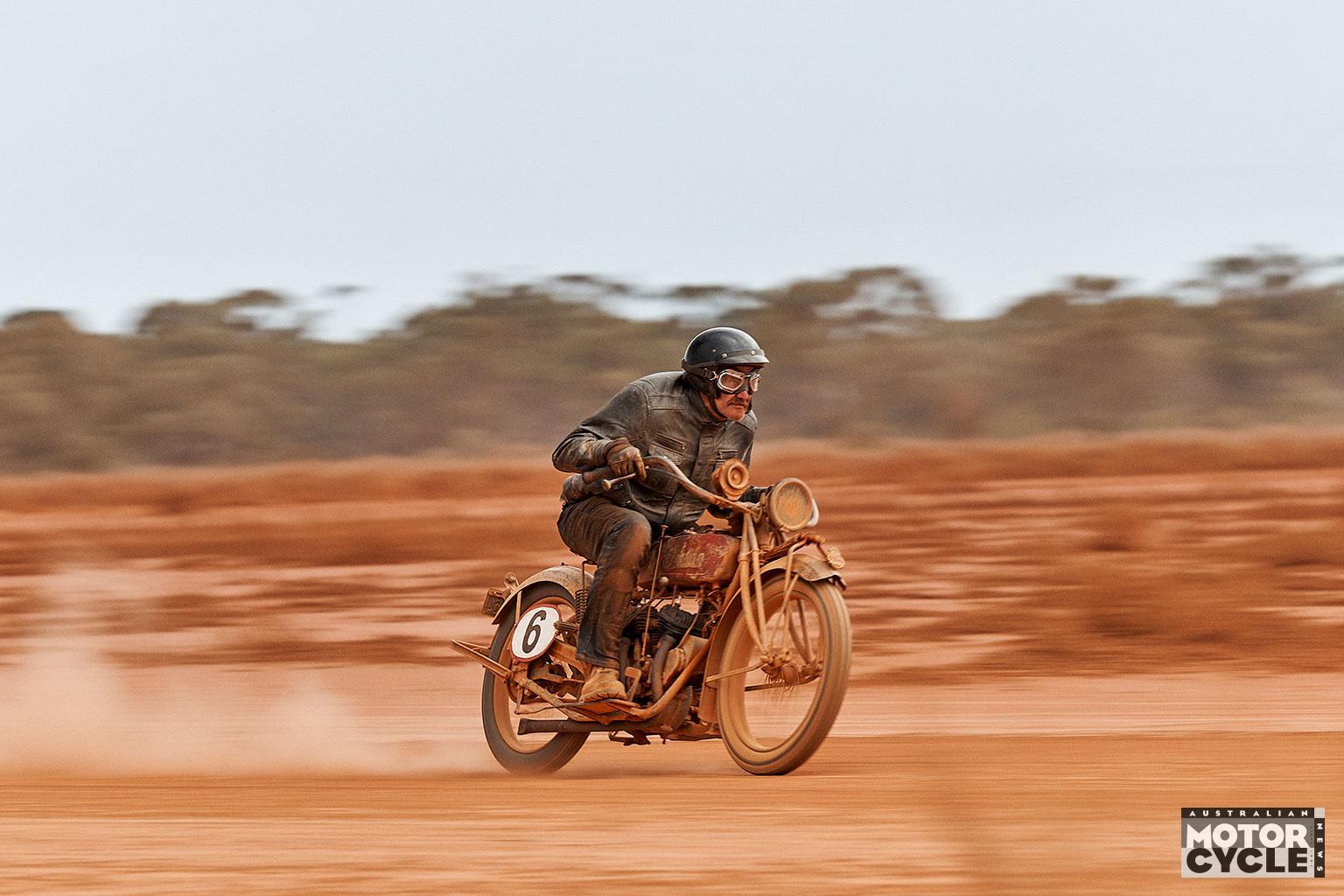
Forty odd kilometres northwest of WA’s goldmining mecca Kalgoorlie seems an unlikely place for a week-long gathering of interwar era motorsport enthusiasts. Though in the 20s and 30s, the claypan of Lake Perkolilli was perhaps WA’s best-known circuit. The goldrush of the early 1920s brought to town a heady concoction of chancers, adventurers and revheads who, thanks to the gold, had no shortage of the folding stuff. This was no informal scratching on the surface of the earth. In its heyday the sun-cracked clay housed an oval track and a quarter mile, spectators were accommodated in a permanent grandstand, and the women folk could enjoy the relative comfort of the ladies’ pavilion.
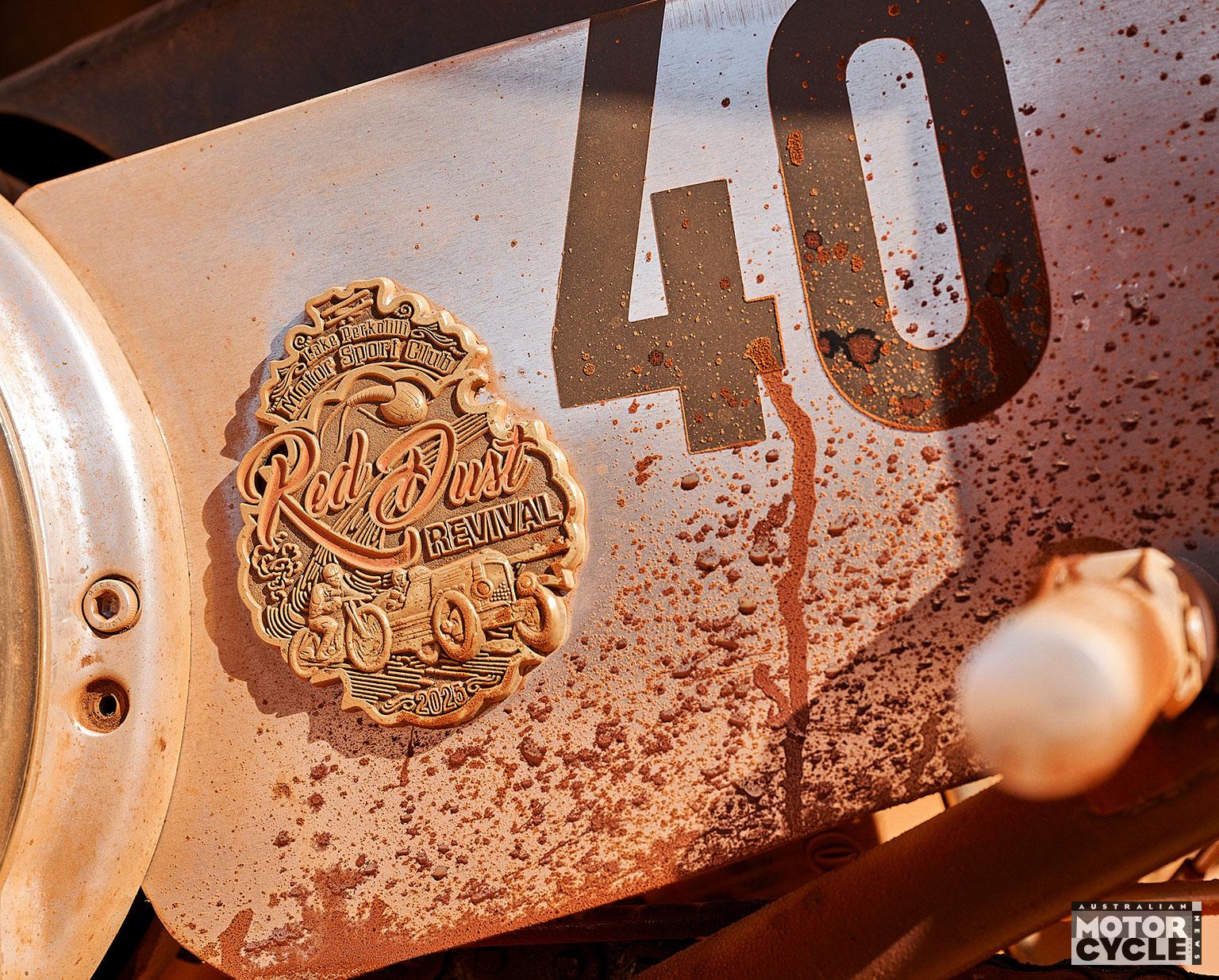
Bikes were the main draw, with events organised and run by the Goldfields Motorcycle Club, one of the nation’s oldest – though as cars increased in popularity, so too did their presence at Perko. The Great Depression was a body blow to the circuit but it was World War II and the associated fuel rations that was the knockout blow for the circuit and the racing it hosted. The ladies pavilion and grandstand were dismantled and repurposed in town with only the concrete piers and broken glass remaining. Though dormant as a racetrack, it remained a bit of a playground for locals – as evidenced by the abundance of mangled cars along the tree line. Kalgoorlie being a mining town and explosives in relatively free supply, it seems blowing stuff up is a popular way to pass the time.
The story of the current event, The Red Dust Revival, was shared by Greg Eastwood, who had a hand in organising the motorcycling part of the original event. With racing concluded for the day, over a few cans of West End, he recounted how Graham Cocks initially had an idea for The Revival after visiting the track on a trip out from Perth.
The first event attracted 30 vehicles. From there it has grown into a tri-annual celebration of this golden age of racing, attracting 180 vehicles (nearly 50 bikes and 130 cars). Paul Nappy, Clerk of the GMC, says of the event, “It’s something pretty different for us… We are used to juniors banging bars on dirt bikes… It’s a lot more relaxed. We’ve got a good group of people here who just want to get out on the track and use these old bikes. It’s great to see.”
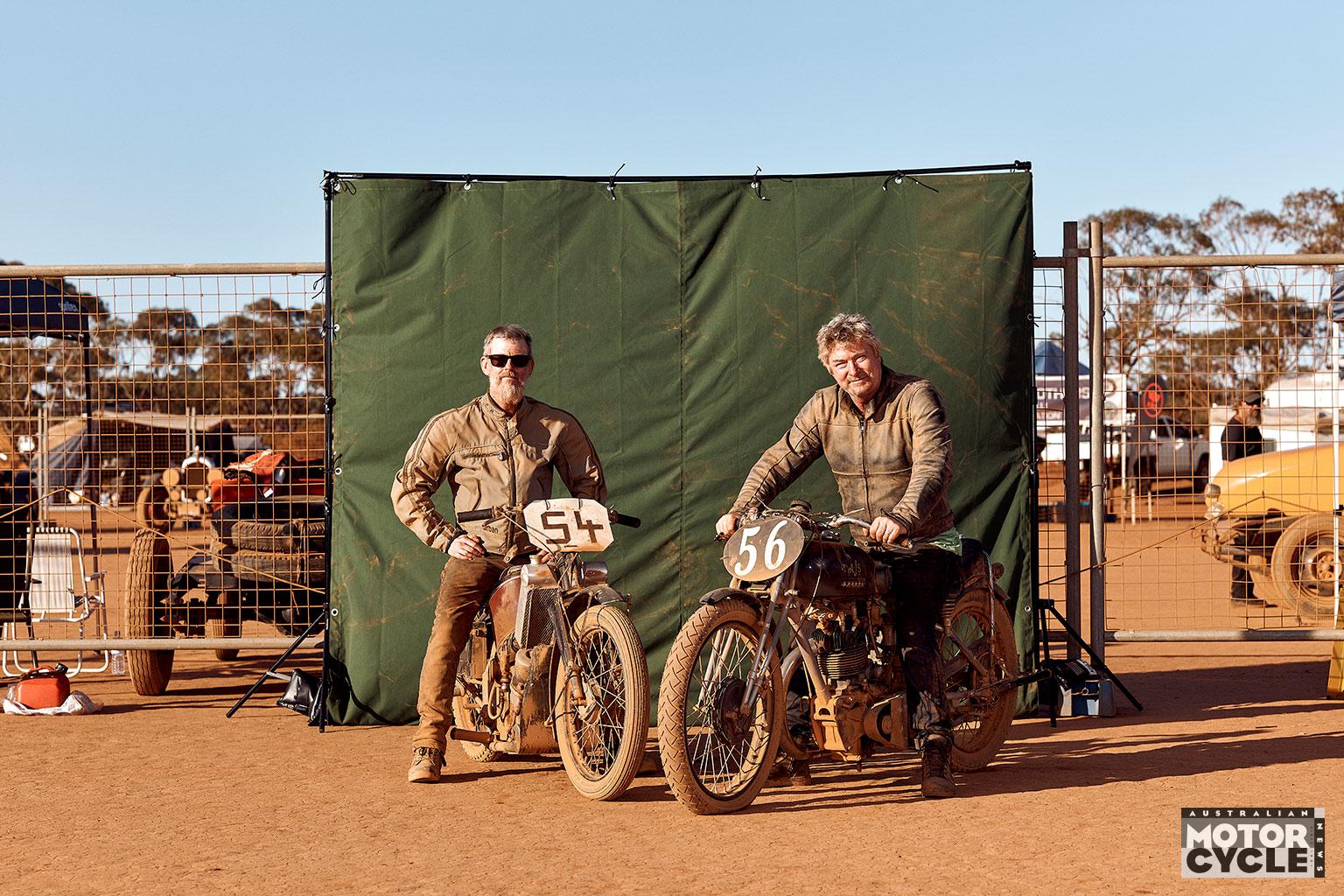
This was certainly the prevailing mood over the three-and-a-half-days we spent camping by and attending the event. A walk through the pits revealed a mixed bag of interwar era steeds. BSAs, Harleys, Indians and a scattering of bikes from AJS, Matchless, Scotts, Ariel, Raleigh and a Coventry Eagle.
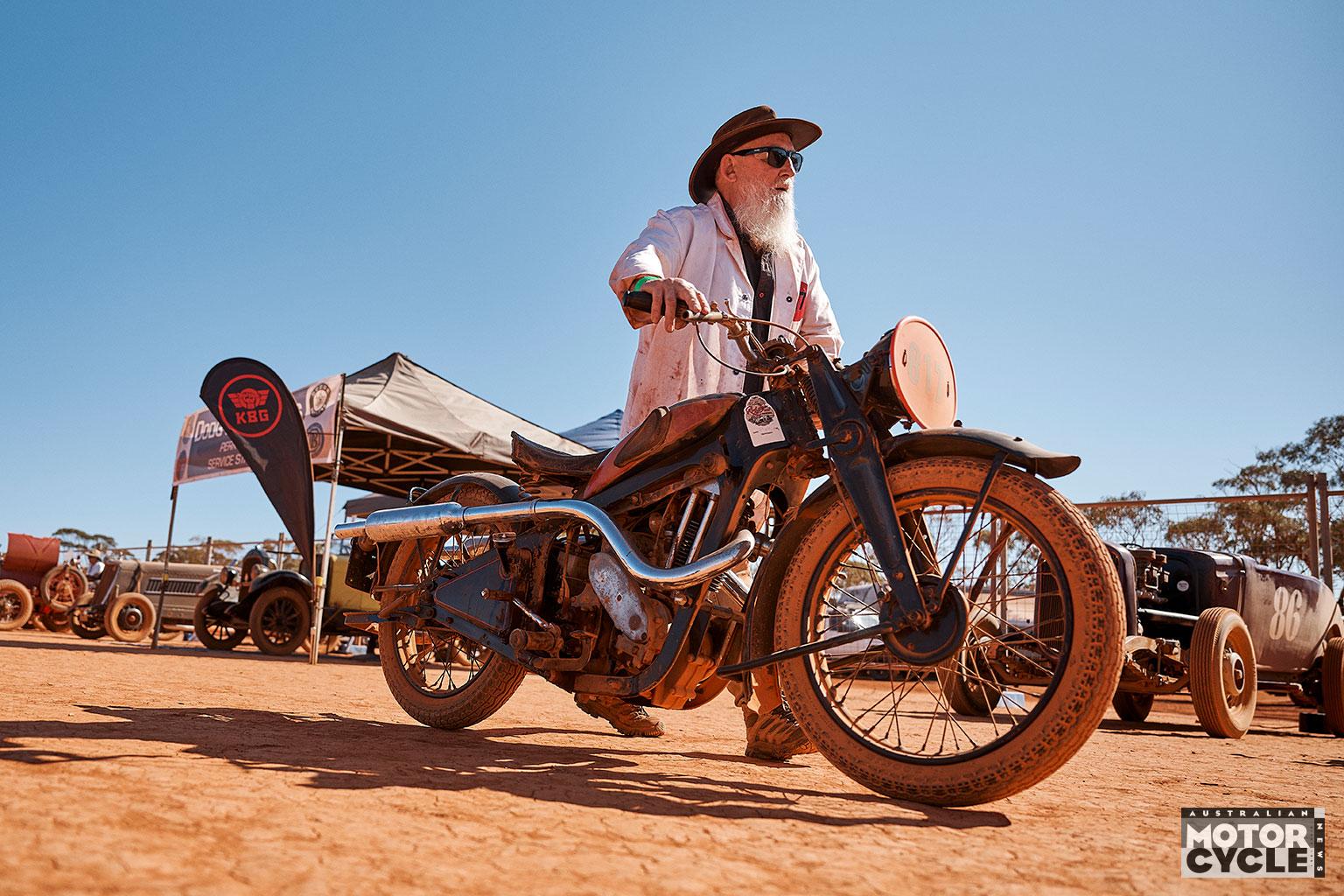
The 1933 Coventry Eagle 250 Sport of Bryan Skewes came with perhaps the largest support crew, a ragtag group of Bryan’s mates in matching (formerly) white dustcoats bearing the number 817 of the bike’s numberplate, a tribute to Bryan’s brother, who served in the Royal Australian Navy’s 817 Squadron.
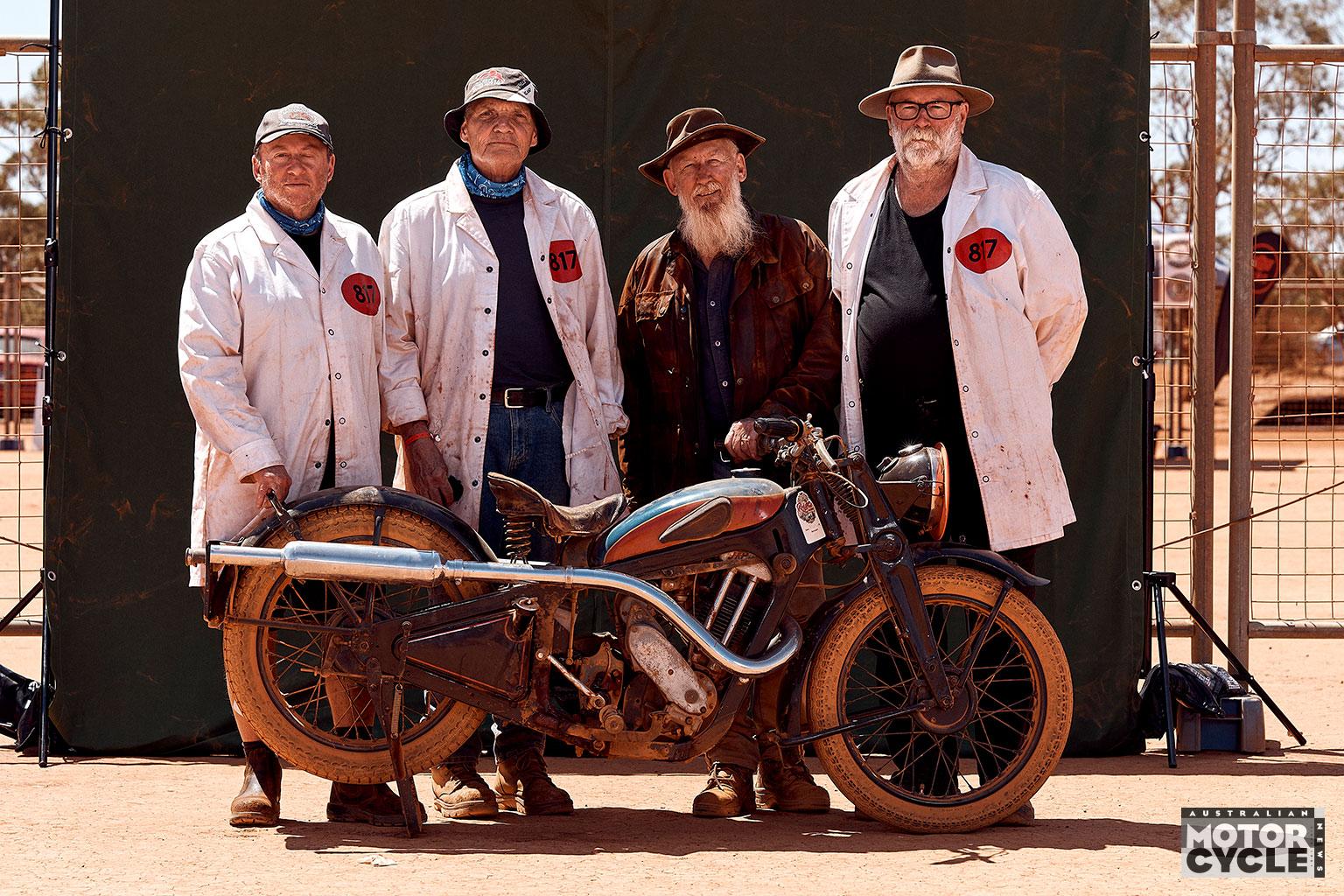
Bryan ran me through the bike’s particulars, twin port JAP powerplant – rare for this model – kept running with a collection of bits sourced from unlikely donors. Bryan’s had it since 1982. After initially restoring it, the bike sat in his shed for over 25 years until his wife suggested it might be a good idea to enter it into The Revival. The bike, while not technically his, leaving his possession in a case of marital horse trading, is clearly something of which he is very proud, taking every opportunity to ride it throughout the week.
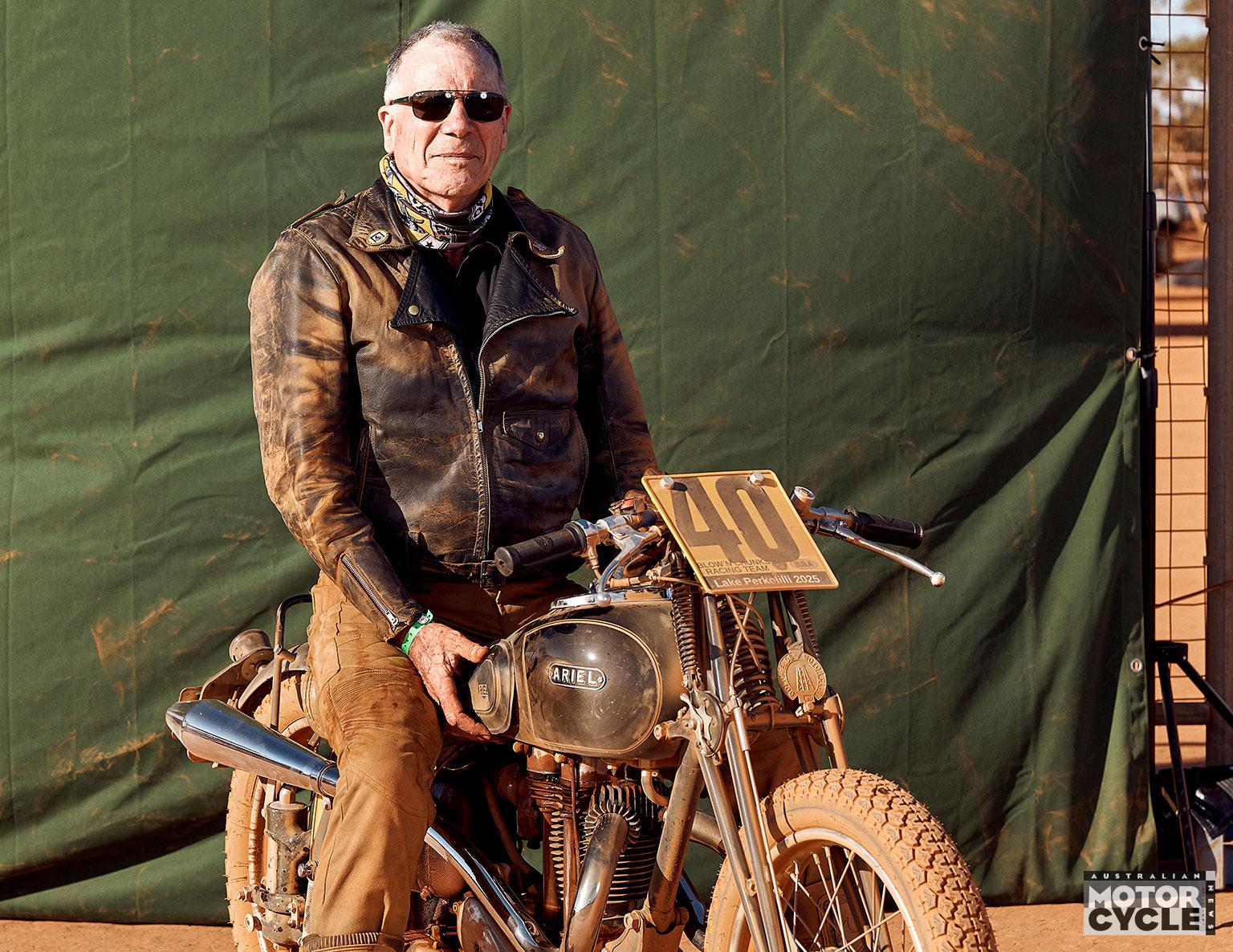
Similarly proud was Dan Talbot of his 1939 Ariel Special. He purchased the bike only two years ago for the purpose of racing it at the 2025 Red Dust Revival, having previously participated on four wheels. In his words: “I’m more of a motorcycle guy.”
This bike is one of a small collection of Ariels that Dan owns, the familiarity with the marque making the build and sourcing parts a little more straightforward. The original flathead heart was replaced “as an aesthetic thing”, with a 500cc twin port engine from a Red Hunter, imported from the US, to allow for a pipe each side. So fresh was the build that Dan had to temper the need for speed in the initial laps to run the engine in, although he seemed happy enough with this as the ‘plunger’ rear suspension and spring seat made for a lively experience on the dry clay surface at any speed.
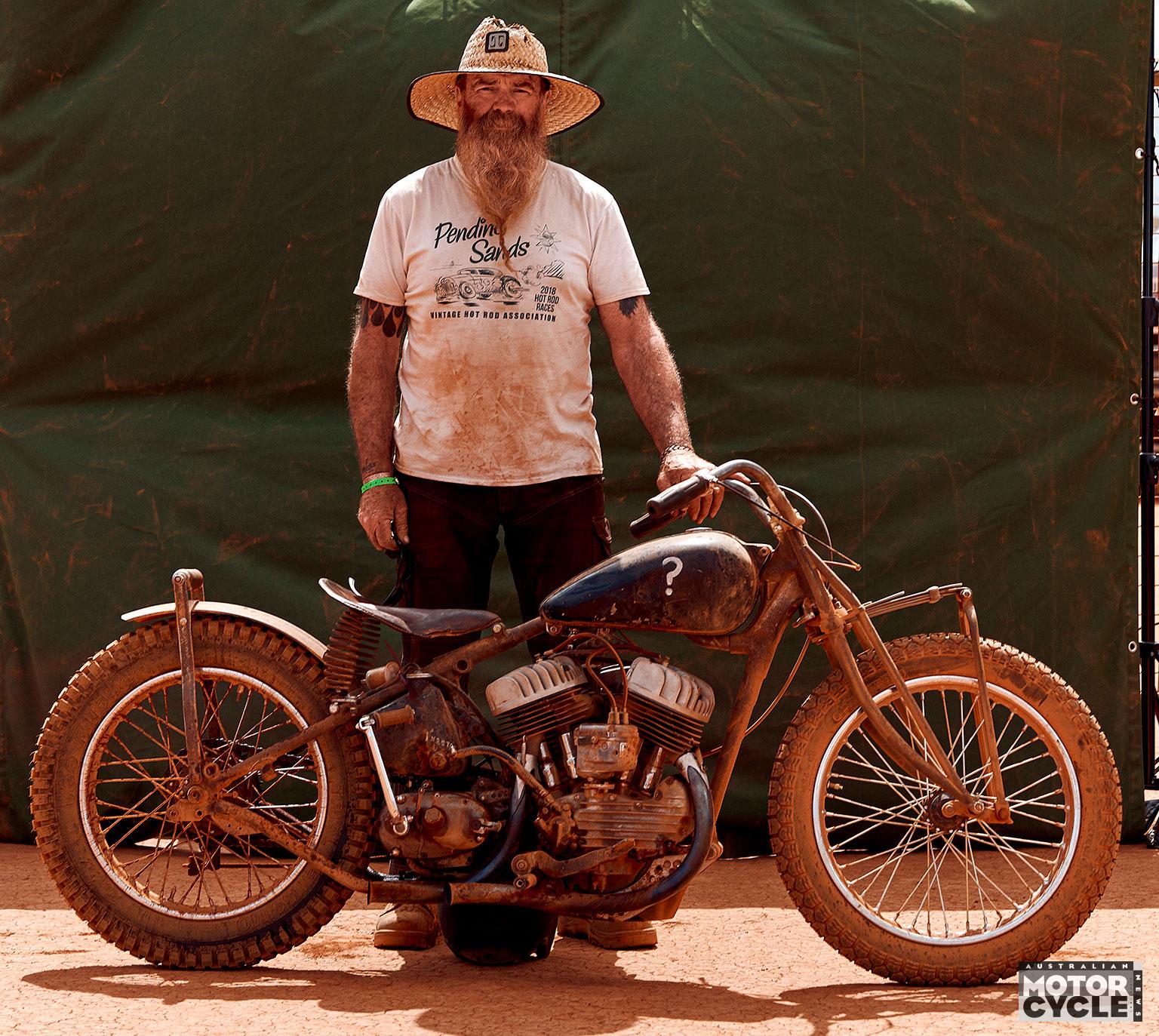
If taking a build right down to the wire was a category in the Red Dust Revival, Chris Leers of Perth would surely win. Not only was his bike built for the event, it still required two days of work trackside, among the red dirt and flies, doing final assembly before he was able to put fluids in it and kick it into life.
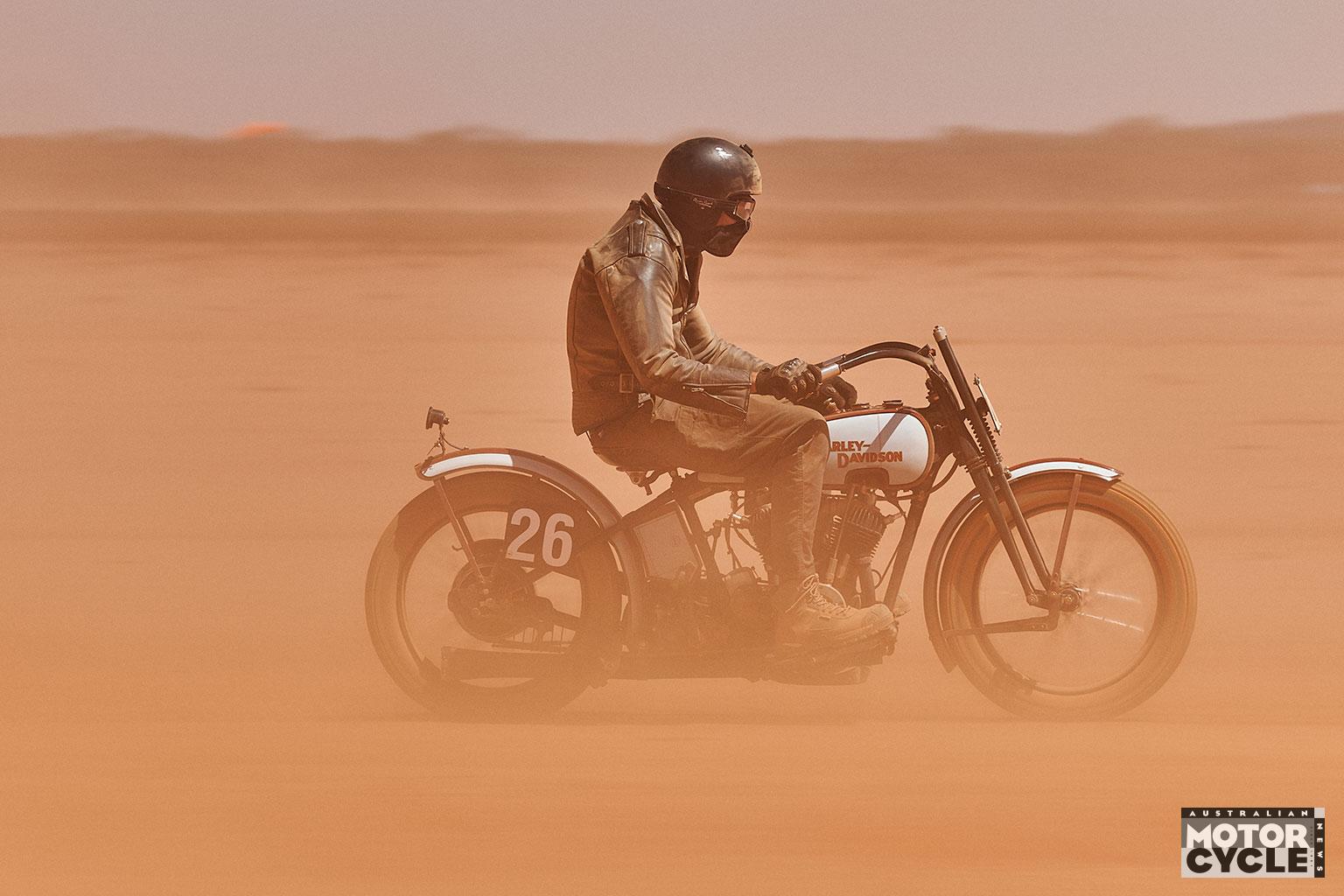
Like Talbot, Leers had participated previously in a car, though in 2022 he was convinced to complete a few laps on a Harley he had once owned. This was enough to reignite the fire for bikes and inspire him to build one for the 2025 meet. Plans for a boardtrack racer were hatched and abandoned, until just four months before the event Chris kicked into gear on an alternate machine.
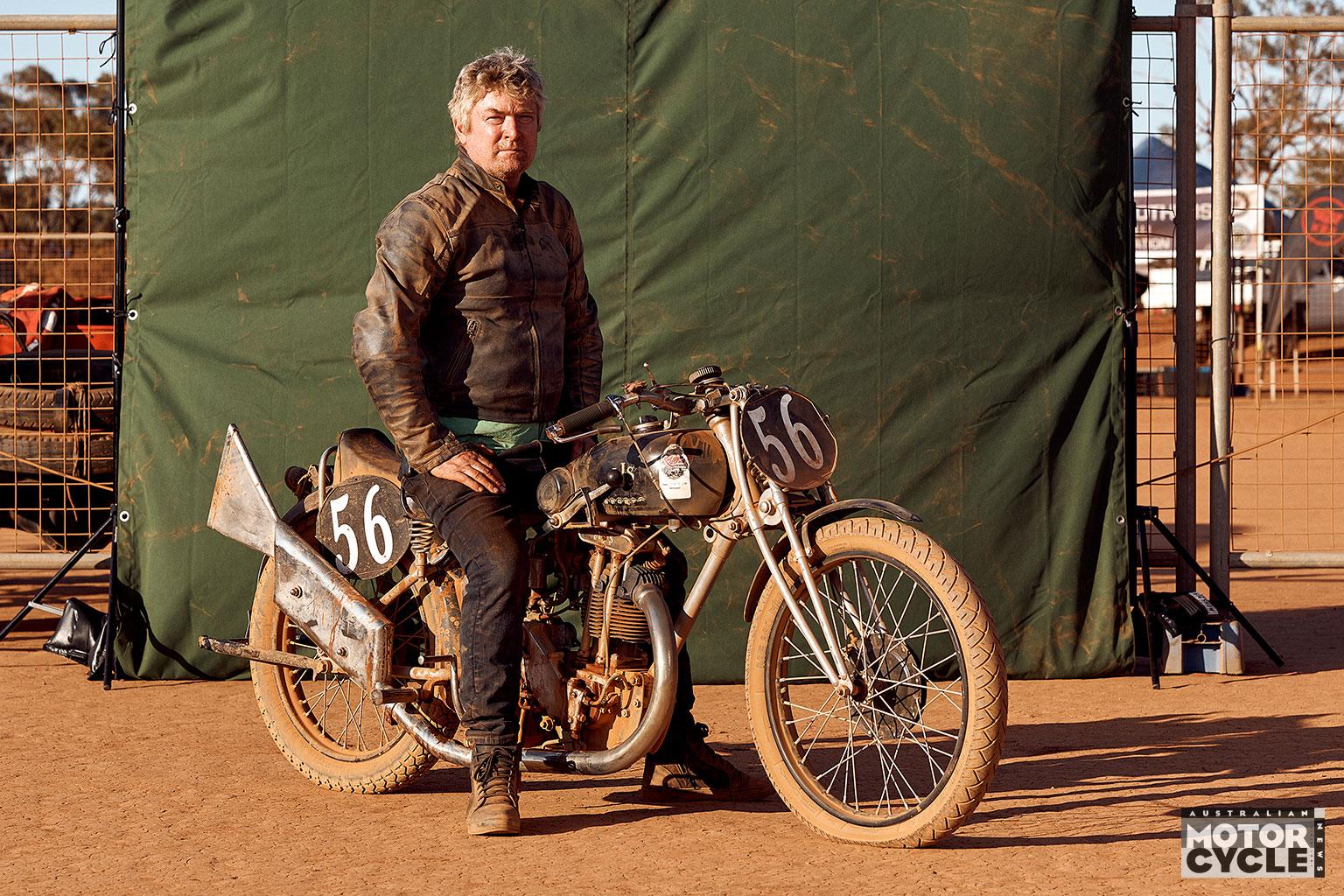
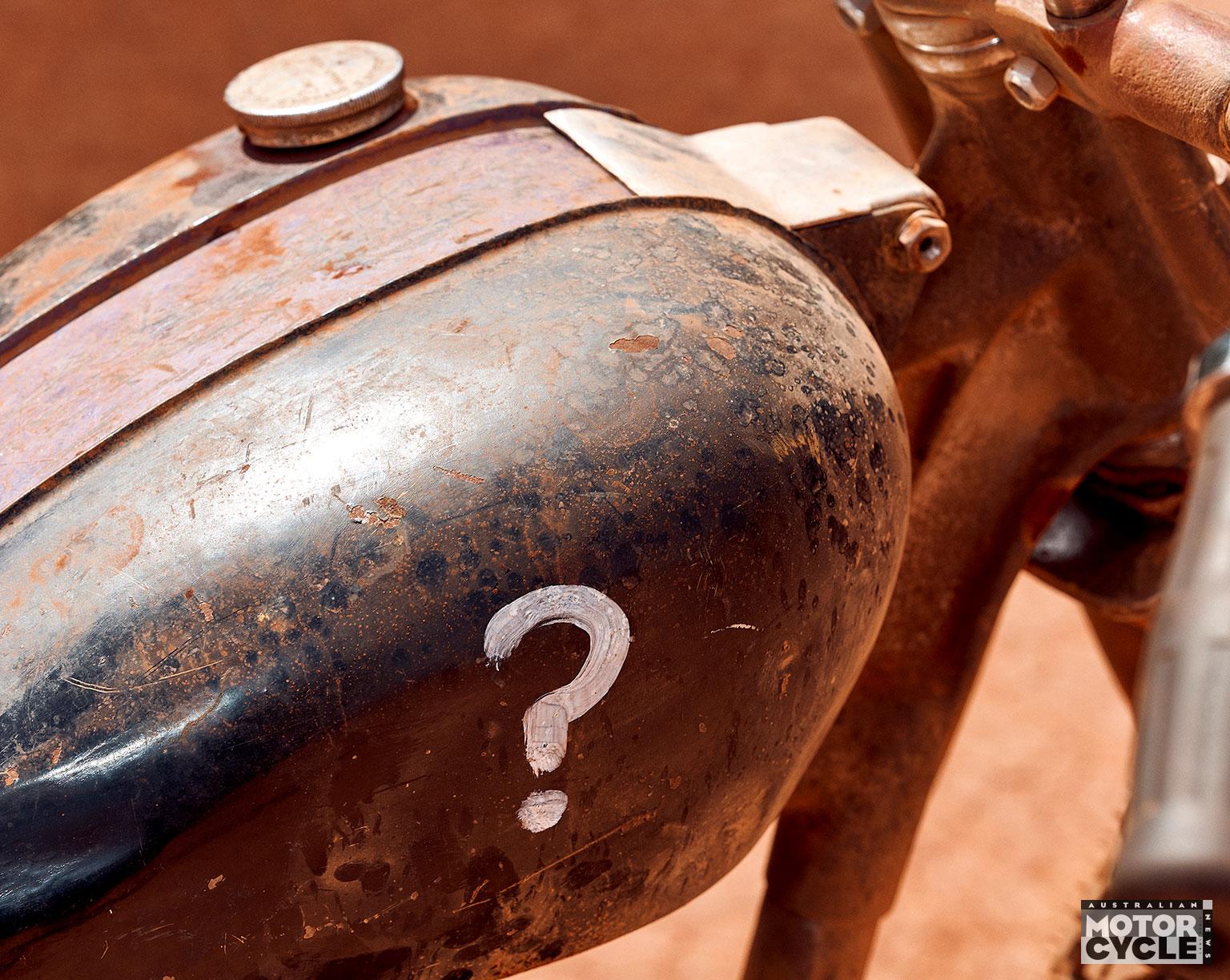
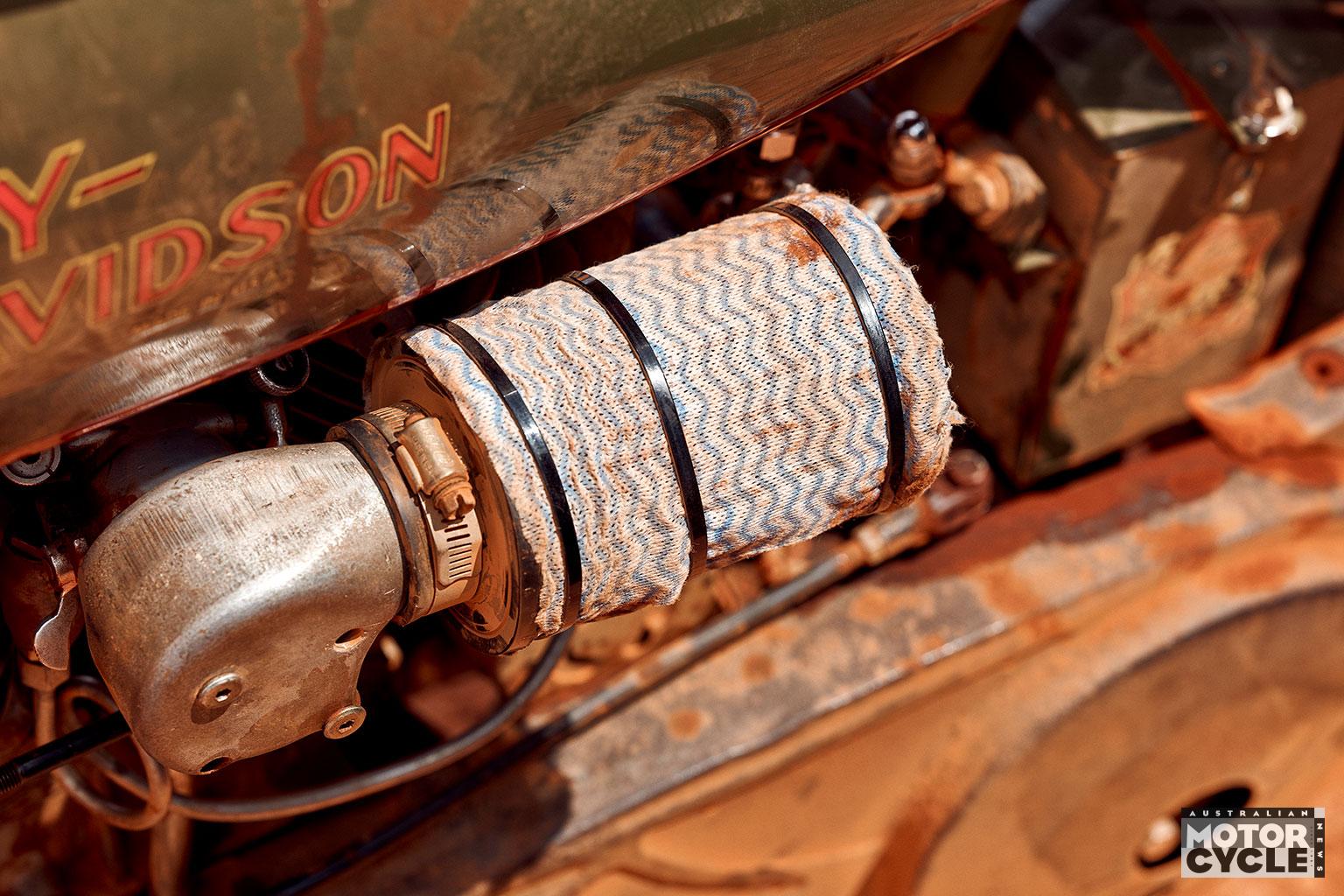
The question mark painted on the tank hints at the breadth of the net cast to build this machine. Part British with a fair dollop of Harley (as it was initially described), the bike was seemingly created from the ether. Built around a modified Harley 45ci WL engine and four-speed Triumph pre-unit combo that was meant for the board tracker, the Harley frame and Indian fork were sourced off a mate’s shed wall; add to that a BSA fuel tank, Ariel oil reservoir, Harley front and Royal Enfield rear hubs, and Bonneville rims with much of the metalwork done himself.
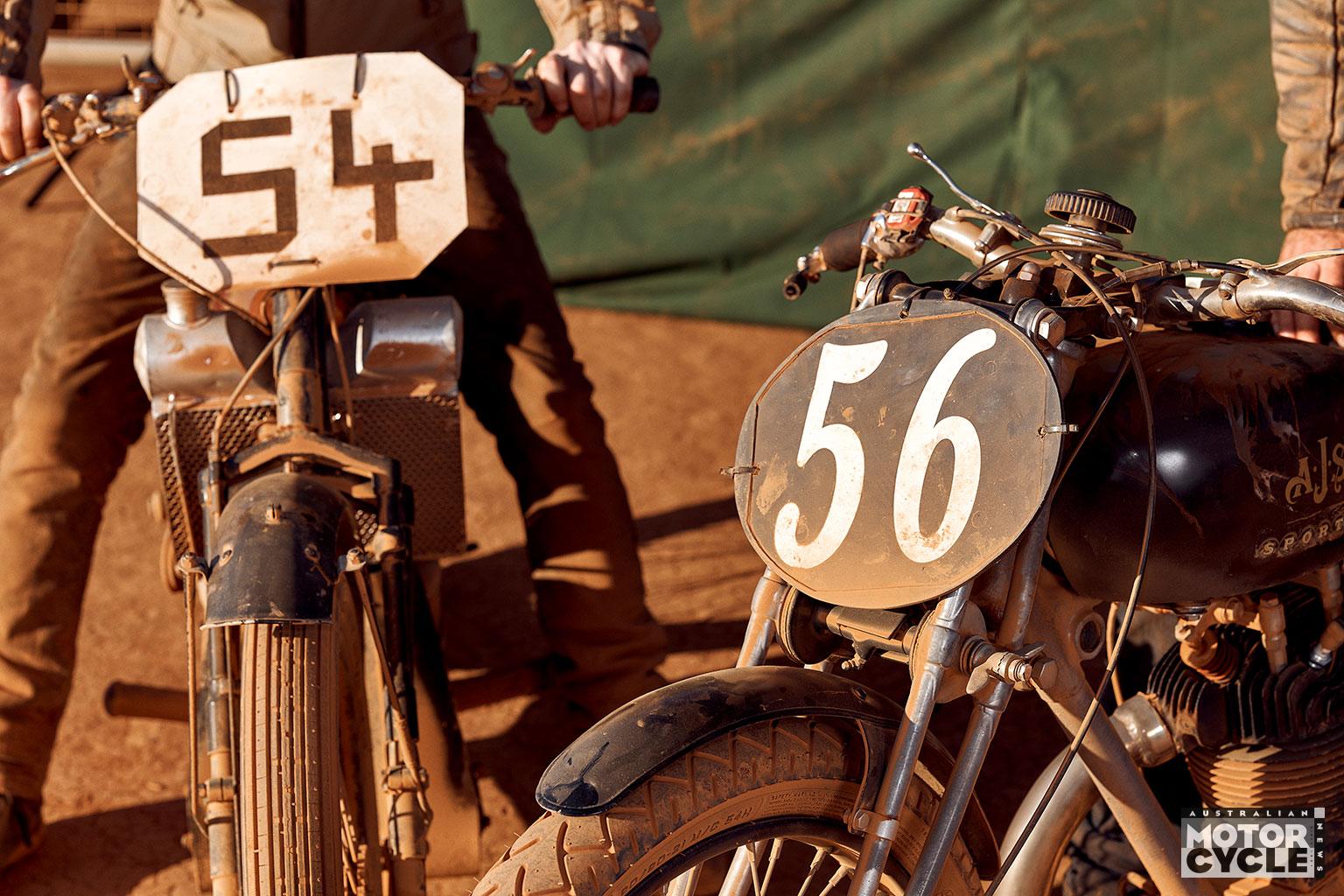
As is the nature of these builds, problems were discovered and remedied through countless hours burning the midnight oil and with the support of family. Chris’s sons helped with some fabrication, and by the time D-day arrived the bike was within cooee of completion.
To the amazement of many, when the moment of truth came at the track the beast beat to life with minimal fuss, at least initially. On the first lap an engine seizure seemed to have ended things. Inspection showed a tight clearance between piston and cylinder. The engine was stripped and the cylinder bore given some love with emery tape. Reassembled and with further tweaks, Leers was back on track with the bike only getting better as the week wore on.
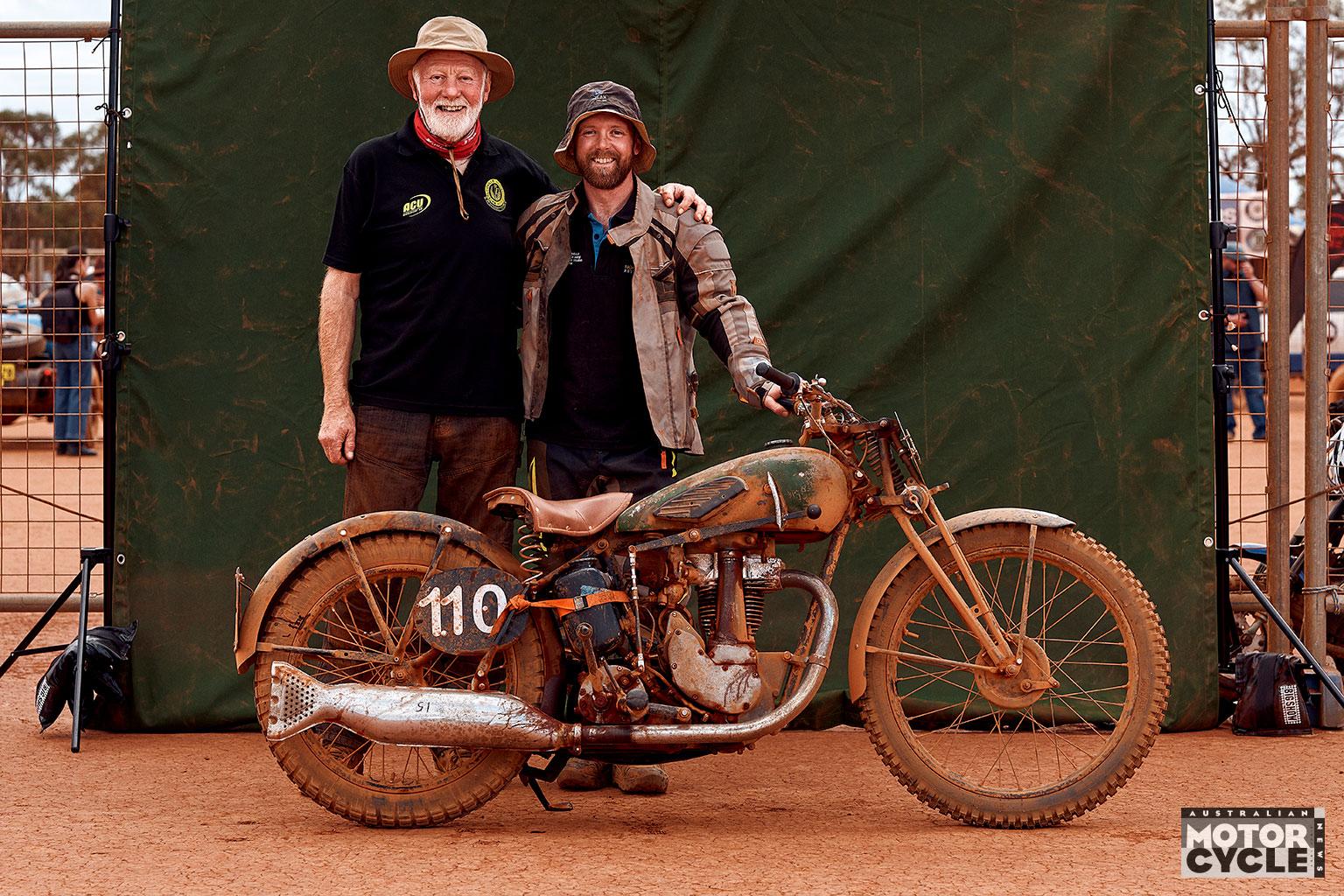
A mechanically more straightforward but logistically fraught story was that of the BSA belonging to father-son duo Stephen and Nick Cox. Their tale also starts at a previous Revival, when Stephen, from Southern England, was visiting Nick, a Kalgoorlie resident. They spent the day trackside in 2022 as spectators and it was there the seed was planted. It was decided that a joint project for the 2025 event was called for. By 2024 the idea was revisited and a plan hatched.
The plan? Stephen would source and prepare the bike in the UK and ship it to Kalgoorlie. Stephen, a retiree, had more time on his hands than Nick, a geologist in the mines with a young family, and more options for suitable bikes and parts sourcing. With minimal fuss, the bike – a 1938 BSA B26 350cc – was snapped up at auction. Very much a rolling chassis with most of the necessary bits in crates supplied with the bike. It was ‘just’ a matter of disassembling, checking, fixing and reassembling to ensure everything was in A1 mechanical order. Missing and broken parts were replaced with ones sourced at ‘jumble sales’ – swap meets, as we know them.
By October 2024, ‘Bertie’ was ready to go from the green pastures of Southern UK to the red dirt of outback WA – which presented the next unique hurdle. Luckily, preparing the bike in the manner in which they had ensured they were unlikely to fall foul of strict biosecurity and quarantine requirements; any nasties lurking in the 80-plus years of accumulated gunk had been meticulously removed by Stephen. Brakes and any other part that might contain asbestos were replaced, leaving just the paperwork and shipping. The primary hurdle with this being that in order to get the import paperwork completed they needed to be able to show confirmation of entry in the event.
The motorcycle portion of The Revival is run by the GMC, a volunteer organisation that was pulling out all the stops to get the event approved by all the necessary bureaucracies here. As a result, the date for entries to open slid while this work took place in the background, leading to some anxiety that it may not leave time to complete the paperwork and get the bike on a boat in time.
Ultimately, these hurdles were overcome and the bike was delivered and rolled into Nick’s shed in Kalgoorlie just over two weeks before kick-off. Such is the pull of Perko. People will go to extraordinary lengths to take part.
The week on the pan is a test for both man and machine. Daytime temperatures can range from 20°C to nearly 40°C. On a hot day, the only place to hide is the bar – excellently run by Variety WA – or the shelter of one’s own camp.
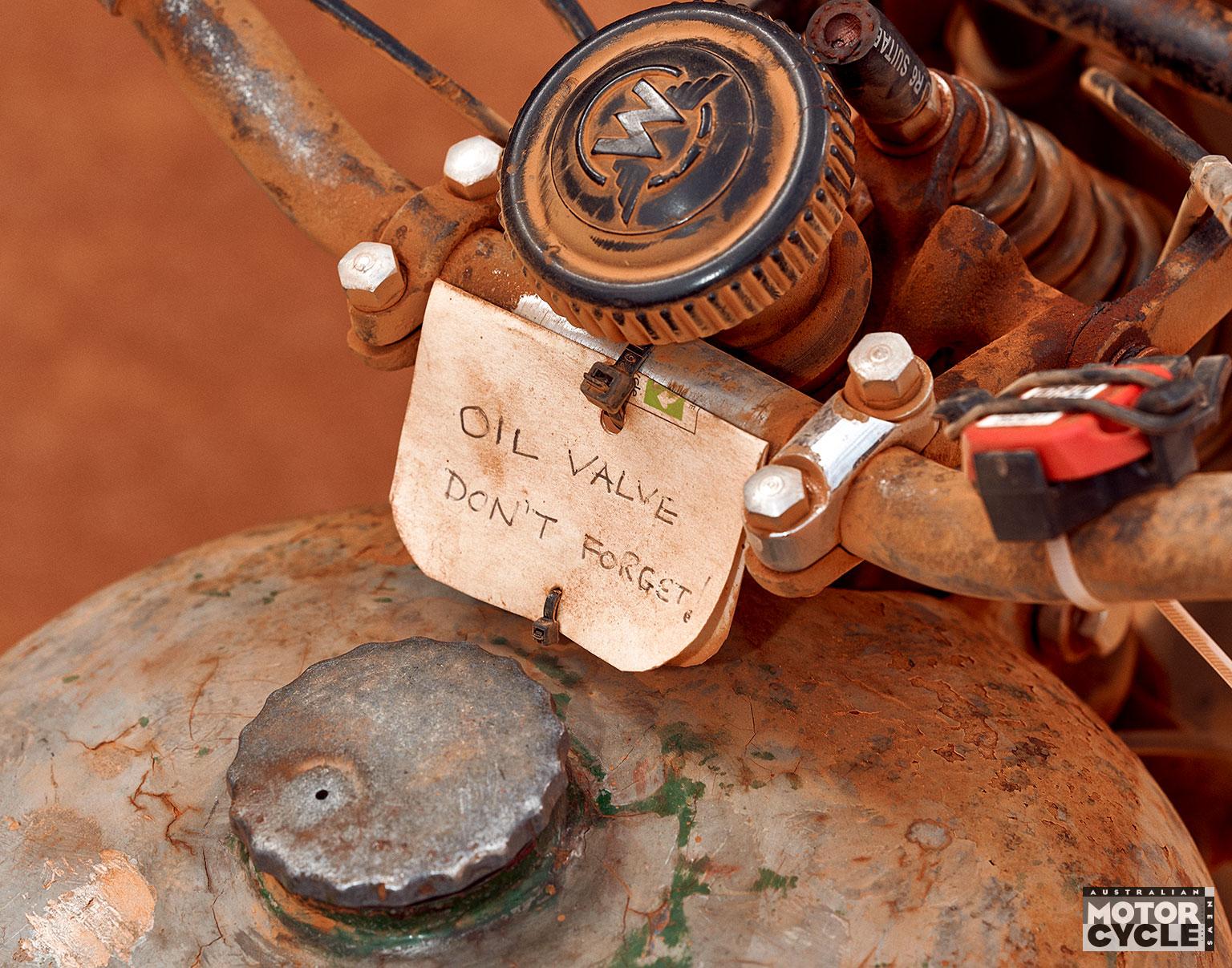
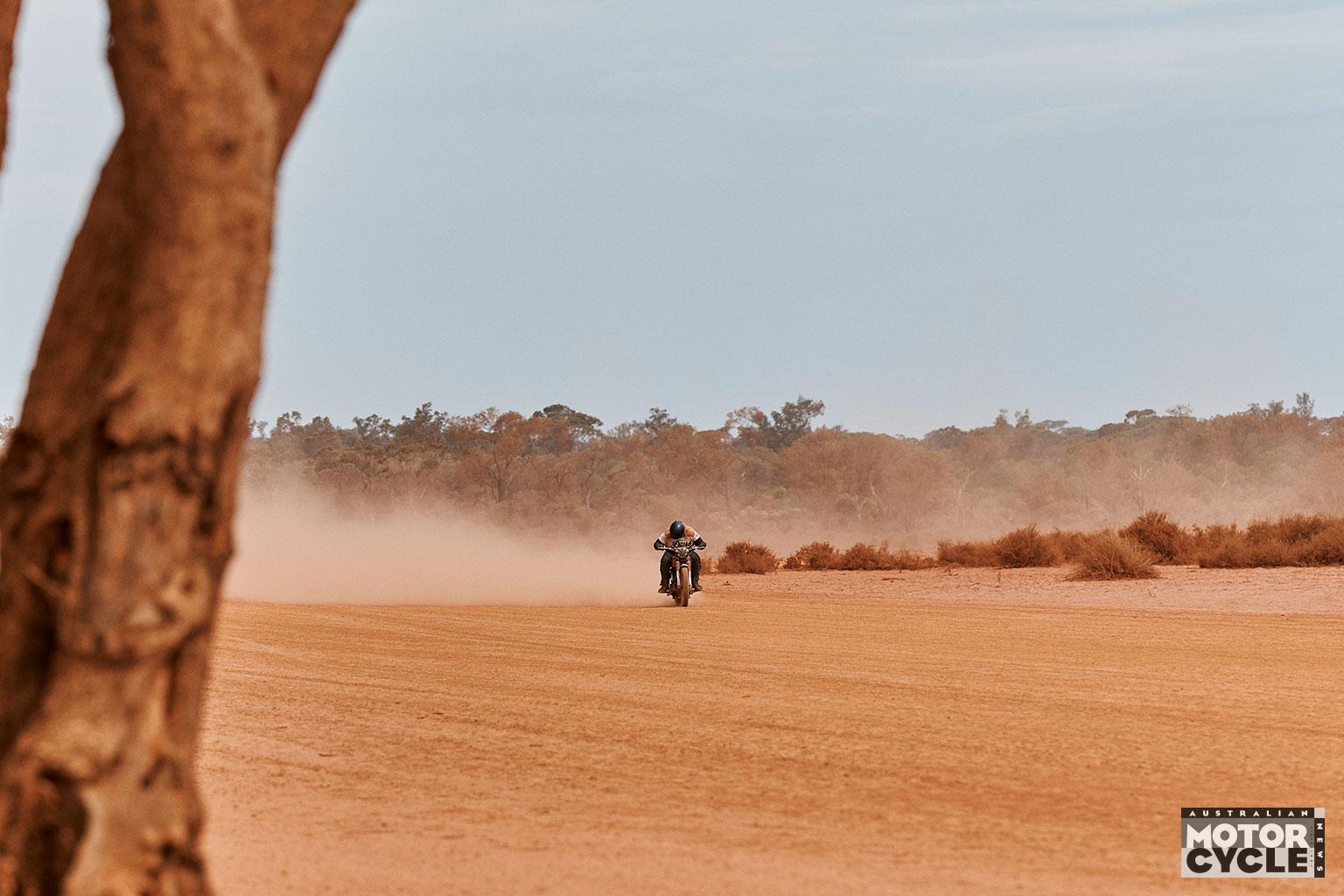
This year’s event saw it all; the first half of the week, it was treated to prime conditions, mild temperatures and only occasional gentle gusts, though as the week went on the forecast proved more hostile. Friday saw the mercury tipping 40°C with 40km winds that reduced visibility to mere metres and coated everything in a fine chalky red hue. By Sunday, when the rain was predicted to arrive, much of the paddock had cleared out.
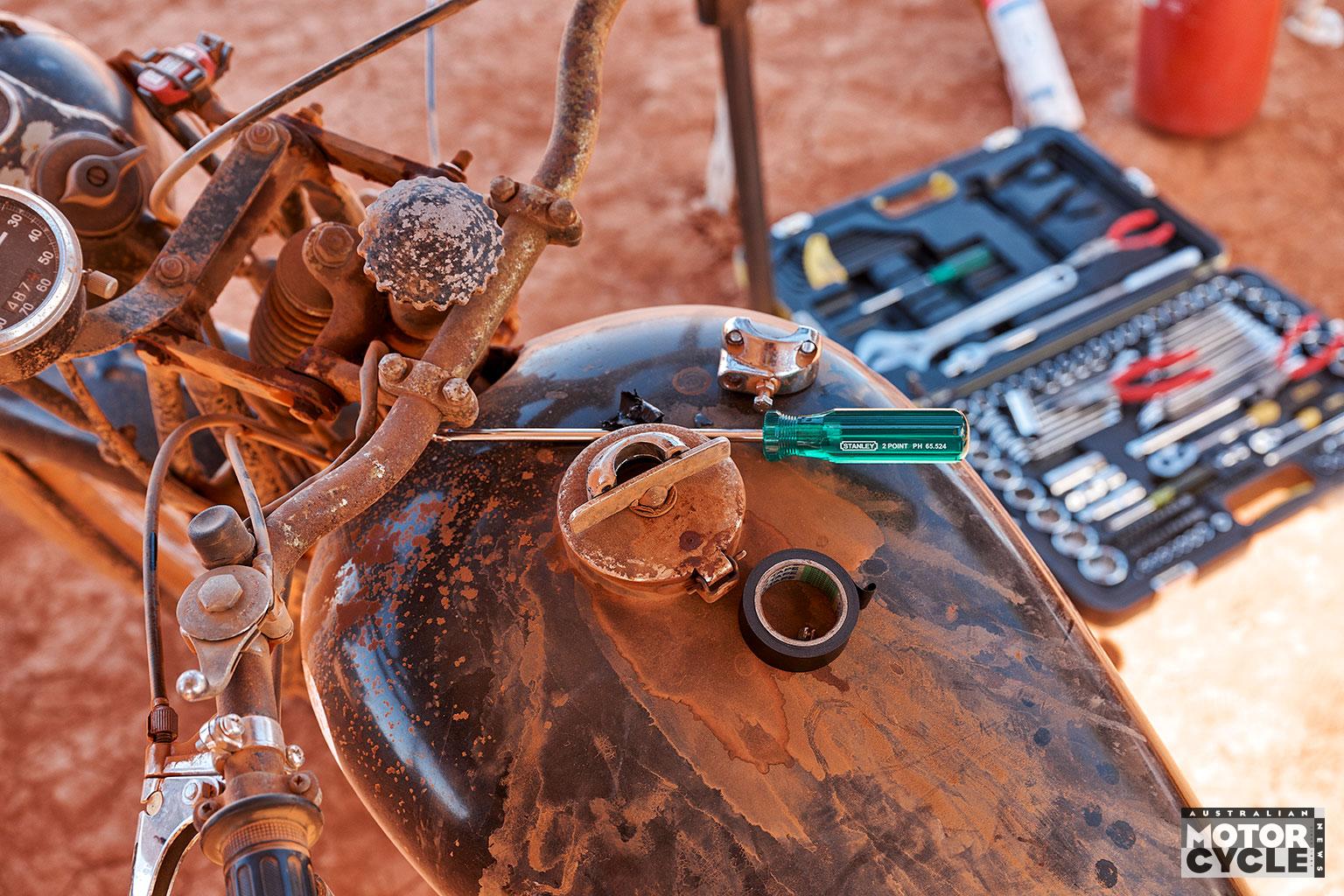
Speaking to many participants on the Saturday, it was a case of getting out while the going was still good. When asked of their experiences throughout the week, their faces lit up. The opportunity to get out on the 4km oval and put themselves and their machines through their paces was worth a bit of heat and dust. Even those who had their weeks curtailed by mechanical dramas spoke glowingly of the camaraderie they experienced, with people offering advice, labour and occasionally parts.
If all else failed, they could simply retire to the bar to tell war stories – much like their contemporaries would likely have done a century ago.
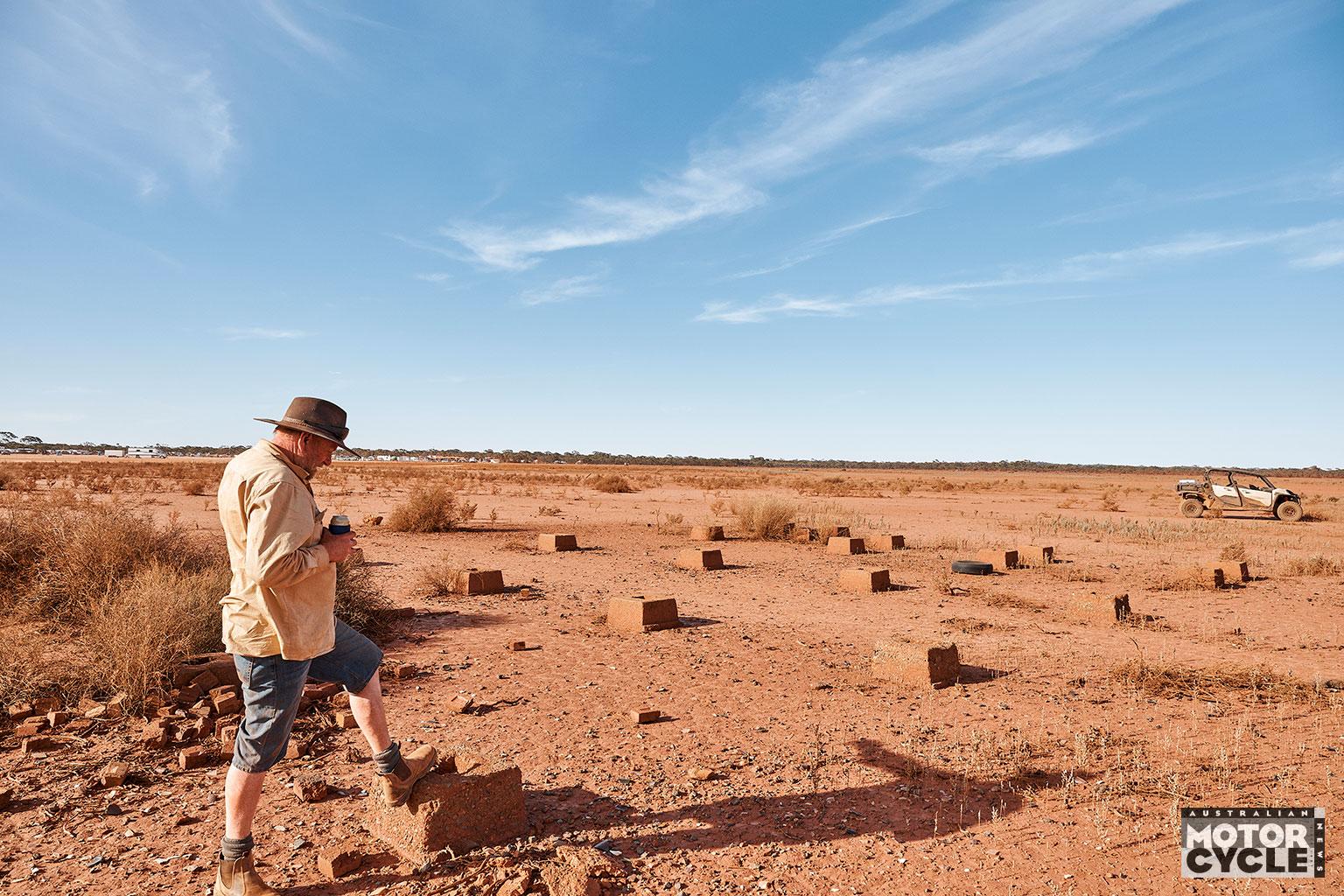
The next Red Dust Revival is slated for September/October 2028. For more information, visit motoringpast.com.au/red-dust-revival