Adventure has a new heartbeat: it’s orange, loud and impossible to ignore
The all-new 1390 Super Adventure debuted back in November 2024 at EICMA in Milan, but with production paused due to KTM’s well-documented restructuring process, it has taken until now to release the Austrian manufacturer’s biggest, most powerful and technologically advanced production bike so far.
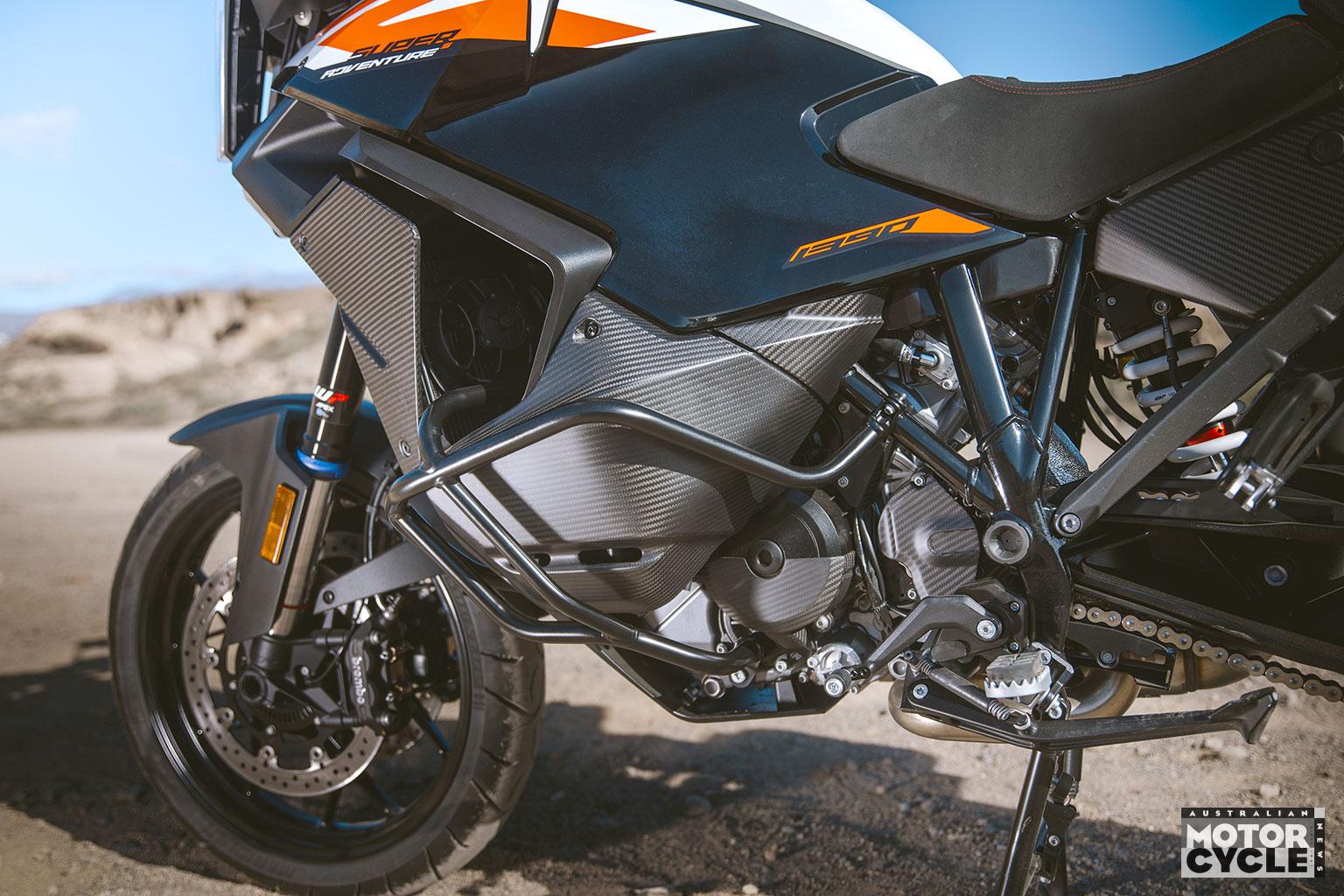
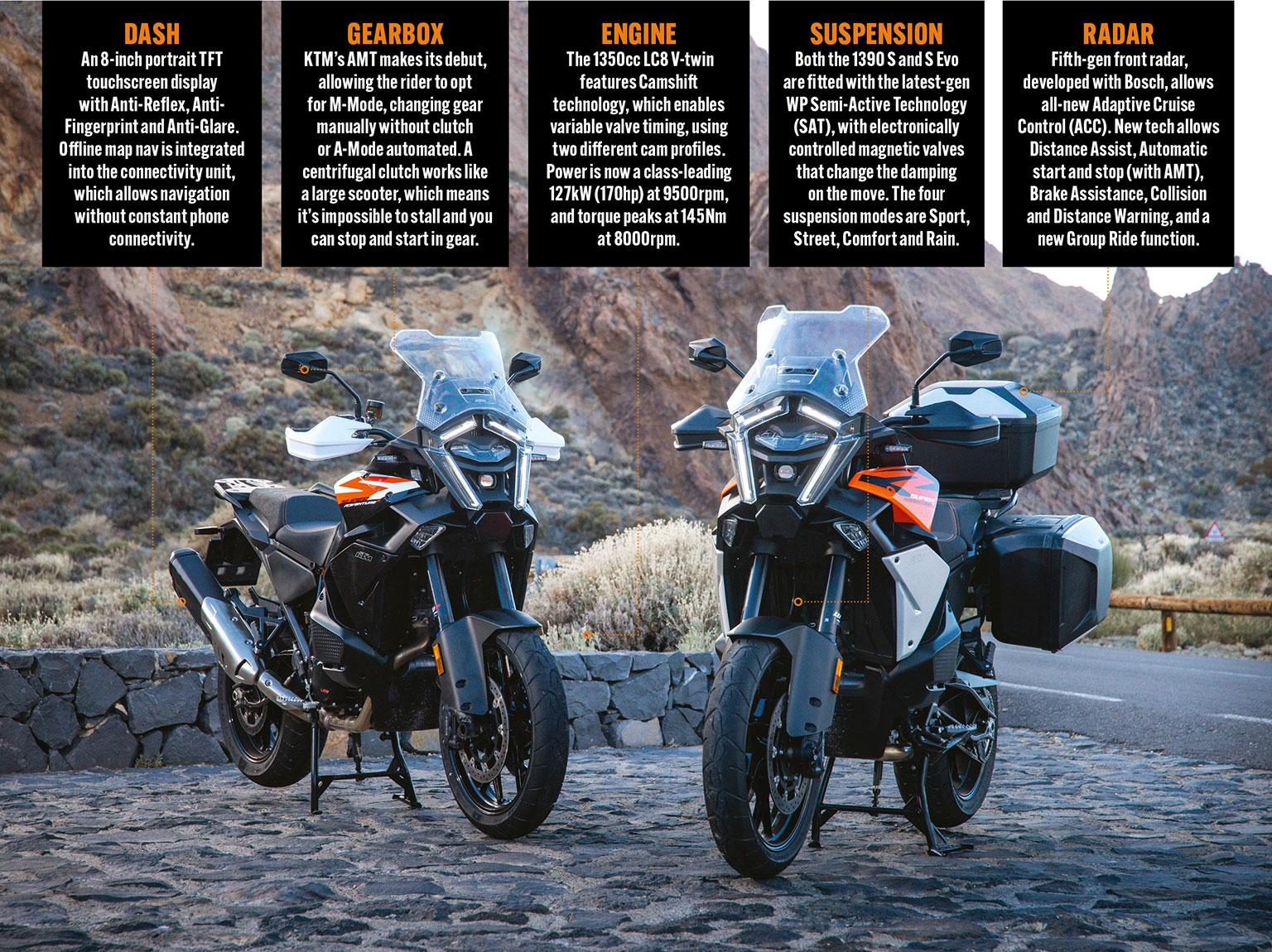
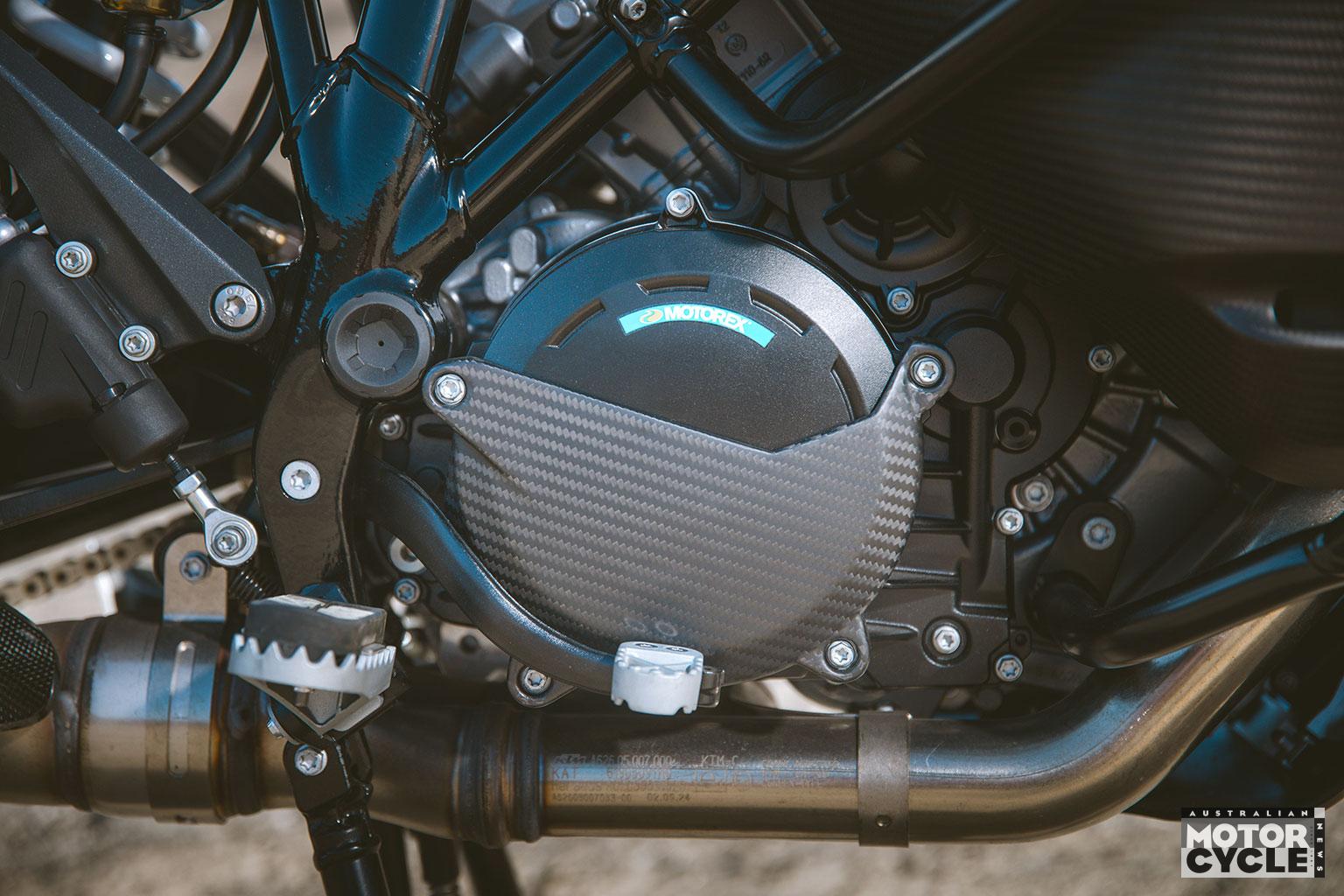
In fact, the 1390 (actually 1350cc, up from 1301cc) is now the most powerful adventure bike on the market, full stop, producing a claimed peak of 127kW (170hp)and a stonking 145Nm of torque at just 8000rpm, thanks partly to Camshift variable valve timing. But, despite those eye-watering figures, the flexibility and outright performance of the LC8 V-twin isn’t the big story in town, because the S Evo is absolutely saturated in new electronic tech.
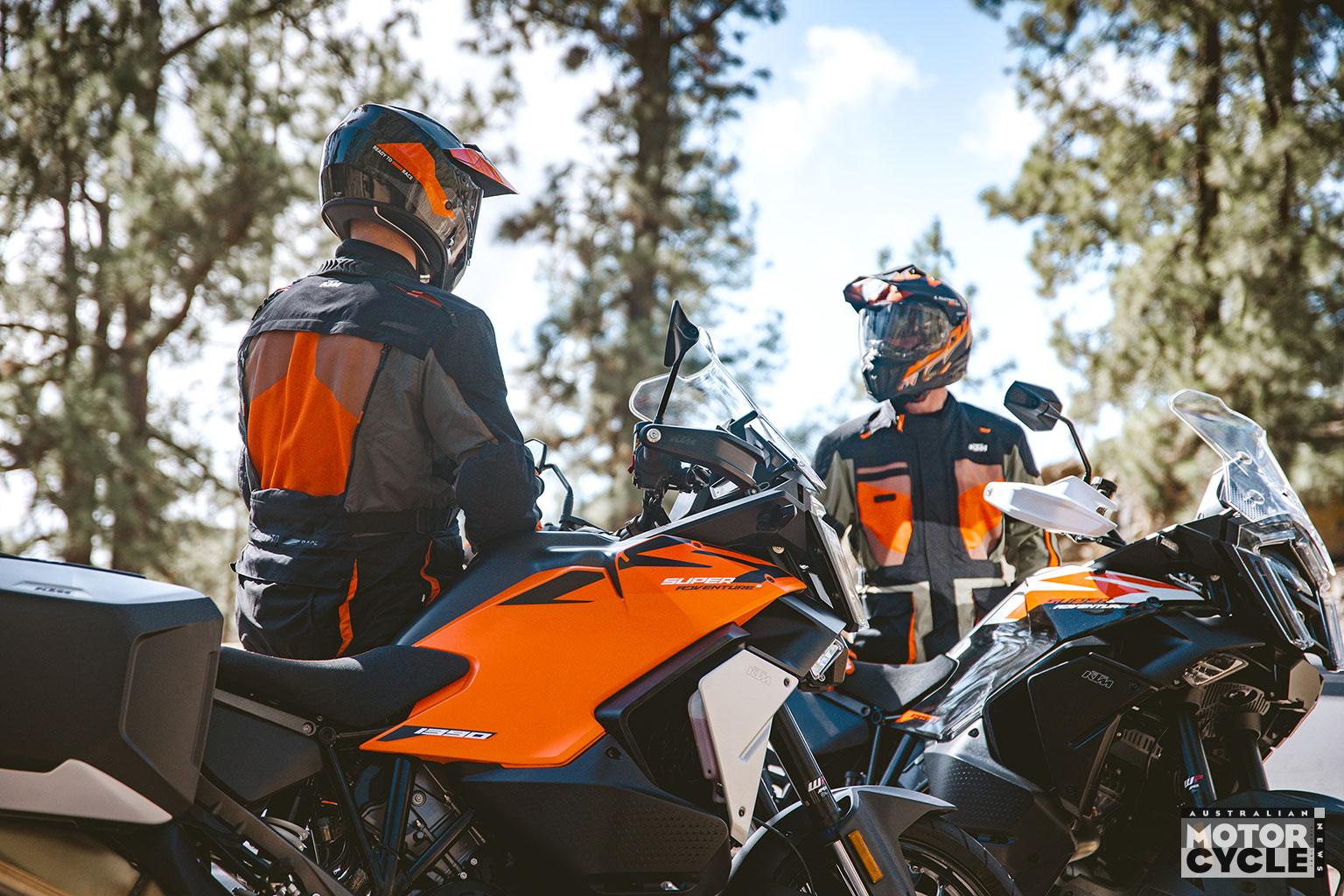
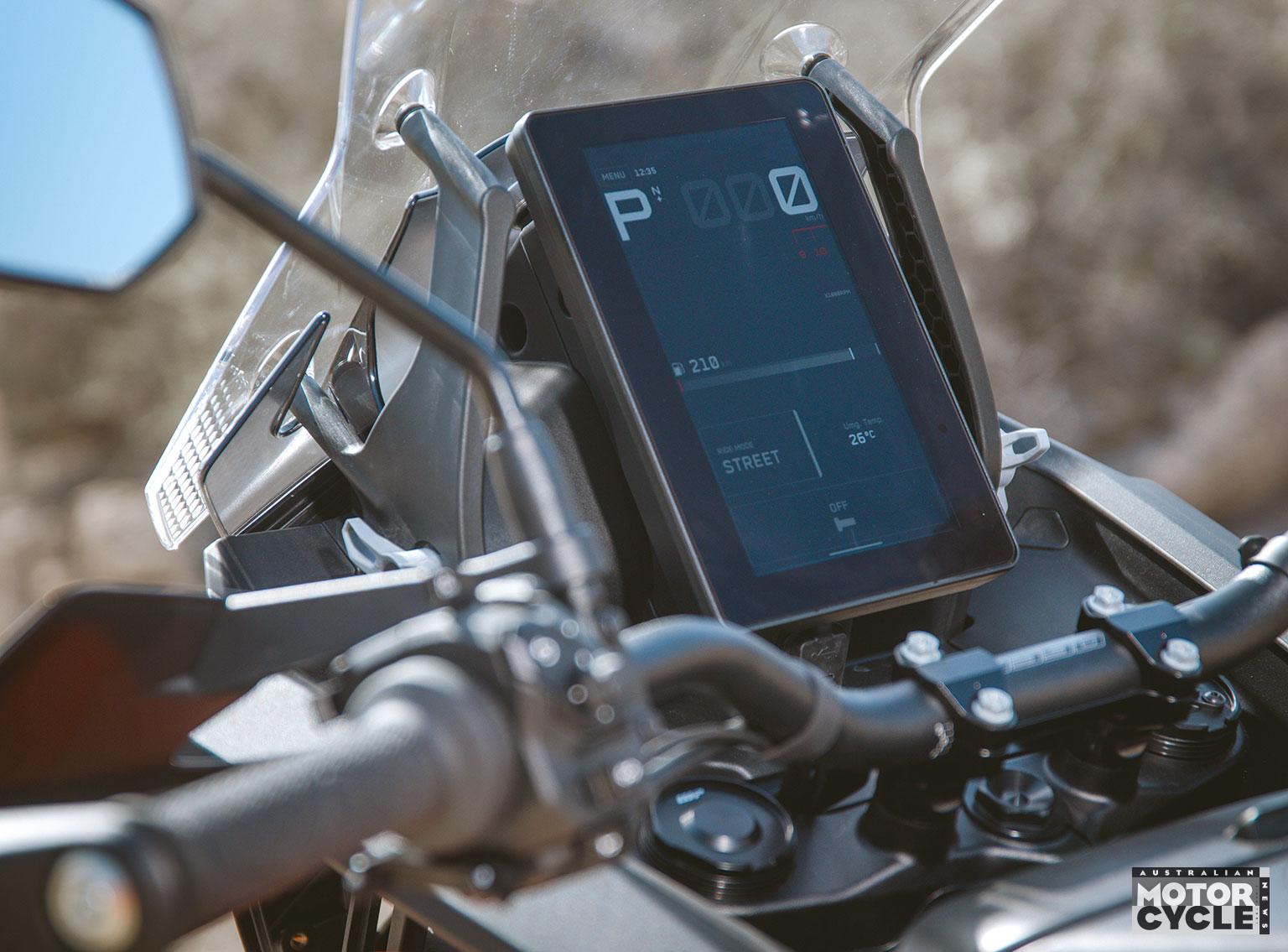
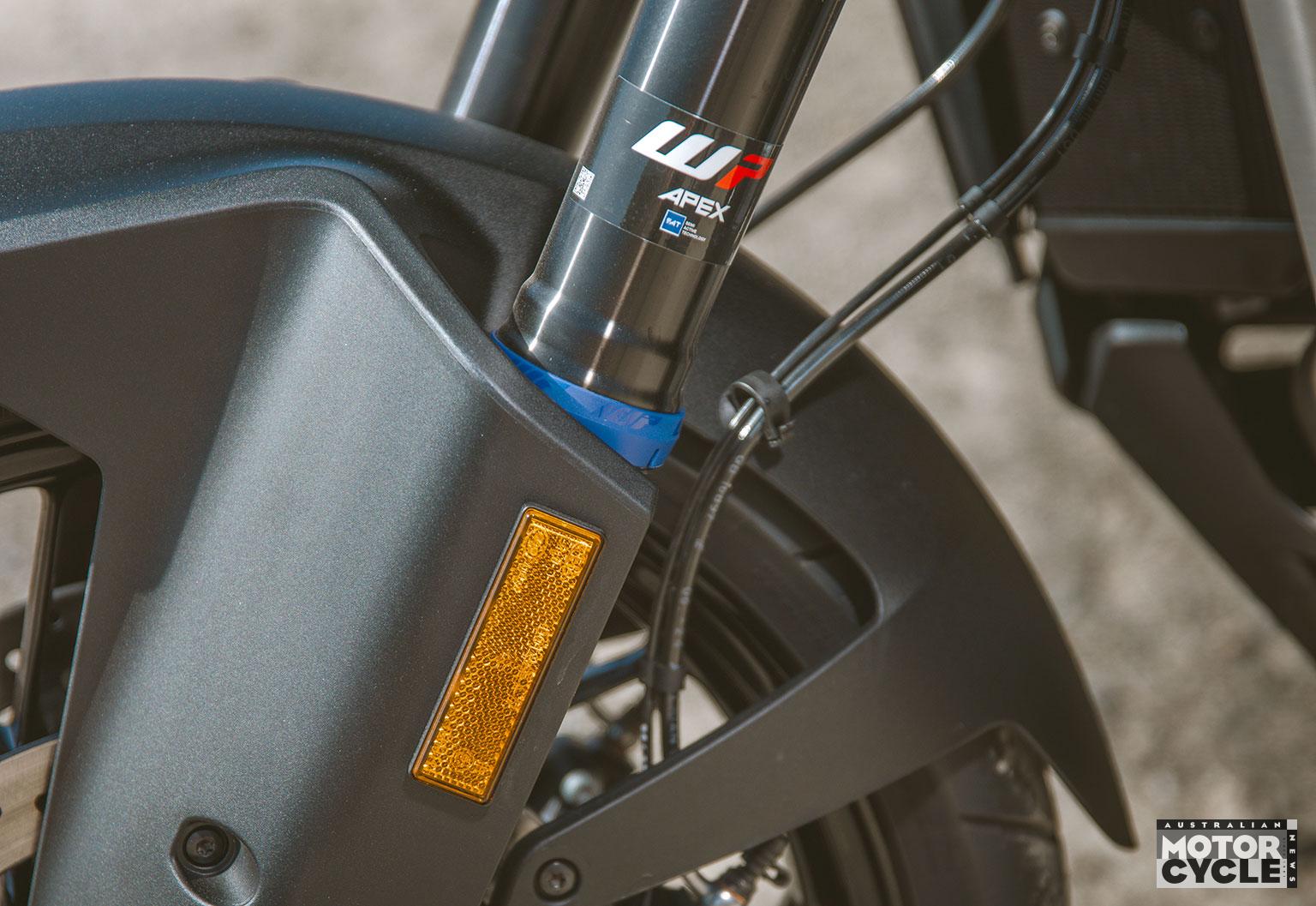
Semi-active suspension is nothing new, and we’ve seen this on the older and still excellent 1290, but now the S Evo has upped the game with WP SAT (for Semi-Active Technology) and four different damping modes: Comfort, Street, Sport and Rain. A full-colour 8-inch portrait touchscreen, complete with an anti-smudge and anti-reflection coating, is one of the largest on the market and more like having a tablet to play with on the move than a humble dash. At the heart of everything, it features integrated sat-nav and allows the rider to change the riding mode, suspension and rider aids on the move. Fifth-generation Bosch front radar, coupled with Adaptive Cruise Control, now has a Group Ride mode to make it safer when riding with mates in close formation.
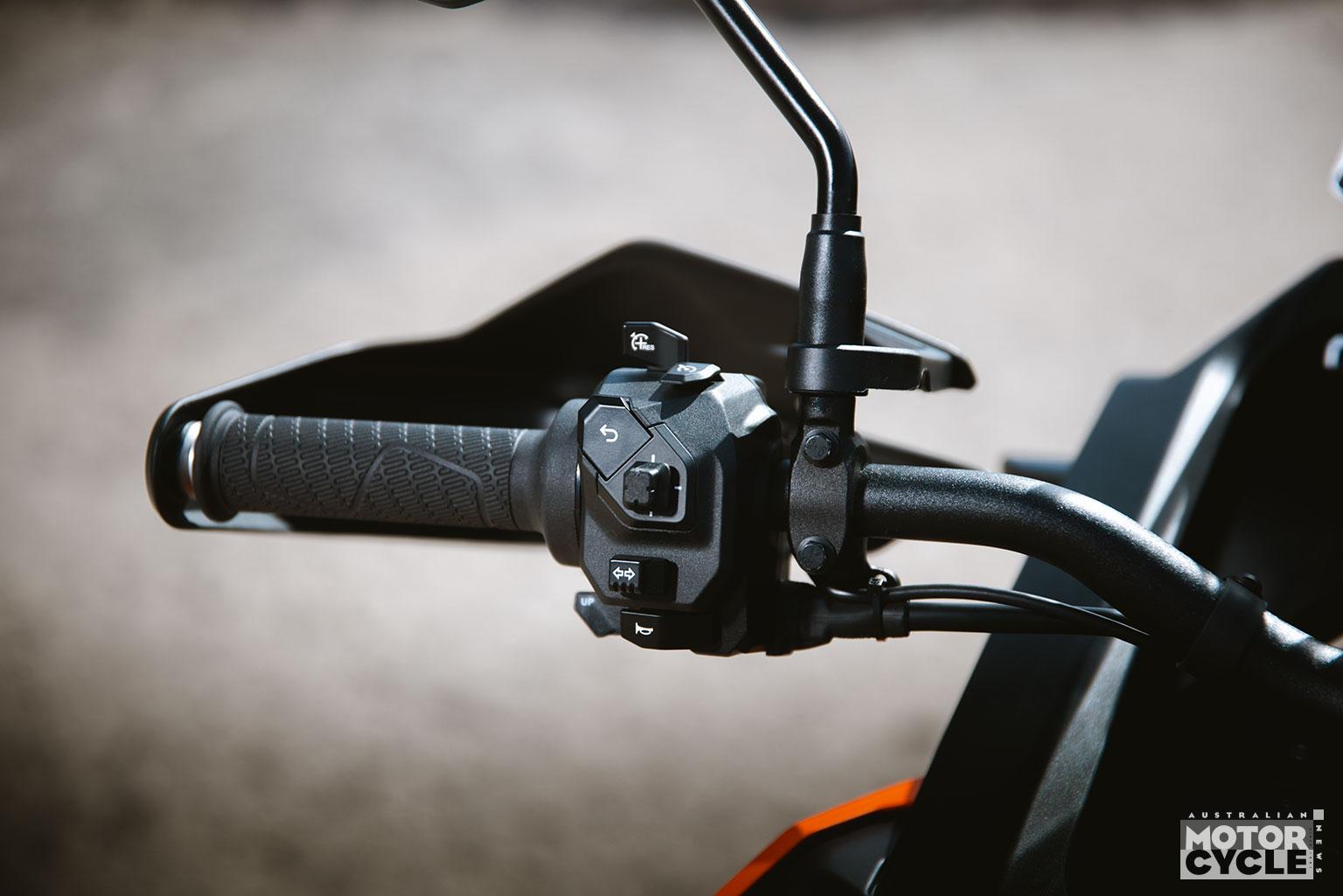
Automated Manual Transmission (AMT) comes as standard on the S Evo and is a world first for KTM. It features a centrifugal clutch system to facilitate clutchless riding, similar to that of a big scooter, and dispenses with a conventional clutch lever. The rider can choose between a fully automated set-up with three shift modes, Comfort, Street and Sport, or manually change gear via a paddle shift on the left handlebar or conventionally using the foot gear selector, which looks normal enough but is actually an electrical switch and not connected to anything mechanical. Rapid downshifts can also be made by quickly closing the throttle.
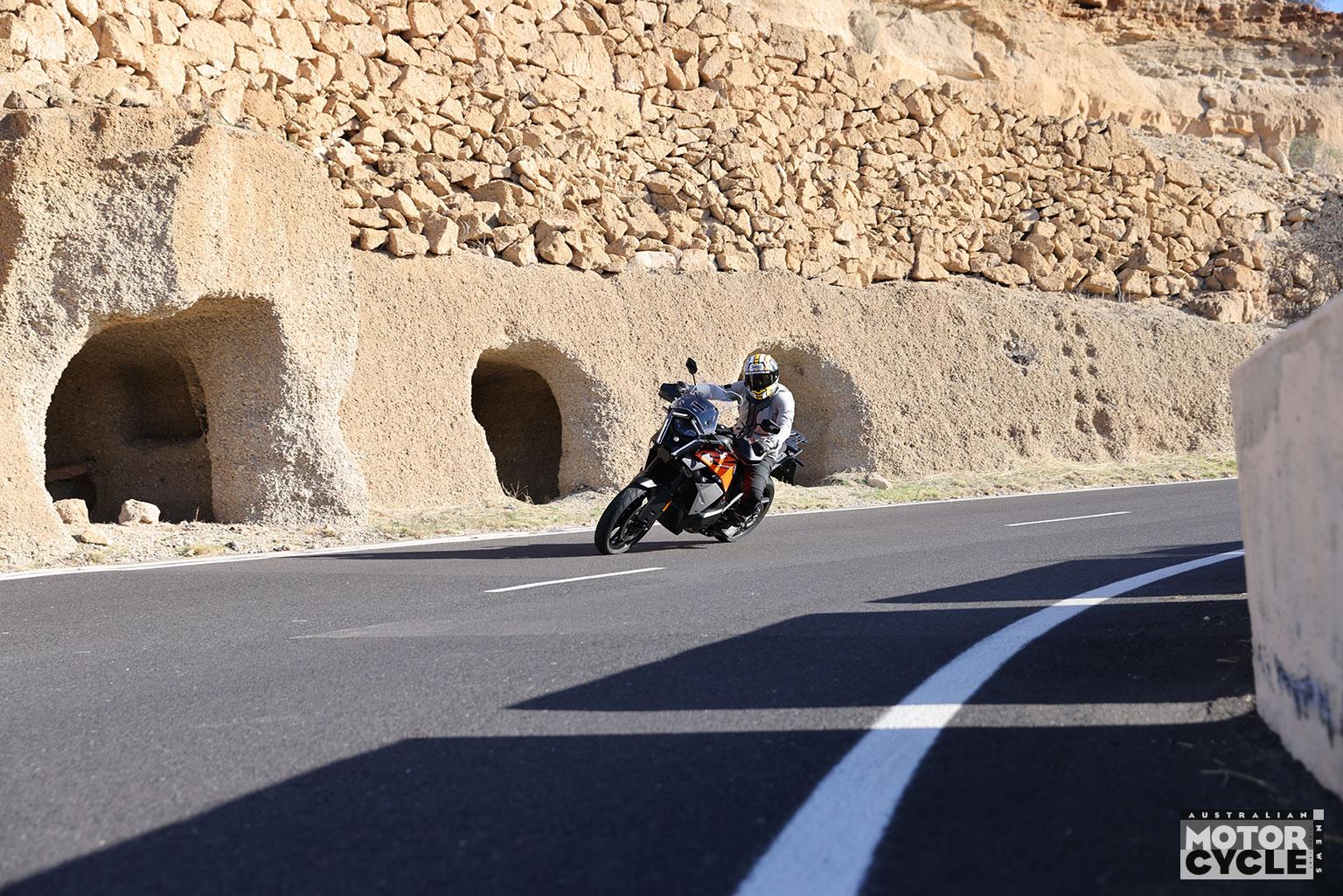
KTM has also installed a Park mode that mechanically locks the gearbox, similar to an automatic car, to stop the bike rolling forwards or backwards, while gear patterns now run P-N-1-2-3-4-5-6 with the traditional neutral between first and second gears removed.
As this is the top spec S Evo model, multiple rider aids, including Motorcycle Traction Control (MTC), adjustable cornering ABS, a tyre pressure monitoring system, and a smart keyless system come as standard. There’s also a good old fashioned centrestand.
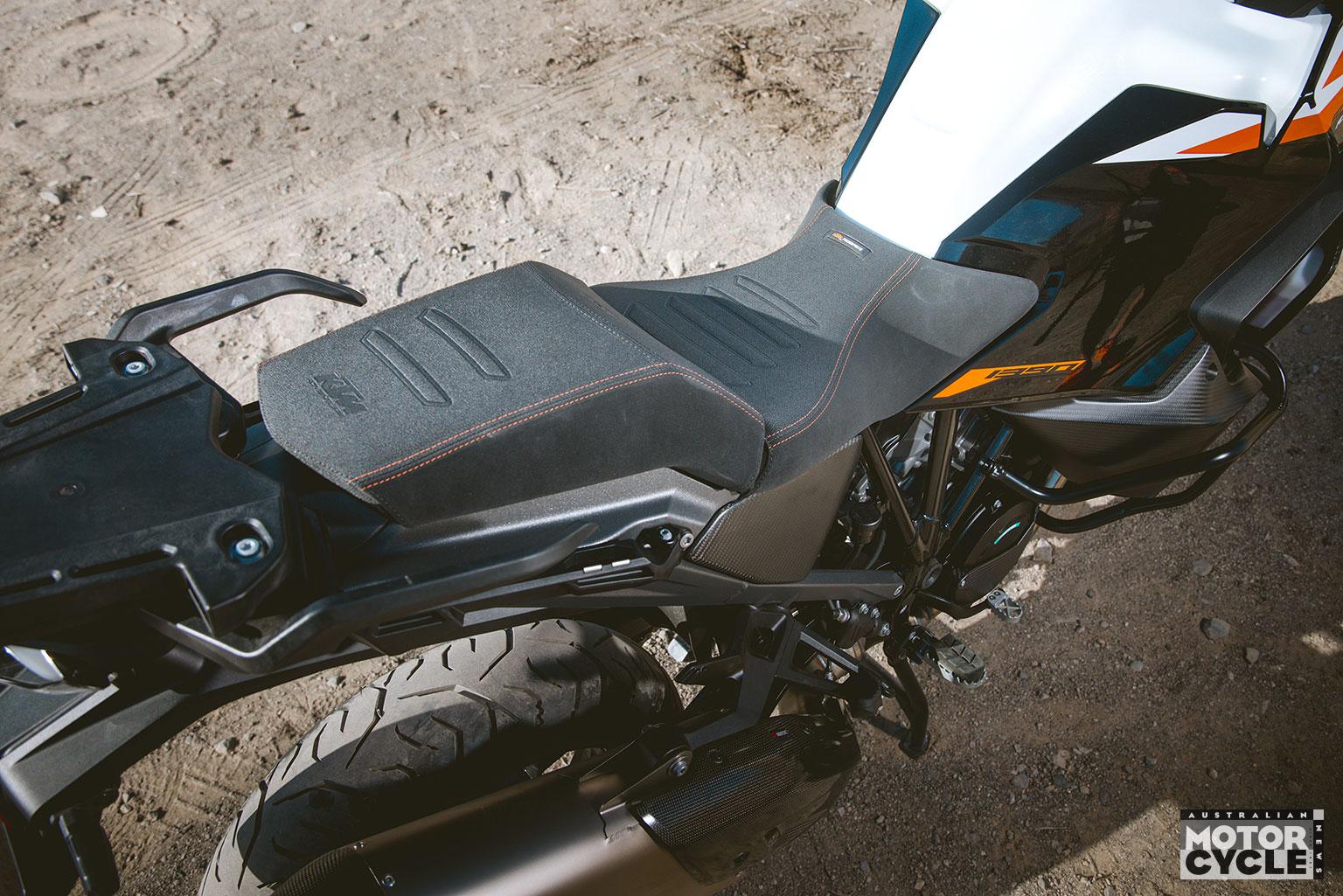
Despite all this tech and market-leading power, prices start at $34,495 for the standard Super Adventure S and $36,495 for the Evo, which is expensive but more on par with Triumph’s Tiger 1200 than its most direct competitors, the BMW’s R 1300 GS ASA and Ducati’s Multistrada V4 S. As tested, we also had the additional Tech Pack ($1666.47) which, should you decide to keep after the ‘demo’ period or around 1500km, raises the price to just over $38k.
Ring the S Evo
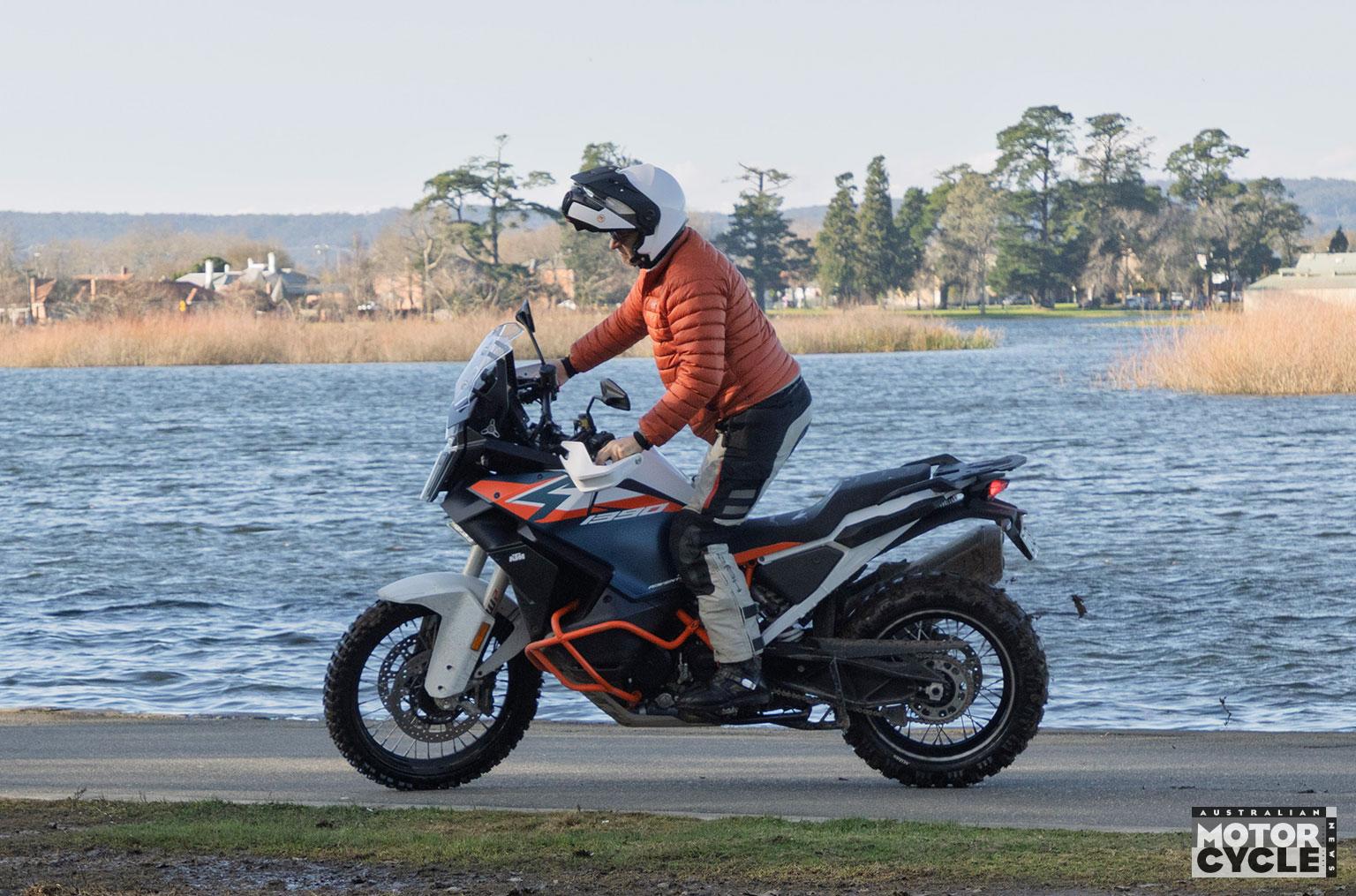
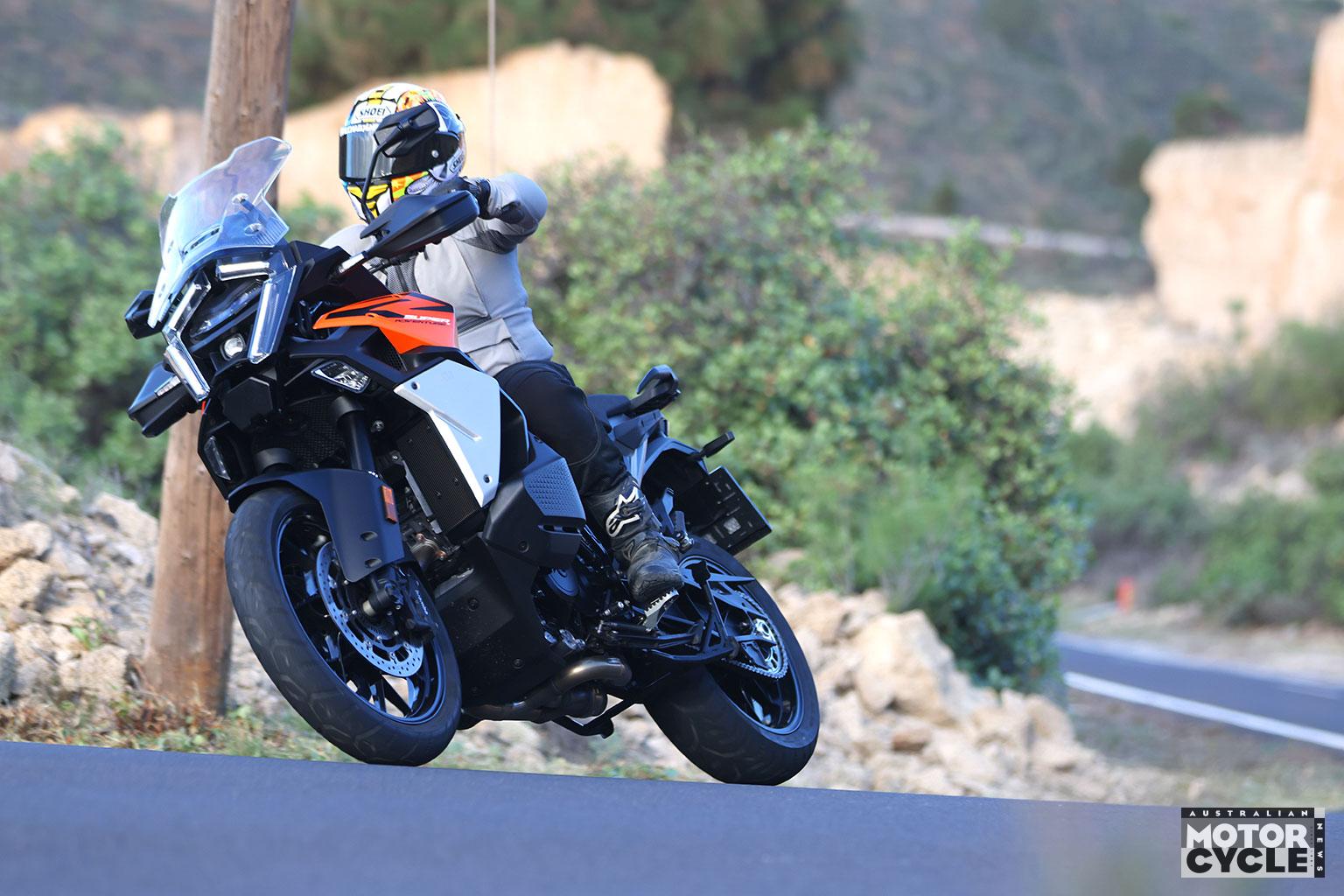
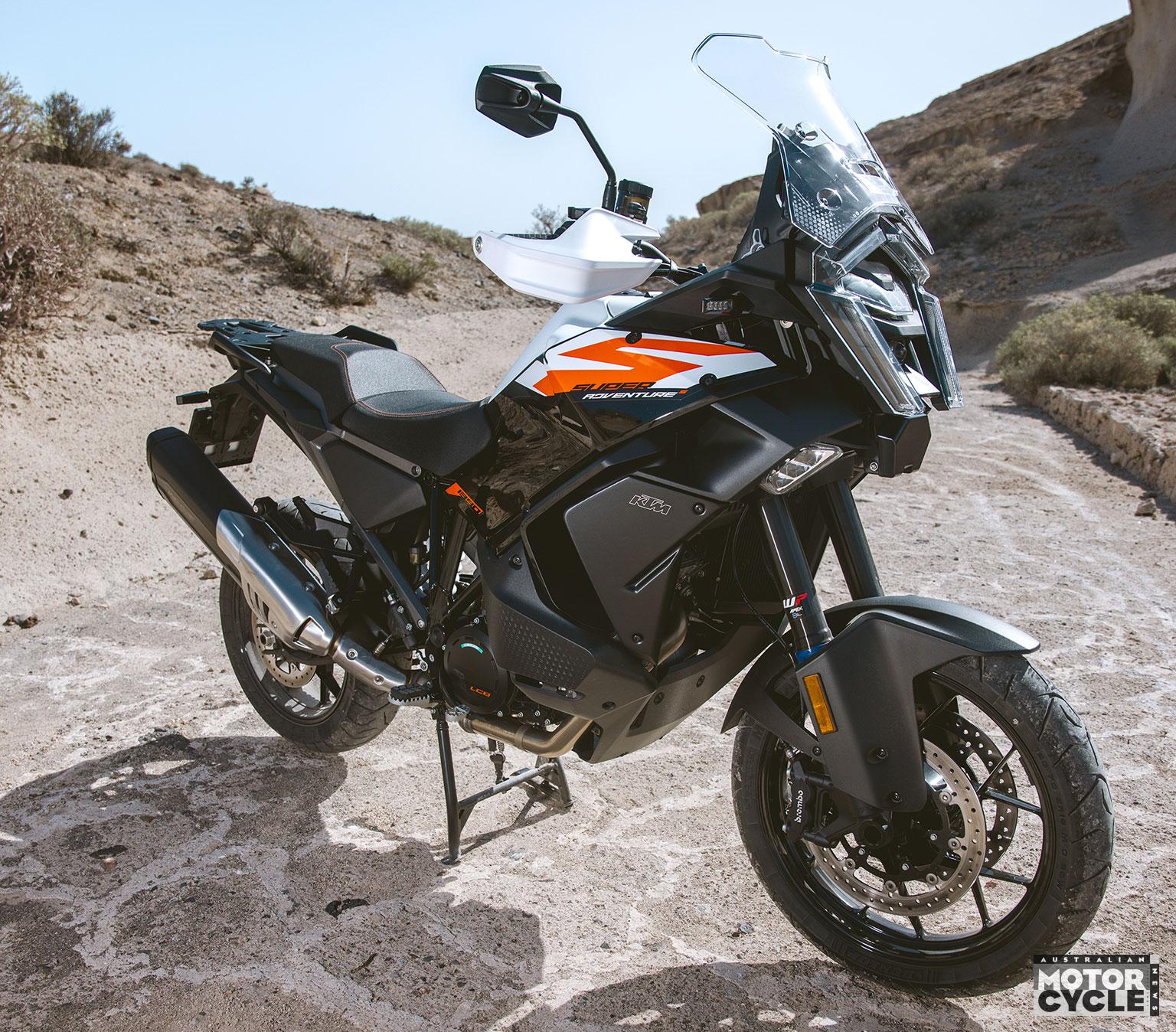
We flew to the stunning island of Tenerife to put the Super Adventure S Evo and all its smart new technology to the test. It’s been a long wait for KTM’s big 1390 Super Adventure, but it appears to have been worth it. Parked in the Spanish sunshine, it looked as impressively imposing as its headline numbers: 1350cc, 173hp, 145Nm. It tops scales at a claimed 227kg dry and has two standard seat heights of 847mm and 867mm.
The first bit of good news, for riders of my shortish stature at least, is that once aboard I could get two feet securely to the ground at the same time. There’s no self-lowering system to automatically drop the seat as there is on the competition from Ducati, BMW and even Harley – more on this later – but immediately the 1390 felt less intimidating than I’d predicted.
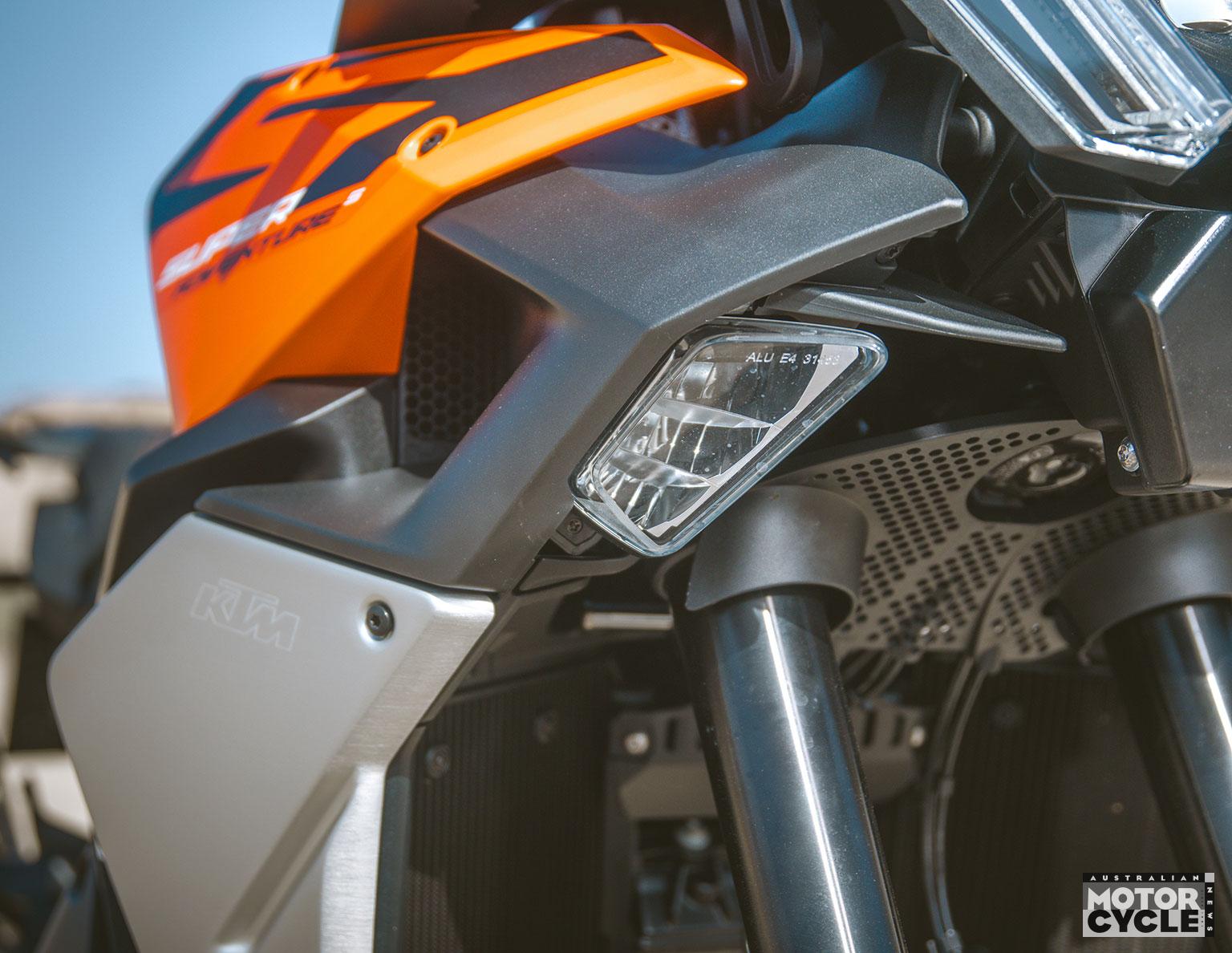
On board, eyes are drawn to the new iPad-like touchscreen dash and illuminated switchgear. Both are intuitive to use. KTM’s 990 RC R has a similar touchscreen dash, smaller and horizontally oriented, but this is up another level and simple to operate with gloves on.
Before even firing up the big V-twin, I dived into the custom mode, removing the traction control to get a feel for its front end liveliness, and checking out the different riding modes, which not only change the mapping but also the rider aids and semi-active suspension. There’s a daunting amount of choice but everything is colour-coded with clear graphics, and you can reduce or magnify any part of the screen as if zooming in on a photo on your phone. You can also choose how much or how little information you want to be displayed and, should you get lost, there’s an idiot’s home button to bring you back to the start.
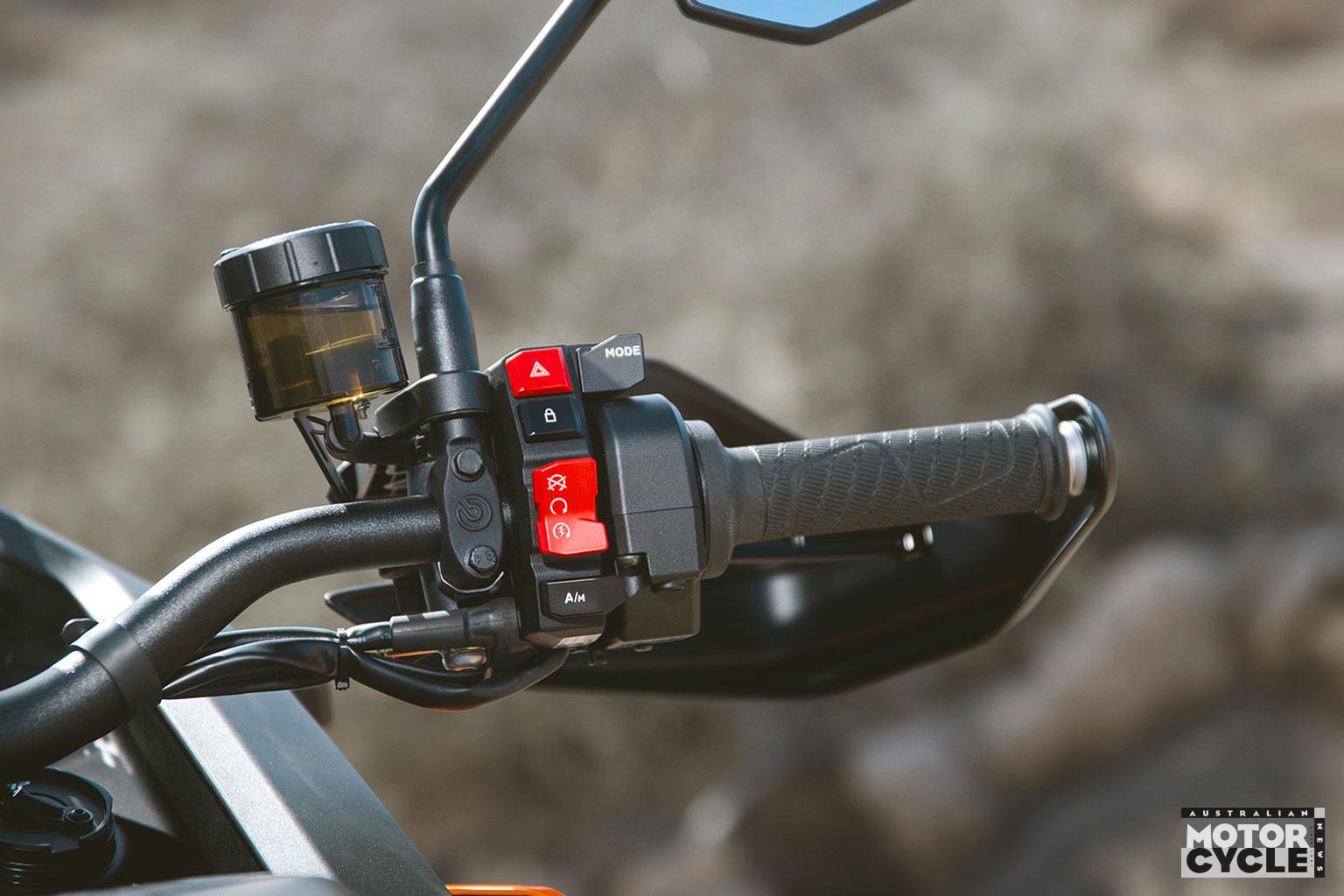
Modes can be changed via the touchscreen or a mode button on the right ‘bar. Other information can be navigated via the touchscreen or, if you prefer not to take a hand off while riding, the backlit joystick on the left ‘bar. Furthermore, everything can be turned off. If, for example, you don’t want the radar adaptive cruise control, you can quickly deactivate it and run standard cruise control instead, and it’s the same for the TC and hazard warning. Once off, a rider aid doesn’t automatically switch back on again and revert to a standard KTM setting when the ignition is switched off and on. Your settings are saved.
Still in the cockpit, the screen is manually adjustable, the ignition is keyless and there’s an aura of high-end finish and slick functionality, despite the complexity of this machine.
Now, finally, to get moving…
Quick to adapt
Essentially, the AMT has two options: auto or manual. Flick into Auto via a button on the right ‘bar, and ‘Auto’ is displayed on that giant dash – and that’s it. Twist the throttle and move forward, just like a large scooter, using a similar centrifugal clutch. The revs get to around 1800rpm or 1900rpm before the Super ADV’s wheels start to turn, and that’s it. It’s a bit disconcerting at first as there’s no physical clutch lever or biting point, but the release and initial movement are smooth.
For the first few metres, I was all Bambi on Ice, but once moving, the system quickly becomes second nature. There’s no need to use the clutch when coming to a stop, which is lucky as there isn’t one, and it’s impossible to stall. You do, however, need to remember that blipping the throttle at the lights is not a good idea unless you are in neutral or park…
Once moving, you just allow the auto gearbox to do its work. It automatically selects the appropriate gear depending on which mode you’ve chosen. There are three shift modes – Comfort, Street and Sport – and these are linked to the riding modes, Rain, Street, Sport, Off-Road, Custom and an optional Rally.
As an example, in Sport the system automatically holds onto the gear longer and backshifts earlier than in Street or Comfort. At any time you can override the system by manually changing up or down a gear, and you can change each mode too by selecting, say, a ‘Street’ change in Sport mode.
Around town or when generally riding without sporty intent, I typically reverted to the standard auto system and let the bike do the calculations. Changes are reasonably smooth and, given that the system is linked to the IMU (and therefore myriad sensors and rider aids), AMT won’t change gear when you’re carrying a big lean angle.
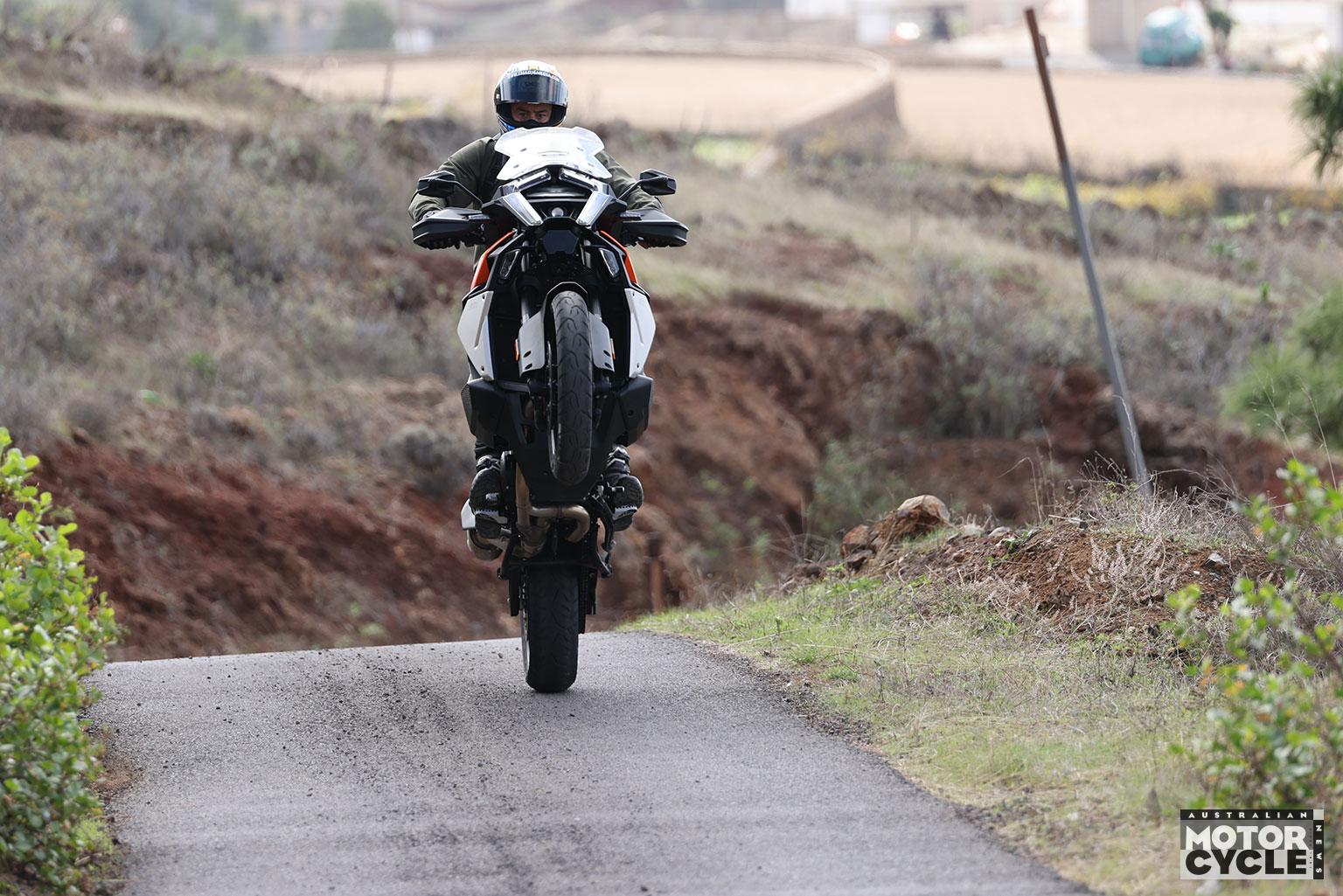
The more I upped the pace, the more I intervened, opting to short-shift or to cog back a gear for more engine braking. Once at a brisk ‘ready to race’ pace, I much preferred to change gear manually and have full control, using the conventionally positioned foot change. This might be personal preference, or down to my experience, but when riding hard I didn’t sync with the auto gearbox, even in Sports mode. There’s so much power and torque available from the V-twin that you can short shift and still have breathtaking acceleration – but in Auto Sports mode, AMT would hold onto the gear for too long, rev too high, which inevitably made the ride feel jerky and too aggressive, especially in the lower gears. This made the suspension, tyres and rider aids work harder, whereas I preferred to be smooth, especially with so much torque on hand.
Equally, when slowing, I want to use as much engine braking as possible and not just rely on the Brembo stoppers, but even in Sports mode the Auto system would hold onto a gear and not backshift soon enough. As a result, we would roll into tight downhill hairpins in third or fourth gear where I wanted second.
Unless you’re in a serious hurry, though, the easy and liberating nature of the AMT is spot on. And knocking back one gear by backing the throttle past its closed position is fun and addictive. But, personally, I’d save my cash and opt for the manual transmission with the up-and-down quickshifter, which makes the clutch almost redundant anyway.
As a short rider, I also miss the clutch, which I use for balance at walking pace or three-point turns on a hill. But again, most rider won’t have a problem here.
When weight matters
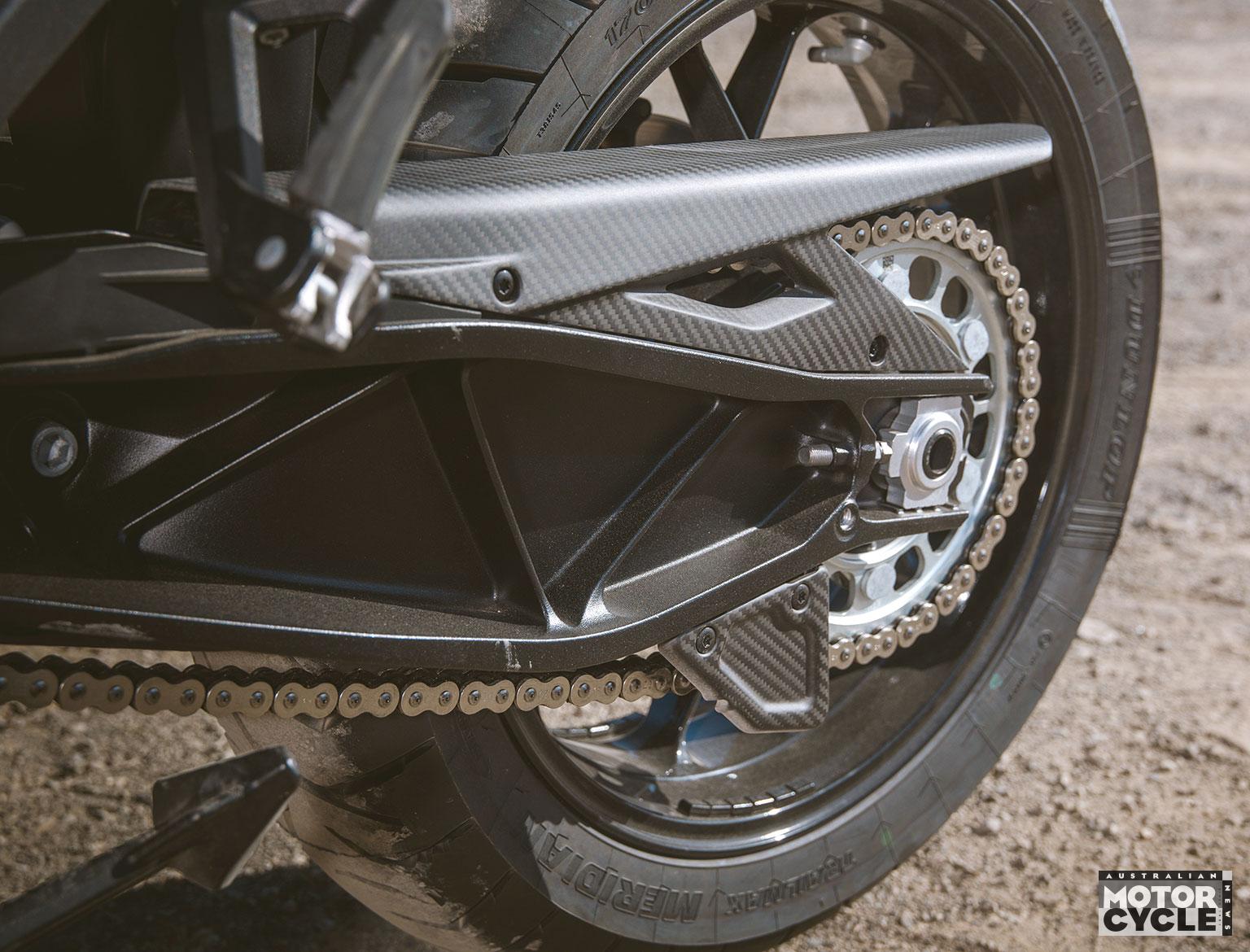
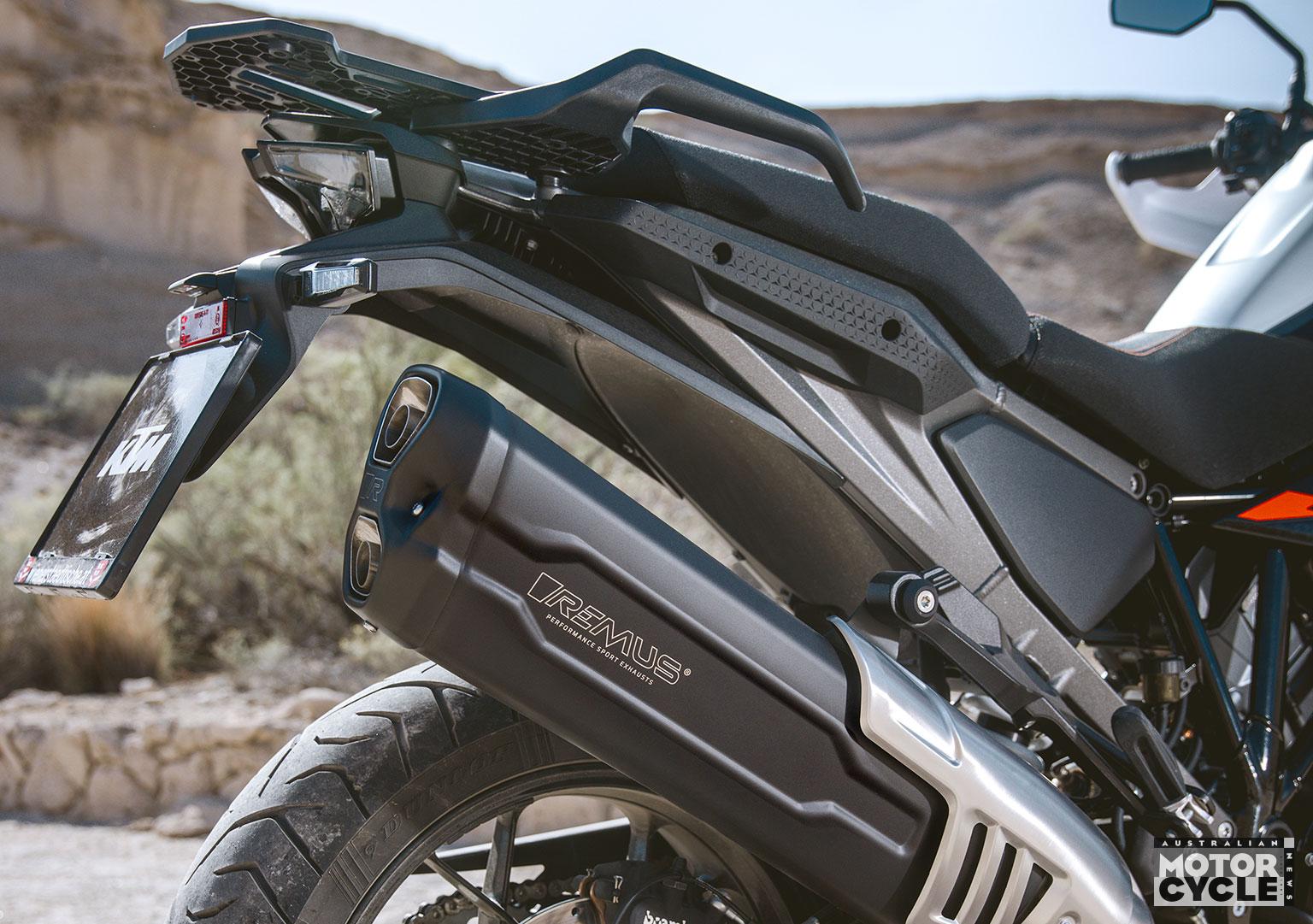
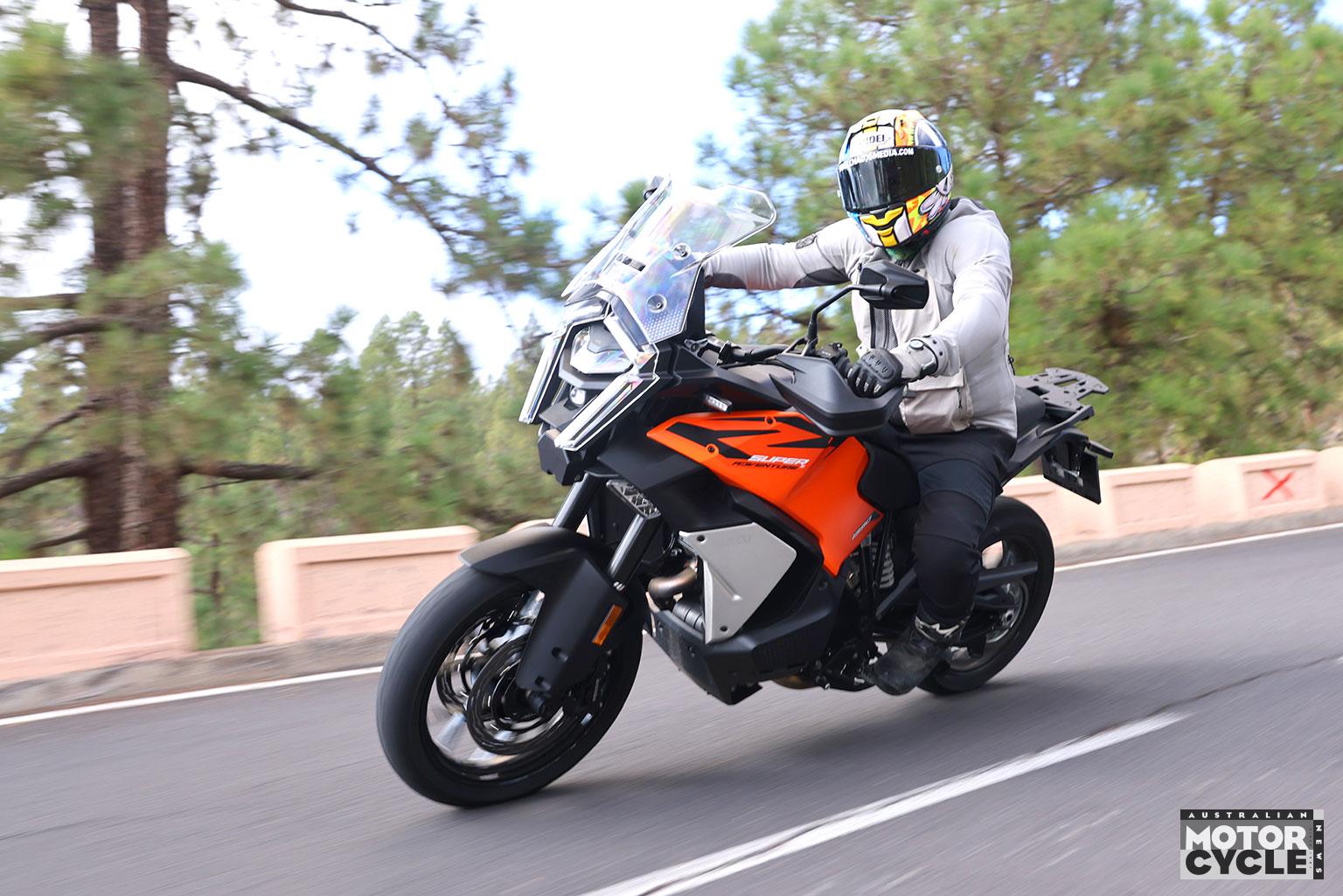
There’s a lot to get your head around. I for one had become so plugged in to the 1350’s countless mode and rider aid options that I almost forgot about the mighty impressive mechanical motorcycle I was sitting on. Here KTM hasn’t simply inserted a bigger engine in the 1290 Super Adventure’s rolling chassis; most components are new, including the semi-active suspension, uprated Brembo brakes, and – finally – some decent OE rubber in the form of Dunlop’s Trailmax Meridian.
Like the AMT, the WP SAT suspension is linked to your chosen riding mode, which automatically selects either Sport, Street, Comfort or Rain.
If you opt for the Suspension Pro package, you can dive deeper into your settings by incrementally finessing compression and rebound rates via the dash, while the dedicated Off-Road mode stiffens rates for dirt-based fun, and Auto adapts automatically to your style of riding at any given moment. All can be selected on the move.
There’s a noticeable difference to the 1350’s ride and feel between the modes but even Comfort mode, which, as its name suggests, is compliant and relaxed for touring, adds stiffness and control when you need it. Grab a handful of throttle and the SAT system steps in to help.
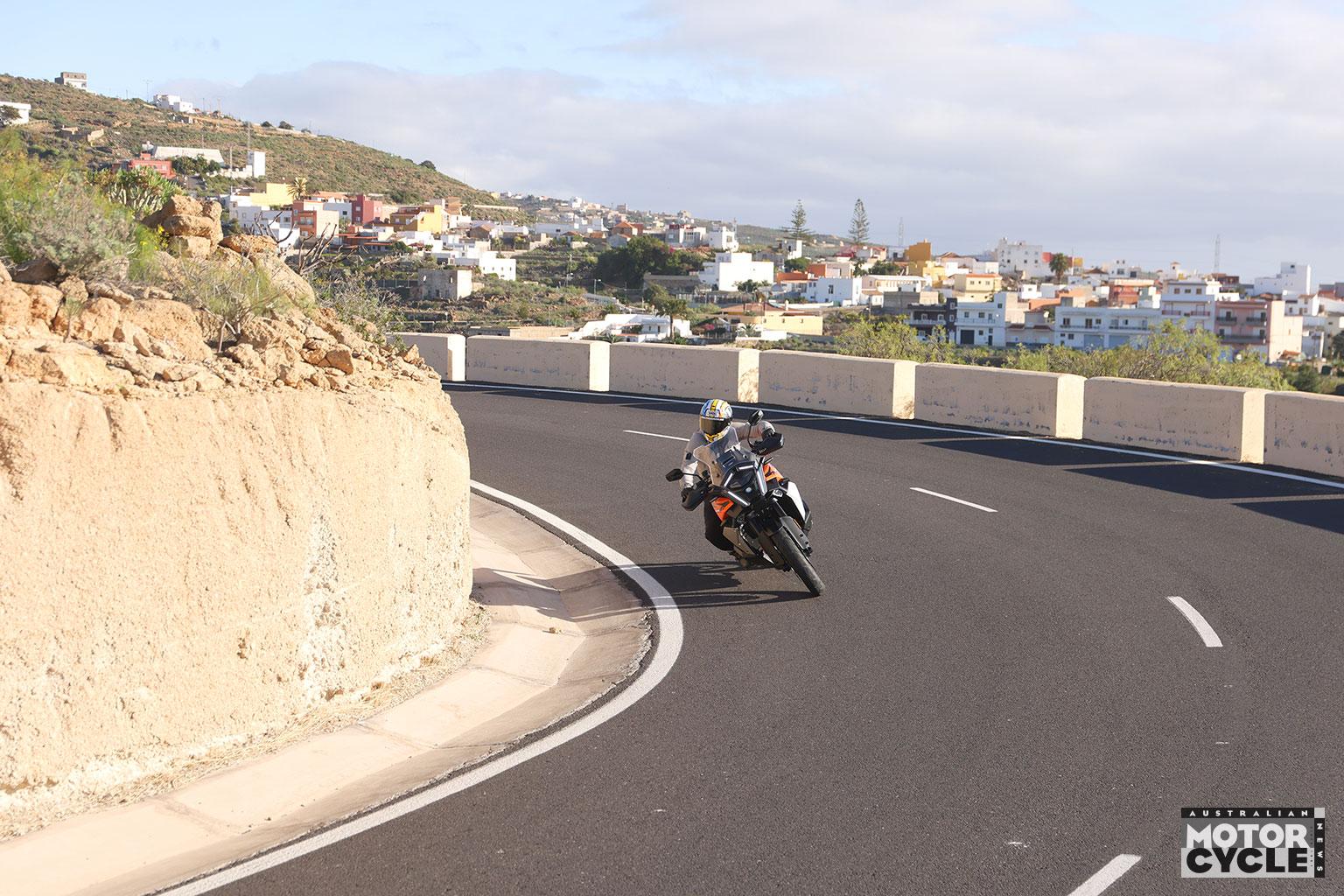
For those exploring the Super Adventure’s sporting abilities on road, Sport mode adds stability and support, while the anti-dive function slows the long-travel fork’s 220mm stroke under hard braking.
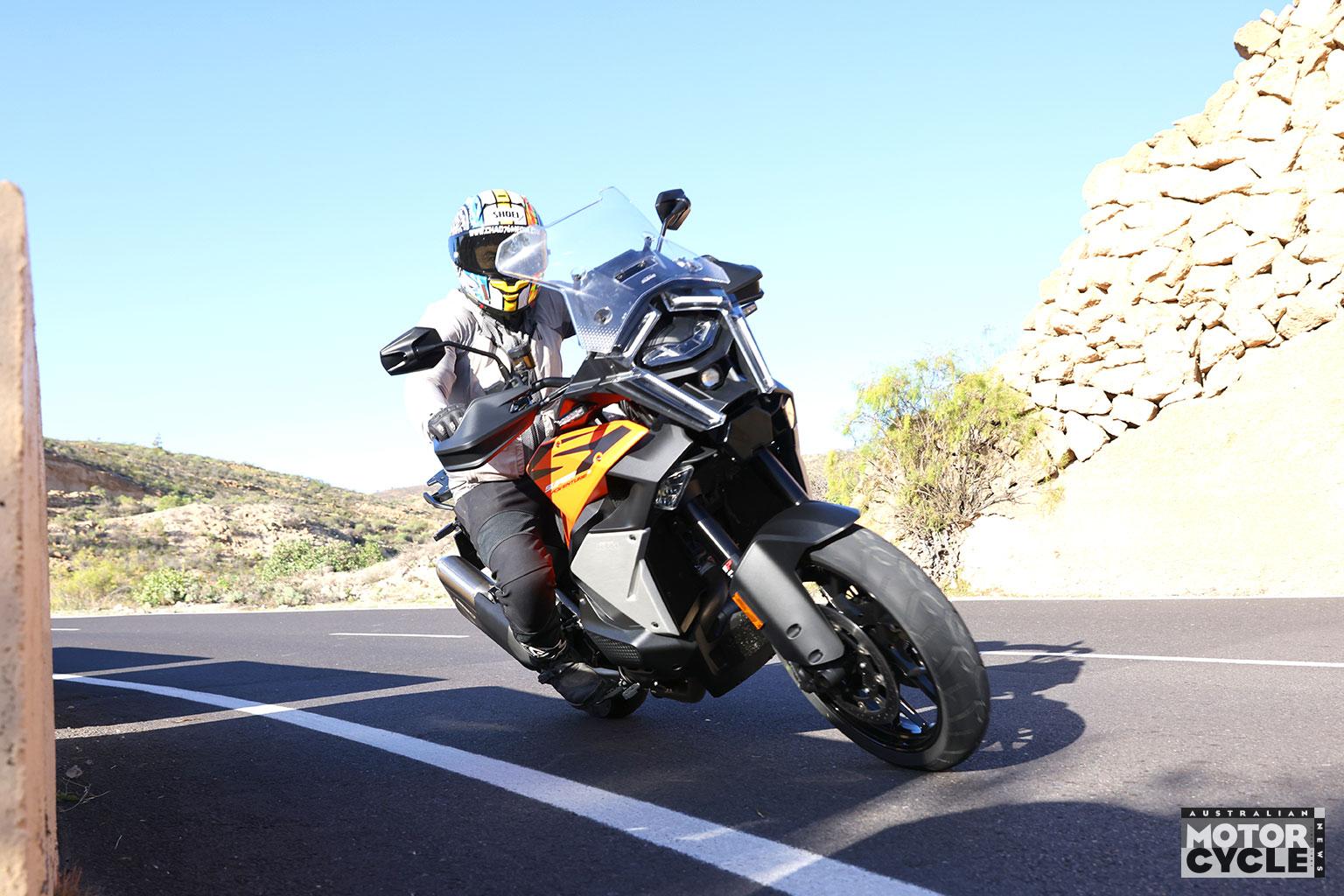
Ground clearance, even in Comfort mode, which has more sag, is exemplary for an adventure machine and those new Dunlops respond well to hard riding on asphalt. We experienced a severe temperature drop and rain shower on test but even with so much power and torque, the big KTM found grip with excellent feedback.
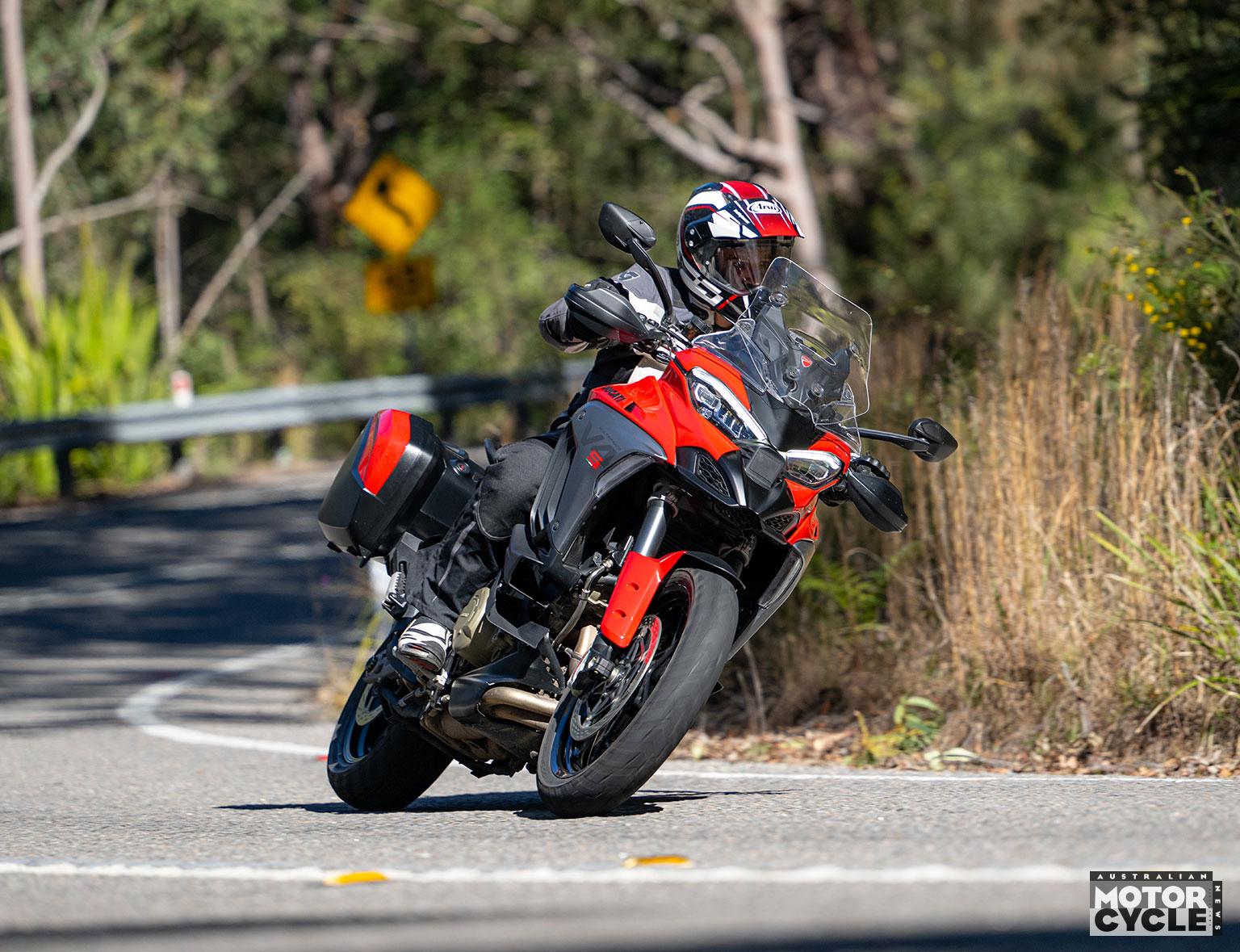
But for all its natural pace and inherent KTM agility, you’re still aware you’re on a 19in front-wheeled adventure bike. It’s not heavy steering but, from memory, not as easy going or nimble as the Ducati Multistrada V4 S or BMW R 1300 GS on road tyres. I’ve ridden the competition recently, and it was easy to forget they were adventure bikes, whereas the KTM, which on paper is lighter than the Ducati, is a little slower to turn.
By the end of the day, with a near-empty petrol tank, it felt much livelier in the endless twisties and hairpins of Tenerife. Weight obviously matters.
Braking-wise, KTM has updated the Super Adventure’s pads and added a new master cylinder. The customisable ABS is excellent but again not as sharp as the competition from Italy and Germany, although I wonder if I might have been relying on the stoppers more than usual due to the lack of engine braking in auto mode.
Unlike the competition, the front and rear brakes are not linked and, yes, you can remove the rear ABS, but backing-in supermoto style is very difficult, almost impossible, without a clutch.
Made for the miles
This was a road test ridden in the true spirit of KTM’s Ready to Race mantra, but I suspect very few owners will ride their 1350 Super Adventures in the style depicted in its dramatic marketing material. Most will instead sit back in comfort, rely on the automated gearbox and churn out some big kays, which the big KTM is made for.
Roll up the manual windscreen (70mm more adjustment, 55mm previously), set the cruise control to manual or adaptive and follow the very good integrated sat-nav… and enjoy. With the adaptive cruise control set, you have Braking Assistance, Collision Warning and Distance Warning. The neat Group Ride mode can also be selected and recognises that you’re riding in a pack.
Wind protection is superb, the ergonomics are roomier than before with 30mm wider ’bars and 8mm lower ’pegs placed farther outward by 10mm.
That TV of a dash will keep you amused for hours, and with a 23-litre tank (the largest in this category of a standard adventure bike) you should be able to keep rolling without too much effort.
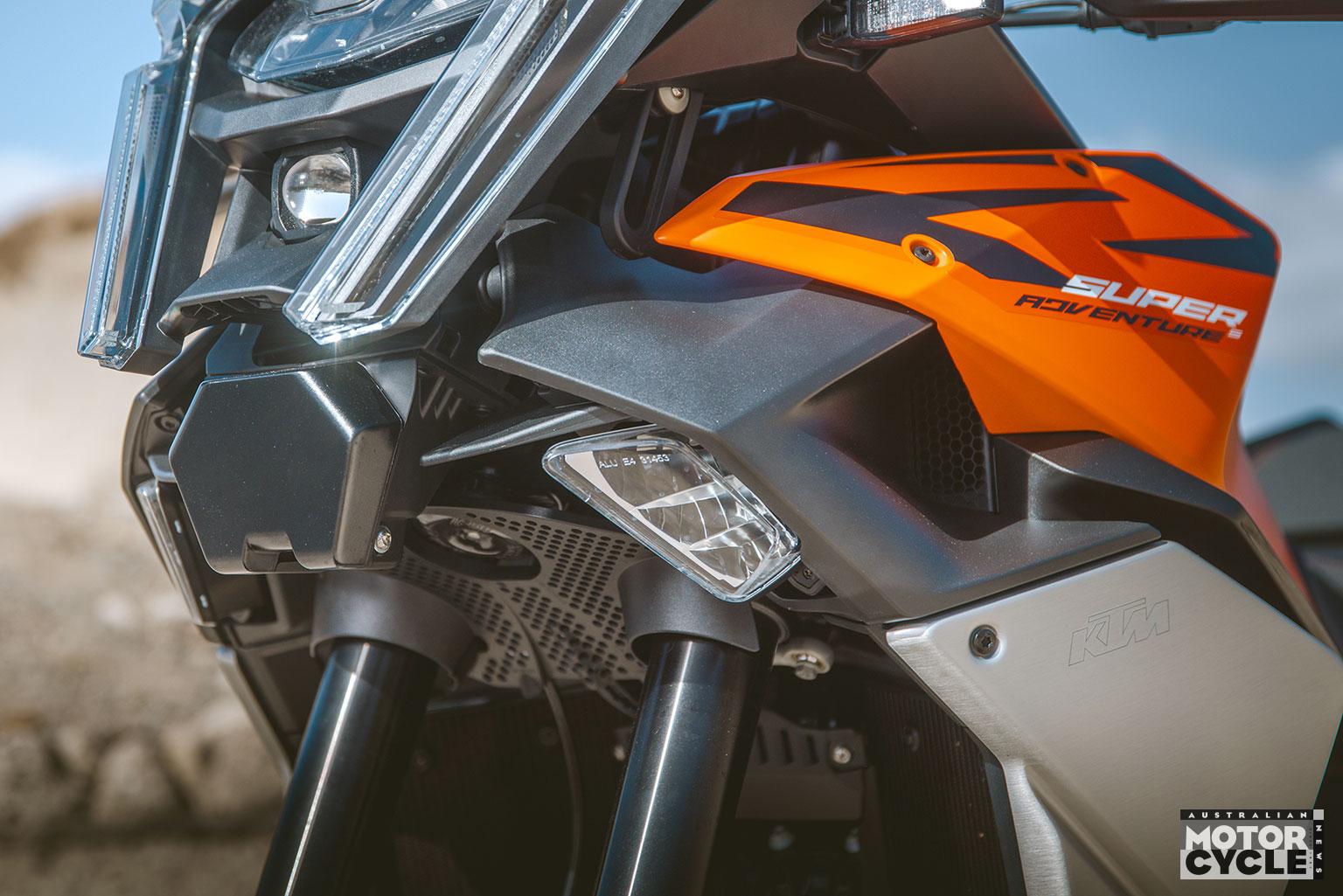
KTM quote an average return of just over 42mpg; I managed 39mpg and rode reasonably hard at times, which should, in theory, equate to a dry tank in 218 to 225 miles (362km), realistically around 200 miles (322km) before panic sets in.
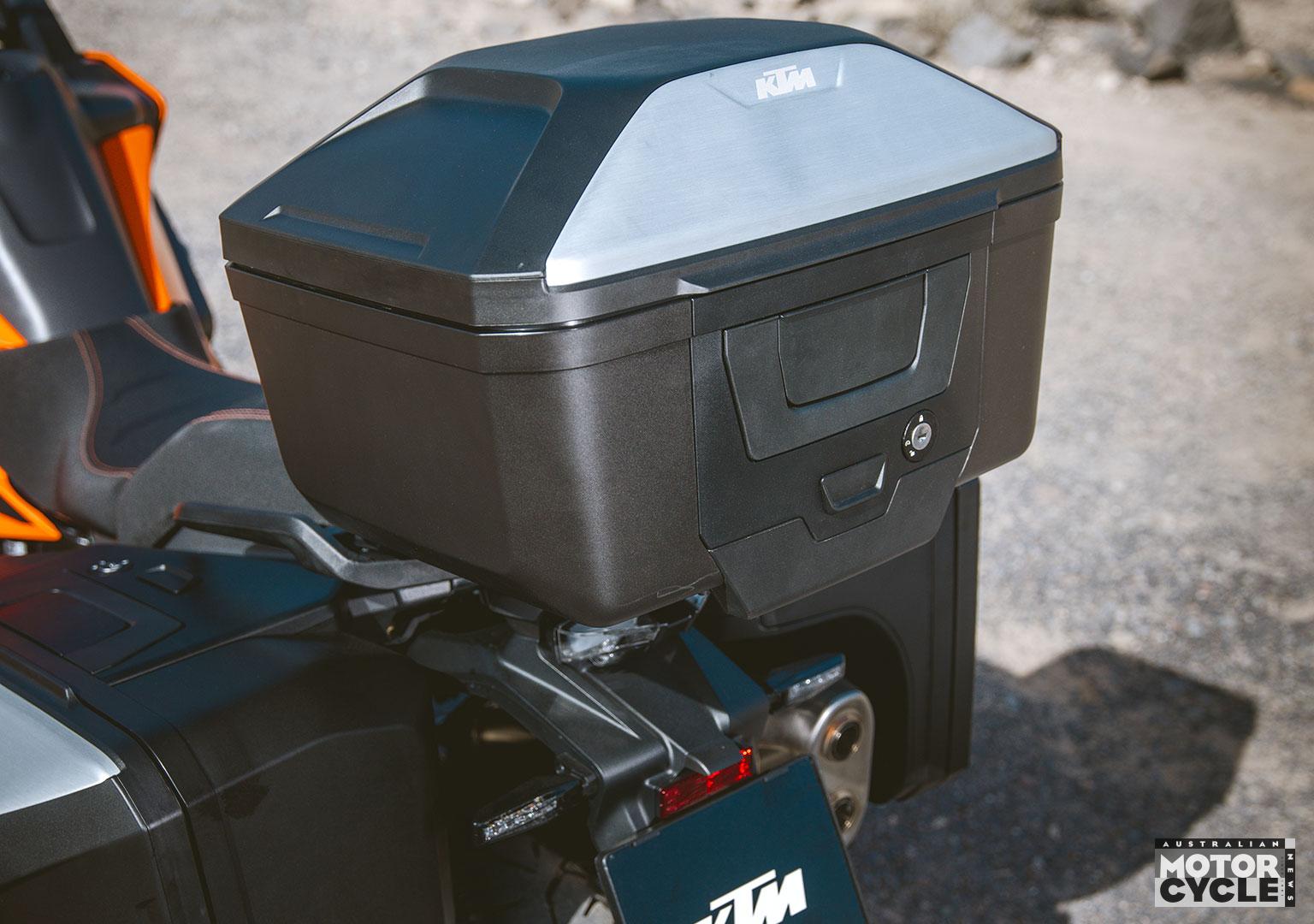
There are even multiple USB-C charging points, a neat little phone holder on top of the fuel tank, and an old-school quality toolkit under the seat.
KTM opted not to fit a rear radar, meaning there is no blind spot detection in the mirrors, but all indications point to a bike that will be able to cover the ground with pacy efficiency.
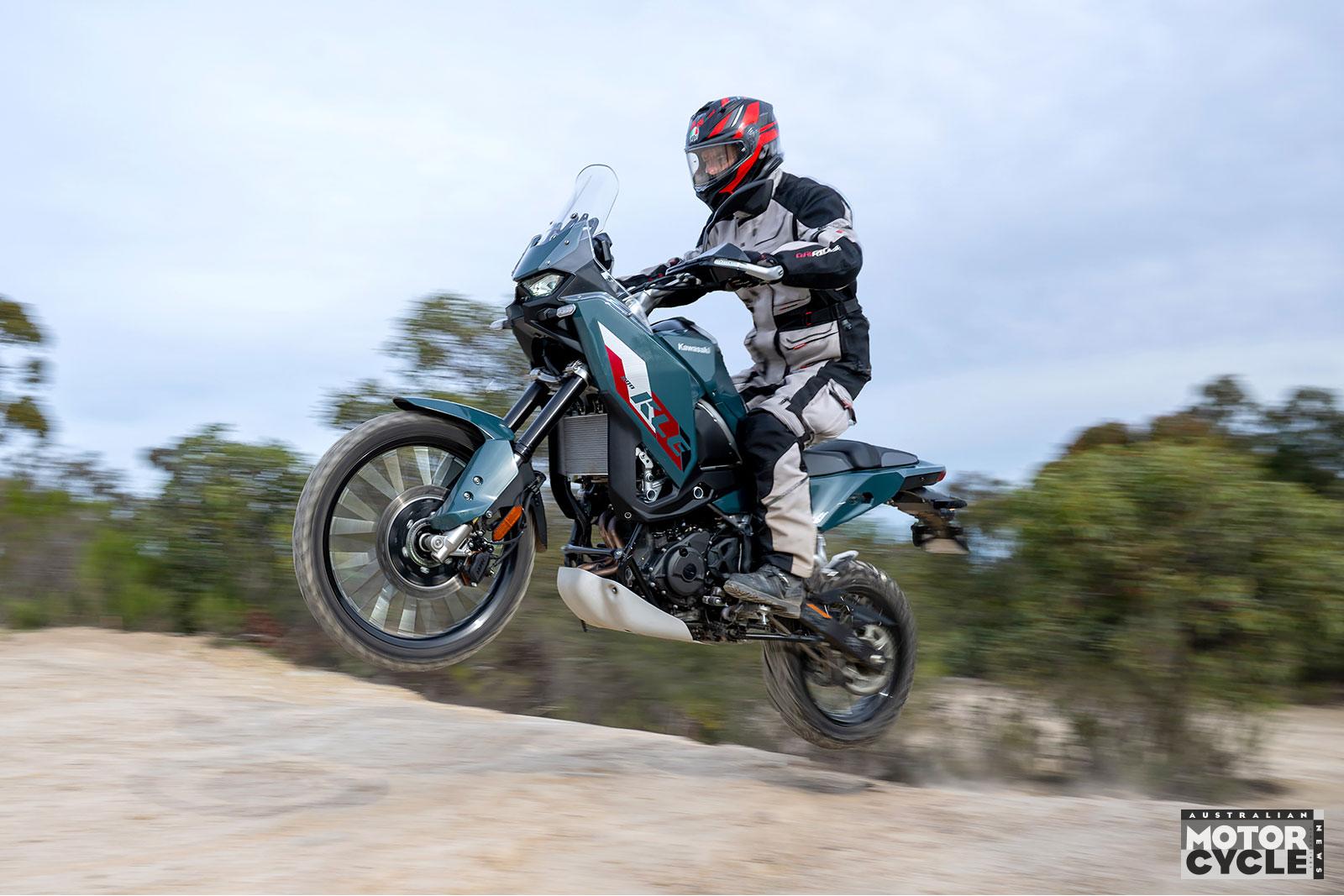
If you want a 1390 Super Adventure with gnarly off-road potential, then you need to consider the 1390 R version complete with a 21-inch front wheel, more off-road bias and even more travel on the suspension.
Verdict
The reborn KTM factory needed to come back with a bang, and they certainly did that with the excellent 990 RC R. Now the second bike to be released shows it wasn’t just a good round one. The 1390 is the most powerful bike in this class and has a huge amount of usable, drivable, sensational torque. It’s a significant step over the old 1290, which was hardly a poor machine, thanks to an improved chassis, suspension, tyres, rider aids and comfort.
As you would expect from KTM, it’s fun and engaging to ride, and the fact that it’s orange should ensure it works off-road. Heated grips should probably be standard but, thankfully, a centrestand is.
I’d opt for the standard gearbox with a quickshifter. As a short rider, I miss the self-lowering shock, which could have been easily added to semi-active suspension. I’m unsure if the rear radar is missed, and I know some potential owners don’t like the ‘demo mode’, whereby new owners try the rider aids for a period before they are bought or discarded, but these are all personal choices and small gripes.
This is a truly impressive and versatile adventure bike that can pull your arms straight with its effortless torque as easily as it can be a pussy cat around town or dispense with a ribbon of twisting tarmac. KTM has a very strong contender for top dog in the big adventure class this year.
✅ PROS – Class-leading power, cutting-edge electronics, astonishing versatility for touring or spirited road riding.
❌ CONS –AMT doesn’t fully sync with aggressive riding, self-lowering seat is missed for shorter riders.
DEMO MODE
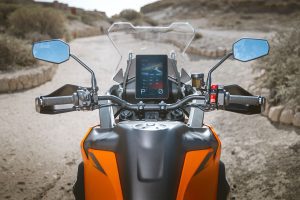
KTM’s much-talked-about ‘Demo Mode’ continues to divide opinion – and it’s easy to see why. When you buy the bike, you initially get access to all the rider aids and electronic trickery for the first 1500km before deciding whether it’s worth keeping. Think of it as a try-before-you-buy approach for electronics. Not everyone will want or need the full lot, though. KTM also lets you cherry-pick. The Rally Pack alone costs $582.22, individual features can be bought separately, or you can simply walk away from the extras altogether – in which case the bike reverts to its standard spec once the demo period ends, with no further cost.
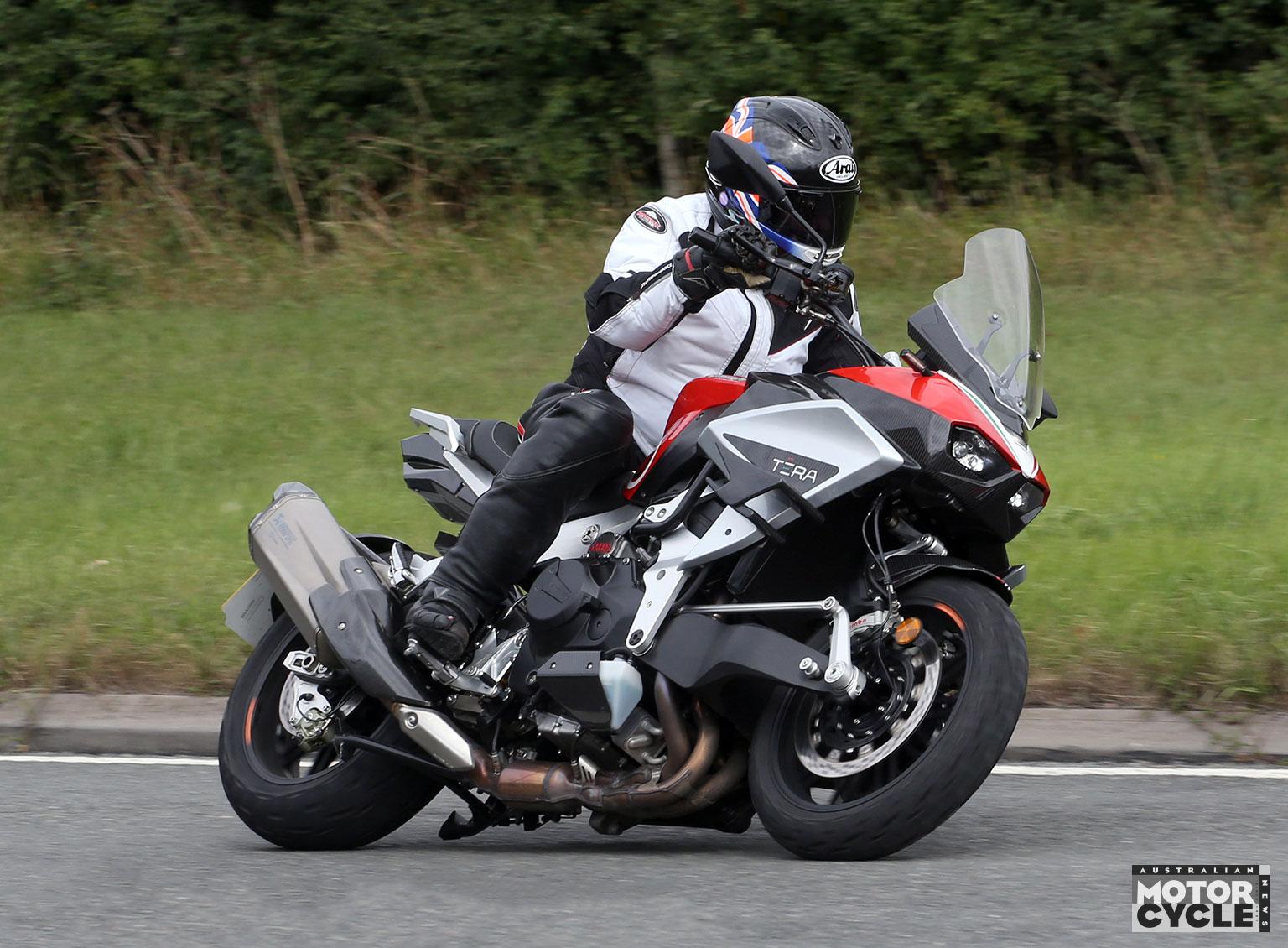
The competition
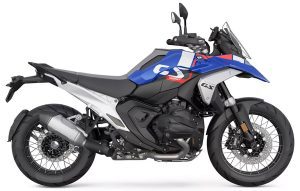
BMW R 1300R GS
1300cc, 107kW @ 7750rpm, $29,940 ride away
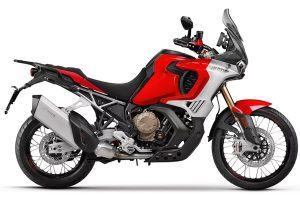
MV Agusta Enduro Veloce
931cc, 91kW @ 10,000rpm, $35,495 ride away
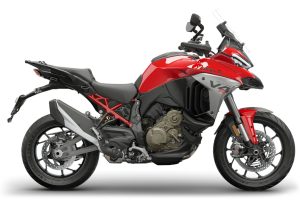
Ducati Multistrada V4 S
1158cc, 125kW @ 10,750rpm, $38,300 ride away
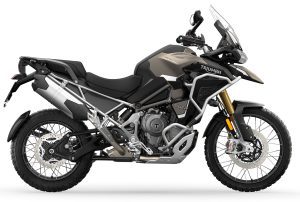
Triumph Tiger 1200 Rally Ex
1160cc, 110.4kW @ 9000rpm, $34,590 ride away
SPECIFICATIONS
ENGINE
Type Liquid-cooled, eight-valve, 1350cc V-twin with Camshift
Bore & stroke 110x71mm
Compression ratio 13.1
Fuelling Keihin EFI (with 54mm throttle bodies)
Transmission Automated Manual Transmission (AMT), 6 speeds
Clutch Automatic PASC slipper clutch, centrifugally operated
PERFORMANCE
Power 127kw (170hp) at 9500rpm (claimed)
Torque 145Nm at 8000 rpm (claimed)
Top speed 362km/h (est)
Fuel consumption 6.7L/100km claimed
ELECTRONICS
Rider aids Riding Modes, Motorcycle Traction Control, Cornering ABS, Front Radar, Tyre Pressure Monitoring, Cruise Control, Semi-Active Suspension, AMT
Rider modes Rain, Street, Sport, Offroad, Rally (Optional), plus three Custom Ride Mode settings
CHASSIS
Frame Chrome-moly steel trellis
Rake 26.5°
Trail 110mm
Wheelbase 1558mm
SUSPENSION
Type WP SAT
Front 48mm, USD, electronic fully adjustable, 220mm travel
Rear Single shock, fully adjustable 220mm travel
WHEELS & BRAKES
Type Cast aluminium wheels tubeless
Front 3x19in
Rear 5x17in
Tyres Dunlop Meridian
Front 120/70/x19in
Rear 170/60/17in
Brakes Cornering ABS (3 settings)
Front: Twin 320mm discs, Brembo four piston radial calipers
Rear: 267mm disc, two-piston Brembo caliper
DIMENSIONS
Weight 227kg (without fuel)
Seat height 847-867mm
Ground clearance 223mm
Fuel capacity 23L
BUSINESS END
Price: Standard S $34,495, Evo $36,495 ride away
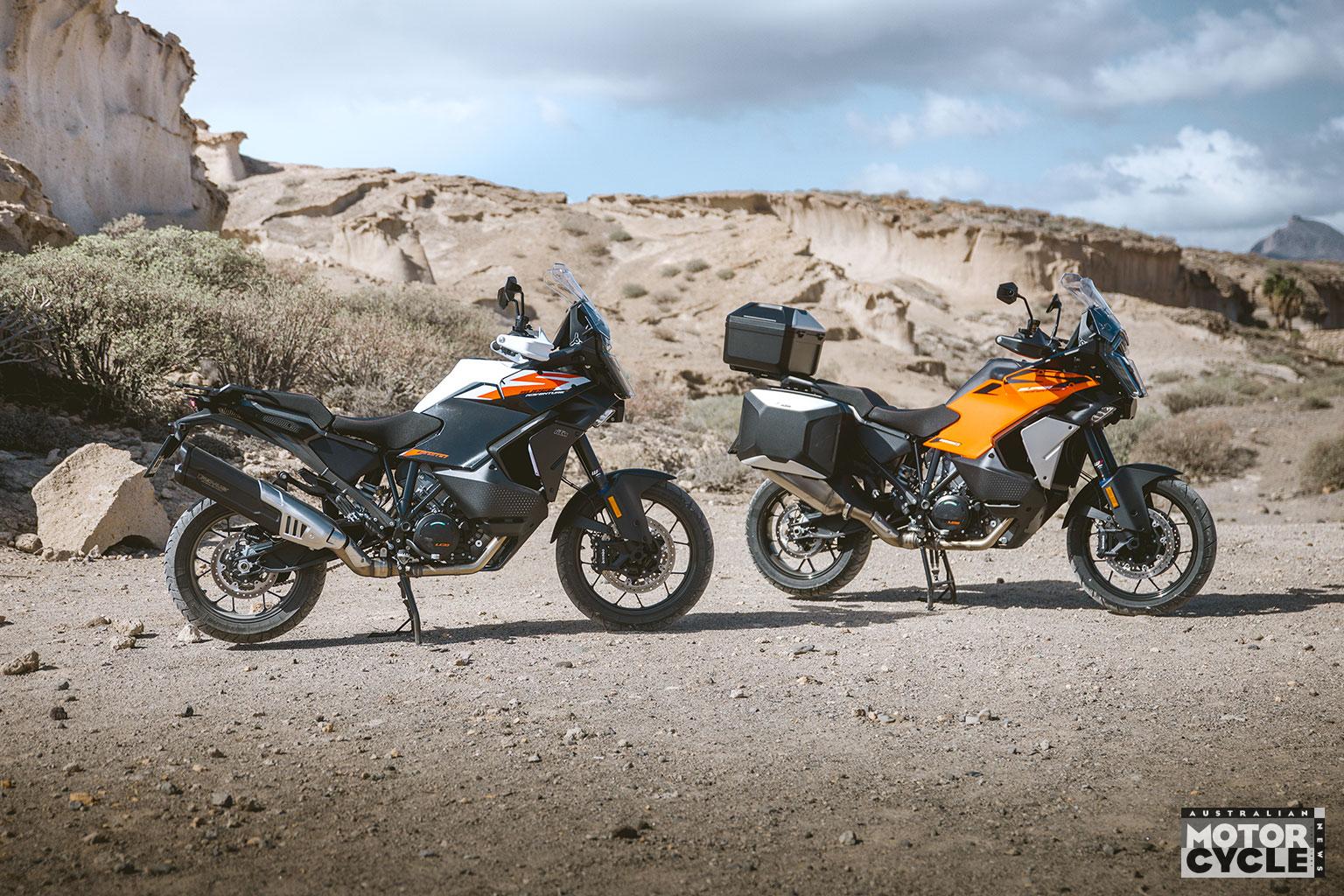
Colour options: Orange and Black; White Black and Orange
Contact: ktm.com/en-au