Patent shows MotoGP aero on road-going machinery
MotoGP aerodynamic innovations have already spawned a generation of sports bikes with front winglets and a new patent from Aprilia suggests the vertical ‘leg wings’ seen on its recent GP machines could also be making their way to production.
The designs clearly show large aerofoil panels just behind the rider’s feet and lower legs, but also specify that instead of being part of the rear bodywork, as they are when fitted to race bikes, these units are designed to be easily bolted to the existing pillion footrest brackets of almost any road-going bike. They’re depicted on an RSV4, but could just as easily fit to the RS660 or even models from other brands.
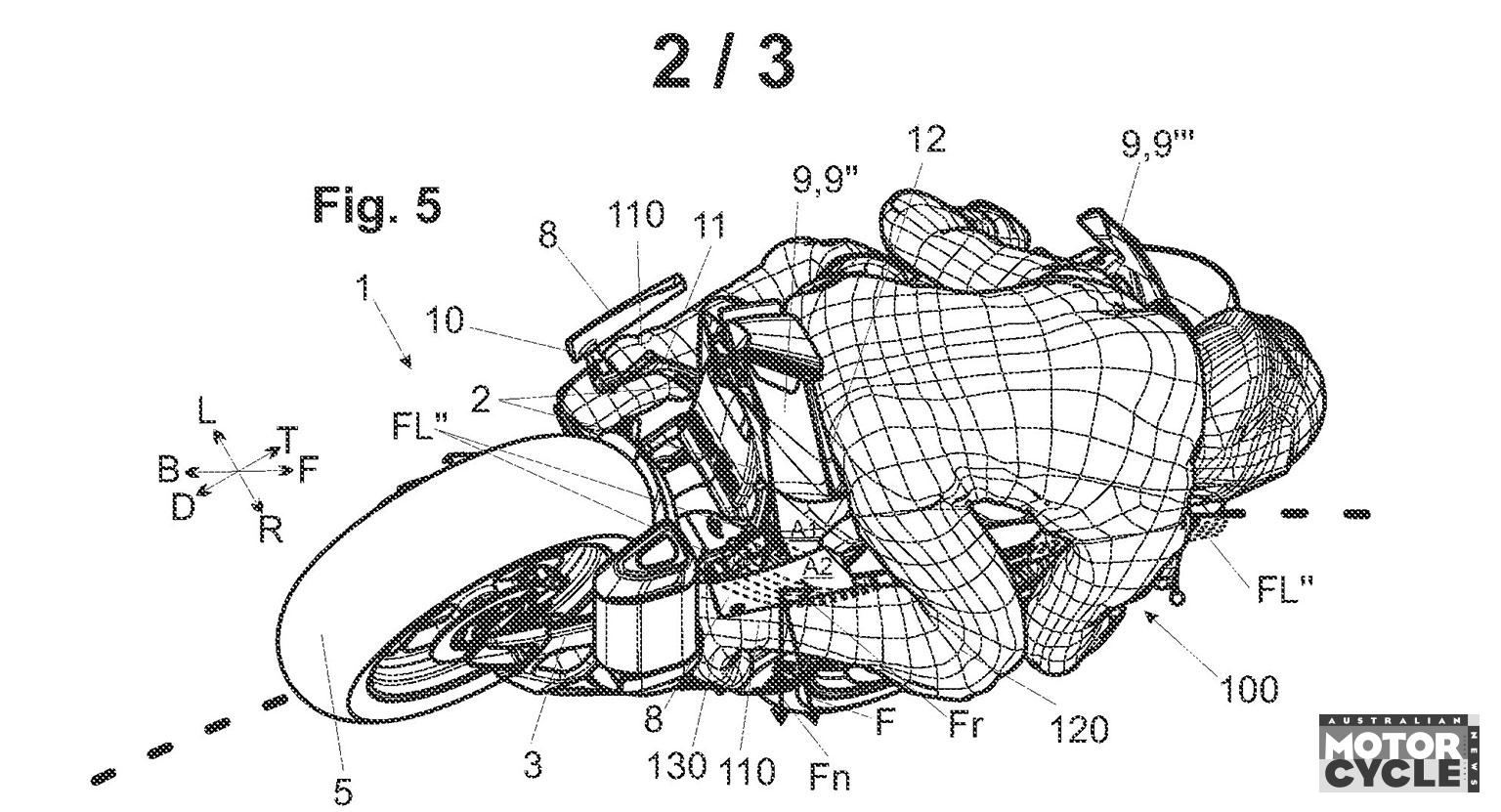
They’re far from merely cosmetic panels, too, as the patent explains how they manage to perform two important aerodynamic tasks, helping improve both top speed and cornering ability.
When you’re riding in a straight line your boots align with the leading edge of the new panels, which form a relatively smooth surface for airflow that’s passed over the side fairings and your legs. Seen from above, the two panels taper towards the rear of the bike, helping create a teardrop-shaped outline that helps reduce drag by cutting down on the turbulence behind the rider’s legs.
That, in itself, might be a worthwhile gain, but the panels also boost the bike’s cornering ability by adding rear downforce when you’re nearing maximum lean. That’s because when the rider hangs off on the inside of a corner, knee near or on the ground, your extended leg creates a tunnel that lets air pass between your calf and the bike, hitting the leg wing on the side of the bike nearer the ground full-on. Instead of simply passing over the outer surface of the wing, as when riding in a straight line, this blast of wind travels down both faces of the winglet, which is formed into a downforce-generating shape, pulling the bike towards the asphalt and into the corner. Its counterpart on the other side of the bike still has its airflow blocked by your other leg, so can’t produce a force that counteracts it. Essentially the rider becomes an active aerodynamic component.
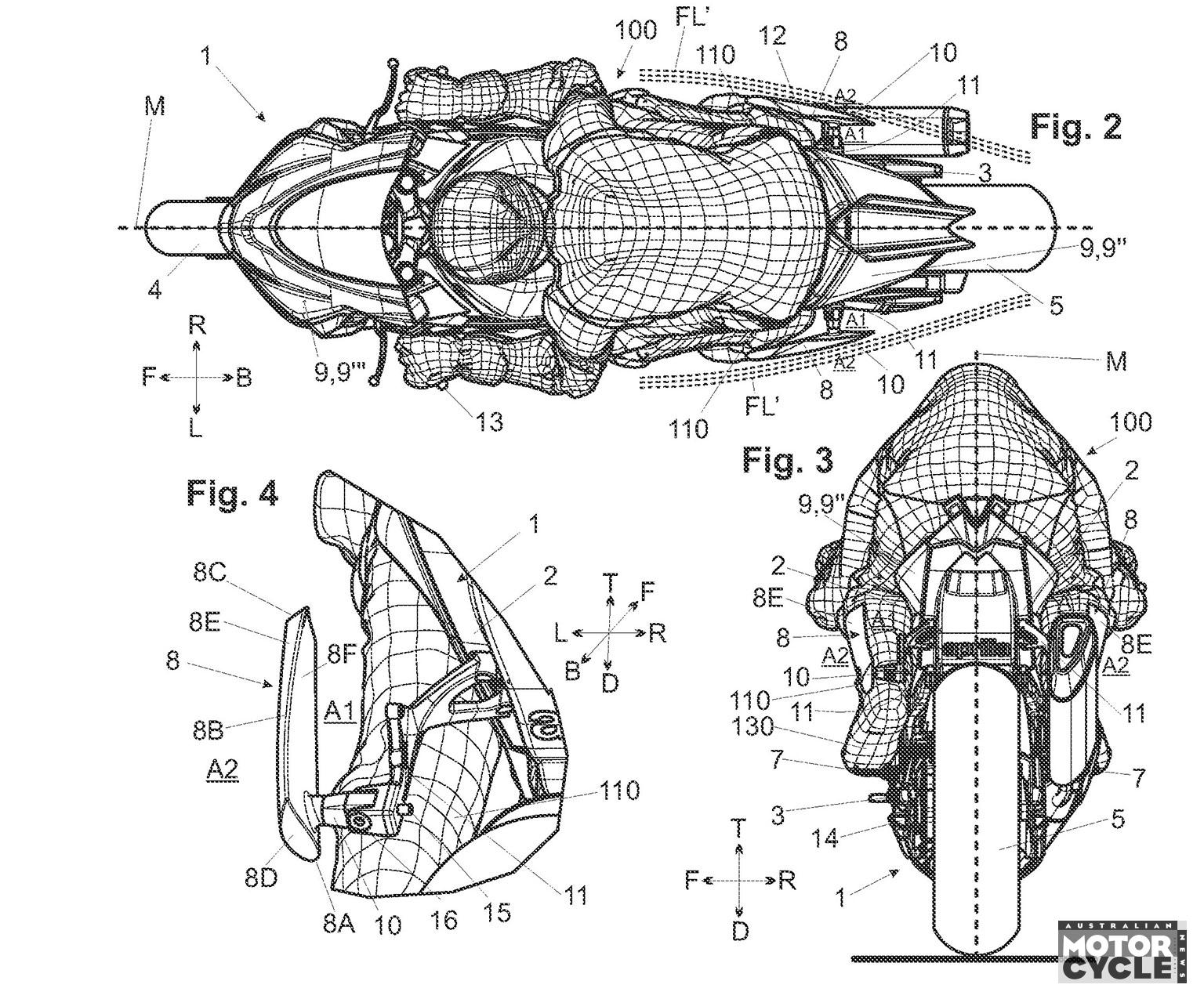
Aprilia’s intention to use the system on road bikes rather than racers is clear, as the patent says: “Preferably, the support can be connected to a bracket of the passenger footrest. In this way it is possible to mount the pair of wings as accessory on any road bike comprising passenger footrests. In practice, when it is not necessary to accommodate a passenger, for example while riding on a racetrack, the passenger footrests can be removed to accommodate in the relative brackets respective wings in accordance with the present invention.”