With Moto Morini reviving its iconic 72° V-twin, we take a rear-view ride of the brilliantly engineered 3½ that started it all
Almost seven years ago, the historic Italian Moto Morini marque narrowly avoided ending up on the scrapheap of two-wheeled history, when in October 2018 Chen Huaneng, the owner of Chinese scooter and minimoto manufacturer Zhongneng Vehicle Group/ZVG, rode to the rescue. After acquiring 100 per cent equity from its previous Italian owner, ZVG’s route map to Morini’s recovery has proceeded at pace, initially with a range of five models powered by 650/700cc DOHC eight-valve parallel-twin engines sourced from rival Chinese manufacturer and near neighbour CFMoto.
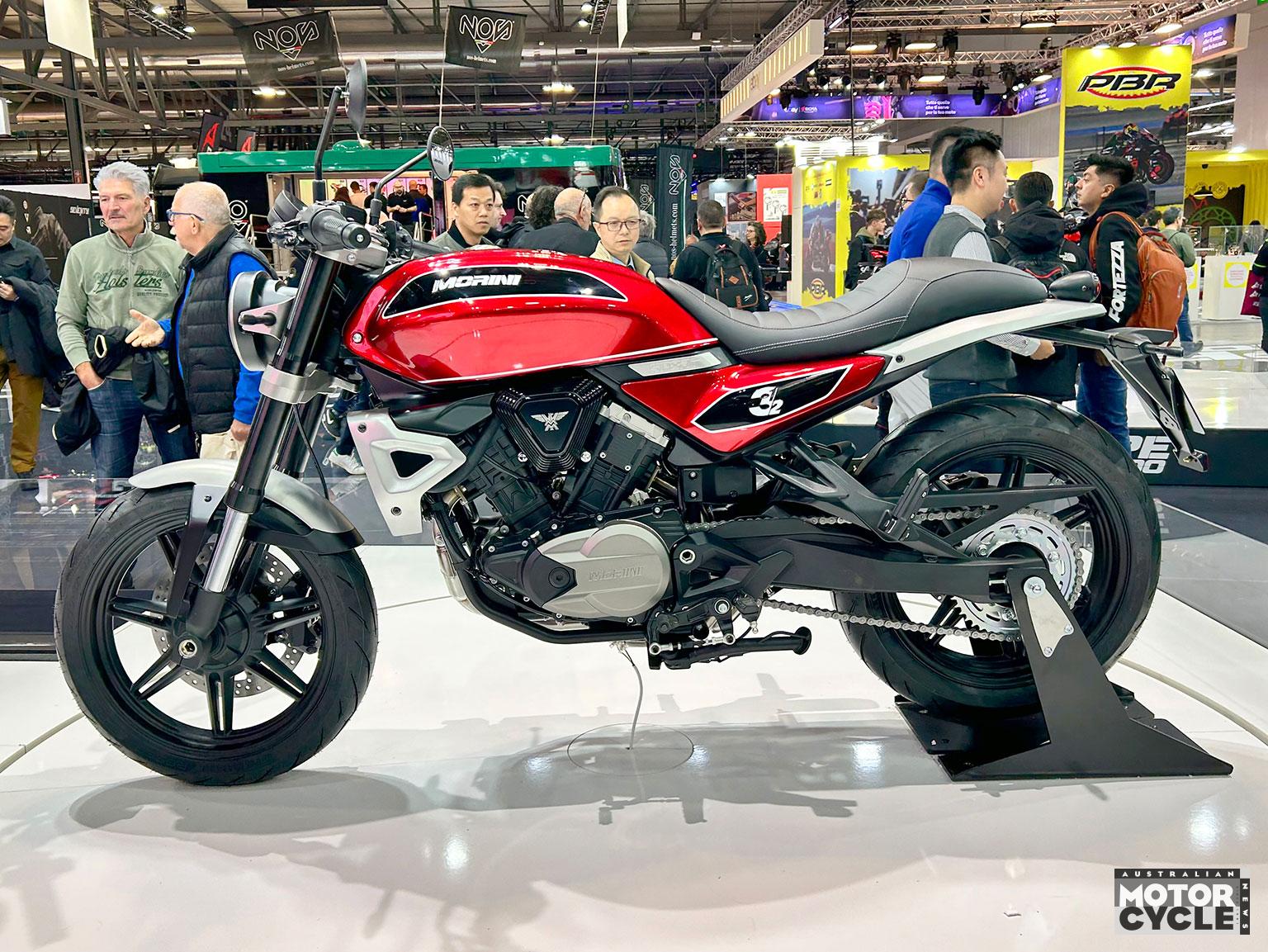
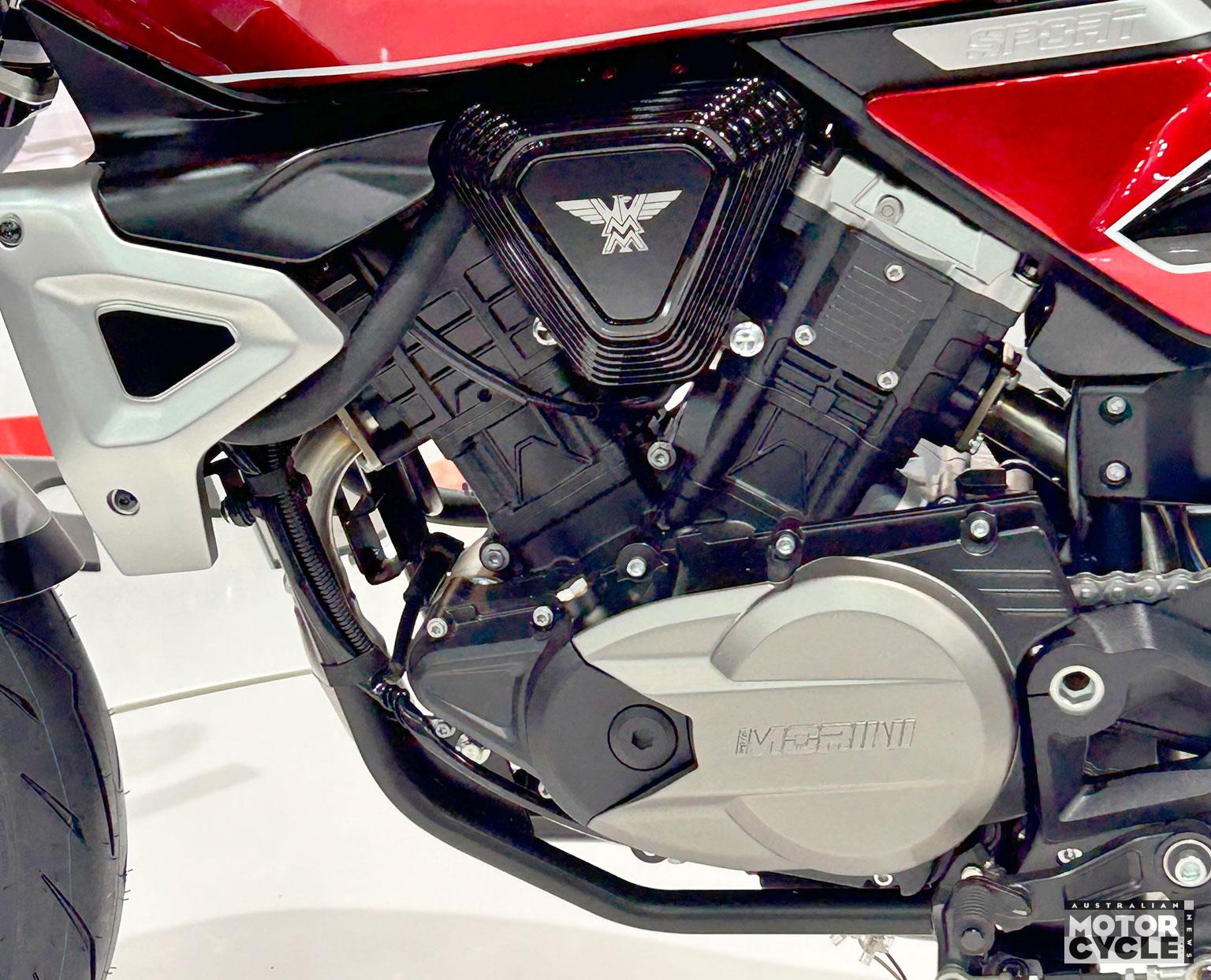
With 15,400 examples of its X-Cape 650 ADV model alone sold around the world in the past three years, Moto Morini’s ride down the comeback trail under Chinese ownership is becoming ever more assured. The 1200cc X-Cape V-twin, three models powered by Morini’s new Italian-designed 750cc 90° V-twin engine, and two by a smaller 350cc 72° V-twin engine all appeared at last November’s EICMA Milan Show (and are due to reach the growing number of Morini dealers worldwide later this year). Each was conceived and developed in Moto Morini’s plant at Trivolzio, 30km south-west of Milan, to be then manufactured in China.
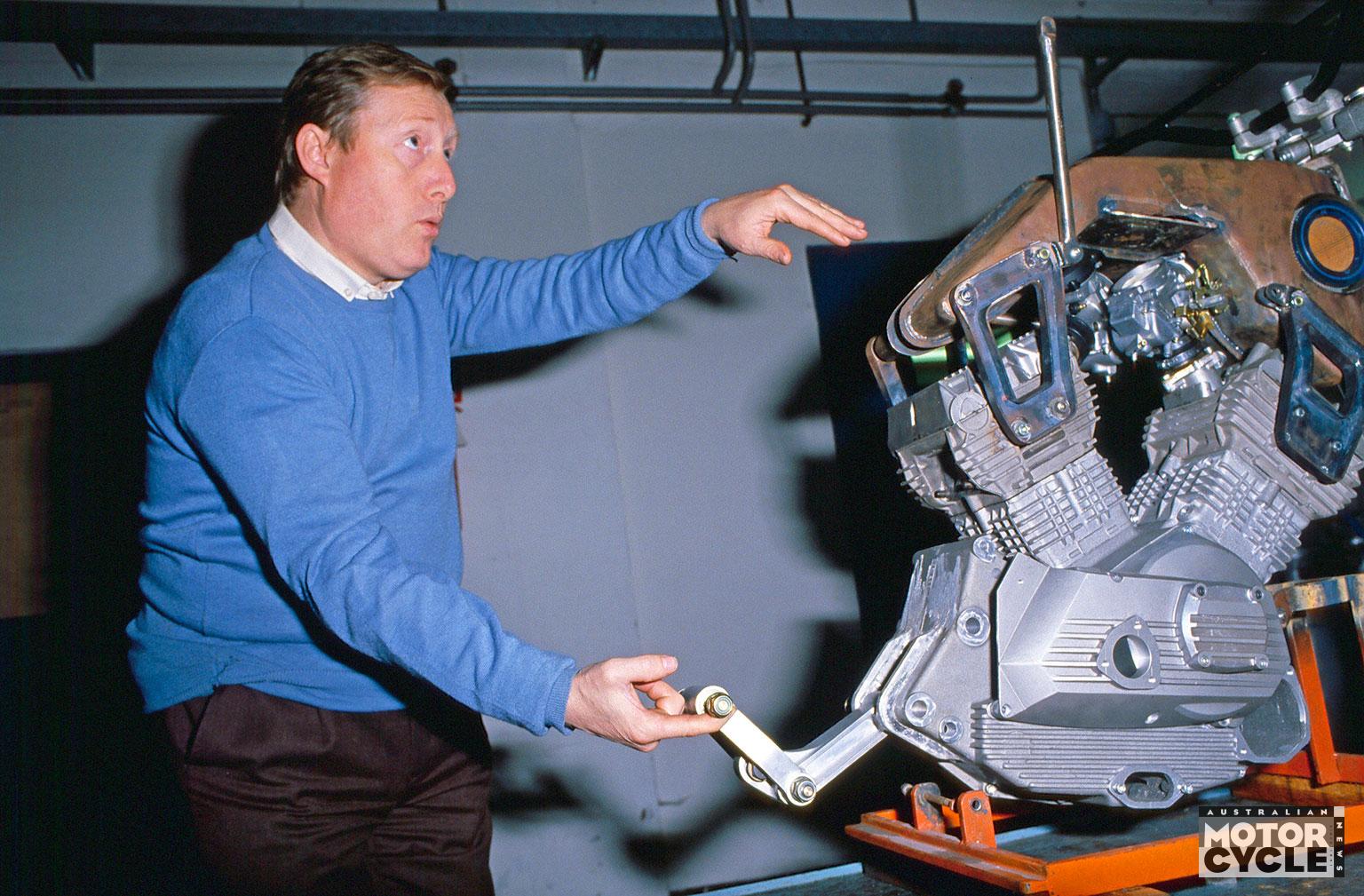
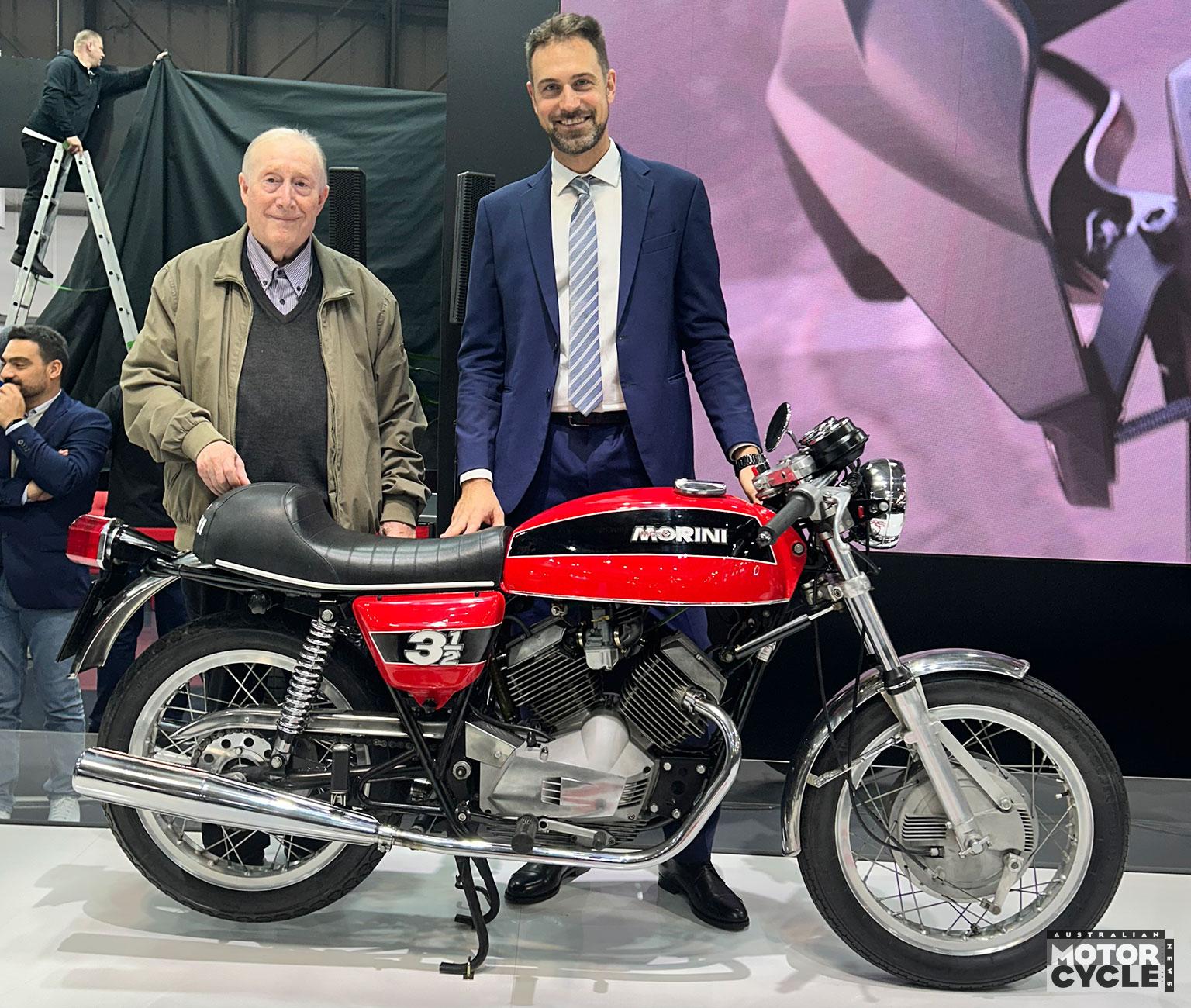
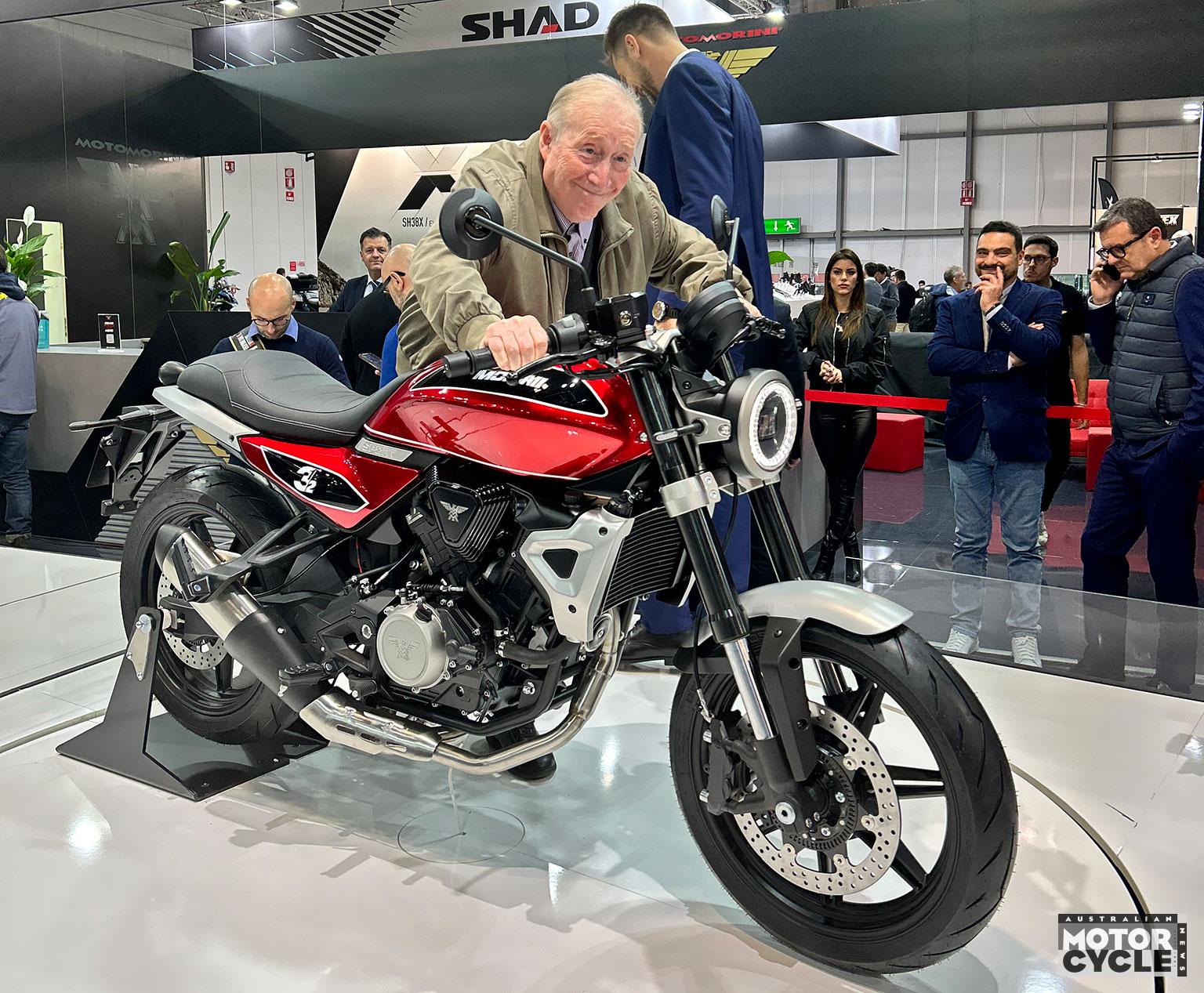
One of these is a cleverly designed born-again version of the iconic 3½ V-twin, the best-selling model in Moto Morini’s history that debuted in 350cc form in 1973. The 2025 version gets the approval of original 3½ designer Franco Lambertini, now 80 years old, who was present for its unveiling.
“It’s a very clever piece of styling and the engine looks magnificent,” he said. “I’m looking forward to riding it myself, to see if it goes as well as it looks!”
RACING PEDIGREE
Founded in Bologna in 1937 by Alfonso Morini, Moto Morini built a reputation as a small but prestigious manufacturer with a strong racing pedigree. From early two-stroke successes to its revered 250cc four-stroke Grand Prix racer, Morini gained underdog status and earned respect. Even Giacomo Agostini began his racing career on a Morini, winning the 1964 Italian 250cc title.
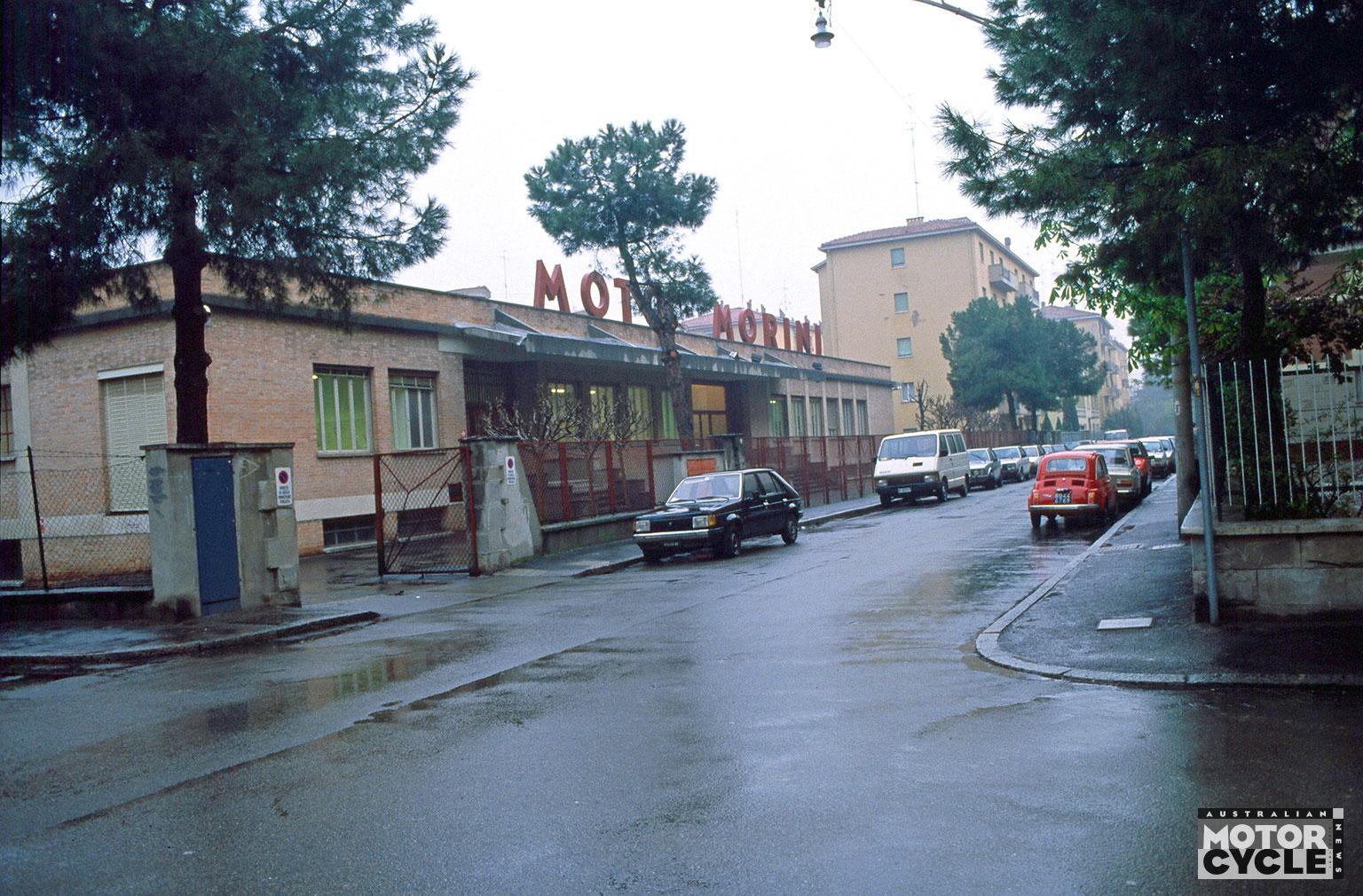
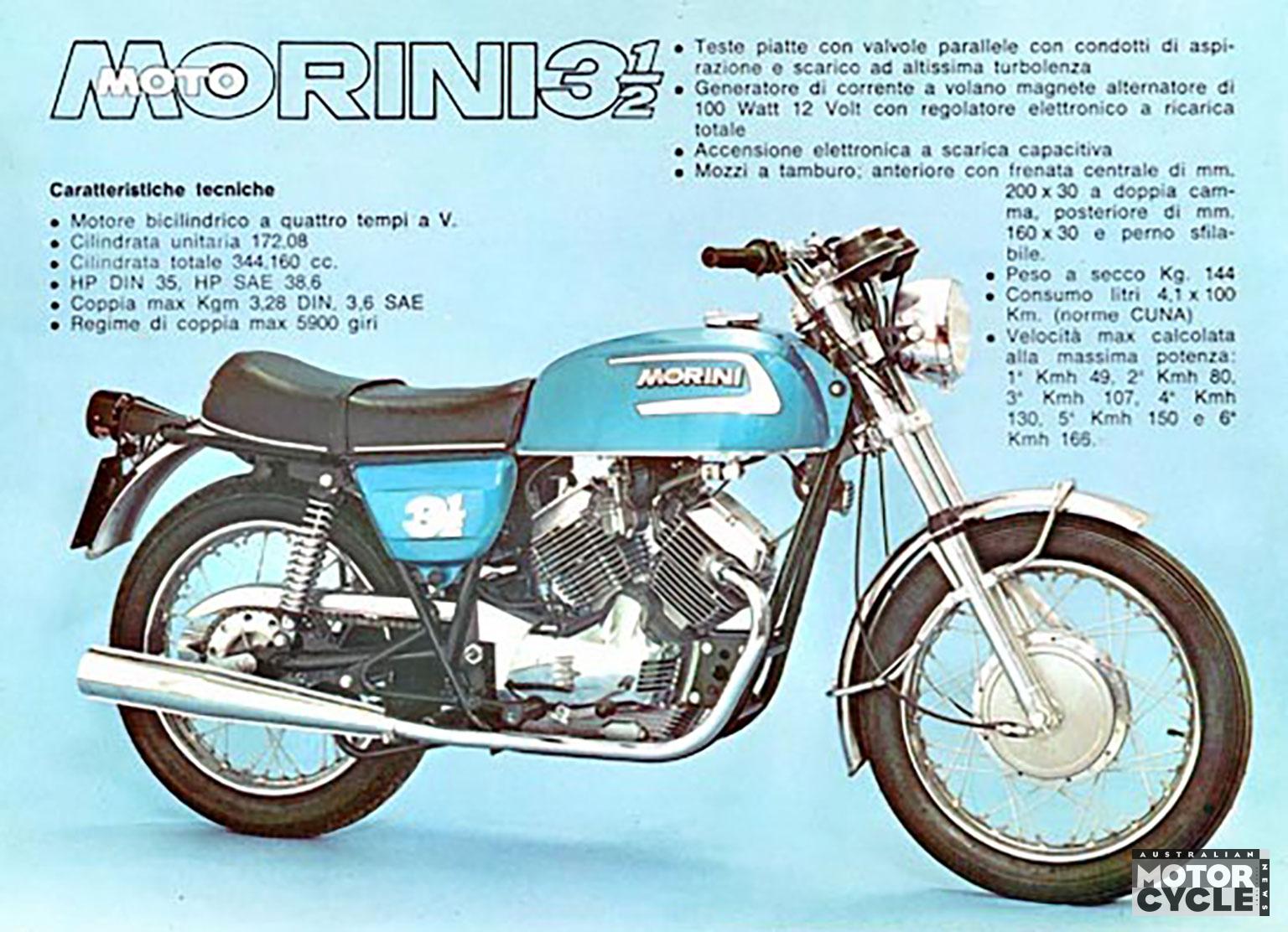
After Alfonso’s death in 1969, his daughter Gabriella took the reins and in 1971 hired former Ferrari engineer Franco Lambertini. His revolutionary 72° V-twin design powered the company’s first multi-cylinder model, the 3½ GT (exported as the Strada), launched in 1973. With advanced features like Heron heads, electronic ignition, dry clutch and a six-speed gearbox, it quickly became the fastest 350cc four-stroke of its time and a critical sales success, including in Australia. Restored ones sell now for around $18k.
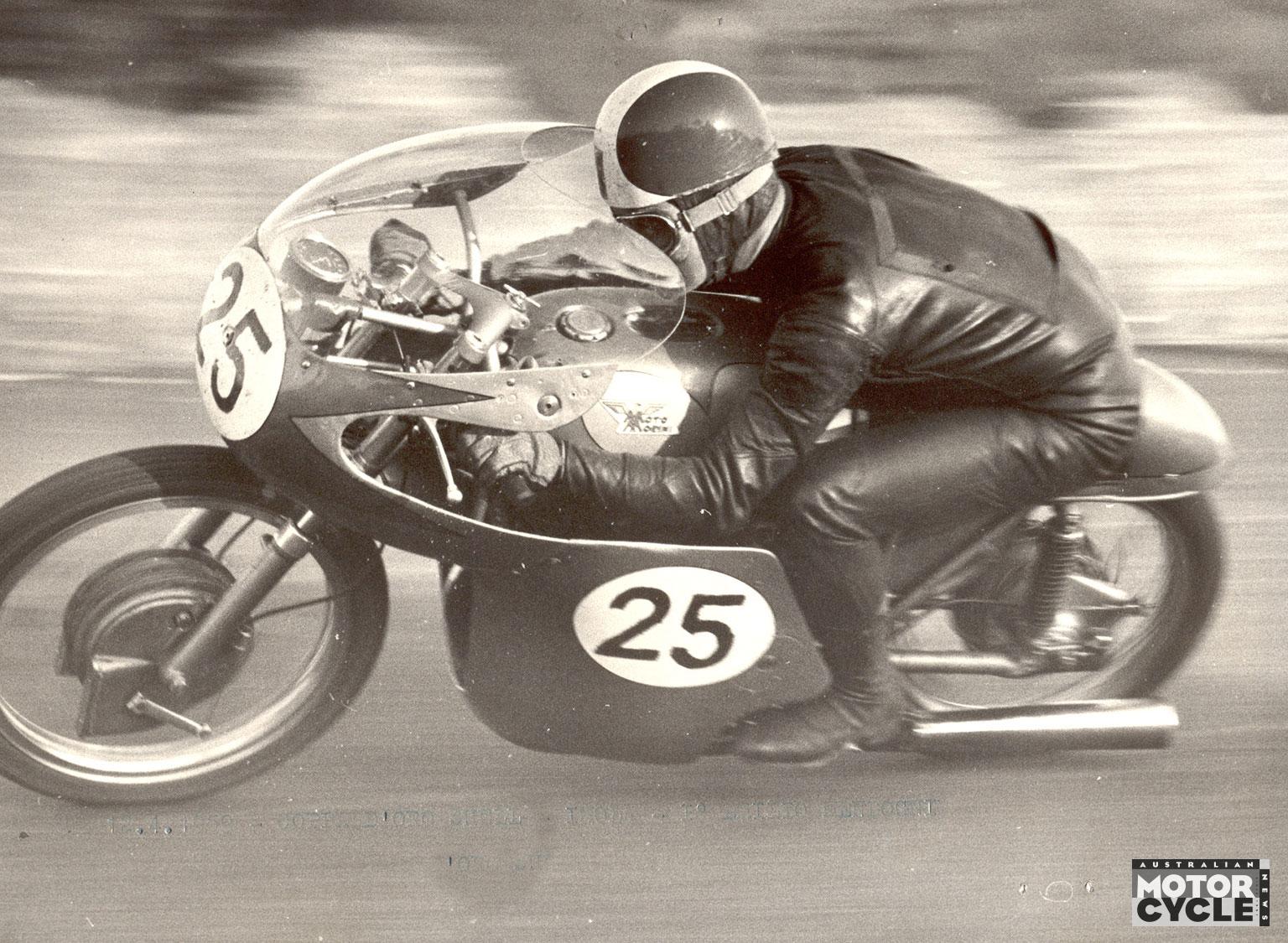
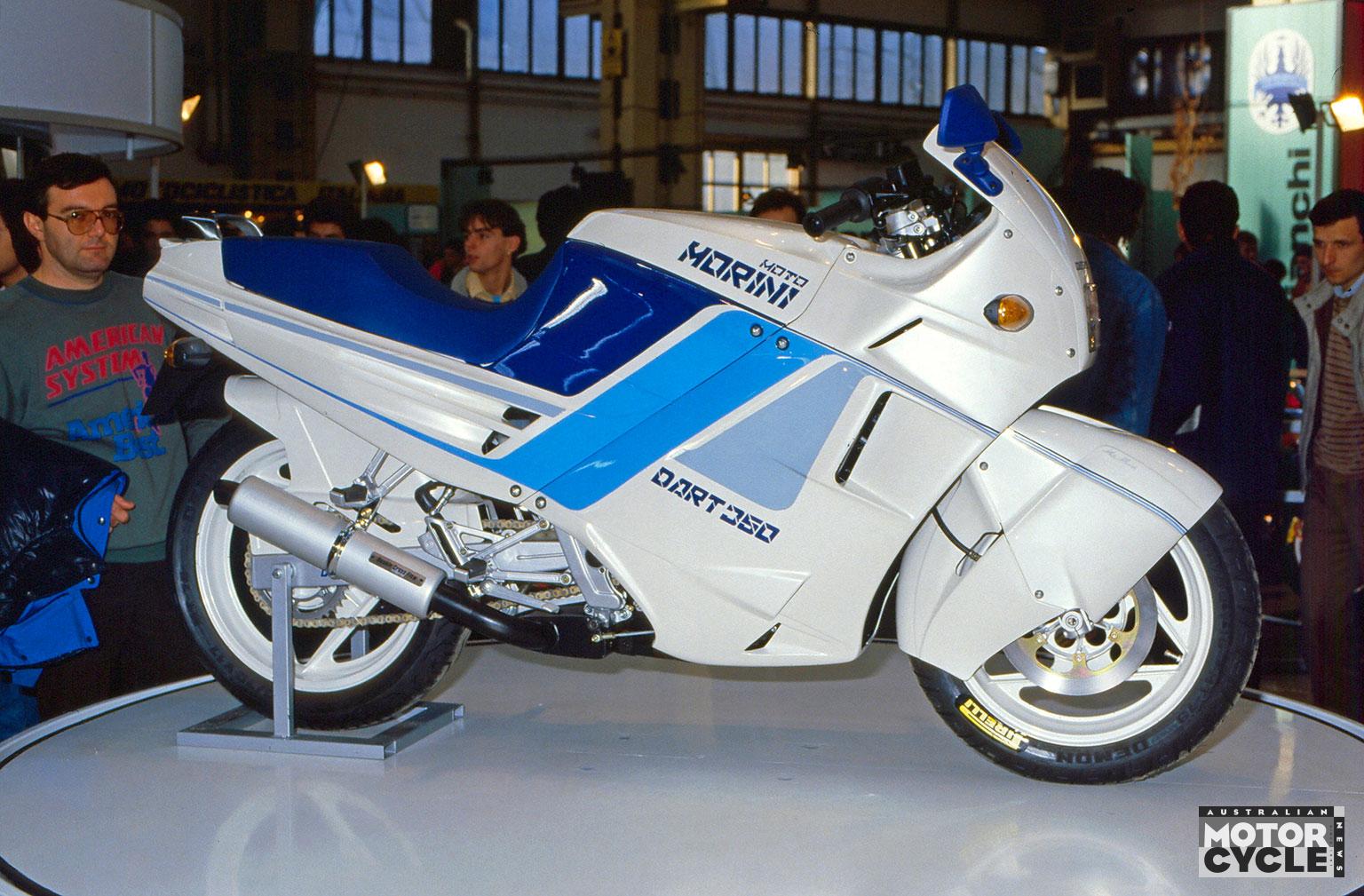
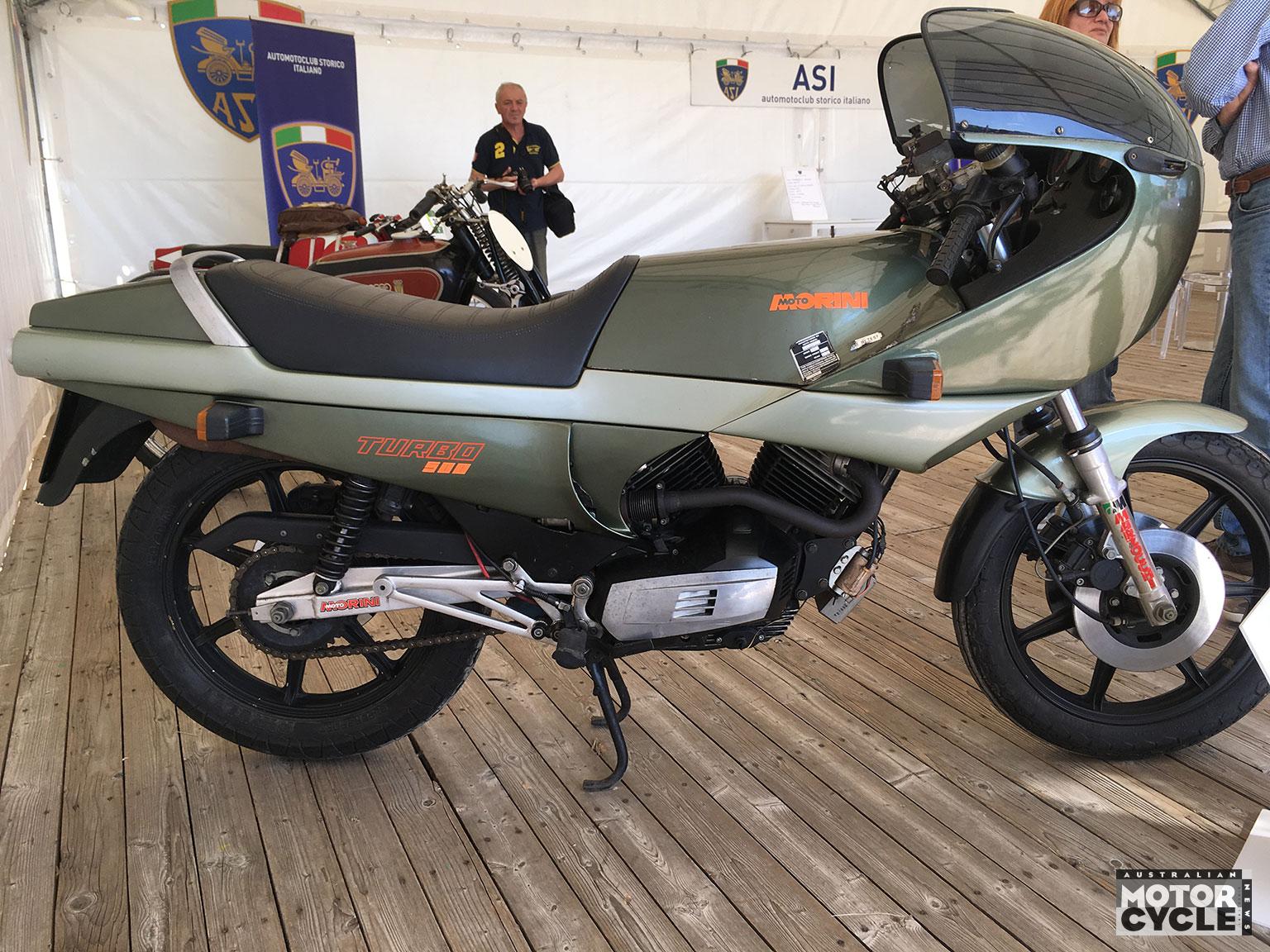
A 500cc version followed in 1978 to meet export demand and, although production remained modest, the bikes earned a loyal following. However, limited resources led to the company being sold to Cagiva in 1987. A brief resurgence with the 350 Dart sportsbike wasn’t enough and by 1992 production had ceased.
After several false starts, Moto Morini was revived by Zhongneng Vehicle Group in 2018. With new models designed in Italy and built in China – including a born-again version of the 3½ – the brand is once again riding hight, aiming to bring its unique V-twin legacy to a new generation.
LANDMARK MODEL
The imminent revival of Moto Morini’s historic 72° V-twin 350cc platform prompts a hands-on look in the rear-view mirror at the original 3½ that debuted at the Milan Show in 1971, attracting major attention as the company’s first ever model with more than one cylinder, or over 250cc in capacity. When deliveries finally began in March 1973 after a period of intense development, it turned out to be the fastest four-stroke model in the 350cc sector and, even better, it handled like a dream. Job done!
“I wanted to produce a model which was practical as well as sporty, had sufficient performance to thrill the owner without being too extreme, had good fuel consumption even when ridden hard, and which above all was faithful to the Morini marque’s sporting traditions,” says Lambertini, who joined Moto Morini aged 25, having previously worked in the Ferrari design office at nearby Maranello. “But above all it had to be affordable, so I regretfully tore up my initial design for an eight-valve V-twin with belt-driven single overhead cam, and the swingarm pivoting in the crankcase. Instead, I settled on an OHV bicilindrica format, but with belt drive to the single camshaft serving both cylinders, and only two-valve cylinder heads. But I turned this to my advantage by adopting Heron-type heads, which deliver efficient combustion with good fuel economy, and also reduced manufacturing costs through the less complex machining required, as well as simplified valve-gear and compact dimensions. I must modestly admit that I’m surprised that more motorcycle engines didn’t adopt this layout, given the significant success of our Morini V-twins.”
Indeed so – especially given that the Heron-headed Repco V8 motor designed by ex-Vincent motorcycle engineer Phil Irving had powered Jack Brabham and Denny Hulme to successive Formula 1 car world titles in 1966-67, and Jaguar, Audi, Rover and Alfa Romeo have all used this format in various production car engines.
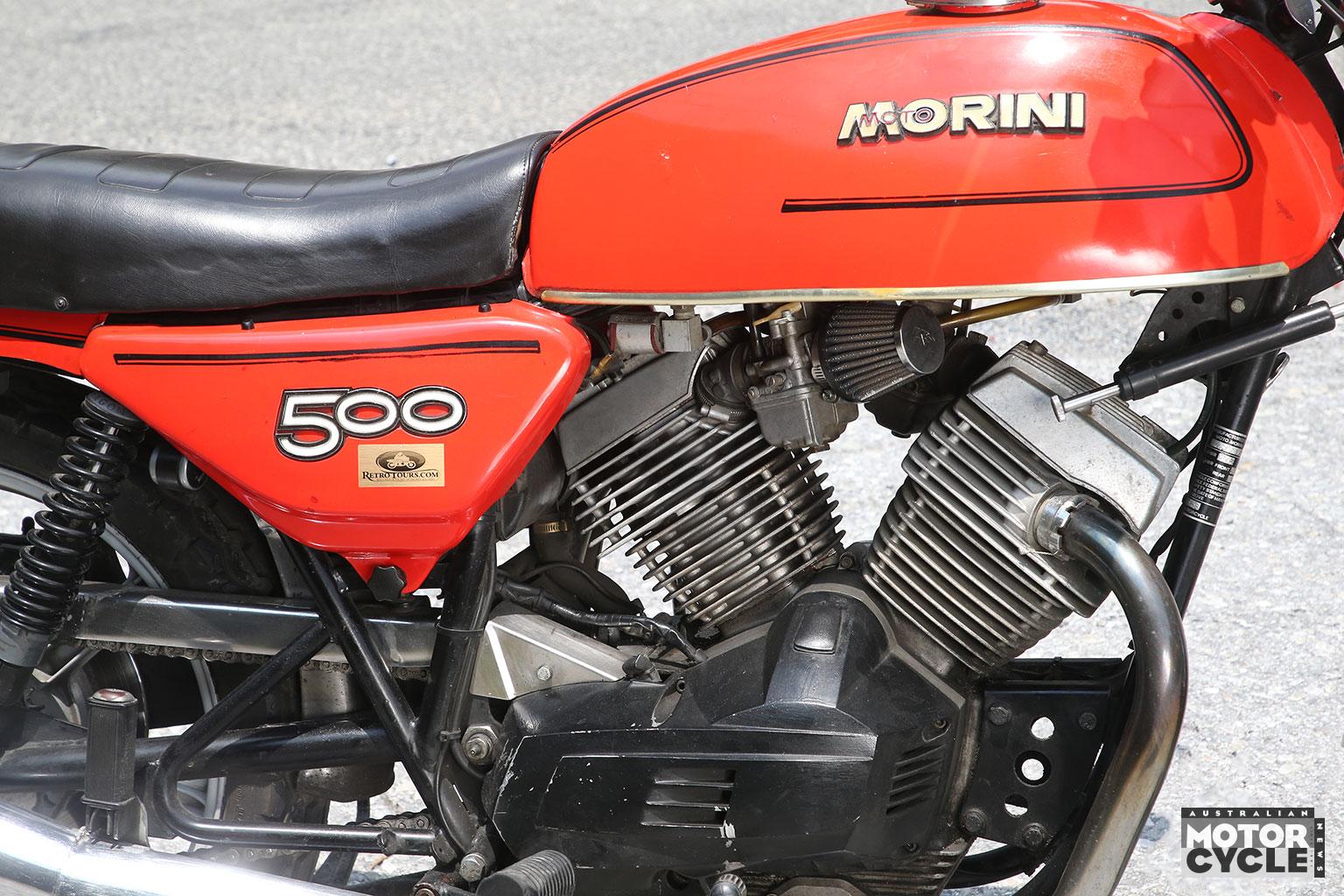
So, the Morini 3½ engine, measuring 62mm x 57mm for a capacity of 344cc, featured a forged one-piece crankshaft running on ball bearings set in lightweight, vertically-split, diecast aluminium crankcases, surmounted by well-finned cylinders with cast iron liners. The bolted-up steel conrods carried three-ring Sciam pistons, each with a dished crown that acted as the combustion chamber – a design invented in the 1920s by US-based British aviation engineer Sam Heron. This meant that the Morini’s 30.4mm inlet valves (each fed by a 25mm square-slide Dell’Orto carb) and 22.4mm exhausts – one each per cylinder, remember, running in cast iron guides and each carrying a single coil spring – were vertically positioned parallel to one another in a flat-faced cylinder head. They were operated by a single camshaft via rocker arms driven by short duralumin pushrods with steel tips. The camshaft was mounted high up in the crankcase between the vee of the cylinders, and driven off the crankshaft via a Pirelli toothed belt – the first time ever on a motorcycle engine.
Moreover, the Morini 3½ V-twin featured an unusual desaxé engine layout aimed at giving the pistons, and especially their rings, an easier life. The desaxé format sees the cylinders slightly offset – it’s the French term for ‘off-centre’ – rather than positioned with their bore axis centre directly above the centre line of the crank, as on most engines. This has the effect of reducing the amount of piston side thrust against the cylinder wall during the power stroke, in turn reducing friction and consequent power losses, and also wear, while promoting torque thanks to increasing the leverage applied to the crankshaft. The best current example of such an engine is Kawasaki’s ZX-10R, which powered Jonathan Rea to six successive WorldSBK titles, and which also powers today’s Bimota KB998 Rimini Superbike – while Germany’s innovative Horex VR6 engine is also desaxé, mainly for packaging reasons. On the Morini 3½, the cylinders were offset by 50mm to allow the conrods to sit side-by-side on a single big-end journal. This in turn helped facilitate cooling of the rear cylinder, which never ran more than 15°C hotter than the front one in tests.
This completely innovative engine also set another landmark as the first series production model anywhere in the world to use electronic ignition rather than conventional points or a magneto. The CDI system was produced by Ducati Elettronica, then the bike builder of that name’s no-relation next-door neighbour. The ensuing 25kW (35hp) at 8200rpm delivered by the 344cc engine was transmitted to the tarmac via a six-speed transmission and a dry, multiplate clutch – both further firsts in the production arena. Peak torque of 34Nm was delivered at 6300rpm, with the engine safe to 8700rpm.
This engine was installed in a lightweight, all-welded, Verlicchi-made, double-cradle tubular steel chassis with twin downtubes and quite conservative geometry – rake was 29°, trail 101mm. With a 1445mm wheelbase via 18-inch wheels and a pretty low 764mm seat height, the riding position – while not exactly spacious – did permit taller riders to feel at home.
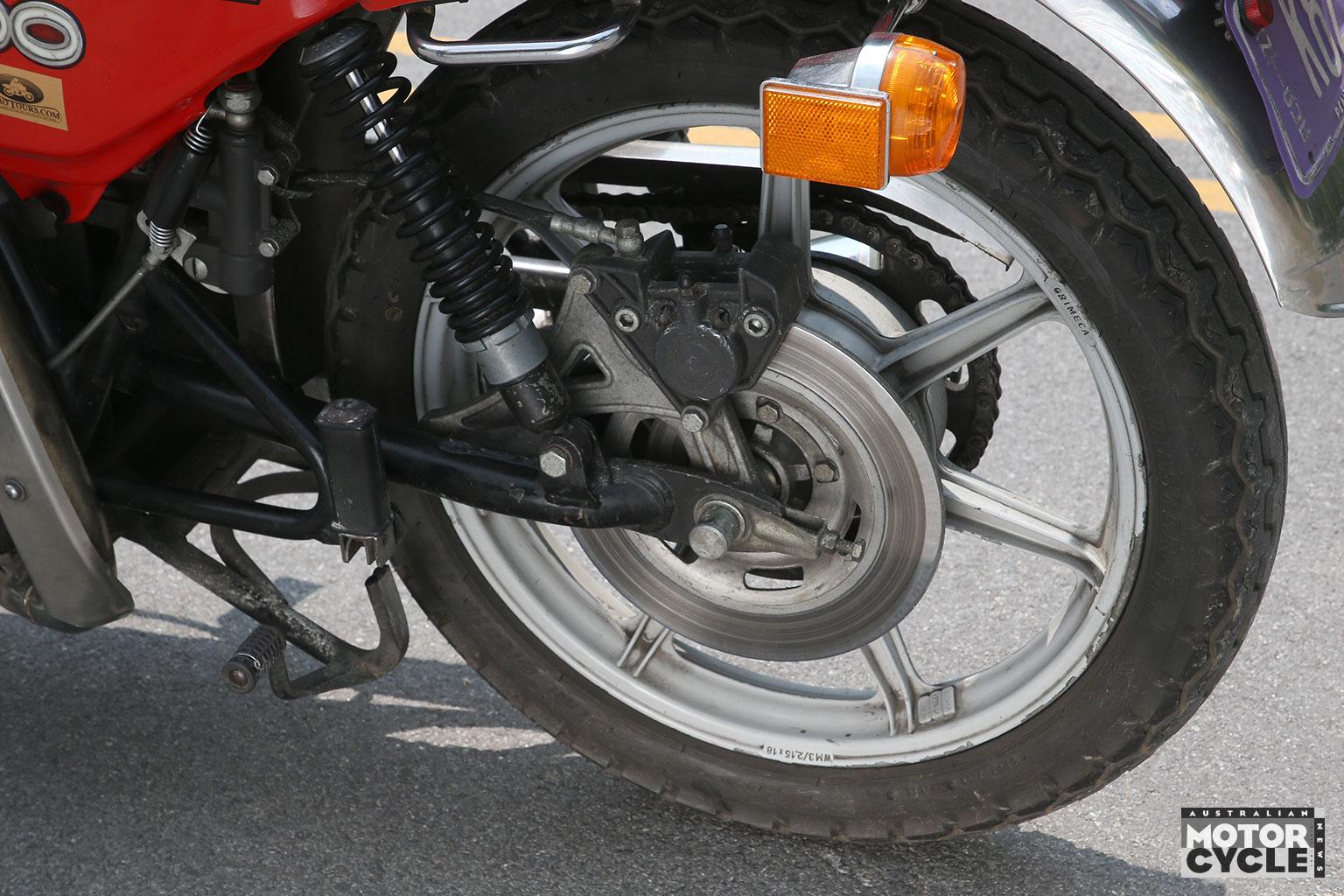
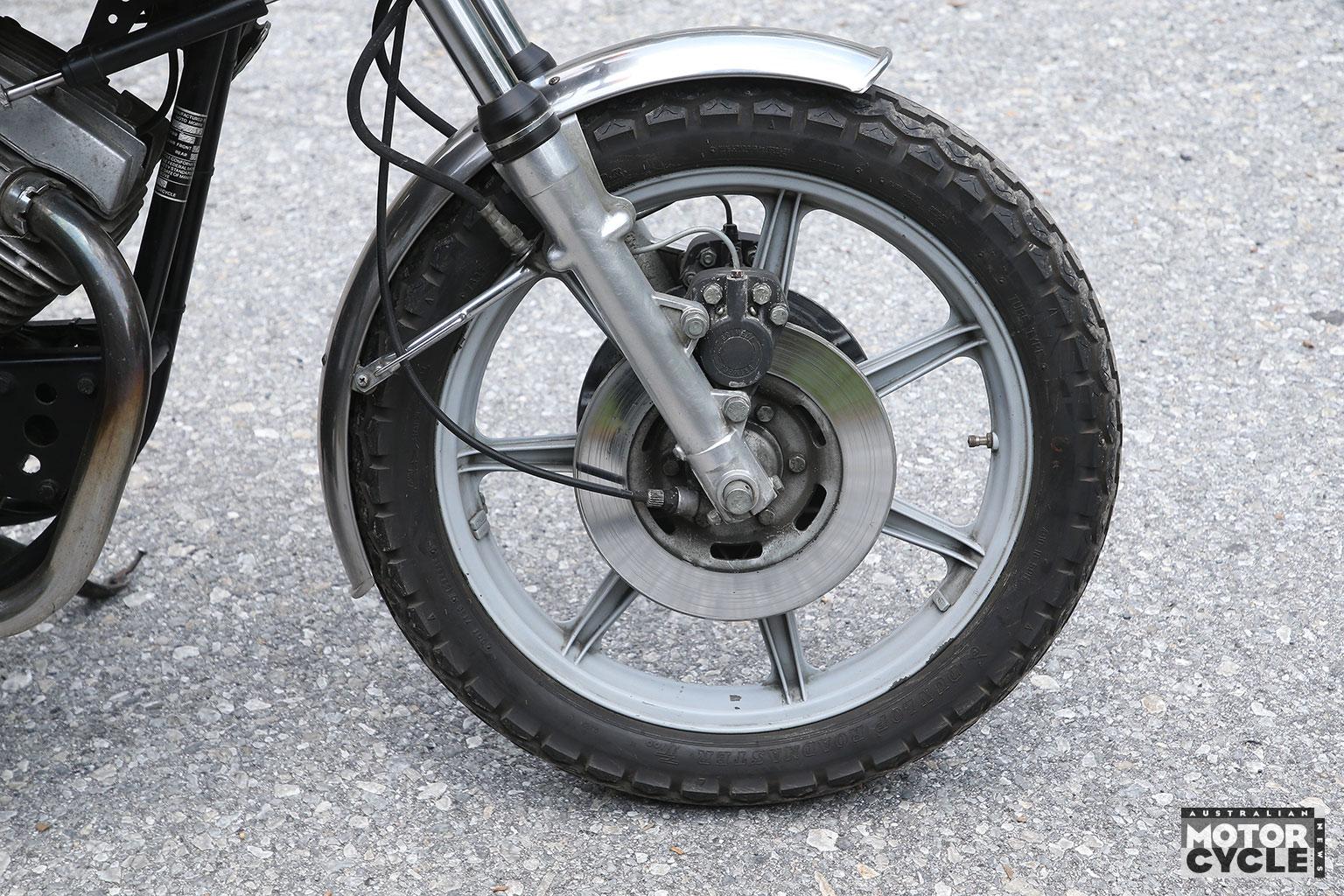
Wire wheels, Grimeca drum brakes and a 35mm Marzocchi fork plus twin-shock rear suspension from the same brand were fitted to the debut model, before cast wheels and disc brakes duly replaced them as the decade wore on. A single-seat Sport version of the 3½ appeared in 1974, with raised 11:1 compression delivering 4bhp more as well as improved acceleration. It was also subtly restyled with more sporty allure versus the Strada aka GT standard version.
In 1975, Moto Morini bowed to market pressures and introduced a 500cc version, mainly aimed at export markets, and especially the UK, US and Germany. This finally reached production in 1978 in both Strada and Sport versions, and was visually identical to the 3½ except for the badges and the now black-painted engine. But it was more than just a stroked version of the smaller engine, with larger bore and stroke measurements of 69mm x 64mm and 1mm bigger 26mm carbs. The result only measured 479cc, so not a full 500, presumably owing to space in the shared crankcase, but power was now up to 34.5kW (46hp) at 7500rpm running an 11:1 compression ratio, with the rev ceiling lowered to 8200rpm. Peak torque was also raised to 43Nm at 5100rpm. Alongside the retained left-side kickstart, an electric leg was now standard, albeit a rather convoluted chain-driven affair bolted on to the rear of the crankcase. As well, Morini initially reduced the number of ratios in the gearbox to five, perhaps fearing that the increased torque would be too much for the narrower pinions in the six-speed transmission – but they later thought better of it and, in 1982, reverted to the original six-speed gearbox.
MUCH-LOVED CLASSIC
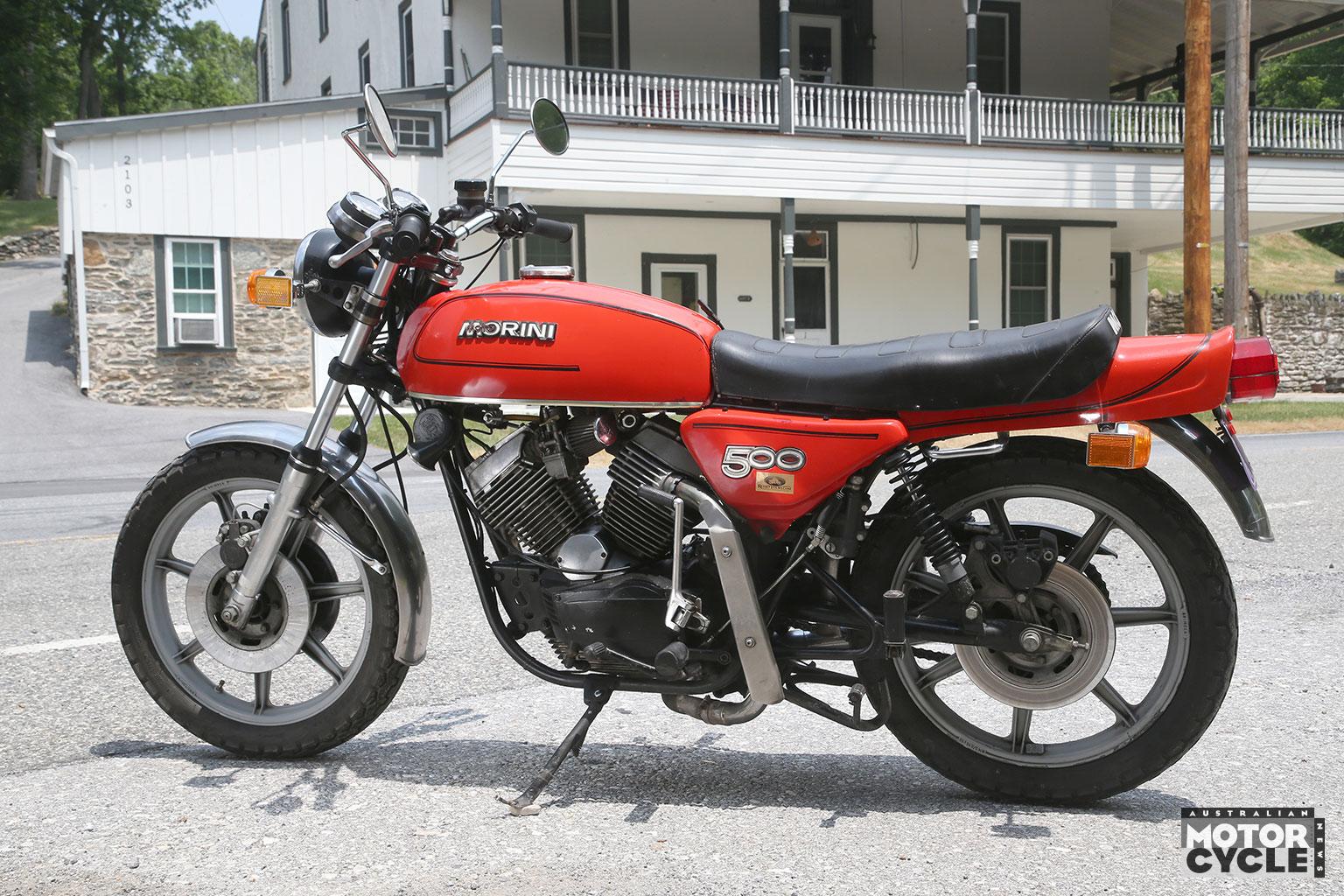
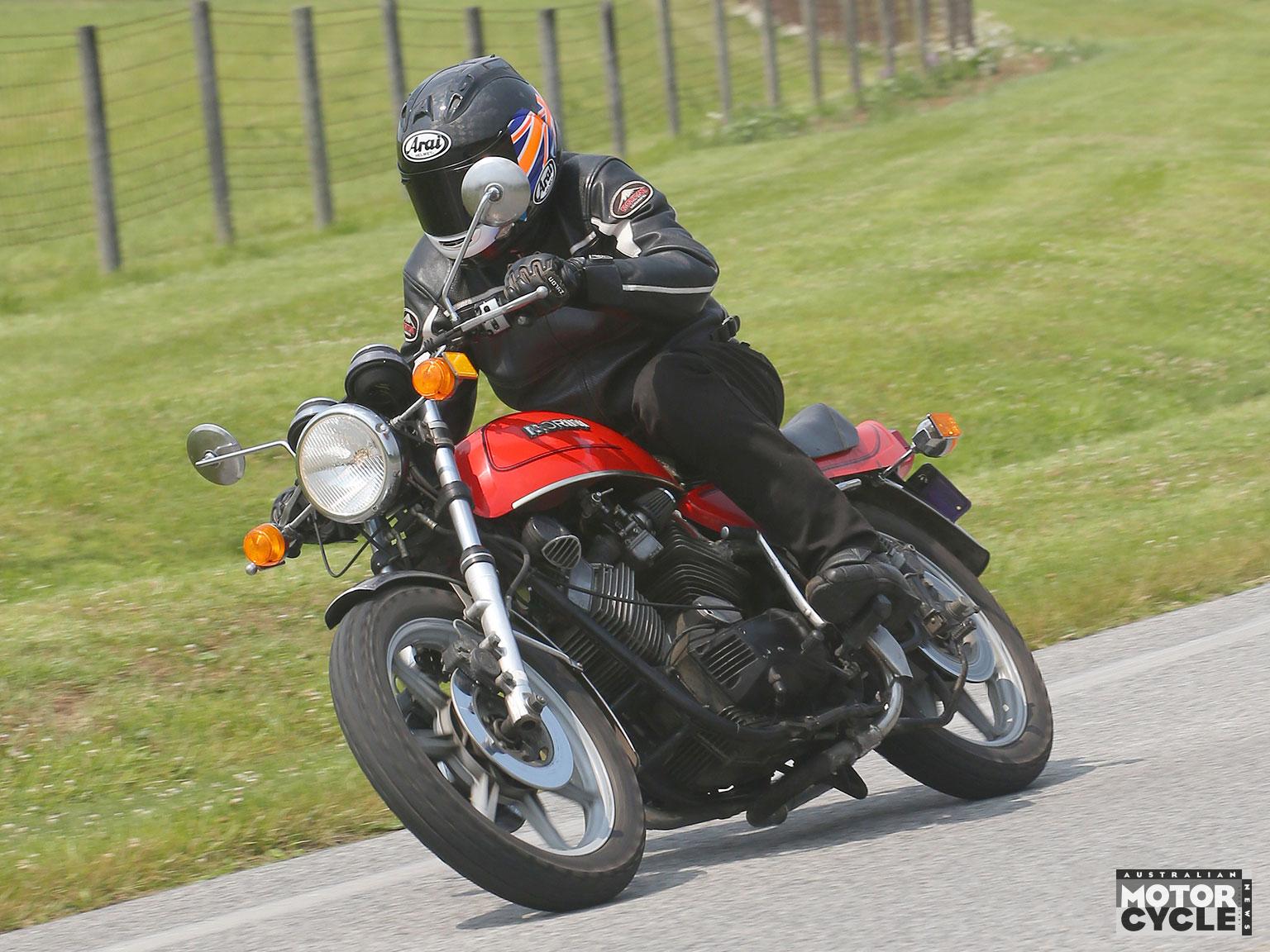
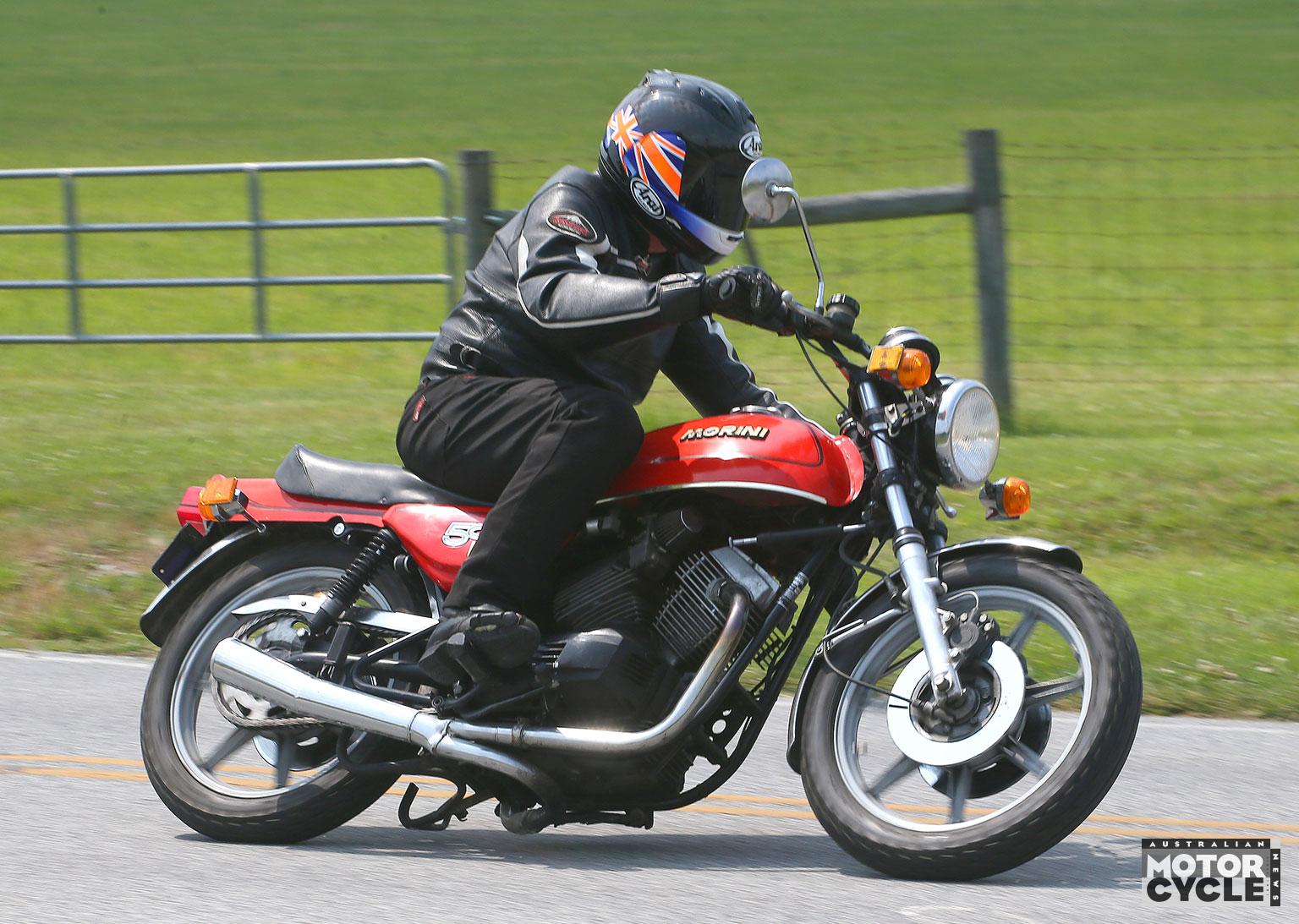
Finding a 1970s Moto Morini with which to celebrate the imminent revival of its engine format by riding it shouldn’t be too difficult, since there are lots in circulation – thanks to the 85,000 built and their high survival rate, plus the enthusiasm they seem to generate among their owners. It’s a usable classic that attracts owners who want to ride it, rather than just polish it. That’s very much the life led in the US today by this 1978 500 Strada, which earns its keep as one of the fleet of street classics, mostly twins, available for hire from Retro Tours (www.retrotours.com) for rides through the northeast US and the Atlantic seaboard, guided by company founder Joel Samick. We’ll let Joel explain how he came to acquire the Morini on which I spent an enjoyable 190km day riding round south-east Pennsylvania with him.
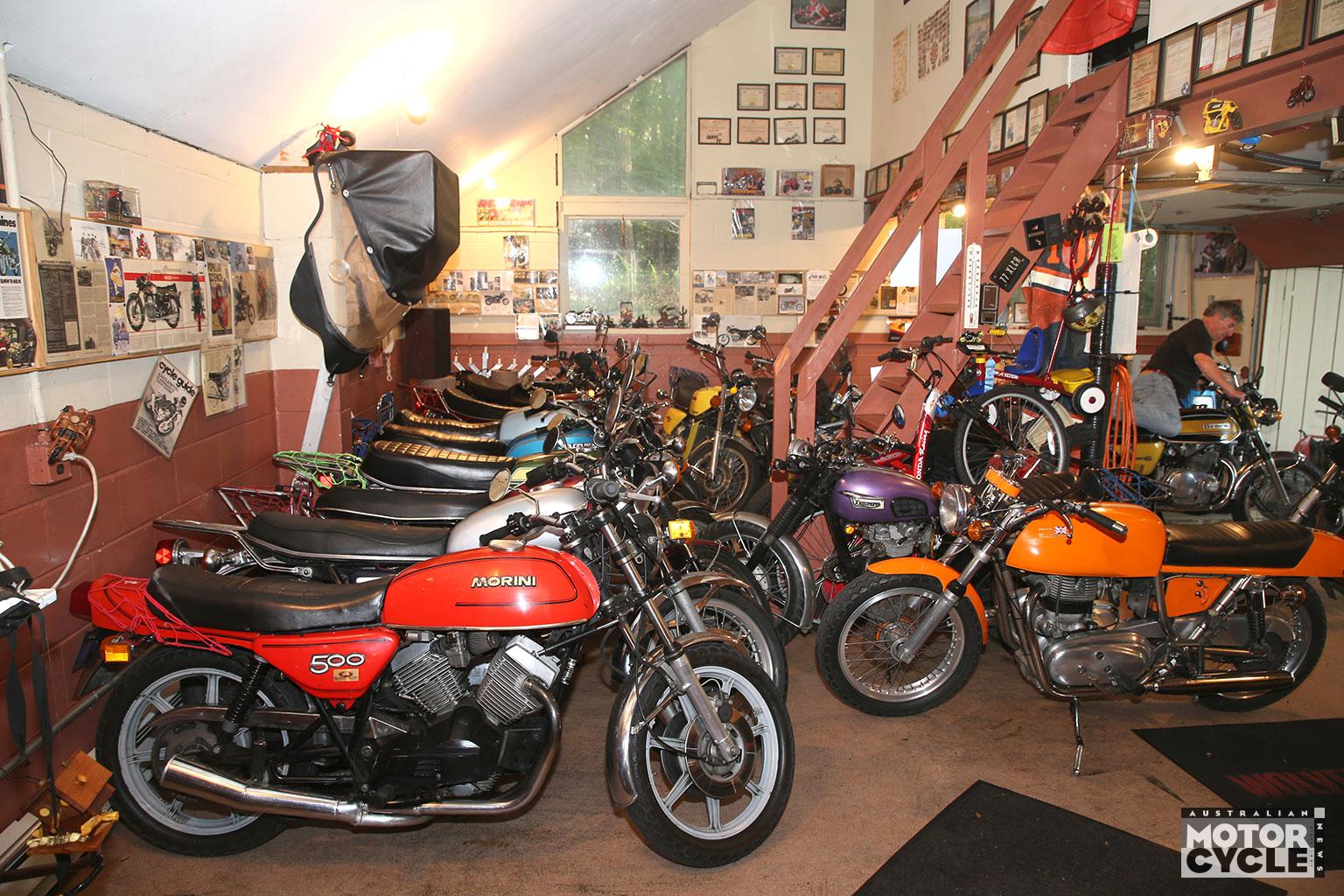
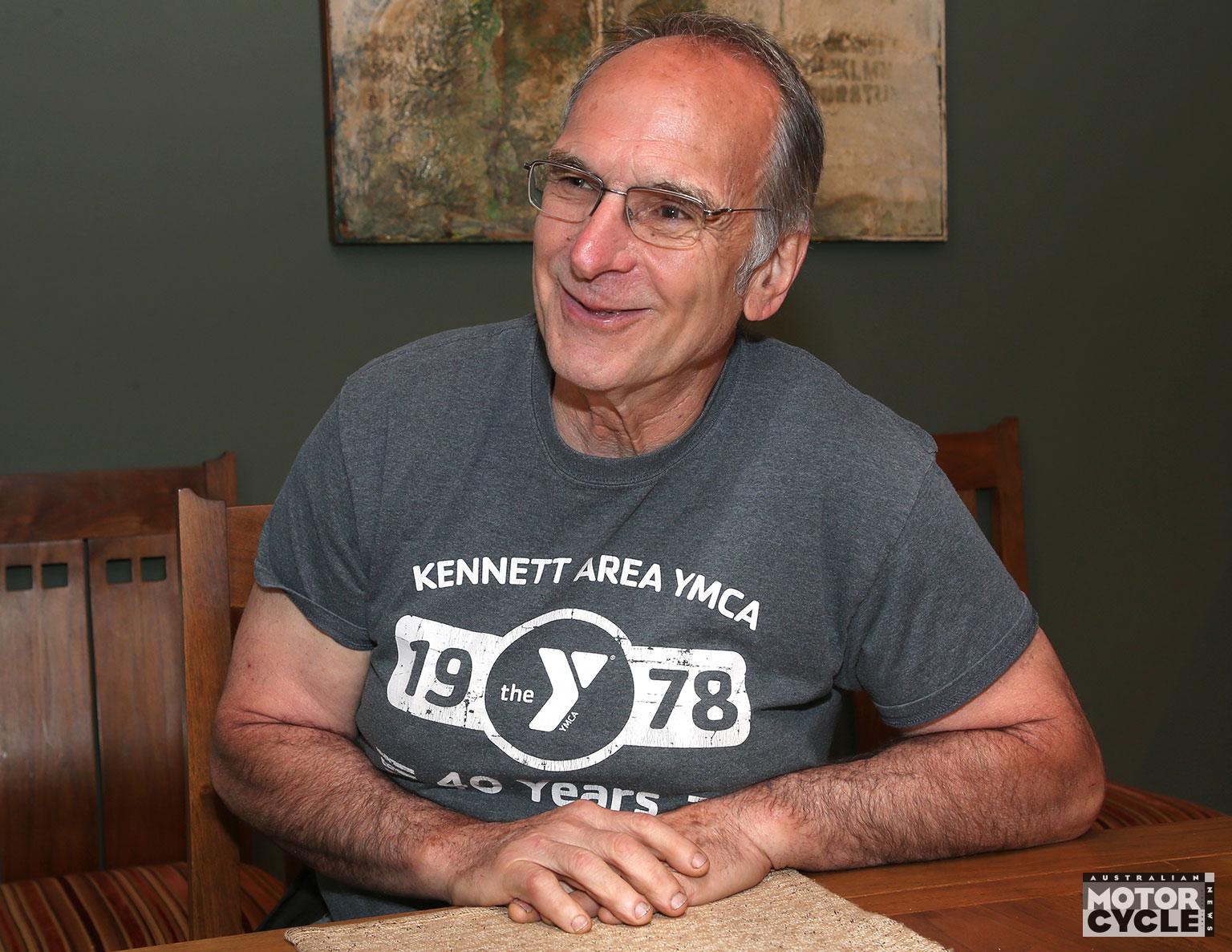
“Each spring, close by here there in Chadds Ford, Pa., there used to be an annual classic motorcycle auction. I usually attended this event, not so much as a buyer but as a looker. In 2003, a 1978 Moto Morini 500 Strada came onto the block. This was a model that I had not really considered collecting, as they were never very popular in the States and are on the small end of Retro Tours’ ‘big twins’ range. Still, they enjoy a big following in Europe and England, where people really appreciate fine motorbikes. As I looked over the Morini, I began to feel a familiar nervousness in the pit of my stomach! I wanted it, so I ended up buying it. It fired up OK on the button, so I rode it home, and in doing so discovered it was put together a little bit loosely, let’s say. I heard this weird noise and the valve covers were jumping up and down, so somebody hadn’t tightened things up properly! But it wasn’t far to ride and I got home OK.
“The condition as bought was better than most, especially considering the chance one takes at any auction. As usual, I went over the mechanicals from front to rear, replacing tires, tubes, battery, fork seals, brake pads, cables and handgrips. One problem that had to be solved involved the foot controls. To make a bike legal in the US in 1978, controls had to be standardised for a left-foot change, so the rear brake pedal and shifter were reversed from the right-side standard. The resulting linkages may have let the Herdan Corporation in nearby Port Clinton, Pa. import and distribute the Morinis, but they did nothing for the control feel. The shifter required too much lever travel and sat at an awkward angle. The long, spongy rear brake cable made the hydraulic disc ineffective. Reverting to original Italian foot control locations was necessary.
“I’d say after two decades of ownership that the combination of a clever design with quality components makes the Moto Morini an effective, lightweight motorcycle. Acceleration is pleasing, although the motor must be kept on spool. The five-speed transmission makes this easy and fun. With its decent suspension and brakes, this little bike can stay right with its larger stablemates on a group ride, making up for less power with late braking and hard cornering. The European sport style handlebar and broad, long seat give a comfortable, upright seating position. All in all, this machine is totally non-intimidating, and lots of fun. No wonder the factory put a cartoon-like decal on the tail section. It depicts a blonde witch on her jet-powered broom, with a huge grin on her face. That about sums this bike up!”
REALLY RIDEABLE FUN
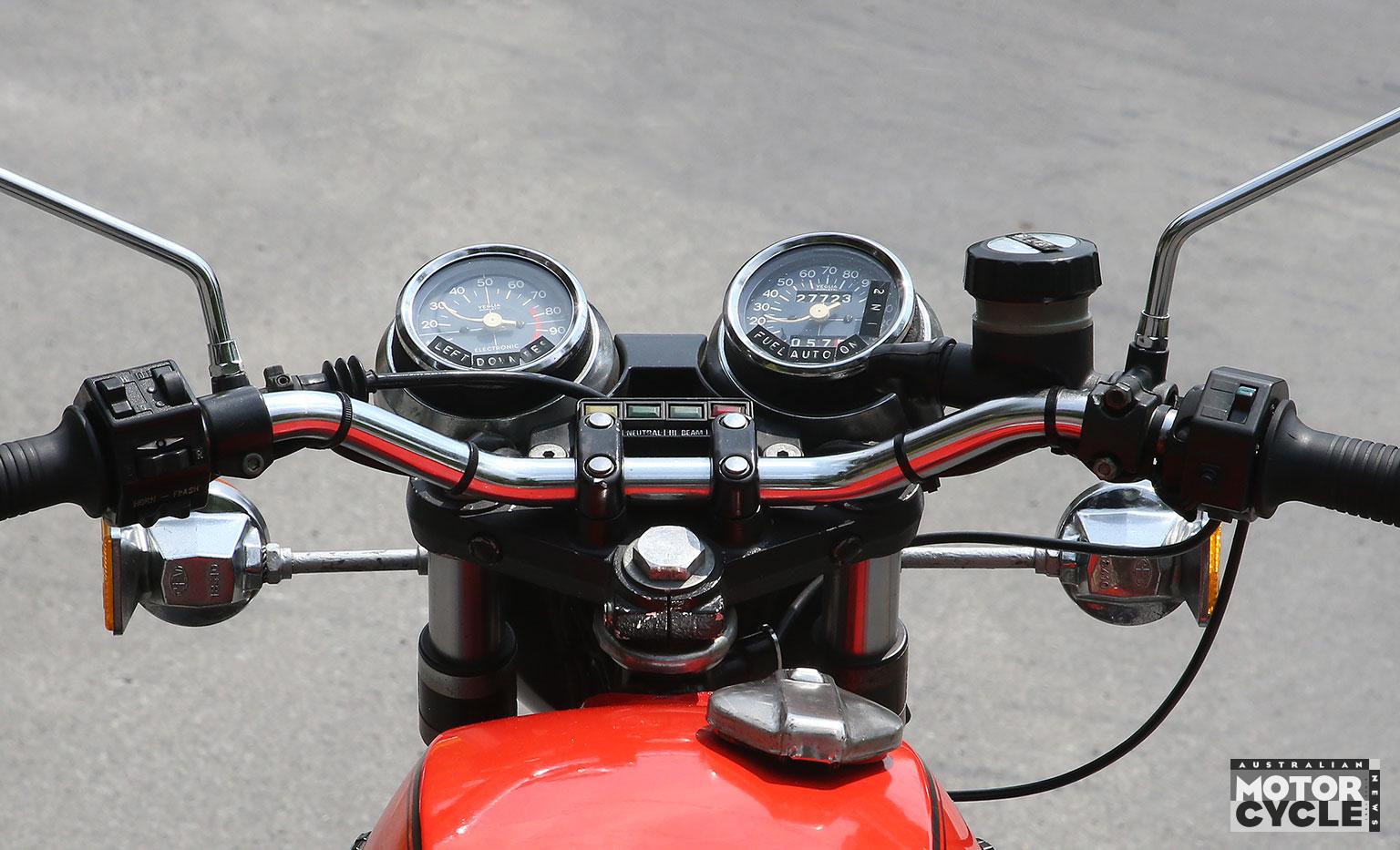
My day aboard the Morini 500 confirmed that in spades. This is a ground-breaking 3½ on steroids, with notable extra power and a welcome increase in torque delivering improved acceleration without sacrificing the sweet steering and capable handling of the smaller V-twin. It’s a really rideable bike, and cleverly designed to be j-u-s-t big enough for a 180cm-tall rider not to feel cramped when riding it, yet small and light enough to be truly flickable along twisting country roads. It feels low and slim when you climb aboard it, and the relatively low dual seat with ample space for a passenger gives room when riding solo for you to push your body backwards to crouch down for a wind-cheating stance on straight roads. The more upright handlebar, compared to the Sport variant’s clip-ons, gives a comfortable all-day riding stance, albeit with footrests that are a little farther forward than I’d have preferred. Compared to the much heavier and not a lot more powerful Laverda 750SF parallel twin that Joel was riding alongside me, the Morini was like night and day in terms of rideability and ease of handling. With very little undue vibes from the 72° V-twin engine, it was also a much friendlier ride than the vibrationary Laverda, with its two-up 360° crank format.
I didn’t miss the absent sixth gear ratio, because the extra torque keeps the engine pulling nicely as you shift up through the gears, although it does pay to rev the engine out to at least 6500rpm in each ratio to keep it on the boil. However, if Joel reckons that the US-mandated crossover left-foot gearshift was flawed, the revised Euro-style right-foot gearchange on the bike today has a rather floppy action with lots of travel on the lever, so isn’t very precise. It’s not helped by the way the rather crude-looking, aftermarket two-into-one exhaust fitted today (the bike would have come with separate twin Lafranconi exhausts) crowds out the gear linkage.
Moreover, after firing up the engine on the very noisy electric starter – which sounded like a junior concrete mixer – and leaving it to settle to a 1400rpm idle, I discovered that the clutch engagement is an on/off light-switch affair, meaning you will stall it repeatedly in trying to obtain forward motion from rest until you learn to use lots of revs to get it off the mark; the clutch doesn’t like being slipped. But once underway the throttle is light and responsive, and its crisp pickup in the next highest gear more than compensates for the less-than-ideal gearchange.
Cruising at 120km/h with the left-side Veglia tacho’s needle parked on the 5500rpm mark still leaves room for quite acceptable top-gear roll-on to help you pass a slower car or truck. Still, the 500 Morini isn’t a particularly long-legged bike; more of a real-world, back-roads ride that revels in being hustled through a flowing series of third-gear bends. It asks you to exploit the good grip of the TT100 tyres Joel has fitted to it, and the trio of 260mm Grimeca cast iron discs gripped by twin-piston calipers from the same company do their job well in hauling the bike down from high speed. Their smallish diameter is doubtless a contributory factor in the Morini’s crisp handling, thanks to their reduced gyroscopic effect on the steering. The ride quality from the twin rear Marzocchi shocks is pretty firm, but the Morini didn’t bounce around too badly over the bumps in the frost-ravaged Pennsylvania backroads.
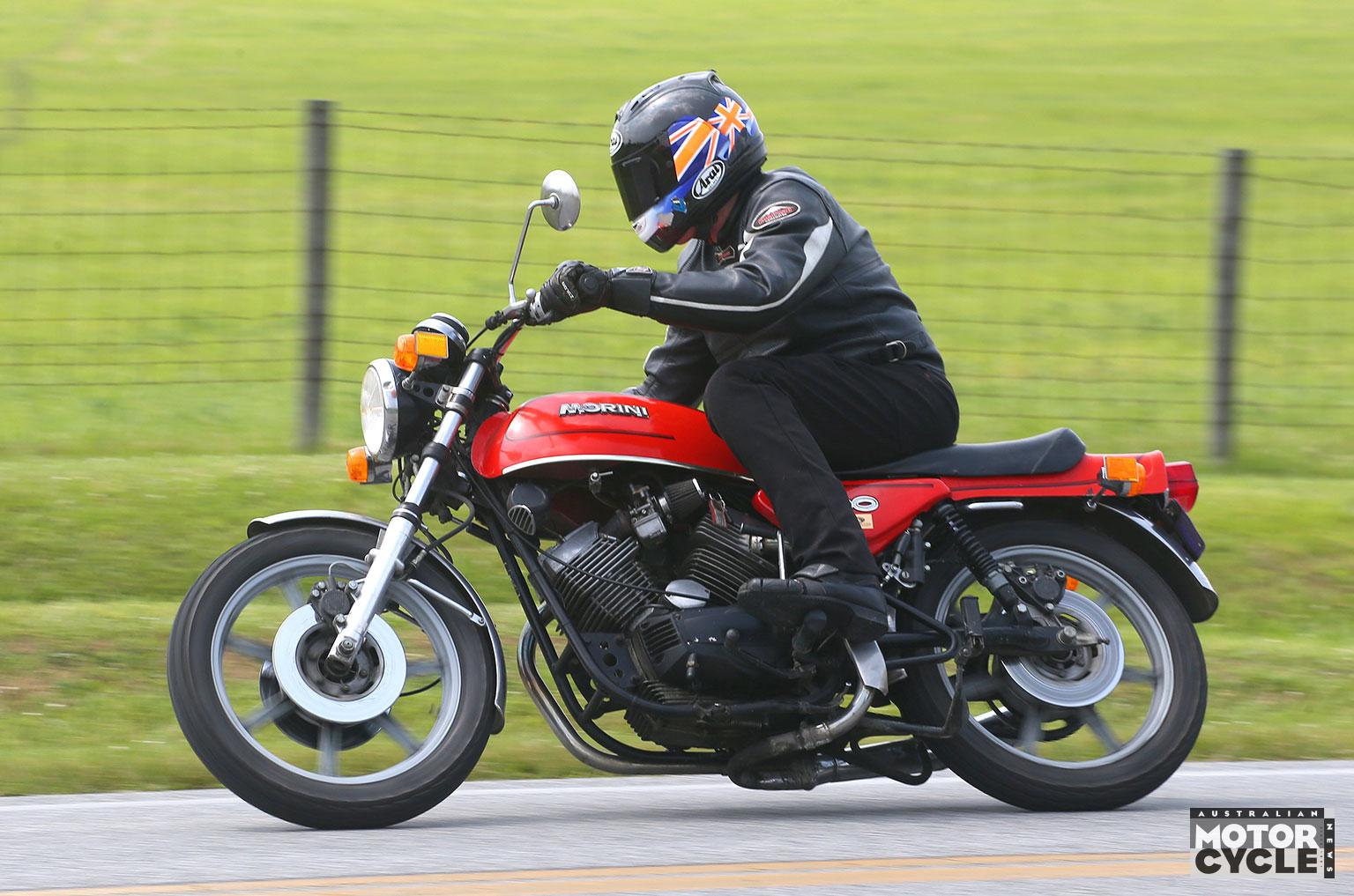
My ride on this motorcycle that’s heading towards its 50th birthday was an avid reminder of the inherent qualities of Franco Lambertini’s completely unique Moto Morini 3½ design, which no other manufacturer has ever sought to emulate. More fools them – for flawed gearchange and light-switch clutch action aside, this is a user bike par excellence, a middleweight marvel that punches well above its weight.
It’s going to be interesting to see if today’s Moto Morini company can achieve the same outcome with its born-again 3½ model – the only V-twin in a sea of parallel twins in the single most competitive sector in today’s global marketplace, the 300-500cc segment.
It’s going to be fun watching them try!
✅ PROS – Fun to ride with performance that pumches well above its weight. Loaded with Seventies-era innovation.
❌ CONS – Vague gearchange, light-switch clutch and riding position is a bit old school.