As the iconic brand celebrates half a century of rider freedom, we take a look at the Kawasakis that helped define adventure and touring in Australia
Here’s to a golden milestone: 50 years of Kawasaki in Australia. Since 1975, Kawasaki Motors Pty Ltd has been part of the local riding story, shipping in tough-as-nails, dual-sports, clever adventure machines and mile-eating sports-tourers that helped define how Aussies roam a very large island.
To celebrate the half century, we trace four Kawasaki families that mattered most to Aussie adventure/touring riders: the KLR, KLE, Versys and GTR. Each of these have played a distinct role – some as rugged outback tools, others as smooth long-haul missiles – and together they chart Kawasaki’s evolving idea of what adventure and touring should feel like. But first, a little context about how Kawasaki found its place in Australia.

When Kawasaki Motors Pty Ltd set up shop here in 1975, the Aussie motorcycle landscape was at a turning point. The boom of the late 60s and early 70s had left a taste for speed and style, but the reality of Australia’s size meant that not every bike suited our roads. Japanese brands were already reshaping the market, offering reliability and value that many British and European marques struggled to match. Into that mix rolled Kawasaki.

Early shipments brought in road machines and dirtbikes, but it was the dual-purpose and touring models that struck a deeper chord. Riders here wanted something that could shrug off corrugations one week and cover state lines the next. The mid-70s saw a rise in organised rallies, cross-country runs, and the early stirrings of what would become the ‘adventure’ scene – long before that label was fashionable. By the 80s, as the outback beckoned more riders and tourism campaigns encouraged Australians to “see the real country”, Kawasaki’s no-nonsense designs slotted straight into that story.
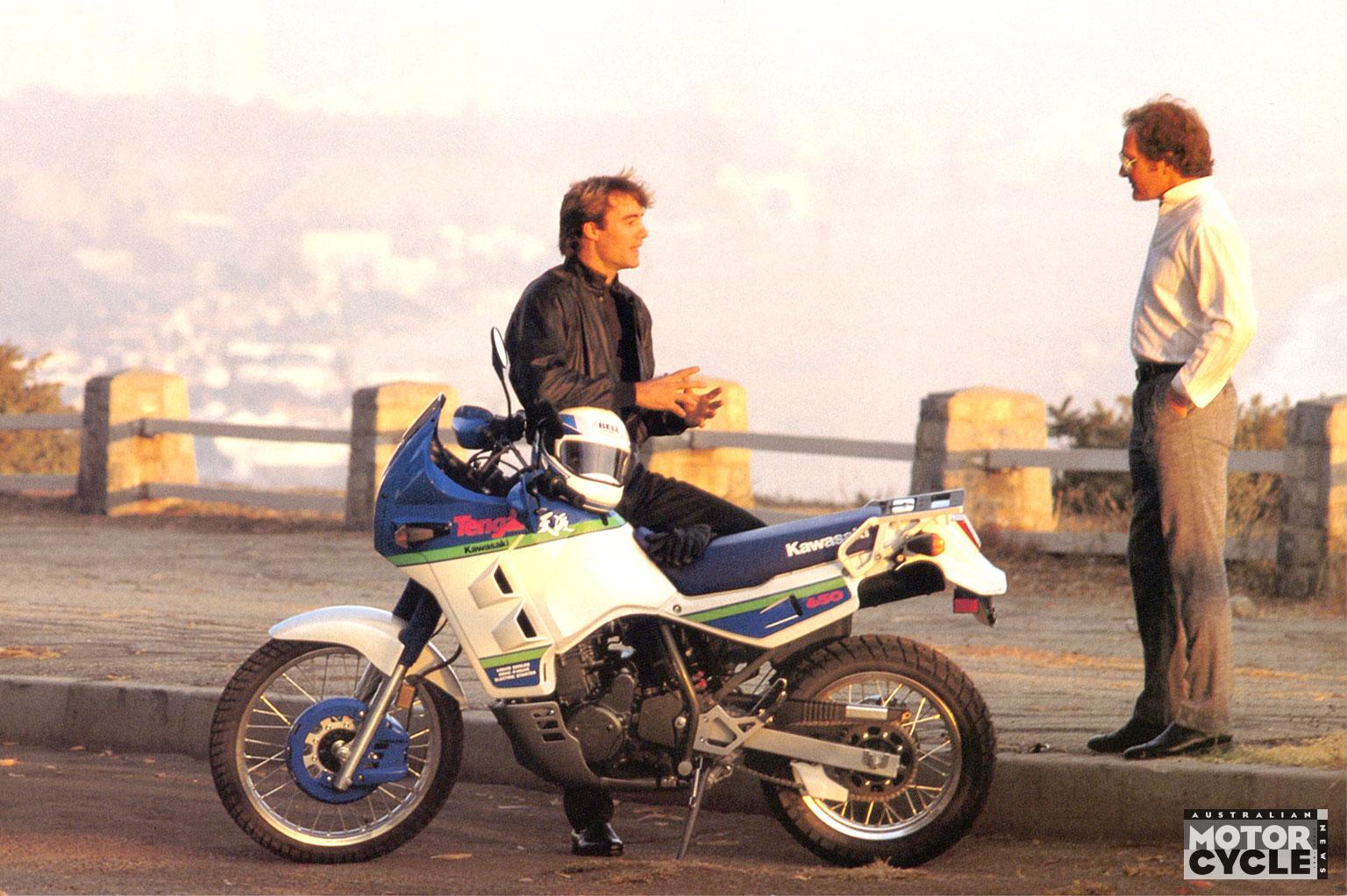
The launch of the KLR650 in 1987 was timely. It arrived just as riders were realising that you didn’t need a pure dirtbike to explore the bush. You needed something tough, fixable and fuel-frugal. Around the same time, Kawasaki’s touring offerings gave suburban families the option to take on the Hume or the Bruce Highway with less fatigue than ever before.
These weren’t just bikes; they were enablers of the kind of long-haul, big-sky travel that inspired the Australian riding imagination to new heights.
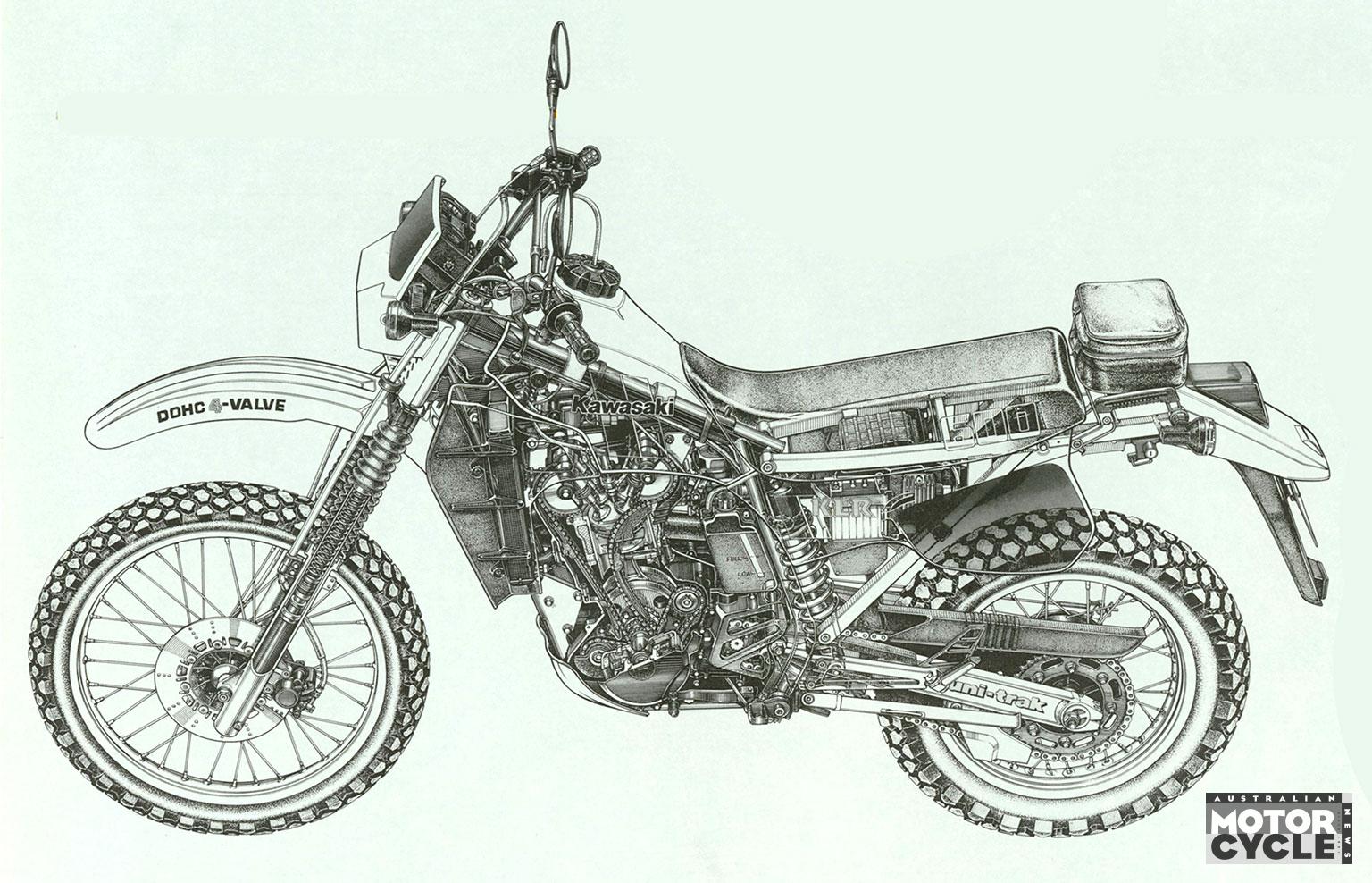
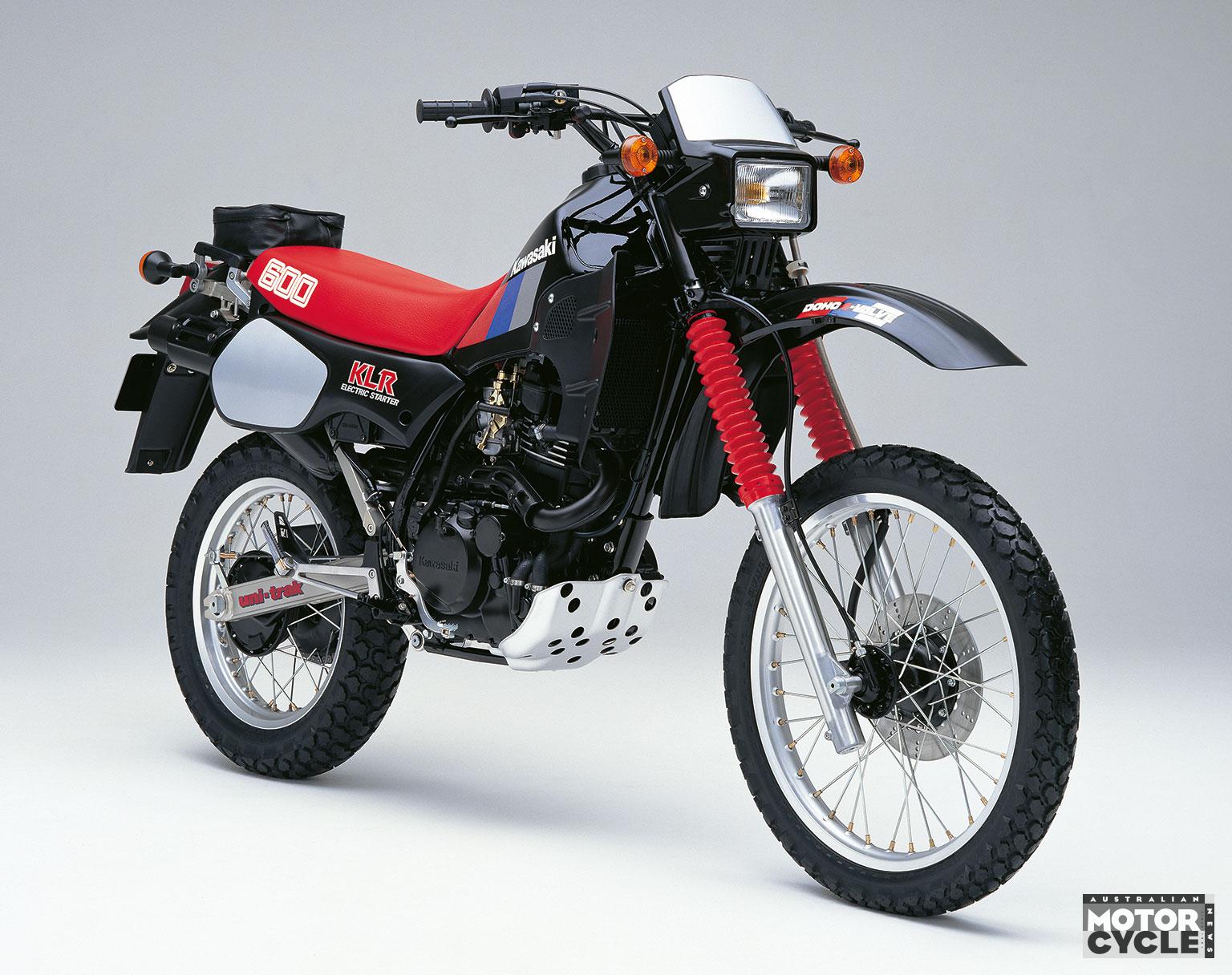
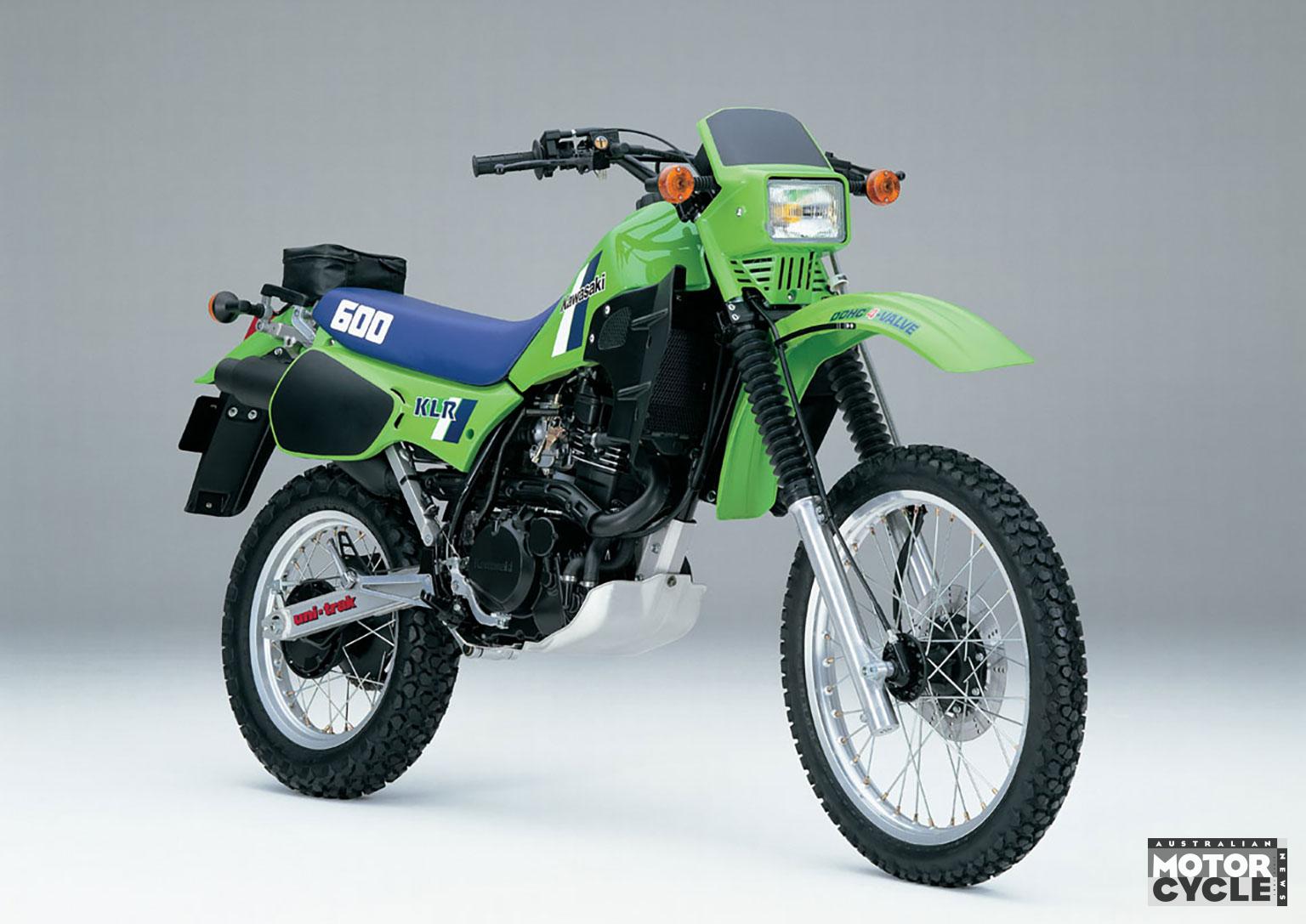
The KLR650 succeeded here where the earlier KLR600 models fell short because they offered everything the 600 lacked: enough power and torque to handle long highway distances, a huge 23-litre tank for true outback range, and rugged, easy-to-service reliability. Sure, the 600 was competent off-road, but it struggled on sealed bitumen and long tours; the 650 combined on- and off-road versatility, affordability and durability, quickly becoming the definitive ‘Outback Bike’ and the model that popularised adventure touring in Australia.
A half-century on, the lesson is clear: Kawasaki’s local success wasn’t about chasing fashion, it was about meeting Aussie rider’s demands.
The KLR range: Australia’s bush-league legend
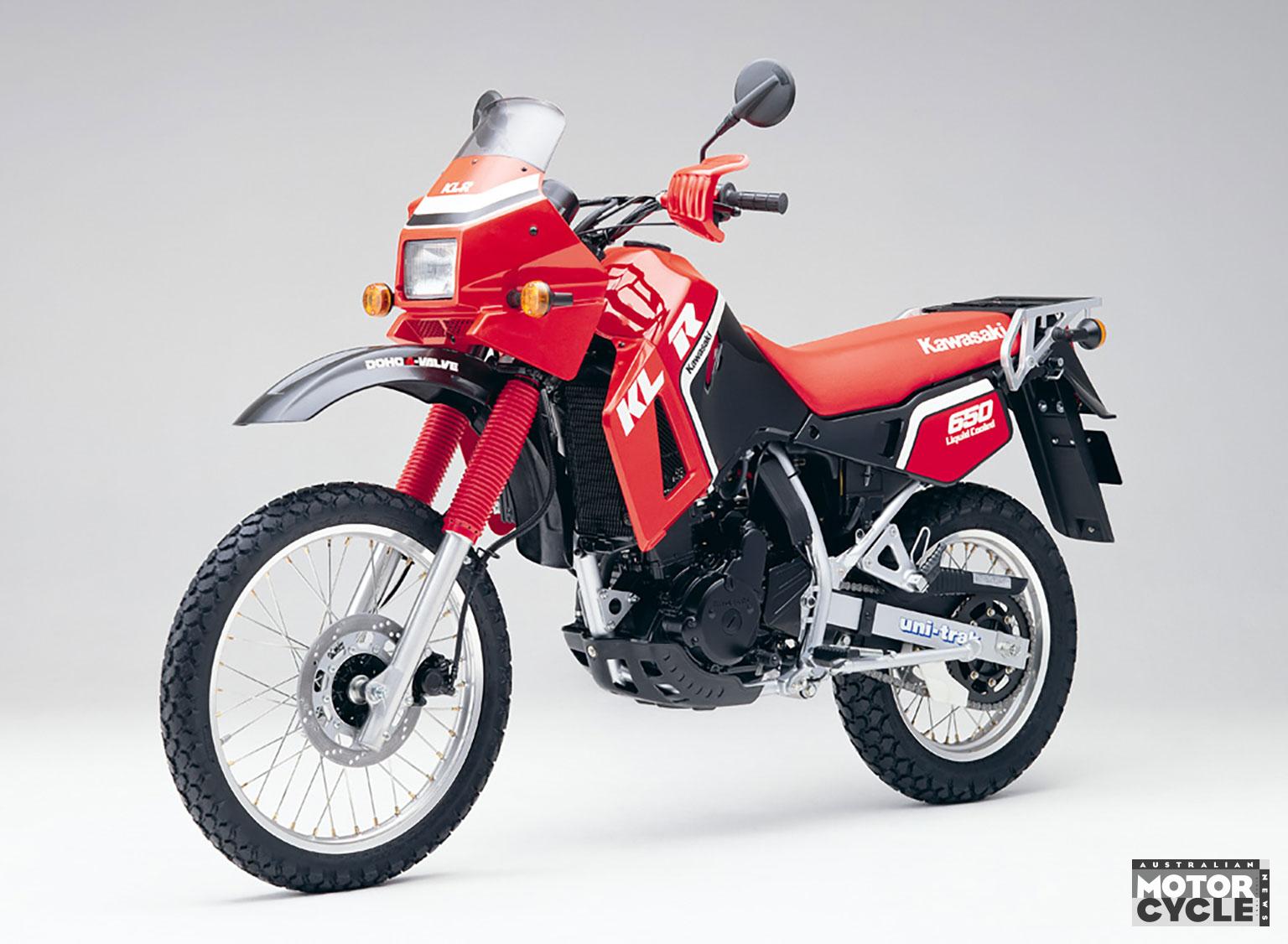
If you learned the difference between bulldust and blue metal on a Kawasaki, odds are it was aboard a KLR. Introduced in 1987 as the big-bore single you could ride everywhere, the KLR650 quickly earned cult status across deserts, cattle stations and long, lonely shire roads. For decades its formula barely changed… and that was exactly the point.
Three generations, one mission
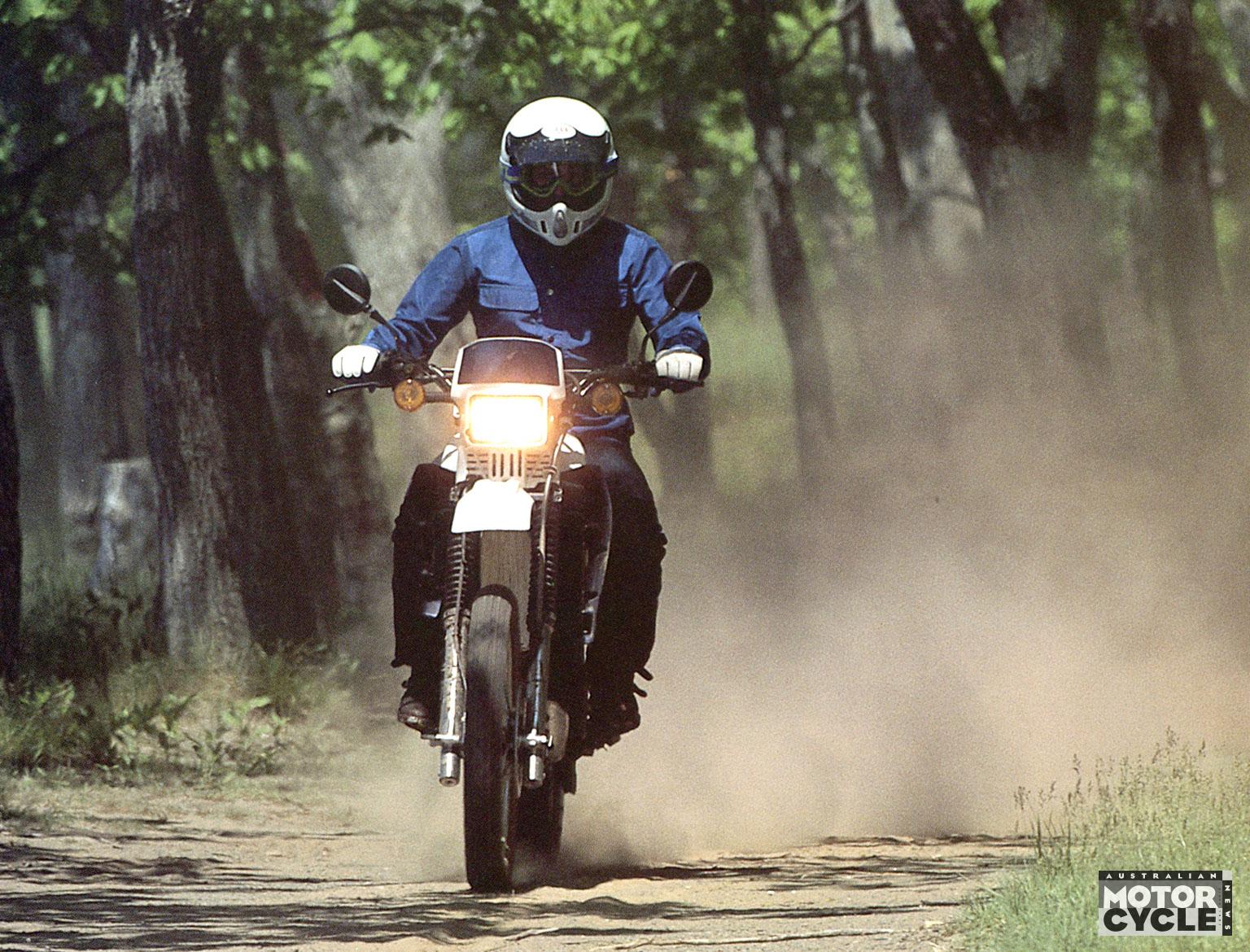
Gen 1 (1987-2007): The archetype – 652cc liquid-cooled single, big tank, stone-axe simplicity. It became the go-to for remote travel because spares were common and bush fixes were part of the culture. Cheap, repairable and near-indestructible, this was your average Kawasaki fan’s original outback ticket. It was also during this phase – on 1989’s KLR650 B1 – that the ‘Tengai’ branding was introduced. Kawasaki used that name here and in some other markets (which roughly translates as ‘horizon’ or ‘beyond the sky’) to set it apart from earlier KLR 500s, 600s and even 650s to signal once and for all that this model was purpose-built for adventure riding, not just a dual-sport commuter.
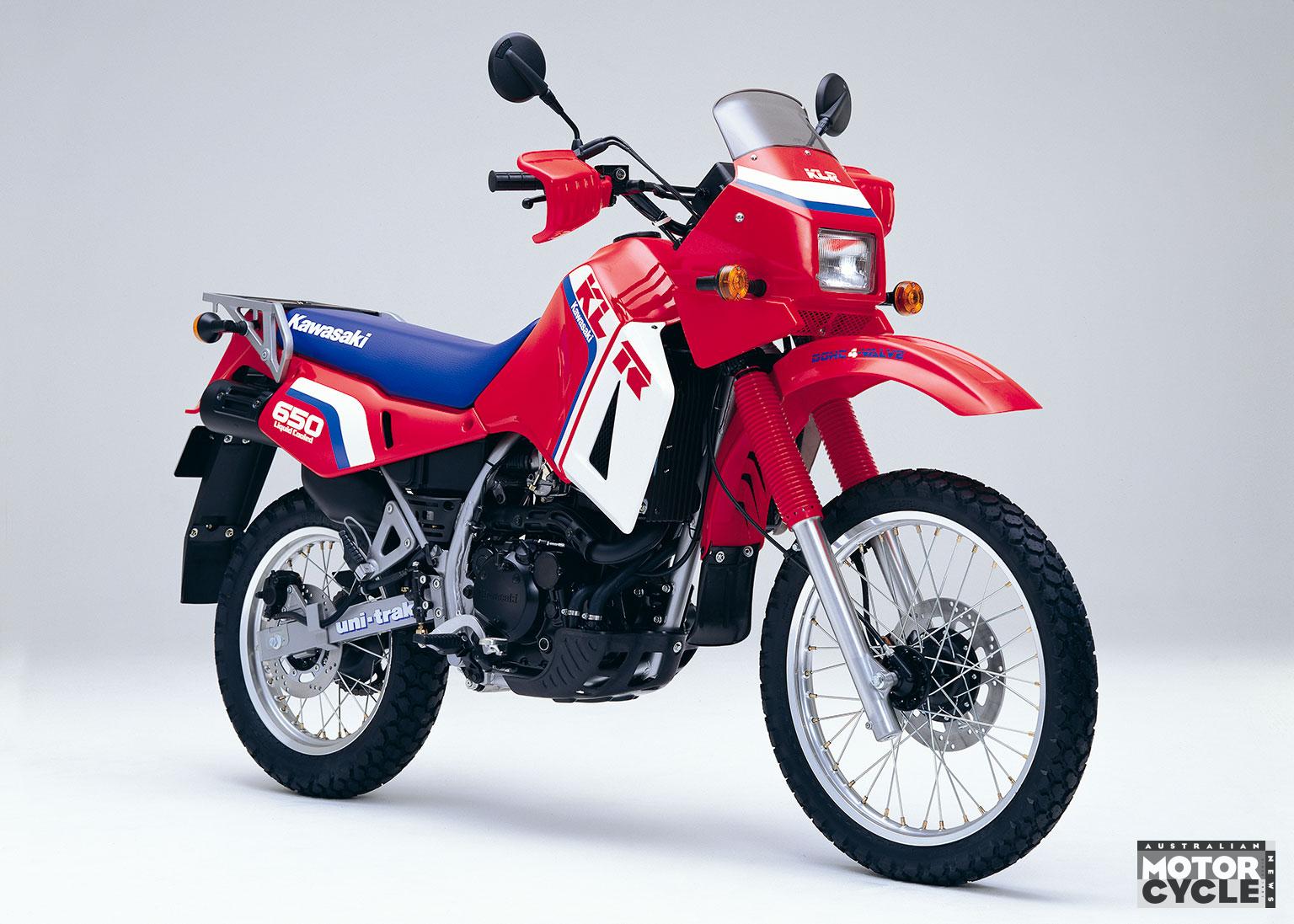
Gen 2 (2008-2021): Cosmetic and comfort updates (fairing, dash, seat) brought the KLR650 into the modern era without changing its core. The KLR remained a pack-mule that could carry too much gear too far for too little money.
Gen 3 (2022-Present): The big leap – Electronic Fuel Injection (EFI) and an Anti-lock Braking System (ABS). Kawasaki also added LED lighting, updated subframe and luggage options – including the Adventure trim with crash bars and auxiliary lights – while keeping the same long-legged, under-stressed feel. With a better range and ease of use, even if extra equipment nudged up the weight, this became the definitive baseline for real-world Aussie adventure.
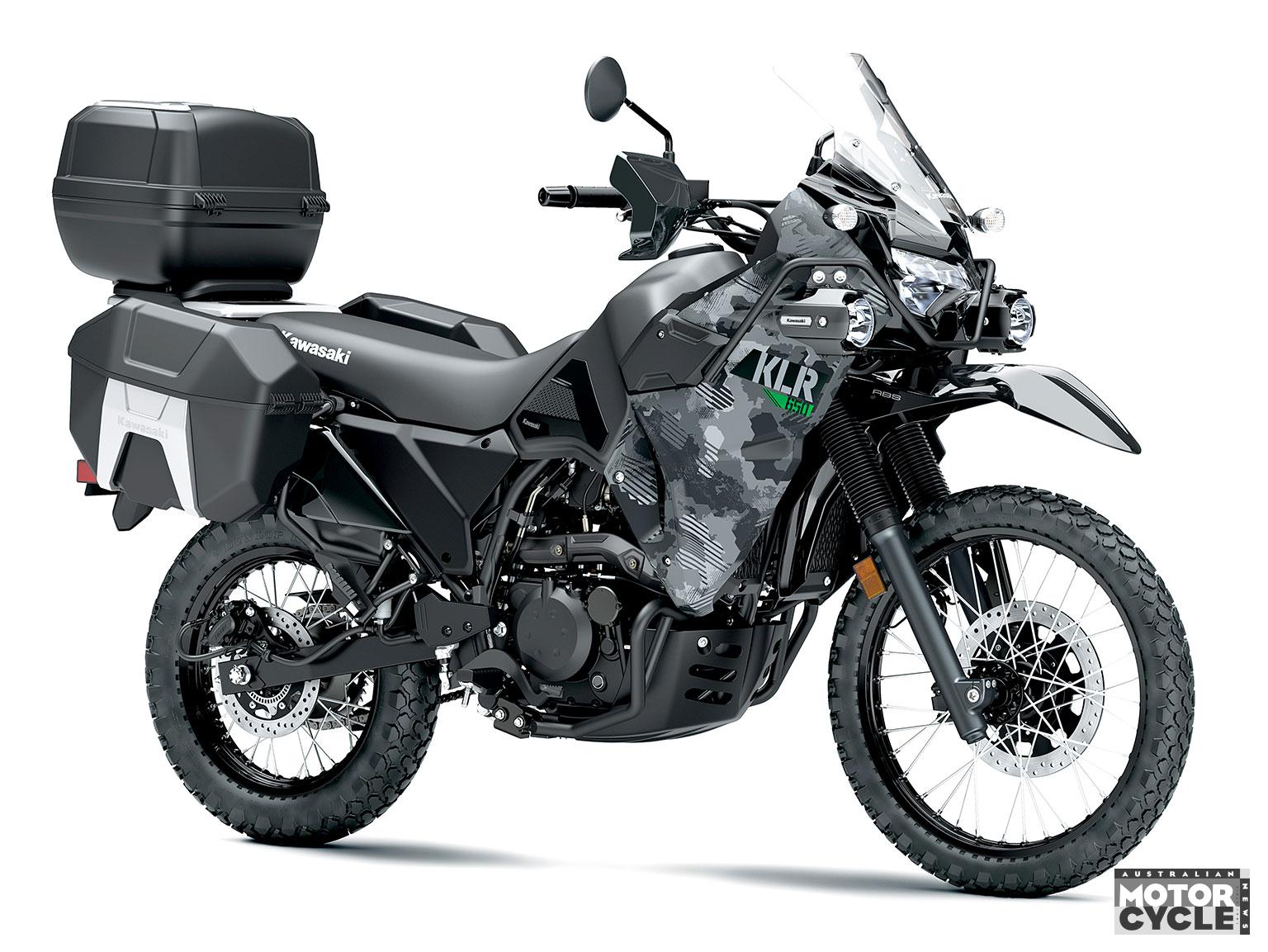
The KLR remains one of Australia’s best adventure bikes because it combines long-range ability with a simple, frugal single that makes vast stretches between fuel stops far less daunting. The addition of EFI and ABS in recent years broadened its appeal without sacrificing the rugged, go-anywhere character that built its reputation.

Just as important, the KLR is backed by a community as enduring as the bike itself – stories of cross-country rides, club runs and bush repairs fill sheds across the country, supported by readily available spares, shared knowledge and a practical ‘get-it-done’ spirit that has made ownership uniquely rewarding.
The KLE range: forgotten all-rounder that started so many adventures
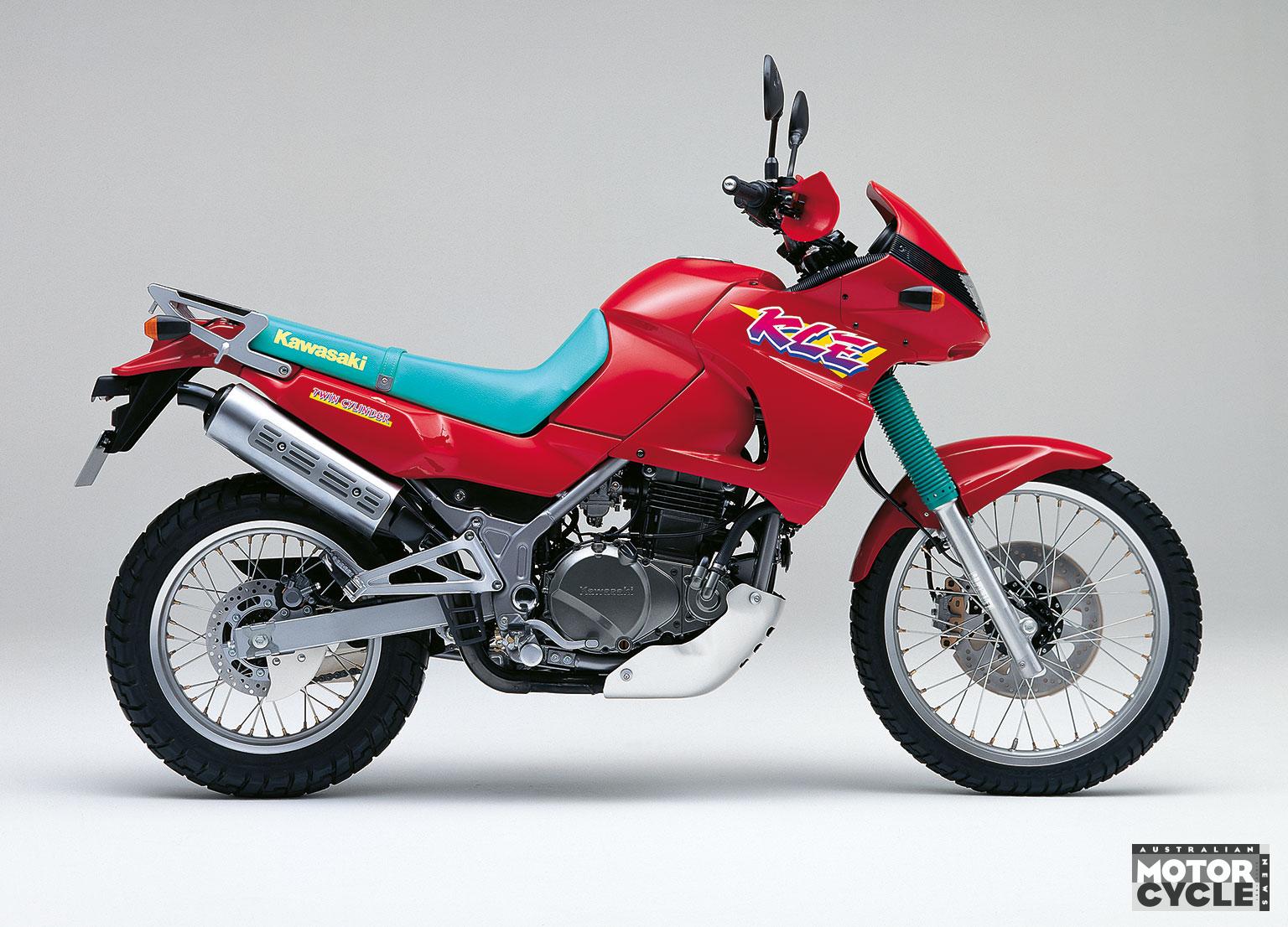
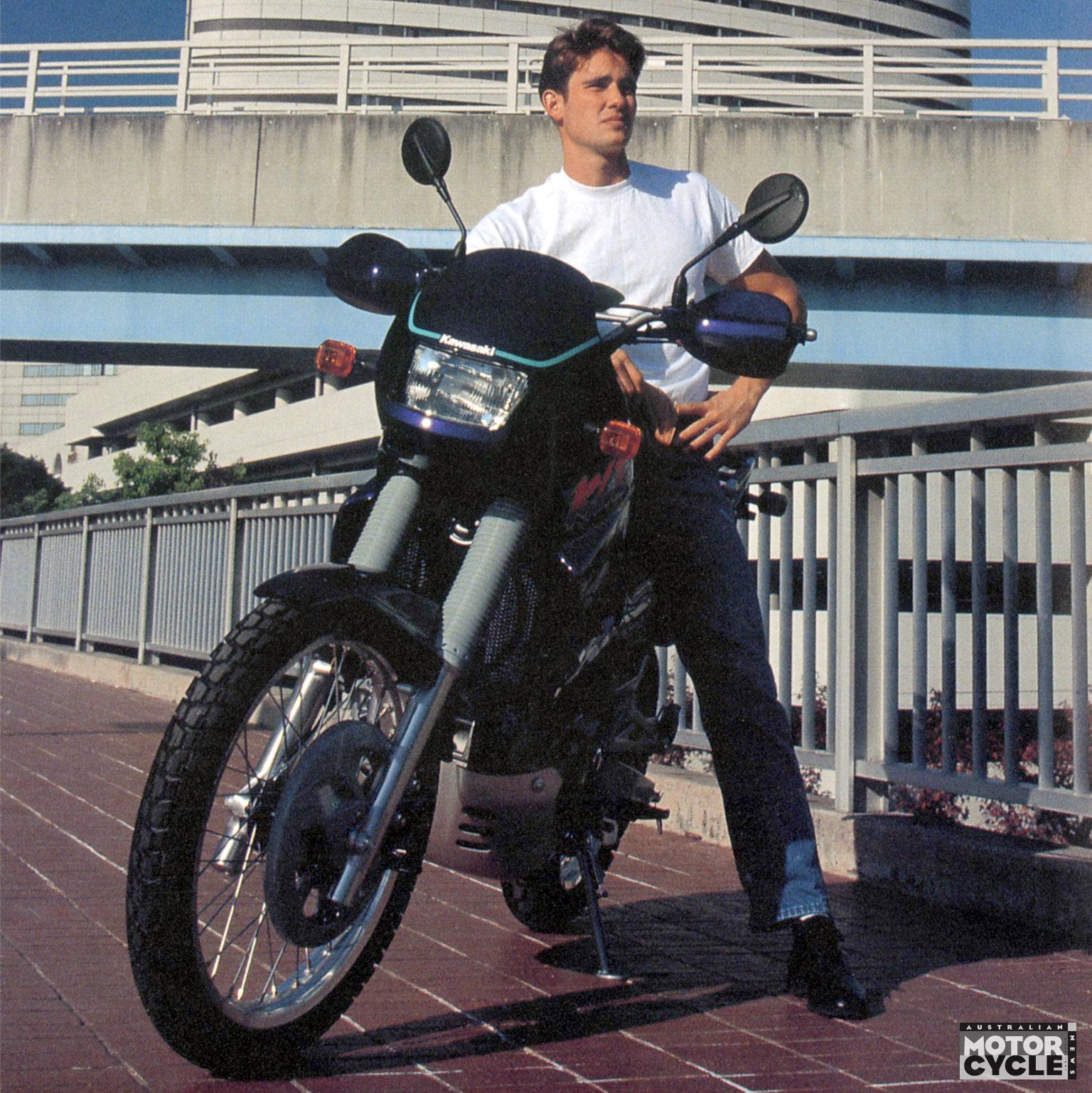
If the KLR is the outback legend, the KLE is the underrated enabler. The KLE500 arrived in the early 90s (and returned in updated form mid-2000s), blending a parallel-twin road heart with trail-friendly chassis cues. Think 498cc twin (derived from the GPZ/EX500 family), 19/17-inch wheels, longish travel suspension and real-world ergonomics. It never pretended to be a hardcore enduro; it targeted new riders and commuters who also wanted to explore backroads without drama.
Why it mattered in Australia
Striking a rare balance between accessibility and versatility, with its manageable seat height and friendly twin-cylinder engine, the KLE500 gave riders who weren’t keen on tall, thumping singles the confidence to tackle fire trails and corrugated backroads, while still serving as an economical and easygoing daily ride. Despite its modest fuel tank and limited off-road extremes, its value and road manners made it a great practical choice for week-to-week commuting that could also stretch to relaxed weekend shire-road adventures. For many Aussie riders, that balance was perfect.

The KLE wouldn’t carry Kawasaki’s adventure banner forever, but it taught a generation that ‘adventure’ can be welcoming, not intimidating. In hindsight, it was a crucial stepping-stone to the Versys concept that followed…
The Versys range: the ‘versatile system’ that made tarmac touring fun again
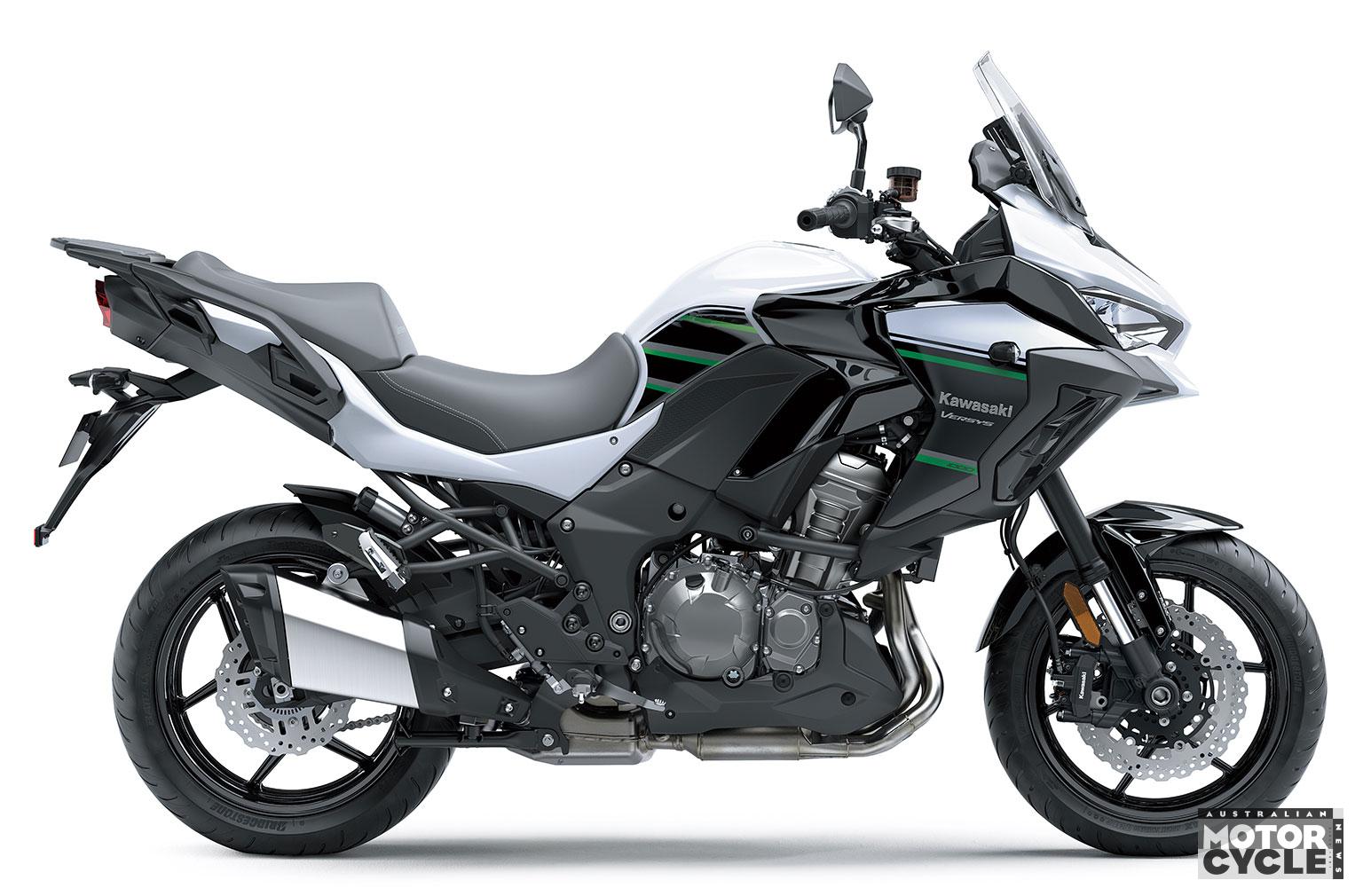
Kawasaki’s Versys line distilled the KLE’s all-roads idea into something sharper for tarmac: long-travel suspension for comfort, upright ergonomics for command, and engines tuned for midrange rather than top-end bragging rights. The very name itself is a portmanteau of ‘versatile system’.
The first model – the Versys 650 – landed in Europe and Canada for 2007, in the USA a year later, then reached Australia in 2010 with the LAMS version becoming available around the same time.
Versys 650 (KLE650): the sweet-spot all-rounder
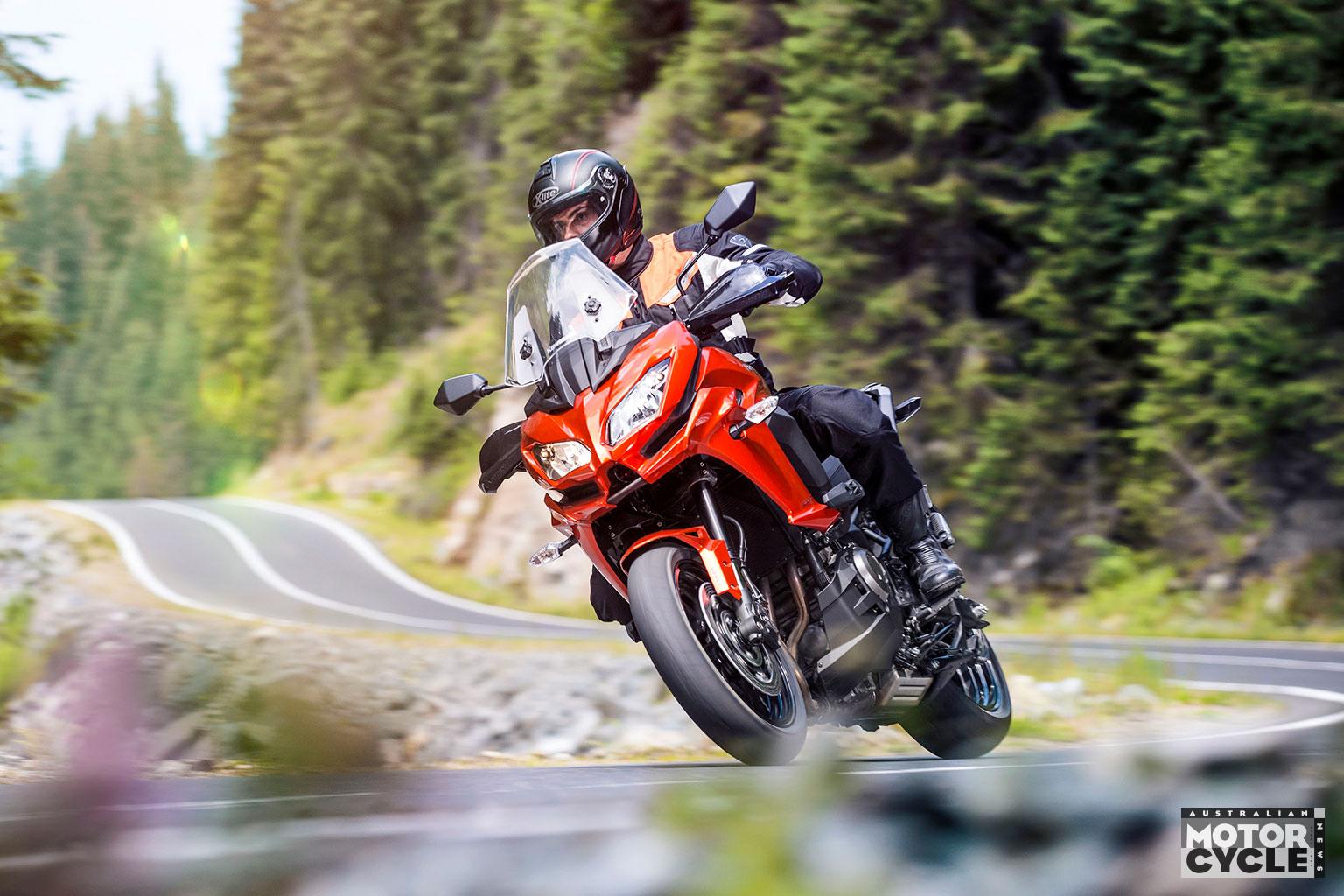
The 650 took the heart of the ER-6/650 twin and built an all-day road tool that could shrug off pockmarked bitumen and the odd maintained dirt road. Its genius wasn’t outright power but the way it strung together country corners and dodgy backroads at a brisk, effortless clip, while carrying a week’s worth of gear. Tall stance, wide ’bars and compliant suspension meant fewer sore backs and more kays a day – crucial in Australia, you’ll agree. The 650 twin’s torque also made short work of overtakes without constant downshifts and delivered blockbuster economy for long hauls. And over multiple updates, Kawasaki refined wind protection, brakes and electronics without changing the bike’s role. For many Aussies, this became the ‘one bike to do it all’: commute during the week, tour on the weekend, and explore good gravel whenever it popped up.
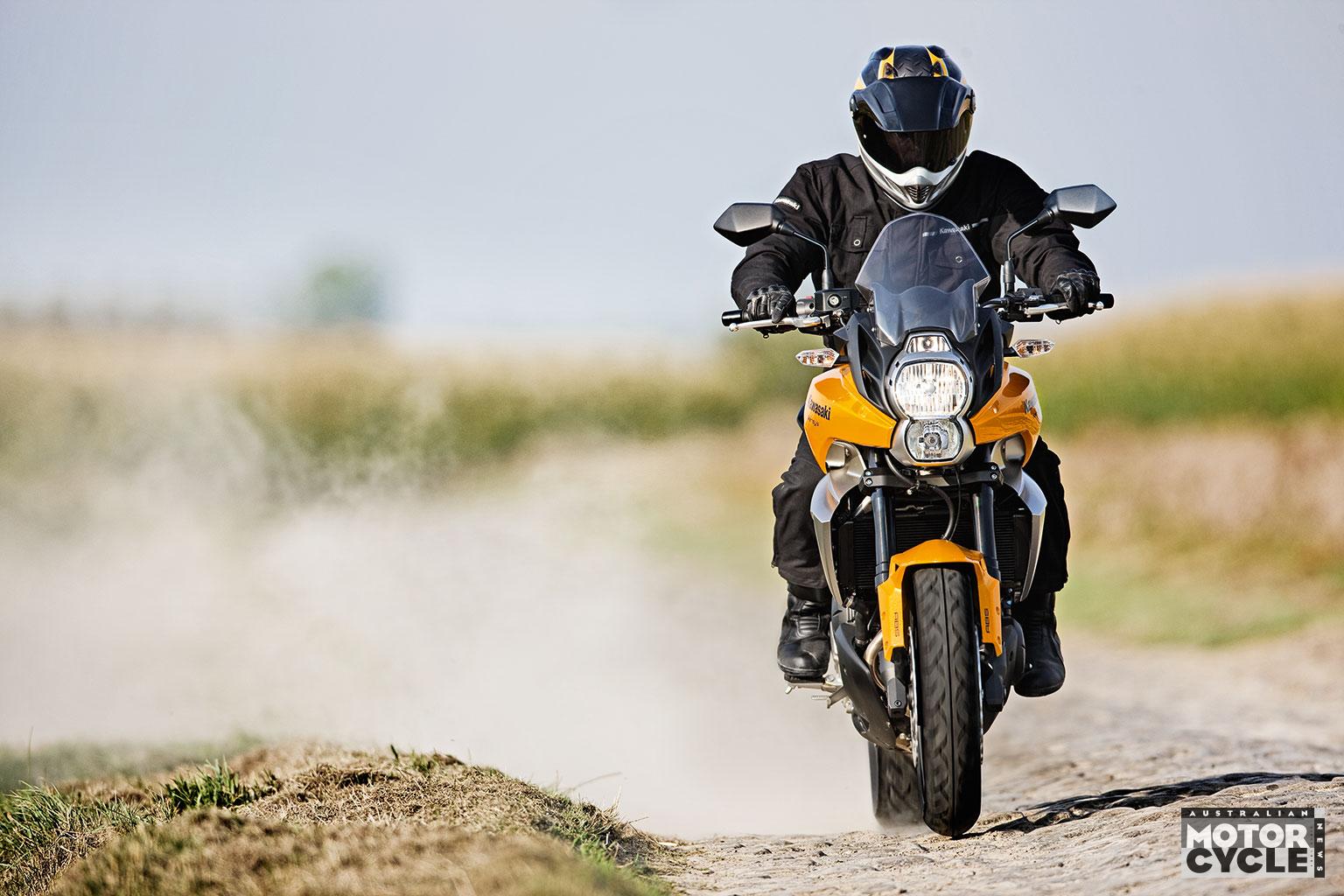
Versys 1000: the big-bore smooth operator
For riders wanting longer legs and effortless
two-up touring, the 2012-on Versys 1000 added an inline-four’s velvet punch to the package. With a roomy triangle and long-travel, road-biased suspension, it made fast, comfortable work of east-coast B-roads or west-coast wheatbelt. With an easygoing engine and cozy ergonomics, later updates also layered in electronics and better wind management.

Best Versys models to remember
Versys 650 (2007-on): Arguably the spiritual successor to the KLE – more road-focused, far more accomplished. If your ‘adventure’ is 90 per cent tarmac and 10 per cent good gravel, this is peak value.

Versys 1000 (2012-on): The stealthy sports-tourer – less flashy than some European rivals but relentlessly effective, spacious and reliable for vast Aussie distances.
The GTR range: Kawasaki’s high-speed continent-shrinkers
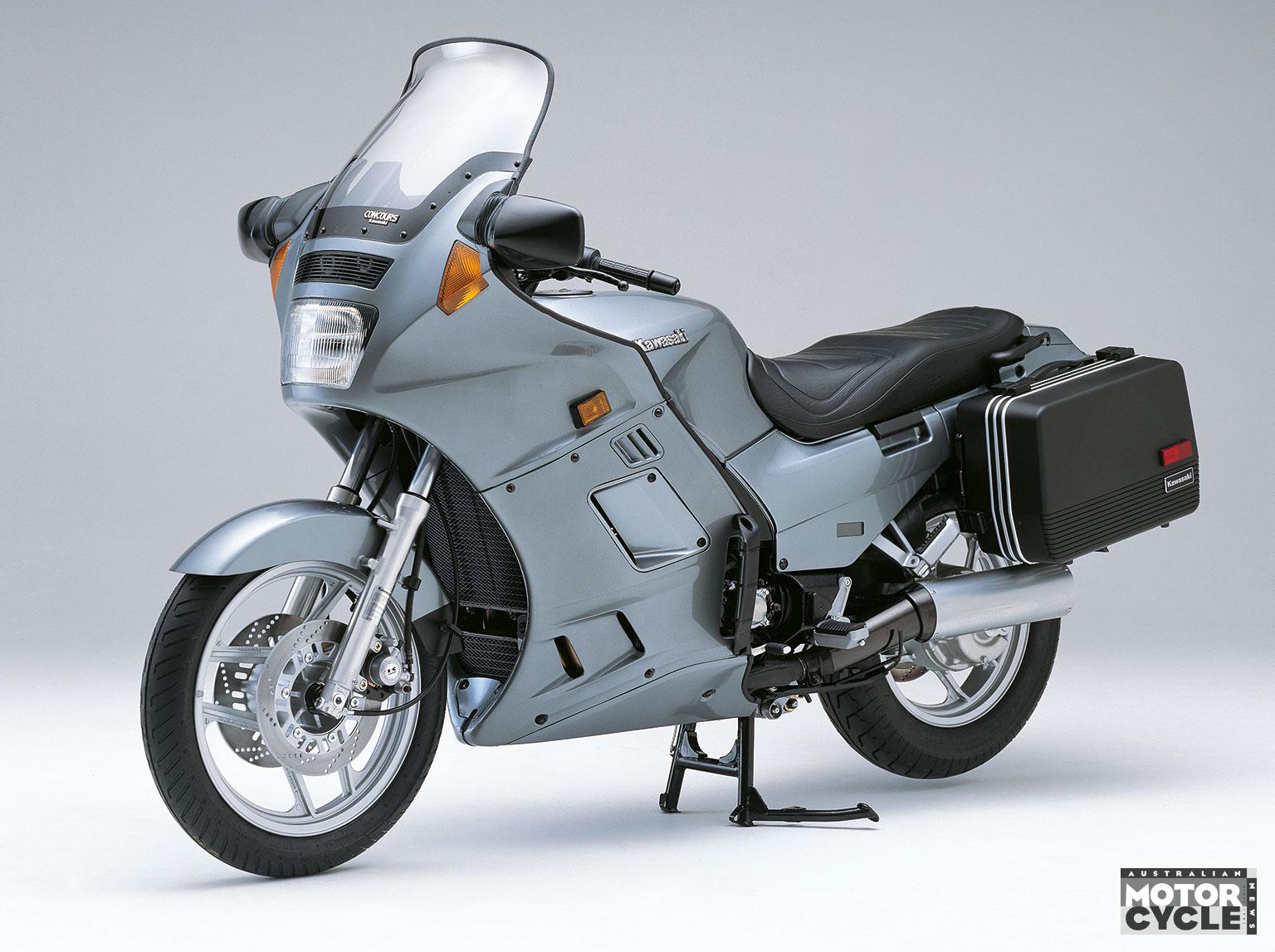
Kawasaki’s touring DNA is just as strong as its dirt-road chops, and the GTR family shows it. The GTR1000 (Concours/ZG1000) ran from the
mid-1980s to 2006, a shaft-drive, full-fairing sports-tourer that could cross states while your mates argued about fuel stops. It was replaced in 2008 by the 1400GTR (Concours 14/ZG1400), a ZX-14-based grand tourer that brought sportsbike thrust and modern electronics to the segment.
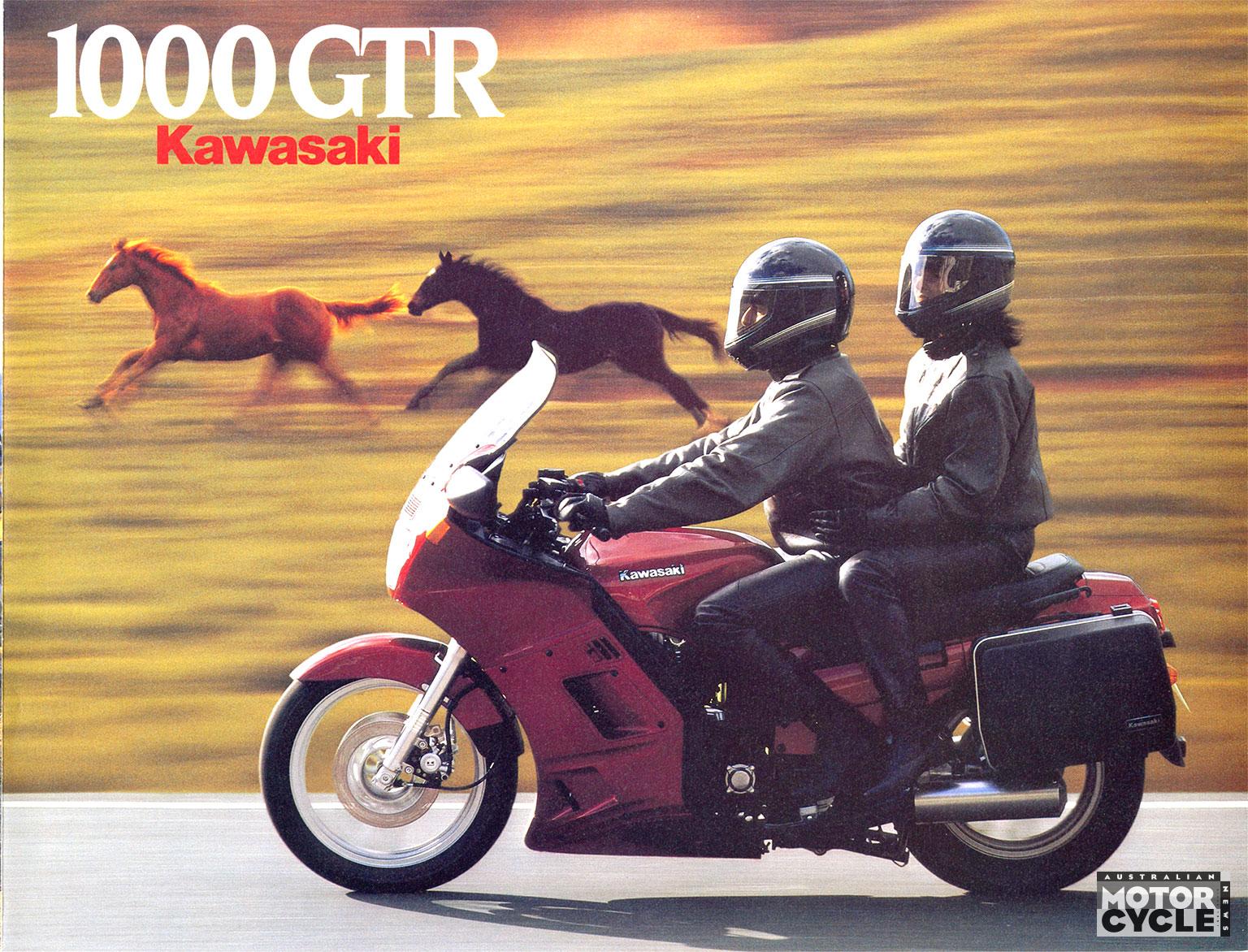
GTR1000 (1986-2006): the long-haul anvil
The GTR1000 earned its reputation as a long-haul anvil thanks to a liquid-cooled 997cc inline-four, shaft drive, a large tank, generous fairing and hard luggage that made it a true continent-crosser well before ‘sports-tourer’ became a buzzword. Its toughness and practicality proved especially valuable in Australia, where coarse-chip highways and winding inland routes demanded stability and strong weather protection – qualities that helped this model attract a loyal following and even inspire dedicated owner clubs around the country.
1400GTR (2008-2022): the ballistic gentleman
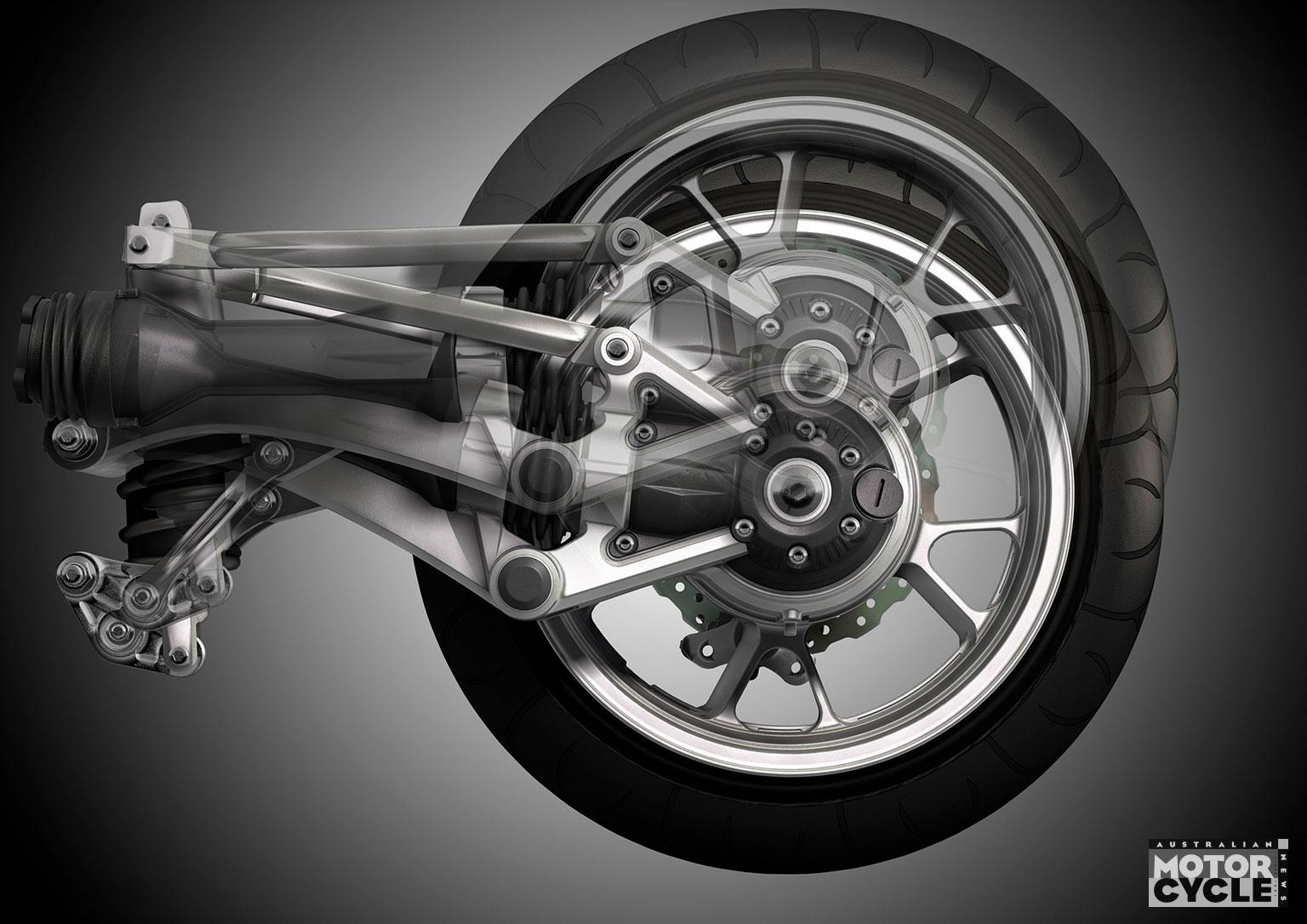
When the 1400GTR arrived (as a 2008 model), it reset expectations. Based on the ZX-14 platform, it delivered towering roll-on thrust, yet added touring civility and a suite of tech: KIPASS proximity key system, KTRC traction control (from 2010), K-ACT linked ABS (also from 2010), and TPMS, all wrapped in a wind-tunnelled fairing with plush ergonomics. Later model years refined fueling and comfort further, while Kawasaki continued to push the envelope early in the touring-electronics race. Aussie owners rated the 1400GTR as a durable, big-mileage bargain on the used market, with a near-fanatical following.

How the four families fit down under
Australia’s size and surfaces have always asked awkward questions of motorcycles over the decades. These four Kawasaki families answered in different ways. The KLR leaned into simplicity and range – carry spares, carry on – making it the obvious pick for outback loops and dirt-heavy routes. The GTR family answered distance with speed, weather protection and fatigue-reduction on bitumen mega-days.

The Versys 650 nailed the ride most Aussies actually do: mainly sealed backroads, occasional gravel and commuting. It’s the modern expression of the KLE’s original ‘commuter-trailie’ brief, only far more polished. For pillions and big loads, the Versys 1000 or 1400GTR are your friends – one a tall-road all-rounder, the other a low-slung express.
Used-market pricing makes the KLR (any gen) and GTR1000 enduring bargains; the 1400GTR has also become a value sweet spot for mile-hungry riders who want modern brakes and electronics without the Euro tax.
Generational transitions: How each Kawasaki family evolved
Kawasaki didn’t just launch bikes and leave them be; each generation reflected a changing idea of what adventure and touring should mean here in Australia.
KLR650
The first-gen KLR was the definition of bushcraft: carb-fed, tall, basic and willing to cop abuse in return for loyalty. Gen 2 softened some of those edges with better comfort and plastics, but kept the mule-like DNA intact. Gen 3’s shift to EFI and ABS was more than a nod to emissions and safety; it was Kawasaki admitting that even hardened adventurers needed modern reliability when a fuel stop was at least 300km away.
KLE500
Across its lifespan, the KLE quietly grew into its role as a ‘gateway’ adventure bike. Early models introduced road riders to dirt, while the later 2000s facelift gave it sharper lines and refreshed ergonomics. Its real legacy was proving that a middleweight twin could wear both a commuter’s and an explorer’s hat (sorry, helmet), effortlessly paving the way for the Versys.

Versys 650 & 1000
The Versys family showed Kawasaki’s ability to pivot. What started as a quirky, tall-stanced all-rounder became a benchmark for mid-capacity touring. Updates improved wind protection, fuel injection smoothness and braking performance, with each successive change reflecting the fact that Australian riders wanted fewer compromises on their ‘one bike to do it all’. The 1000 followed a similar arc, gaining electronics and refinement until it quietly became one of the most complete two-up tarmac tourers in the market.
GTR1000 & 1400GTR
Few bikes demonstrate generational transition as starkly as the GTR. The 1000 was analogue toughness: shaft drive, big fairing, no-nonsense, long-distance grunt. The 1400 reimagined that brief with ZX-14 thrust and electronics that placed Kawasaki at the sharp end of sports-touring tech. Where the 1000 was a club ride stalwart, the 1400 became a high-speed continent shrinker – but both generations built a loyal, mileage-hungry following that still rides today.
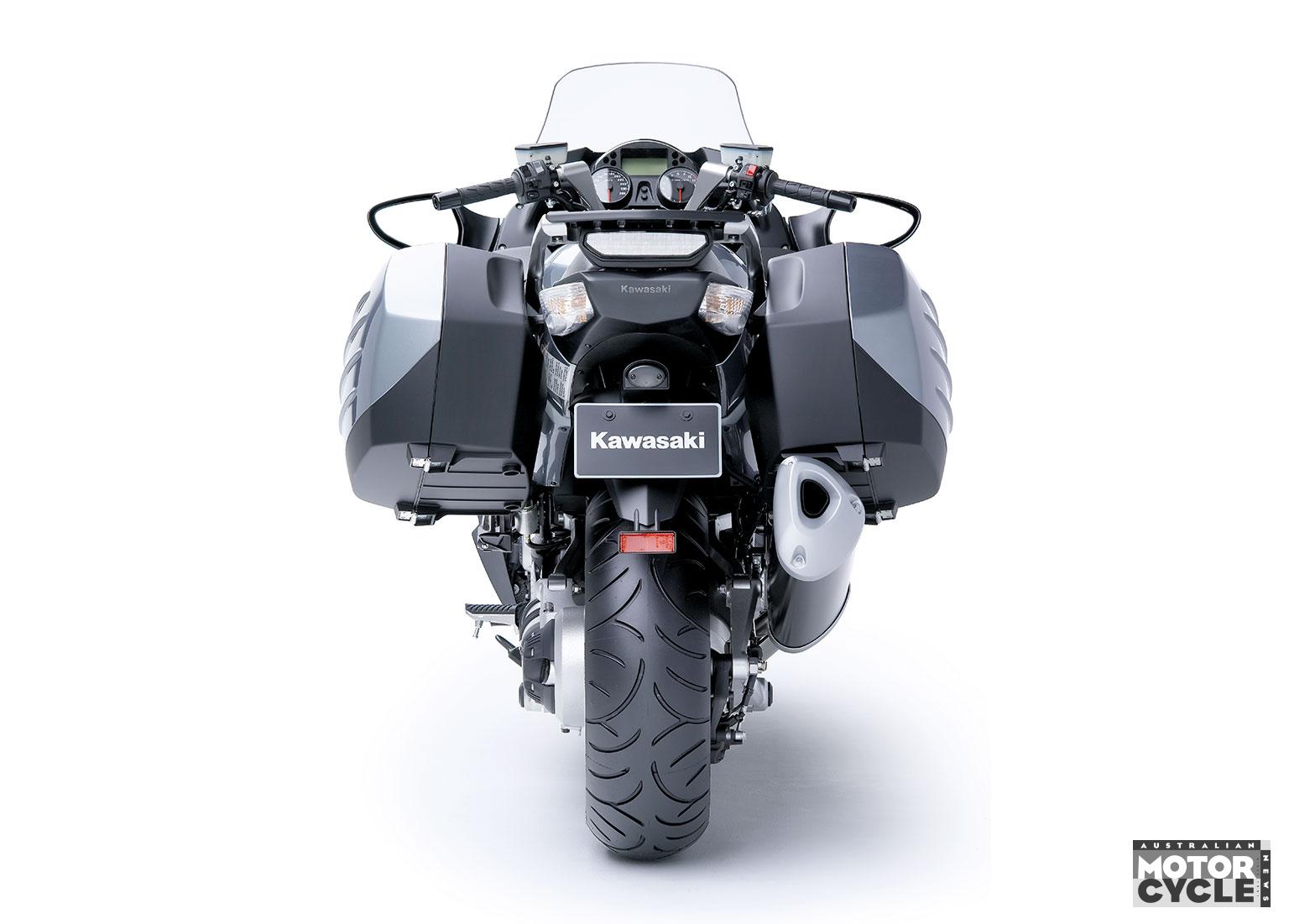
In each case, Kawasaki didn’t reinvent the wheel; it simply refined the recipe. The transitions tell the story of a company that has always balanced tradition with progress, always keeping one wheel firmly planted on Aussie soil.
Upon 50-year reflection
It’s clear that Kawasaki’s Australian story isn’t just about headline horsepower; it’s about meeting the realities of distance, weather and surface.
The KLE told new riders that adventure could be easy. The KLR proved that simple tools go far. The Versys line re-centred the brief around the kinds of roads we actually ride most. And the GTR family showed that speed and stamina can actually be the same thing when it comes to touring.
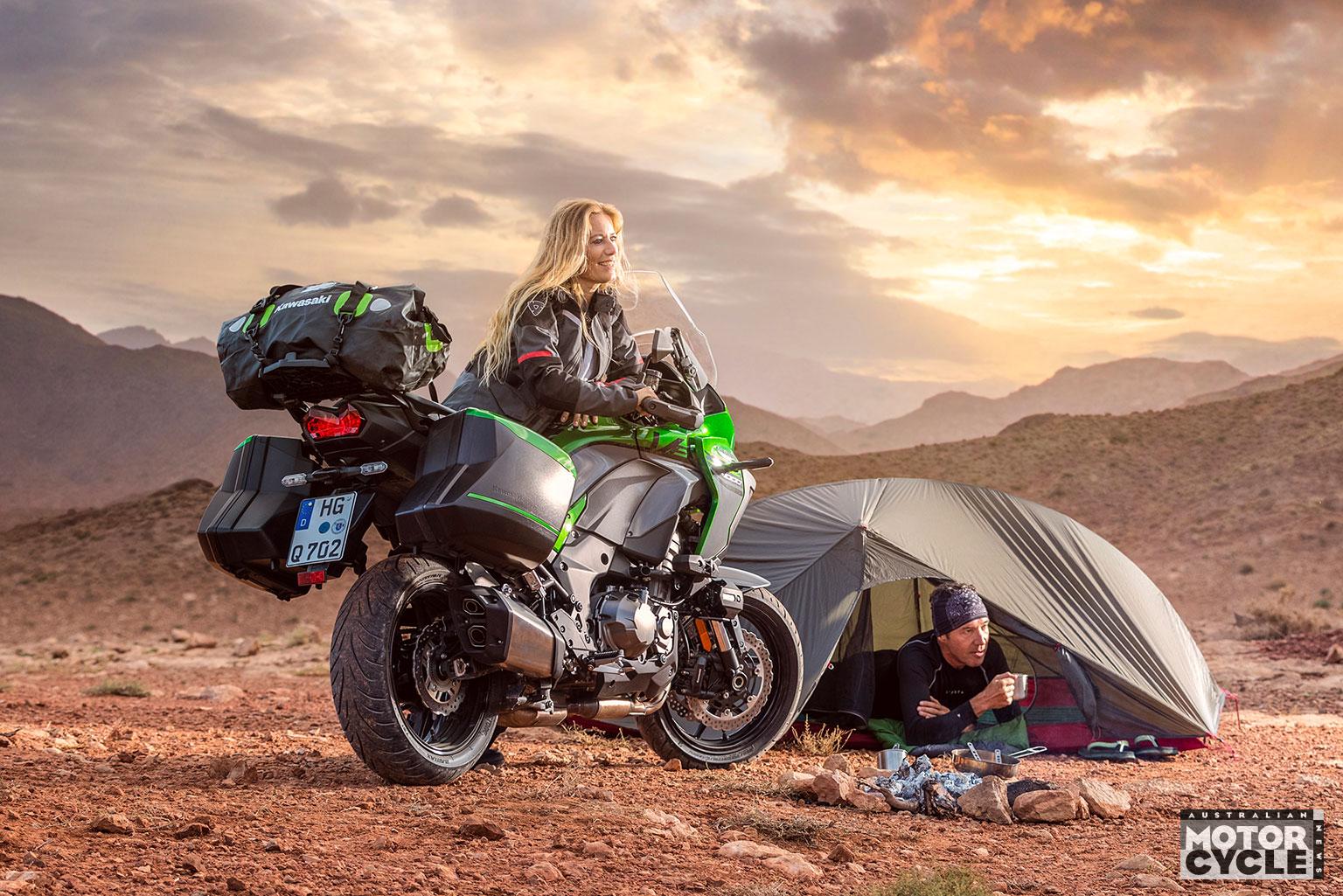
It’s also a story about longevity and community. The KLR’s decades-long run (now modernised with EFI/ABS), the GTR owner base that still swaps tips and files big-day ride reports, the Versys 650’s steady evolution – these are the hallmarks of a brand that backs its platforms for the long haul, the way Australian riders do.
So, which of these is the outright ‘best’ over the past half century?

In true Kawasaki fashion: the one that gets you out there.
If your adventure is red dirt and road-house miles, it’s the KLR650 Gen 3. If your adventure is twisty tarmac and scenic detours, you’ll want the Versys 650. If your adventure is two-up, big luggage, big days, go with the Versys 1000 or 1400GTR. And if your adventure starts with a licence, a budget and a curious map, we reckon it’s the KLE500.
Fifty years on, Kawasaki Australia’s touring and adventure lineage proves that the best bike isn’t just fast or fancy – it’s the one that lets you say “yes” to more rides.
Here’s to the next 50 years!
The best of each range, picked for 50 years of Aussie riding
To make it even more concrete, here’s a ‘greatest hits’ shortlist, matching these Kawasakis to how we actually ride this country.
KLR range – Best outback tool: KLR650 (Gen 3, 2022–Present)
For the sheer practicality of EFI, ABS and contemporary lighting without losing the KLR soul. Not everyone wanted carbs in the middle of winter at altitude, and ABS adds a safety net for wet bitumen transitions between dirt legs. The Adventure variant’s add-ons suit regional touring where daylight and weather can turn quickly.
KLR range – Hall-of-fame: KLR650 (Gen 1, 1987–2007)
Because it made cross-country dreams affordable and achievable. You could drop it, fix it and keep going – exactly what Australia’s backblocks often demand.
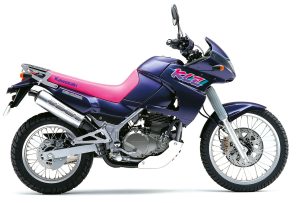
KLE range – Best all-roads entry/adventure commuter: KLE500 (1991–2007)
Because it quietly did the job. For LAMS-era and returning riders it was approachable, thrifty and durable, with just enough trail ability to feed the curiosity that leads to bigger trips later.
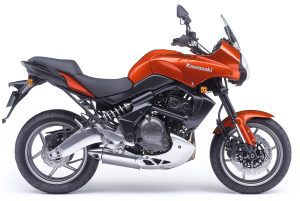
Versys range – Best real-world road adventurer: Versys 650 (2007–on)
If your map is mostly sealed with occasional well-graded gravel, nothing in Kawasaki’s catalogue has more balanced comfort, economy and fun over time. It is the modern ‘Aussie backroad’ specialist.
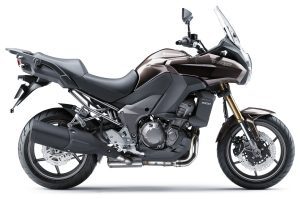
Versys range – Best two-up tarmac explorer: Versys 1000 (2012–on)
A relaxed, high-perch tourer with the smoothness and urge of an inline-four. It eats kilometres without the heft or heat of a full-dress tourer, yet still gives you the upright visibility Aussies love.

GTR range – Best value express: 1400GTR (2008–2022)
A genuine cross-continent machine with ZX-14 thrust and long-legged comfort. KIPASS, traction control, linked ABS and TPMS pushed Japanese sports-tourers into the modern era, and the used market has turned it into one of the smartest buys for serious long-distance riders.

GTR range – Heritage pick: GTR1000 (1986–2006)
Because every good club ride has at least one, and it’ll still be there at the cafe when you stroll back with a pie. It was the practical, affordable way to cross Australia for two decades.