With the help of Jack Miller and Lorenzo Savadori, expert MotoGP analyst Peter Bom breaks down the high-stakes, button-pressing ballet that riders perform while tearing around circuits at terrifying speeds
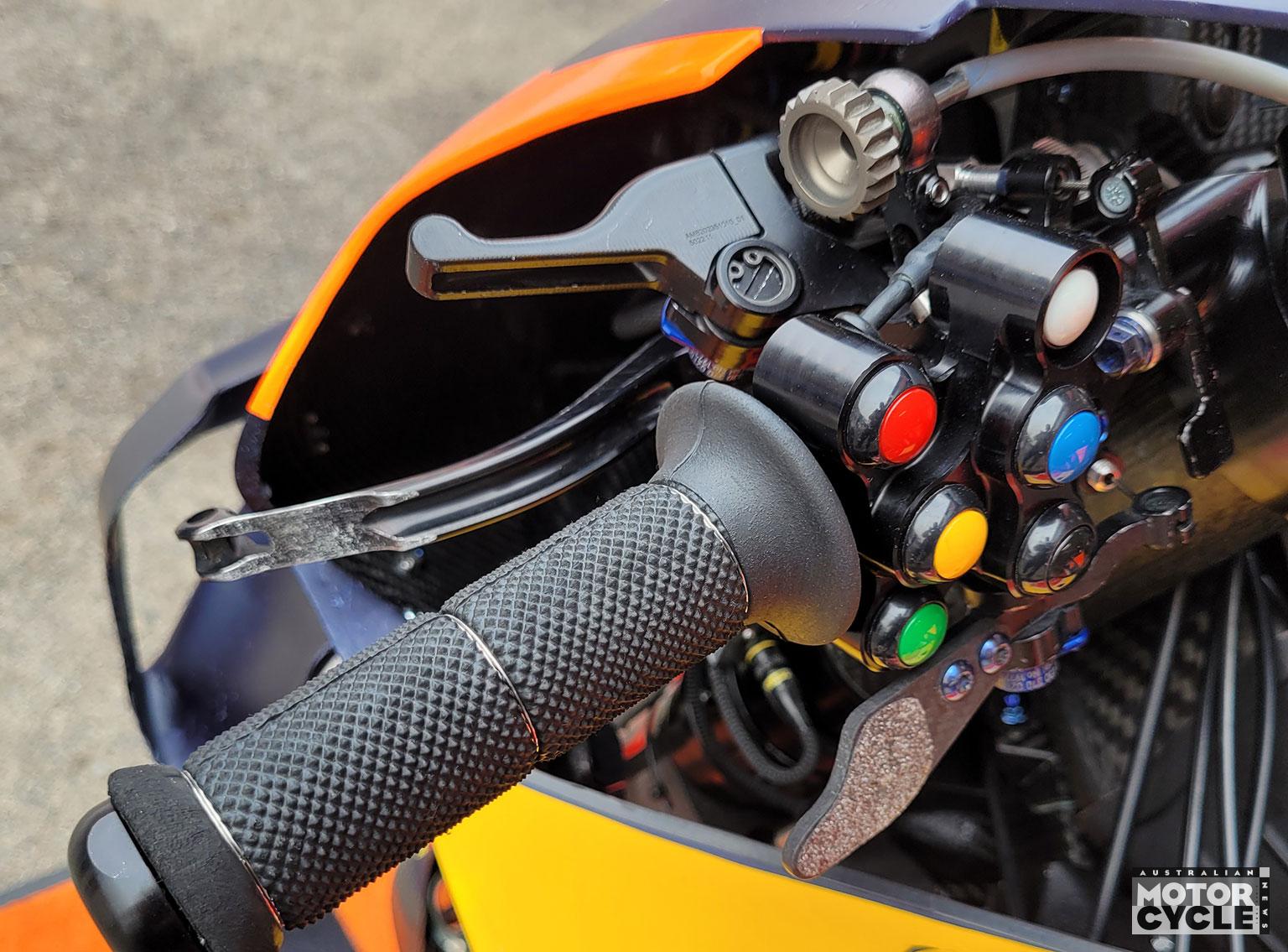
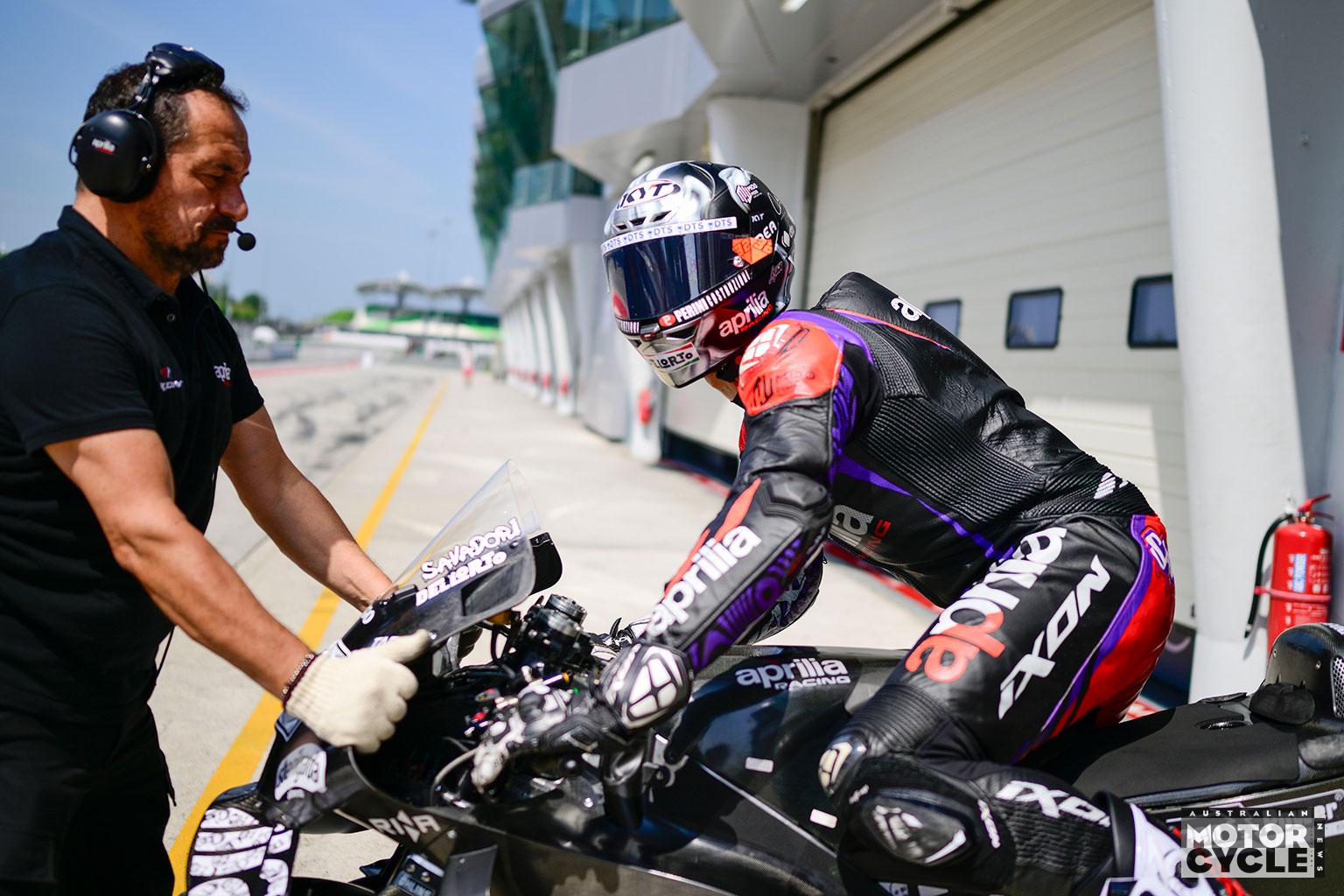
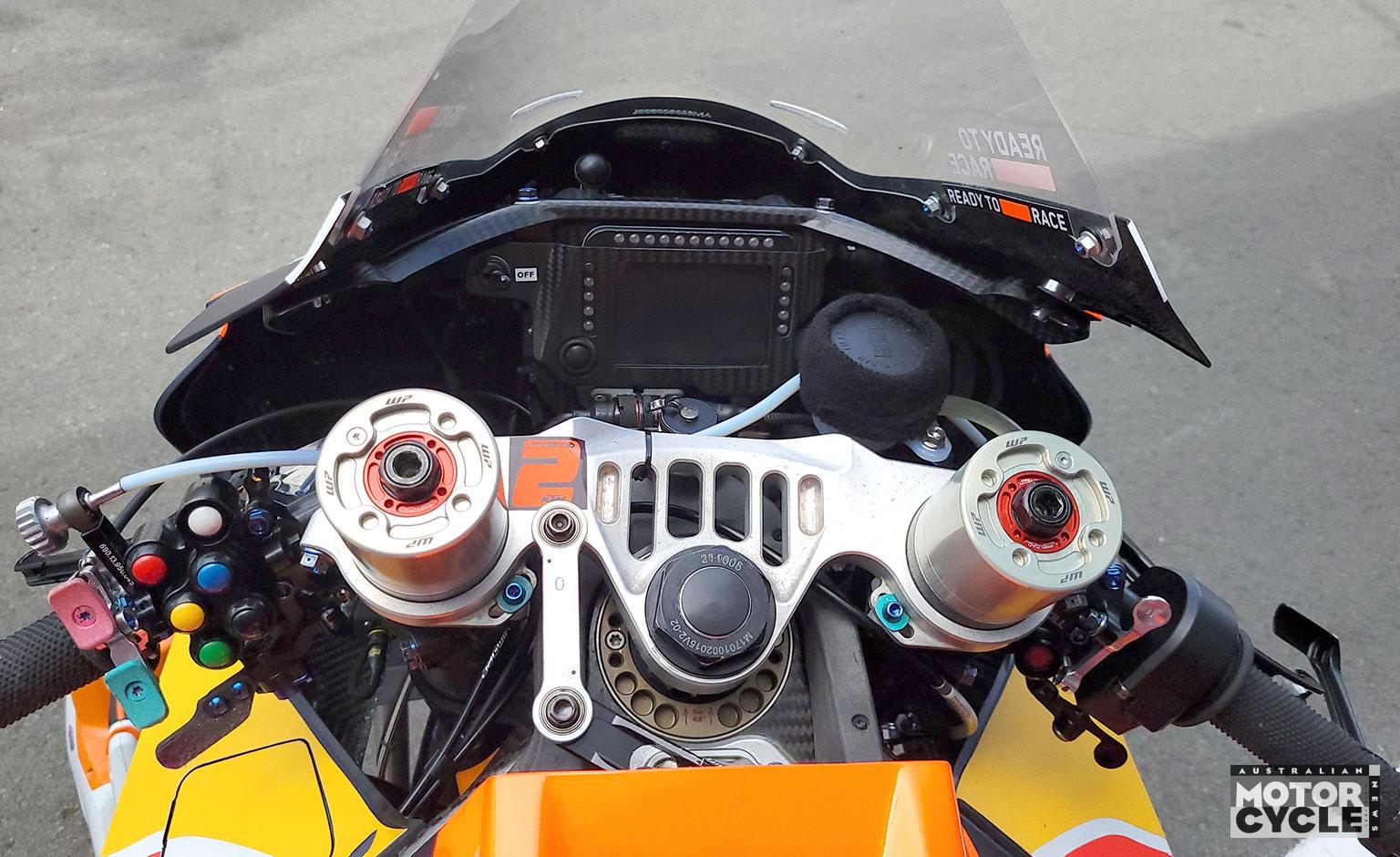
The handlebars of MotoGP bikes are home to a seemingly confusing array of buttons and levers. Together with the display, they form the rider’s workplace. Yamaha’s Jack Miller and Aprilia’s test rider Lorenzo Savadori help us decipher what riders are faced with during a race.
Busy little beavers
In addition to throttle, brake, shift and steer, MotoGP riders are also busy adjusting the electronics, operating the ride height adjustment and following the information on the display. Quite busy, with speeds of up to 360km/h and riding at the limit of tyre grip.
Why the riders themselves have to do so much
The ECU (Electronic Control Unit) on MotoGP bikes is less high-tech than many people probably think. Since 2016, a mandatory ECU with relatively simple software has been in use. This is to prevent technology taking over and races being won by the best software engineers instead of the best riders. That is why there is no ‘self-learning’ of the software and it is also not allowed to automatically control the ride height adjustment via the ECU. In order to be fast, riders therefore have to operate many buttons and levers themselves.
MotoGP is not F1
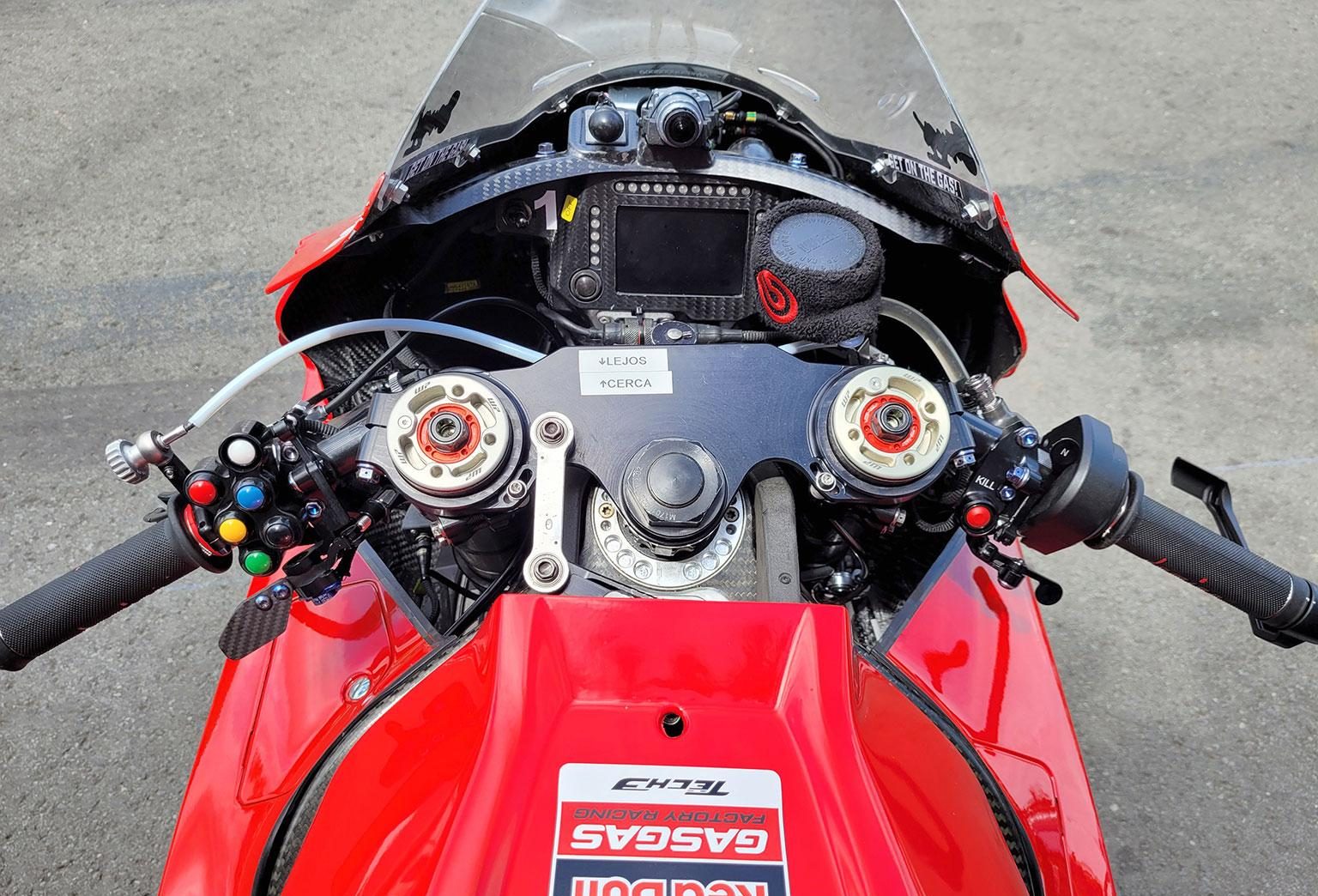
If we look at the number of buttons and levers on both halves of the handlebar, this is quite a lot, but still less than what an F1 driver has on their steering wheel. How is it possible that drivers in F1 can adjust so much more than our MotoGP riders? The answer lies in the seating position. In F1, the driver is strapped into his seat, while MotoGP racers are constantly moving over the motorcycle and have to hold the handlebar with both hands. This limits the choice to buttons and levers that can be operated with a thumb or index finger. Only actions that have to take place before the start, for example, can therefore be done with switches or levers that are not directly placed on the handlebar.
Example 1: traction control
An ECU with fairly simple software and riders who can’t take their hands off the handlebar… what, therefore, can and should be adjusted while riding a MotoGP bike? Let’s take the operation of the TC as an example. This helps to adjust the permitted slip of the rear wheel. A little slip is optimal; too much quickly causes a crash and too little means that we are too slow. The goal is to let the TC help to achieve exactly the right amount of slip, but the correct operation is strongly dependent on the current grip of the rear tyre.
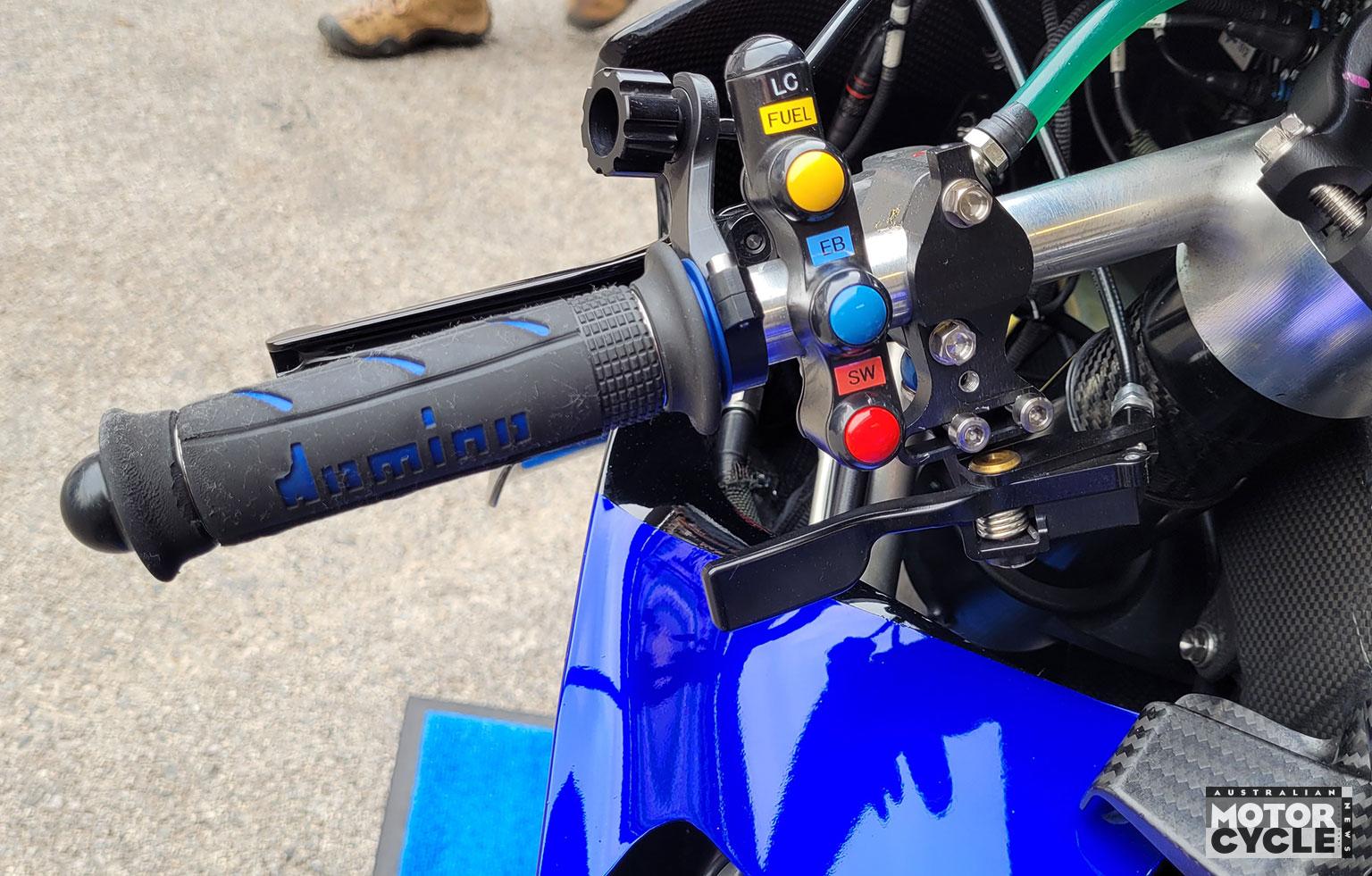
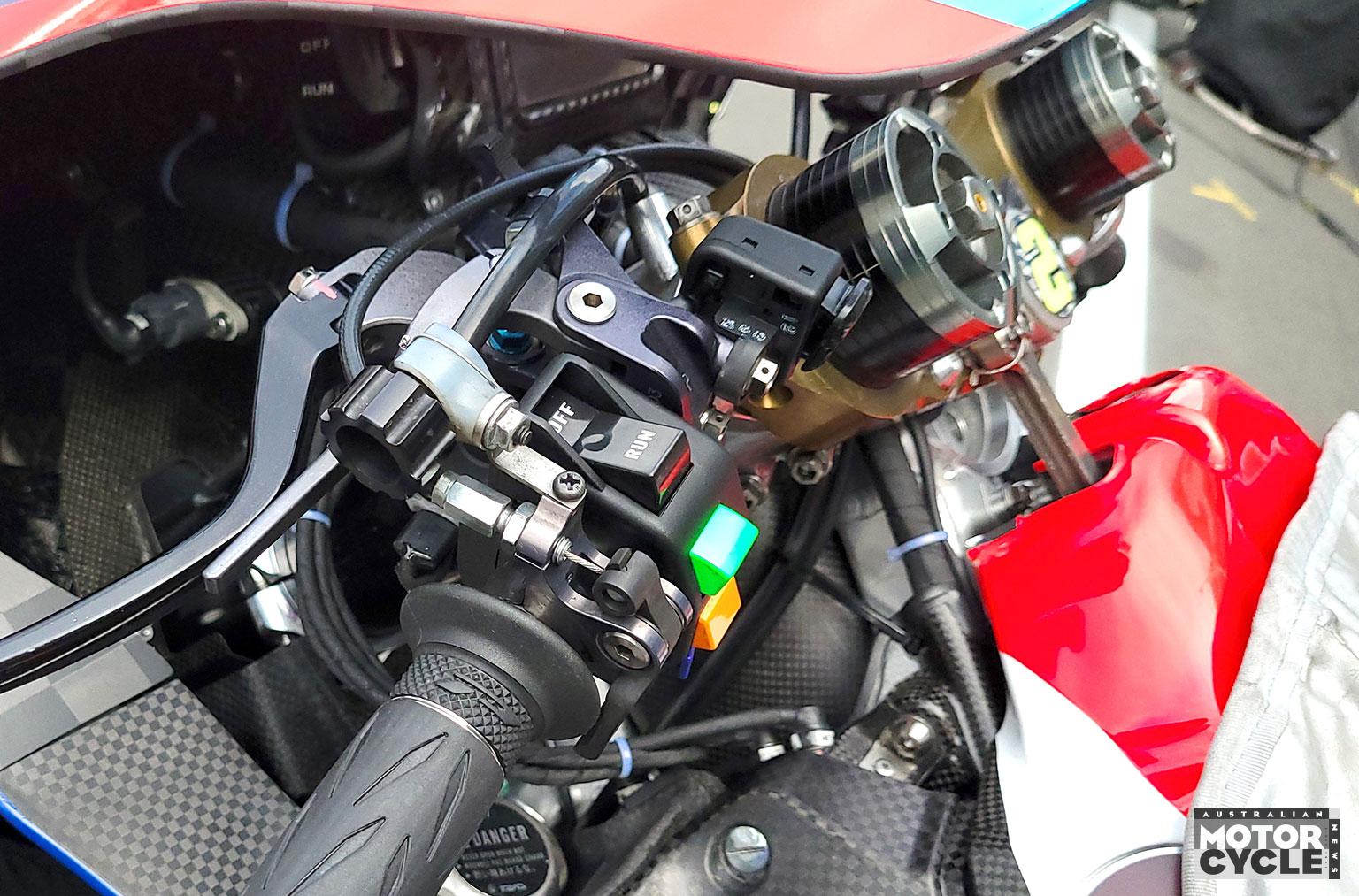
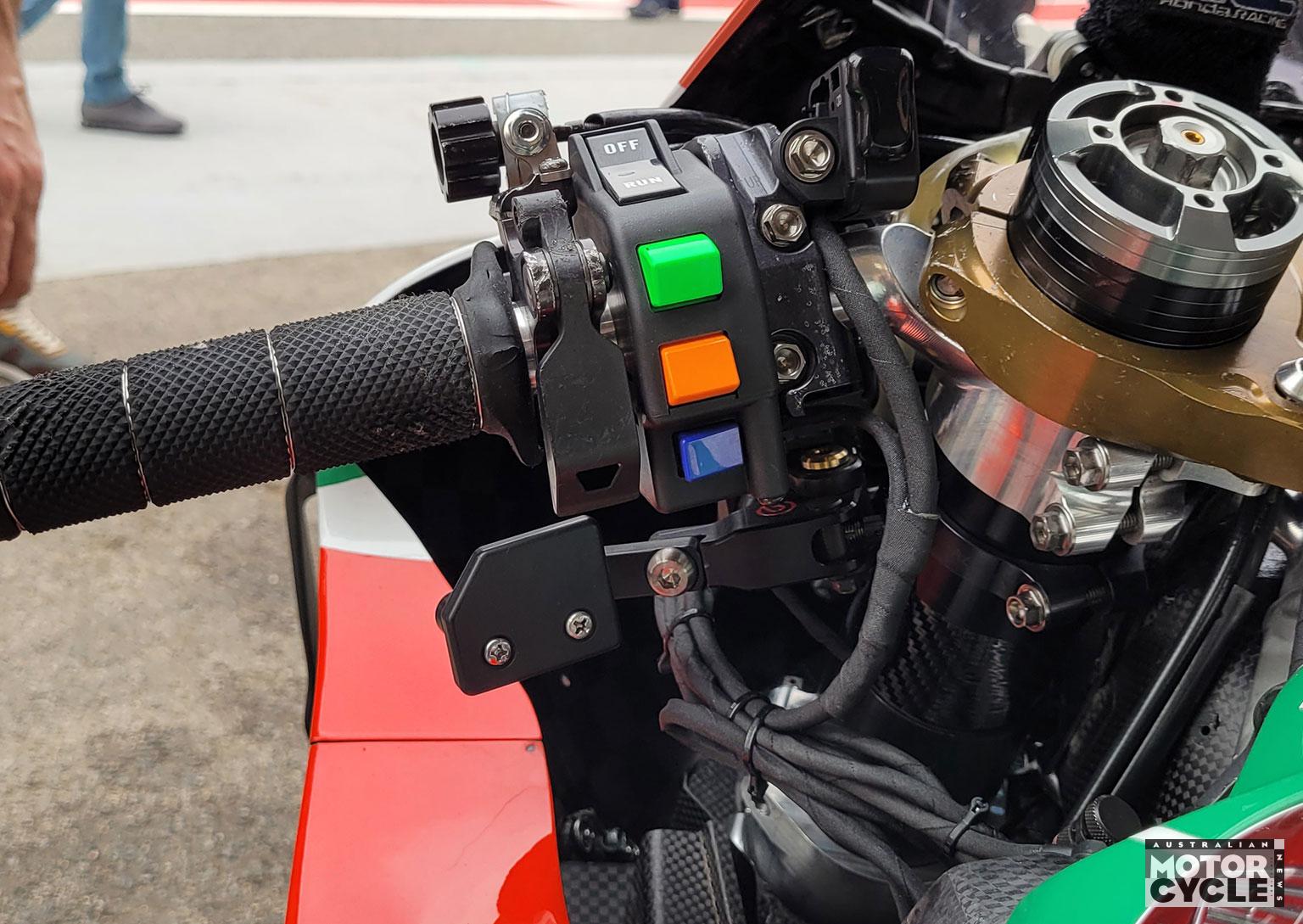
During a race, the tyre will wear out and the grip will decrease, which means that the TC can no longer work as before. Riders feel this and can adjust the operation of this via the TC button on the handlebar, adapting it to the reduced grip. This can usually be done in three steps. The display shows which adjustment the rider has currently made to the TC. These and other ECU adjustments are all done with the thumb of the left hand, after which the rider must check on the display whether the correct adjustment has been made and which ‘trim’ is currently active.
Example 2: ride height adjustment
Another example is the ride height adjustment, where at the beginning of a long, straight stretch, the back of the bike can drop down. This improves acceleration, mainly because the front wheel will now come up less easily. This is operated via a lever on the left handlebar.
The display
The display helps the mechanics in the pit box to check all values and settings of the motorcycle. As soon as the rider enters the circuit, the display switches from the ‘mechanics page’ to the ‘riders page’, which only shows the information that is most important to him. This, of course, concerns the last lap time ridden, plus by how much the current lap time is either faster or slower moment by moment. Also important: the value of the ECU settings for the Traction Control, the Engine Brake and the Power map.
A series of brightly lit LEDs indicate the correct moment to shift up. If a potentially dangerous situation arises with the motorcycle, an alert will show on the display. This could be the case, for example, if a wheel speed sensor fails; the TC will then no longer work, which means that the rider is at great risk of crashing when the throttle is opened. In the event of an alarm, the LEDs will flash and a text will appear with the reason for the alarm (TC out!).
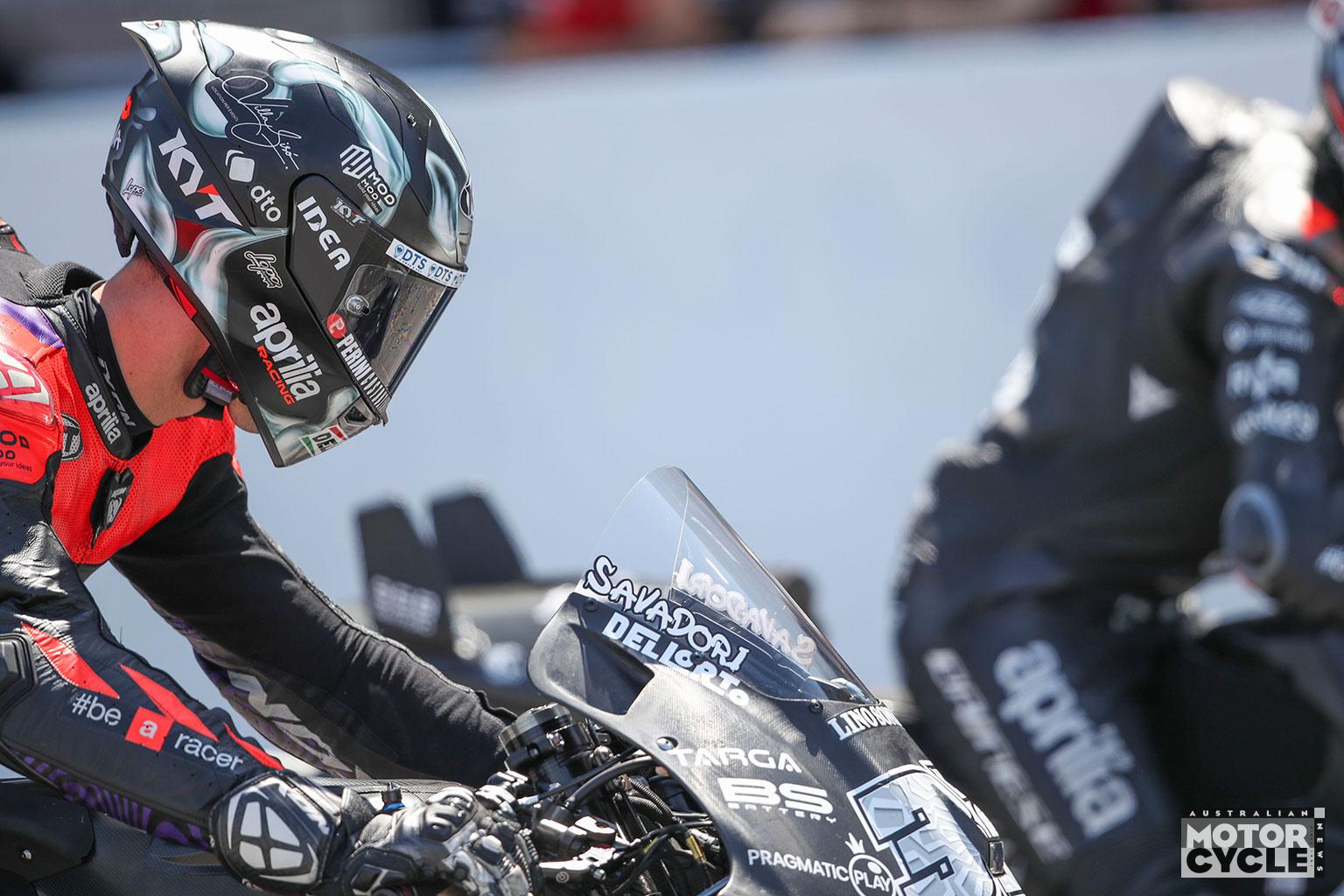
But how much time do MotoGP riders have to look at the display, when they have to look so far ahead at that speed?
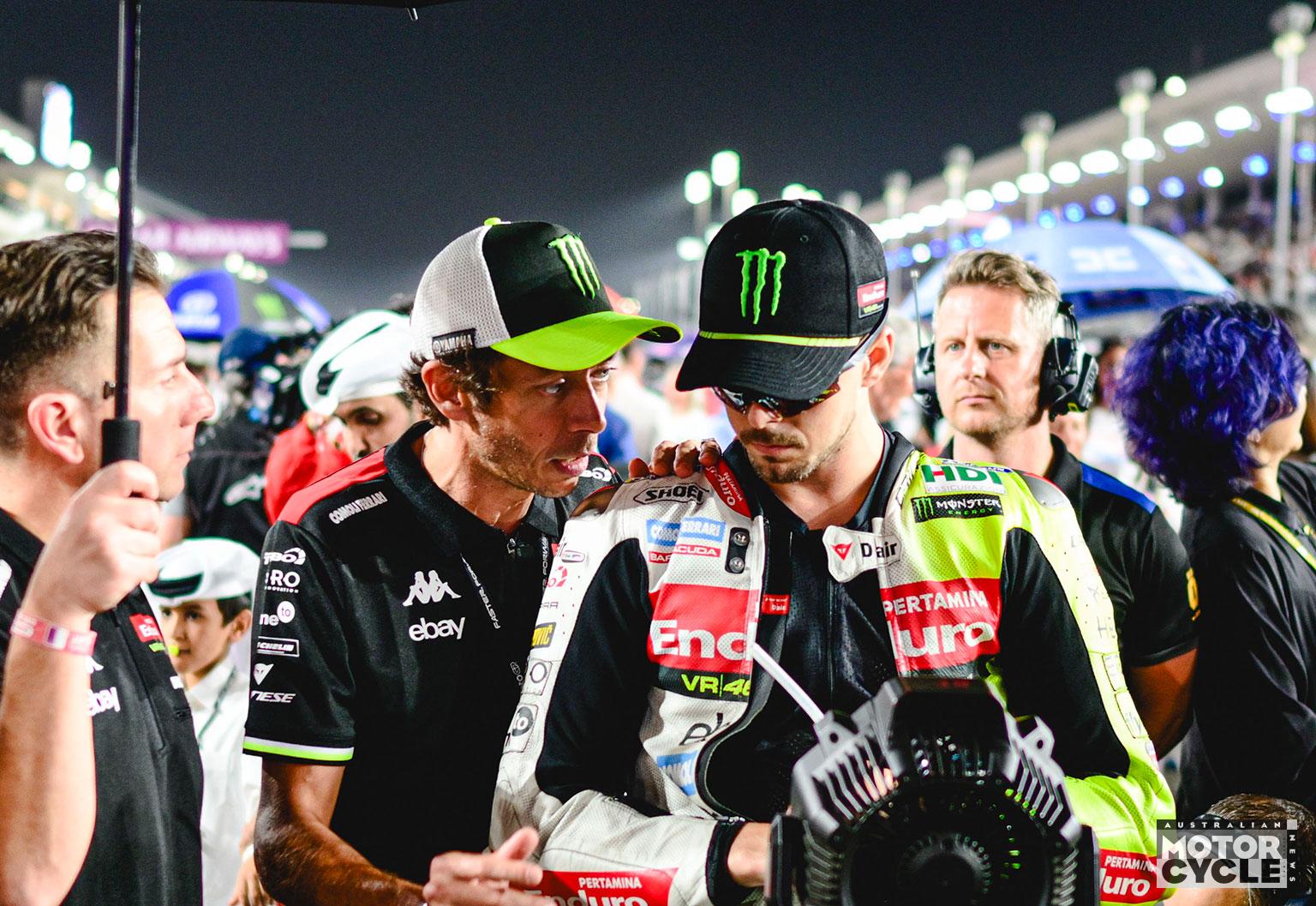
Jack Miller: “Not often, on this track (the interview was done at Assen) maybe on the backstraight, but only after hitting 5th gear, plus out of T8, once the wheelie stops and of course a short look on start-finish. But you need a hyperfocus to check your display and not miss your braking marker afterwards. I learned that after adjusting a button and checking the display, I have to start my braking a step earlier than my instinct tells me, just because I kept out-braking myself afterwards.
Lorenzo Savadori: “This whole first sector here in Assen, there is no way to check the display. My first look is on the back straight, where I want to see how much faster or slower I am compared to my fastest lap. And as long as my front tyre pressure is good, there’s a green LED on, or a red one if it gets too high”.
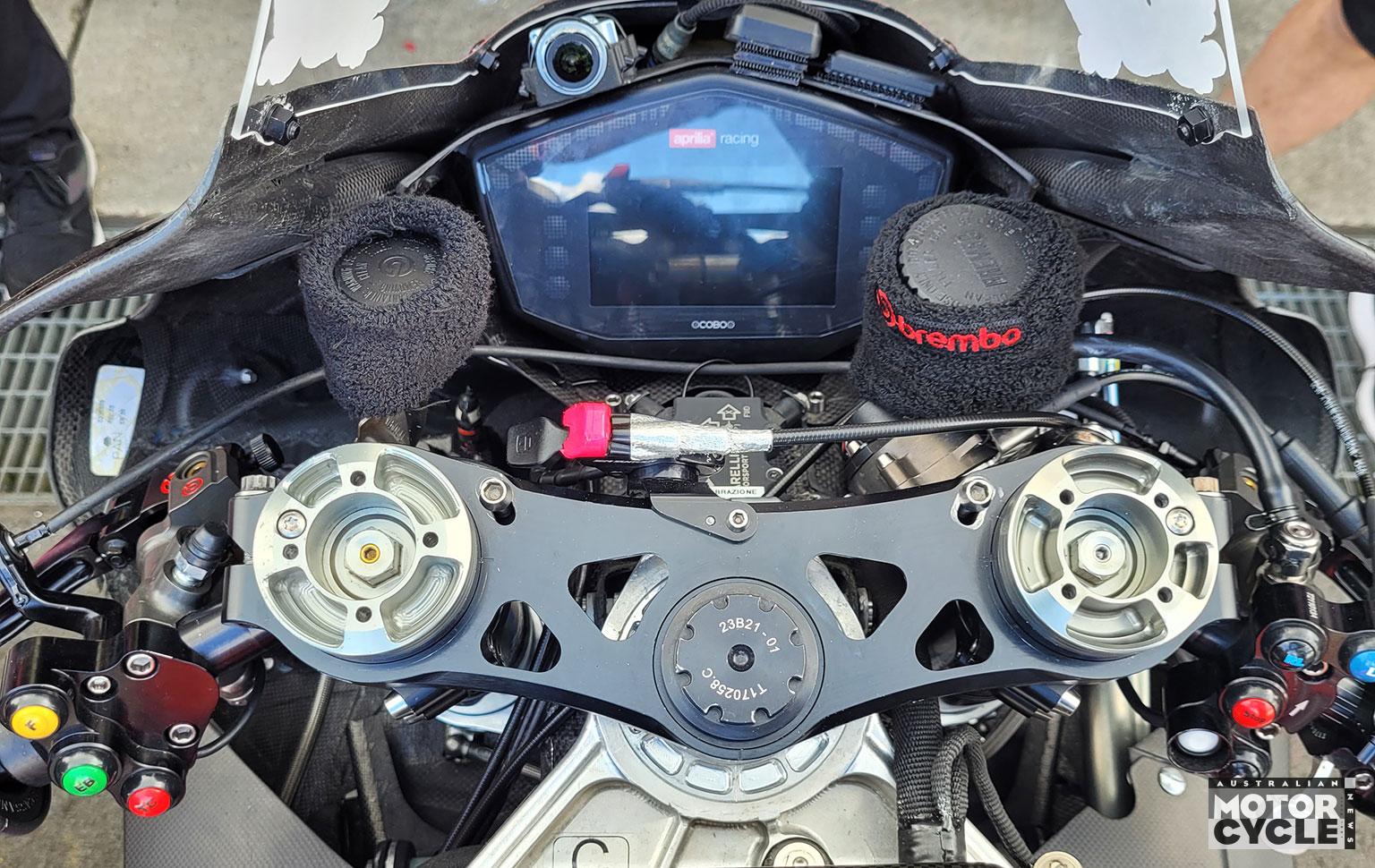
Lap times are very important but sometimes a rider just does not want to see them, like Miller, who at the time of the interview was not having the results he expected. “Honestly, I haven’t been running any lap time on the dashboard at all lately. Because, you know, we have the coloured LEDs for the sectors – if it’s a good sector, it goes green; if it’s nothing you get nothing, and I found I was looking a little bit too much at that. So it was a personal decision just to try ride without it and get back to natural.”
Dashboard messages
As if all of this wasn’t enough, the team can also send messages from the pit box to the display of its rider. In this way, they can receive a warning on their display from their team during practice. This could be because they have to come in for a new rear tyre (sometimes riders forget how little time is left in the session), or because an important opponent is riding behind them at that moment to study their lines.
In addition to messages from the pit box, the race direction can also display a message on the rider’s display. This usually concerns things like a red flag (race aborted), or yellow flag (approaching dangerous situation). Sometimes it is different and bad news. For example, someone who rode behind the curb stones and over the green three times in a race will see a ‘track limits’ warning appear on their dashboard (two more times and it becomes a Long Lap penalty). Someone who ended up completely off the track and then did not lose the required one second in that sector will also receive bad news in the form of a Long Lap message on their display.
The current Michelin front tyres are extremely sensitive to pressure and temperature. Too long in the slipstream? Then the pressure will increase too much – a good reason for riders to want to keep a constant eye on these values. Some want to see the literal pressure while others are satisfied with the colour of the LED (blue is okay, orange is moderate and red is wrong).
The minimum front tyre pressure must be reached for at least 40 per cent of the total race distance (30 per cent for the Sprint). A clever online calculation informs the rider when it’s time to start slipstreaming other riders in order to up the tyre pressure. This is exactly what we saw happening at the Brno MotoGP Sprint, where Marc Marquez was forced to drop a place and followed Pedro Acosta for some laps until his display told him he was good to go again. Poor Pecco Bagnaia’s display, however, was not calculating correctly and kept telling him to slipstream; after the race, he discovered that he shouldn’t have had to.
Also handy: During the race, the display calculates whether the amount of fuel in the tank is enough to reach the end of the race. In MotoGP, the maximum tank capacity is 22 litres, and on some circuits (such as Spielberg and Motegi) this is not always enough to use all possible horsepower of the engine during the entire race. If it becomes clear during the race that the fuel consumption is too high, a message will appear on the display so that the rider knows t to switch to a lower position of the Power mode.
Savadori about this: “During the short Sprint, we sometimes don’t need to change anything. But in the race, yes. I talk with my crew before and tell them when; after how many laps I want to receive a message that reminds me to check and eventually switch maps.”
The first steps
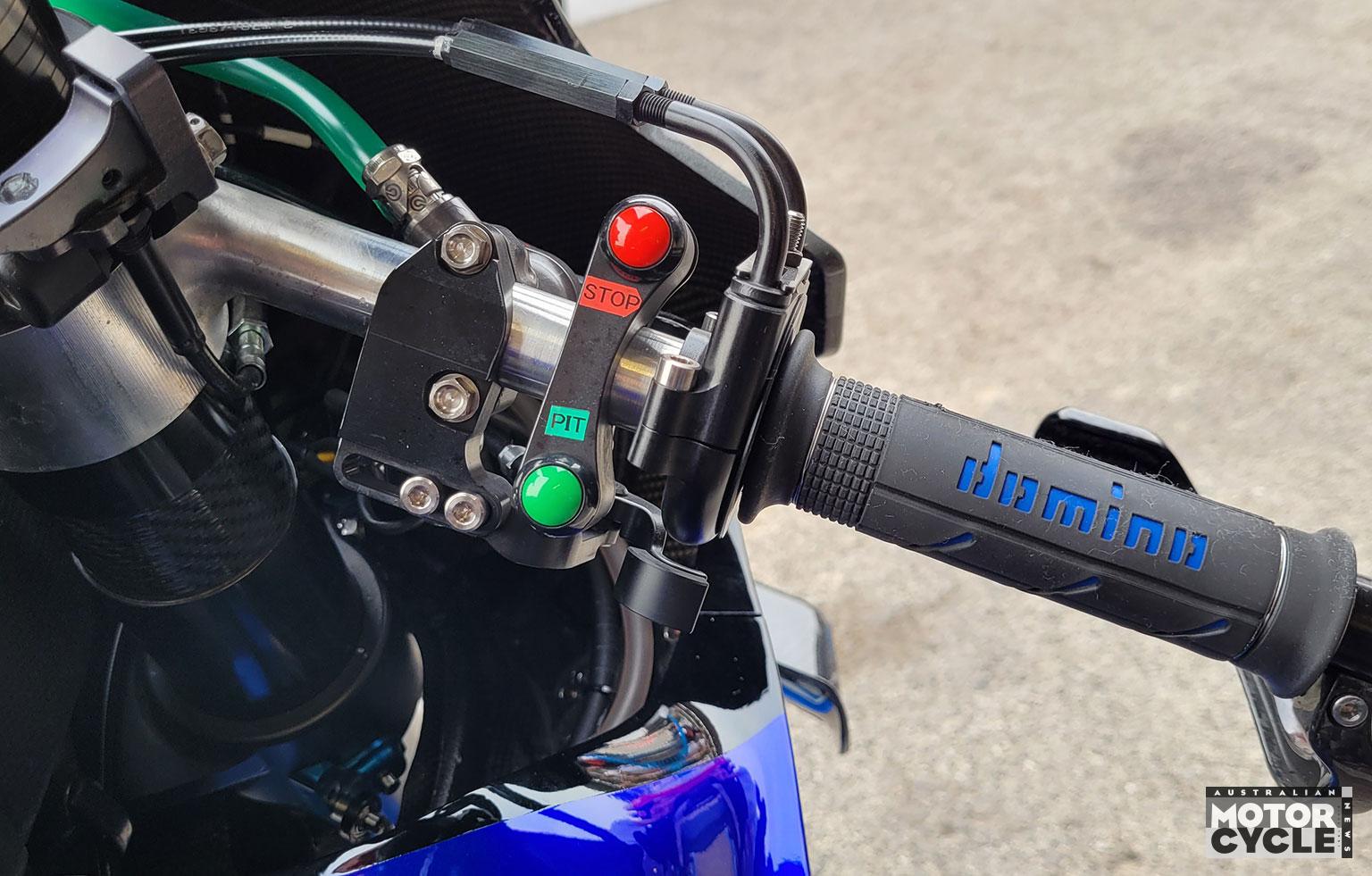
In 2002, when the four-stroke engines took over from the 500cc two-strokes, bringing the current MotoGP into being, the workplace of a rider was still very simple and clear. Besides the throttle, the clutch and the front brake, there were only two switches on the handlebar halves: a ‘kill switch’ to turn the engine on or off, and a pitlane speed limiter button. This is a feature that limits the maximum speed in the pitlane to 60km/h. The kill switch and pitlane buttons are still in use.
The display at that time often consisted of nothing more than a large, round rev counter, with a sticker placed around it at the maximum permitted revs. There was also a meter for the engine temperature, a lap timer and a single flashing light as a gearshift indicator.
Later, when the starts became increasingly important, a button appeared for the Launch Control, which in the early days only consisted of a simple limitation of the maximum revs during the start. Such a method of starting assistance is now seriously outdated but was seen as really high tech when it was introduced. A drop button for activating the Launch is still present, but it has been much further developed over the years.
Thumb brake and Engine brake
The grip of the rear tyre helps with acceleration and partly determines just how fast ‘leaning’ riders can go through a corner. But did you know that the rear tyre is also very important these days for braking into a corner as late as possible?
This is how it works: When the rider has closed the throttle and grabs the front brake, a braking effect of the engine also occurs via the rear wheel. This is adjusted via the Engine Brake (EB) setting of the ECU and used to be able to brake optimally. Just like with Traction Control, a little slip (the rear wheel then turns slower than the front wheel) is also good here, because it increases the grip.
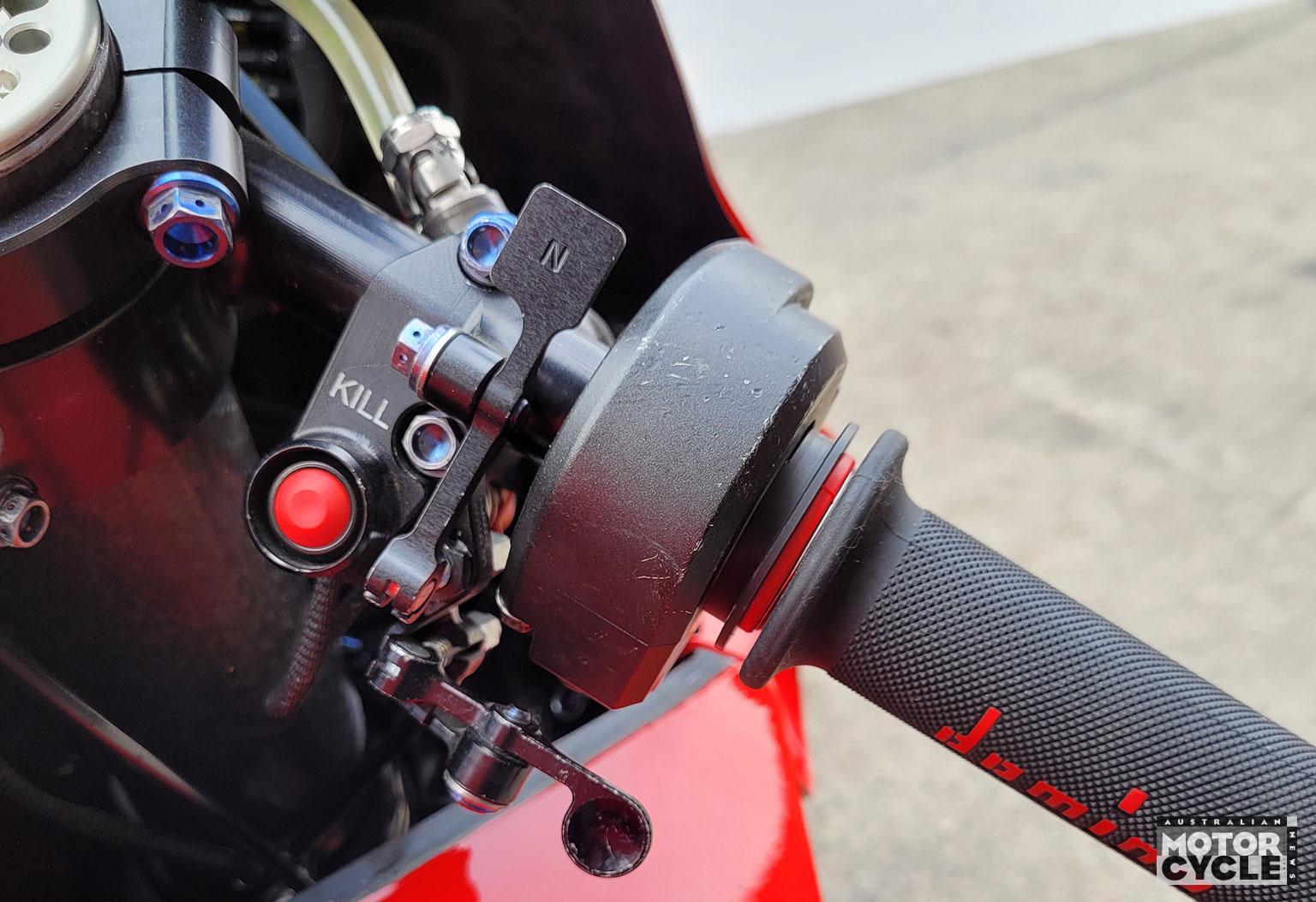
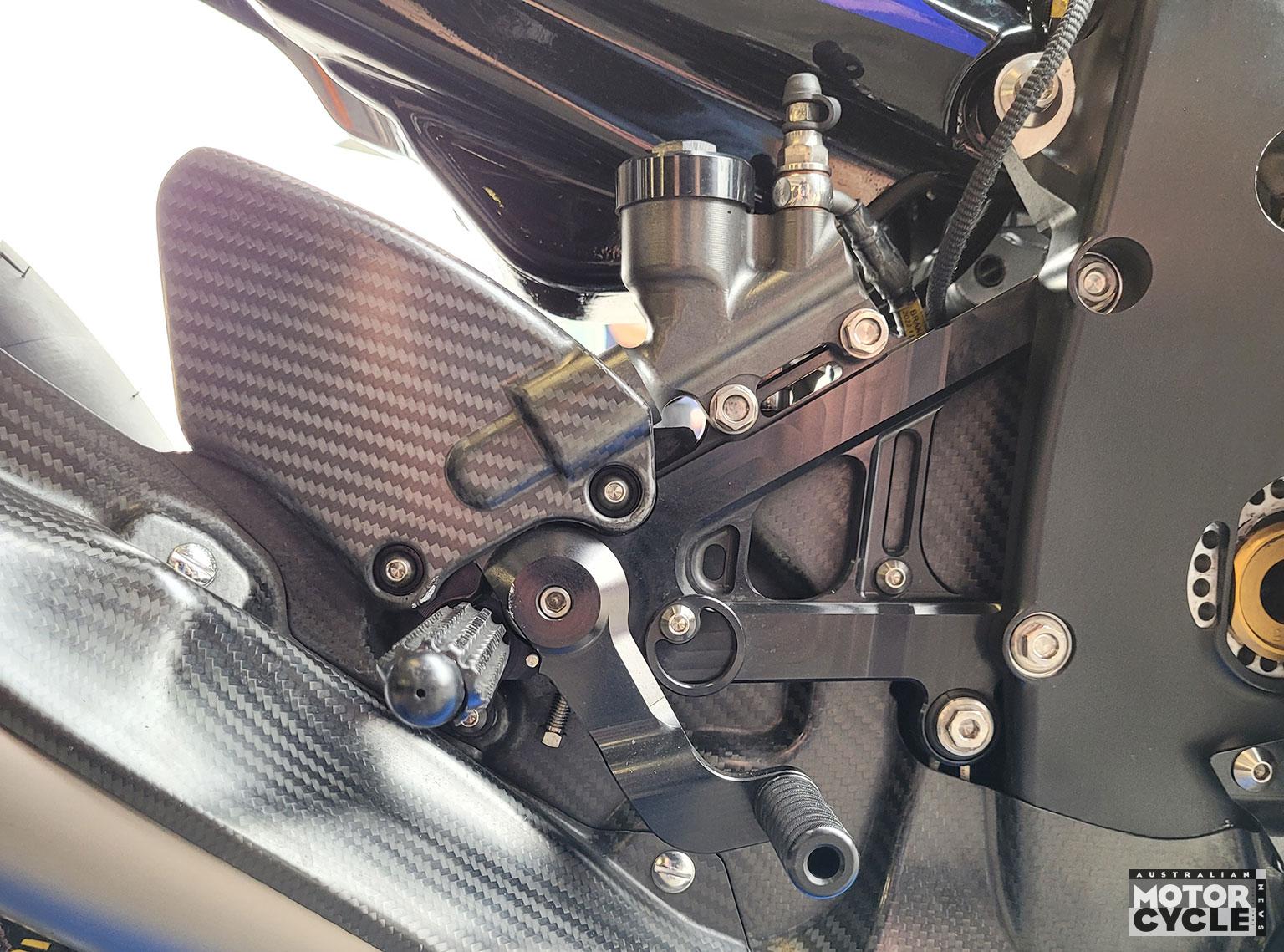
The available engine brake is strongly dependent on the engine speed, and that is where a problem lies. At high speeds there is too much available and that is where the EB strategy should intervene, adjusting everything precisely. At lower speeds there is too little of this engine brake available, which is why it is a good moment for riders to activate the rear brake themselves. Operating this can sometimes be difficult in right-hand bends, which explains the presence of the thumb brake at the bottom of the left handlebar half on many motorcycles.
Miller: “I’m using only my foot for the rear brake. In the beginning of the year, during testing, I tried the rear brake on the handlebar but I didn’t like it at all. But in places like Qatar, for example, with the triple right-hander, when you are hanging out as far as you are now you can’t reach it as cleanly.”
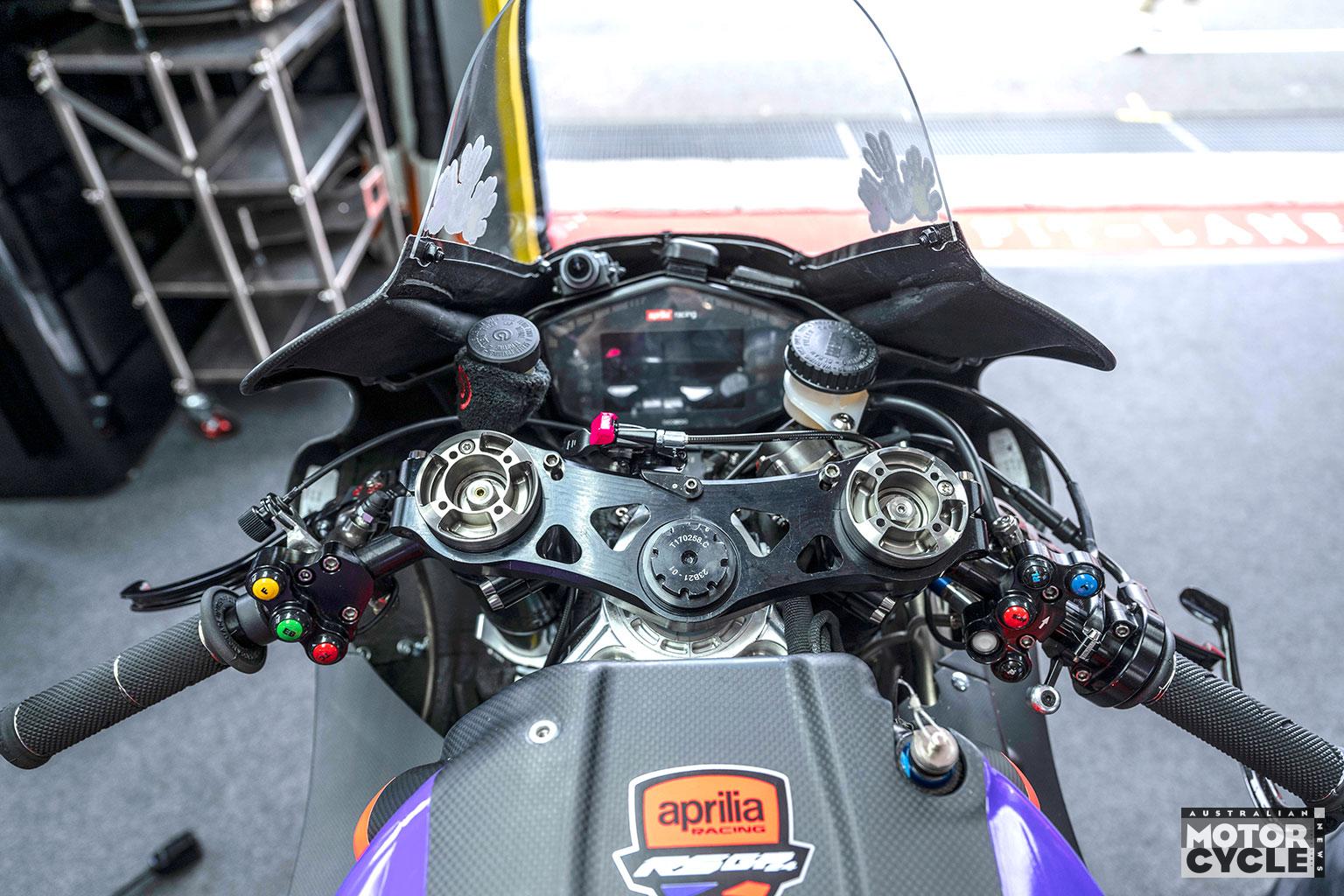
The buttons decoded
Traction Control
When TC starts to intervene, it gives the rider feedback on how much the rear tyre is slipping, plus it acts as a safety net if the slipping increases rapidly. In the software, these are complex 3D maps that are continuously adjusted by the engineers to suit the conditions, tyres and track. In addition to the software setting, the rider can also adjust (trim) this via the TC button on the handlebar. Because the grip will gradually decrease while riding, each press means a step more TC.
Miller explains: “We have the three buttons there. One is engine brake, of course, which is generally green. Red is generally power. And yellow is simply fuelling. Before, TC and Power were two different buttons and then we were able to integrate the system basically like I think the rest of the grid.”
Adjustments Before the Start
By temporarily lowering a bike’s front and rear before the start, the acceleration from standstill has increased enormously. After the rider has moved a lever, the front suspension can be set deep on the way to the grid position. Then the rear is set to the lowest position and the rider presses the L (Launch) button. The display shows a confirmation that everything is ready for the start.
Engine Brake
The adjustment of the Engine Brake works in the same way as the TC, but the other way around, to adjust the negative slip during braking. Here, too, the rider can choose to have less EB via the EB button when the rear tyre wears.
(Un) Locking Neutral
The order of the gears is different on a MotoGP motorcycle than usual. Right at the top is the neutral position, with first to sixth gear below that. In addition, neutral can only be engaged if a lever on the handlebar has been pulled first. That is handy; all gears go in the same direction, so a rider will never accidentally end up in neutral when downshifting. Perfect and simple, a nice example of a development that now makes people wonder why we didn’t have it earlier!
Front Brake Adjuster
With this knob, the rider adjusts the pressure point of the front brake, i.e. how far from the handlebar the brake lever is. In order to ride at the limit, the point at which the front brake engages must be exactly where the rider expects it to be. But as brake pads and discs wear into each other, this point changes while riding, which is why this adjuster is on board, which riders can turn with their left thumb and index finger.
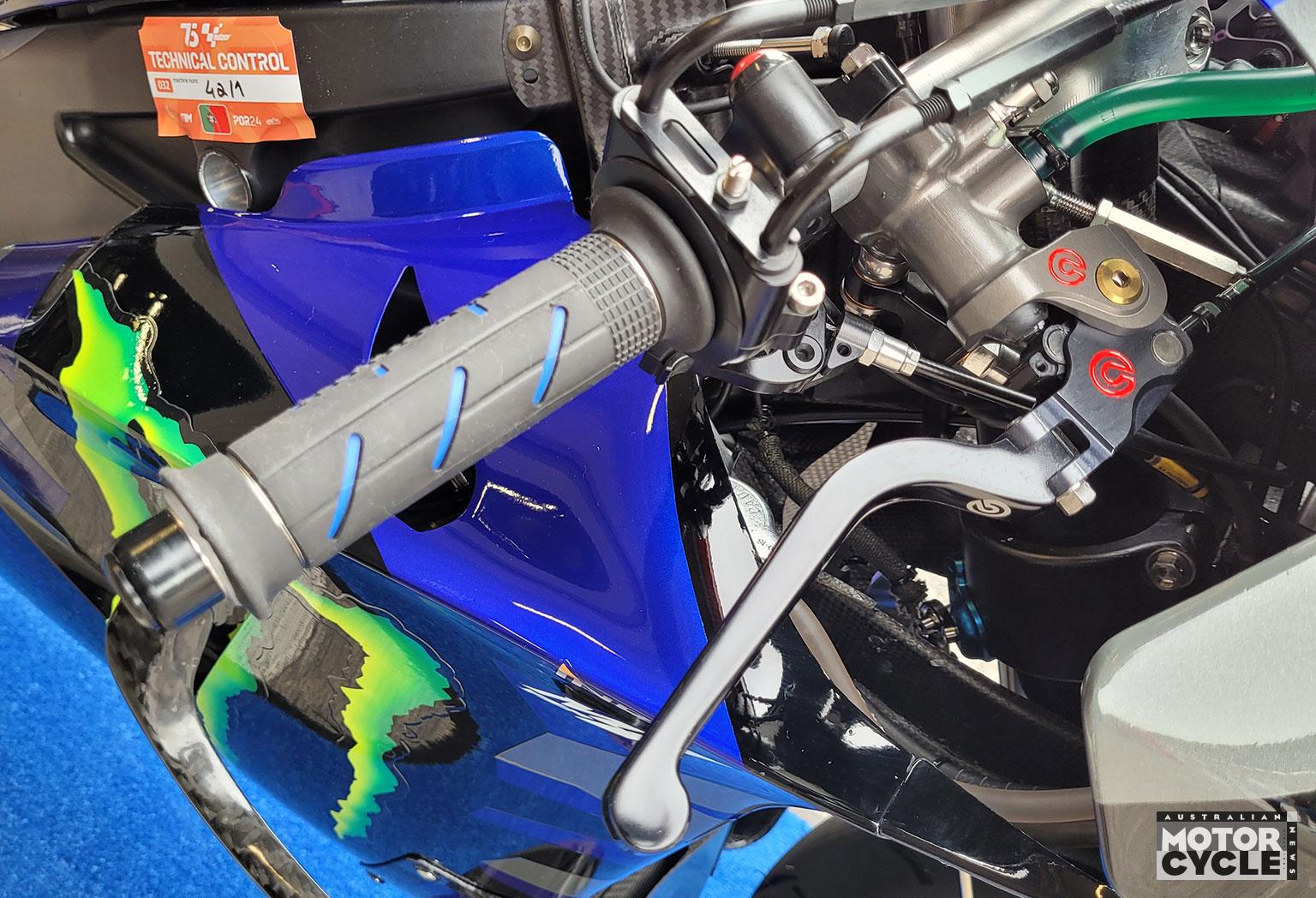
Striking detail: many riders forget the direction of rotation of the adjuster in the heat of the battle! That explains why we still see a small sticker on the top triple clamp on some motorcycles, with an arrow showing the usual direction of rotation.
Savadori told us that on some circuits he even shifts the pressure point per lap: “In Mugello, on the straight to the first corner, I adjust it, set it a bit wider, so I have more braking force with my fingers. Afterwards, I set it back, closer to the handlebar to have a fine feeling when braking with just a finger.”
Rear Ride Height Adjuster
There are currently two different ways to lower the rear of the motorcycle at the right time, namely by hand or (semi) automatically.
This is how it works: The regulations prohibit an electronically controlled operation, and also the ride height adjustment does not have to be used after every corner. On most circuits this is only twice per lap, because only from corners that are followed by a long straight does this make sense.
Only Ducati (of course, they are the inventors) and later also KTM have a semi-automatic control at the time of writing. In this case, the rider presses a lever before a corner and ‘books’ the action so when leaving, the rear automatically lowers at the right moment.
With the other brands, the rider chooses the right moment to operate the lever each time.
Savadori explains: “We don’t have the automatic system, only manual. Here in Assen I use it at two points of the track. But it depends, because you can set up the device to go down slower.”
Miller, who at Pramac Ducati was the first to use it says: “I was the first one with it, so I brought this bad shit to the racing but I tell you the stuff that is working now is a lot different to the old way it was. Back then, if you didn’t get it high enough during braking it didn’t lock back in and it would immediately drop back down. It was a pain in the ass on the first laps but now it’s all changed.
“Mine was little different from the other KTMs (he left Ducati to join the Austrian factory in 2023). I had a Ducati style, where I turned the action on, sort of booking it on beforehand, then I turned it off when I didn’t want it.”
Power Modes and Maps
The Power button gives riders the chance to adjust the available engine performance downwards. The engineers have already ‘distributed’ the power via the ECU setting, less in the first gears because then the engine wants to wheelie sooner. Less during the first opening of the throttle, because at that moment the engine is still at an angle while leaning in the corner and then also slips more easily.
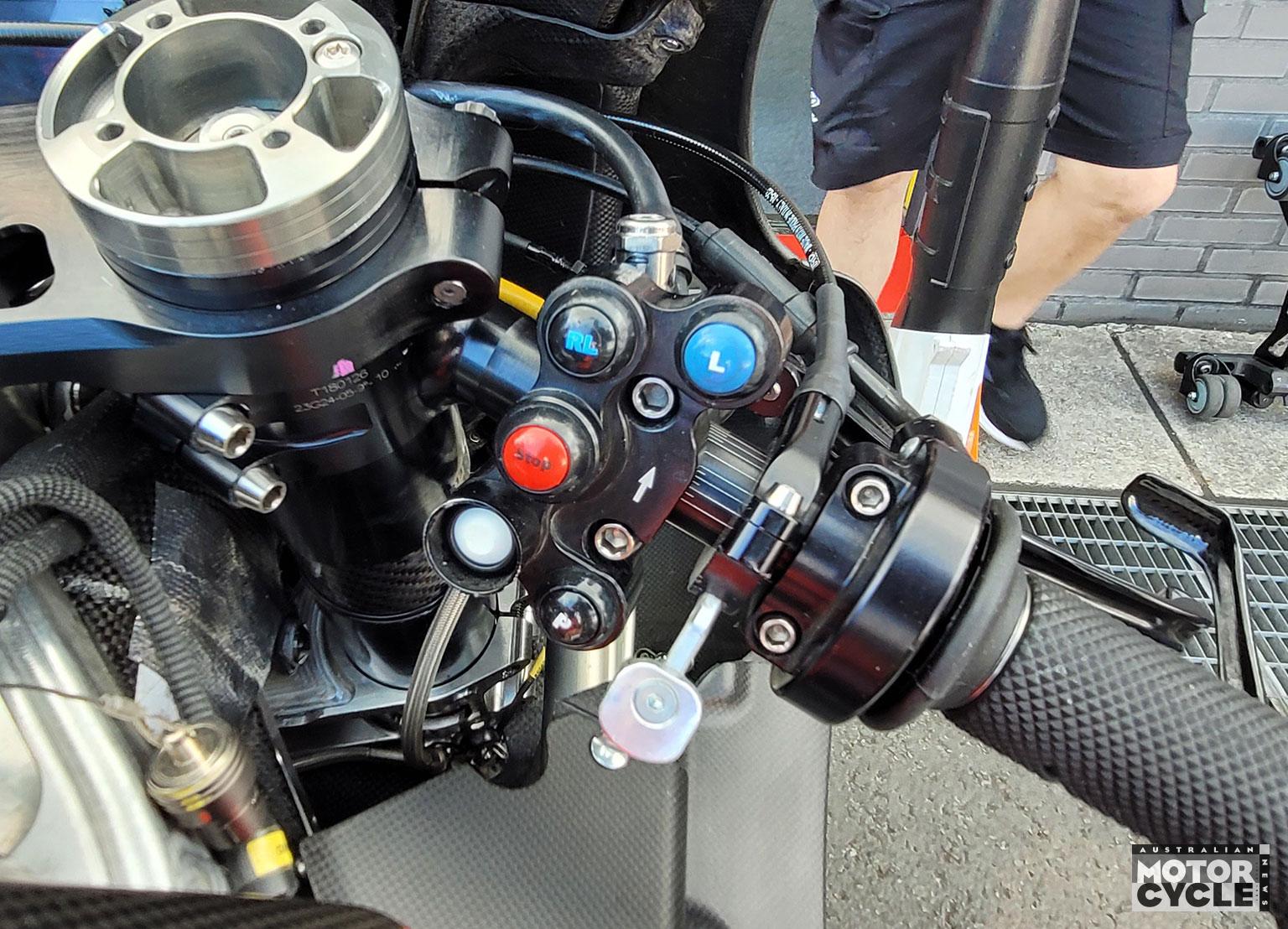
But it may also be necessary to switch to a lower power map because the current power mode uses too much fuel and the end of the race may not be reached.
Miller explains: “Sometimes I will change power maps because the display tells me to do so and afterwards it suggests to go back to full power again. But if I then find myself riding alone, pushing the wind myself and not following others, it might be that I have to switch back again.”
What We Will No Longer Find From 2026 Onwards
Nothing is forever and that also applies to the ride height adjustments. These are banned for use both at the start and while racing from 2026, and here’s why we can be happy about that:
With the current super-low position of the motorcycle at the start, everyone can start well quite easily – and that is dangerous. Because if everyone starts well, a larger group will arrive at the first corner at the same time, and that group will now also ride faster. A dangerous cocktail but one that fortunately will disappear from the shelf.
The ride height adjustment while riding was a very smart discovery by Ducati. In the meantime, other manufacturers have this too, with the result that now everyone always comes out of the corner able to overtake very well. And that is a shame because without this ride height reduction, the better riders, who are better able to control wheel slip and cleverly adjust their lines, could make the difference in acceleration themselves and thus have a better chance of overtaking.
Savadori doesn’t mind the holeshot devices plus the rear ride height devices getting banned: “No, honestly I’m happy because without this, the exit of the corner is more in the hands of the rider”.