BMW’s six-cylinder GTL turns long hauls into short stories, with comfort, class and just enough cornering confidence to surprise you
If you’re in the market for a luxury tourer, you probably know who you are; if you’re thinking big, heavy, fully equipped touring bikes are piles of junk, I’m guessing you’ve never ridden one any distance.
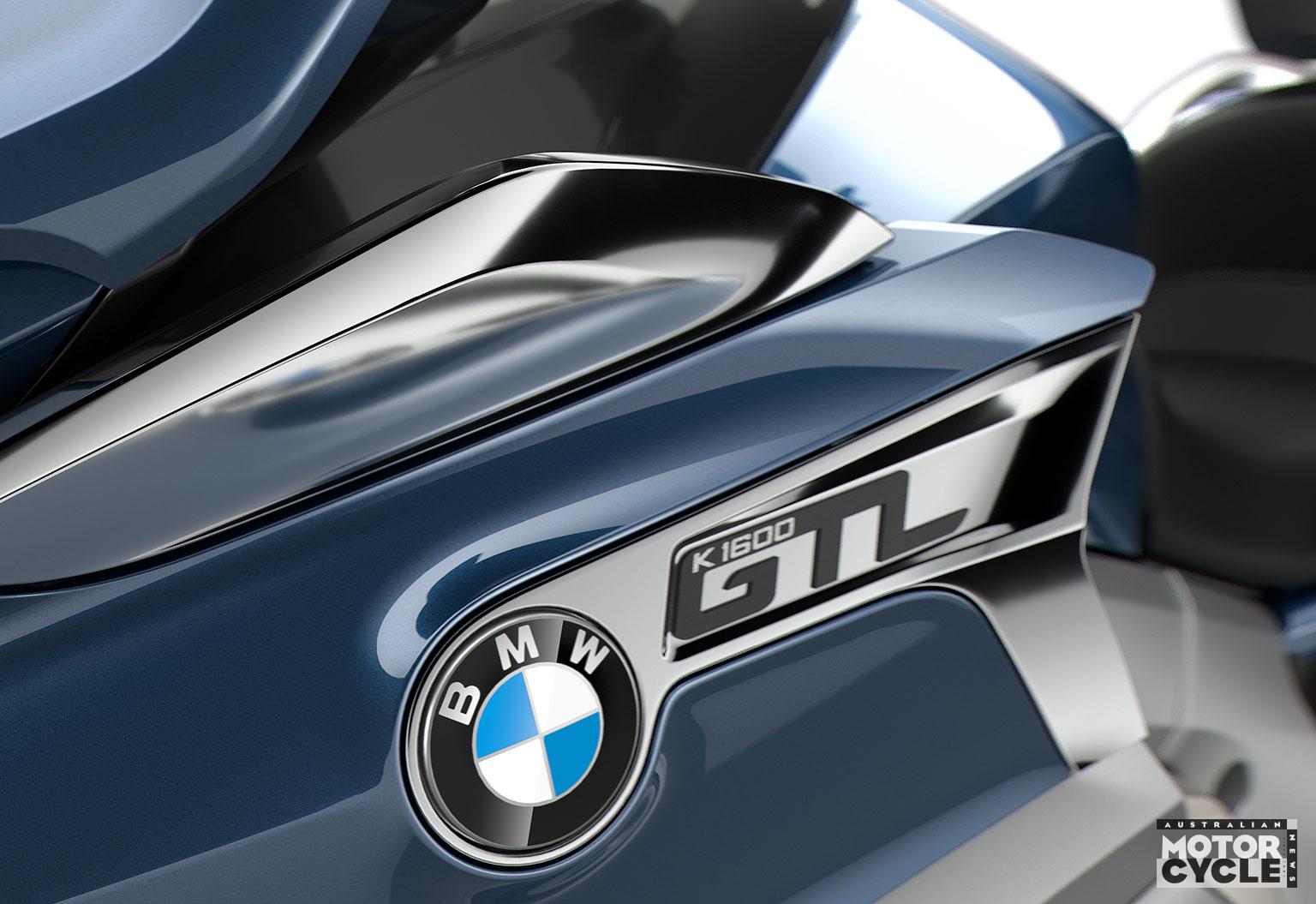
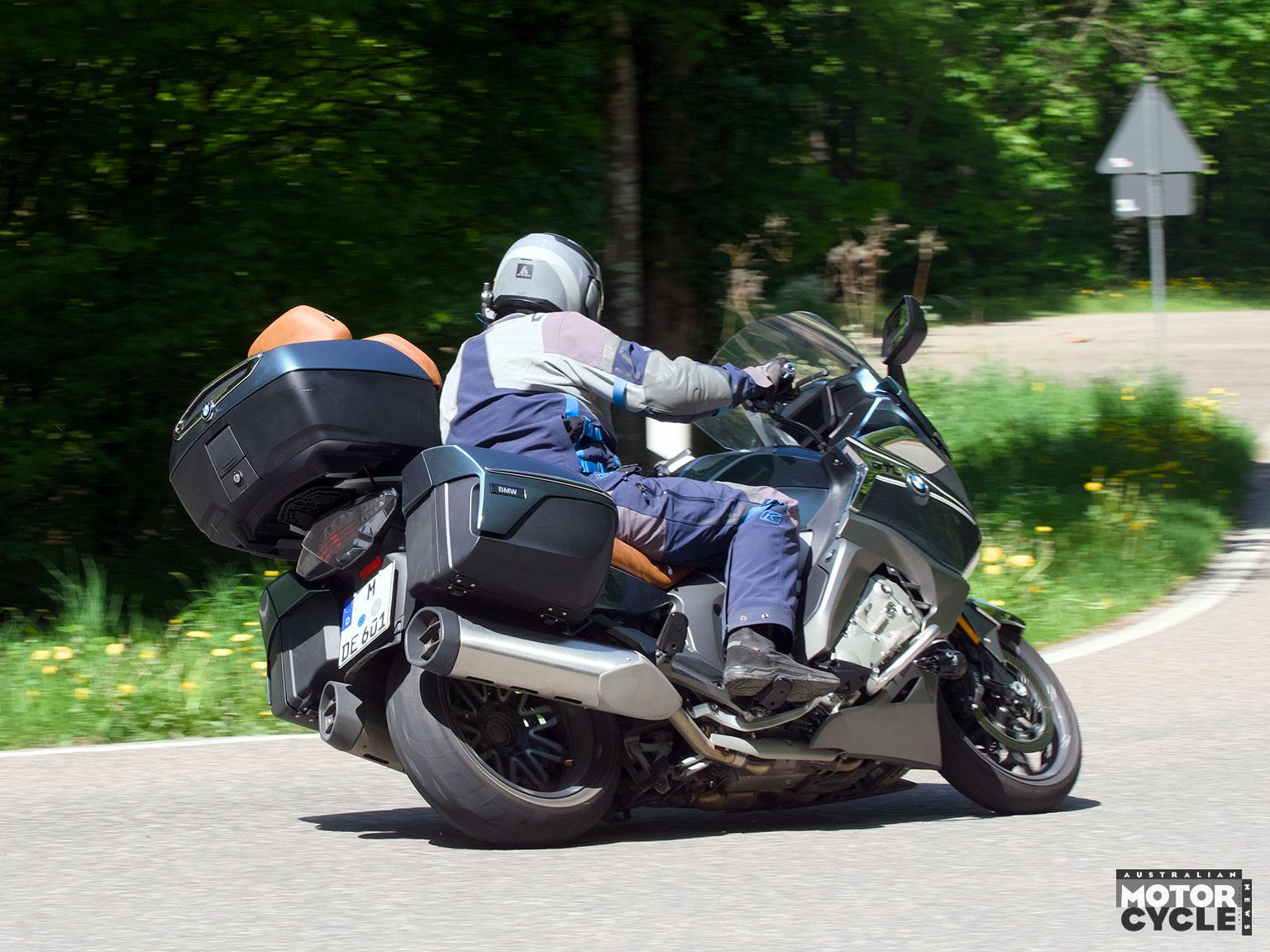
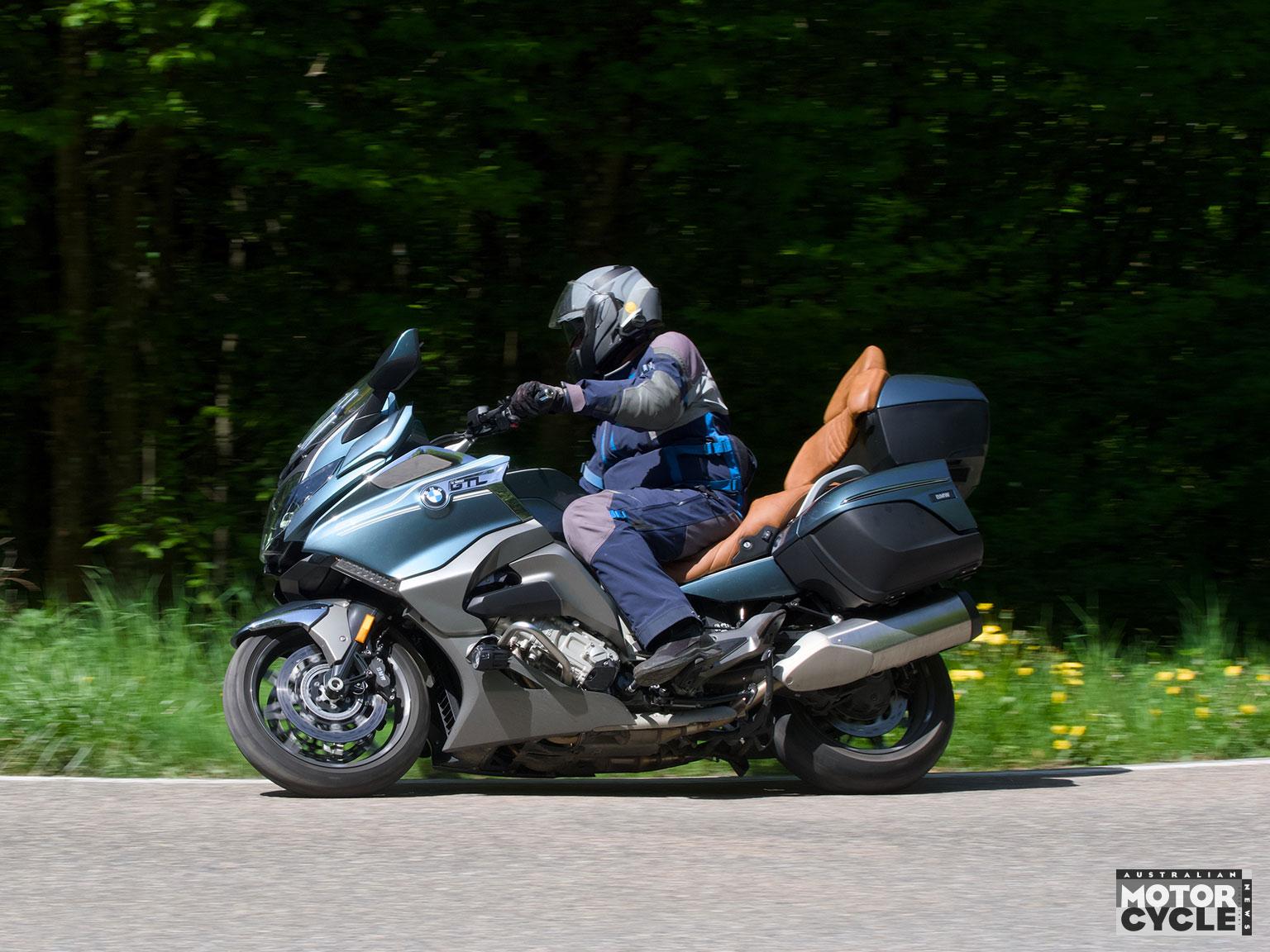
Bikes like the BMW K 1600 GTL defy conventional thought. A bike this big, this heavy, this long should not be any fun on twisty roads, it should not have you searching for the winding route to where you want to be… yet it does. At the same time, its size, its bodywork, its length and its luggage capacity means having all this touring fun with a passenger on the back isn’t the trial of a relationship it is on so many other machines.
It’s another reason why couples who have been together a long time often choose bikes like this.
Put simply, they eat up open roads, are fun on a winding route and won’t require a physiotherapist at the end of each day’s touring.

The joys of a full dresser
It’s 5°C, the heavens are threatening to open up and we’ve still got at least five hours riding to go… yet there was never any discussion about finding a motel room early, about giving the riding a miss – we were reasonably well prepared in decent riding gear, rainwear and, of course, had the heated seat and grips running warm.
I’m not sure how many times I’ve felt miserable on a motorcycle when the weather isn’t playing ball, but it’s a lot – although never on a bike like a GTL. The conditions would have to get a lot worse than this, for this was mildly annoying how the views across southern France weren’t as sparkling as we’d hoped, how we wanted to peel a few layers off when we stopped for sustenance or calls of nature, how my visor was fogging up occasionally (I’d forgotten to install the Pinlock before leaving Australia and was now paying the price).
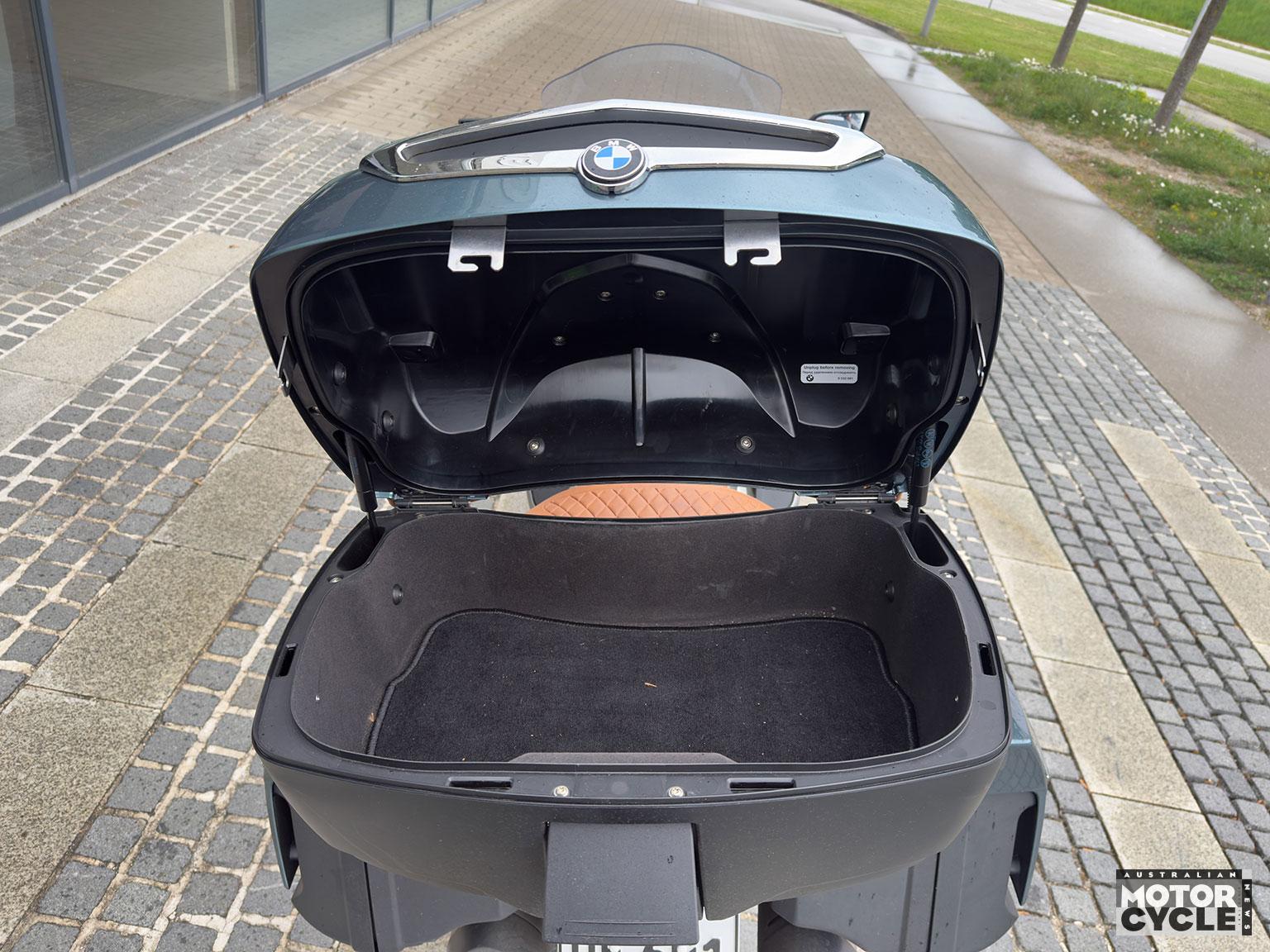
A week later we were riding in temperatures 20°C warmer. Then I was using the pull-out panels built into the fairing to direct air back inboard to get some breeze happening – while all that gear we’d been wearing a week earlier was folded up inside the three cases, alongside clothing, cameras, my drone, toiletries, laptop, coffee machine… and kitchen sink.
Okay, the kitchen sink is a joke, but we did have a coffee machine (a Waco Minipresso).
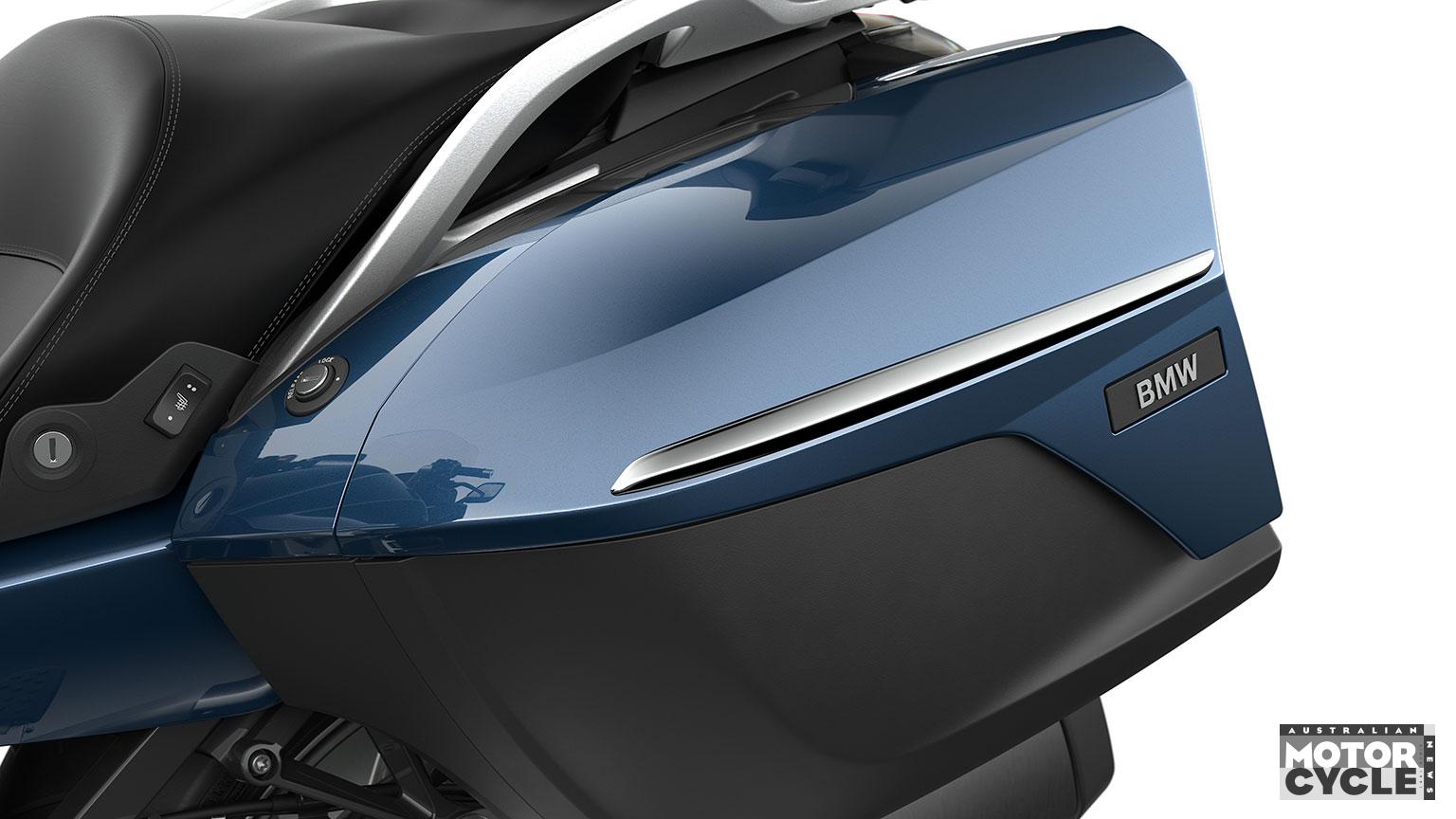
Managing all this was a bit of a task, but relief was at hand thanks to the reversing assistance built into the bike; with the touch of a few buttons the starter motor can be engaged to pull the bike backwards, making manoeuvring so much easier. I really like touring bikes with reverse and I can’t understand why so many don’t have this feature.
Luggage, luggage and more luggage
A while back I was talking to a rider who had struggled with his large capacity naked bike on tour – he’d added three aftermarket cases and dropped his wife on the back and they’d promptly gone on tour – without even adjusting the rear suspension.
He struggled. He got cramps. The bike fell over at walking pace. He’s a touch lucky they made it back in one piece.
The difference between that guy, who thought adding good quality luggage to a bike he loved was simply a smart idea, and what the K 1600 GTL offers is vast, yet to the untrained eye not obvious, because the differences are in the design detail and engineering.
Put simply, he’d completely upset the balance of the bike; winding up the preload of his rear shock would have helped (a lot), but even a new rear shock would not have solved the issue of so much weight behind the rear axle and, in the case of the top box, carried really high as well.
The GTL was designed from the drawing board to be equipped in this manner and that’s why it works.
We were fully loaded. We were easily carrying the 30kg of luggage permitted in the boxes, and with our gear on the maximum payload of 212kg would have been seriously threatened… and while we’re big people, we are by no means huge (most naked bikes would have a capacity of closer to 180kg).

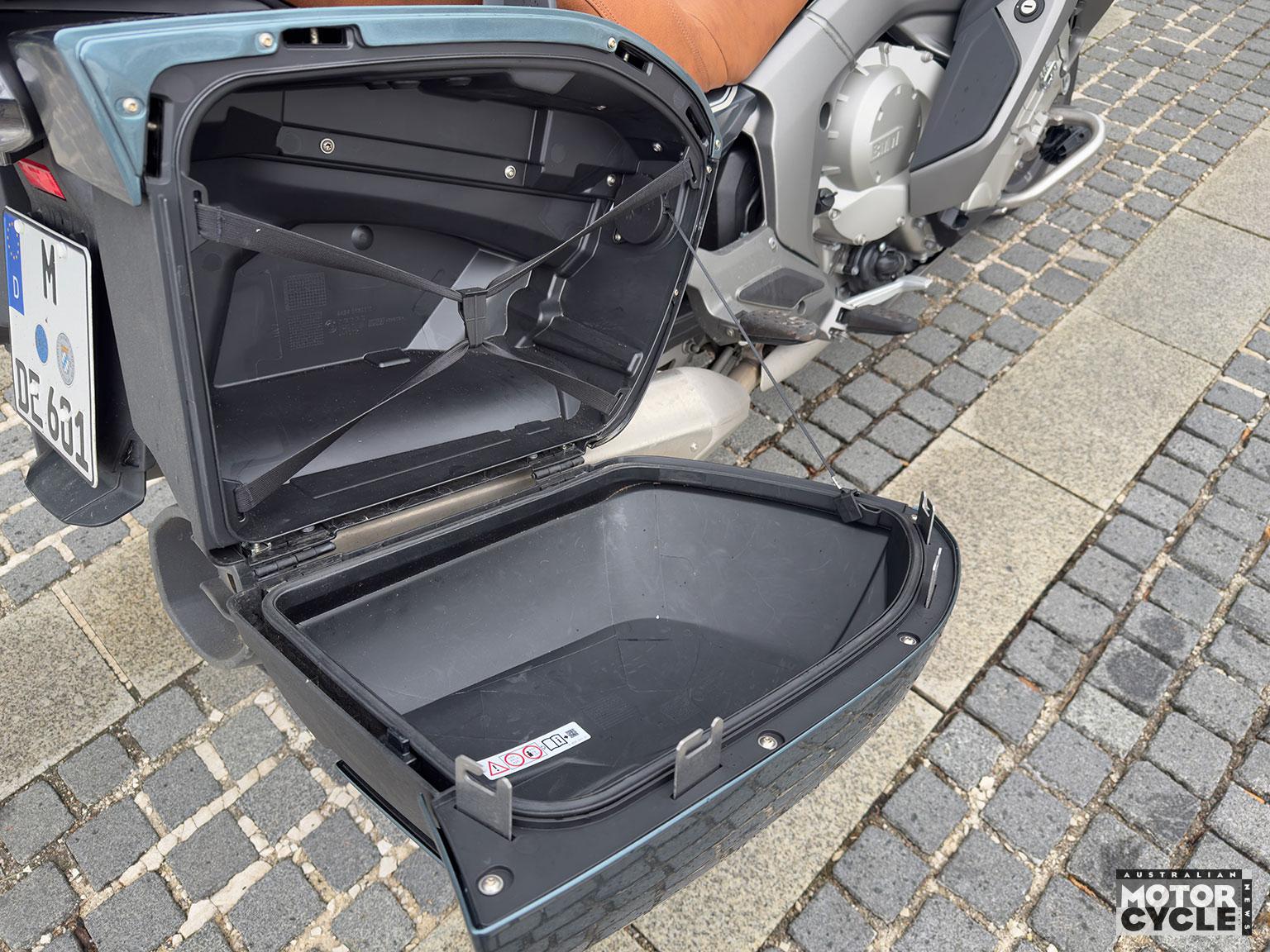
The GTL’s panniers can accept a full-face helmet, the top case a pair, so it’s easy to overload. I actually realised if my compact but heavy camera bag was in the top case I could feel a pendulum effect when swinging through a series of S-bends. Switching it to one of the side cases solved the problem.
On a long-distance tour, being able to take lots of gear, just in case, makes touring less stressful.

The powerplant
While the 1600cc isn’t all that impressive these days, six cylinders is still pretty unusual in 2025. Only the Goldwing has as many pots and, really, we have to thank the big Honda for the existence of the K 1600; BMW couldn’t crack the US market the way they wanted to with the four cylinder K-series models, so way back in 2012 the Germans upped the ante and built the engine we still have today, most recently updated for the 2022 model year. If the six-pot Goldwing hadn’t been successful, would the Germans have tried? Who knows?
The 118kW (160hp) figure is probably only important if you plan to bring your GTL to Germany and ride it at 180km/h like we did (God forbid you’d be so naughty to do that in the Nanny State called Australia, would you?), but the 180Nm of torque at just 5250rpm… this is the stuff of two-up dreams.
Yes, it’s a bit doughy under 3000rpm but once you’re moving – glorious torque, torque and more torque. Combined with the smoothness that comes from an inline six, where both primary and secondary forces that cause vibration are cancelled out, you’ve got an engine that can feel like it’s in top gear when it’s in fourth. Or maybe third. Not that I ever did that. No, I was always on top of my game, always paying attention…
I actually stalled it a couple of times through being lazy with the clutch lever, but I’m blaming the tall first gear and lightweight flywheel… the tall first gear is there so the ratios aren’t too far apart on the road, and the light flywheel helps the engine rev like it’s a sportsbike.
Handling better than a tourer should
When I see a Grand American Tourer in Europe, I usually think, “Wow, a Harley tourer!”. That’s because it’s so unusual. Not as unusual as spotting a nearly 50-year-old Honda CX500 Custom, but close. OK, not close; I’ve only seen one CX500 Custom in Europe, and I’ve seen at least a dozen Grand American Tourers… in four months.
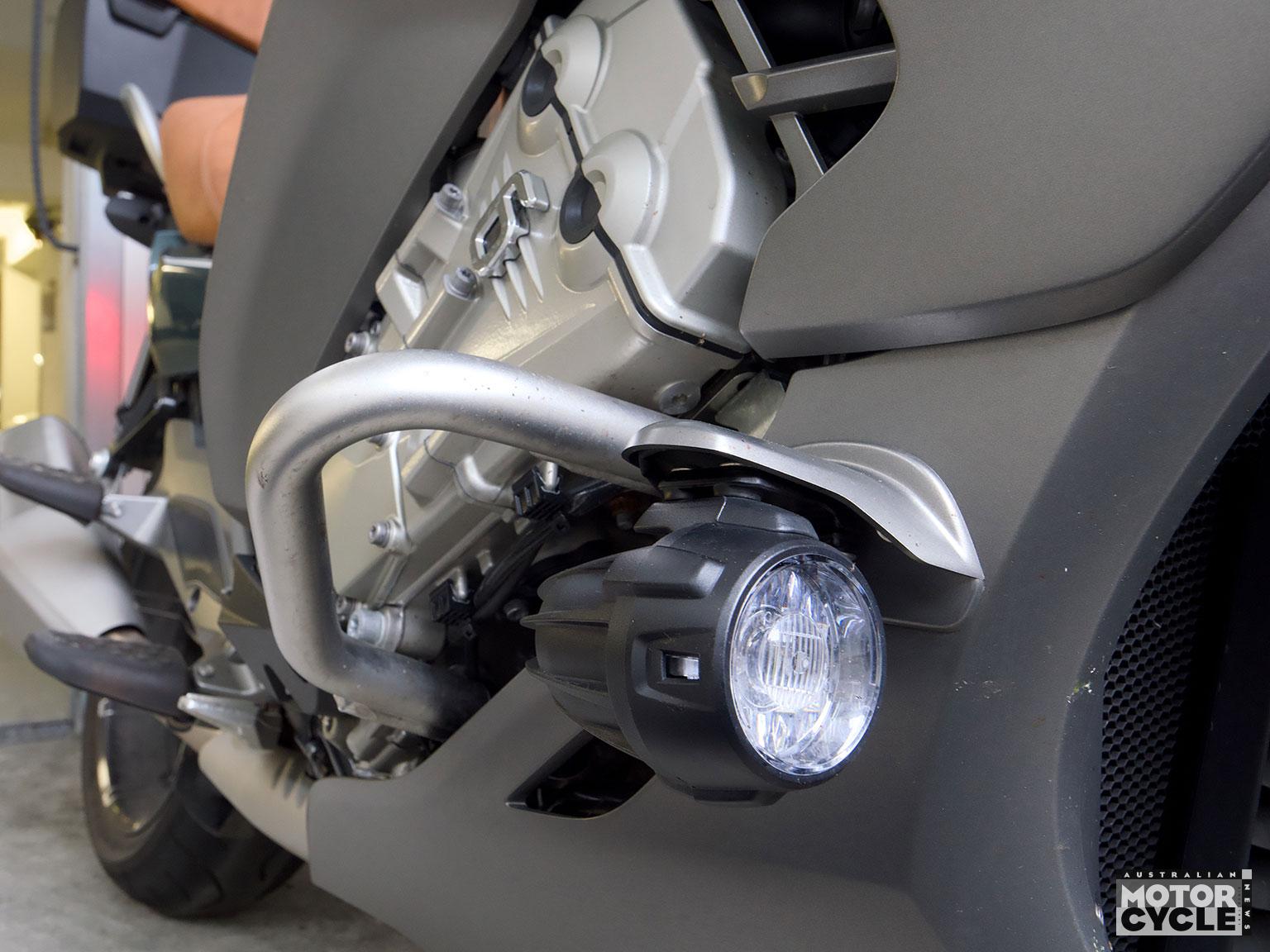
K 1600s? Dozens. Clean ones, ratty ones, scratched ones, even one with skinny panniers obviously owned by a French person who liked slipping through the traffic.
Of course it helps that the factory is on the same continent, but the reality is these bikes go around corners really well, and that’s a big part of riding in Europe.
Even cornering clearance wasn’t an issue, although I’m sure if I owned one long enough and rode it solo often enough I’d find occasions for wanting more – but that’s basically a strength of this model giving enough feedback to give an experienced rider the confidence to start pushing hard (note: the last K 1600 model I rode, a K 1600 B, ran out of cornering clearance much earlier than the GTL).

The front suspension is BMW’s Duolever, which uses a wishbone between the fork legs (which have no springs or damping) and a single shock. The design separates the suspension movement from the braking, so there’s considerably less dive under brakes than you’d usually expect, which takes a little getting used to.
Other than that, it’s well controlled, offers faster steering than you’d expect for a bike so long, and provides a very comfortable ride.
The rear suspension is BMW’s Paralever mounted to the shaft final drive/single-sided swingarm configuration that has been around for ages. Initially designed to prevent the rising and squatting of earlier shaft drives during acceleration and deceleration, BMW has developed the system over time to be very, very good.
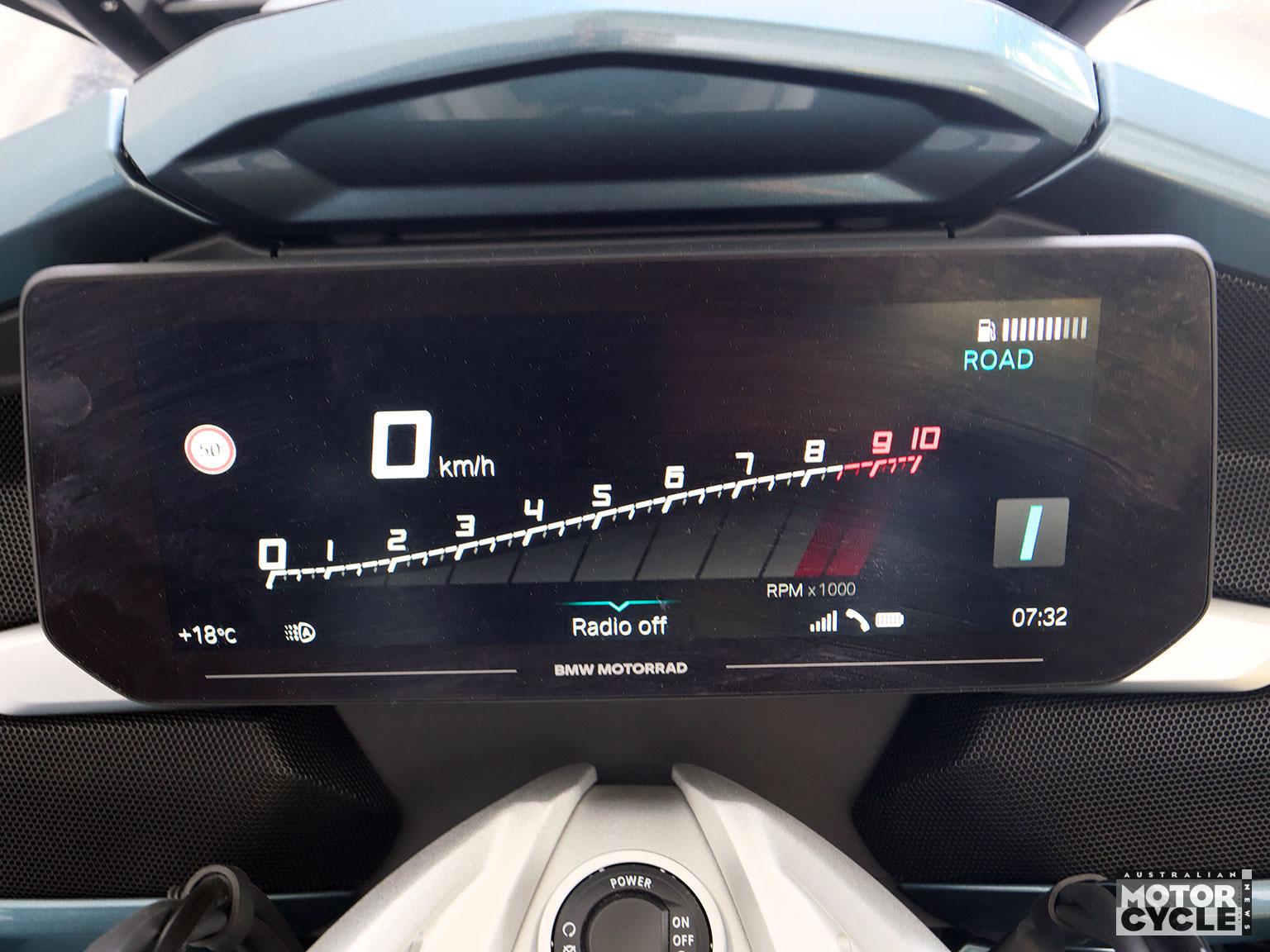
Equipped with second-generation ESA (Electronic Suspension Adjustment), the GTL offers Automatic Damping Adaptation (further modified by the riding mode you choose) and Load Compensation.
As someone who has spent a lot more on improving my bikes’ suspension than on engine performance over the years, I have to say I wouldn’t spend a dime on the GTL – it’s that good out of the crate.
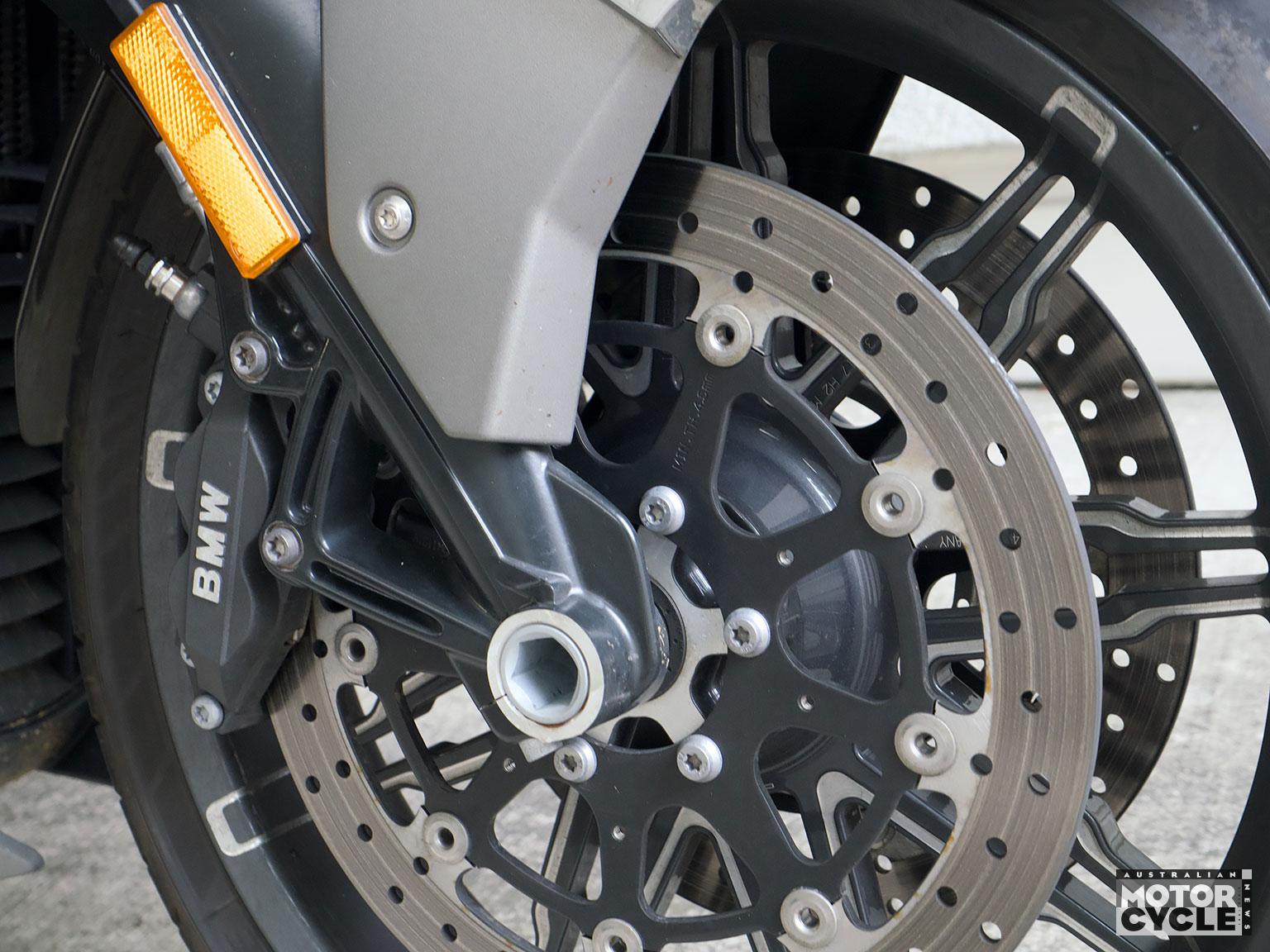
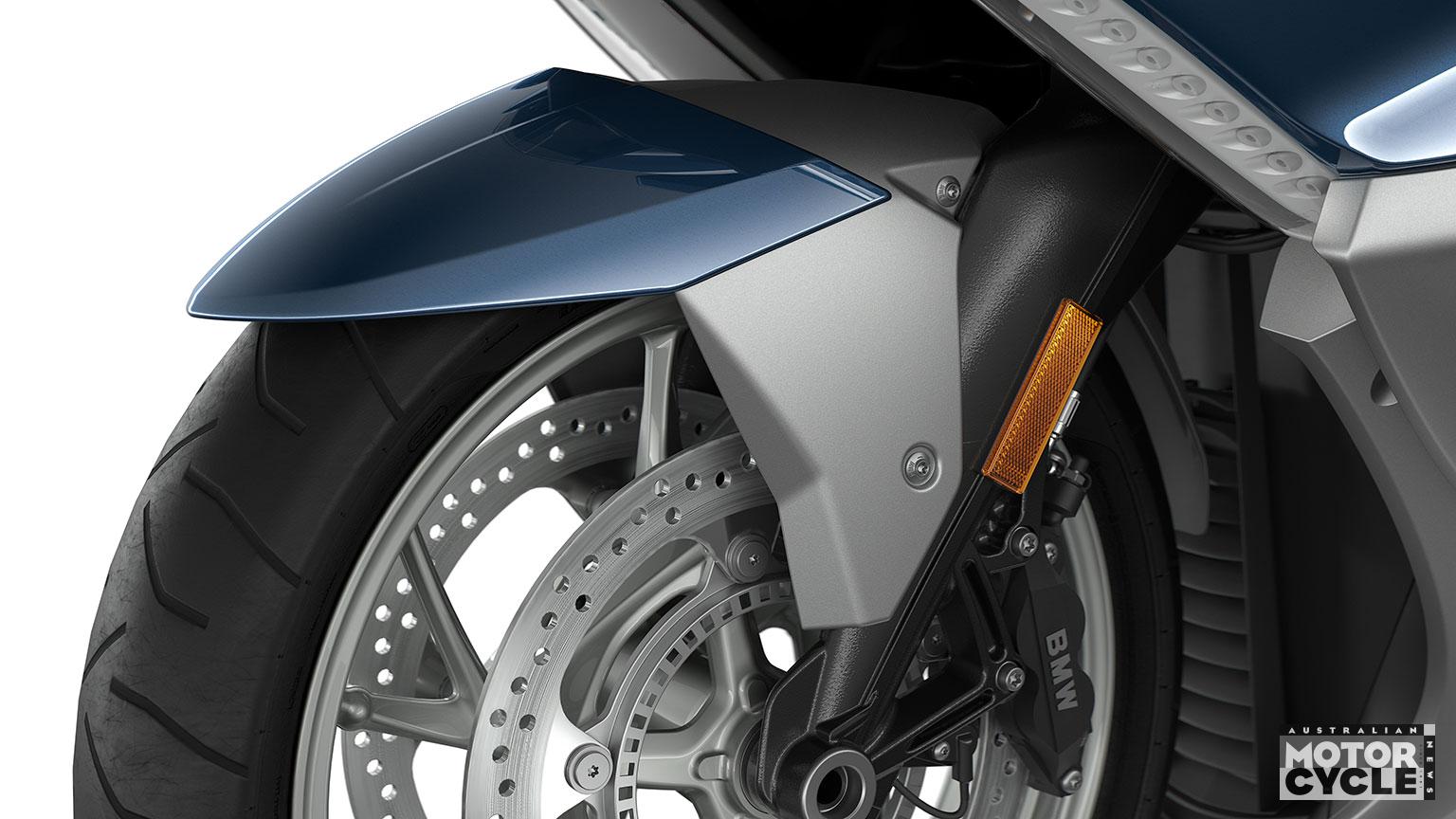
Combining with the quality suspension are strong brakes. The system is part integral, the front level also adding some rear pressure, while the foot pedal only acts on the rear. While not having the initial bite of modern sporty systems, the GTL’s brakes are powerful, linear in feel and never caused any issues, which is just what I want from a set of brakes.
Let’s dive into the tech
Riding modes, dynamic everything, self-levelling suspension, semi-active damping… this bike has an incredible level of technology and it all works seamlessly to provide an excellent ride.
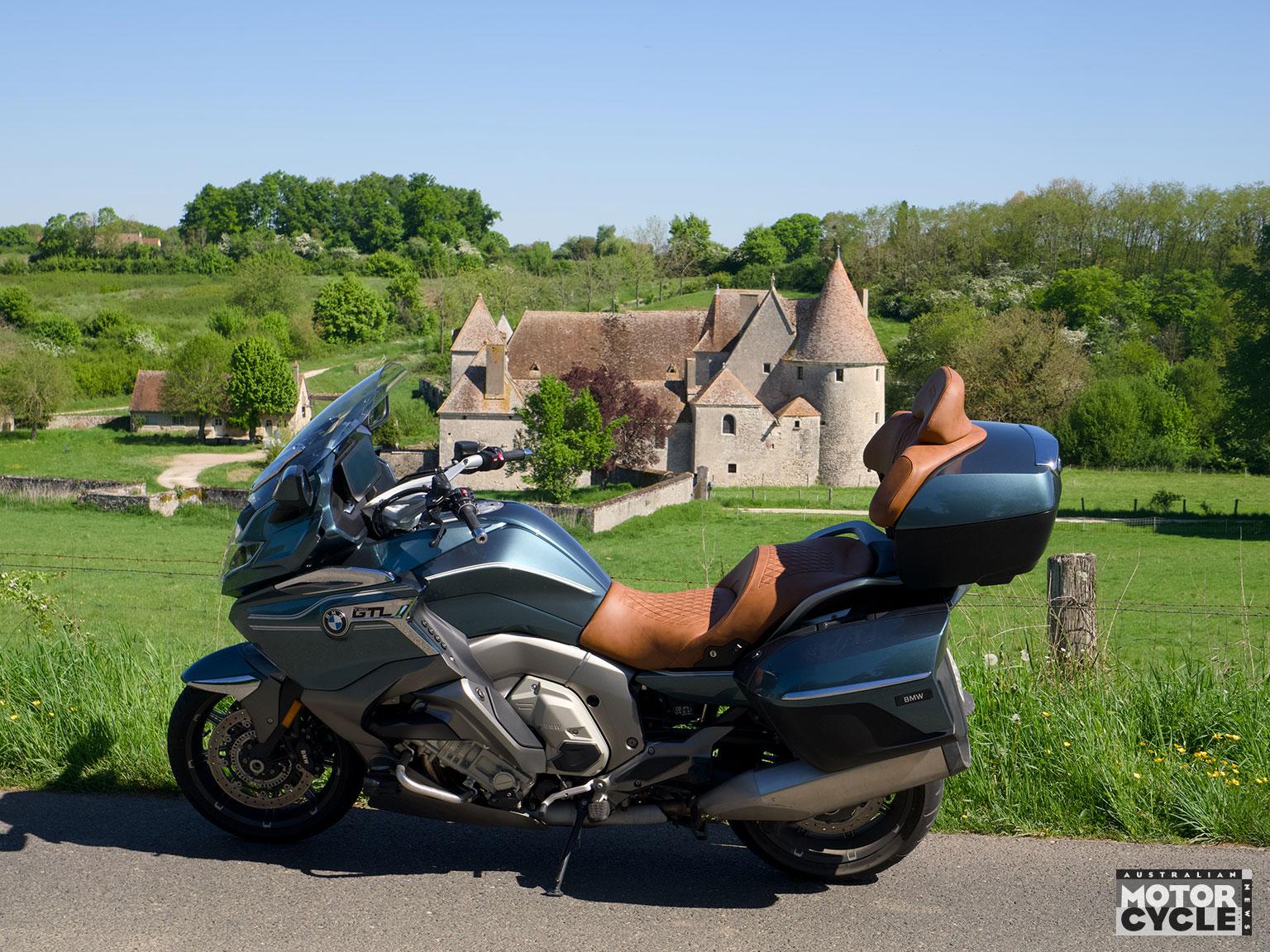
Really, much of it is set and forget. And the default settings will probably work for most people, so it’s more ‘choose a riding mode and go’. There’s Road, Rain and Dynamic… we spent most of our time in Road, although I quite enjoyed Dynamic on a couple of solo jaunts when I was trying to work out how much cornering clearance the bike really had. Road offers power with excellent control and easy throttle control. Rain, well, rain mode… luckily it didn’t rain too much.
There’s ABS Pro, but I never noticed it activating. There’s Dynamic Traction Control, which is electronic tech designed to do the job of a slipper clutch. I really liked the Hill Start Control on such a heavy bike – squeeze either brake while stationary and it locks on (as long as the ignition is on), releasing automatically when you start to move off.
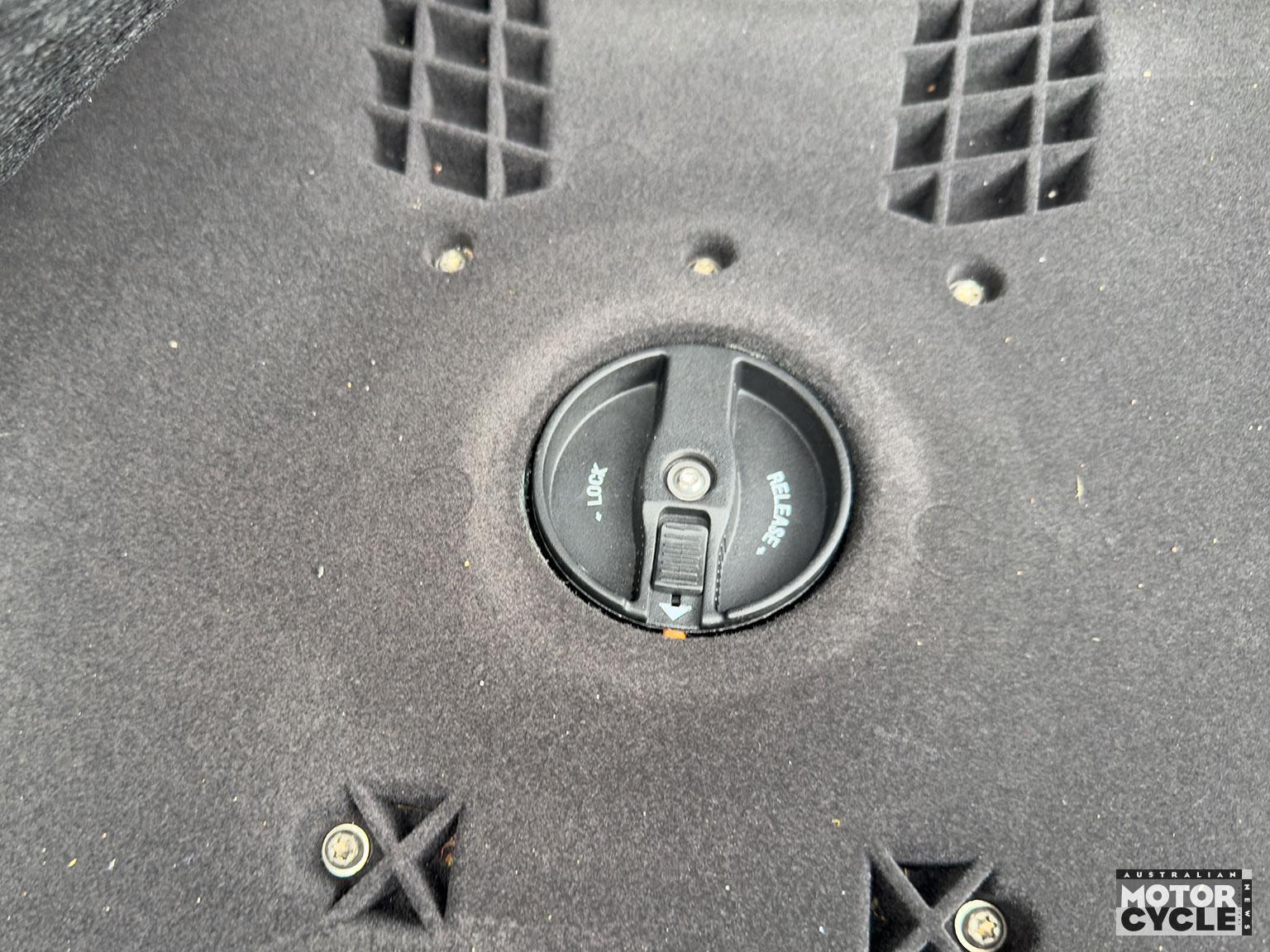
The Keyless Ride integrates with the central locking, too; the panniers can be locked via the fob or the button on the right switch block, where the steering is also locked. I loved this system, allowing us to leave the bike fully locked without having to get the key out of my pocket. Indeed, the only thing I regularly used the key for was to remove the panniers after a ride to take them into our accommodation.
Annoying navigation, missing electronics
None of the K 1600 models have radar yet, so there’s no adaptive cruise control or blind spot monitoring, which seems a little behind the times for a $50,000 motorcycle. Maybe they will arrive for 2026… but I doubt it. BMW has just released the new range of road-going 1300cc Boxers – R, RS and RT – so I suspect the big K series is still on the backburner in that regard. Maybe 2027?
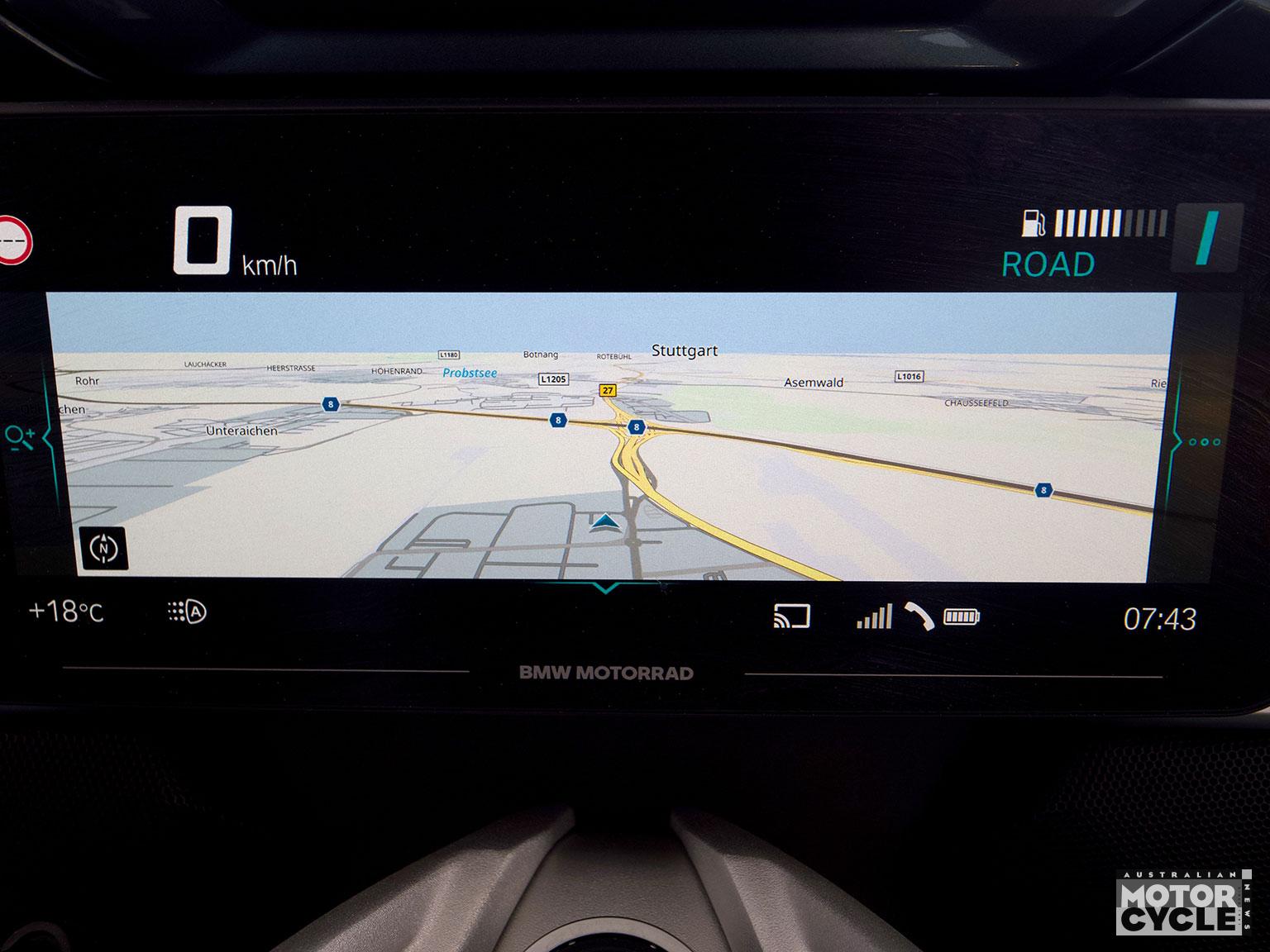
If that’s not frustrating enough, the integrated connectivity is very limiting and has been since this latest generation appeared; the only navigation you can easily use is the BMW Connected Ride, an App download.
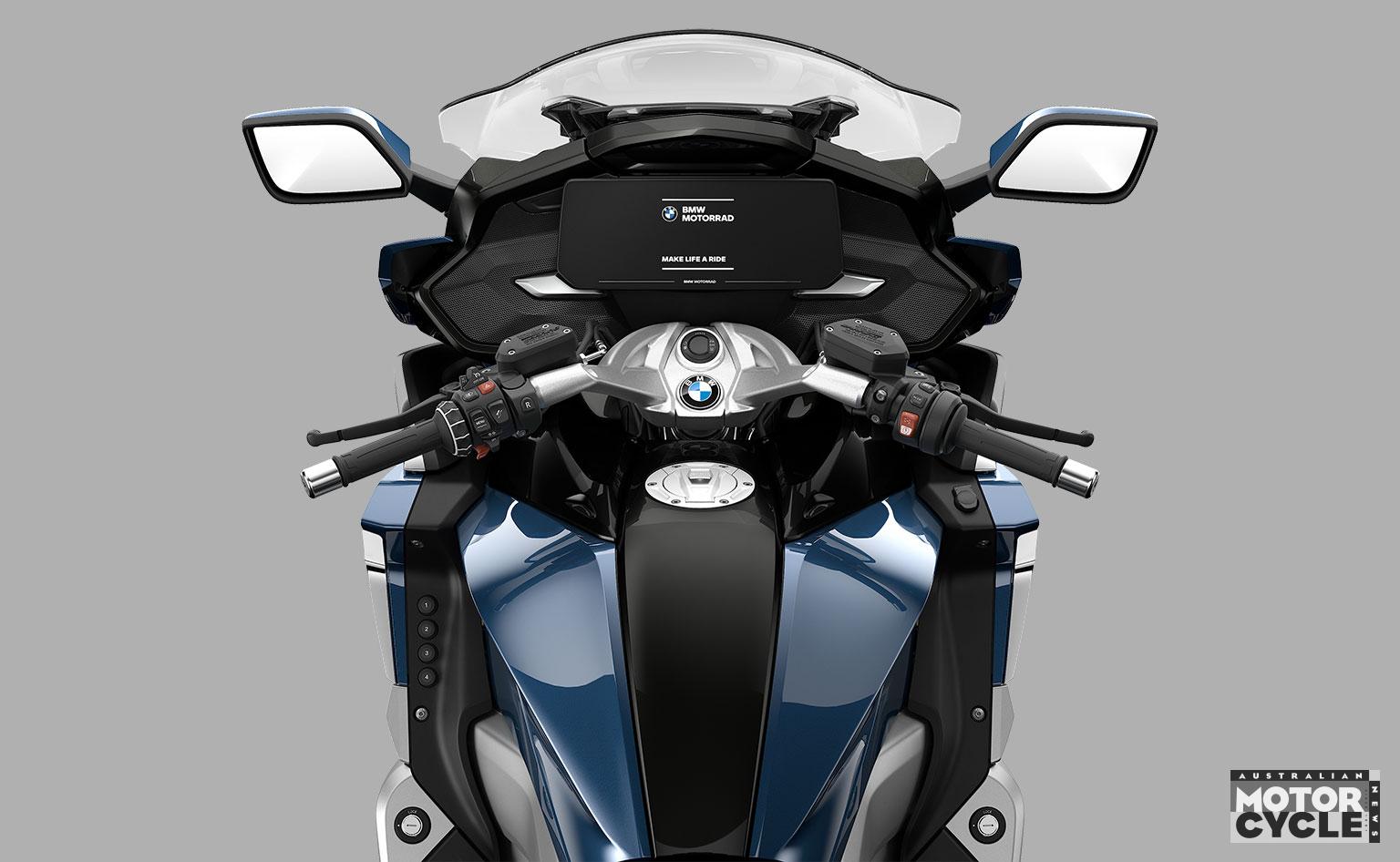
You can plan journeys on Connected Ride and it will display them on the widescreen 10.5-inch TFT display, but the nuances of how to get it all to work together, how to keep your phone charged and operate it all from the handlebar, are a challenge.
BMW Motorrad hasn’t adopted Apple CarPlay or Android Auto, which is nuts in my view – but it’s created a massive aftermarket industry of Chinese companies building units to do precisely that, mainly for the navigation mount on many models of BMW, replacing the BMW Navigator.
Our test bike didn’t come with anything like that, so I was restricted to using the Connected Ride App, which is fine for getting from A to B. It’s even Okay for getting from A to B via a winding route – there are a few different options. However, if you like to plan a route, it’s less fun… no, it’s horrible.
I was touring Europe, places I’ve never been before, on the ‘wrong’ side of the road, fully loaded with a passenger. I wanted to skirt the major centres on freeways and ride a reasonably direct yet winding route between our accommodation bookings. Wouldn’t you?
Planning this in Connected Ride is difficult, if not impossible. I ended up planning in calimoto (an online service with partner App), exporting as a GPX file, importing that file into Connected Ride and following that, which worked Okay.
Your phone itself can ride in a pocket behind the instruments, provided it’s not too big. The pocket has a fan to cool the phone and a USB-C port to charge. So that’s a good feature.
You need to launch the Connected Ride App to have map view on the dash running, and it must be left open when you slot it into the bike… and it must be connected via Bluetooth and WiFi, and sometimes my iPhone wanted me to confirm I wanted to connect so I’d have to get the phone out and… OMG what a PITA!
Apple’s security concerns are part of the problem here and some internet research indicates it’s all easier on Android; if I bought a K 1600 I’d reckon I’d buy an Android phone just for the bike. You might be able to leave it installed all day and have it do the navigation for you.
The bike also has speakers, but other than using them for navigation in cities I preferred to use noise-cancelling earpieces connected to a Sena 50S. With this set-up I had vastly reduced wind noise (although if you put the screen up high enough there’s remarkably little wind noise anyway), I could talk to Kirrily on the back and had some control over media via the handlebar controls.
If I owned one, I’d buy the Navigator mount and an aftermarket CarPlay device.
Verdict
A big touring bike like the K 1600 GTL isn’t for everyone but I reckon there are lots of people out there who would enjoy their motorcycling a lot more if they gave one a try. Yes, they are big, heavy and expensive, but the way they eat up the kays, the comfort they offer, how they leave you feeling at the end of the day, it really does make a difference. If you find yourself exhausted, with all sorts of aches and pains making motorcycling less of a joy and more of a trial, a bike like the GTL will help.
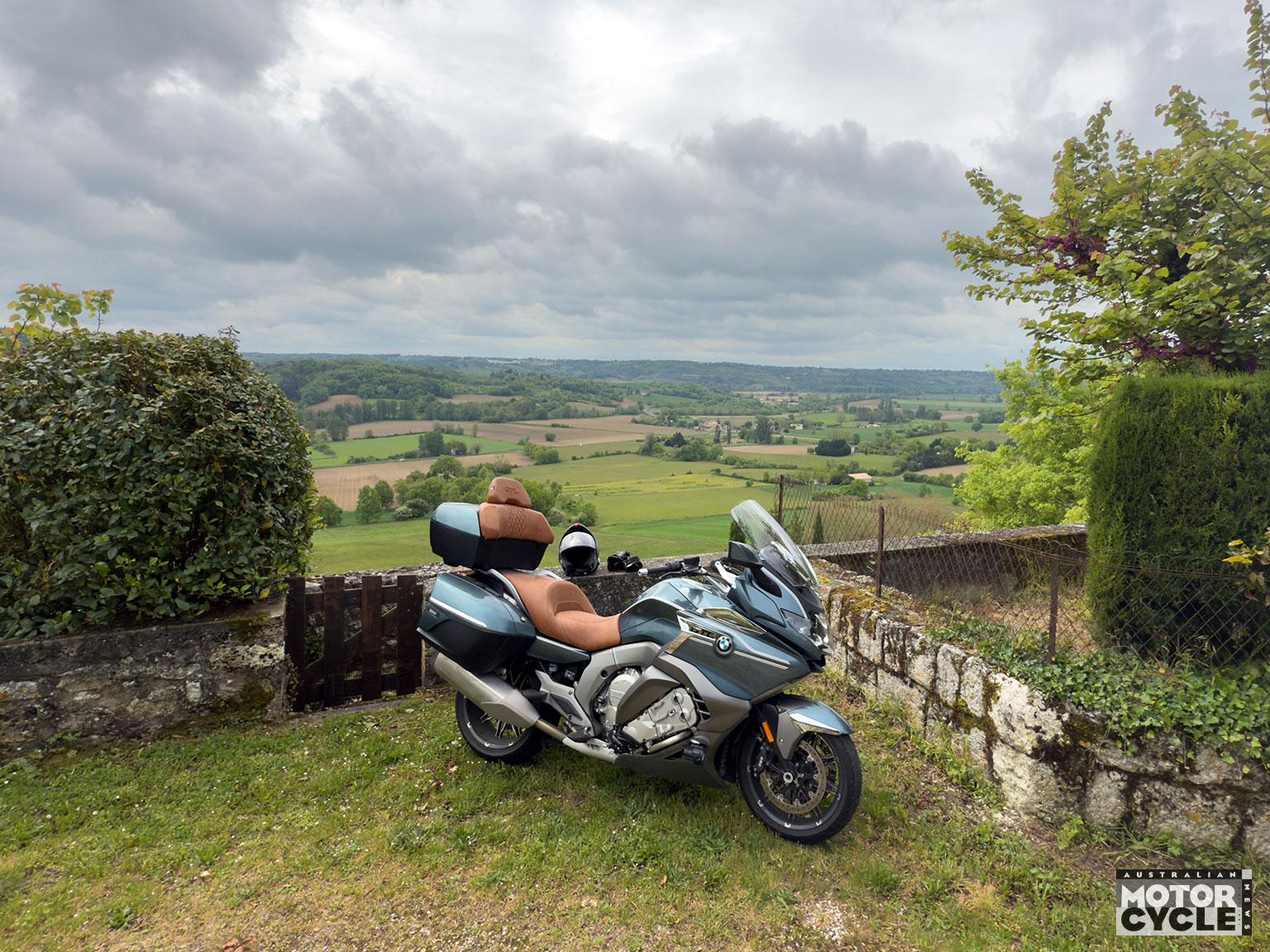
If your partner is getting less enthusiastic about going riding, take them for a test ride on a bike like this – if you add a communicator to each helmet, not only will they be able to talk to you (which may not always be a positive, but they will probably think it is), they can also listen to their music. I found it quite hilarious when I realised Kirrily was singing along to her tunes while I was swinging through the twisties; she now considers this machine to be the most comfortable bike she’s ever been aboard.
If you’re on the fence, buy a second-hand model. Take it on a decent tour and sell it again if you decide it’s not for you. The cost will be low, the experience memorable.
✅ PROS – Ease of use and general rideability blows away most of the prejudices about ‘burger with the lot’ mega-tourers.
❌ CONS – Love it but don’t get me started on the frustrating lack of an interface with my mobile phone. Don’t! Puh-leeze don’t!
Competition
Honda Goldwing Tour Premium
Cost: $53,109 ride away
Weight: 383kg (kerb weight)
Power: 93kW (125hp) at 5500rpm
Torque: 170Nm at 4500rpm
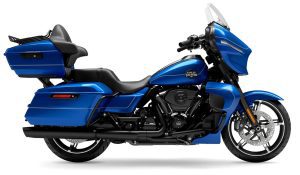
Harley-Davidson Street Glide Ultra
Cost: $48,750 ride away
Weight: 393kg (kerb weight)
Power: 80kW (107hp) at 5020rpm
Torque: 175Nm at 3500rpm
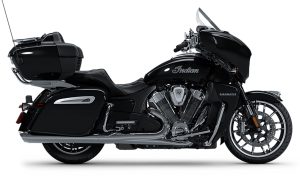
Indian Roadmaster Powerplus Dark Horse
Cost: $50,495 ride away
Weight: 423kg (kerb weight)
Power: 91kW (122hp) (revs not given)
Torque: 181.4Nm at 3800rpm
SPECIFICATIONS
ENGINE
Capacity 1649 cc
Type Water-cooled in-line six-cylinder, four-stroke with four valves per cylinder
Bore & stroke 72mm x 67.5mm
Compression ratio 12.2 : 1
Cooling Liquid
Fueling Electronic fuel injection / digital engine management system: BMS-O with throttle-by-wire
Transmission Helical gear 6-speed gearbox integrated in the transmission housing
Clutch Multiple-disc in oil bath, anti-hopping clutch
Final drive Shaft
PERFORMANCE
Power 118kW (160hp) @ 6750 rpm (claimed)
Torque 180Nm @ 5250 rpm (claimed)
Top speed Over 200 km/h (claimed, electronically limited)
Fuel consumption 5.9 L/100 km (WMTC, claimed)
ELECTRONICS
Type Ride by wire
Rider aids Dynamic ESA (Electronic Suspension Adjustment) Next Generation, BMW Motorrad ABS Pro (cornering ABS), Dynamic Traction Control (DTC), Dynamic Engine Brake Control (DBC), Hill Start Control (HSC) Pro, Cruise control, Keyless Ride, Tyre Pressure Control (RDC), Adaptive Headlight, MSR (Engine Drag Torque Control)
Modes Rain, Road, Dynamic
CHASSIS
Frame materia: Cast aluminium
Frame type Bridge-type, engine self-supporting
Rake 27.8°
Trail 108.4mm
Wheelbase 1618mm
SUSPENSION
Type BMW Duolever (front) and BMW Paralever (rear) with Dynamic ESA Next Generation
Front: BMW Duolever with central spring strut, electronic self-adjusting Damping Control (ESA Next Generation)
Rear: Cast aluminium single-sided swingarm with BMW Paralever, central spring strut, electronic self-adjusting Damping Control (ESA Next Generation), automatic load compensation
WHEELS & BRAKES
Wheels Cast aluminium
Front: 3.50 x 17in
Rear: 6.00 x 17in
Tyres
Front: 120/70 ZR17
Rear 190/55 ZR17
Brakes
Front: Twin 320mm discs, 4-piston fixed calipers
Rear: Single 320mm disc brake, 2-piston floating caliper
DIMENSIONS
Weight 343 kg (wet, ready to ride, fully fueled)
Seat height 750mm / 780mm (standard; options for higher)
Width 1000mm (with mirrors)
Height 1465mm (with screen)
Length 2499mm
Fuel capacity 26.5 litres
SERVICING & WARRANTY
Servicing First: 1000km (or 1 month)
Minor: 10,000km / 12 months
Major: 20,000 km / 24 months
Warranty 60 months / unlimited kilometres (standard for many regions, check local terms)
BUSINESS END
Price From $49,000 ride away
Colour options Black Storm Metallic, Gravity Blue Metallic, Option 719 Blue Ridge Mountain Metallic
CONTACT