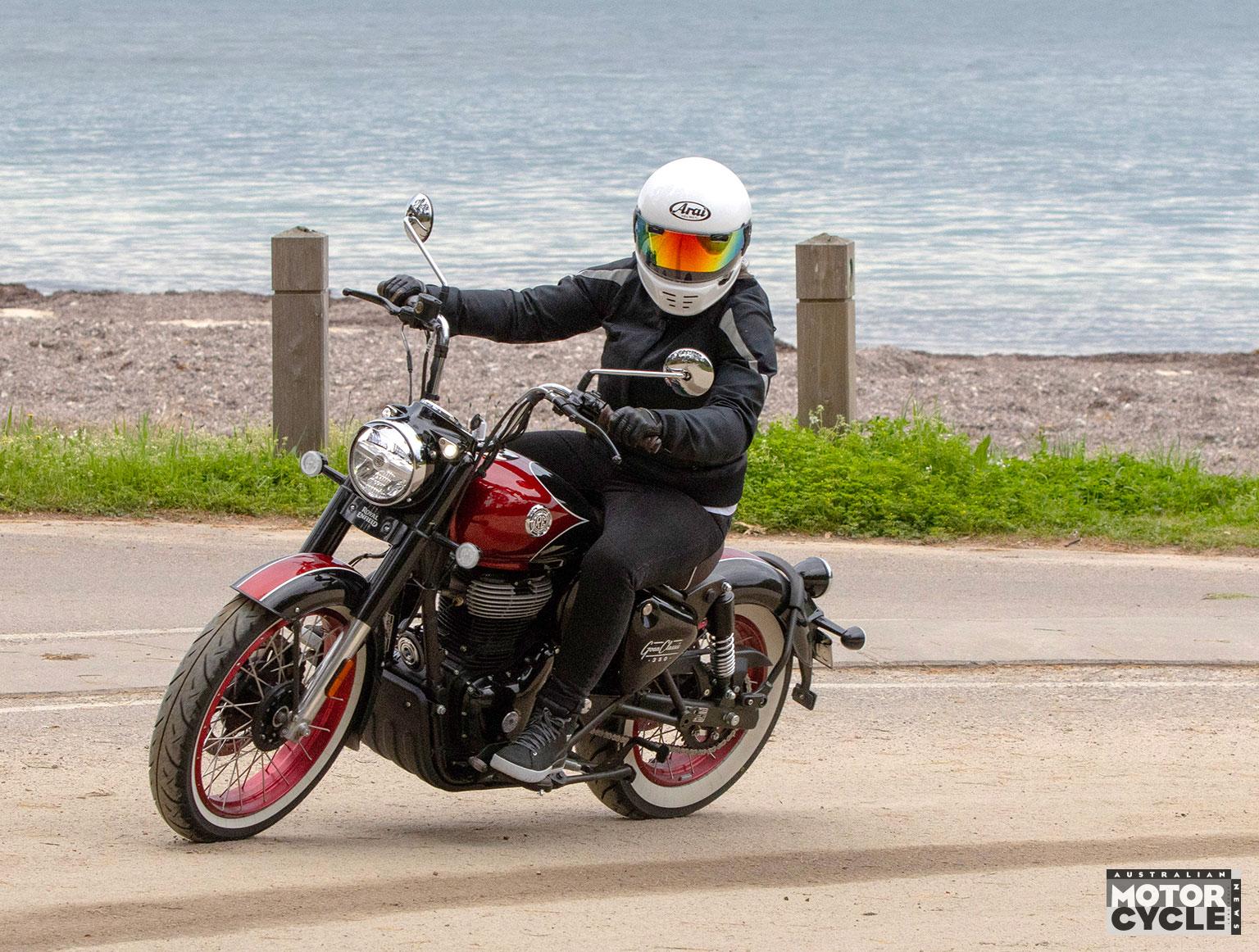
Royal Enfield’s Goan Classic 350 takes the bones of the Classic and dresses them up for a livelier crowd, blending heritage with a dose of beachside custom flair
If the Classic 350 is Royal Enfield’s faithful heirloom, the Goan Classic is its cousin who swapped high-tea for high-tide. Named for Goa – India’s coastal city synonymous with holidaymakers, music festivals and custom-bike culture – this spin-off wears brighter clothes, sits a little lower at the back and throws its arms high with ape-style ’bars. It’s the same familiar single-cylinder engine powering the new Goan, but it carries itself with a little more swagger.

Where the Classic 350 has the poise of a vintage roadster, the Goan sets out to channel the bobber and cruiser scenes. Its colour palette is loud by design, a kaleidoscope ranging from metallic purples and teals through to the safer black option, and each is capped with whitewall tyres and a 16-inch rear wheel that exaggerates the bobber stance. The petrol tank appears to sit prouder on the frame, the rear guard drops lower, and together with those cross-spoked rims – tubeless, unlike the Classic’s tubed tyres – it creates a much more relaxed, custom-style silhouette. On test, it certainly attracted attention. A couple of older gents stopped for a look, not quite sure what to make of it, but interested enough to start a conversation. That’s half the point of the Goan: Royal Enfield sees it as a head-turner, even if not everyone’s turning for the same reasons. But more on that later.
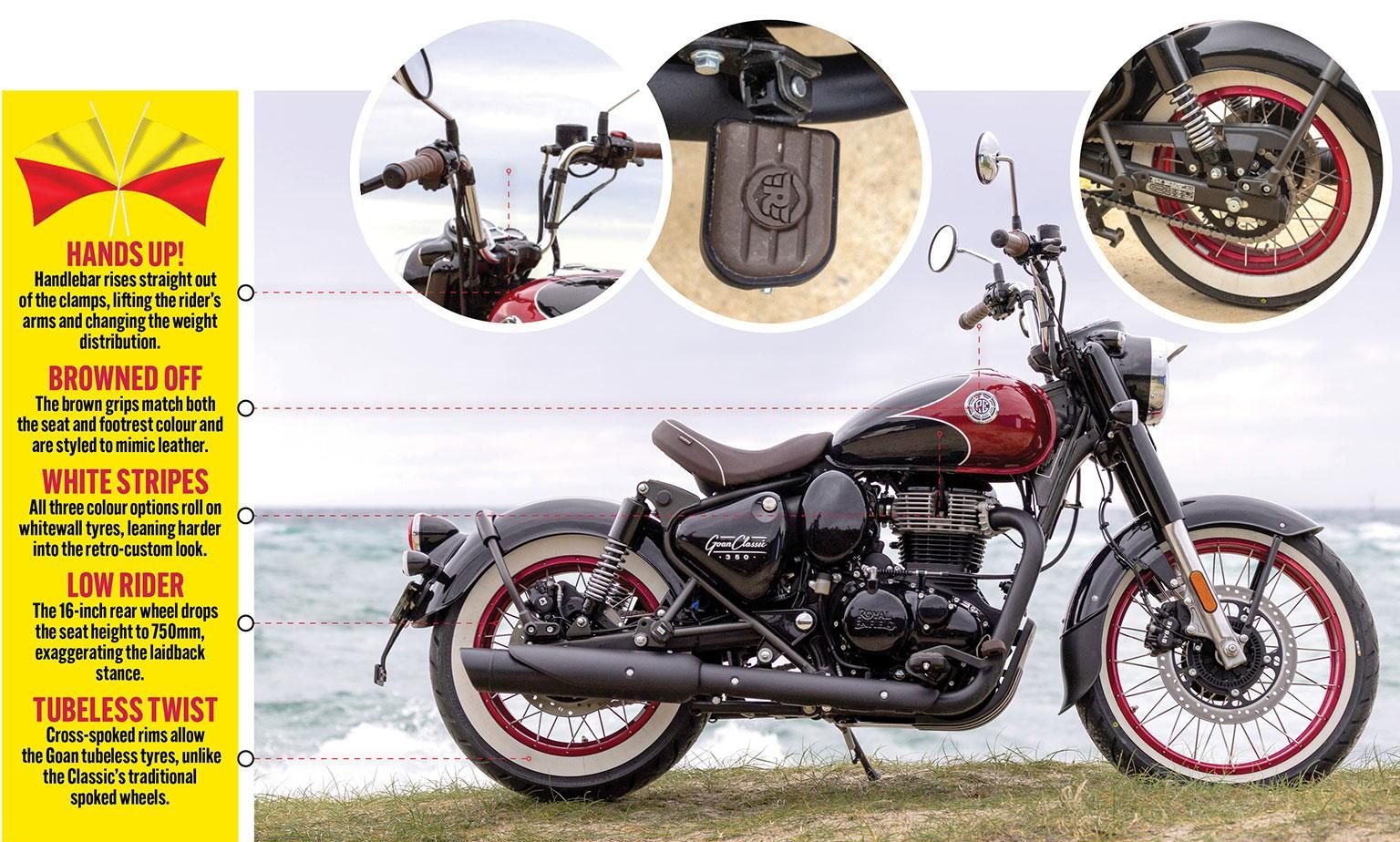
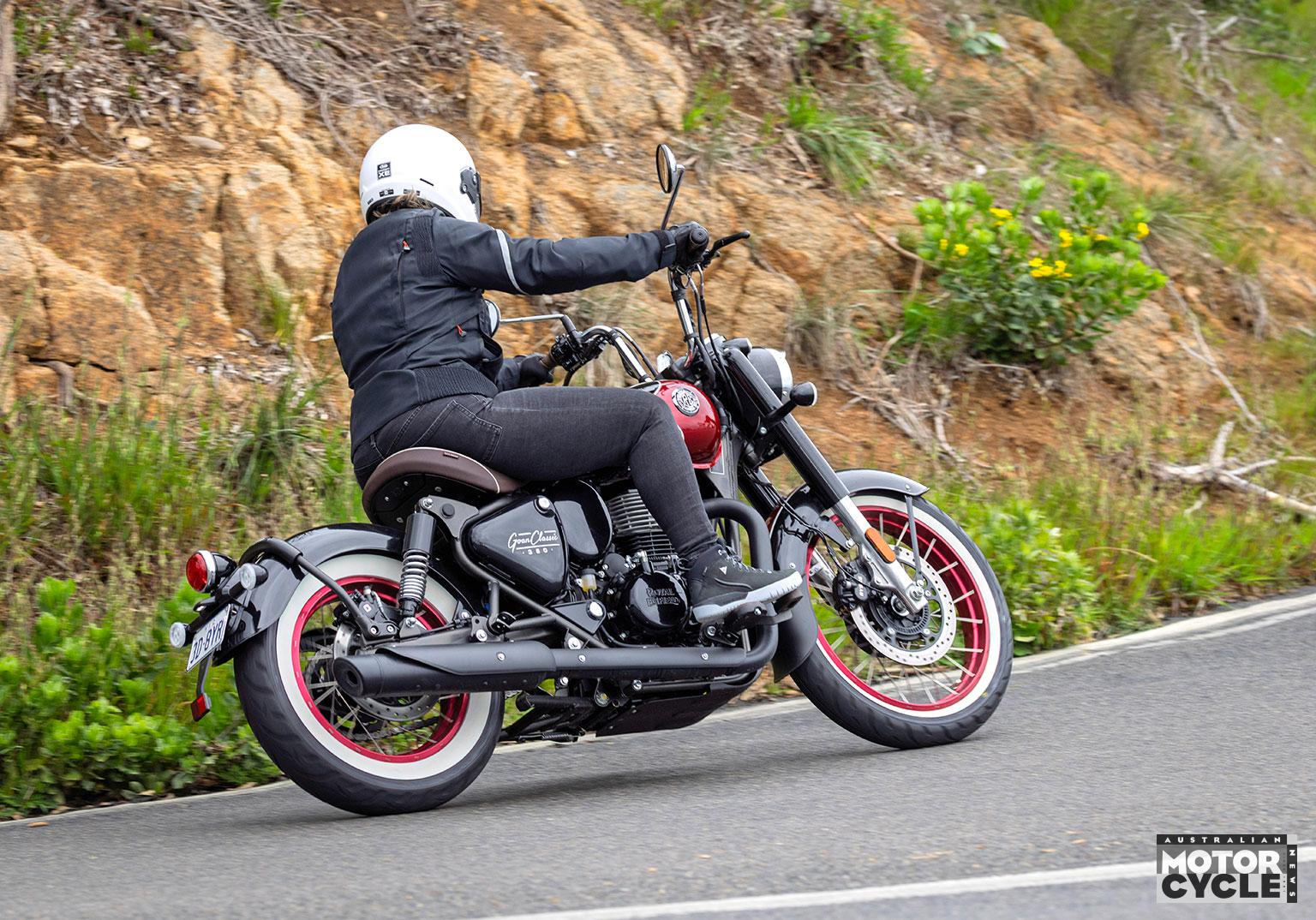
Climb aboard the Goan and the first thing you notice is the ’bar position. They don’t sweep back like a cruiser’s, but rise almost vertically out of the clamps, so your hands sit relatively high and your wrists are flat. From the kerb they look extreme, but once you’re aboard the reach actually isn’t anywhere near as daunting or uncomfortable. However with your shoulders lifted and your weight shifted farther back as a result, the connection to the front end is noticeably different from the Classic’s.

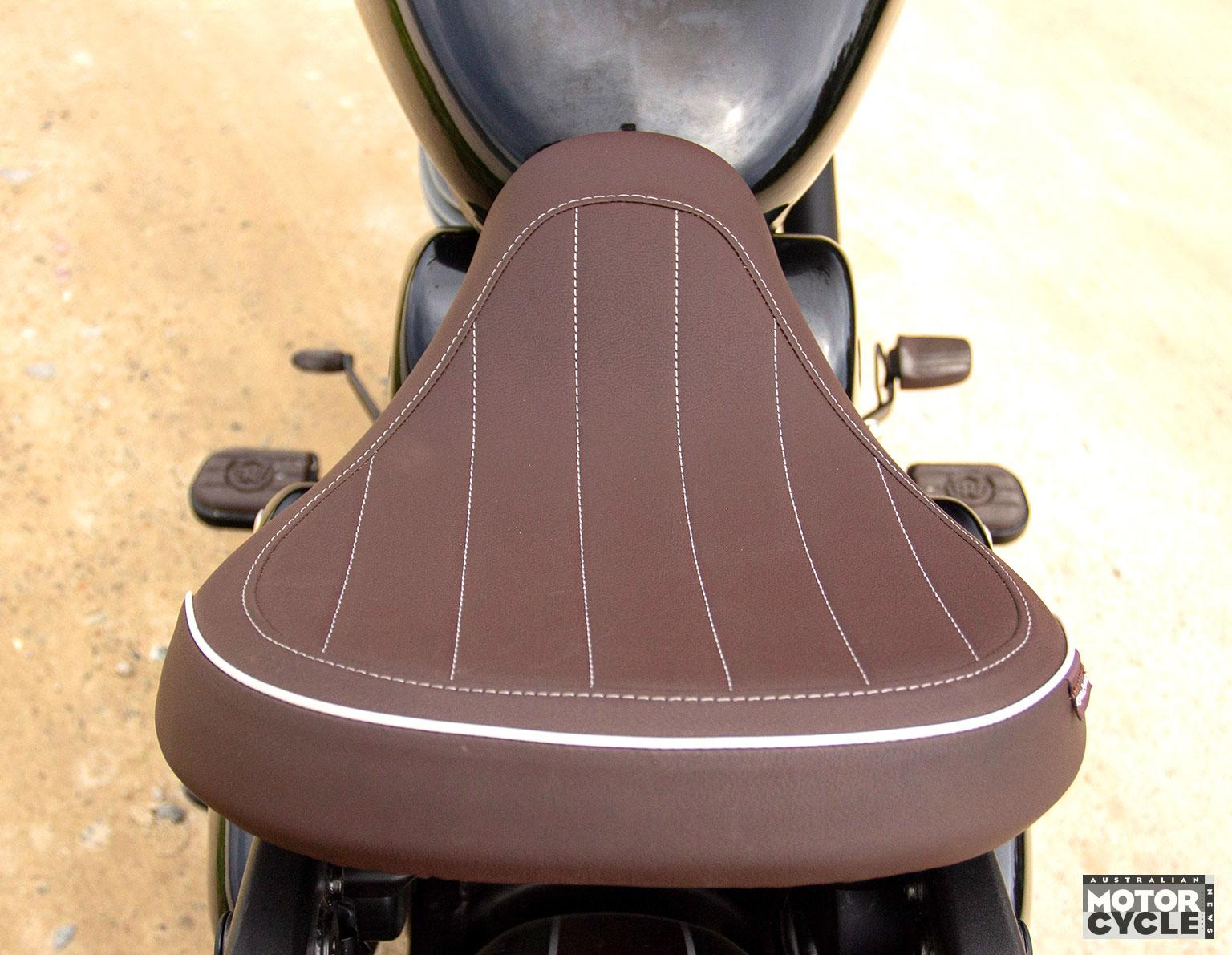
At 750mm, the Goan’s saddle is 55mm lower than the Classic’s. Shorter riders will appreciate the easier reach to the ground, while taller riders may find the combination of low seat and high ’bars a little more awkward. It’s a compromise that suits the cruiser-lite positioning, even if it changes the easy neutrality that defines the Classic. Despite the ’bars pushing the overall height to 1200mm, the Goan doesn’t feel physically larger from the saddle; if anything, it feels pared back, even though the frame or tank capacity hasn’t changed. The seat itself is large and supportive, with enough padding to carry you comfortably for longer stints, while a pillion seat comes standard on Australian and New Zealand versions.
The footrests (I use the word footrests over footpegs because they’re so substantial) are mounted farther forward than the Classic, are wide and rubber-topped, which suits the Goan’s cruiser-lite vibe but also creates compromises. In the dry they’re fine but in the wet the rubber coating becomes slippery and, because the width of the footrest means it’s difficult to hook your toe under the gear lever, the heel-toe shifter feels like a necessary workaround. The net result is an ergonomics package that looks dramatic, feels more accommodating than it appears, but shifts the rider’s weight rearward in a way that alters how the Goan communicates with the road.

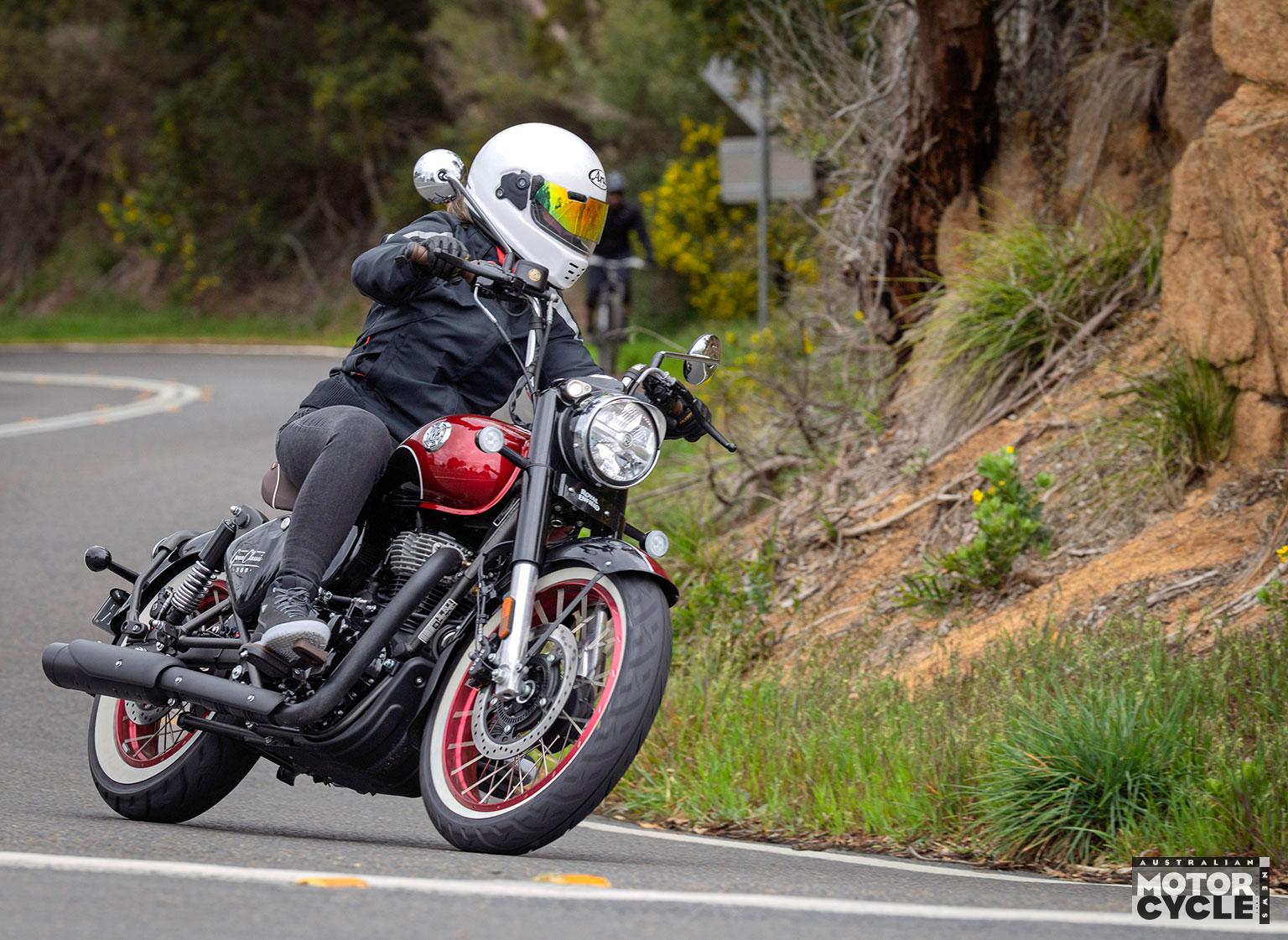
That different riding position is the real key to how the Goan behaves once you’re on the move. Yes, it’s laidback and easy going, but with the ’bars rising straight up and the footrests set farther forward, your weight shifts rearward, leaving the front end feeling less loaded than on the Classic. It means the Goan’s steering is lighter and easier to initiate but not as confidence-inspiring once you’ve committed to a corner.

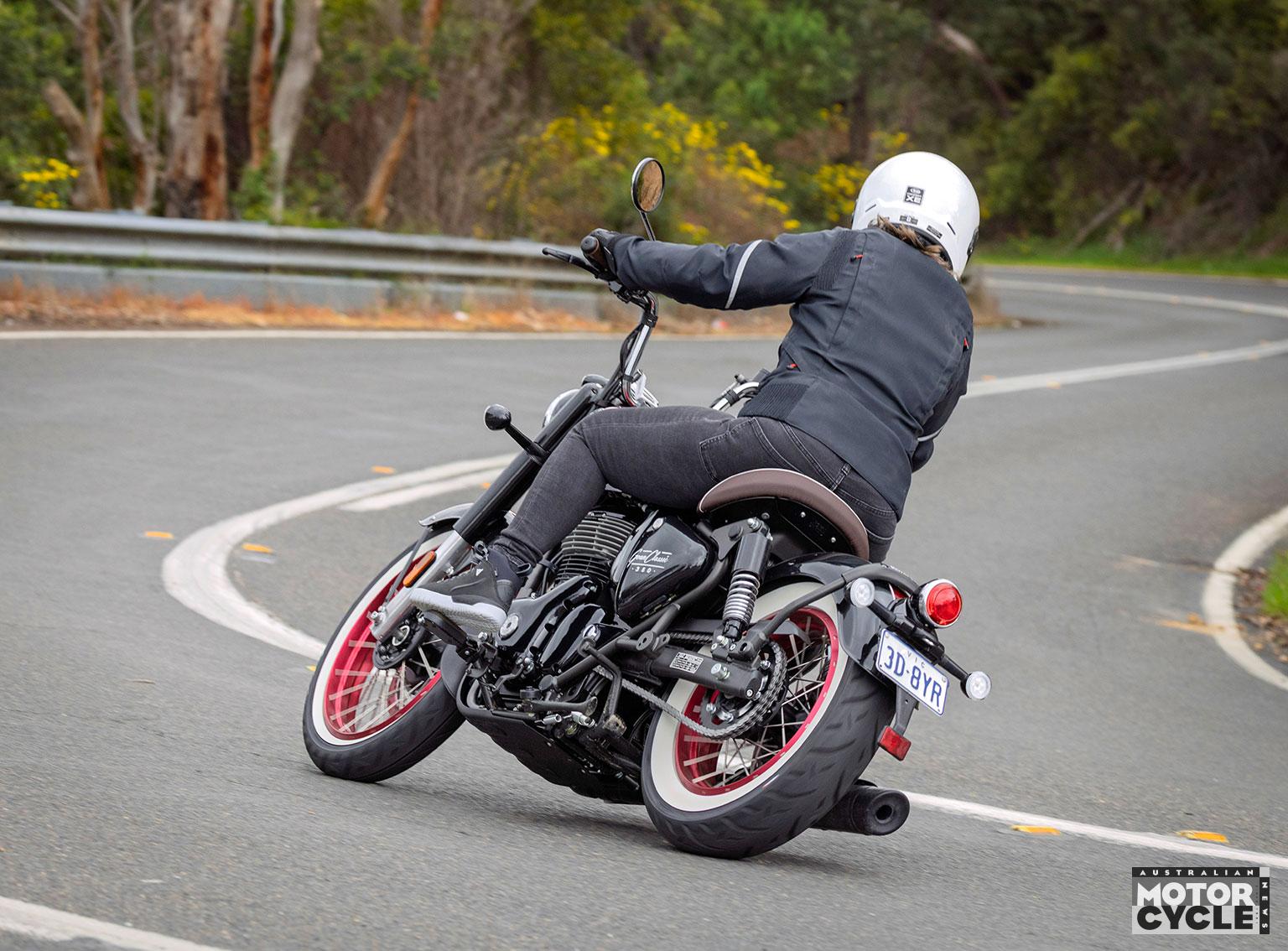
The wheel and tyre package adds to the effect. The Goan swaps the Classic’s 18-inch rear for a wider, smaller-diameter 130/90-16, which drops the ride height and puts your weight closer to the road. It also alters the way the chassis tips into corners, which is easier at low speed but less settled as the pace rises. Despite the broader tyre and taller ’bars, the Goan only adds 2kg over the Classic, tipping the scales at 197kg (kerb, claimed). The difference is negligible in practice, although the way that mass is distributed makes the Goan feel quite different from the Classic.

For relaxed cruising the Goan tracks along happily and willingly, but that easy trust you get from the Classic’s front end isn’t quite there. Instead you sense a touch of vagueness when the pace lifts, as though the front is doing its job a step farther away from the rider. It’s never unstable and it still holds a line without complaint, but you don’t get quite the same feel. For urban cruising or meandering back roads it’s not an issue, but compared directly with the Classic, the Goan trades away a measure of assurance for its niche custom styling.

Beneath the Goan’s brighter clothes lies the same 349 cc J-Series single you’ll find in the Classic, the Meteor and the Bullet. Its figures – 14.8kW (20.2hp) at 6100rpm and 27Nm at 4000rpm – don’t make for much to skite about over a beer, but Royal Enfield’s never been about performance. What matters is the feel. The long-stroke thump is a defining part of the package, delivering enough torque to pull cleanly from low revs and settle into that steady beat that’s happy to cruise along in top at 100–110km/h. Beyond that it grows busier, and you’re reminded this is a machine built for easygoing progress rather than getting anywhere quickly. The five-speed gearbox is unchanged too, with closely stacked lower ratios and a long-legged top gear that encourages that relaxed cruising. In fact the characteristic suits the Goan to a tee – relaxed, predictable and stubbornly unhurried.
The 41mm non-adjustable conventional fork and twin shocks with six-steps of preload adjustment remain basic but competent, offering enough compliance, travel and composure for the roads you’ll typically ride a Goan on. Likewise the braking package, with ByBre calipers squeezing a 300mm disc up front and a 270mm disc at the rear. It’s not an over-engineered set-up but it suits the bike’s remit.
The two-channel ABS is non-switchable, with no traction control or other electronic assistance, which feels true to the machine’s identity. You can ride it hard enough to expose the limits, but you’re unlikely to buy a Goan with that kind of use in mind.
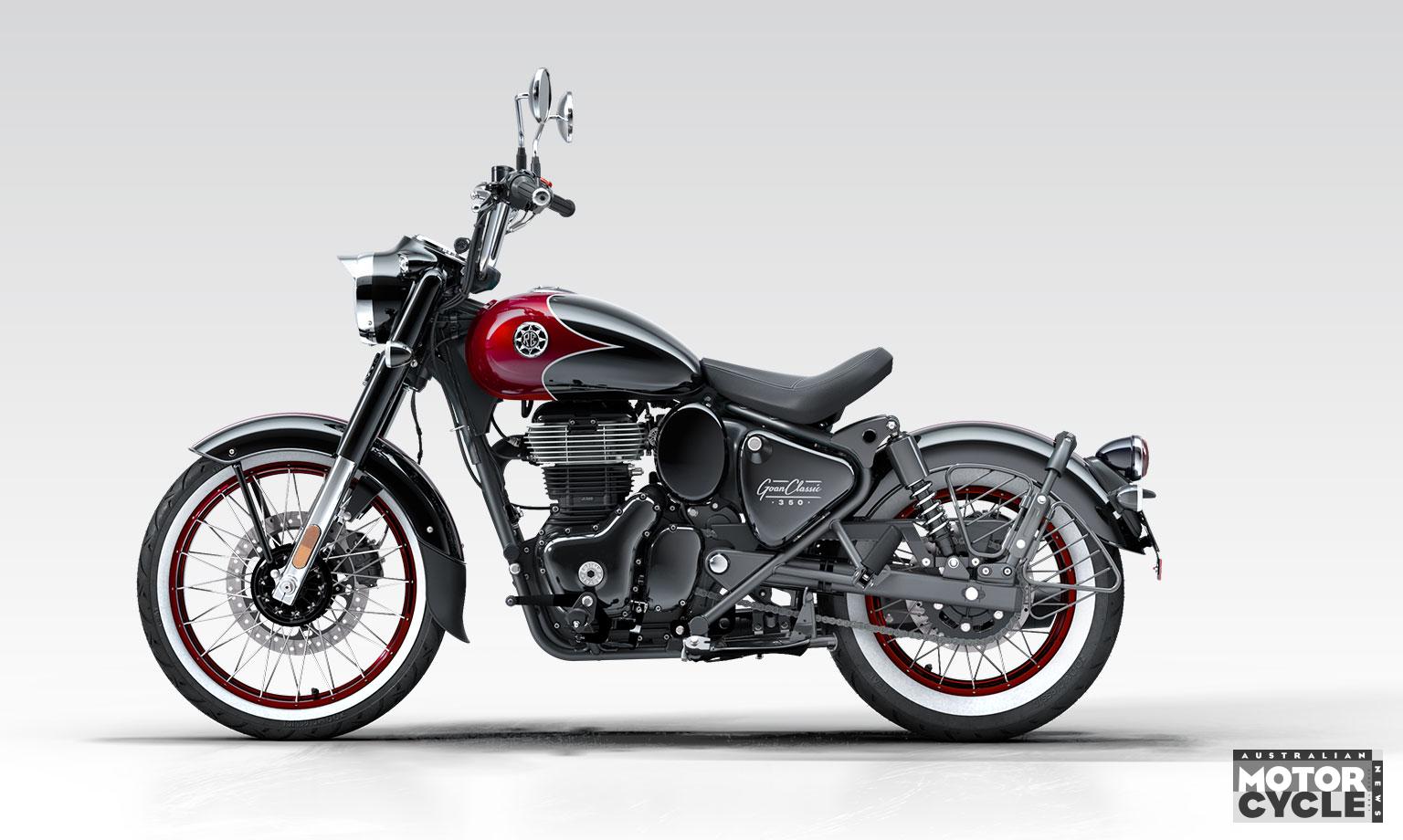
Where the Goan justifies part of its higher price tag is in equipment. There are LED lights all around, including the headlight, although what the brand refers to as the ‘tiger eyes’ lamps, which flank the headlight and can be traced all the way back to the early 1950s, remain incandescent for obvious reasons.
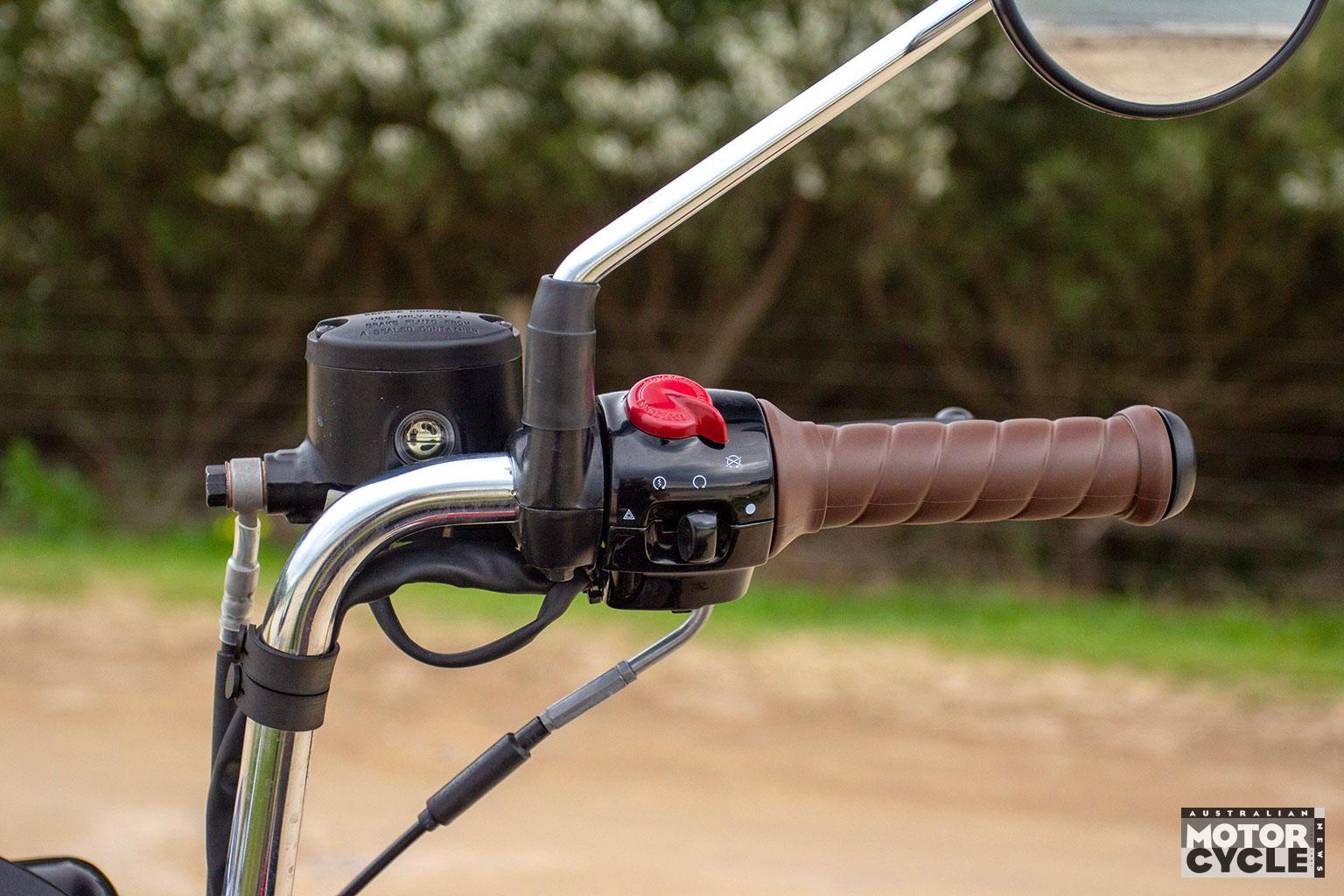
The switchgear is metal and feels solid, while the grips are styled to look as if they’re leather-wrapped, but do look a bit plasticky. A USB-C charging outlet and RE’s Tripper navigation unit come as standard, and adjustable levers are another useful touch. It’s essentially the Classic’s upper-tier features rolled into one package, then topped with a few tweaks aimed squarely at the custom crowd.
In terms of pricing and positioning, Royal Enfield’s 350 line-up has more or less made sense. At the entry point sits the Hunter, from $7590 ride away, a neat little roadster that’s become a gateway to the brand. Above it comes the iconic Bullet, priced from $7890 and carrying all the heritage weight of the longest-running nameplate in motorcycling. The Classic 350 is next in line, stretching from $7990 for the Heritage version through to $8790 for the Chrome, and has to date been the platform’s most coveted model. The Meteor cruiser was the outlier, starting at $8190, and catering to riders who want feet-forward comfort.
Now comes the Goan Classic 350, priced from $8890 in Shack Black and rising to $8990 for the brighter Trip Teal or Rave Red colourways. That means every Goan, regardless of finish, sits above the Chrome-spec Classic, which is itself covered in chrome and arguably the most premium-looking 350 in the line-up. To my mind, it’s an unusual choice of positioning. Sure, we’re only talking $100 difference at its closest point, and while on one hand you can see where the extra dollars have gone: tubeless cross-spoke wheels, all-LED lighting, upgraded switchgear and distinctive paintwork. On the other hand though, the Goan feels more like a niche expression than the standard-bearer. It’s the boldest option but not necessarily the most universal, which I think makes its top-shelf billing a little harder to justify.

But maybe I’m splitting hairs. Because in any case, the Goan Classic 350 is proof that Royal Enfield can spin a lot from a single platform. It takes the Classic’s mechanical core and dresses it for a crowd that values stance and spectacle as much as tradition. It’s easy to ride, surprisingly comfortable and stacked with modern features, yet it sacrifices some of the Classic’s planted assurance and risks pricing itself into a corner.
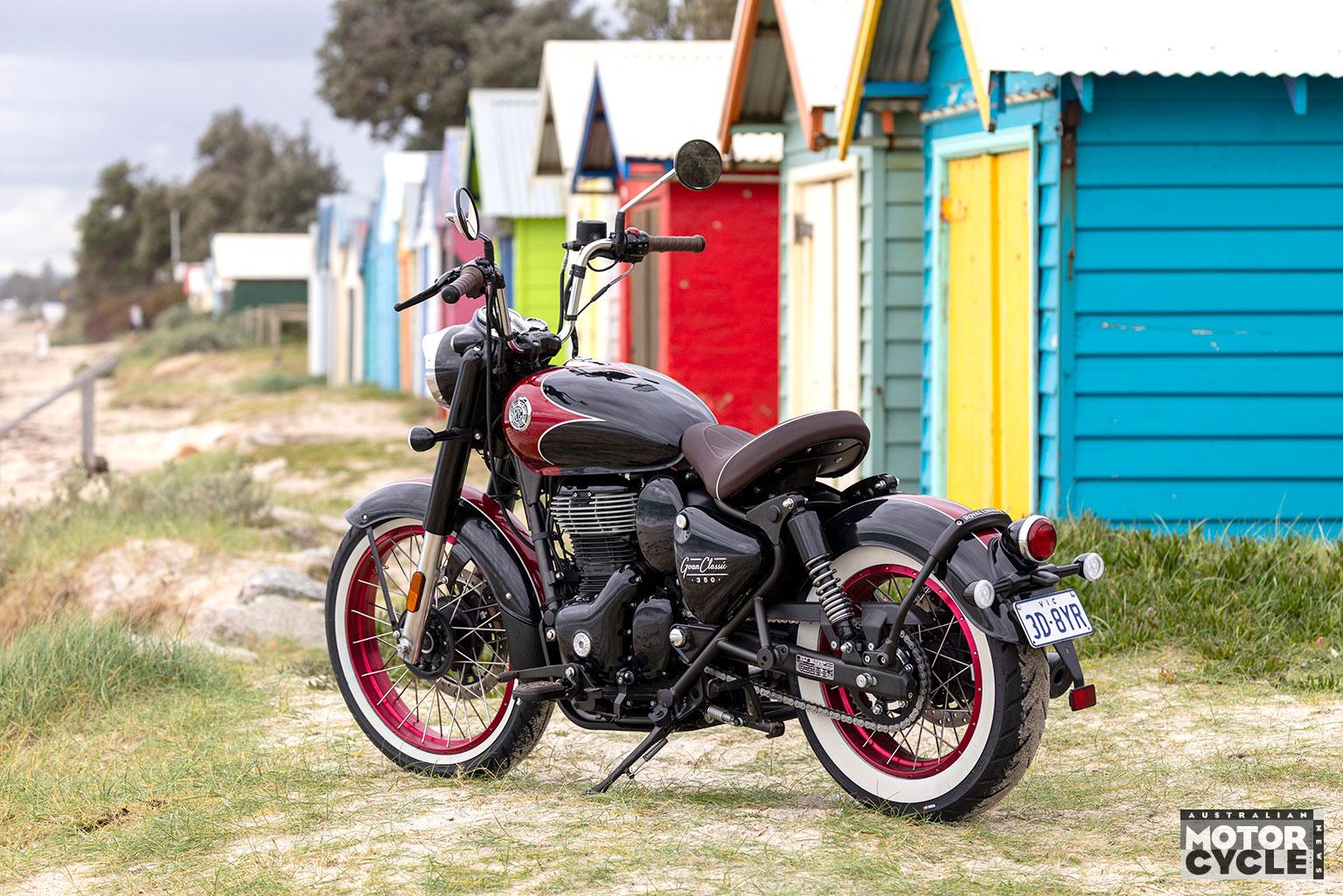
Some riders will be drawn to the style immediately, others may not, but as Royal Enfield’s first nod to the scene, the Goan arrives as a ready-made custom straight from the factory. And for riders chasing character over convention, the Goan is an affordable, well-equipped package and Royal Enfield’s boldest 350 yet.
✅ PROS – Distinctive styling with factory custom flair, well-equipped and still very accessible on price.
❌ CONS – Ergonomics won’t suit everyone, gear lever reach is awkward and top billing in 350 range is debatable.
Custom Competition
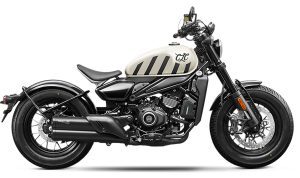
CFMoto 450CL-C Bobber – $9490 (ride away)
The CFMoto 450CL-C Bobber runs a 449.5cc liquid-cooled parallel twin (30kW/42Nm) with a six-speed gearbox and belt final drive. It rides on aluminium alloy 16-inch wheels with CST tyres, 130/90 front and 150/80 rear. Suspension is via an USD fork and monoshock, while braking comes from a 320 mm J.Juan four-piston radial front disc and 220mm rear disc. Dual-channel ABS and traction control are standard. Seat height is 715mm, wheelbase 1485mm and weight 177kg.
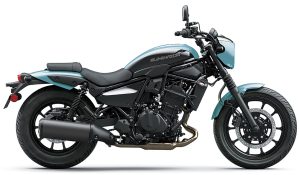
Kawasaki Eliminator 500 SE – from $11,441 (ride away)
The Kawasaki Eliminator 500 SE is powered by a 451 cc liquid-cooled DOHC parallel twin producing 33.4kW (45hp) at 9000rpm and 42.6 Nm at 6000rpm, paired with a six-speed gearbox and chain final drive. It runs a trellis steel frame, a 41 mm telescopic fork with 120mm of travel, and twin rear shocks with 90mm of travel. Brakes are dual-piston calipers ( 310mm front and 240mm rear disc). Seat height is 735mm, wheelbase 1520 mm and curb weight is 177 kg.
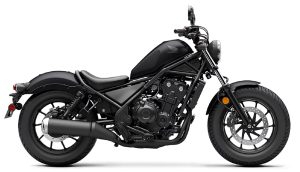
Honda CMX500 Rebel – from $10,463 (ride away)
The Honda CMX500 runs a 471cc liquid-cooled parallel twin with fuel injection, producing 34kW (45.5hp) at 8500 rpm and 43.2Nm at 6000 rpm, paired with a six-speed gearbox and chain drive. Suspension comes via a 41mm telescopic fork with 121mm of travel and twin rear shocks with 95mm of travel. Braking is handled by a 296mm front disc and 240mm rear, both with ABS. It weighs 190kg, with a 690mm seat height and an 11.2-litre tank.
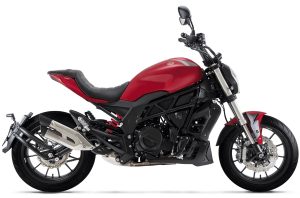
Benelli 502C – $10,590 (ride away)
Benelli’s 502C is a 499.6cc liquid-cooled parallel twin producing 35kW (47hp) at 8500rpm and 45Nm at 5000rpm, paired with a six-speed gearbox. It runs on 17-inch alloys with a 120/70 front and 160/60 rear, suspended by a 41mm USD fork and a rear monoshock. Braking comes from dual 280mm discs up front and a 240mm disc at the rear, backed by dual-channel ABS. With a 750mm seat, 1600mm wheelbase and 21-litre tank, it weighs 217kg. Styling is a mixture of traditional and modern.
Classic V Goan
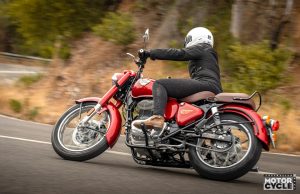
On paper the Goan grows only 10mm in wheelbase and 2kg in weight over the Classic, yet it feels like a very different motorcycle. The seat height drops from 805mm to 750mm, which lowers the rider into the bike and makes it easier to reach the ground. At the same time, the broader ’bars stretch the overall width to 825mm and raise the height to 1200mm, exaggerating its stance. The rear tyre swells to a 130/90-16 in place of the Classic’s 120/80-18, pulling the back down and giving the Goan its stockier, custom-inspired look. Interestingly, overall length actually shortens to 2130mm, so while it looks bigger and bolder, the Goan is fractionally more compact nose to tail. Small differences, but together they explain why the Classic feels centred and steady, while the Goan feels lighter in the hands and more dramatic on the road.
SPECIFICATIONS

ENGINE
Capacity 349cc
Type Single-cylinder, SOHC, two valves
Bore & stroke 72mm x 85.8mm
Compression ratio 9.5:1
Cooling Air/oil
Fueling EFI
Transmission Five-speed
Clutch Wet, multi-plate
Final drive Chain
PERFORMANCE
Power 14.87kW (20.2hp) @ 6100rpm (claimed)
Torque 27Nm @ 4000rpm (claimed)
Top speed 115km/h (est)
Fuel consumption 2.7L/100km (claimed)
ELECTRONICS
Type Not applicable
Rider aids Two-channel ABS
Rider modes Not applicable
CHASSIS
Frame material Steel
Frame type Twin-downtube cradle
Rake Not given
Trail Not given
Wheelbase 1400mm
SUSPENSION
Type Royal Enfield branded
Front: 41mm telescopic fork,
non-adjustable, 130mm travel
Rear: 2 x twin-tube emulsion shock absorbers with six-step adjustable preload, 90mm travel
WHEELS & BRAKES
Wheels Side-laced wire-spoked
Front: 19in x 2.15 Rear: 18in x 3.0
Tyres Ceat Zoom Classic
Front: 100/90-19 (63P)
Rear: 130/90-16 (74P)
Brakes ByBre, ABS
Front: Single 300mm disc, twin-piston caliper
Rear: Single 270mm disc, single-piston caliper
DIMENSIONS
Weight 197kg (kerb, claimed)
Seat height 750mm
Width 825mm
Height 1090mm
Length 2130mm
Ground clearance 170mm
Fuel capacity 13L
SERVICING & WARRANTY
Servicing First: 500km
Minor: 5000km
Major: 10,000km
Warranty Three years, unlimited kilometres
BUSINESS END
Price From $8890 (ride away)
Colour options Shack Black, Rave Red or Trip Teal
CONTACT