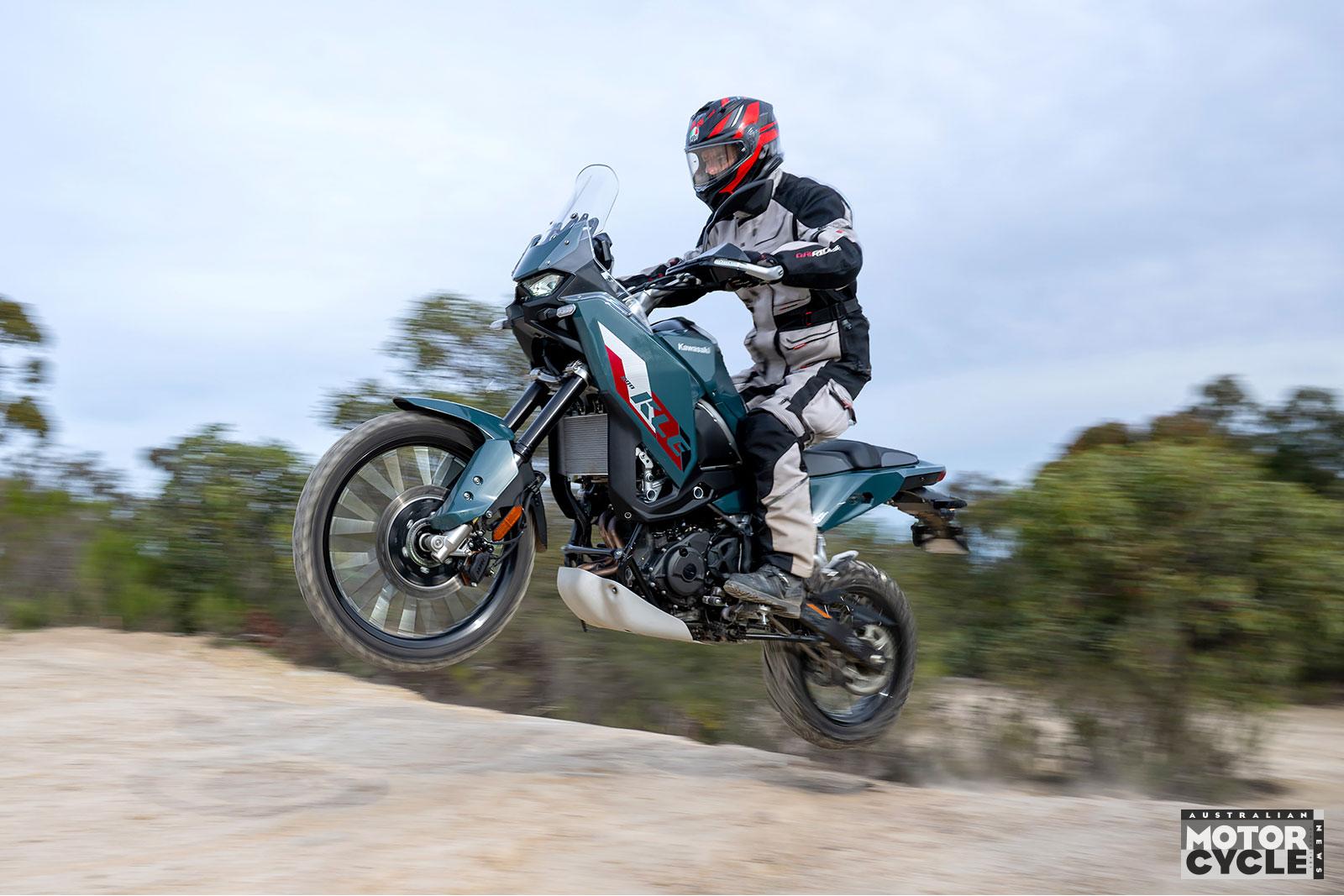
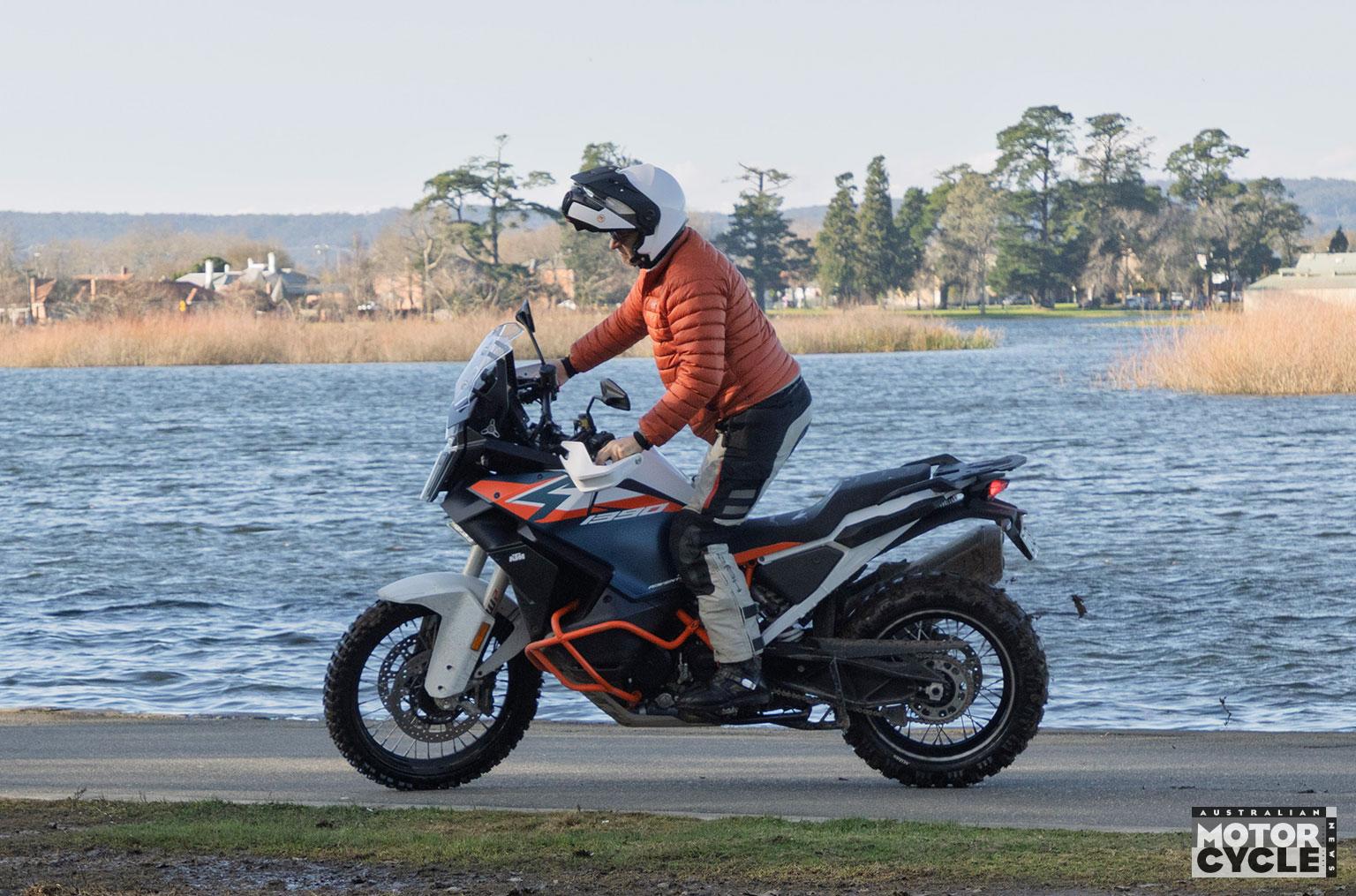
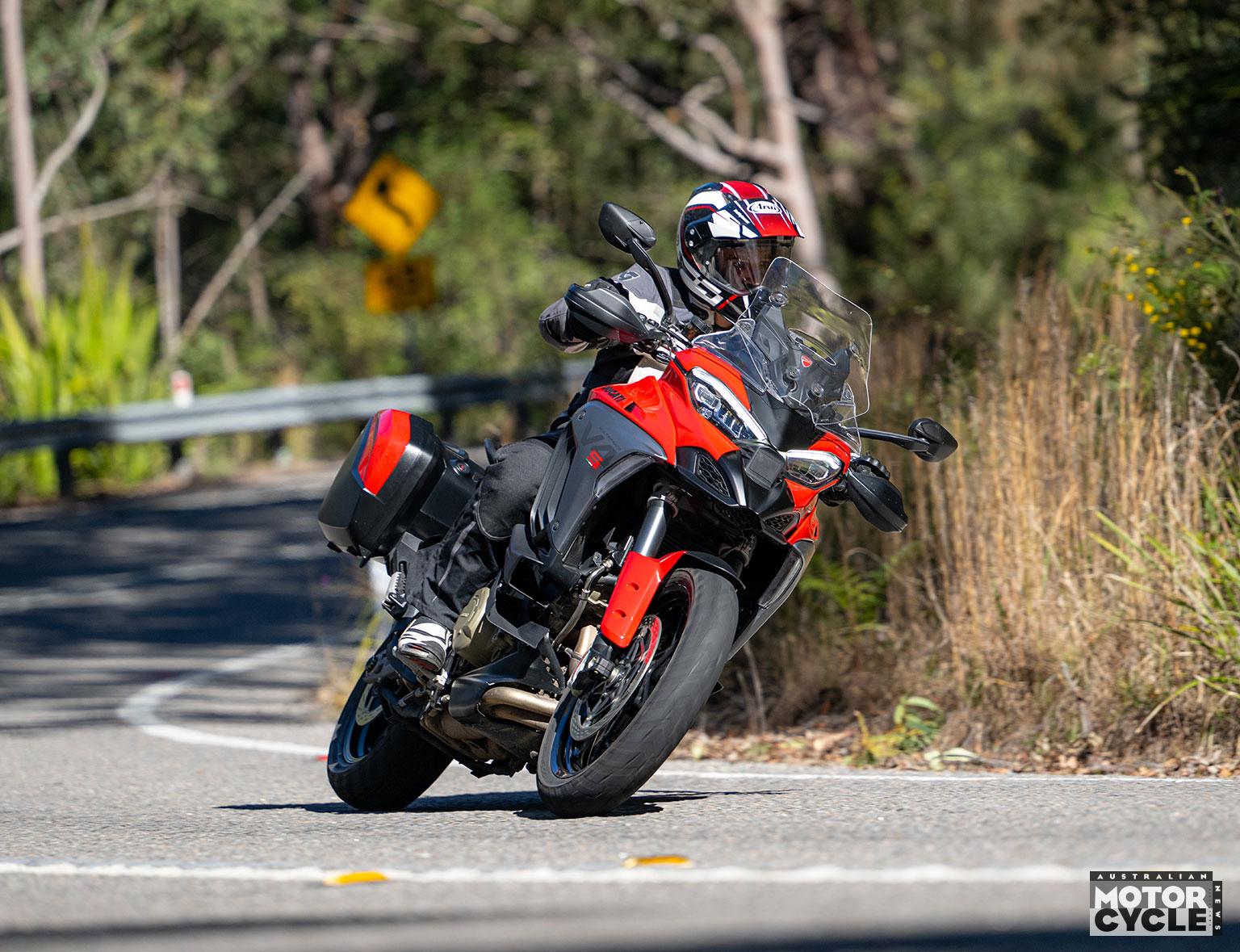
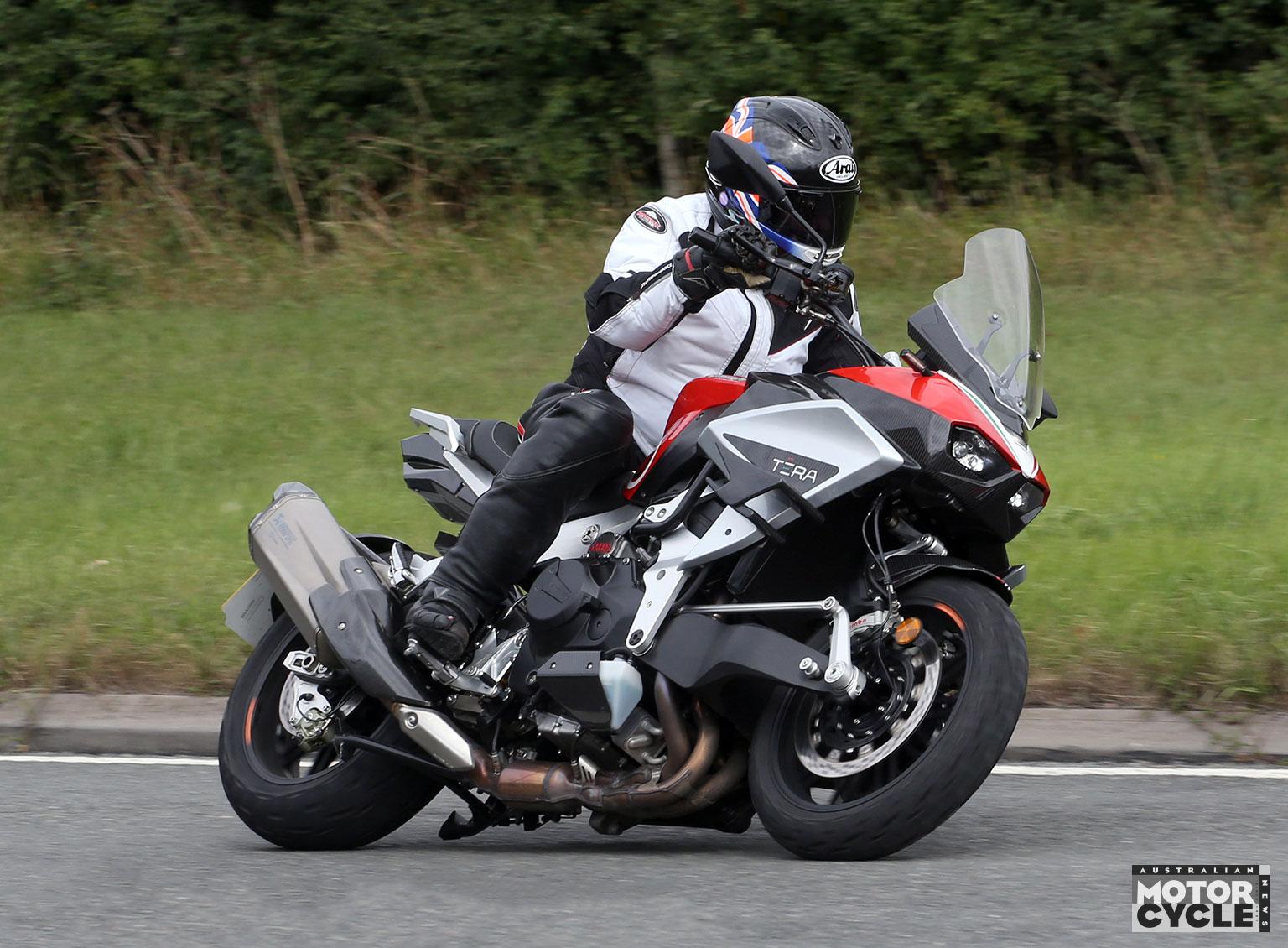
Finally – proof that you don’t need bulk or big dollars to chase big horizons
When I was a kid in the 80s, an adventure bike was the bike you had. You strapped on your luggage and off you went. Over the decades since, we’ve had a steady trickle of specialised choices for adventure but they seemed to get bigger, heavier and crazy expensive. Finally, we are getting choices in the smaller, lighter and more affordable category. And with the introduction of KTM’s all-new 390 range, high performance has been added to the mix.
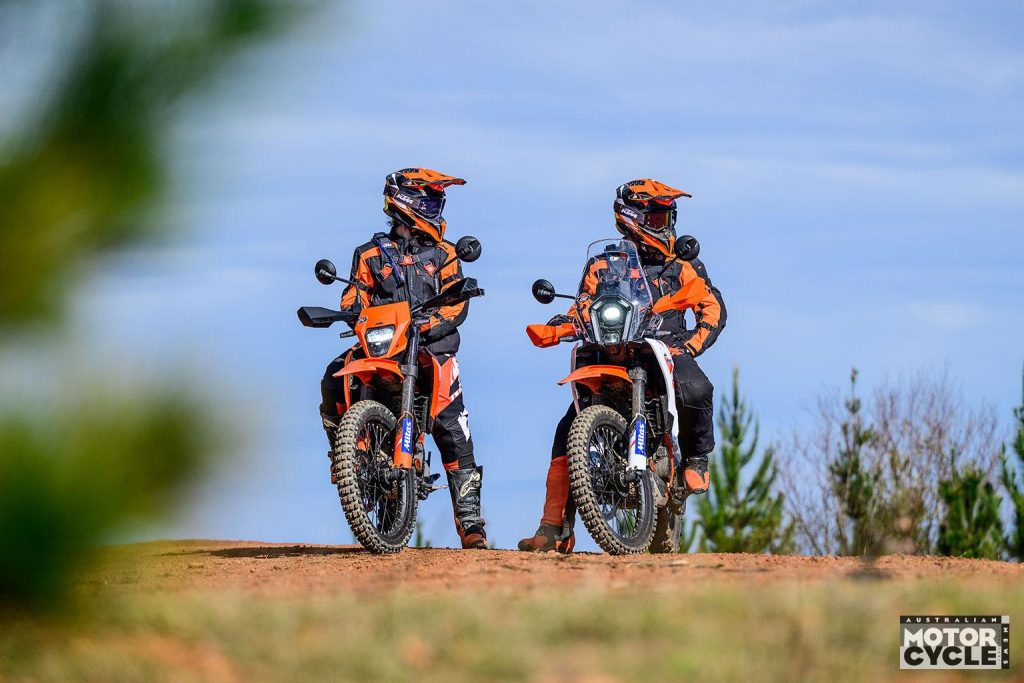
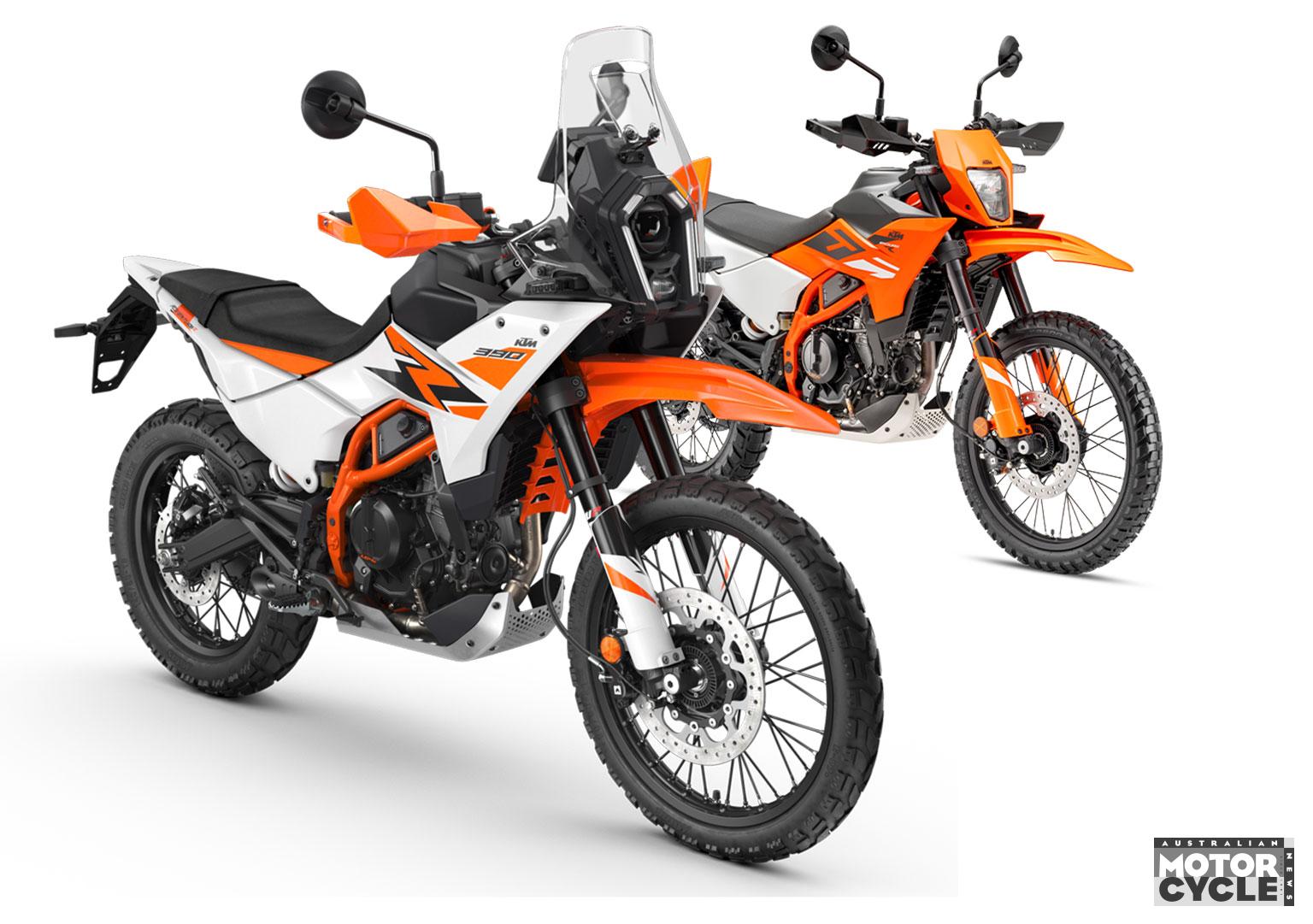
I tested two of the 390s during the official launch of the Adventure R and Enduro R on the NSW South Coast, changing my mind several times on which one could be my ultimate adventure bike.
RHYTHM IN THE RAIN
We began our three-day ride in typical adventure style – in rain, fog and on a long stretch of asphalt. But before heading off astride an Enduro R, I did my usual warm-up of riding half-a-dozen full-lock standing figure-eights. It felt great. A bit soft in the suspension, but the left-right transition wasn’t scary like some bikes; the steering was smooth and the front didn’t feel like it wanted to tuck.
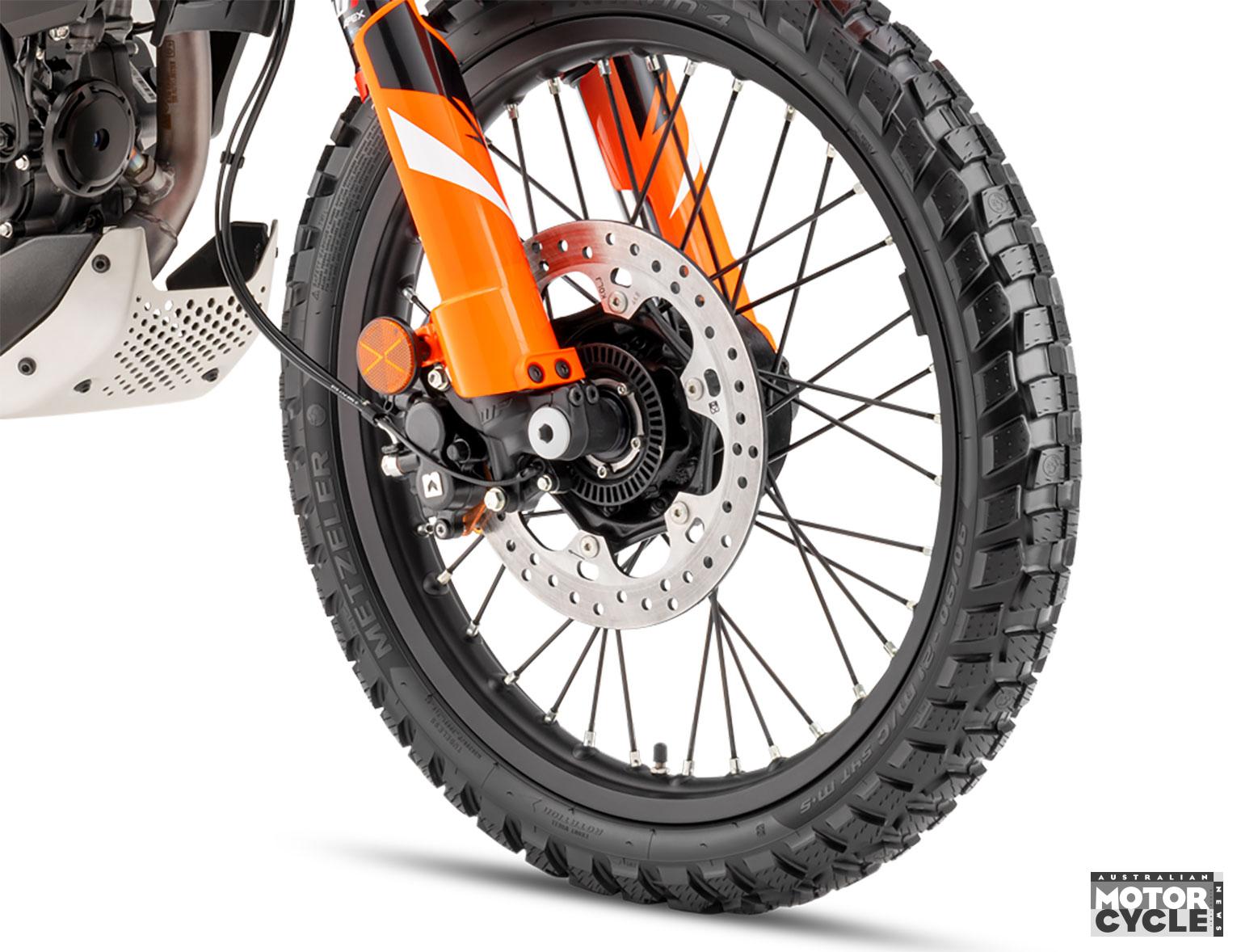
We had a few hundred kilometres to get to our accommodation, and 70 per cent was on road. I didn’t mind. It gave me time to play with the electronics and suss out cruising speeds; 100km/h felt good at 6000rpm; 120km/h at 7000rpm felt like I was revving it a bit hard for long stretches, especially with a redline of 9000rpm. It was also very stable, even when I was provoking it to twitch and carry on, and it continued tracking straight and rock solid on the tight and epic windy roads up and down the mountains either side of Kangaroo Valley. The bike and quickshifter combined well with the Mitas XT Plus tyres and could comfortably double the speed sign recommendations. Thankfully, the electronics options are few, straightforward, and can be worked out while riding.
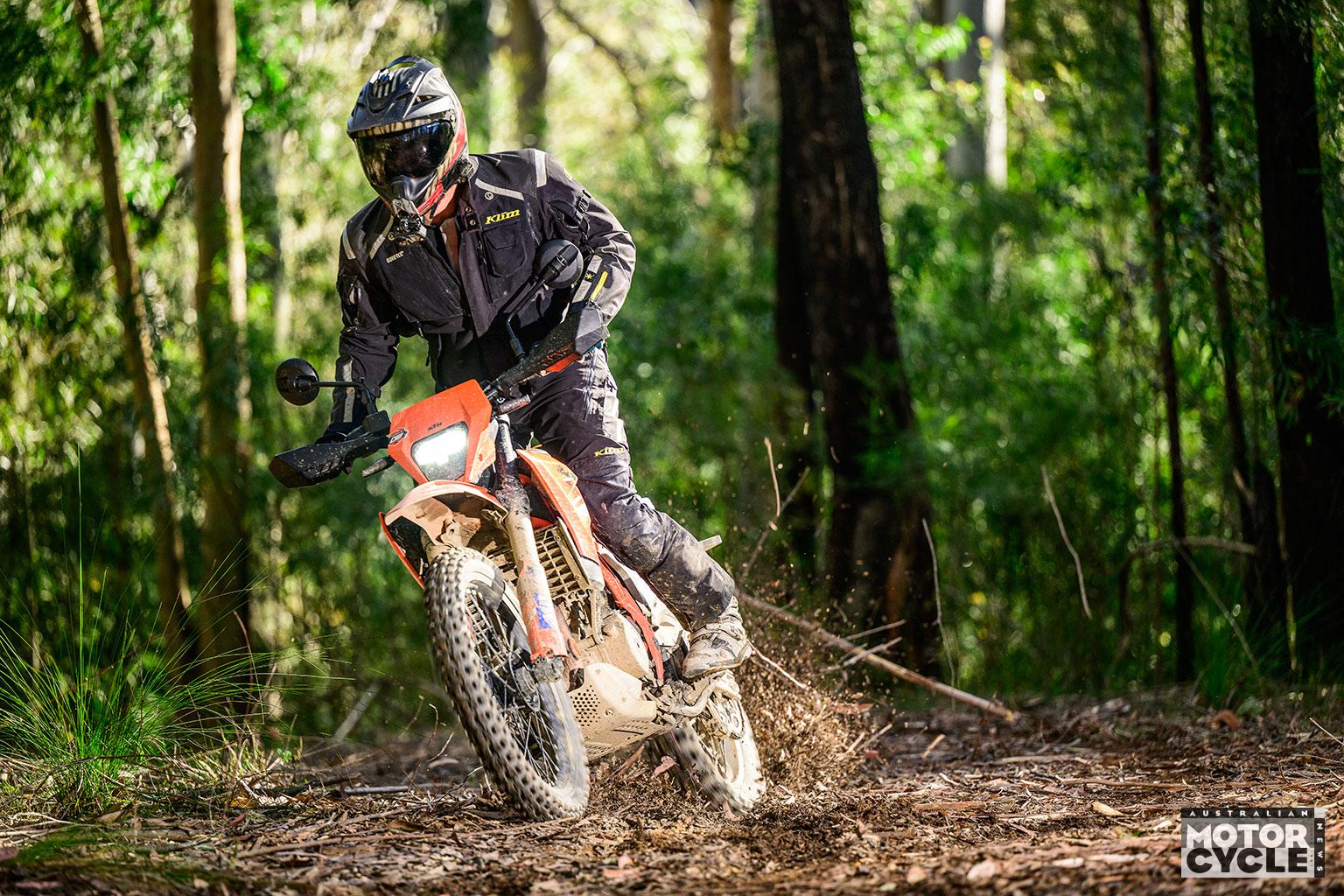
The Enduro R has simplified options compared to the Adventure R, and while I usually skip deep dives into the electronics (they can be very complicated), I was playing around with them to distract from how cold I was without the Adventure R’s windscreen. Turns out Street mode has less power down low and more up top, which is the exact opposite of what happens on the big KTMs. It makes sense as the bike is kinda underpowered, and less power down low in Offroad mode wouldn’t make sense.
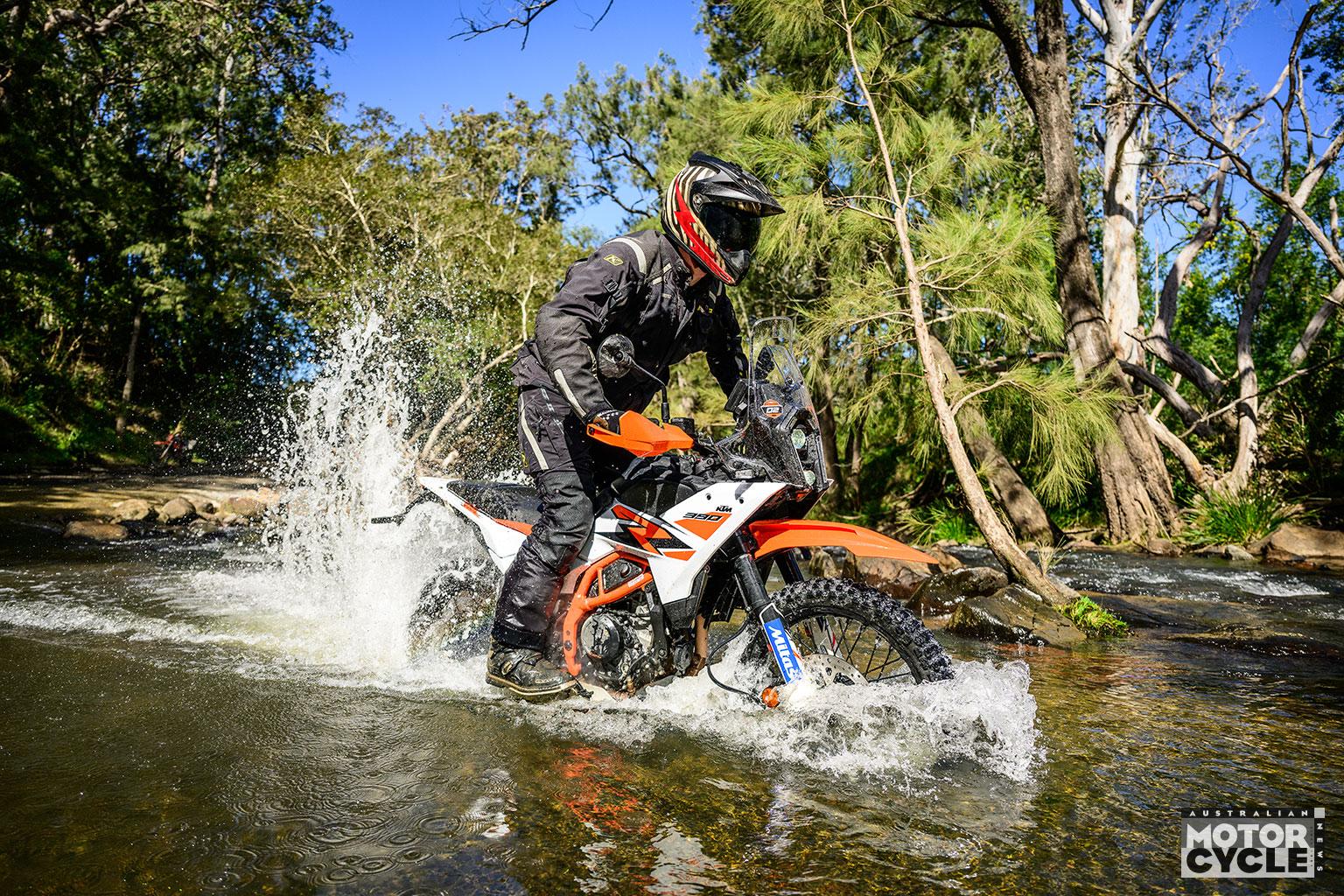
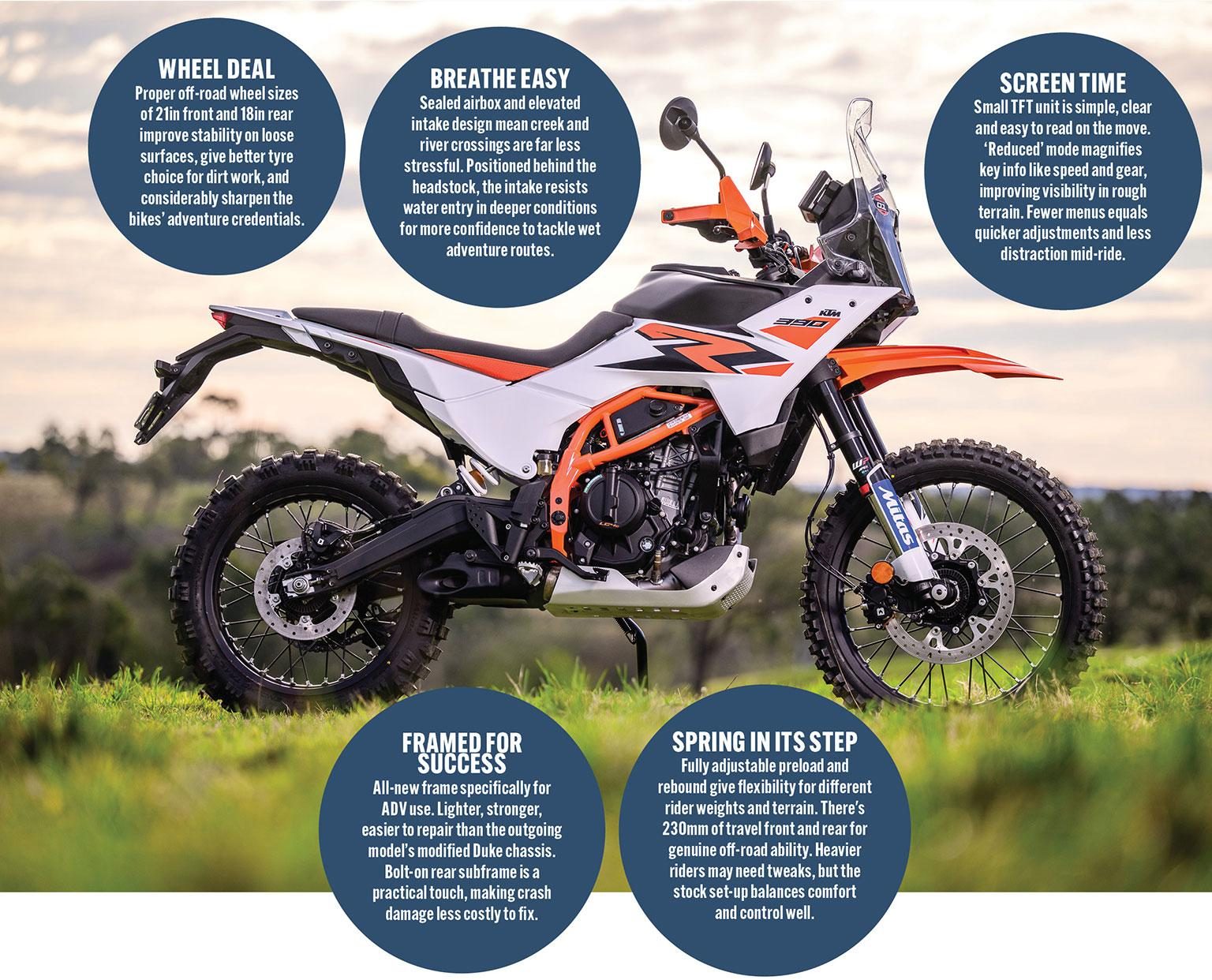
My favourite electronic setting was the Reduced mode on the TFT screen, which made the gear and speed info huge, so a quick glance down revealed the essential data in the shortest possible time. A dedicated Traction Control button would be nice.
It’s a simple menu, but when you’re in third gear tapped up a gravel mountain road and hit erosion damage and get no drive at all, you want to hit a button rather than menu-dive. I think the only use for TC on a low-powered bike is uphill in slick mud, where it works very well.
DIALLING IT IN
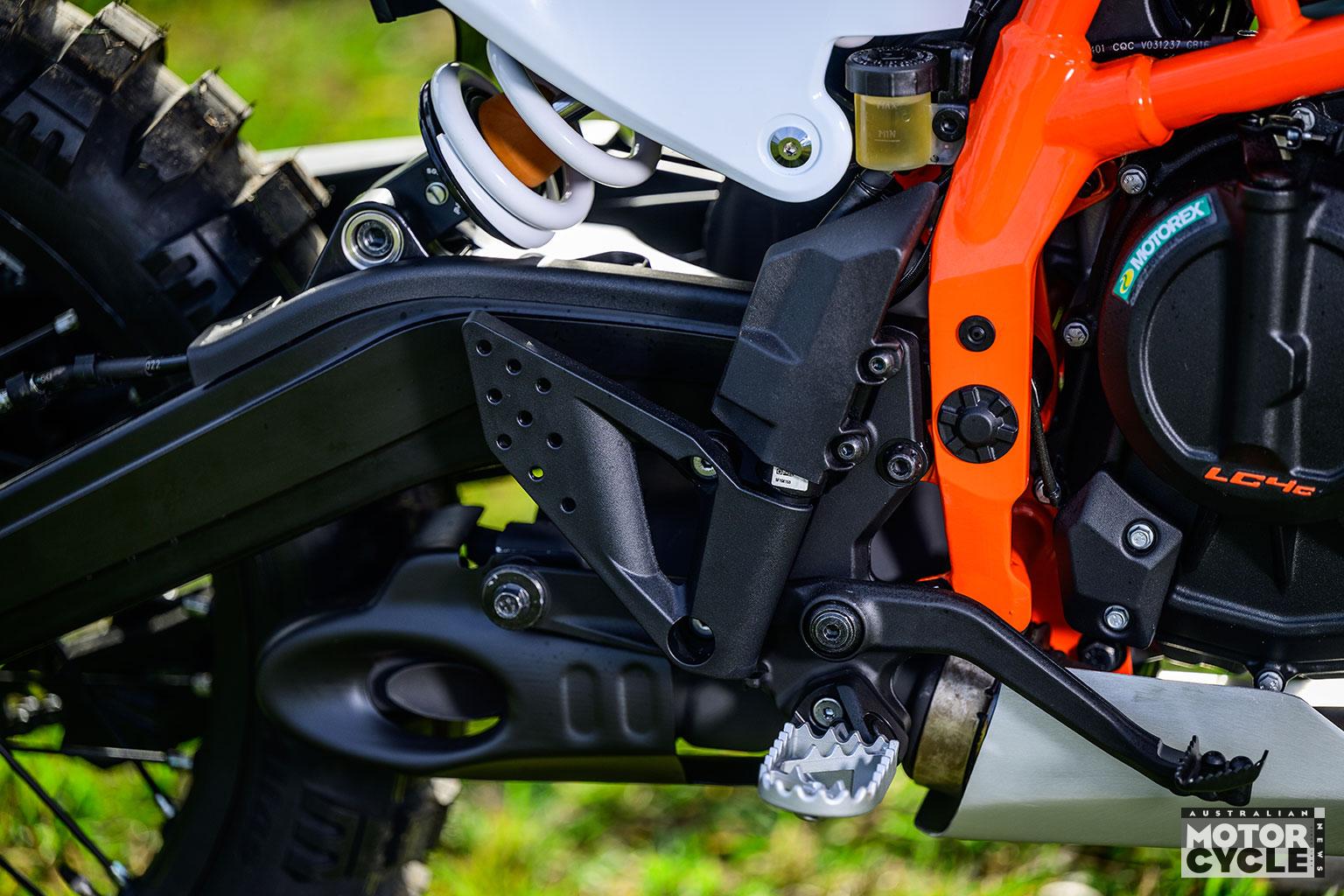
At 105kg, I’m too heavy for the stock suspension, so I was the first to get mine adjusted; others soon followed. Marketing manager Rosie Lalonde even commented the bike felt better with the preload wound up. But while no one was saying the upgrade to Xplor Pro was necessary, all were keen to try it because expensive suspension is like a magic carpet when set up right.
I had no issues riding it after I maxed out the preload. Riding around the limitations was fine, but I’m very keen to try the up-spec Xplor Pro fork cartridge kit and shock. At 187cm, I would love a taller seat, mainly for the road sections.
THE TORTURE TEST
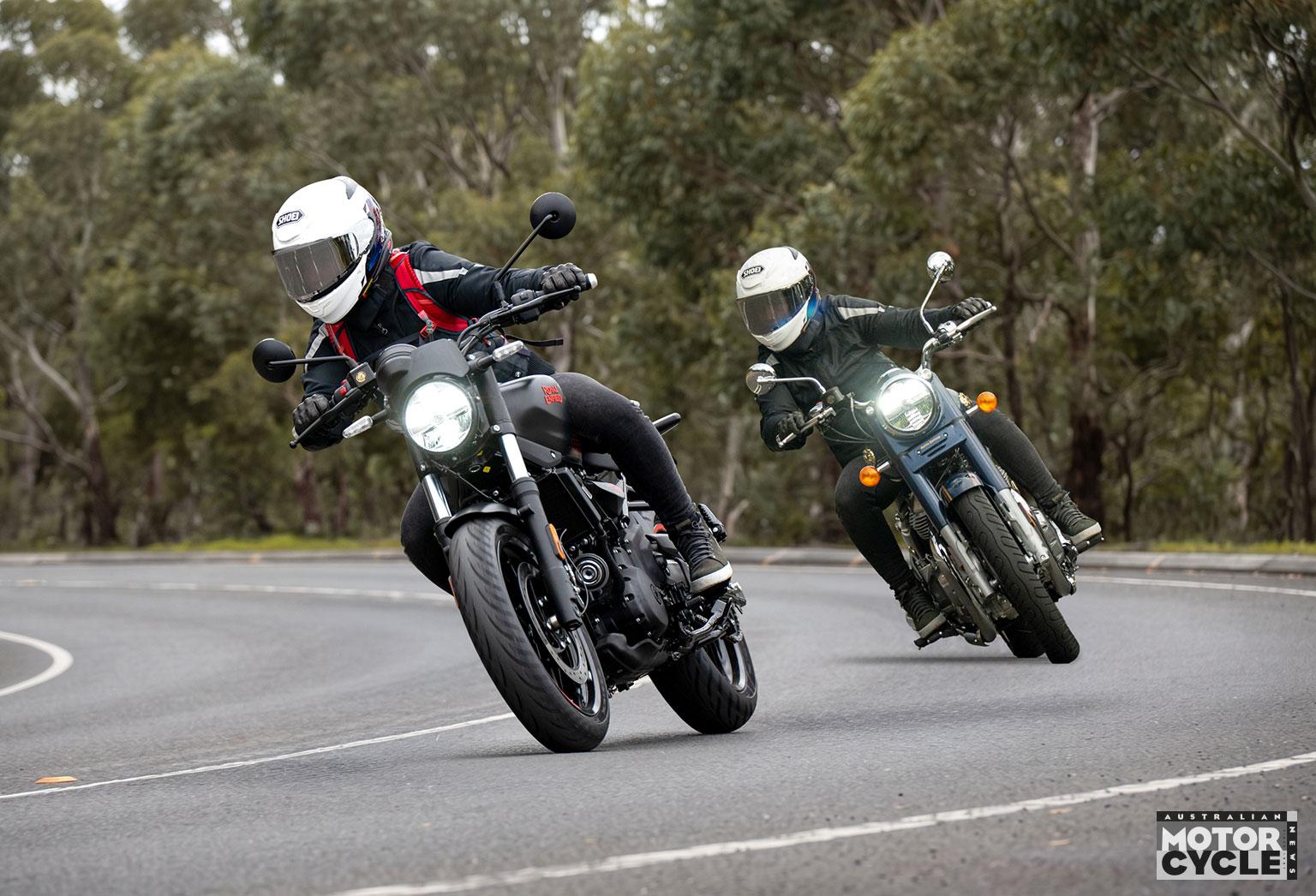
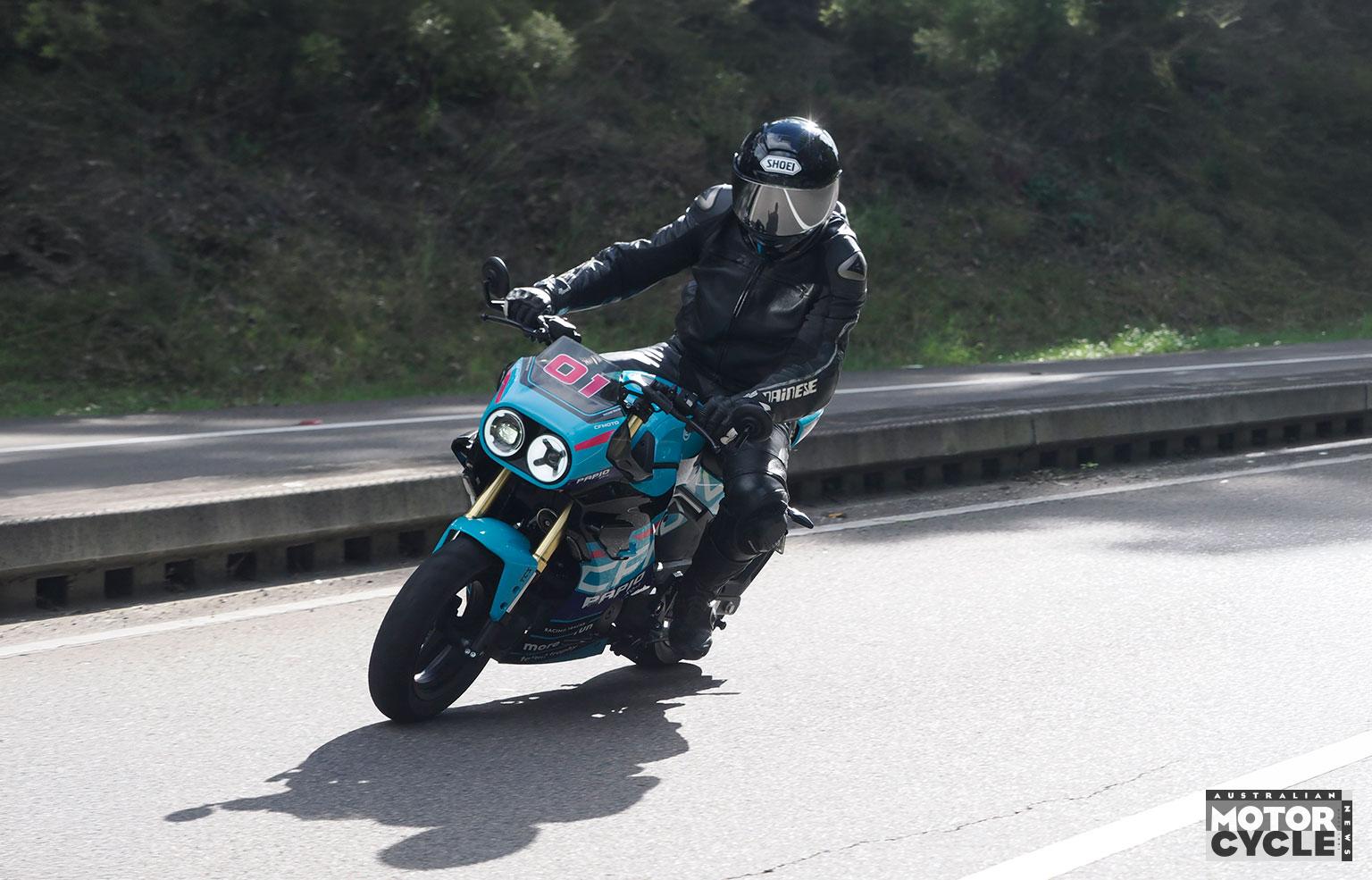
The older and more skilled I get, the more I prefer more difficult terrain, smaller bikes and lighter luggage. I recently sold my heavily adventure-ised Yamaha WR250R as the options for out-of-the-box ready smaller adventure-ised bikes were opening up with the Royal Enfield Himalayan and CFMoto 450MT. They’re both excellent bikes, but not quite high-performance. Was this bike going to be my unicorn?

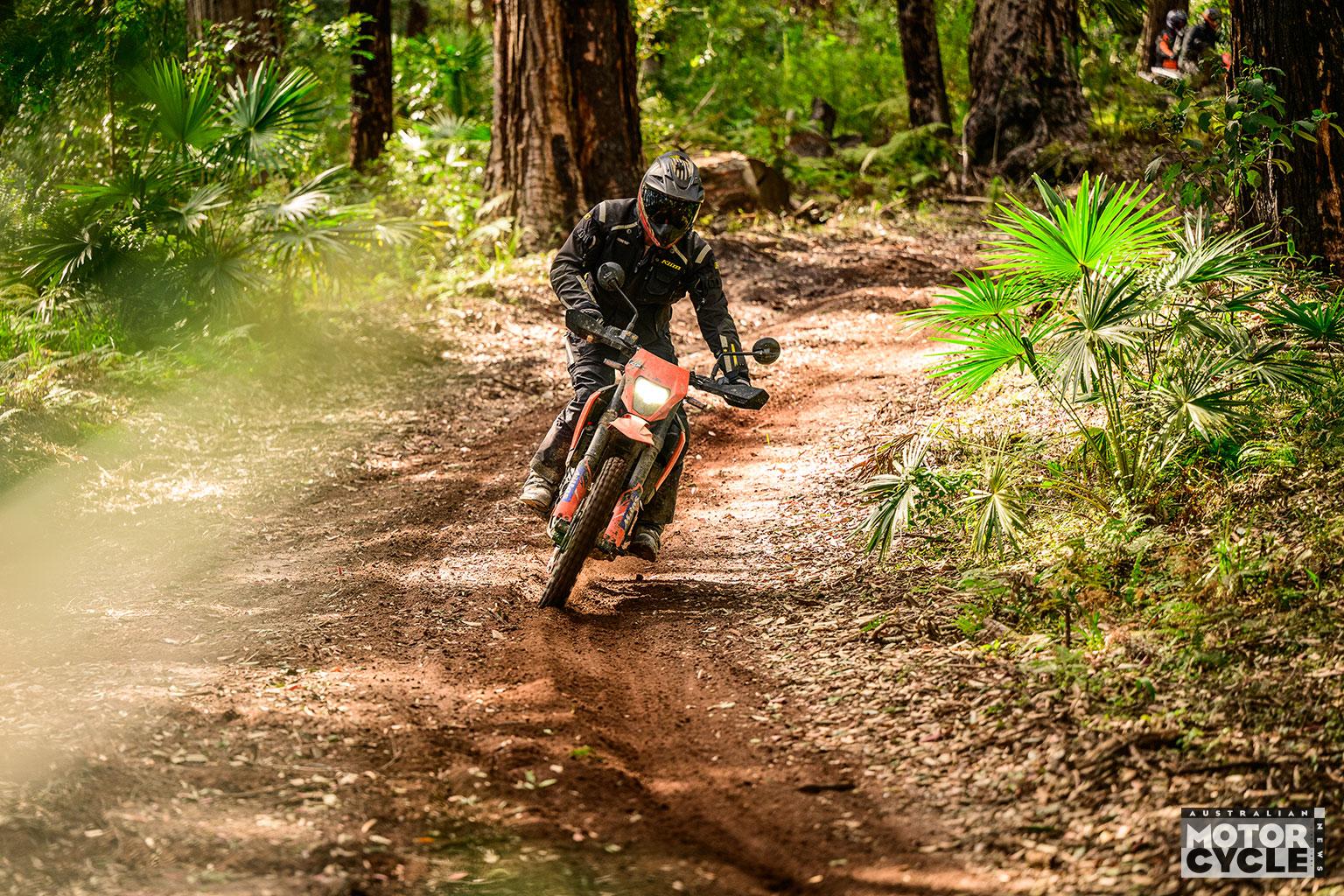
We had the luxury of riding without luggage, so the only thing to do was to send it and find the limits. Thankfully, we were doing the cornerman system, which is great to get a rest from this tiring sending it caper. Six journos put these two 390s through their paces, with a few remarking, “I don’t think these bikes were designed for this torture test.”
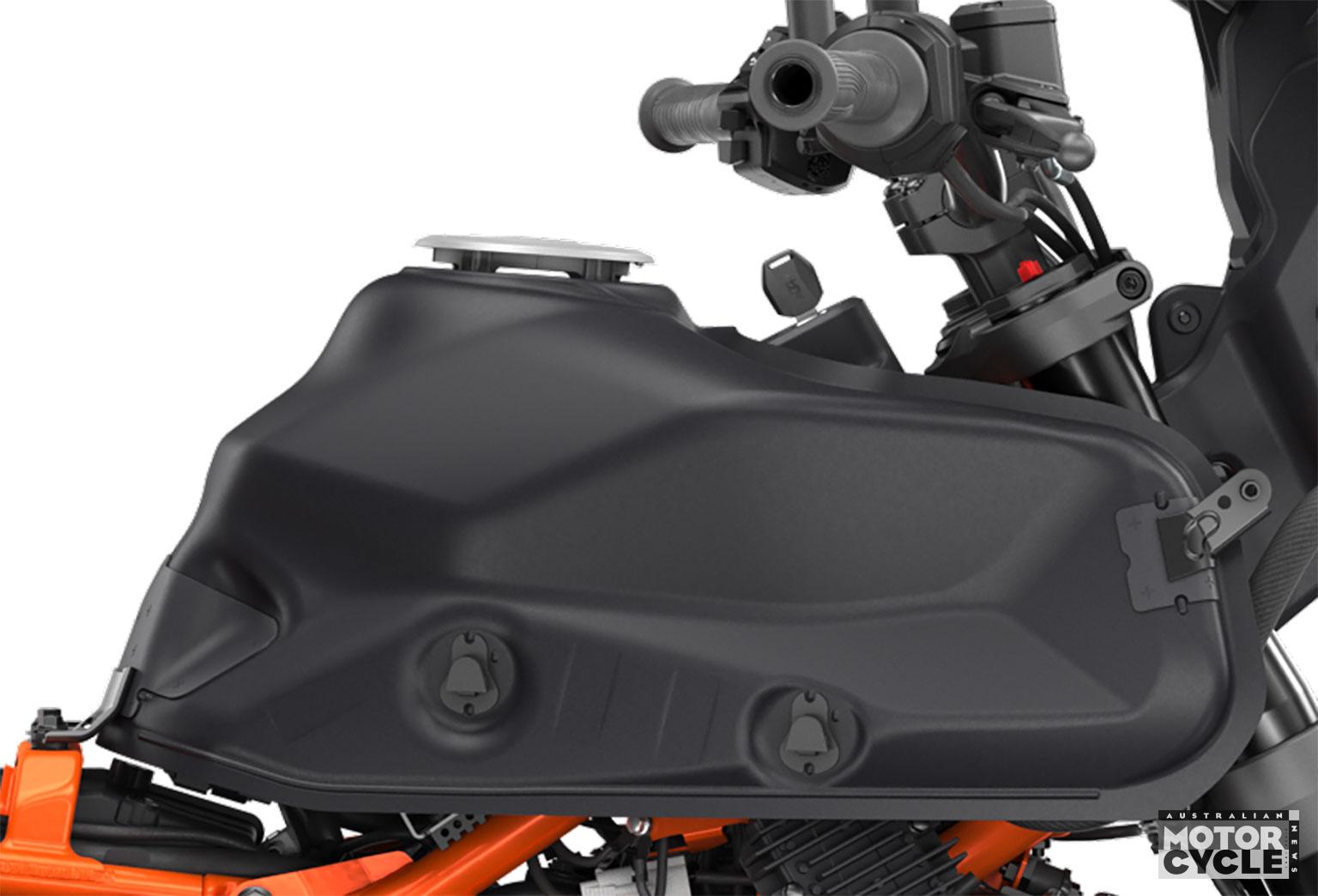
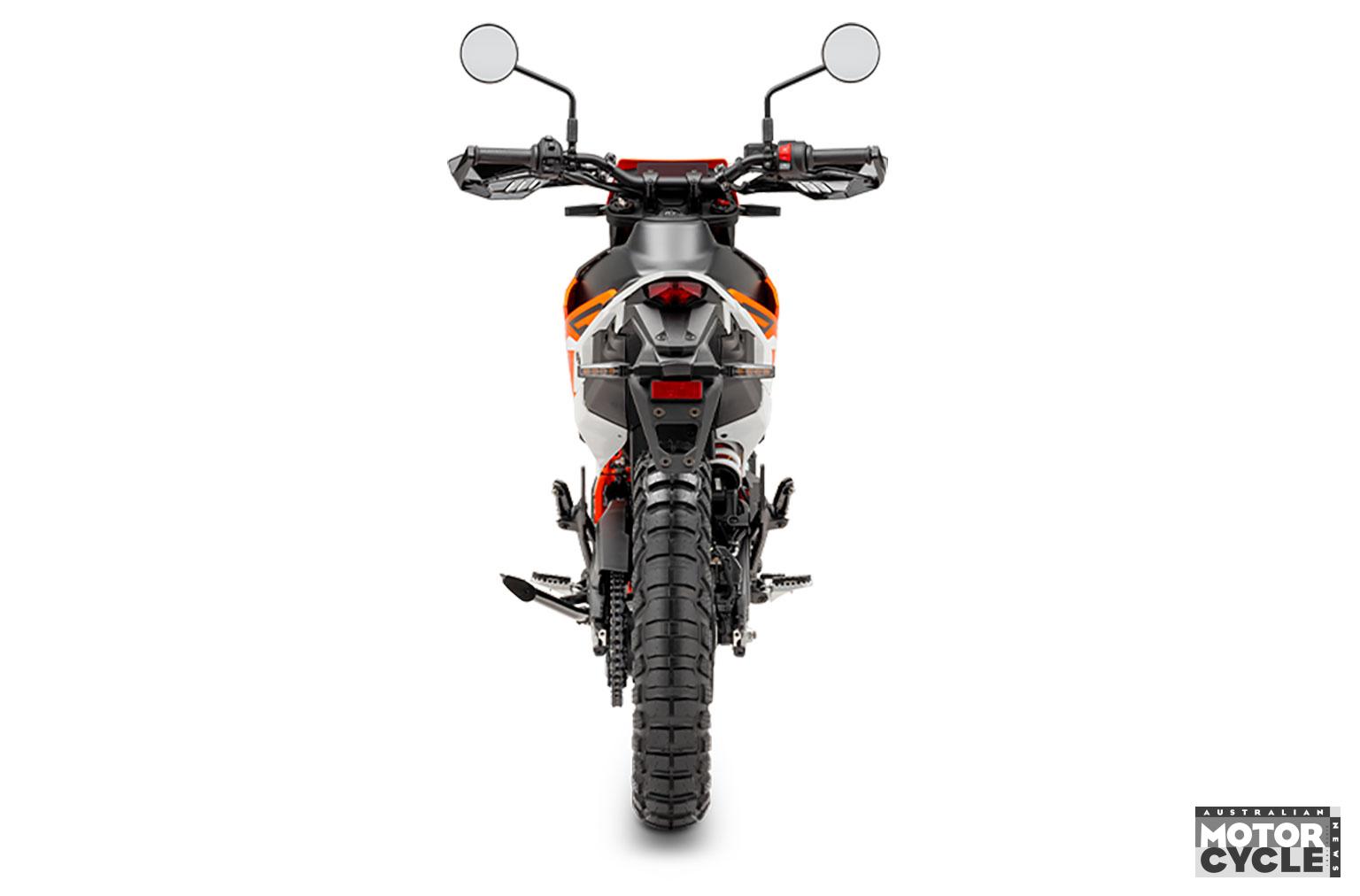
KTM didn’t actually say what they were designed for or for whom. With such a low price point, it’s easy to assume they’re for beginners or riders new to adventure bikes. Although it’s obvious where the cost compromises are, such as the cheaper WP Apex suspension and steel tanks instead of plastic, they excel where it counts: in handling, ergonomics and, dare I say, the TFT, which isn’t necessary, but when turning the key, you are confronted with “READY-TO-RACE”. I think the “R” tag is deserved.
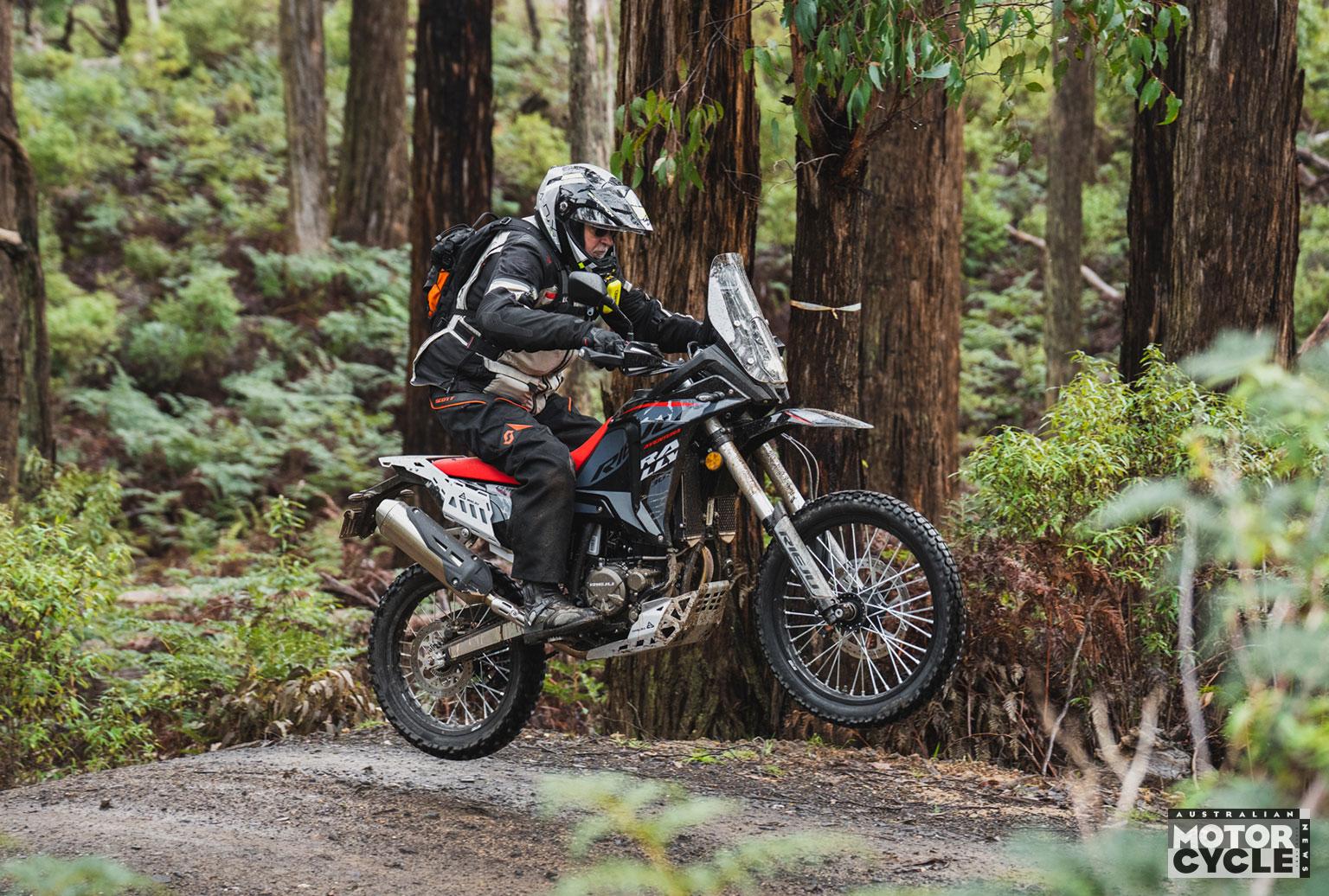
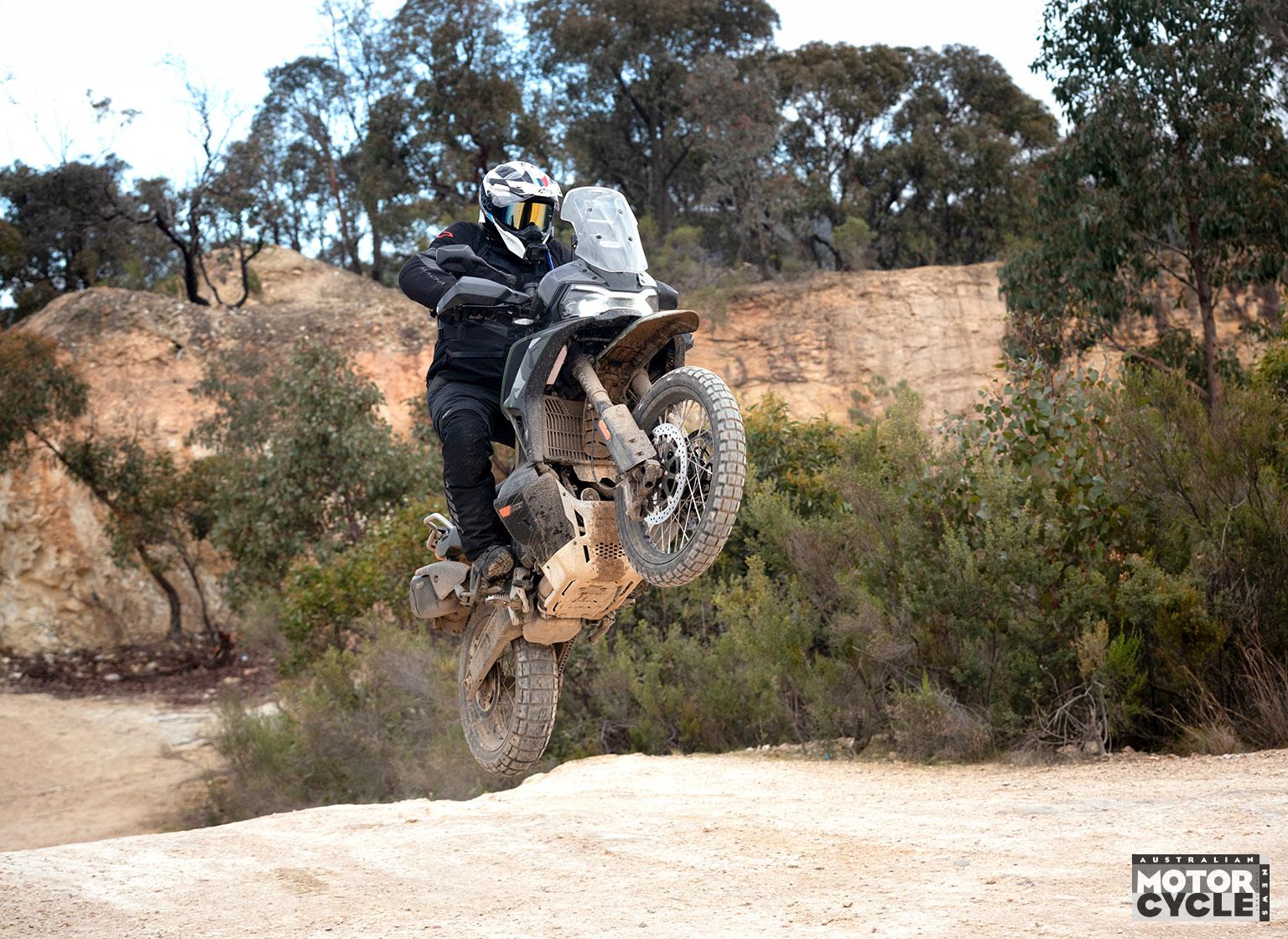
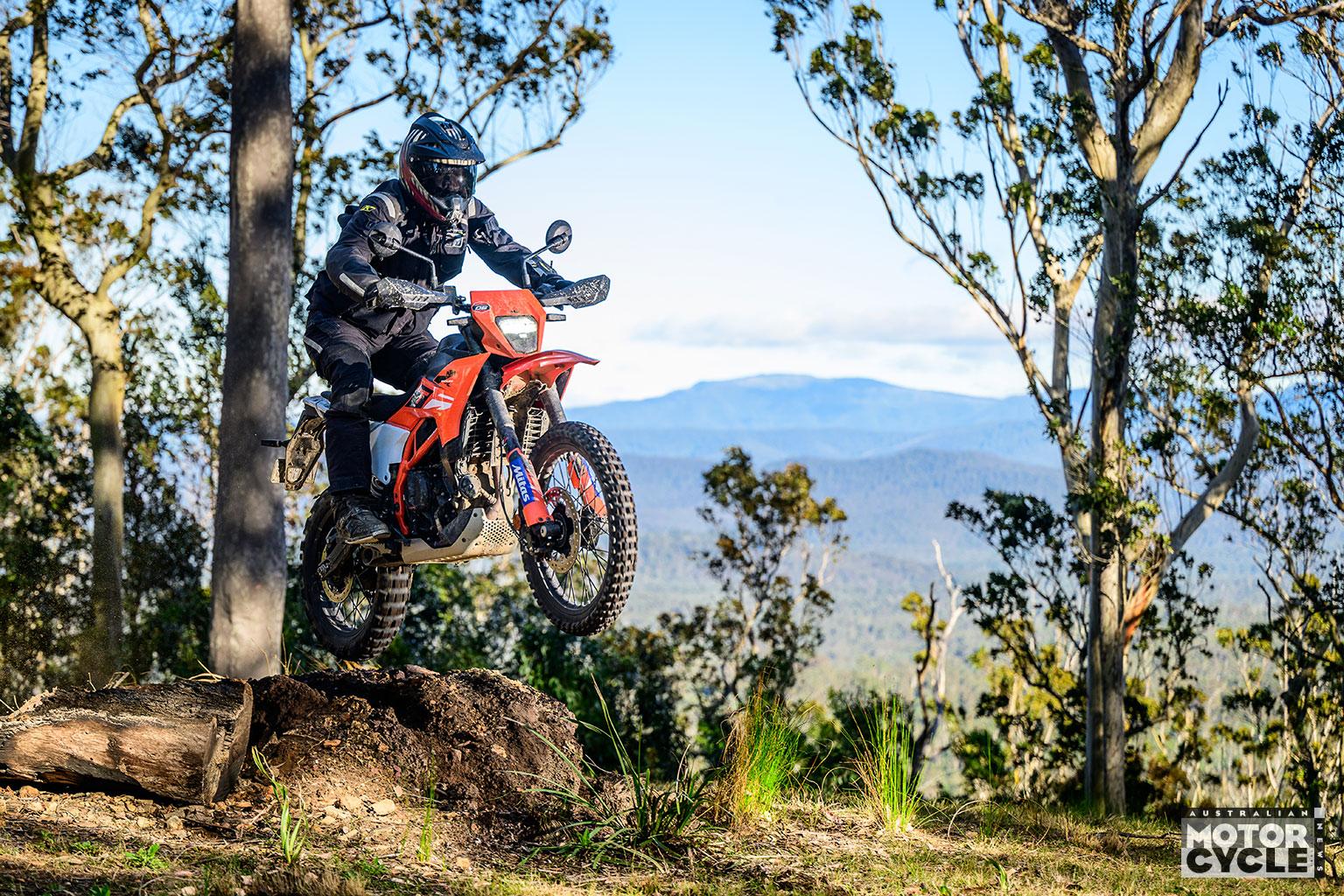
Despite the beating these bikes received in the ruts, washouts, deep bogs, single trail and long river crossings, I don’t think they were ever close to their limits, except for sending it off erosion mounds. Few adventure bikes can be launched without consequences, and these 390s weren’t close to being the exception. I saw a lot of riders scrubbing the savage pointy triangular ones and sending it off the smaller civilised mounds and always landing back-wheel first. One bike had some spokes come loose and another sucked in some water through the breather hose that caused the oil to go milky, but this can happen to any bike. Long-term longevity will be the bikes’ next test. What will they be like after being ridden like a scalded cat for 40,000km?
SPOILT FOR CHOICE
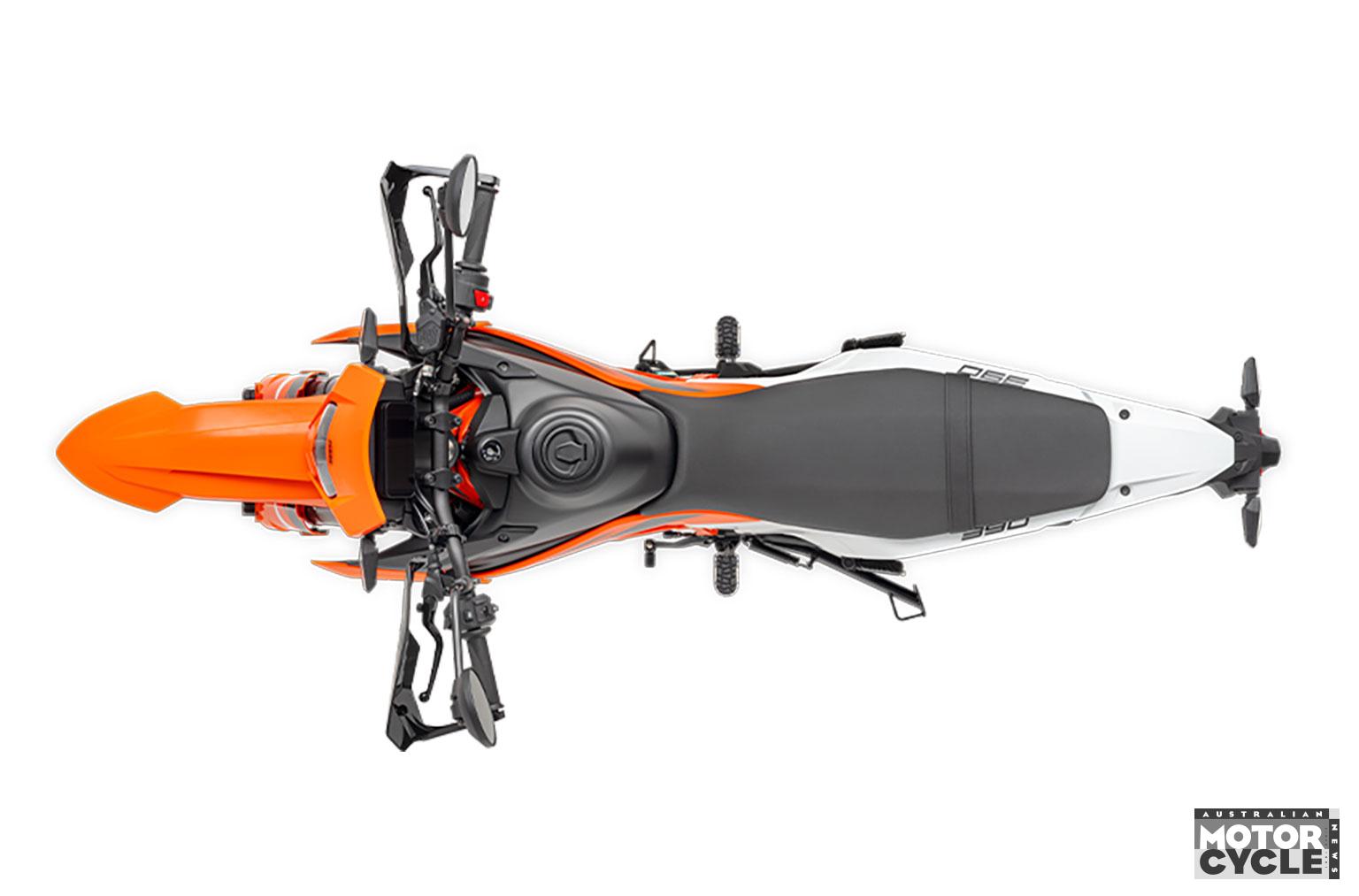
At the end of Day 2, I had changed my mind so many times about my preference. The Enduro R is 159kg (dry), and the Adventure R is 6kg heavier with its bigger tank, larger dash and screen/tower contraption. I thought I would gravitate to the Enduro R because of the lighter weight, taller seat and because I love enduro bikes. But the Adventure felt better in most conditions. The extra weight over the front wheel made it feel more planted and it gave me more confidence.
I started trying to pick faults with the Adventure. I accelerated, sliding it out of corners, leaning forward with my neck over the screen, hoping to prove it was too close and too tall… but it was perfect; it was even shaped to accommodate my chest as it lightly brushed against it at my full stretch.
What about wheelies or braking? I couldn’t really notice a difference. I went off the track and started crawling over logs and big granite rocks. This is where the Enduro R outshone the Adventure R. That extra bit of top-heavy weight made a noticeable difference at very slow speeds, and the screen became distracting, especially up steep embankments when you need to get your body forward, and that screen comes for your neck fast. I was nervously expecting it to whack me between the eyes a few times as I manoeuvred the bike across some tricky rock sections.
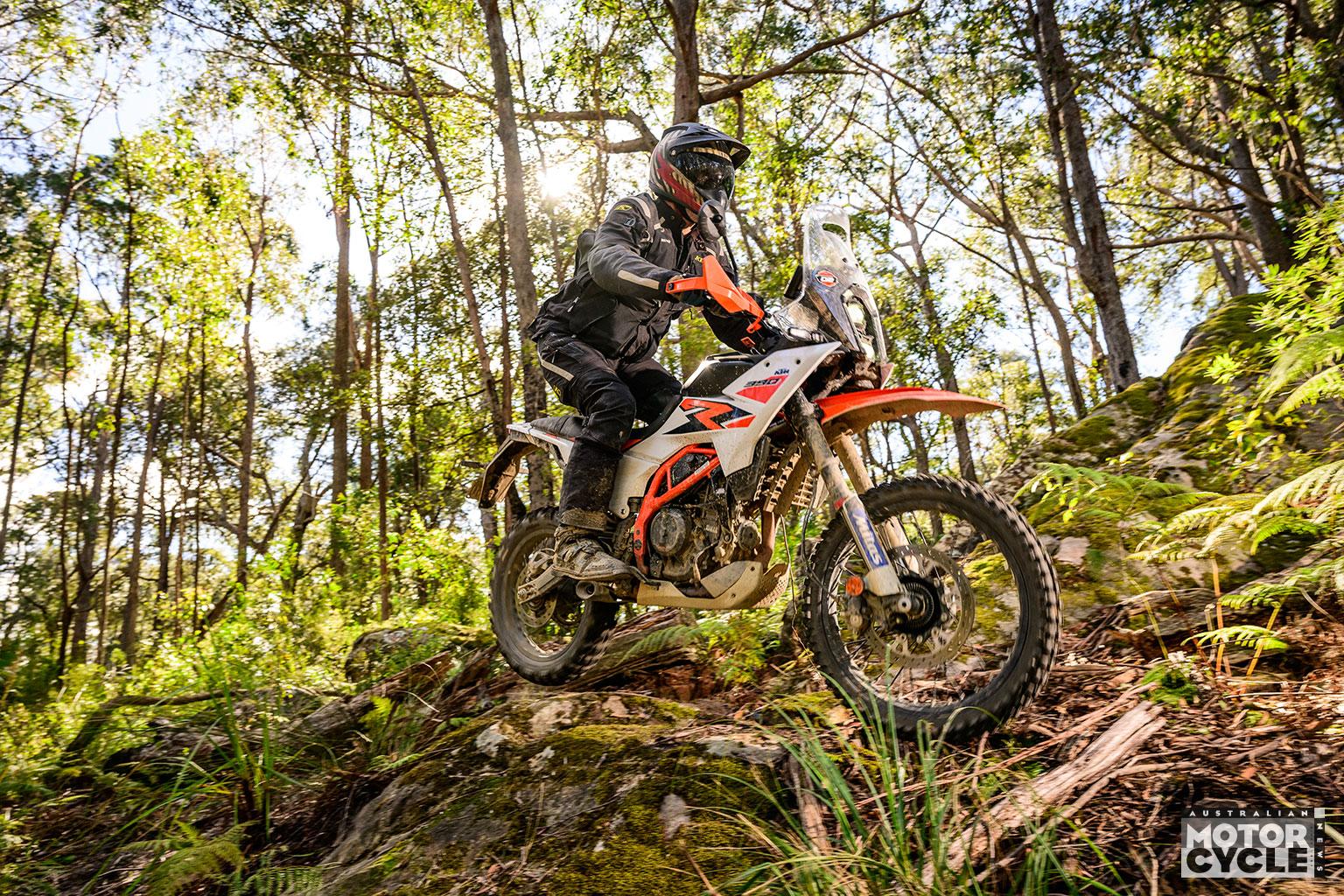
In an effort to constantly push the bike to the edge of my ability, I was often doing dumb stuff. Riding through deep brown bog puddles for the camera and trying to mono out from the deep in the centre, how forgiving and capable is it? For one photo, I suggested a simple line across some rocks, on top of a fire trail embankment, completely forgetting I was on the Adventure R when the Enduro R was the bike to be on. Off-road journo Clubby was actually first and made it look easy; I hit the lip of the launch rock and gave it a fist-full, coz I wanted to get the hero shot by lofting the front nice and high, maybe even a bar turn for major epicness… except I ran out of ability and the top-heavy Adventure started to depart from my intended trajectory.
As we went our separate ways, somehow the front tyre hit the edge of a rock on the 45-degree roadside slope, jerking the bars. At that moment my right hand slipped off the grip and I slapped my right leg, and all I could hear was all the onlookers going “OHHHHHHHH!”
Somehow, the next thing I know, I was sitting comfortably in the middle of the fire trail asking photographer Wilko, “Did you get it?”
Did I mention I love small bikes? ‘Trying’ things on bigger bikes leaves little room for error, aka less fun. Small bikes like this are built to handle overzealous riders without spitting you off. You can really build some confidence in yourself by surviving situations that are so much more recoverable on a small bike.
Back on the fire trails or wide single trail, I’d take the Adventure R any day. Combine that with a big wind deflector for the transport sections; yeah, it’s a win for me. So, who would buy the Enduro R? It’s cheaper, so maybe it’s a budget thing. New riders may be distracted by the big tower right in front of their eyes. Although the seat is lower and wider on the Adventure R, it feels taller than the Enduro R; there’s some weird spatial psychology going on there. One thing I’m sure of is that this is a great second bike for many people who don’t ride their big 1000cc+ ADVs off-road but keep a smaller single-cylinder bike for the trickier terrain. This could be perfect. Or buy two or three and go riding with your kids.
BOOTS FULL, SMILES WIDE
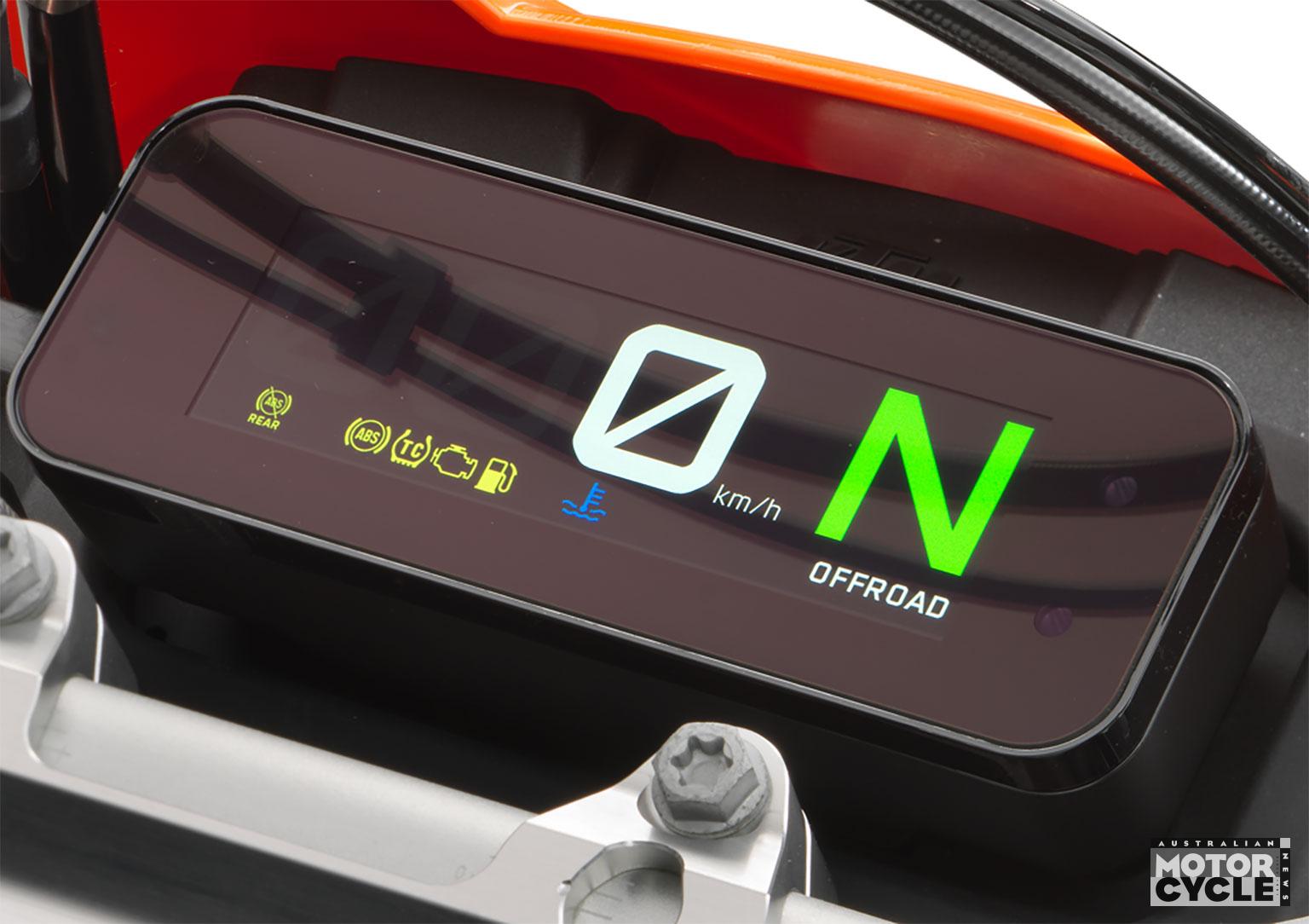
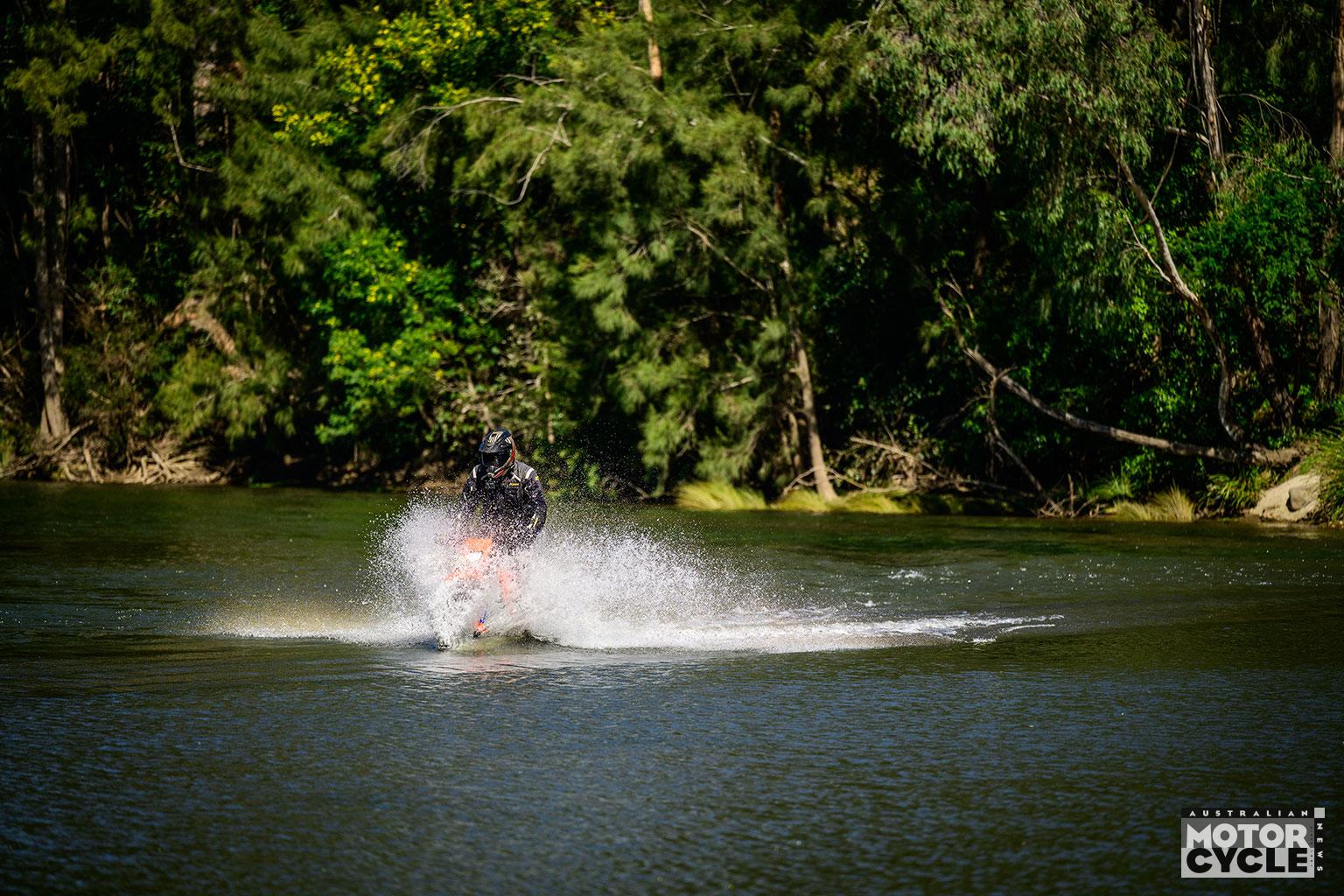
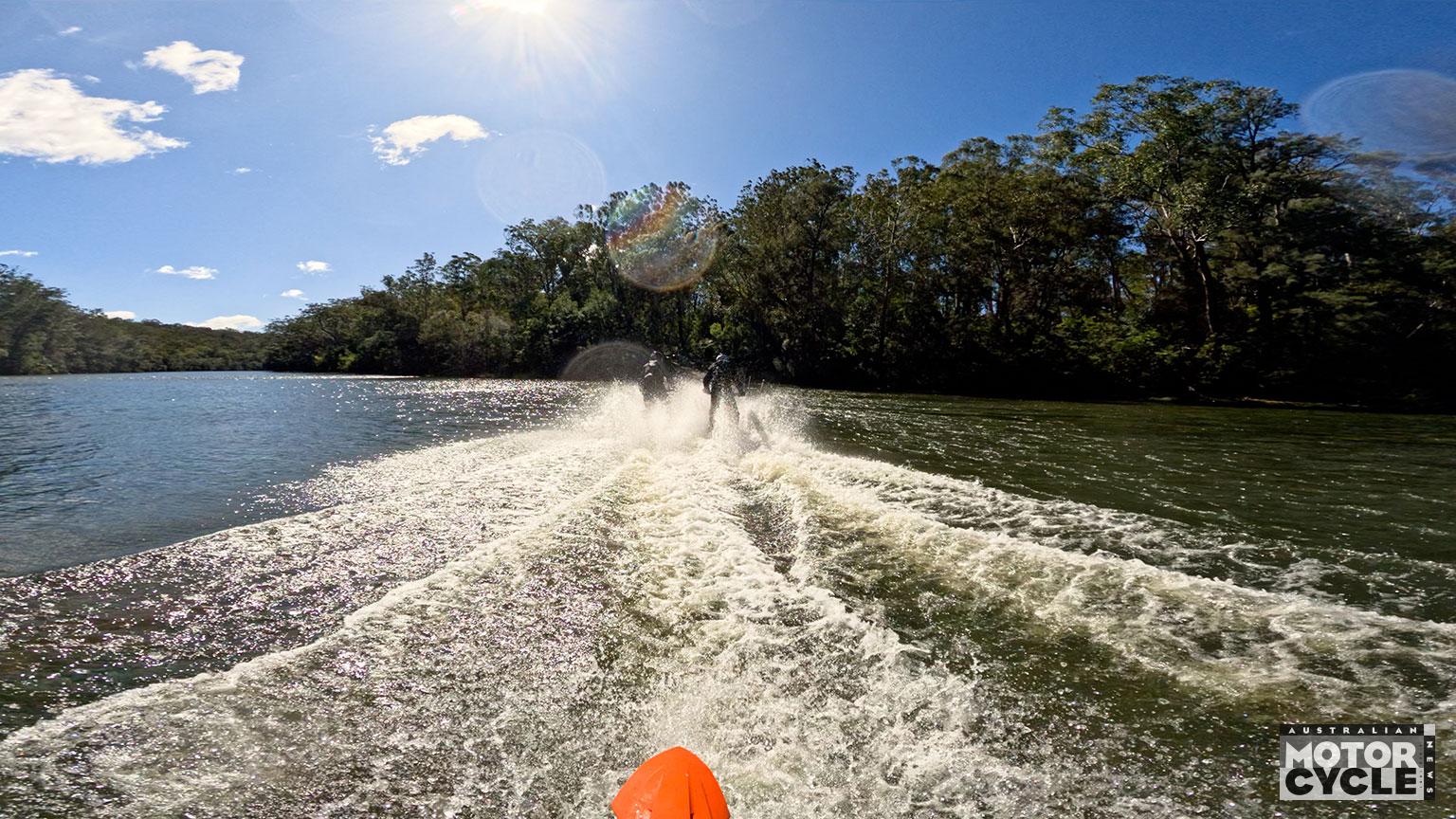
Back to the action, I can’t help thinking that Aquaman himself chose our route. The creek crossings we did were into the many dozens. New-model launches are about photos and video as much as the riding, so creeks and river crossings require multiple passes. Once our boots were full, no one complained. At ‘Shallow Crossing’ over the Clyde River, we were instructed to cross in a group of six. Sure, no problem. It was about 80m across, tidal and flowing quite fast, but only about 30cm deep. There were tall white posts showing the edge of the concrete causeway because there was no raised edge, which was weird, but I didn’t anticipate any problems; I live for these fun moments. I was at the back, and immediately my eyes widened at the vast amount of whitewash being thrown up and swirling all around me. The other guys seemed to be trying to make adjustments to the formation, and I was counter-adjusting to their movements. All of a sudden, there were no white posts to be seen! It looked like I was being towed behind a ski boat across open water. Then, whoa! I nearly clipped a white post. These posts better be on the causeway because I struggled to get away from the edge, trying to make only subtle adjustments so I didn’t overcompensate and spear the bike next to me off the other side.
We all did a U-turn on the far side and sat in formation for the return trip. I skipped ahead to the second row, hoping it would be easier. A few guys remarked how weird the first pass felt, and many were muttering about the water flow and our speed might have been too fast. Then, on the way back, I realised the problem: this causeway was the slipperiest causeway in the world! My arse-end was pointing in a very different direction from the way I was travelling.
Once we all realised the reality of our situation, we started having fun with it. Second gear, point and squirt. The solo runs were hilarious. Who could hang it out the longest?
I was very surprised that it was so easy. Obviously, we were all riding correctly, standing with our weight over the front; sitting down would have felt super sketchy. Credit to the bike for giving only positive vibes in such a crazy situation.
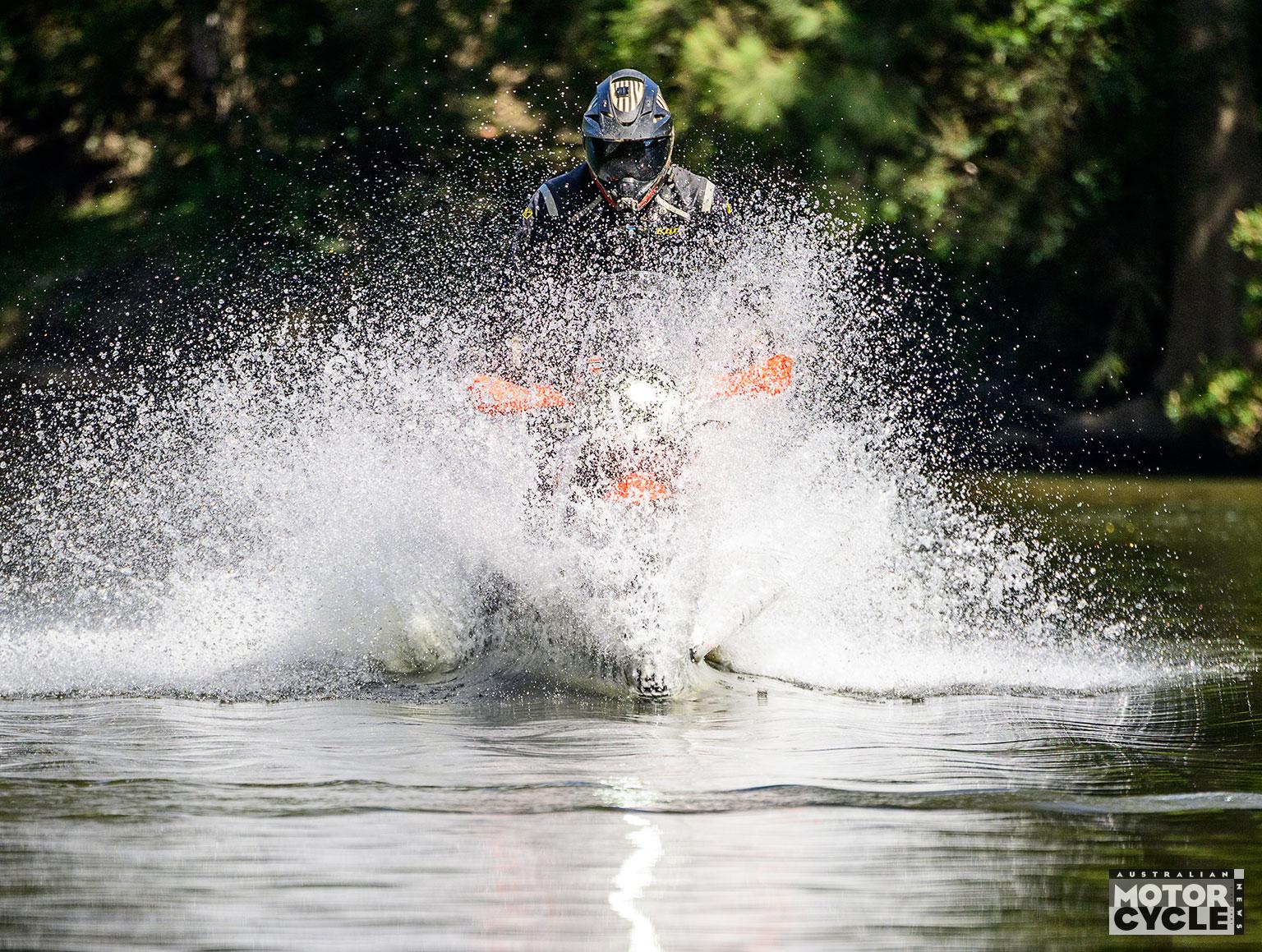
At the next river crossing, I wondered how far I could take this slippery causeway hoon act and dragged the front brake and got it up to fourth gear to make my best rooster tail. The sealed airbox is a nice change from a regular enduro, which can’t go very deep before drowning. The intake is up behind the headstock, which would be easily high enough for any river crossing I’d do. I’m definitely not a fan of up-to-the-headlight crossings!
SMALL BIKES, BIG LESSONS
On our final day, we had one more photo spot. A perfectly winding S-shaped fire trail section with a sandy base. Easy to slide, with some elevation changes and a few bumps to help loft the front and create those epic moments that sell bikes. Jordy and Wilko were ahead, set up with perfectly framed shots, waiting for the riders to deliver our part. During my first run, I wished I was on an 890. You really need to master the first corner, keep momentum into the next uphill corner, then casually loft the front on the exit while hitting the puddle for an epic splash. All this is much harder on the 390 because the 890 can make up for a lack of skill with a quick wrist flick, while the 390 will expose your shortcomings. Sure, we could just roll through, whatever, and the shots would still turn out fine. But for me, the challenge of becoming a better rider is what motivates me to ride in the first place. Touring to see sights bores me; facing the challenge is what excites me.
That’s what has me sold on these lighter, smaller bikes. Ride them, and you will improve. I see myself and my kids going on adventures together on small-bore ADV bikes. Even my 80-year-old dad should be on one, as his Aprilia Tuareg is getting a bit tall and heavy for him. Three of these cost nearly the same as one big-bore adventure bike.
Improving takes years, but on smaller bikes progress happens much faster because it has to. You’ll master gear selection, carry corner speed, scrutinise the terrain and actually gain skills you’ll never learn on a big bike that most are afraid or too unfit to ride properly. These bikes suit both beginners and seasoned riders.
By the end of Day 3, soaked boots, dry body (thanks to the Klim gear) and grinning about the future of small adventure bikes, I realised these 390s aren’t just bikes – they’re a throwback to when adventure meant being adventurous, nothing to do with size or money. Plus, whether it’s me, my kids, or my old man, they’re the kind of machines that help create a better rider.
Check out the video below of Josh putting the bikes through their paces!
✅ PROS – They feel lightweight, the Adventure looks like a Dakar bike at first glance, excellent handling, sealed airbox for deep river crossings, loved the Reduced mode on TFT display.
❌ CONS – Cheaper suspension, small capacity tank on the Enduro R, low seat height for my 187cm, the sidestand is easy to kick down but it looks a bit ugly.
COMPETITION
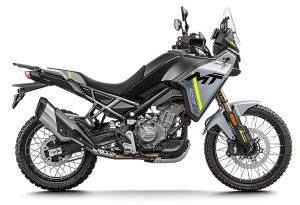
CFMoto 450MT – $9990 ride away
Parallel-twin, 33kW (44hp), 44Nm, 220mm travel, 175kg dry
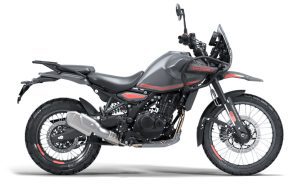
Royal Enfield Himalayan 450 – $8490 ride away
Single-cylinder, 30kW (40hp), 45Nm, 230mm travel, 181kg dry
SPECIFICATIONS
2025 KTM 390 ADVENTURE R
Engine Single-cylinder, 4-stroke DOHC, 398.7cc, 33kW (44hp) @ 8500rpm, 39Nm @ 7000rpm
Transmission 6-speed, PASC slipper clutch
Frame Steel trellis with bolt-on subframe
Suspension Front WP APEX 43mm adjustable preload and rebound (230mm travel). Rear WP APEX adjustable preload and rebound (230mm travel)
Brakes Front single 320mm disc. Rear 240mm disc. Bosch ABS with Offroad mode
Wheels/Tires 21/18in spoked; 90/90R21 front, 140/80R18 rear (stock Metzeler Karoo 4)
Dimensions Wheelbase 1481mm
Seat height 870mm
Fuel capacity 14L
Dry weight 165kg.
Price $11,295 ride away.
2025 KTM 390 ENDURO R
Engine, Transmission, Frame, Suspension Same as Adventure R
Brakes: F ront single 285mm disc. Rear 240mm disc. Bosch ABS with Offroad mode and full-off switch
Wheels/Tires: 21/18in spoked; 90/90R21 front, 140/80R18 rear (stock Metzeler Karoo 4)
Wheelbase 1475mm
Seat height 890mm
Fuel capacity 9L
Dry weight 159kg
Price: $10,695 ride away
Contact: ktm.com/en-au.html