Brave attempt by CFMoto to develop a battery-powered sportsbike in a cynical market
Motorcycle brands are facing a dilemma. They know legislation and technology is edging towards the eventual elimination of combustion engines so investing in the development of electric models is a safety net for the future. However they also realise that global sales of electric motorcycles aren’t big enough yet to give a return on that investment.
Get started too early and they might be wasting time and money creating machines that will be outdated before they ever have a chance to recoup their development costs. But leave it too late and their rivals get an invaluable head-start that they might never overcome.
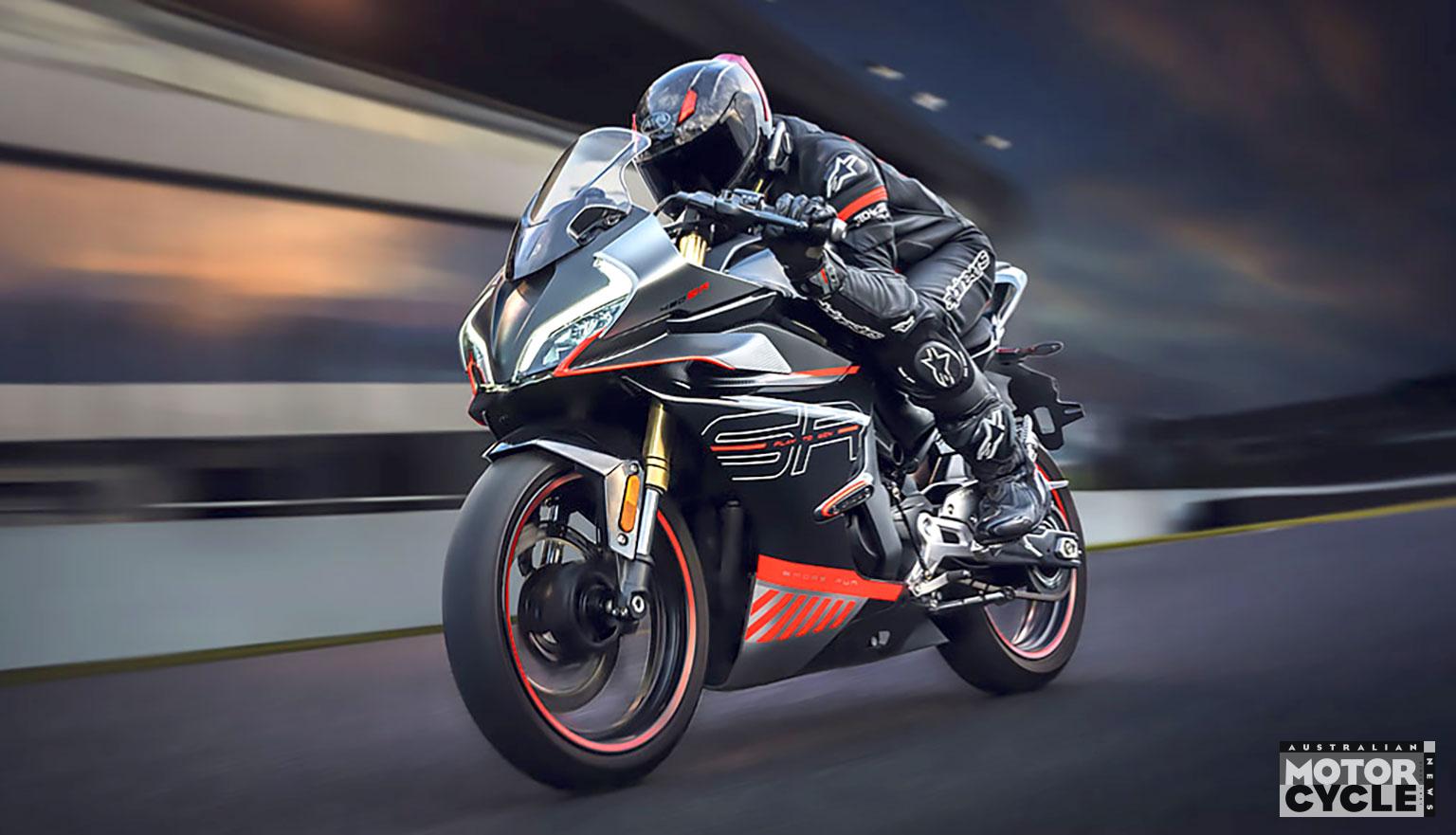
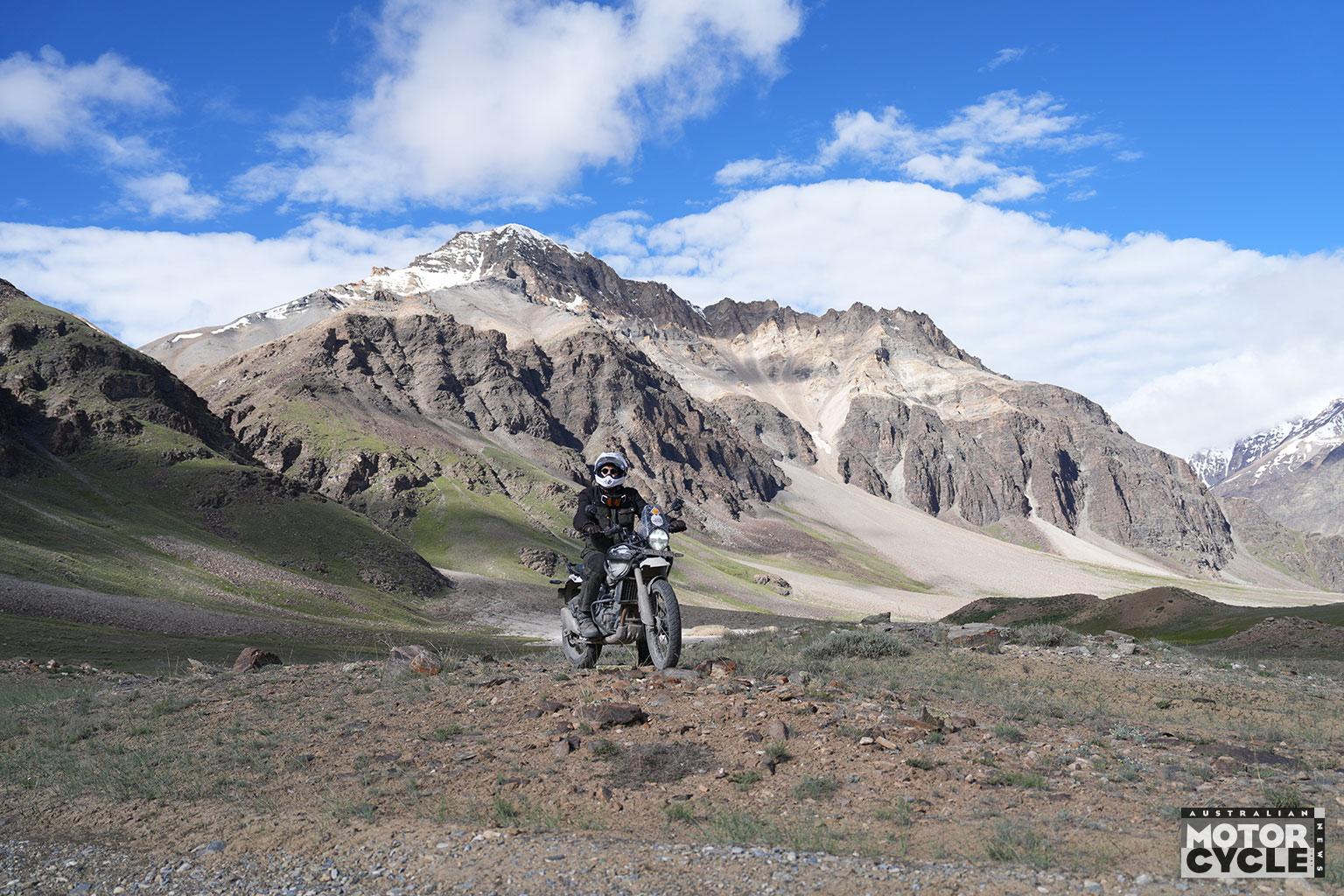
In China, CFMoto already has its own electric bike brand for scooters, ZEEHO, and it’s dabbled with larger electric models like the 300GT-E that was developed in response to a Chinese police tender for a zero-emissions patrol bike. It’s also due to launch a production version of last year’s CF-X electric motocross bike in the near future, and now a new patent has revealed how it could build a future electric sportsbike.
The designs, like recent patents from Honda for the Japanese firm’s own electric sportsbike, shift the motor and transmission rearwards, moving the main part of the power unit behind the swingarm pivot, underneath a banana-shaped swingarm, to clear more space in the main frame for batteries.
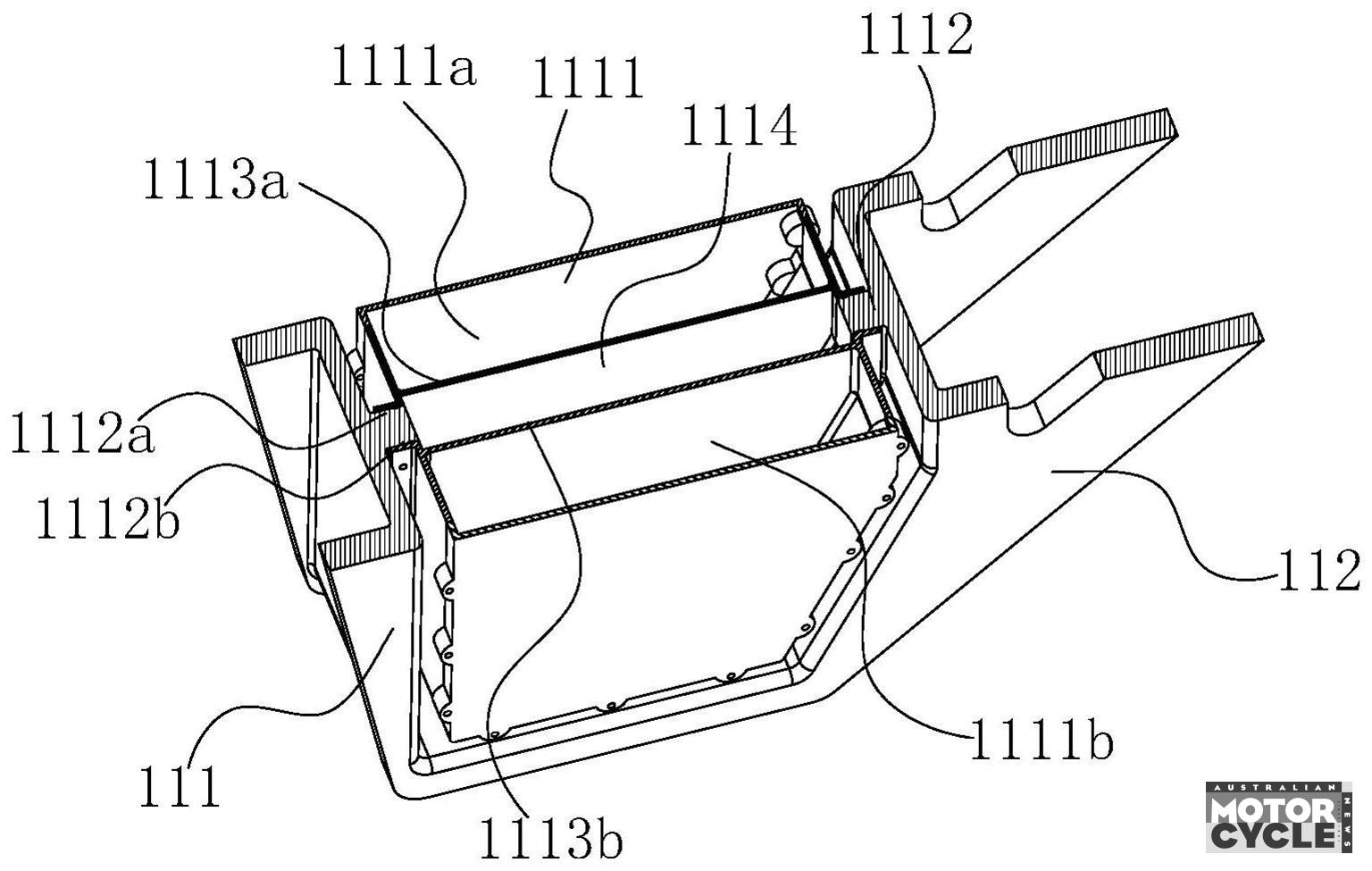
The patent shows an alloy frame that uses the battery packs – two of them, each slim units mounted vertically – as its sides to provide additional structural strength.
Unusually, the two batteries have a void between them, sealed in by the perimeter of the frame, and that area is filled with coolant. Fins on the battery packs protrude into that coolant to increase the surface area in contact with the fluid. There’s no mention of a radiator or water pump to circulate the coolant and expel heat, but presumably those components would also be fitted.
The patent shows that the electronics for the battery control system, as well as the charger unit, are mounted above the frame, where the fuel tank would normally sit, allowing those parts to be housed under a tank-shaped cover so the bike retains a familiar silhouette and riding position.
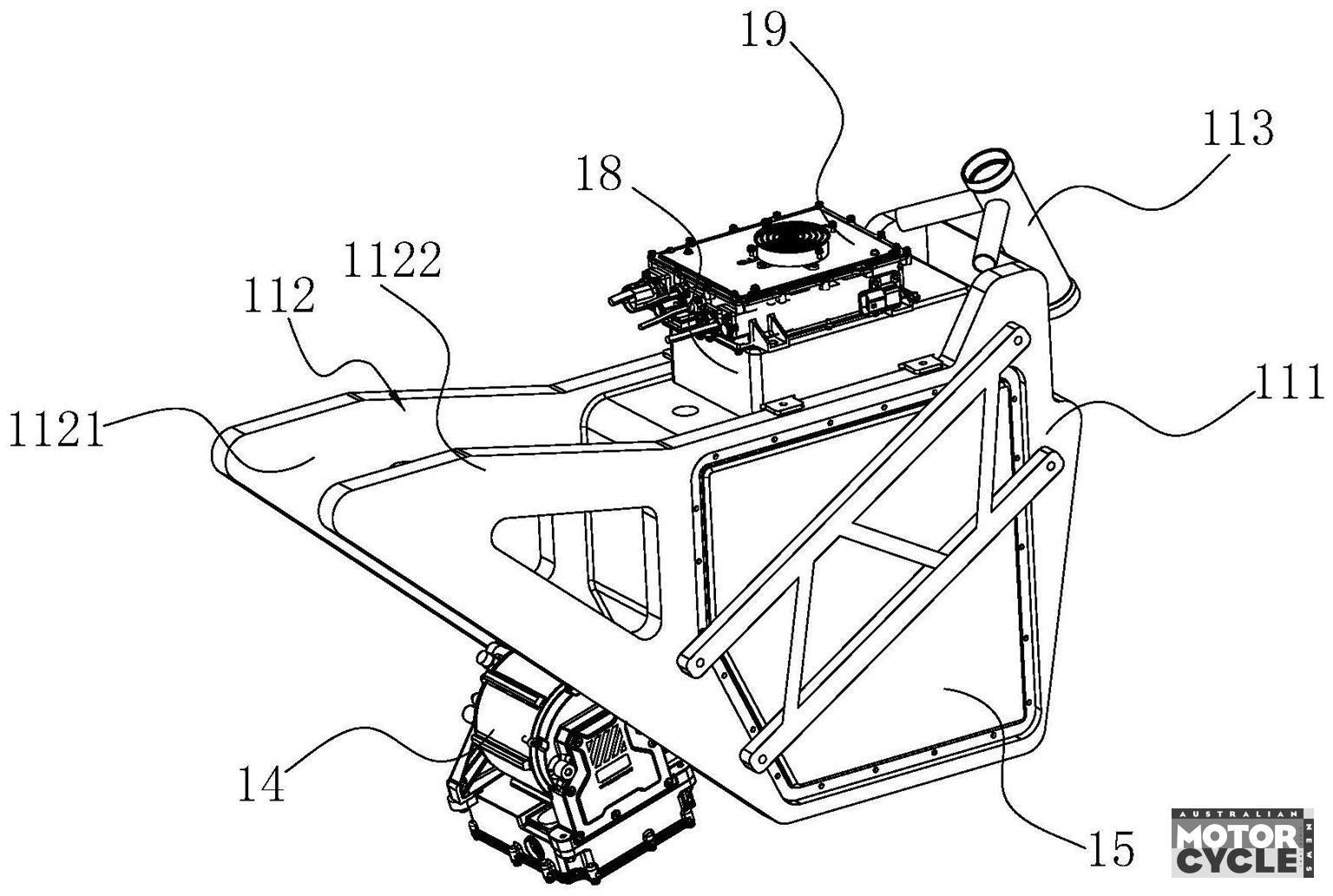
The frame extends rearward to support the seat without a separate subframe, and the upper mount of the rear shock is farther back than normal, within that extended section, again to clear more space for the batteries in the main part of the chassis.
As with other companies’ electric projects, there’s no clue as to whether the design being patented here is going to make the leap to production, or if it’s simply a case of experimenting with different layouts and getting intellectual property protection on ideas in preparation for the battle for electric motorcycle supremacy that seems sure to take place at some point in the future.