The Tracer 7 and GT step up in spec and ability while staying true to their value-packed roots
In a perfect world we would have a garage full of bikes for every occasion. Sports bike for the track, adventure bike for the occasional off-road foray, something cool and retro for summer evenings, a large scooter for commuting and a big tourer for that week-long holiday.
The real world, however, is rather different. If we’re lucky, we might have two bikes but, for the majority of us, just one bike is what we can afford or have room for. That machine needs to be an all-arounder that can do it all on a budget. Which is where bikes like Yamaha’s 2025 Tracer 7 and Tracer 7 GT step up and make all the difference to us mere mere mortals.
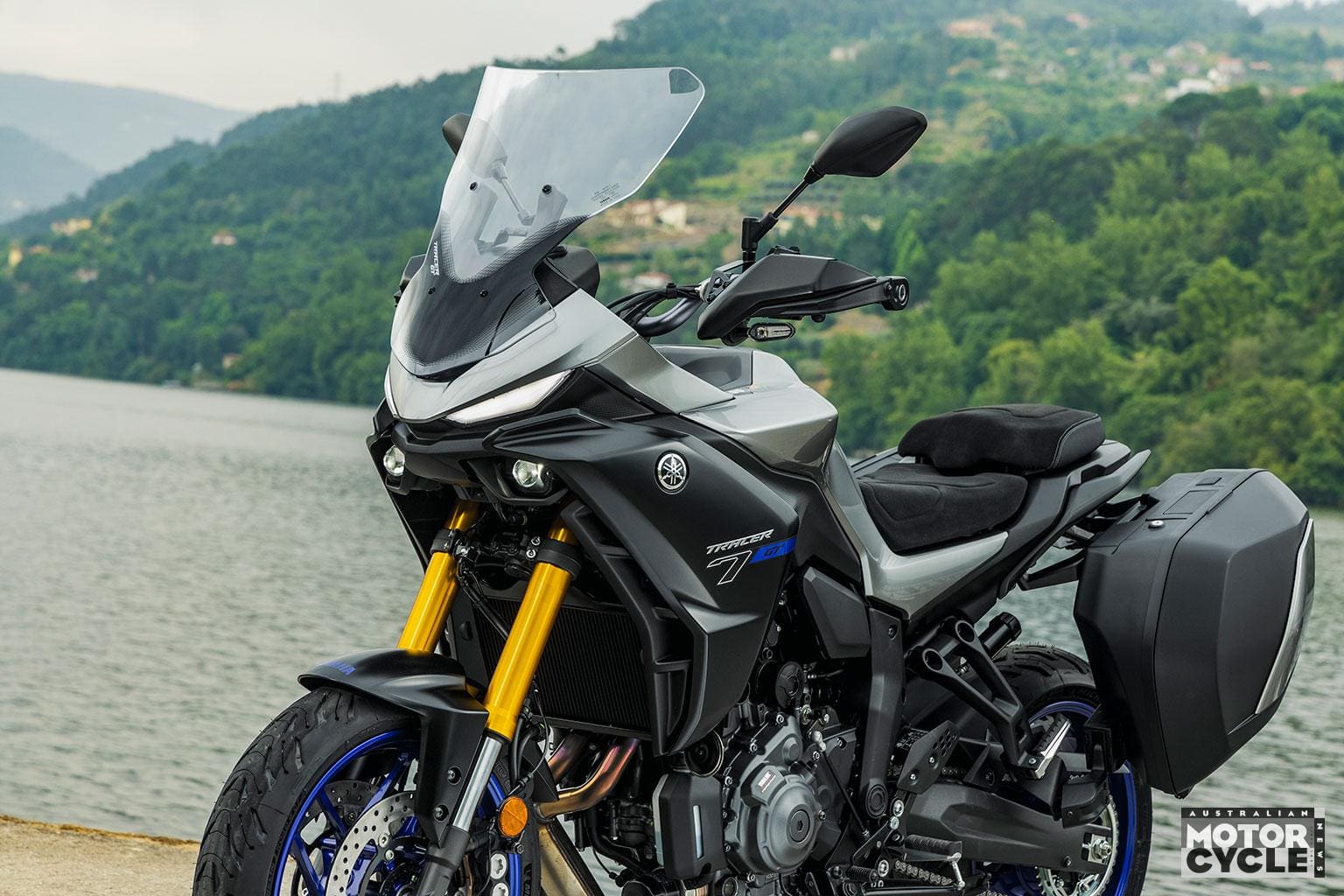
The updated Tracer is based on the popular MT-07. Fun, light and able to be ridden hard, the MT-07 is also great at darting around the city and cutting through congestion. The Tracer carries those virtues forward but adds more practicality, while the GT version has genuine touring potential. At under £9k (Aussie prices TBC) for the Tracer and just over £10k for the GT, both machines look like outstanding value for hard-earned cash, especially as they’re likely to be used all year round.
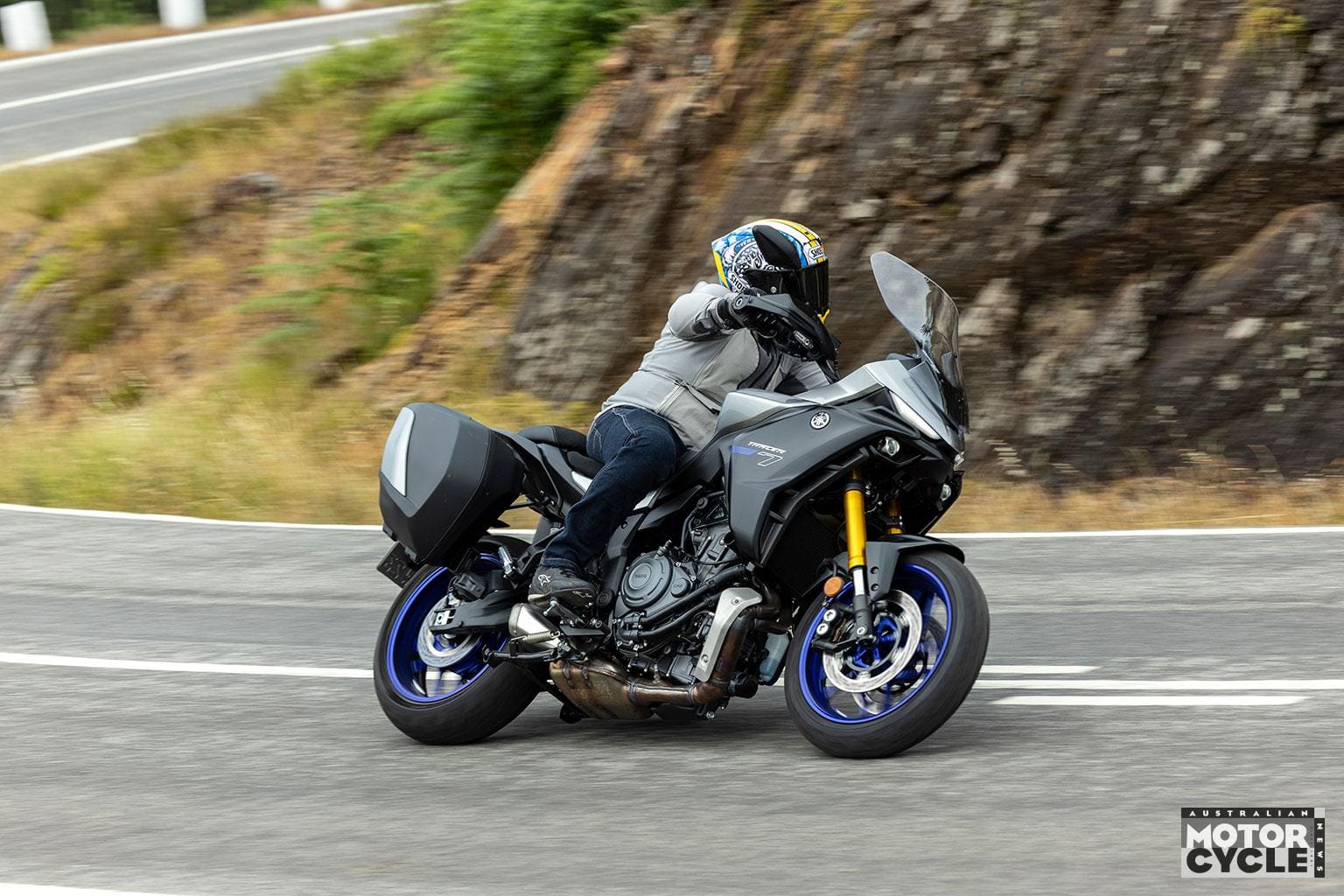
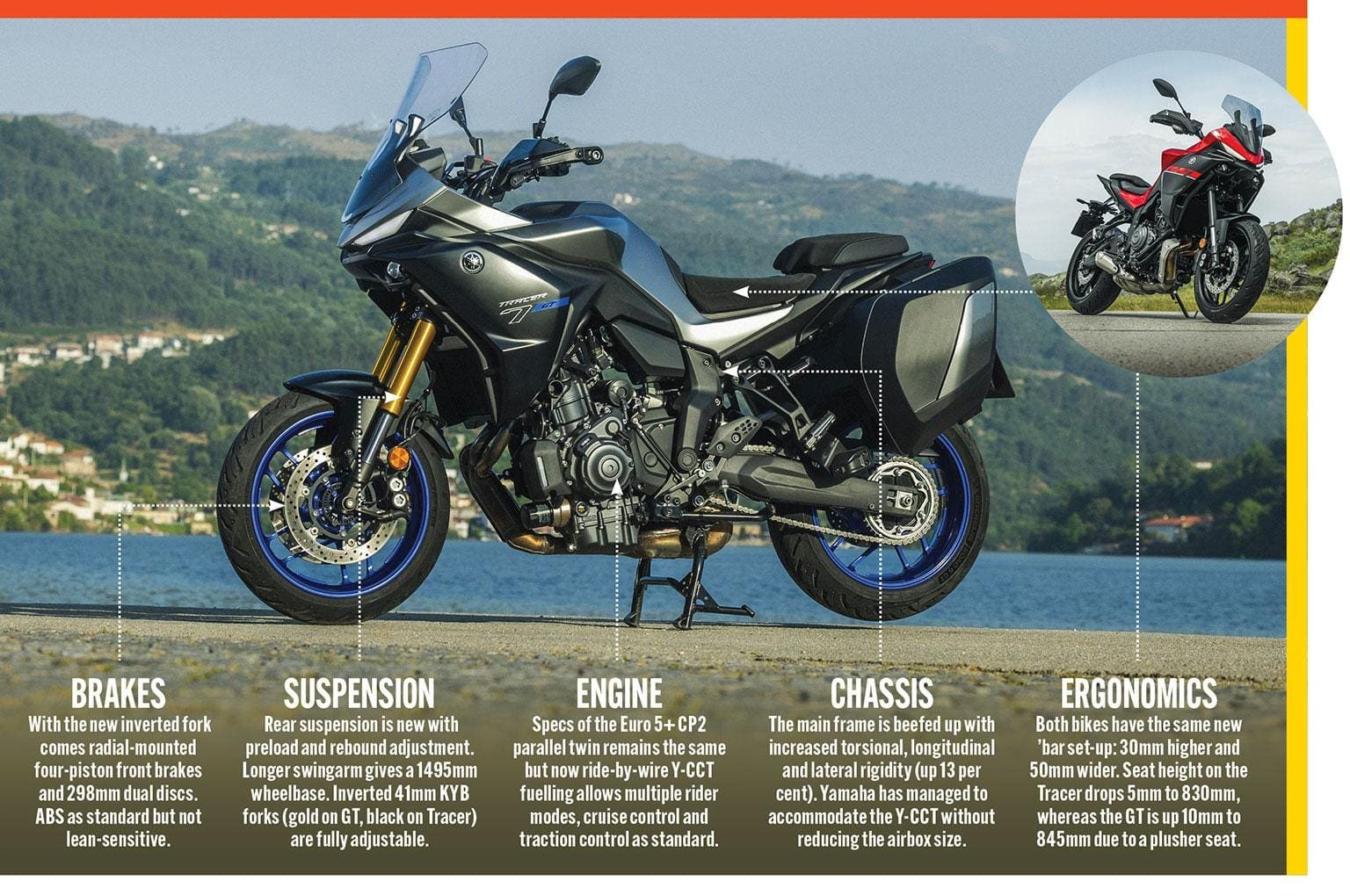
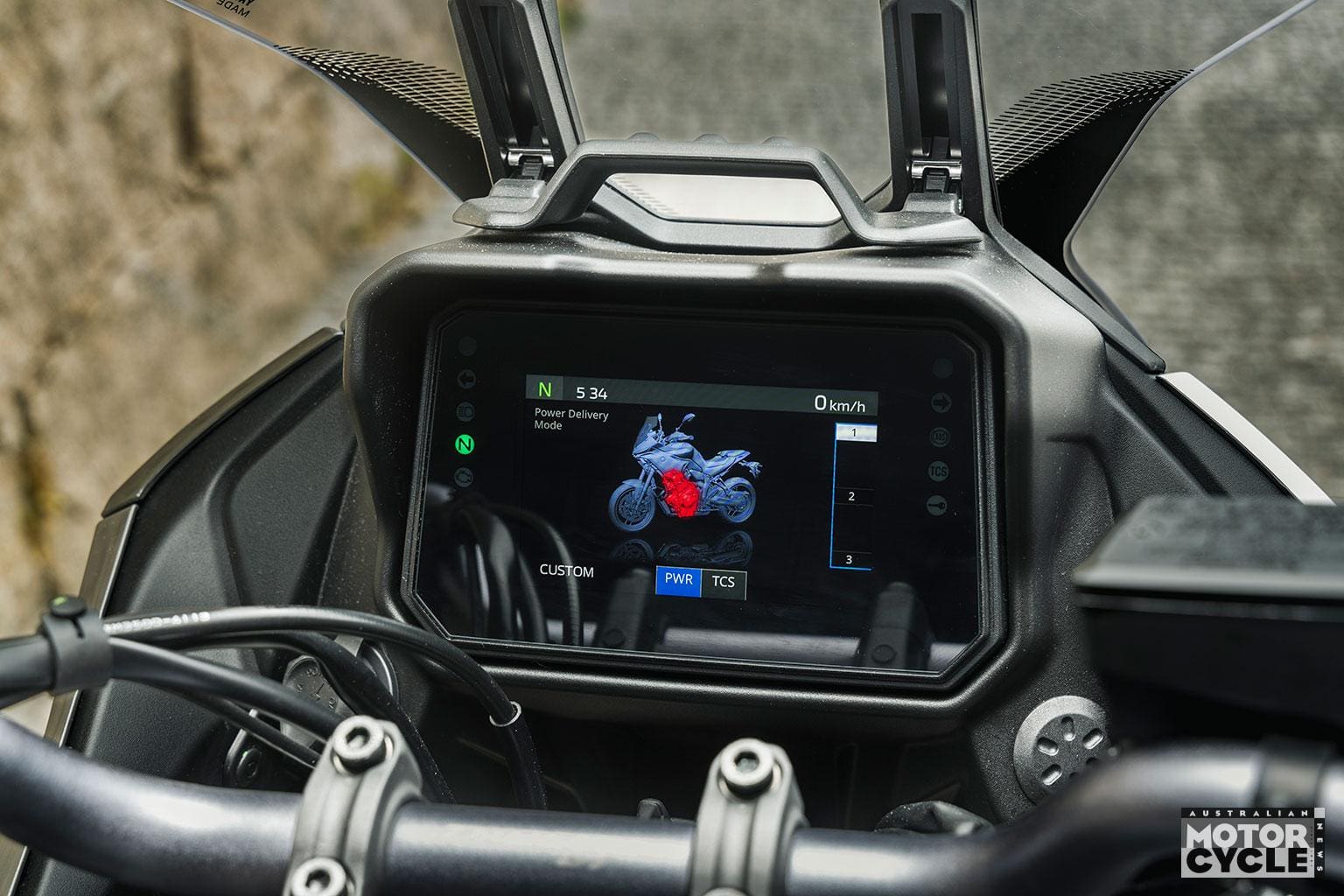
At the heart of it all is the familiar 689cc CP2 parallel twin engine, complete with 270-degree crank and the same outright power as before. For 2025, Yamaha has added Y-CCT ride-by-wire throttle, which allows the introduction of switchable riding modes – Sport, Street and Custom – along with improved fuelling and an even more linear power delivery than before. There’s also cruise control and traction control as standard.
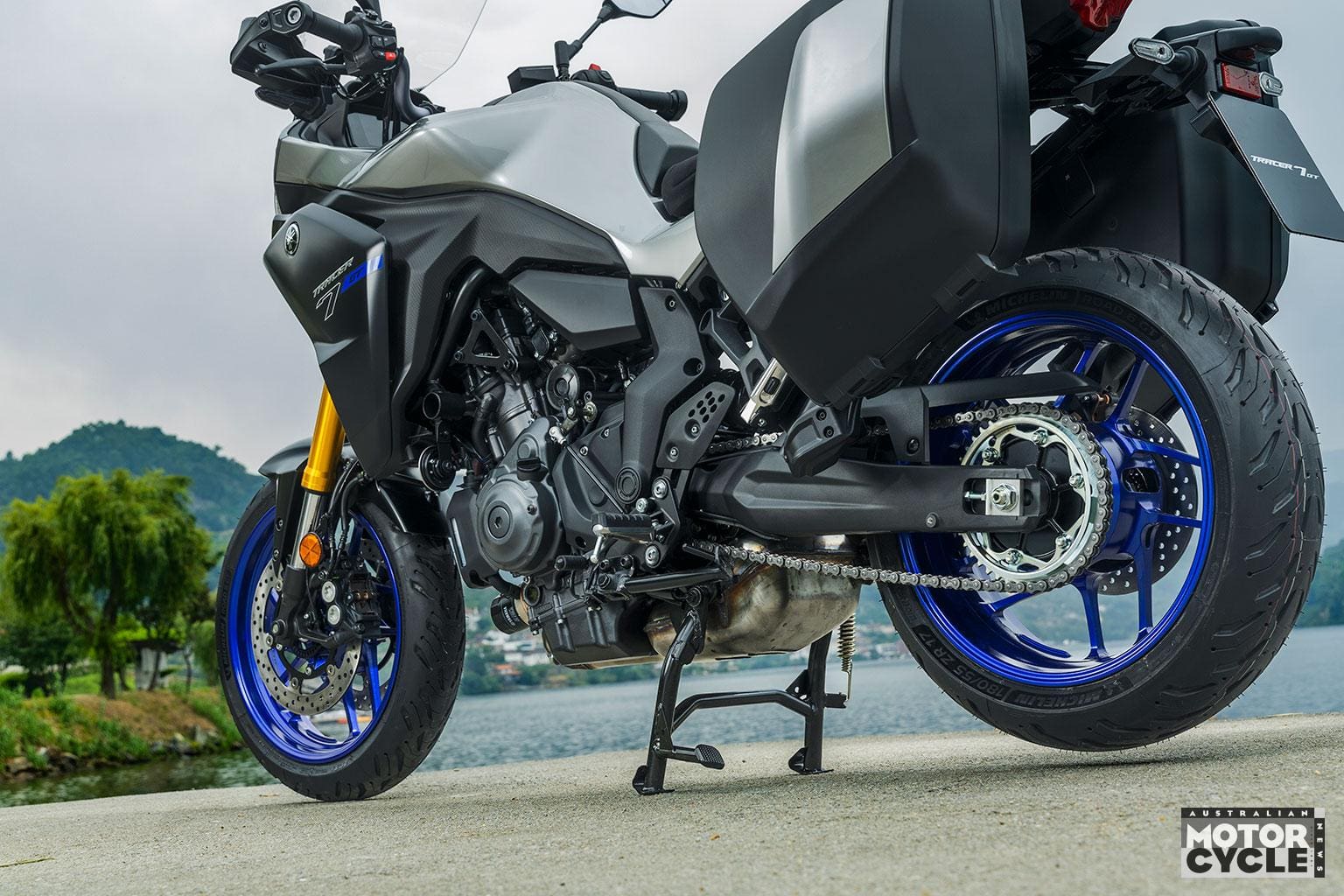
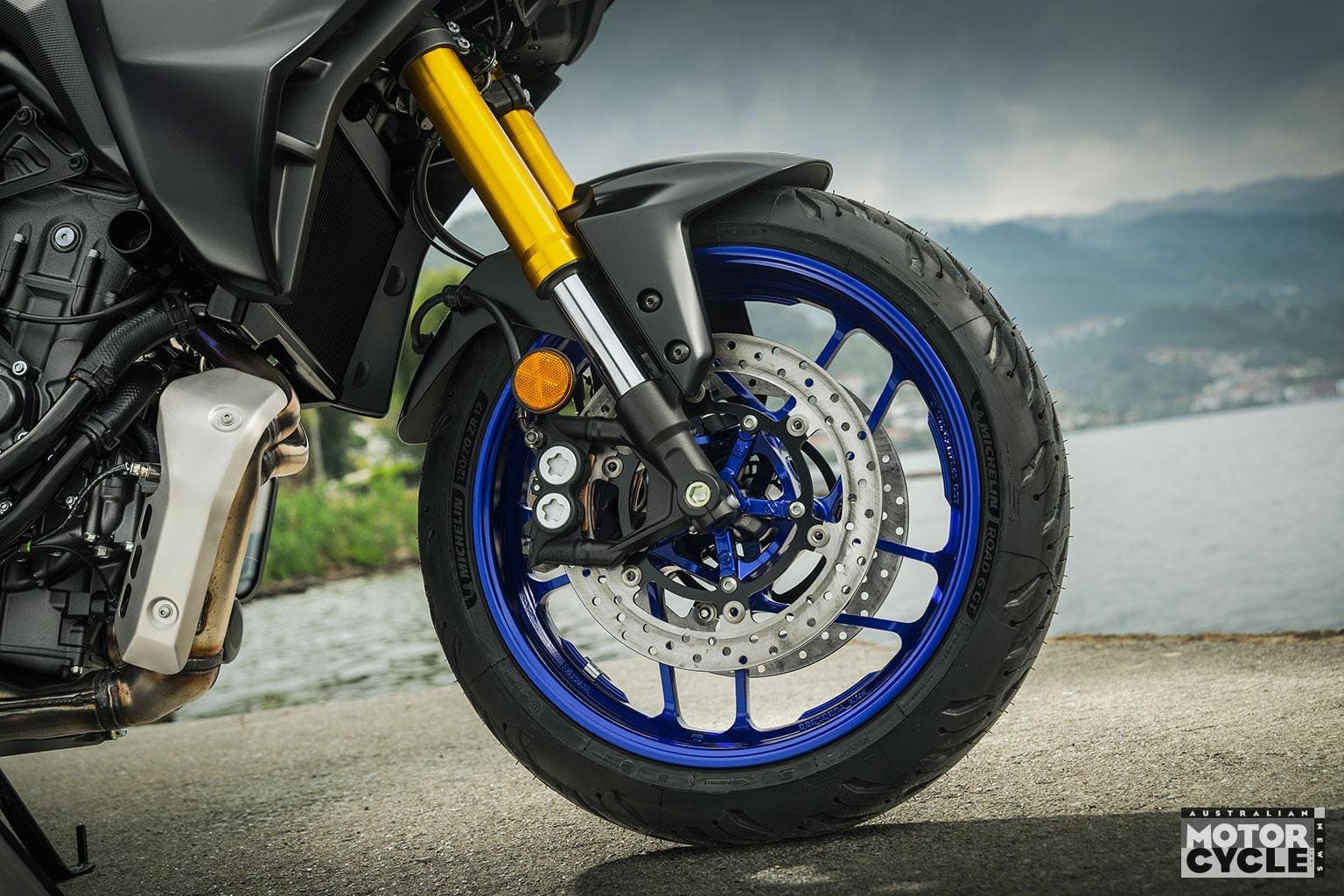
The fork is now an inverted KYB 41mm item with rebound damping and spring preload adjustment. The swingarm gains 40mm in length, and the main frame is beefed up. Brakes are now radially mounted, while both bikes gain a bit of weight: the Tracer 203kg (plus 5kg), the GT 212kg, (plus 10kg).
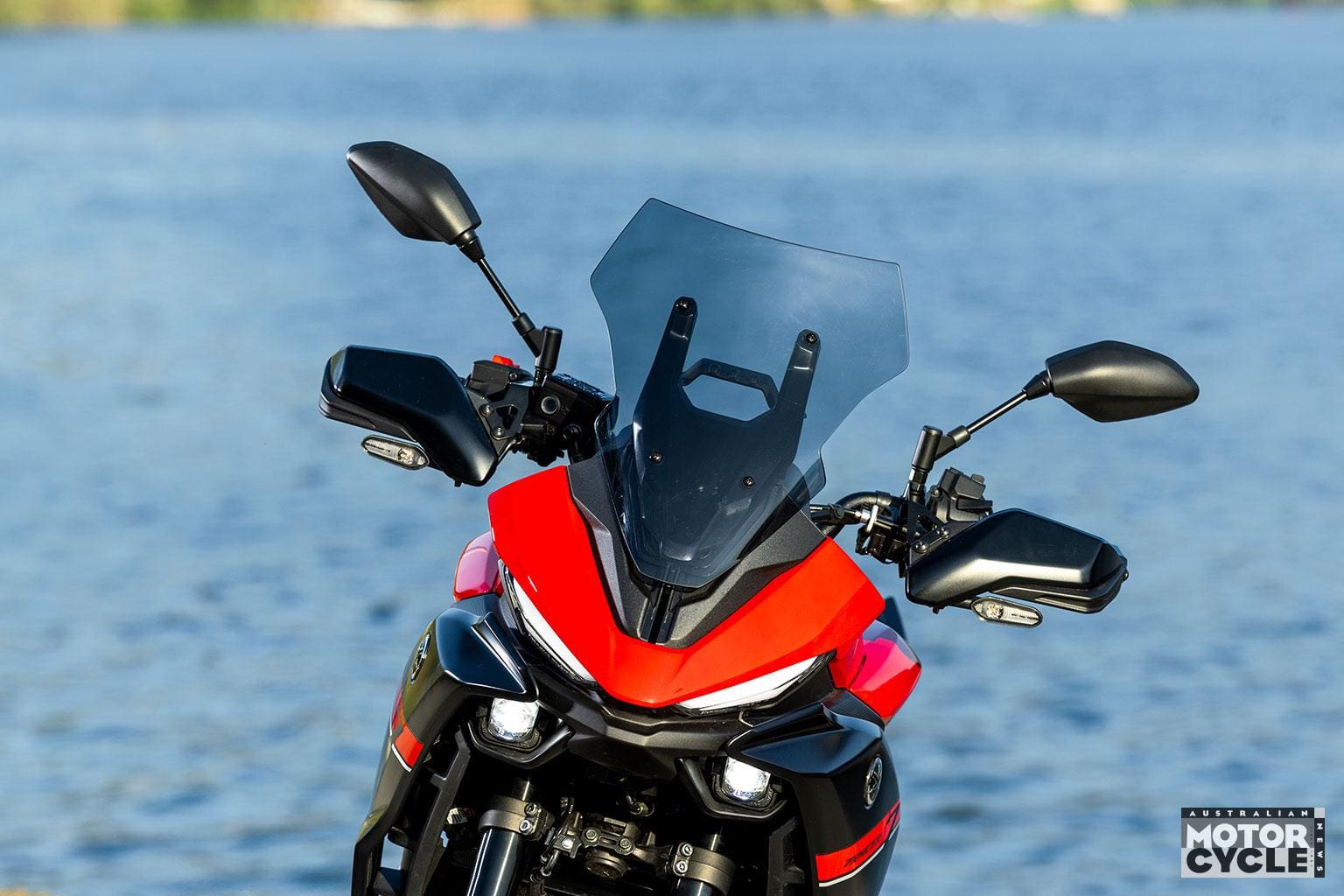
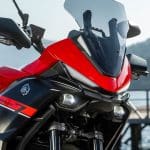
Bodywork and styling are new, there are dual bi-focus LED headlights, a new rear taillight and indicators in the knuckle guards. The 2025 Yamaha was designed in Italy in partnership with Yamaha Japan and produced in France, which helps explain both bikes’ distinctly European feel.
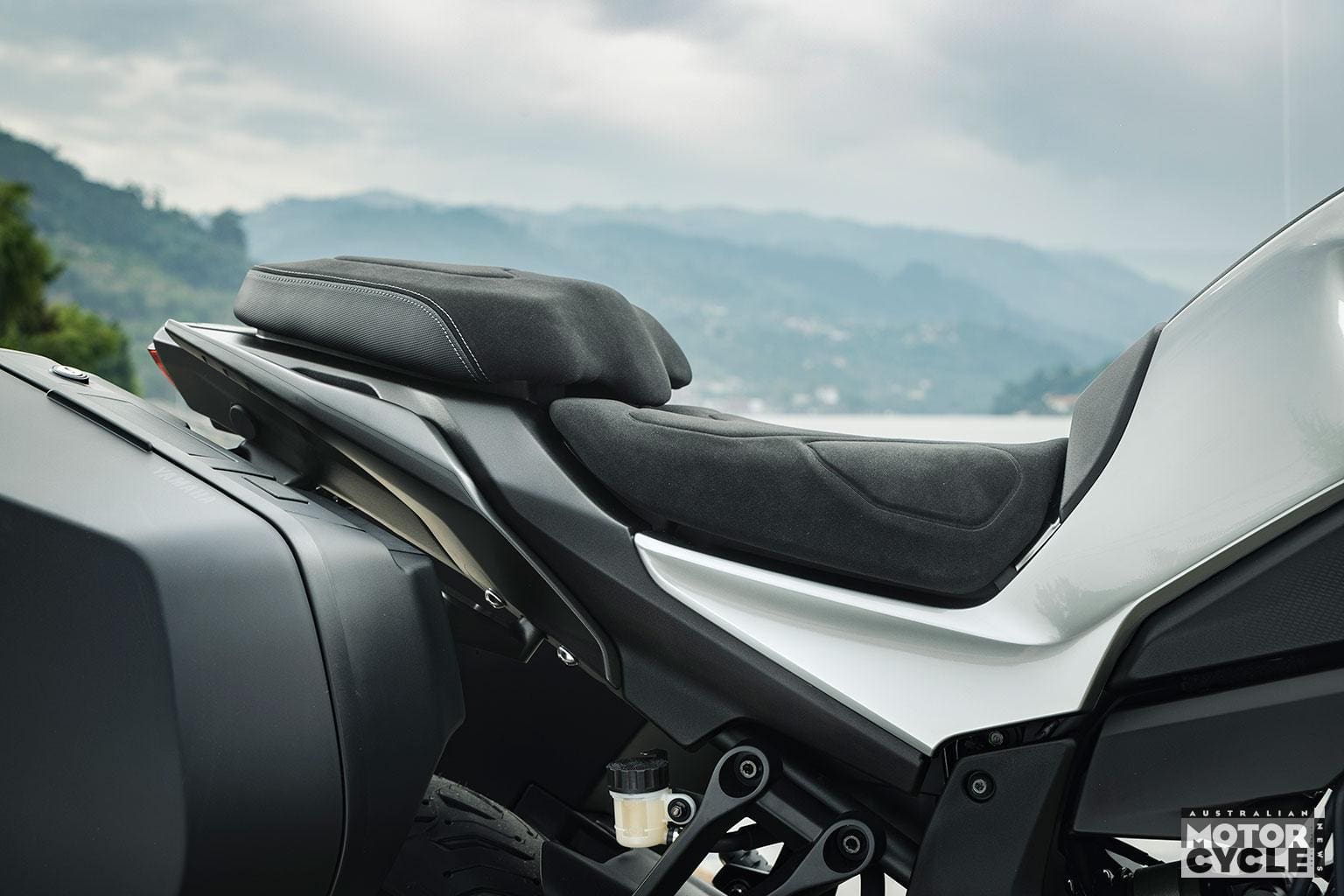
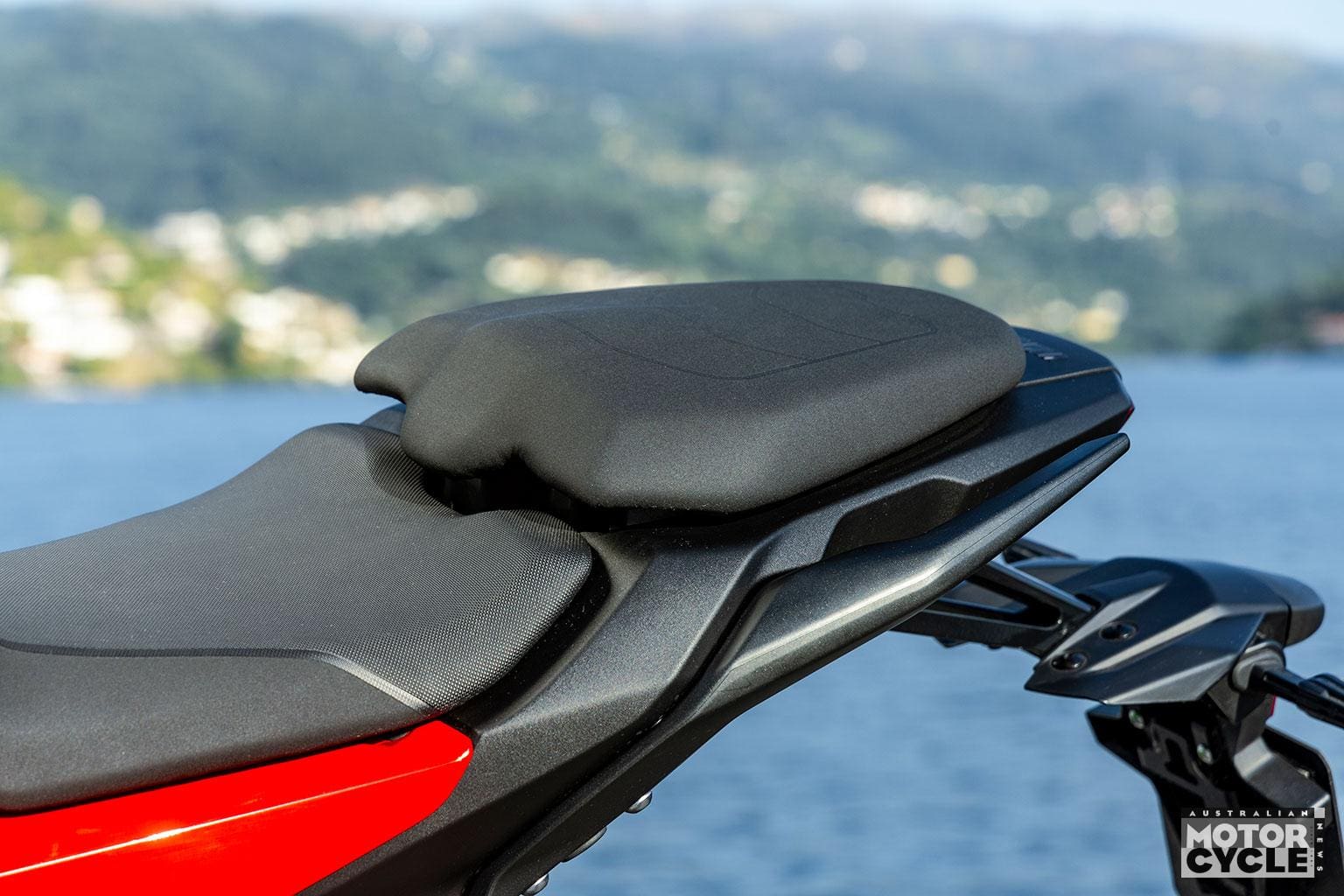
The fuel tank gains an extra litre, taking it out to 18 litres in capacity. The ’bars are both higher and wider, with a new 5-inch TFT display. The seats on both bikes are also new and sit at 830mm on the Tracer and 845mm on the GT, both with more padding. The switchgear and a taller screen are new, while luggage comes standard on the GT, along with a centrestand and heated grips.
It’s clear Yamaha has worked weekends to improve the Tracer and GT, which is why we were so looking forward to a day in Portugal jumping between the standard bike and the tourer.
THE RIDE
We’ve always been a fan of Yamaha’s CP2 twin, whether it’s in the R7, Tracer or MT-07. It’s punchy, fluid and powerful, and although the on-paper figures aren’t that impressive, it feels stronger than its quoted 54kW (73hp) peak. For 2025 Yamaha, has added Y-CCT ride-by-wire, first seen on the R6, I believe, nearly 20 years ago and, as you would expect, Yamaha has got it spot-on, too. The throttle response is immaculately smooth and easy in the lower rpm, especially in the dedicated Street mode. So smooth it feels more like a multi than a twin.
Although peak power and torque remain the same as the previous model, the spread of torque is (and feels) wider. The CP2 seems even more eager from 3000rpm to 6000rpm. It’s lively and grunty and, as noted, punches well above its 689cc capacity. Switch off the TC and it will happily loft the front, despite that extra weight and longer wheelbase.
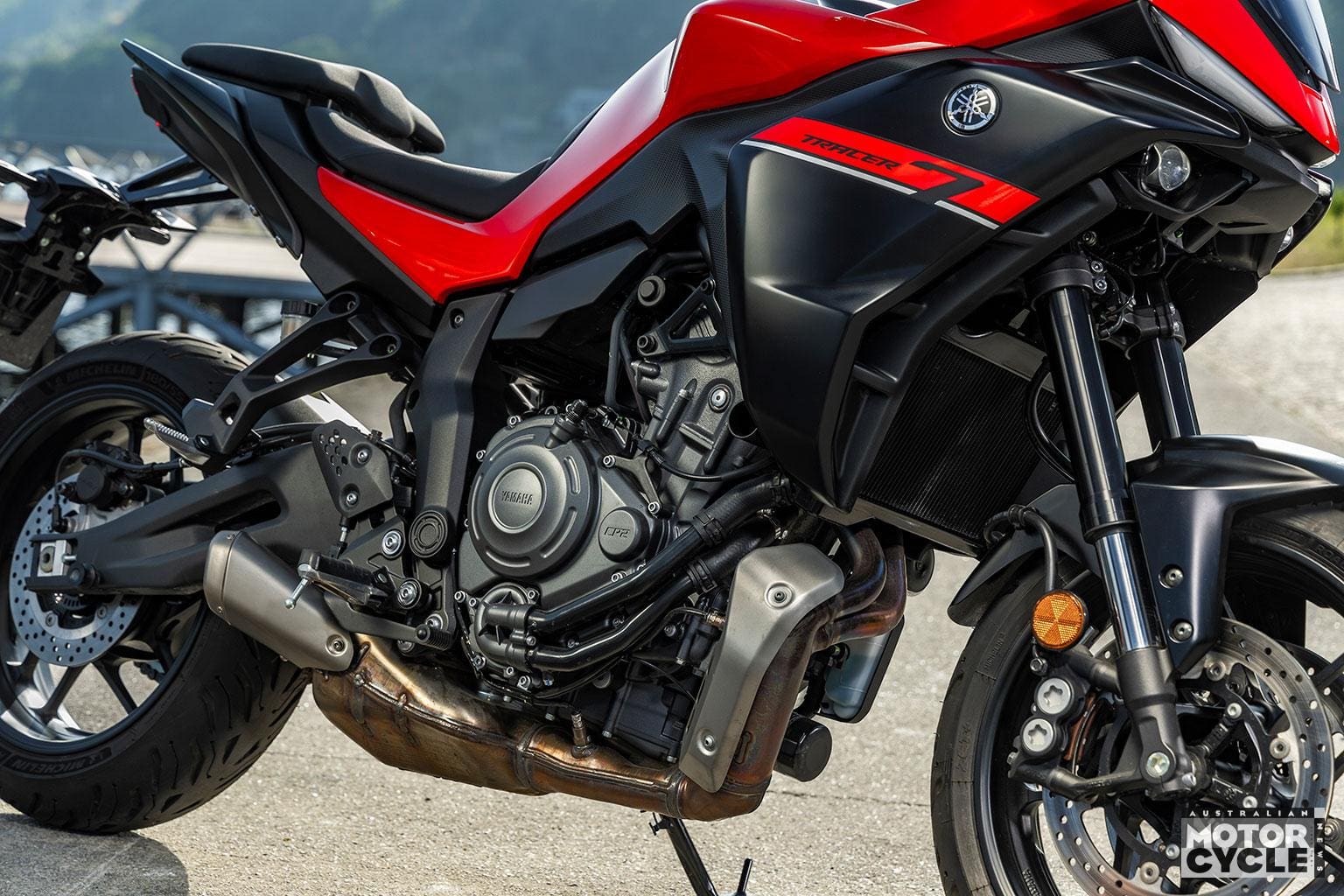
It lacks the top-end power of larger-capacity bikes but delivers more than enough to have a blast. The revs flow, the delivery is deliciously linear and that superbly metered fuelling makes it responsive without a hint of sharpness. The 212kg GT is 9kg heavier than the stock Tracer, meaning the engine doesn’t feel quite as perky, and I expect when fully loaded two-up with luggage you might find yourself dreaming of a Tracer 9 GT triple – but the smaller engine has always been fun and arguably the most enjoyable in this category. Add a pleasing rasp from the Euro5-plus exhaust and it’s easy to see why the CP2 has so many fans. In the past handling has been a relative weak point of ‘entry-level’ Yamaha streetbikes, and after listening to the technical presentation on the eve of the press test, I found myself questioning Yamaha’s chassis updates: a longer wheelbase, more rigidity in the frame, beefed-up fork, a fraction more weight… More rigidity usually means a reduction in feel, and a longer wheelbase usually results in slower steering. But, thankfully, I was wrong; Yamaha has produced a plucky, easy-handling Tracer equipped with decent Michelin Pilot Road GT rubber. Despite opting for a racier, stronger inverted fork from KYB, suspension is still relatively basic, with just preload and rebound damping adjustment. It’s the same adjustment on the rear, but the GT gets a handy remote pre-load adjuster knob.
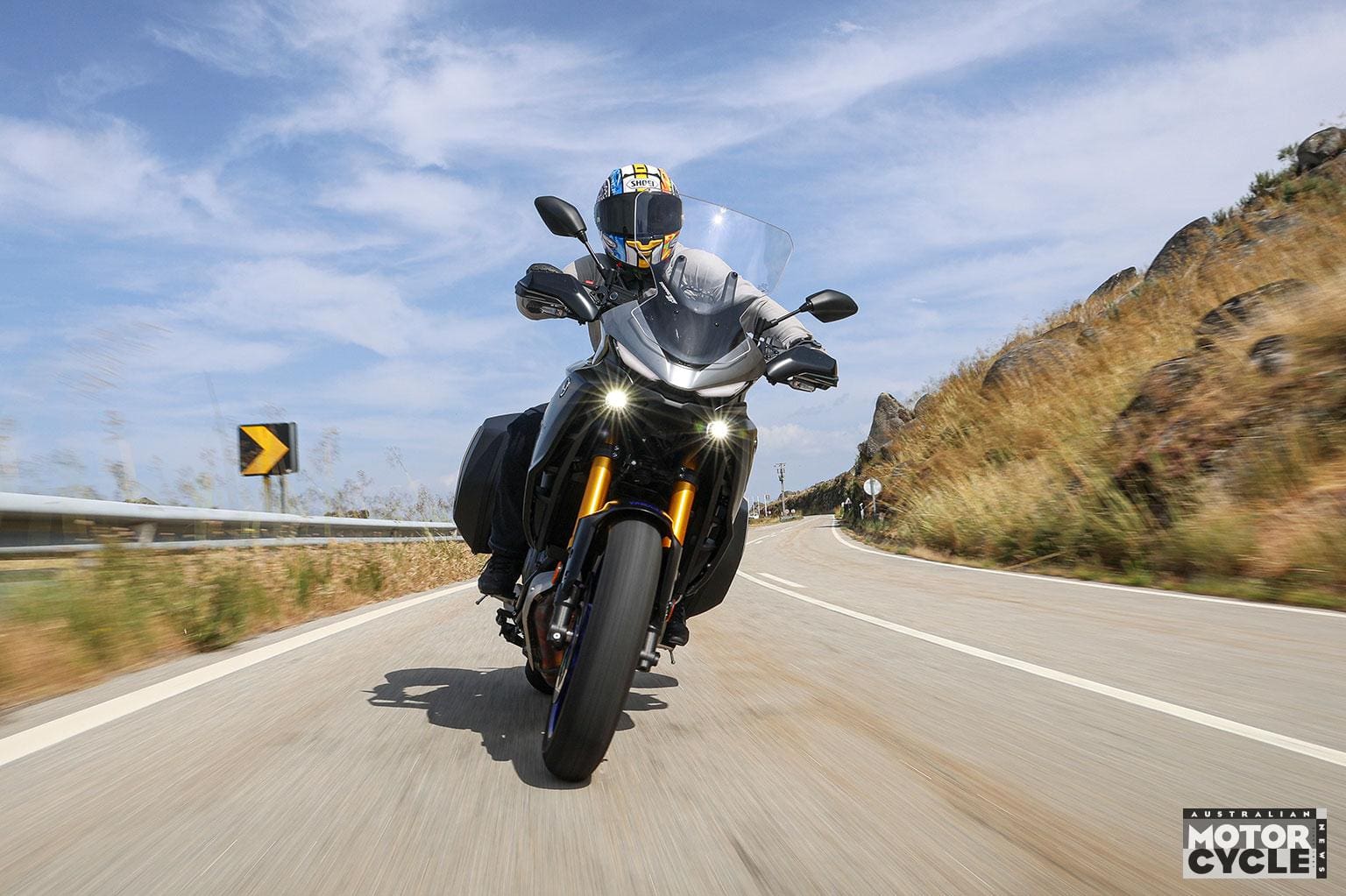
There’s a sweet, natural balance to the Tracer, which makes it feel like your bike from the off. In tricky early morning conditions, I was getting excellent feedback from a damp surface and was able to trust the quality Michelin rubber. The taller ’bars and wider stance allow you to lever the 200kg-plus Tracer around with relative ease, which in turn makes it enjoyable to ride.
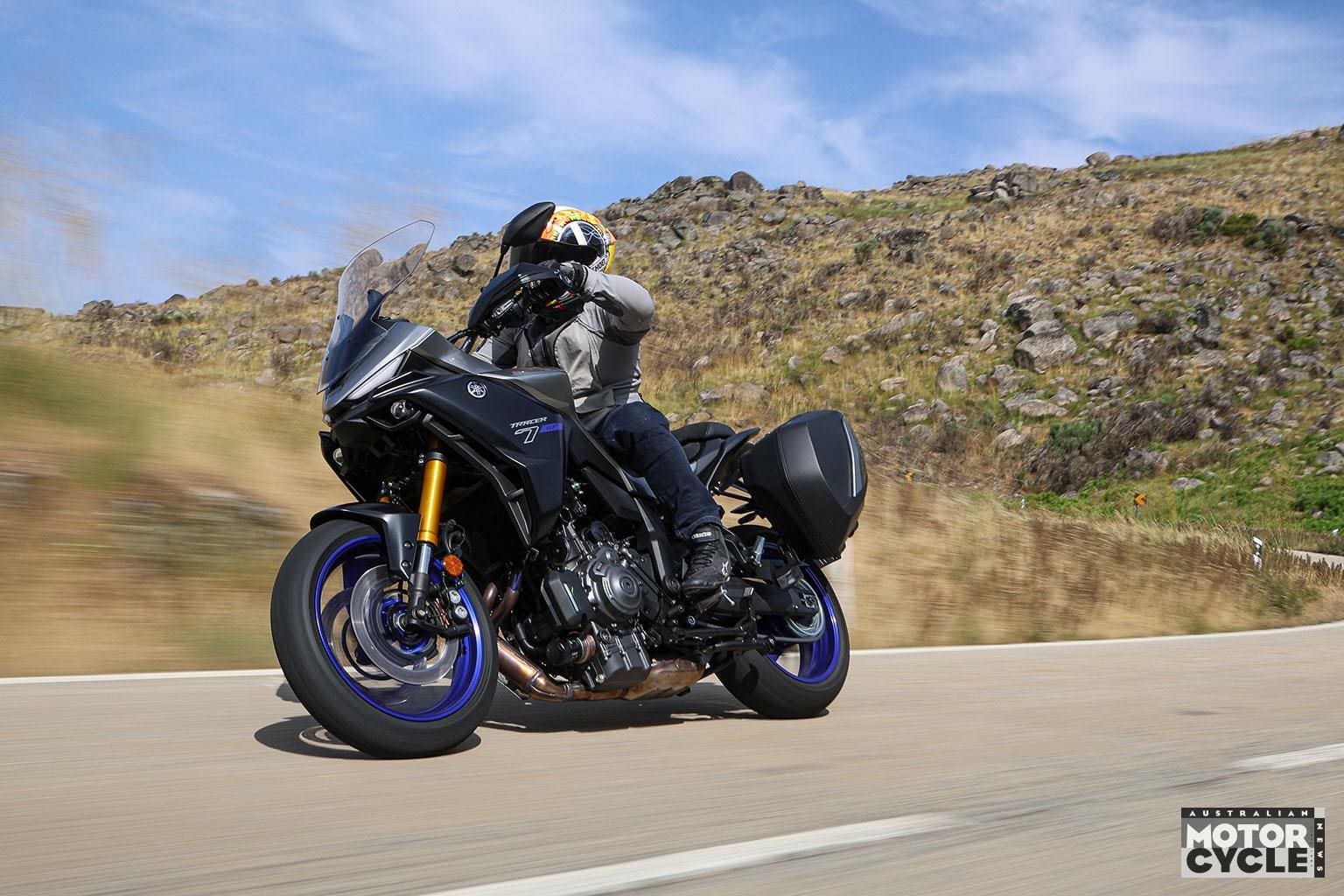
Later in the afternoon, on an almost deserted dry section of switchback mountain roads, I upped the pace, expecting to soon hit the limitations of the handling, but I didn’t. The pegs will tickle the road from time to time, but you have to push the handling to do so or be heavier than the average rider. I’m relatively light (81kg in kit) and only touched the pegs down on the very odd occasion.
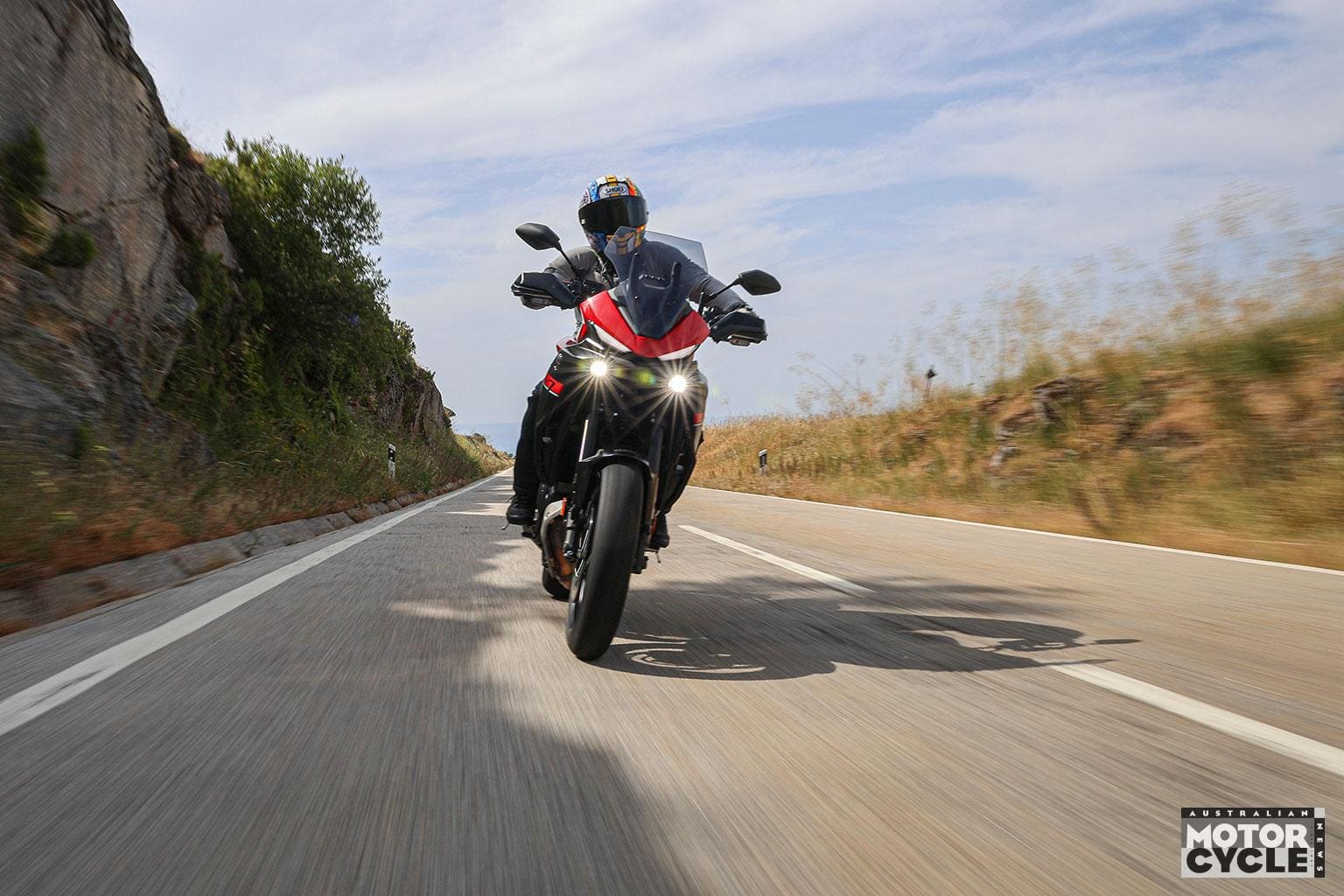
The heavier GT sits farther into its suspension, meaning the pegs do touch down a fraction sooner. Some heavier riders present added rear spring preload via an easily accessible adjuster. But even carrying decent lean angle at pace, the Yam is planted and stable, offering excellent feedback for this type of bike. Sure, there are limitations, but they’d only be felt on a racetrack.
On the road, the standard set-up – despite being more set to comfort over sport – is hard to fault. A £10k tourer should have handling limitations but they are not apparent. Yamaha has certainly not saved on suspension, which was questionably on the limit a few years ago.
SPLIT THE DIFFERENCE
When riding both bikes back-to-back, the standard Tracer feels a little sportier and firmer. Both bikes, however, share the same set-up and only differ in weight and the seat cushioning and height.
The GT coped with the poorly surfaced roads in Portugal way better than I was expecting. I could see upcoming imperfections in the road and was expecting some complaints from the suspension – but there weren’t any. Its ride quality is excellent: plush but still able to be ridden reasonably hard.
The brakes, too, have certainly taken a step forward and are now radially mounted and bolted to a stiffer inverted 41mm fork. At everyday speeds, you only need one finger on the lever. When the pace hots up, you need a little more leverage, but the four-piston calipers are still up for the job. Even on the 9kg-heavier GT they were faultless for this type of bike. I’m sure even when fully loaded with pillion and luggage, the stoppers will be up for the challenge.
The ABS is not lean sensitive as there is no IMU fitted to the 2025 Yamaha. You can’t change the ABS level and there is no engine braking strategy, but in dry and perfect conditions in Portugal this wasn’t a problem; the rear ABS just kicked in a few times when pushed hard. But would I want lean sensitive ABS in winter when it’s cold and horrible? Maybe so.
Traction control can be changed on the move and deactivated at a standstill. Riding and power modes can also be changed but I’d argue there’s no reason to change from the standard riding mode.
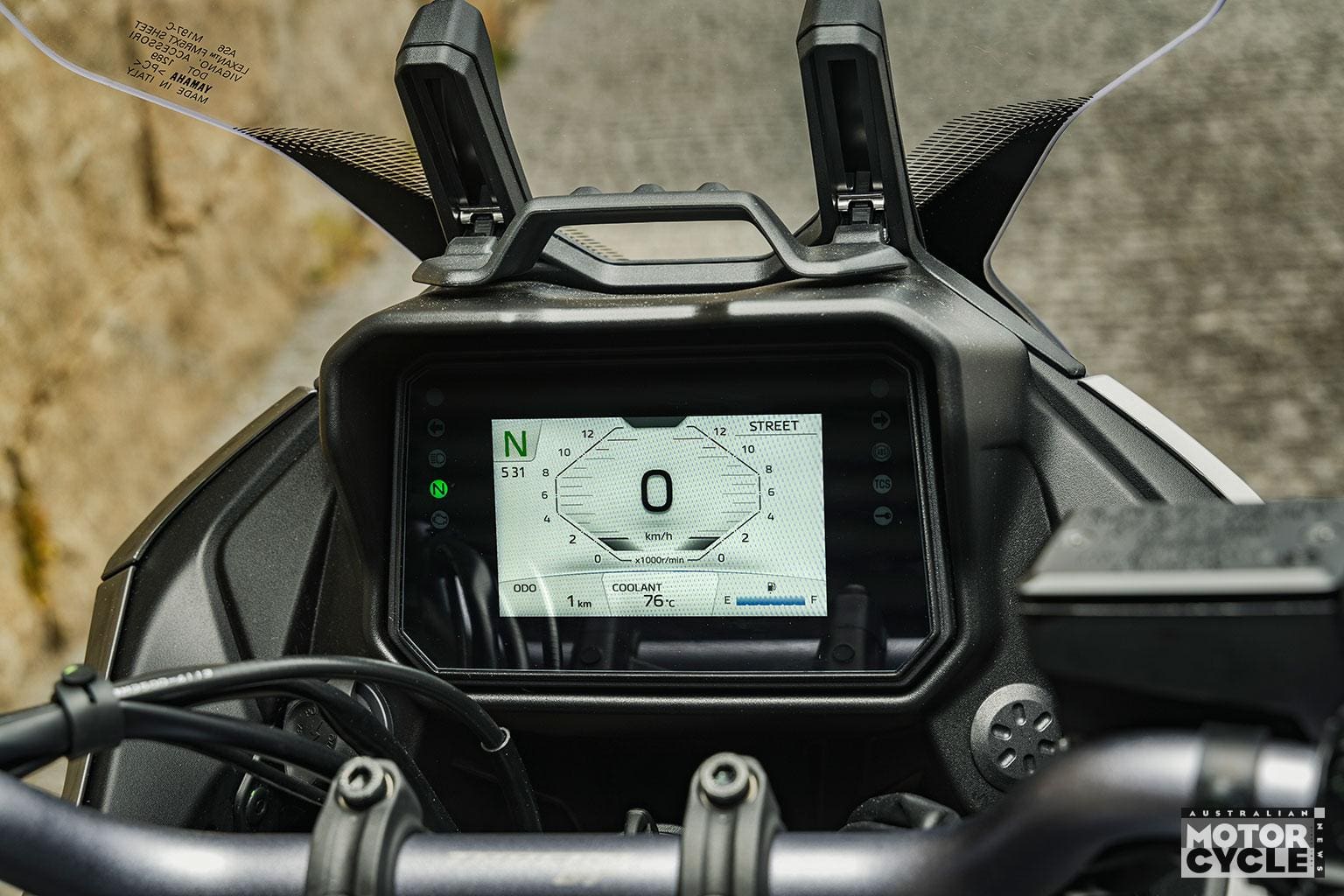
There’s a neat little USB Type C charger up front, and the 5-inch TFT dash has connectivity and four themes to play around with. The display is easy to read, relatively simple, and we even tried the connectivity and navigation, which again is relatively straightforward.
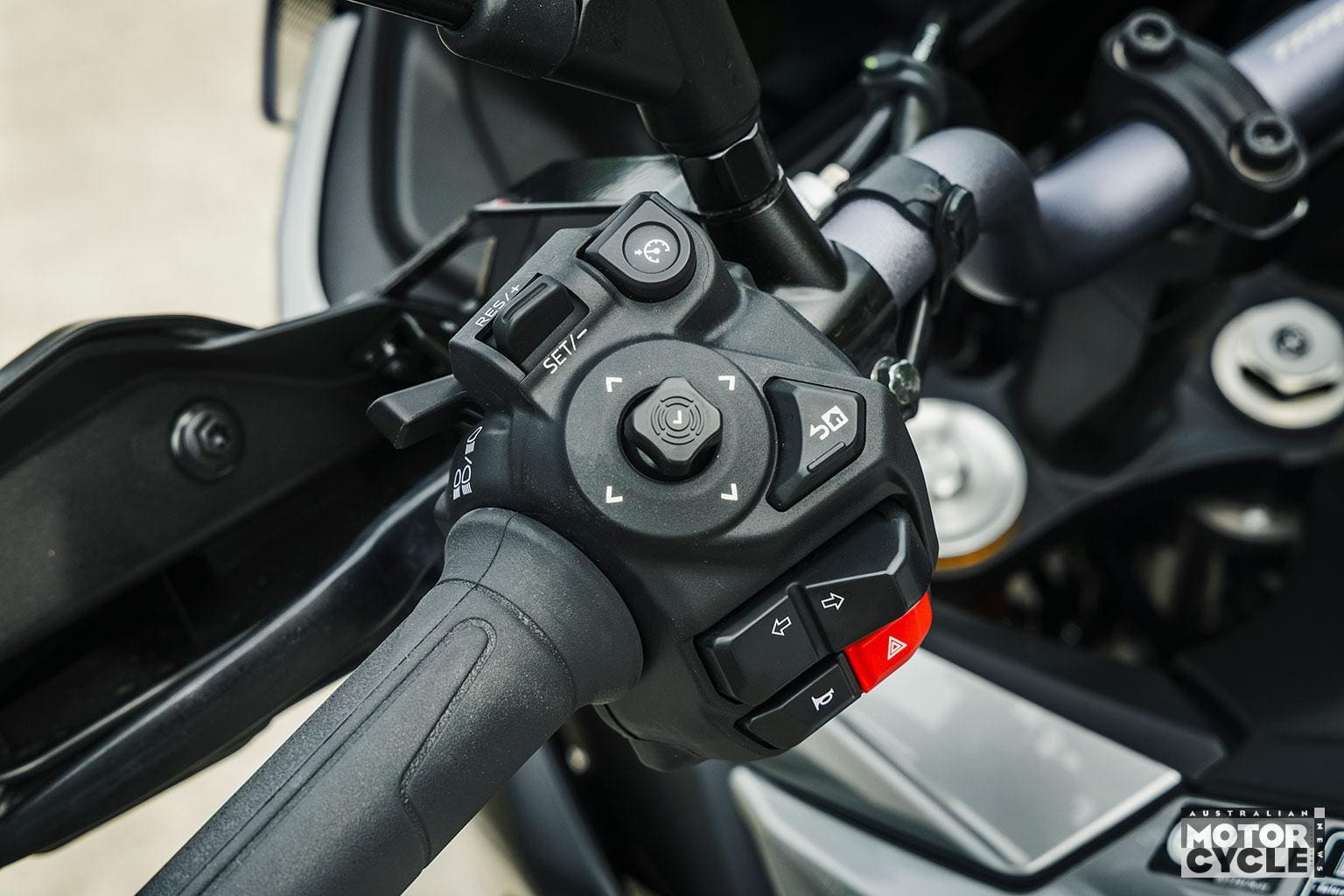
I’m undecided about the new switchgear, which we also see on similar Yamaha models. The five-way joystick is easy enough but less so the auto-cancel and ‘tap’ indicator.
We had the opportunity to bash out a few motorway miles, during which the standard cruise control came in handy (there’s no radar and you wouldn’t expect it at this price).
The screen is manually adjustable on both bikes, but larger on the GT, and Yamaha claims its increased thickness reduces buffeting. But while the screen, hand guards and riding ergonomics are good, it was a little noisy. The seat is higher with more cushioning on the GT; therefore, there’s slightly more room, but both bikes offer excellent comfort. However, we only got a taste of its long-distance potential and didn’t get the opportunity to test the new wider pillion seat.
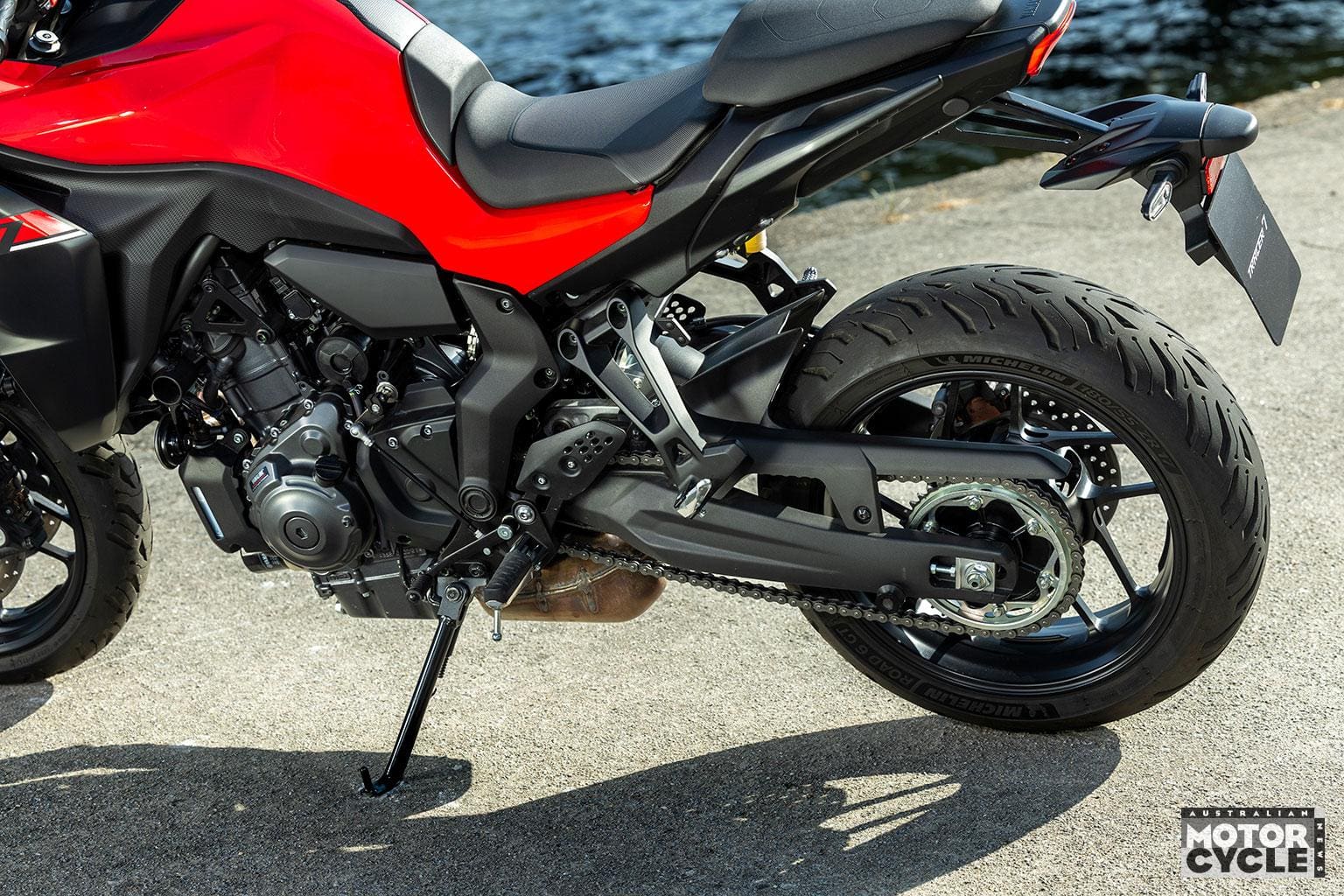
Hard panniers come standard on the GT and are colour coordinated and operated by the same key. The centrestand is also a welcome touch on the GT and has been neatly redesigned to tuck away for improved cornering clearance.
My only gripe is that the panniers are not the most attractive and are wider than the ’bars, which means being careful when filtering if you’re to avoid collecting car wing mirrors.
Easily missed but most welcome is the new ‘ergonomic’ fuel tank, which jumps up from 17 to 18 litres. Yamaha quotes 4.1L /100km, which is incredibly frugal. That equates to a theoretical range of around 440km until bone dry. In the real world, 360 to 400km between stops is impressive, and three to four-hour stints are more than possible, more so on the comfier GT. For short, regular commuting you might only need to fill the Tracer once a week.
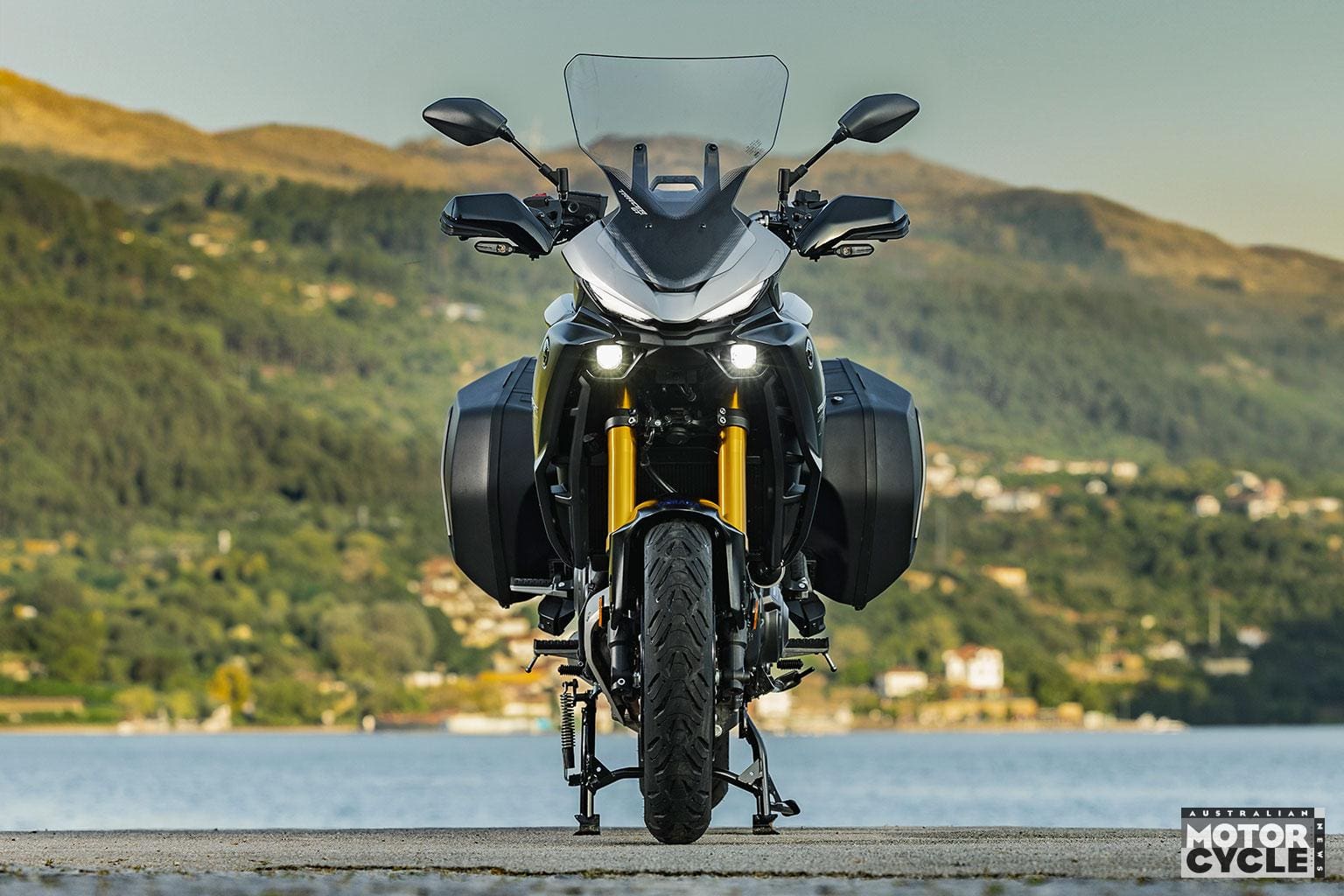
Some may categorise the GT as an entry-level tourer, but a 400km-plus range, excellent suspension and good comfort mean this isn’t just a weekend toy and is more than capable of taking on a few weeks in the saddle, matching much pricier, heavy-duty designed tourers.
VERDICT
I’m still on the fence regarding the new facelift. From some angles, the front for example, it’s a yes. But the rear, with those huge panniers… the GT is a maybe not. I’m also not in love with the indicators, and should the rider aids be lean sensitive and a quickshifter be standard at this price? But when the only real niggle I have is the indicator stalk, then you know Yamaha has done a great job improving an already good Tracer 7 and Tracer 7 GT.
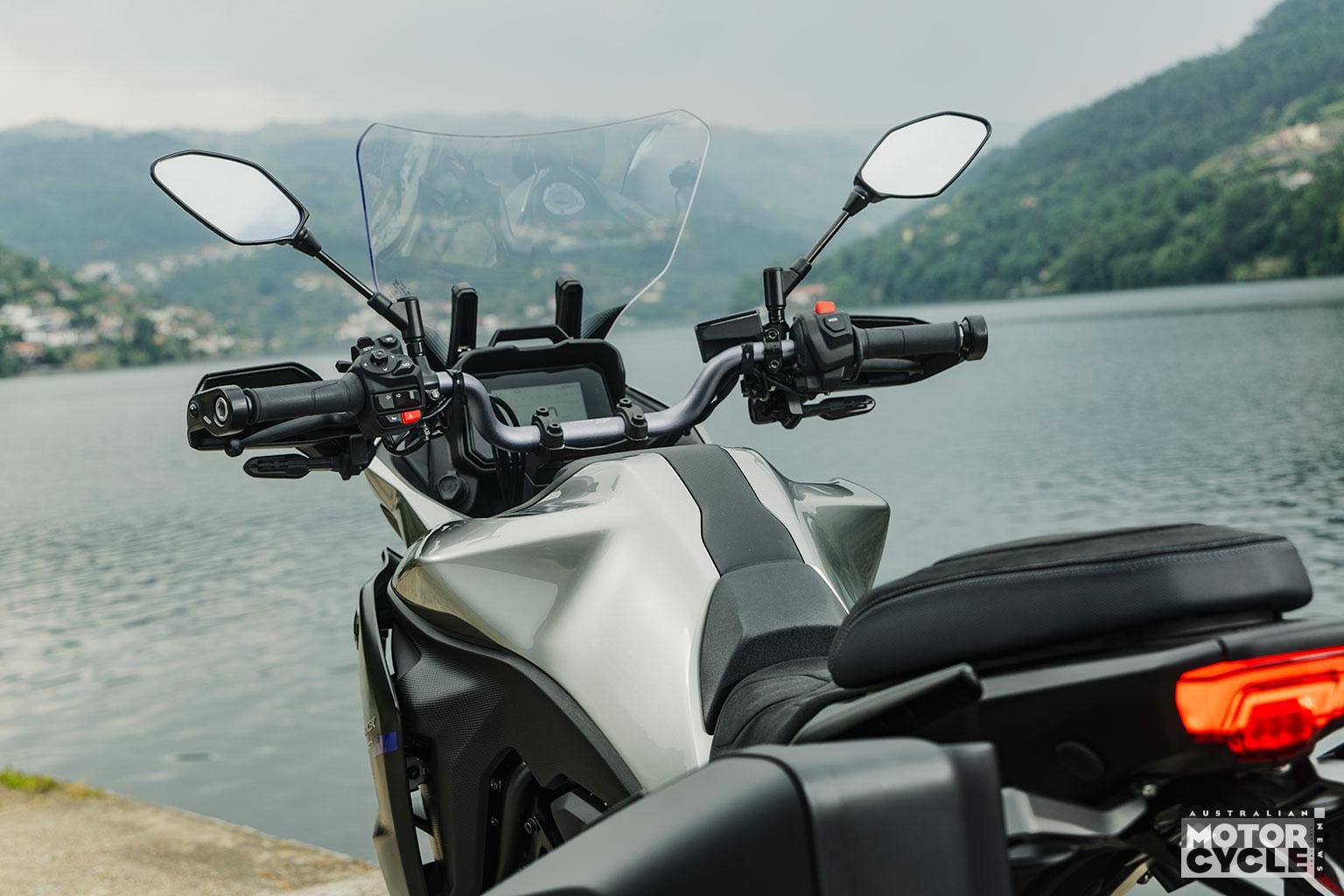
At this price, the standard 2025 Tracer is an excellent do-it-all bike. If you need a machine that’s great at almost everything – will commute, is comfortable, easy to ride, frugal, relatively cheap to run and maintain, yet can offer fun evening rides – then look no further. It’s way more entertaining than its on-paper power figures suggest, and offers more practicality than its naked sibling, the MT-07.
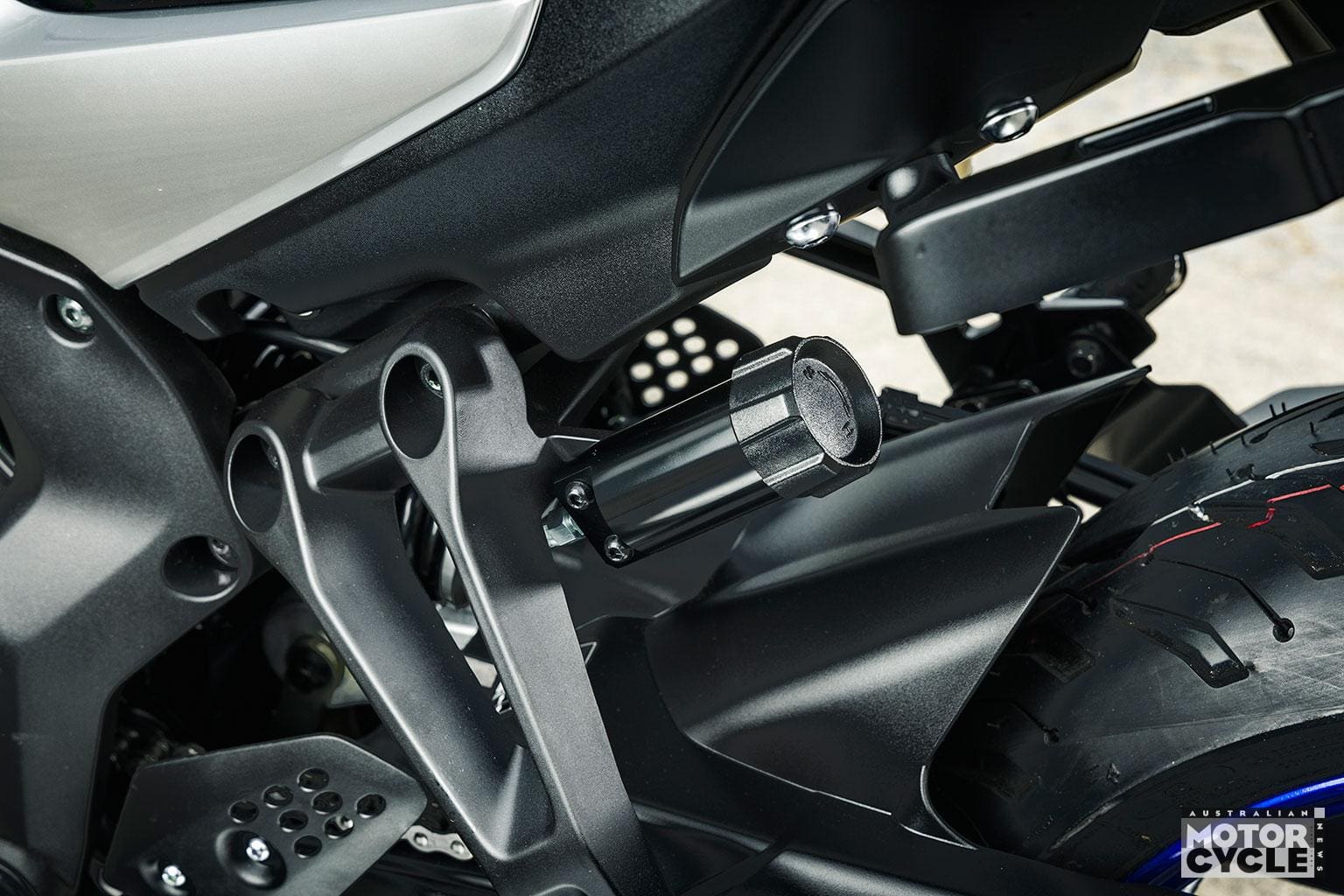
But for me, the real surprise is the Tracer GT. What an excellent all-round package. It’s so good, you ask the question: Why would you want more? Okay, if you’re touring two-up fully loaded over a week or more then it might be lacking in power, but solo touring will be no problem. It’s not intimidating like some heavy tourers and is easy to manage at slow speeds. The fuelling is superb, there’s a reasonably high level of spec and hard panniers are a standard fit along with a centre stand, cruise control, heated grips, USB… It’s ticking a lot of boxes before you even consider its big tank range. Furthermore, it’s fun, agile and handles way better than its entry-level label suggests.
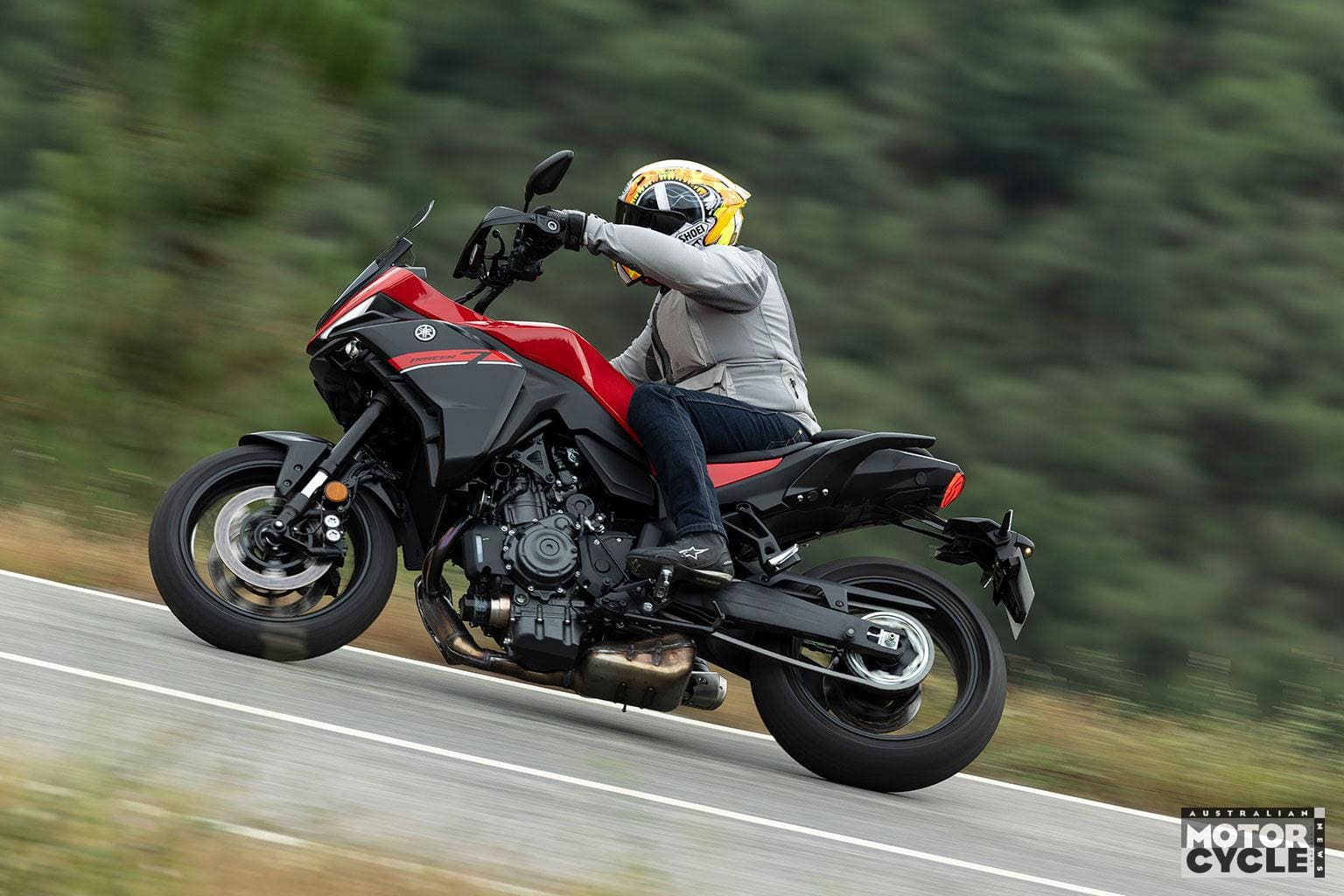
The UK pricing (£9000/£10,000) is starting to get a bit high for an entry-level bike with just 54kW. That’s getting into middleweight money. (Aussie pricing will be confirmed closer to the expected release date here around November.) The flipside is that the GT comes fully equipped, ready to tour. Only time will tell if Yamaha has got the pricing correct, but the Tracer and GT have hit the mark. I didn’t even want to fly back to the UK from Portugal but ride home on the GT instead.
Tracer 7 standard vs GT
Both bikes share the same chassis, suspension, brakes and rider aids. However, the GT comes with gold forks, not black. Engine power, torque and characteristics are the same on both models.
Essentially, the GT is more tailored to longer journeys, so the seat has more padding and is slightly higher, 845mm compared to 830mm. The manually adjustable screen is 90mm taller than the current model as well as 1mm thicker with less tint than the Tracer. The knuckle guards are a fraction larger, and the centrestand and heated grips are standard on the GT, optional on the Tracer.
Colour-matched solid panniers are standard on the GT, which are on a floating system designed to improve stability at high speed. Yamaha claims you can fit a full-size helmet in each pannier. As you’re more than likely to be adding weight to the GT, there’s an easily accessible remote preload adjuster, only found on the GT. Both bikes have the same ergonomics, the same new higher wider ’bars and pegs located in the same area. On the scales, the GT comes in at a claimed 212kg fuelled, compared to 203kg on the standard Tracer.
Competition
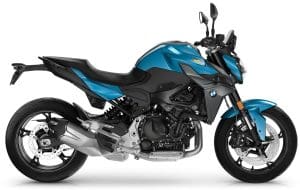
BMW F 900 R/XR
From $17,310 (ride away)
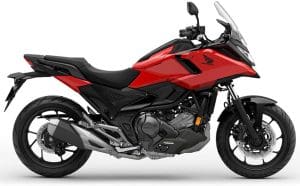
Honda NC750X
From $14,700 (ride away)
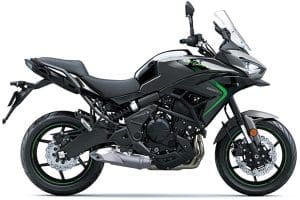
Kawasaki Versys 650
$14,086 (ride away)
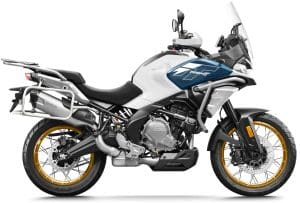
CFMoto 700MT
$10,490 (ride away)
SPECIFICATIONS
ENGINE
Type Liquid-cooled, 4 valves per cylinder, 689cc parallel twin
Bore & stroke 80mmx68.6mm
Compression ratio 11.5:1
Fuelling Electronic fuel injection, Ride-by-Wire TCI
Transmission Six-speed
Clutch Wet, multiple disc
Power 54kw (73hp) @ 8750rpm (claimed)
Torque 68Nm @ 6500 rpm (claimed)
Top speed 217km/h (est)
Fuel consumption 4.1L/100km (claimed)
ELECTRONICS
Type YCC-T (Yamaha Chip Controlled Throttle)
Rider aids Three rider modes, three power maps, traction control, ABS
Rider modes Sport, Street, Custom
Frame Diamond steel tube backbone
Rake 25.2°
Trail 99.1mm
Wheelbase 1495mm (std)
SUSPENSION
Type KYB
Front 41mm, USD fork, preload and rebound adjustable,130mm travel
Rear Single shock, rebound and preload adjustable (remote GT), 139mm travel
WHEELS & BRAKES
Wheels Cast aluminium multispoke
Front 3.5 x 17in
Rear 5.5 x 17in
Tyres Michelin Pilot Road 6 GT
Front 120/70/x17
Rear 180/55/17
Brakes ABS
Front: Twin 298mm discs, four piston radial calipers
Rear: 245mm disc, single-piston caliper
DIMENSIONS
Weight 203kg, 211kg GT
Seat height 830-850mm, 845-865mm GT
Width 875mm
Height 1330-1390mm, 1424-1480mm GT
Length 2135mm
Ground clearance 140mm
Fuel capacity 18L
BUSINESS END
Price (£9k/£10k, AU TBD)
Colour options Midnight Black, Redline Red, (GT Icon Performance, Tech Black
Contact yamaha-motor.com.au