Lighter, leaner and louder than ever, Ducati’s Streetfighter V4 S is the most powerful and advanced naked so far
Back in the sportsbike-mad 1990s, when we were all a bit younger and still learning the ropes, the odd crash was regarded as little more than part of the learning process. Trouble was, a replacement fairing for a binned Suzuki GSX-R750 or Honda CBR600 was hugely expensive for under-insured idiots like me and my mates. Instead, we did what thousands of others did: fitted higher, wider ‘bars; longer brake lines and, maybe, ‘treated’ the tank and tail unit to a rattle-can paint job to hide the scratches. We didn’t know it then, but this was the origin of the streetfighter class.
Over the decades, manufacturers picked up on and followed this trend by producing naked versions of their sportsbikes. But instead of simply removing the fairing, adding one-piece ‘bars and tidying things up a bit – as happened on the street – the vast majority were watered-down versions of the originals, with less horsepower and lower-spec suspension and brakes, as well as more weight and a longer wheelbase to aid stability.
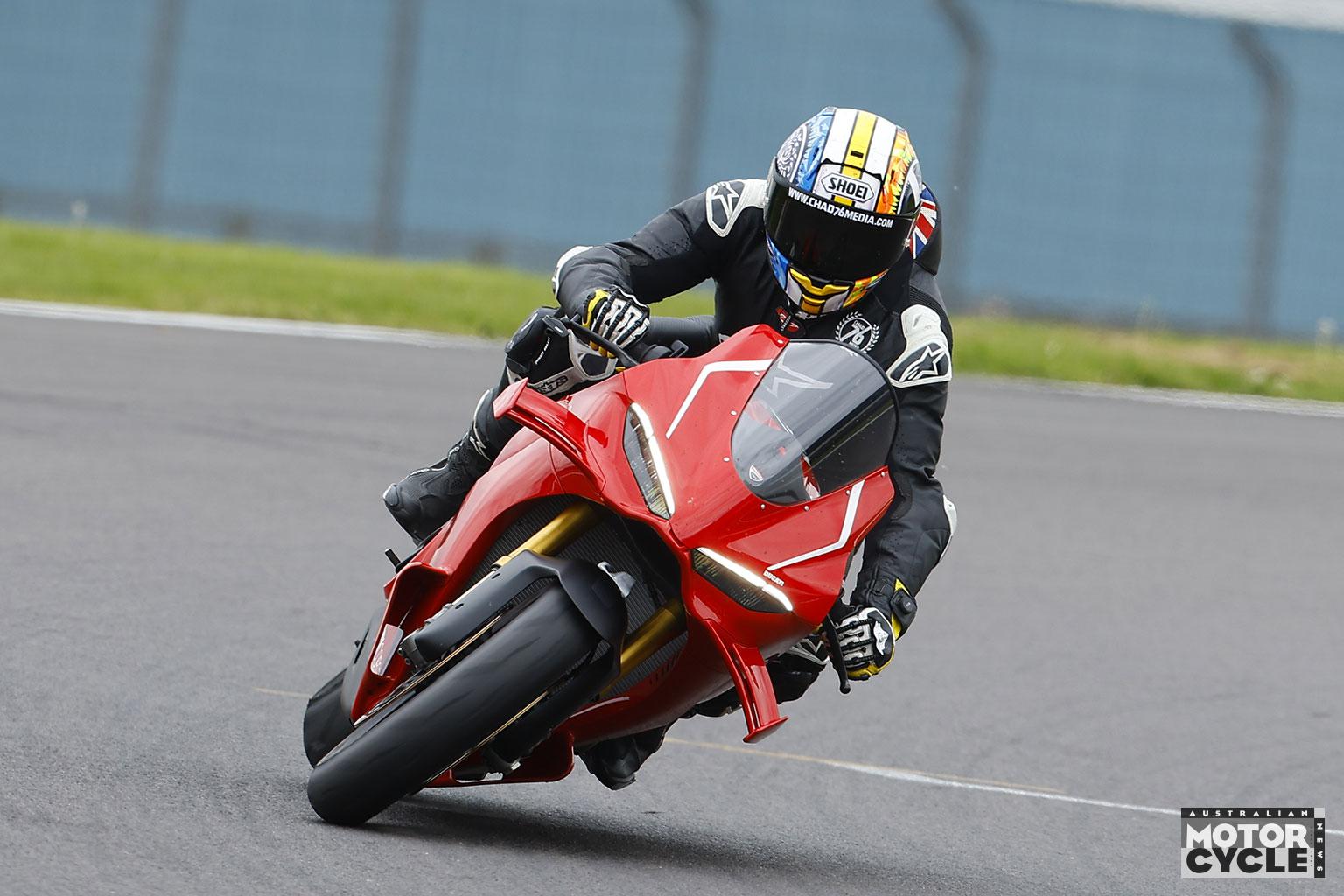
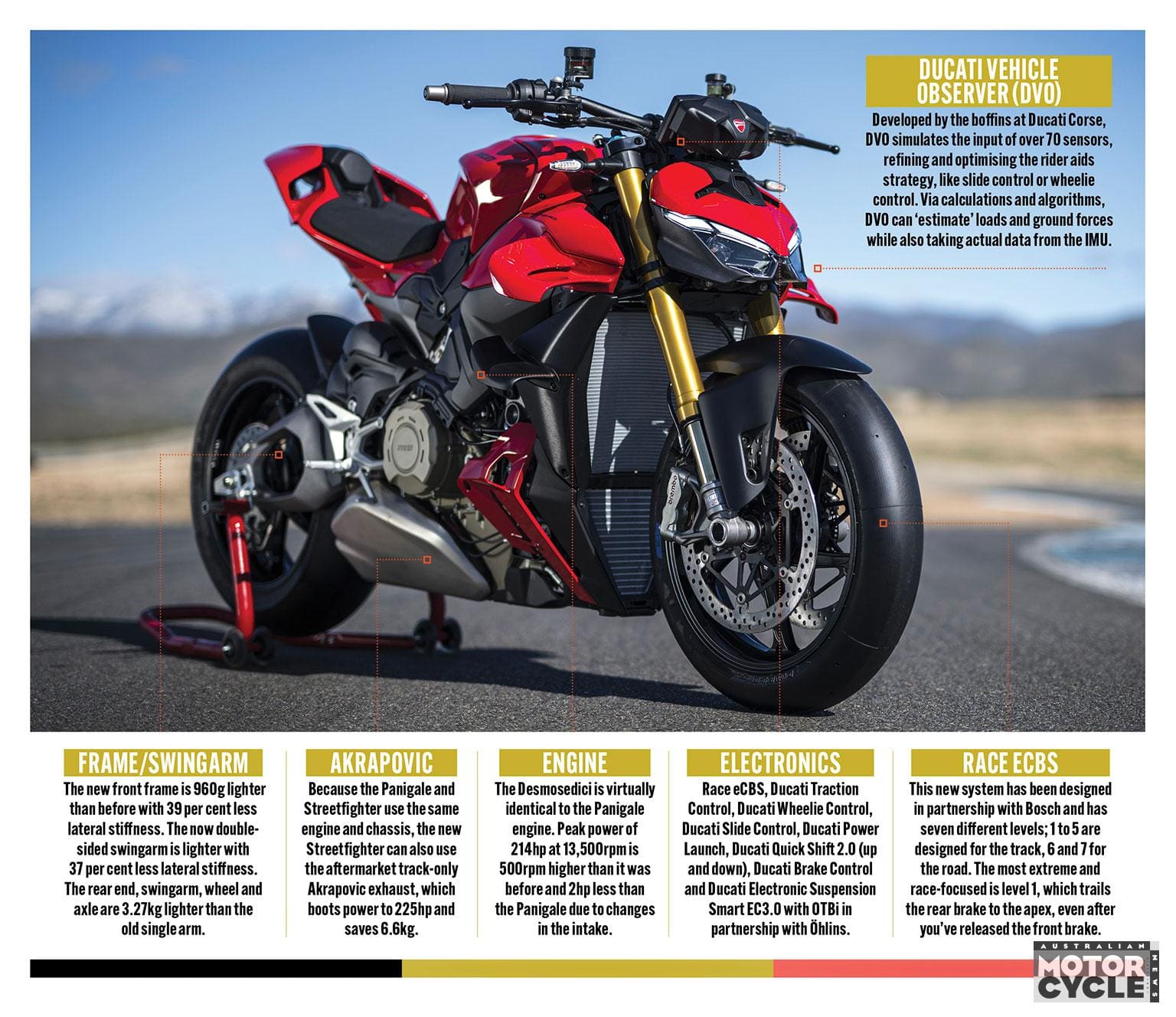
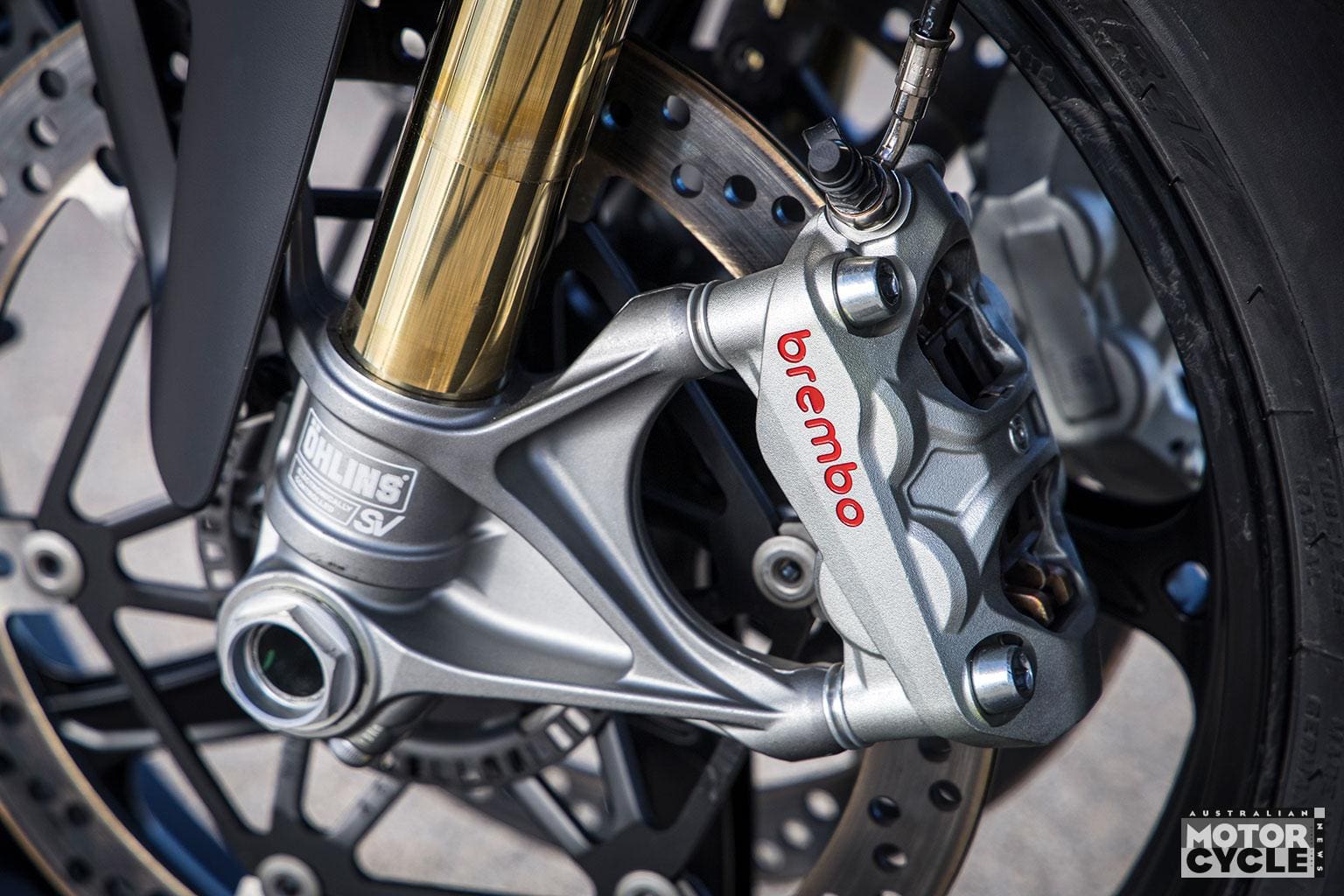
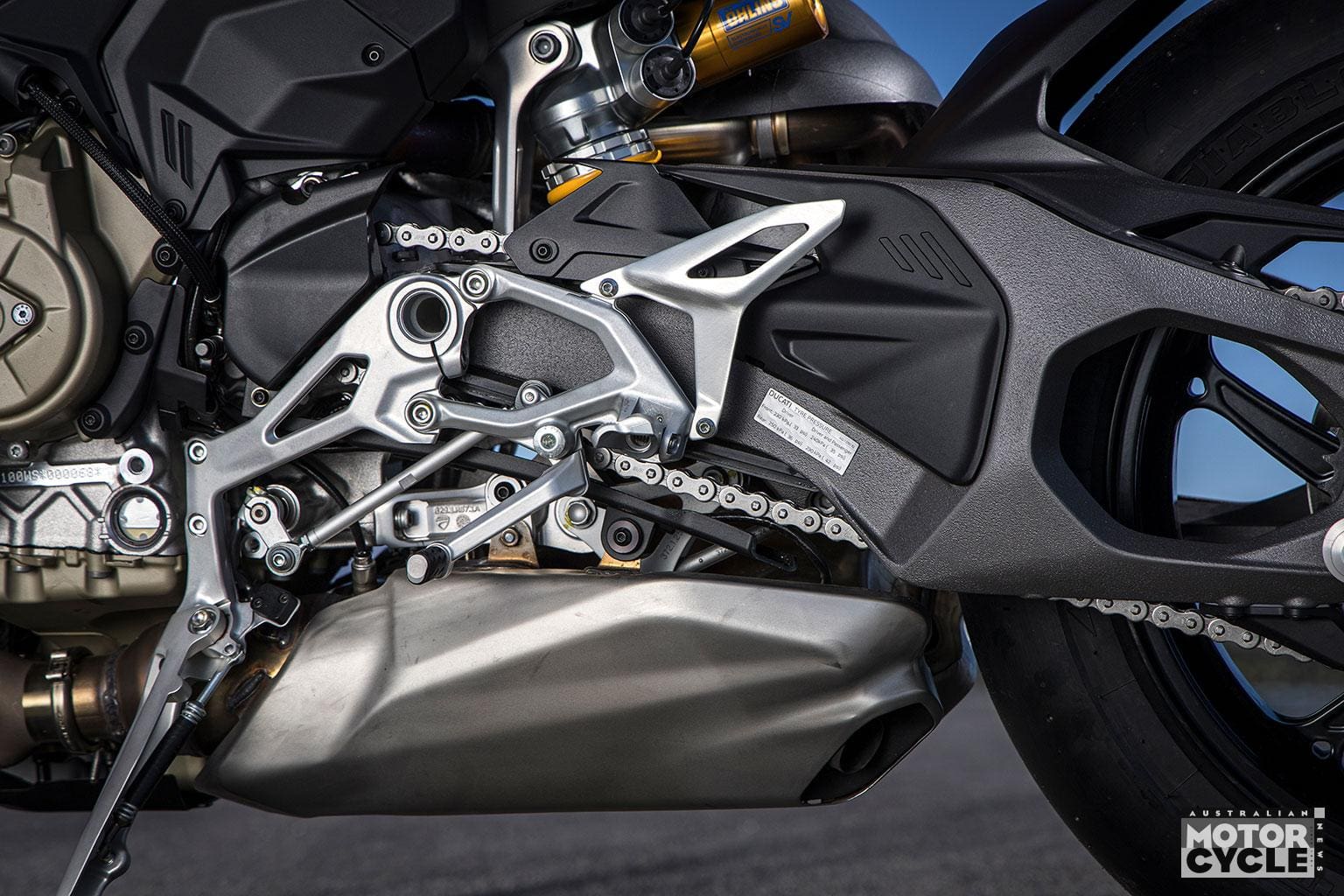
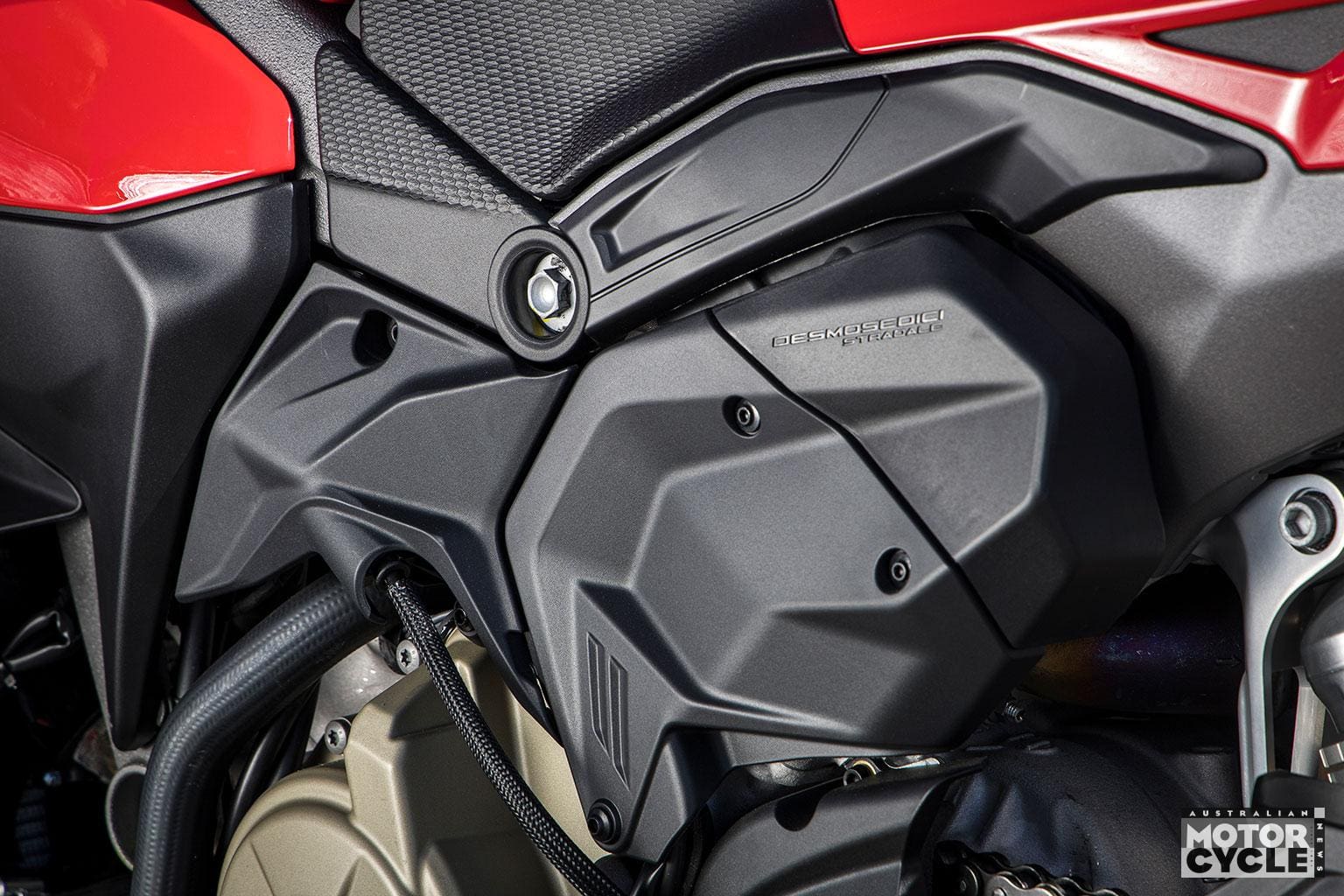
Thankfully, this trend has certainly slowed in recent times. Aprilia’s Tuono V4 and BMW’s M 1000 R are formidable naked versions of their sportsbike siblings. But for 2025, Ducati has done something rather remarkable, as the new Ducati Streetfighter V4 S is a direct, one-to-one naked version of their formidable Panigale V4 S. The Desmosedici Stradale engine is taken directly from the Panigale and produces 157.4kW (214hp), up 6hp on the previous model, at 13,500rpm. The new aluminium front frame, which is now lighter with more flex, is from the Panigale, so too the new double-sided swingarm and the advanced electronics, including the race eCBS braking and Ducati Vehicle Observer (DVO). Even the very latest Hypure calipers are, you guessed it, directly from the Panigale, along with the very smart Öhlins EC3 suspension, albeit with slightly different settings.
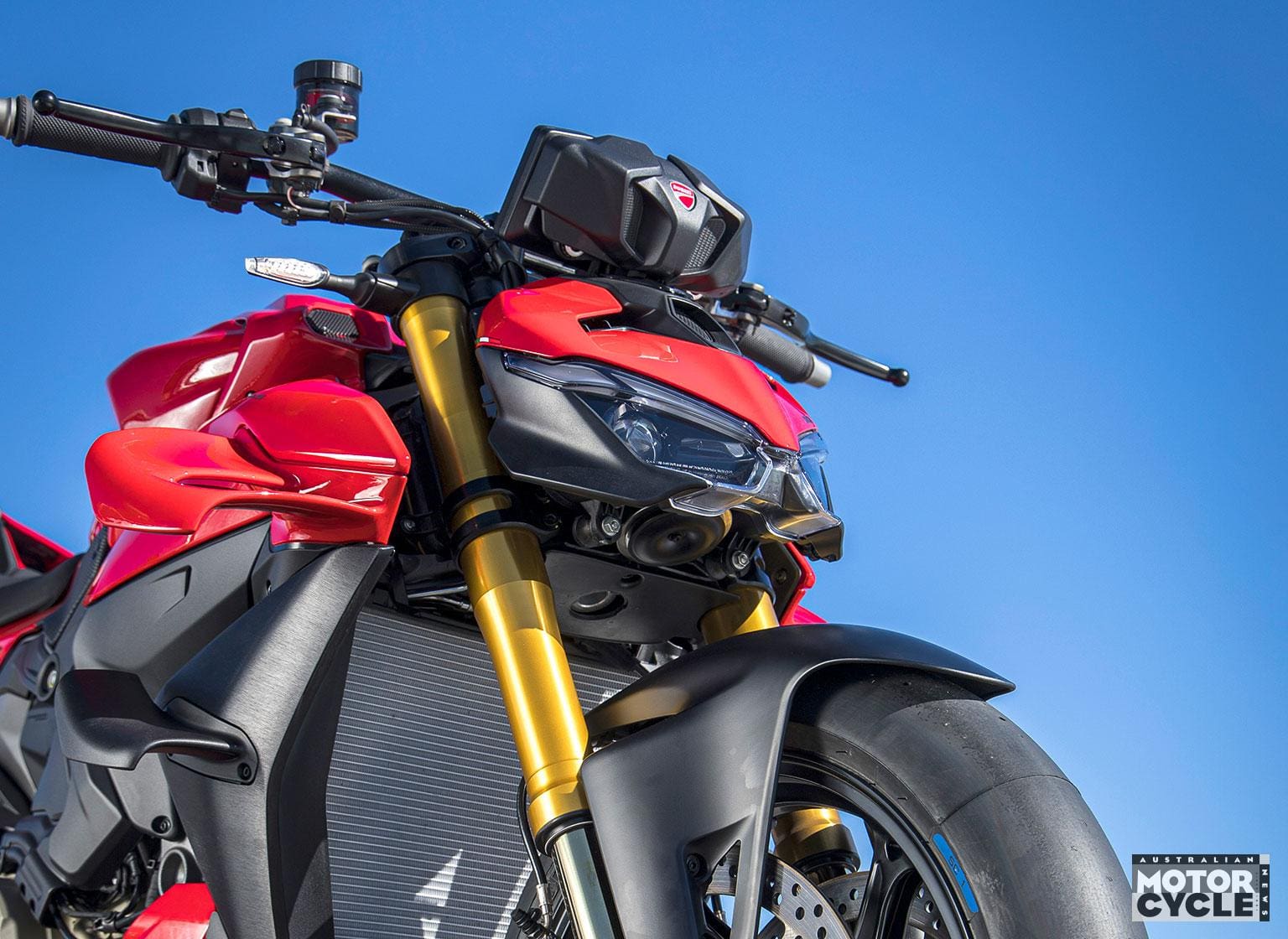
New biplane double wings help keep the animal on a tight leash at speed, and the rider aids have been tweaked to deal with its lower weight (4kg less than the current Streetfighter V4 S and 2kg more than the Panigale) and revised riding position. There are higher, closer ‘bars, more inward-mounted footpegs and also a slight slackening of the head angle to fractionally lengthen the wheelbase, but in all but name it is a naked Panigale superbike – and the most powerful super-naked you can buy.
We flew to Andalucía in southern Spain, to the same racetrack we tested the 2023 Ducati Streetfighter V4 S in May of that year. Again, we were blessed with perfect conditions and Ducati laid out the red carpet with fresh Pirelli slicks and a Ducati technician per bike. Time to put on those big boy pants and see what the $43k of Streetfighter goes like.
HANGING ON FOR DEAR LIFE
Strange how life loops back around when you have been in the job for so many years. To compound the sense of familiarity with that test in 2023, I was just a few months ago lapping Vallelunga on Ducati’s very latest high-tech Panigale V4 S, arguably its most advanced Ducati to date. And it was obvious then that a new Streetfighter V4 would be around the corner.
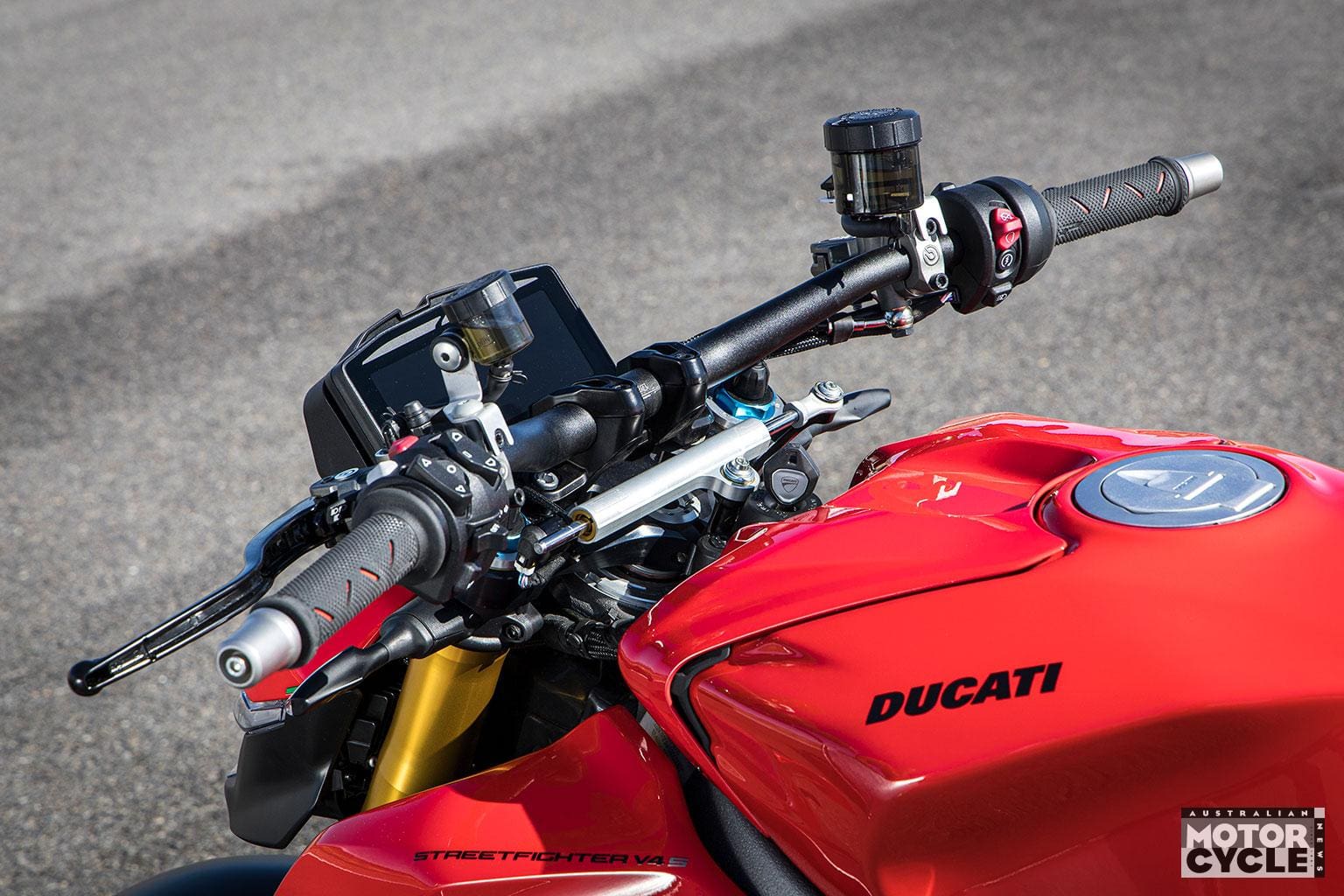
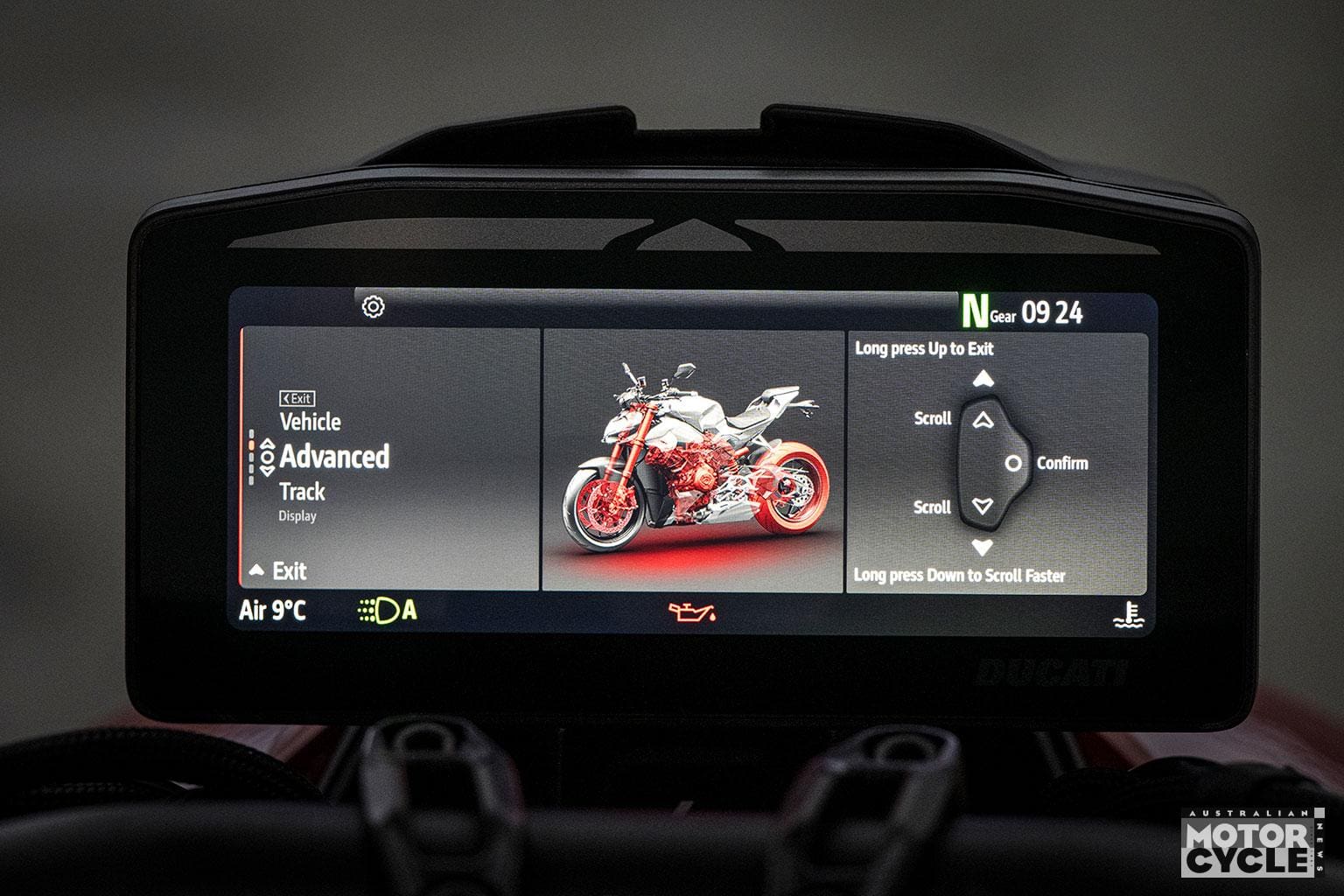
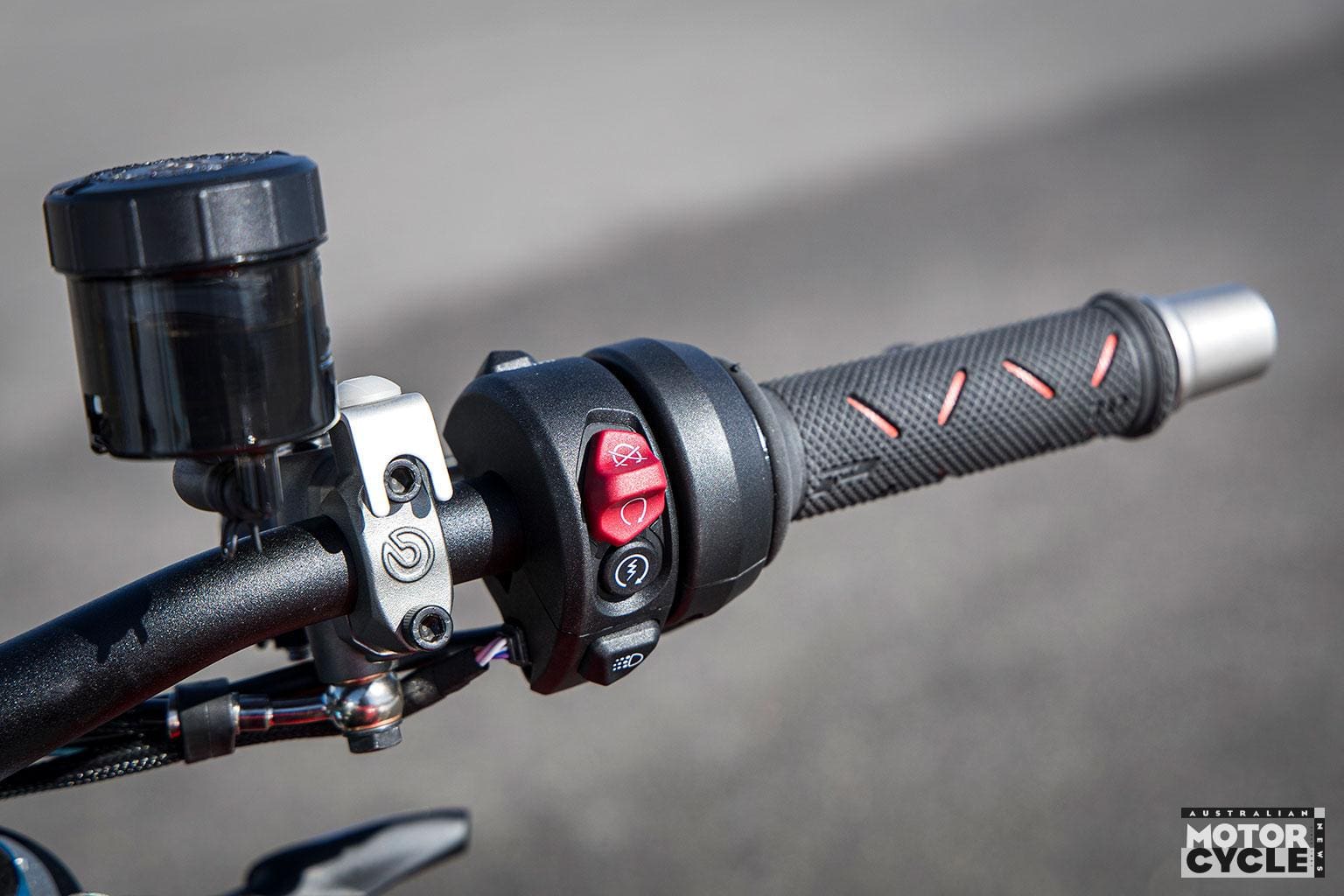
The plan was simple: start in the standard Sport mode and put the hammer down. Then opt for the standard Race mode (there’s only one Race mode, not two like the Panigale), then experiment with the new switchgear and huge 6.9in TFT dashboard to find a setting I’d be happy with.
For someone who has been around the block a few times, I find it almost unimaginable that road-legal, Euro5+ compliant naked superbikes are making 214hp. After all, I’ve ridden fairly recent British Superbike machines with less power.
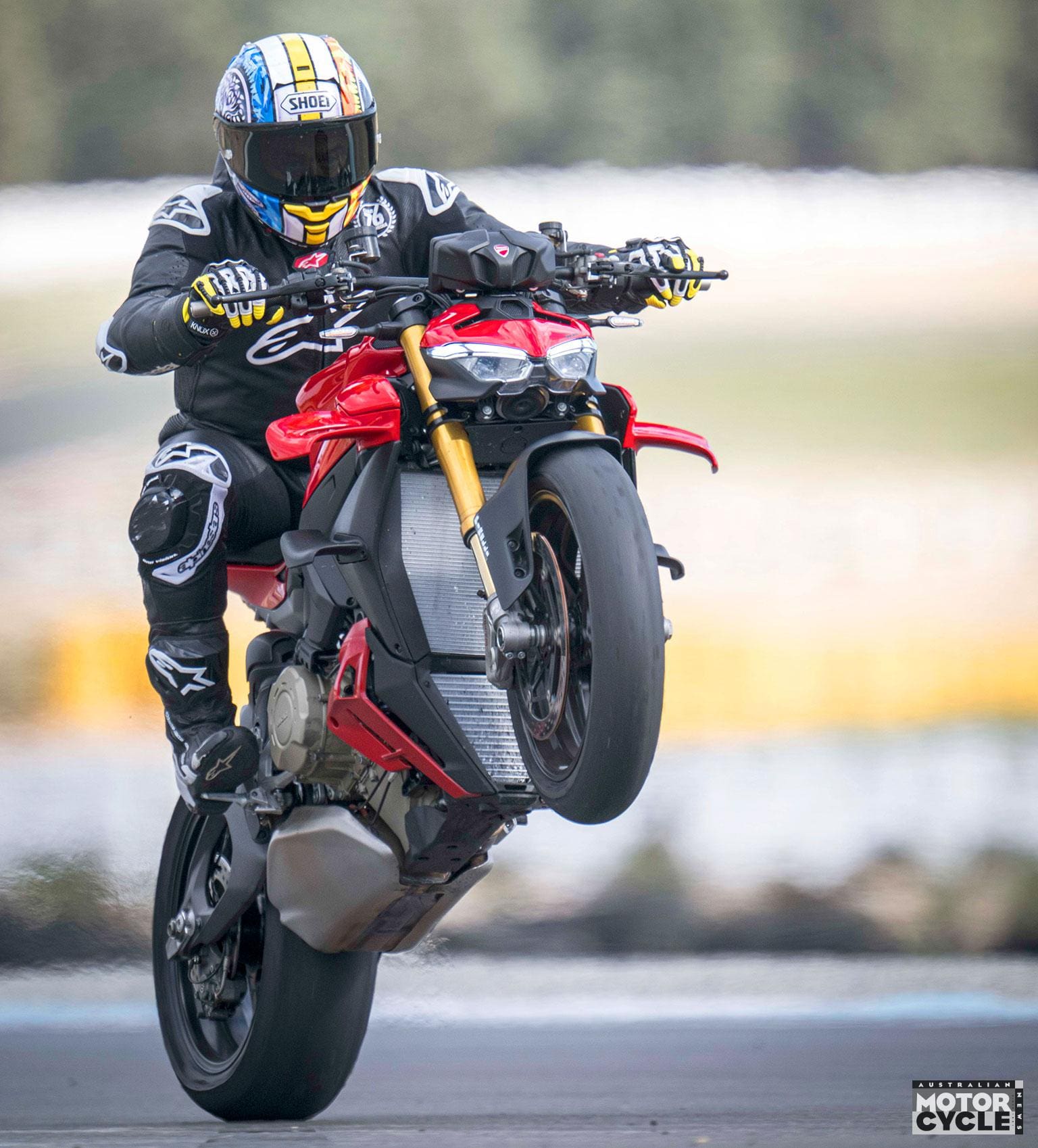
Session one was supposed to be an easy, get-to-know-you affair in Sport mode. Sport delivers full power but with a smooth RBW action, and with the track not up to optimal temperature, DTC (Traction Control) on level 2 from 8, DSC (slide control) on 2, DWC (wheelie control) on 3, and ABS set to level 3 for the track with the slide-by-brake function. The EC3 suspension was active and set to Dynamic. Essentially, all those numbers mean the full 214bhp with a few rider aids in place just in case, and the suspension set to support track riding on slicks.
Straight away, I was reminded how quick the Streetfighter is. Even on the opening lap this even lighter, even more powerful 2025 version desperately wanted to wheelie over the Turn 3 crest, the DWC suppressing its excitement smoothly. Out of Turn 12 onto the long back straight, it reminded my neck and shoulders what 200 or more horsepower feels like with no bodywork installed.
The Ducati Quick Shift 2.0 is as fast and smooth as a race set-up, and rapid gear changes allow the revs to stay buried in the top quarter of the range. The 1103cc V4 loves to rev up to the redline at 15,000rpm, which is crazy. As soon as the shift lights illuminate, you tap another gear and you’re back to the redline again.
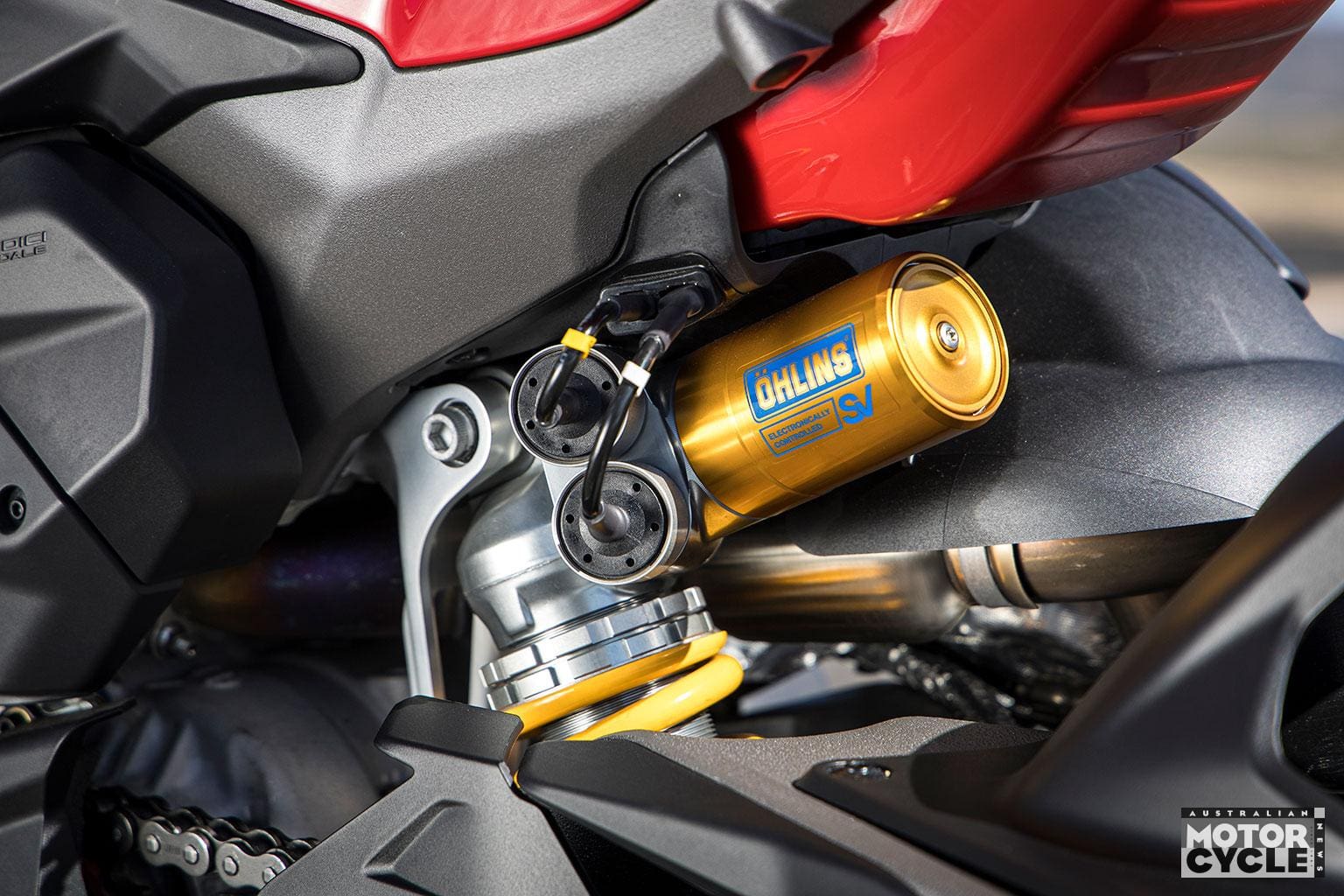
Andalucía has lots of undulations and heavy braking sections, which is a true test of the suspension, but the EC3 system from Öhlins was up for the job. It’s built using the same components as the Ducati Panigale’s, but with different settings as the bike is a fraction heavier and the rider sits more upright in a different position. During the first session, the set-up was faultless, and there was immense feedback and grip.
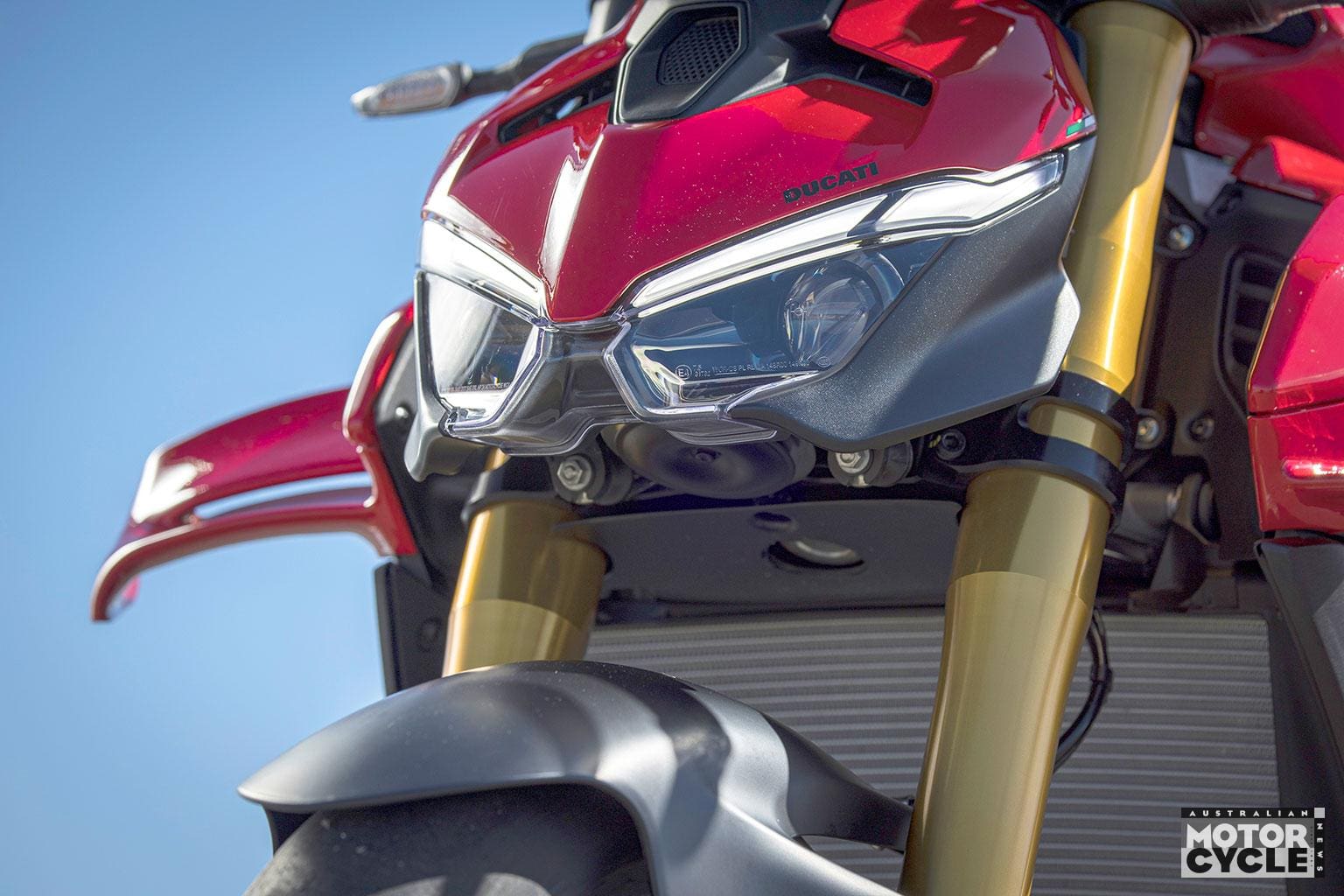
Stability was also excellent. Ducati claims the twin biplane wings deliver another 17kg of downforce more than the 2024 model (making 45kg total) at 270km/h, which we were just about hitting on the back straight. Getting a powerful naked bike to remain stable at speed is hard work as the rider is pulling on the ‘bars – hanging on for dear life, basically – and in turn pulling the fork legs out of their stanchions, shifting weight to the rear.
One way to rectify this is with a longer wheelbase, but Ducati has barely tweaked this, meaning this stability must largely be down to the wings.
With the V4 S sitting relatively flat and level on the straights, there isn’t that excessive and destabilising dive from an extended fork you sometimes get with a naked bike when you hit the brakes from high speed. Instead, braking is smooth and secure, with incredible power and efficiency from the Race eCBS linked system and Hypure front calipers. Each lap, I was thinking I could have left it later. Such is the system’s subtlety, I could play with the lever on the entry to the final turn, inducing a slight slide at the rear.
ATTACK MODE
By the end of session two, it was time to pay attention and start exploring the plethora of rider aids. Power delivery and throttle response were stunning in Sport but I wanted to try Race mode, complete with Dynamic RBW and, in Active Track mode, more support from the EC3 suspension, especially on the rear, as it compresses at the bottom of the track’s steep undulations.
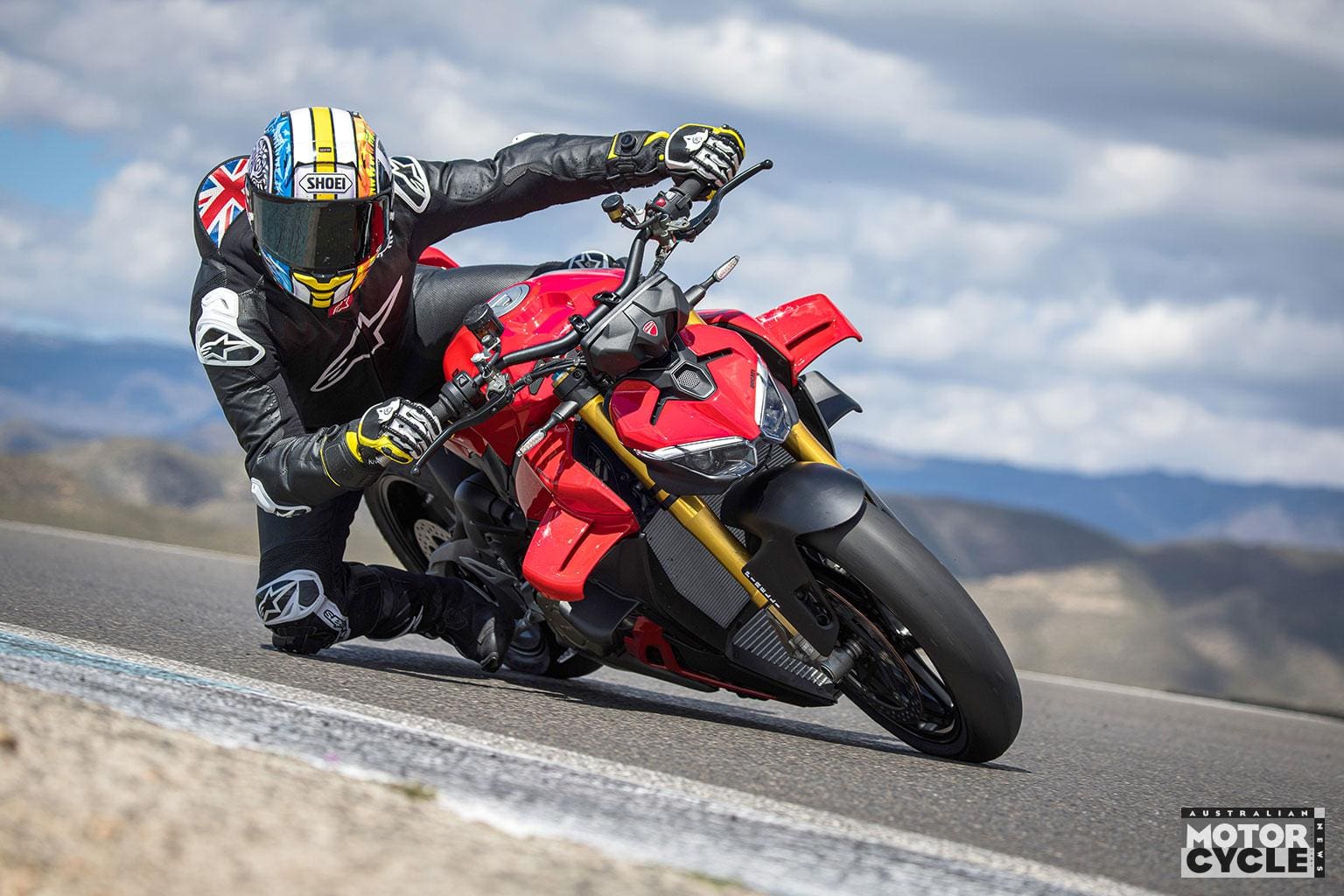
Instantly, Sport made a difference. The chassis was much tighter, and there was more support from corner entry to exit, while the throttle response was even more lively. I felt confident in faster turns, letting off the brakes early, carrying corner speed and even trying one gear higher. Again, mid-corner the stability, grip and feedback were first class, while ground clearance – hardly an issue in any riding mode – felt even greater in the Active Track mode. Despite the obvious wide ‘bars, the supportive shape of the fuel tank allowed me to hang off naturally mid-corner.
Now in ABS 1, the eCBS brakes automatically trailed the rear brake to the apex while I added lean. I’m old school and never touch the back brake, but I could feel the system working as the rear slid a little on corner entry into the last left-hander. You’d have to ride with and without the system back-to-back to feel its benefit as it’s not immediately obvious. I have, though, tested the 2025 Panigale with the same system and seen the data showing how eCBS reduces braking distances by automatically applying the rear brake.
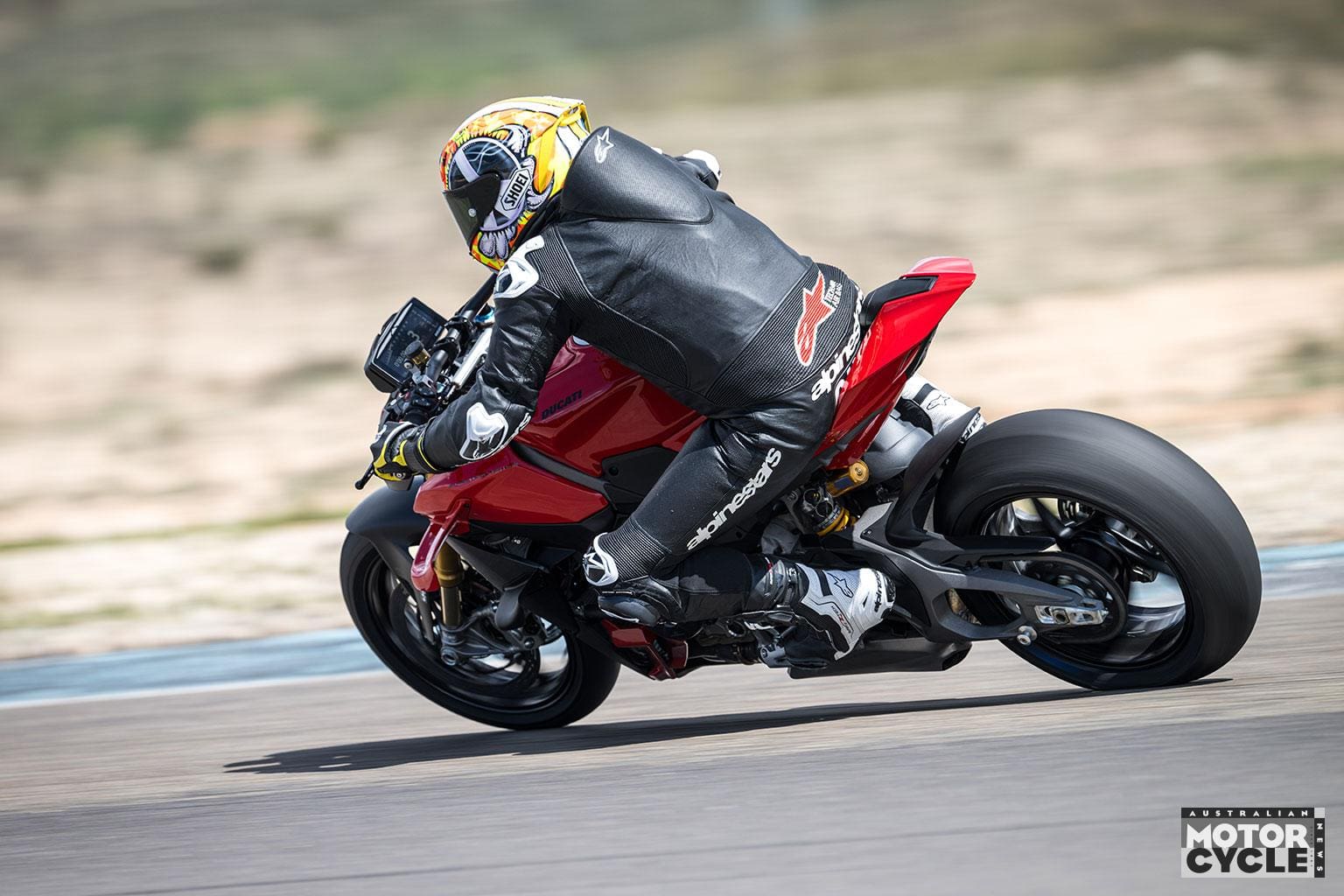
As much as I loved the Race mode with its specific Active Track mode suspension (set up by Ducati), the sheer ferocity of the Desmosedici Stradale’s power was almost too much in its Full mode. In Sport mode I could use all the revs, now I was short-shifting, trying to give my arms and body an easier time. Andalucia is a physical track, and although I’d say I’m race fit and still compete at a decent level, it was hard work trying to contain the V4 beastie. It’s great fun and a good workout, but I wasn’t using all the revs in the first three gears, especially towards the end of a long riding session.
CUSTOMISED RIDE
Back in the pits, it was time to create my own setting. I opted for the Active Track suspension mode, with most of the rider aids on minimum and the ABS set to 1. With engine power back in the milder full-power map – the same as in Sport mode – I still had 214 lovely hp on tap for the fast sections of the track but a softer throttle and fewer horses in the lower gears. This is the beauty of the new electronics: you can tailor everything to how you ride.
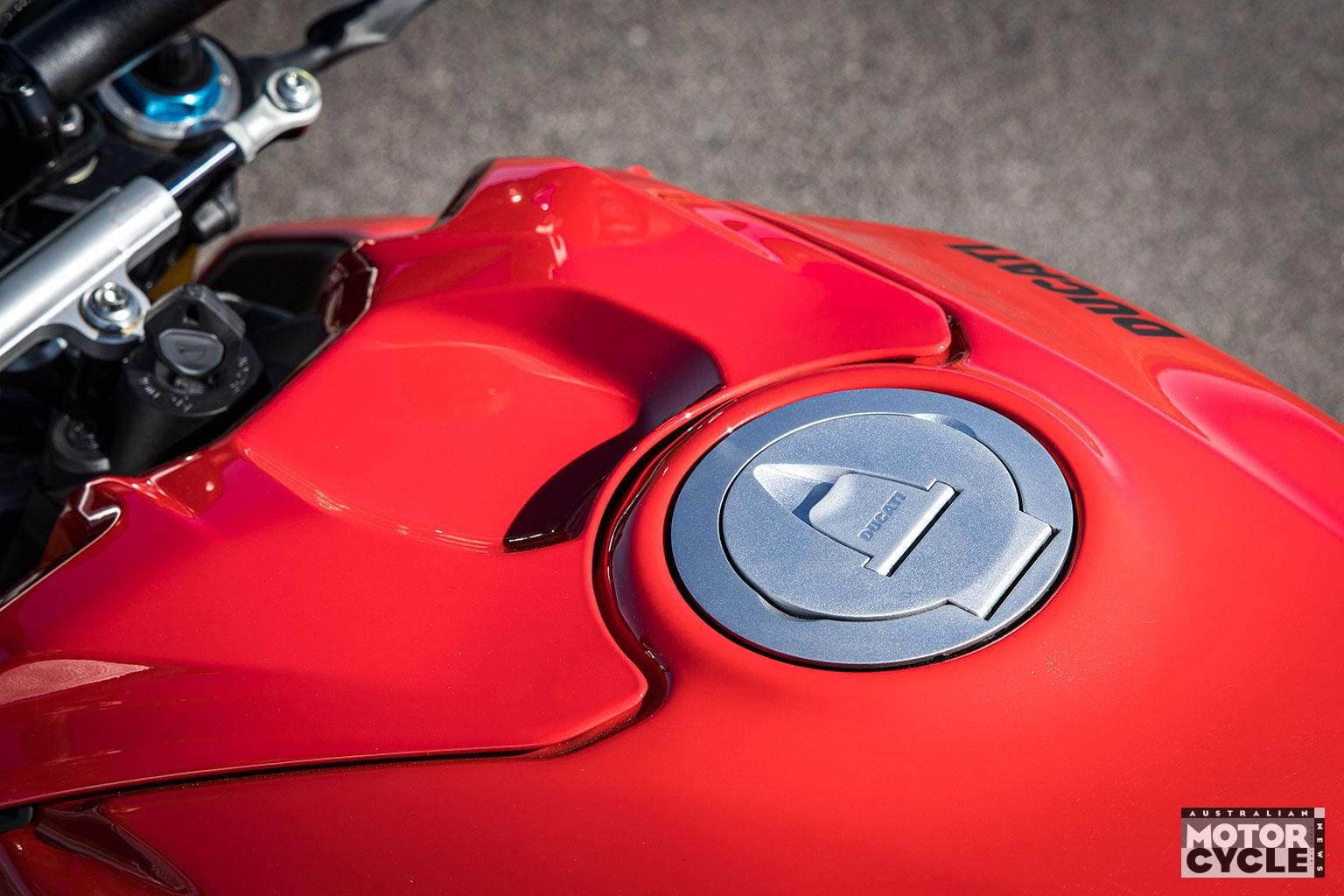
For me, on this day at this track, I now had the perfect Streetfighter V4 S. It was more friendly at lower speed but delivering all its power in all the higher gears but with a supportive active chassis and rider aids near minimum. I actually lapped quicker and more consistently with this set-up, as opposed to the full Race set-up with power on Full.
The final session was all about having fun: same set-up as before but now no wheelie control (for obvious immature reasons). Some less experienced riders also trimmed the rider aids and modes in the last session. After a long, hot day, many turned down the power, upped the rider aids and just had a blast on a relatively tame Streetfighter, which would only try to break your neck down the back straight in the higher gears. And that, perhaps, is the beauty of the new Streetfighter V4 S. It’s a complete animal – the fastest, baddest ass in town in Full power and without rider aids, and a fast but tamer and far nicer character once you’ve dialled in the rider aids that suit you.
VERDICT
Ducati has essentially given us a naked Panigale V4 S. This is good. It weighs 4kg less than before, is 6hp up, and is now the king of its super-naked class. If you want the most powerful naked bike, then you have to buy the 2025 Streetfighter V4 S.
But this bike is not all about peak power and brutish engine performance. The new and lighter chassis and swingarm give more feel and, despite the power hike, make it easier to ride. The electronics and rider aids are some of the best on the market and able to transform the Streetfighter from gentle pussycat to hungry lion in just a few seconds. Its Smart EC3 Öhlins suspension is unflappably brilliant, with clear feedback and staggering versatility. It too can transform the Streetfighter from an easy-going road bike to the sharpest track tool in mere moments.
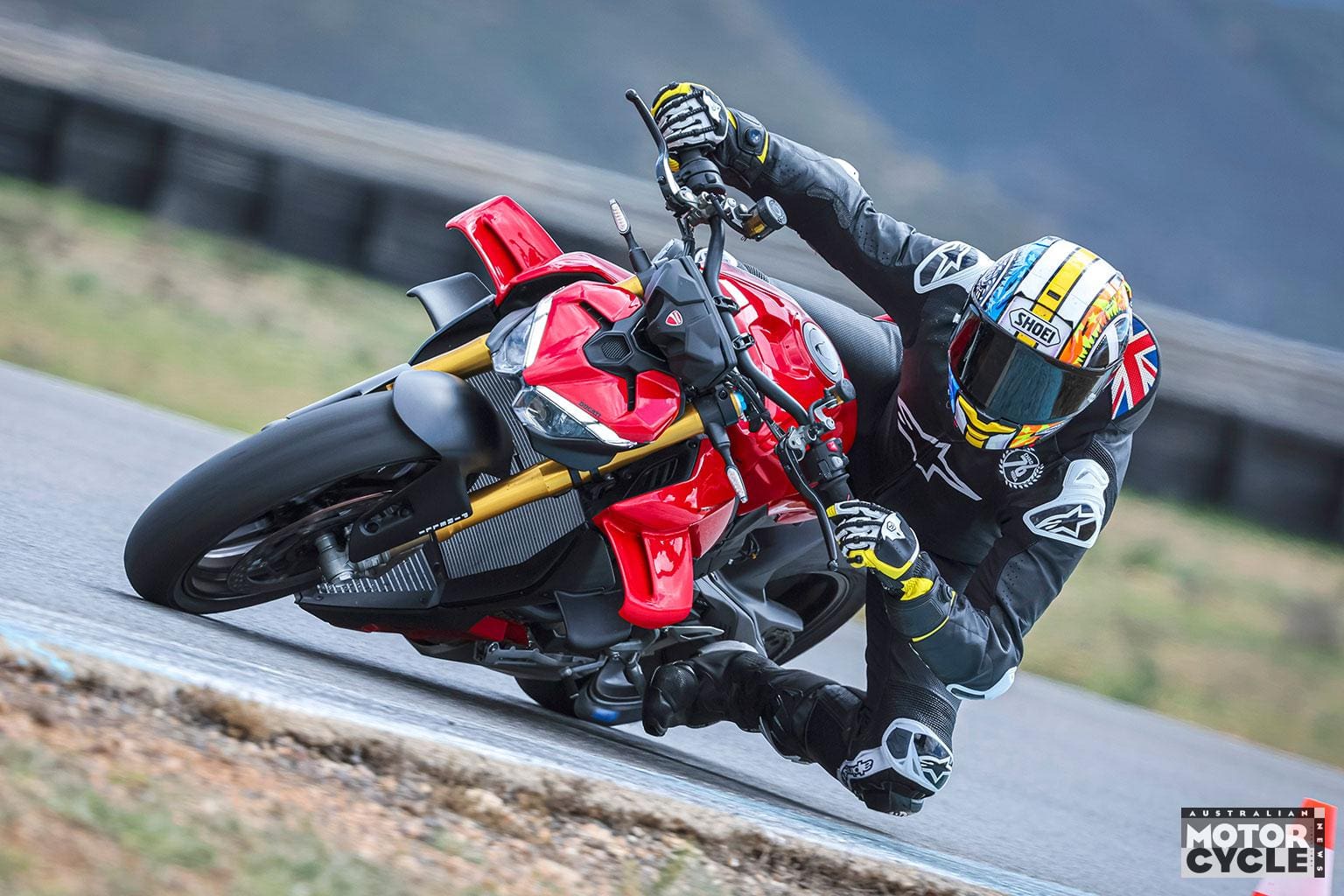
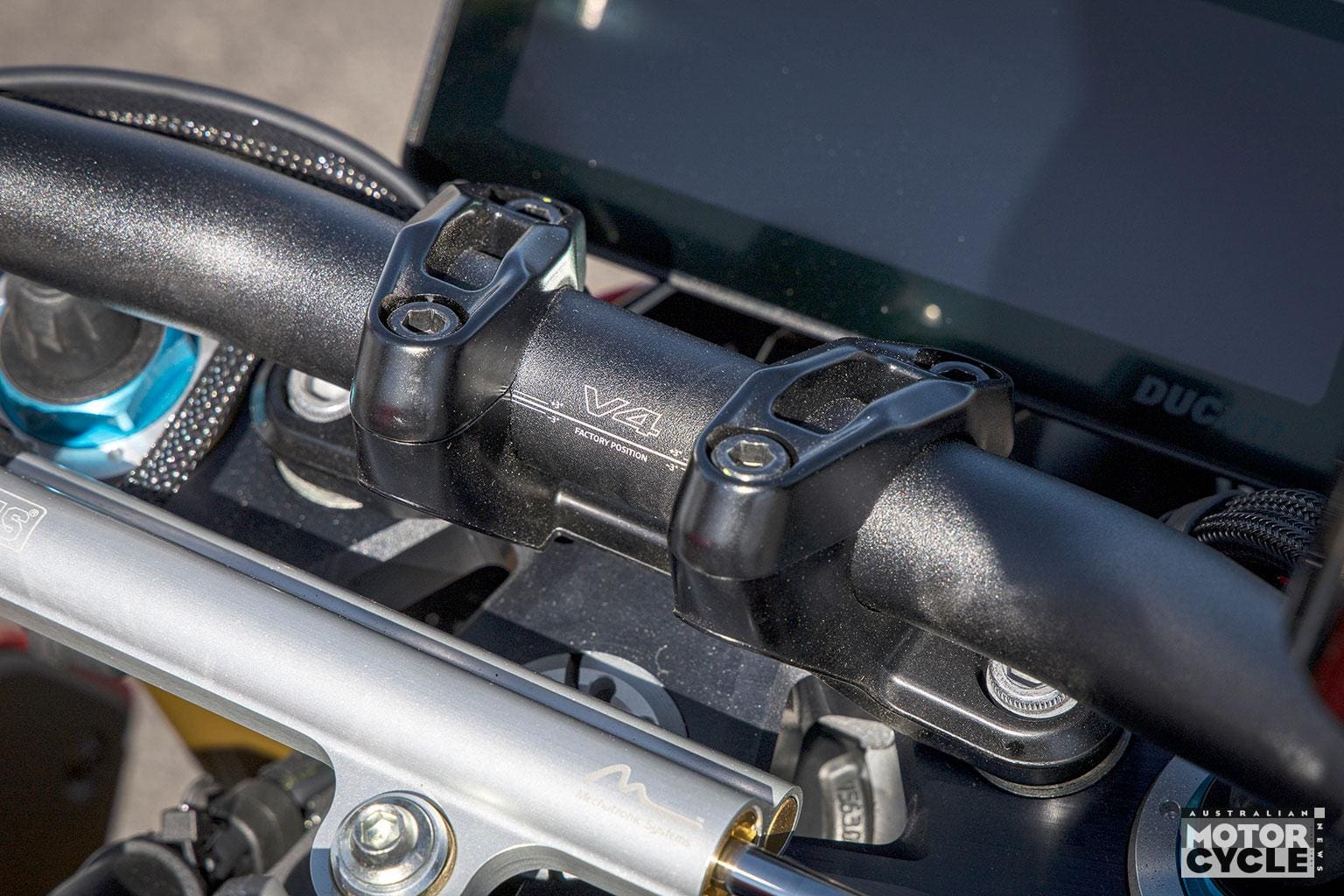
This was a track-only test run in perfect conditions. We still need to try the naked V4 S on the road, where the peak power and aero wings won’t have such relevance. Ducati hasn’t forgotten about the road rider: the ‘bars are 10mm closer, the pegs 10mm inwards, and seat has more support. The Smart EC3 suspension has a specific Road set-up, and there is even a Cruise Detection Mode, which automatically softens the suspension when touring or, indeed, cruising. So it will be interesting to see if it has improved for everyday use and weekend jaunts.
The price is just over $43k, which is $6000 less than the $49k Panigale V4 S, but above similar competition in this class. BMW’s 210hp M 1000 R starts at $36k, and Triumph’s new Speed Triple 1200 RS with the same EC3 suspension is around $32k, albeit with less tech and ‘only’ 170hp.
It will be an interesting test when we get them all together. But if you want the king with the most power and the most advanced rider aids, it’s going to cost you.
✅ PROS – Right now it’s the most powerful naked bike on the market but with electronics than can tame its excesses
❌ CONS – The level of tech and performance have hiked the price. Question is whether you really need that much power
Ducati Streetfighter V4 (standard)
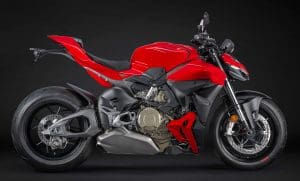
The standard V4 has a sticker price of $38,400 compared to $43k for the V4 S. It also has the same chart-leading power and torque, the same rider aids, eCBS and DVO, and the same lightweight, improved chassis and swingarm. The major difference is the standard bike does not have the adaptive electronic semi-active Smart EC3 suspension from Öhlins. Instead, it’s equipped with manually adjustable suspension: 43mm BPF from Showa and a single fully adjustable unit from Sachs on the rear. The wheels are now light alloy, not forged aluminium as on the S, and the quoted overall weight is now 191kg compared to 189kg on the S.
THE COMPETITION

Triumph Speed Triple 1200 RS – $31,490
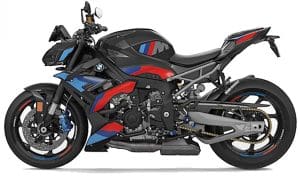
BMW M 1000 R – $36,274
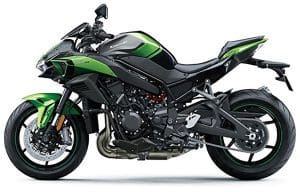
Kawasaki Z H2 – $27,979
SPECIFICATIONS
ENGINE
Type Water-cooled, 1103cc, 4v per cylinder four-stroke, Desmosedici Stradale V4 – counter rotating crank
Bore & stroke 81mm x 53.5mm
Compression ratio 14.0:1
Electronic fuel injection with Ride-by-Wire, twin injectors per cylinder
Transmission Six-speed Quick Shift up/down Gen 2
Clutch Hydraulically slipper and self-servo wet multiplate
Final drive Chain
PERFORMANCE
Power 157.4kW (214hp) at 13,500rpm (claimed)
Torque 120Nm at 11,250rpm (claimed)
Top speed 318km/h (est)
Fuel consumption 7.1L/100km
ELECTRONICS
Type Bosch
Rider aids Riding modes (see below), Power Modes, Race ECBS, Ducati Vehicle Observer (DVO), Ducati Traction Control (DTC), Ducati Wheelie Control (DWC), Ducati Slide Control (DSC), Engine Brake Control (EBC), Ducati Power Launch (DPL), Ducati Electronic Suspension (DES) 3.0 with Öhlins
Rider modes Race, Sport, Road, Wet
Frame Aluminium alloy ‘front frame’.
Rake 24.5°
Trail 99mm
Wheelbase 1496mm
SUSPENSION
Type Öhlins – Gen 3
Front 43mm, Öhlins NPX 25/30 S-EC 3.0 fully adjustable, electronic compression and rebound damping 125mm travel
Rear Single rear shock, Öhlins TTX36 (SV) S-EC 3.0 unit. Fully adjustable with electronic compression and rebound damping 130mm travel
WHEELS & BRAKES
Wheels 5-spoke forged aluminium
Front 3.5in x 17in
Rear 6in x 17in
Tyres Pirelli Diablo Rosso IV Corsa
Front 120/70 X 17
Rear 200/60 x17
Brakes Race ECBS
Front 2 x 330mm discs, radially mounted Brembo Monobloc Hypure 4-piston calipers
Rear 245mm disc, two-piston caliper
DIMENSIONS
Weight 189kg (wet no fuel)
Seat height 850mm (adjustable)
Fuel capacity 16L
SERVICING & WARRANTY
Servicing First 12,000km/12 months. Valve check 24,000km.
Warranty 24 months unlimited mileage
BUSINESS END
Price $43,100 ride away
Colour options Red only
Contact ducati.com/au