Named after the most famous Japanese road bike, the latest Z900 has a personality all its own
The Z900 and I bonded immediately, like an old pair of boots that just got a new sole and shoelaces. You see, my first real road bike was a 2003 Z1000 naked. It was the first of the modern era Z series of naked bikes and featured a fuel injected and bored out ZX-9R engine with an upside-down fork, monoshock rear suspension and very modern looks. In 2004 came a slightly lower spec Z750. It was the revival of the Z bikes and the beginning of a whole new Z era.
Fast-forward some 20 years and the Z750 has grown to a Z900 and is looking even more modern than ever. While remaining a slightly lower spec than its bigger Z1000 sibling, Kawasaki still refers to it as a ‘Supernaked’. To me, a supernaked is a superbike in naked form, but who am I to argue?
What’s new?
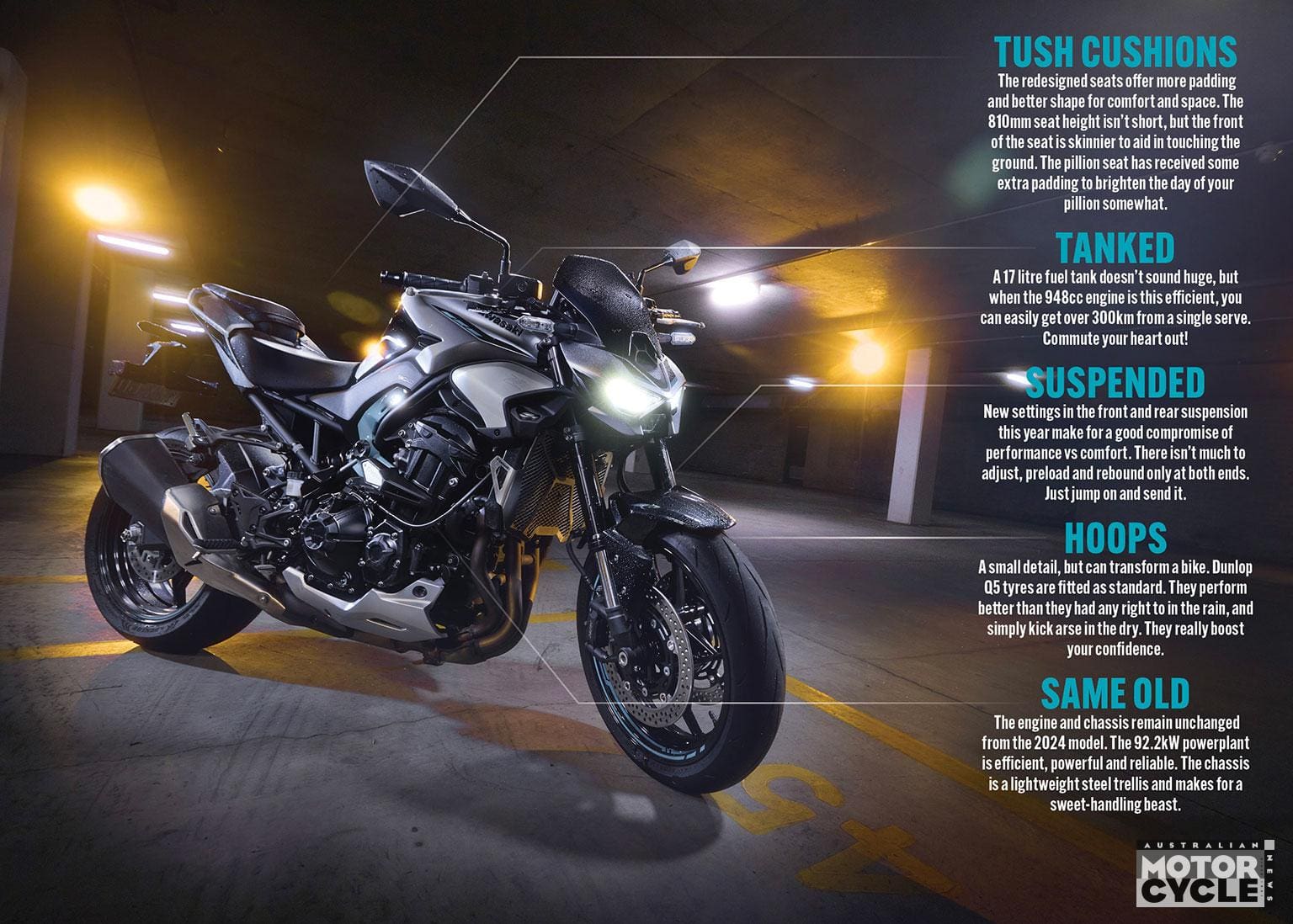
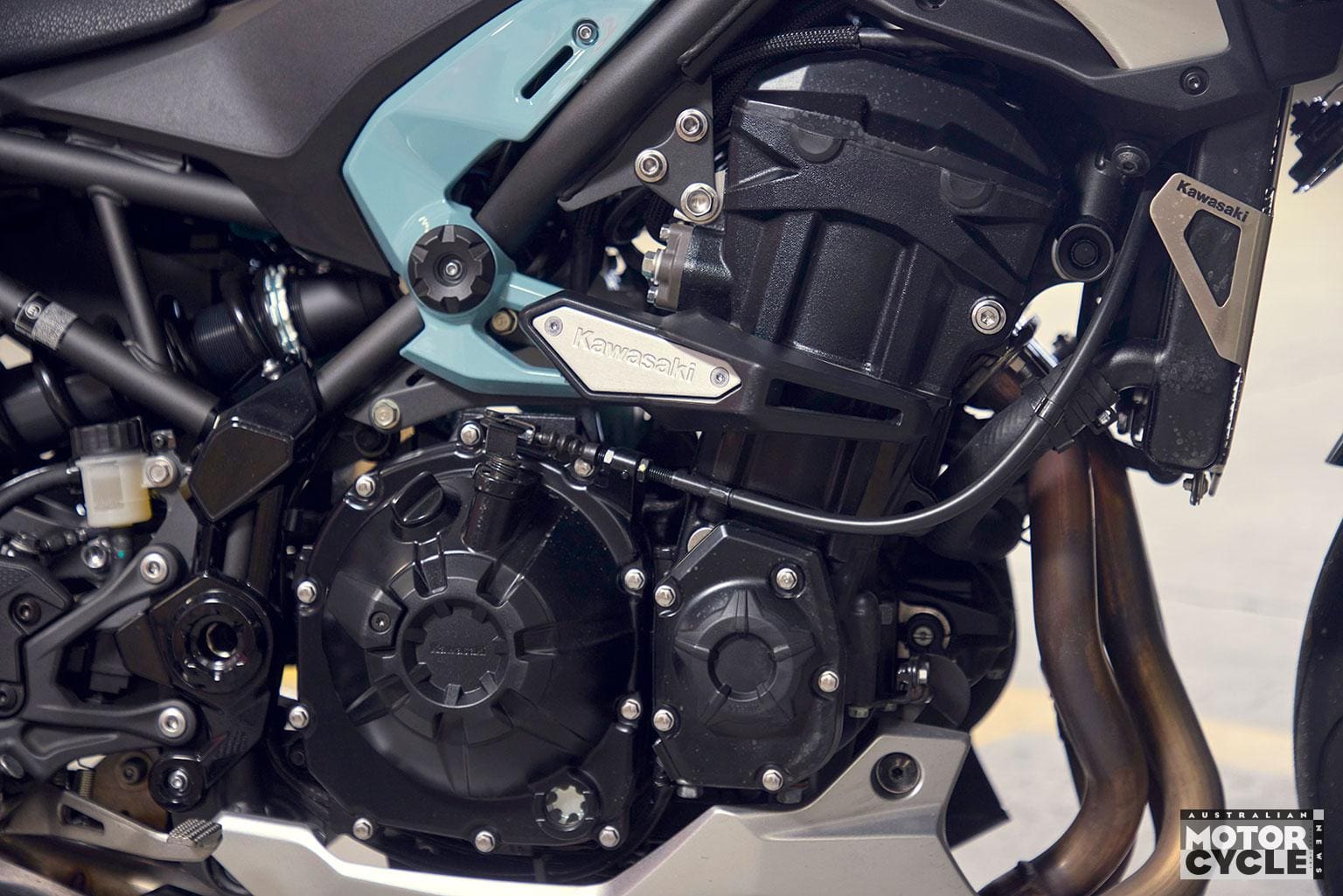
For 2025, the Z900 has received a bucket load of small but meaningful updates. Its bones remain unchanged, however – and fair enough, too. They ain’t exactly broke. The same 948cc four-cylinder engine putting out 92.2kW (123.5hp)and 98Nm holds fort inside a steel trellis frame. The wheels and exhaust system are the same, but that’s about all that has been left untouched. Armed with technology from the H2 models and ZX-10R, Kawasaki gave the Z900 a glow-up. An Inertia Measuring Unit (IMU) and a fly-by-wire throttle now work in harmony to boost safety and performance by way of improved rider aids like corner management control, cornering ABS and traction control.
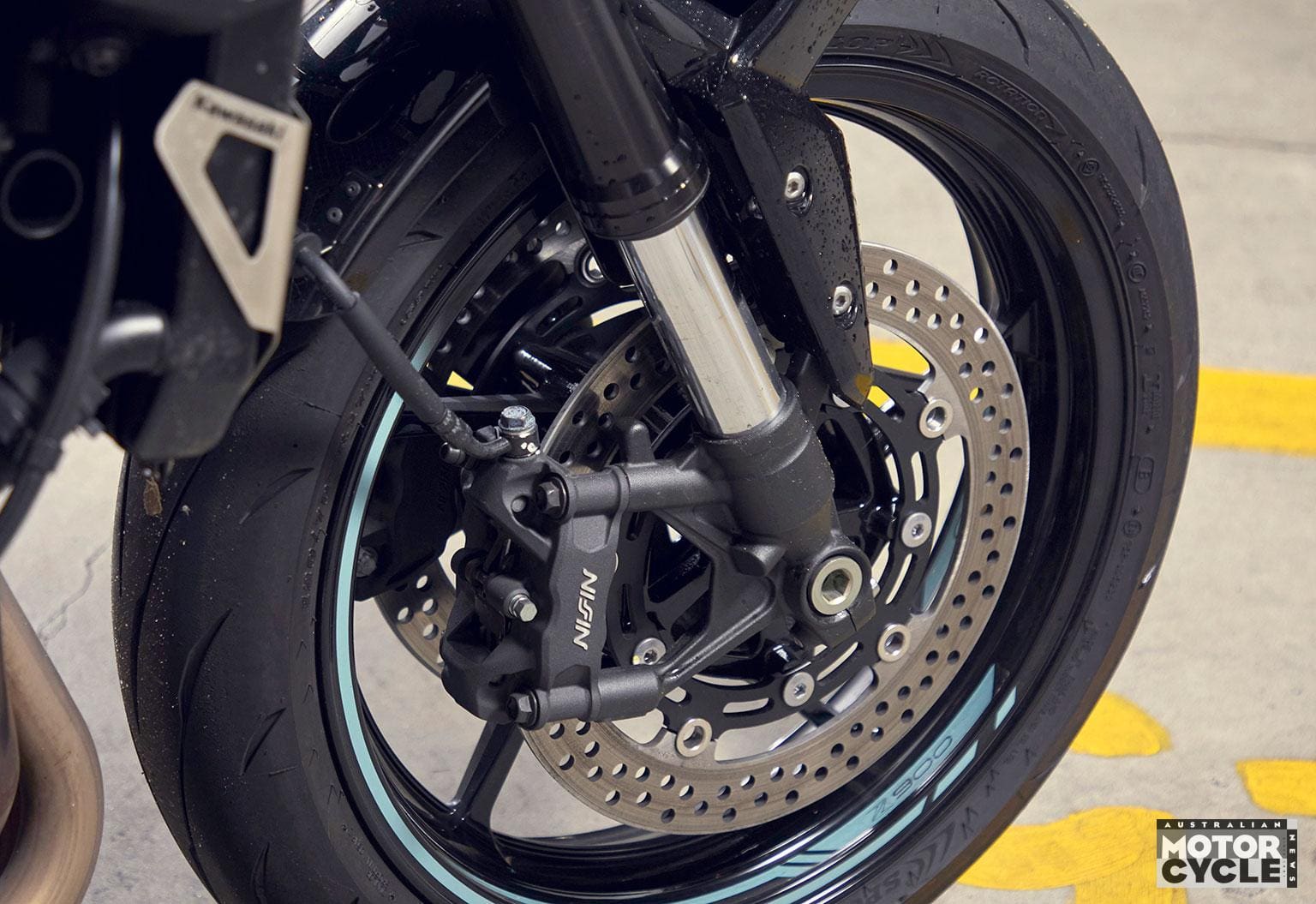
Thanks to the ride-by-wire throttle, cruise control is also now standard issue. The suspension received new settings at both ends and up front there are now radial mounted monobloc brake calipers to bring things back under control.
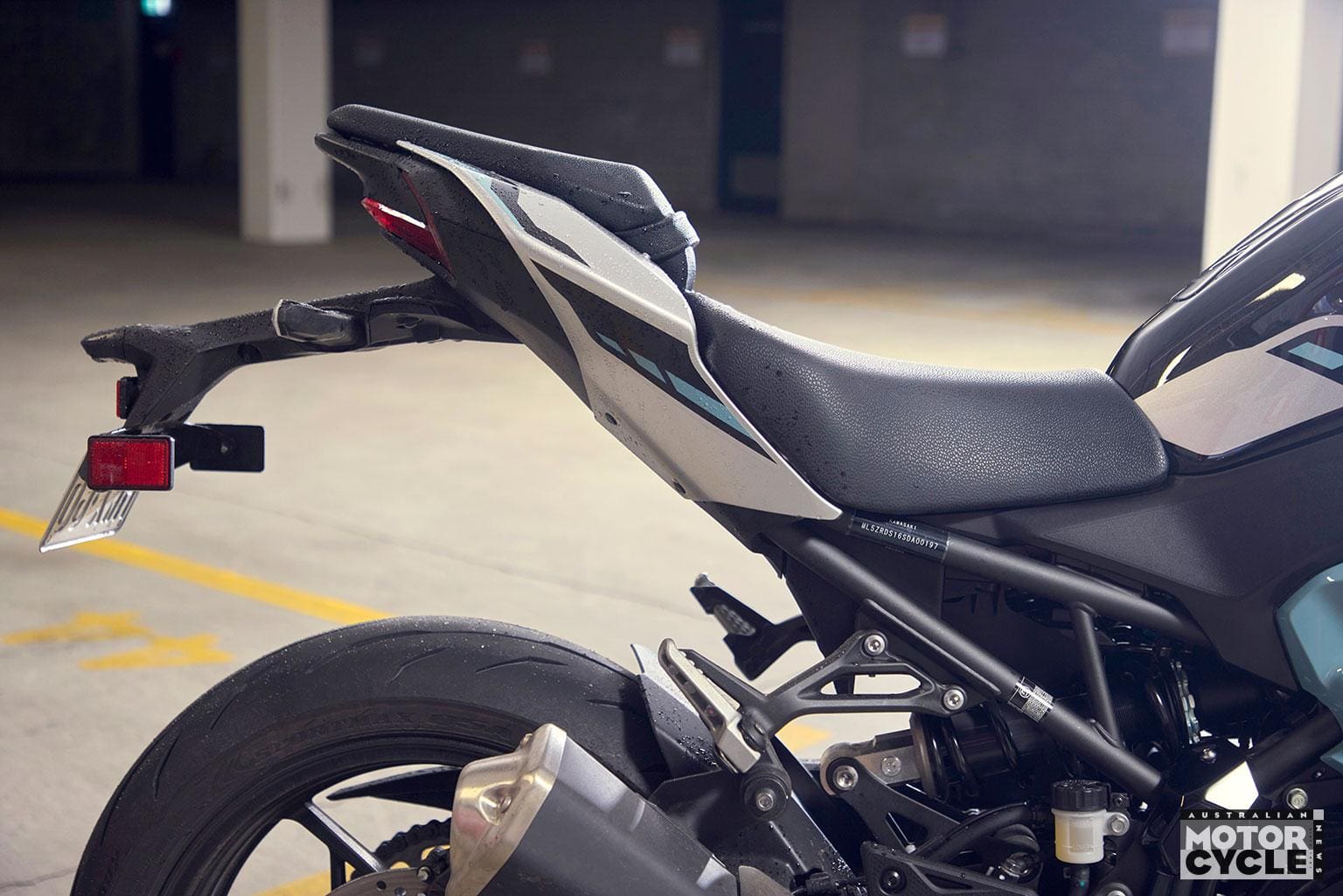
Comfort has been improved for rider and pillion with a revised subframe, redesigned seats and a new handlebar. Some sticky tyres, new body panels and colour options have also been thrown into the 2025 mix for good measure.
How’s it go?
Right off the rip, the Z900 is silky smooth. The new throttle is precise and seamless even at low revs and throttle inputs. This engine has the runs on the board now; its heritage harks back to the much-loved ZX-9R, with improvements in efficiency and smoothness along the way.
The bike is tuned for mid-range power and it delivers in spades with a howl of the trademark Kawasaki induction roar. The sound makes the hairs on the back of your neck stand up as you wind the throttle on and let it howl through the gears. Unfortunately, this entices one to ‘hold it on’ quite a bit. Guilty as charged…
The Z has plenty of mumbo on tap at the drop of a hat anywhere in the rev range. It will loft the front wheel in the first three gears and as the power builds smoothly and progressively, keeping that wheel up is almost too easy, as long as you have the traction control switched off. Speaking of which, the updated traction control set-up is a big step forward, as the ECU now has control over the throttle; it uses the throttle bodies to cut the power when spin is detected rather than cutting spark. I feel that it recovers from interventions much faster and can even modulate changing surfaces better.
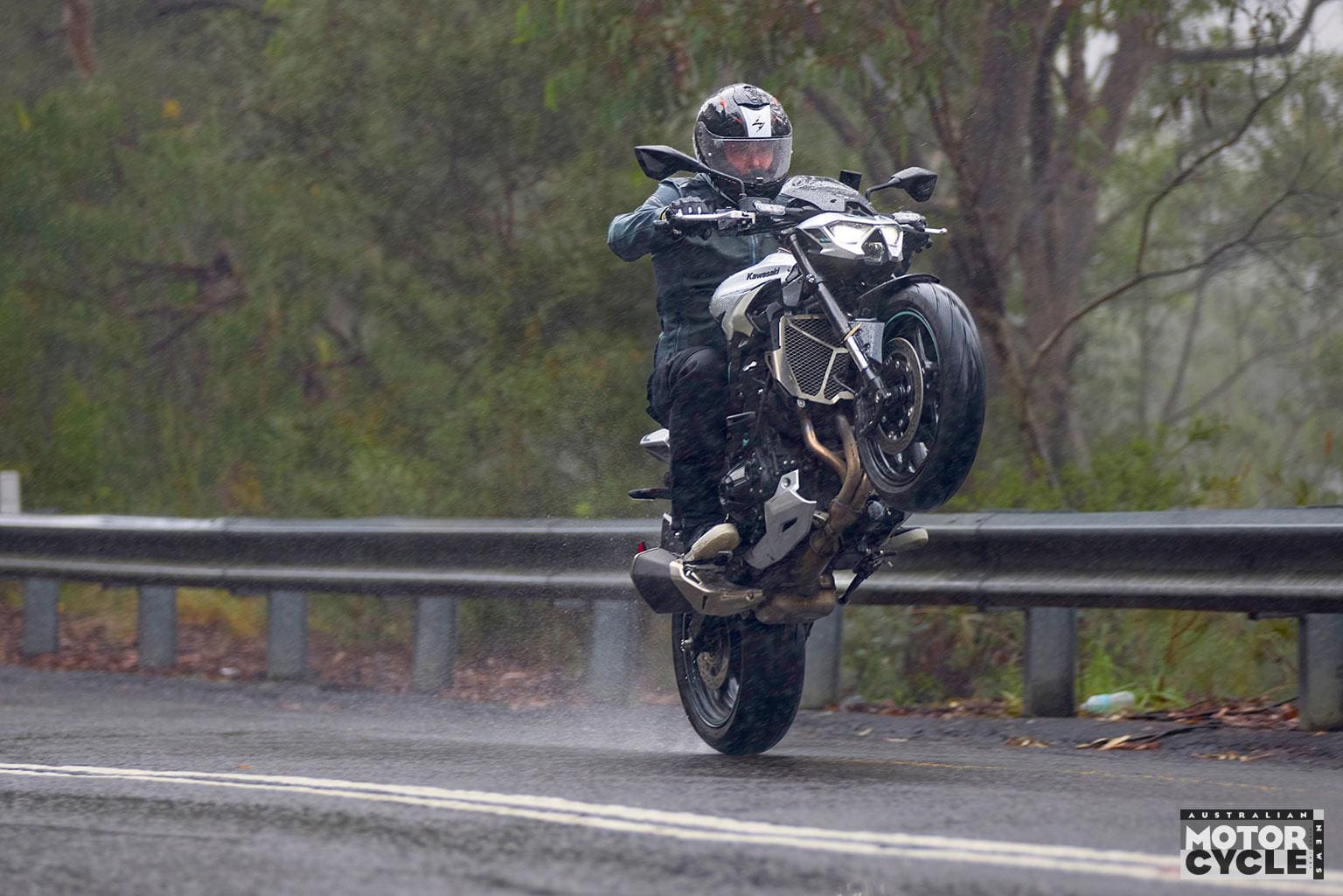
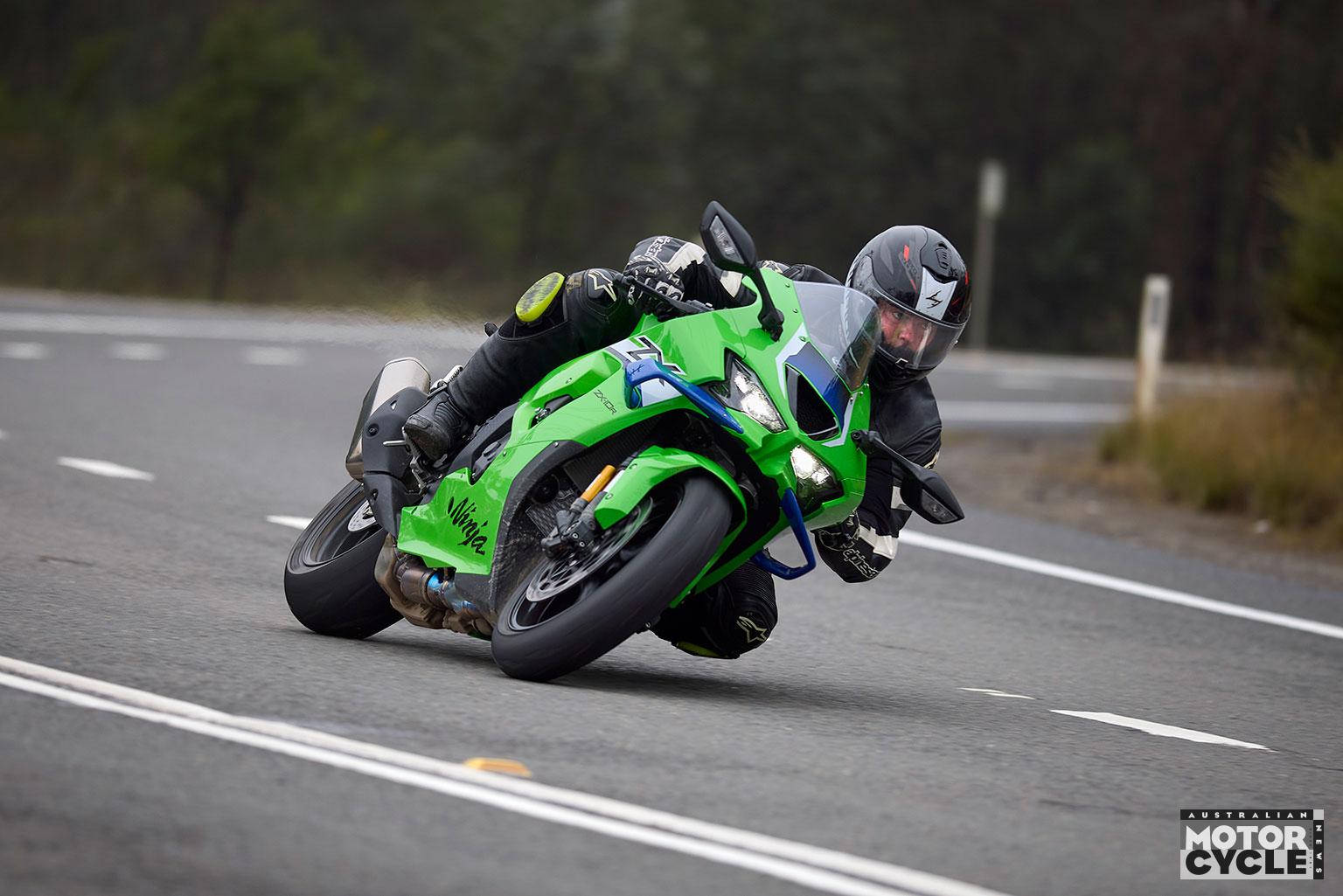
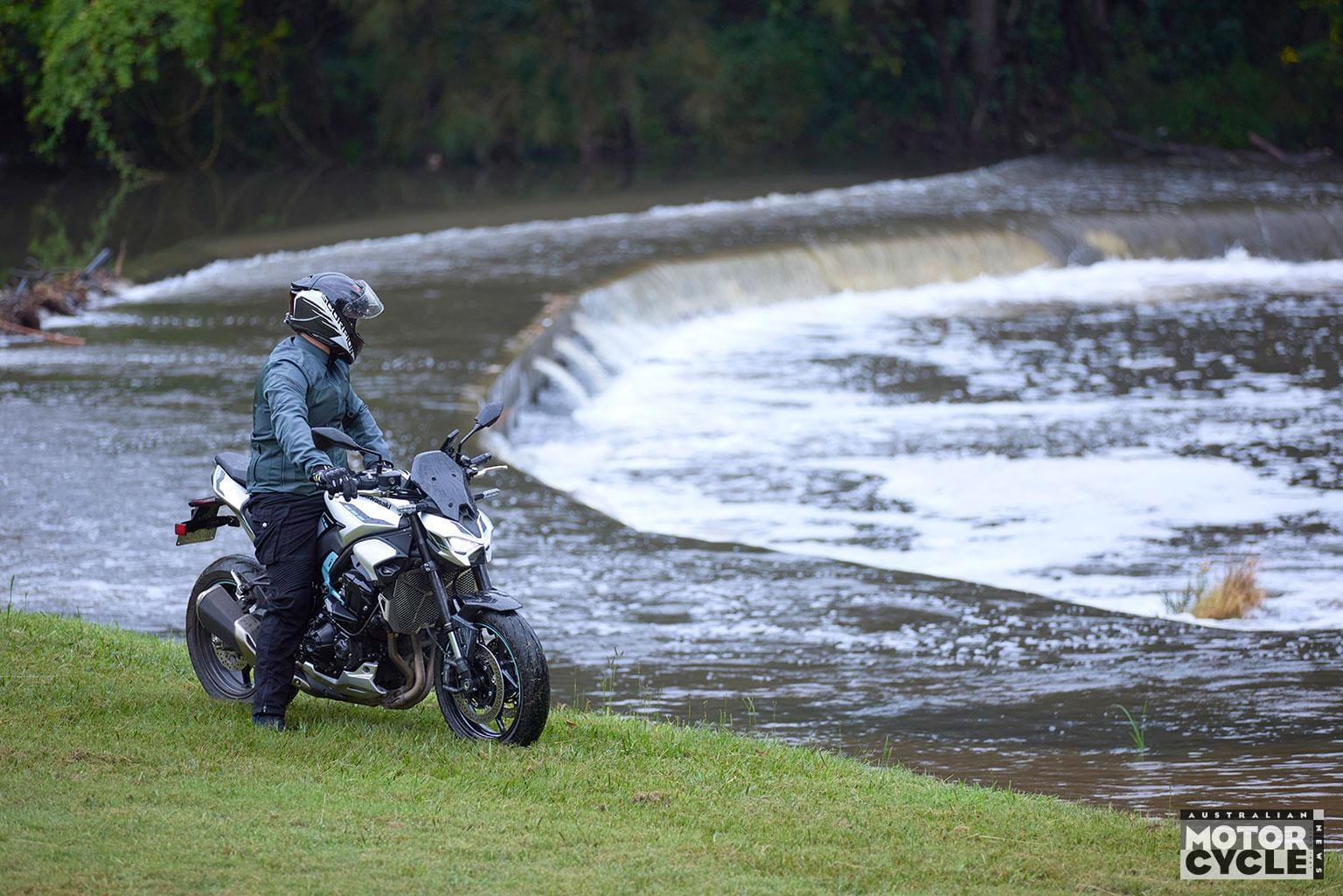
As you can see by the pics, a fair chunk of my riding on the Z was done in the rain. I wouldn’t say I love riding in the wet, but I do kind of enjoy it. Every cloud has a silver lining, right? So, I got to get a good feeling for how well the traction control goes about its business. With the Rain mode selected, the bike feels like it isn’t losing traction at all. It just drives off the turns in the wet without even a twitch, just the KTRC indicator blinking. But when the ride mode is set to Road, if you grab a handful of throttle exiting a corner, you can feel the revs rise, the bike step sideways a little but still drive forward smoothly without feeling loose or uncontrolled. It’s almost computer-game-easy now.
Since we are exiting corners faster now, it’s only fair that the brakes got some love too. The old ones weren’t bad, but the new Nissin radial-mounted calipers are better than those found on a ZX-10R not so long ago. They’re more than simply up to the task; they feel strong but could benefit from a set of braided lines rather than rubber ones if it were to live in my shed. Although that may cause other issues like overpowering the suspension.
The Z900 is a bit of a compromise when it comes to boingers. The 41mm upside-down fork only offers rebound and preload adjustment. Same goes for the rear, although the owner’s manual does suggest visiting your friendly Kawasaki dealer to adjust the rear pre-load.
To me, the suspension plays like a reasonable compromise between comfort and performance. I found myself blowing through the stroke of the rear suspension in some poor road surfaces in the dry – but I am above average on the scales, so that can be expected. However, normally I would want a bit more compression to work against this.
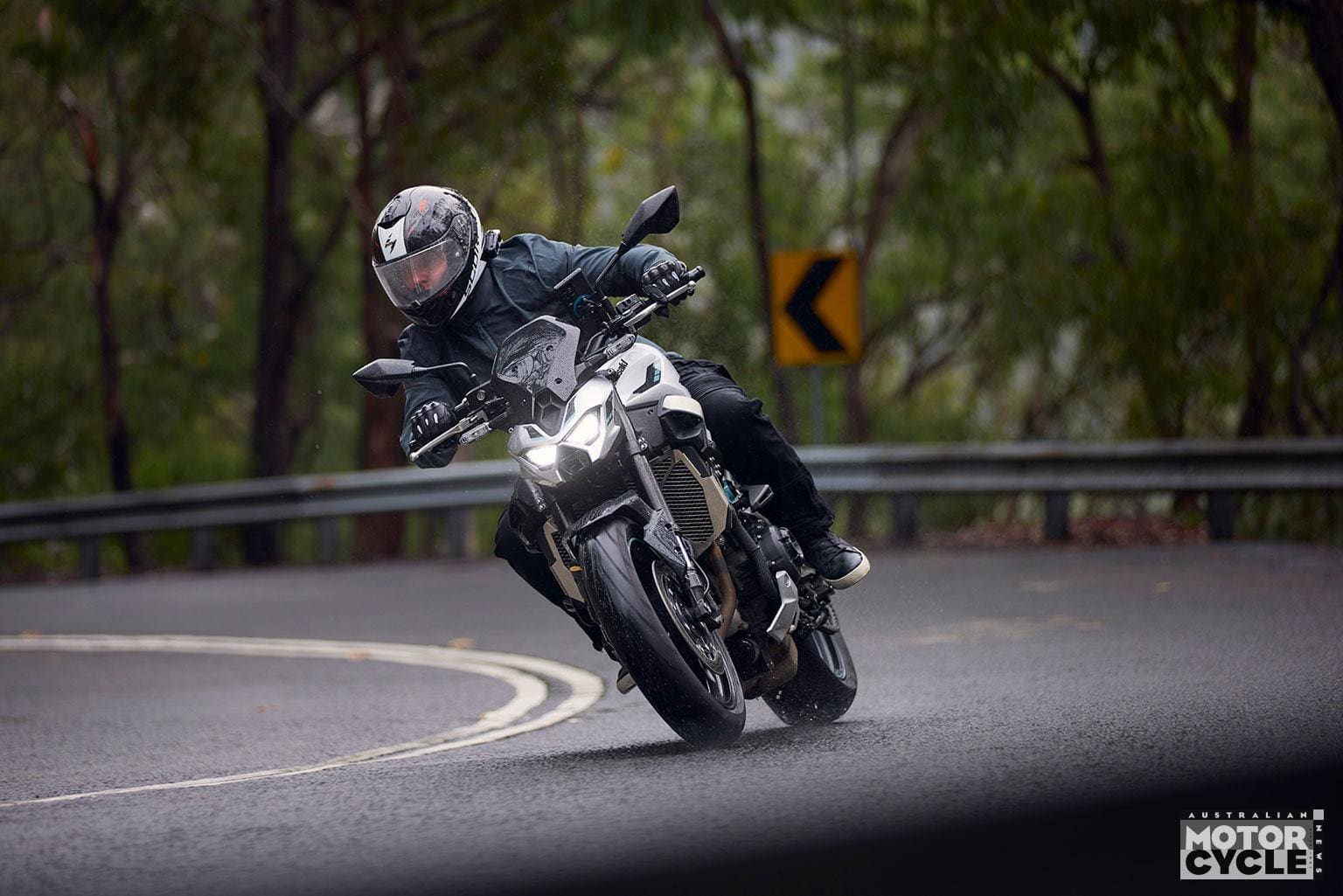
The Z handles very well, thanks to the upright seating position and wide ‘bars. Flicking the bike around in the bends takes little effort. It feels like the Z has a bit more front-end weight bias, giving it a sure-footed front-end feeling. The forks are more capable than I expected, and I could brake deep into corners to wash off speed when required.
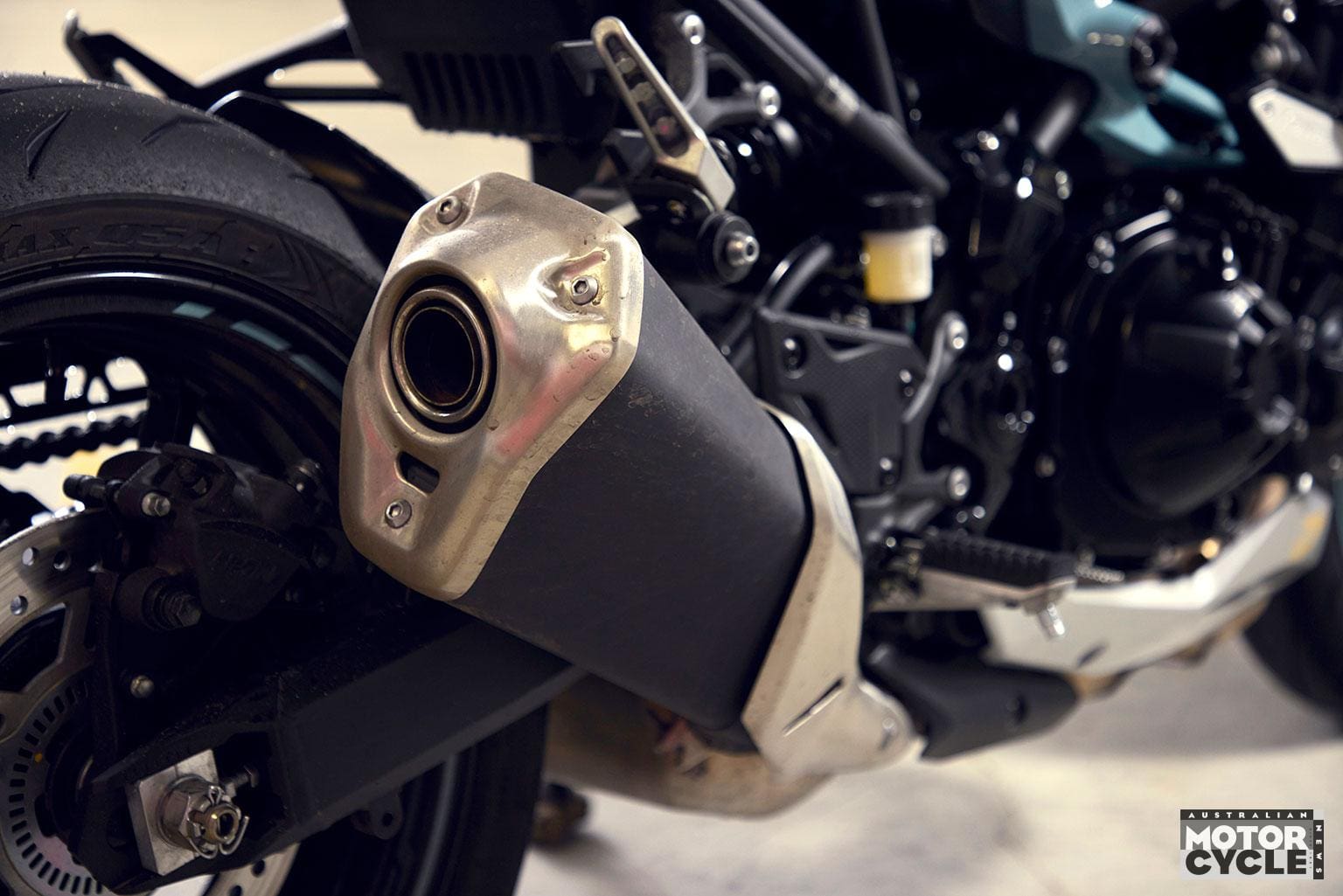
Mid-corner, the Z can scrape a footpeg, allowing you to drag your knee or just simply meander around a corner at a snail’s pace; it’s happy whichever way you want to ride it. Much of this feeling I attribute to the tyres. Tyres can make or break your confidence, and the Dunlop Q5s are a really nice choice for sporty riding. They don’t look like they would excel in the wet, but they did – and then they were flawless in the dry.
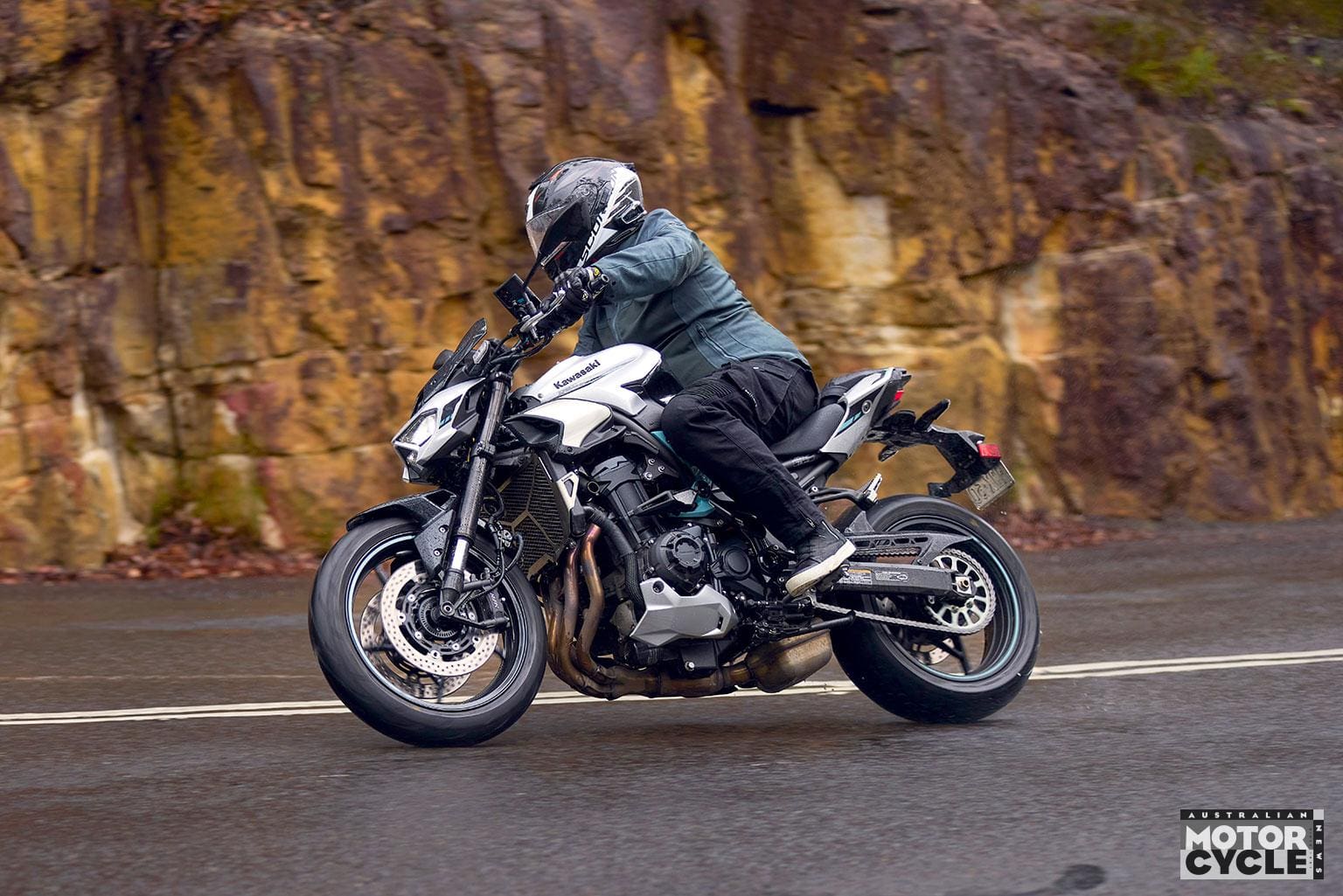
The new seat is quite roomy. Towards the front it feels slimmer to get your feet to the ground easier, and then there’s room to slide back a bit also where it flattens out. I could spend full days in the seat without too much drama.
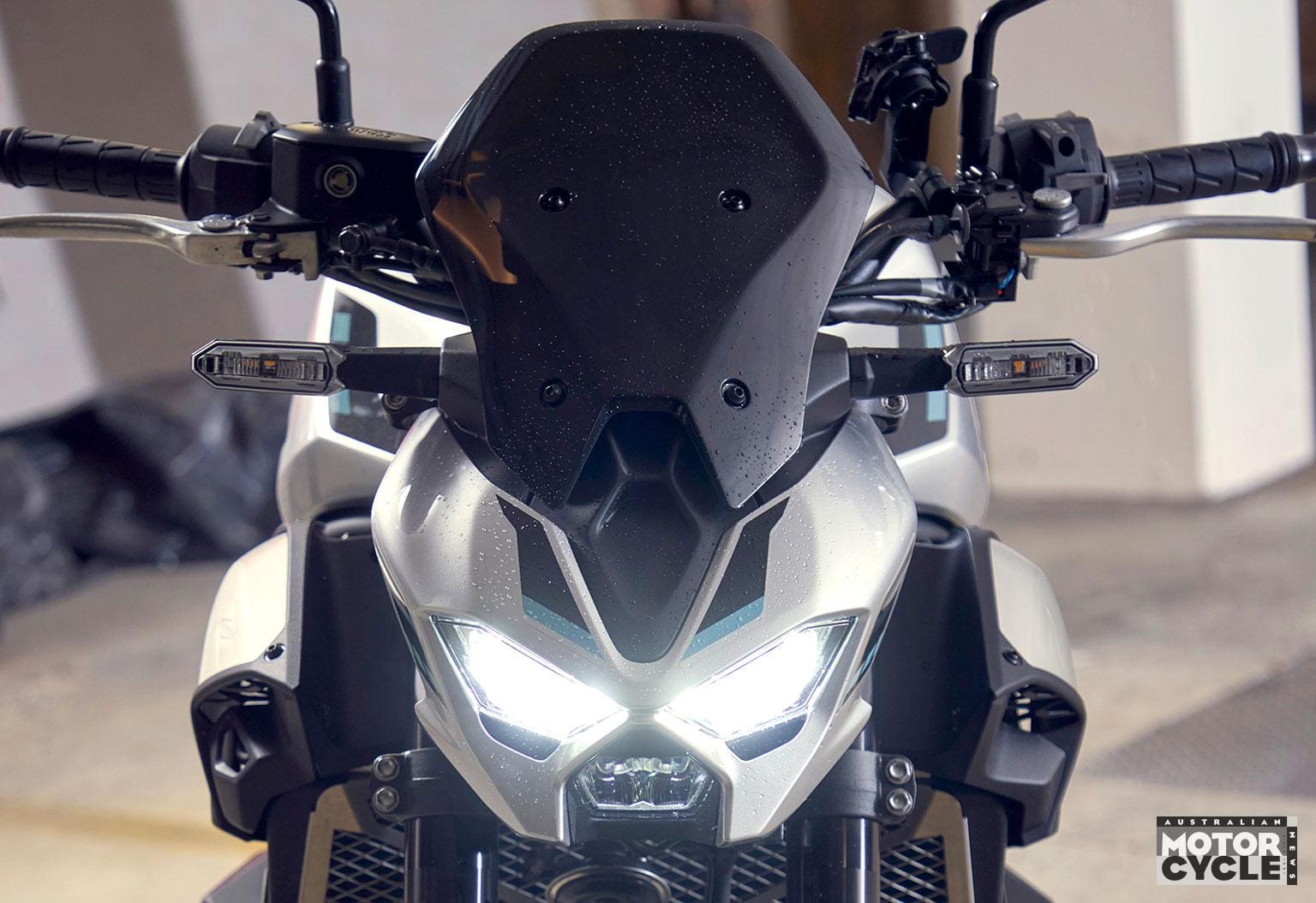
I managed over 300km in one tank of gogo juice and the seat passed my tank-of-fuel comfort test. The riding position is very natural and the levers are span adjustable. When stopped there is a little bit of weight on your wrists but nothing once you’re moving along, thanks to the uninterrupted breeze on your chest. The front fairing is there to protect the dash from the elements and that’s it. If you want a windscreen, check out the Ninja 1100. The Z900 is here for style rather than wind protection. And for those wondering, yes, I was soaked. The only thing dry was my feet, thanks to my Gaerne Gortex kicks.
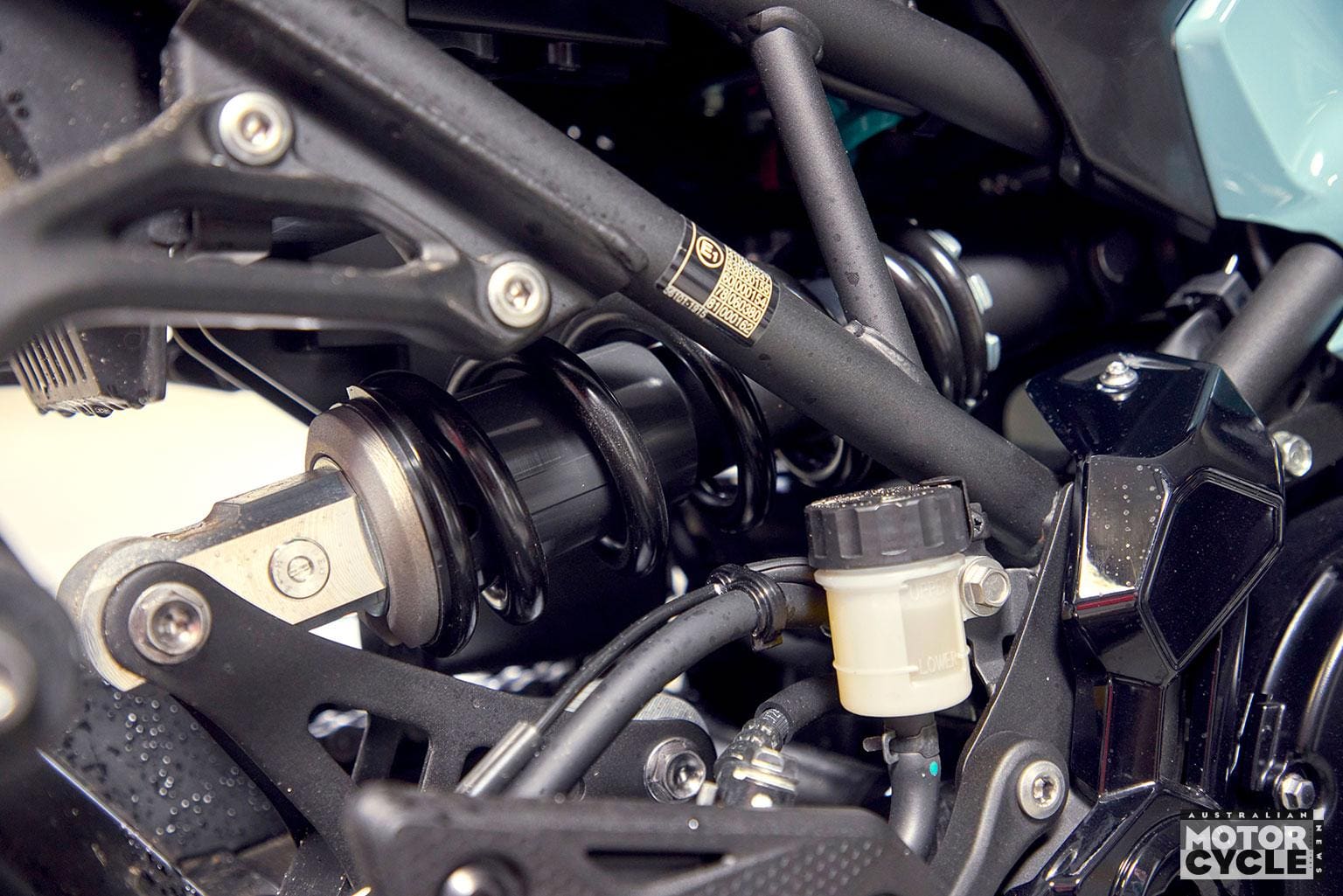
You either love or hate the styling. I love it; I feel it’s a little less Transformer-like than the Z1000. The Z900RS, meanwhile, is at the other end of the scale. If you saw it from a distance, you could mistake it for a late 1970s model Z.
So, who is this bike for? Well, it’s a logical step up from a LAMS Z650 or Z500 that you won’t grow out of. It’s even a great option for someone sick of head-down, arse-up sportsbikes. The Z isn’t a one-trick pony, either. It can commute like a boss, do some light touring, hit up your local twisties, and it’s easy on fuel; I managed as low as 4.7L/100km without even trying. The $16,554 price tag is sharp for the standard features. This 2025 update has really boosted the bang for buck of the Z900. I just wish you could get it in some cooler colours… like green.
✅ PROS – Bang for the buck, with a good level of standard features, and it’s user friendly
❌ CONS – Rubber brake lines, needs suspension clickers, colours are a bit uninspiring
TECH SAVVY
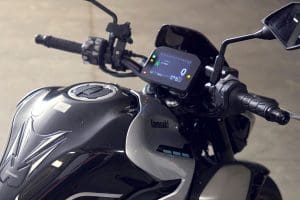
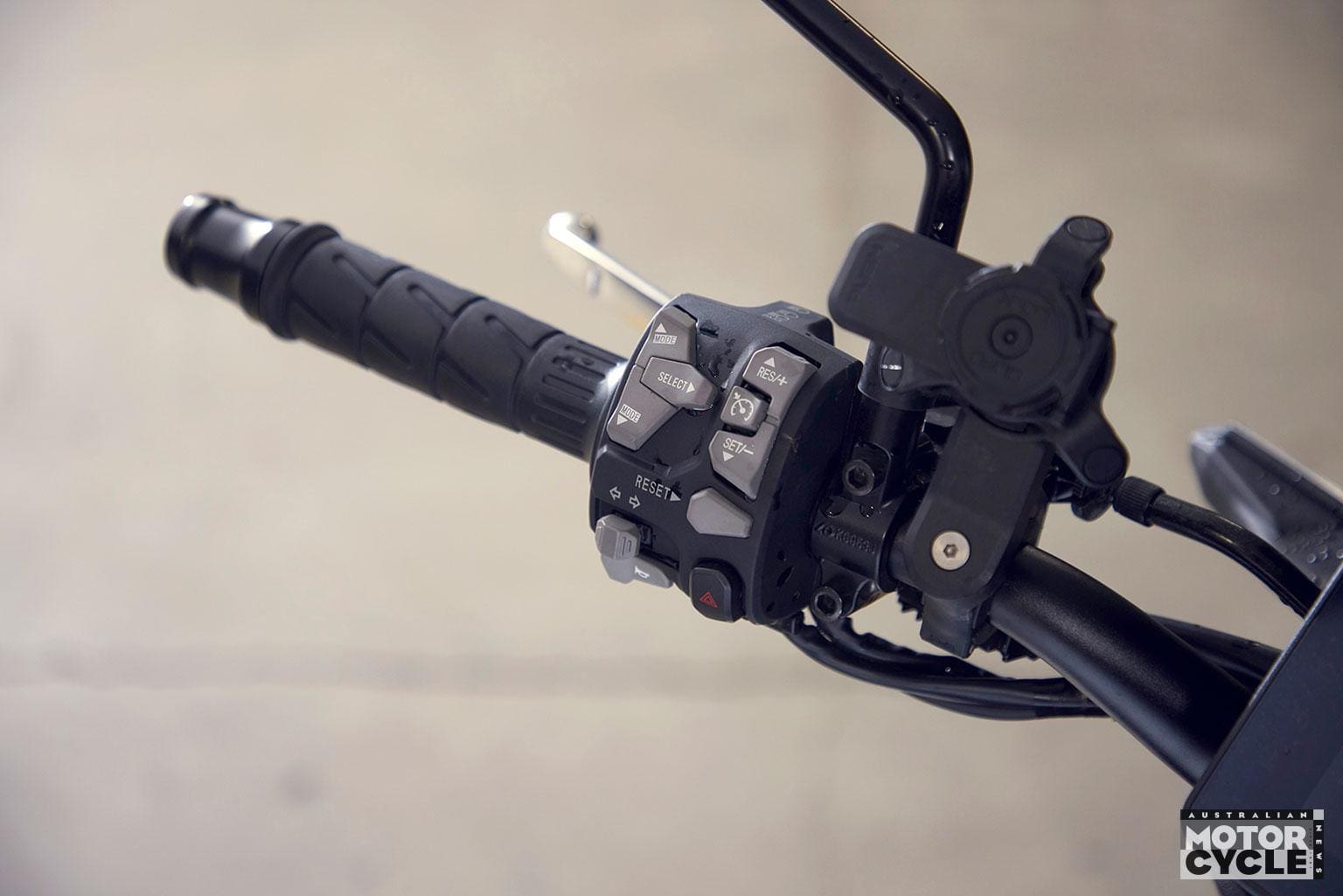
The colour TFT dash is the data centre for the Z900. Controlled by the left switch block, it’s quite simple to operate. While on the fly, the ride modes are changeable between Sport, Road, Rain and Rider. As long as you have the throttle closed you can switch modes. Rider mode allows you to make changes to the power mode and the level of traction control intervention. There are two power modes and three levels of traction control, or off. The dash displays all the info required and more. Download the Kawasaki Rideology app and you can also take control of navigation, phone calls, receive messages and control music all from the dash. To keep your phone battery topped up, there’s a weatherproof USB outlet on the side of the dash. In the Rideology app, you can also check and record ride logs showing where you rode and your statistics. Monitor servicing, odometer, trip meters and electronics settings. Pretty neat features for the geeks, and it’s free.
SPECIFICATIONS
ENGINE
Type Inline, liquid-cooled, 948cc, four-cylinder, 16-valve, DOHC
Bore & stroke 73.4 x 56mm
Compression ratio 11.8:1
Fuelling EFI 4x 36mm throttle bodies, electronic throttle control
Transmission Six-speed
Clutch Wet, multi-plate, slip and assist
Final drive Chain
PERFORMANCE
Power 92.2kW (123.5hp) at 9500rpm (claimed)
Torque 98.6Nm at 7700rpm (claimed)
Top speed 240km/h (estimated)
Fuel consumption 4.6L/100km (measured)
ELECTRONICS
Type Kawasaki, IMU, ride-by-wire
Rider aides Cornering ABS, traction control, cruise control, corner management control, shift assist
Modes Road, Sport, Rain and Rider.
CHASSIS
Frame material Steel
Frame type Trellis
Rake 24.7°
Trail 110mm
Wheelbase 1450mm
SUSPENSION
Type Showa
Front: 41mm telescopic fork, rebound and preload adjustment, 120mm travel
Rear: Horizontal monoshock, linkage type, rebound and preload adjustment, 140mm travel
WHEELS & BRAKES
Wheels Cast alloy
Front: 17 x 3.5in Rear: 17 x 5.5in
Tyres Dunlop Sportmax Q5A
Front: 120/70ZR17 (M/C 58W)
Rear: 180/55ZR17 (M/C 73W)
Brakes Nissin, ABS
Front: Twin 300mm semi floating discs, four-piston radial calipers
Rear: Single 250mm disc, single-piston caliper
DIMENSIONS
Weight 212kg (wet, claimed)
Seat height 830mm
Width 830mm
Height 1075mm
Length 2065mm
Ground clearance 145mm
Fuel capacity 17L
SERVICING & WARRANTY
First service: 1000km
Minor: 12,000km
Major: 24,000km
Warranty Two years, unlimited km
BUSINESS END
Price $16,554 ride away
Colour options Galaxy Silver/Metallic Spark Black/Phantom Blue or Metallic Carbon Gray / Metallic Graphite Gray / Candy Persimmon Red
Contact kawasaki.com.au